Showing posts sorted by relevance for query blue mary. Sort by date Show all posts

Monday, July 4, 2016

The legend of Blue Mary, or girls in fighting games, part 3

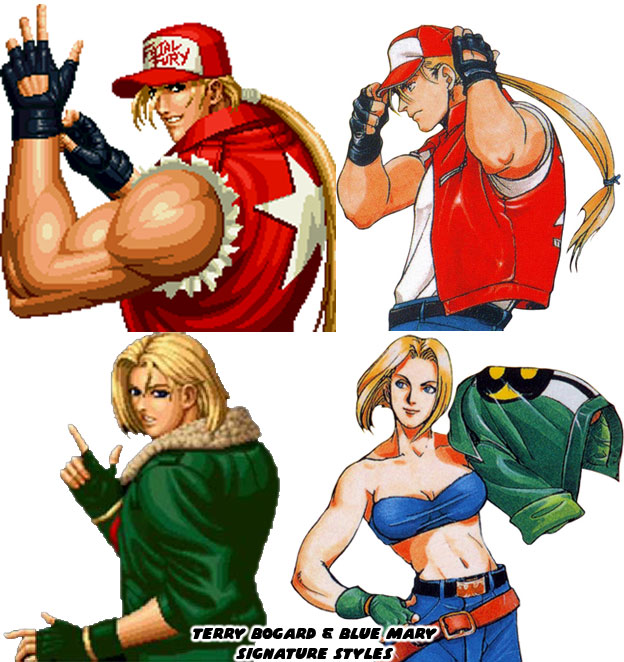
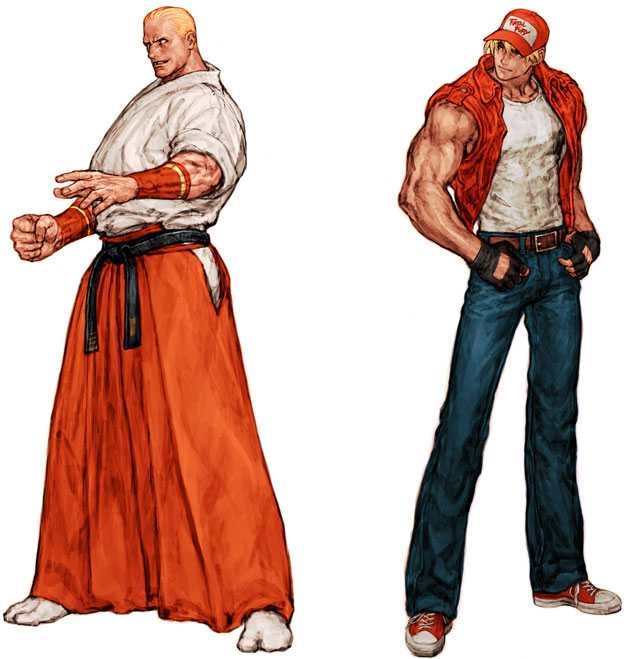
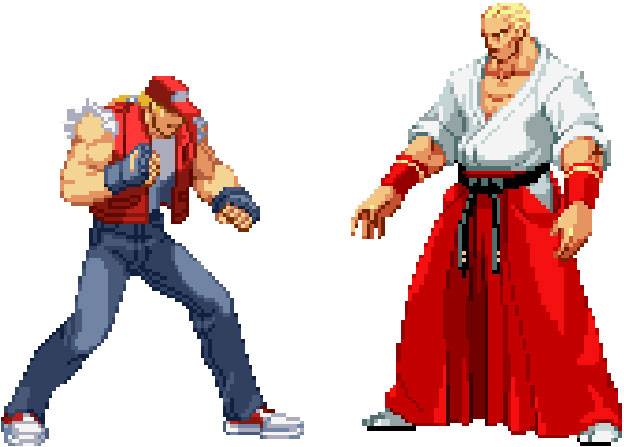
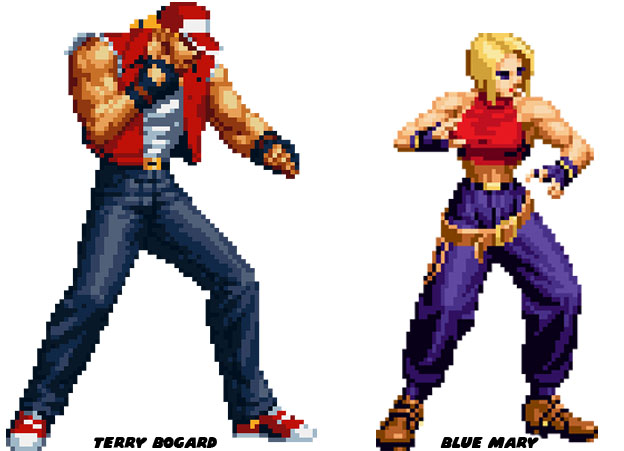
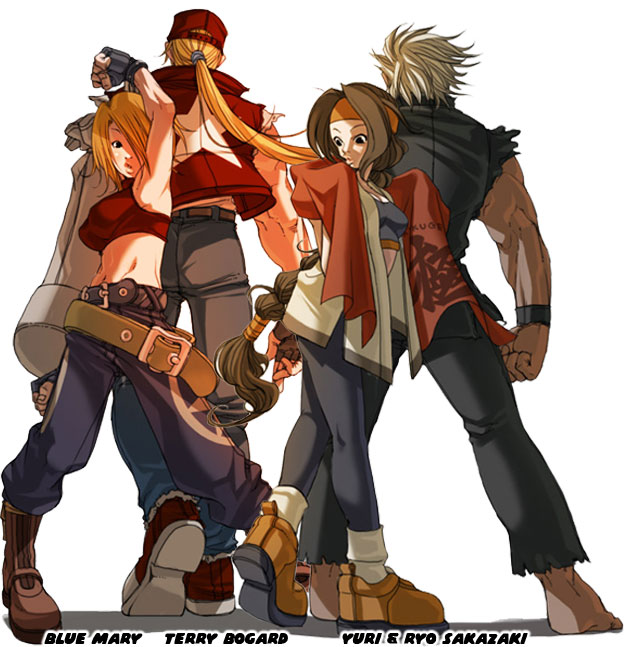
Fatal Fury had built a tremendous fan following in the '90s. The story, characters and fighting styles represented were very unique. SNK had done a great job of introducing characters from around the world and connected many of them to real martial arts. Even the characters that did not represent a particular style, like Terry Bogard, still fit into the universe. SNK was showing audiences that the modern masters of fighting did not have to dress up in robes or gi's in order to be legitimate threats. When the studio wanted to introduce a new female lead in the series they had a perfect template to pull from. Blue Mary had many design cues that were based on Terry. Put the two side-by-side and it's easy to see what I'm referring to. The red top, blue pants and gloves was only the beginning.


Notice how well defined Blue Mary's muscles were. Usually female characters in fighting games were slim. Some were voluptuous but none were presented muscular. Many of the early female characters in fighting games were Asian. Many Asian cultures (and many Western nations) did not consider women with big muscles to be attractive. The male stars in fighting games were always expected to have huge muscles. It made them look more believable as serious brawlers. The same rules applied to comic book heroes of course. Blue Mary changed all of that. As a female balance to Terry she maintained a certain level of athleticism and raw power. Her abs, shoulders and biceps were all well defined and much larger than the muscles on her female co-stars. This seemed acceptable on an "American" character. Her femininity remained, as did her large breasts, and to many players she remained attractive.
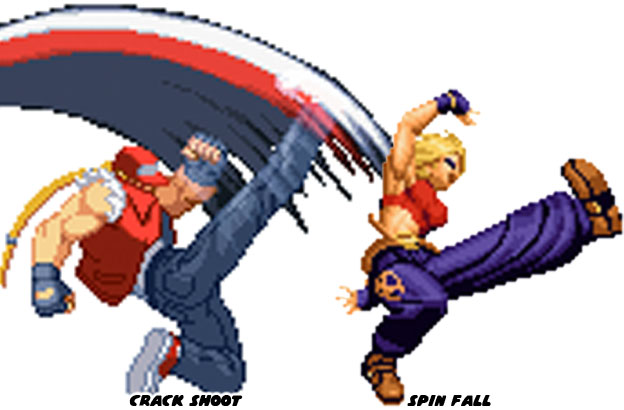

On a surface level Blue Mary had the same design cues as Terry. None of her moves, except for Spin Fall even remotely resembled the power moves of Terry. Blue Mary had far many different techniques going for her, not the least of which were having some of the first grapples, submission takedowns and strikes into grapples of any fighting game character. I consider Blair Dame from Street Fighter EX to be the first mixed martial arts character in a fighting game. She debuted in 1996, yet Blue Mary appeared one year earlier and had many similar techniques. So what gives? Blue Mary had moves that were more in line with combat Sambo, a Soviet-era form of fighting that gained exposure in freestyle and vale-tudo tournaments. These were the sorts of no-holds-barred contests that predated modern mixed martial arts tournaments. Sambo would be used by Russian soldiers to help subdue enemies in close quarters combat. There were many lightning quick strikes mixed with takedowns and painful joint lock techniques. The 3D fighting games would features these techniques on characters like Sergei Dragunov and Bayman from the respective Tekken and Dead or Alive series. It made sense that cops and soldiers would be masters of these techniques.
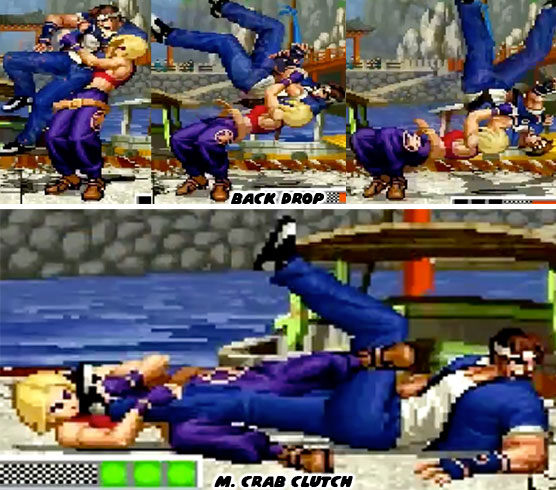

Blue Mary was a vicious grappler with amazing strength. She could hoist her opponents overhead and perform a Back Drop. It was an incredibly dangerous move made popular by the late . The move was banned in the WWE for being too risky. I could easily imagine Mary doing this to unsuspecting criminals. When she didn't go high with her attacks she knew how to shoot low for a takedown. The ankle lock called the M. Crab Clutch could snap a leg as easily as a chicken bone. These were only a few of her awesome moves. It made sense that Butch and her father had shared some of their Secret Service training with her. For opponents that were stand up fighters Mary had a way of breaking them down as well. She was equally fast and strong. She was able to cut into any defense and perform a rolling arm bar. This move would be known as the M. Spider. A variation of the leaping arm bar was given to Gai Tendo, the star of the Buriki One Tournament. His version was known as the Gai Spider. As great a character as Gai was just remember that Mary was doing some MMA moves many years earlier!
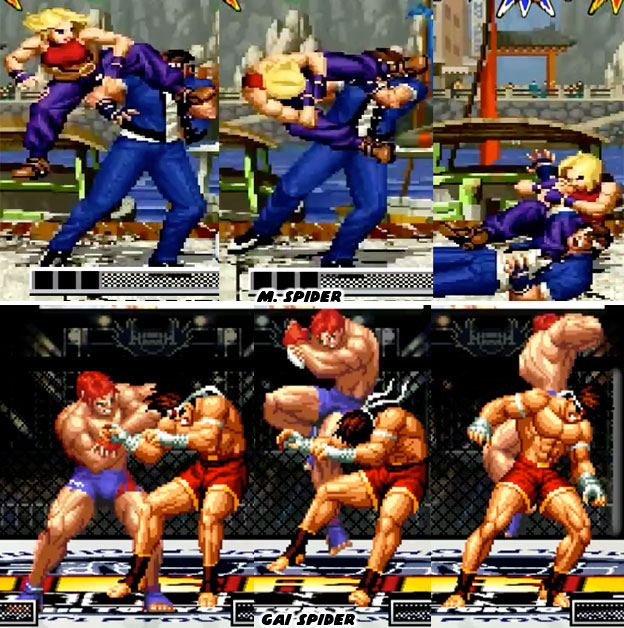
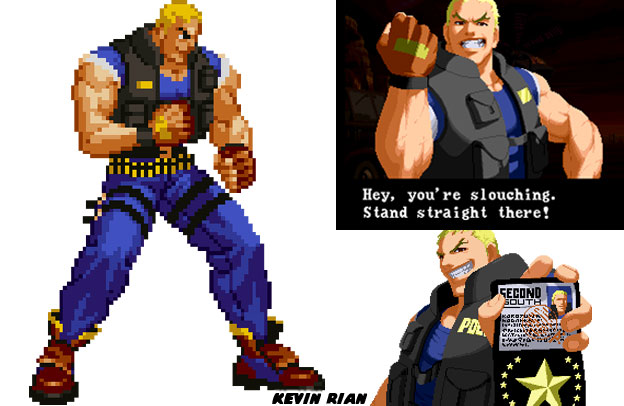
Blue Mary would grow in popularity over the years. Like some of her Fatal Fury co-stars she would eventually turn up in the King of Fighters series as well. Her moves and purpose filled a void that had been missing in the series. To be specific law enforcement officers weren't usually represented in fighting games, especially not in Japanese ones. There were heroes of all sorts but they were usually traditional martial arts masters. There were even military characters from time to time because audiences could accept them as dangerous fighters. Cops on the other hand didn't always have the reputation for being great martial artists. Chun-Li and Blue Mary certainly changed that perception while also serving as powerful female role-models. Blue Mary's distant relative appeared in Garou: Mark of the Wolves, a game from 1999. The game was set about a decade after the events of Fatal Fury 3. The new brawler was known as Kevin Rian, he was a cop, a representative of the Second South Town police force. His last name was mistranslated by the localization team as it was supposed to be Kevin Ryan. He was big with a few grappling moves and heavy hands. His design fit somewhere in between Ralf and Clark, the Ikari Warriors from the King of Fighters tournament crossed with Blue Mary. Kevin, like the other characters in Mark of the Wolves, reflected almost a decade of fantastic character designs. The studio had experimented with graphics, controls and aesthetics and was really hitting its peak by 2000.

From a physical standpoint Blue Mary had all of the same design elements that were originally applied to Terry Bogard. Many of these things were due to the Japanese trying to introduce a "cool" Western fighter into their franchise. It was mostly relying on stereotype, that white Americans had blonde hair, blue eyes, wore jeans and sneakers. The Japanese animé aesthetic paid off when combined with the trope. Mary was young, athletic, and confident. The same characteristics that made Terry appealing to the first generation of fans worked years later and would continue to work in future titles. Mary had staying power as did the better fighters from the Fatal Fury and Art of Fighting franchises. When variations of those characters turned up in Garou: Mark of the Wolves it worked extremely well.

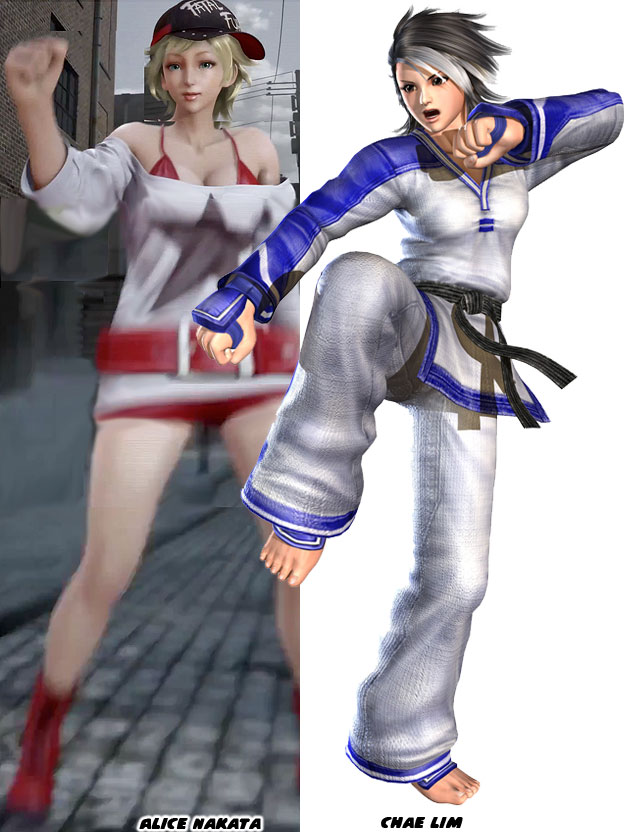
When variations of the look turned up in pachislot machines (a combination pachinko and slot machine popular in Japanese arcades) it still worked. Take a look at Alice Garnet Nakata, the idol character featured in the game. She was a sort of crude talking cheerleader that followed Terry around. Her look was planted in between the style of Terry and Mary. The familiar red, white and blue motif, the cap, the red heels instead of sneakers. Of course you can't miss the extra-wide belt. It's almost as if somebody at SNK had wondered out loud what would have happened if Terry and Mary had a daughter. What would she look like? Well the truth is a little bit backwards. In the planning stages of Fatal Fury 3 there was a new female character in the works called Alice Chrysler (the Japanese aren't the best at making up Western-sounding names). Alice was an understudy of TaeKwon-Do master Kim Kaphwan. She had an affinity for Terry Bogard and was designed to replace Mai Shiranui as the female lead. From a design standpoint she would have beaten Sakura as the younger girl version of the star by one whole year. SNK decided against the original Alice and went back to the drawing board. She got a little older, stronger and was working with different fighting forms and a new name, Mary Ryan. All great ideas however never really die. The studio revisited the understudy of Kim and a new character came out called Chae Lim. The scrappy "secret weapon" with short feathered hair would debut in the KOF Maximum Impact Tournament in 2004. Almost a decade later the studio revisited Alice for the pachislot machine. Her long ponytail gave way to short feathered hair in her makeover. In 2016 SNK would make her a formal character in the King of Fighters XIV.

Competition between SNK and Capcom meant that both studios were taking chances with character designs. In the early days the studios were influenced by action cinema and manga. The heroes of those first games were based on real martial artists and mythical fighters. In time the studios learned that fighting games did not have to be solely about burly men trading punches. They could be about cops, soldiers, gifted orphans, girls and women. If these people had a talent, a solid design and a reason to fight then audiences were willing to come along for the ride. Through the '90s SNK had made some of the biggest advances in diversity for the genre. When the studio decided that the King of Fighters should be about team play then it meant that the roster would have to be filled in with dozens of new faces. There was no way that they could all be men. The women they started with were already well known and all the new ones introduced, both good and evil, found a following. Blue Mary was near the top of the list. She was well regarded and many fans wanted to see if SNK planned any sort of resolution between her and Terry Bogard. It was the unspoken thing that fans had wondered about all fighting games. What sort of relationship did the main characters have and would the male and female stars of the games ever get together. Capcom fans from both sides of the Pacific wondered out loud if Ryu and Chun-Li were a couple. That was the case in the licensed Hong Kong comics and of course many fan pieces.
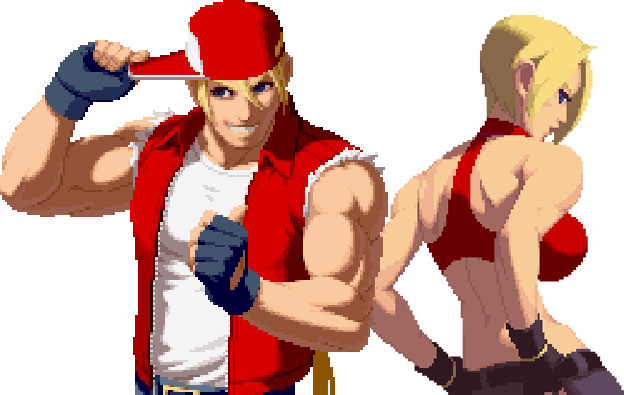


For SNK fans many wondered if Terry and Mary ever "hooked up." SNK and Capcom avoided the question for most of their characters. This was because when they designed them they didn't have romance in mind. Each and every fighter, male and female, was a stand-alone design. They did not need to have a relationship with any other character in order to be accepted. Kevin Rian and Mary Ryan may have been related but both looked and fought very differently from each other. Even if one character were introduced because of the success of a previous icon it didn't matter. Sakura and Sean for example were not Xerox copies of Ken and Ryu despite being labeled "Shotoclones." Each subsequent fighter from the biggest studios had to hold up to the designs in other titles. When Blue Mary and Sakura debuted they were a sort of balance to the male stars of the games. They had just enough design cues so that audiences knew where they came from, and also enough originality to them as to make them unique fighters. Yet that didn't stop fans from asking the question, especially between Terry and Mary. Terry after all was a lone wolf. His brother Andy had a relationship with the busty ninja Mai Shiranui but poor Terry was all alone. Then there was Mary, she lost her boyfriend and father and was living with a dog. If there was someone in South Town that needed a new relationship it would have been her. Only it didn't come to pass. At least not in the first decade of the Fatal Fury timeline. Terry was busy raising a surrogate son and Mary was busy with her career of keeping South Town from imploding. What SNK did do however was give fans a hint of closure.
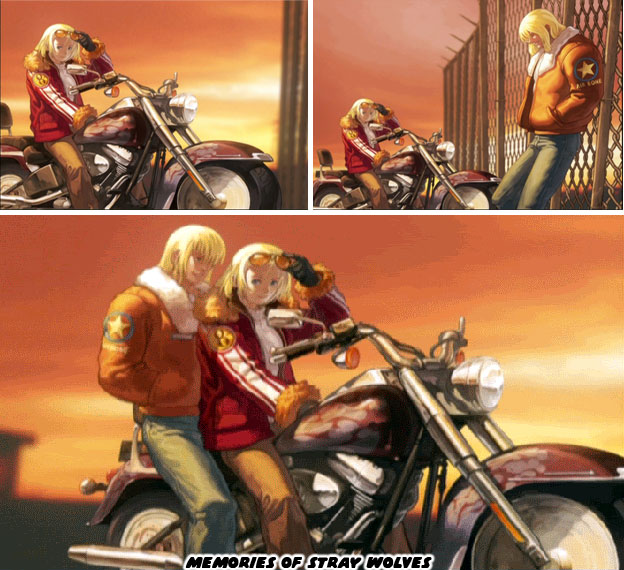
 

In the drama CD Memories of Stray Wolves Terry and Rock Howard were putting together a narrative. Where did it all begin for the main characters, why were they fighting, where did the time go? Rock was on the eve of his first King of Fighters tournament, he was a little nervous but he also wanted some answers. This story was set during the timeline of Mark of the Wolves, a decade after the demise of Geese Howard. Fatal Fury alumni Duck King, Richard Meyer and Blue Mary all made appearances. Mary was dealing with a few difficult cases and hadn't had a chance to visit with them as often as she'd like. Rock left to find his way and Terry seemed a little blue. Mary showed up on her motorcycle at the end of the story. The years had been kind to both as they still made an attractive couple. While it was never implied in the games there was a relationship between the two. Terry jumped on the back of her motorcycle to look for some fun. It was a creative risk that worked well for the canon and character development at SNK. It was something that was not introduced for the characters until years later and it made sense. It was an evolutionary shift for character designs which gave them more dimension and made the more personable. While I don't think that Ryu or Chun-Li should ever be seen the same way it would be nice to see Capcom age and mature the characters more in the Street Fighter series. There has been too much rehashing of the same characters year after year. We will see how else things have changed post King of Fighters XIV and Street Fighter V. I am looking forward to that. How about you? As always if you enjoyed this blog and would like to sponsor me please visit my Patreon page and consider donating each month, even as little as $1 would help make better blogs and even podcasts!
 follow the Street Writer on Patreon!

Friday, July 1, 2016

The legend of Blue Mary, or girls in fighting games, part 2...

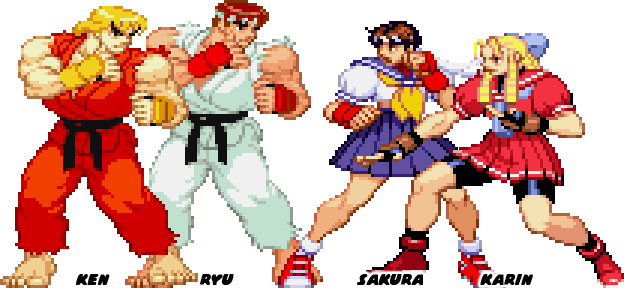
In the previous blog I talked about how Capcom and SNK were trading jabs at each other through the characters they had introduced in their own respective fighting games. The competition was healthy from a business standpoint and also for fans that were lining up to try each and every new game and update from the two publishers. SNK and Capcom both had established strong female characters early on yet SNK also did something more unique. The designers in-house created female characters that could be interpreted as counterparts to the male stars. It was a sort of symmetry that worked for the most memorable fighting games but not many studios recognized that symmetry and balance were things that helped make the cast unique while filling out a roster. When Sakura debuted in Street Fighter Zero it was obvious that she was filling in a role as a female counterpart to Ryu, as well as taking design cues from Yuri Sakazaki. Dan was a sort of balance to the cast, a way of taking two SNK-ish characters and putting them in Street Fighter continuity. Yet there was something missing. Capcom didn't realize it until comic book artist Masahiko Nakahira introduced Karin Kanzuki in his Sakura Ganbare! comics. Suddenly it was too obvious that Sakura needed her own rich, white, counterpart. Karin was officially added by Capcom to the lineup in Street Fighter Zero / Alpha 3. Audiences in the West did not see the comics that introduced her until more than a decade later when Udon translated them. It didn't matter however, the fair skin, red dress and blonde hair pretty much summed up what Karin was supposed to represent. Her unique trapping strikes made her stand out, she was not another "shotoclone." She was certainly more than a girl version of Ken.


SNK had established one of the most important rules in fighting game character designs before Capcom; the symmetry of female counterparts to be specific. It can be fair to say that I did not credit the studio enough for their contributions to the genre in earlier blogs. SNK was critical in the history of the genre and shaped not only their own legacy but influenced the creative decisions in rival studios. SNK developed many strong female character archetypes in every fighting game they produced. The women in these games varied in age, style and ability. Some were very young but capable, and some were closer in age and strength to the male stars of the game. The other studios developing fighting games for the Neo Geo were sometimes on board with the strong female characters but others had more sexual pandering designs in mind. Yuri was a cute character in the Art of Fighting, she was the kid sister of Ryo Sakazaki and not meant to be the main protagonist. It was a fighter in the Fatal Fury series that proved sex and strength could be found in equal measure. While developing this character the team at SNK looked at the elements that made the star of the series work. They then created a female counterpart with a similar look, down to the color schemes and nationality, but with completely different moves. In essence you could say that the studio was working on Karin Kanzuki years before Capcom or Masahiko Nakahira even thought about it. The name of this revolutionary character was Mary Ryan aka Blue Mary. She would become a counterpoint to Terry Bogard. She demonstrated that a fem fighter could be an important addition to the lineup and not just fan service.


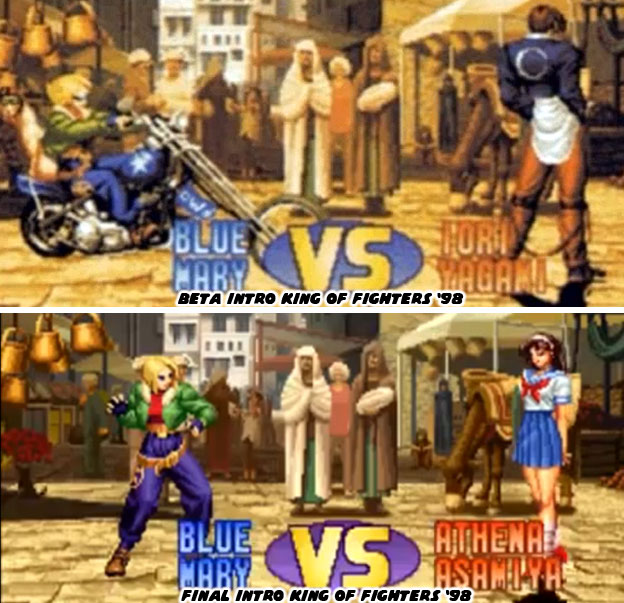
Blue Mary debuted in Fatal Fury 3 - Wild Ambition in 1995. Remember that both she and Yuri were playable characters in a fighting game before years before Sakura or Karin. Mary had a complex back story that would be unveiled over the years. It made her more than just a pretty face. Her origin helped the designers know how to present her in the series, how to include her into the plot and even figure out what techniques she would be using. Mary was always presented as a fearless, completely independent woman. Yet there was a good bit of planning behind this. Her father was a Secret Service Agent as was Butch her boyfriend. Both had taught her some fighting moves as did her own grandfather. Butch and her father were both killed in the line of duty. She believed strongly in justice and became a detective, working on and off for the law. When she debuted in Fatal Fury game there was nothing to lead players into thinking she was in a relationship. The two holdovers from her earlier life were put in plain site and only revealed later on. She was sometimes accompanied by a dog to her matches. This was Antonio or Anton for short, he was a puppy when Mary and Butch adopted him. She also wore a bomber jacket to the the fights, this was a gift from Butch before he passed away. Blue Mary could sometimes be seen riding a motorcycle. It was the obvious choice for a cool American character and a trait that was unique to her. In an early build of the King of Fighters '98 Blue Mary had the trifecta introduction, the motorcycle, her jacket, and Anton riding in the back with goggles on. I'm not sure why the intro was dropped in the final build. Maybe it was too masculine for Japanese tastes?


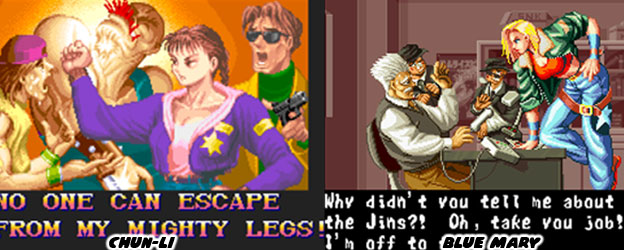
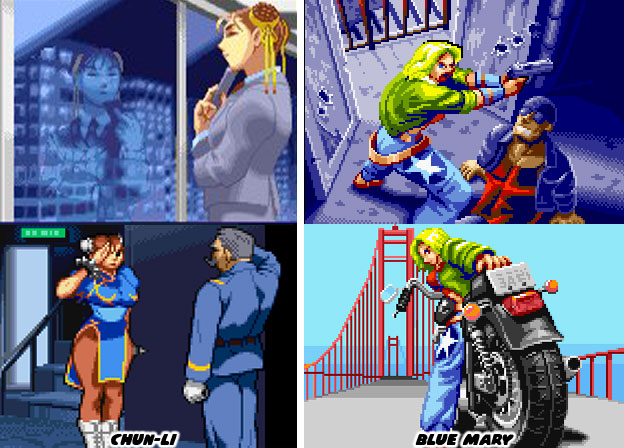
Blue Mary was as far from the dainty-fighter archetype as one could get. She was not the damsel in distress and she was certainly not the prize for any male lead. This character had a lot in common with the first female Street Fighter legend. Chun-Li's father was assassinated by Balrog (Claw), one of the generals of Shadowlaw (Shadaloo). She joined the police academy to obtain justice and eventually worked her way up to ICPO officer. She was a no-nonsense character behind the badge, especially while wearing her plain clothes uniform. What made her unique among the other female icons was that she could then switch her role and appear very feminine in the Street Fighter tournament. She wore nylons and a form-fitting, pseudo traditional dress. Blue Mary did not have this second layer of design. She was more like the female leads in other fighting games. The person that you saw in the pre-round animations and at the end of the game still looked the same.


The design and presentation of Blue Mary was deliberate. She was the cool cop, the rogue that didn't necessarily take orders, a trope created in Western films and shows like Lethal Weapon and Miami Vice. She was a hard drinking, door kicking, motorcycle riding, crime busting bad ass. You could almost imagine the character starring in her own crime action series. Chun-Li was much more reserved. Her time in the academy made her a student of the criminal mind. She began looking at the big picture instead of focusing on stopping individual crimes as she matured through the events of Street Fighter Zero and Street Fighter II. She knew that avenging the death of her father was only one piece of a bigger puzzle. The crimes, drugs, arms flooding the streets in Asia were being controlled by a central kingpin. It was revealed that General Vega had ordered the hit on her father. She would figure out that it was Shadowlaw trying to destabilize several countries in the south. She was instrumental in revealing this conspiracy and helping international forces take down their base of operations. She became a decorated officer in the process. Blue Mary on the other hand wasn't looking for accolades. She wanted to do her job and keep scum off the streets, even if it meant taking down a powerful kingpin in hand-to-hand combat. She was fearless, if slightly foolish, in that regard.


The physical appearance of Blue Mary was molded very closely on Terry Bogard the breakout star of the Fatal Fury series. The Japanese designers didn't really have a point of reference for white American martial arts stars. There were a few notable fighters in the '60s, '70s and '80s that did travel to Japan and abroad. Chuck Norris, Joe Lewis and Bill "Superfoot" Wallace were some of the high-profile white martial artists that made a name for themselves. They appeared on the popular ABC Wide World of Sports broadcasts and on the covers of Black Belt magazine. They were inspiring millions of white Americans to pursue the fighting arts while Bruce Lee and Jim Kelly were opening the eyes of minorities. Yet none of the men were big enough to have their own comic book or cartoon series in Japan, like Mas Oyama and Yoshiji Soeno. To be fair Chuck Norris did have his own cartoon and toy line in the USA in the '80s and Lee had his own comic book series as well. To the mainstream Japanese and many of the artists working at both SNK and Capcom they simply didn't know what made white America unique. They had a few fashion cues from our music videos, television shows and action films. This was what they used when creating Terry Bogard, and for that matter many of the other western characters in Capcom games as well. Stop and think about it for a second, if you were born in the USA and had a reputation for fighting would you wear jeans, a bright red jacket with a star on the back and a trucker cap? Maybe you would wear something more subdued, something that didn't attract too much attention especially from gangs or even the cops. Of course the developers in Japan assumed that their customers needed to see that trope, that stereotype in order to identify the cast. The American needed primary colors that were red, white and blue.


The designers at SNK didn't have to try very hard when creating their new cool female character. They changed some of the colors and dropped the cap but Blue Mary had a signature style that was very much reminiscent of Terry's, The physical similarities didn't end there. Both were blonde, it reinforced the idea that white people were mostly of English descent. Think about how many white characters, especially the early ones in fighting games were blonde. Ken and Joe in the original Street Fighter, Cody in Final Fight, the wrestler in Street Smart, Guile in Street Fighter II, Galford in Samurai Spirits, Ray in Fighter's History, Paul Phoenix in Tekken, Jacky Bryant in Virtua Fighter… the list goes on. It was a bit of racial pandering on the part of the developers. They assumed that most players in the West would want to try a character from their homeland before they tried an Asian character. It was logical thinking. What they often missed were the details that made the characters really "American" or "English" or "French." But I digress. That was only part of the reason why the characters were blonde. The primary colors that were assigned to the costumes needed balance. Most of the Japanese characters practiced karate and their gi was typically white. That costume contrasted well with black hair. They couldn't assign white costumes to the white characters with blonde hair, there wasn't enough contrast. So solid colors like red, green and blue were given to these fighters instead. Blonde hair worked well with those colors and the tradition more or less stuck.


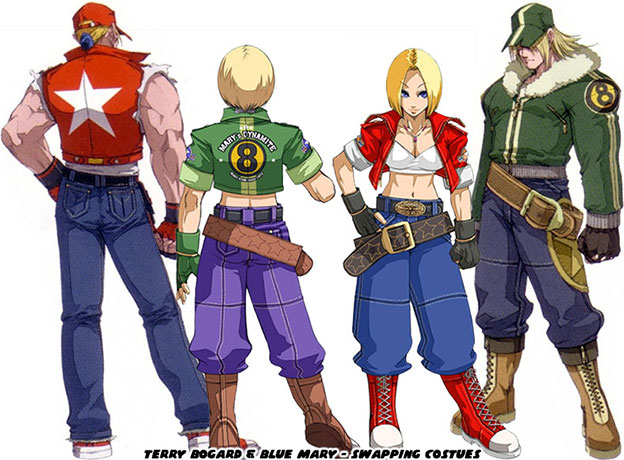
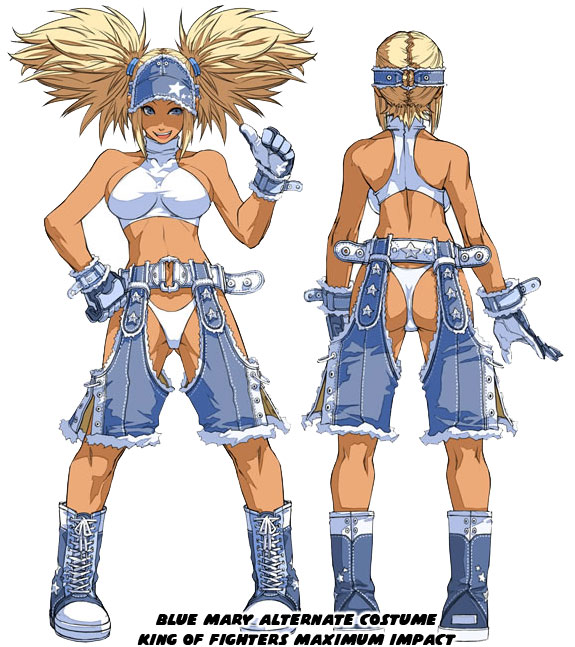
The color choices assigned to Terry and Mary were complimentary. Mary had a few differences in her uniform that made her stand apart. Her pants were not blue jeans but a darker purple with a large sheriff star on the side. She ditched the sneakers for boots and she wore a wide belt on her hips. It was a look that was a little more biker than brawler. It worked so well for her that it was considered as an acceptable alternate costume for Terry in the King of Fighters Maximum Impact game. The opposite was true and Mary could wear Terry's clothing and everything looked great. What was disappointing however was her alternate costume. Terry was given a "B" costume known as the Wild Wolf which was how he appeared in the Garou: Mark of the Wolves game. That version of Fatal Fury was set in the future where Terry was an older and more experienced fighter. He wore a large bomber jacket, boots and let his hair loose. Gone were the sneakers and over-the-top red, white and blue color scheme. Terry was given a look that was more like a biker. Sadly Blue Mary did not get the same Wild Wolf treatment. Instead she was presented in a white bikini with nonsensical jean chaps and a jean visor. Any modicum of respect the original designers meant for her went right out the window. It was unapologetic fan service that didn't fit the character, her origin or any previous appearance.


Blue Mary was a female fighter that defied convention. Her appearance was one thing, the moves she featured in game were something else. In the next blog we will take a closer look at the things that made Blue Mary memorable. As always if you enjoyed this blog and would like to sponsor me please visit my Patreon page and consider donating each month, even as little as $1 would help make better blogs and even podcasts!
 follow the Street Writer on Patreon!

Wednesday, May 13, 2026

Bookmark This Page; Women in fighting games

I love to write about fighting games, and fighting game characters. If you want a collection of articles about women in fighting games then Bookmark This Page.

The return of Rainbow Mika, did Capcom cross the line in Street Fighter V?

Laura, the new leading lady of Street Fighter V or more fanservice?

Odd Girl Out, a look at alternate female fighting game characters...

The legend of Blue Mary, or girls in fighting games, part 1…

The legend of Blue Mary, or girls in fighting games, part 2…

The legend of Blue Mary, or girls in fighting games, part 3…

Why is Street Fighter playing with Dolls?

Meet Street Fighter V's Menat, an old soul in a young body?

The rise of Falke, or how military design works in fighting games...

The Chun-Li template, don't follow it too closely! A 1UP classic...

A look at Marisa, the Street Fighter 6 gladiator...

A look at Lili, the new native Mexican fighter in Street Fighter 6

Juri in Street Fighter 6, how her design got better with time

Manon in Street Fighter 6, representing a style over 200 years in the making

Cammy gets an entirely new look for Street Fighter 6, let's see how

Let's talk about A.K.I., the Dragon Lady of Street Fighter 6

Meet Kimberly, is she the Urban ninja of Street Fighter 6?

Chun-Li's new look in Street Fighter 6. Is it a step backwards?

Style Wars, looking at Kimberly in Street Fighter 6, and Isla from King of Fighters XIV.

The Street Fighter 6 pre-order trailer, a look at Manon, the graceful judo practitioner

The Street Fighter 6 pre-order trailer, a look at Marisa, the modern gladiator

Lili gets a makeover, just in time for Street Fighter 6!

Do you have a favorite female character in a fighting game. Tell me about it in the comments section. As always if you enjoyed this blog, and would like to sponsor me please visit my Patreon page and consider donating each month, even as little as $1 would help make better blogs and even podcasts!
follow the Street Writer on Patreon!

Wednesday, July 6, 2022

Figuring out the changing Street Fighter style, part 1...

Over the last month I had talked a lot about the new, and returning faces in Street Fighter 6. I studied their outfits, the colors assigned to them, their nationality, and physical build. I did my best to try to figure out their roots, and fighting method, and share it with the visitors to my blog. In the end it reminded me that there was a style of character design that could be considered uniquely “Street Fighter.” By that same token there was a style of design that worked for Mortal Kombat, Tekken, King of Fighters, and Killer Instinct. The aesthetic of Capcom was distinct. This was thanks to the legacy of artists that had worked there. Akiman, Shoei, Bengus, Daigo Ikeno, Edayan, Kinu Nishimura were brilliant artists that had a hand in developing the style, and direction of the SF series.

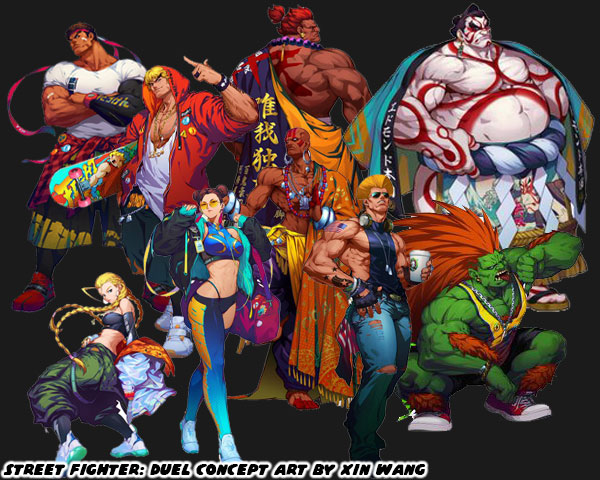
The newest designer Yusuke Hashimoto, was now putting his own unique stamp on the lineup. Yusuke had produced Bayonetta, so he was comfortable designing all manner of characters with different outfits, skin colors, builds, and body types. In short, he was the perfect person to shape the direction of this generation of fighters. With that said let’s try to figure out what made the “SF Style” distinct. The most obvious thing would be the costumes the characters wore. Could you really put a SF character in just any outfit, and would it work within the context of the game? I’m not saying that every character had to be wearing an authentic martial arts costume. That type of visual storytelling did not work great in SF. Instead there was a mix of pseudo-authentic costumes, and casual uniforms to break up the monotony. Consider for a moment what it would look like if everyone in the lineup wore casual clothing. Concept artist Xin Wang came up with fashionable makeovers for the SF cast in the Chinese mobile game Street Fighter: Duel. I would argue that Mr. Hashimoto’s designs were sort of a counter to that. He wanted to bring back the classics, but not go overboard with their costumes.

Long time fans would enjoy seeing their favorite characters in new outfits. However what did this do to new players? How did the game change by shifting just one element? Were new players able to make out the style of fighting that a character represented based on casual wear? Were they able to figure out what they could do based on the color of their skin, or their physical size? Now consider what costumes affected from a game play perspective. Was it easy to read the action on the screen if a character was covered up with long sleeves, or pants? What about vivid patterns, or clashing color choices on an outfit? Did these things make it easier to play the game, or were they distracting? I could argue similar points for excessive splashes of color, lightning, fire, smoke, etc. while the characters performed special attacks. There were many individual elements that made up the main costume choices for the SF cast. In the early days arcade cabinets, and game consoles lacked the memory, and processing power to render anything too detailed. The developers were limited to a simple outfit, and a primary color. This set the standard that was copied the world over. Now that consoles, and even mobile devices were more powerful then it became easier to create characters with highly detailed outfits, and millions of color choices. Was is then critical to take advantage of all this processing power? Or did putting too much into a costume’s detail take away from the overall presentation of the character?

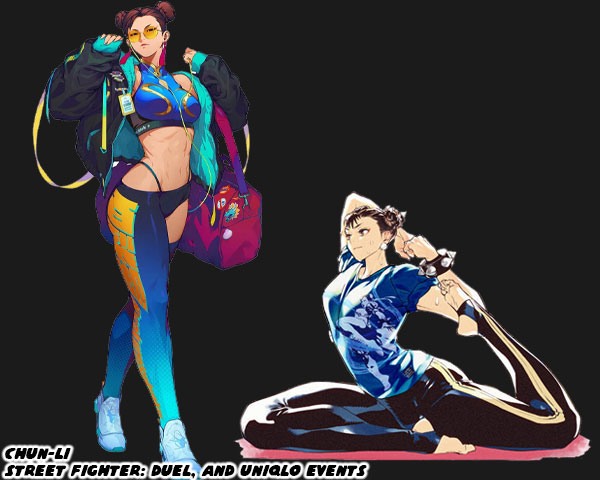
I welcomed the addition of Story, Arcade, and Battle costumes that were put into the library in SFV. I was not against a character getting an updated main costume in the series, as long as it didn’t stray too far from the original design. The importance of a primary costume still remained. This was why I had no objections to the new designs for Dhalsim or Blanka in SF6. There was even a chance for the studio to take a good idea, and make it even better. I thought this was the case for Juri’s update. I saw the studio taking a step backwards when they revealed the new look of Chun-Li. They took away the small details that added up to make her costume truly stand out not only in the lineup, but across the spectrum of fighting games. Chun-Li perfectly encapsulated the Street Fighter school of design. It didn’t matter if you were from the Middle East, South America, or Europe. It didn’t matter if you had played a million fighting games, or if this was your first. When you looked at Chun-Li for the first time you almost instantly thought “Chinese Fighter.” Why was this? 

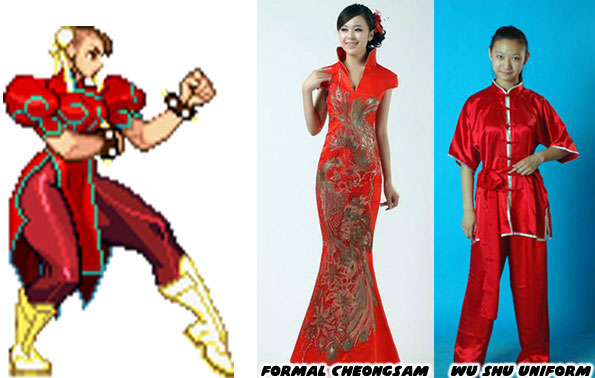
Audiences had seen Chun-Li’s prototype appear in pop culture generations before the game came out. Whether in story, film, photo, television, cartoon, or comics. The artists working at Capcom were pulling from various influences. People saw the repetition of heroic Chinese fighters, especially in Taiwanese, and Hong Kong cinema. They had seen physical Chinese representations in the form of certain hairstyles, makeup, and fashions. The cut of a dress, the use of ribbons, belts, sashes, and how they were assembled could be considered Chinese, or Mexican, or French, or American. Audiences had seen some combination of a wu shu uniform, or a traditional cheongsam at some point in the past. These were actual, traditional outfits from China. The genius of Capcom was how Akira “Akiman” Yasuda arranged certain elements when designing Chun-Li. The puffy shoulders, the pantyhose, wrestling boots, wide belt, and weighted bracelets had never been used in an actual martial arts costume, let alone any traditional Chinese dress. Audiences filled in the blanks with what they knew. They saw elements that they had seen before, and they assumed the rest was traditional Chinese. It was an absolutely brilliant trick, and set a standard that few studios could match. Yusuke Hashimoto showed that he was aware of what Akiman had done. Jaime in Street Fighter 6 followed the exact same design path of Chun-Li.

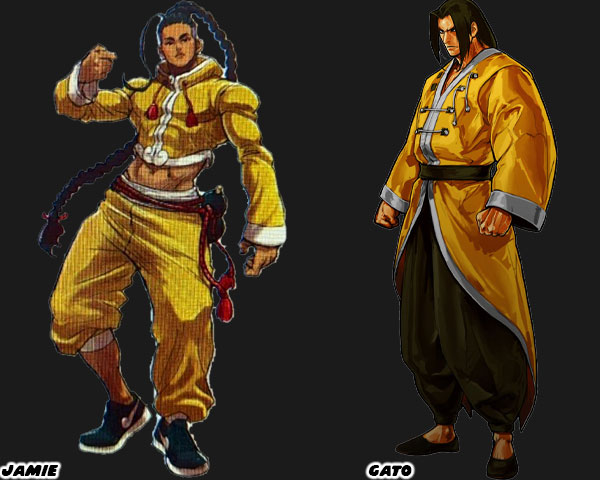
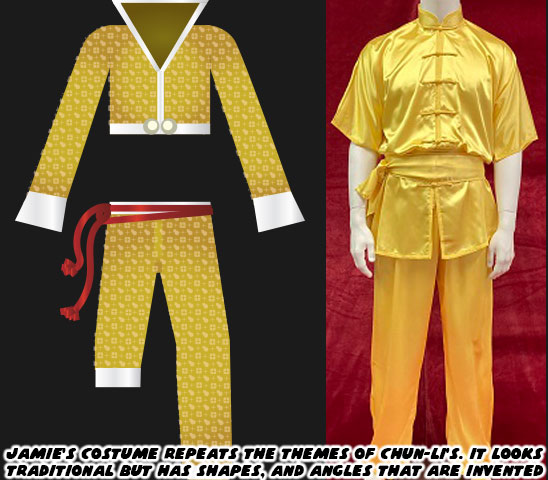
I want you to compare Jamie, and Gato who was a fighter from SNK’s Garou Mark of the Wolves. I had already highlighted Jamie’s various elements on my blog, but let me point them out again. Street Fighter 6 Director Takayuki Nakayama, Producers Kazuhiro Tsuchiya, and Shuhei Matsumoto, along with Yusuke Hashimoto spoke about the influence that Hip Hop had on SF6 in several interviews. Jamie was from Hong Kong, and at first glance it looked like he was wearing a traditional kung-fu outfit, but his costume had a decidedly urban flair to it. Just like Chun-Li it wasn’t apparent until you looked closer. The crop top, long sleeves, and wide collar were tailored to his frame, they were not baggy at all. This fit hadn’t really been worn in any traditional form of Chinese kempo, or kung-fu. The pants with one leg rolled up was a style from USA Hip Hop circles. The color of the fabric looked authentic, until you looked closer, and saw that it had a Louis Vuitton-inspired pattern on it.

Jamie also wore sneakers with a cloud pattern at the front of what looked like the Nike swoosh design. Even his haircut wasn’t quite traditional. The long braid was supposed to make audiences think of the queue worn by men during the Qing Dynasty. Yet that hair style required the men to shave the front part of their scalp. Jamie instead had a modern fade on the sides, and back of his head. Jamie had a red rope belt with a wine gourd strapped to his hip. Many classical heroes in Chinese mythology such as Lu Zhishen, Ji Gong, and Li Tieguai carried a wine gourd as well. Capcom swore that Jamie was drinking a special juice, and not booze from the gourd. Jamie’s design really captured the SF Style, but it did not reflect the quality of the designs placed on some of the returning characters.

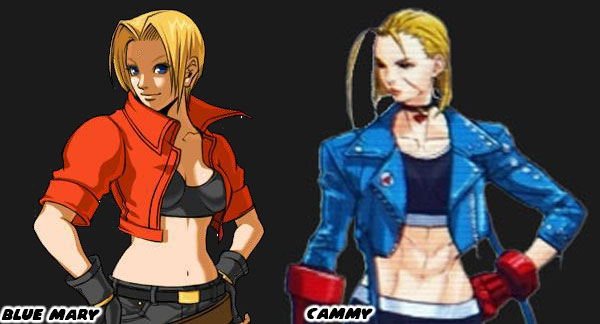
Cammy for example had an entirely new look that was much more casual than earlier looks. I felt that her short jacket, and leggings outfit betrayed the spirit of her original military-inspired uniform. My old friend DarthEnderX mentioned that she looked like a knock-off Blue Mary. That was a valid comparison. I had done a three part series on Blue Mary from the Fatal Fury series by SNK. Mary was essentially a female version of the protagonist Terry Bogard. She wasn’t a Sakura in terms to counterpart either, but more of a super cop like Chun-Li. Her look of jeans, and jacket was warranted as she was supposed to be very Western character. The casual costumes featured on the majority of SNK characters helped distinguish their lineup from Capcom’s. The Street Fighter-Style of character design relied on putting fighters in pseudo-traditional outfits. They had to be instantly recognizable to represent a certain country, school, or style. Like Ken, Ryu, Chun-Li, and Jamie. SNK had an entirely different approach. The genius of SNK’s design was that they hid the martial arts master in plain sight. They might be wearing a three-piece suit, a tuxedo, or a Hawaiian shirt, and flip flops. In every case they were unstoppable brawlers.

A good chunk of the Fatal Fury, Art of Fighting, and King of Fighters lineup were trained martial artists in street clothes. There were some with classical outfits sprinkled through the series, like Gato, Joe Higashi, and Kim Kaphwan. These traditional designs helped connect the audience to the well-dressed modern archetypes. If you are a budding designer, and are trying to figure out if your style works for SNK, Capcom, or other studios then practice creating fighters of common martial arts. See if you can put a karate fighter in a pseudo traditional gi. Or what that fighter would look like in a suit. How would audiences be able to tell that this person was a fighter? It’s a difficult exercise for sure. Capcom, and SNK had actually been broadcasting who their designs were targeted for in the past decade. We will explore these things in the next blog. I hope to see you back for that. If you have any thoughts on the blog please let me know in the comments section. As always if you would like to sponsor me please visit my Patreon page and consider donating each month, even as little as $1 would help make better blogs and even podcasts!
follow the Street Writer on Patreon!

Thursday, September 28, 2017

Hiding the master in plain sight, the genius of SNK's character design...part 2

Fatal Fury introduced audiences to the SNK school of fighting game design. Audiences could now choose between traditional masters like Joe Higashi, street fighters like Terry Bogard, or a hybrid fighter like Andy Bogard. By contrast the Capcom school of design was rooted closer to featuring only martial arts archetypes. The fighters all wore costumes that looked classic, they each represented a certain school of fighting. Almost none of the characters in Street Fighter II wore street clothing, whereas many of those in Fatal Fury did. This boiled down to the people that were developing the games. Takashi Nishiyama and Hiroshi Matsumoto put literal street fighters in the original Street Fighter. People like Mike, Joe and Birdie fought in their everyday clothing. These things carried over into Fatal Fury’s cast. It was Yoshiki Okamoto, Akira Nishitani and Akira Yasuda that decided to focus on archetypes for Street Fighter II. SNK boss Eikichi Kawasaki wanted his fighting games to be the biggest and the best, his new title, developed by Mr. Matsumoto was the most ambitious.


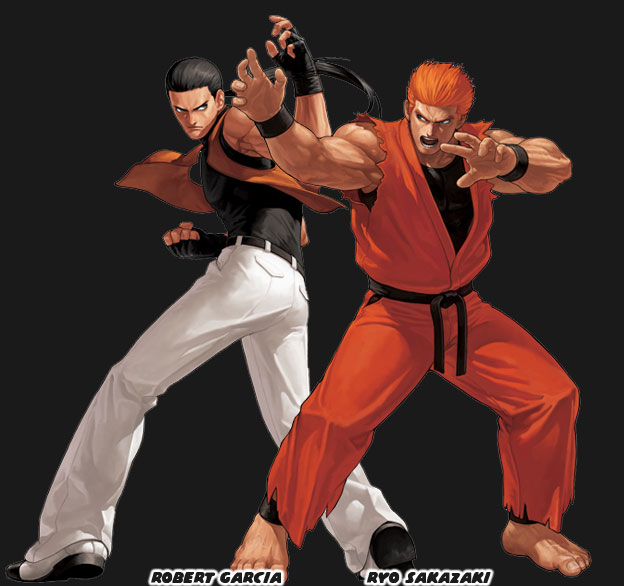
Mr. Matsumoto wanted The Art of Fighting (AoF) to be more cinematic, to look and feel like an action movie. To be more visceral than any game before it. Like Street Smart and Fatal Fury there was a mix of the traditional martial arts master and the street fighter as playable characters. The fictional Kyokugenryu Karate style was placed on both Robert Garcia and Ryo Sakazaki. The two were evolved from the Ken and Ryu template respectively. This new game was really pushing the power of the Neo Geo console. It featured more color, more detail and sprites bigger than the competition’s. Not to mention that it had graphics that zoomed in and out of the action. These sprites could also reveal damage. Characters bruised and their clothing tore from round to round. There was even a slight RPG element as characters could grow and evolve thanks to the lessons learned in the bonus stages. The genius of this game came in the planning stages. If SNK wanted to dethrone Capcom as the best fighting game developer then they had to offer the best experience. Although Fatal Fury and the Art of Fighting looked and played differently they were part of the same shared universe. This meant that at some point there would be a crossover game featuring a massive library of established characters.


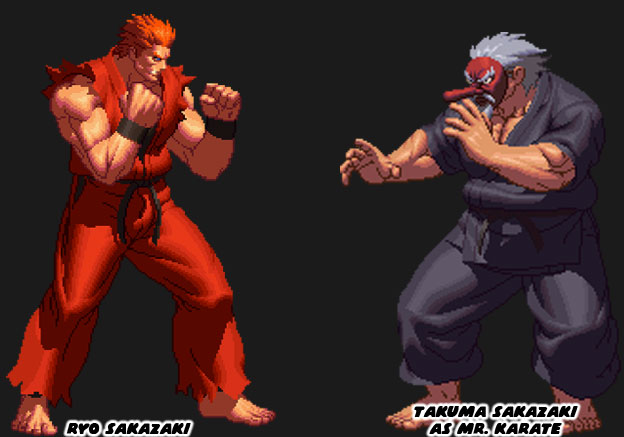
The entire cinematic feel of AoF was not lost on audiences. The figures in the game had more realistic proportions and looked less cartoonish than their rivals. It was much easier to get pulled into this world as bits and pieces of the story were revealed in between every stage. Yuri Sakazaki, the young sister of Ryo had been kidnapped. It was up to Ryo and Robert to find and save her. Every person that the duo faced had been hired or bribed by Mr. Big, a South Town mob boss. Each encounter brought them one step closer to the truth. At the end of the journey Ryo found out that the kidnapper was a martial arts master known as Mr. Karate. At the climax of the game Yuri stopped her brother from killing Mr. Karate. She cried out that man was their father. This was an exceptional plot twist and something that set up a sequel. It turned out that both Mr. Big and Mr. Karate answered to Geese Howard. Now that Yuri was safe there would be a reckoning between the Sakazaki family and Howard. Imagine how confident Geese must have been in his abilities by also starting a war with the Bogard brothers at around the same time. Story points aside the AoF game is one of the perfect examples of the SNK school of design. I’ll begin with one of the best masters hidden in plain sight.


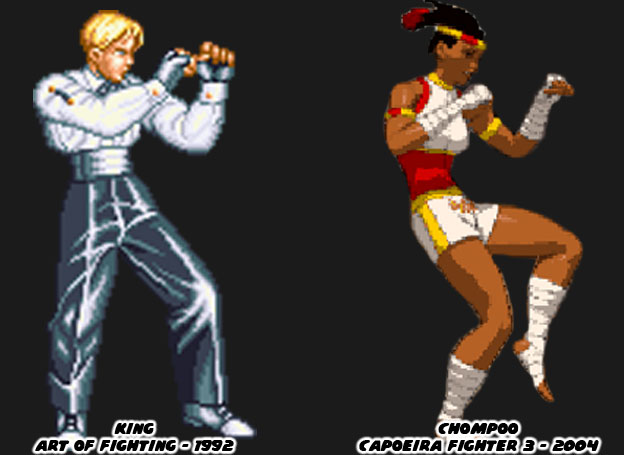
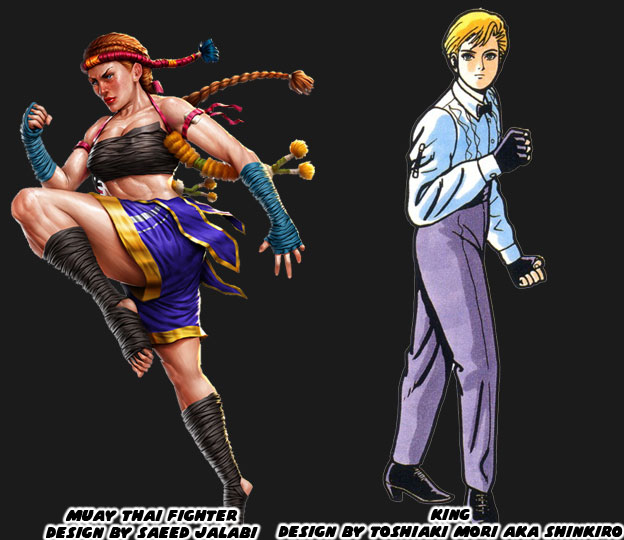
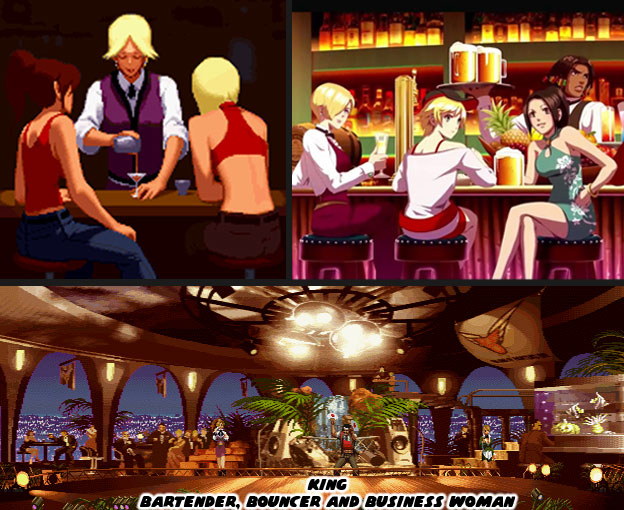
A while back I talked about how the traditional Muay Thai master ended up in fighting games. I called Chompoo the first notable female Muay Thai master in a fighting game. This angered a lot of SNK fans because the character King predated her by more than 20 years. In context I was talking about actual Thai fighters that dressed in the traditional fighting uniforms. Chompoo had the shorts, taped up hands and feet and even headdress. I was not talking about characters that knew Thai boxing. With that said let’s actually look at the elements that went into making King and why she had a fantastic design. First off she wore a suit, close to that of a bartender in a high class restaurant. She had the familiar stance, hands up for striking and moving on the balls of her feet. If you had asked any other designer to create a female Muay Thai master you probably would have ended up with someone that looked more like the character by Saeed Jalabi. Saeed hit all of the traditional notes perfectly. The shorts, headdress and even wrapped cords of older, classical forms of the Thai boxing arts. Any audience member could look at the design and know instantly this was some sort of fighter. Even if the gamer was not familiar with the fighting arts they could still tell a few things about her. The athletic frame, toned muscles, wrapped hands and feet were meant for striking. This was not a ceremonial costume but one for competition.


By contrast look at the design that Toshiaki Mori came up with. The SNK designer would become one of the most influential artists of all time. Most people would recognize him by his pen name, Shinkiro. He didn’t approach his designs the way one would have expected. What made his work so great was how down-to-Earth every figure was. When he was helping create the costumes for the AoF cast he knew to make each character fit the story. As Robert and Ryo made their way through South Town the people they fought reflected a certain part of the city. The thugs looked like biker gang members, those in the military wore fatigues. Having a half-naked Muay Thai fighter in a classy restaurant would not have made any sense. But what about one dressed like a bartender? The uniform was central to the character. Modern martial arts movies featured characters that wore deceptive clothing. One the first examples was the tuxedo that Robert Baker wore when he fought Bruce Lee in Fist of Fury (1972). Bruce Lee helped bring classic wuxia or Chinese hero stories into the modern era. The same thing was true of the suit that Benny Urquidez wore when he fought Jackie Chan in Wheels on Meals (1984).


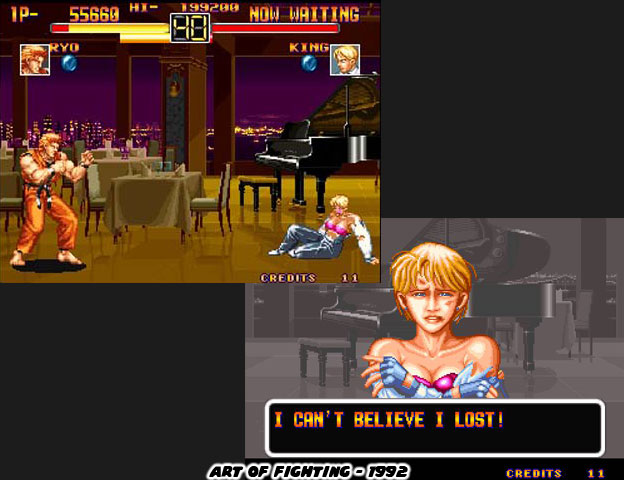
The suit was deceptive but that was only one layer of Shinkiro’s design. King looked like an effeminate man, or perhaps a boy. Audiences had been conditioned to expect 99% of the people they fought to be men. Up until that point Fan from Yie Ar Kung-Fu was the only female opponent in a fighting game and Chun-Li from Street Fighter II was the only playable female character. Audiences expected a female martial artists to be wearing a traditional dress. That whole idea was turned upside down if players tore the blouse off of King with a special attack. That was when it was revealed that she was wearing a bra underneath. That violent act made the game feel far more mature than any other title. This sort of turn was something that you would expect in a movie and certainly not in a game. SNK hid the reveal right until the end, going so far as to name the character King instead of Queen. In doing so it made the design very memorable. This master of the fighting arts was hiding in plain sight. She would be the perfect example as to what set SNK apart from the competition.


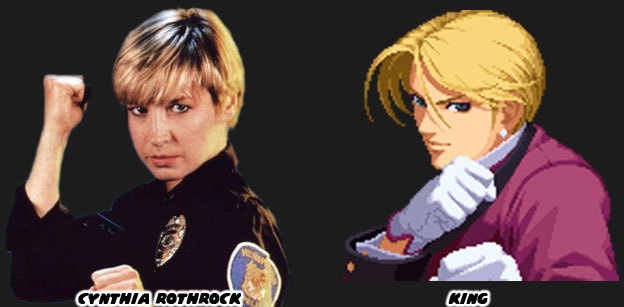
If you have been reading my blogs for a while then you know that I like to dig into the influences behind the various characters. For King the most obvious comparison would be with the martial arts star Cynthia Rothrock. Since 1985 Cynthia had been featured in a string of movies, mostly produced overseas. Women hadn’t really been considered for leading roles in most Western-produced martial arts films. There have been exceptions of course in other action films such as the Black Widow from the Avengers films, Furiosa from Mad Max or Gazelle from the Kingsmen. Those characters were almost always in a supporting role and not the stars of the film. In Hong Kong however women could be the stars of the film. This was a tradition going back to 1928. Heroes came in all shapes (see the chubby Sammo Hung), sizes, and colors even. When Cynthia couldn’t land a role in a US film she was almost always guaranteed to find a spot in Hong Kong. The same thing was true for Ron Van Clief. As a black martial artist, and Army veteran he faced tremendous racism in the USA but was a welcome star in Hong Kong cinema.


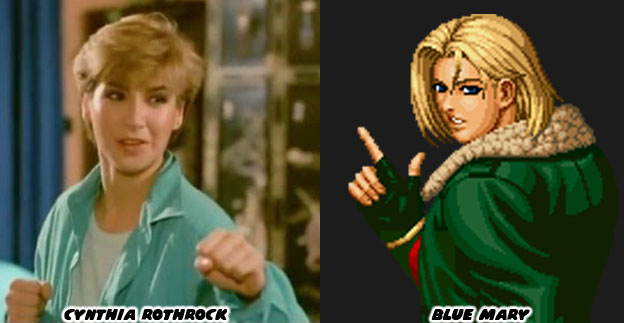
Cynthia’s trademark short haircut, lightning fast kicks and array of martial arts moves made her a stand out star. She had been actively involved in martial arts for a long time and was trained in different schools, including Tang Soo Do, Tae Kwon Do, Eagle Claw, Wu Shu, and both Southern and Northern Shaolin. She was able to hold her own against many men and women artists from Hong Kong, some of which learned fighting and acrobatics from the Chinese Opera, just like Jackie Chan. Cynthia often played a street smart cop, nicknamed China O’Brien in one of her more famous recurring roles. She was such a formidable figure that I would argue she not only influenced the design behind King but also Blue Mary, who turned up in the Fatal Fury series. This made Cynthia one of the rare real world figures that inspired the creation of more than one character, in more than one game series.


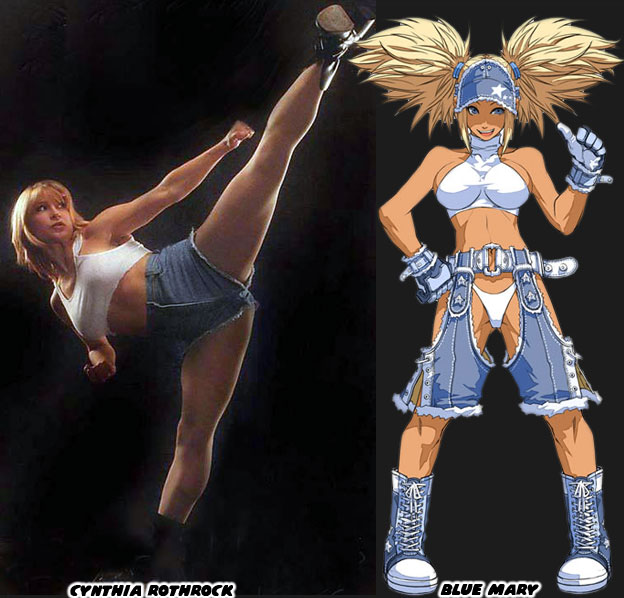
Cynthia was not shy about using her good looks in the roles she played. When the part called for it she would show some skin, tastefully of course. The people working at SNK were keenly aware of how the actress sexed up some of her parts or modeling shoots. Shinkiro did not outright try to make King a voluptuous, overly sexualized character. It would have destroyed any surprise waiting for audiences when they first saw her. It was the other artists working at the studio that started putting her in form-fitting suits, they turned her vest into a bustier and starting pushing her breasts out further and further. She would not longer appear androgynous following the AoF. Blue Mary had always been presented as the more sexualized of the designs. She was top heavy with an exposed midriff, wearing uniforms that were not standard law-enforcement. A very skimpy white top and denim bottom was created as an alternate costume for her in King of Fighters (KOF): Maximum Impact 2 Regulation A. This costume was inspired by an outfit worn by Rothrock in a modeling shoot. However we should confuse the two. The design behind King and her planning extended far into the lore or the SNK universe.


On the surface King was a very simple design. She had the skills and grace of a top bartender but with the power of a no-nonsense bouncer. On top of everything she was not going to remain as a bit player in South Town. The figures in the SNK universe had room to grow and the did in the various KOF sequels. The Sakazaki family opened Kyokygenryu schools, with Ryo entering tournaments to help spread its name. Andy and Terry Bogard travelled the globe following the trail of Geese Howard and making new allies along the way. King made fast friends with the other leading females in the KOF series. She partnered with the ninja Mai Shiranui and Kyokugenryu prodigy Yuri Sakazaki to form an all-women team. This was a first in fighting game history. She also partnered with them to open a club in a later timeline. King had taken her experience, including learning from Capoeira master Richard Meyer and his infamous Pao Pao Cafe, and applied it to her own business. She was ambitious and was destined to be a major player in South Town, yet unlike Geese Howard she was going to do this without resorting to extortion. King was an exceptional character design and easily one of the greatest fighting game characters ever created, female or otherwise. Artists and developers try to break into the genre should learn from SNK and see how they were able to hide these martial artists in plain site. The studio was able to hide masters in many ways. We will explore the ways they were able to do this in the next blog. As always if you enjoyed this blog and would like to sponsor me please visit my Patreon page and consider donating each month, even as little as $1 would help make better blogs and even podcasts!
 follow the Street Writer on Patreon!

Wednesday, October 2, 2024

A symmetry of villainy, part 1...

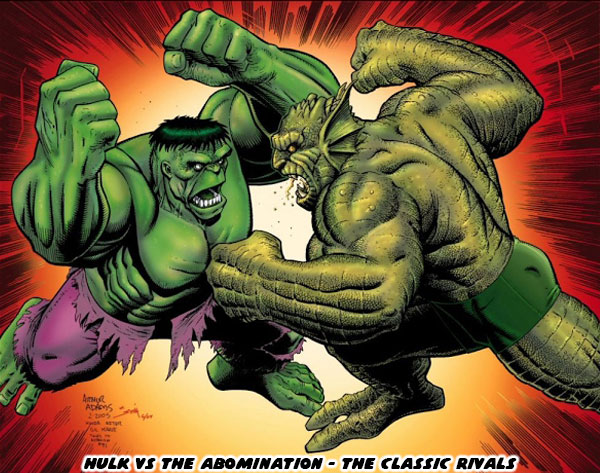
Hello friends, I hope you are doing well. Today I want to talk about great comic book rivalries. How they are put together, and what I think makes the best ones work. This topic was actually inspired by the return of one of my favorite Incredible Hulk villains. I’ll talk about who that is in a moment. Right now I want to focus on my theory of great rival design. It is a sort of follow-up to a blog I wrote ages ago regarding The Frightful Symmetry of Street Fighter. I argued that all great fighting game designs worked because there was a lot of symmetry in the development of their cast. In the early days of fighting games the main characters had a rival or balance. They were often presented as the Asian versus Western master of the fighting arts. Think of Ken, and Ryu from Street Fighter, or Paul, and Kazuya from Tekken. Then later on the library was expanded to make female counterparts to lead characters. I talked about this on The Legend of Blue Mary. If you were a budding comic book, video game, or storyteller then you might find it hard to come up with a great recurring villain. The easiest way to approach this was by creating an opponent that was a mirror rival to the hero. For example long-time comic book fans might argue that The Abomination was the greatest enemy of the Incredible Hulk. They might be right.

The Abomination was a gamma-irradiated villain that was bigger, and stronger than the Hulk. He was also intelligent, sadistic, and cruel. Whereas the Hulk was filled with a blinding rage, he was still a moral character that just wanted to be left alone. When they battled the Earth literally trembled. There were few forces in the Marvel Universe that could come between them, let alone try to stop them. Unless you had read a lot of comic books then you might not realize how the power scale worked between different comic books. The villains on a street level hero / anti-hero like the Daredevil, or the Punisher, were nowhere near as dangerous as the villains the Hulk comics. The Hulk had single-handedly taken on characters that the entire X-Men, or Avengers rosters were unable to stop. When the Hulk, and Abomination fought it was the western equivalent of a daikaiju battle, like Godzilla vs King Ghidorah. The best course of action was to evacuate the nearest city, and let them fight. Good or evil would triumph, and the survivors would have to deal with the fallout. The Hulk, and Abomination were an example of symmetrical design. Think about your favorite comic book rivalries, and try to recall how many were symmetrical in nature.

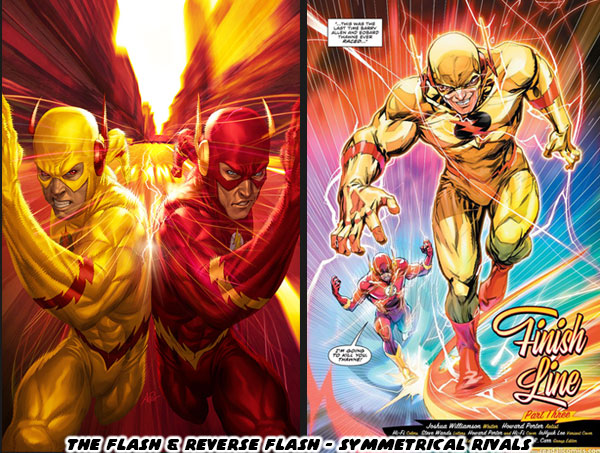
My favorite DC hero was the Flash, it was debatable if I liked Barry Allen, or Wally West as the Flash more. Their greatest rival was also symmetrical in nature. The Reverse Flash was among the most dangerous opponents in all of DC canon. Eobard Thawne hailed from the far future. He had made it his mission to travel through time, and destroy the life, and legacy of the Flash. In several continuities he had succeeded in this, wiping out the Flash, and all of his allies. Having a compulsion to destroy entire generations of characters was a scary thought. Knowing that few in the DC universe could stop the Reverse Flash including Batman or Superman, made having the Flash there to protect the universe essential. For comic books, and most pop culture storytelling making a rival be a perfect balance just made sense. However I would argue that the most interesting rivalries were when the opponents were not perfectly balanced. Let’s talk about asymmetrical rivals.

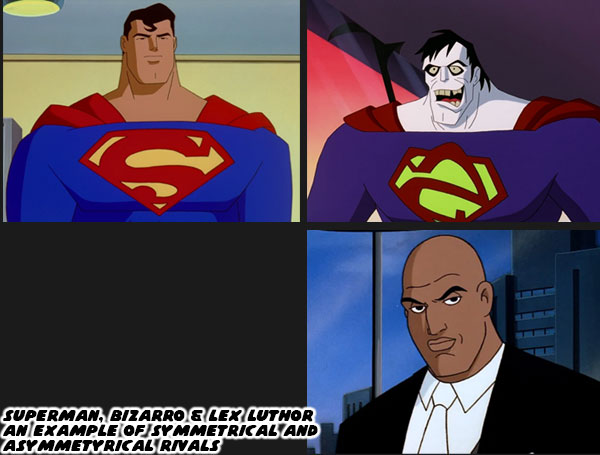
Superman was arguably the most popular hero in DC, if not all of comics history. When he debuted in 1938 he fought mostly low level villains. The gangsters, and petty criminals that most people saw in media. Through the years different creators starting making villains more unique, and powered as well. Once the atomic bomb had been used in WWII the power scaling in comic books jumped exponentially. This was especially true for Superman, and lead to the creation of the Incredible Hulk. One of Superman’s greatest opponents was a freakish mirror version with all the same powers known as Bizarro. While Bizarro had many memorable encounters with the Man of Steel there was one villain who was a perpetual thorn in his side. Lex Luthor was seen by most as his greatest rival. He was intelligent, rich, and calculating. Using his money, and influence to gain as much power as possible he was aware that Superman was the only person that could stop his ambitions. Despite not having any super powers he had brought Superman to brink of death time, and time again. Although Bizarro was a great opponent, it turned out that Luthor was the one that gave Superman the most trouble.

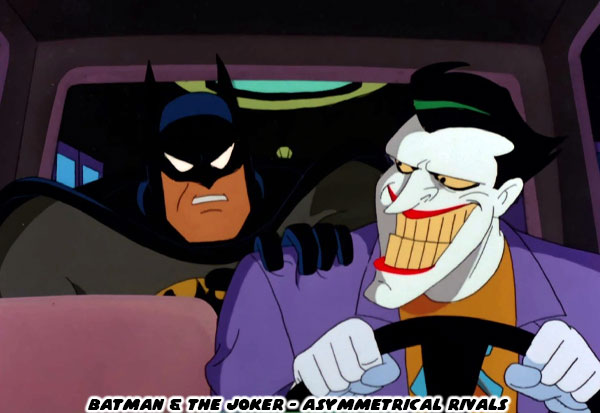
Batman was similar to Superman in that they fought opponents with comparable abilities. Whether it was strength, and martial prowess (like Bane), intelligence (like the Riddler), or fear (the Scarecrow) then Batman had an opponent that could challenge his individual abilities. It was a literal wild card that gave Batman the most trouble. The Joker was pure chaos. He was unpredictable, and nothing the Batman did could prepare him for the next encounter. The Joker did not have the fighting ability of the Batman, nor the ability to calculate his next move. He would often surprise himself with his random schemes, and thus ensure that Batman would be caught off guard as well. This type of character design, the ability to fill a world with both symmetrical, and asymmetrical opponents was critical to pop culture. It made the best comic book, tv, movie, and video game battles work. I would argue that with a few exceptions it was the asymmetrical foes that were the most important for the hero to overcome. This lesson was especially true in team settings. 

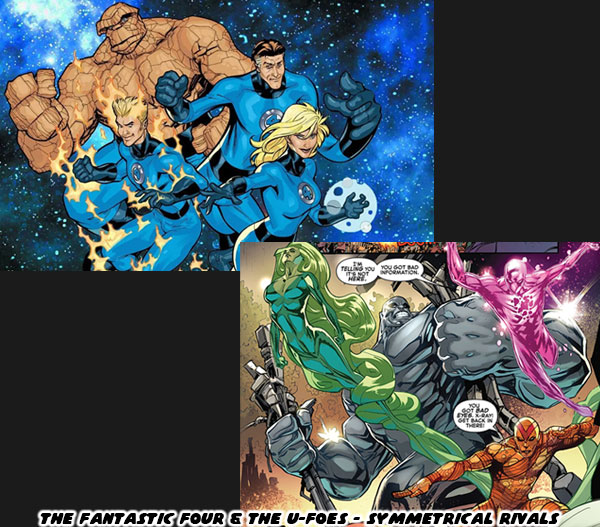
Think about the greatest evil organizations in comic book history. DC had the Legion of Doom which was created to battle the Justice League. The evil organizations were made up of rivals with symmetrical powers to the heroes. This type of design was also featured in a number of Marvel books. The X-Men fought the Brotherhood of Evil Mutants, the Morlocks, and the Reavers to name just a few. They were often composed of opponents that had asymmetrical designs as the heroes, but similar powers. This sort of balance went for a few other teams in the Marvel Universe as well. Most people were familiar with the Fantastic Four, but unless you were familiar with the comics you might have never heard of the U-Foes. This team recreated the same space flight that gave the Fantastic Four their powers through cosmic radiation. They even had brother and sister; Jimmy, and Ann Darnell. The duo of X-Ray, and Vapor mirrored Sue, and Johnny Storm. The respective Invisible Girl, and Human Torch. Yet again, unless you were a long time comic book fan then you might have never heard of these villains. By the same token if you were to poll casual fans, and comic book fans as to who was the greatest enemy of the Fantastic Four were they would often point to Doctor Doom.

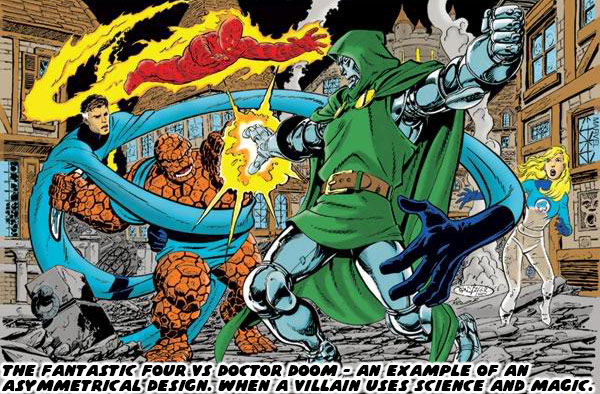
Victor Von Doom was an individual gifted with absurd levels intelligence, a creative mind, and an affinity for the magical arts. He combined the sciences, with the dark magics, and made for one of the most powerful villains in all of Marvel history. It was his unique blend of magic, and technology that allowed him to counter anything the Richards family could throw at him. It was this sort of asymmetrical design that made him a standout character, and able to be placed in a story that would work across the spectrum of Marvel heroes, and villains. He could one day be fighting against Dr. Strange, and the next be teaming up with him in order to save the Earth from a demonic invasion. The complexity of his design, and absolute resolve in his purpose allowed writers to put him in stories that were as fascinating for the villain, as they were for the hero. The creators at Marvel understood that the most memorable villains had nothing in common with the heroes.

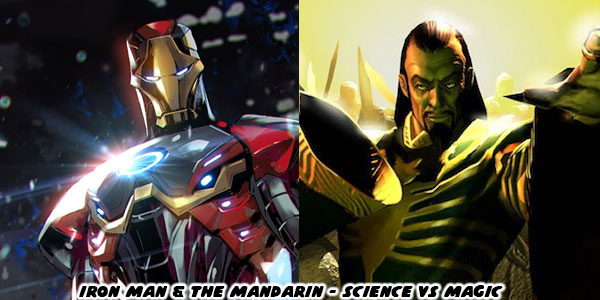
I was lucky enough to have brothers that also read comic books, and we collected titles across the spectrum. We were well versed in the happenings all over the Marvel universe, and the DC universe to a lesser extent. One of the most fascinating rivalries was that of Iron Man. He was possibly my little brother’s favorite Marvel hero, next to Dr. Strange. While Iron Man did fight other armored warriors like Titanium Man, the Iron Monger, and the Crimson Dynamo none were as big a nemesis as the Mandarin. The magic rings that the Mandarin wore allowed him to fight Iron Man on a physical level, but also Tony Stark on a psychological level. People that were only familiar with the characters thanks to the Marvel live action films had no idea how many amazing battles the duo had. As the years went on I realized that being able to create asymmetrical rivals meant a lot to the longevity of a title. It also made me realize that when new creators were placed on a book they did not always understand the characters that they were writing for. I will talk about this more on the next blog. For now I would like to know if there were any great rivalries that you enjoyed. Whether in a movie, game, or comic book. I’d like to hear about it on the comments section. As always if you would like to sponsor me please visit my Patreon page and consider donating each month, even as little as $1 would help make better blogs and even podcasts!
follow the Street Writer on Patreon!
Tuesday, May 17, 2016

The Street Writer Blogcast, Episode 2

Every time I release a new Podcast I will release the text version for my hearing-impaired friends. I don't want them to miss anything that I cover. Also you are welcome to leave comments and questions for this podcast as well as future podcasts on this blog.


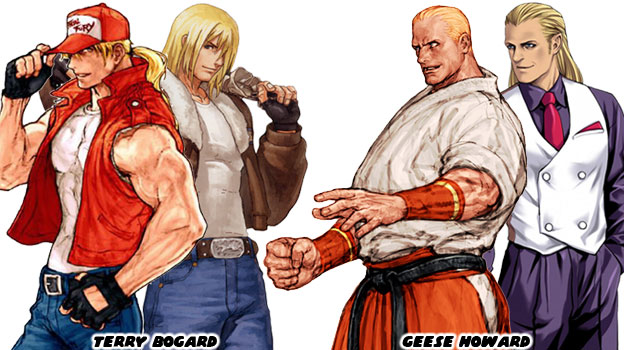
Takashi Nishiyama was the designer on the original Street Fighter and had left Capcom to work on a new fighting game for the crosstown rivals at SNK. His title was called Garō Densetsu Shukumei no Tatakai aka Legend of the Hungry Wolf: The Battle of Destiny, which was changed to Fatal Fury: King of Fighters in the west. The game from 1991 was the first entry in the King of Fighters franchise and appeared months after the release of Street Fighter II. In the Fatal Fury series there have been countless rivalries, the most outstanding of which was between Geese Howard and the Bogard family. Mr. Nishiyama had created a classic rivalry in Street Fighter by basing traditional martial arts masters against each other. For his follow-up game he wanted to modernize the concept. The ones that dressed like traditional practitioners became supporting characters. He wanted audiences to recognize that a person dressed in regular street clothes could be the modern martial arts master. The three main characters in his game knew each other, two were brothers Terry and Andy Bogard and their best friend Joe Higashi. Andy studied a form of ninjitsu and Joe was a muay thai champ. Their costumes were riffs on classic outfits. Terry stood out most of all, his blue jeans, white shirt and red leather jacket screamed Western hero. He was inferred to be the true star of the game. Geese on the other hand was dressed in a traditional costume, reminiscent of samurai clothing. It was actually an aikidogi and hakama or akido pants. Geese had studied many different martial arts, including secretive ones. He had walked away as a master of ancient techniques whether the teachers wanted to reveal these secrets to him or not was a moot point.


Geese and Terry, like many of the main characters in SNK fighting games had moves based on fictional styles and supernatural abilities. They could direct energy waves from their bodies to their hands and feet. They could even send energy waves through the ground and bowl over opponents. While Geese had studied traditionally under different masters Terry was more of a "Lone Wolf." He learned how to fight in the street and picked up various techniques along the way. His unorthodox style was very different from Geese's. Terry had moves that were more aggressive, the Burn Knuckle punch that allowed him to fly across the screen and the Crack Shoot kick that spun through the air and caught opponents off guard. He fought unlike anybody else out there including characters from other studios. He bobbed on the toes of his feet and kept his fists up like a boxer yet threw diving strikes like a football player going after a tackle. This loose style was a stark contrast to Geese's more reserved power attacks. Geese stood calm with his hands relaxed and open. He waited for the perfect moment to strike. Like a true samurai warrior he did not waste any effort and tried to make every move a lethal hit. The contrast of styles helped define the two. The rivalry between the two was much different than the one between Ryu and Sagat. Geese did not have any moves in common with Terry or Andy Bogard. Geese still had a tighter defense, a greater range, could stuff any physical attack and counter all the special attacks of the brothers. Yet he had not always been powerful.


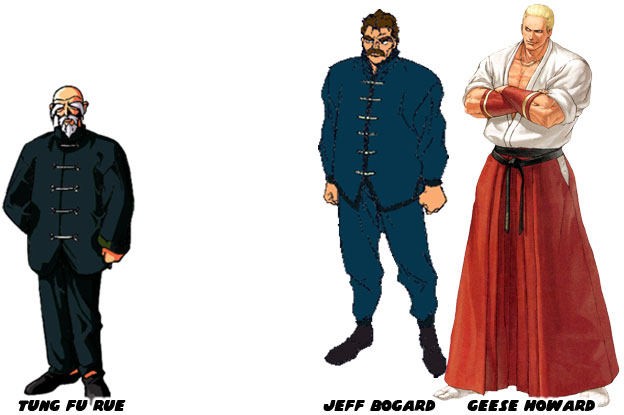
Geese grew up in Southtown, a fictional USA city connected via a few roads to the mainland. It was not unlike New Jersey sitting just outside of New York. But for a more accurate comparison Southtown was to the USA what Taiwan was to China. It was a powerful modern city that pretty much had its own economy, trade and industrial portions and didn't need to be a part of any other country in order to thrive. Geese was abandoned by his father leaving him and his mother poor while growing up. Geese struggled to provide for the household but his mother died poor and hungry. He wanted to track down his father and kill him for abandoning him. Along the way he ran into his half-brother Wolfgang Krauser. He learned his father was Rudolph Krauser Von Stronheim, a terrorist and a powerful man in his own right. If he wanted revenge he would have to become more powerful and more dangerous than his father ever was. Geese set out to do this by studying the most dangerous fighting arts. He picked techniques up from Toji Sakata, a character that later appeared in Fatal Fury: Wild Ambition, as well as the grandfather of Mary Ryan aka Blue Mary, a detective from Fatal Fury 3. Geese's most influential teacher was an elderly Chinese master named Tung Fu Rue. He was learning Hakkyokuseiken: the Eight Extremities Holy Fist technique alongside another gifted martial artist named Jeff Bogard.


Jeff had adopted two orphans from the streets of Southtown, young brothers Terry and Andy. He gave them a last name, cleaned them up, put them through school and took care of them the best he could. He even began teaching the two how to fight. Jeff did pretty much the opposite of what Geese's father had done. It was just one thorn in the side of Geese. The other was that the final techniques of Tung Fu Rue would only be taught to his best pupil. Rue could tell that Geese would only use the techniques to hurt people and attain power. When Tung Fu Rue named the senior Bogard the new master of the dojo it sent Geese into a frenzy. He killed Jeff in front of Terry. Terry was barely 10 at the time and could do nothing to stop the murder. From that point on the two brothers swore that they would become great fighters and take their revenge. Geese disappeared shortly after and set about completing his goal. He would take over Southtown from the inside, starting with the gangs and mobs and work his way up to taking control of the corporations.


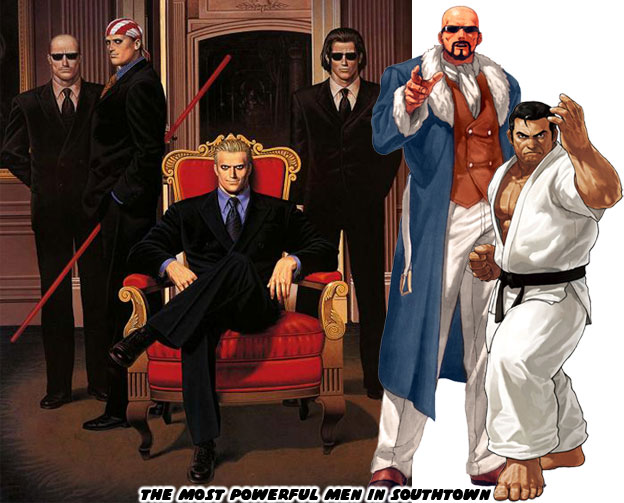
To outsiders Geese was a self-made tycoon, respected in business and political circles. To everyone on the street Geese was to be feared. Even before he murdered Bogard he had already started his own criminal empire. His first henchmen were Ripper and Hopper, two guys in suits and sunglasses, one bald and one with long black hair. They were often seen in stage backgrounds and official art. They were ruthless enforcers that helped infiltrate rival organizations. The previous crime lord of Southtown was a tall man named Mr. Big. Like all villains in video games he was also a martial arts master. Mr. Big wore fine suits, fur coats and fought with two sticks. He was eventually dethroned by Geese and rather than being executed he was turned into a right hand man. Geese believed in the old saying, keep your friends close and your enemies closer. Geese also recruited a master of stick fighting from Great Britain known as Billy Kane to act as a bodyguard. Those that Geese couldn't buyout or intimidate he often killed. Yet there were some people that he saw as threats but kept around to fulfill a purpose.

Takuma Sakazaki was possibly the most dangerous fighter in all of Southtown. He was the founder of Kyokugenryu Karate, the Extreme Utmost Limit Way of the open hand. Takuma was somebody that Geese could not beat in a fight. Mr. Big was aware of this and also respected and feared the fighter. When Mr. Big was trying to muscle out more territory in Southtown he decided to kidnap Takuma's daughter Yuri and blackmail him into becoming an enforcer. Takuma did as he was ordered but he wore an ancient tengu mask and called himself Mr. Karate. He wanted to hide his identity and distance himself from what he was being forced to do. The Mr. Karate personae of Sakazaki was completely ruthless. He wanted people to fear the character more than any crime boss. He was eventually stopped by his son Ryo Sakazaki and their family friend Robert Garcia.


Now the reason that I bring all of this backstory up is because Mr. Nishiyama and his team were creating a narrative that would bridge several games together. The story of Geese Howard and Terry Bogard would be explored in the Art of Fighting. The story between Mr. Big and Mr. Karate would be revealed in the Art of Fighting, an SNK game released in 1992. The events of both franchises laid the foundation for the King of Fighters series which debuted in 1994. Having an understanding of where the characters came from, where they were going and how they fit into the world took a tremendous amount of planning. The team at SNK didn't want to move from game to game and have nothing supporting the characters. They wanted every fighting game to be interconnected. They didn't want to have throw away characters or bosses that simply faded away either. By thinking three moves ahead the games were consistently good. Audiences were hooked with the series because of memorable good guys and bad guys. Mr. Nishiyama had done something similar, albeit to a lesser extent while with Capcom.

Many of the original Street Fighter characters were inspired by the martial arts but none had much depth to them, at least not much in the sense of a purpose. The more interesting ones would return and the studio began exploring their back story. Think about where Sagat came from, it wasn't really explained in the first game. He was simply the champion when Ryu met him. Later on the studio invented the character that took his eye, someone named Gou Hibiki that just so happened to like Mr. Karate. Capcom and SNK had been trading jabs with each other because they were early competitors in the market. It didn't hurt that the team members at the studios knew each other as well. Capcom began designing more fighting game characters with histories. If you look at Guile and Chun-Li they were much better developed than the original Street Fighter cast and became bigger hits with the community than the first characters. SNK demonstrated that fighting game characters with planning and a back story tended to be more memorable than those with just cool looks. This level of detail did not just apply to the characters but also to the world that they inhabited.


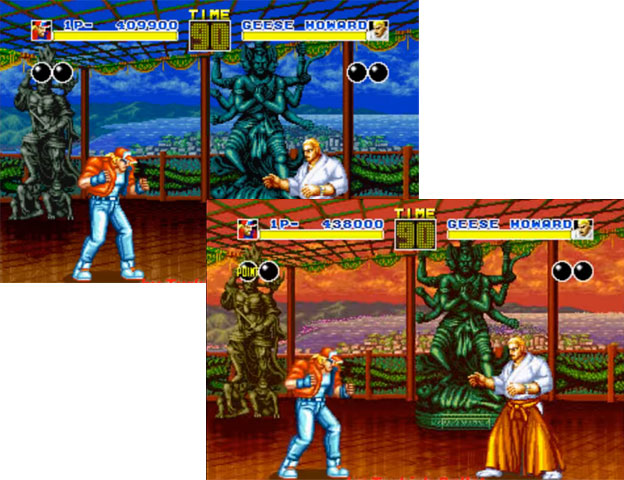
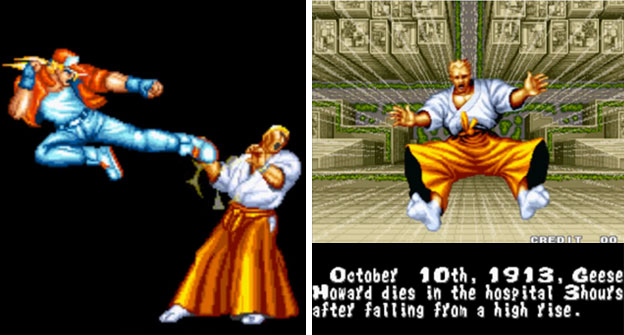
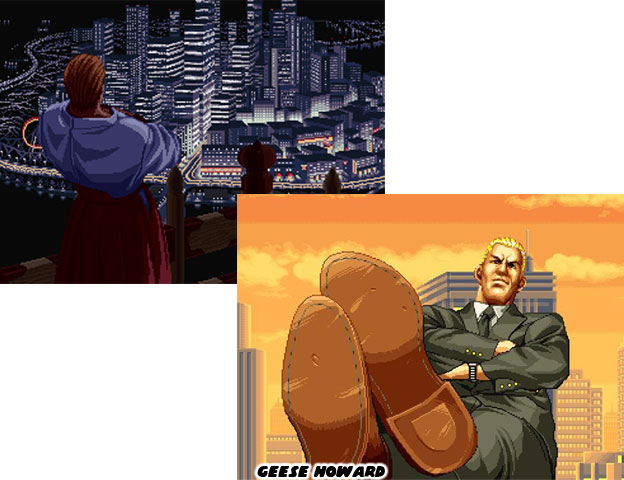
Geese was a very powerful man and a very arrogant man. He surrounded himself with treasures from Asia, various statues and temple guardians were on display. In his fancy robes Geese looked like the opposite of Terry, whose torn jeans and sneakers showed that he was poor. The penthouse on Geese Tower looked like a temple, this would be the setting of the final battle in Fatal Fury. It told a story and framed the battle between Terry and Geese. Players could see Southtown from high above the city. It was one of the most memorable stages in early fighting games. Not only that but from round to round the time of day changed. This was to illustrate that the fight had taken a long time to finish. Neither man could get the upper hand so the battle raged on. The team at SNK wanted to show that stages evolved in their fighting games. Perhaps it would rain between rounds, you would notice the audience clear out, or perhaps the stage would transition from day to night. They were doing things for the genre that other studios didn't even consider. Evolving levels were rarely done even in modern fighting games. The climax of the final battle came with Terry kicking Geese right off the rooftop. The setup and execution of the final stage meant a little bit more than the fight between Ryu and Sagat. Audiences could tell that the stakes were high. Every rival defeated in the original King of Fighters tournament had some sort of secret agenda but none was more important than the revenge of the Bogard brothers. Players felt a sense of relief that the evil villain fell to his death.


In the ending screen it said that Geese died October 10, 1913. This was mistranslated, the studio meant to say 19:13 hours, or 7:13 pm in the hospital. He fell from the building at dusk and died 3 hours later. So why was his death important? It helped give audiences a sense of closure. This fighting game came with a story, it had a beginning, middle and end. The King of Fighters tournament had nothing to do with winning a belt or trophy. Geese simply wanted to meet and beat the best, what he didn't expect to see where two brothers that wanted him dead. The game was a tale of revenge, like many of the great martial arts films. Stop and think about how important a story was to Street Fighter II. The tournament was a front for a much bigger plot involving Shadowlaw and a rogue Dictator. There was a connection between Ryu and Sagat that made that battle much more memorable. For the supporting cast there was a reason why they were fighting as well. For some it was fame, for others it was a national duty, still for others it was a shot at redemption.

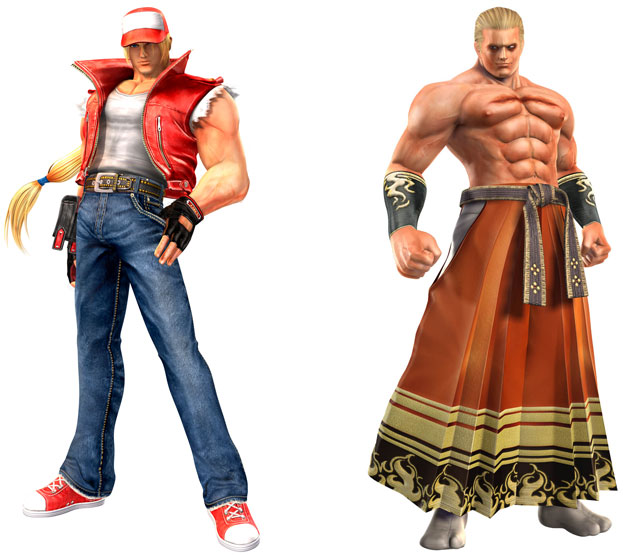
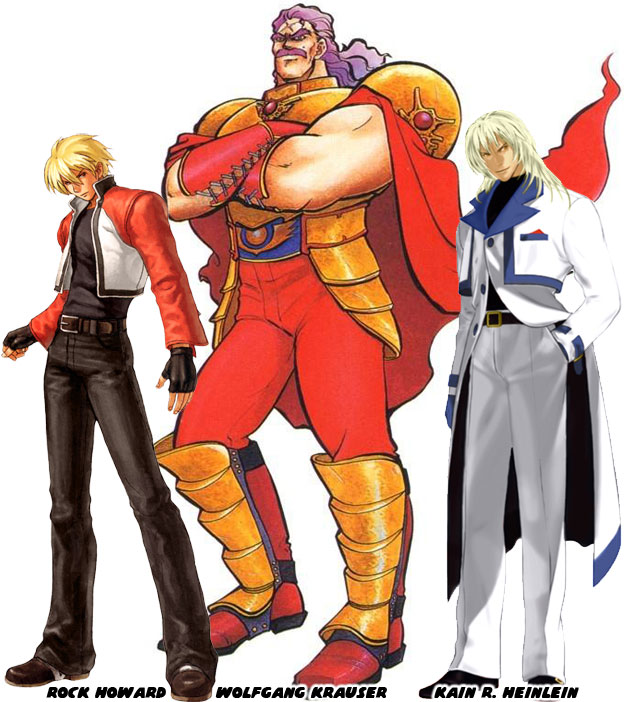
If Mr. Nishiyama was such a good director then why would he kill the main villain in his very first appearance? Why would he develop such a rich back story if the character was a throw away figure? Well it turned out to be a false death. Geese survived the fall thanks to an outside influence. He would actually continue pulling strings from the shadows while he recovered. Audiences didn't know this until years later. The series would continue and players would get to fight as the Bogard brothers, Joe Higashi as well as knew friends and enemies. These new faces would have to fight Geese's half-brother Wolfgang Krauser and his brother-in-law Kain R. Heinlein in the various sequels. The rivalry between Geese and Terry had just started. It would be a cornerstone of the franchise for almost a decade. Rather than focus only on the hero the two were featured in SNK promotional material. A hero was only as popular as his rival after all. The two were also used to highlight the changes in technology. When the studio looked at leaving sprite graphics behind and developing the next generation of fighting games in 3D they made sure to show off the new models for Geese and Terry right away.


Identity was very important to the characters in the King of Fighters (KOF) universe. Every figure was treated like a franchise fighter. Each character had the potential of being a breakout star. They could be featured in their own game if the fan reaction was strong enough. Some KOF fighters were already stars from a different genre. All of the heroes and all of the villains were building an identity and helping strengthen the SNK brand. The development teams wanted the audience to know that the universe of KOF was constantly changing. The main characters were not set in stone. Other studios, namely Capcom, tried to keep their fighting stars locked into one look or one style. Ryu could only wear the white gi for example and Chun-Li could only wear a blue dress. While this rule has been relaxed a little thanks to the costume pack updates from Capcom most fans still expect to see the iconic characters in familiar costumes. The studio assumed that anything else might be a disservice to the series and turn off fans. SNK on the other hand didn't have a problem revising their main characters between games. They wanted audiences to see that the world was constantly evolving. Not only that but they could create sequels and prequels to show how the characters appeared at any point in time. At a future point in the universe Terry had changed his look completely. His red, white and blue costume gave way to a brown bomber jacket and jeans. He ditched his cap and let his long hair fall loose. The design for Geese Howard was different when he first started taking over Southtown. In his younger days he wore a business suit and had long hair. This was an aesthetic decision from the team at SNK. It was okay to play with the costumes of the characters as long as they retained their moves, purpose and personality. The two were still as dangerous as they had ever been and audiences more or less accepted the change in their appearance.


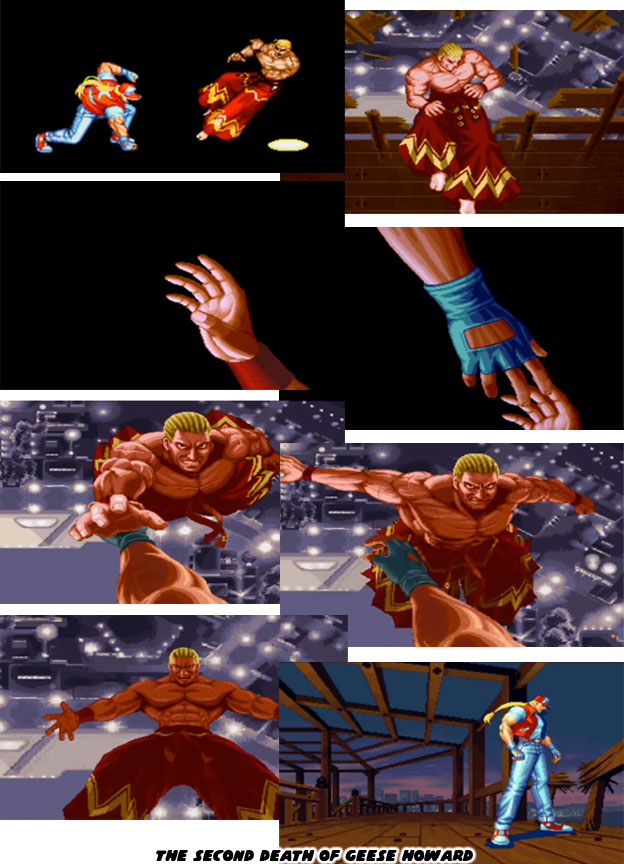
SNK did not want to have audiences think that Geese was indestructible. Players saw him get dropped from the top of a building in the first game. So how did he survive the fall? It turned out that all of the treasures he had been surrounding himself with had a purpose. In his travels he discovered a scroll of ancient techniques. It was called the Phoenix Scroll and allowed its owner to recover from mortal wounds. It took a long time but sure enough he came back with a renewed purpose. Geese learned that there were two more scrolls, known as the Jin Scrolls, these scrolls were part of the Qin Book of Secrets. Legend said that the person that had all three would obtain the secret to immortality. This became a plot point in the Fatal Fury sequels. The Bogard brothers had been robbed of their revenge. They tracked down Geese several years after the first encounter during the events of Fatal Fury Real Bout. Terry once again found himself at the top of Geese Tower. He knocked Geese through a railing but this time he did not mean to kill him. Terry reached out and grabbed Geese at the last moment. Refusing the gesture, or confident that he had indeed become immortal, Geese shrugged off the help and fell once more. He laughed the entire way down. It was a shocking ending. I don't remember the last time a villain had committed suicide on screen. Since Geese had been unable to secure all three Jin scrolls it was assumed that he died for real this time. Time would prove otherwise...


When Terry first knocked Geese from the tower he did so out of rage. As time went on he realized that he had made a mistake, of course not getting caught by the police for the murder of Southtown's biggest crime boss was a blessing in disguise. Killing Geese would not bring his father back. If anything Terry dishonored his own family name by fighting for the wrong reasons. Terry tried to make amends the next time they battled but Geese refused the gesture. The death weighed heavily on his conscience. It was not every day that you could say that a great rivalry ended with the hero feeling guilty. Just like you could say that it was not every day that a rivalry started with the hero killing the villain. This story did not end there however. Terry discovered that Geese had a son named Rock Howard. Geese had abandoned his son just as he himself had been abandoned. Terry became the surrogate father for Rock, guided him and taught him some of his own fighting techniques. What made Rock unique was that he had a mix of both Geese and Terry's moves but thankfully none of his biological father's evil tendencies. His uncle Kain R Heinlein did try to get Rock to side with him and throw Southtown into chaos and create what would be known as Second Southtown. Rock refused and battled his uncle during the events of the King of Fighters Maximum Mayhem tournament.


One of the great all-time fighting game rivalries was a clash of ideals. Terry Bogard and Geese Howard each came from broken homes, both had lost their parents at a young age. Each made it to adulthood and each became a powerful fighter in the process. The decisions they made along the way defined one as good and one as evil. The two were very similar otherwise, and I don't mean just on a physical level. At the core they had strong wills a were fiercely determined to overcome all obstacles and achieve their goal. This was something that Sagat and Ryu did not necessarily have in common. They were rivals but did not share many traits. Both fought to become the strongest Street Fighter and defend that title. SNK had a completely different approach to the genre and it was refreshing. The pre-planning by Mr. Nishiyama and his team paid off in Fatal Fury and the various sequels. Terry, Geese and the rest of the King of Fighters cast would enjoy an incredible fan following.

The success of the series demonstrated that there was more than one way to frame a rivalry. Planning had a lot to do with it. Think about successful books and movies, the creators had to know their world and how it worked backwards and forwards before sharing their story. J.K. Rowling had to know the history of her magical world, who came before and how everyone was related. She then sprinkled those details all throughout the Harry Potter books. George Lucas had to know how the Force worked and the history between the Sith and Jedi as he told the Star Wars trilogy. Mr. Nishiyama had a clear picture of Southtown and the origins of the King of Fighters tournament. He was very familiar with the most dangerous men in that universe before he told the story of Fatal Fury. These were important lessons for budding creators to remember. You must always know where your story comes from before you can tell people where it is going. Revenge was a powerful motivator but what about the other great rivalries in fighting games? What else caused a rivalry to start? We'll take a look at one of the most important ones in the next broadcast. As always if you would like to sponsor me please visit my Patreon page and consider donating each month, even as little as $1 is better than nothing..

 follow the Street Writer on Patreon!