Showing posts with label mr karate. Show all posts

Thursday, September 28, 2017

Hiding the master in plain sight, the genius of SNK's character design...part 2

Fatal Fury introduced audiences to the SNK school of fighting game design. Audiences could now choose between traditional masters like Joe Higashi, street fighters like Terry Bogard, or a hybrid fighter like Andy Bogard. By contrast the Capcom school of design was rooted closer to featuring only martial arts archetypes. The fighters all wore costumes that looked classic, they each represented a certain school of fighting. Almost none of the characters in Street Fighter II wore street clothing, whereas many of those in Fatal Fury did. This boiled down to the people that were developing the games. Takashi Nishiyama and Hiroshi Matsumoto put literal street fighters in the original Street Fighter. People like Mike, Joe and Birdie fought in their everyday clothing. These things carried over into Fatal Fury’s cast. It was Yoshiki Okamoto, Akira Nishitani and Akira Yasuda that decided to focus on archetypes for Street Fighter II. SNK boss Eikichi Kawasaki wanted his fighting games to be the biggest and the best, his new title, developed by Mr. Matsumoto was the most ambitious.


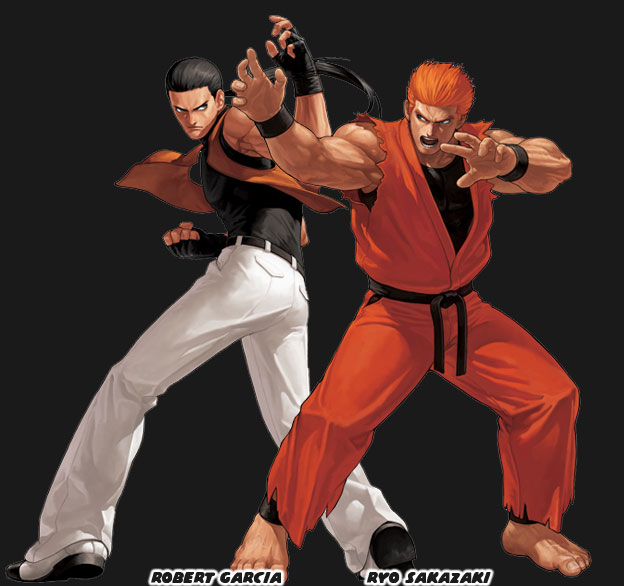
Mr. Matsumoto wanted The Art of Fighting (AoF) to be more cinematic, to look and feel like an action movie. To be more visceral than any game before it. Like Street Smart and Fatal Fury there was a mix of the traditional martial arts master and the street fighter as playable characters. The fictional Kyokugenryu Karate style was placed on both Robert Garcia and Ryo Sakazaki. The two were evolved from the Ken and Ryu template respectively. This new game was really pushing the power of the Neo Geo console. It featured more color, more detail and sprites bigger than the competition’s. Not to mention that it had graphics that zoomed in and out of the action. These sprites could also reveal damage. Characters bruised and their clothing tore from round to round. There was even a slight RPG element as characters could grow and evolve thanks to the lessons learned in the bonus stages. The genius of this game came in the planning stages. If SNK wanted to dethrone Capcom as the best fighting game developer then they had to offer the best experience. Although Fatal Fury and the Art of Fighting looked and played differently they were part of the same shared universe. This meant that at some point there would be a crossover game featuring a massive library of established characters.
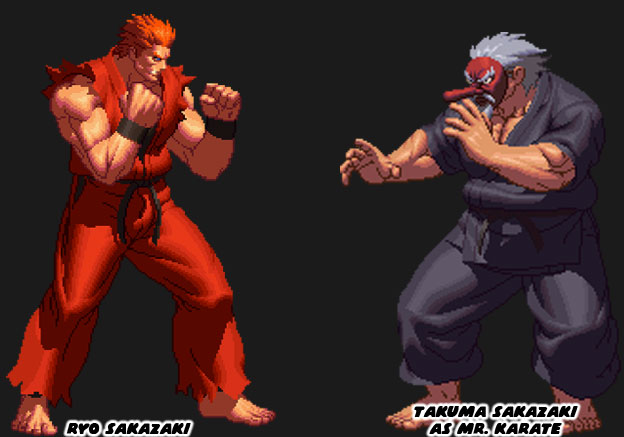
 

The entire cinematic feel of AoF was not lost on audiences. The figures in the game had more realistic proportions and looked less cartoonish than their rivals. It was much easier to get pulled into this world as bits and pieces of the story were revealed in between every stage. Yuri Sakazaki, the young sister of Ryo had been kidnapped. It was up to Ryo and Robert to find and save her. Every person that the duo faced had been hired or bribed by Mr. Big, a South Town mob boss. Each encounter brought them one step closer to the truth. At the end of the journey Ryo found out that the kidnapper was a martial arts master known as Mr. Karate. At the climax of the game Yuri stopped her brother from killing Mr. Karate. She cried out that man was their father. This was an exceptional plot twist and something that set up a sequel. It turned out that both Mr. Big and Mr. Karate answered to Geese Howard. Now that Yuri was safe there would be a reckoning between the Sakazaki family and Howard. Imagine how confident Geese must have been in his abilities by also starting a war with the Bogard brothers at around the same time. Story points aside the AoF game is one of the perfect examples of the SNK school of design. I’ll begin with one of the best masters hidden in plain sight.
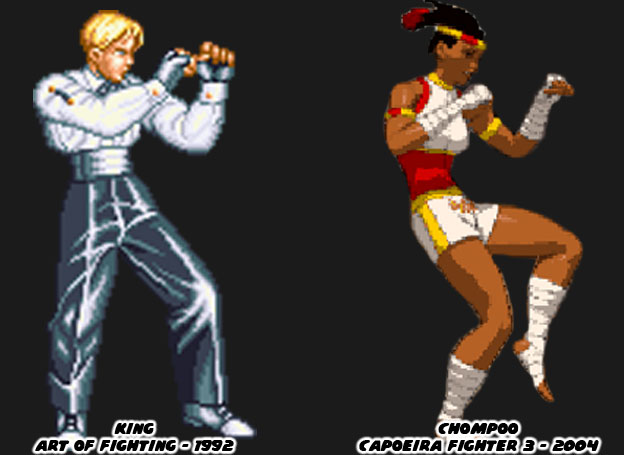
 

A while back I talked about how the traditional Muay Thai master ended up in fighting games. I called Chompoo the first notable female Muay Thai master in a fighting game. This angered a lot of SNK fans because the character King predated her by more than 20 years. In context I was talking about actual Thai fighters that dressed in the traditional fighting uniforms. Chompoo had the shorts, taped up hands and feet and even headdress. I was not talking about characters that knew Thai boxing. With that said let’s actually look at the elements that went into making King and why she had a fantastic design. First off she wore a suit, close to that of a bartender in a high class restaurant. She had the familiar stance, hands up for striking and moving on the balls of her feet. If you had asked any other designer to create a female Muay Thai master you probably would have ended up with someone that looked more like the character by Saeed Jalabi. Saeed hit all of the traditional notes perfectly. The shorts, headdress and even wrapped cords of older, classical forms of the Thai boxing arts. Any audience member could look at the design and know instantly this was some sort of fighter. Even if the gamer was not familiar with the fighting arts they could still tell a few things about her. The athletic frame, toned muscles, wrapped hands and feet were meant for striking. This was not a ceremonial costume but one for competition.
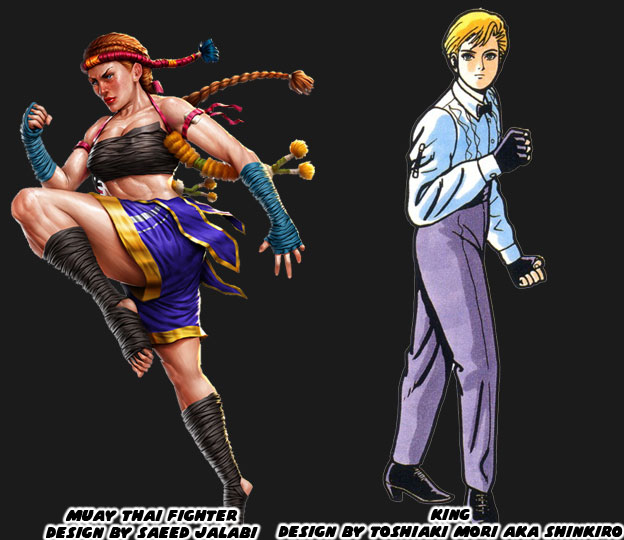
 

By contrast look at the design that Toshiaki Mori came up with. The SNK designer would become one of the most influential artists of all time. Most people would recognize him by his pen name, Shinkiro. He didn’t approach his designs the way one would have expected. What made his work so great was how down-to-Earth every figure was. When he was helping create the costumes for the AoF cast he knew to make each character fit the story. As Robert and Ryo made their way through South Town the people they fought reflected a certain part of the city. The thugs looked like biker gang members, those in the military wore fatigues. Having a half-naked Muay Thai fighter in a classy restaurant would not have made any sense. But what about one dressed like a bartender? The uniform was central to the character. Modern martial arts movies featured characters that wore deceptive clothing. One the first examples was the tuxedo that Robert Baker wore when he fought Bruce Lee in Fist of Fury (1972). Bruce Lee helped bring classic wuxia or Chinese hero stories into the modern era. The same thing was true of the suit that Benny Urquidez wore when he fought Jackie Chan in Wheels on Meals (1984).
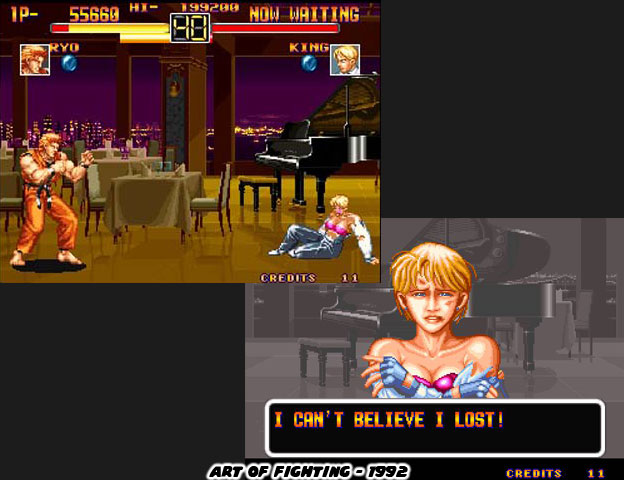
 

The suit was deceptive but that was only one layer of Shinkiro’s design. King looked like an effeminate man, or perhaps a boy. Audiences had been conditioned to expect 99% of the people they fought to be men. Up until that point Fan from Yie Ar Kung-Fu was the only female opponent in a fighting game and Chun-Li from Street Fighter II was the only playable female character. Audiences expected a female martial artists to be wearing a traditional dress. That whole idea was turned upside down if players tore the blouse off of King with a special attack. That was when it was revealed that she was wearing a bra underneath. That violent act made the game feel far more mature than any other title. This sort of turn was something that you would expect in a movie and certainly not in a game. SNK hid the reveal right until the end, going so far as to name the character King instead of Queen. In doing so it made the design very memorable. This master of the fighting arts was hiding in plain sight. She would be the perfect example as to what set SNK apart from the competition.
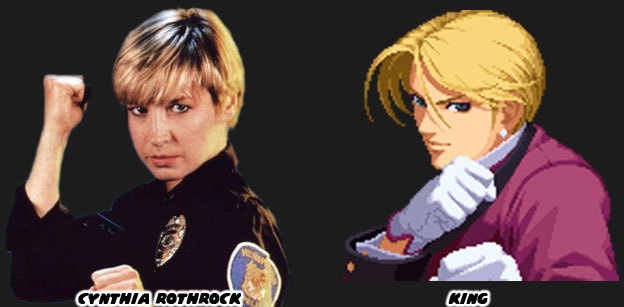
 

If you have been reading my blogs for a while then you know that I like to dig into the influences behind the various characters. For King the most obvious comparison would be with the martial arts star Cynthia Rothrock. Since 1985 Cynthia had been featured in a string of movies, mostly produced overseas. Women hadn’t really been considered for leading roles in most Western-produced martial arts films. There have been exceptions of course in other action films such as the Black Widow from the Avengers films, Furiosa from Mad Max or Gazelle from the Kingsmen. Those characters were almost always in a supporting role and not the stars of the film. In Hong Kong however women could be the stars of the film. This was a tradition going back to 1928. Heroes came in all shapes (see the chubby Sammo Hung), sizes, and colors even. When Cynthia couldn’t land a role in a US film she was almost always guaranteed to find a spot in Hong Kong. The same thing was true for Ron Van Clief. As a black martial artist, and Army veteran he faced tremendous racism in the USA but was a welcome star in Hong Kong cinema.
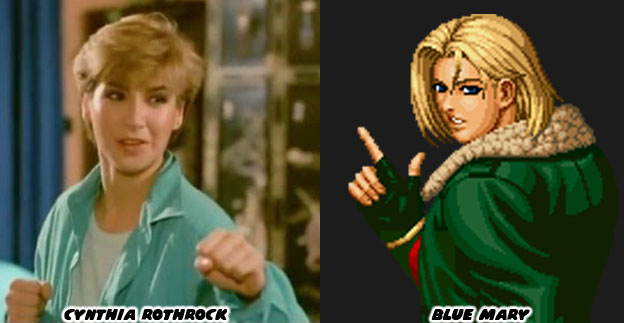
 

Cynthia’s trademark short haircut, lightning fast kicks and array of martial arts moves made her a stand out star. She had been actively involved in martial arts for a long time and was trained in different schools, including Tang Soo Do, Tae Kwon Do, Eagle Claw, Wu Shu, and both Southern and Northern Shaolin. She was able to hold her own against many men and women artists from Hong Kong, some of which learned fighting and acrobatics from the Chinese Opera, just like Jackie Chan. Cynthia often played a street smart cop, nicknamed China O’Brien in one of her more famous recurring roles. She was such a formidable figure that I would argue she not only influenced the design behind King but also Blue Mary, who turned up in the Fatal Fury series. This made Cynthia one of the rare real world figures that inspired the creation of more than one character, in more than one game series.
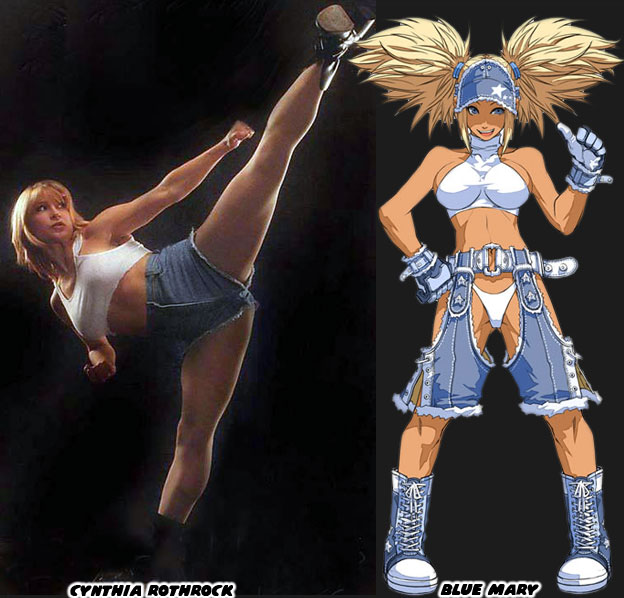
 

Cynthia was not shy about using her good looks in the roles she played. When the part called for it she would show some skin, tastefully of course. The people working at SNK were keenly aware of how the actress sexed up some of her parts or modeling shoots. Shinkiro did not outright try to make King a voluptuous, overly sexualized character. It would have destroyed any surprise waiting for audiences when they first saw her. It was the other artists working at the studio that started putting her in form-fitting suits, they turned her vest into a bustier and starting pushing her breasts out further and further. She would not longer appear androgynous following the AoF. Blue Mary had always been presented as the more sexualized of the designs. She was top heavy with an exposed midriff, wearing uniforms that were not standard law-enforcement. A very skimpy white top and denim bottom was created as an alternate costume for her in King of Fighters (KOF): Maximum Impact 2 Regulation A. This costume was inspired by an outfit worn by Rothrock in a modeling shoot. However we should confuse the two. The design behind King and her planning extended far into the lore or the SNK universe.
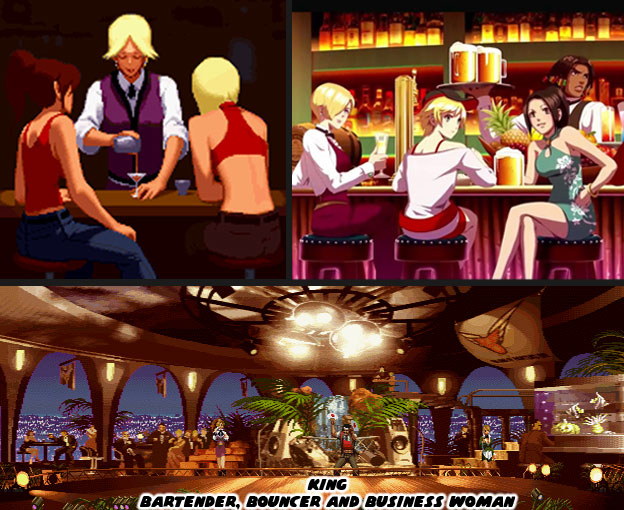
 

On the surface King was a very simple design. She had the skills and grace of a top bartender but with the power of a no-nonsense bouncer. On top of everything she was not going to remain as a bit player in South Town. The figures in the SNK universe had room to grow and the did in the various KOF sequels. The Sakazaki family opened Kyokygenryu schools, with Ryo entering tournaments to help spread its name. Andy and Terry Bogard travelled the globe following the trail of Geese Howard and making new allies along the way. King made fast friends with the other leading females in the KOF series. She partnered with the ninja Mai Shiranui and Kyokugenryu prodigy Yuri Sakazaki to form an all-women team. This was a first in fighting game history. She also partnered with them to open a club in a later timeline. King had taken her experience, including learning from Capoeira master Richard Meyer and his infamous Pao Pao Cafe, and applied it to her own business. She was ambitious and was destined to be a major player in South Town, yet unlike Geese Howard she was going to do this without resorting to extortion. King was an exceptional character design and easily one of the greatest fighting game characters ever created, female or otherwise. Artists and developers try to break into the genre should learn from SNK and see how they were able to hide these martial artists in plain site. The studio was able to hide masters in many ways. We will explore the ways they were able to do this in the next blog. As always if you enjoyed this blog and would like to sponsor me please visit my Patreon page and consider donating each month, even as little as $1 would help make better blogs and even podcasts!
 follow the Street Writer on Patreon!

Wednesday, July 15, 2015

How fight culture became fighting game history, part 7

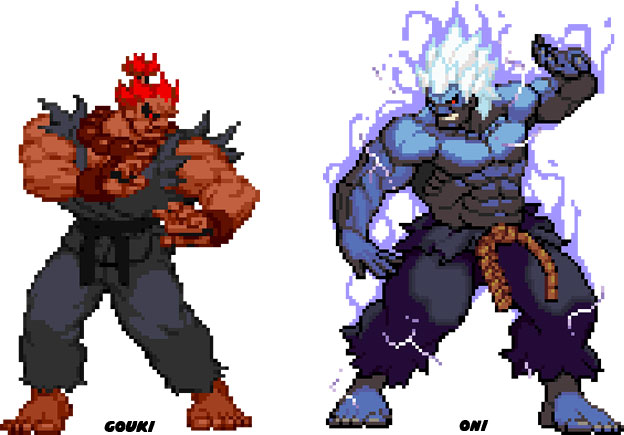
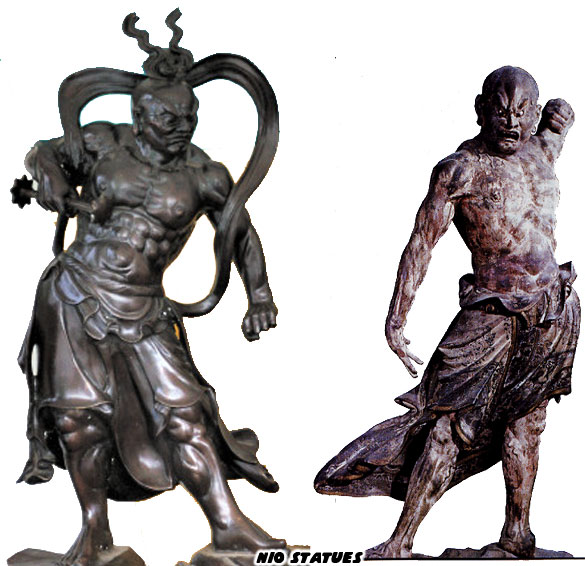
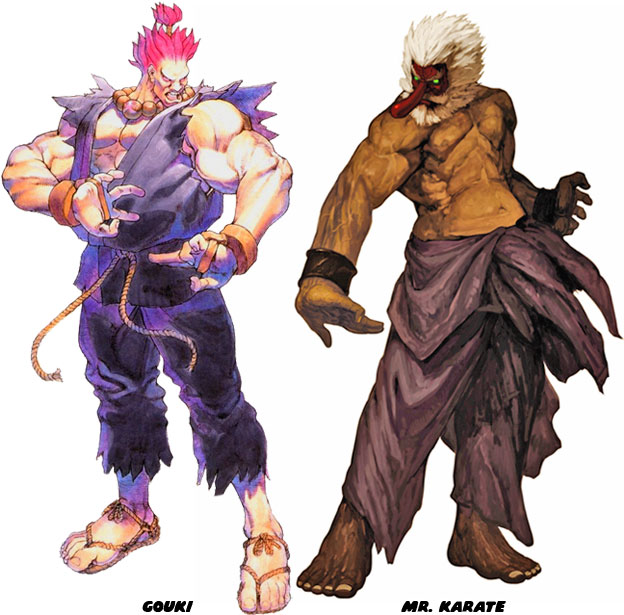
No character is truly original, none are pulled out from thin air, at least not the memorable ones. Gouki and Mr. Karate, the greatest "boss" characters from Capcom and SNK respectively, were inspired by mystical icons. To be specific the spiritual influences of Asian religions. These fighting game characters, their appearance, colors and even poses were based on the Nio. The Nio were the guardians of Buddha. They deterred evil man and demon from the gates of the afterlife and met the honorable ones as a friend when their spirit was ready to transcend this dimension. These figures could be found in temples as intricately detailed wooden carvings, some were life-sized and some were gigantic. They were also referred to as the the Benevolent Kings in other writings. The two most recognizable, the ones highlighted in manga and anime, being Agyo and Ungyo; the beginning and end, or "alpha" and "omega." The guardians were physically imposing figures, whose exaggerated muscles and proportions were meant to instill fear into those that would desecrate a temple. Although empty-handed in most representations they were nonetheless meant to be seen as fearsome warriors and masters of the martial arts.


Upon studying the statues, their origins and aesthetics we can see how the Nio could be incorporated into a fighting game. One of the most popular incarnations being Gouki / Akuma from Capcom's revolutionary Street Fighter series. Years later many of the fearsome elements from the Nio and earlier Vedic Traditions were pulled by Capcom once more to create the heroes and villains featured in Asura's Wrath. Given their importance in Buddhism and symbolically strong gestures they could not have been meant for anything less than "boss" status in their respective titles. The scowls, wide-eyes, raw power and menacing poses were universally understood even if their divine origin was not. All it took was for some artists to come along and update their designs, bring them into a contemporary setting.


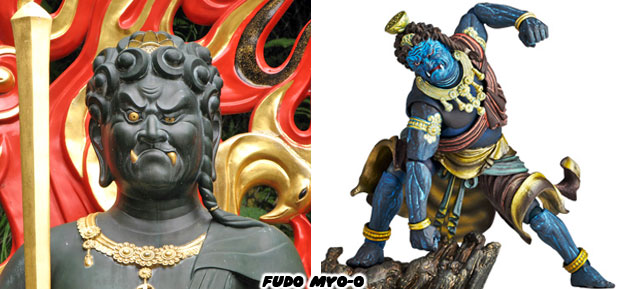
The Nio are sometimes mistaken for another figure from Buddhism. Fudo Myo-o AKA Acala is known as the "Immovable One." The fearsome-looking demon is actually a protector as well. He burns away all impediments and defilement so that living beings can reach enlightenment. The blue skin is supposed to recall elements of the supernatural. Gods and demons are often presented with blue or red skin. Many Hindu deities were presented with blue skin as well and possibly influenced the creation of the Chinese and Japanese spirits.


While Gouki was based on the Nio, a latter version of the character introduced in Super Street Fighter IV was known as Oni (the Japanese word for demon). The supercharged, blue-skinned version of Gouki was undoubtedly rooted in the design of Fudo Myo-o.


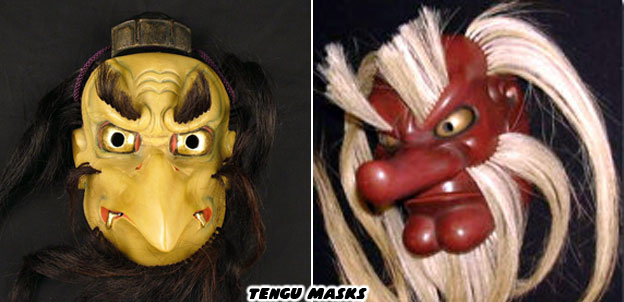
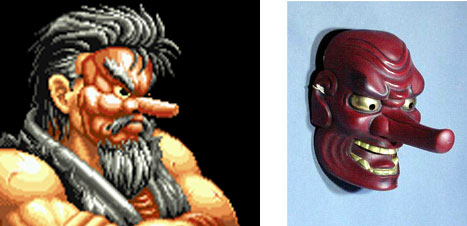
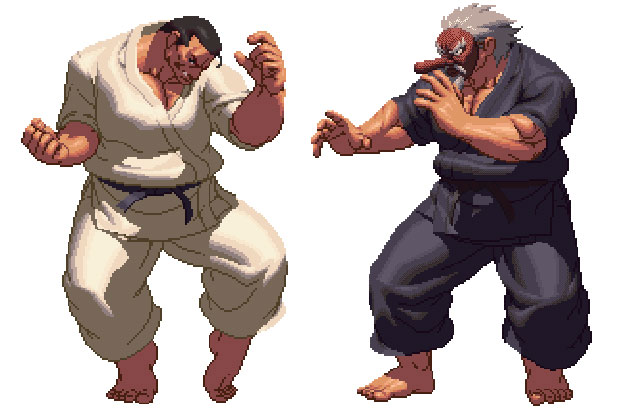
Mr. Karate from the SNK King of Fighters universe combined the Nio influence with a Tengu mask. Masks were very powerful symbols of culture, every culture had a mask tradition and were recognized for their symbolic properties. When used carefully by a game designer they could make an ordinary character extraordinary. In Japan, and in some regions, masks had an important ceremonial position. Originally carved from wood and later turned into a paper-maché craft, Iwami Kagura masks, which were similar to the Tengu masks were used in a historical and folk context. They were most commonly used for Noh plays as great storytelling devices. Even those without an understanding of Japanese culture could still find time to appreciate the colors, design and craftsmanship that goes into these amazing masks.


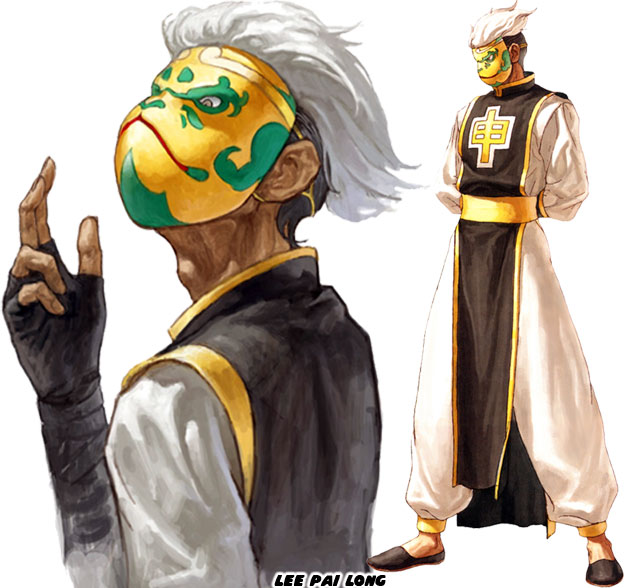
The use of masks as a storytelling device is also something featured in theSichuan Chinese opera. Stories based on the Romance of the Three Kingdoms and Journey to the West often feature performers in full face paint, if not ornately designed silk masks. Some performers were able to switch masks in a fraction of a second as a magic trick. This centuries-old practice was fiercely guarded by the Chinese and the techniques of the masked performers were often handed down to members of the immediate family only through a rigorous apprenticeship. In similar ways certain forms of kung-fu were also only trusted to immediate family members. While the Shaolin were willing to train other monks in the art of self defense many kung-fu practitioners were much more secretive. Many forms died out and it took a long time for certain lineages to be taught to foreigners, if at all. The fighting game character Lee Pai Long was a masked performer and master martial artist. His father was a legend and trusted his only son with his arcane knowledge of medicine as well as the martial arts. In SNK canon Lee Pai Long was a minor character but his design influences were notable. His mask had the pattern of the Monkey King on it. He came from a tradition that predated the Tengu mask.


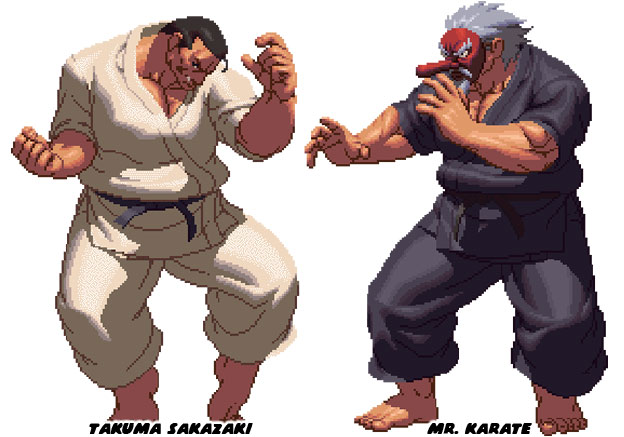
The word Tengu translated to Heavenly Dog, a Shinto god. Sometimes the tengu mask had a beak and made the wearer appear like a bird. The more common version has red skin and a long nose with certain phallic qualities. Yes, there were some tengu masks with long flaccid noses as well! The term tengu and the characters used to write it in Japanese were borrowed from the name of a fierce demon from Chinese folklore called tiāngoǔ. The tengu were mythical characters, spirits, animals, goblins and such that existed before Buddhism reached Japan. As was the case in other locations the Buddhists pulled mythology of the region and incorporated it into their stories. The tengu stopped being representatives of ancient animistic Shinto figures and were written as opponents of Buddhism but also sometimes protectors of it. This dual nature worked in the favor of the characters designed for fighting games. The character of Mr. Karate was the alias for Takuma Sakazaki. As Takuma the character was heroic, noble and very honorable. Mr. Karate by comparison was a brutal fighter that held nothing back and showed no mercy to his opponents. Takuma was based greatly on the Japanese karate master Mas Oyama. However as soon as he put on the mask he developed a completely new personality. The father of Lee Pai Long was Lee Gakusuo, he was the martial artist that left an enormous scar across the chest of a young and arrogant Takuma. Gakusuo was what Mr. Chen was to the legend of Mas Oyama.


As a design choice it was a bold move from the people working at Capcom and SNK to feature martial artists disguised as divine beings. Imagine what a spectacle a real fighter would have created if they chose to protect their identity, or create a new personae with a mask? What would have happened if Mas Oyama or Huo Yuanjia had returned from their self-imposed exile to fight foreign champions while wearing a mask? What if they shunned the fame and had shown up at fighting tournaments unannounced and disappeared as soon as they beat their opponent? Imagine what the reaction would have been if Bruce Lee had lived and caught anonymously instead of promoted himself and his philosophies on movie screens. The stories and conspiracy theories surrounding their lives would be even stronger today.


The most unique designs in the King of Fighters and Street Fighter revolved around a distinct Japanese aesthetic. The Nio figures, the tengu masks and classic theater all had a part in shaping the legacy of fighting games. To ignore the origins of these characters was to deny the reason why audiences were so attracted to them. Western fans of the titles that lacked an understanding behind the Eastern religions, customs and traditions still appreciated these unique characters. I would argue that Gouki, Mr. Karate and other characters like them inspired Westerners to study more about Asian cultures and religions. There was no doubt that they found some influences with their favorite characters as they progressed deeper into history. The foundation for the King of Fighters and Street Fighter series was planted at the start of the 20th century not in the middle of the century. Mas Oyama was a central influence to both games but there were Japanese legends that existed before he did. When the designers at Capcom and SNK studied these men they were able to work them into the canon of each series. The next blog will get to the roots of the Japanese masters. As always if you enjoyed this blog and would like to sponsor me please visit my Patreon page and consider donating each month, even as little as $1 would help make better blogs and even podcasts!
Sunday, July 12, 2015

The Ken reaction, part 2...

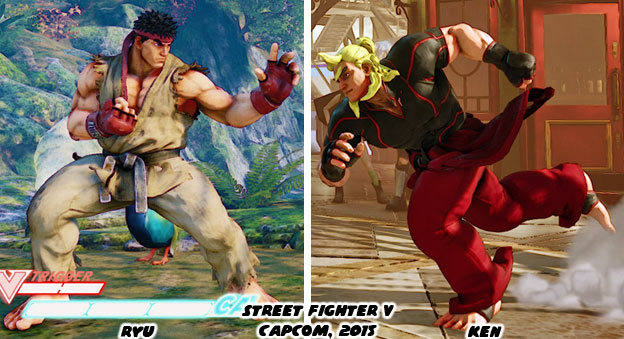
In the previous blog I had mentioned that fighting game characters were memorable when they had uniforms and costumes that were made up of solid color. It was a tradition started by Karate Champ and championed by the Street Fighter series. The reaction to Ken's updated look in Street Fighter V has divided many fans. It's for good reason too, this is more than a cosmetic change for the character. It's a solid shift from what has worked well for almost 30 years.


Ryu retains his familiar costume, a white gi, red sparring gloves, a red headband and a black belt (that is beginning to fade). Ken is still primarily wearing red but his top is pulled around his waist. He has a black sport top on now with red trim. His gloves have gone from yellow to black and he is now wearing black sleeves on his feet. Combined with his extra long hair this is a big shift from game to game and even for the entire series.


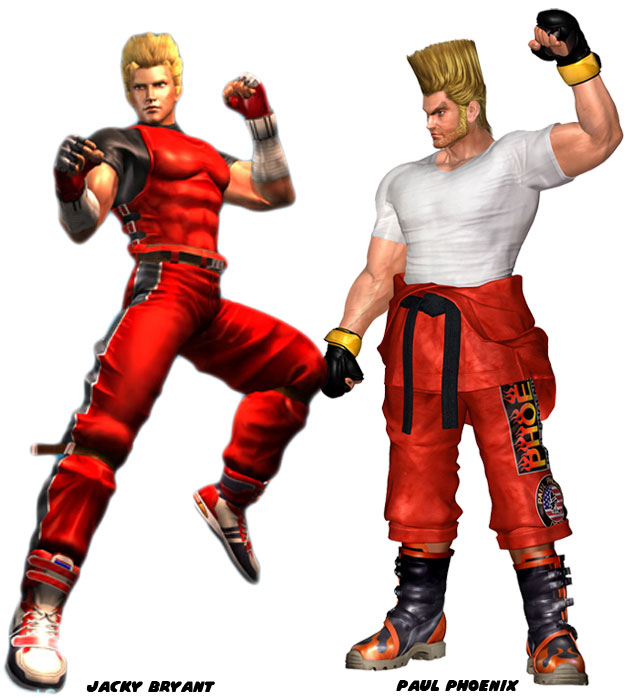
A few things that concerned the fans were valid. Ken no longer had a primary color associated with him, his two colors were complimentary but they reduced the visual impact he once had. The other thing that concerned fans were how the red and black combination had been seen previously on other blonde American fighters. Primarily Jacky Bryant from Virtua Fighter and Paul Phoenix from the Tekken series. Both were considered derivative of Ken but now the opposite appeared true.


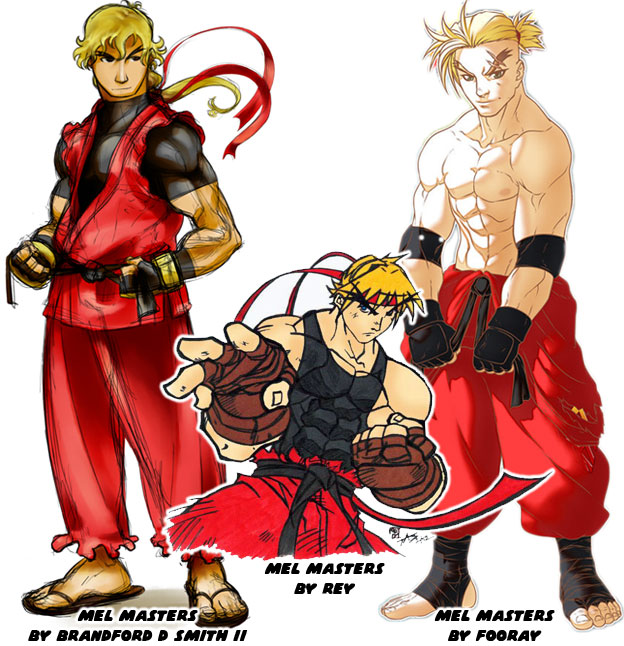
Something else that may have concerned audiences was how similar the makeover was to fan concepts for Mel Masters, the son of Ken, if he were in the series. Of course he was expected to wear red to honor his father but would have added his own touch as well. Perhaps a black top or black tape on his hands and feet. Black was one of the few colors that worked to compliment or contrast red which was why it turned up on so many characters. These fan ideas were many years old and I'm sure many wondered if the artists at Capcom had been keeping tabs on what interested audiences, especially gamers in the West.


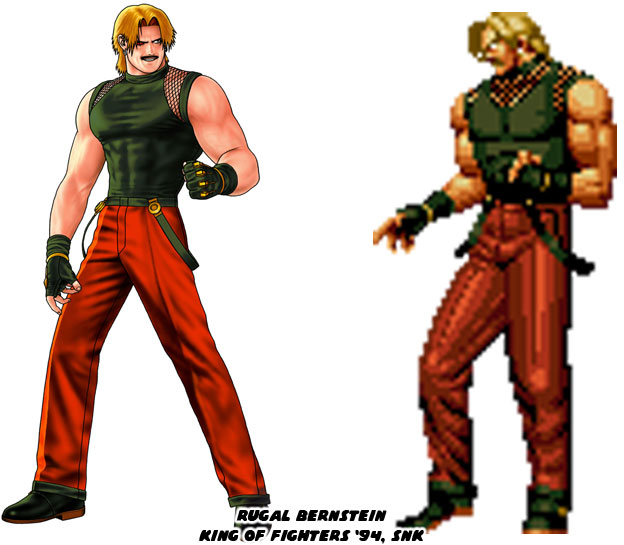
There had not only been heroes that were dressed in red and black. One of the great all-time villains from SNK continuity wore a costume very similar to Ken's updated look. Rugal Bernstein was the organizer of the original King of Fighters Tournament. The game debuted in 1994 and was a revolutionary title. It's use of tag teams was a refreshing change of pace from the typical 1-on-1 battles. Rugal himself was very powerful, as was the case with all SNK boss characters. He was also tall and very strong, giving him an advantage whether opponents were close or far away. The developers made good use of his reach by assigning him many kick-based attacks.


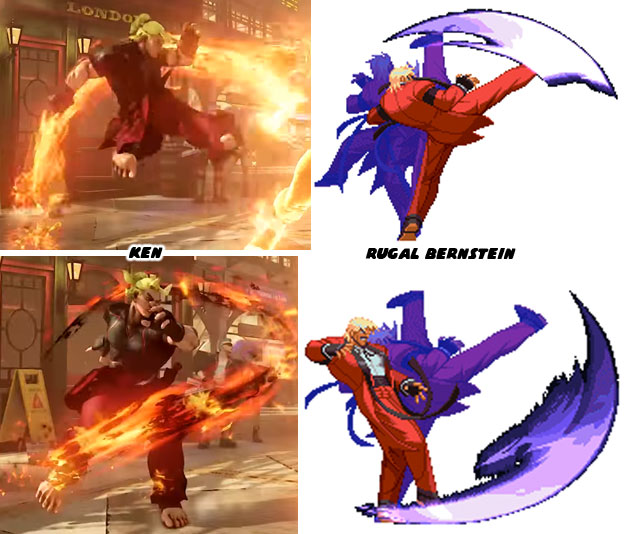
Ken and Ryu had always had the "hurricane kick" in their arsenal. Ken had specialized punches and kicks that actually set his opponents on fire going all the way back to Street Fighter Alpha / Zero in 1995. With his updated look in Street Fighter V he had some changes made to his library of kicks. Several of them now had sweeping arches. These new kicks reminded me greatly of the kicks Rugal would perform. Granted they could have been coincidence. I get the feeling that in the subconscious of the new designers they remembered Rugal and Ken from the same era and combined them into this new fighter. But that's all speculation.


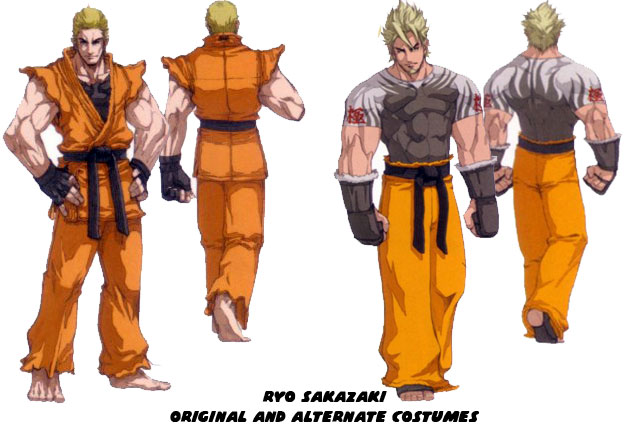
I can understand the concern that long-time players have with the character. He's been presented in one way for so long that the new Ken may be completely "unplayable" in the eyes of traditionalists. Capcom would not do that to one of the main characters. A supporting character like Birdie on the other hand may have an even more dramatic look and control shift. The thing is that Capcom pioneered the idea that fighters could change from game to game. Street Fighter II and Alpha were worlds apart. Ken was very different between the two. Other studios saw a cosmetic change as a way to keep things fresh. SNK experimented with this in the King of Fighters series. A man costume and an alternate costume could both be considered canon. Ryo's alternate costume designs, including changes with his hair and facial hair, from a few years back were not unlike Ken's makeover.


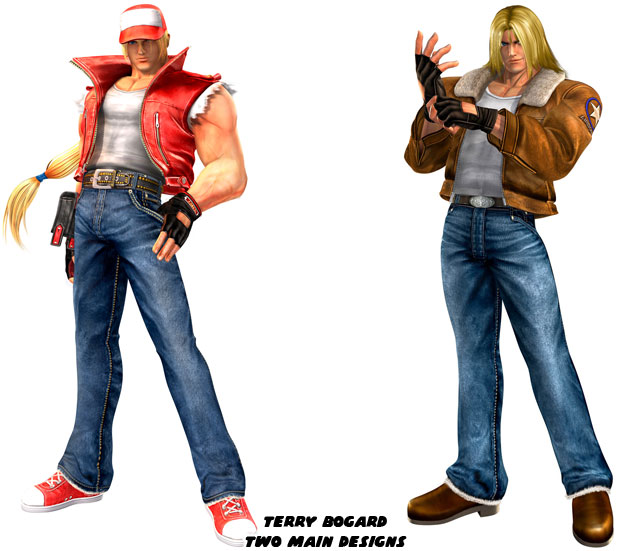
In other cases SNK was able to completely redo a character's look and still have it work within the game series. Perhaps the makeover was because a lot of time had passed. Such was the case with Terry Bogard between the original Fatal Fury timeline and the events of Garou: Mark of the Wolves. Terry still played like Terry despite his new look. It was accepted by King of Fighters Maximum Impact that the main character could have two distinct looks. With the news that some of the original costumes will be available as DLC in Street Fighter V then I have a feeling that was what Capcom was going for with Ken. Some time has passed between Street Fighter III and IV so all the characters are expected to look a little different. So again, I understand the concerns of audiences young and old with the new look of Ken but the game is a long way from being finalized. Let's not forget about the eventual Ultra and Super versions that will follow and continue to shape the costumes and evolution of each character. If you have any concerns with the direction of the series I'd like to hear them in the comments. As always if you enjoyed this blog and would like to sponsor me please visit my Patreon page and consider donating each month, even as little as $1 would help make better blogs and even podcasts!
Tuesday, April 29, 2014

So it begins... a salute to Mr. Karate.

Hello friends, welcome to the first fighting game on my new blog. This entry is actually a successor to the Coloring Perception series that I ran on 1UP and Capcom-Unity. If you remember in that series I was talking about good minority character designs and great villain designs and how the two intersected through the character Zumbi Azul. I had mentioned that the character would have been in my personal top-3 favorite fighting game bosses behind Gouki but ahead of Silber. Some of my friends were wondering where in that list I would have ranked Mr. Karate. I think he would have been number 5 on the list maybe number 6. Number 4 would probably have been Sagat but I haven't made up my mind yet and written the definitive top-10 fighting game bosses, although that might be fodder for a series on the new blog when I think about it. Why did Mr. Karate rank so low on my list? Actually he didn't rank low at all. Stop and think about how many fighting games have been released in the past 30 years. Any boss that ranks in the top 10 has staying power. For the SNK universe nobody has more staying power than Takuma Sakazaki, Mr. Karate himself.

The character originally appeared in 1992 as the main villain in the Art of Fighting. He was the enforcer for Geese Howard, the main villain from the Fatal Fury series. He was forced to serve as a hit man because Geese had threatened the lives of his children. Mr. Big, the second in command for Howard had kidnapped Yuri Sakazaki, the young daughter of Takuma in order to ensure that he would not rebel. His son Ryo and student Robert Garcia chased after the kidnappers all throughout Southtown until the final confrontation. Once the true identity of Mr. Karate was revealed and after Yuri was safe he swore that he would make amends. In the Art of Fighting 2 he ditched the mask and went on a vendetta against Geese and his fighters. I think the biggest impact that the character had within the King of Fighters universe was the legacy he had built. Takuma was one of the characters that had been around since the days of the previous generation of masters. People like Tung Fu Rue and Lee Gakuso were his mentors and contemporaries. Their students and children would have been rivals for the Sakazaki children. Sakazaki was written as a nod to Masusatsu Oyama, the founder of Kyokushin or Ultimate Truth karate. Takuma's version was known as Kyokugen or Extreme Utmost Limit karate.


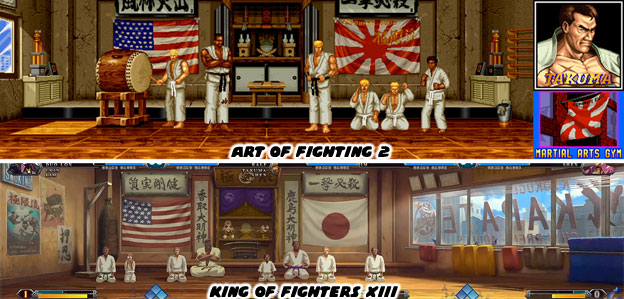
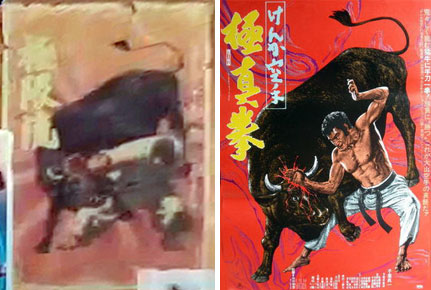
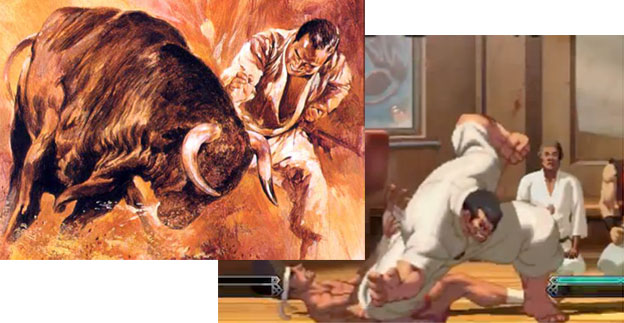
The first Kyokushin karate school in Southtown was a featured stage in the Art of Fighting 2. The artists and designers never forgot that stage and 16 years later a new version was introduced in the King of Fighters XIII. On one wall there were several posters dedicated to the school. One of those posters was in honor of the legend of the founder. It depicted Takuma delivering a killing blow to the head of a bull. It was actually a very metaphysical poster because it was based on a movie poster of Sonny Chiba starring as the "Karate Bull Fighter" that poster was in itself a recreation of the photographs of Oyama actually killing a bull from his live demonstrations.


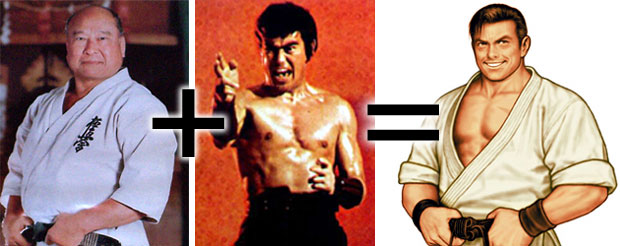
In essence the character of Takuma Sakazaki was based in part of the actual legend of Mas Oyama plus the dramatized retelling of his life in the Chiba films. In the games Takuma would make boastful statements meant to inspire his family and students but often came off as nonsensical. It was as if the elder Sakazaki master had fallen in love with his own legend. He didn't realize that Ryo and Robert had become championship fighters in their own right. They were the characters that gamers looked up to in the SNK titles. Takuma had been unwilling to let go of his share of the limelight. In his mind he still saw himself the same ruggedly handsome person that he was when he starred in the classic karate films so many years earlier. The artists at SNK always made sure to present Takuma as a very confident person with a main full of perfectly sculpted hair. Takuma was meant to have the movie star charisma and looks of Chiba rather than the balding heavy-set man that Oyama became in his later years.


Takuma did have one thing going for him in the games and in canon that neither Robert, Ryo or Yuri had in their favor. The senior Sakazaki was the only true master of Kyokugen, including its most powerful strikes and special moves. For example his all-powerful chop was part of his ultimate strike, the Biruto Appar. This was the strike that used to kill bulls and did tremendous damage to people as well. At the peak of his abilities Mas Oyama had put on many breaking demonstrations all over the world. He would break blocks, bricks, stones and even chop the necks off of bottles. These breaking demonstrations were recreated as bonus stages in the original Street Fighter and the bottle cut specifically in the Art of Fighting. Oyama had earned the nickname Godhand because he could defeat most challengers with a single strike. Imagine the actual martial arts master using his knife hand to break the necks of bulls as easily if he were chopping wood, a person like that would certainly make for an imposing video game character.


The thing that harmed Takuma, at least in terms of ranking him higher on my list of notable fighting game villains, was the lack of consistency that SNK used when presenting him. In canon the user was getting older and often let the fighting up to his children and students. However when his ego felt challenged he would once again enter the King of Fighters tournaments. He would then drop out for a few years because of injuries. This made the character sympathetic and somewhat believable. The shelf life of a fighter past their prime was almost nonexistent. When it came to great villains they could not and should not have had any weaknesses. That was where Mr. Karate came in. He was the other side of Takuma, the dark side with a violent past. Mr. Karate never tired, never got injured and only seemed to come back stronger than before at each encounter. Mr. Karate was the persona, the "Godhand" that really made the senior Sakazaki an interesting character and a great boss design.


It was the legacy that Mr. Karate left behind that really made me appreciate the character and the work that the SNK design team put into him. We shall look at this in the next blog. As always if you enjoyed this blog and would like to sponsor me please visit my Patreon page and consider donating each month, even as little as $1 would help make better blogs and even podcasts!