Showing posts with label fighting game origins. Show all posts

Wednesday, July 15, 2015

How fight culture became fighting game history, part 7

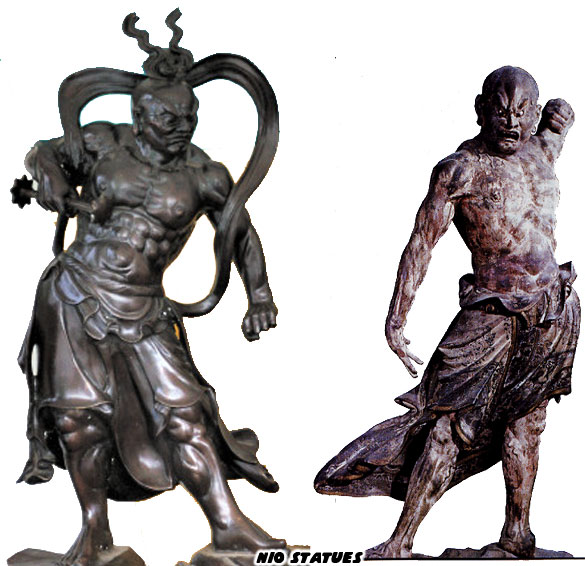
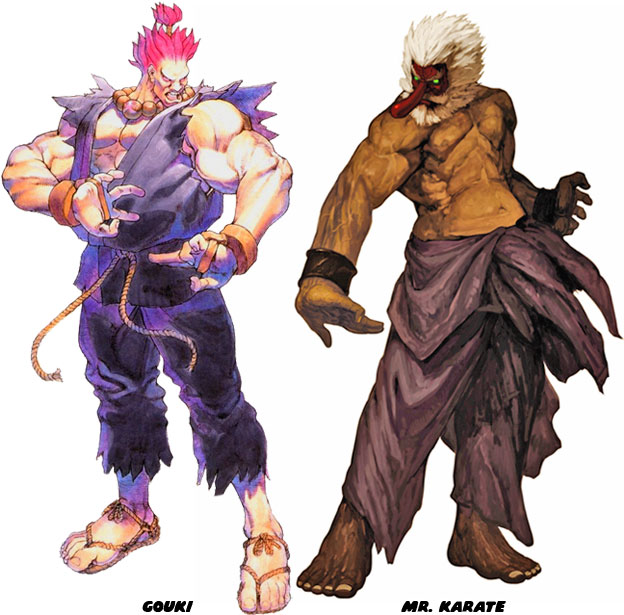
No character is truly original, none are pulled out from thin air, at least not the memorable ones. Gouki and Mr. Karate, the greatest "boss" characters from Capcom and SNK respectively, were inspired by mystical icons. To be specific the spiritual influences of Asian religions. These fighting game characters, their appearance, colors and even poses were based on the Nio. The Nio were the guardians of Buddha. They deterred evil man and demon from the gates of the afterlife and met the honorable ones as a friend when their spirit was ready to transcend this dimension. These figures could be found in temples as intricately detailed wooden carvings, some were life-sized and some were gigantic. They were also referred to as the the Benevolent Kings in other writings. The two most recognizable, the ones highlighted in manga and anime, being Agyo and Ungyo; the beginning and end, or "alpha" and "omega." The guardians were physically imposing figures, whose exaggerated muscles and proportions were meant to instill fear into those that would desecrate a temple. Although empty-handed in most representations they were nonetheless meant to be seen as fearsome warriors and masters of the martial arts.


Upon studying the statues, their origins and aesthetics we can see how the Nio could be incorporated into a fighting game. One of the most popular incarnations being Gouki / Akuma from Capcom's revolutionary Street Fighter series. Years later many of the fearsome elements from the Nio and earlier Vedic Traditions were pulled by Capcom once more to create the heroes and villains featured in Asura's Wrath. Given their importance in Buddhism and symbolically strong gestures they could not have been meant for anything less than "boss" status in their respective titles. The scowls, wide-eyes, raw power and menacing poses were universally understood even if their divine origin was not. All it took was for some artists to come along and update their designs, bring them into a contemporary setting.

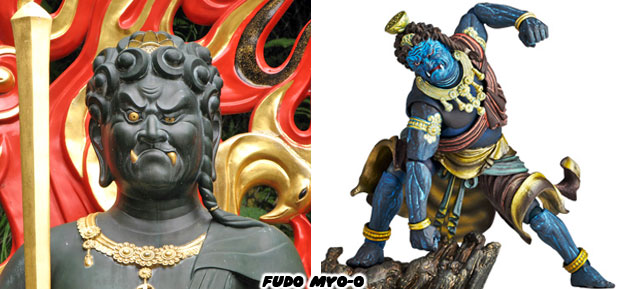
The Nio are sometimes mistaken for another figure from Buddhism. Fudo Myo-o AKA Acala is known as the "Immovable One." The fearsome-looking demon is actually a protector as well. He burns away all impediments and defilement so that living beings can reach enlightenment. The blue skin is supposed to recall elements of the supernatural. Gods and demons are often presented with blue or red skin. Many Hindu deities were presented with blue skin as well and possibly influenced the creation of the Chinese and Japanese spirits.
 

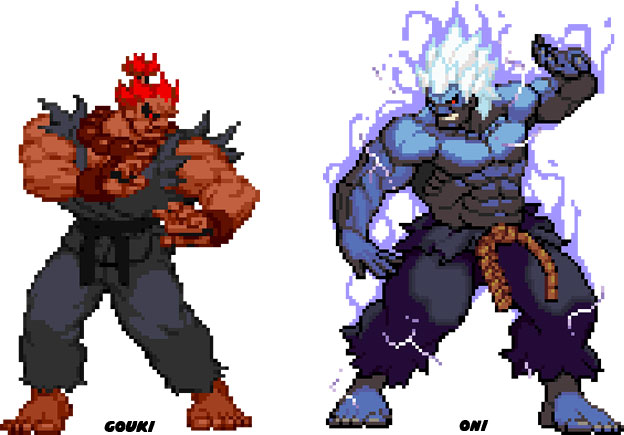
While Gouki was based on the Nio, a latter version of the character introduced in Super Street Fighter IV was known as Oni (the Japanese word for demon). The supercharged, blue-skinned version of Gouki was undoubtedly rooted in the design of Fudo Myo-o.
 

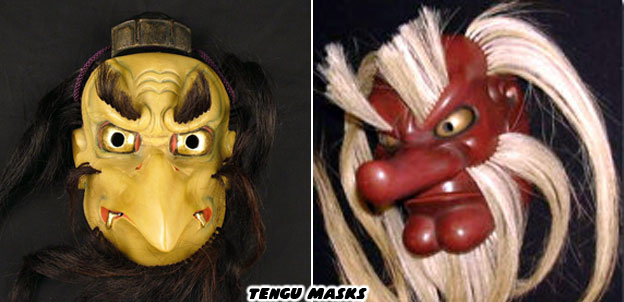
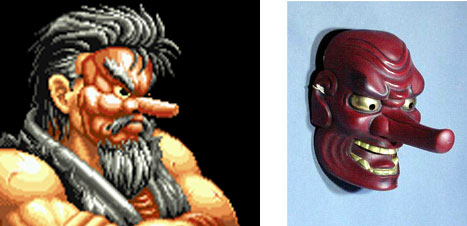
Mr. Karate from the SNK King of Fighters universe combined the Nio influence with a Tengu mask. Masks were very powerful symbols of culture, every culture had a mask tradition and were recognized for their symbolic properties. When used carefully by a game designer they could make an ordinary character extraordinary. In Japan, and in some regions, masks had an important ceremonial position. Originally carved from wood and later turned into a paper-maché craft, Iwami Kagura masks, which were similar to the Tengu masks were used in a historical and folk context. They were most commonly used for Noh plays as great storytelling devices. Even those without an understanding of Japanese culture could still find time to appreciate the colors, design and craftsmanship that goes into these amazing masks.
 

The use of masks as a storytelling device is also something featured in theSichuan Chinese opera. Stories based on the Romance of the Three Kingdoms and Journey to the West often feature performers in full face paint, if not ornately designed silk masks. Some performers were able to switch masks in a fraction of a second as a magic trick. This centuries-old practice was fiercely guarded by the Chinese and the techniques of the masked performers were often handed down to members of the immediate family only through a rigorous apprenticeship. In similar ways certain forms of kung-fu were also only trusted to immediate family members. While the Shaolin were willing to train other monks in the art of self defense many kung-fu practitioners were much more secretive. Many forms died out and it took a long time for certain lineages to be taught to foreigners, if at all. The fighting game character Lee Pai Long was a masked performer and master martial artist. His father was a legend and trusted his only son with his arcane knowledge of medicine as well as the martial arts. In SNK canon Lee Pai Long was a minor character but his design influences were notable. His mask had the pattern of the Monkey King on it. He came from a tradition that predated the Tengu mask.
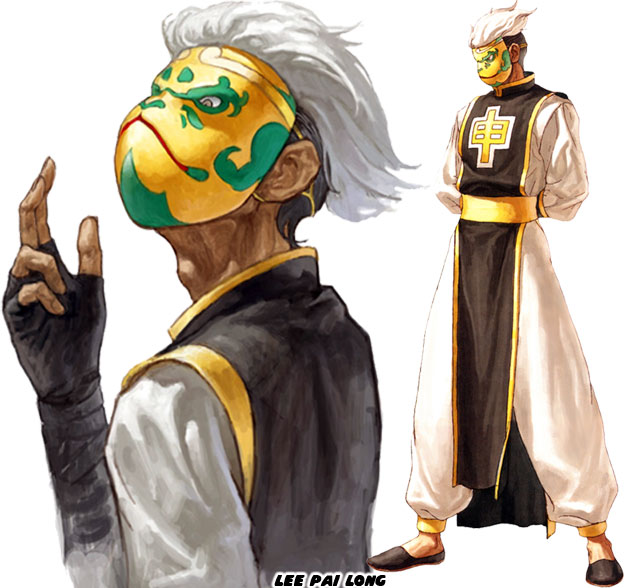
 

The word Tengu translated to Heavenly Dog, a Shinto god. Sometimes the tengu mask had a beak and made the wearer appear like a bird. The more common version has red skin and a long nose with certain phallic qualities. Yes, there were some tengu masks with long flaccid noses as well! The term tengu and the characters used to write it in Japanese were borrowed from the name of a fierce demon from Chinese folklore called tiāngoǔ. The tengu were mythical characters, spirits, animals, goblins and such that existed before Buddhism reached Japan. As was the case in other locations the Buddhists pulled mythology of the region and incorporated it into their stories. The tengu stopped being representatives of ancient animistic Shinto figures and were written as opponents of Buddhism but also sometimes protectors of it. This dual nature worked in the favor of the characters designed for fighting games. The character of Mr. Karate was the alias for Takuma Sakazaki. As Takuma the character was heroic, noble and very honorable. Mr. Karate by comparison was a brutal fighter that held nothing back and showed no mercy to his opponents. Takuma was based greatly on the Japanese karate master Mas Oyama. However as soon as he put on the mask he developed a completely new personality. The father of Lee Pai Long was Lee Gakusuo, he was the martial artist that left an enormous scar across the chest of a young and arrogant Takuma. Gakusuo was what Mr. Chen was to the legend of Mas Oyama.
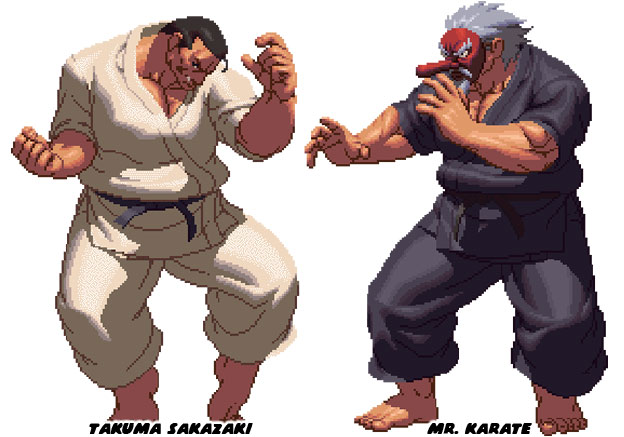
 

As a design choice it was a bold move from the people working at Capcom and SNK to feature martial artists disguised as divine beings. Imagine what a spectacle a real fighter would have created if they chose to protect their identity, or create a new personae with a mask? What would have happened if Mas Oyama or Huo Yuanjia had returned from their self-imposed exile to fight foreign champions while wearing a mask? What if they shunned the fame and had shown up at fighting tournaments unannounced and disappeared as soon as they beat their opponent? Imagine what the reaction would have been if Bruce Lee had lived and caught anonymously instead of promoted himself and his philosophies on movie screens. The stories and conspiracy theories surrounding their lives would be even stronger today.

The most unique designs in the King of Fighters and Street Fighter revolved around a distinct Japanese aesthetic. The Nio figures, the tengu masks and classic theater all had a part in shaping the legacy of fighting games. To ignore the origins of these characters was to deny the reason why audiences were so attracted to them. Western fans of the titles that lacked an understanding behind the Eastern religions, customs and traditions still appreciated these unique characters. I would argue that Gouki, Mr. Karate and other characters like them inspired Westerners to study more about Asian cultures and religions. There was no doubt that they found some influences with their favorite characters as they progressed deeper into history. The foundation for the King of Fighters and Street Fighter series was planted at the start of the 20th century not in the middle of the century. Mas Oyama was a central influence to both games but there were Japanese legends that existed before he did. When the designers at Capcom and SNK studied these men they were able to work them into the canon of each series. The next blog will get to the roots of the Japanese masters. As always if you enjoyed this blog and would like to sponsor me please visit my Patreon page and consider donating each month, even as little as $1 would help make better blogs and even podcasts!
Friday, July 3, 2015

How fight culture became fighting game history, part 2

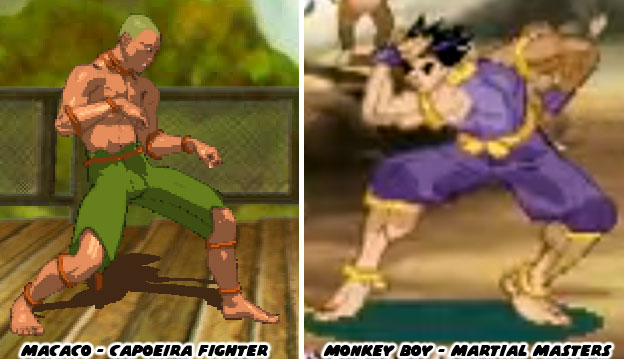
The codified techniques of striking and grappling called wushu or gongfu (kung-fu) in China were drawn from countless schools and styles. The origins of some of the oldest systems were said to have been based on watching how creatures fight. Some styles were formed by monks and others by regular people. According to legend there was a man named Da Sheng Men that was schooled under the Di Tang method of fighting. He was imprisoned deep in the jungle for a crime he committed. The security was light on one side of the compound and heavy on the other. If a prisoner tried to escape on the heavy side they would get cut down by the guards. On the light side they could make a run through the jungle to freedom. Or so they thought. There were some vicious monkeys that lived in the woods and would tear an escapee to shreds. Da Sheng Men served out his short sentence but all the while studied the way the monkeys fought and incorporated it into his style. It became one of the forms of Monkey Kung Fu. This form looked amazing on film and was adapted a few times in gaming. Yet this particular form came into being at the end of the 19th century, many of the animal forms created by the Shaolin were a thousand years older.


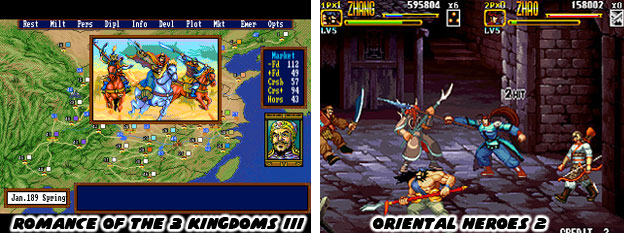
The known martial arts have existed since the earliest empires and just like those kingdoms they have experienced revolutions of their own. Art, science, religion and philosophy changed and evolved at the whim of the cultures and kings. The fighting arts survived the changes and have become immortalized in popular culture. One of the most storied celebrations of the amazing men and women of the martial arts coming from Luo Guanzhong's Romance of the Three Kingdoms. The events of the actual second century Han Dynasty in China were retold to audiences in the 14th century. Creative freedom and a great deal of historical fact made legends out military leaders and strategists. Warriors, heroes, criminals and soldiers have all been celebrated in other classic adventure stories. These fighters had never seemed more real than when they were presented in cinema. The end of the 20th century would signal the rise of a new form of entertainment. The average person would get to play as the legendary fighters in videogame form, marrying Eastern fables with Western technologies. Real and fictional battles could be experienced in any genre, from the role-playing series named after the Three Kingdoms to the action brawler Dynasty Warriors and Oriental Heroes.


This immersion in martial arts folklore gave audiences an entirely new experience. The martial arts would continue to change the face of popular culture. The sciences and philosophies of ancient Asia had to be explored in order to understand and appreciate the origins of the fantastic fighters. The roots of the Eastern Martial arts and philosophies were based in China. Even karate practitioners had to acknowledge that the origins of their systems were based in kung-fu. Mas Oyama, the main inspiration behind Ryu of Street Fighter fame, had defeated hundreds of men in his illustrious career but had known defeat only once. Early on in his karate career he decided to test out his style against a master of Taiji Quan. Taiji is a variation of the same Tai Chi you might see being practiced in a park. The Taiji master, reportedly named "Mr. Chen" was elderly and invited Oyama to a sparring match. Oyama thought that he would make quick work of him. Instead he discovered that no matter how hard he tried he could not land a single blow on the master. The elderly Chen used simple circular motions and smooth footsteps to evade the attacks. With tears in his eyes Oyama thanked the man for showing him that he still had room to grow as a martial artist. The life story of Mr Chen was lost to the pages of history, but the encounter was not. It helped perpetuate the myth of the ancient martial arts masters, characters like Gen in the Street Fighter series for example was one such person.


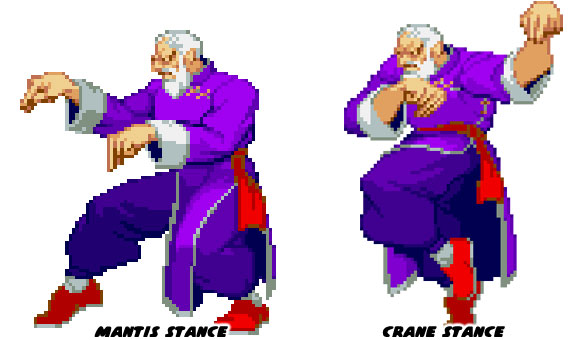
Gen was actually the first and only Street Fighter character to have two sets of fighting stances. Arcade players could switch between them in the middle of a match. Each stance also came with its own special and super moves. The character actually had a few strikes based on Tiger and Eagle Claw but his primary stances were Crane and Mantis. The early forms of Kung-Fu were inspired by the predatory animals in nature. These were considered noble fighting forms. Of course villains developed "evil" versions of Kung-Fu based on the poisonous animals like the scorpion and centipede as well.

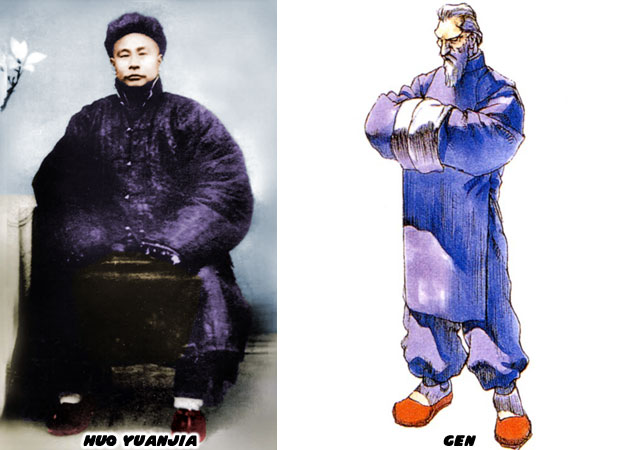
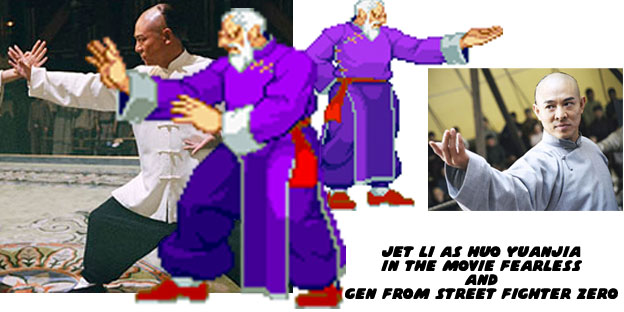
The character of Gen was inspired mainly by Huo YuanJia. Although they do not share many physical traits, it is the legend of the Kung-Fu master that bears the similarities. Huo was born in 1868. He was a sickly child who was kept away from the martial arts by his overprotective father. He proved that he was an amazingly gifted fighter when he defeated the older person that had beaten his brother in a match. From that point on he was allowed to study the martial arts. He had beaten the masters of various styles at a young age. He killed a man in one fight and put himself in exile.


It was similar to what Mas Oyama did when he was younger. Oyama was already an experienced karateka (karate practitioner) and had gotten in a bar fight. He killed the man that pulled a knife on him. Oyama knew that he had the ability to disarm the attacker but instead lashed out. This shame of not being able to control himself in a fight caused him to live like a hermit and become a stronger fighter mentally and physically. Both Huo and Oyama returned from their exile at the peak of their abilities. Of course the legend of Huo goes back almost a century earlier. Huo came out of "retirement" to face the foreign invaders. The Japanese and British had begun colonizing China. The nations would put on matches that surmounted to imperialist propaganda. Having boxers, judo experts and wrestlers take on all so-called kung-fu masters and beat them up in public matches. It was disheartening to the Chinese that their fighters and their arts seemed ineffective against the occupiers. They sorely needed an icon to rally around and Huo came along at the right time. He soundly beat the best fighters from abroad to demonstrate that the Chinese were not inferior people, nor were their fighting styles.


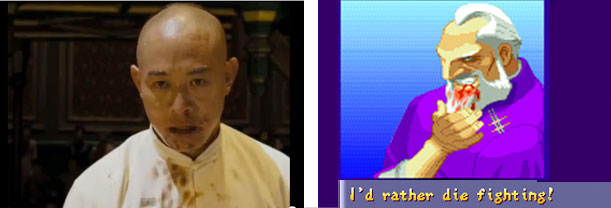
Huo became a national hero when he proved himself against the best Western and Japanese fighters. A fantastic retelling of his life story was done by Jet Li in the film Fearless. The question you may have is why is Gen depicted as an old man whereas Huo was young when he became an icon. Huo died at the age of 42. He suffered from health issues most of his life, including asthma and jaundice. Near the end he had contracted tuberculosis. His health deteriorated quickly and he died just a decade into the new century. The rate at which his health declined was questionable to many. Huo was fast becoming a symbol for national unity, which concerned the occupiers greatly. The Chinese suspected that the Japanese doctors that were treating him for his condition had poisoned him instead.
Gen was a symbolic character. He represented the legendary Kung-Fu masters from 18th and 19th century China. He was what would have happened if Huo had lived long enough to fight the greatest martial artists of the 20th century. Huo would have been elderly but still a dangerous man in the eyes of many. In Street Fighter canon Gen was not only considered a legitimate threat to Ryu but even the main villain Gouki. People suffering from tuberculosis sometimes cough up blood due to the deterioration that the disease has on their lungs. Gen could be seen suffering from this affliction in several endings in the Street Fighter Zero/Alpha series. He was such a proud man that he wanted to die fighting the best opponents in the series rather than to succumb to the disease.


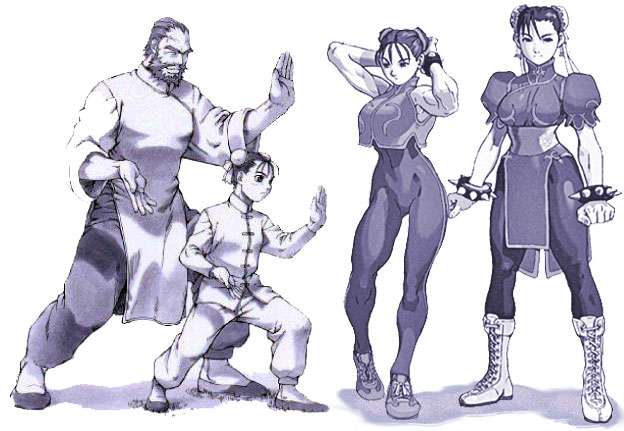
Eventually Gen died, whether by the hand of Gouki or not was never officially stated by Capcom. His secrets did not die with him. As an elderly man he helped mentor Yun and Yang. Each of the Chinese twins learned just enough of his fighting style to make them popular opponents in Street Fighter III. His greatest student however became an international darling. Gen was good friends with the father of Chun-Li. When her father was killed in the line of duty it was Gen that stepped in and continued training her. She became the best female martial arts master in the world but also became a great police officer and avenged the death of her father. Gen would turn up in manga and anime films to cement his status as one of the best fighters in the universe. We should be thankful that Capcom was able to incorporate a mythological Chinese hero in their martial arts fable.


Chun-Li was rooted in a myth that was even more important to the identity of the Chinese martial arts than Gen. The next blog will look at her origin. As always if you enjoyed this blog and would like to sponsor me please visit my Patreon page and consider donating each month, even as little as $1 would help make better blogs and even podcasts!