Showing posts with label demon. Show all posts

Tuesday, March 19, 2024

Gouki in Street Fighter 6, the greatest fighting game villain has returned

Hello friends, I want to say thank you for visiting the blog, even though I am posting old 1UP blogs on Monday, and Wednesday, and trying to come up with new content on Fridays. I noticed in the past week I’ve gotten a significant bump in views following the release of the new Gouki / Akuma reveal trailer for Street Fighter 6, and more recently the first character voice trailers for the next Garou City of the Wolves. I put together a few words on what I picked up in the first trailer.
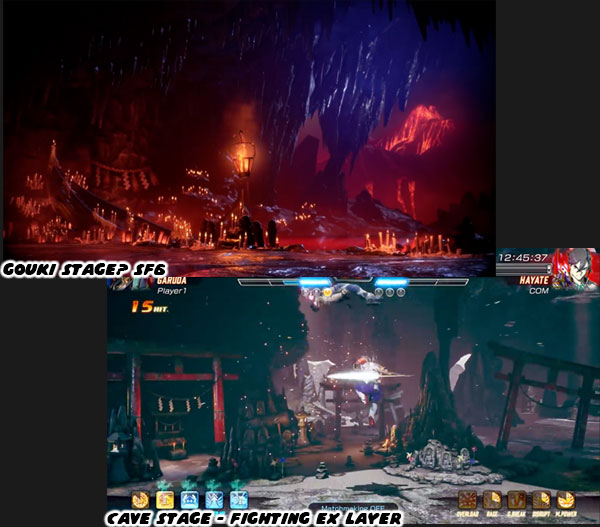
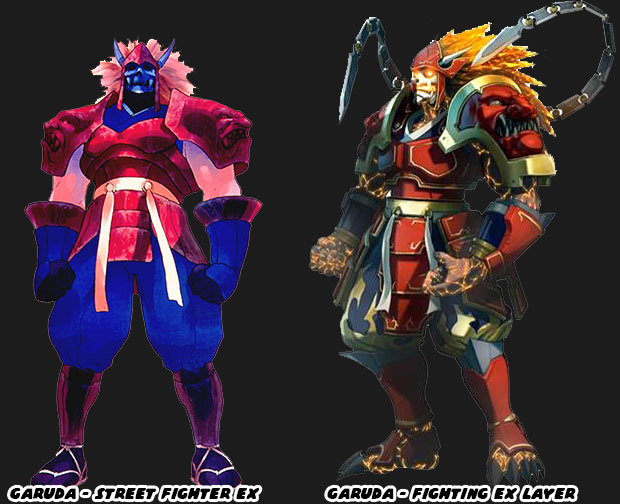
The first thing we saw was a variation of the cave stage, which had been used as the backdrop to Gouki since the days of Street Fighter Zero / Alpha almost 30 years ago. I have a feeling that the location presented in the trailer will be his actual stage in the game. Gouki has always lived as a hermit. Away from society, mediating, and training to turn his body, and mind into steel. There were a number of details in the trailer that meant a lot more to the Asian community rather than western audiences. We could tell that the stage was designed to be as intimidating as the character himself. It reminded me of the Garuda stage from Fighting EX Layer.
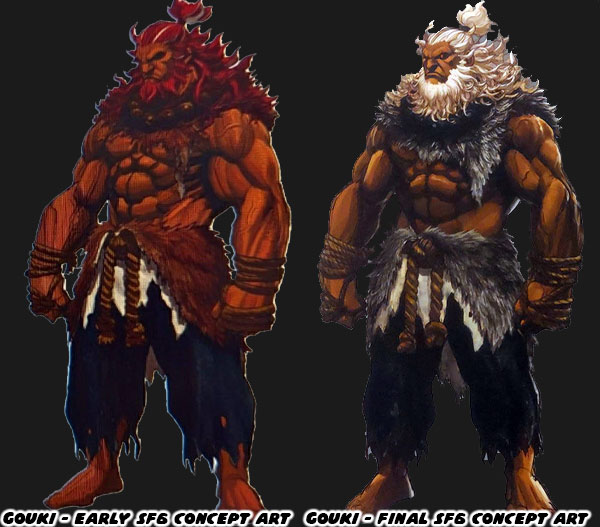
The other thing that stood out to me was that Gouki’s hair has finally gone from red to white. In the early leaked SF6 concept art he looked as intense as ever, but he still had red hair, with some white streaks which were a carry over from SFIII. The finalized version had all white hair, and even white fur on his costume. This was important for several reasons. First off it separated his appearance from that of any other game in the series. The other was that Capcom was willing to continue refining a design until the very last reveal. Remember all the details I pointed at from the original Lili concept art? A lot of that was changed by the time the game was released. Lili’s new look was both culturally sensitive, and culturally relevant. Gouki had several changes, more subtle than Lili’s, but also gave his appearance more of an impact.
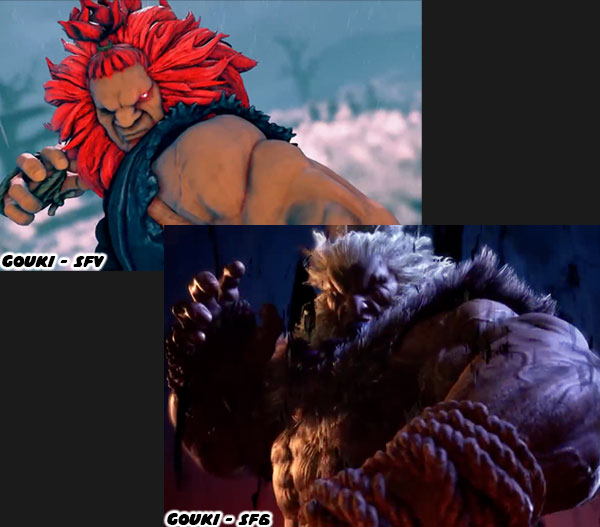
When we first got a good look at Gouki in the SF6 trailer we could tell he was designed to inspire fear. He had always been an imposing villain, however in previous incarnations he was not frightening. In order to tell audiences that they should be afraid the team at Capcom made him much more visceral. His body was more shredded, with veins, and muscles rippling over an entirely new 3D model. From a storytelling perspective they did the reveal slowly. We saw his frame, his massive torso, his thick arms, and his club-like fists. He looked like a nightmare brought to life. When the studio revealed him for Street Fighter V they literally just gave us a trailer made up of cool moves. By telling us nothing about his library of attacks in the SF6 trailer it would give audiences a chance to discover how truly powerful he was in person.
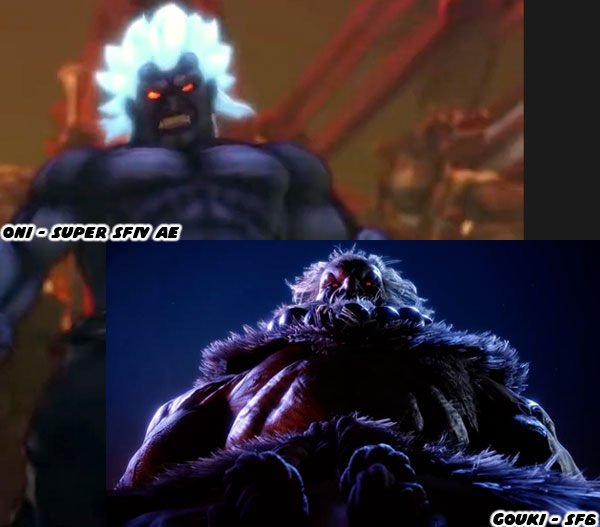
The other thing that the updated look do was signal that his transition from beast-like human into a literal demon. I had talked about it multiple times in the past, but Gouki’s design was based on that of a lion. Going back to Street Fighter IV the studio has transitioned his look into two phases, he went from inspired by a lion, and Nio, to being based on an oni. The white hair, and leathery skin made him a plausible human-turned-demon. In fact the whole trailer was filled with design cues from ancient Japan.
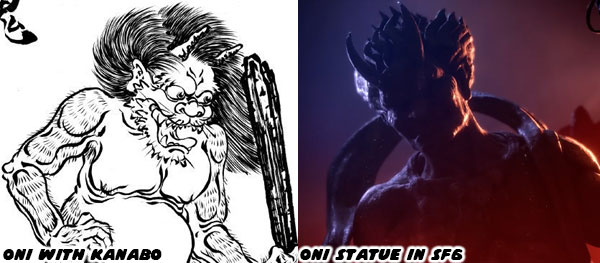
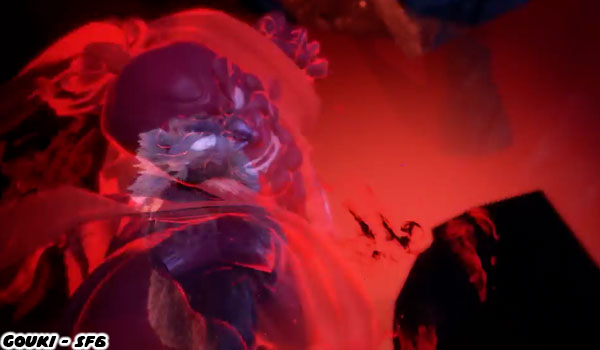
The cave where Gouki is training has several oni statues in the background. These are sometimes confused with the nio, which were the guardians of the gates of the afterlife. Oni were some of the various types of demons the roamed the countryside in ancient Japanese traditions. They were often seen wielding a spiked club, a kanabo. There were a few short shots in the trailer that would be easy to miss if you didn’t know to look for them. When Gouki lets his rage flow though his fist we can actually see a glowing spirit envelop him.
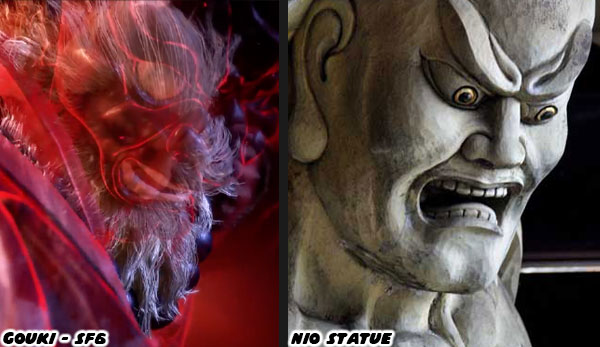
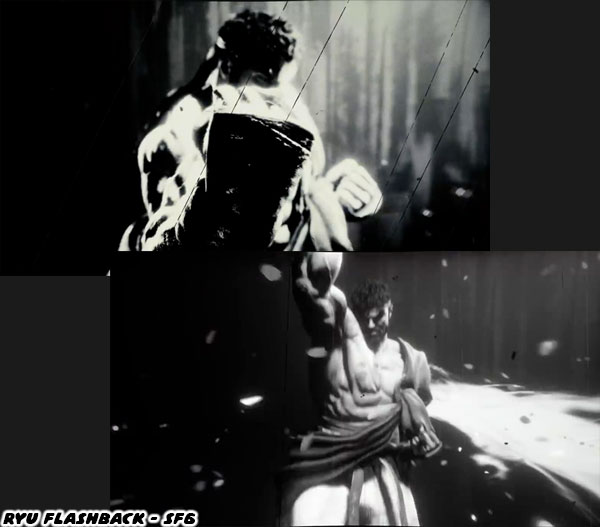
It almost appears that he is wearing the frightful mask of the nio. We can see the large eyes, curved brow, and open grimace. The focus of his rage was actually a few quick flashbacks of Ryu. To long-time fans of the franchise it was the confirmation that he was obsessed with Ryu. The pupil of his former master, and his own brother was certainly under his skin. Gouki was boiling with a supernatural rage. Punching at immovable statues, honing his strike to razor sharp precision. When he went for a shoryuken we could see him enveloped with a red aura. For a fraction of a second we could see Ryu in a white light performing a similar dragon punch, but he looked serene by comparison. It was a yin / yang opposite approach to the powerful strike. Gouki had become the living oni, the living nio.
This was the thing that I loved the most about the best of the Street Fighter designs. They were archetypes, inspired by equal parts real heroes, and mythology. The studio was creating plausible fighters with historical context. Certainly demons didn’t actually roam the Japanese countryside centuries ago, but consider that perhaps there were wild men, hermits built like brick buildings back then as well. There were people that enjoyed lifting heavy stones in order to prove their physical superiority. Those that lived off the land, killed animals with their bare hands, and only rarely interacted with villagers. Then there was the case that these settlers were from China, bringing over Buddhism, as well as the martial arts traditions. These types of outcasts could easily have inspired the rumors that there were fearsome ogres that lived on the outskirts of towns. Or Gouki was genuinely possessed by powers from the spirit world. It was the type of mystical ability that ARIKA used when creating Street Fighter EX, Fighting Layer, and Fighting EX Layer.
The fighting game archetypes that Capcom had developed over the past 35 years were icons in the gaming world. The artists, and designers at other studios could also exploit these visual storytelling cues when coming up with their own roster. Of the three greatest fighting game boss designs in my book, with Gouki being first, I would argue that Silver was the third best. He worked as a fighting tournament villain because he used many of the same elements as Gouki, however he was western based. I had had discussed Silber previously on this blog. As a quick primer in case you weren’t even born in 1999 when Buriki One was released. The insanely strong German created his own fighting form, and traveled the world seeking out opponents. He would fight wild animals to prove his ability, and had been painted smashing the face of a polar bear in official SNK art. He was very much cut from the same cloth as Gouki.
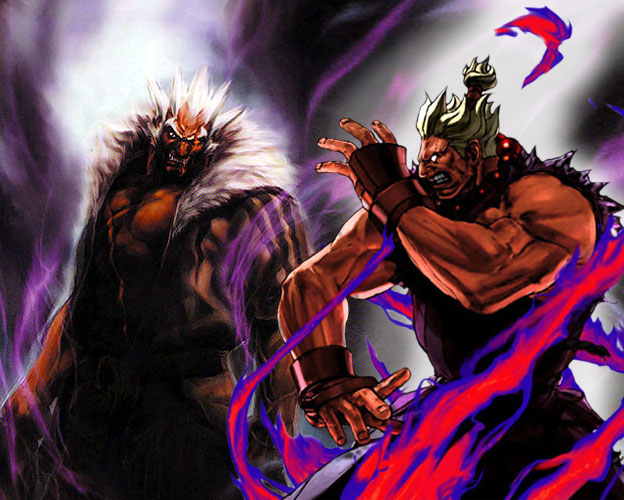
The animal pelt Silber wore on his gi was not to be confused as the fur lined jacket of a mafioso like Mr. Big. By a similar token Gouki had evolved past his black gi. His appearance in Street Fighter 6 was more feral than ever before. Losing his humanity to the Dark Hadou, the evil force that propelled him forward. That drove him to kill his master, and his brother as well. By having him shirtless with white hair the studio had amalgamated the Oni design from Super Street Fighter IV with his more recent Lion Mane SFV look. I don’t think the company would ever bring back the Shin-Gouki, or Oni characters as essentially Gouki in SF6 was a blend of the alternates. I am certainly interested in how he will be used in the story. I’d like to know your take on the character. Tell me in the comments section please. Now I have to make time to talk about Garou: The City of the Wolves for a future blog. As always if you would like to sponsor me please visit my Patreon page and consider donating each month, even as little as $1 would help make better blogs and even podcasts!
follow the Street Writer on Patreon!

Wednesday, May 15, 2019

The new Evil Ryu, a look at Kage

Hello friends, I hope that the year has been going well for you. I just wanted to be completely transparent with the slow update schedule. Since fall of last year I've been changing my habits. For health reasons I'm putting myself on a better path. I've also been focusing on my art and less on my writing. I'm still 100% passionate about fighting games, but I've got to make sure I'm healthy for the long run. Thanks for being patient in the meantime. Today I want to talk about Kage, a new character revealed for Street Fighter V at the end of 2018. On the surface level this character is reminiscent of Evil Ryu, because in essence he is Evil Ryu. If you didn't know Evil Ryu had his breakout appearance in the Street Fighter Zero / Alpha series in the mid '90s. For budding game designers that read my blog I mentioned that the transformation of a hero to a villain was a very powerful storytelling tool.


Evil Ryu is a version of the hero of the Street Fighter series that wants to prove he is the greatest warrior. Even if this means killing his opponents in a fight. He is often presented with a tan, and even red eyes in some official art to signify that he is possessed by evil forces. Kage in Street Fighter V is presented in a different light. Instead of simply being Ryu fighting with the evil forces inside of him, this character is the physical embodiment of the Satsui No Hadou. He has neon horns sticking out of his head and elongated teeth. The red headband is broken and rests on his shoulders to signify that his mind is not his own. His head and face are distorted so that it looks more like an ogre and less like a person. The animal traits applied to a human were originally featured on Gouki / Akuma. To make him appear less than human the designers flattened his nose and gave him a crown of blazing red hair. He was meant to conjure images of a lion.


The earlier Street Fighter designs, especially those from the late '80s and early '90s Street Fighter II and Street Fighter EX era were well done. The characters had an easy to identify theme, perhaps they were a soldier, wrestler, or kung fu master. You could tell right away based on their look what archetype they were. Some clues were obvious and some were more subtle. When you added all of the details together they turned a typical fighting game character into an icon. I believe that the the designs in Street Fighter IV and V are lacking. They lack subtlety. They lack an understanding of what made the original World Warriors so memorable. Instead of letting audiences discover that Gouki has lion-like features, the studio now presents him with a literal lion mane. Fans call this version Akuma-matata, a play on the African word hakuna matata.


Capcom is hitting audiences over the head with their latest designs. It's the fastest way to tell a story, but it doesn't make it the right way to tell a story. The look of the Street Fighters are loud and boorish, they are the characters that a teenage fan could have pitched. The look of Gouki and Kage are prefect examples of what is wrong with Capcom's current design culture. The majority of new characters, such as Rufus, Hakan, Abel, F.A.N.G., and Rashid introduced in Street Fighter IV and V are forgettable because they subscribe to the same design philosophy. There is nothing wrong with having characters in the franchise that have some animal-like traits. Blanka is an example of that, but he is on the extreme end of what works in the franchise. Characters like Blanka are few and far between. Not to mention that there was already an Evil Ryu. When you start to fill the roster with similar outlandish characters it dilutes those that are really unique. Having literal demons in the series is changing the narrative. This series was founded on martial arts archetypes. As Capcom expands the design circle to include demons and comic book villains then it is going down a path that is hard to return from.


Turning the main character into a monster, and keeping him that way has been explored in other fighting games. Devil Kazuya is possibly the best example of this. Tekken has a number of main characters that have demonic alter-egos. Jin Kazama has a Devil Jin persona, his great grandfather Jinpachi Mishima becomes a demon, and Jin's grandmother Kazumi Mishima also becomes a demon. The series is well known because of the number of fantastic archetypes. The series has monsters, cyborgs, robots and even panda bears. That lineup, that presentation is not in the same vein as Street Fighter. I'm worried that the people designing the next generation of Street Fighter can't make the distinction.


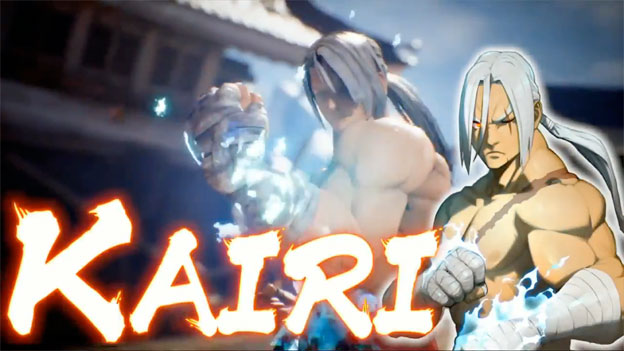
The arc that would have had Ryu fighting his inner demon and facing off against the man that killed his master was considered for Street Fighter III. A lot happened to Capcom in the early and mid-90s during the gold rush of the fighting game genre. As members of the Street Fighter team left Capcom to other companies they took some of those ideas meant for Ryu and Gouki. Having a main character that becomes overpowered and destroys a demon was explored in Street Fighter EX, and later on in the Fighting EX Layer series. Kairi was the surrogate for Ryu and Garuda was the stand-in for Gouki. In ARIKA's franchise it was established that there were supernatural elements in the universe, however the majority of the cast was still rooted in martial arts archetypes. So having some mysticism was welcome in their take of the franchise. The fighting game market imploded at the end of the '90s, and wouldn't recover for about a decade. In that time Capcom had new faces making bold decisions with established characters. In the history of fighting games I consider Gouki the greatest villain ever designed. In the history of the Street Fighter franchise however I only said he was the third most important.


Capcom established that Gouki had a "stronger" form called Shin Gouki, or true Gouki. This was the unleashed, no-holds-barred boss in Street Fighter Zero. More than 12 years later the character was revisited for Super Street Fighter IV: Arcade Edition. The new developers decided that they wanted to make him even more overpowered. Oni debuted, and Gouki went from having subtle lion cues to being an outright DragonBall Z villain. The blue skin, demonic features, and abilities made little to no sense for the character. This was the same type of thinking that went into the look of Kage. Evil Ryu was already a great design, especially with a smoldering crater in his chest from when Gouki tried to kill him. The look of Kage didn't really have enough elements to make him stand apart from Evil Ryu. Some people in the community even likened his glowing horns to cat ear headphones. This was hardly as intimidating as he was supposed to be. To be fair however, Capcom had been pursuing a redesign of Evil Ryu since Street Fighter IV.


Evil Ryu and Violent Ken were on the drawing board for Street Fighter IV, and each more or less looked like their traditional designs. There was nothing unrealistic or supernatural about their appearance. No wings, fangs, or horns smacking audiences in the face. Instead they each had attacks that were more aggressive or powerful than normal. They had just enough going for them to make them unique. The majority of their appearances were in the sprite-based games of the '90s. This look did not really deviate much until the introduction of Kage. In at least one draft of Kage he was so far removed from Ryu that he didn't even look like a Street Fighter character. If anything he looked like a monster that would have been featured in the manga and anime series Mob Psycho 100. In case you are not familiar with the series, the main character is named Shigeo Kageyama. He is a very plain-looking kid. He is so plain in fact that he is called Mob, a reference to the nobody background characters in most shows. Ryu could be considered similar to Mob, in that he looks like a plain "vanilla" karate fighter. Of course that perception changes when they use their awesome powers. Mob however also has a dark side that manifests from time to time.


If Mob loses control of his emotions he becomes a being made up of raging psychic energy. He no longer looks human in this form. He can be cruel and unstoppable in this form. In the story this makes sense, as series creator ONE has established that all sorts of psychic and metaphysical things are possible in his universe. Capcom doesn't have that luxury. The Street Fighter gang is not made up of ghost hunters. They are not exorcists but instead warriors. Dropping in a demon made of cracking energy would have been way out of left field. So much so that audiences would have pushed back on the design. As it is, they are lukewarm to the idea of Kage. What do you think of the character? Am I reading too much into it? I'd like to hear about it in the comments section. If you would like to sponsor me please visit my Patreon page and consider donating each month, even as little as $1 would help make better blogs and even podcasts!
follow the Street Writer on Patreon!

Thursday, June 28, 2018

30 years of Street Fighter: 30 years of Characters #3

For the 30th Anniversary of Street Fighter we've talked about Ryu, the hero of the series. We've  talked about Sagat, his great rival and the template for a memorable martial arts boss. We've even talked about Vega / The Dictator as a way of redefining what a final boss villain could be. With every fighting game that's ever been and that will ever be, there is one boss that is considered the gold standard. His name is Gouki. You might know him as Akuma. He represents the peak of the mountain, the ultimate fighter if ever one existed. Designed with a frightening appearance he has elements pulled from Asian mythology, including demons, the afterlife, and even lions. His origins are part of a larger narrative. He is the estranged brother of Gouken, the master of Ken and Ryu. He murdered his master and his brother in a fit of rage. He is as complex as he is intimidating. The best renditions of the character coming from the talented hand of Bengus, one of Capcom's best artists.


The origins of Gouki are obscure, owing more to an April Fool's prank rather than clever planning. The long defunct EGM magazine invented a character named Sheng Long who was supposedly the master of Ken and Ryu. He could only be fought under certain conditions. Capcom decided that they should introduce a version of this mythical fighter in one of the final Street Fighter II upgrades for the arcade. His debut in Super Street Fighter II became the stuff of legend. He only showed up at the end of the game if certain conditions were met. He absolutely destroyed Vega before the match started. His moves were far more impressive than Ken or Ryu's. He could throw fireballs while leaping, he could even teleport across the screen. He showed that even the best Street Fighter bosses were far beneath him. His popularity really took off as he was formally added as a playable character in the Street Fighter Zero series. He had his own story and ending to help explain his purpose in the universe. Gouki wasn't the main boss for every character in the Street Fighter universe and that made sense. He wanted to fight the best ever, and in particular see if his brother's students were any good. He was reclusive and you had to work hard to find him and even harder to beat him. He embodied every quality that made for a memorable final boss.


No studio was able to recreate what Capcom had stumbled into. After 30 years we have yet to see a boss character in the series that holds a candle to Gouki. Part of the reason why is because most developers, including the current Capcom stable, have a limited approach to their villain designs. They often create one-dimensional bosses, pure evil with amazing powers and no redeeming factors. Gouki was a murderer, that would never change, but he fought with his own code. He didn't kill everybody he ran into. He was obsessed with a worthy challenge. This was best explained in a drawing by Bengus. Gouki, selling fruit, probably by the side of the road. Earning some money to buy provisions and supplies. He could take whatever he wanted but he was no thief. He only became a monster when a fight was at stake. Gouki looked supernatural, he looked demonic but the thing that made him better than every boss character was his humanity. Gouki could have been a real person with a killer's instinct and that is truly frightening. It may be 30 years before Capcom ever creates a villain as memorable. What do you think about this character? Please let me know in the comments section. If you would like to sponsor me please visit my Patreon page and consider donating each month, even as little as $1 would help make better blogs and even podcasts!
follow the Street Writer on Patreon!

Sunday, June 10, 2018

30 years of Street Fighter, 30 Days of Characters; #21


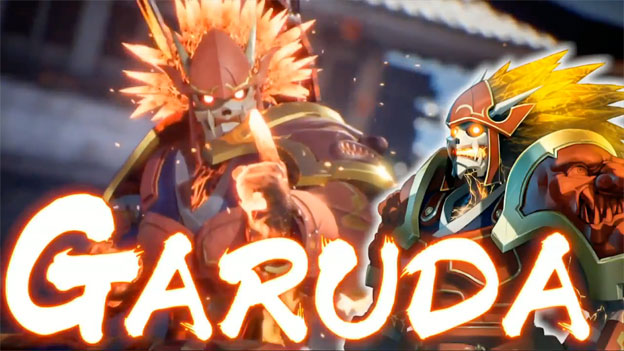
Can you believe I've celebrated many unique characters in the 30 year history of the Street Fighter universe and not once brought up a boss character? Well today that changes! We're looking at the most evil villain in franchise history. I am talking about a literal demon named Garuda. Now I know many of you are asking what about Gouki / Akuma? He did kill his brother and that is absolutely evil. Well Garuda is a killer as well, in fact he killed so many while alive that not even death could stop him. This character debuted in Street Fighter EX back in 1996 but his origin is centuries older.


Garuda was a warrior during the Sengoku era in Japan (1467-1603). This was a very turbulent time with nonstop political strife and war all across Japan. This was the era that was the backdrop for countless movies, television shows and even a few dozen games. Garuda was a bloodthirsty samurai, killing many men in his wake. When he was struck down in combat he was furious, not because he was dying but because he could no longer continue killing. A demon was attracted to his rage and possessed the man, turning him into an undead killing machine. He was sort of the Jason Voorhees of feudal Japan. Garuda was eventually sealed away in a sacrificial ceremony where he remained for over 300 years. This seal was broken during the events of Street Fighter EX. What was unleashed was one of the most unique fighting game bosses in the history of the franchise.  


Garuda did not have a samurai sword to attack with but rather living metal spikes that would grow out of his skin and armor. He could spin like a whirlwind while slashing at opponents. He could impale opponents on his shoulders and then run them into the ground. He was insanely strong, able to slam any opponent easily. He could also teleport all over the stage avoiding a barrage from his enemies. Garuda demonstrated how the Street Fighters would hold up against a supernatural villain. There was nobody else like him before or after in franchise history. For these reasons and more we clebrate the living demon on the 30th Anniversary of Street Fighter. As always if you enjoyed this blog and would like to sponsor me please visit my Patreon page and consider donating each month, even as little as $1 would help make better blogs and even podcasts!
 follow the Street Writer on Patreon!

Sunday, August 13, 2017

Speculation on ARIKA's unnamed Street Fighter EX successor, part 2...

The Street Fighter EX series had always had a more spiritual tone compared to the other Street Fighter titles. In fact the same thing could be said about ARIKA's other game Fighting Layer. Many of the characters, good and bad, were inspired by regional mythology. The religious or spiritual practices of different Japanese cultures had an influence on the design behind Kairi, Garuda, Vold Ignitio and several other characters in both games. Kairi was a melancholy character who was tortured by his powers. Unlike Ken and Ryu who were able to harness their chi in energy wave attacks, or fireballs, every time Kairi used his energy attacks it took a toll on his spirit. His style of fighting may have been similar to Ken and Ryu’s but the origins were even older. His body was covered in scars and he was missing an eye. There was something terrible in his past that seemed to haunt him. He was suffering from amnesia and had no idea who he was or where he came from. During the events of the Street Fighter EX series was on a path looking to fight the greatest warriors or die in the process. Kairi's sister Hokuto, was tasked with bringing him back to the Mizugami clan, or killing him if she couldn't.


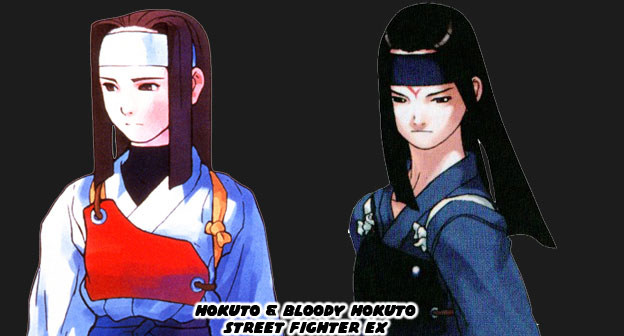
Hokuto looked like a kyudoka, a practitioner of traditional archery. She dressed very conservatively, wearing a costume that would have fit right into feudal Japan. It made sense given that she was responsible for the fate of her brother. Despite her uniform and archery glove she did not actually carry a bow and arrows. Instead she shot bolts of spiritual energy from her hands. Hokuto was also well versed in tessenjutsu, the fighting art of the war fan. People often mistook Hokuto as an akido practitioner considering how many of her moves were counters to traditional attacks. Hokuto had the ability to perform energy wave attacks but they did not harm her as they did her brother. Whether it was because of her training or something else was not explained at first. She was actually harboring a few secrets of her own, these were revealed over the course of the series.


Hokuto came from the same cursed blood as Kairi. She actually had a seal placed on her that prevented her from succumbing to the same killer instincts of her brother. There was a variation of the character that could be unlocked in Street Fighter EX Plus Alpha. This evil version was known as Bloody Hokuto. Her uniform was a stark black in this form. She even had a slightly darker skin tone. Darker colored characters usually denoted a hint of evil. This was a tradition observed in many different cultures and story telling techniques. It was one of the reasons why Gouki had skin that appeared dark red like clay. But I digress. A mark of evil was visible on her forehead. Her attacks were more aggressive and she even had the ability to perform the Renbu, or “death touch” attack. Bloody Hokuto even had her own unique stage and ending in the game.


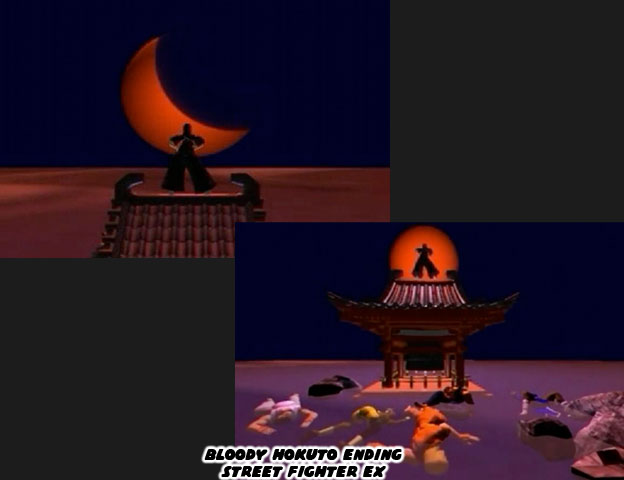
If Bloody Hokuto defeated all of the opponents in the EX tournament she was seen standing on top of a temple. The blood moon was in the background. All of the other rivals were dead on the floor. The whole nocturnal scene, twisted background and use of moon and darkness was the same symbolism featured with Kyo and Iori from the King of Fighters series. There was a reason for this. The mythology behind the orochi, an ancient demon that was bound to the moon was also loosely tied into the EX mythos. The Hayate clan had locked away the demon and was responsible for keeping it locked away. A character named Hayate appeared only once in the series, in Street Fighter EX2. He dressed like a samurai and was a sort of fighting priest. His special attacks allowed him to materialize swords out of thin air before dissipating as energy from his hands. It was a refined version of the same attacks Garuda used. Except that Garuda made spikes appear from his flesh, all over his body and even head. It turned out that the demon Garuda had escaped and was following Kairi. Whether Hayate was scheduled to be in the new game was unknown as of this writing.


Garuda was a mighty warrior that became possessed. He actually fed off the spirits of people that were defeated in battle. Since Kairi was destroying people left and right all Garuda had to do was follow behind and steal their essence, growing stronger along the way. I had talked about spirits possessing human bodies previously on this blog. In the Street Fighter EX series Kairi was on the path of being consumed by the energy within. A possessed person was known as a yorimashi. Gouki / Akuma for example could be considered a yorimashi. He was consumed by the evil energy or Dark Hadou. He kept this energy under his control as symbolized by the prayer beads he wore around his neck. Garuda was another such yorimashi, the person that he possessed probably died a long time ago. There was probably a reckoning between Kairi and Garuda planned for the climax of this game. How Hokuto would figure into the story was an important piece of the story.


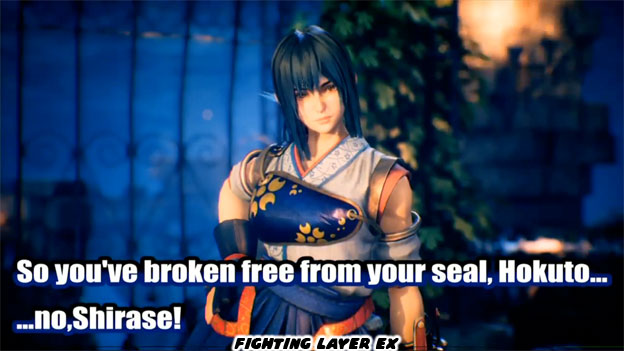
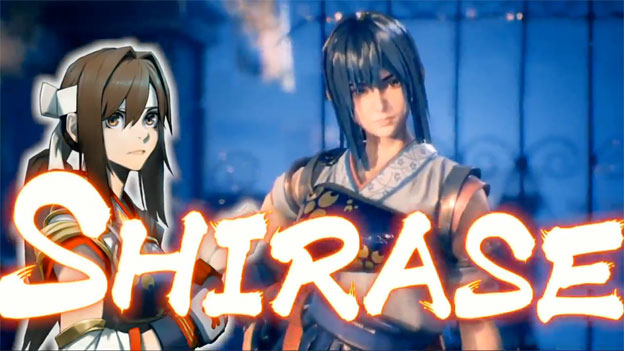
After 21 years since the debut of the EX series ARIKA had a confession to make. Hokuto was not the character’s real name. In fact she was an assassin that had been programmed to kill Kairi. Her real name was Shirase. About the only thing in her history that was true was that they were related. However Hokuto was only the half-sister of Kairi. Whether she was under the employment of the Mizugami, Hayate or other family had yet to be revealed. Then there was the question of the youngest member of the family, the little sister known as Nanase. Well she was in fact Kairi’s actual sister and Shirase’s half-sister. When her programming was revealed Shirase did something drastic, she wiped Nanase’s memory of her. How much remains of the family, and relationships between the three will hopefully be revealed in the game. There was no word on whether Nanase would return to the series. It would be interesting to see how the story progresses because of these developments.


ARIKA was no stranger to supernatural character designs. When the studio created Fighting Layer they had heroes and villains with supernatural powers or supernatural origins. It was unknown (as of this writing) whether Shirase would have the full library of moves of Hokuto and Bloody Hokuto, or if there was a version of Bloody Shirase yet to be revealed. The characters in this game also had something called Gouji that they could tap into. The name of this game mechanic was based on a fruit called gouji, aka wolf berries in the west. These berries were said to be highly medicinal in value, they inspired the Senzu Beans in the Dragon Ball series. In the ARIKA game players wouldn’t take berries in the middle of a match but instead choose from a stack of five different gouji, little symbols that appeared next to the energy bar. They granted attributes that they could activate in battle. It could make attacks stronger, help buff defenses or maintain a high special meter. When this mechanic was unveiled at the EVO tournament many likened it to the Infinity Gems that players could use in Marvel vs Capcom: Infinite. It created an entirely new way to play and no two matches could even be similar with the number of different combinations players could use.


Gouji was the reason that Darun Mister survived his encounter with Garuda. He must have been superhumanly tough to have lived through the ordeal. Then after he recovered he wanted a rematch. The studio had roughly another seven months of development and there was plenty of time to balance the Gouji mechanic as well as expand the library of characters. One of the recently announced returning characters was another fan-favorite. He inspired me to talk a little bit more about what made the EX characters so memorable. We’ll take a look at this character in the next blog. As always if you enjoyed this blog and would like to sponsor me please visit my Patreon page and consider donating each month, even as little as $1 would help make better blogs and even podcasts!

 follow the Street Writer on Patreon!

Wednesday, July 15, 2015

How fight culture became fighting game history, part 7

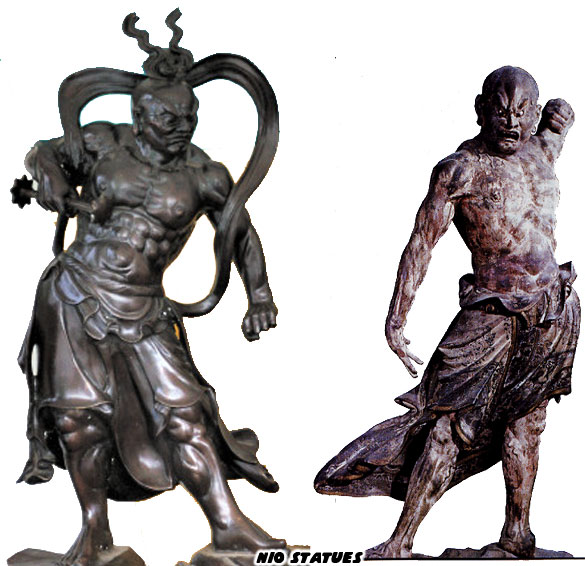
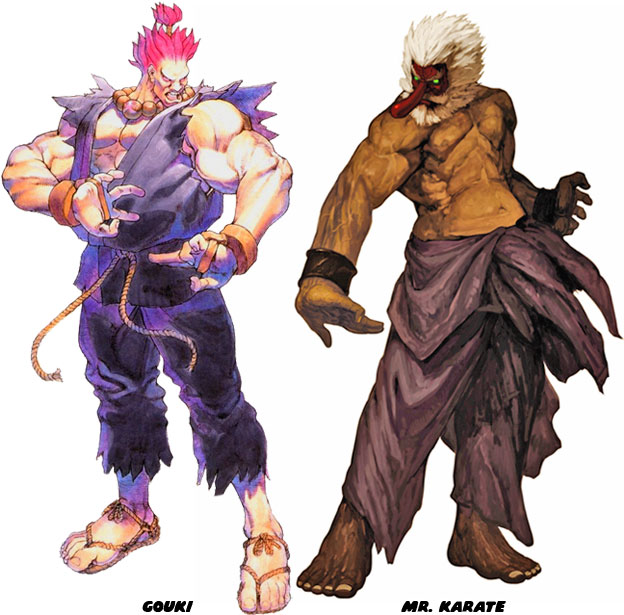
No character is truly original, none are pulled out from thin air, at least not the memorable ones. Gouki and Mr. Karate, the greatest "boss" characters from Capcom and SNK respectively, were inspired by mystical icons. To be specific the spiritual influences of Asian religions. These fighting game characters, their appearance, colors and even poses were based on the Nio. The Nio were the guardians of Buddha. They deterred evil man and demon from the gates of the afterlife and met the honorable ones as a friend when their spirit was ready to transcend this dimension. These figures could be found in temples as intricately detailed wooden carvings, some were life-sized and some were gigantic. They were also referred to as the the Benevolent Kings in other writings. The two most recognizable, the ones highlighted in manga and anime, being Agyo and Ungyo; the beginning and end, or "alpha" and "omega." The guardians were physically imposing figures, whose exaggerated muscles and proportions were meant to instill fear into those that would desecrate a temple. Although empty-handed in most representations they were nonetheless meant to be seen as fearsome warriors and masters of the martial arts.


Upon studying the statues, their origins and aesthetics we can see how the Nio could be incorporated into a fighting game. One of the most popular incarnations being Gouki / Akuma from Capcom's revolutionary Street Fighter series. Years later many of the fearsome elements from the Nio and earlier Vedic Traditions were pulled by Capcom once more to create the heroes and villains featured in Asura's Wrath. Given their importance in Buddhism and symbolically strong gestures they could not have been meant for anything less than "boss" status in their respective titles. The scowls, wide-eyes, raw power and menacing poses were universally understood even if their divine origin was not. All it took was for some artists to come along and update their designs, bring them into a contemporary setting.


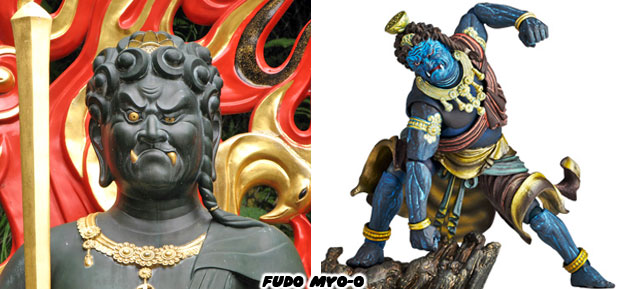
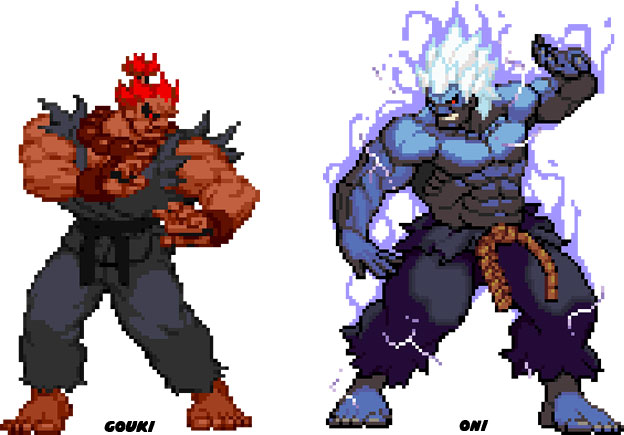
The Nio are sometimes mistaken for another figure from Buddhism. Fudo Myo-o AKA Acala is known as the "Immovable One." The fearsome-looking demon is actually a protector as well. He burns away all impediments and defilement so that living beings can reach enlightenment. The blue skin is supposed to recall elements of the supernatural. Gods and demons are often presented with blue or red skin. Many Hindu deities were presented with blue skin as well and possibly influenced the creation of the Chinese and Japanese spirits.


While Gouki was based on the Nio, a latter version of the character introduced in Super Street Fighter IV was known as Oni (the Japanese word for demon). The supercharged, blue-skinned version of Gouki was undoubtedly rooted in the design of Fudo Myo-o.


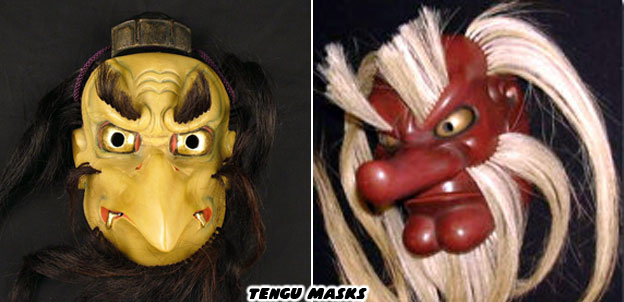
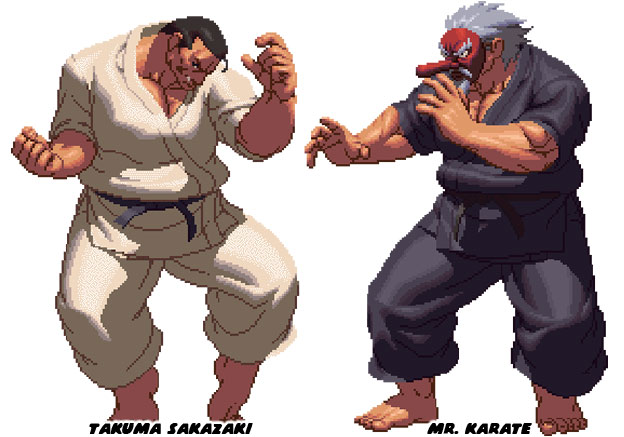
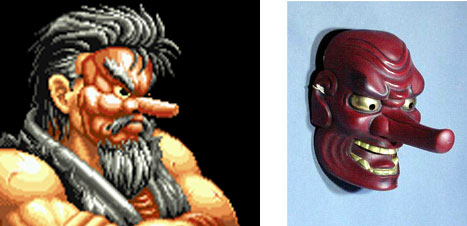
Mr. Karate from the SNK King of Fighters universe combined the Nio influence with a Tengu mask. Masks were very powerful symbols of culture, every culture had a mask tradition and were recognized for their symbolic properties. When used carefully by a game designer they could make an ordinary character extraordinary. In Japan, and in some regions, masks had an important ceremonial position. Originally carved from wood and later turned into a paper-maché craft, Iwami Kagura masks, which were similar to the Tengu masks were used in a historical and folk context. They were most commonly used for Noh plays as great storytelling devices. Even those without an understanding of Japanese culture could still find time to appreciate the colors, design and craftsmanship that goes into these amazing masks.


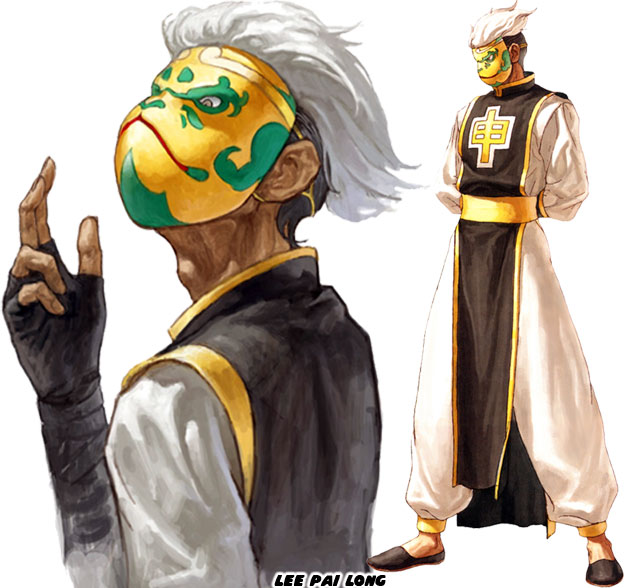
The use of masks as a storytelling device is also something featured in theSichuan Chinese opera. Stories based on the Romance of the Three Kingdoms and Journey to the West often feature performers in full face paint, if not ornately designed silk masks. Some performers were able to switch masks in a fraction of a second as a magic trick. This centuries-old practice was fiercely guarded by the Chinese and the techniques of the masked performers were often handed down to members of the immediate family only through a rigorous apprenticeship. In similar ways certain forms of kung-fu were also only trusted to immediate family members. While the Shaolin were willing to train other monks in the art of self defense many kung-fu practitioners were much more secretive. Many forms died out and it took a long time for certain lineages to be taught to foreigners, if at all. The fighting game character Lee Pai Long was a masked performer and master martial artist. His father was a legend and trusted his only son with his arcane knowledge of medicine as well as the martial arts. In SNK canon Lee Pai Long was a minor character but his design influences were notable. His mask had the pattern of the Monkey King on it. He came from a tradition that predated the Tengu mask.


The word Tengu translated to Heavenly Dog, a Shinto god. Sometimes the tengu mask had a beak and made the wearer appear like a bird. The more common version has red skin and a long nose with certain phallic qualities. Yes, there were some tengu masks with long flaccid noses as well! The term tengu and the characters used to write it in Japanese were borrowed from the name of a fierce demon from Chinese folklore called tiāngoǔ. The tengu were mythical characters, spirits, animals, goblins and such that existed before Buddhism reached Japan. As was the case in other locations the Buddhists pulled mythology of the region and incorporated it into their stories. The tengu stopped being representatives of ancient animistic Shinto figures and were written as opponents of Buddhism but also sometimes protectors of it. This dual nature worked in the favor of the characters designed for fighting games. The character of Mr. Karate was the alias for Takuma Sakazaki. As Takuma the character was heroic, noble and very honorable. Mr. Karate by comparison was a brutal fighter that held nothing back and showed no mercy to his opponents. Takuma was based greatly on the Japanese karate master Mas Oyama. However as soon as he put on the mask he developed a completely new personality. The father of Lee Pai Long was Lee Gakusuo, he was the martial artist that left an enormous scar across the chest of a young and arrogant Takuma. Gakusuo was what Mr. Chen was to the legend of Mas Oyama.


As a design choice it was a bold move from the people working at Capcom and SNK to feature martial artists disguised as divine beings. Imagine what a spectacle a real fighter would have created if they chose to protect their identity, or create a new personae with a mask? What would have happened if Mas Oyama or Huo Yuanjia had returned from their self-imposed exile to fight foreign champions while wearing a mask? What if they shunned the fame and had shown up at fighting tournaments unannounced and disappeared as soon as they beat their opponent? Imagine what the reaction would have been if Bruce Lee had lived and caught anonymously instead of promoted himself and his philosophies on movie screens. The stories and conspiracy theories surrounding their lives would be even stronger today.


The most unique designs in the King of Fighters and Street Fighter revolved around a distinct Japanese aesthetic. The Nio figures, the tengu masks and classic theater all had a part in shaping the legacy of fighting games. To ignore the origins of these characters was to deny the reason why audiences were so attracted to them. Western fans of the titles that lacked an understanding behind the Eastern religions, customs and traditions still appreciated these unique characters. I would argue that Gouki, Mr. Karate and other characters like them inspired Westerners to study more about Asian cultures and religions. There was no doubt that they found some influences with their favorite characters as they progressed deeper into history. The foundation for the King of Fighters and Street Fighter series was planted at the start of the 20th century not in the middle of the century. Mas Oyama was a central influence to both games but there were Japanese legends that existed before he did. When the designers at Capcom and SNK studied these men they were able to work them into the canon of each series. The next blog will get to the roots of the Japanese masters. As always if you enjoyed this blog and would like to sponsor me please visit my Patreon page and consider donating each month, even as little as $1 would help make better blogs and even podcasts!