A blog about my interests, mainly the history of fighting games. I also talk about animation, comic books, car culture, and art. Co-host of the Pink Monorail Podcast. Contributor to MiceChat, and Jim Hill Media. Former blogger on the old 1UP community site, and Capcom-Unity as well.
Showing posts with label supernatural. Show all posts
Wednesday, May 15, 2019
The new Evil Ryu, a look at Kage
Hello friends, I hope that the year has been going well for you. I just wanted to be completely transparent with the slow update schedule. Since fall of last year I've been changing my habits. For health reasons I'm putting myself on a better path. I've also been focusing on my art and less on my writing. I'm still 100% passionate about fighting games, but I've got to make sure I'm healthy for the long run. Thanks for being patient in the meantime. Today I want to talk about Kage, a new character revealed for Street Fighter V at the end of 2018. On the surface level this character is reminiscent of Evil Ryu, because in essence he is Evil Ryu. If you didn't know Evil Ryu had his breakout appearance in the Street Fighter Zero / Alpha series in the mid '90s. For budding game designers that read my blog I mentioned that the transformation of a hero to a villain was a very powerful storytelling tool.

Evil Ryu is a version of the hero of the Street Fighter series that wants to prove he is the greatest warrior. Even if this means killing his opponents in a fight. He is often presented with a tan, and even red eyes in some official art to signify that he is possessed by evil forces. Kage in Street Fighter V is presented in a different light. Instead of simply being Ryu fighting with the evil forces inside of him, this character is the physical embodiment of the Satsui No Hadou. He has neon horns sticking out of his head and elongated teeth. The red headband is broken and rests on his shoulders to signify that his mind is not his own. His head and face are distorted so that it looks more like an ogre and less like a person. The animal traits applied to a human were originally featured on Gouki / Akuma. To make him appear less than human the designers flattened his nose and gave him a crown of blazing red hair. He was meant to conjure images of a lion.

The earlier Street Fighter designs, especially those from the late '80s and early '90s Street Fighter II and Street Fighter EX era were well done. The characters had an easy to identify theme, perhaps they were a soldier, wrestler, or kung fu master. You could tell right away based on their look what archetype they were. Some clues were obvious and some were more subtle. When you added all of the details together they turned a typical fighting game character into an icon. I believe that the the designs in Street Fighter IV and V are lacking. They lack subtlety. They lack an understanding of what made the original World Warriors so memorable. Instead of letting audiences discover that Gouki has lion-like features, the studio now presents him with a literal lion mane. Fans call this version Akuma-matata, a play on the African word hakuna matata.

Capcom is hitting audiences over the head with their latest designs. It's the fastest way to tell a story, but it doesn't make it the right way to tell a story. The look of the Street Fighters are loud and boorish, they are the characters that a teenage fan could have pitched. The look of Gouki and Kage are prefect examples of what is wrong with Capcom's current design culture. The majority of new characters, such as Rufus, Hakan, Abel, F.A.N.G., and Rashid introduced in Street Fighter IV and V are forgettable because they subscribe to the same design philosophy. There is nothing wrong with having characters in the franchise that have some animal-like traits. Blanka is an example of that, but he is on the extreme end of what works in the franchise. Characters like Blanka are few and far between. Not to mention that there was already an Evil Ryu. When you start to fill the roster with similar outlandish characters it dilutes those that are really unique. Having literal demons in the series is changing the narrative. This series was founded on martial arts archetypes. As Capcom expands the design circle to include demons and comic book villains then it is going down a path that is hard to return from.

Turning the main character into a monster, and keeping him that way has been explored in other fighting games. Devil Kazuya is possibly the best example of this. Tekken has a number of main characters that have demonic alter-egos. Jin Kazama has a Devil Jin persona, his great grandfather Jinpachi Mishima becomes a demon, and Jin's grandmother Kazumi Mishima also becomes a demon. The series is well known because of the number of fantastic archetypes. The series has monsters, cyborgs, robots and even panda bears. That lineup, that presentation is not in the same vein as Street Fighter. I'm worried that the people designing the next generation of Street Fighter can't make the distinction.

The arc that would have had Ryu fighting his inner demon and facing off against the man that killed his master was considered for Street Fighter III. A lot happened to Capcom in the early and mid-90s during the gold rush of the fighting game genre. As members of the Street Fighter team left Capcom to other companies they took some of those ideas meant for Ryu and Gouki. Having a main character that becomes overpowered and destroys a demon was explored in Street Fighter EX, and later on in the Fighting EX Layer series. Kairi was the surrogate for Ryu and Garuda was the stand-in for Gouki. In ARIKA's franchise it was established that there were supernatural elements in the universe, however the majority of the cast was still rooted in martial arts archetypes. So having some mysticism was welcome in their take of the franchise. The fighting game market imploded at the end of the '90s, and wouldn't recover for about a decade. In that time Capcom had new faces making bold decisions with established characters. In the history of fighting games I consider Gouki the greatest villain ever designed. In the history of the Street Fighter franchise however I only said he was the third most important.

Capcom established that Gouki had a "stronger" form called Shin Gouki, or true Gouki. This was the unleashed, no-holds-barred boss in Street Fighter Zero. More than 12 years later the character was revisited for Super Street Fighter IV: Arcade Edition. The new developers decided that they wanted to make him even more overpowered. Oni debuted, and Gouki went from having subtle lion cues to being an outright DragonBall Z villain. The blue skin, demonic features, and abilities made little to no sense for the character. This was the same type of thinking that went into the look of Kage. Evil Ryu was already a great design, especially with a smoldering crater in his chest from when Gouki tried to kill him. The look of Kage didn't really have enough elements to make him stand apart from Evil Ryu. Some people in the community even likened his glowing horns to cat ear headphones. This was hardly as intimidating as he was supposed to be. To be fair however, Capcom had been pursuing a redesign of Evil Ryu since Street Fighter IV.

Evil Ryu and Violent Ken were on the drawing board for Street Fighter IV, and each more or less looked like their traditional designs. There was nothing unrealistic or supernatural about their appearance. No wings, fangs, or horns smacking audiences in the face. Instead they each had attacks that were more aggressive or powerful than normal. They had just enough going for them to make them unique. The majority of their appearances were in the sprite-based games of the '90s. This look did not really deviate much until the introduction of Kage. In at least one draft of Kage he was so far removed from Ryu that he didn't even look like a Street Fighter character. If anything he looked like a monster that would have been featured in the manga and anime series Mob Psycho 100. In case you are not familiar with the series, the main character is named Shigeo Kageyama. He is a very plain-looking kid. He is so plain in fact that he is called Mob, a reference to the nobody background characters in most shows. Ryu could be considered similar to Mob, in that he looks like a plain "vanilla" karate fighter. Of course that perception changes when they use their awesome powers. Mob however also has a dark side that manifests from time to time.

If Mob loses control of his emotions he becomes a being made up of raging psychic energy. He no longer looks human in this form. He can be cruel and unstoppable in this form. In the story this makes sense, as series creator ONE has established that all sorts of psychic and metaphysical things are possible in his universe. Capcom doesn't have that luxury. The Street Fighter gang is not made up of ghost hunters. They are not exorcists but instead warriors. Dropping in a demon made of cracking energy would have been way out of left field. So much so that audiences would have pushed back on the design. As it is, they are lukewarm to the idea of Kage. What do you think of the character? Am I reading too much into it? I'd like to hear about it in the comments section. If you would like to sponsor me please visit my Patreon page and consider donating each month, even as little as $1 would help make better blogs and even podcasts!
Labels:
capcom,
demon,
evil possessed,
evil ryu,
garuda,
kage,
kairi,
mob,
mob psycho 100,
monster,
ONE,
ryu,
supernatural
Friday, July 24, 2015
How fight culture became fighting game history, part 11
There were other cultural elements that influenced the martial arts in addition to Buddhism. In Japan the native religion, or what Westerners would call a religion was Shinto. It was grounded in the physical world, a world that says there were spirits that took the forms of all things. The four elements and nature itself were made up of spirits made manifest. Humans lived, worked, grew and died within a world filled with spirits. When they passed on they too joined the spirit world. They became part of the elements or part of nature and could still shape and influence the world we lived in. Buddhism, Taoism and Shinto shaped the world that the martial arts were born into. These martial arts thus carried on many of the same philosophies and traditions. The designers working at Capcom, SNK and Data East, three of the oldest Japanese game studios working in the fighting genre, had grown up in a culture that held onto ancient traditions and spiritual beliefs. They also grew up in a culture that celebrated legendary fighters in real life as well as in fiction.
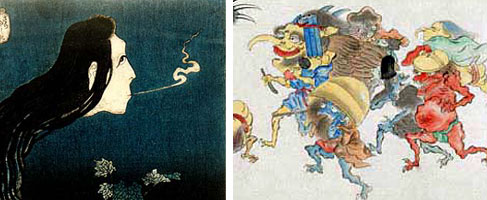
Spirituality was an important part of the martial arts from Japan. Karate was not a series of attacks and defenses, it was a path to a higher state of consciousness. Shinto did not believe in absolute good, evil or even perfection. People were inherently good and bad things were caused by evil spirits. The only way to combat the evil were through purification, prayer and offerings to the kami or spirits. The philosophies of Shinto have been featured as characters, levels and plot of Street Fighter EX and Samurai Spirits. This blog already made mention of how the kami and shimenawa ropes had been featured in the Street Fighter series. Gouki and Gouken were not the only characters that used a heavy dose of spiritual design cues. Kairi and his sisters and even antagonist Garuda brought a large dose of the spiritual aspects lacking from other SF games. The characters debuted in Street Fighter EX, the first 3D SF game. These new heroes and villains tapped into the powers of the ancient world. They predated the legends of fighters like Mas Oyama and Tatsuo Shimabuku. They helped add a new dimension to the world of SF, one that had only been hinted at in prior games. Kairi and Garuda were memorable characters because they were based on the fantastic origins of the karate fable.
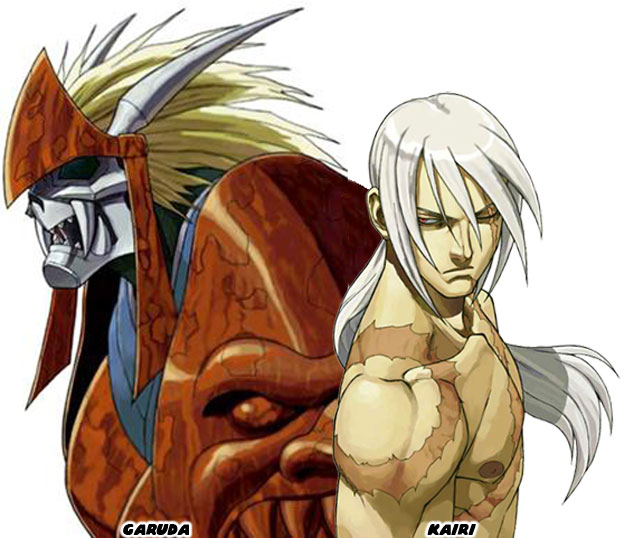
Energy or chi was what gave all people life and allowed them to perform amazing feats of strength. As this concept was adapted into Japanese culture it would be called ki. It was something that appeared magical and the best fighters were blessed or cursed by the gods with excess power. Such was the case for Kairi, a possessed person that had more power flowing through him than even Gouki. Like the main villain in the SF mythology Kairi was becoming consumed by a power he could not control. Garuda was the concept of a possessed fighter taken to the extreme. Garuda was a faceless character, choosing instead to fight under the armor of an ancient warrior. Spikes would protrude from his body and then vanish, as if in some sort of macabre magic trick. It was assumed that whomever was possessed by the dark energy, whomever wore the armor of Garuda, had died long ago.
In the Street Fighter series the way the characters appeared, were dressed, moved and even abilities were pulled from many classic elements. In previous blogs I had mentioned the influence of the Nio and even Fudo Myo-o, the spiritual guardians of Buddhism, had on the development of the Street Fighter and King of Fighter icons. The modern versions of these gods and demons had to be believable to audiences. Certainly Kairi and Garuda could have been incredibly blessed martial artists that were simply eccentric. Gouki was certainly a believable character. He was a fighting master that murdered his master and brother in a fit of rage. Mr. Karate was a believable character as well, he was a master working for the mafia and he hid his identity behind a mask.The various fighting games allowed for the realistic and supernatural to coexist. Masters of the fighting arts could throw fireballs made of chi energy. Some even had the ability to perform a dim mak or "death punch." Kairi very much followed in the footsteps of Gouki and Mr. Karate. Like those figures he was based on ancient traditions and spiritual beliefs. Garuda was a different type of creature altogether. He was created to make physical manifestations out of spiritual elements.
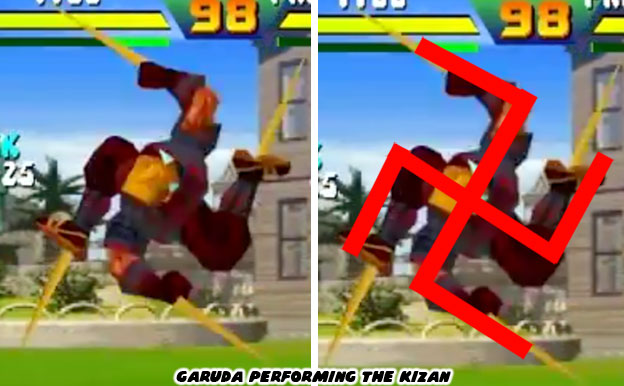
One of Garuda's attacks, the Kizan, had spikes appear out of the hands and feet of the character. He would spin through the air and shred his opponent to ribbons while holding a very awkward pose. Sharp-eyed players noticed that the pose looked very much like a Swastika. This was not an accident. Each of the special attacks of the character had him in a symbolic pose. Sometimes he would move in a way that that made him appear like a statue that could be found at an entrance to a Buddhist temple. Sometimes he would spin outstretched in the shape of a lotus, a Buddhist symbol for purity and spontaneous birth.
Of course to clarify the swastika symbol was ancient and had appeared in cultures all over the world. Only in the 20th century when Adolf Hitler adopted it for his Nazi party did it become regarded as a symbol of evil. The Nazi version actually had the marks going counter to the traditional symbol. In Buddhism the symbol was associated with success and fortune. It was a symbol for good that could often be found on statues of Buddha in India, China and Japan. In many countries maps of the cities often had the swastika placed wherever there was a Buddhist temple. Similarly the map may have a cross to denote where a Christian church was. Even through the 20th century there were still social activist groups, like the Chinese Red Swastika Society, that preserved the good origin of the symbol.
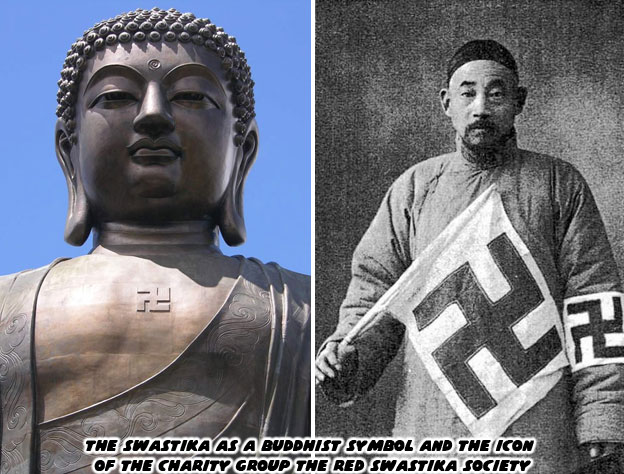
The Kizan did not mean that Garuda was a good character but it was used to demonstrate that he was a divine creature. He was a supernatural force that turned into a physical manifestation. He looked like an ancient warrior, faceless, so that he preserved the symbolism of ancient fighting roots. He was a sort of demonic creature that would have been fought by Sun Wukong, the Monkey King, rather than Bodhidharma. Fans of the Street Fighter series either loved or loathed the character. The same could be said for many of the other new characters introduced through the EX series. There was possibly no other version of the game that was as polarizing to audiences. Supernatural creatures were not new to the genre. Where they worked best was when they were presented in a quasi-believable fashion. Part of the success of many fighting games was how the supernatural was intermixed with the plausible. Great karate fighters were made even better with the advent of the fa jin or "fireball" type attacks. Some even had a dim mak or "death touch" strikes at their disposal. In the story of Street Fighter and other games there were scientists that extracted these metaphysical abilities and turned them into weapons. The spiritual gave way to science and power hungry dictators could harness these techniques to destroy their opponents. Garuda was not the only villain in Street Fighter mythos that had traits that were connected to Buddhism. Seth was the new boss introduced in the Street Fighter IV series. He could absorb the attacks of his rivals and use their techniques against them.
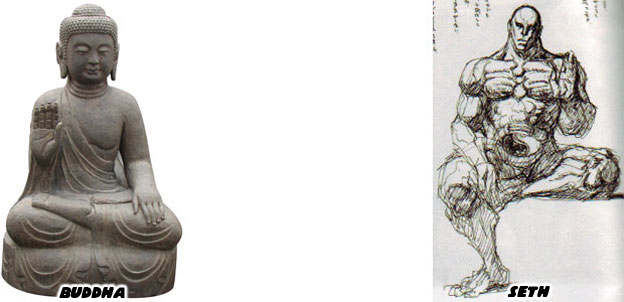
At the core of the character was a yin / yang sphere that generated his power. It was known as the Tanden Engine and allowed him to expel and absorb tremendous amounts of energy. Seth was a grotesque character. His skin tones were flushed out, a dull gray, signifying that perhaps he was either dead or more machine than man. The villain was after all nothing more than a husk for the Tanden Engine. Just as Gouki had been consumed by the Dark Hadou so too was Seth consumed in his quest for more power. The character art and design for Seth were intentionally gruesome. He was supposed to be intense and menacing even while wearing a tailored suit. He was the opposite of the serene image that people thought of when they imagined Buddha. The mechanical core in his belly was a twisted mockery the beliefs cultivated by Eastern Medicine. It robbed the martial artists of what they had worked for and twisted it for his nefarious purposes. Seth was perhaps visually the most extreme Street Fighter villain introduced, with the possible exception of Gill, the demigod. Gouki or Garuda could have existed in the real world. They could have been dangerous martial artists whose legend became inflated to the point where it was hard to distinguish fact from fiction. Yet for other characters in the genre, they were supposed to have supernatural origins as well. They were supposed to be accepted at face value. Take the female martial artist Ameth from Xuan Dou Zhi Wang / King of Combat. She was based on a mythical character from Asian story traditions.
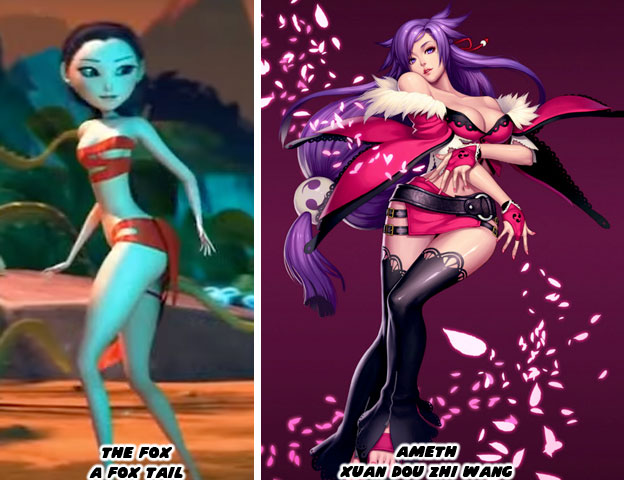
According to the game Ameth was a 998-year-old shape changer. She was a trickster of sorts personified by the Fox. In Native American legends the Coyote was a contemporary character, also known as a trickster and a shape-shifter. Although in some stories the Fox was a temptress that would kill men that she seduced. The divine or demonic Fox creature appeared in many Asian mythologies. In Chinese stories Huli Jing was a divine fox mischievous but also ill-tempered. In Japanese tradition Kitsune was also a divine fox but with nine tails. The fox mask of Kitsune had been used on female ninja characters in manga, animé and video games for decades. In Korea there was Kumiho, possibly the creepiest of all the fox legends. She was an evil spirit that seduced and killed men. A lighthearted version of the legend could be seen in A Fox Tail. The animated short with character designs by Chao Ma demonstrated how some of the best fighters used their heads instead of their hands. Then again, many of the greatest strikers used everything but their hands while developing the ancestor to kung-fu. Hinduism and Buddhism helped carry the martial arts through Asia, but the forms of striking that Bodhidharma had brought to China were not the only styles that influenced the development of kung-fu or karate. There were styles that had reached the southern shores of Japan that were very interesting. The next blog will look at how South East Asia created parallel fighting arts that would rival the legacy of karate. As always if you enjoyed this blog and would like to sponsor me please visit my Patreon page and consider donating each month, even as little as $1 would help make better blogs and even podcasts!

Spirituality was an important part of the martial arts from Japan. Karate was not a series of attacks and defenses, it was a path to a higher state of consciousness. Shinto did not believe in absolute good, evil or even perfection. People were inherently good and bad things were caused by evil spirits. The only way to combat the evil were through purification, prayer and offerings to the kami or spirits. The philosophies of Shinto have been featured as characters, levels and plot of Street Fighter EX and Samurai Spirits. This blog already made mention of how the kami and shimenawa ropes had been featured in the Street Fighter series. Gouki and Gouken were not the only characters that used a heavy dose of spiritual design cues. Kairi and his sisters and even antagonist Garuda brought a large dose of the spiritual aspects lacking from other SF games. The characters debuted in Street Fighter EX, the first 3D SF game. These new heroes and villains tapped into the powers of the ancient world. They predated the legends of fighters like Mas Oyama and Tatsuo Shimabuku. They helped add a new dimension to the world of SF, one that had only been hinted at in prior games. Kairi and Garuda were memorable characters because they were based on the fantastic origins of the karate fable.

Energy or chi was what gave all people life and allowed them to perform amazing feats of strength. As this concept was adapted into Japanese culture it would be called ki. It was something that appeared magical and the best fighters were blessed or cursed by the gods with excess power. Such was the case for Kairi, a possessed person that had more power flowing through him than even Gouki. Like the main villain in the SF mythology Kairi was becoming consumed by a power he could not control. Garuda was the concept of a possessed fighter taken to the extreme. Garuda was a faceless character, choosing instead to fight under the armor of an ancient warrior. Spikes would protrude from his body and then vanish, as if in some sort of macabre magic trick. It was assumed that whomever was possessed by the dark energy, whomever wore the armor of Garuda, had died long ago.
In the Street Fighter series the way the characters appeared, were dressed, moved and even abilities were pulled from many classic elements. In previous blogs I had mentioned the influence of the Nio and even Fudo Myo-o, the spiritual guardians of Buddhism, had on the development of the Street Fighter and King of Fighter icons. The modern versions of these gods and demons had to be believable to audiences. Certainly Kairi and Garuda could have been incredibly blessed martial artists that were simply eccentric. Gouki was certainly a believable character. He was a fighting master that murdered his master and brother in a fit of rage. Mr. Karate was a believable character as well, he was a master working for the mafia and he hid his identity behind a mask.The various fighting games allowed for the realistic and supernatural to coexist. Masters of the fighting arts could throw fireballs made of chi energy. Some even had the ability to perform a dim mak or "death punch." Kairi very much followed in the footsteps of Gouki and Mr. Karate. Like those figures he was based on ancient traditions and spiritual beliefs. Garuda was a different type of creature altogether. He was created to make physical manifestations out of spiritual elements.

One of Garuda's attacks, the Kizan, had spikes appear out of the hands and feet of the character. He would spin through the air and shred his opponent to ribbons while holding a very awkward pose. Sharp-eyed players noticed that the pose looked very much like a Swastika. This was not an accident. Each of the special attacks of the character had him in a symbolic pose. Sometimes he would move in a way that that made him appear like a statue that could be found at an entrance to a Buddhist temple. Sometimes he would spin outstretched in the shape of a lotus, a Buddhist symbol for purity and spontaneous birth.
Of course to clarify the swastika symbol was ancient and had appeared in cultures all over the world. Only in the 20th century when Adolf Hitler adopted it for his Nazi party did it become regarded as a symbol of evil. The Nazi version actually had the marks going counter to the traditional symbol. In Buddhism the symbol was associated with success and fortune. It was a symbol for good that could often be found on statues of Buddha in India, China and Japan. In many countries maps of the cities often had the swastika placed wherever there was a Buddhist temple. Similarly the map may have a cross to denote where a Christian church was. Even through the 20th century there were still social activist groups, like the Chinese Red Swastika Society, that preserved the good origin of the symbol.

The Kizan did not mean that Garuda was a good character but it was used to demonstrate that he was a divine creature. He was a supernatural force that turned into a physical manifestation. He looked like an ancient warrior, faceless, so that he preserved the symbolism of ancient fighting roots. He was a sort of demonic creature that would have been fought by Sun Wukong, the Monkey King, rather than Bodhidharma. Fans of the Street Fighter series either loved or loathed the character. The same could be said for many of the other new characters introduced through the EX series. There was possibly no other version of the game that was as polarizing to audiences. Supernatural creatures were not new to the genre. Where they worked best was when they were presented in a quasi-believable fashion. Part of the success of many fighting games was how the supernatural was intermixed with the plausible. Great karate fighters were made even better with the advent of the fa jin or "fireball" type attacks. Some even had a dim mak or "death touch" strikes at their disposal. In the story of Street Fighter and other games there were scientists that extracted these metaphysical abilities and turned them into weapons. The spiritual gave way to science and power hungry dictators could harness these techniques to destroy their opponents. Garuda was not the only villain in Street Fighter mythos that had traits that were connected to Buddhism. Seth was the new boss introduced in the Street Fighter IV series. He could absorb the attacks of his rivals and use their techniques against them.

At the core of the character was a yin / yang sphere that generated his power. It was known as the Tanden Engine and allowed him to expel and absorb tremendous amounts of energy. Seth was a grotesque character. His skin tones were flushed out, a dull gray, signifying that perhaps he was either dead or more machine than man. The villain was after all nothing more than a husk for the Tanden Engine. Just as Gouki had been consumed by the Dark Hadou so too was Seth consumed in his quest for more power. The character art and design for Seth were intentionally gruesome. He was supposed to be intense and menacing even while wearing a tailored suit. He was the opposite of the serene image that people thought of when they imagined Buddha. The mechanical core in his belly was a twisted mockery the beliefs cultivated by Eastern Medicine. It robbed the martial artists of what they had worked for and twisted it for his nefarious purposes. Seth was perhaps visually the most extreme Street Fighter villain introduced, with the possible exception of Gill, the demigod. Gouki or Garuda could have existed in the real world. They could have been dangerous martial artists whose legend became inflated to the point where it was hard to distinguish fact from fiction. Yet for other characters in the genre, they were supposed to have supernatural origins as well. They were supposed to be accepted at face value. Take the female martial artist Ameth from Xuan Dou Zhi Wang / King of Combat. She was based on a mythical character from Asian story traditions.

According to the game Ameth was a 998-year-old shape changer. She was a trickster of sorts personified by the Fox. In Native American legends the Coyote was a contemporary character, also known as a trickster and a shape-shifter. Although in some stories the Fox was a temptress that would kill men that she seduced. The divine or demonic Fox creature appeared in many Asian mythologies. In Chinese stories Huli Jing was a divine fox mischievous but also ill-tempered. In Japanese tradition Kitsune was also a divine fox but with nine tails. The fox mask of Kitsune had been used on female ninja characters in manga, animé and video games for decades. In Korea there was Kumiho, possibly the creepiest of all the fox legends. She was an evil spirit that seduced and killed men. A lighthearted version of the legend could be seen in A Fox Tail. The animated short with character designs by Chao Ma demonstrated how some of the best fighters used their heads instead of their hands. Then again, many of the greatest strikers used everything but their hands while developing the ancestor to kung-fu. Hinduism and Buddhism helped carry the martial arts through Asia, but the forms of striking that Bodhidharma had brought to China were not the only styles that influenced the development of kung-fu or karate. There were styles that had reached the southern shores of Japan that were very interesting. The next blog will look at how South East Asia created parallel fighting arts that would rival the legacy of karate. As always if you enjoyed this blog and would like to sponsor me please visit my Patreon page and consider donating each month, even as little as $1 would help make better blogs and even podcasts!
Labels:
chi,
fox tail,
garuda,
kairi,
karate origins,
seth,
spirituality,
street fighter,
supernatural
Subscribe to:
Posts (Atom)