Showing posts with label monster. Show all posts

Wednesday, October 16, 2024

Generations of Hulk creators, part 2...

In the previous blog I mentioned that there were several types of stories that worked well for the Incredible Hulk. The first I highlighted was the drama, or to be more specific the psychological horror story. This was important because the plots that worked best for the characters played to their strengths, and exploited a weaknesses for the hero to overcome. The television series was a prime example of this. It was carried by Bill Bixby as Dr. Banner. He was trying to cure himself of the Hulk, but had to cobble together lab equipment from scraps, and while being hunted by the authorities. He often found himself entangled in the affairs of complete strangers. Whether it was helping someone overcome an addiction, chase off a gang, or rescue a kidnapping victim. He had to use his intelligence to find an answer. The Hulk would only show up in maybe two or three minutes out of each episode when life, and death was at stake. It highlighted to audiences that Banner was a sympathetic figure, and the Hulk was a terrifying creature that was part of the same person. There was nothing that could stop him if he was unleashed, and Banner did everything he could to keep that from happening. The Hulk as a character could also be considered a contemporary retelling of Dr. Frankenstein, with the Hulk being the monster that he unleashed to the world. Banner was also thought of as the modern Prometheus, the Ancient Greek character that stole fire from the gods, and gave it to man. He was eternally punished for his arrogance. 
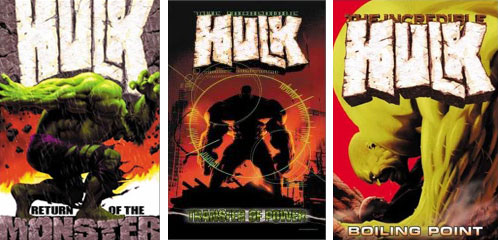
Banner unleashed the power of gamma radiation, and would also be cursed for his actions. The Hulk could be presented as a misunderstood monster, reluctant hero, or even wandering adventurer. This is where I would like to start talking about my favorite Hulk artists. Because in order to tell the story of the man, and the monster then you need to be able to visually make the distinction. In superhero comics it’s very easy to see when hero is present, and when the secret identity shows up. Superman could put on glasses, and a business suit to become Clark Kent. Bruce Wayne could put on a mask, and cowl to become Batman. Bruce Banner turned into a half ton, nearly eight-foot-tall green man. Each artist brought their own visual style, their own aesthetic to the character. In my opinion the type of artist featured on the Hulk books could make, or break the story. Horror was one of the best formats for a Hulk story. Whether it was the Hulk fighting monsters, demons, or aliens. An artist that was great at rendering body, or biological horror could help ground readers into the world that the Hulk was entering. The artist that I think laid the foundation for this type of Hulk story was Bernie Wrightson.
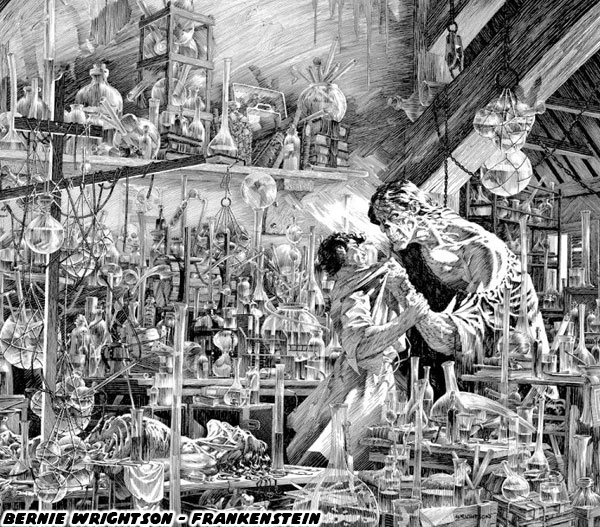
Mr. Wrightson (RIP) was an exceptional draftsman. His lines, and detail were unrivaled. He was known for visceral renderings in his character art. We could see veins, muscles, scars, and various features on the people he drew. His black, and white art featured in the Frankenstein book released by Marvel in 1983 set a bar impossible to top. His style was perfectly suited for horror illustration, rather than mainstream comic book heroes. Unfortunately for Bernie the Comics Code Authority passed a sweeping set of laws in 1954 meant to self-regulate gratuitous horror, and violence from the comics industry. Bernie was able to skirt the code by never rending anything too graphic, but rather just hint at it. He was perfect for the horror characters like Swamp Thing (which he co-created), and the Marvel equivalent known as Man Thing. Bernie was one of the rare artists that could do it all. Many people do not know that the lead artist on a comic often only did the initial pencil work. The inking, and coloring of individual pages were often assigned to someone else. Bernie found work inking for other artists, as well as coloring for them at both Marvel, and DC. It only made sense that someone adept at drawing horror comics would be a good fit rendering the Hulk.
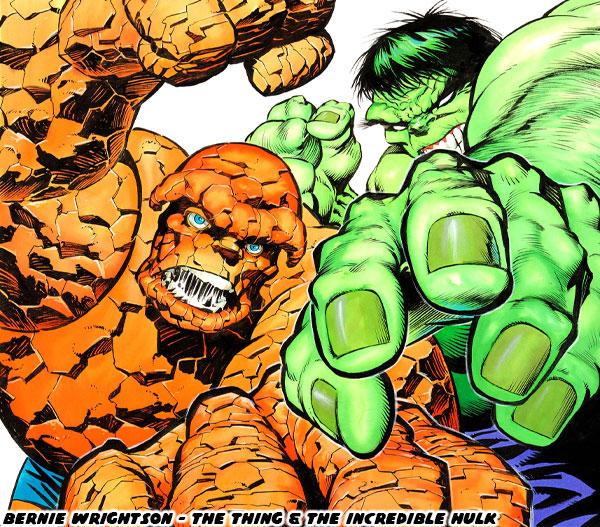
At the core the Hulk was a monster. The artists that did the character justice had to know how to draw creatures, rather than traditional superheroes. This was something that not every comic book artist was capable of doing. The mistake they made was in trying to draw the Hulk like a gigantic bodybuilder. The television series may have presented the idea to the mainstream, however the Hulk in the comics was anything but human. First off the Hulk on television was vastly underpowered compared to his comic counterpart. On TV he could get injured by bullets, and a fall from a great height could kill him. Whereas in the comics he could survive atomic blasts, and didn’t burn up on reentry from his leaps into space. Still there were artists that gave the Hulk a distinct bodybuilder physique. Bart Sears was one of my favorite comic book artists of all time. His understanding of anatomy was unmatched among his contemporaries. He often took proportions from professional male, and female bodybuilders when creating the physiques of his characters. They looked stunning when he penciled, and inked them. Something similar could be argued for Bryan Hitch. The lead artist on the “Ultimates” run which was designed to make the Marvel characters look, and feel real. These artists were great at the traditional hero books, however their version of the Hulk was far from my favorite.
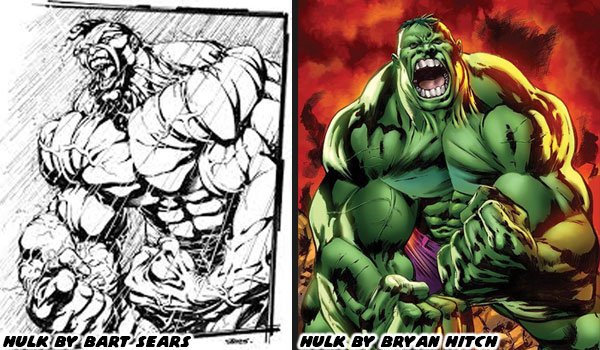
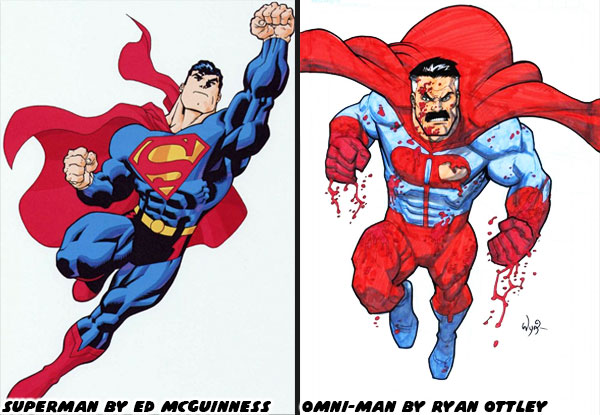
The idea that in order to convey strength, and power in a comic book then a character had to be presented as “jacked” or have overdeveloped muscles. This was a trap that a lot of artists fell into when presenting classic characters. Someone like the Flash for example was known for his speed. Therefor it made sense that he was built like an Olympic runner, long, and lean muscles. Someone like Spider-Man had the physique of a gymnast, strong, and flexible. Each character still looked heroic, but had muscles proportional to their abilities. Yet in order to convince audiences that a character like Superman, or Omni-Man was the strongest character in their respective books they had to have bodybuilder physiques. No artists made their caped heroes (or villains) as jacked-up as Ed McGuinness, and Ryan Ottley. It was kind of hard to make people think that Clark Kent was a humble journalist when he had a neck as big as an NFL linebacker. Or that Nolan Grayson had developed his physique from writing books.
It turned out that there was a reason that each artist illustrated their heroes so strong, but I’ll talk about that in a future blog. The greatest, and longest-lasting Hulk artists had a few things in common. Their ability to create a figure that was more than a large green bodybuilder should be studied by all comic artists, and illustrators. There were many subtleties that helped explain the character, and the comic book aesthetic that was unique when compared to manga, animation, or other forms of art. We will look at this in the next blog. Were there any Hulk artists that you enjoyed? Were you familiar with the work of Bernie Wrightson? I’d like to read about it in the comments section. As always if you would like to sponsor me please visit my Patreon page and consider donating each month, even as little as $1 would help make better blogs and even podcasts!
follow the Street Writer on Patreon!

Monday, June 27, 2022

The greatest fighting game boss returns to Street Fighter 6, a look at Gouki

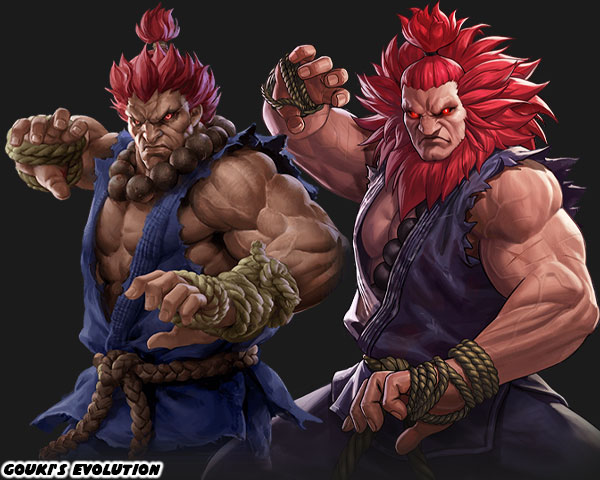
Gouki / Akuma is slated to return in Street Fighter 6. Of the countless fighting games that have come out over the past 40+ years there is one boss character that I consider the greatest of all time. I’m certain that many would agree that Gouki is the bar by which all fighting game bosses are measured. There have been many great boss characters throughout history. Revenge against Geese Howard drove the plot in the Fatal Fury series. Then there was the villainous Heihachi Mishima, and his attempts to kill his own son in the Tekken tournament. Plus Bilstein set the galaxy on fire in Star Gladiator, and his ghost came back to continue his path of destruction in Plasma Sword. Despite all those great titles Gouki was still head, and shoulders above the competition.

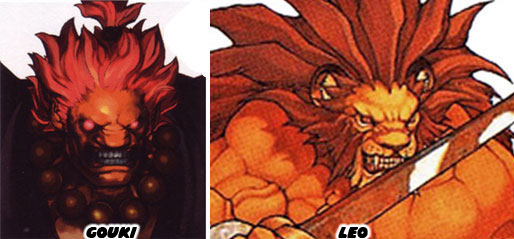
I’ve written a lot about the origins of this character, and his impact in the series. I considered Gouki the third most important character in the franchise. If you are new to the Street Fighter franchise Gouki is a master of Ansatsuken a fictional fighting art known as “Murder Fist.” He killed his brother Gouken, and their master Goutetsu to claim the title as the best in the world. Ken, and Ryu, the stars of the game, were trained by Gouken. So you can guess that his appearance helped motivate the lead characters. Gouki’s look was based on the mythological Nio, the guardians of heaven, and hell. Their statues can be seen at entrances to Buddhist temples. Not only that but he was created using the features of a lion. The flat nose, the sharp teeth, and red clay skin was all done to make him look like a supernatural being, while still being a plausible real person.

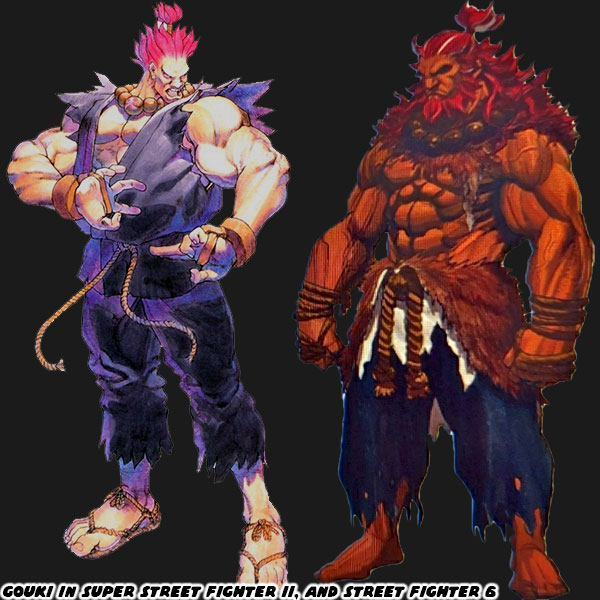
This animal look was expanded in Street Fighter V. The studio went ahead and grew out his hair, and gave him a beard in order to make it look like a full fledged lion’s mane. He was still wearing a rope belt, rather than a traditional black belt. His hands were wrapped in cord, rather than punching gloves. Plus he wore the beads of his master around his neck. Every design element placed on the character meant something, including the type of knot used on the belt. These were all very important details whether the audience knew it or not. For Street Fighter 6 the designers at Capcom decided to remove his top, and give him a cape of animal fur instead. I can almost imagine him training in the mountains of Japan, surviving in the harshest of conditions with this new getup. He looks less like a spiritual being, and more like a caveman now. Not that this was necessarily a bad thing. He is still has a physically imposing presence, and looks like he could break any returning character in half.

The latest version of Gouki looks amazing, but diffuses all of the design elements that made him iconic in the first place. If the newest version of Gouki were the one that first appeared in Super Street Fighter II Turbo, then I don’t think his impact would have been as big as it originally was. Gouki’s black gi was the opposite of Ryu’s white gi. His hair was red, and fiery. He wore a rope belt, and oversized prayer beads. This was a karate master that was as close to demon as we could get. Once the character was established the studio could adjust his appearance. Previously it was simple things, like streaks of white hair in Street Fighter III. Then it became a beard, and longer hair. Now it’s the mane, and streaks of white hair. I think by moving away from the karate uniform it breaks the best elements of his original design. Not to mention that the animal fur was almost the same shade as his skin. Thus muddying his primary colors. I’m not completely on board with the new design team at Capcom steering all the original World Warriors away from their original costume designs, and colors. Some appear better, like Zangief, Dhalsim, and Blanka. But changes to Ken, and Gouki seem to diffuse the impact that they used to have. That’s what I think anyhow, what are your thoughts on the newest look of Gouki? Do you care how the characters appear at all? Or are you more concerned with the game play? Let me know in the comments section please. If you would like to sponsor me please visit my Patreon page and consider donating each month, even as little as $1 would help make better blogs and even podcasts!
follow the Street Writer on Patreon!

Wednesday, May 15, 2019

The new Evil Ryu, a look at Kage

Hello friends, I hope that the year has been going well for you. I just wanted to be completely transparent with the slow update schedule. Since fall of last year I've been changing my habits. For health reasons I'm putting myself on a better path. I've also been focusing on my art and less on my writing. I'm still 100% passionate about fighting games, but I've got to make sure I'm healthy for the long run. Thanks for being patient in the meantime. Today I want to talk about Kage, a new character revealed for Street Fighter V at the end of 2018. On the surface level this character is reminiscent of Evil Ryu, because in essence he is Evil Ryu. If you didn't know Evil Ryu had his breakout appearance in the Street Fighter Zero / Alpha series in the mid '90s. For budding game designers that read my blog I mentioned that the transformation of a hero to a villain was a very powerful storytelling tool.


Evil Ryu is a version of the hero of the Street Fighter series that wants to prove he is the greatest warrior. Even if this means killing his opponents in a fight. He is often presented with a tan, and even red eyes in some official art to signify that he is possessed by evil forces. Kage in Street Fighter V is presented in a different light. Instead of simply being Ryu fighting with the evil forces inside of him, this character is the physical embodiment of the Satsui No Hadou. He has neon horns sticking out of his head and elongated teeth. The red headband is broken and rests on his shoulders to signify that his mind is not his own. His head and face are distorted so that it looks more like an ogre and less like a person. The animal traits applied to a human were originally featured on Gouki / Akuma. To make him appear less than human the designers flattened his nose and gave him a crown of blazing red hair. He was meant to conjure images of a lion.


The earlier Street Fighter designs, especially those from the late '80s and early '90s Street Fighter II and Street Fighter EX era were well done. The characters had an easy to identify theme, perhaps they were a soldier, wrestler, or kung fu master. You could tell right away based on their look what archetype they were. Some clues were obvious and some were more subtle. When you added all of the details together they turned a typical fighting game character into an icon. I believe that the the designs in Street Fighter IV and V are lacking. They lack subtlety. They lack an understanding of what made the original World Warriors so memorable. Instead of letting audiences discover that Gouki has lion-like features, the studio now presents him with a literal lion mane. Fans call this version Akuma-matata, a play on the African word hakuna matata.


Capcom is hitting audiences over the head with their latest designs. It's the fastest way to tell a story, but it doesn't make it the right way to tell a story. The look of the Street Fighters are loud and boorish, they are the characters that a teenage fan could have pitched. The look of Gouki and Kage are prefect examples of what is wrong with Capcom's current design culture. The majority of new characters, such as Rufus, Hakan, Abel, F.A.N.G., and Rashid introduced in Street Fighter IV and V are forgettable because they subscribe to the same design philosophy. There is nothing wrong with having characters in the franchise that have some animal-like traits. Blanka is an example of that, but he is on the extreme end of what works in the franchise. Characters like Blanka are few and far between. Not to mention that there was already an Evil Ryu. When you start to fill the roster with similar outlandish characters it dilutes those that are really unique. Having literal demons in the series is changing the narrative. This series was founded on martial arts archetypes. As Capcom expands the design circle to include demons and comic book villains then it is going down a path that is hard to return from.


Turning the main character into a monster, and keeping him that way has been explored in other fighting games. Devil Kazuya is possibly the best example of this. Tekken has a number of main characters that have demonic alter-egos. Jin Kazama has a Devil Jin persona, his great grandfather Jinpachi Mishima becomes a demon, and Jin's grandmother Kazumi Mishima also becomes a demon. The series is well known because of the number of fantastic archetypes. The series has monsters, cyborgs, robots and even panda bears. That lineup, that presentation is not in the same vein as Street Fighter. I'm worried that the people designing the next generation of Street Fighter can't make the distinction.


The arc that would have had Ryu fighting his inner demon and facing off against the man that killed his master was considered for Street Fighter III. A lot happened to Capcom in the early and mid-90s during the gold rush of the fighting game genre. As members of the Street Fighter team left Capcom to other companies they took some of those ideas meant for Ryu and Gouki. Having a main character that becomes overpowered and destroys a demon was explored in Street Fighter EX, and later on in the Fighting EX Layer series. Kairi was the surrogate for Ryu and Garuda was the stand-in for Gouki. In ARIKA's franchise it was established that there were supernatural elements in the universe, however the majority of the cast was still rooted in martial arts archetypes. So having some mysticism was welcome in their take of the franchise. The fighting game market imploded at the end of the '90s, and wouldn't recover for about a decade. In that time Capcom had new faces making bold decisions with established characters. In the history of fighting games I consider Gouki the greatest villain ever designed. In the history of the Street Fighter franchise however I only said he was the third most important.


Capcom established that Gouki had a "stronger" form called Shin Gouki, or true Gouki. This was the unleashed, no-holds-barred boss in Street Fighter Zero. More than 12 years later the character was revisited for Super Street Fighter IV: Arcade Edition. The new developers decided that they wanted to make him even more overpowered. Oni debuted, and Gouki went from having subtle lion cues to being an outright DragonBall Z villain. The blue skin, demonic features, and abilities made little to no sense for the character. This was the same type of thinking that went into the look of Kage. Evil Ryu was already a great design, especially with a smoldering crater in his chest from when Gouki tried to kill him. The look of Kage didn't really have enough elements to make him stand apart from Evil Ryu. Some people in the community even likened his glowing horns to cat ear headphones. This was hardly as intimidating as he was supposed to be. To be fair however, Capcom had been pursuing a redesign of Evil Ryu since Street Fighter IV.


Evil Ryu and Violent Ken were on the drawing board for Street Fighter IV, and each more or less looked like their traditional designs. There was nothing unrealistic or supernatural about their appearance. No wings, fangs, or horns smacking audiences in the face. Instead they each had attacks that were more aggressive or powerful than normal. They had just enough going for them to make them unique. The majority of their appearances were in the sprite-based games of the '90s. This look did not really deviate much until the introduction of Kage. In at least one draft of Kage he was so far removed from Ryu that he didn't even look like a Street Fighter character. If anything he looked like a monster that would have been featured in the manga and anime series Mob Psycho 100. In case you are not familiar with the series, the main character is named Shigeo Kageyama. He is a very plain-looking kid. He is so plain in fact that he is called Mob, a reference to the nobody background characters in most shows. Ryu could be considered similar to Mob, in that he looks like a plain "vanilla" karate fighter. Of course that perception changes when they use their awesome powers. Mob however also has a dark side that manifests from time to time.


If Mob loses control of his emotions he becomes a being made up of raging psychic energy. He no longer looks human in this form. He can be cruel and unstoppable in this form. In the story this makes sense, as series creator ONE has established that all sorts of psychic and metaphysical things are possible in his universe. Capcom doesn't have that luxury. The Street Fighter gang is not made up of ghost hunters. They are not exorcists but instead warriors. Dropping in a demon made of cracking energy would have been way out of left field. So much so that audiences would have pushed back on the design. As it is, they are lukewarm to the idea of Kage. What do you think of the character? Am I reading too much into it? I'd like to hear about it in the comments section. If you would like to sponsor me please visit my Patreon page and consider donating each month, even as little as $1 would help make better blogs and even podcasts!
follow the Street Writer on Patreon!

Friday, February 16, 2018

The Giant Monster Series, part 6...


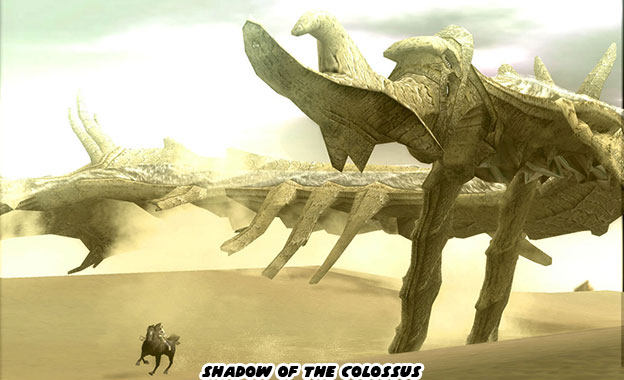
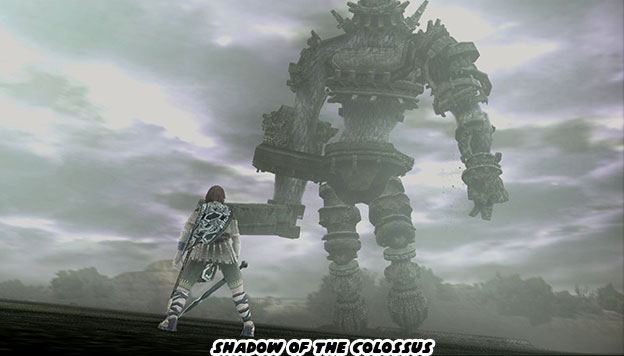
The first game featured today should be enshrined in the gaming hall of fame. Shadow of the Colossus (2005) was an international sensation when it was released. Very rarely were games so universally accepted that they required little if any localization. In order to be played the game required nothing more than the time, patience and practice. The game did not really need dialogue or lengthy cut scenes in order to be enjoyed but it didn't hurt that they were included. Fumito Ueda's tragedy featuring Wander, Mono and a very brave horse named Agro showed the industry that the giant monster could be a stand alone genre. The game used every lesson taught by giant monster films and classic literature and then created an original play experience out of them. The game isolated players in a forbidden land. They were enclosed by high cliff walls that couldn't be scaled and an ocean that could not be crossed.


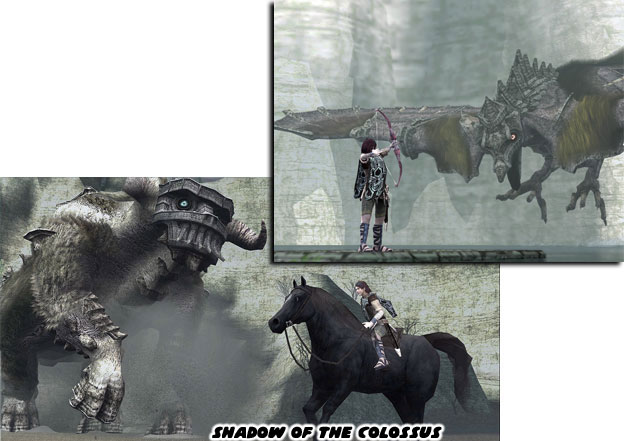
Players could do nothing more but explore the environment and search for enormous creatures that were part living and part stone. Wander was equipped with two weapons, a bow and arrow and an enchanted sword. The creatures were invulnerable to both weapons with the exception of some strategically placed magical tattoos. When Wander stabbed the colossi on those tattoos the monsters could be defeated. Players did not know about the rules of combat regarding the colossi or how the sword worked. They were trained by the levels on how to run, scale, roll and jump around the environment. Little by little everything in the game was learned simply by playing rather than by going through a tutorial. Knowing how to perform multiple actions would come in handy as the colossi they fought were harder and harder to reach and defeat.


Just one of the genius details in the game design was in creating tension before each encounter. The levels were spread out far enough for players to develop a sense of isolation as they went from battle to battle. The music and sound effects reflected this emotional pull. Each colossi was introduced in a short cinematic that showed players the enormous scale of the creatures. They were very intimidating and no two were exactly alike. The music would pick up and increase the pressure for the duration of the battle. The colossi would focus their attention on the player with bright unblinking eyes. They would search for them, stomp and scratch at them as they ran and hid in corners of temples and pits. It was an amazing action experience that was highlighted by the giant monsters themselves.


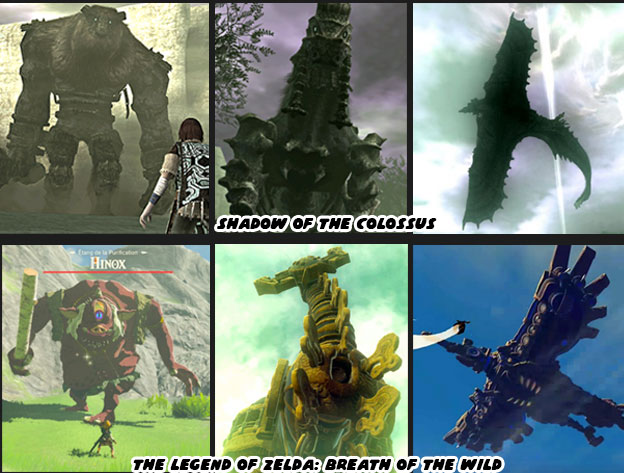
Ueda had created a universe filled with mythical creatures that appeared to be alive. He left enough clues on each level to let the origin of the creatures be explained. At some point the colossi might have been considered gods to the ancient civilization that built the temples. Prior to the colossi there was a single creature that inspired fear in the old tribes. Dormin was a dark, horned god that used to rule over the land. He was split into 16 pieces that each became a colossi. During the game it was revealed that Wander was slowly becoming possessed by Dormin as he defeated each of the colossi. On the last stage Wander underwent a transformation. Players could suddenly control Dormin against a group of tribal elders. This twist to the plot and game play was sublime. Players had no idea that they would end up becoming the creature that had been leading them on. Shadow of the Colossus redefined the giant monster genre and ended up influencing titles yet to come, not the least of which was Nintendo's award-winning game The Legend of Zelda: Breath of the Wild (2017). It turned out there were still other lessons that could be learned by playing with and against the creatures.


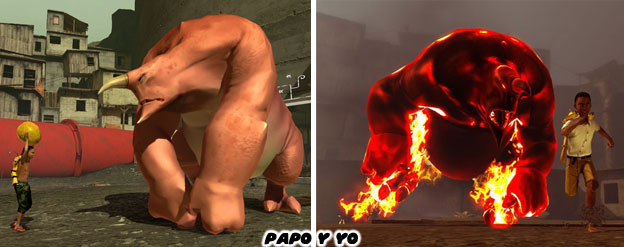
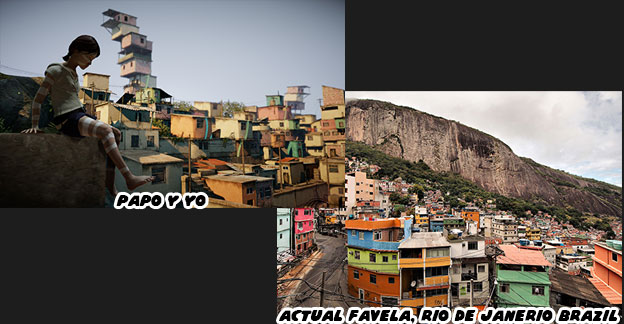
Vander Caballero created the indy hit Papo y Yo (2012). Minority developed an experience that captured the art of storytelling in gameplay as well as the biggest Triple-A studio. The game revolved around a unique relationship created between a monster and a little boy in a Brazillian favela (slum). The game turned the imagination of the young Quico as gameplay elements. Quico was searching for a way out of the favela while trying not to irritate the monster Papo. The game was actually an allegory for the relationship between the Vander and his alcoholic and abusive father. Quico could make walls turn to stairs and have building stretch as if the world were made of toy blocks and Silly Putty. Papo was available for some of the puzzles by triggering doors, traps or simply helping Quico reach higher places. The exploration and imaginative puzzles was only part of the reason that gamers wanted to find a way out of the favela. The sense of isolation that Ueda created in Shadow of the Colossus were mirrored in Papo y Yo. The favela was modern, it had color and personality but it also appeared like a prison. The walls were made up of the homes of people that seemed perpetually absent from the world. As far as the eye could see there were the walls, leaned onto the next, piled on top of each other. Despite the brilliant graffiti murals it was an oppressive site. In Shadow of the Colossus Wander would have to travel through the ruins of castles and temples that were even more imposing than the colossi that dwelled within. These design choices were part of the psychology of the games. The isolation created by these locations made Wander and Quico more sympathetic and their struggle more impressive.


Papo had a weakness, he enjoyed eating frogs but when he did he became a raging monster who did nothing but hurt and destroy. Papo could be pulled out of his rage by feeding him melons, but like sobriety to a person with a severe problem it was a constant struggle. The contrast between the friendly Papo and the flame-engulfed monster was a shock. Players learned to keep an eye on Papo while trying to figure out the next puzzle. The tension in the game was palpable. Players were tiptoeing around a ticking time bomb yet rather than stop playing they were compelled to help Quico escape. The emotional draw of the characters pulled audiences into the world. It was similar to the attraction behind Shadow of the Colossus. Wander needed the player to help him defeat the colossi and resurrect Mono. Quico needed to find a way out of his nightmare. Both games taught audiences to be brave and even defiant in the face of adversity. It also forced the players to think about their own mortality. The psychological elements from the giant monster myth were done equally well Papo y Yo. The isolated environment, the layers of detail that brought players into the world. The indestructible creature. When these things were combined they helped create a sense of primal fear. The fact that the game was created as a coping mechanism to help with those that came out of abusive relationships was superb design.


There was more to the giant monster genre than simply running from or battling against them. It was something that had been overlooked in the series thus far. A completely different contribution to gaming that could only be provided by the creatures themselves. Entirely new styles of gameplay had to be created so that the player could wreak havoc on an unsuspecting population. To say that the newfound power went directly to the heads of the players would not be far from the truth. In the next blog we shall look at the games that turned gamers into virtual gods.


Wednesday, February 14, 2018

The Giant Monster Series, part 5...


The giant monster genre was a subsection of the monster genre. The tradition of scary beings went back to the earliest days of storytelling. Imagine primitive tribes sitting around a fire recounting the time they almost got eaten by a giant bat or snatched by a troll living under a bridge. Monsters were sometimes shape-shifters, they looked human from a distance but then up close they were something else. The bigger the monster, or god, the greater the chance for destruction. Gods and giant monsters were the roots of disease and natural disasters. Some demanded a blood sacrifice in order to be satiated. Smaller monsters could still be bloodthirsty, or demand a sacrifice. Their destruction was limited to a small group of people, a clan sometimes, they were just effective when used for a cautionary tale.


One of the classic monsters was the Cyclops. The one-eyed monster was the child of the god Zeus. The creature had a habit of eating trespassers on his island. He was blinded by Odysseus (Ulysses) and as punishment Zeus caused Odysseus and his crew to be lost at sea for a decade. Most lost their lives to various creatures, large, small and seductive. Homer the poet was credit for writing the Odyssey. The creatures he described represented a various state of being for the gods, or hubris for the lost Greek sailors. No matter how far they traveled, they could never outrun their past. The monsters in classic literature manifested our innermost fears. Another creature that reflected our psyche was the monster created by Dr. Frankenstein. The story by Mary Shelley was a cautionary tale about accepting responsibility for your actions. In the case of Dr. Frankenstein he was a reckless scientist. He succeeded in creating life from death but was horrified with the results. He abandoned his creature and without a master or guiding hand to temper his existence the creature terrorized a village. There were so many layers to the creature, ranging from pitiful to morbid. It made the creature both sympathetic and terrifying to behold. When the monster showed up in movies it created a template that would be copied by other studios and even game developers.


Bioshock by 2K was released in 2007 and had a monster not unlike Frankenstein's creature. The "Big Daddy" was a mutated man inside of a twisted diving suit. He was protective of his "daughters," mutated girls. Like the creature he was obscenely strong. He was relentless in his pursuit of the hero. The setting in the game made the encounters with Big Daddy much more intense. Audiences were trapped in the remains of an underwater city called Rapture. The hero couldn't simply run to the next town for help. The additional layer of isolation on top of a great antagonist made the series unforgettable. In the follow-up title, Bioshock Infinite by Irrational Games, the player was trapped aboard a floating city called Columbia. The game from 2013 replaced Big Daddy with a cybernetic automaton called the Handyman. Like Frankenstein's creature it was an unstoppable force with a tragic back story. Series director Ken Levine managed to turn both monsters into sympathetic creatures by the end of each game.

Great monster stories are about escapism. Whether the setting is Victorian England or Japan in the near-future, there has to be something for audiences to escape to or from. For video games it is not enough to run from the monsters, but to be able to fight them as well. When audiences were introduced to the Big Daddy or the Handyman they were grossly unprepared for the encounter. Early on in each game players had to learn how to hit and run from their opponents. As they gained experience then they earned new weapons and abilities. Eventually the game evened the playing field and audiences no longer had to fear the monsters. This formula has probably never been exploited more than in the Earth Defense Force series.


Earth Defense Force is a long-running series from publisher D3. The game has traded multiple developers since it debuted in 2003 but the core experience remains the same. You are the hero in the ultimate movie spectacle. Imagine a game recreating the biggest fights in Independence Day, Pacific Rim, Guardians of the Galaxy or Godzilla. In essence the jaw-dropping special-effects scenes that put people in movie theaters every summer. The story in each game is straightforward, you are a member of an elite force that is protecting the Earth from alien invaders. As aliens, in the form of giant bugs start popping up you fight them with small weapons but as you progress the tools get bigger and better. You move from machine gun, to rocket launcher, to tank and eventually science fiction weapons; power suits, laser rifles, rocket backpacks and much more. Your squad is under a constant barrage of enemy fire and giant monsters. It is a frenetic experience that ups the ante with every mission.

If you've never heard of the title there's probably a reason. The game has a cult-like following. Visually the graphics are amazing. The scale of the creatures you have to fight is off the chart. The alien spacecraft, giant bugs and monsters in the series are literally breathtaking. They are among the largest things ever presented in a game. Remember that this includes the enormous monsters in Mass Effect, Resistance, Lost Planet, Monster Hunter and the God of War series. From a game play standpoint there is a lot of action to be had and a ton of different ways to dispose of the various giant creatures you come across, including the ability to pilot a mecha or giant robot.


Despite the awesome visuals the game is lacking in depth. Like many of the summer movies the experience is about spectacle and nothing else. Films like Armageddon (1998), The Day After Tomorrow (2004) and San Andreas (2015) pile on the special effects and hope that audiences don't mind the lackluster script or poor acting. The EDF series is the gaming equivalent of those effect features. Small details that are addressed in AAA titles are overlooked in the series. Things like clipping (where 3D models intersect), animation and collision detection are not always right. But it doesn't seem to matter when the game hits you with wave after wave of giant robotic lizards and space ships that eclipse the horizon. No sooner are they destroyed than another batch arrives. You have no time to wonder how cities are rebuilt so quickly or why you are never fighting atop the remains of your enemies. The steady build up and immersive narrative of a Bioshock game is replaced with explosion after explosion. So was there a man versus giant monster game that captured the gravity of the situation better? Certainly! We will look at some examples in the next entry.