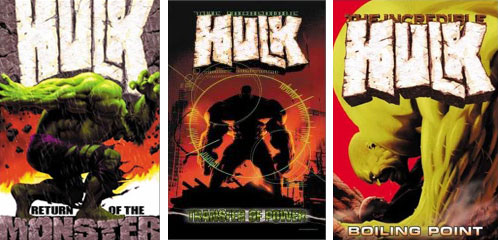
Hello friends, I hope you are doing well. Today I want to talk about great comic book rivalries. How they are put together, and what I think makes the best ones work. This topic was actually inspired by the return of one of my favorite Incredible Hulk villains. I’ll talk about who that is in a moment. Right now I want to focus on my theory of great rival design. It is a sort of follow-up to a blog I wrote ages ago regarding
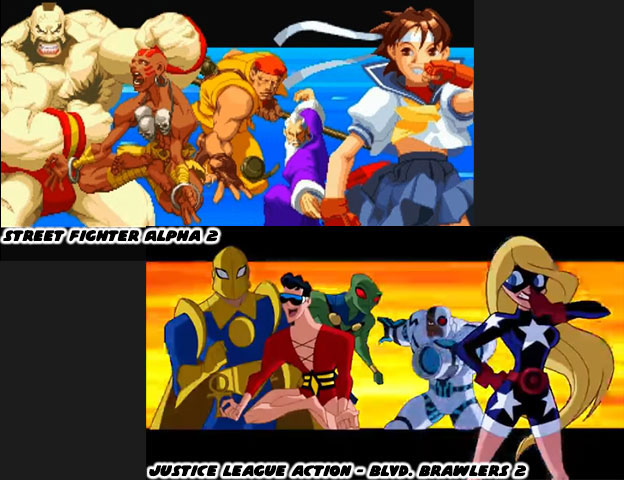
The Frightful Symmetry of Street Fighter. I argued that all great fighting game designs worked because there was a lot of symmetry in the development of their cast. In the early days of fighting games the main characters had a rival or balance. They were often presented as the Asian versus Western master of the fighting arts. Think of Ken, and Ryu from Street Fighter, or Paul, and Kazuya from Tekken. Then later on the library was expanded to make female counterparts to lead characters. I talked about this on
The Legend of Blue Mary. If you were a budding comic book, video game, or storyteller then you might find it hard to come up with a great recurring villain. The easiest way to approach this was by creating an opponent that was a mirror rival to the hero. For example long-time comic book fans might argue that The Abomination was the greatest enemy of the Incredible Hulk. They might be right.
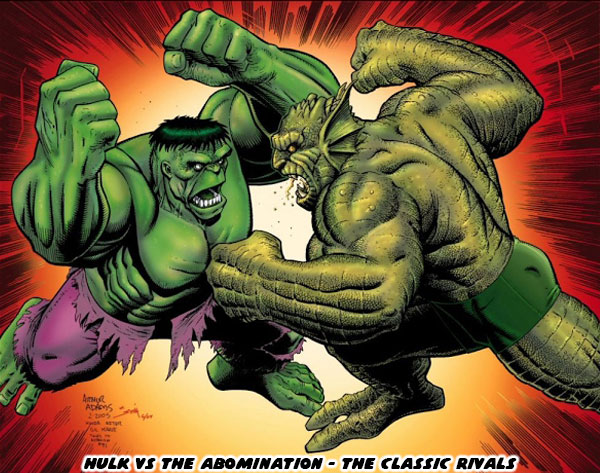
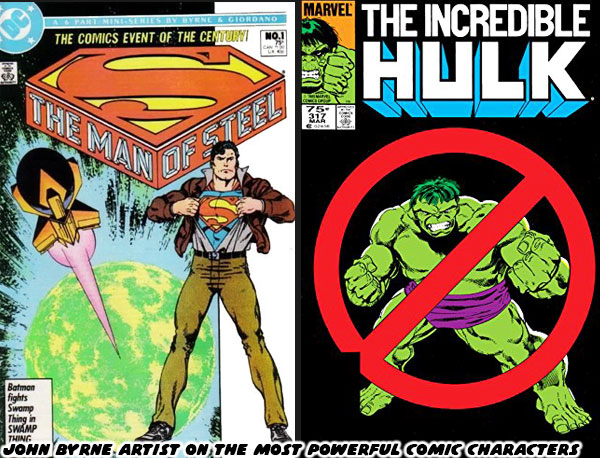
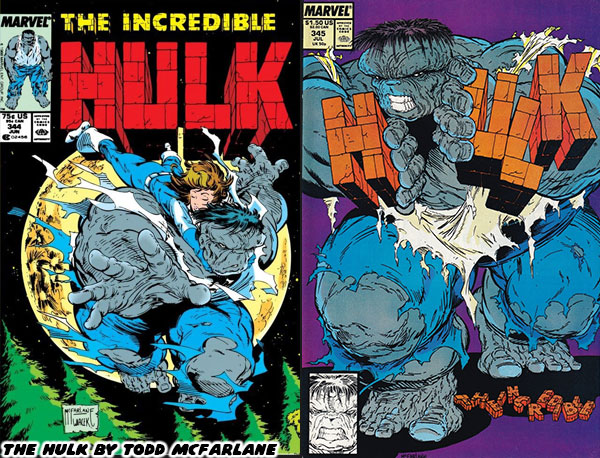
The Abomination was a gamma-irradiated villain that was bigger, and stronger than the Hulk. He was also intelligent, sadistic, and cruel. Whereas the Hulk was filled with a blinding rage, he was still a moral character that just wanted to be left alone. When they battled the Earth literally trembled. There were few forces in the Marvel Universe that could come between them, let alone try to stop them. Unless you had read a lot of comic books then you might not realize how the power scale worked between different comic books. The villains on a street level hero / anti-hero like the Daredevil, or the Punisher, were nowhere near as dangerous as the villains the Hulk comics. The Hulk had single-handedly taken on characters that the entire X-Men, or Avengers rosters were unable to stop. When the Hulk, and Abomination fought it was the western equivalent of a daikaiju battle, like Godzilla vs King Ghidorah. The best course of action was to evacuate the nearest city, and let them fight. Good or evil would triumph, and the survivors would have to deal with the fallout. The Hulk, and Abomination were an example of symmetrical design. Think about your favorite comic book rivalries, and try to recall how many were symmetrical in nature.
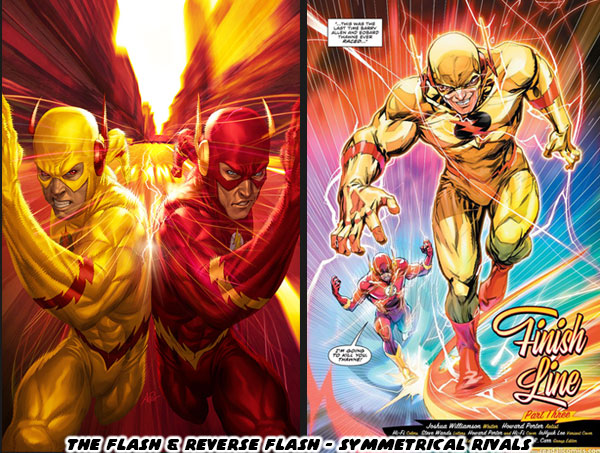
My favorite DC hero was the Flash, it was debatable if I liked Barry Allen, or Wally West as the Flash more. Their greatest rival was also symmetrical in nature. The Reverse Flash was among the most dangerous opponents in all of DC canon. Eobard Thawne hailed from the far future. He had made it his mission to travel through time, and destroy the life, and legacy of the Flash. In several continuities he had succeeded in this, wiping out the Flash, and all of his allies. Having a compulsion to destroy entire generations of characters was a scary thought. Knowing that few in the DC universe could stop the Reverse Flash including Batman or Superman, made having the Flash there to protect the universe essential. For comic books, and most pop culture storytelling making a rival be a perfect balance just made sense. However I would argue that the most interesting rivalries were when the opponents were not perfectly balanced. Let’s talk about asymmetrical rivals.
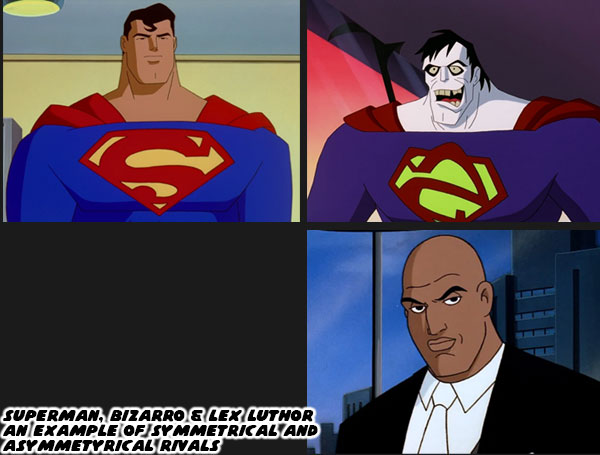
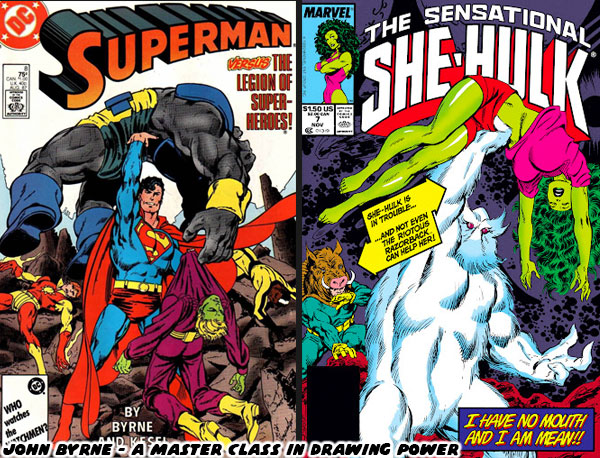
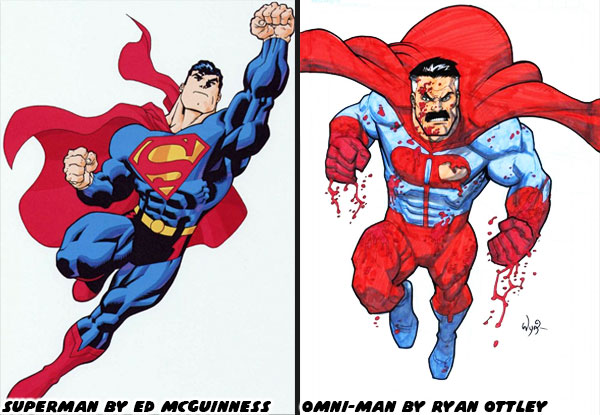
Superman was arguably the most popular hero in DC, if not all of comics history. When he debuted in 1938 he fought mostly low level villains. The gangsters, and petty criminals that most people saw in media. Through the years different creators starting making villains more unique, and powered as well. Once the atomic bomb had been used in WWII the power scaling in comic books jumped exponentially. This was especially true for Superman, and lead to the creation of the Incredible Hulk. One of Superman’s greatest opponents was a freakish mirror version with all the same powers known as Bizarro. While Bizarro had many memorable encounters with the Man of Steel there was one villain who was a perpetual thorn in his side. Lex Luthor was seen by most as his greatest rival. He was intelligent, rich, and calculating. Using his money, and influence to gain as much power as possible he was aware that Superman was the only person that could stop his ambitions. Despite not having any super powers he had brought Superman to brink of death time, and time again. Although Bizarro was a great opponent, it turned out that Luthor was the one that gave Superman the most trouble.
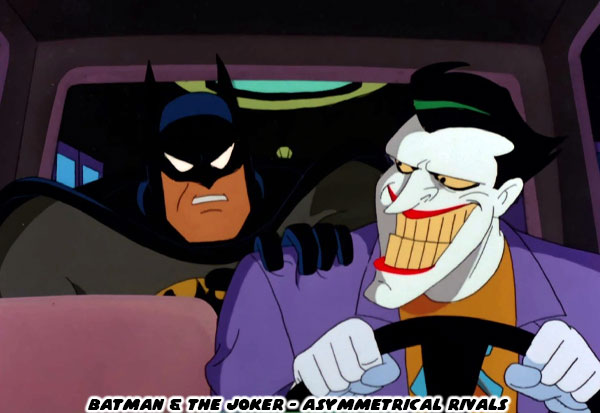
Batman was similar to Superman in that they fought opponents with comparable abilities. Whether it was strength, and martial prowess (like Bane), intelligence (like the Riddler), or fear (the Scarecrow) then Batman had an opponent that could challenge his individual abilities. It was a literal wild card that gave Batman the most trouble. The Joker was pure chaos. He was unpredictable, and nothing the Batman did could prepare him for the next encounter. The Joker did not have the fighting ability of the Batman, nor the ability to calculate his next move. He would often surprise himself with his random schemes, and thus ensure that Batman would be caught off guard as well. This type of character design, the ability to fill a world with both symmetrical, and asymmetrical opponents was critical to pop culture. It made the best comic book, tv, movie, and video game battles work. I would argue that with a few exceptions it was the asymmetrical foes that were the most important for the hero to overcome. This lesson was especially true in team settings.
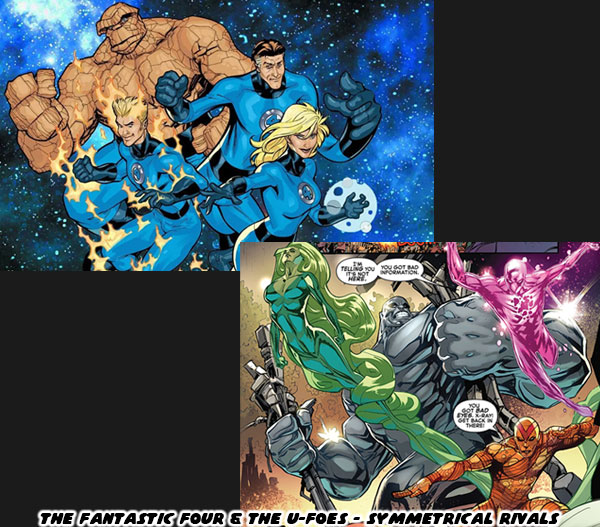
Think about the greatest evil organizations in comic book history. DC had the Legion of Doom which was created to battle the Justice League. The evil organizations were made up of rivals with symmetrical powers to the heroes. This type of design was also featured in a number of Marvel books. The X-Men fought the Brotherhood of Evil Mutants, the Morlocks, and the Reavers to name just a few. They were often composed of opponents that had asymmetrical designs as the heroes, but similar powers. This sort of balance went for a few other teams in the Marvel Universe as well. Most people were familiar with the Fantastic Four, but unless you were familiar with the comics you might have never heard of the U-Foes. This team recreated the same space flight that gave the Fantastic Four their powers through cosmic radiation. They even had brother and sister; Jimmy, and Ann Darnell. The duo of X-Ray, and Vapor mirrored Sue, and Johnny Storm. The respective Invisible Girl, and Human Torch. Yet again, unless you were a long time comic book fan then you might have never heard of these villains. By the same token if you were to poll casual fans, and comic book fans as to who was the greatest enemy of the Fantastic Four were they would often point to Doctor Doom.
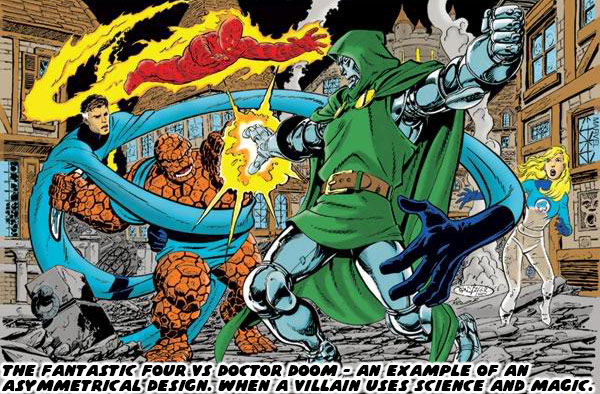
Victor Von Doom was an individual gifted with absurd levels intelligence, a creative mind, and an affinity for the magical arts. He combined the sciences, with the dark magics, and made for one of the most powerful villains in all of Marvel history. It was his unique blend of magic, and technology that allowed him to counter anything the Richards family could throw at him. It was this sort of asymmetrical design that made him a standout character, and able to be placed in a story that would work across the spectrum of Marvel heroes, and villains. He could one day be fighting against Dr. Strange, and the next be teaming up with him in order to save the Earth from a demonic invasion. The complexity of his design, and absolute resolve in his purpose allowed writers to put him in stories that were as fascinating for the villain, as they were for the hero. The creators at Marvel understood that the most memorable villains had nothing in common with the heroes.
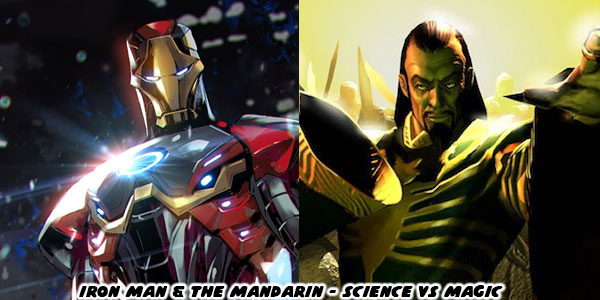
I was lucky enough to have brothers that also read comic books, and we collected titles across the spectrum. We were well versed in the happenings all over the Marvel universe, and the DC universe to a lesser extent. One of the most fascinating rivalries was that of Iron Man. He was possibly my little brother’s favorite Marvel hero, next to Dr. Strange. While Iron Man did fight other armored warriors like Titanium Man, the Iron Monger, and the Crimson Dynamo none were as big a nemesis as the Mandarin. The magic rings that the Mandarin wore allowed him to fight Iron Man on a physical level, but also Tony Stark on a psychological level. People that were only familiar with the characters thanks to the Marvel live action films had no idea how many amazing battles the duo had. As the years went on I realized that being able to create asymmetrical rivals meant a lot to the longevity of a title. It also made me realize that when new creators were placed on a book they did not always understand the characters that they were writing for. I will talk about this more on the next blog. For now I would like to know if there were any great rivalries that you enjoyed. Whether in a movie, game, or comic book. I’d like to hear about it on the comments section. As always if you would like to sponsor me
please visit my Patreon page and consider donating each month, even as little as $1 would help make better blogs and even podcasts!