
Showing posts with label indy. Show all posts

Friday, November 29, 2024

Freeze frame, my poster collection, part 14…

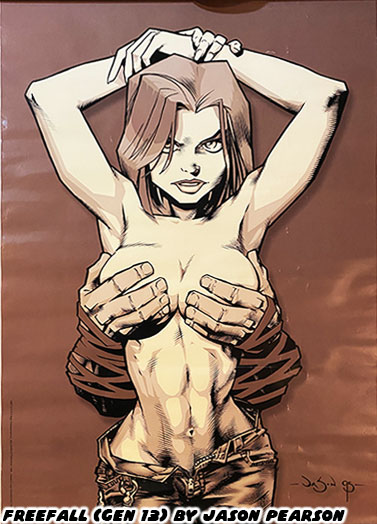
The previous few entries of this series have focused on the comic book posters in my collection. Today we’re looking at some posters from indy studios. First up is a poster that’s actually a parody of a Rolling Stone magazine cover featuring Janet Jackson (look it up). This one features Freefall and was drawn by the late Jason Pearson.

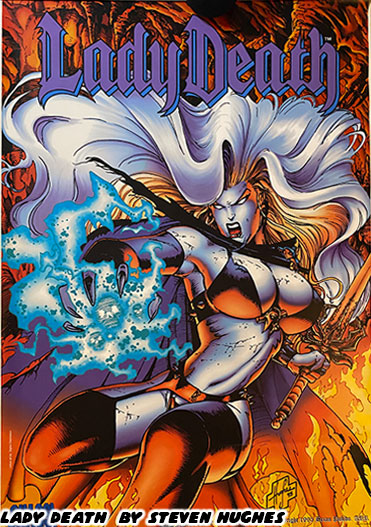
The next poster features an even more chesty character. Lady Death was a gateway comic for many young boys looking to get into macabre monsters, and giant boobs on undead vixens. I read it for the plot, really!

Of course some indy comic book heroines look even more amazing in real life. Such was the case for Vampirella!

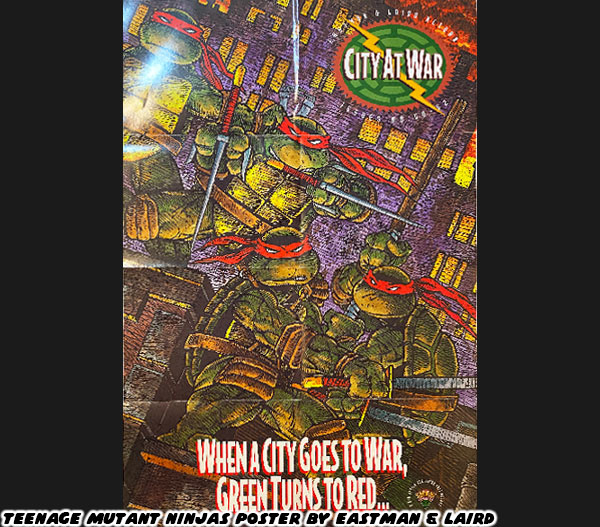
Not every indy comics poster I got featured big boobies. I actually have one from the Ninja Turtles. I'm not a complete weirdo.

Are there any indy comics that you follow? Do you have favorite characters, or artists that don’t work on mainstream books? I’d like to read about it in the comments section. As always if you would like to sponsor me please visit my Patreon page and consider donating each month, even as little as $1 would help make better blogs and even podcasts!
follow the Street Writer on Patreon!

Monday, April 12, 2021

A look at IGS, the Gladiator; Road of Sword. A 1UP classic...

Gladiator: Road of Sword was released in 2001, just a year after Demon Front. I had mentioned this game previously during my Brawler series but decided that it should get an additional mention here. It deserves special mention because it was the best game published by IGS and was easily one of the greatest brawling games ever made. If I had to rank it among all of the brawling games ever released I would say it was in the top 10 of all-time. I would go further and say that it belonged in the top 5. After that it would be a matter of opinion. I would actually rank it in the top 3 for its designs, control, animation, characters, originality and execution. Consider also that this title was completely ignored by the staff at Game Informer when they compiled a list of the Top 10 Brawlers in October 2011.

In the past month and a half I had covered over 100 games in my brawling series. I’ve played them all, and thanks to emulators played several recently just to refresh my memories. When I read Game Informer’s list I was saddened and dismayed. One of the greatest brawlers ever was completely dismissed, possibly because it was a rare arcade title unfamiliar to the console-leaning staff.

Gladiator: Road of Sword got many things right. It was a brawler set in classic Dynasty-era China. However it was more refined than IGS’s other popular Knights of Valour series, which was beat-for-beat a better version of Capcom’s Warriors of Fate. Of course it would stand to reason that IGS was producing sprite-based brawlers that looked better than the Capcom classics because they were released almost a decade after Capcom's! Where Gladiator succeeded was in recreating the best elements that Capcom refined, if not introduced into the genre. IGS then improved on the mechanics and took the experience in new directions.

The first thing that most players noticed were the character designs. They were all well done and quite original, in a style that was closer to the Japanese manga aesthetic than the previous designs which were closer to Chinese manhwa comics. They did not poach the Bengus style as they had in Martial Masters or the Nazca style as they did in Demon Front, this was a new style altogether for Gladiator. The heroes were based on some familiar archetypes. The large burly fighter that moved slowly (Ko), the female swordfighter (Chin), the petit but speedy female fighter (Hsiung), the female weaponsmith (Huang), the elderly kung-fu master with strong special strikes (Mr Wu), and of course the young kung-fu master with great all-around attacks (Chu). The six playable characters had distinct styles and each had their own library of regular and special attacks. They did not all fight with bare hands, some of the characters had weapon-based attacks and special moves. Where the game elevated the standard was in the robust fighting system. Players could parry attacks with perfectly timed button and joystick inputs, perform mid air special attacks and even jump up quickly if knocked down to perform a counter attack. These things would normally be reserved for a dedicated fighting game rather than a brawler.

IGS then developed a new mechanic. Each character could collect special scrolls that expanded their techniques. Players could earn five scrolls with a completely different set of moves applied within. Players could then switch between the fighting techniques with the push of a button. Each style worked better for different bosses and enemy types. Best of all the techniques could be switched in the middle of a combo, or even combined with the special attacks of other players to form specially animated super attacks. The game supported 2, 3 or 4 characters performing super attacks, provided that the other characters also had earned the technique scrolls as well. It was as an impressive a fighting system if not more so than that featured in Guardian Heroes. Unlike GH however these characters were not locked onto a 2D playing field.

The game also featured a leveling system which applied to their health bar and increased their striking power. The more multi-hit combos players could perform the faster they could level up. Bosses offered the most points once defeated. It behooved players to use a string of special attacks to keep juggling bosses for a long combo string and then split the points with teammates at the end of the level. The way the combat system worked was not unlike the magic system in Capcom’s Dungeons and Dragons games. Where IGS trumped both Capcom and Treasure was that this title was a pure beat-em-up brawler. All of the attacks and special moves were based on the fighting arts, not on magic. Characters didn’t have to go searching through a level to obtain magic vials or pick up weapons. The characters had all the screen-clearing moves they needed. Yes, there were fireballs and other explosive attacks, but these were representative of the mythical techniques known only to a handful of masters in the history of the martial arts In this case it would be the main characters.

Having opponents that represented a cross archetype of mythological and historical villains also made the game more interesting. Bandits, soldiers, spies and roving guards were only the beginning of the opponents players faced. The game had bloodthirsty warlords, zealous monks, crooked priests and evil kung-fu masters. These were highly stylized representations of the male and female villains that might have turned up in a classic kung-fu movie. All of the villains of course had their own sets of special attacks that looked as impressive as anything players could perform.

The levels were very well done, populated with a diversity of enemy types each representing one of the warring factions. The stages ranged from rural and small towns to open fields, deserts and mountain paths where soldiers defended secret fortifications. The architecture was a cross section of Asian influences, including Chinese, Mongolian and Korean. Villages could have been located in any major city of the classical era, some temples and statues had Buddhist themes while others were non-secular. This diversity made the game more appealing to the countries that IGS was targeting Players could chose which path they wanted to explore in between levels, thus increasing the replay value.

Players that had grown up on fighting games and brawlers could find no better marriage of the two genres. Those that wanted to experience the game as only a brawler could do that by using basic moves over and over and exploiting techniques learned from past games. Those that wanted to experience the game as a fighter could try out the various styles and attacks that could be unlocked through the course of the adventure. The balance between the characters and their moves was very well done. There was no right or wrong way to play Gladiator, but those that dug deeper found out that it was a solid playing experience and quite possibly the pinnacle of the genre. It was the best experience from the studio that also developed the memorable Knights of Valour and Oriental Legend series. Game Informer be damned for leaving it off the list of top 10 brawlers!

Unfortunately this game suffered the same fate as Demon Front. Very few people ever saw it, let alone played it because it was only released in the arcades. Unless you lived in an Asian country, or were lucky enough to live in a city with a strong Asian community then you were out of luck. I was fortunate because the Los Angeles area has Little Tokyo, Chinatown and Korea Town, not to mention the numerous suburbs where arcades and stores with IGS games could be located. Had I never known the experiences of the PGM system then I would have been at a loss as a gamer. With the majority of the titles un-emulated then YouTube would be the only way for gamers to see the good times they missed.

Hopefully the brawling series has given readers a chance to learn a little something about some of the best games ever made. Perhaps players might be willing to explore their town for some rare arcade experiences and share them with the community as well. I had a fun time writing about brawlers over the past few weeks and hope to start enjoying some of them very soon. I am sorry that I have not replied to more of your comments. I do read them all but my 14-hour days limits how much time I get to respond or do anything else. I hope you understand and thank you for being good friends. If you would like to sponsor me please visit my Patreon page and consider donating each month, even as little as $1 would help make better blogs and even podcasts!

follow the Street Writer on Patreon!

Friday, February 16, 2018

The Giant Monster Series, part 6...


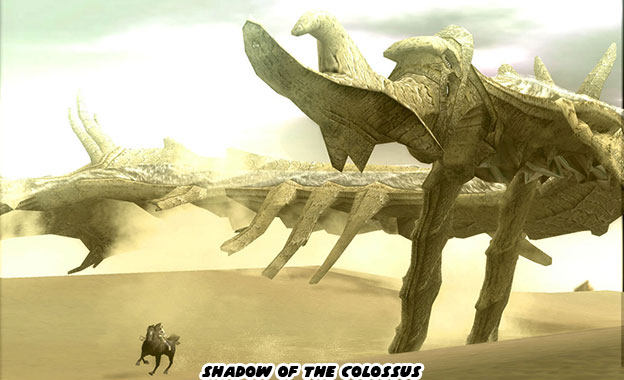
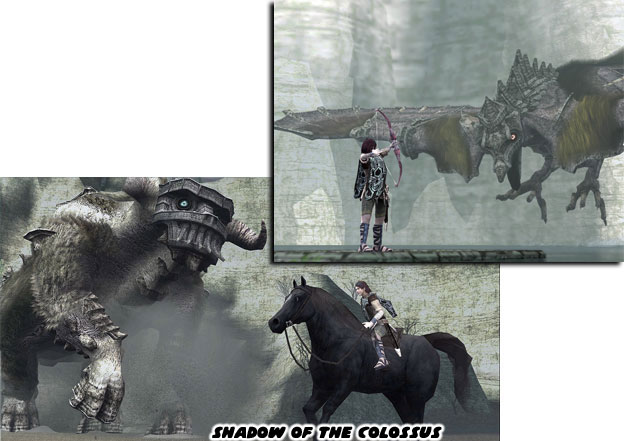
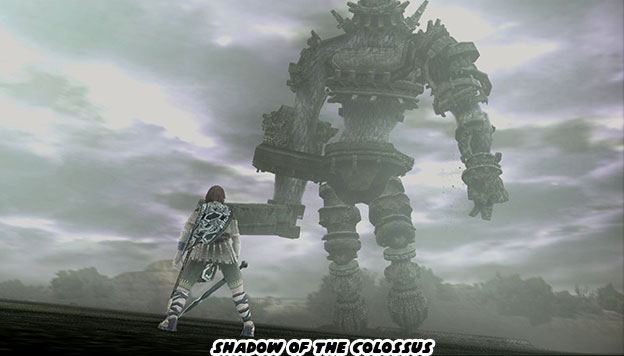
The first game featured today should be enshrined in the gaming hall of fame. Shadow of the Colossus (2005) was an international sensation when it was released. Very rarely were games so universally accepted that they required little if any localization. In order to be played the game required nothing more than the time, patience and practice. The game did not really need dialogue or lengthy cut scenes in order to be enjoyed but it didn't hurt that they were included. Fumito Ueda's tragedy featuring Wander, Mono and a very brave horse named Agro showed the industry that the giant monster could be a stand alone genre. The game used every lesson taught by giant monster films and classic literature and then created an original play experience out of them. The game isolated players in a forbidden land. They were enclosed by high cliff walls that couldn't be scaled and an ocean that could not be crossed.


Players could do nothing more but explore the environment and search for enormous creatures that were part living and part stone. Wander was equipped with two weapons, a bow and arrow and an enchanted sword. The creatures were invulnerable to both weapons with the exception of some strategically placed magical tattoos. When Wander stabbed the colossi on those tattoos the monsters could be defeated. Players did not know about the rules of combat regarding the colossi or how the sword worked. They were trained by the levels on how to run, scale, roll and jump around the environment. Little by little everything in the game was learned simply by playing rather than by going through a tutorial. Knowing how to perform multiple actions would come in handy as the colossi they fought were harder and harder to reach and defeat.


Just one of the genius details in the game design was in creating tension before each encounter. The levels were spread out far enough for players to develop a sense of isolation as they went from battle to battle. The music and sound effects reflected this emotional pull. Each colossi was introduced in a short cinematic that showed players the enormous scale of the creatures. They were very intimidating and no two were exactly alike. The music would pick up and increase the pressure for the duration of the battle. The colossi would focus their attention on the player with bright unblinking eyes. They would search for them, stomp and scratch at them as they ran and hid in corners of temples and pits. It was an amazing action experience that was highlighted by the giant monsters themselves.


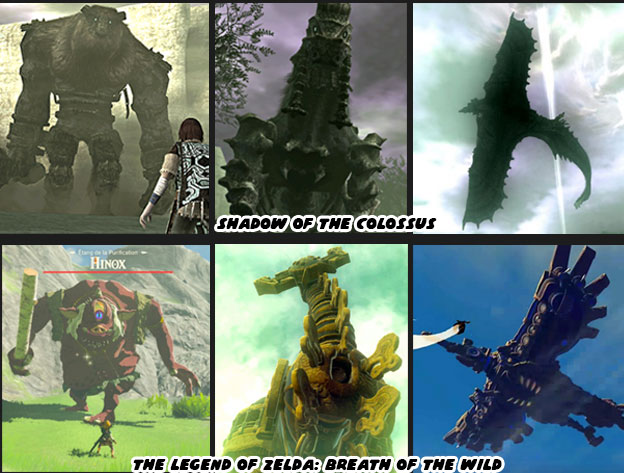
Ueda had created a universe filled with mythical creatures that appeared to be alive. He left enough clues on each level to let the origin of the creatures be explained. At some point the colossi might have been considered gods to the ancient civilization that built the temples. Prior to the colossi there was a single creature that inspired fear in the old tribes. Dormin was a dark, horned god that used to rule over the land. He was split into 16 pieces that each became a colossi. During the game it was revealed that Wander was slowly becoming possessed by Dormin as he defeated each of the colossi. On the last stage Wander underwent a transformation. Players could suddenly control Dormin against a group of tribal elders. This twist to the plot and game play was sublime. Players had no idea that they would end up becoming the creature that had been leading them on. Shadow of the Colossus redefined the giant monster genre and ended up influencing titles yet to come, not the least of which was Nintendo's award-winning game The Legend of Zelda: Breath of the Wild (2017). It turned out there were still other lessons that could be learned by playing with and against the creatures.


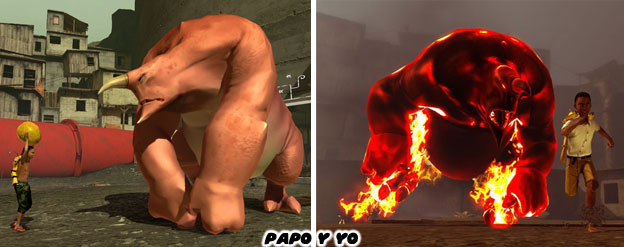
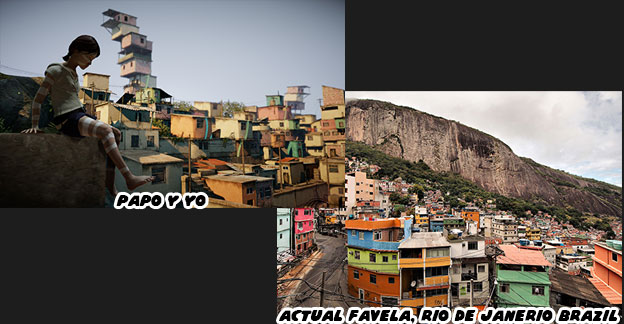
Vander Caballero created the indy hit Papo y Yo (2012). Minority developed an experience that captured the art of storytelling in gameplay as well as the biggest Triple-A studio. The game revolved around a unique relationship created between a monster and a little boy in a Brazillian favela (slum). The game turned the imagination of the young Quico as gameplay elements. Quico was searching for a way out of the favela while trying not to irritate the monster Papo. The game was actually an allegory for the relationship between the Vander and his alcoholic and abusive father. Quico could make walls turn to stairs and have building stretch as if the world were made of toy blocks and Silly Putty. Papo was available for some of the puzzles by triggering doors, traps or simply helping Quico reach higher places. The exploration and imaginative puzzles was only part of the reason that gamers wanted to find a way out of the favela. The sense of isolation that Ueda created in Shadow of the Colossus were mirrored in Papo y Yo. The favela was modern, it had color and personality but it also appeared like a prison. The walls were made up of the homes of people that seemed perpetually absent from the world. As far as the eye could see there were the walls, leaned onto the next, piled on top of each other. Despite the brilliant graffiti murals it was an oppressive site. In Shadow of the Colossus Wander would have to travel through the ruins of castles and temples that were even more imposing than the colossi that dwelled within. These design choices were part of the psychology of the games. The isolation created by these locations made Wander and Quico more sympathetic and their struggle more impressive.


Papo had a weakness, he enjoyed eating frogs but when he did he became a raging monster who did nothing but hurt and destroy. Papo could be pulled out of his rage by feeding him melons, but like sobriety to a person with a severe problem it was a constant struggle. The contrast between the friendly Papo and the flame-engulfed monster was a shock. Players learned to keep an eye on Papo while trying to figure out the next puzzle. The tension in the game was palpable. Players were tiptoeing around a ticking time bomb yet rather than stop playing they were compelled to help Quico escape. The emotional draw of the characters pulled audiences into the world. It was similar to the attraction behind Shadow of the Colossus. Wander needed the player to help him defeat the colossi and resurrect Mono. Quico needed to find a way out of his nightmare. Both games taught audiences to be brave and even defiant in the face of adversity. It also forced the players to think about their own mortality. The psychological elements from the giant monster myth were done equally well Papo y Yo. The isolated environment, the layers of detail that brought players into the world. The indestructible creature. When these things were combined they helped create a sense of primal fear. The fact that the game was created as a coping mechanism to help with those that came out of abusive relationships was superb design.


There was more to the giant monster genre than simply running from or battling against them. It was something that had been overlooked in the series thus far. A completely different contribution to gaming that could only be provided by the creatures themselves. Entirely new styles of gameplay had to be created so that the player could wreak havoc on an unsuspecting population. To say that the newfound power went directly to the heads of the players would not be far from the truth. In the next blog we shall look at the games that turned gamers into virtual gods.