A blog about my interests, mainly the history of fighting games. I also talk about animation, comic books, car culture, and art. Co-host of the Pink Monorail Podcast. Contributor to MiceChat, and Jim Hill Media. Former blogger on the old 1UP community site, and Capcom-Unity as well.
Wednesday, April 15, 2026
Bookmark This Page; The best games from IGS and their PGM arcade machine
Wednesday, April 14, 2021
A look at IGS, the Martial Masters. A 1UP classic...
Martial Masters was released in 1999, after Street Fighter III: Third Strike yet bore an uncanny resemblance to the Capcom fighter. At that point every major publisher and developer of fighting games had shut down their 2D game development teams. The sprite they assumed was a dead format and players would be likely to ignore new fighters using traditional methods. As the success of Sammy, DIMPS and SNK showed through the new millennia the other publishers were wrong IGS bet that their fighting game would grab long time fans of the Street Fighter series and give them a new experience to sink their quarters into. They started with their own PGM system, an arcade console more powerful than the Neo Geo and thus capable of rendering large sprites with dozens of animations per character. These sprites looked closer to those presented on the more powerful Capcom CPS-III system. What IGS did was nothing short of genius or a blatant rip-off, depending on whom you asked.
In order to make a fighter that had the elements of Street Fighter without outright copying the cast. Data East had copied Street Fighter II with Fighters History in 1993 and got slapped with a lawsuit by Capcom a year later. The courts ruled in favor of Data East and the results of which were other studios were able to develop fighting games with eerily similar characters and control schemes. IGS did not outright copy the cast as controls through Martial Masters, they did however poach the Capcom artistic style. Of course copying an artistic style was only part of the challenge. The other would be to fill a roster of fighting archetypes that were unique and memorable. By '99 there had been dozens of fighting games at home and the arcade, just about every possible character combination and fighting style had been explored. The brilliance of IGS was in filling out the roster with characters that were inspired by, and almost direct copies of, the fighters featured in the Once upon a time in China movie series The strict IP laws that curb comics, movies and games in the US seem to be more lax overseas. This loose interpretation of copyright allows for a thriving fan-based comic industry in Asia, as well as hobbyists creating models of popular characters in limited edition runs. Martial Masters was an example of that type of mentality influencing character designs in a game.
The sprites featured in Martial Masters (MM) were large and colorful. The male and female archetypes were all there, including a strong Chinese female lead, just as in the SF series. However the differences between SF design and designs featured in other fighting games were subtle yet more complex than most realized. The SF series succeeded in part because the masters of their respective art were inspired by actual and mythological heroes. They were an amalgamation of the inspirations but done in such a way as that the characters could never be pinned onto one person. Ryu in SF for example was based in part on karate masters Mas Oyama and Yoshiji Soeno with a look from Ken from Fist of the North Star. For MM and some of the other games, the designs were blatantly based on the mannerisms and gestures of popular actors, including Jet Li, Bruce Lee and Donny Yen.
More than that, some of the characters and moves in MM appeared to have multiple sources of inspiration. The Tiger character for example had the size and proportions from SF III's Alex but with some of the slashing moves from Wolverine of the X-Men.
Speaking of Tiger, he was a good example of the proportions that IGS had used to create sprites similar to Capcom's. The design of the characters was set somewhere in between the sprites used for SFIII and SF Zero / Alpha. Tiger appeared very much like a playable version of Chun-Li's partner from the ending of the game.
The other characters used the general proportions and scale made popular by Bengus. The Monk character for example had roughly the same size and proportions of the Hulk from the Marvel fighting game. If not Zangief from Street Fighter Alpha.
Of course not all of the characters were inspired by Capcom characters. Others were inspired by archetypes featured in other games but presented in the Capcom style. The Drunk Master for example appeared like the hybrid of Chin Gentsai from the King of Fighters and Gen from SF Zero. Not to take anything away from IGS because the character was fun to play as and had many original moves and animations. He, and several other characters should have returned for a sequel.
The subtle elements that IGS designers missed when imitating the SF character designs became obvious for the more esoteric fighting styles. The characters Scorpion and Ghost Kick highlighted the lack of understanding of how certain fighting styles appeared in the SF universe. The characters in Street Fighter were all representatives a particular style, like karate, kung-fu and wrestling. These characters had moves were not grounded in any particular school however. What the team at Capcom did was apply a stance and set of moves that mirrored the popular concepts but were optimized for use in a game engine. Ken and Ryu had moves that looked like karate strikes, Chun-Li had moves that looked like kung-fu strikes. Most of these moves looked fantastic, even if they were impractical, the purpose was that they could be animated and balanced within the fighting engine. Martial Masters took some of the styles too literally and presented the masters with exaggerated arts and stances. These forms may have appeared in a SF game, however the designs and stances for Scorpion and Ghost Kick were too unbalanced and exaggerated. The characters created a visual distraction that upset the symmetry of the rest of the cast. Moreover they would be difficult to animate moving and fighting convincingly with the rest of the cast.
As well made as the sprites were, the game was lacking substance. This would prove to be the biggest trend for almost all the IGS games. The studio was capable of following trends and even imitating the best developers in the industry, however the games were always lacking something. In the case of Martial Masters the game had decent controls and move sets for each character but it lacked balance. Every great fighting game strives for balance. Balance in the amount of damage that moves take, balance in how quickly characters attack, how slowly they recover and what strikes take precedence. A game that allows for players to constantly juggle opponents with a barrage of strikes and gives them no chance to recover or counter is clearly unbalanced. Almost all of the characters in Martial Masters were able to perform an endless loop of attacks that could completely drain the energy of an opponent. These things would have never appeared in a numbered SF title because of the extensive balancing process.
The flaw for IGS was clearly the lack of experience behind their developers. They could imitate Capcom and even create characters that were animated on par with the best efforts from the Japanese studio but they did not understand how all of the elements worked together in order to build a Capcom caliber fighting game. The levels were nice but lacked the vitality of the SF levels, the controls were good but not precise, the characters were diverse but almost all rooted in Asia rather than the global community that made up the SF cast. If I could describe an IGS game it would be anemic. It lacked the size and energy to have run with the major publishers. Players could see what the studio and designers wanted to do and appreciated the effort they made in bringing a game to market, especially after Capcom had closed its 2D wing. What killed the gamers though was that the games always seemed to be lacking something. Martial Masters looked and played like a SF game that was 80% maybe even 85% finished. At that stage it was good enough to demo at a trade show and get buyers interested in ordering arcade cabinets. For gamers it was not enough, that 85% was still more than a half a year's worth of hard work to make up for. It lacked the polish and level of detail that made the Capcom fighters great. Had IGS only had more time or team members then perhaps Martial Masters could have made an even bigger impact with the community. That, or the very least they could have had larger publishers looking to bring their fighting game to home consoles.
Thankfully, the PC emulation program MUGEN had brought these sprites to a whole new generation. Players could see how the Martial Masters would have stacked up against the Street Fighters. IGS did not create another game that was in the traditional SF vein. However a few years ago they did release a title in the arcades and the Playstation 2 that was similar to Guilty Gear. Spectral VS Generation came out in 2006 featuring developer Idea Factory’s Spectral Force vs Generation of Chaos. The game was fun but lacking. It was similar to Martial Masters in that it felt anemic. The levels were sparse, animations fun but not extraordinary, the character designs familiar but not revolutionary. IGS had fallen into a trap of a "good" game being "good enough" for the publisher.
The publisher would actually release two titles that were better gaming experiences. One of which fell into the trappings of Martial Masters, but in a different genre, and one title which could honestly stand on its own merits among the best arcade games ever produced. If you would like to sponsor me please visit my Patreon page and consider donating each month, even as little as $1 would help make better blogs and even podcasts!
Monday, April 12, 2021
A look at IGS, the Gladiator; Road of Sword. A 1UP classic...
In the past month and a half I had covered over 100 games in my brawling series. I’ve played them all, and thanks to emulators played several recently just to refresh my memories. When I read Game Informer’s list I was saddened and dismayed. One of the greatest brawlers ever was completely dismissed, possibly because it was a rare arcade title unfamiliar to the console-leaning staff.
Gladiator: Road of Sword got many things right. It was a brawler set in classic Dynasty-era China. However it was more refined than IGS’s other popular Knights of Valour series, which was beat-for-beat a better version of Capcom’s Warriors of Fate. Of course it would stand to reason that IGS was producing sprite-based brawlers that looked better than the Capcom classics because they were released almost a decade after Capcom's! Where Gladiator succeeded was in recreating the best elements that Capcom refined, if not introduced into the genre. IGS then improved on the mechanics and took the experience in new directions.
The first thing that most players noticed were the character designs. They were all well done and quite original, in a style that was closer to the Japanese manga aesthetic than the previous designs which were closer to Chinese manhwa comics. They did not poach the Bengus style as they had in Martial Masters or the Nazca style as they did in Demon Front, this was a new style altogether for Gladiator. The heroes were based on some familiar archetypes. The large burly fighter that moved slowly (Ko), the female swordfighter (Chin), the petit but speedy female fighter (Hsiung), the female weaponsmith (Huang), the elderly kung-fu master with strong special strikes (Mr Wu), and of course the young kung-fu master with great all-around attacks (Chu). The six playable characters had distinct styles and each had their own library of regular and special attacks. They did not all fight with bare hands, some of the characters had weapon-based attacks and special moves. Where the game elevated the standard was in the robust fighting system. Players could parry attacks with perfectly timed button and joystick inputs, perform mid air special attacks and even jump up quickly if knocked down to perform a counter attack. These things would normally be reserved for a dedicated fighting game rather than a brawler.
IGS then developed a new mechanic. Each character could collect special scrolls that expanded their techniques. Players could earn five scrolls with a completely different set of moves applied within. Players could then switch between the fighting techniques with the push of a button. Each style worked better for different bosses and enemy types. Best of all the techniques could be switched in the middle of a combo, or even combined with the special attacks of other players to form specially animated super attacks. The game supported 2, 3 or 4 characters performing super attacks, provided that the other characters also had earned the technique scrolls as well. It was as an impressive a fighting system if not more so than that featured in Guardian Heroes. Unlike GH however these characters were not locked onto a 2D playing field.
The game also featured a leveling system which applied to their health bar and increased their striking power. The more multi-hit combos players could perform the faster they could level up. Bosses offered the most points once defeated. It behooved players to use a string of special attacks to keep juggling bosses for a long combo string and then split the points with teammates at the end of the level. The way the combat system worked was not unlike the magic system in Capcom’s Dungeons and Dragons games. Where IGS trumped both Capcom and Treasure was that this title was a pure beat-em-up brawler. All of the attacks and special moves were based on the fighting arts, not on magic. Characters didn’t have to go searching through a level to obtain magic vials or pick up weapons. The characters had all the screen-clearing moves they needed. Yes, there were fireballs and other explosive attacks, but these were representative of the mythical techniques known only to a handful of masters in the history of the martial arts In this case it would be the main characters.
Having opponents that represented a cross archetype of mythological and historical villains also made the game more interesting. Bandits, soldiers, spies and roving guards were only the beginning of the opponents players faced. The game had bloodthirsty warlords, zealous monks, crooked priests and evil kung-fu masters. These were highly stylized representations of the male and female villains that might have turned up in a classic kung-fu movie. All of the villains of course had their own sets of special attacks that looked as impressive as anything players could perform.
The levels were very well done, populated with a diversity of enemy types each representing one of the warring factions. The stages ranged from rural and small towns to open fields, deserts and mountain paths where soldiers defended secret fortifications. The architecture was a cross section of Asian influences, including Chinese, Mongolian and Korean. Villages could have been located in any major city of the classical era, some temples and statues had Buddhist themes while others were non-secular. This diversity made the game more appealing to the countries that IGS was targeting Players could chose which path they wanted to explore in between levels, thus increasing the replay value.
Players that had grown up on fighting games and brawlers could find no better marriage of the two genres. Those that wanted to experience the game as only a brawler could do that by using basic moves over and over and exploiting techniques learned from past games. Those that wanted to experience the game as a fighter could try out the various styles and attacks that could be unlocked through the course of the adventure. The balance between the characters and their moves was very well done. There was no right or wrong way to play Gladiator, but those that dug deeper found out that it was a solid playing experience and quite possibly the pinnacle of the genre. It was the best experience from the studio that also developed the memorable Knights of Valour and Oriental Legend series. Game Informer be damned for leaving it off the list of top 10 brawlers!
Unfortunately this game suffered the same fate as Demon Front. Very few people ever saw it, let alone played it because it was only released in the arcades. Unless you lived in an Asian country, or were lucky enough to live in a city with a strong Asian community then you were out of luck. I was fortunate because the Los Angeles area has Little Tokyo, Chinatown and Korea Town, not to mention the numerous suburbs where arcades and stores with IGS games could be located. Had I never known the experiences of the PGM system then I would have been at a loss as a gamer. With the majority of the titles un-emulated then YouTube would be the only way for gamers to see the good times they missed.
Hopefully the brawling series has given readers a chance to learn a little something about some of the best games ever made. Perhaps players might be willing to explore their town for some rare arcade experiences and share them with the community as well. I had a fun time writing about brawlers over the past few weeks and hope to start enjoying some of them very soon. I am sorry that I have not replied to more of your comments. I do read them all but my 14-hour days limits how much time I get to respond or do anything else. I hope you understand and thank you for being good friends. If you would like to sponsor me please visit my Patreon page and consider donating each month, even as little as $1 would help make better blogs and even podcasts!
Friday, April 9, 2021
A look at IGS, Demon Front - A 1UP classic from December 27, 2011
IGS had developed a handful of memorable titles only a few of which were ever released outside of the arcade. The best titles featured on their PGM arcade system never saw home release. That would be one of the biggest tragedies in all of gaming. The one featured today was easily one of the best titles they ever produced. Like Martial Masters, the first title featured was copying the artistic style and mechanics of a rival studio. In this case they would be copying SNK and Nazca's masterful Metal Slug series. The perpetrator in question was Demon Front. The game came out in 2000, around the time of Metal Slug 3. The pictures featured here are courtesy of NGGames.
Artistically and design wise the games were so similar that arcade visitors were likely to overlook the title. Just like Martial Masters though players often did a double take when they realized this was a completely different studio. This curiosity would cause them to take a closer look. As they dug in they realized that the game had slightly different mechanics and a slightly different take on the genre, which was actually refreshing for fans of the Metal Slug series. The game took place on the alien planet Andres, some 20 light years away from Earth.
These pets closely followed the players through the levels and were always available to use. The addition of pets actually improved upon the Metal Slug mechanics.
In Metal Slug players had to carefully manage their weapons and ammunition There were ways in which to unlock unlimited ammo in the game, however these techniques were not common knowledge to players. Most gamers would just run from location to location hoping that more powerful ammo would be available.
The world of Andres was fun and fanciful. Because it was based in part science fiction, part alien and part demonic incursion, the artists were able to design levels and vehicles that were unlike those featured in other run-and-gun titles. The balance between animated humor, action and monsters was well struck. None of the bosses or monsters was ever too gross or visceral. None of the five stages poached those featured in Metal Slug. The game offered a sixth and final stage against four possible demon bosses, each one was a sort of gigantic, and gross looking version of the pets of the main characters. The only way to reach the hidden boss was if players could collect the demon claws hidden in each level. Otherwise they would just get to enter their initials on the leaderboard and it would be Game Over.
The game was great but the differences between it and Metal Slug were obvious as players went through it. The opponents were not as diverse or as numerous as they would have been in a Metal Slug game. Nazca and SNK would go out of their way to pack every level with scores of enemies. Some even riding in tanks or other vehicles, all raining gunfire, mortar shells and grenades down onto players. During the most hectic battles in Metal Slug there was actually very little breathing room for players. Of course the same thing could be said of most shoot-em-up titles. They catered to a certain type of player that thrived on nonstop action.
In Demon Front players could select which order they were going to do the levels in. This allowed players to save themselves for the harder stages, especially once the pets and characters had increased statistics. By comparison Metal Slug had always been a linear experience.
If you would like to sponsor me please visit my Patreon page and consider donating each month, even as little as $1 would help make better blogs and even podcasts!
Thursday, August 27, 2020
The Street Writer Podcast, Episode 20
Monday, August 24, 2020
The Street Writer Podcast, Episode 19
If you would like to sponsor me please visit my Patreon page and consider donating each month, even as little as $1 would help make better blogs and even podcasts!
Monday, August 22, 2016
Fighting with a disability, final part.

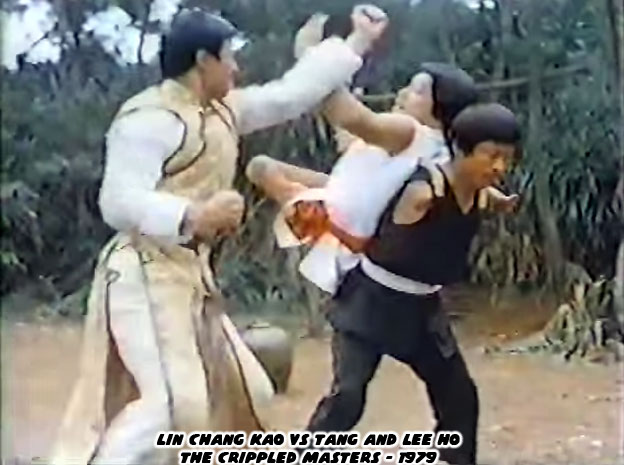
Actual paraplegic fighters had very rarely been done in gaming. In cinema there had been plenty of drunken and blind masters but those with real or imaginary physical deformities were rare. Possibly the most famous of the real-life kung-fu exploitation films was the Crippled Masters. The film from 1979 featured Chen Mu Chuan, Jackie Conn and Frankie Shum, two of the actors were actually born with deformities. The film told the story of a Shaolin monk that teaches a person born with no arms, and a person with deformed legs, how to use kung-fu in order to beat a local crime boss. It so happened that the crime boss was a "hunchback" with deep facial scars. The villain actually had a metal plate covering his deformity. It was a unique premise but with an absurd "team up" ability. The duo has a backpack that allows them to fight back-to-back.

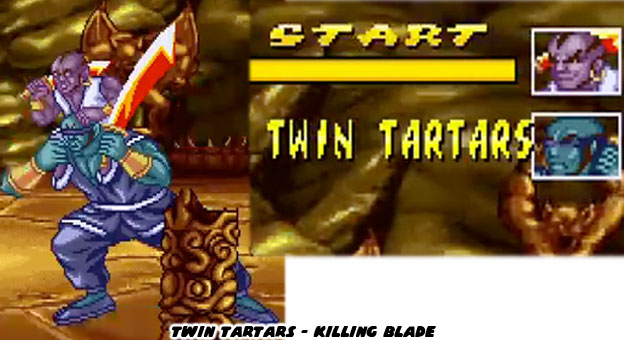
In fighting game history there was actually a character that was similar to the Crippled Masters. The villain Twin Tartars appeared in the game the Killing Blade. The 1998 title by IGS appeared on their PGM arcade system. Both fighters had flaming swords that they used in combat. The larger of the fighters was blind and the smaller had achrondoplasia. He was a little person, someone that may be mislabeled a dwarf. The smaller brother rode on the shoulders of the larger and helped direct the attacks. There was a more recent character that was in a similar vein. Ferra and Torr appeared in Mortal Kombat X. The game came out in 2015 yet the idea of a smaller character controlling a larger fighter was at least 30 years old. The design could be traced back to the film Mad Max Beyond Thunderdome. Released in 1985 it was the third film in George Miller's Mad Max series. In the film the warlord that controlled Bartertown was called Master Blaster. Master was a little person that rode on the shoulders of an enormous warrior "Blaster" who was actually a young man with down syndrome. People with cognitive disorders or impaired development were even less likely to be featured in any form of popular entertainment. It was one of many bold ideas that Miller brought to cinema and it helped color the design of other films as well as fighting games.

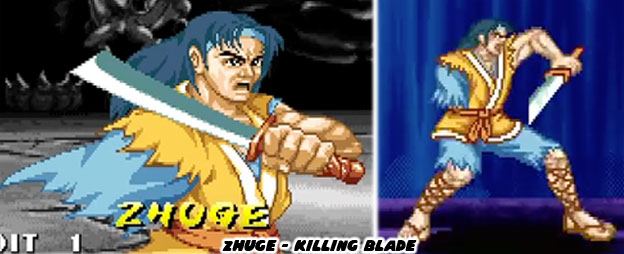
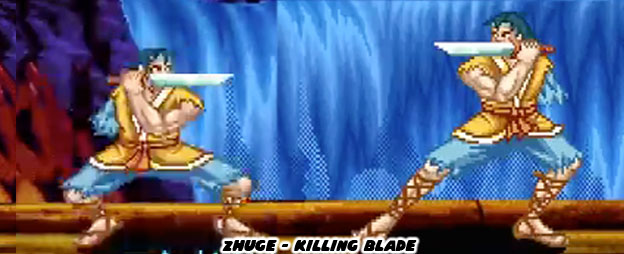
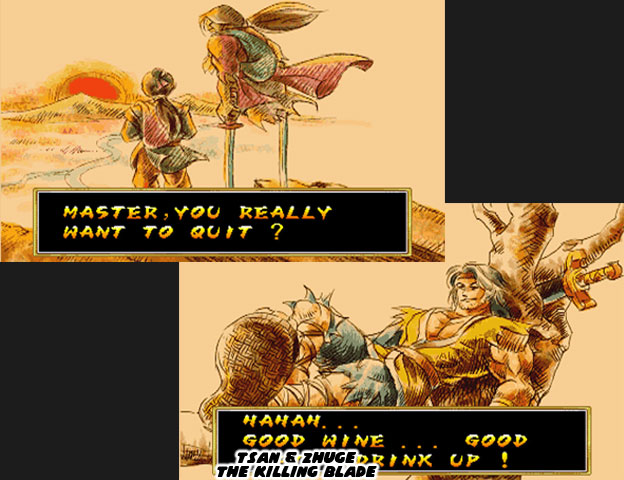
Killing Blade was notable because it had more characters with physical challenges than any other fighting game ever made. The Twin Tartars were non-playable boss characters in the story mode. One of the main characters that players could use was just as unique as the bosses. Zhuge was a one-armed swordsman. He was driven for revenge but by the end of the game he realizes that no amount of bloodshed would bring back his loved ones or his arm for that matter. He accepted this and became a wandering sword for hire, content with his jug of wine. If anything he had the temperament of Haohmaru, the star of the Samurai Shodown series.

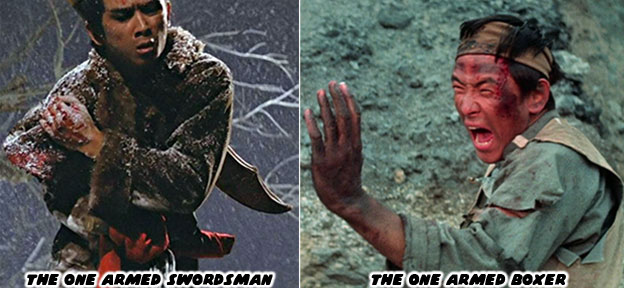
The one -armed swordsman was a character that was made popular more than a generation ago. Jimmy Wang Yu was a young writer / action film star that appeared in a movie called the One Armed Swordsman. The title from 1967 introduced us to a melancholy fighter. It became a big hit in Asian markets and a sequel soon followed. The films gave Wang Yu the traction to leave the famous Shaw Bros. Studio and strike out on his own. In 1971 he released a variation of the movie titled the One Armed Boxer. I had written about this influential person in a previous blog. The movies featuring Jimmy not only influenced other action films but they also planted the design seeds of fighting games, not the least of which was the Street Fighter series. His one armed characters were very well done. They were interesting and sympathetic characters.

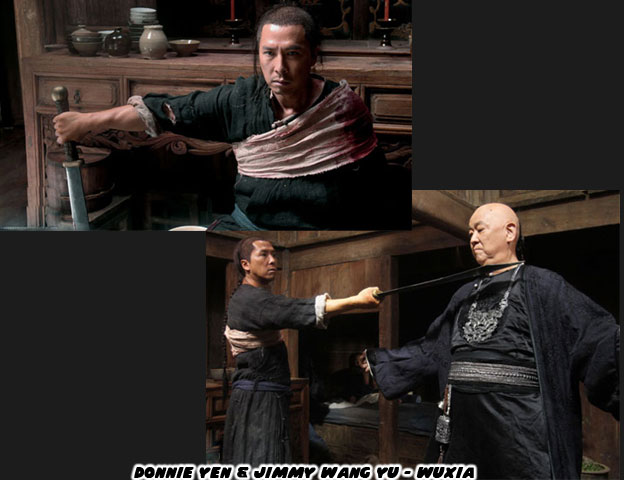
One of the action film stars influenced by Jimmy was Donnie Yen. Donnie like many of his contemporaries had grown up watching the movies and learning the legends of the various martial arts heroes. Donnie decided to write, direct and produce a love letter to the classic films. He called his 2011 movie WuXia, which was the Chinese word for martial arts myth. In the film Donnie played Tang Long, an assassin that was wanted to escape his brutal past. He married and had a child and moved to a village in the country. A botched robbery brought him out of hiding and made it so his old gang was able to track him down. In a last ditch effort to leave the gang he tries faking his own death and even cuts off his own arm in a symbolic gesture that he has quit the gang. I don't want to bore you with the details but I will mention that Donnie managed to get Jimmy Wang Yu out of retirement to play the leader of the 72 Dragons and father of Tang Long. The fight choreography was superb and it really demonstrated what was capable by using only one arm in battle.

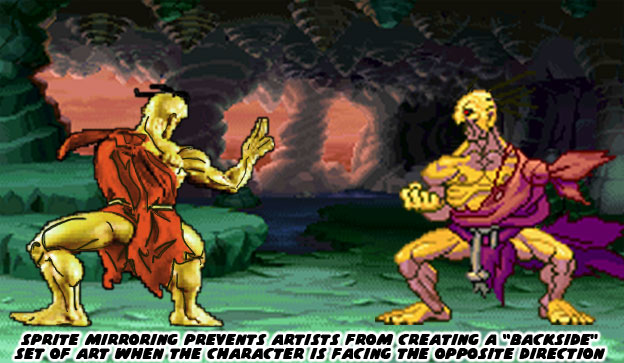
Zhuge was a variation of the One Armed Swordsman, combined with elements from other films. As great as it was having an amputee represented in a fighting game, it also pointed out one glaring issue with sprite-based technology. Namely the issue of sprite mirroring. Animators working on sprite-based titles only had to create character art facing one direction. The programmers would simply mirror or flip the image so that they could face the opposite direction in game. This was perfectly fine for the vast majority of fighting games because players had full use of both arms and legs. When The Killing Blade came out this limitation was obvious. Zhuge would have the wrong arm missing when he faced the opposite direction. It was a minor detail and most audiences didn't seem to mind this.

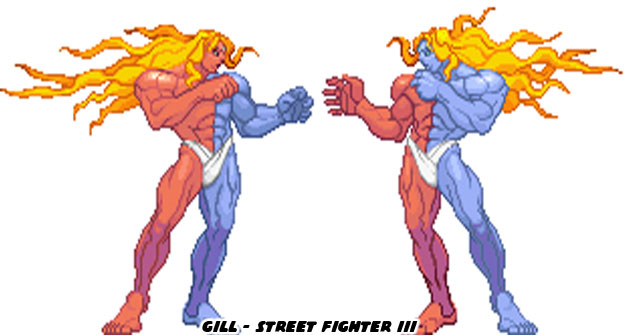
The limitations in technology throughout the '80s, specifically with memory, were responsible for sprite mirroring. Designers had to carefully plan out costumes for their main characters that required few colors and little detail. They tried to limit the details that would give away the mirroring effect, such as patches or words that would end up backwards. When the game came out many Street Fighter II fans noticed that Guile's USA flag tattoo was reversed when he faced the opposite side. Not every studio took the time to review these details, a few got past Capcom but not enough to be noticeable. When sprite-based engines improved in the '90s then the ability to create larger, more colorful and more detailed sprites took over. Capcom showed off their CPS-3 hardware with the games Warzard (Red Earth) and Street Fighter III. To show how much the engine had advanced they decided to create a boss that would take advantage of this new technology. The final boss of Street Fighter III, Gill, was not a mirrored sprite. He had a left and right side, the right side was made of fire and the left made of ice. That little detail remained correct regardless of what side of the screen he was on. His attacks even showed off this detail, he could burn or freeze opponents depending on which arm or leg he struck with.
In the planning stages Gill was not the only character that was supposed to have a left and right side. One of the early concept characters for the "New Generation" was a one-armed fighter. Somebody that could be likened to the one-armed boxer from the Jimmy Wang Yu movies. The artists, specifically Akiman and Kinu Nishimura looked at Helio Gracie, the co-founder of the Gracie Ju-Jitsu system as the root of this new character. The figure would evolve and become Oro. The developers realized that while they could create a left and a right-side version of this fighter that in order to be accurate he would actually have to have his back to the player. This was an aesthetic challenge. The ability to "read" the character was very important to players. The competitive game players would have their rhythm thrown off if they could not see a leading hand or foot, Casual players would not be able to appreciate the design of the character if all they saw was a back. Capcom had to figure out a way to present the "crippled" boxer while also using sprite mirroring. It was decided that Oro would simply tuck his arm behind his back depending on which side he was facing. It made sense and was accepted by audiences. Just remember that for a brief moment the designers at Capcom were considering including an amputee in the lineup. How interesting would that have been?

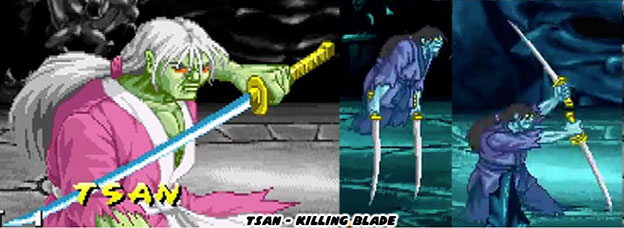
The Taiwanese designers at PGM didn't think twice, they actually put a swordsman with only one arm in their game. More important they had another playable character that had an even greater physical disability. The character Tsan was legless. His long white hair and green skin made him appear like a demon. Many game players assumed that he was indeed some sort of supernatural creature. The game was poaching many of the ideas and themes explored in SNK's Samurai Shodown series, including the mystical elements. Yet instead of feudal-era Japan this game was set in ancient China. Tsan wielded two swords and actually "walked" around on the tip of his blades. He could hurl himself at players, leap across the screen and pretty much moved like a ghost.

As the plot was revealed it turned out that Tsan was a living sword master and not some sort of ghoul. He had overcome his disability and learned various two sword techniques. The fact that he was lighter without his legs allowed him to move much faster than a normal person. When this was combined with his looks it was easy to see why people thought he was some sort of monster. Tsan was actually a positive character. He was such an accomplished fighter that he had actually taken on pupils. When the evil of the Twin Tartars and a corrupt emperor were defeated he decided to go into retirement. The Taiwanese developer had done a great job at creating heroes and villains with different backgrounds. The fact that they included disabled fighters was one of their more unique contributions to the genre.

What are your thought on fighting game characters with different backgrounds and abilities? Who were some of your favorite non-traditional fighters? I'd like to hear about it in the comments. As always if you would like to sponsor me please visit my Patreon page and consider donating each month, even as little as $1 would help make better blogs and even podcasts!
Friday, May 13, 2016
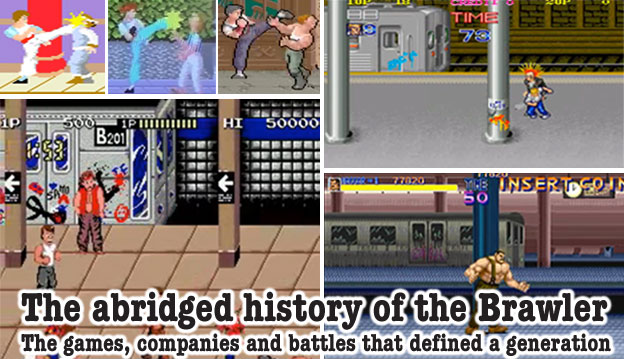
The Abridged History of the Brawler, part 19

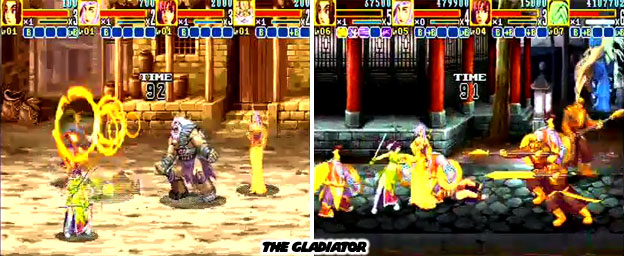
IGS, the indy studio that could, released The Gladiator aka The Road of Sword in 2003. This was the last sprite based brawler in the arcade that was worth a damn The quality of the title was head and shoulders above the half-hearted efforts from other small publishers over the past few years. The character designs, levels and animations were on par with the best from Capcom and Konami during their peak. When new filters, more colors, animations and effects were rendered thanks to the more powerful graphics engine, then Gladiator actually appeared to be even better than brawlers from the big publishers.
Like previous IGS titles it was set in an Eastern mythology world. The archetypes were pulled from classical legends but stylistically updated for modern audiences. The game was very much in the vein of the Capcom Dungeons and Dragons titles. It allowed players to choose which of three paths they would take to reach an evil warlord, but unlike the D&D games there were no shops to purchase upgrades to the characters. The game had a level-up system which affected the speed, strength and special moves of the characters, the more battle points a character earned the more techniques they could perform in game. The title even provided a complex brawling engine. A player could select automatic combos so that all they had to do was press the same attack button over and over to do multiple hits, or advanced players could manually enter the commands and perform a multitude of attacks and special moves that would be the envy of many fighting games. Players that worked well together soon learned that they could activate a special attack simultaneously to get special animations and even more powerful attacks to bring down bosses.

The game was beautiful. The character designs and architecture were not strictly based on one Asian region but reflected a myriad of cultures including Chinese, Mongolian and Korean. IGS was clever with this approach as they could localize the game relatively quickly in most Asian countries. I would rank this game up there with Guardian Heroes and then go a step further without sounding sacrilegious and say that it was more important to the industry because it was so rare. An independent studio working on a brawler with archetypes they were familiar with, in a style that was decidedly Asian but not anime’ plus not based on a license, could defy the expectations of gamers. It could inspire an entirely new wave of great design. The Gladiator never saw a console release, nor any English localization to the best of my knowledge. If not for the imported Chinese arcade games in Downtown LA arcades I would have never seen this title, or a couple other IGS gems. For those reasons the Gladiator deserved to get just a little more exposure and the hopes that word would spread and the title might yet find a home on Xbox Live.
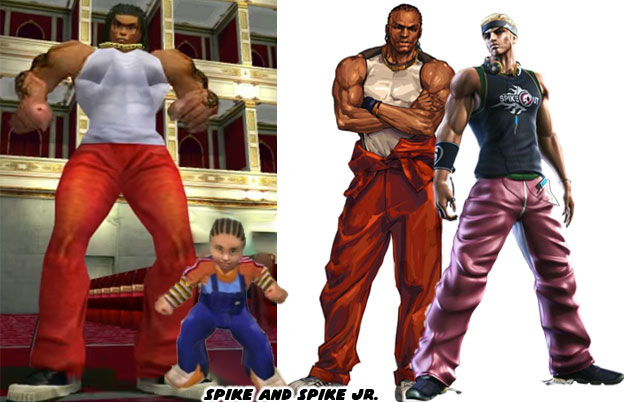
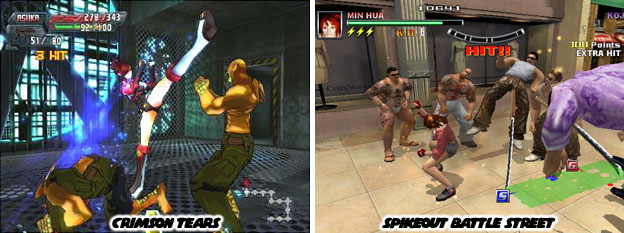
By comparison the big publishers were still pushing for the brawler to be in 3D. Sega released Spikeout Battle Street in 2004 for the original Xbox. The title was actually developed by DIMPS. This was the sequel to the rare arcade brawler and actually set years after the earlier SpikeOut titles. The game revolved around a new gang, made up of the next generation of brawlers, including Spike Jr. It was a good way to honor the legacy of the publisher. Spike Jr. was previously seen in SpikeOut Final Edition. He followed his father around and imitated his moves. As he grew up he gained a style all his own. Players could actually unlock the original team in the game and have father and son fight side-by-side like the good old days. The game was unique because it provided access to the Sega battle network so players could enjoy competing online.

Battle Street was a fun title that rekindled the magic of the original SpikeOut but at the same time could prove to be difficult if you didn’t know the nuances of 3D brawling. Players that tried this game and didn’t have some experience playing games like Virtua Fighter, Fighting Vipers or the earlier SpikeOut would be at a loss The genre was difficult to get into and master once it had moved to 3D Yes Double Dragon and the other classics could be difficult but gamers could pick up techniques and strategies quickly. Once the format had moved to 3D the experience became exponentially more difficult but not exponentially more rewarding. Opponents were harder to defeat and they came in wave after wave, striking at blind spots and eating up the health and patience of gamers. Players were eager to find more rewarding brawling experiences. They looked at the young publisher to try and deliver that.
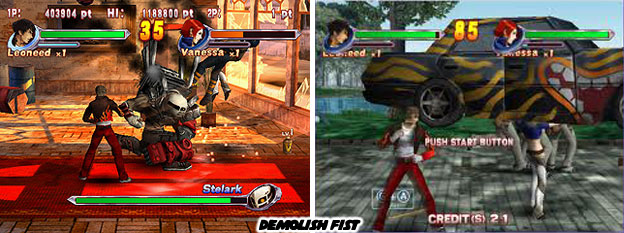
Demolish Fist was developed by Sammy and DIMPS in 2003. Sammy had developed the Atomiswave arcade hardware which featured interchangeable carts, similar to SNK's Neo Geo and IGS's PGM. The hardware was so well done that SNK used it to power the King of Fighters XI, Samurai Showdow VI and Metal Slug 6 games. Their main developer, DIMPS, was made up of former Capcom and reportedly SNK employees. Their flagship fighting game Guilty Gear had caught the attention of the community. Guilty Gear used HD sprites and brilliant 3D backgrounds. With Demolish Fist they were trying to rewrite the 3D brawler. The game featured a quartet of typical Japanese street designs, cool-looking androgynous guys similar to the Bouncer from Squaresoft. The engine was 3D but the camera was a traditional fixed side-scrolling perspective. Just because the camera was fixed it did not mean the characters could only face left or right, players were free to fight in a full 360 degrees.
The designs of the heroes and villains looked very typical and bland. Some thugs with helmets were pulled right from the Hokuto No Ken / Fist of the North Star comics. The animations seemed stiff and sluggish and the fighting mechanics were insipid. Demolish Fist was the complete opposite of the Guilty Gear. The combat was poorly paced and characters could perform feats of superhuman strength, like lifting and throwing motorcycles and cars with ease. It made little sense that they could be harmed by a punch or kick from anything less than a gigantic robot. The one redeeming gameplay element that it did introduce was the "Vertigo" mode. Characters could power up a separate energy bar and then activate the Vertigo attack which sped up the player and moved them automatically between opponents. All a player had to do was press attack quickly while in this mode. The computer would automatically target the nearest opponents and throw punches and kicks between them in rapid succession. The Vertigo mode was not unlike the fighting mechanic given to the Flash in the Justice League Heroes. It looked impressive and made players wish that all 3D brawlers could be as simple to control.

Unfortunately there was little else in Demolish Fist to bring new fans to the genre. The title was still important for the the developers. The experience working with 2D and 3D technology, techniques and gameplay would be merged a year later. The fighting game, the Rumble Fish, released in 2004 used rotoscoped 3D models to build 2D sprites. It kept the pacing from Guilty Gear but updated the techniques used to build sprites based on the models they had created for Demolish Fist. These lessons of combining 2D and 3D elements would find their greatest success a few years later when DIMPS was tapped by Capcom to develop Street Fighter IV. Before Capcom had even conceived Street Fighter IV however they had tried to bring the brawler into 3D. Their first attempt was a well done but little known title.

Crimson Tears, another 2004 title was a sci-fi, cel-shaded, rpg brawler featuring three humanoids, err “mutanoids” named Katie, Amber and Tokio. Since the game was set in the future the grinding system was set inside of giant corporate towers and factories fighting soldiers and robots rather than against monsters inside an evil wizard’s lair.
The game allowed characters to build techniques and master weapons as well as collect items to help get them through levels. Players could trade items and upgrade their stats. Once players had achieved higher levels then the true heart of the combat system could be explored. Players could perform multi-branched combos that allowed them to juggle opponents, or stun them and set up an attack on rivals closing on from the sides or behind. Combos could be as diverse as a player allowed with button presses rather than controller commands. This combo system was easier to get into than even SpikeOut. Other studios would work on comparable fighting mechanics going forward. While Rocksteady studios would like to claim they invented the "freeflow combat system" for its Batman / Arkham games a variation of it was seen in both Demolish Fist and Crimson Tears five years earlier.
Unfortunately Crimson Tears was very repetitive and it took ages for characters to reach their full potential. It is possible that very few players actually took the time to max out their stats and explore the combat engine. That difficulty curve was a missed opportunity for Capcom and developers Spike, of Fire Pro Wrestling fame, to bring the brawler into 3D. The brawler was experiencing growing pains through the new millennium. Having been taken out of the arcade, put on consoles and made into 3D did nothing to improve the experience. The next blog will look at Capcom's attempts to reinvent the experience for a new generation of console players. As always if you enjoyed this blog and would like to sponsor me please visit my Patreon page and consider donating each month, even as little as $1 would help make better blogs and even podcasts!
Friday, May 6, 2016
The Abridged History of the Brawler, part 16

As the 90's were wrapping up the shift between 2D and 3D brawling were still being felt out by developers. The smaller companies were holding onto established formats and technologies. In 1999 IGS released Knights of Valor on their PGM system. As with their previous brawler, Oriental Legend, this one was set in Asian culture. The characters were based on historic figures from ancient dynasties rather than mythological characters.
The stylization, animation and art direction was improved over their previous title. The game looked more like a Capcom CPS-II title than one from an indy studio. As with their previous game the locations were richly themed. The locations used and designs helped break up the monotony of the brawler. Players fought through castles, forests and naval blockades with their band of warriors. It was great to go through battlements and soldiers from a certain period in history rather than through another urban location and a group of thugs.

Not that Gaia Crusaders by Noise Factory suffered from redundancy issues. The game was set in a post-apocalyptic world and had 5 playable characters going through the lands fighting off mutants and criminals alike.
The game started with 5 playable characters but gamers could unlock an extra two to help in the battles. The character designs were fun and all over the place. Players could fight giant lizards, robots, martial artists and even Egyptian pharaohs. The final levels in fact were set mostly in the desert and gave players a taste of an ancient Egyptian brawler that never was. What was interesting by this point in the market was that independent publishers were staying true to the sprite-based roots of the genre. The major publishers were moving wholesale to 3D.
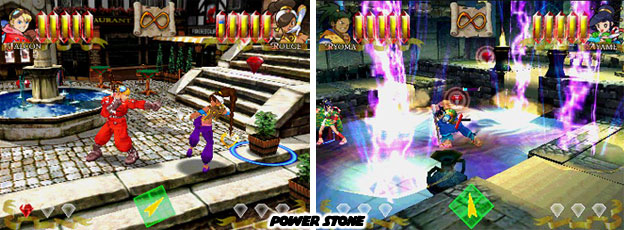
While not technically a brawler, and not technically a fighting game, Power Stone by Capcom combined elements of both genres. Players could choose from a handful of animé styled characters as they pursued a series of magical treasures around the world. Up to 4-players were supported on the interactive battlegrounds. Players could destroy the scenery, grab onto ledges and climb platforms as well as swing from poles and kick opponents away. Players could also use the environment to their advantage, throwing boxes or shooting at each other with found weapons. Each stage had several magical colored diamonds that would appear, if a player located three diamonds then their character would transform into a more powerful alter ego. At which point the fighting would become even more frenetic than before.
The title was an interesting exercise in game design. While the game was built in 3D, the camera was fixed far from the action so that players could see the entire stage all at once. The "blind spot" problems that SpikeOut suffered from and other control issues were addressed by moving to a neutral camera that provided all players with a clear view of the action.

The game was important to the industry as well as players for how it redefined what it meant to play a fighting game or a brawler. There could be a fun and frenetic 3D fighting experience if the level confined the action to a specific area. The sequel would refine this concept and incorporate evolving stages. Rather than have the players run from area to area the camera and environmental triggers forced players to change the location of their fighting. This could be a burning building forcing players to climb onto higher platforms, or a ship getting blown apart by pirates and forcing players to jump to a new ship. All the while players would be expected to continue fighting each other and looking for the elusive Power Stones. By this point the brawler was showing its age and new types of gameplay, like those Capcom provided, were a welcome site. However the innovation was short lived.
In 2000 two new entries into the genre would try to incorporate new designs as well but fail to grab hold of audiences. Age of Heroes was a sequel to a classic brawler named Silkroad. Developed and published by Unico the game was not unlike Knights of Valor in terms of subject matter and setting. The game was similar to other hack-and-slash brawlers in that special attacks worked as magic in the game system.
The game did innovate several things for the brawler. It was a sprite-based title however the sprites were built from CGI data. The characters and levels were computer generated images that were converted to 2-dimensional sprite data. This gave the characters a different look, one which was still familiar to gamers as the technique used to create the Donkey Kong Country and Killer Instinct sprites. While faster to create, animate and adjust, sprites based on CGI models lacked the stylization and fluidity that hand animation provided.

The industry would shift away from using traditional animation techniques, in fact by this time Capcom had closed down their 2D animation department. Regardless of how much nicer hand-drawn sprites appeared the process was slow and expensive. Moving development teams exclusives to 3D was to help save on runaway development costs. Those that had been working with 3D since the earliest days had the advantage in designing new experiences. Sega had been working with polygon-based fighters since 1993, when Slash Out was released it was a true 3D experience with fluid animations and great control, head and shoulders above rival studios. Slash Out was designed as a 3D sword combat game, a SpikeOut in a fantasy world.
The game played very much like SpikeOut, with players having to ward off monsters and warriors instead of yakuza and then being prompted by the computer to move from location to location. There were diverse characters each with their own weapon and an intuitive combo fighting system, not unlike rival Namco's Soul Blade series. The game was not bad but it was not great, despite the change of visuals and locations it played very redundant. For example it lacked the charm and originality of Golden Axe. There were no levels set on the backs of giant creatures, no gnomes to steal magic potions from or even beasts to ride.