A blog about my interests, mainly the history of fighting games. I also talk about animation, comic books, car culture, and art. Co-host of the Pink Monorail Podcast. Contributor to MiceChat, and Jim Hill Media. Former blogger on the old 1UP community site, and Capcom-Unity as well.
Wednesday, April 22, 2026
Bookmark This Page; the abridged history of the brawler
Monday, April 12, 2021
A look at IGS, the Gladiator; Road of Sword. A 1UP classic...
In the past month and a half I had covered over 100 games in my brawling series. I’ve played them all, and thanks to emulators played several recently just to refresh my memories. When I read Game Informer’s list I was saddened and dismayed. One of the greatest brawlers ever was completely dismissed, possibly because it was a rare arcade title unfamiliar to the console-leaning staff.
Gladiator: Road of Sword got many things right. It was a brawler set in classic Dynasty-era China. However it was more refined than IGS’s other popular Knights of Valour series, which was beat-for-beat a better version of Capcom’s Warriors of Fate. Of course it would stand to reason that IGS was producing sprite-based brawlers that looked better than the Capcom classics because they were released almost a decade after Capcom's! Where Gladiator succeeded was in recreating the best elements that Capcom refined, if not introduced into the genre. IGS then improved on the mechanics and took the experience in new directions.
The first thing that most players noticed were the character designs. They were all well done and quite original, in a style that was closer to the Japanese manga aesthetic than the previous designs which were closer to Chinese manhwa comics. They did not poach the Bengus style as they had in Martial Masters or the Nazca style as they did in Demon Front, this was a new style altogether for Gladiator. The heroes were based on some familiar archetypes. The large burly fighter that moved slowly (Ko), the female swordfighter (Chin), the petit but speedy female fighter (Hsiung), the female weaponsmith (Huang), the elderly kung-fu master with strong special strikes (Mr Wu), and of course the young kung-fu master with great all-around attacks (Chu). The six playable characters had distinct styles and each had their own library of regular and special attacks. They did not all fight with bare hands, some of the characters had weapon-based attacks and special moves. Where the game elevated the standard was in the robust fighting system. Players could parry attacks with perfectly timed button and joystick inputs, perform mid air special attacks and even jump up quickly if knocked down to perform a counter attack. These things would normally be reserved for a dedicated fighting game rather than a brawler.
IGS then developed a new mechanic. Each character could collect special scrolls that expanded their techniques. Players could earn five scrolls with a completely different set of moves applied within. Players could then switch between the fighting techniques with the push of a button. Each style worked better for different bosses and enemy types. Best of all the techniques could be switched in the middle of a combo, or even combined with the special attacks of other players to form specially animated super attacks. The game supported 2, 3 or 4 characters performing super attacks, provided that the other characters also had earned the technique scrolls as well. It was as an impressive a fighting system if not more so than that featured in Guardian Heroes. Unlike GH however these characters were not locked onto a 2D playing field.
The game also featured a leveling system which applied to their health bar and increased their striking power. The more multi-hit combos players could perform the faster they could level up. Bosses offered the most points once defeated. It behooved players to use a string of special attacks to keep juggling bosses for a long combo string and then split the points with teammates at the end of the level. The way the combat system worked was not unlike the magic system in Capcom’s Dungeons and Dragons games. Where IGS trumped both Capcom and Treasure was that this title was a pure beat-em-up brawler. All of the attacks and special moves were based on the fighting arts, not on magic. Characters didn’t have to go searching through a level to obtain magic vials or pick up weapons. The characters had all the screen-clearing moves they needed. Yes, there were fireballs and other explosive attacks, but these were representative of the mythical techniques known only to a handful of masters in the history of the martial arts In this case it would be the main characters.
Having opponents that represented a cross archetype of mythological and historical villains also made the game more interesting. Bandits, soldiers, spies and roving guards were only the beginning of the opponents players faced. The game had bloodthirsty warlords, zealous monks, crooked priests and evil kung-fu masters. These were highly stylized representations of the male and female villains that might have turned up in a classic kung-fu movie. All of the villains of course had their own sets of special attacks that looked as impressive as anything players could perform.
The levels were very well done, populated with a diversity of enemy types each representing one of the warring factions. The stages ranged from rural and small towns to open fields, deserts and mountain paths where soldiers defended secret fortifications. The architecture was a cross section of Asian influences, including Chinese, Mongolian and Korean. Villages could have been located in any major city of the classical era, some temples and statues had Buddhist themes while others were non-secular. This diversity made the game more appealing to the countries that IGS was targeting Players could chose which path they wanted to explore in between levels, thus increasing the replay value.
Players that had grown up on fighting games and brawlers could find no better marriage of the two genres. Those that wanted to experience the game as only a brawler could do that by using basic moves over and over and exploiting techniques learned from past games. Those that wanted to experience the game as a fighter could try out the various styles and attacks that could be unlocked through the course of the adventure. The balance between the characters and their moves was very well done. There was no right or wrong way to play Gladiator, but those that dug deeper found out that it was a solid playing experience and quite possibly the pinnacle of the genre. It was the best experience from the studio that also developed the memorable Knights of Valour and Oriental Legend series. Game Informer be damned for leaving it off the list of top 10 brawlers!
Unfortunately this game suffered the same fate as Demon Front. Very few people ever saw it, let alone played it because it was only released in the arcades. Unless you lived in an Asian country, or were lucky enough to live in a city with a strong Asian community then you were out of luck. I was fortunate because the Los Angeles area has Little Tokyo, Chinatown and Korea Town, not to mention the numerous suburbs where arcades and stores with IGS games could be located. Had I never known the experiences of the PGM system then I would have been at a loss as a gamer. With the majority of the titles un-emulated then YouTube would be the only way for gamers to see the good times they missed.
Hopefully the brawling series has given readers a chance to learn a little something about some of the best games ever made. Perhaps players might be willing to explore their town for some rare arcade experiences and share them with the community as well. I had a fun time writing about brawlers over the past few weeks and hope to start enjoying some of them very soon. I am sorry that I have not replied to more of your comments. I do read them all but my 14-hour days limits how much time I get to respond or do anything else. I hope you understand and thank you for being good friends. If you would like to sponsor me please visit my Patreon page and consider donating each month, even as little as $1 would help make better blogs and even podcasts!
Wednesday, February 28, 2018
The Giant Monster Series, part 11...


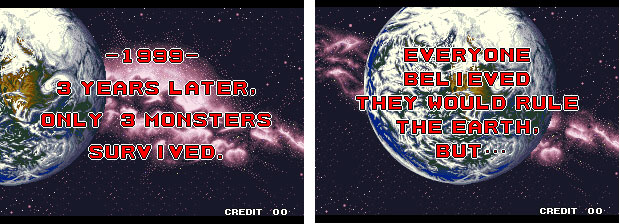
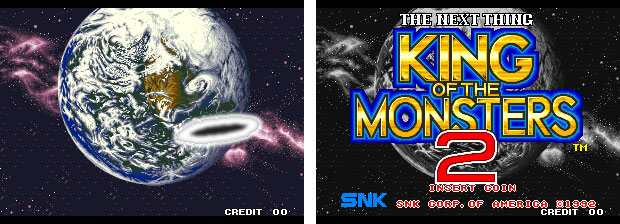
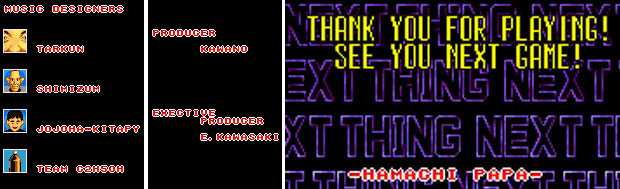
It seemed that a UFO landed on Earth and introduced a new challenge to the monsters. This creature was dubbed the Next Thing.

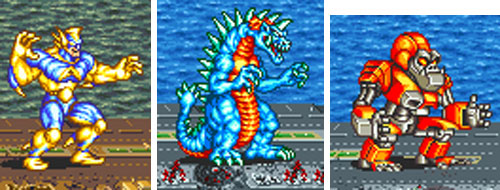
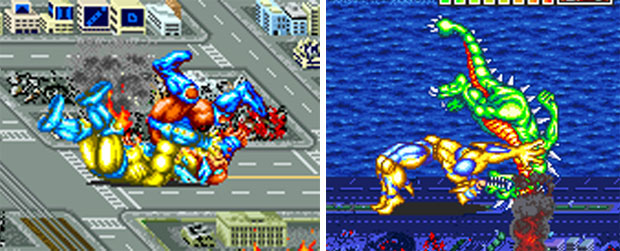
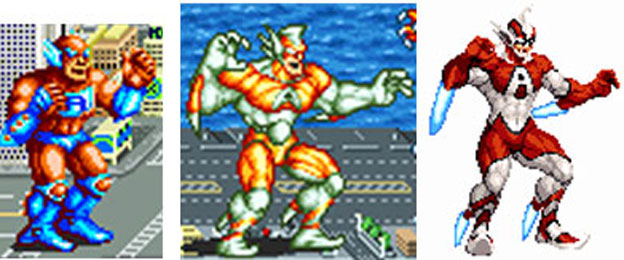
I was a bit surprised to find that only three of the monsters survived the original battle. Technically only two characters found their way back; Astro Guy and Geon. Both of them looked more evolved, more distinct than the last time players saw them. Cyber Woo replaced Woo as a playable character. He was a sort of Mecha Kong to King Kong. I was bummed because my favorite character, Rocky, didn't make the cut.

The control changed slightly from the original as well. Players could still punch, kick and jump. Some of the grappling moves were preserved as well.

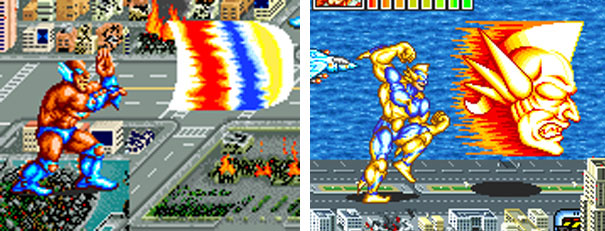
The characters could also get their special attacks powered up two levels, also like in the original. The difference was that players didn't need to collect 20 Power orbs, instead they only needed to collect two. Each power upgrade gave a special attack more range and power. The downside was that players could lose the power upgrades in the sequel, players never could lose them in the original.

The biggest change to the sequel was in the gameplay. Instead of a wrestling game SNK created a brawler for the giant monsters. Imagine playing Double Dragon or Final Fight with giant creatures! I was a fan of brawlers and even chronicled many of the best last year. I had even mentioned how SNK came up big for the brawler but had left King of the Monsters 2 off of the list. I knew that I would be writing about giant monsters eventually so I left it out on purpose.
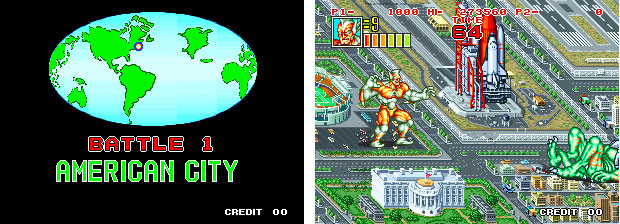
The original KOTM was set entirely in Japan. The sequel took place in cities all around the world. In keeping with the theme of the original, actual landmarks were incorporated into the levels. Instead of being hundreds of miles apart all of the landmarks appeared in one relatively small area. For example in the "American City" the White House, a football stadium and space shuttle were merely blocks from each other. The amount of detail crammed into the tiny cities was mind boggling, even more so than the amount of detail that went into the original game.

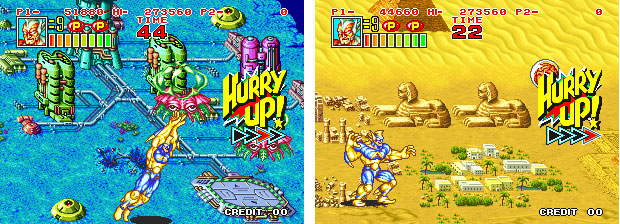
The locations were not all limited to actual cities. The monsters visited a sea base at the bottom of the ocean as well as the inside of an active volcano which turned out to be the crater left behind by the UFO in the opening of the game. The design in the levels were heavily influenced by science fiction. Enemy monsters were very cartoonish, to the point of being silly with giant lips and googly eyes. The military weapons were highly stylized and looked right out of an anime series, had Gerry Anderson's Thunderbirds influence not also been present.

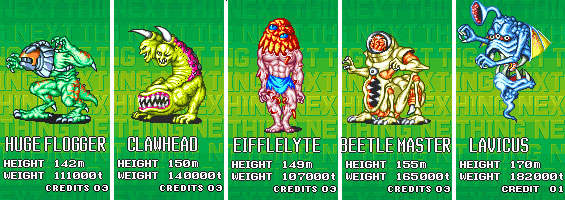
At the end of each level the players fought a boss monster. The monster was generally much larger than the main characters. The creatures in the original KOTM looked very much like pre-existing characters. The villains in the new game had unique designs. Each had their own sets of strikes, grapples and special attacks.

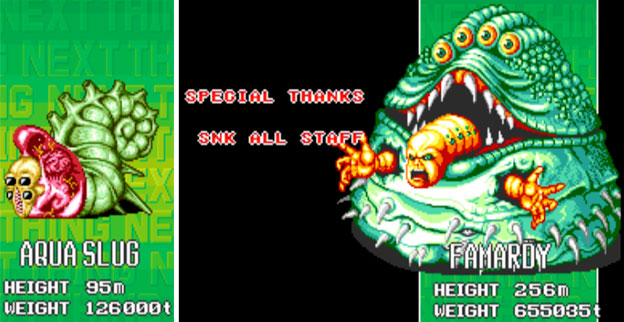
Players travelled through six locations while on the hunt for the master of all these new creatures. The final stage actually had players fight all of the bosses in succession before the final monster revealed himself. The enormous Famardy appeared, usually after the player had exhausted several continues. Famardy could flatten the players with ease. The creature was a four eyed reptilian-like mountain that was mostly mouth with a long tongue that had a face at the end of it. The visual was pretty gross. The battle against the creature was one of the most lopsided encounters ever created. There was simply no way for any single or two-players to defeat the creature on one credit.

In fact, the entire game fell into the same traps that turned players off of Rampage and Rampage World Tour. The game was designed to separate the player from their money as fast as possible. Players had no time to get settled into the world that SNK had created. There was no broadcaster announcing the destruction, there was no clever soundtrack supporting the action. If a player stood still for longer than a few seconds an alert would appear prompting gamers to "Hurry Up." The warning to continue pushing forward was very loud and annoying. The game would have players rush through the highly detailed cities the team had created. Players were prompted past the military vehicles shooting missiles at them and past the landmarks just to get to an unbalanced boss battle. If they ran out of time then their monster would get killed by a bolt of lightning and it would be game over.
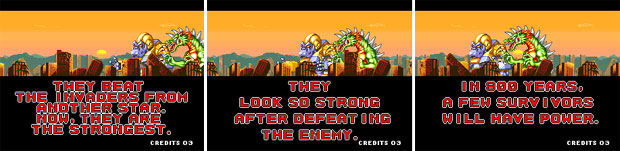
Each level and boss fight was designed to result in the player losing their life and credits as fast as possible. In the original game I could figure out a way to beat it on one quarter, it was tough but balanced. The new one had zero balance. Players lost their energy very quickly and every boss had a special attack that made them invulnerable for a moment. The fact that the final level consisted of players having to battle every boss all over again was proof of the cheapness of the design. The end of the game did not even offer a twist or a satisfactory resolution. The players were simply reminded of how powerful the monsters were and how in 800 years a few survivors would have power. Whether this meant that the monsters would be the last things left in 800 years or whether they were walking through the remains of the Earth 800 years from the end of the Famardy encounter was ambiguous.

As the end credits played I felt disappointed by the new direction of the series. All of the heart had been taken out of the game. The new designs were fun and the amount of detail placed on the characters and enemies should be applauded. As far as games went it was one of the most unbalanced brawlers ever made.

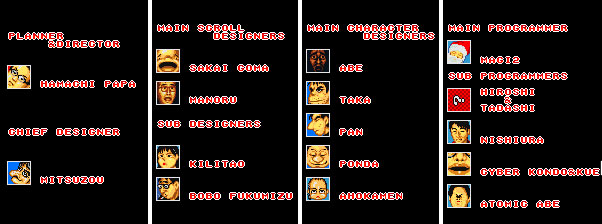
Hamachi Papa and company had let me down and worst yet, had failed the giant monster genre less than a year after sending it soaring.

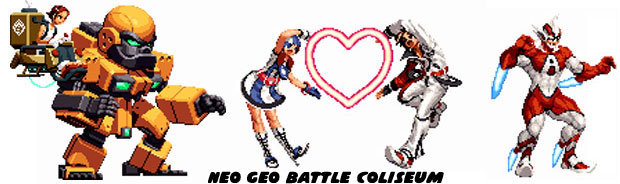
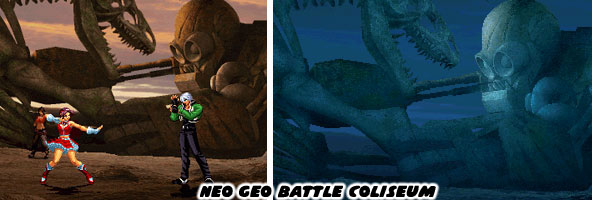
SNK never forgot the contribution of the KOTM staff. When they created Neo Geo Battle Coliseum the publisher wanted to include at least one cameo from every major game the company had published over the past two decades. The title from 2005 managed to include two characters from the KOTM series in the game.

A small remote-control version of Cyber Woo was playable. The mechanical ape had an assortment of laser, machine gun and missile attacks at his disposal. He was the only character in the game that was built from a rotoscoped 3D model. The game also introduced two new characters Yuki and Ai. The duo could combine forces in a special attack known as the Double Assault. When they did they became a small version of Astro Guy for a limited amount of time.

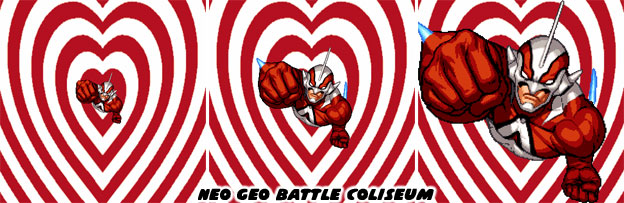
Cyber Woo was good redesign but the makeover that Astro Guy got was amazing. The character burst into the game with a transformation just like Ultraman.

Astro Guy had attacks similar to those featured in KOTM 2, he was an arrogant character and enjoyed posing during his super attacks. it turned out that SNK was not finished giving a nod to their giant monster entry. A level in the game was included featuring the skeleton of Geon grappling with the rusted remains of the actual Cyber Woo. The enormous characters in the background were awe inspiring.

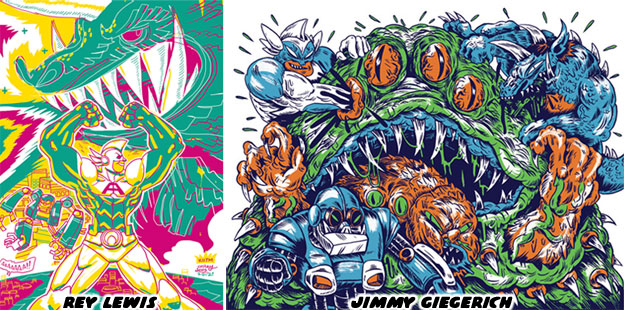
It had been 13 years since King of the Monsters 2 was released but SNK did not forget. Knowing that they cared enough about the game to give it a nod for Battle Coliseum made me appreciate the publisher even more. As it turned out fans the world over never forgot about the series either. Comic
book artist Corey "Rey" Lewis and illustrator Jimmy Giegerich each created a print in homage to the King of the Monsters 2 recently. The developer was not celebrating the 20th anniversary of the series, the fans were.

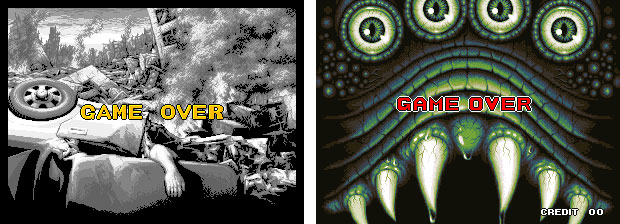
I did not enjoy King of the Monster 2 nearly as much as the original but I will concede that the game did have some fun moments. Both titles were important in the history of giant monster genre. They showed how well the creatures could work in other genres. Before SNK no developer would have attempted to make a wrestling game or a brawler using daikaiju. SNK demonstrated what elements from cinema could be adapted to help bring players into the universe. The orchestrated music and the panicked announcer were prime examples. In the end the genre held onto the classic traditions. Here were beings capable of tremendous destruction, on a scale of which no human could ever hope to survive. The final screen on both games reminded players of that cold truth.

Both King of the Monsters had actually been ported on multiple consoles yet many did not
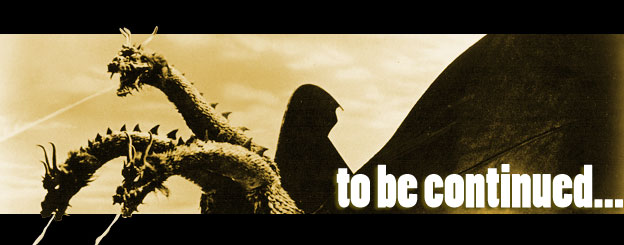
remember them. The reason why so few people could recall the series in comparison to Rampage was quite simple. The games were released around the time that Street Fighter II had debuted in arcades. Many fun titles were overlooked during 1991-1992 because of the Capcom juggernaut. There was only one monster series that could bring the public back to the genre but would it be enough to draw in new players? We shall explore this game in the next blog.

Wednesday, March 30, 2016
The Abridged History of the Brawler, a pre-rumble...

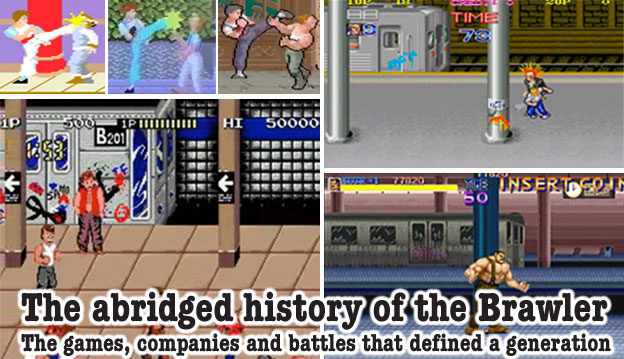
Over the next few weeks I'm going to be looking at one of my favorite all-time genres, the Brawler. This was originally a series that I ran on 1UP but I decided to revisit it and update a few entries. Now note that I call the genre the "Brawler." Other people and game sites call the genre "Beat-em Ups." But those people often call fighting games beat-em ups as well. I would contend that the fighting game and the brawler are actually two completely different genres. A fighting game is traditionally a one-vs-one game. Whether it's two martial arts masters, or a robot versus a demon or two dinosaurs going head-to-head, there is always one player versus another (sometimes a PC opponent instead). That is by my definition a fighting game. There are usually a few things that most fighting games have in common. There is a scoring system, a way to track health and often a time clock or ring out rule as well. Again the fight is usually one on one. There is the rare exception where the original Fatal Fury actually allowed two versus one battles and it would still be considered a fighting game. For the most part however a fighting game is one vs one.


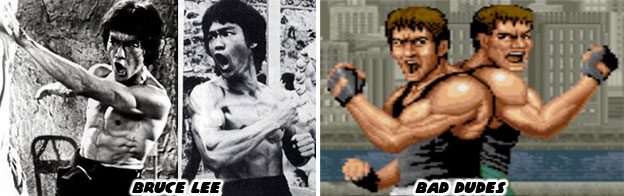
The Brawler, just like every other genre, came from somewhere. The early generation of arcade hits were inspired, if not outright stolen, from comics and movies. These games would then become adapted to the home consoles as a sort of faded copy of a familiar idea. Star Wars, Star Trek, various anime shows, manga and comic books all had a hand in shaping the history of game designs. The developers on the first batch of action titles often looked at action movies for inspiration. There was a lot of crossover to influences for the early action games, fighting games and brawlers. The action movie star was often a kung-fu expert. After all if you are going to have a story where one person can take out an army of opponents then they better know how to fight. There was no bigger star on the planet than Bruce Lee, at least this was the case back in the '70s. The young developers in Japan and the United States would have been greatly influenced by the man and his movies while growing up. When they started working on the first wave of action arcade games, almost a decade later, then there was usually one person they all looked to. It didn't matter how the artists colored or animated the early sprite heroes, there was something very familiar about the way they appeared...

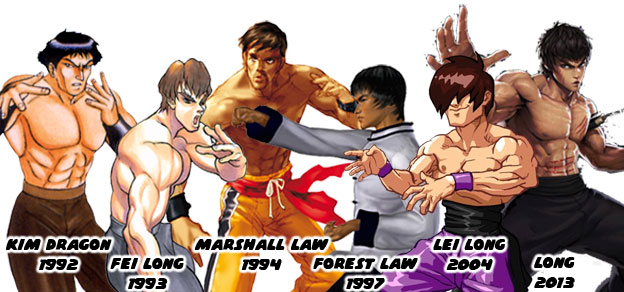
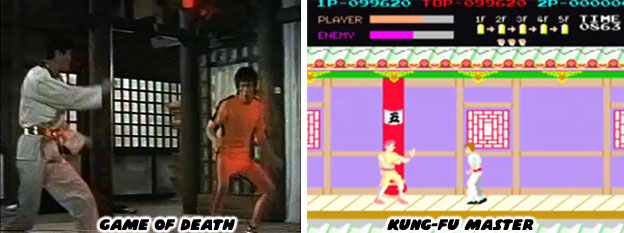
The presence of Lee actually worked in favor of these early games. We had an actor and martial artist that dressed in very clean and easy to read costumes in his films. The shirtless hero with dark pants would pop up on various character designs. When the early arcade and console systems had limited memory to work with then simple two-color costumes were perfect designs. Of course Lee's signature yellow jumpsuit with black stripe from the film the Game of Death would become iconic as well. The costumes that Lee wore, his haircut, stance and moves would influence character designs for the next few generations. From some of the earliest 2D fighting game characters to some of the first 3D fighting game characters, even the Flash-based fighting games and hybrid 2.5D fighters all had a Bruce Lee clone. Some of these were subtle nods to the actor but the majority stole his likeness.

Lee moved with a quickness that had never been seen before. He punched and kicked so fast that it was a blur on screen. These would be elements that would become adapted in the early brawlers. Resources were very limited on the arcade machines at the time, especially memory. Perhaps a character had two frames of animation between a punch and kick. This would have seemed impossible on a bulky character but a skinny fighter like Lee actually did strike that fast. Even the trademark yell of Lee, his facial quirks and mannerisms would be reproduced on many characters in fighting games and brawlers. The godfather of the brawler, the one that I believe started it all was Kung-Fu Master by Irem. It was released in 1984, a pivotal year for arcade games. The title was a subtle nod to Lee's final film, the Game of Death. Players had to climb a tower filled with various fighters, and it got progressively more difficult the higher you went. The main character "Thomas" was searching for his girlfriend "Sylvia." Of course the names were changed from the original title, Spartan X. What didn't need translating was the lighting-quick strikes and familiar yell of the hero.

The US didn't really have a connection to martial arts cinema in the '60s or '70s. The action movies that the USA enjoyed right through the '80s had a different type of violence, one which was rooted on guns and revenge. The anti-hero was a popular subject in many of the movies. As it turned out the settings were a character all to themselves. The fictional version of New York in the John Carpenter film Escape from New York lit the imagination of the Japanese studios. Cities in western-themed games had to be big, dirty and overcrowded. The walls had to be covered in graffiti and colorful gangs patrolled every corner. Japanese studios began creating impressions of these cities, based on cult films like Death Wish and Streets of Fire for the earliest and often most successful brawling franchises. Double Dragon and Final Fight were two of the biggest sellers and they introduced audiences to a modern "western" metropolis overrun with gangs.

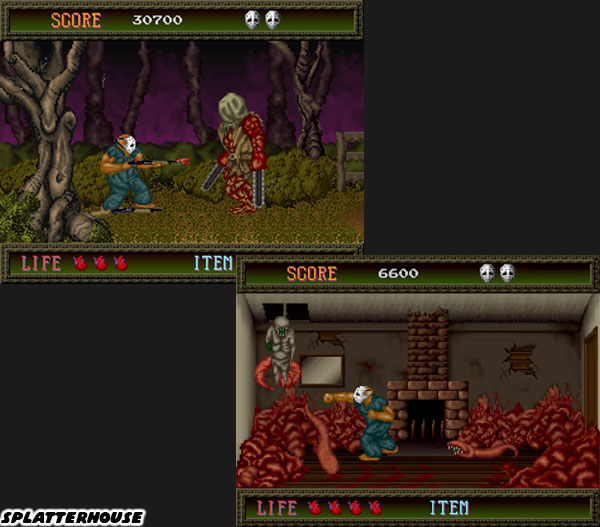
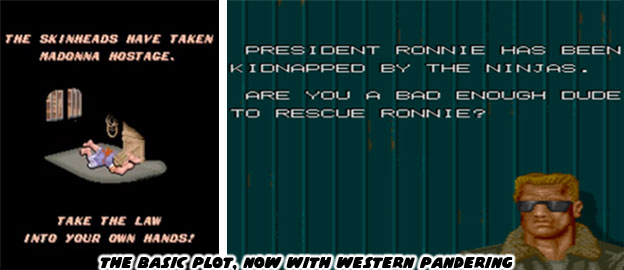
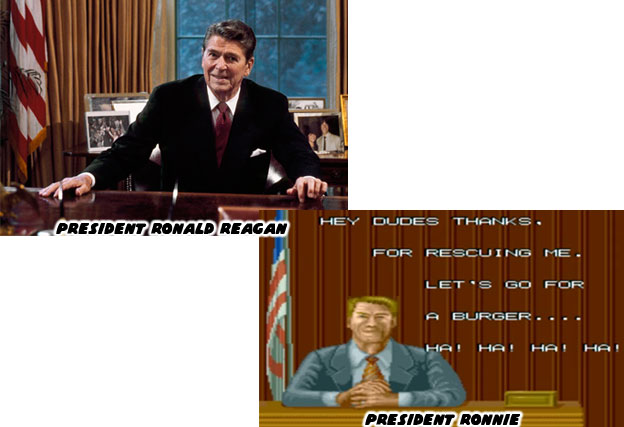
The setup for most of the games was simple. A person of interest was usually kidnapped, often a girlfriend, a finacee and at least in one case it was the President of the United States. Seeing as how the Japanese were shamelessly pandering to Western audiences they would drop names like pop singer Madonna and Ronnie, the nickname of President Ronald Reagan, into their games. If the brawler could be compared to a film genre then it would be the cult action film. Not quite a summer blockbuster yet not lowbrow enough to be a "grindhouse" picture (with the exception of Splatterhouse that is). The Brawler was nothing short of mindless action, it was like the perfect summer movie for eating popcorn, drinking soda and turning off your brain for an hour. After all, the payoff after saving President Ronnie was getting hamburgers. It was hardly Oscar-caliber material the Japanese were interpreting.

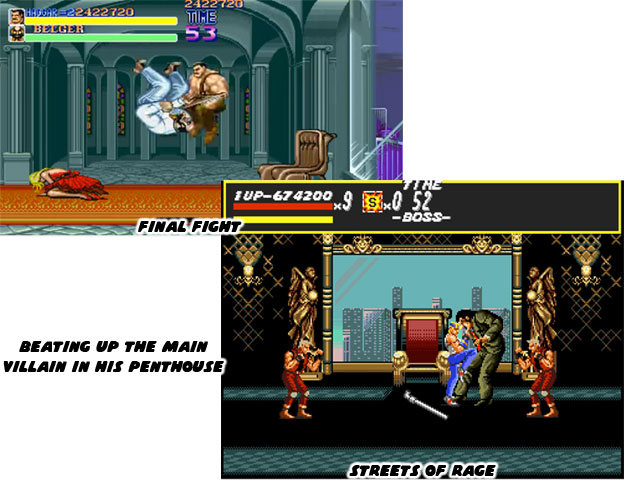
Of course for most of these movies audiences would wonder why the cops didn't stop the bad guys. There was usually two reasons for this. The cops were either too afraid of the gangs or they were being paid off not to do their job. The gangs often had leaders and these were not the typical thug. They were instead rich crime bosses living in the lap of luxury. Sometimes they were politicians or even heads of corporations. Players figuratively and literally fought their way to the top in many of the games. As dirty subways gave way to abandoned amusement parks and crowded alleyways the player would find themselves fighting in nicer and nicer neighborhoods. Eventually they would end up in the suite or penthouse of a millionaire. It turned out that the person that was pulling the strings was often the richest person in the city. They could have had it all but instead messed with the wrong people. The punishment for kidnapping or putting a city at war was often a long drop for the bad guy.

There were many other plots to explore, many more heroes to become and many more villains to throw through windows. The brawler was and continues to be a fun genre. I hope there are a few games mentioned in this series that rekindles some memories. Perhaps I'll highlight a few that you may not have played and give you a reason to track them down. Whatever the case I hope you stick around and as always share a comment. As always if you enjoyed this blog and would like to sponsor me please visit my Patreon page and consider donating each month, even as little as $1 would help make better blogs and even podcasts!