Showing posts with label gladiator. Show all posts

Friday, December 16, 2022

The Street Fighter 6 pre-order trailer, a look at Marisa, the modern gladiator

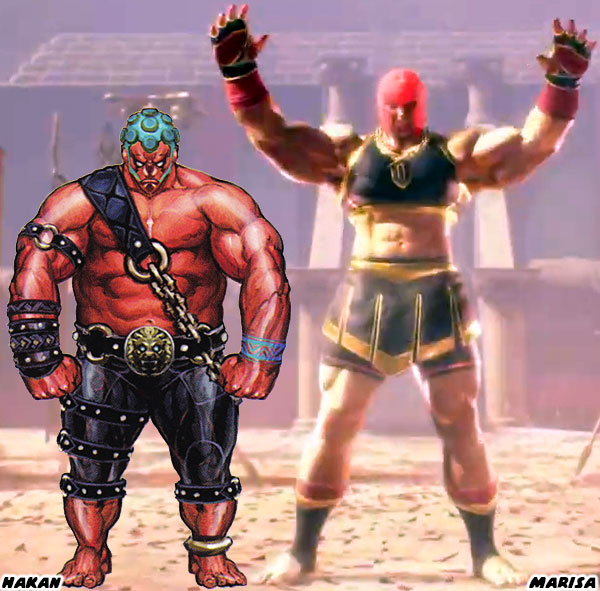
One of the things that I despised in SFIV, and SFV were over-the-top characters, moves, and animations. They often broke the fourth wall, and turned the fighting game into a series of sight gags. The way that Abel would spin opponents over his head with ease was one example. But also the way Rufus would bounce, or F.A.N.G. would flap his arms, and fly all over the stage. These silly animations took me out of the game. In the previous blog I mentioned that Marisa was a second take on one of the cringiest characters in the franchise. I honestly believe that she was a way to make up for Hakan, the Turkish oil wrestler. Let’s examine the roots of both characters.

Yağlı güreş is an actual form of wrestling from Turkey. It’s among one of the oldest forms of wrestling in the world, and certainly deserves some respect. In Street Fighter IV any appreciation of the art was thrown out the door. Making a joke character out of Hakan was more than likely a call from Producer Yoshinori Ono. His sense of humor colored both SFIV, and SFV. I think it was unnecessary what the studio did with Hakan. If you have a moment I want you to review the idiotic special moves given to the character. Hakan would slather himself in oil, and slide across the screen. He would squeeze opponents until they slipped out of his arms, or roll with them on the ground with the frenetic energy of a Beyblade. Remember the amount of detail that I mentioned went into the judo moves of Manon in the previous blog? Well, none of that went into the moves of Hakan. Instead we have a beet-red character with a strange haircut that continuously breaks the fourth wall with his attacks. I believe that the SF6 team wanted to show more respect to the Mediterranean this time around. While at the same time revisiting many of the same elements that worked for Hakan.

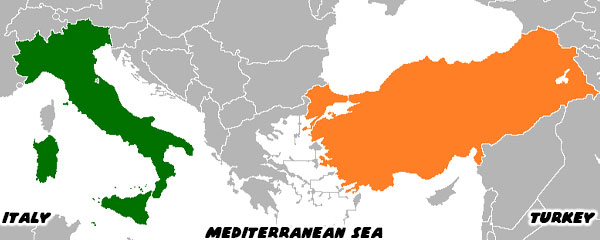
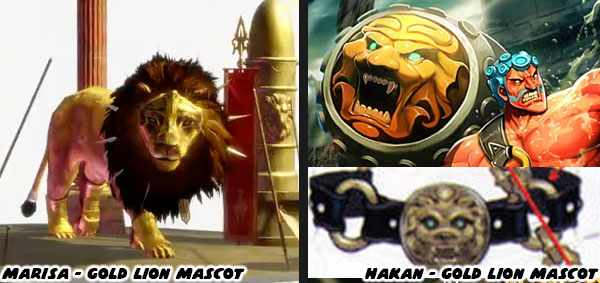
The obvious connection between the two is the area of the world that they inhabit. Turkey, Greece, and Italy share a long history in the grappling arts, we are talking about thousands of years of cross-pollination with the wrestling arts of the East, and West. Their respective cultures helped plant the seeds of modern wrestling, boxing, and even MMA. From a storytelling perspective their body types have to show what type of fighter they are. Both Hakan, and Marisa are very muscular. They do not wear boxing gloves, or boots. So we can tell they are likely very powerful grapplers, with some striking thrown into the mix. Both also have odd hair styles, which are reminiscent of ancient warrior helmets. They also each share a golden lion motif in their design. There is a lion in the decorations of Marisa’s stage, as an actual lion parades in the background while wearing a golden mask. Hakan wore a gold lion on his belt, and his brand of oil featured a lion as well. The ways that each character was presented demonstrated the new direction that the franchise was taking.

Everything related to SF6 shown so far was a love-letter to the series, and the genre as a whole. The developers were not trying to make gag characters, or special attacks this time around. They respected the martial arts that they were trying to capture. At no point were any of the SF6 cast revealed to be joke characters, with silly styles. Yes they could be carefree like Dee Jay, energetic like Kimberly, or flamboyant like Juri, but they were all serious about their craft. Audiences can tell by looking at Marisa that she is heavy hitter. However she is also a multidimensional character whose background shapes her appearance. According to the official bio she is “An up-and-coming jewelry designer from Italy who claims ancestry to ancient Greek warriors. As a child, she was inspired by a vision of the Colosseum in its prime. Today, she seeks glory with a smile—and an eye for beauty.“

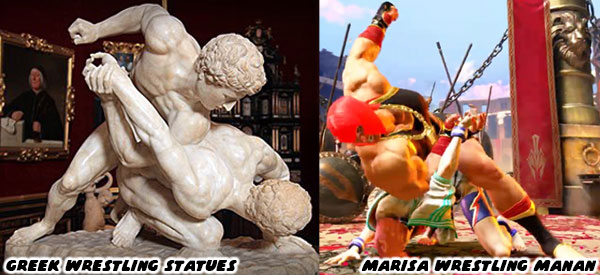
In my first take on the character I called Marisa a gladiator. All of the superficial elements placed on her told a story. The cut of her hair, the plates on her shorts, even the sword jewelry all spoke of Ancient Rome. Seeing her in action in the SF6 trailer shows that the team wanted to make her an awe-inspiring fighter. Several of her poses are taken right out of the history books. Her step over grab into a punch was immortalized in Greek statues that highlighted the roots of Greco-Roman wrestling. These were not the only things that we could make out in the pre-order trailer. Marisa is very tall, not as tall as Zangief, but still a titan in build. She’s actually shown picking up an adult African male lion in the footage. These lions weigh over 400 lbs. and are nowhere near as docile as a house cat.

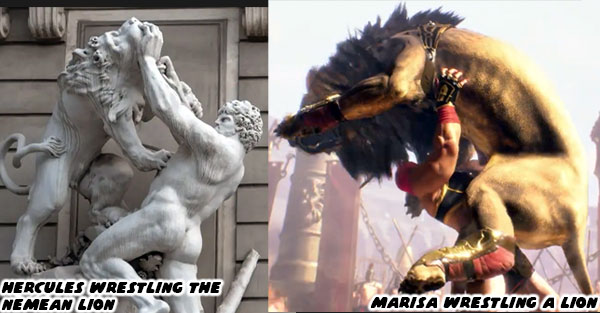
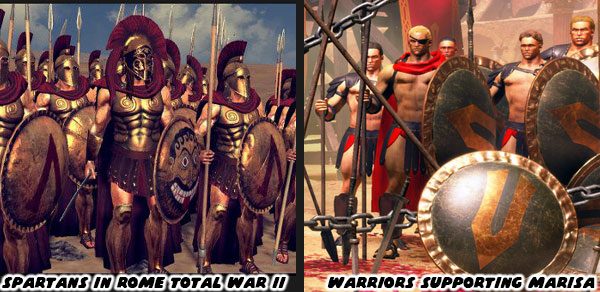
The mythological figure Hercules, father of pankration the original form of MMA, was said to have wrestled the Nemean Lion, the Erymanthean Boar, and the Cretan Bull during his famous labors. These wild animals were bigger, more ferocious, and stronger than their regular counterparts. Marisa is a callback to the Greek hero, and moreover is making the lion motif part of her identity. It makes more sense in her context than as a mascot on a bottle of olive oil, wouldn’t you agree? In her stage we see other warriors, possibly actors, wearing costumes reminiscent of ancient soldiers. The blade logo featured on their shields, as well as the jewelry piece hanging around the neck of Marisa is reminiscent of the Lambda symbol found on some Spartan shields.

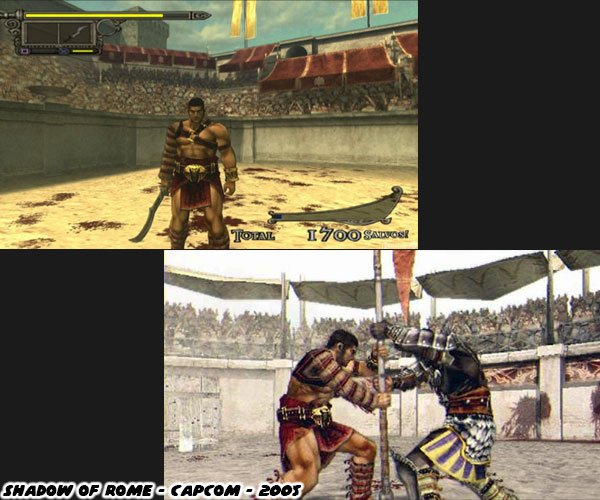
I think that part of the reason that the SF6 team went so deep in the creation, and details of Marisa was because of an earlier Capcom game. Shadow of Rome was a title from 2005, that believe it or not was produced by Yoshinori Ono. It centered around gladiatorial combat in the ancient Roman era. It was violent, barbaric, and played very much like a spin-off of Monster Hunter. Both of which I assume shared the same engine. The sights, and sounds of the old world were faithfully captured. The fashion, armor, weapons, and combat of the title were fairly accurate. There was a lot of creative license with many of the encounters, but as a whole it did a good job of turning the brutality of gladiator battles into a fun game. It was forgotten, partly because the original God of War did a better job at recreating the mythical era that same year.

Marisa is a very interesting character that seems to maintain the same level of care that the other new faces in SF6 have. She doesn’t seem to be a joke character, nor does she have any silly moves like Hakan. A bit of planning, and some respect for the subject matter is what it takes to make a good character design, into a great one. These are the things that I believe Mr. Ono was lacking in SFIV, and SFV. As of this moment I will probably main Zangief in the game, but as I did with Alex in Street Fighter III, I will be looking at Marisa to act as my secondary heavy hitter. What do you think of the character reveal? What do you think of the new characters revealed so far? Who are you eager to see, and what are you eager to try in the game? Let me know in the comments section please. As always if you would like to sponsor me please visit my Patreon page and consider donating each month, even as little as $1 would help make better blogs and even podcasts!
follow the Street Writer on Patreon!

Tuesday, June 7, 2022

A look at Marisa, the Street Fighter 6 gladiator...

Today we’re going to look at Marisa, the new heavy hitter featured in Street Fighter 6. Marisa was leaked along with the rest of the lineup when only Ryu, Luke, Jaimie, and Chun-Li had been confirmed. So what do we know about her, and her fighting style? Nothing yet. At least nothing officially. But what can we infer from her design? Let’s start with the most obvious thing, her size. Marisa is huge. She’s easily the biggest female in a SF game, and possibly the tallest female character in the SF universe. I have to double-check, but I’m pretty sure of it. The easiest explanation for why a fighter like her appears goes to SF6 Designer: Yusuke Hashimoto. He Produced Bayonetta, and Directed Bayonetta 2. The leggy witch is actually eight feet tall, not as tall as Lady Dimitrescu from Resident Evil, but it is fair to say that Capcom has a thing for tall ladies. Not that I’m complaining, let alone the community.

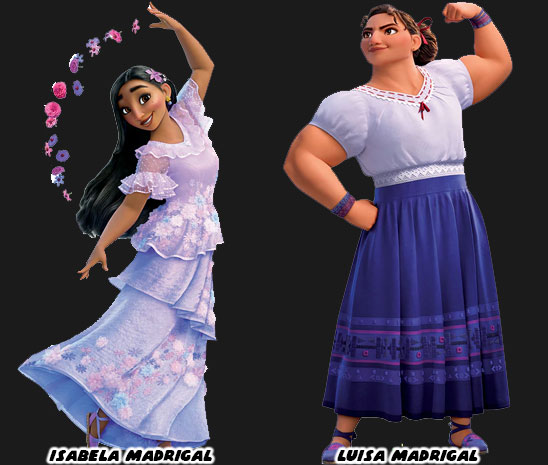
Women of different sizes, and body types had been missing in pop culture. Little by little big women, strong women, and fat women started showing up. More important, they began being accepted. The gigantic Zarya as a tank character in the 2016 game Overwatch was a milestone. More recently Luisa Madrigal in the 2021 film Encanto gave Disney a wake up call. Studio executives were sure that her sister Isabela, who looked like a traditional Disney princess, would be the most popular character in the film. So they made sure there were dolls, and other merchandise of her available when the movie came out. Instead the big, and strong Luisa was the show-stealer. Both girls, and boys clamored for products featuring her. The company scrambled to put together soft goods, and get toys on the shelf due to the demand. Women have typically been presented as very curvy, and feminine in the SF series. Based on just her build Marisa is a welcome addition to the SF6 cast. To weigh all opinions let’s bring up a point. Pro E-sports player Ricki Sophie Ortiz wondered if Marisa was possibly a trans character. It would be cool if she were, but we will find out in time. Whether Marisa is, or isn’t, the question demonstrated how far society had progressed since the series had started over 35 years ago.

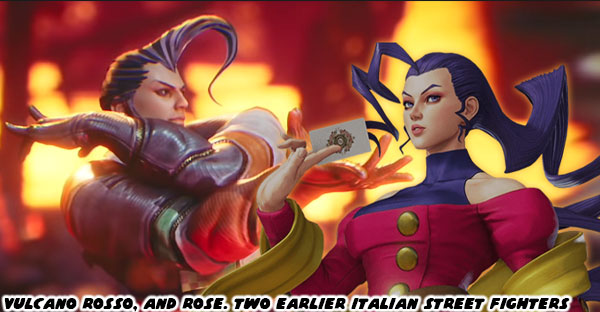
Let’s talk about where Marisa comes from so we can figure out who she is as a character. She represents Italy in the newest tournament. Italy had been represented before in the SF universe in both 2D, and 3D games. Rose debuted in Street Fighter Zero / Alpha in 1995. She did not look anything like a traditional martial arts master. Her appearance mirrored that of Vega / Dictator. She had psychic powers, wore a dress, with heels, and fought with a scarf. It was inferred that she was Romani fortune teller (try not to call her a gypsy because that word is actually a slur). This combination of elements worked in her favor, and she became popular with the fans. Her use of mystical powers brought the supernatural into the canon of SF. Vulcano Rosso was an entirely different type of fighter. His outfit seemed to be zipped together pieces of different colored leathers. Also making him look anything but a traditional martial arts master. He debuted in Street Fighter EX2+ in 1998. The flamboyant secret agent used quick strikes, and fire-based special attacks that he named after Roman landmarks. Marisa broke the trend, and looks like an MMA champion that could destroy someone in the octagon, as well as the street. To figure out her fighting style we should look at the clues that Capcom has given us.

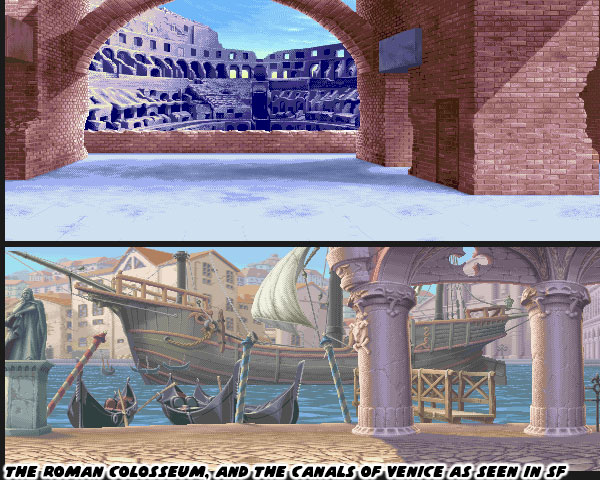
The studio has created some beautiful stages set in Italy. The Roman Colosseum featured in SFZ was based on the location of the legendary fight between Bruce Lee, and Chuck Norris in the film The Way of the Dragon. The canals of Venice, and the ship the Neptune are the backdrop of Rose’s memorable stages. With all of this history, and attention to detail I think that the team at Capcom went deep into the creation of Marisa. When I first saw her I thought of two things; ancient Italian football, and the roots of MMA. Let me explain.

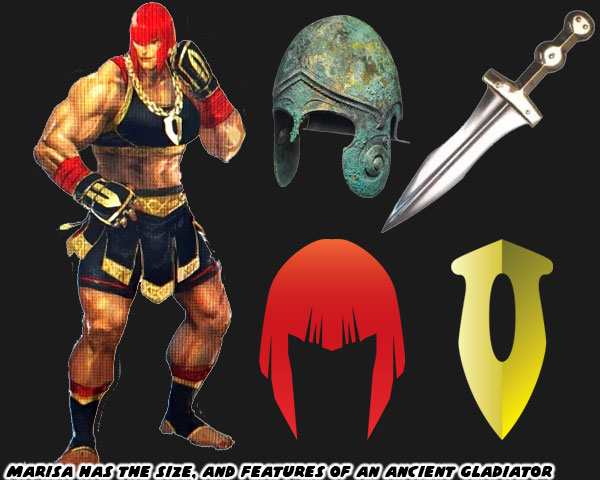
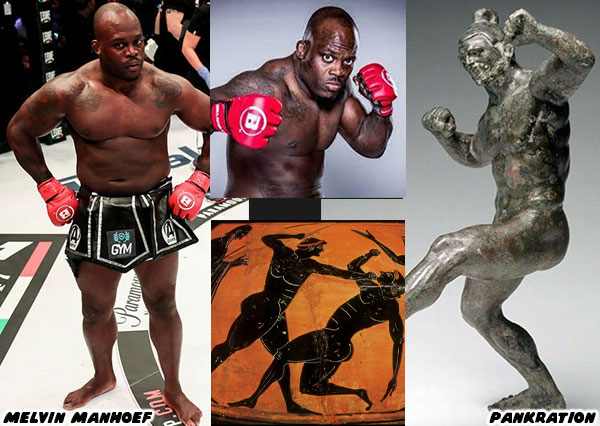
Marisa’s costume, and even her haircut is very distinct. Over her trunks she is wearing a tabara, or armored skirt. This fashion item was worn by soldiers for thousands of years. From ancient Roman times, all the way up to Middle Ages there was a version of the skirt all throughout Europe. You can even see MMA fighters like Melvin Manhoef, and boxers wearing a version of this skirt. The shape of her hair is also distinct. Look at the way it falls flat over her ear, and around her eyes. Most female boxers, and MMA fighters wear thier hair in tight braids. This way it avoids getting in their eyes, or pulled inadvertinly in a grapple. Marisa's hair is shaped more like a Chalcidian Helmet. Then there are the markings on her gloves. They look like a dagger, the same shape that she wears around her neck in a gold chain. This could be seen as a dagger carried by a the Legionary or professional heavy infantryman. Unlike Guile, or Cammy, she doesn't appear to be dressed as a soldier. With the armor, and dagger motifs applied to her I would say she was designed after an ancient Roman gladiator.

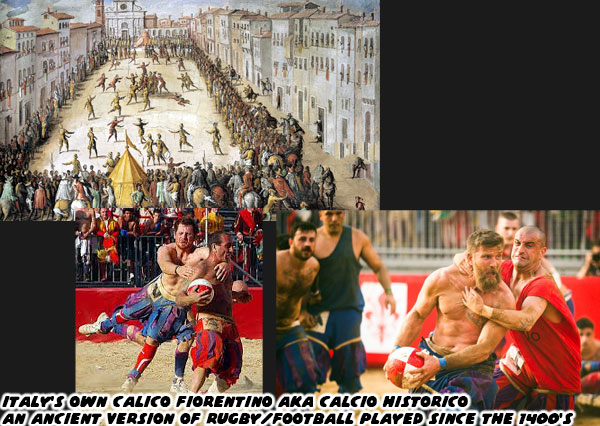
Even though she is wearing gloves, the fact that she is not wearing boots suggests that she is not representing professional boxing. Also based on her other visual clues I'm going to say she is not practicing modern MMA. I am going to say that Marisa studies pankration, an ancient form of boxing, and wrestling that was essentially the mixed martial arts of the first Olympics. According to legend pankration was created by Heracles, and Thesius in ancient times. Marisa may be representing the oldest form of western combat in a series dominated by Eastern traditions. As an aside, given her size, and build Marisa was probably familiar with Calico Fiorentino. This was an ancient version of rugby / football that is still played today. I coud imagine her plowing through guys in her youth, and giving her the confidence that she could take on the strongest fighters regardless of gender. This in turn lead to her identifying as the modern gladiator.

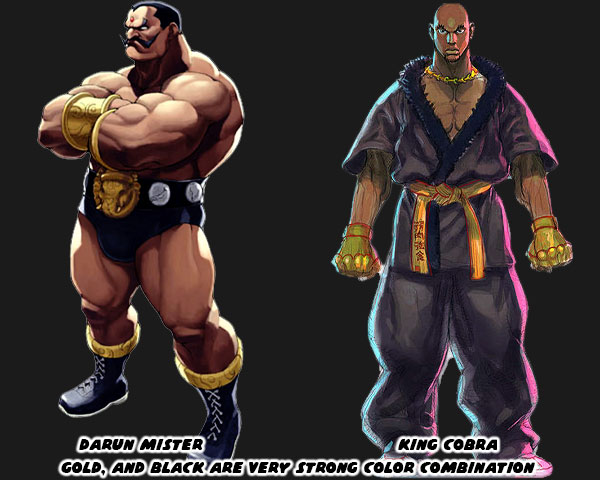
As for the colors assigned to her, I think they may be among the best choices in the new SF lineup. When it comes to color choices for a costume I am firm believer that less is more. Having one main color, and one or two accent colors defined the original World Warriors. Black is her main color, accented in gold. There is also red thrown in for contrast. We have seen examples of black, and gold as solid color choices previously. Darun Mister in the EX series, and King Cobra in the planning stages demonstrated that the combination worked surprisingly well. They also demonstrated that gold, the metal, worked as details on jewelry, and costume without distracting from the overall presentation.

The SF series has always had someone representing pro boxing. Ed may fit the bill in SF6, and we saw Luke throw some powerful punches in the trailer. I think Marisa is also set up to be a great puncher, and moreover be thought of as the heavyweight champ in the game. Ed, and Luke appear more like cruiserweights by comparison. I am eager to see a full trailer, and move breakdown for Marisa. Zangief has always been my go-to character, but it would be fun to have a grappler, and puncher as well like Alex, or not Marisa. What about you? What do you think she brings to the lineup? Is there a detail that stood out to you for this character? I'd like to hear your thoughts in the comments section. If you would like to sponsor me please visit my Patreon page and consider donating each month, even as little as $1 would help make better blogs and even podcasts!
follow the Street Writer on Patreon!

Monday, April 12, 2021

A look at IGS, the Gladiator; Road of Sword. A 1UP classic...

Gladiator: Road of Sword was released in 2001, just a year after Demon Front. I had mentioned this game previously during my Brawler series but decided that it should get an additional mention here. It deserves special mention because it was the best game published by IGS and was easily one of the greatest brawling games ever made. If I had to rank it among all of the brawling games ever released I would say it was in the top 10 of all-time. I would go further and say that it belonged in the top 5. After that it would be a matter of opinion. I would actually rank it in the top 3 for its designs, control, animation, characters, originality and execution. Consider also that this title was completely ignored by the staff at Game Informer when they compiled a list of the Top 10 Brawlers in October 2011.

In the past month and a half I had covered over 100 games in my brawling series. I’ve played them all, and thanks to emulators played several recently just to refresh my memories. When I read Game Informer’s list I was saddened and dismayed. One of the greatest brawlers ever was completely dismissed, possibly because it was a rare arcade title unfamiliar to the console-leaning staff.

Gladiator: Road of Sword got many things right. It was a brawler set in classic Dynasty-era China. However it was more refined than IGS’s other popular Knights of Valour series, which was beat-for-beat a better version of Capcom’s Warriors of Fate. Of course it would stand to reason that IGS was producing sprite-based brawlers that looked better than the Capcom classics because they were released almost a decade after Capcom's! Where Gladiator succeeded was in recreating the best elements that Capcom refined, if not introduced into the genre. IGS then improved on the mechanics and took the experience in new directions.

The first thing that most players noticed were the character designs. They were all well done and quite original, in a style that was closer to the Japanese manga aesthetic than the previous designs which were closer to Chinese manhwa comics. They did not poach the Bengus style as they had in Martial Masters or the Nazca style as they did in Demon Front, this was a new style altogether for Gladiator. The heroes were based on some familiar archetypes. The large burly fighter that moved slowly (Ko), the female swordfighter (Chin), the petit but speedy female fighter (Hsiung), the female weaponsmith (Huang), the elderly kung-fu master with strong special strikes (Mr Wu), and of course the young kung-fu master with great all-around attacks (Chu). The six playable characters had distinct styles and each had their own library of regular and special attacks. They did not all fight with bare hands, some of the characters had weapon-based attacks and special moves. Where the game elevated the standard was in the robust fighting system. Players could parry attacks with perfectly timed button and joystick inputs, perform mid air special attacks and even jump up quickly if knocked down to perform a counter attack. These things would normally be reserved for a dedicated fighting game rather than a brawler.

IGS then developed a new mechanic. Each character could collect special scrolls that expanded their techniques. Players could earn five scrolls with a completely different set of moves applied within. Players could then switch between the fighting techniques with the push of a button. Each style worked better for different bosses and enemy types. Best of all the techniques could be switched in the middle of a combo, or even combined with the special attacks of other players to form specially animated super attacks. The game supported 2, 3 or 4 characters performing super attacks, provided that the other characters also had earned the technique scrolls as well. It was as an impressive a fighting system if not more so than that featured in Guardian Heroes. Unlike GH however these characters were not locked onto a 2D playing field.

The game also featured a leveling system which applied to their health bar and increased their striking power. The more multi-hit combos players could perform the faster they could level up. Bosses offered the most points once defeated. It behooved players to use a string of special attacks to keep juggling bosses for a long combo string and then split the points with teammates at the end of the level. The way the combat system worked was not unlike the magic system in Capcom’s Dungeons and Dragons games. Where IGS trumped both Capcom and Treasure was that this title was a pure beat-em-up brawler. All of the attacks and special moves were based on the fighting arts, not on magic. Characters didn’t have to go searching through a level to obtain magic vials or pick up weapons. The characters had all the screen-clearing moves they needed. Yes, there were fireballs and other explosive attacks, but these were representative of the mythical techniques known only to a handful of masters in the history of the martial arts In this case it would be the main characters.

Having opponents that represented a cross archetype of mythological and historical villains also made the game more interesting. Bandits, soldiers, spies and roving guards were only the beginning of the opponents players faced. The game had bloodthirsty warlords, zealous monks, crooked priests and evil kung-fu masters. These were highly stylized representations of the male and female villains that might have turned up in a classic kung-fu movie. All of the villains of course had their own sets of special attacks that looked as impressive as anything players could perform.

The levels were very well done, populated with a diversity of enemy types each representing one of the warring factions. The stages ranged from rural and small towns to open fields, deserts and mountain paths where soldiers defended secret fortifications. The architecture was a cross section of Asian influences, including Chinese, Mongolian and Korean. Villages could have been located in any major city of the classical era, some temples and statues had Buddhist themes while others were non-secular. This diversity made the game more appealing to the countries that IGS was targeting Players could chose which path they wanted to explore in between levels, thus increasing the replay value.

Players that had grown up on fighting games and brawlers could find no better marriage of the two genres. Those that wanted to experience the game as only a brawler could do that by using basic moves over and over and exploiting techniques learned from past games. Those that wanted to experience the game as a fighter could try out the various styles and attacks that could be unlocked through the course of the adventure. The balance between the characters and their moves was very well done. There was no right or wrong way to play Gladiator, but those that dug deeper found out that it was a solid playing experience and quite possibly the pinnacle of the genre. It was the best experience from the studio that also developed the memorable Knights of Valour and Oriental Legend series. Game Informer be damned for leaving it off the list of top 10 brawlers!

Unfortunately this game suffered the same fate as Demon Front. Very few people ever saw it, let alone played it because it was only released in the arcades. Unless you lived in an Asian country, or were lucky enough to live in a city with a strong Asian community then you were out of luck. I was fortunate because the Los Angeles area has Little Tokyo, Chinatown and Korea Town, not to mention the numerous suburbs where arcades and stores with IGS games could be located. Had I never known the experiences of the PGM system then I would have been at a loss as a gamer. With the majority of the titles un-emulated then YouTube would be the only way for gamers to see the good times they missed.

Hopefully the brawling series has given readers a chance to learn a little something about some of the best games ever made. Perhaps players might be willing to explore their town for some rare arcade experiences and share them with the community as well. I had a fun time writing about brawlers over the past few weeks and hope to start enjoying some of them very soon. I am sorry that I have not replied to more of your comments. I do read them all but my 14-hour days limits how much time I get to respond or do anything else. I hope you understand and thank you for being good friends. If you would like to sponsor me please visit my Patreon page and consider donating each month, even as little as $1 would help make better blogs and even podcasts!

follow the Street Writer on Patreon!