Showing posts with label kim dragon. Show all posts

Tuesday, August 15, 2017

Speculation on ARIKA's unnamed Street Fighter EX successor, part 3...

Allen Snider was recently announced for the new ARIKA fighting game, let’s call it Fighting Layer EX or FLEX for short. Allen Snider, along with Kairi, were created as sort of rivals / parallels to Ken and Ryu in the Street Fighter EX series. In fact just about every character in the game was a sort of parallel to the Street Fighter II World Warriors. Blair Dame was a balance to Chun-Li, Darun Mister was the perfect rival for Zangief and Doctrine Dark was a military assassin to counter Guile. Skullomania was the oddball character, a sort of Dhalsim or Blanka in the lineup. Akira Nishitani was one of the designers on Final Fight and Street Fighter II. When he left Capcom to start his own company, ARIKA, he didn’t forget the many lessons he had learned from his teammates.


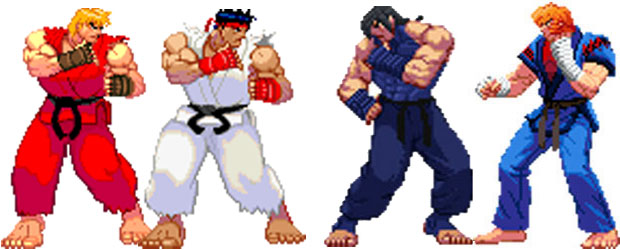
One of the things that ARIKA did was dissect the elements that made the Street Fighter II characters iconic. They looked at the color pallet, costumes, martial arts represented, origin stories and nationalities. They they tried to recreated these things. If a character set a standard, like Ken and Ryu did for karate-type fighters, then they wanted to figure out how to top those designs. It was very important that they show audiences that Kairi and Allen were not simply the same character with a different head. The colors, costumes, stance and fighting styles of Kairi and Allen were very unique. The difference between the two was much greater than the difference between Ken and Ryu. At the same time ARIKA wanted it to be understood that Kairi was the star of the game, the Ryu, and Allen was a sort of Ken in the universe, without necessarily being a friend of Kairi’s.
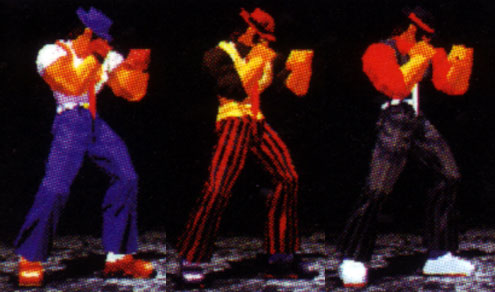
 

ARIKA didn’t settle for simple hue shifts or alternate colors for their characters. They actually created unique costumes as the alternates. Each costume told a story. Kairi’s showed the evolution of his character from fighter to boss-tier master. Allen went from one flamboyant gi to another more outlandish one. Supporting characters like Darun wore different wrestling championship belts depending on his costume selection. C. Jack went from one stylish outfit, including gambler-style hat, vest and tie, to an even more stylish one. This design rule followed every character in the series. But having a unique set of costumes, which were all character appropriate, were only part of the design elements behind the EX series.
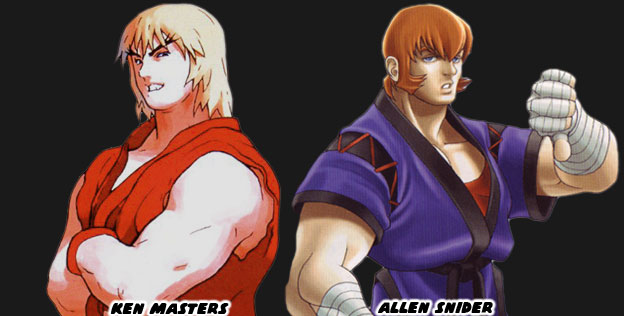
 

Allen Snider was a second attempt at creating the Ken character. Takashi Nishiyama was the director and Hiroshi Matsumoto was the designer on the original Street Fighter. The reason they created Ken was to have someone for the USA players to identify with and thus play. Their design choice was far from unique. The white gi versus red gi character had been seen a few years earlier in Technos’ Karate Champ. There was little then that made Ken and Ryu unique. They shared the same moves and aside from Ryu having a different head and pair of traditional Chinese slippers, they were identical. When Nishitani took over the reigns in Street Fighter II (SFII) he and the team wanted to make Ken and Ryu a little more unique. Bengus, AKIMAN, SHOEI and Sensei, a literal who’s-who of fighting game designers introduced small details into the characters. If you look carefully at the official Street Fighter II art Ryu wore a gi that was ragged and frayed whereas Ken wore one whose cuffs were hemmed. That detail was very easy to overlook, especially since the sprites remained identical in the game. So when the opportunity arose to make a new American karate champ they went all out with the designs.
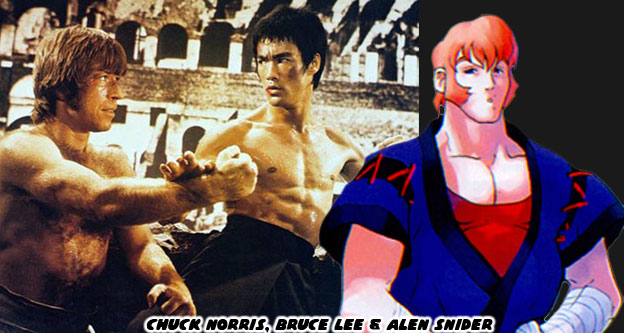
 

The artists looked at the heroes they had in comics, in animé, in martial arts cinema and then made an amalgamation out of these figures. Allen Snider in a nutshell had the hair and sideburns or Chuck Norris, but with the desire to be a breakout star like Bruce Lee. Snider was not simply a cut-and-paste of the two. He was especially not just a carbon copy of Bruce Lee. Many studios tried to put a Bruce Lee clone into their games, including ADK, Capcom, Namco and a few indy developers. But each attempt was just a caricature of the man. He seemed out of place when put in a lineup of figures that were more unique. That were more memorable.
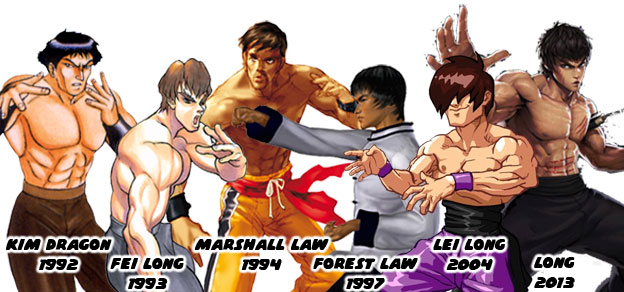
 

So what artists did was focus on the elements that made Lee and Norris unique. They tried to find some symmetry there. Allen was meant to bring back memories of the previous generation of karate stars. Not necessarily the underground legends but instead those that fought in televised contests. The developers had seen how well incorporating elements from real people had worked for Ryu. I’ve talked about it again and again but I always go back the gold standard in character designs. Ryu was inspired by the true-life adventures of Mas Oyama and Yoshiji Soeno. The thing was the character did not look anything like the real men. Yet watching him dominate the competition with his superior techniques would rekindle memories of Oyama, a man nicknamed the God Hand. Snider was the high kicking star from the USA. Someone that was ready for his movie debut. He was not supposed to have the gravitas of Kairi, his drama was more manufactured. He was a reflection of the modern martial arts star. Someone who was more comfortable on the big screen than in the back-alley fights.
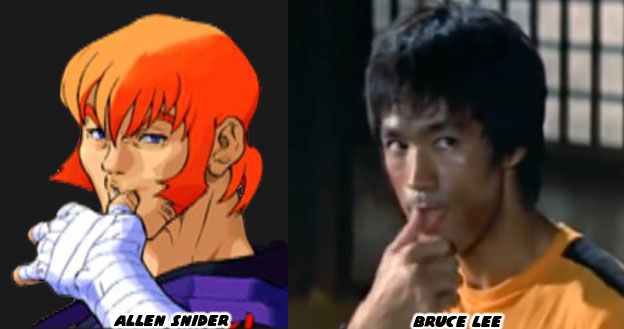
 

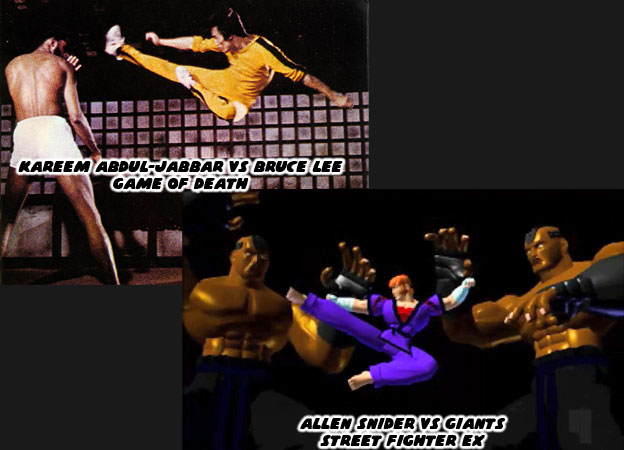
ARIKA did an excellent job at making the difference between Kairi and Allen more profound than that of Ken and Ryu. Kairi was covered in scars, had long hair and was missing an eye. Snider had the good looks and shaggy long hair of a ‘70s star. Kairi was a tortured soul that pained with every victory while Allen celebrated with gusto. They didn’t want to let tiny details tell the story, there were no hemmed cuffs separating the models. Reusing sprites was a thing of the past. There were fresh uniforms, bright colors and original 3D models to look at. They hammered away at this difference all throughout the series. The way each controlled had to be as unique as how they looked. Kairi was the more experienced fighter, he had a broader library of attacks and could be played more aggressively. Snider was new to the unsanctioned tournament scene. He was designed to be used more tactically. Even the game endings were very different. Kairi was the outcast, haunted by his past he was meant to fight his battles alone. Allen was the budding movie star and got his big break at the end of the first EX Tournament. ARIKA gave audiences another nod to his forefather. If Bruce Lee fought one giant on film then Allen had to fight two.
 

When Allen Snider was announced for the new ARIKA game I was excited. The changes made to the character perfectly reflected his origin. We’ll look at these things on the next blog. As always if you enjoyed this blog and would like to sponsor me please visit my Patreon page and consider donating each month, even as little as $1 would help make better blogs and even podcasts!
 follow the Street Writer on Patreon!

Wednesday, March 30, 2016

The Abridged History of the Brawler, a pre-rumble...


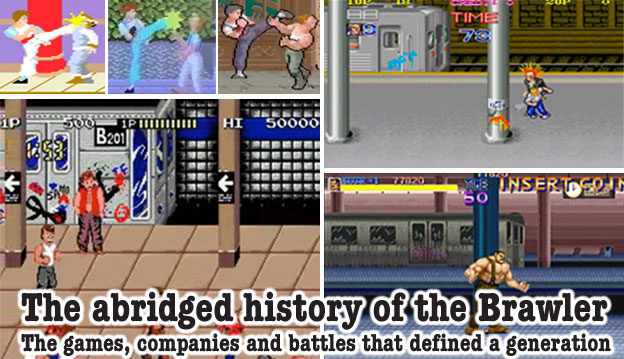
Over the next few weeks I'm going to be looking at one of my favorite all-time genres, the Brawler. This was originally a series that I ran on 1UP but I decided to revisit it and update a few entries. Now note that I call the genre the "Brawler." Other people and game sites call the genre "Beat-em Ups." But those people often call fighting games beat-em ups as well. I would contend that the fighting game and the brawler are actually two completely different genres. A fighting game is traditionally a one-vs-one game. Whether it's two martial arts masters, or a robot versus a demon or two dinosaurs going head-to-head, there is always one player versus another (sometimes a PC opponent instead). That is by my definition a fighting game. There are usually a few things that most fighting games have in common. There is a scoring system, a way to track health and often a time clock or ring out rule as well. Again the fight is usually one on one. There is the rare exception where the original Fatal Fury actually allowed two versus one battles and it would still be considered a fighting game. For the most part however a fighting game is one vs one.

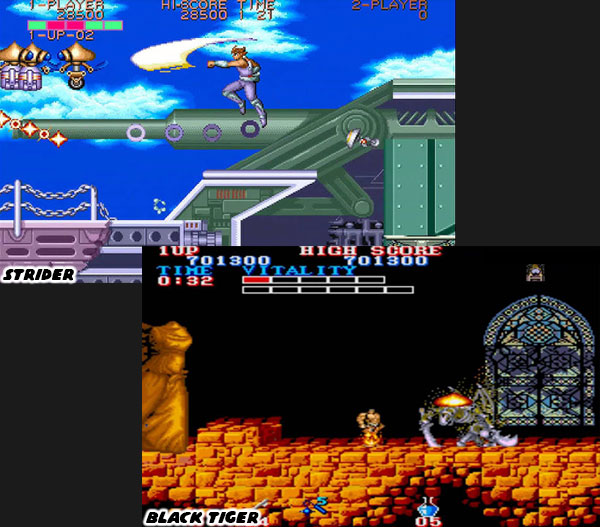
A Brawling game however is one or more versus many. The Brawling game usually revolves around unarmed combat. In some cases a character may pick up a bat, knife or gun along the way but a weapon usually does not last after a few uses. The difference between a Brawler and an action game, such as the Capcom arcade classics Black Tiger or Strider, is that a Brawling game allows two or more people to fight against waves of opponents. In at least one arcade game there was even a chance for six teammates fight against the bad guys or a single bad guy. This game would still be considered a Brawler. There are other genres that are cousins of the Brawler, the Run-and-Gun, also called the Action Shooter features characters that fought with guns and modern weapons instead of bare hands.

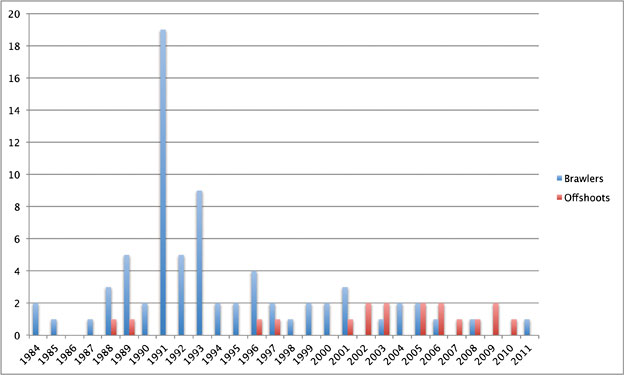
Also the Hack-and-Slash game is a brawler featuring classic swords and melee weapons instead of bare hands. In terms of popularity the Brawler had a quick climb to the top, in fact of all of the games I will be talking about the majority happened within a few years, from 1990-1993. Then they all slowly faded away. The brawler was eclipsed by the rise of fighting games. The genre never completely faded away but instead it slowly evolved. It would find waves of popularity in countries with developing PC markets like Korea and China. The core mechanics of the brawler would even become adapted into other genres. I will highlight many games and try to point out some things that made each game unique.


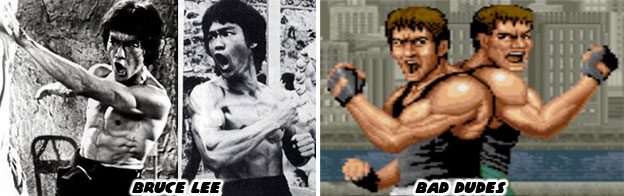
The Brawler, just like every other genre, came from somewhere. The early generation of arcade hits were inspired, if not outright stolen, from comics and movies. These games would then become adapted to the home consoles as a sort of faded copy of a familiar idea. Star Wars, Star Trek, various anime shows, manga and comic books all had a hand in shaping the history of game designs. The developers on the first batch of action titles often looked at action movies for inspiration. There was a lot of crossover to influences for the early action games, fighting games and brawlers. The action movie star was often a kung-fu expert. After all if you are going to have a story where one person can take out an army of opponents then they better know how to fight. There was no bigger star on the planet than Bruce Lee, at least this was the case back in the '70s. The young developers in Japan and the United States would have been greatly influenced by the man and his movies while growing up. When they started working on the first wave of action arcade games, almost a decade later, then there was usually one person they all looked to. It didn't matter how the artists colored or animated the early sprite heroes, there was something very familiar about the way they appeared...


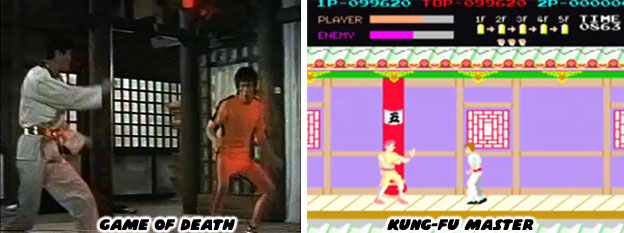
The presence of Lee actually worked in favor of these early games. We had an actor and martial artist that dressed in very clean and easy to read costumes in his films. The shirtless hero with dark pants would pop up on various character designs. When the early arcade and console systems had limited memory to work with then simple two-color costumes were perfect designs. Of course Lee's signature yellow jumpsuit with black stripe from the film the Game of Death would become iconic as well. The costumes that Lee wore, his haircut, stance and moves would influence character designs for the next few generations. From some of the earliest 2D fighting game characters to some of the first 3D fighting game characters, even the Flash-based fighting games and hybrid 2.5D fighters all had a Bruce Lee clone. Some of these were subtle nods to the actor but the majority stole his likeness.


Lee moved with a quickness that had never been seen before. He punched and kicked so fast that it was a blur on screen. These would be elements that would become adapted in the early brawlers. Resources were very limited on the arcade machines at the time, especially memory. Perhaps a character had two frames of animation between a punch and kick. This would have seemed impossible on a bulky character but a skinny fighter like Lee actually did strike that fast. Even the trademark yell of Lee, his facial quirks and mannerisms would be reproduced on many characters in fighting games and brawlers. The godfather of the brawler, the one that I believe started it all was Kung-Fu Master by Irem. It was released in 1984, a pivotal year for arcade games. The title was a subtle nod to Lee's final film, the Game of Death. Players had to climb a tower filled with various fighters, and it got progressively more difficult the higher you went. The main character "Thomas" was searching for his girlfriend "Sylvia." Of course the names were changed from the original title, Spartan X. What didn't need translating was the lighting-quick strikes and familiar yell of the hero.


The US didn't really have a connection to martial arts cinema in the '60s or '70s. The action movies that the USA enjoyed right through the '80s had a different type of violence, one which was rooted on guns and revenge. The anti-hero was a popular subject in many of the movies. As it turned out the settings were a character all to themselves. The fictional version of New York in the John Carpenter film Escape from New York lit the imagination of the Japanese studios. Cities in western-themed games had to be big, dirty and overcrowded. The walls had to be covered in graffiti and colorful gangs patrolled every corner. Japanese studios began creating impressions of these cities, based on cult films like Death Wish and Streets of Fire for the earliest and often most successful brawling franchises. Double Dragon and Final Fight were two of the biggest sellers and they introduced audiences to a modern "western" metropolis overrun with gangs.


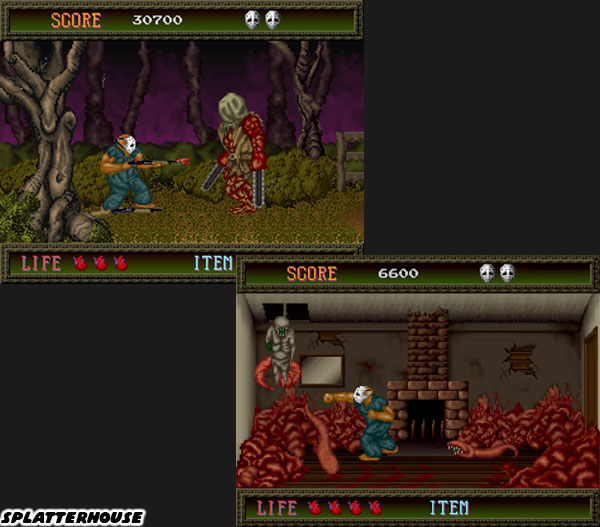
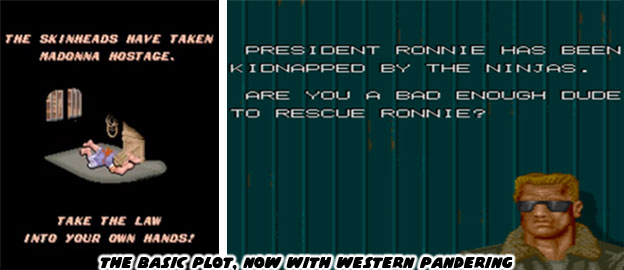
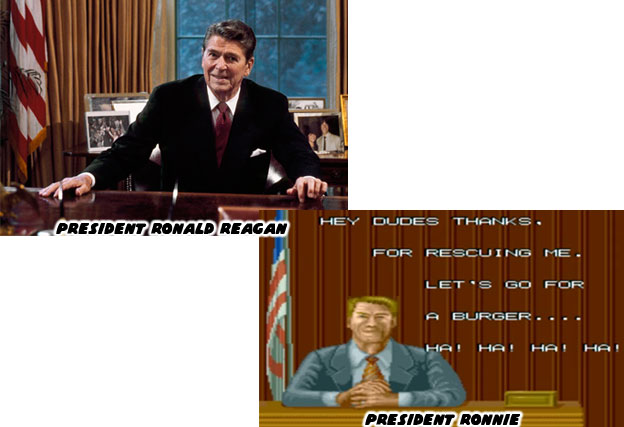
The setup for most of the games was simple. A person of interest was usually kidnapped, often a girlfriend, a finacee and at least in one case it was the President of the United States. Seeing as how the Japanese were shamelessly pandering to Western audiences they would drop names like pop singer Madonna and Ronnie, the nickname of President Ronald Reagan, into their games. If the brawler could be compared to a film genre then it would be the cult action film. Not quite a summer blockbuster yet not lowbrow enough to be a "grindhouse" picture (with the exception of Splatterhouse that is). The Brawler was nothing short of mindless action, it was like the perfect summer movie for eating popcorn, drinking soda and turning off your brain for an hour. After all, the payoff after saving President Ronnie was getting hamburgers. It was hardly Oscar-caliber material the Japanese were interpreting.


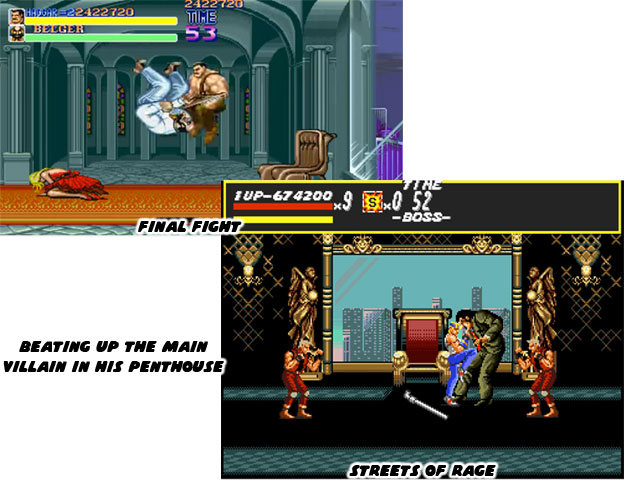
Of course for most of these movies audiences would wonder why the cops didn't stop the bad guys. There was usually two reasons for this. The cops were either too afraid of the gangs or they were being paid off not to do their job. The gangs often had leaders and these were not the typical thug. They were instead rich crime bosses living in the lap of luxury. Sometimes they were politicians or even heads of corporations. Players figuratively and literally fought their way to the top in many of the games. As dirty subways gave way to abandoned amusement parks and crowded alleyways the player would find themselves fighting in nicer and nicer neighborhoods. Eventually they would end up in the suite or penthouse of a millionaire. It turned out that the person that was pulling the strings was often the richest person in the city. They could have had it all but instead messed with the wrong people. The punishment for kidnapping or putting a city at war was often a long drop for the bad guy.


There were many other plots to explore, many more heroes to become and many more villains to throw through windows. The brawler was and continues to be a fun genre. I hope there are a few games mentioned in this series that rekindles some memories. Perhaps I'll highlight a few that you may not have played and give you a reason to track them down. Whatever the case I hope you stick around and as always share a comment. As always if you enjoyed this blog and would like to sponsor me please visit my Patreon page and consider donating each month, even as little as $1 would help make better blogs and even podcasts!
follow the Street Writer on Patreon!