Showing posts with label ken. Show all posts

Monday, April 6, 2026

Bookmark This Page; Capcom fumbles the designs in Street Fighter V.

I’m probably best known for my deep dives on fighting character designs. There was something about the work that went into Street Fighter IV, and V that seemed out of place. If you want to see how Capcom missed the mark with some character designs then Bookmark This Page.

Representation Matters! Or, what happened to Birdie, part 1...

Representation Matters! Or, what happened to Birdie, part 2…

Representation Matters! Or, what happened to Birdie, part 3…

Representation Matters! Or, what happened to Birdie, part 4…

Representation Matters! Or, what happened to Birdie, part 5…

Representation Matters! Or, what happened to Birdie, part 6…

Representation Matters! Or, what happened to Birdie, part 7…

Representation Matters! Or, what happened to Birdie, part 8…

Representation Matters! Or, what happened to Birdie, final part…

What is going on with the Street Fighter V character designs? Part 1, who is F.A.N.G?

What is going on with the Street Fighter V character designs? Part 2, where did F.A.N.G come from?

The Ken reaction, part 1...

The Ken reaction, part 2… 

Did you like or loathe the character designs in Street Fighter V. Let me know about it in the comments section. As always if you enjoyed this blog, and would like to sponsor me please visit my Patreon page and consider donating each month, even as little as $1 would help make better blogs and even podcasts!

follow the Street Writer on Patreon!

Wednesday, August 21, 2024

Ryu Final, the real Street Fighter III and IV, part 2 - A 1UP classic from January 31, 2008

Good morning friends, there's not much news to report today. Some family issues that I will see about later in the day, plus lawn mowing of course. Things are holding steady but right now I have to get back to work, one of the projectors blew a bulb so that's going to cost somebody money. Let's get back to the second (and final) book of Ryu Final. WARNING: if you would rather wait for the translated issue next month then skip today and tomorrow's blog. I will be talking about everything that happens in great detail.

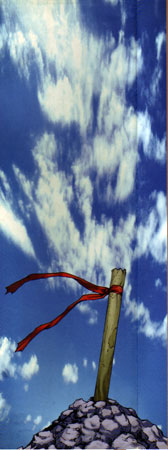
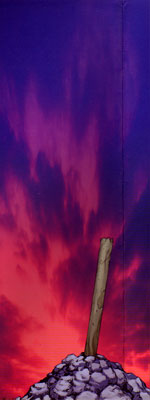
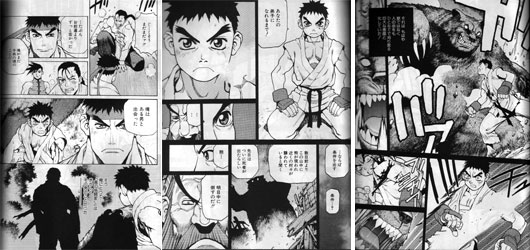
This comic begins with a rock pile and a stick. It is a grave marker. The red headband of Ryu is tied onto it.

This story does not begin with Ryu but the lessons learned are just as important as everything we saw in the first book. This is the story of Sagat, rather the lessons of Sagat. As the story starts we see Hugo's diesel truck parked outside of a temple in the heart of Thailand. Hugo is taking swings at Sagat. Although he towers over the mighty Thai, he is unable to land a solid hit on him. Sagat is motionless and allows Hugo to throw punches that don't seem to faze him. In a fit of anger Hugo lifts the stone head of a Buddha and throws it down on Sagat. It shatters into a million pieces and this gets a reaction. Sagat takes down the mighty giant with one kick. He then remembers his life of fighting.

We are taken back to a period in time when Sagat was at his most dangerous. He had survived the dragon punch from Ryu and was recovering in Thailand. Furious with himself he takes his aggression out in the jungle. Knocking down trees and trying to make his techniques stronger. Adon watches from a distance, ashamed that the tiny Ryu could have done this to his master. Although bandaged up Sagat has a would that will not heal. He doesn't stop long enough to think about the consequences of his actions until he accidentally knocks a tree down onto a child. He takes the child to a temple where the monks take him in and try to help. The monks warn Sagat of what he is becoming.

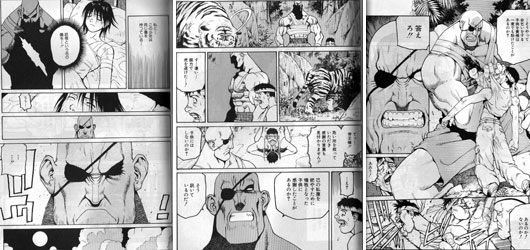
Although he survived a potentially fatal blow he survived. Whether is was his size, his determination or his will that kept him alive is unknown. What worries the monks is the scar has been left in the Shoryuken's wake. It is not the physical scar but the emotional one. They warn Sagat that revenge and hatred is what is fueling him now. That hatred is going to eat him up from the inside, that scar will never heal if Sagat remains possessed with a desire to kill. Sagat lived for a reason, there is tremendous potential for him but he seems to miss his purpose. It extends beyond the fight. The monks say that poachers are killing and trapping tiger nearby. Sagat should be defending his homeland. So he leaves the child behind and goes into the jungle.

We see poachers stalking a tiger who instead kills one of them. Before the tiger can pounce on the other Sagat kicks it in the head and scares it off. The poacher thanks Sagat profusely for which he rejects. Sagat has found a new target for his aggression. He begins slapping the poacher all over the jungle. As he does so the scar on his chest opens up and he starts bleeding. While Sagat pauses to clutch his chest the poacher grabs a young villager from a nearby tent. It is the child that Sagat accidentally hurt. The poacher holds him hostage. Sagat throws his hand in between the gun and the child. The poacher fires a round into his hand. Sagat grabs the poacher with his free hand and lifts him into the air. The poacher fires a few more rounds into the torso of Sagat.

Sagat can easily kill the poacher but he chooses not to. He had just cause and unlike Ryu, this person was a criminal willing to murder Sagat in cold blood. At that point Sagat has chosen his path, he will not let rage consume him, he will not use muay thai as a means to have his revenge. He will not stain the name of his beloved country. The bandages fall away from his chest as he holds the poacher aloft. The massive scar on his chest has stopped bleeding. Sagat has matured as much as Ryu in the universe. He has learned many lessons and he perseveres. He is proof that even a mortal wound can be overcome.

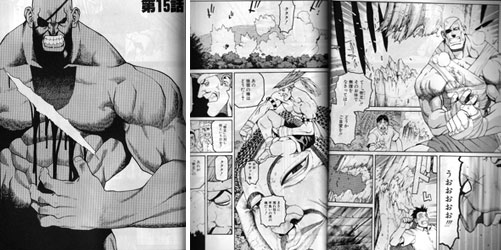
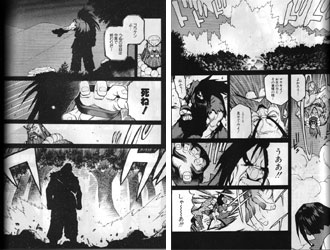
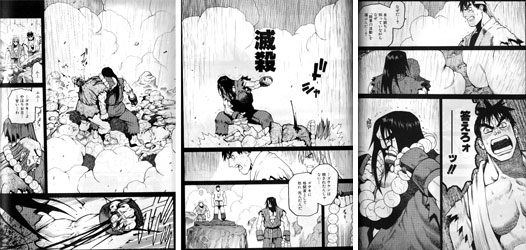
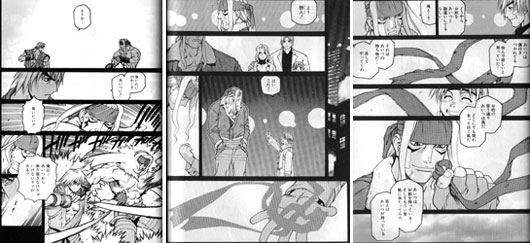
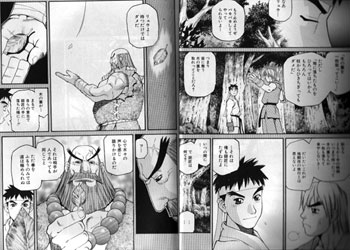
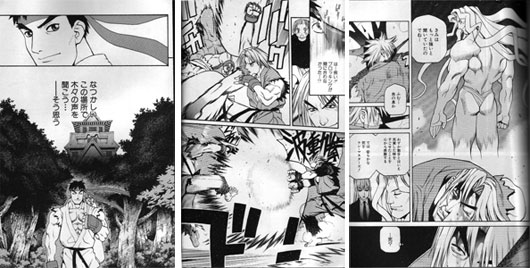
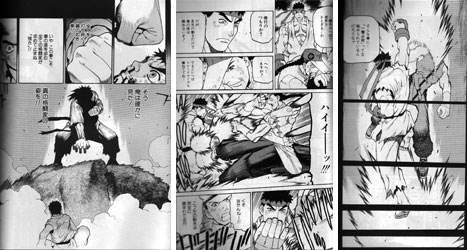
Ryu and Oro know where their path will lead. In Ryu's memory the reader is taken to the past again to witness an important moment in SF continuity. Nakahira shows us the fight between Gouken and Gouki in all its violent glory. Ryu and Ken are young, about the age they were in Zero if not a little younger. One day Gouki just begins shooting fireballs at his brother from high atop a ridge in the woods. Gouken senses these strikes and jumps out of the way. They begin battling all over the woods in a very cinematic fashion. They hurl special moves at each other but Gouken is eventually overtaken by his brother. He is beaten and killed when Gouki punches his hand through his chest. Gouki takes the string of giant beads from the body of his brother and places them around his own neck. Ken and Ryu call out for their master but it is no good. They can barely hold themselves back but they know neither of them is remotely a match for Gouki. He warns them and then walks off. The memory remains with Ryu for a long time and now is the time to do something about it.

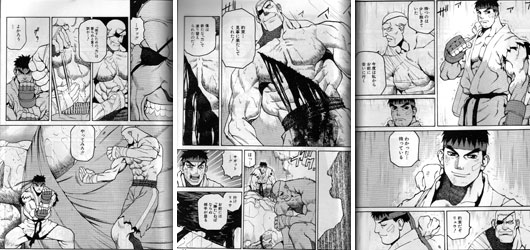
It is now the present and Ryu returns to Thailand for a rematch. Ryu and Oro pass a couple of teens farming near the temple. The villagers that Sagat saved many years ago are growing up. Sagat waits for Ryu, the battle between the tiger and dragon has been a long time coming. Sagat is stronger than he's ever been, Ryu has been training harder than ever. Of all the rivalries in Street Fighter this is the oldest. Nakahira tells us what happened between them during the SF III continuity. This is important because the beef was not settled in canonical terms or in the videogame, Sagat was not in III. Both Ryu and Sagat prepare for the fight with Oro and the teens acting as spectators. There is a storm brewing but neither Sagat nor Ryu will let the rain stop them. They square off and begin fighting when the lightning strikes nearby.

The battle is over in a few hits.

Both strike each other quickly, over and over, but Sagat manages to land a devistating knee. He sends Ryu crashing through a sleeping Buddha statue. Oro was the only one that was able to perceive the blows and know when each struck the other. Ryu looks beaten but Sagat takes a knee and concedes defeat. Ryu does not understand. Both men were capable of taking the fight much further. Sagat has taken a knee because his old wound has reopened. He knows now that the path of the warrior is not validated if he must fight to the death. Ryu learns that every battle does not have to end with him crippling or knocking out his opponent. He must take the fight as far as it has to go and no further. Ryu must not becomes that which he despises. Ryu and Sagat come to an understanding after that. Ryu and Oro leave Thailand. Sagat bandaged up again, the teens holding an umbrella over his head and watching an old adversary walking away. This might very well be the last time Sagat is supposed to be seen in continuity, the end of an amazing chapter in the history of fighting games.

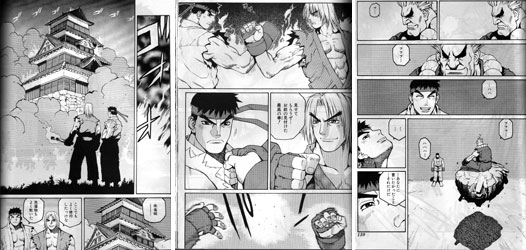
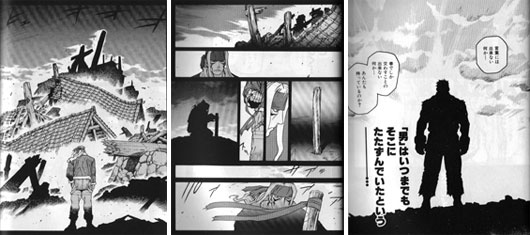
Ryu and Oro make it to Japan where they reunite with Ken and Sean. Ken and Ryu prepare to end another chapter in the series. They set fire to their masters temple. It is a majestic castle that has been in the background of every Street Fighter game. Sadly this is the last time we shall see it standing. Ryu and Ken square off to determine who must challenge Gouki as their dojo burns in the distance. Ryu connects with one well placed strike. Suddenly the temple explodes and collapses. Gouki descends on a pile of rubble. The two great warriors pause to study each other.

In a way it is funny that the path Ryu has wandered on for years takes him back home. Gouki finds irony in the little boy he saved has grown into a capable warrior. They both laugh a little. It is the only time you will ever see a smile on Gouki, it is slightly unnerving. Ryu tries to catch Gouki with a dragon punch. Gouki grabs Ryu's hand and crushes it.

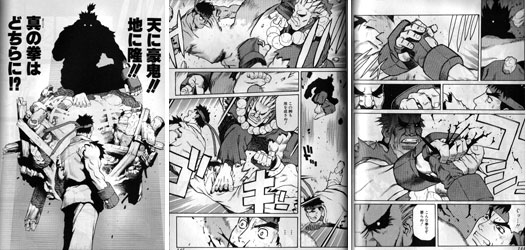
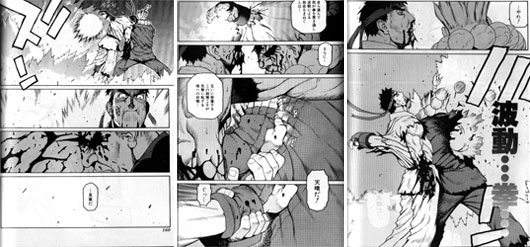
The fight is brutal and although Ryu has grown and learned a lot in the past few years he is still no match for Gouki. Gouki beats Ryu and hits him with the legendary Shun Goku Satsu or Instant Hell Murder. The finishing strike is a punch through the chest, just like he gave his brother and master. To make sure that Ryu is done for he drops a fireball from the hand that went through him. This explains the flash of light that you see at the end of the videogame version. Ryu spits up blood in the face of Gouki. He is wiling to return the favor in kind and do something that his master was not willing to. Ryu places his palm on the side of Gouki and shoots a fireball right through him. Gouki pulls his arm out and both men stagger back.

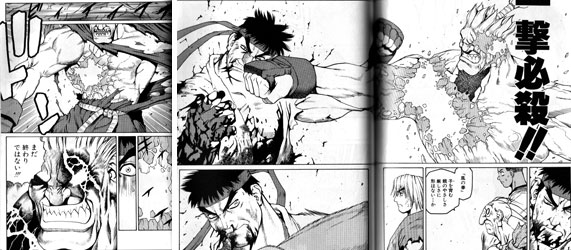
Ryu is bleeding profusely and wonders how Gouki can remain standing. Gouki tears off his gi and we can see the gaping hole in his torso. Gouki is hollow inside, he has been completely consumed by the Dark Hadou. All that remains is a rage-filled shell of his former self. Ryu curses the monster for killing his master and killing himself.

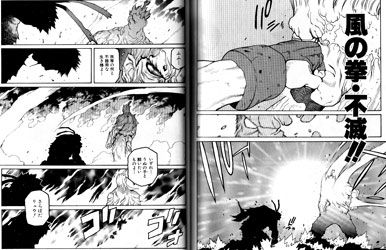
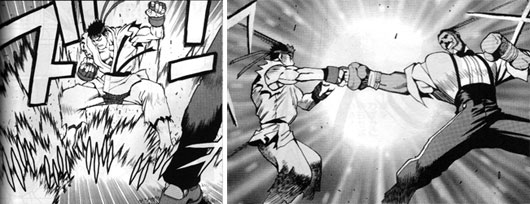
They strike each other once more. Gouki connects first. As soon as Ryu hits the face of Gouki he becomes consumed by fire. Gouki turns away from Ryu and staggers into the flames of the burning temple. The demon is defeated but at the ultimate price. Ryu collapses and Ken runs to his side. He is unresponsive as Ken yells his name. Ryu is dying.

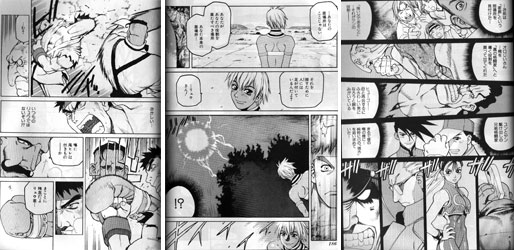
The epilogue. We see Alex sitting in an alley, distraught. Earlier that day he had a match with Ken at Madison Square Garden. Alex was a big up-and-coming fighter in the MMA circuit. In SF canon he even knocked out M. Bison in a MMA fight. He gives Ken a good battle in the final but is ultimately defeated. Alex is disappointed in himself, not for losing to Ken but because he realizes that he is still not strong enough to fight Gill, whom he really wishes to battle and avenge his family. Alex's adopted family finds him sulking in the alley and helps him. A few days later Alex seems to be doing better when he runs into Ken and his family. Ken advises that the only way to get better is to go around the world and learn from the best. Little Mel reaches out and gives Alex the red headband of Ryu, knowing that Alex respects the legendary fighter greatly. Ken and Alex part ways.

We see Alex months later in the hills of Japan. We assume that he has already done extensive traveling. Learning from Birdie, Zangief and Adon as per the canon. He stops at the ruins that was formerly the temple where Ken and Ryu trained. It is a sad scene now, nothing but rubble remains. There is a pile of rocks marking a grave and a post. Alex kneels and ties the red headband to it. He wishes that he could have learned from the best, to have sparred with Ryu once.

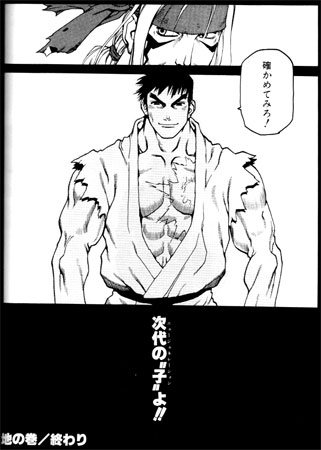
We see a silhouette appear on the horizon. We don't know if it's a memory or Alex's imagination. He turns around.

Ryu is standing there, smiling. His hair unkempt. A large circular scar on his chest.

THE END.

Now do you know why I am so critical of the Udon books? Why can they not write or draw anything as epic as Ryu Final? So what can we make from the end of this book? Well aside from the near-impossible surviving from a punch through the chest we can take many things for the future of the series in canonical and videogame terms. His surviving a death blow was foreshadowed by Sagat at the beginning of the book. Ryu returns not as a messiah but as a true martial artist. Ryu has learned to harness the power of a killing strike in his Fist of the Wind and seems to have finally completed his journey. From this point on he should hold a place of great importance in the universe, the transition from fighter to master. From this point on Ryu is no longer the intro into the world, or should not be. I am speaking in manga and videogame terms. From this point on Ryu should be something more... What should we expect if Capcom creates a true Street Fighter IV and not a II.5? 

As always if you would like to sponsor me please visit my Patreon page and consider donating each month, even as little as $1 would help make better blogs and even podcasts!
follow the Street Writer on Patreon!

Monday, August 19, 2024

Ryu Final, the real Street Fighter III and IV - A 1UP classic from January 30, 2008

Welcome back friends. We're here to talk about Ryu Final, the last book Masahiko Nakahira created for Street Fighter. The book was set in the SF III continuity, to be precise it is set during 2nd Impact: Giant Attack. Nakahira never did a SF II book for Capcom, those were covered by Masaomi Kanzaki and Mami Itoh. So how does Nakahira's story go? How does it progress? If you read it once then go back through you'll notice that everything that went into this story was done so deliberately. Every character, location, fight and moral was done with forethought. Nakahira is a genius when it comes to plotting the events of his book. He doesn't just plot out a linear story but carefully intersects flashbacks which keeping you turning the pages. The weakest part of his story is better than anything I've seen with Udon. Overall it is perfect storytelling and great art combined. Let's touch on the events of the first collected book.

This comic begins with a rock pile and a stick. It is a grave marker, but for whom?

Ken and Ryu are much older, stronger and wiser than when we last saw them. They are possibly at the peak of their abilities. Ryu begins the tale, he is training in the shadow of his old dojo. He remembers the lessons learned from his master Gouken. Nakahira presents Ken and Ryu younger than they appeared in the Zero books, as young as they appear in some Udon flashbacks. The sage advice is not lost on Ryu as he remembers, in Jedi style, that he and Ken are part of the living, breathing world, not apart from it. It is up to Ken and Ryu to catch a falling leaf, the task sounds simple but has profound meanings. In almost all the Nakahira books you see a big oak tree and leaves come up time and again. The leaves and lessons of Gouken also return in the ending credits of SF III: 3rd Strike. The cycle of growth and change, the eternal strength with roots deepening as they grow. The hard training of Ryu and the trees that shake with his blows are inspired by actual accounts of Mas Oyama's tremendous power.

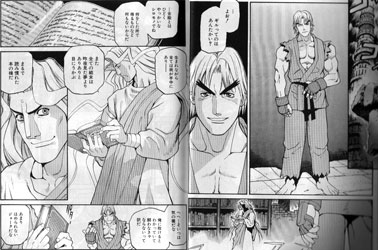
Ryu is fully confident in his abilities and decides it is time for him to return to the circuit and prove himself. His first stop is San Francisco where the understudy of Ken, Sean, taxis Ryu to a yacht. Young Mel, the son of Ken and Eliza is crying because he's afraid that Ryu is going to beat his father. After a few formalities the classic rivalry gets underway. The outcome isn't even close. Ryu is soundly beaten by Ken and can't even manage to get a hit in. Somehow his best friend and rival has surpassed him. Ken has worked harder than Ryu and has become a true martial artist. The reason is told in flashback.

Ken had challenged the man-god Gill and was beaten within an inch of his life. He came to the realization of his purpose as he was lying in a pool of his own blood. He could not allow this defeat to happen, he would never allow himself to be defeated in combat by anyone. His life was not forfeit as he remembered his wife and son. They were his foundation and Gill be damned for trying to sever those ties. The fight became a stepping stone for Ken. From that point on Ken realized he was not only fighting for himself, but for his family and with that conviction he would never fail them. With his remaining strength he leveled Gill with a dragon punch and did the same to Ryu. A clear-cut victory.

The scenes and plot with Gill were covered in the shortest span of time. Nakahira knew the important part of the story was not in trying to explain the plot of SF III but instead allowing the reader to discover how much the cast had grown. Ryu walked away from the encounter a little humbled but grateful. He knew now that he had room to grow. So he said farewell to his friends and set out again. While sleeping in a park he was awoken by Oro, who was trying to walk away with his duffel bag. Ryu tries to teach the old man a lesson but is instead beaten by the aged master. To make things fair Oro even puts one hand behind his back and still manages to beat up Ryu. FYI: remember that Capcom has been trying to use a one-armed boxer in their series because their template for SF II, the Master of the Flying Guillotine sparked the idea. Ryu becomes progressively angry with his aged opponent and finally decides he's had enough. Ryu tries to counter with a fireball but he is instead knocked silly when Oro unleashes a massive Yagyou Dama, or two handed fireball the size of a Volkswagen Beetle. It turns out that Oro was testing him. Hoping to find a student worthy to train. Ryu is the one and from then on he is under the hard tutelage of the 140-year-old master. He begins by making Ryu carry a massive boulder on his back with Oro riding atop.

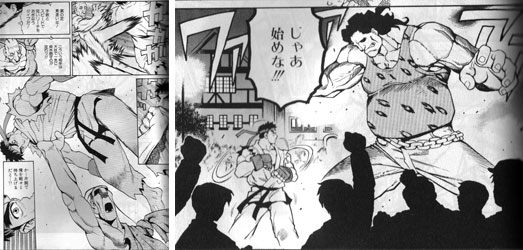
At this point of the story Ryu has pretty much hit rock bottom. This is important because he must be rebuilt as a person and as a fighter. The battles he has had in the past, against opponents like Sagat and Vega should have made more of him. Instead he is still locked in the rigid system taught to him by his master and unwilling to progress. It is up to Oro to show Ryu his true potential or kill him in the process. Somewhere in Germany Ryu's first battle turns out to be against the giant Hugo. The battle is brutal on Ryu as Hugo dominates him for most of the match. Pounding him into the ground and throwing him like a ragdoll, Hugo is a force of nature against Ryu. Nakahira uses exaggerated perspective to make Hugo appear 20 feet tall rather than the 7'8" he is. This is in the same dramatic technique that Tetsuo Hara would do to make gigantic opponents for his Kenshiro to battle. After losing for most of the match Ryu is able to defeat Hugo with a well placed dragon punch to his stomach.

It is not easy for Ryu to win battles. Unlike the Udon books where fan-favorites can knock out opponents in one hit, nothing comes easy in the Nakahira books. This importance of this fight is to show him, and the reader, that there will always be bigger and stronger opponents waiting for the challenge. Ryu will always bring out the best in his opponents and he can't always out-muscle them. The moral of the Hugo battle is that strength is tempered by technique. Ryu continues his training with Oro from there, having earned the respect of Hugo and Poison. He travels south and eventually encounters Yun and Yang. The brothers are brash and inexperienced fighters. The determination of the young kung-fu masters is a parallel between Ryu and Ken's legacy. Even though Yun and Yang are beaten by Ryu they will not quit. Ryu is reminded of how stubborn he was in his youth as well. Yun and Yang establish the core of the Ryu story.

In flashback we see a young Ryu, much younger than he's ever been presented. His build is skinny, his hair unkempt, but he has a determination that impresses Gouken. He wants to prove that he is worthy to learn under the master so he says he will strike out to chase away a bear terrorizing the local villages. Gouken discovers his bloody duffel bag a few days later. Gouken fears that the bear has killed Ryu. This adventure, like much in the life of Ryu is inspired by the fictional retelling of the life of Mas Oyama, better known as the Karate Baka Ichidai anime. In particular the battle here is between Ryu and a dangerous bear, the same thing that happened to Yoshiji Soeno in the cartoon. We catch up to Ryu in the woods and see that a bear is indeed slashing at him ferociously.

The bear pounces on Ryu and is about to finish him when he is struck from behind. The force of the punch travels through the head of the bear and stops inches from the face of Ryu. It is a wild-haired Gouki that has saved Ryu and killed the bear. Gouken arrives to take Ryu away. Gouki cares not for man or beast, saving Ryu was an afterthought. It was that day where Ryu saw the face of evil. He saw that the techniques he wanted to learn was lethal in the wrong hands. These were techniques that could easily be used to kill if left unchecked. In present time Ryu thanks Yun and Yang for the fight and hopes to see them again someday. Like they Ryu has room to grow and many more battles to come.

The next battle Ryu faces is nowhere near as easy as the battle with Yun and Yang. Dudley the boxer, the undisputed heavyweight world champion, wishes to challenge Ryu. You would think that with Oro as his new master he would have become a better fighter by now. Dudley beats the tar out of Ryu and has a counter for every move. Ryu is simply not fast enough to catch the champ with his guard down. Even his dragon punch is caught and countered. Round 1 goes to Dudley but Ryu will not stay down.

This is the abstract part of the book, the weakest reason for a character to be introduced. Elena is brought in an aside and doesn't fight in any way. She is in Africa, a continent away from where Ryu is. Yet she, like every other fighter in the world is connected. It all goes back to the lessons that Gouken planted into the young Ken and Ryu. They are part of this living world, their roots have grown deep and they have more potential than they realize. It is up to them to wake up to that and release their true potential. With that Ryu comes to his senses and catches his second wind. The leaves in the mighty oak tree in the background shake. Ryu plants his feet and prepares a new fighting stance. Oro and Dudley are intrigued at this newfound intensity in Ryu.

Oro wonders how Ryu will face his opponent now. Dudley is the culmination of the boxing arts, possibly the oldest fighting arts in the world, dating back thousands of years. Boxing is a refined sport, called the sweetest science by practitioners. Embracing the culmination of the art Dudley represents a fighter in the purest sense of the word. He is taller than Ryu and has a longer reach than Ryu, there is no way he can get caught by Ryu's blows. A pure fighter cannot be defeated by traditional strategies and technique. Ryu has learned that he is not fast enough for a special move, he has also learned that he can't always out-muscle his opponents. In order to evolve he must be willing to change his strategy. He decides to use the force of a killing strike but use it in a new way. In one strike they go at each other with everything they have.

Dudley was aiming for the head of Ryu and failed to notice that Ryu's punch was headed for his hand. Ryu has learned to harness the power of a killing strike but not in the way that was used against Sagat. The force of the blow destroys Dudley's boxing glove and breaks the bones in his arm. The force of the blow also travels through Ryu's arm and tears part of his gi off. Ryu remained grounded and the remaining energy returned to the Earth. Dudley concedes defeat. Ryu has learned the fist of the wind, a technique unique to him. He is now ready for an even greater challenge.

End of book 1.

As always if you would like to sponsor me please visit my Patreon page and consider donating each month, even as little as $1 would help make better blogs and even podcasts!
follow the Street Writer on Patreon!

Monday, June 13, 2022

Ken Masters, from champ to chump in Street Fighter 6

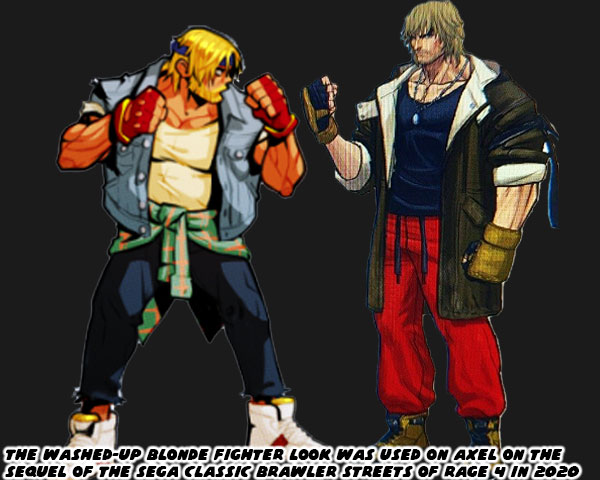
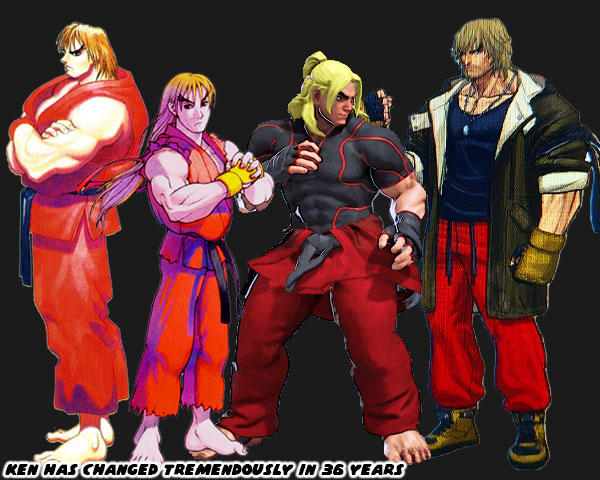
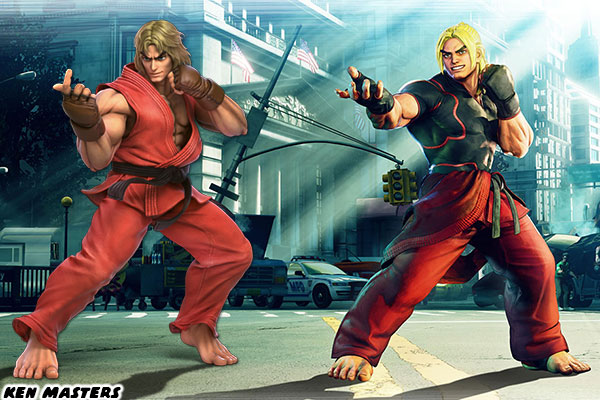
Ken Masters is a video game icon. He’s not only known in the fighting game community, but across the entire gaming landscape. Ken was the US equivalent to Ryu in the very first Street Fighter way back in 1987. I clearly remember the shaggy haired guy with the red gi when I was pounding the giant foam buttons on the original cabinet. The leaked design for Ken in SF6 was met with mixed reactions from the community. Most of them were negative. The very first take was that the redesign was poaching the same thing that developers Lizardcube, Guard Crush Games and Dotemu for Streets of Rage 4 did with the character Axel Stone. In short Capcom aged the character of Ken Masters, gave him a beard stubble and overcoat. Making him look like a washed-up version of his earlier self.

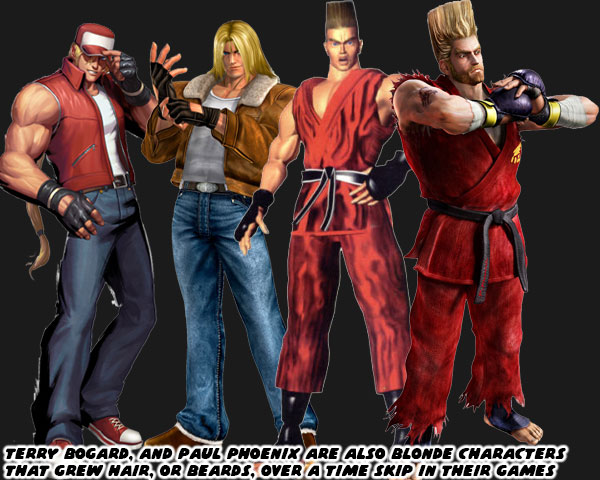
The thing is that this would not be the first time a Japanese developed did the same thing for the blonde-haired western character in a fighting game. Terry Bogard from SNK’s Fatal Fury series, and Paul Phoenix from Namco’s Tekken games had similar makeovers. Terry’s was handled slightly better, as it was a big time jump from the events of the original Fatal Fury. In Garou Mark of the Wolves he was already a seasoned master, and mentor to Rock Howard who was now seen as the star of the franchise. A lot of SF fans lamented that the son of Ken had not been inserted in his place in similar fashion.

There’s not much I want to say about Ken’s new look. It’s sad, and uninspired. I’ve talked about the importance of color on this blog. Hopefully you know how important the assignment of bright primary colors, and complimentary secondary colors has been to the creation of memorable characters. With Ken the designers are throwing away the classic look. A blue shirt, brown jacket, brown gloves, and brown boots clashed badly with his primary red outfit. If Ken had given up on his purpose then I don’t understand why he would even be wearing red gi pants, as they don’t usually contain pockets, not to mention his black belt. The level of disrespect to his form of karate, to himself, his master, and Ryu is off the chart. It would have made more sense if he was presented in street clothes, or even a suit. This half classic Ken, and homeless Ken doesn’t make much sense. This is especially bad considering how much good will the company had created with the character.

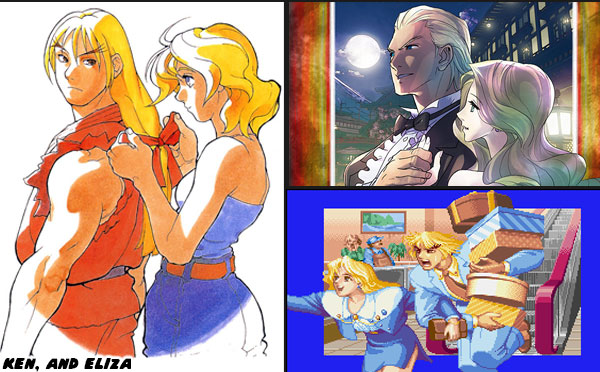
Ken was born into privilege, he didn’t have to work hard, but he did. He is considered to be on par, if not better than Ryu. He considers Ryu his brother. Through the series we got to see both grow up. Ken did a tremendous amount of personal growth when compared to Ryu. We saw his long-time girlfriend Eliza become his wife across several games. We saw them build a life together. They got to travel the globe while Ken racked up tournament victories. They set the standard of the perfect partnership. They seemed to have a better life than any other married couple in gaming. Then it got better. Ken became a father to Mel.

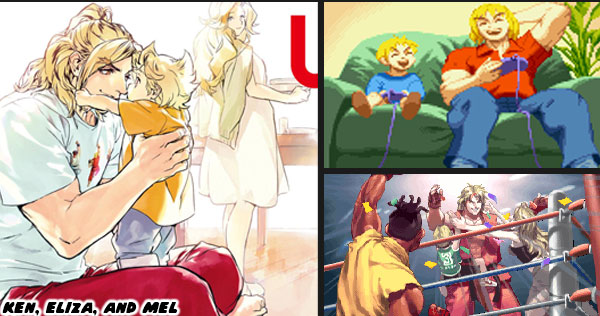
We got to see the baby be born, play games with his dad, throw his first punches. He idolized his old man, thought of Ryu as his uncle. Both Mel, and Eliza celebrated every victory with Ken. We saw all of this, and more character building in the game series, as well as in various manga, and comic book adaptations. Having him appear washed up, and “over” his life as a fighter doesn’t make any sense. Saying that Rose, and Menat predicted this path in a couple of lines in SFV feels like a cop-out. Capcom has not been sprinkling any clues that Ken, and his family were not happy with their lifestyle. Not one drop of apathy, or detachment to the fighting arts, or his own family over 35+ years. In fact the character did nothing but portray the opposite of that. Ryu was not the only one to continue climbing the mountain. Ken continually pushed himself to learn, and grow as well. His attacks became stronger throughout the series. His Shouryuu Reppa, Shinryuu Ken, and Shippuu Jinrai Kyaku were distinct variations of the legendary Dragon Punch, and Hurricane Kick that Ryu couldn’t do, or didn’t know how to do. These were techniques that canonically took him decades to develop. Why then would he suddenly stop doing everything?

Did Ken back away from everything because something happened with Mel, or Eliza? Did they get hurt, or are they dead? If that is the case then it would make sense that Ken was presented as a changed man in SF6. At the same time it would be a sad development for the franchise. Eliza, and Mel were fun characters. They gave Ken so much dimension. They connected Chun-Li, and some of the other characters together. I think it’s too ambitious if Street Fighter 6 Director Takayuki Nakayama wanted to create a come-back story for Ken, especially in one game. Street Fighter has always juggled multiple balls at the same time. We got to find out what happened to each, and every character in the tournament through their own cut scenes, and endings. Sometimes the scenes were comedic, others tragic, and some heroic. Some endings tied two characters closer together, or even pushed them apart.

In any case we could always count on Ken, and Ryu always choosing the right path. They were trusted protagonists that moved the series forward. For the company to suddenly change Ken’s appearance, and motivation off screen was a disservice to the character. I have more faith in Mr. Nakayama, Mr. Tsuchiya, and Mr. Hashimoto than I had in Mr. Ono when it comes to the direction of the series. If there is one saving grace about the leaked designs, it is that the producer, director, and designer can gauge the audience reaction, and make changes accordingly. I hope they consider adjusting the look, and motivation of Ken. They have enough time to do so. What do you think of the leaked Ken redesign? Do you like the character or no? What would you have done different, if anything? I’d like to hear about it in the comments section. If you would like to sponsor me please visit my Patreon page and consider donating each month, even as little as $1 would help make better blogs and even podcasts!
follow the Street Writer on Patreon!

Tuesday, August 15, 2017

Speculation on ARIKA's unnamed Street Fighter EX successor, part 3...

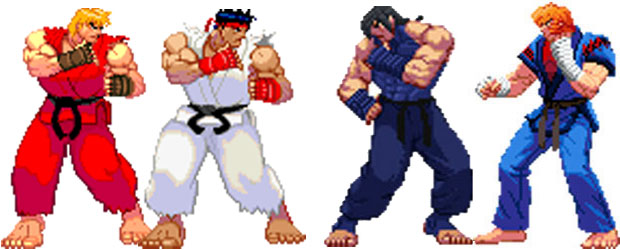
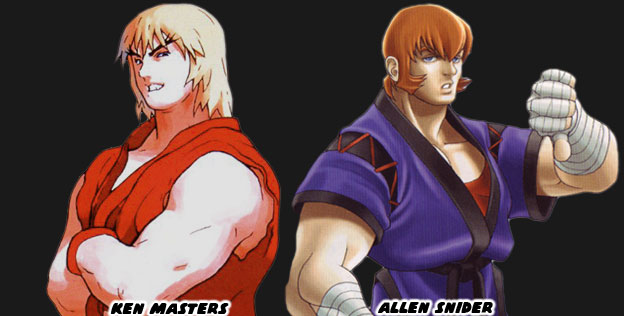
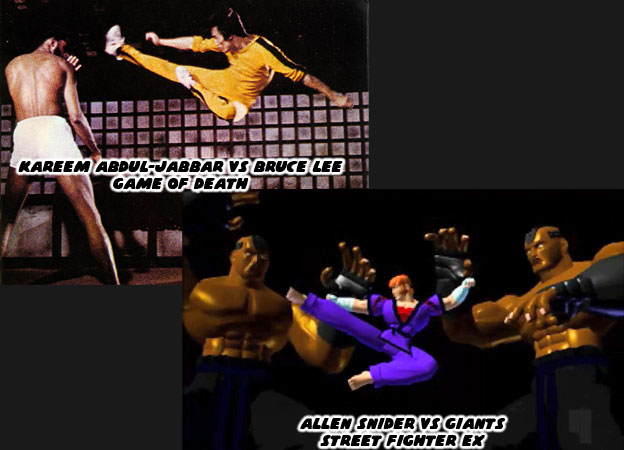
Allen Snider was recently announced for the new ARIKA fighting game, let’s call it Fighting Layer EX or FLEX for short. Allen Snider, along with Kairi, were created as sort of rivals / parallels to Ken and Ryu in the Street Fighter EX series. In fact just about every character in the game was a sort of parallel to the Street Fighter II World Warriors. Blair Dame was a balance to Chun-Li, Darun Mister was the perfect rival for Zangief and Doctrine Dark was a military assassin to counter Guile. Skullomania was the oddball character, a sort of Dhalsim or Blanka in the lineup. Akira Nishitani was one of the designers on Final Fight and Street Fighter II. When he left Capcom to start his own company, ARIKA, he didn’t forget the many lessons he had learned from his teammates.


One of the things that ARIKA did was dissect the elements that made the Street Fighter II characters iconic. They looked at the color pallet, costumes, martial arts represented, origin stories and nationalities. They they tried to recreated these things. If a character set a standard, like Ken and Ryu did for karate-type fighters, then they wanted to figure out how to top those designs. It was very important that they show audiences that Kairi and Allen were not simply the same character with a different head. The colors, costumes, stance and fighting styles of Kairi and Allen were very unique. The difference between the two was much greater than the difference between Ken and Ryu. At the same time ARIKA wanted it to be understood that Kairi was the star of the game, the Ryu, and Allen was a sort of Ken in the universe, without necessarily being a friend of Kairi’s.


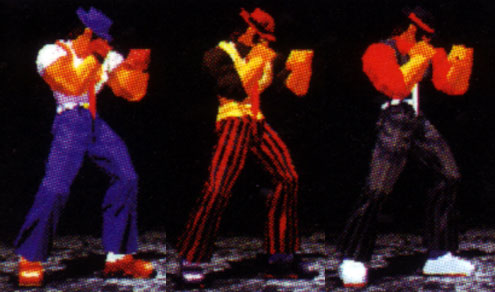
ARIKA didn’t settle for simple hue shifts or alternate colors for their characters. They actually created unique costumes as the alternates. Each costume told a story. Kairi’s showed the evolution of his character from fighter to boss-tier master. Allen went from one flamboyant gi to another more outlandish one. Supporting characters like Darun wore different wrestling championship belts depending on his costume selection. C. Jack went from one stylish outfit, including gambler-style hat, vest and tie, to an even more stylish one. This design rule followed every character in the series. But having a unique set of costumes, which were all character appropriate, were only part of the design elements behind the EX series.


Allen Snider was a second attempt at creating the Ken character. Takashi Nishiyama was the director and Hiroshi Matsumoto was the designer on the original Street Fighter. The reason they created Ken was to have someone for the USA players to identify with and thus play. Their design choice was far from unique. The white gi versus red gi character had been seen a few years earlier in Technos’ Karate Champ. There was little then that made Ken and Ryu unique. They shared the same moves and aside from Ryu having a different head and pair of traditional Chinese slippers, they were identical. When Nishitani took over the reigns in Street Fighter II (SFII) he and the team wanted to make Ken and Ryu a little more unique. Bengus, AKIMAN, SHOEI and Sensei, a literal who’s-who of fighting game designers introduced small details into the characters. If you look carefully at the official Street Fighter II art Ryu wore a gi that was ragged and frayed whereas Ken wore one whose cuffs were hemmed. That detail was very easy to overlook, especially since the sprites remained identical in the game. So when the opportunity arose to make a new American karate champ they went all out with the designs.


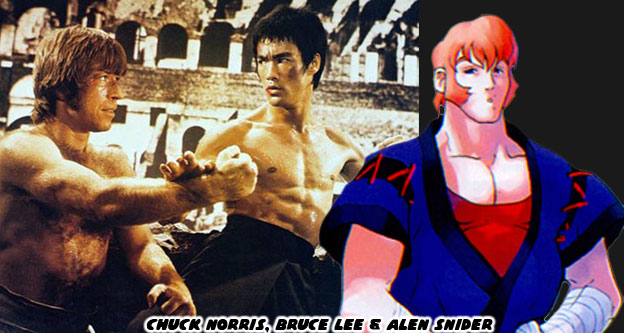
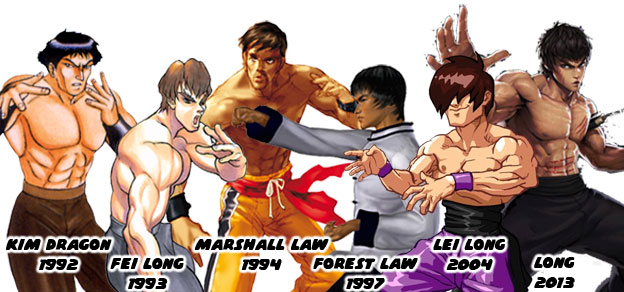
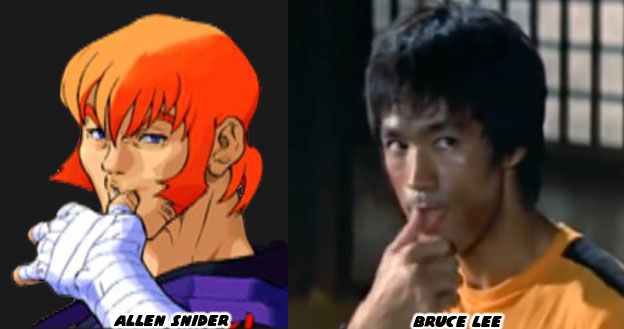
The artists looked at the heroes they had in comics, in animé, in martial arts cinema and then made an amalgamation out of these figures. Allen Snider in a nutshell had the hair and sideburns or Chuck Norris, but with the desire to be a breakout star like Bruce Lee. Snider was not simply a cut-and-paste of the two. He was especially not just a carbon copy of Bruce Lee. Many studios tried to put a Bruce Lee clone into their games, including ADK, Capcom, Namco and a few indy developers. But each attempt was just a caricature of the man. He seemed out of place when put in a lineup of figures that were more unique. That were more memorable.


So what artists did was focus on the elements that made Lee and Norris unique. They tried to find some symmetry there. Allen was meant to bring back memories of the previous generation of karate stars. Not necessarily the underground legends but instead those that fought in televised contests. The developers had seen how well incorporating elements from real people had worked for Ryu. I’ve talked about it again and again but I always go back the gold standard in character designs. Ryu was inspired by the true-life adventures of Mas Oyama and Yoshiji Soeno. The thing was the character did not look anything like the real men. Yet watching him dominate the competition with his superior techniques would rekindle memories of Oyama, a man nicknamed the God Hand. Snider was the high kicking star from the USA. Someone that was ready for his movie debut. He was not supposed to have the gravitas of Kairi, his drama was more manufactured. He was a reflection of the modern martial arts star. Someone who was more comfortable on the big screen than in the back-alley fights.


ARIKA did an excellent job at making the difference between Kairi and Allen more profound than that of Ken and Ryu. Kairi was covered in scars, had long hair and was missing an eye. Snider had the good looks and shaggy long hair of a ‘70s star. Kairi was a tortured soul that pained with every victory while Allen celebrated with gusto. They didn’t want to let tiny details tell the story, there were no hemmed cuffs separating the models. Reusing sprites was a thing of the past. There were fresh uniforms, bright colors and original 3D models to look at. They hammered away at this difference all throughout the series. The way each controlled had to be as unique as how they looked. Kairi was the more experienced fighter, he had a broader library of attacks and could be played more aggressively. Snider was new to the unsanctioned tournament scene. He was designed to be used more tactically. Even the game endings were very different. Kairi was the outcast, haunted by his past he was meant to fight his battles alone. Allen was the budding movie star and got his big break at the end of the first EX Tournament. ARIKA gave audiences another nod to his forefather. If Bruce Lee fought one giant on film then Allen had to fight two.


When Allen Snider was announced for the new ARIKA game I was excited. The changes made to the character perfectly reflected his origin. We’ll look at these things on the next blog. As always if you enjoyed this blog and would like to sponsor me please visit my Patreon page and consider donating each month, even as little as $1 would help make better blogs and even podcasts!

 follow the Street Writer on Patreon!

Wednesday, May 18, 2016

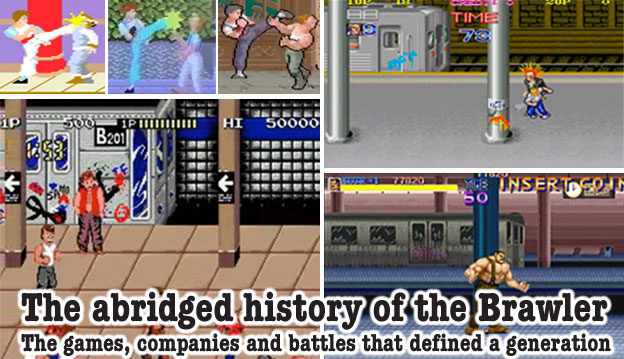
The Abridged History of the Brawler, part 21


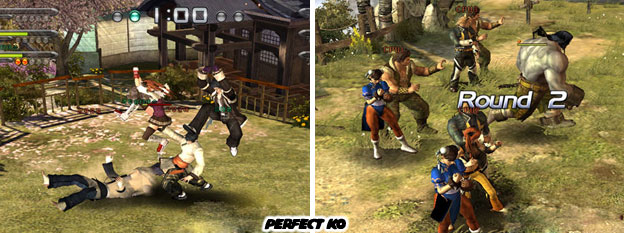
In 2007 Thingsoft developed a 3D MMO brawler titled Perfect KO. It was published in Korea by MMO giant Pmang. To help make the concept more appealing and help distinguish it from the scores of MMOs that come and go in Korea the game licensed the Street Fighter characters Ken and Chun-Li.


From all reports the game had a decent fighting engine and customizable characters, Ken and Chun-Li could not be customized. Thingsoft designed certain generic archetypes that could be clothed differently by players. Each character had a certain style, like judo or jeet kun do, and list of attacks that could not be swapped to a different character. Players chose their archetype and went at it in team battles over Asian themed levels. From everything I could gather the game played very closely to Urban Reign, which was like Tekken 5 with double and triple-team attacks.


Unfortunately even the addition of Street Fighter characters was not enough to get more players to support the title. The game lasted online from late 2007 through most of 2008 before closing down permanently.

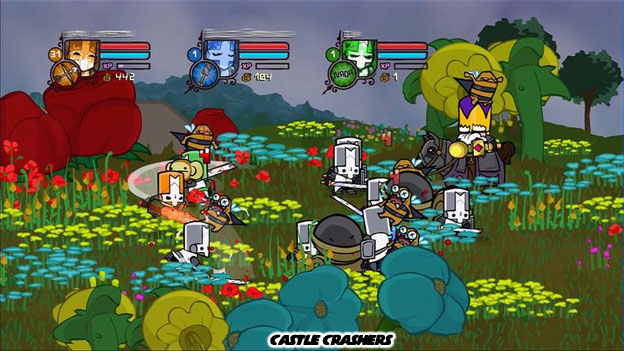
In the US there was a brawler that seemed to come out of nowhere that proved to be much more successful and much longer lived than Perfect KO. Independent studio The Behemoth released a 4-player hack-and-slash style brawler called Castle Crashers. The game was nothing short of inspired mayhem.


Castle Crashers succeeded on several fronts. It used the tried and true gameplay mechanic of allowing characters to attack only to the left or right. Players could upgrade their weapons and team up against larger opponents. Best of all the game featured a distinct animated style. The "soulless" 3D models from other brawling attempts could never match the artistic stylings of sprite-based artwork. The 2D figures in Capcom's Dungeons and Dragon titles were aesthetically superior to the 3D models used in Brezza's The Crystal of Kings In Castle Crashers the levels, characters and opponents were all created in the 2D Flash format. This vector-based engine could be scaled in our out by the game camera without the pixelation issues that plagued earlier sprite-based brawlers. Flash also allowed for effects, layers, transparencies and filters to be applied to the game. Those would have been slightly harder to program in sprite-based brawlers. The Flash format also allowed the game to be distributed online through webpages and reach a broad audience. The game was so well received that it eventually found its way onto Xbox Live where even more players got a chance to experience the mayhem with their friends.


I am not a fan of the over-stylized character designs in Castle Crashers or The Behemoth's previous Flash-based hit Alien Homonid. Artistically speaking the character and level designs looked dis-proportioned and rough especially when compared to Earthworm Jim, a console game that predated it by a decade. But my personal tastes aside, The Behemoth showed that the genre still worked, was viable and could be popular if only studios would observe the importance of preserving the 2D play mechanics and stop trying to force the genre to adopt the 3D standard. The last three games for this blog series would challenge the concepts of the brawler and try to reinvent arcade classics for a new audience. I hope to see you back for the final blog in this series. As always if you enjoyed this blog and would like to sponsor me please visit my Patreon page and consider donating each month, even as little as $1 would help make better blogs and even podcasts!

follow the Street Writer on Patreon!

Tuesday, May 10, 2016

The Street Writer Blogcast: Episode 1

Every time I release a new Podcast I will release the text version for my hearing-impaired friends. I don't want them to miss anything that I cover. Also you are welcome to leave comments and questions for this podcast as well as future podcasts on this blog.


Thank you for tuning in to the first episode of the Street Writer Podcast. I am your host Noe, on my personal and Capcom-Unity blogs I'm also known as BigMex. Today I'm going to look at one of the elements of great fighting games; specifically rivals. Not just any rivals but the best ones in the genre. Rivals are something you've seen many times and possibly one of the things you might enjoy most about fighting games. Great games know how to build a rival. Whether it's a friendly rival or a sworn enemy the best games knew how to build the tension in the story and through the gameplay. They knew how to make you root for a hero or jeer the bad guy. Even some forgotten titles knew how to create great rivalries. Think about how the developers made some characters heroes and others villains. What techniques did they use? Just because there were both good guys and bad guys in a game did it automatically create a rivalry? Not always, some of the best ones were planned while others developed by accident. When it came to great rivals who was on your list? Was it Ken versus Ryu? Kazuya versus Jin? Daigo versus Justin? What did you think made them great rivals? Which rivals were the best in the genre and why? Over the next few episodes I'm going to point out some of which I feel were the best. I'll begin with Street Fighter, it's pretty much the reason why I'm still writing and now doing podcasts. The template for a great rivalry started in the very first game.
 

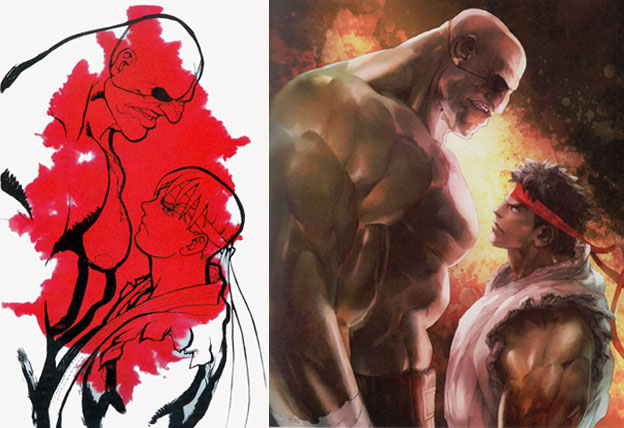
Sagat and Ryu were the oldest and longest standing rivals in the history of fighting games. They had been going toe-to-toe for almost 30 years. There were a lot of things that made them work as opponents as well as really popular individual characters. They represented a clash of styles, a clash of nationalities and at the heart a clash of purpose. Why did they fight? The designers at Capcom had to give them a reason to fight, the way they did this gave each character a personality. You could see it in the way each character was animated. You could see it in the official character art, in the game endings and through the story of the series. One fighter was the established champion. Sagat absolutely destroyed opponents and was feared by many. He knew what it took to get to the top, and it was much more than natural ability. Sagat was unusually tall and strong, making him a standout fighter at a young age. Before he became a champion he lost an eye in a fight. That event changed his life, he became cold-blooded fighter after that. He was willing to put his life on the line, and more important he was willing to put his opponent's life on the line in each fight. The other warrior, the man who would be king was new to the world of combat. Ryu was insanely talented, had a strong desire to win and was trusted with secret martial arts techniques. He was looking for a purpose in his fights, a sort of guidance that could only be found by fighting the best. Ryu was trying to find meaning whereas Sagat was trying to prove no one could beat him. In temperament they were night and day, destined to be opposites in every regard. The animosity between the two slowly faded over the years and was replaced with an intense respect. It was a level of respect that few characters in any genre would be written about. But it wasn't a friendly rivalry when they first met. That was something that the developers at Capcom managed to get through to audiences way back in 1987.

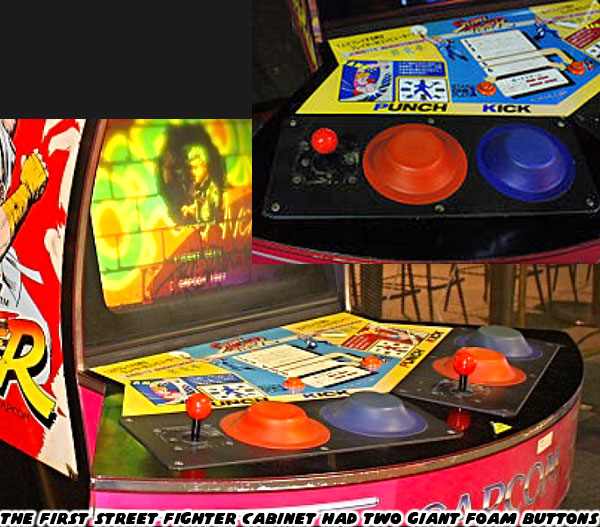
Imagine if you were a kid going to the arcade in the '80s. There were no cell phones, no really powerful home consoles. The best games could only be found in the arcade. If you were lucky maybe your parents gave you a dollar to play some games. You could spend four quarters on one game or play four different games. Every cabinet was fighting for your attention. Every company wanted your money. The fighting game was still finding its voice in the mid '80s. Other genres like space shooters and maze games were more popular. Studios were experimenting with different formats, different types of control setups to win players over. Capcom took some very big chances during this era. The first Street Fighter machine really stood out from other machines. The first cabinet had two enormous foam buttons, they were the size of overturned cereal bowls and much harder than the foam used in Nerf toys. The buttons were red and blue and you had to punch each one in order to get the character to punch or kick. As a kid I learned that I had to hammer down on the buttons with the edge of my hand instead of trying to punch them straight on. Tapping the buttons translated to a jab whereas the hardest hammer punch was a fierce strike. If you were lucky or knew how to perform the fireball, dragon punch or hurricane kick then you probably kept it a secret. Those were super attacks that could beat any opponent. You could use them to beat other players in a two-player match and feel like a real champ. Imagine what was going through our minds. Imagine being a kid and Street Fighter was your first introduction to the genre. You could punch the buttons as hard as you wanted and sometimes your character would perform these super moves. It was a high-energy concept that paid off for Capcom. Okay, so maybe it didn't pay off as well as they wanted. A few months after the game debuted the studio had to create a new controller for arcade operators, one with the more familiar six-button layout because people were having problems using the foam buttons. Some kids ended up breaking the controls because they were playing too rough, while others were injuring themselves for the same reason. I can still remember the machine in the local arcade when it came out. I can still remember seeing the foam buttons torn on one side because somebody was trying to rip it off the cabinet.
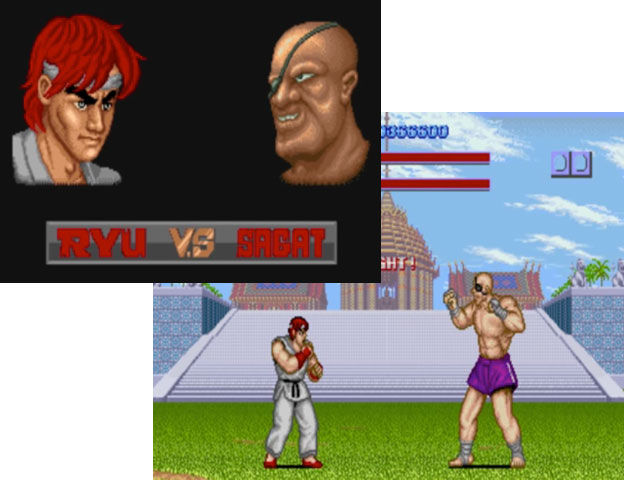
 

Ken and Ryu were amazing characters. All of the sprites in the game were big and colorful. They were much more animated than any other martial arts game. Ken and Ryu stood out because they weren't boring like the red and white characters in Karate Champ. They fought to a single hit while Ken and Ryu flew all over the screen like the characters in kung-fu films. One by one all of the rivals fell. It didn't matter what form they studied, whether they used a weapon or even if they could even teleport around the screen. A player that learned timing and how to perform the secret moves could actually go through the game on one quarter. That was a rare for most arcade games. Operators and companies made their money by creating titles that were challenging and often required a few credits to complete. Finding a game that had a good challenge yet you could beat with one credit was rare. Even in the early days the team at Capcom knew that they had to make each and every battle difficult but not cheap. If the game was too hard then a player had no incentive to continue. But if the game kept the action even and rewarded the player for having a superior technique or sense of timing then they were likely to pay a few extra credits to continue. Street Fighter did a good job of capturing the unpredictability of a fight. A player could dominate one round and then be taken out the next. A lucky punch might be the difference between becoming the champ and losing everything. It happened in the real world and was expected to happen in a game too. Thanks to this level of balance people were more than willing to put in an extra credit and continue from where they left off. Balance also made every opponent unique. Fights gradually got harder the further a player went into the game. No two opponents fought the same so it kept things fresh from match to match. If a player made it to the nation of Thailand then they felt confident that they would be able to beat the final opponents. Adon was a difficult fighter with his unique flipping "Jaguar" kicks. It was his master than was on a different level.
 

As colorful as the cast was there wasn't really an equal to the main characters. I mean everyone was roughly the same size but nobody looked or fought like Ken and Ryu, especially not the final boss. Yet this boss stood out because he was visually so different. The final match in Street Fighter had to be unlike the other battles. It couldn't be easy but again Capcom didn't want it to feel cheap. To help make the fight memorable they wanted to shake the confidence of players. There was a bald, dark skinned eyepatch-wearing character staring at the player in the stage intro. The guy was ugly, about two hundred pounds heavier than Ken or Ryu and easily a head and a half taller. He was biggest character in the game. Up until that point we thought that Birdie was largest and strongest brawler. We had no idea who we were dealing with. What made Sagat much more dangerous than any other opponent was that he had technique and not just mass on his side. Karate was seen as a sort of ultimate empty-handed fighting style. It was the style of fighting used by the heroes in movies and tv shows. What Sagat used was Muay Thai, an older and more brutal fighting art. Players learned to fear the man right away. He could stuff just about any attack and was surprisingly fast despite his size.
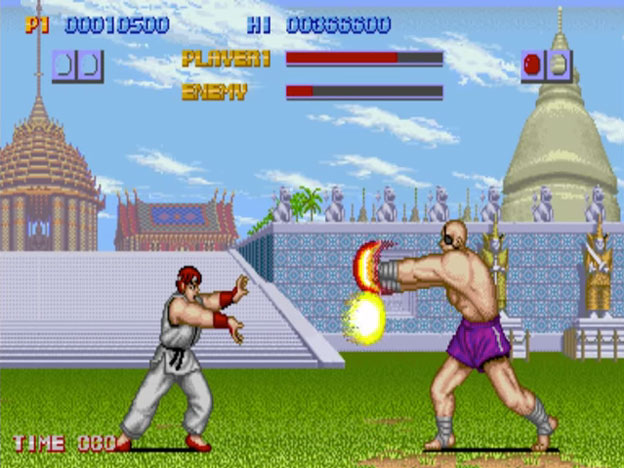
 

Capcom made sure to level the playing field by giving Sagat his own special attacks. Everything that made Ryu or Ken unique was stripped away on the final stage. The developers knew that the last opponent in the game had to be everything the main characters were and more. He needed his own ranged attack. Something that was not a throwing star or dagger. A bolt of fire that erupted from his hands, the Tiger Shot was something no other opponent could perform and equal to the fireball from the main characters. He also had a leaping knee strike, this would become known as the Tiger Knee. If cut down the distance on the stage and was a counter for the hurricane kick. More than that Capcom knew that he needed to be able to beat the players move for move. His range had to be greater, his kicks longer, his strikes faster and his defense tighter. Players that underestimated the giant were beaten very quickly. Capcom even gave Sagat a personality trait. He was cruel in his victory animation. He would cross his arms, face the audience and laugh. It was an early example of a taunt in a fighting game. He laughed as if the player was not even remotely good enough to take on the champ.
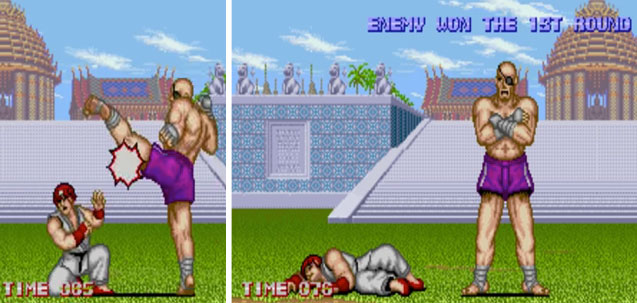
 

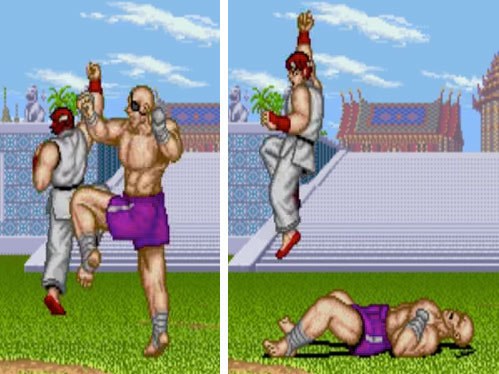
Gamers had to use all of the secret techniques and use them fast if they wanted to make it through two rounds. The original Street Fighter could be tough, special moves took way more energy than in any sequel. Just a few hits from Sagat was enough to knock you out. The dragon punch was the great equalizer, it was the one move that Sagat didn't have a counter for. It would become the punch used in story to defeat Sagat. The final battle was supposed to be a fight to the death. Sagat didn't care what happened to his opponents once they dropped. If someone were powerful enough to beat him then he accepted he would die in the process. Many people didn't notice this but if he was beaten he laid there with his eyepatch torn from his face. It was the insult to injury. At that very moment the rivalry was born. What made the character unique was that players and even Capcom did not know Sagat would become an important piece of the story until years later. He was just another boss guy in another arcade game. In hindsight the original Street Fighter was a fun game but it was not extraordinary. There was nothing that really kept people coming back. I remember playing it a few more times once the local arcade replaced the big foam buttons. But each time I visited the arcade there were always new games that seemed more interesting.
 

Part of the reason why some people didn't really remember the first Street Fighter was because the climb to the top happened very fast. It happened so fast that the story didn't really have a chance to sink in. Who were these fighters? Why should we care about them? Aside from some really neat moves what else did they have going for them? For that matter why should we care about the main characters? This kid named Ryu, did he really become the world champ because of his heart, his skills or because of a lucky punch? Every battle in the original game ended with the opponent saying "What strength!! But don't forget there are many guys like you all over the world." Ryu did indeed travel around the world, putting on breaking demonstrations to pay for his journey. He beat all of those guys until he earned his title. It was something that real life martial artists did more than a half century ago, before mixed martial arts matches were broadcast on TV. If a fighter wanted to prove they were the best then they actually had to go out there and show it. They would put on breaking demonstrations, Mas Oyama would even fight bulls in public exhibitions and kill them with a punch to the head. Perhaps a newspaper might cover those martial arts pioneers but often it was word of mouth that created the legends.
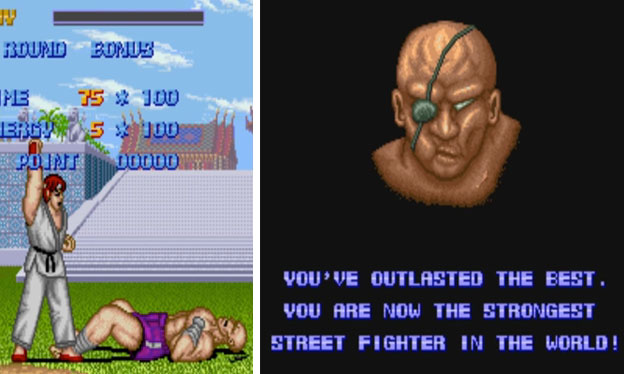
   

Ryu did become the best in the world when he beat Sagat. This was something that many people seemed to miss in the story of Street Fighter. In every sequel Ryu was the best and he was defending his title against new opponents. Ryu's first championship however did not come with a belt or trophy. Ryu won the war by attrition. Sagat even said it himself "You've outlasted the best. You are now the strongest street fighter in the world!" Note he didn't say best street fighter or even greatest street fighter, but rather strongest. Ryu outlasted them all thanks to his incredible conditioning, superior techniques and physical gifts. Because of his age there would only be room for improvement, this was something that the developers at Capcom could use to their advantage. Sagat on the other hand was the tired champion with no where else to go but down. For that character the challenge was internalized. If he wanted to reclaim the title, if he wanted to beat Ryu then he had to become stronger. So how does a seven-foot, one eyed former world champ become stronger? There was room for improvement but we wouldn't see it for years. The team that created the original Street Fighter would be broken up and be put on different projects. Some left Capcom to join other studios. The rivalry would have to be put on the back burner while Capcom figured out where else they could take the genre.

Arcade operators wanted Capcom to do a follow up fighting game. The studio saw that Technos / Taito's Double Dragon was a bigger hit in 1987 and decided that they should create a brawler instead of a fighting game as the sequel to Street Fighter. When they showed arcade operators the game called Street Fighter '89 featuring the characters Guy, Cody and Mike Haggar they go push back. It had nothing in common with the original game. So Capcom called the game Final Fight and released it anyway. They went back to the drawing board and began putting together all sorts of ideas for Street Fighter II. There were some influences from Hokuto No Ken aka Fist of the North Star. There were influences from real world pro fighters and wrestlers as well. There were also some really ugly characters that were stereotypes if not racist caricatures from other countries. A new karate fighter was planned as the star but Ryu and Ken were the ones that would return. The original plan did not include Sagat. The new boss character and sub boss were some sort of knight and ninja in armor. They eventually became Vega and Balrog, the Claw and Dictator for international fans. The decision to bring back Sagat was done after the studio came up with the concept of multiple boss characters. His re-introduction was supposed to mean something to audiences. Capcom had created a terrorist organization, the main character a Dictator named Vega surrounded himself with bodyguards / hit men that were the most dangerous men ever. A heavyweight boxing champ, a Spanish assassin and the former strongest fighter in the world became generals in this organization. Each fighter was more dangerous than the last.
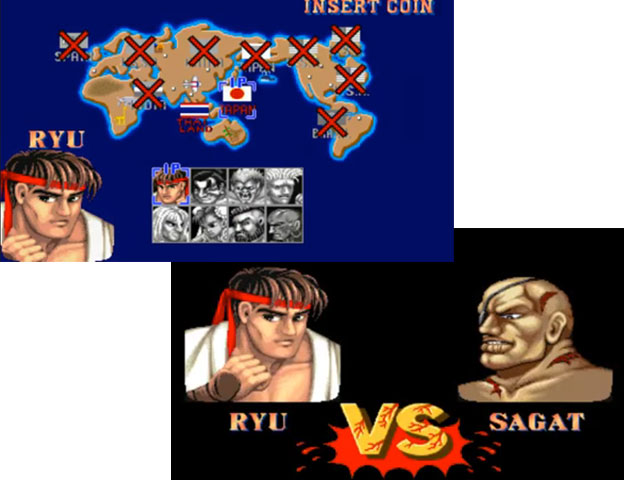
   

In Street Fighter II, after players beat the main roster and went through the first two generals they were surprised to discover the boss from the original game was waiting for them. Okay, not everyone remembered that Sagat was the original boss, the early generation of Street Fighter fans were young kids when the first game came out and didn't pay attention to the cast. Anyhow Sagt was back and he was as big and as ugly as he had always been. There was something profoundly different about him though. He had a massive scar across his chest. Who gave him this scar? Why did he return? What else was different about him? These were things that people who remembered the original game wondered out loud. Capcom would later on explain that it was Ryu that scarred him, it would create an incredible narrative. The main hero of the series had actually tried to kill the villain in the first game. Granted he was possessed by the Dark Hadou, a sort of evil energy living inside Ryu. So he wasn't quite himself at the time but nonetheless there was blood on his hands. If Sagat was smaller or weaker he would have been dead. Think about it for a moment. What other game had a main character that was like this? Sagat did not forget the fight and became an even more dangerous opponent because of it.
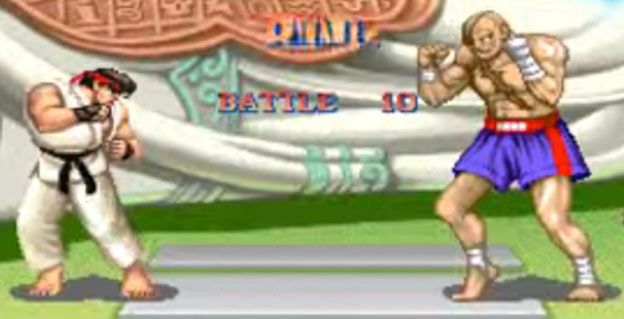
 

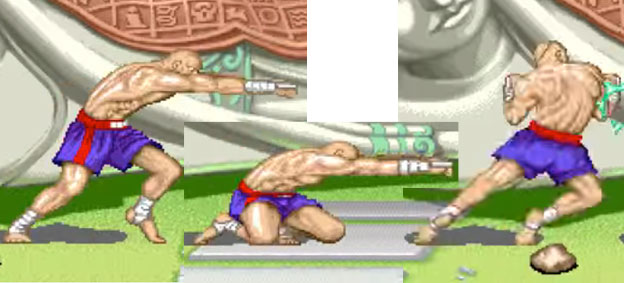
Sagat seemed a little bit leaner the next time he fought Ryu. He was indeed a little bit faster than before. Audiences saw that his library of moves had grown as well. He still possessed the Tiger Shot, the counter to the Hadoken or fireball. Yet he could now launch his attack while crouching or standing, which was something that neither Ken or Ryu could do. He still had the Tiger Knee, a leaping kick attack that was a counter to the Tatsumaki senpuu kyaku or Hurricane kick. Lastly he had developed his own punch. The Tiger Uppercut was the answer to the Shoryuken or rising dragon punch. Sagat's version started lower and rose higher than either Ken or Ryu's. These three special moves pretty much cemented his status as the ultimate rival. There was nothing that Ryu could do that Sagat could not do better. Combined with his strength and range he was a very formidable boss. The team at Capcom wanted audiences to understand that the time spent recovering from the first Street Fighter tournament had turned him into a much more dangerous opponent. The generals all reinforced that idea that there was more at stake in this tournament than a trophy. The most important part was having the previous boss return with a vendetta. It made for a much stronger narrative. The audience was hooked from that point on.
   

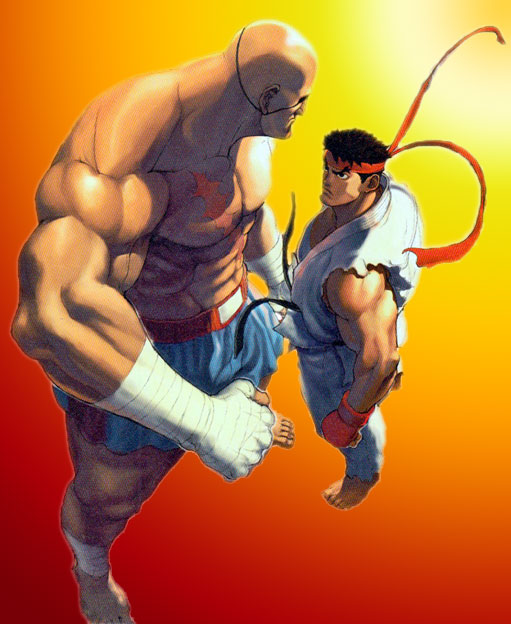
Fighting games could have depth and character growth, things that were usually reserved for role-playing games or adventure titles. Fighters were not throw-away characters after all. They would develop a strong following and influence characters in other games as well as in animated projects and comic books. Sagat and Ryu would do battle a few more times in canon. They would also fight a number of the other main characters in the stories but none of those battles had the intensity of the original rivalry. Sagat and Ryu crossed paths in the various sequels and VS titles from the studio. Each time they met the legend grew. Every encounter came with a certain level of intensity. It was palpable. Fans knew that the two had a history. After 20 years it had grown to mythical proportion. Fans were eating it up. When the artists at Capcom drew the pair, which actually wasn't that often, they made sure to capture the menace of Sagat and the defiance of Ryu.
   

When it came to rivalries I couldn't think of any one that stood out more than the one between the Capcom legends. Was it the only great rivalry in fighting games? Oh no, not by a long shot. We're going to dig a little bit deeper and in the next episode and see what Capcom's rivals were working on, I hope to see you back for that. If you have any questions, comments or want to share a story please let me know. If you enjoyed this broadcast and would like to see more then leave a comment and consider sponsoring the Street Writer on Patreon.

Sponsor Me on Patreon!