Showing posts with label story. Show all posts

Monday, December 30, 2024

Manifesting a press kit, or how much I love War of the Monsters…

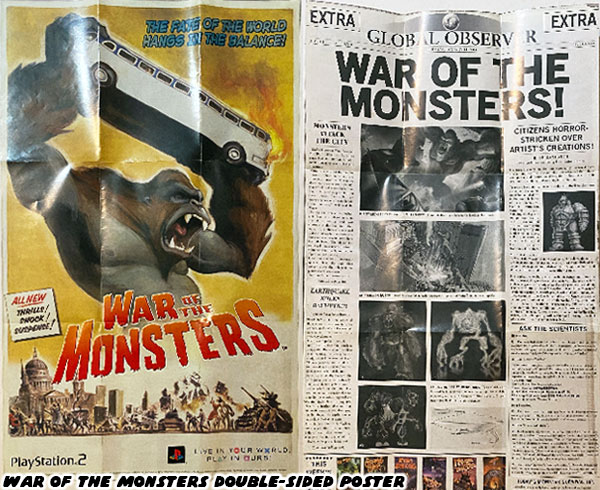
This is the second to last blog of 2024. Thank you all very much for joining me this year. In fact, thank you for inspiring me to have two highly productive years. I cannot guarantee to keep this manic pace into 2025, but I am going to try. If I need to take a break I will let you know. Today I’d like to share a sort of follow-up to my poster series. I have a massive poster that I want to share, but I think the story of how I got it is even better. The poster immediately below is not the one I'm talking about. This double-sided poster is made to look like a classic monster poster on one side, and on the other it looks like the front page of the Global Observer newspaper. This is included with the game itself. How cool is that?!

I am a big fan of the Sony Playstation 2 cult favorite War of the Monsters. In fact on this blog I mentioned that War of the Monsters is one of my favorite games of all time. The game was designed by David Jaffe, and his team at Incognito Entertainment. It was a collection of some of the best game creators ever. They worked on, or released many of the first generation Playstation hits, including Twisted Metal, and Warhawk. On the PS2 they created Twisted Metal Black, Downhill Domination, and a little gem called God of War. Can you imagine how great the world would be if publishers stopped insisting on sequels, and let developers come up with unique experience. But I digress…

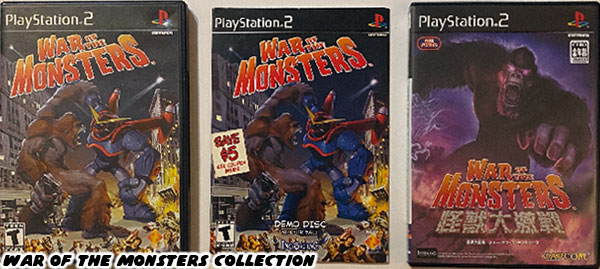
I loved the game so much that I collected a copy of the game demo, and even a copy of the Japanese release of the game. I am trying to figure out how to get my hands on a copy of the Korean version of the game. In addition to playing exceptionally well it also celebrated the golden age of the giant monster films circa the 1950's-60's. War of the Monsters captured a moment of American history much better than games with a bigger budget, or even bigger licensed names like King Kong or Godzilla. If you've never played the game here’s part 1 of my deep dive, and part 2 of my deep dive.

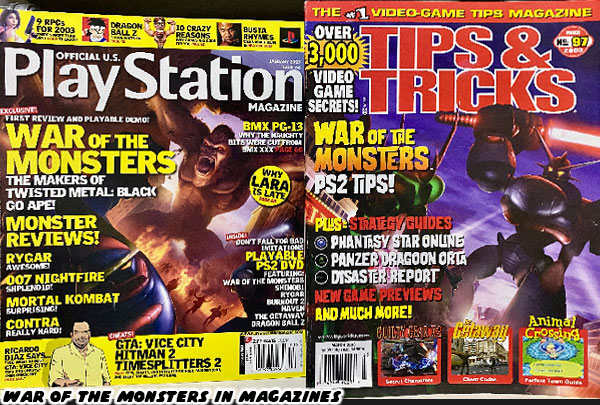
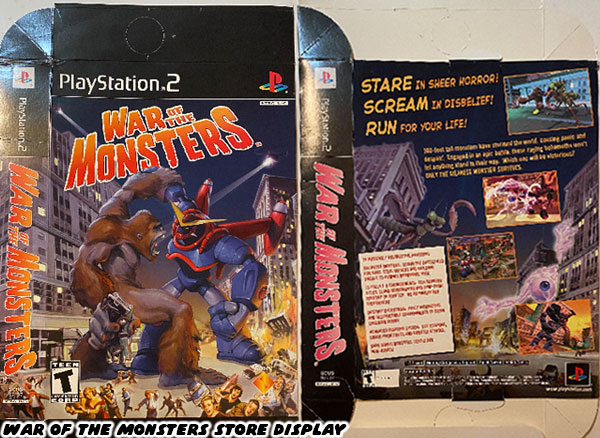
I'm such a huge fan of the game that I tracked down everything that I could get my hands on that featured it. Whenever they made the cover of a magazine I would make sure to collect it. I then started searching for items that would have been used in stores. The Playstation 2 games would sometimes have gigantic boxes acting as displays. I got a copy of the War of the Monsters one.

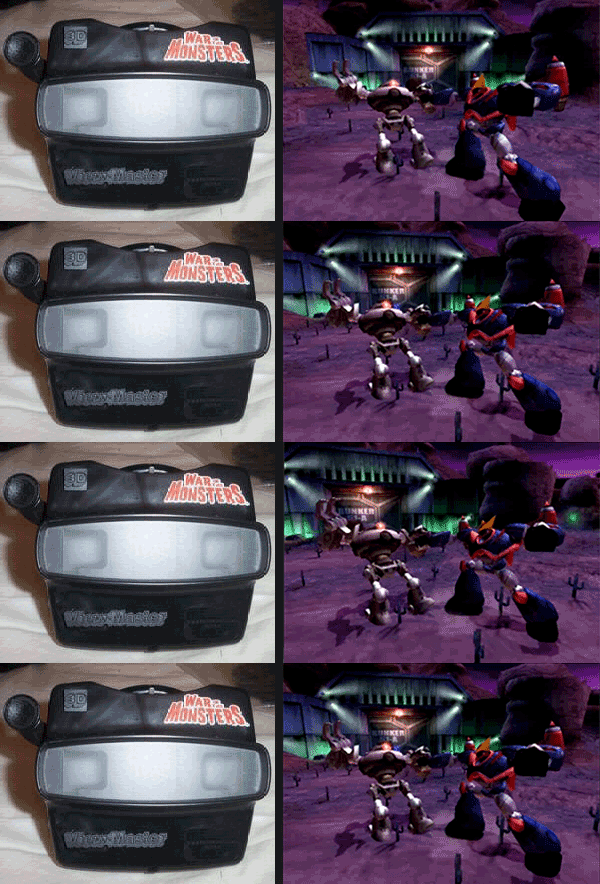
The hardest things to track down were for press releases. One of which was a ViewMaster, you know those red or black toy binoculars that show you a 3D scene? They had one made up of 3D game screens, and it was mentioned in an old 1UP article. I asked the 1UP editors if I could buy their copy, but they had already gifted it to someone else. I searched high, and low but could never get my hands on it. If you are reading this, and happen to have one in your collection you don't want any more please let me know. I can offer you a fair price, but just a reminder I'm raising a family on a teacher's salary. So money is the thing I'm always short on. Just as rare as the ViewMaster was the press kit that Sony sent out with a demo of the game, an extra disk of assets, and a massive poster.

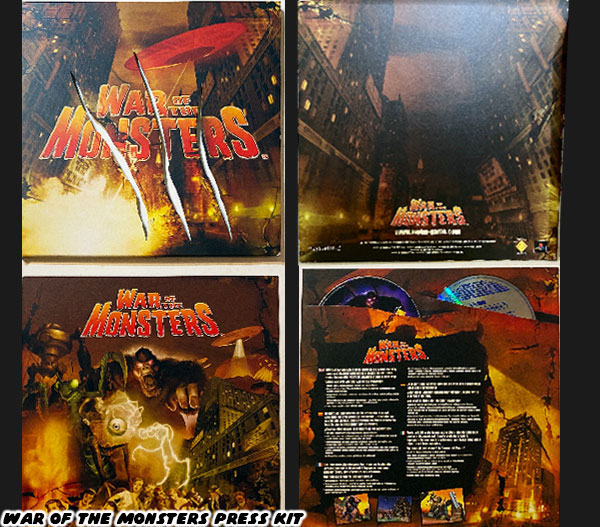
The album-sized press kit looked like a record but with three claw marks scratching through the center of it. It was a recreation of the opening cinematic. We can see some of the monsters peeking through the scratches. When you pull out the sleeve you can see all of the monsters featured in the game. On the back of the insert was information about the game and two discs. One of them had a demo of the game, and the other had screenshots, and graphics for the media to use in their articles. I was so happy to get my hands on this because I’ve always wanted high-quality reproductions of the loading poster art. Unfortunately not every loading poster was in the assets.

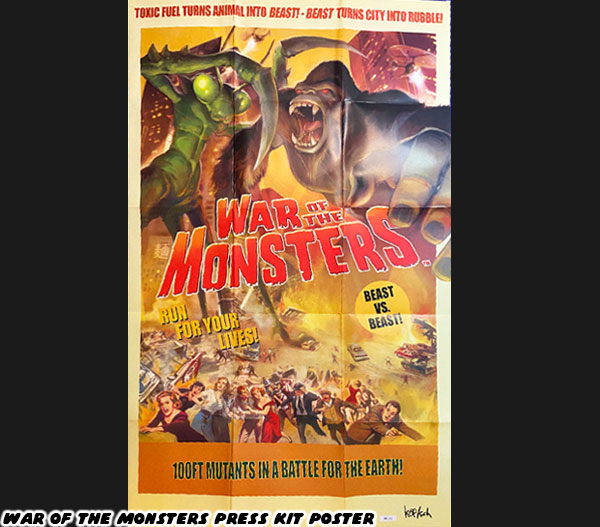
The poster in the press kit was HUGE. Also it featured art that was not seen in the game, or in the magazines. Some people were selling the smaller game store versions of the posters for hundreds on eBay, however the one in the press kit was a “two-sheet” in size or about 40-inches by 60-inches. It’s maybe the second or third biggest poster in my collection. My largest poster is an AND 1 ad featuring the work of Kadir Nelson. That poster is six-feet by four-feet. I believe the War of the Monsters press kit landed in my hands thanks to the power of manifestation.

One summer I was walking around the Disneyland Hotel with my kid. The missus was covering some press event, so we were just killing time. We were talking about games we wish we had in our collection. I mentioned that I have most of the rare games I want, but I wished I could find a copy of the WOTM press kit. My kid wished that there was a Psychonauts sequel (this was before the game was announced). Without missing a beat we turned the corner and walking right towards us was Tim Schafer, the founder or Double Fine. I said “hey it’s Tim Schafer!” He was surprised that I recognized him. We said hello, I got a picture of my kid talking to him, I wish I could find it so I could share it here. My wife did however snap a picture the second time we ran across him. 

Tim was very nice, we said our goodbyes and he went on his way. A few days later the press kit that I was talking about to my kid turned up on eBay for a ridiculously low price. About a month later the Kickstarter campaign started for a new Psychonauts game. Ever since that day we believed in the power of manifestation. Speaking of which, I hope to win the Powerball Lottery in 2025. Anyhow, I hope you had a great 2024. I look forward to sharing stories with you in the new year. Take care, and tell me what you are up to for New Years! As always if you like my blog, and would like to sponsor me please visit my Patreon page and consider donating each month, even as little as $1 would help make better blogs and even podcasts!
follow the Street Writer on Patreon!

Wednesday, March 15, 2023

NASCAR memories part 1...

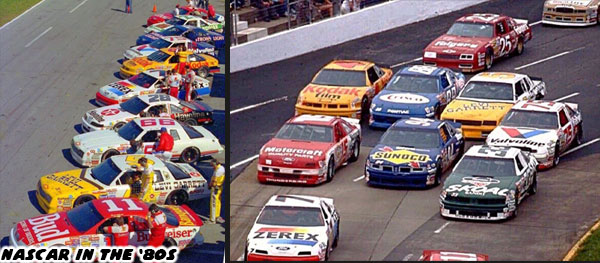
I was jumping around several classic Playstation games over the past few weeks as I was putting together my God of War series, and editing the upcoming 1UP classics for this blog. The car series in particular reminded me of my love of a particular game, and genre of racing. As many kids would tell you cars are cool, fast cars are cooler. I was five-years-old when my life was forever changed. It was early in 1979. My parents weren’t feeling well so we would not be going to church that Sunday morning. My brothers slept in most weekends, and I was always the early bird. So I would watch whatever was on TV for a few hours before the rest of the family got up. I flipped through the channels, and saw a race was about to begin. It was the Daytona 500. Today considered one of the most famous races in the world. I had caught glimpses of stock car races before, but usually only the results were shown on TV, and never the entire race.

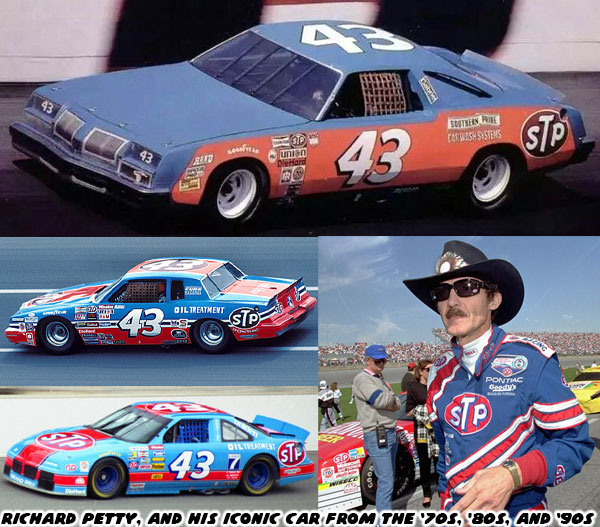
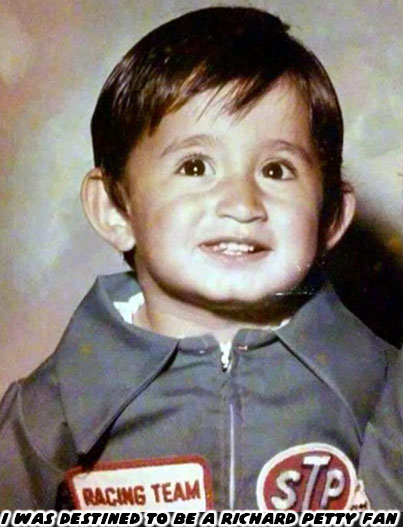
It turned out that NASCAR had come to an agreement with broadcasters, this would be the first time the race was shown in its entirety, and not just the last laps. I had no idea what the National Association for Stock Car Auto Racing was, or why these beautifully painted cars were racing on a giant oval. Not that it mattered. I saw fast cars in bright colors. Watching them run side-by-side at almost 200 miles an hour. They became four-wheeled, street legal, low-flying super heroes. I was absolutely hooked from that moment. As my family got up over the next few hours they saw me glued to the screen. I was explaining to them who the different drivers were, how they were fighting to hold onto a lead, and even the nail-biting pit stops that could cost them the entire race. They asked if I had a favorite. I said yeah, there was a guy called Richard Petty driving the #43 car. Its blue, and red paint scheme really stood out. He would become my favorite to watch over the following decade.

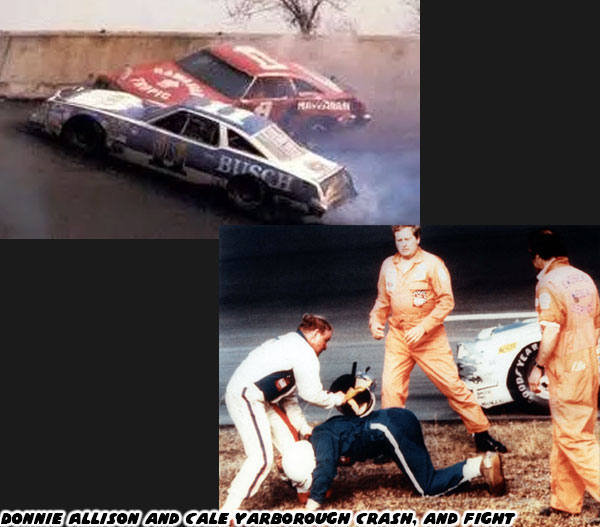
In the final laps of the race I remember my older brother, and parents all sitting on the couch watching Richard win his seventh, and final Daytona. My little brother was still a baby, and could care less about the race. We all cheered as he pulled into pit row. We saw his team jump on top of his car as he drove to victory lane. He climbed out of his car, and looked to be the coolest guy ever. He had curly hair, and a mustache like my dad. He sported sunglasses, and traded his helmet for a fancy cowboy hat. Nobody else looked as smooth as Mr. Petty. As the camera people were setting up for an interview they were distracted by a crash that had happened on the final lap. The two drivers Donnie Allison, and Cale Yarborough were trading punches on the infield. I learned that day the many layers of stock car racing. The most important was that they were passionate drivers that were willing to fight for their spot on, and off the track. If you’d never seen it I would recommend the History Channel's review before they started talking about ancient aliens. My family was happy for me. I had become a fan of a new type of racing, and my hero had won the race I had spent Sunday morning watching.

I wouldn’t get to watch many races in their entirety. The good news was that I could see how they started before leaving for church, and catch the ending when we returned on Sundays. I would spend my formative years learning everything that I could about stock car racing. Of course this meant that my friends would get an earful about it at school, and my family would learn about it during dinner time. For example a lot of people thought that NASCAR was always filled with sponsors, and professional drivers. That wasn’t the case. The cars were regular vehicles that were modified to run fast. Not necessarily to race, but because they were used by moonshiners to smuggle booze all over the South. Bootleggers could make as much in one run as a farmer could in a whole month. They had to be able to outrun the law by necessity. These drivers they would get into arguments about who had the fastest car. Racing pre, and post-WWII was a constant battle. The drivers were also the mechanics, crew chiefs, owners, body repair, and paint people. They barely had enough money to fix their cars, and get to the next track. They had to lean on friends, family, and neighbors for help. The cars had such a negative reputation that they were hidden when traveling, and drivers would have to check in under an alias in order to rent a motel room.

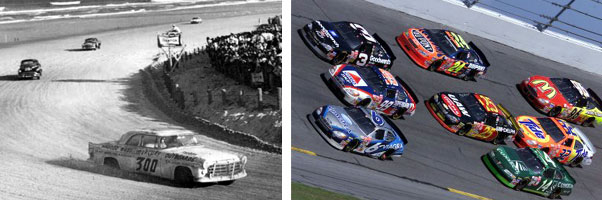
The majority of the early tracks were a quarter mile, or half mile, and occasionally a mile. They were mostly flat. They were still made of dirt, gravel, or sand. Darlington North Carolina introduced the first paved track in 1950 for the Southern 500. In 1959 the super speedways were introduced with Daytona. The 2.5 mile track was intimidating, and dangerous. Massive banked concrete turns that were three times taller than any other track. It scared the veterans to death the first time they saw it. I learned that Richard Petty was part of a racing legacy. Lee Petty, Richard’s father, won the initial Daytona 500 with a thrilling photo finish. Richard won that race five years later, and would win it a total of seven times over his career. He started racing in 1958 right as the sport was evolving. He would come to dominate through the ‘60s, and set unparalleled records. He was the first, and most influential NASCAR driver I ever saw, however I would have to accept that his best years were behind him.

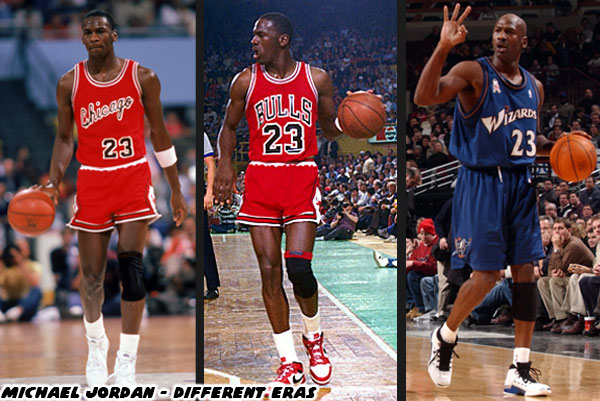
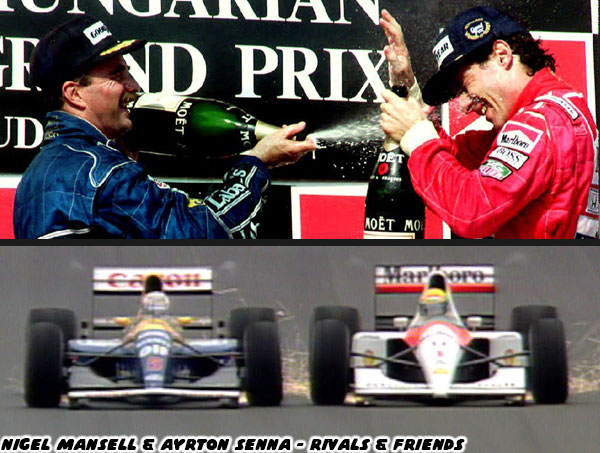
Imagine if you were new to basketball, and the very first game you ever saw featured Michael Jordan during his time with the Washington Wizards, and his team won. This was many years after he had won his last championship with the Chicago Bulls. You were instantly impressed with his mastery of the game, and became a fan. Then you would look forward to see him play again, and again, but he just couldn’t capture that magic of that first game. There were glimpses of brilliance, but he just couldn’t keep up with the new crop. You would hear from sportscasters, and fans that he was a far cry from his prime in the early ‘90s. It felt very much that way for me watching Petty race. He would only win 13 more times in the following 370+ races he competed in. His last victory was the sweetest by far. It was his 200th, for the Firecracker 400, on the 4th of July. President Ronald Reagan was on hand to congratulate him. That was in 1984, I was turning 10 that year. Rather than retire Petty would continue racing until 1992. You could imagine that watching the king crash, or lose again, and again over the next eight years took a toll on my heart. By then I was looking overseas for a new series, and finding a new racing hero. Formula-1 was the sport, and Ayrton Senna was the hero. My best friend followed his rival-turned-teammate-turned friend Nigel Mansell. We had the fortune of meeting Mansell when he came to the US to race in the CART Indy series. Unfortunately Senna would die in an accident in 1994.

I still held Petty in high regards, but wasn’t fond of him losing in popular media. The 1990 Tom Cruise film Days of Thunder was considered the best NASCAR film ever made. My parents saw it in the theater, and thought that when it came out for rent they would bring it home. The film began with Petty crashing out during the opening credits. I was so angry that I took the movie out, put it back in the case, and asked them to return it to the video store. My mom was furious with me for stopping the tape while the family was watching. My older brother came to my defense, he explained to her that Petty was my hero, why would I want to see a movie where he’s seen as a washed-up driver? I put the tape back in but went to my room, I couldn’t bring myself to watch it. My brothers knew that I was deeply upset by it. I would argue that Petty wouldn’t get his due in popular media for another 14 years after his retirement.

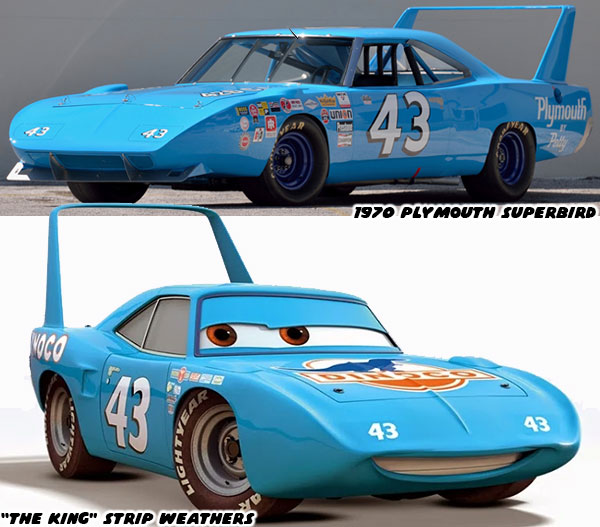
Pixar’s Cars movie came out in 2006. I wasn’t impressed with the early teaser, as all it seemed to be was a demo reel for Pixar’s physics technology. In case you haven’t seen it, the movie revolves around an upstart rookie called Lightning McQueen, voiced by Owen Wilson, his rival Chick Hicks, voiced by Michael Keaton, and the winningest car in Piston Cup History “The King” Strip Weathers. The design of the The King was based on the iconic Petty Blue Superbird. Richard Petty was cast to voice Strip, and his actual wife Lynda voiced Lynda Weathers. Unfortunately he crashes at the end of the film, but Lightning gives up a sure championship win to make sure that Strip can finish his last race. As was the case with Pixar movies the ending brought many to tears. You can imagine that it gave me, and a couple of generations of NASCAR fans a sense of closure as well.

Richard was inducted into the NASCAR Hall of Fame in 2010. It seemed way overdue by that point. His records, and legacy seemed impossible to match. His greatest NASCAR moments are well documented. However when you put his life, and contribution in context he seems even larger than life. There is a fantastic documentary on Richard, and the Petty family. Including his father Lee, his son Kyle, and grandson Adam. They were the first four generation family in professional sports. This was another achievement that might never be matched in our lifetimes.

Of the many NASCAR games that were released over the years I think there was one that captured the thrill of the sport best. I’d like to talk about it in the next blog. Until then I’d like to know if you followed any motorsport. Did you have a favorite series, or driver? Let me know in the comments section please. As always if you would like to sponsor me please visit my Patreon page and consider donating each month, even as little as $1 would help make better blogs and even podcasts!
follow the Street Writer on Patreon!

Monday, April 26, 2021

Hot Rod, my favorite driving game of all-time! A 1UP Classic...

My friends, the game featured today is easily my favorite car racing game of all-time. I've always loved this game and it pained me to exclude it from my list of favorite games of all-time. If I had to remake the list then this game would probably replace my #5 title, Carmageddon. Hot Rod by Sega came out in 1988, the same year as Konami's Chequered Flag. Its graphics were simple sprites and lack of scaling made this game seem dated by comparison. The pace was slow and methodical and there wasn't much realism in the title to speak of. What Sega did get right, as the title suggests, was the spirit of the Hot Rod.

I mentioned back in the Monaco GP blog that Japan never went through a hot rod renaissance. They did not experience the D-I-Y car obsession that would influence their culture, at least not at the same time the US did. A driving culture shaped the US approach to arcade games while Japan went into the arcade arcade games with pro racing in mind. Some of Japan's better games happened when they got around to deconstructing the racer rather than emulating it. Sega was exceptional at being able to do both types of games.

Hot Rod was the ultimate boiled-down racing experience. It focused more on the drivers skill and ability to read a course than any other game. There was no gear shift and no brake pedal. Letting off the gas would stop the car. The steering wheel was loose like the Sprint games so that players could fling the car around corners. It was as pure a racing game as the arcade had ever seen. In a one player setting it was the ultimate challenge of man versus machine, against three human opponents it was a crazy fun time. Despite the name Hot Rod was a rally-type experience. It wasn't just a rally sim as it covered a lot of street racing as well. The tracks featured numerous surfaces and sometimes would have different patches in the middle of the course. From asphalt to snow, ice, sand and dirt. Each thing caused the cars to handle differently. Players had to stay on point and be able to drive with absolute precision.

Everything that you would come to expect from a great racing game was featured here. The opponent AI were all skilled drivers but not perfect, they made mistakes from time to time, bumping into walls or blowing out their engines. Courses had shortcuts that could be exploited by daring drivers. These shortcuts were sometimes dangerous as they placed you on the path of an oncoming train, a slow moving bulldozer or even an avalanche. Knowing when and where to use these paths often meant the difference between winning and coming in last. The pace of the game was grinding, for some monotonous. It could sap the concentration of the gamer, leading to miniscule errors that would result in a game over screen. To truly get the most out of Hot Rod you had to be willing to go the distance. Players that did well were rewarded at the end of each third race by receiving a trophy and kiss from a girl.

Hot Rod was also a cleverly balanced inventory control game. Players were rewarded cash amounts based on their finish. They could then take this prize money into a parts shop and buy an upgrade for their car. Unlike Super Sprint which limited the parts to three or four things, in Hot Rod there were five categories to keep track of and three levels of equipment in each category. Tires, wings, engines (front and rear) and bumpers, players had to learn how each effected their performance on the track and off road. AI opponents could also get upgrades along the way and keep pace with the player. Players had to learn which items to buy and in what order because no two part shops sold the same items. Sometimes the best strategy was to hold out for the next level to get better equipment. This left players underpowered so they had to work extra hard (and exploit all the right shortcuts) to come in first or second against the ruthless AI. These parts weren't guaranteed to last forever. Most engine upgrades would burn out at the end of the third race, as denoted by a backfire at the finish line.

For an additional racing challenge Sega also added a gas tank to the cars. The gas would drop slowly but surely as the race progressed. Players could gain additional fuel by driving over "G" icons which would pop up intermittently on the course. There were also "P" icons for a score booster but these weren't as highly valued as fuel. The ranking at the end of each circuit would also determine how much gas you regained. If a player exploited every shortcut and drove over most of the G icons and came in first then they would get all of their fuel back. Players lost fuel if they crashed, fell off the road or were cut off as the screen advanced to the rest of the track. If the tank dropped below zero the game was over. Unfortunately the tank could never have a surplus of fuel. Casual gamers and seasoned players were experiencing racing on multiple levels.

The graphics in the courses all blended perfectly. Since the entire game was from overhead there was no sense of gradation or depth, any such cues had to be drawn onto the course as a series of shadows and objects. These imaginative two-dimensional courses were amazingly drawn. Sega had really outdone themselves in the art for this game. I especially liked the cabinet art and illustrations for the cars. The proportions of the cartoon hot rods were a blast. As if an animé designer were reinterpreting Dave Deal.

For a person like me obsessed with detail this game was an overdose. You could see tiny characters, made up of a few pixels, lining the courses and clapping. Children playing tag in the park or horsing around on the jungle gym. Couples walking down the promenade. Campers cooking over an open fire. Skiers descending from hills. The more you looked down on the tiny universe the more you would see. Of course you couldn't afford to take your eyes off the track for long or run the risk of losing. I'd be damned if I didn't fall in love with the absurd amount of details that populated each course.

If you thought I was crazy for the amount of time I invested in Stocker then you'd be ashamed to find out how obsessive I was with Hot Rod. To me it managed to capture the essence of racing better than Stocker, Super Sprint or any other racer combined. I had to be careful about where I played the game, dip switches and "turbo" kits ensured that the arcade and Sega were getting a return on their investment. Most arcades had the machines set in such a way that no matter how well you drove your car would run out of gas within two races. A four-player cabinet with no turbo kits and dip switches set to normal could actually be played forever. As I would eventually discover.


I would spend time studying each track layout, seeing what options were available in which part shops and what the ideal configuration was. I discovered that while the rear engine granted the most speed it also came at the cost of losing the rear wing so traction was lost on turns. If I purchased the most expensive speed tires and never switched them out then I would be able to hold my own on almost every track even without an engine upgrade. With the most expensive bumper then the life of my engine wouldn't suffer despite a crash. Before too long I had figured out the ideal setup and managed to get through every circuit with one quarter. What amazed me was that the tracks seemed interconnected transcontinental routes that circled the globe. The race managed one big loop and never really ended. It was a very imaginative innovation from Sega. For arcade owners it was a headache since kids like me were spending lots of time and not lots of money in their establishments.

My good friend Tim wondered how long I could spend on one quarter. I told him forever, or at least a day, provided that someone took over to give me a bathroom break. One summer, just after our first year in high school I went to the arcade early in the morning, right before they opened. The manager was wondering what I was up to. I told him that I planned on setting a new high score on the Hot Rod machine. He just nodded and let me into the empty arcade. I found a stool to sit on and put in my token. He would stop by occasionally to see the progress and ask if I really was on my original quarter. As the day wore on players would come and go. A few joined the game in progress and dropped out after a few laps. The manager and employees went from happy for me to slightly annoyed with my presence. Five hours later Tim stopped by so I could get my bathroom break and stretch my legs. I returned for another hour and a half of racing before calling it a day. I had amassed a fortune in the game and was wasting it buying different engines and tires. Even when I got the wrong components for the car I still managed to stay ahead of the competition. Finally I let my gas run out and put my name in the machine. It had a far more digits compared to the second and third place racers. Nobody would ever touch that score. While I had never reached California in Stocker I had gotten my revenge by doing laps around the globe in Hot Rod. As far as I was concerned I could die a happy man but then I would have missed out on so many other great games.

If you would like to sponsor me please visit my Patreon page and consider donating each month, even as little as $1 would help make better blogs and even podcasts!
follow the Street Writer on Patreon!

Tuesday, May 10, 2016

The Street Writer Blogcast: Episode 1

Every time I release a new Podcast I will release the text version for my hearing-impaired friends. I don't want them to miss anything that I cover. Also you are welcome to leave comments and questions for this podcast as well as future podcasts on this blog.


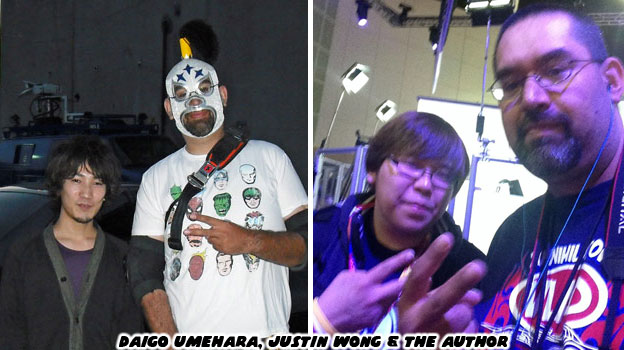
Thank you for tuning in to the first episode of the Street Writer Podcast. I am your host Noe, on my personal and Capcom-Unity blogs I'm also known as BigMex. Today I'm going to look at one of the elements of great fighting games; specifically rivals. Not just any rivals but the best ones in the genre. Rivals are something you've seen many times and possibly one of the things you might enjoy most about fighting games. Great games know how to build a rival. Whether it's a friendly rival or a sworn enemy the best games knew how to build the tension in the story and through the gameplay. They knew how to make you root for a hero or jeer the bad guy. Even some forgotten titles knew how to create great rivalries. Think about how the developers made some characters heroes and others villains. What techniques did they use? Just because there were both good guys and bad guys in a game did it automatically create a rivalry? Not always, some of the best ones were planned while others developed by accident. When it came to great rivals who was on your list? Was it Ken versus Ryu? Kazuya versus Jin? Daigo versus Justin? What did you think made them great rivals? Which rivals were the best in the genre and why? Over the next few episodes I'm going to point out some of which I feel were the best. I'll begin with Street Fighter, it's pretty much the reason why I'm still writing and now doing podcasts. The template for a great rivalry started in the very first game.


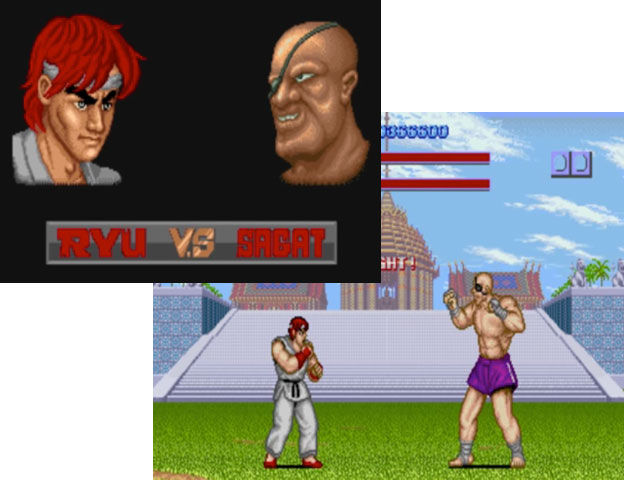
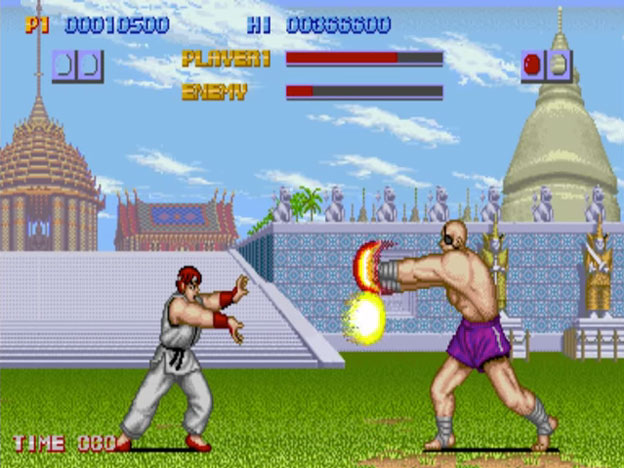
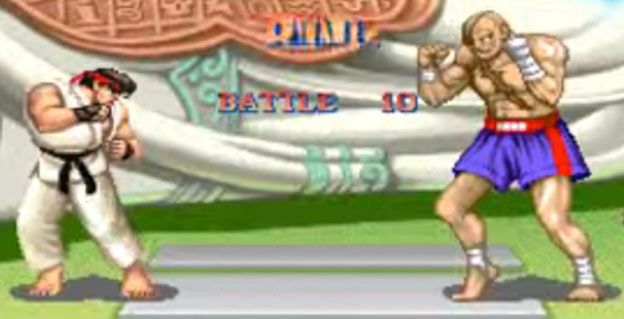
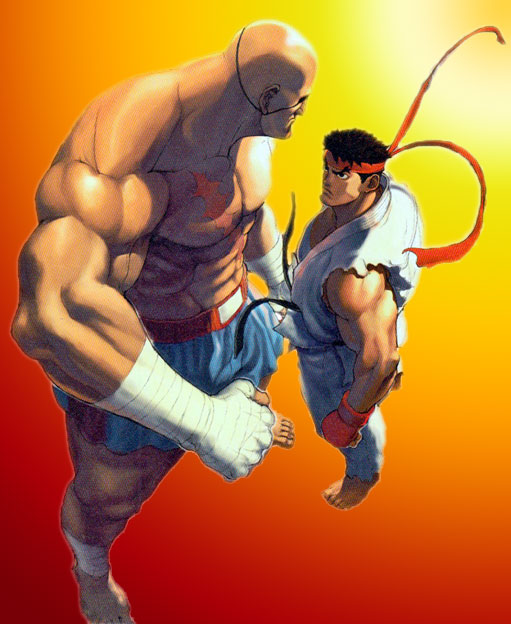
Sagat and Ryu were the oldest and longest standing rivals in the history of fighting games. They had been going toe-to-toe for almost 30 years. There were a lot of things that made them work as opponents as well as really popular individual characters. They represented a clash of styles, a clash of nationalities and at the heart a clash of purpose. Why did they fight? The designers at Capcom had to give them a reason to fight, the way they did this gave each character a personality. You could see it in the way each character was animated. You could see it in the official character art, in the game endings and through the story of the series. One fighter was the established champion. Sagat absolutely destroyed opponents and was feared by many. He knew what it took to get to the top, and it was much more than natural ability. Sagat was unusually tall and strong, making him a standout fighter at a young age. Before he became a champion he lost an eye in a fight. That event changed his life, he became cold-blooded fighter after that. He was willing to put his life on the line, and more important he was willing to put his opponent's life on the line in each fight. The other warrior, the man who would be king was new to the world of combat. Ryu was insanely talented, had a strong desire to win and was trusted with secret martial arts techniques. He was looking for a purpose in his fights, a sort of guidance that could only be found by fighting the best. Ryu was trying to find meaning whereas Sagat was trying to prove no one could beat him. In temperament they were night and day, destined to be opposites in every regard. The animosity between the two slowly faded over the years and was replaced with an intense respect. It was a level of respect that few characters in any genre would be written about. But it wasn't a friendly rivalry when they first met. That was something that the developers at Capcom managed to get through to audiences way back in 1987.


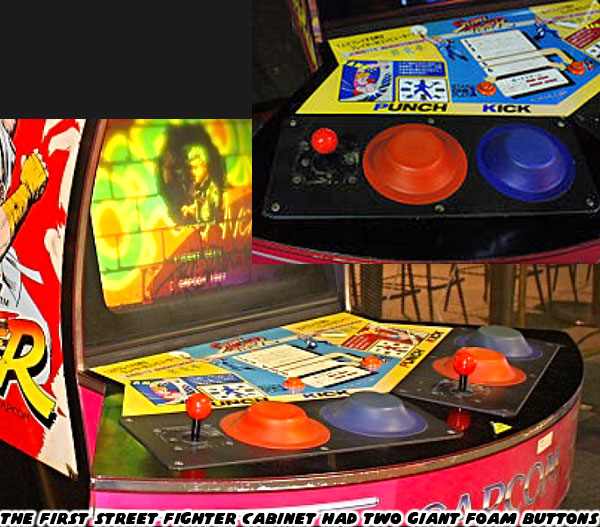
Imagine if you were a kid going to the arcade in the '80s. There were no cell phones, no really powerful home consoles. The best games could only be found in the arcade. If you were lucky maybe your parents gave you a dollar to play some games. You could spend four quarters on one game or play four different games. Every cabinet was fighting for your attention. Every company wanted your money. The fighting game was still finding its voice in the mid '80s. Other genres like space shooters and maze games were more popular. Studios were experimenting with different formats, different types of control setups to win players over. Capcom took some very big chances during this era. The first Street Fighter machine really stood out from other machines. The first cabinet had two enormous foam buttons, they were the size of overturned cereal bowls and much harder than the foam used in Nerf toys. The buttons were red and blue and you had to punch each one in order to get the character to punch or kick. As a kid I learned that I had to hammer down on the buttons with the edge of my hand instead of trying to punch them straight on. Tapping the buttons translated to a jab whereas the hardest hammer punch was a fierce strike. If you were lucky or knew how to perform the fireball, dragon punch or hurricane kick then you probably kept it a secret. Those were super attacks that could beat any opponent. You could use them to beat other players in a two-player match and feel like a real champ. Imagine what was going through our minds. Imagine being a kid and Street Fighter was your first introduction to the genre. You could punch the buttons as hard as you wanted and sometimes your character would perform these super moves. It was a high-energy concept that paid off for Capcom. Okay, so maybe it didn't pay off as well as they wanted. A few months after the game debuted the studio had to create a new controller for arcade operators, one with the more familiar six-button layout because people were having problems using the foam buttons. Some kids ended up breaking the controls because they were playing too rough, while others were injuring themselves for the same reason. I can still remember the machine in the local arcade when it came out. I can still remember seeing the foam buttons torn on one side because somebody was trying to rip it off the cabinet.
 

Ken and Ryu were amazing characters. All of the sprites in the game were big and colorful. They were much more animated than any other martial arts game. Ken and Ryu stood out because they weren't boring like the red and white characters in Karate Champ. They fought to a single hit while Ken and Ryu flew all over the screen like the characters in kung-fu films. One by one all of the rivals fell. It didn't matter what form they studied, whether they used a weapon or even if they could even teleport around the screen. A player that learned timing and how to perform the secret moves could actually go through the game on one quarter. That was a rare for most arcade games. Operators and companies made their money by creating titles that were challenging and often required a few credits to complete. Finding a game that had a good challenge yet you could beat with one credit was rare. Even in the early days the team at Capcom knew that they had to make each and every battle difficult but not cheap. If the game was too hard then a player had no incentive to continue. But if the game kept the action even and rewarded the player for having a superior technique or sense of timing then they were likely to pay a few extra credits to continue. Street Fighter did a good job of capturing the unpredictability of a fight. A player could dominate one round and then be taken out the next. A lucky punch might be the difference between becoming the champ and losing everything. It happened in the real world and was expected to happen in a game too. Thanks to this level of balance people were more than willing to put in an extra credit and continue from where they left off. Balance also made every opponent unique. Fights gradually got harder the further a player went into the game. No two opponents fought the same so it kept things fresh from match to match. If a player made it to the nation of Thailand then they felt confident that they would be able to beat the final opponents. Adon was a difficult fighter with his unique flipping "Jaguar" kicks. It was his master than was on a different level.


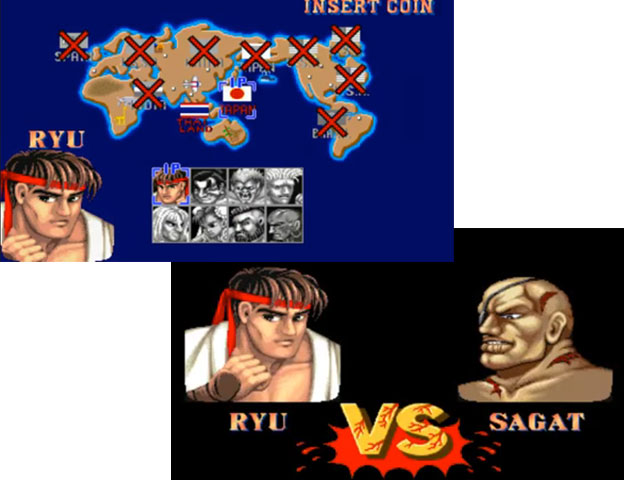
As colorful as the cast was there wasn't really an equal to the main characters. I mean everyone was roughly the same size but nobody looked or fought like Ken and Ryu, especially not the final boss. Yet this boss stood out because he was visually so different. The final match in Street Fighter had to be unlike the other battles. It couldn't be easy but again Capcom didn't want it to feel cheap. To help make the fight memorable they wanted to shake the confidence of players. There was a bald, dark skinned eyepatch-wearing character staring at the player in the stage intro. The guy was ugly, about two hundred pounds heavier than Ken or Ryu and easily a head and a half taller. He was biggest character in the game. Up until that point we thought that Birdie was largest and strongest brawler. We had no idea who we were dealing with. What made Sagat much more dangerous than any other opponent was that he had technique and not just mass on his side. Karate was seen as a sort of ultimate empty-handed fighting style. It was the style of fighting used by the heroes in movies and tv shows. What Sagat used was Muay Thai, an older and more brutal fighting art. Players learned to fear the man right away. He could stuff just about any attack and was surprisingly fast despite his size.


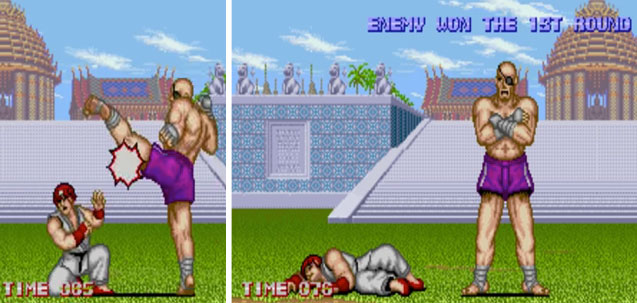
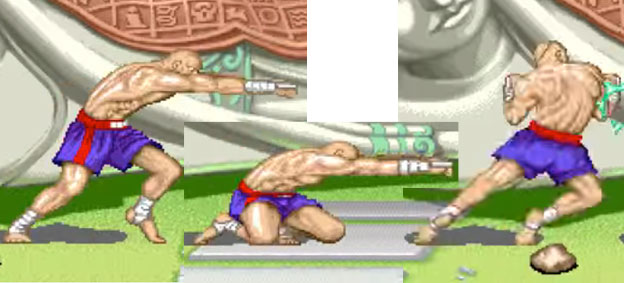
Capcom made sure to level the playing field by giving Sagat his own special attacks. Everything that made Ryu or Ken unique was stripped away on the final stage. The developers knew that the last opponent in the game had to be everything the main characters were and more. He needed his own ranged attack. Something that was not a throwing star or dagger. A bolt of fire that erupted from his hands, the Tiger Shot was something no other opponent could perform and equal to the fireball from the main characters. He also had a leaping knee strike, this would become known as the Tiger Knee. If cut down the distance on the stage and was a counter for the hurricane kick. More than that Capcom knew that he needed to be able to beat the players move for move. His range had to be greater, his kicks longer, his strikes faster and his defense tighter. Players that underestimated the giant were beaten very quickly. Capcom even gave Sagat a personality trait. He was cruel in his victory animation. He would cross his arms, face the audience and laugh. It was an early example of a taunt in a fighting game. He laughed as if the player was not even remotely good enough to take on the champ.


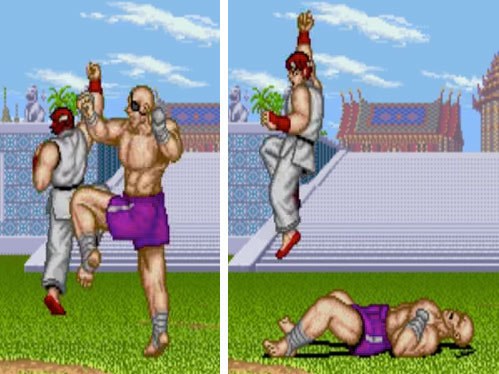
Gamers had to use all of the secret techniques and use them fast if they wanted to make it through two rounds. The original Street Fighter could be tough, special moves took way more energy than in any sequel. Just a few hits from Sagat was enough to knock you out. The dragon punch was the great equalizer, it was the one move that Sagat didn't have a counter for. It would become the punch used in story to defeat Sagat. The final battle was supposed to be a fight to the death. Sagat didn't care what happened to his opponents once they dropped. If someone were powerful enough to beat him then he accepted he would die in the process. Many people didn't notice this but if he was beaten he laid there with his eyepatch torn from his face. It was the insult to injury. At that very moment the rivalry was born. What made the character unique was that players and even Capcom did not know Sagat would become an important piece of the story until years later. He was just another boss guy in another arcade game. In hindsight the original Street Fighter was a fun game but it was not extraordinary. There was nothing that really kept people coming back. I remember playing it a few more times once the local arcade replaced the big foam buttons. But each time I visited the arcade there were always new games that seemed more interesting.


Part of the reason why some people didn't really remember the first Street Fighter was because the climb to the top happened very fast. It happened so fast that the story didn't really have a chance to sink in. Who were these fighters? Why should we care about them? Aside from some really neat moves what else did they have going for them? For that matter why should we care about the main characters? This kid named Ryu, did he really become the world champ because of his heart, his skills or because of a lucky punch? Every battle in the original game ended with the opponent saying "What strength!! But don't forget there are many guys like you all over the world." Ryu did indeed travel around the world, putting on breaking demonstrations to pay for his journey. He beat all of those guys until he earned his title. It was something that real life martial artists did more than a half century ago, before mixed martial arts matches were broadcast on TV. If a fighter wanted to prove they were the best then they actually had to go out there and show it. They would put on breaking demonstrations, Mas Oyama would even fight bulls in public exhibitions and kill them with a punch to the head. Perhaps a newspaper might cover those martial arts pioneers but often it was word of mouth that created the legends.


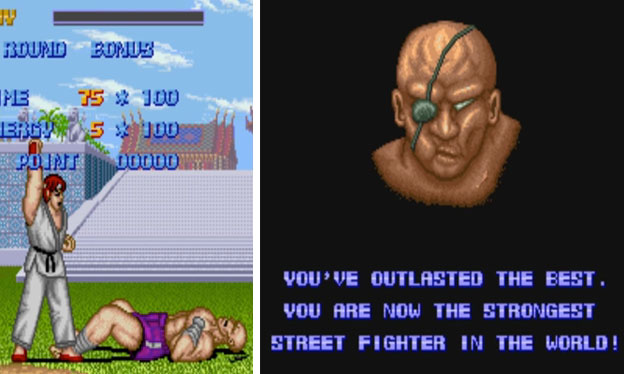
Ryu did become the best in the world when he beat Sagat. This was something that many people seemed to miss in the story of Street Fighter. In every sequel Ryu was the best and he was defending his title against new opponents. Ryu's first championship however did not come with a belt or trophy. Ryu won the war by attrition. Sagat even said it himself "You've outlasted the best. You are now the strongest street fighter in the world!" Note he didn't say best street fighter or even greatest street fighter, but rather strongest. Ryu outlasted them all thanks to his incredible conditioning, superior techniques and physical gifts. Because of his age there would only be room for improvement, this was something that the developers at Capcom could use to their advantage. Sagat on the other hand was the tired champion with no where else to go but down. For that character the challenge was internalized. If he wanted to reclaim the title, if he wanted to beat Ryu then he had to become stronger. So how does a seven-foot, one eyed former world champ become stronger? There was room for improvement but we wouldn't see it for years. The team that created the original Street Fighter would be broken up and be put on different projects. Some left Capcom to join other studios. The rivalry would have to be put on the back burner while Capcom figured out where else they could take the genre.

Arcade operators wanted Capcom to do a follow up fighting game. The studio saw that Technos / Taito's Double Dragon was a bigger hit in 1987 and decided that they should create a brawler instead of a fighting game as the sequel to Street Fighter. When they showed arcade operators the game called Street Fighter '89 featuring the characters Guy, Cody and Mike Haggar they go push back. It had nothing in common with the original game. So Capcom called the game Final Fight and released it anyway. They went back to the drawing board and began putting together all sorts of ideas for Street Fighter II. There were some influences from Hokuto No Ken aka Fist of the North Star. There were influences from real world pro fighters and wrestlers as well. There were also some really ugly characters that were stereotypes if not racist caricatures from other countries. A new karate fighter was planned as the star but Ryu and Ken were the ones that would return. The original plan did not include Sagat. The new boss character and sub boss were some sort of knight and ninja in armor. They eventually became Vega and Balrog, the Claw and Dictator for international fans. The decision to bring back Sagat was done after the studio came up with the concept of multiple boss characters. His re-introduction was supposed to mean something to audiences. Capcom had created a terrorist organization, the main character a Dictator named Vega surrounded himself with bodyguards / hit men that were the most dangerous men ever. A heavyweight boxing champ, a Spanish assassin and the former strongest fighter in the world became generals in this organization. Each fighter was more dangerous than the last.


In Street Fighter II, after players beat the main roster and went through the first two generals they were surprised to discover the boss from the original game was waiting for them. Okay, not everyone remembered that Sagat was the original boss, the early generation of Street Fighter fans were young kids when the first game came out and didn't pay attention to the cast. Anyhow Sagt was back and he was as big and as ugly as he had always been. There was something profoundly different about him though. He had a massive scar across his chest. Who gave him this scar? Why did he return? What else was different about him? These were things that people who remembered the original game wondered out loud. Capcom would later on explain that it was Ryu that scarred him, it would create an incredible narrative. The main hero of the series had actually tried to kill the villain in the first game. Granted he was possessed by the Dark Hadou, a sort of evil energy living inside Ryu. So he wasn't quite himself at the time but nonetheless there was blood on his hands. If Sagat was smaller or weaker he would have been dead. Think about it for a moment. What other game had a main character that was like this? Sagat did not forget the fight and became an even more dangerous opponent because of it.


Sagat seemed a little bit leaner the next time he fought Ryu. He was indeed a little bit faster than before. Audiences saw that his library of moves had grown as well. He still possessed the Tiger Shot, the counter to the Hadoken or fireball. Yet he could now launch his attack while crouching or standing, which was something that neither Ken or Ryu could do. He still had the Tiger Knee, a leaping kick attack that was a counter to the Tatsumaki senpuu kyaku or Hurricane kick. Lastly he had developed his own punch. The Tiger Uppercut was the answer to the Shoryuken or rising dragon punch. Sagat's version started lower and rose higher than either Ken or Ryu's. These three special moves pretty much cemented his status as the ultimate rival. There was nothing that Ryu could do that Sagat could not do better. Combined with his strength and range he was a very formidable boss. The team at Capcom wanted audiences to understand that the time spent recovering from the first Street Fighter tournament had turned him into a much more dangerous opponent. The generals all reinforced that idea that there was more at stake in this tournament than a trophy. The most important part was having the previous boss return with a vendetta. It made for a much stronger narrative. The audience was hooked from that point on.


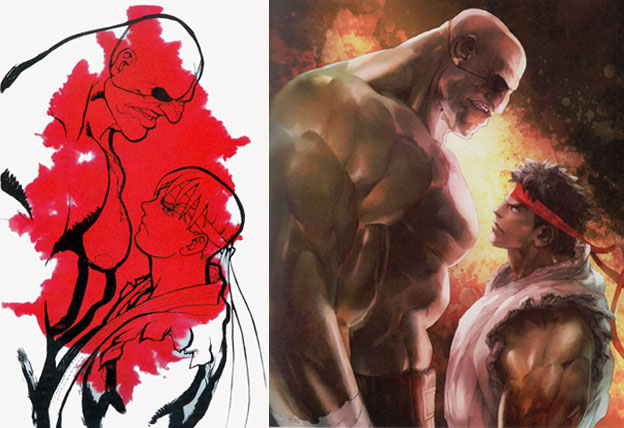
Fighting games could have depth and character growth, things that were usually reserved for role-playing games or adventure titles. Fighters were not throw-away characters after all. They would develop a strong following and influence characters in other games as well as in animated projects and comic books. Sagat and Ryu would do battle a few more times in canon. They would also fight a number of the other main characters in the stories but none of those battles had the intensity of the original rivalry. Sagat and Ryu crossed paths in the various sequels and VS titles from the studio. Each time they met the legend grew. Every encounter came with a certain level of intensity. It was palpable. Fans knew that the two had a history. After 20 years it had grown to mythical proportion. Fans were eating it up. When the artists at Capcom drew the pair, which actually wasn't that often, they made sure to capture the menace of Sagat and the defiance of Ryu.


When it came to rivalries I couldn't think of any one that stood out more than the one between the Capcom legends. Was it the only great rivalry in fighting games? Oh no, not by a long shot. We're going to dig a little bit deeper and in the next episode and see what Capcom's rivals were working on, I hope to see you back for that. If you have any questions, comments or want to share a story please let me know. If you enjoyed this broadcast and would like to see more then leave a comment and consider sponsoring the Street Writer on Patreon.

Sponsor Me on Patreon!