Showing posts with label classic. Show all posts

Wednesday, June 10, 2026

Bookmark This Page; The story of Maui Mallard

Did you know that there was a time when Disney was making some of the best sprite based games of the 16-bit era? Donald Duck, or rather a look alike named Maui Mallard was going to be the next big mascot. If you want the full breakdown then Bookmark This Page.

Remaking an Icon, Maui Mallard, part 1

Remaking an Icon, Maui Mallard, part 2

Remaking an Icon, Maui Mallard, part 3

Remaking an Icon, Maui Mallard, part 4

Remaking an Icon, Maui Mallard, final part

Did you have a favorite Disney game in any console era? Tell me about it in the comments section. As always if you enjoyed this blog, and would like to sponsor me please visit my Patreon page and consider donating each month, even as little as $1 would help make better blogs and even podcasts!

follow the Street Writer on Patreon!

Wednesday, April 23, 2025

Sonic Superstars and beyond. Sega makes up for lost time, part 3...

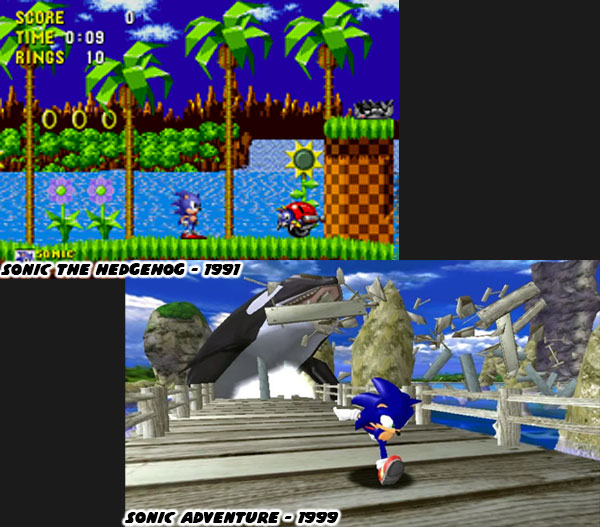
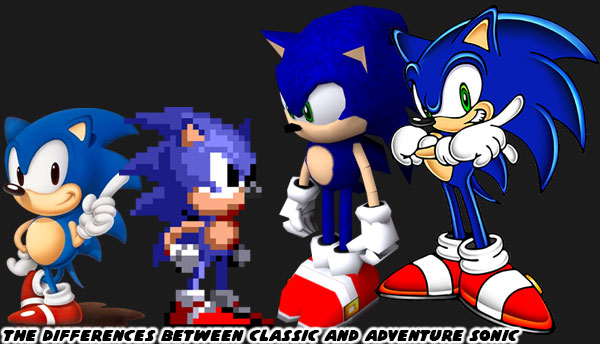
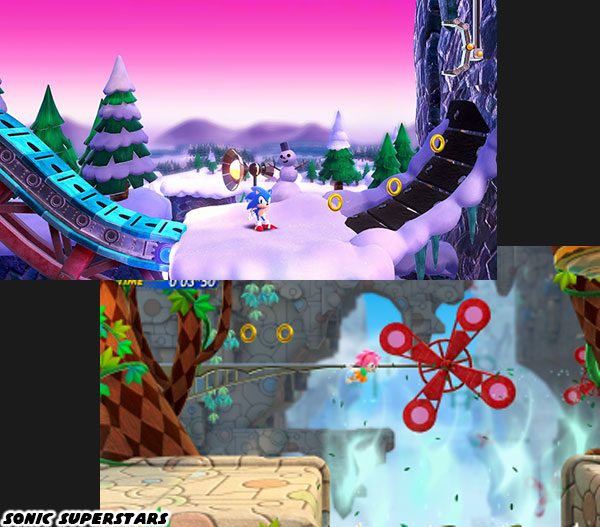
In the previous blog I talked about the new game mechanic added to Sonic Superstars. Sonic, and his friends could harness the power of the individual Chaos Emeralds. Each one provided a temporary power-up for the heroes. I said that the reason why Sonic Superstars used the Chaos Emeralds instead of the Wisps from Sonic Colors was because there were two different Sonics. To be more specific there were two Sonics from two different universe / timelines. The version featured in Superstars was based on the original game from 1991. That was to say the animation, direction, and game play were based on the original Sonic Team designs. This version of the blue blur was young, and idealistic. The challenges, and threats he faced were scary, but also family friendly. In the original trilogy none of the characters spoke, not even Dr. Eggman. The entire game was told through pantomime. The version of Sonic that spoke, the one that people knew from the movies, or games like Sonic Frontiers was based on the “modern” version. This version debuted with Sonic Adventure in 1999. It was something that I do not think most casual fans understood.

For the longest time I don’t think that Sega themselves understood that there were two distinct versions of the character. Two distinct versions of the supporting cast, timeline, enemies, and especially the game play. The cosmetic changes made to Sonic, Tails, Amy, and Knuckles in Sonic Adventure were done to make the characters easier to animate in three-dimensions. The modelers extended the length of the arms, and legs. They changed the proportions of the head, and body. The needed to do this because the old proportions were difficult to track with a three-dimensional camera. To audiences it looked like Sonic had grown up, matured in his new titles. As the series went on it started to become more, and more obvious that the look, and feel of Sonic in three-dimensions was a different thing entirely to the 2D Sonic that launched a franchise.

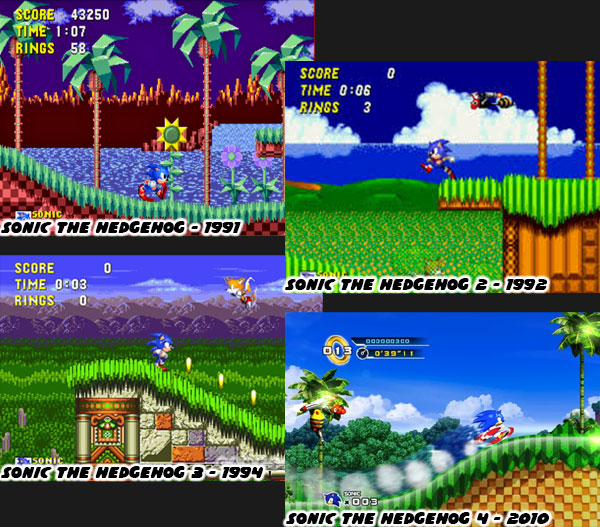
The distinction between the original, and post Adventure Sonic came to a head in 2010. The 20th anniversary of Sonic was coming up, and a new game was expected. The original game came out in 1991, Sonic 2 in 1992, and Sonic 3 in 1994. Sega teased something called “Project Needlemouse” with a promise to go back to the classics. Sure enough they went back to the 2D game play with 2.5D graphics. Yet they used the proportions, and game play of the modern character. Sonic, Tails, and the rest of the cast were not classic at all. Sonic 4: Episode I debuted in 2010. It was met with harsh criticism because it vaguely captured the look of the classic game, but completely missed the feel of the title. It felt like it had one foot in two different universes, and didn’t fully commit to being a worthy sequel. A number of the control, and design issues were ironed out for Sonic 4: Episode 2 in 2012.

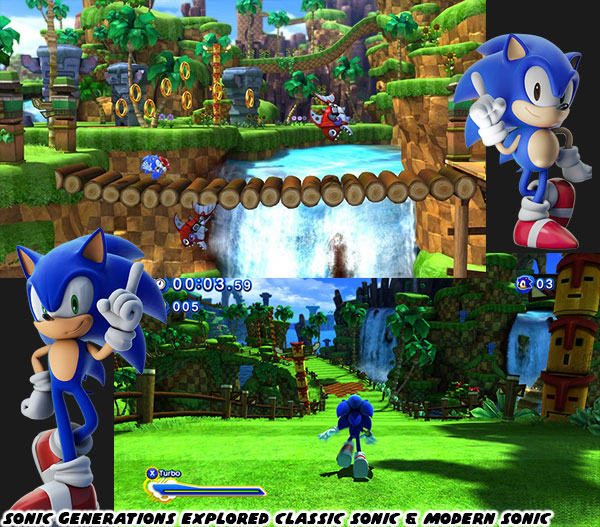
Thankfully Sega didn’t put all their chips on one title at the start of the 2010’s. The studio released Sonic Generations in 2011. The game established the canon of two timelines, and two distinct versions of Sonic. The classic version that I grew up with, and the modern version that my kid knew. Playing through the game was literally a way for us to bond as a family. It played like a highlight reel for the mascot. We got a chance to revisit tons of familiar locations in updated 3D graphics. This was done much better than what we saw in Sonic 4. They set a standard that would only be topped by Colors, and later on by Superstars. The best part was the game play perfect for each version of Sonic. Although they both visited locations used in Sonic’s 1-3, Sonic Heroes, Sonic Unleashed, etc. the ones played by classic Sonic were all set in a 2D perspective, and the modern Sonic raced on open 3D tracks. The developers clearly understood the assignment, and made certain that fans of each type of game play were rewarded.

Reactions to Sonic games post Sonic Adventure 2 (those released through the 2000’s) were a mixed bag. Some of the console, and handheld titles were beloved. Some took a while to warm up to, and a few were despited by long-time fans. The one thing that was consistent good were the soundtracks. The music featured in the games had always been well done. In the ‘90s I made sure to run down to the Japanese bookstore, and put in an order for the CDs whenever a game had come out. From Dreams Come True to Crush 40, wether the scores were pop, hard rock, or even Hip Hop the composers delivered in each title. Sonic Generations redid the scores from the various sequels to great effect. It featured a classic, and modern variation of the songs that complimented the originals. Generations helped introduce new players to the fun game play, and memorable songs better than just about any anniversary title in the past 20 years.

Despite all the praise I heaped on Sonic Superstars it was not without its failings. The game suffered from a number of technical issues that ranged from minor inconveniences, to game play breaking problems. The biggest technical issue that I had with the title was constant frame rate drops. This was especially upsetting because Sonic is all about hight speed action, but certain parts of the game felt unplayable when you couldn’t see the character. Timing jumps, spotting enemies, and making it through critical sections were almost impossible. I was on the Playstation 4 version, but the fact that it wasn’t an issue during play testing, or patched after release disappointed me. Watching videos on YouTube I could see that my version was possibly the one that suffered the most.

Normally I couldn’t wait to play through a Sonic game again after completion. The performance issues made me rethink how eager I was for a replay. It betrayed all of the love that went into the game itself. Despite the greatest intentions Sonic Superstars couldn’t surpass Sonic Mania Plus. This had much more to do than just a difference between using 3D models over 2D sprites. So where did it go wrong for Sega? I’ll explore that in the next entry to this series. Did you get a chance to play this game? If so what were your thoughts. I’d like to hear about it in the comments section. As always if you would like to sponsor me please visit my Patreon page and consider donating each month, even as little as $1 would help make better blogs and even podcasts!
follow the Street Writer on Patreon!

Monday, June 17, 2024

Can videogames be patriotic? - A 1UP classic from July 03, 2012

Hello friends, with the holiday almost upon us I began thinking about videogames and patriotism. Has there ever been a videogame that has made you feel patriotic? Olympic and FIFA games aside, have you ever played a game that made you proud of your country? I think that games are mostly neutral, and those written with the government in mind are slightly anti-establishment. The Tom Clancy and Metal Gear titles were filled with all sorts of double-dealing plots. The most powerful soldiers, even those like Solid Snake or the Patriots, always turned out to be nothing more than pawns for generals and politicians with their own selfish motives.

I've never felt any patriotic connection with a game. Even when a studio used popular iconography as the backdrop, like the banners, colors, uniforms and locations of the US Revolutionary War in Assassin's Creed III, there was a disconnect. I know I should feel interested in a game surrounding the birth of the nation, especially when the conspiracy of the Templars and Masons are thrown into the mix, but the heart of the game remains the same as it always has. Kill some guards, sneak up on a powerful figure and assassinate them. I doubt I'll be feeling more patriotic when it is all said and done.

What do you think? Do videogames need to be more patriotic? Can a videogame be patriotic? If they were would the clueless politicians use them more or less for talking points? Let's hear your thoughts.

As always if you would like to sponsor me please visit my Patreon page and consider donating each month, even as little as $1 would help make better blogs and even podcasts!
follow the Street Writer on Patreon!

Wednesday, May 29, 2024

Clash Road and Ring King, early sport games to check out - A 1UP classic from July 31, 2012

Hello friends, hope you are having a good week so far. My back is killing me. I might have pulled something moving furniture this past weekend. Hopefully it will be better by next weekend as the missus and I will be painting a room. What have you been up to? Right now we're in the early days of the Olympics. What do you think so far? Did you like the opening ceremonies? Are there any sports you are following? For some reason I was thinking about cycle racing and one of my favorite cycle racing games.

Chances are you've never heard of Clash Road, in all my years I've only seen the cabinet in the wild three times. Two in an arcade and one in a liquor store. The game was never ported over to the consoles as far as I can remember. It's a shame too, it's like the version of pro cycling that should be real and everyone should play! Players are riding in a no-holds-barred bike race. Despite the sponsor logos and authentic looking gear the bikers actually are allowed to punch each other and run opponents off the road. If I could describe the gameplay mechanics think of a mash up between the skateboarding section of T&C Surf Designs and Road Rash. Players have to worry about keeping pace and trying not to lose too much energy before the end of a race. The calorie count that each character has is like the fuel gage in most classic racing games. Players can get more energy by running down joggers, whom I guess give up their water bottles? The majority of the game is avoiding obstacles by jumping over them with a well timed bunny hop while backhanding rivals. Players can collect turtles with letters on their backs. If players spell out "Clash Road" they become temporarily invincible and can plow down opponents. I loved the nuance and control of the game. I would line up my bike with my rivals and then bunny hop right onto their back tire, sending them flying. Often times I didn't need to throw a punch as a simple jump could topple the toughest racer.
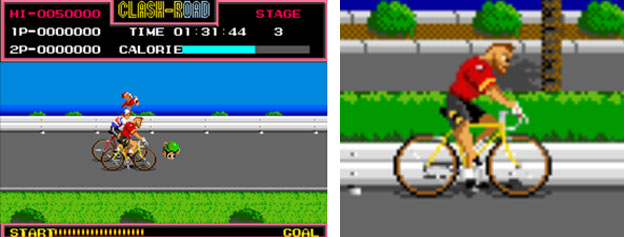
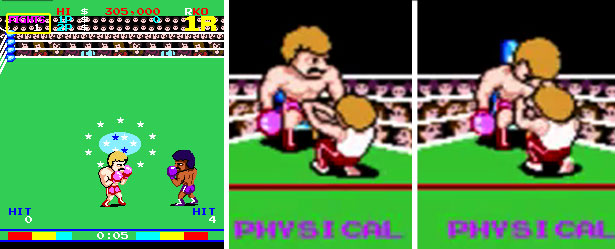
Clash Road was also the first game where I saw a burly fighter with a mohawk and beard. If I didn't know better this game was the first appearance of Zangief almost 8 years before Street Fighter II. However the title was not from Capcom but instead by a company known as Woodplace. That studio was perhaps better known for creating Ring King. It was a semi-popular arcade boxing game that was ported over to the NES by Data East. As far as fighting games went Ring King was a pretty good arcade title. There were some questionable elements in the game but these didn't become apparent until 1UP pointed them out in one of the funniest videos ever.

Woodplace managed to make bicycle road racing more masculine and violent than the actual sport yet they sort of did the opposite to boxing...
So those are the two sports type games that I wanted to mention during this Olympics period. I do think that isometric boxing was done better than Ring King however. Taito's Kageki came out in 1988 and was a more well-rounded fighting game with less questionable elements. Are there any sports games that you are playing during these few weeks? Tell me about them in the comments section.

As always if you would like to sponsor me please visit my Patreon page and consider donating each month, even as little as $1 would help make better blogs and even podcasts!
follow the Street Writer on Patreon!

Friday, March 15, 2024

Michael Lau and Disneyland weekend! - A 1UP classic from October 5, 2009

Hello friends, it's been a busy morning! Tomorrow should be busier, the nurses will be in on Tuesday and Thursday to practice for state exams. We will be busy in the lab, but it's better to be busy than not busy.

This weekend was quite eventful. On Thursday I took my friends and their families to the Michael Lau show and on Friday I took my girlfriend and her daughter. Friday night Michael was signing for the public and we were each allowed to get two things signed. My g/f and her daughter acted as mules and carried two boxes for me, I'm shameless when it comes to signings. Since Michael is a big soccer fan I bought him a Beckham jersey from the LA Galaxy as a present. I also got a card for him signed by myself and my pal Victor. He appreciated the gesture.
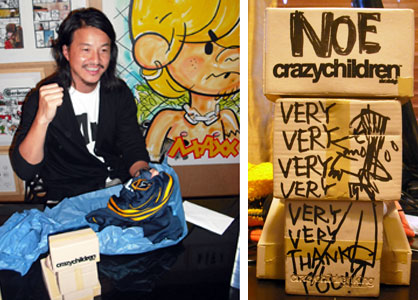
He signed the throne of my Crazychildren King. Many people in line had never seen that figure. He obliged me by signing a few other boxes. He even signed the issue of Ollie where I first saw his work.
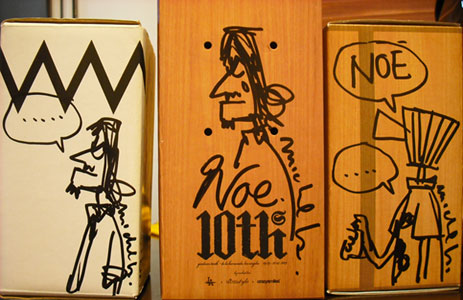
Michael was quite a character. Making jokes with the people in line, taking off from the desk where he was at and going to the back of the line to sign stuff for the late arrivers. My girlfriend hit it off well with Victor and even Michael's wife. Hopefully the next time he comes to town we'll be able to treat him to Disneyland and even Club 33. As for the show itself, I am digitizing video of the show and will be uploading soon so you could see the Gardeners in all their glory.

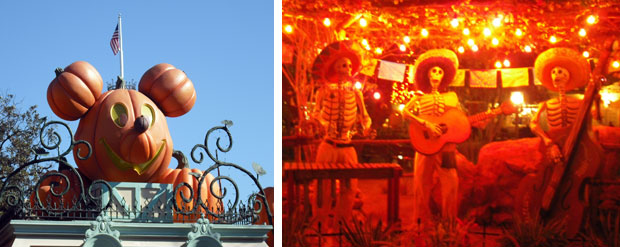
On Saturday the girlfriend, daughter and myself went to Disneyland. It was a media event day, they were showing off the changes they had made to the park for the Halloween season. Those that live in the area should see how different the Haunted Mansion is with a Nightmare Before Christmas makeover.
Yesterday it was lunch with the family and some videogame playing. I showed the g/f and her daughter NiGHTS into dreams... as well as Shadow of the Colossus. All in all I couldn't have asked for a better weekend. What about you guys and gals. What did you get up to? EDIT: I created a fan page dedicated to the Art of Michael Lau in the early 2000's. I let the domain expire in the mid 2010's because I no longer had time, or money to keep it going. Although it will no longer be getting updates I have restored it on my personal server for people that want to find out about the Urban Vinyl movement.  As always if you would like to sponsor me please visit my Patreon page and consider donating each month, even as little as $1 would help make better blogs and even podcasts!
follow the Street Writer on Patreon!

Wednesday, February 28, 2024

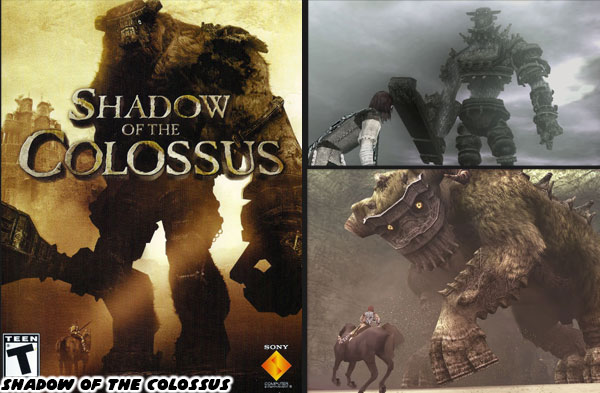
Play this before you die - A 1UP classic from August 10, 2006

That's right true believers. This is the game that you can enjoy best after beating Shadow of the Colossus. You see, I got my friends to play SotC recently, I was pushing the game quite hard. Why shouldn't I? It was an exceptional game, an award winner, art on the plasma screen... but my friends recently beat it. The ending was melancholy, it didn't settle with some of them.

The ending was the reason I didn't touch the game again for months after beating it. I wasn't sure my heart take that type of punishment again. I don't mean the stress of fighting wave after wave of enemies in Ninja Gaiden. Or the pressure of entering a FPS match for big money. The punishment I mention was the emotional kind.

I'm a big guy as you may know. But I'm also a kid at heart, a big softy, I fall for the stories. The game I could beat without breaking a sweat. Anyone that knows their videogames and has played adventure titles could beat it too. The story got to me. It was the ending that beat me.

It wasn't a bad ending, but very melancholy. I wouldn't say bittersweet because you've just been had. A trick by Fumito Ueda to get you into his world. Subtle with his use of everything that goes into a great design, so subtle you don't even realize he's playing you, not the other way around. You fall for the game hook, line and sinker. At least I did.

Jane Pinckard asked a long time ago when games would be able to disturb us. I never posted a comment on her blog. Shadow of the Colossus disturbed me, in the way she mentions. How could we keep playing a game if it was no longer "fun?" (ask GH about his Resident Evil 4 experiences). Take a step back and look at the themes that SotC conveys.

Wander is hurt for every colossus he defeats. The scars are quite visible by the end of the game. Is the life of Mono, the girl worth it? What about his self-sacrificing horse Agro? Was it his love or something else that kept us pushing forward? Maybe we just wanted to see what happens at the end. It is our own morbid curiosity that takes us there. It was then that I was unsettled by the outcome, when I was disturbed just a little.

Fumito Ueda is no fool. I've already said that he's carrying the Prince of Persia torch for Michael Ancel. There was a reason for his design, his plot and the outcome of the game. Shadow of the Colossus is not the end but rather the beginning of the legacy. It is supposed to be the prequel to Ico.

Although Ico doesn't immediately follow SotC in continuity it could be interpreted as such. Is there a relationship between the protagonists in Ico and SotC? There is one! In fact Ueda has said that both games are open to many possible interpretations. The themes of both games are universal. They cross ethnic, political and religious borders. They are games based on good versus evil, right and wrong. Ico frames that better than any puzzle game to date.

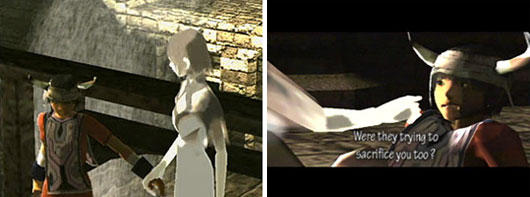
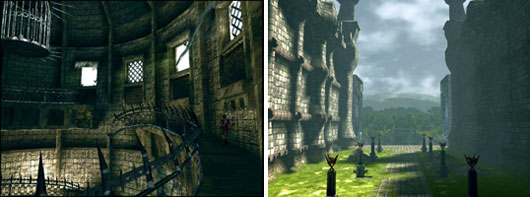
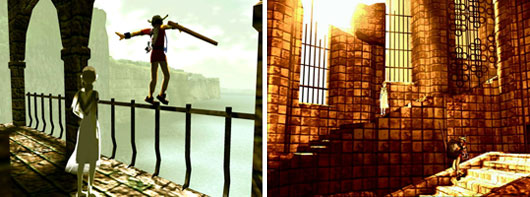
Ico is a child sent to a prison because he was born with horns. In the opening moments of the game you really feel sorry for the kid. He is a sympathetic character with wide eyes and a simple way about him. If and when the opportunity to escape arrives you are ready to lead him out of danger. That is until you realize that the mysterious castle in which you are trapped also has another prisoner, a princess named Yorda. In order to escape you have to take Yorda with you. Not that many a gamer would choose to be selfish and escape by themselves. In pursuit of Yorda are some shadowy monsters, sent to recapture her by Yorda's own mother, the Queen.

Talk about an epic adventure!

Ico is a puzzle game, practically a three dimensional retelling of Prince of Persia. You can see exactly where the SotC team learned their chops. You can see where other games like PoP the Sands of Time and God of War took some inspiration. The control in Ico is simple and intuitive, the puzzles are very clever, the graphics amazing and a straightforward plot that beats all. Ico is nothing short of a perfect game, it becomes epic when played right after SotC and not the other way around. Go on and play it again if you have it, pick it up if you don't.


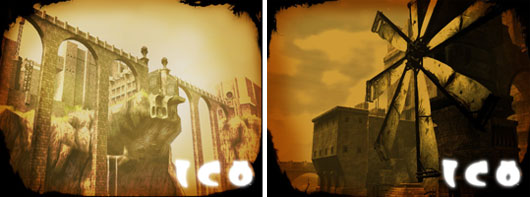
The environments will absorb you. This is part of the world that was on the other side of the forbidden valley in SotC. A castle built on an island, apart from an unseen kingdom in the woods. A giant stone monolith that was built ages ago, with some of the castle lying in ruin. You can tell that Ueda and his team were thinking of a fully-realized world when they began work on Ico.

As far as the eye can see there are details. Birds in the distance, the sound of crickets and frogs. Flowing water, an ocean, clouds and fog to change the mood of the level. All the while you lead Yorda, taking her hand and helping her through the labyrinth of a castle. Ueda says that holding hands is a very powerful symbol of affection in Japan, more so than in any other culture. Most couples just do not do that in Japan. So when Ico first takes Yorda's hand we see the beginnings of a romance. As gamers we have to do our best to get both characters away from the castle and the Queen. To see if they are given the chance to live their lives together, a fate complicated to Wander and Mono in SotC.


Ico teaches us to be brave in the face of adversity. To take a risk and yet always be mindful of using your brain. Every puzzle has a solution and we have to look and listen for the clues. Sometimes we have to leave Yorda behind to figure out how to escape a room, those few moments apart feel like an eternity. Will she be okay? Will the shadow monsters come for her in Ico's absence? Why should we care? After all she is just a polygon model, a device to get us from point-a to point-b.

If that's the case then we are playing games for all the wrong reasons.

Nintendo fanboys have nothing to get worked up over because Link will always save Zelda, whether they play the game or not. Gears of War is not really a battle to save humanity. The zombies aren't really killing people in Dead Rising. This is not really the Final Fantasy and Grand Theft Auto is not about the GT or the A.

Ueda is no fool. He plays with our emotions in Ico just as easily as he did in SotC and does so masterfully. Ico has an ending, something unique. While open to interpretation it is less melancholy than SotC.

For the scope of both games Ueda delivers a story that is the videogame equivalent to the Star Wars trilogies. What unsettled me in SotC was what could have been in the turn of Anakin Skywalker to Darth Vader. What worked in Ico was the redemption of Luke and his father. Had Lucas done it right the Anakin to Vader story should have disturbed audiences. Fortunately Ueda doesn't fall for the same traps, there are no Jar-Jar's, CGI does not replace plot and Han always shoots first.

The US version of Ico doesn't have the secrets found in the European and Japanese versions. It still delivers one hell of an experience. Ico is a game that everyone should play before they die, especially if they have just finished Shadow of the Colossus.

Now if you'll excuse me, I have a lawn to mow and work to catch up on. Peace. As always if you would like to sponsor me please visit my Patreon page and consider donating each month, even as little as $1 would help make better blogs and even podcasts!
follow the Street Writer on Patreon!

Wednesday, January 10, 2024

The return of a lost fighter? - A 1UP classic from October 16, 2008

Hello friends, what are you up to? Things could be better over here. I shouldn't have gloated about the brownies yesterday. It seems that karma does not like gloaters. I got a parking ticket at work because I forgot to display my staff permit. I'll see if the school can do anything about it since I am staff, only I forgot to put up the permit. Then at home one of the light sockets went out. It's another wiring issue in the old house and the money is running out before the family can do something about it. Going to have to squeeze the belt tighter to take care of things.

I'll just focus on videogames and my lawn before things get worse. The other day it was announced than another classic fighting game would return. Given the momentum that SF IV and KOF XII are generating it was only a matter of time before other fighters were resurrected. The weapons-fighting game Battle Arena Toshinden is coming back on the Wii. Kotaku stole the news from Famitsu about this release.

Despite getting four titles over it's lifespan, Toshinden was always a sub-par fighting game. It was proof that even the Japanese were not immune to cashing in on the fighting craze of the 90's. It played ugly and looked worse. It was slow and cumbersome, with music and sound effect that were laughable by early-90's standards. It truly was forgettable compared to the hits of the era.

Toshinden is almost lost to history but is actually more than a footnote in the era of fighters. It was the first 3D fighter to use weapons, it came out in 1994, a full year before Soulcalibur and one year after the debut of Samurai Spirits. Toshinden debuted in the same year as Tekken. It represented the changing tide of technology and in bringing arcade graphics to home consoles. Toshinden, like Tekken, were arcade titles and 1st generation Playstation games. They looked almost indistinguishable between home and arcade. The only problem for Toshinden was how bad it looked and played when compared to Tekken, Virtua Fighter or Samurai Spirits.

The only memorable things to come from the franchise were the character designs. Director Masami Obari and character designer Tsukasa Kotobuki had a field day creating animé-friendly, in some cases, bouncy-breasted archetypes. Feathery-haried, wafish protagonists with long swords swords battling oafish brutes with clubs. Funny how it pre-dated Final Fantasy VII by three years. Too bad that the designs and the actual polygon models were worlds apart. Perhaps the Wii is powerful enough to do a remake justice. We'll see as more news from this game develops. As always if you would like to sponsor me please visit my Patreon page and consider donating each month, even as little as $1 would help make better blogs and even podcasts!
follow the Street Writer on Patreon!

Wednesday, December 20, 2023

Why I love games - A 1UP classic from November 23, 2012

Sorry for the lateness of this entry. I had actually messaged this blog to the 1UP team for inclusion in their "Why I love" series. Unfortunately the message didn't go through and my story wasn't published with the rest of the community entries. Anyhow, here is my story.

Why I Love Games…

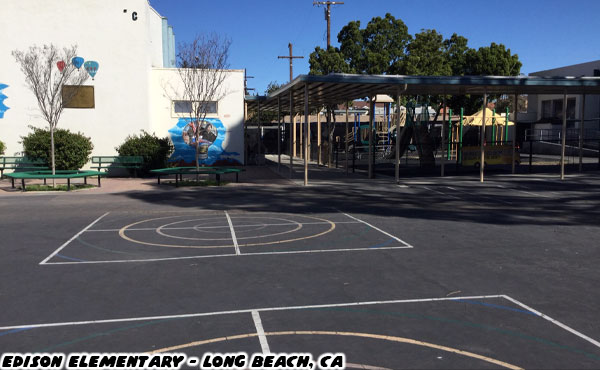
I have a very early memory of what made me fall in love with gaming, videogaming in particular. When I was in elementary school I didn't interact very much with with my classmates. I was just naturally shy. I didn't mind playing alone during recess. In fact I preferred it. I never liked playing with or against anybody in organized sports. I would always feel flustered when I felt like the world was staring at me. I was uncoordinated and afraid of embarrassing myself or my team. Because of that I tried to avoid confrontation at every opportunity. I remember once checking a basketball out of the PE locker and going to the far corner of the playground to toss the ball into the hoop. It was an overcast day, slightly chilly in Downtown Long Beach. After a few minutes a couple of younger kids joined me. They asked if I wanted to play basketball. I reluctantly agreed.

We took turns throwing the basketball at the hoop and chasing the rebound. Being slightly taller than my classmates gave me an advantage. I remember catching the ball and making a mad dash to the opposite side of the court. I was a good 20 feet ahead of my classmates when I stopped to shoot the ball. The excitement of the chase and feeling that overcame me when the ball went in was indescribable. I had scored my first points against real opponents. I turned around hoping to be met with congratulations. I was hoping that whey would be proud of me, that somehow they would be feeling the same sense of elation. Instead they were laughing at me, all of them. They told me that the shot didn't count. I had "travelled" the length of the court without dribbling the basketball. I told them that I didn't know the rules but it didn't stop them from laughing. They thought that everyone was born knowing the rules, especially someone older and taller than them. It made that cold day sting a little bit more.

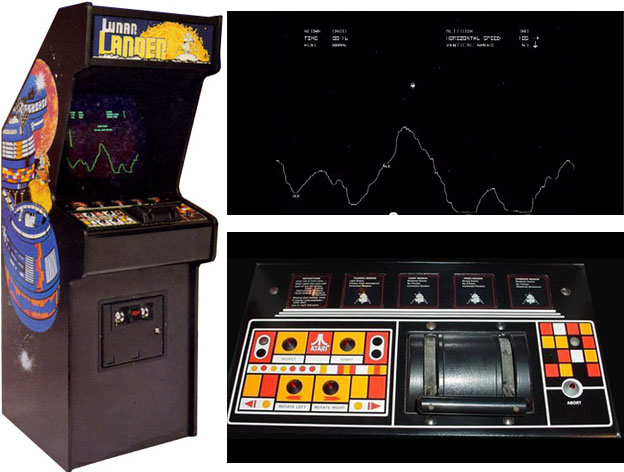
A few months later my mom was shopping at the local Sears. I was hanging out in the appliances section when I saw an arcade game in the middle of an aisle. I thought it was very strange that the store would just place a solitary cabinet off to the side. I went to check it out. The cabinet art was bright, and highly detailed. I went over the buttons and throttle. This game was different than the other ones I had seen. There wasn't a joystick or steering wheel. It looked complicated, more like a simulator than game. I had to try it. I asked my mom for a quarter. I wish I could tell you that I was great at it but I wasn't. I was flying all over the screen trying to control the tiny lander before it ran out of fuel. I must have been six years old. I was big for my age but I barely came up to the middle of the screen. It took all my strength to push the throttle forward and slow the descent of the lander. Before long my game was over. I rejoined my mom and dared not to ask her for another quarter considering how short the game lasted. I just kept casting sideways glances at the cabinet the entire shopping trip.

I was smitten. The game did not judge me on how many points I got or whether I was any good at all. When it ended it did not laugh at me. It was fair and impartial, it gave me the same chance that it gave every player. I could actually feel myself getting better as I played. I knew that if I played it enough I could set the high score. The same couldn't be said of any sport I tried. The game was also appealing in the way it was presented. Thanks to the bight vinyl stickers I felt like I was staring at the controls of an actual spacecraft. My imagination went wild. I was certain that this was how astronauts were being trained. I began spending all my free time and allowance at the local arcade. I tried every game and returned to those that I enjoyed.

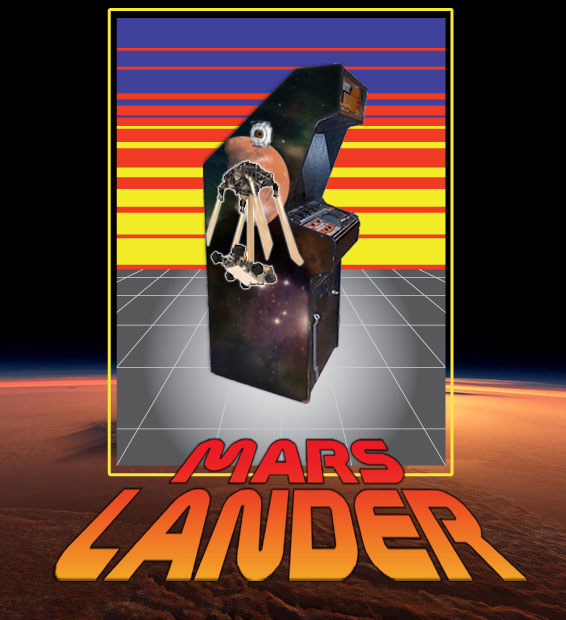
I began to master many titles, especially the racing games because to me those were also simulator experiences. The love that I felt for gaming never diminished, not over the next 30 years. I was on mission support during the Mars Science Laboratory (Curiosity) landing at JPL earlier this year. This meant I worked over the weekend with a very dedicated group of employees. When I went on lunch break I fired up the MAME arcade emulator. There was only one game I could imagine playing during that momentous occasion, care to guess what it was?

As always if you would like to sponsor me please visit my Patreon page and consider donating each month, even as little as $1 would help make better blogs and even podcasts!
follow the Street Writer on Patreon!

Friday, March 24, 2023

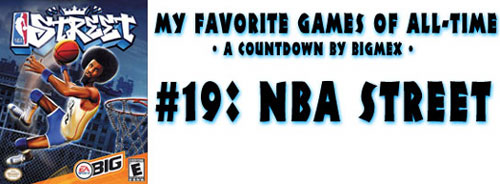
My favorite Games of All-Time #19: NBA Street - Originally published on 1UP - April 7, 2006

NBA Street by Electronic Arts BIG is the only "sport" game on my list. The snowboarding game SSX is the cornerstone for EA's Big division, NBA Street serves as the ambassador between "extreme" sports and traditional sports.

NBA Street meets just about all of the criteria in my definition of a great game. It is the self-contained, boiled-down basketball experience. Don't confuse the popularity of the NBA with the actual game of basketball.

Playground basketball is possibly the last pure form of sport that I know of. Yes companies like AND1 have built their rep by taking playground tricks into large arenas. The game itself is best enjoyed on the playground, free from sponsorships and advertising. The playground where the real legends play day in and day out for the love of the game.

As far as videogames go the basic components for basketball are 3-on-3. This is until the industry learns the nuances of the 1-on-1 game, which NBA Ballers completely misses.

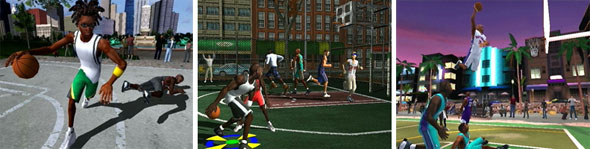
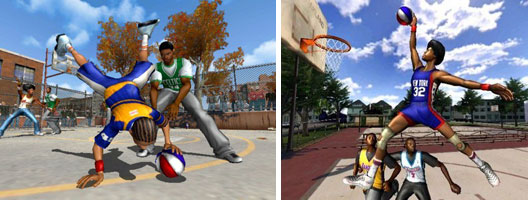
NBA Street was the first basketball game in a long time to capture the fun and creative freedom of basketball. It was arcade in almost every sense of the word. Plays, tricks and dunks were exaggerated but believable. If a character didn't have a high enough "handle" rating they could easily lose the basketball if trying to do a fancy trick move. This gave the fictional and real players in the game a sense of balance.

The control scheme was easy to pick up and get used to. Within a few minutes you could begin pulling off crazy tricks like it was second nature. Not unlike the other great combination-building trick system in Tony Hawk's Pro Skater. NBA Street rewarded players that figured out how to string together long trick chains ending in a monstrous dunk. The sense of realism, the "attitude" that the industry is always trying to create felt genuine in this game.

NBA Street is a nod to the playground game and the legends that never made it into the league. While there are some big NBA names in the game, the biggest personality was the fictional main character, the afro-sporting "Stretch" Monroe. Stretch is based on the NYC playground legends of the 60's and 70's. Many consider those decades the golden years of playground basketball. The days where the best in the NBA would actually show and prove in the playgrounds every summer, instead of retreating to their palatial estates in the Hamptons. The other fictional characters in the game are based around modern players or, like Japanese center Takashi, foreign players that were never given a chance to enter the NBA.

I consider the original Street superior in concept and execution than the sequels. NBA Street 2 and 3 showed an improvement in the graphics and control. Unfortunately those games lacked soul. They lacked originality. They played as uninspired sequels featuring a number of NBA Legends in addition to modern players. They followed a formula of "more is better" rather than the bare bones actual heart of the game.

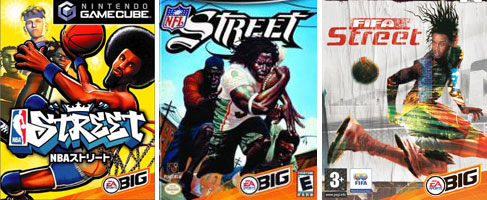
The fictional legends that gave the original game so much personality now seemed out of place. Stretch served little purpose as his template, the retro afro-sporting Julius "Dr. J" Erving was also a playable character. To add insult to injury EA also began using relatively unknown playground players as the templates for fictional characters and unfairly compensating them for their motion-capture sessions, likeness and moves. EA Sports Big have built enough revenue for the company that they began exploring other licenses to make Street games around.

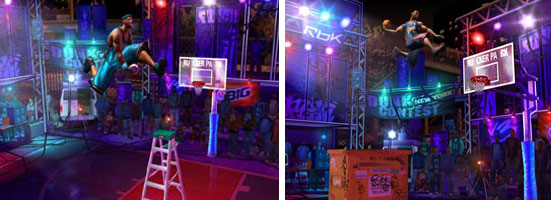
By the time NBA Street 3 debuted it had become a gross exaggeration of the original game. Players could do ridiculous moves that even the Harlem Globetrotters would be embarrassed to do and enter dunk contests with moon-like physics.

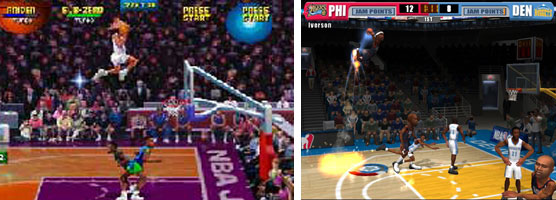
Lest we forget, the moment that Midway gave us a "lot more of the same" in NBA Jam it just about buried the franchise. Half court dunks, bobble-head players, catching fire and unbalanced gameplay. Yeah, it is very easy to take a good idea and push it too far.

NBA Street has been buried. The whole concept of "street" goes out the window when the license and the names are pushed over the game. EA has destroyed a good thing. But for what it's worth the original NBA Street will always remain in my top-20.

To read more on the bigger picture of streetball, where it's been and where it's going check out my 4-part series from ages ago. Part 1 | Part 2 | Part 3 | Part 4. EDIT: I am trying to see if I have saved this series so I can repost it.

I’d like to hear your personal top-10, top-20, top fighting games, top sports games, or top games in any genre. Let me know in the comments section please. As always if you would like to sponsor me please visit my Patreon page and consider donating each month, even as little as $1 would help make better blogs and even podcasts!
follow the Street Writer on Patreon!

Wednesday, March 22, 2023

My favorite Games of All-Time #20: State of Emergency - Originally published on 1UP - March 31, 2006

State of Emergency (SoE) by the now defunct Vis is my guilty pleasure. It is considered one of the shortest, lamest and easiest games ever published by Rockstar. In the all-time top games list of every magazine and website SoE is not even a footnote.

I rank State of Emergency higher in this list than any Zelda game, Shadow of the Colossus and God of War. I'm either insane or maybe I see something special in the game that most gamers overlook.

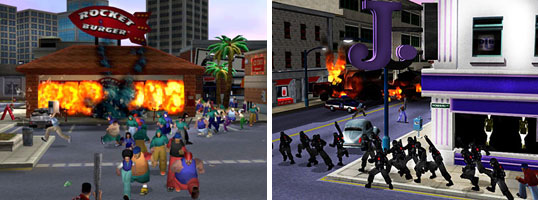
SoE first made news at the 2001 E3. Vis and Rockstar earned some respect for delivering up to several hundred people onscreen at the same time. Most PC developers said that the PS2 could never support that many characters at once.

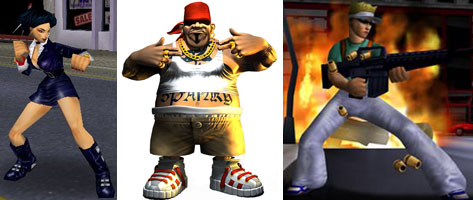
The game was memorable for the characters, mechanics and plot. You are one of several revolutionaries fighting against "the Corporation." There is an ex-cop, lawyer, hacker and escaped prisoner that you can use in your missions. Each character has their own special attacks, strengths and weaknesses. The most well known revolutionary is the chubby gangbanger Hector "Spanky" Solada.

SoE features tons of weapons including assault rifles and axes that players can use plus various missions to accomplish en route to toppling the Corporation. Adding to the running and gunning of the game are the crazed levels. The game is set in the middle of a riot. It is easy to get lost and even easier to evade authorities in the mass of people looting.

The Corporation runs a totalitarian regime in an undisclosed country. The artistic direction and visual clues help set the tone from beginning to end. The characters are highly stylized and a bit cartoonish, however it works in this game. The charm of State of Emergency lies in capturing the chaos of a revolution and turning less into a console game and more into an arcade experience.

That is assuming I can call a revolution charming. You can ask anyone in my family, I find chaos exciting. Riots, explosions wild police chases... I love that stuff. SoE is non-stop chaos and I can't get enough of it. My brother says I need to play more GTA if I'm about the running and gunning. I tell him that I don't want to mess around with a wanna-be game. If I want guns, explosions, gang wars, riots and mass chaos then I cut to the chase and play SoE. From the first level to the last SoE is all about the sensory overload. If I want high speed chases and better car physics than GTA I play Driver. This all goes back to my definition of a great game. Vis identified the element that makes action shooters work and multiplies that tenfold and then wraps it in the middle of a chaotic environment.

This is why I call SoE my dirty little secret. There are very few games that can chill me out when I have to blow off some steam, SoE might be the best at it. Blowing stuff up is fun in the game, it could be called the Katamari of chaos because nobody does it better. There is something visceral about SoE that transcends most game design.

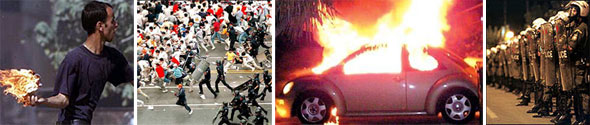
That visceral sensation is primal. The human psyche is tuned to either fight or flee when presented with images of a revolution, the rioting and chaos it brings out. We are reduced to our survival instincts in a mob mentality. As a group we can only be pushed so far by brutal regimes. We can tolerate only so much suffering and human rights violations before we begin rebelling. It is the struggle between freedom and power, the balance of order and chaos that goes back thousands of years. Whether you want to admit it or not, chaos it is as much a part of our humanity as order is.

The fight for freedom is a theme that keeps returning. Most recently in the game Getting Up and the movie V for Vendetta. No game before or since has captured that frenetic energy better than State of Emergency. For that reason alone it will stay on my top-20 favorite games forever and ever.

Viva La Revolucion!

PS. My character Avery won the Capoeira Fighter 3 character contest.

I found out about it earlier this month, but the hosted site had been down for a while. It should be up if you visit. HOLY SMOKES, have a great weekend!!!

I’d like to hear your personal top-10, top-20, top fighting games, top sports games, or top games in any genre. Let me know in the comments section please. As always if you would like to sponsor me please visit my Patreon page and consider donating each month, even as little as $1 would help make better blogs and even podcasts!
follow the Street Writer on Patreon!
Blog, favorite games, arcade, 1up, reprint

Monday, April 25, 2022

Designing a sequel to 720°, part 4...

We have spent the last couple of blogs looking at what I would introduce, or change for a sequel to 720°. I’ve said the graphics, and game engine would get an overhaul. The core gameplay would remain the same, but with some new elements thrown in. The slalom contest would be retired, and in its place we would have street, and park contests. The ramp contest would return, and also be expanded to include random layouts, and locations in order to keep the experience fresh. One of the remaining contests would also be back. The downhill competition in the original 720° didn’t look, or play like any real downhill competition. It was far more fantastic, with super long wooden ramps to speed down. There were corners to clip, and places to jump that acted like shortcuts.
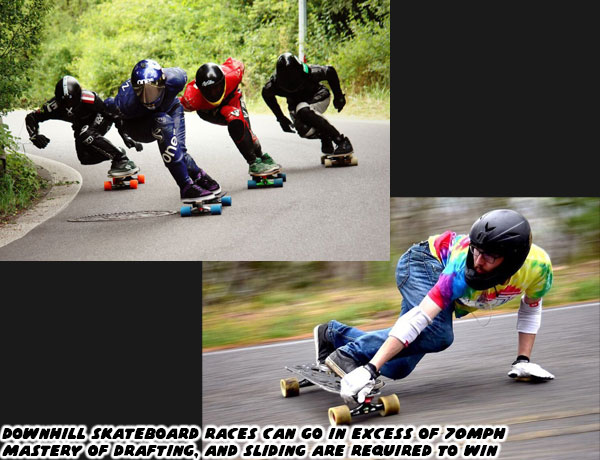
Actual downhill skateboard races are a thing of beauty. The technique, and strategy employed in downhill are unique to the sport. They require a different set of skills, just as park, street, and ramp contests require their own. Even the skateboards, and gear are unique for the races. The fastest tournaments require leather outfits, for aerodynamic, and safety reasons. As well as full face helmets. The decks are longer, and wider on average than most skateboards, with a concave that helps lock the feet in place. They also have wider trucks, and bigger wheels which help with both speed, stability, and stopping power. Skaters can control their speed through corners by sliding on their wheels, and hands. They wear gloves with plastic “pucks” on their palms to keep from being injured. Trying to recreate this would make for a fantastic skateboarding game, and something that I would absolutely love to direct, but it wouldn’t work for a 720° sequel.
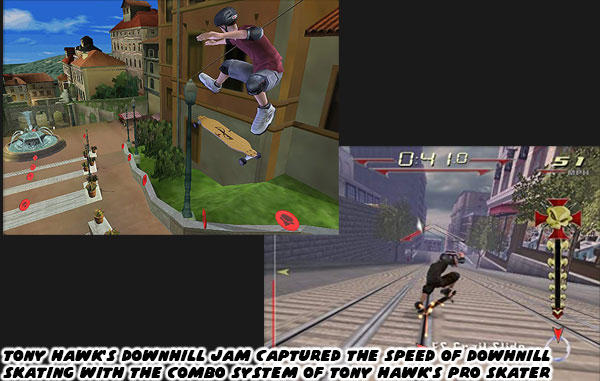
By the same token there aren’t too many games to look at for inspiration. Tony Hawk’s Downhill Jam by Toys for Bob was extremely fun. It featured skateboards that were accurate to the sport, and details like sliding, and even getting “speed wobbles” if you went too fast. The majority of the game play was focused on performing back-to-back tricks, grinds, aerials, and chasing combos, similar to the THPS series. In this regard it also wouldn’t be a good fit for a 720° sequel. So we have to figure out how to make it live up to the arcade spirit of the original. The stakes might seem mild in the Am downhill races, but as the player progresses through the game they would discover that the downhill portions are just as random, and exciting as any other event.
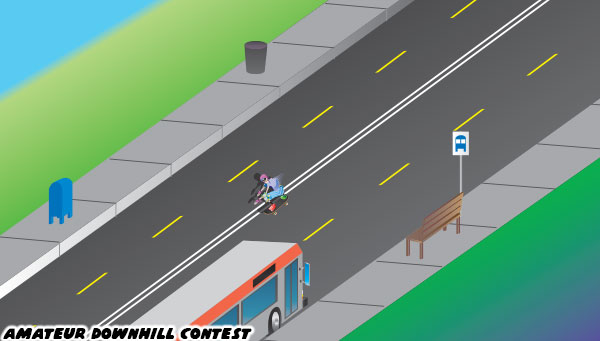
I would start the early downhill contests on the streets. It would still be an isometric POV. I would have the player race in a group of other skaters, but they would sort of fade so that the camera would focus on the main character. The illusion is that you are still racing against others, when really the races are a war of attrition. There are many obstacles on the way down that can take out contestants. Pressing the kick/pump button actually put the character in a tuck, helping them reach top speed. When the button isn’t being held down then skaters stands up, and slows down. If the player holds down the grab button on turns then they drop some speed, and slide through corners. If a player tries to take a turn at top speed without grabbing, then they slide wide, and crash out of bounds. There are several unique things about the downhill courses. Just like other contests they are randomly generated. A player never races down the same downhill course twice. 
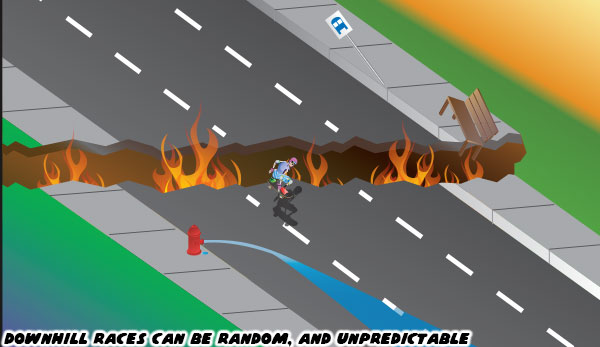
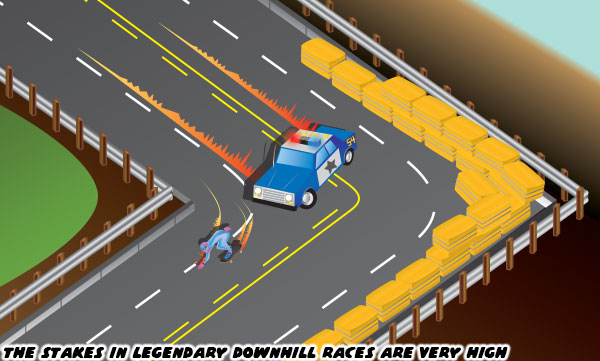
Some races take place in cities, you might end up avoiding traffic in both directions. You can ollie up a curb, and try to avoid rival skaters, and cars. But then you run the risk of crashing into a pedestrian, mailbox, or kid delivering newspapers. You might find yourself racing through a residential street, cutting through alleys, jumping over trash cans. Then there are courses that wind through mountains, where you might have to avoid a rock slide, a construction crew on the side of the road, making it a single-lane funnel into traffic. Falling off the side of some courses might end up with the player dropping into a chasm, or discovering a secret. By the time a player earns a legend ranking they have the gear, and ability to skate as fast as possible. This means the ability to slide through multiple curves in one motion, get back to top speed quickly, and chase down opponents. To help raise the stakes a cop car might appear to go after contestants. It might end up crashing into traffic, or smashing through a barrier, only to appear later on down the road. All of these things should bring back the hijinks of classic Atari games, as well as the exploration in Skate or Die. Downhill races should feel like the best parts of endless runner games, but with an actual finish line.
All of the contests I have talked about so far in this blog series are available for Am, Pro, and Legend events. The last contest for my 720° sequel is the final unlocked for Amateurs, and gets much harder for Pros, and Legends. The reason why will be explained in the next, entry of my series. I hope to see you back for that. Let me know what you think of my game idea so far. Would you play it? If you would like to sponsor me please visit my Patreon page and consider donating each month, even as little as $1 would help make better blogs and even podcasts!

follow the Street Writer on Patreon!