Showing posts with label 720. Show all posts

Friday, April 7, 2023

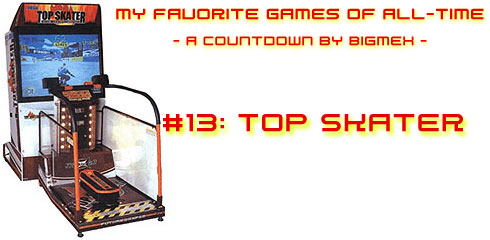
My favorite Games of All-Time #13: Top Skater - Originally published on 1UP - May 26, 2006

When I think of Top Skater little beads of sweat build on my brow. So much went into that game that I honestly have no idea how Sega managed to pull it all together. In short I am humbled by the design.

I tip my hat, I bow my head... any analogy you can think of as a sign of respect. Top Skater is one of my most beloved games and also one of the most overlooked influential titles of all-time. Top Skater begat the Sega action sports legacy, just look to my desktop picture to see what's I'm talking about. My desktop picture is important to me for many reasons. Not the least of which was because it allowed some common ground to talk with Jim of Pennywise.
Before I start talking about Cookie, Ken-ta or Jill. Before the big-name sponsors that lent their names to the game. Even before I talk about the revolutionary control set-up I have to mention one thing. Atari's 1986 arcade smash hit 720 (degrees) was the original arcade skateboarding game. It pushed the genre through its dynamic control and punk-themed music by "Faceplant". 720 is partially responsible for almost every skateboarding game to date.

10 years after 720 Sega's Top Skater rewrote the book on skate games. True to the legacy of other titles in the Sega arcade amusement (AM) groups. AM1 (later renamed WOW Entertainment) created the only other Sega arcade game on my list, the Ocean Hunter. AM2, the most famous unit under the direction of Yu Suzuki was responsible for Outrun, Virtua Fighter, Daytona and scores of other instant classics. AM3 was renamed Hitmaker in 2000 and was responsible for Top Skater and Ollie King. AM 11 renamed AV created Ollie King. Sega's platform developers Smilebit created the Jet Set Radio series... now you are all caught up.
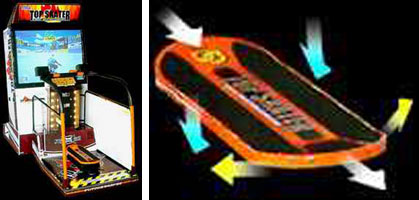
Hitmaker was on pace for something special when the control scheme was revealed. Top Skater used a skateboard for the arcade interface rather than a joystick. Players had to stand upright on the cabinet and not only turn the skateboard from side to side to change direction, but also tilt the board to carve a turn and even slap down the tail to "ollie" or the nose to "nollie" and catch air.

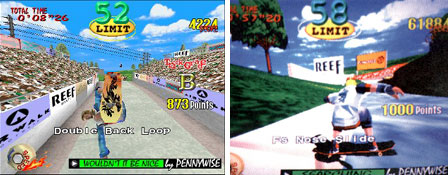
A skater gained points and speed by successfully performing ramp jumps and collecting time tokens. Okay, so the experience was not a 100% accurate representation of skateboarding but then again what is? Top Skater was a downhill racer that did feature a lot of tricks based from real life.

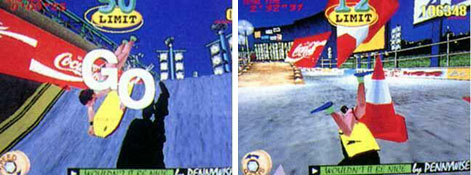
A skater could grind on ledges and rails. They could even ollie and perform wallrides on billboards. The physics for gaining speed were semi-realistic. A player had to find the fastest line down the level while at the same time looking for ramps and shortcuts that would reward them with speed. Players that carved hard angles onto ramps and ollied at the lip were rewarded with bigger and higher airs. Those that managed to carve a fullpipe with enough speed could actually go a complete 360 degrees upside down. Special moves, mind bending animations and massive points were the icing on the cake.
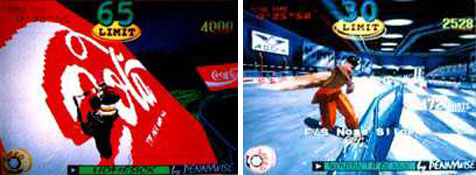
If I could pin down the one thing that made Top Skater memorable it would have to be catching air out of halfpipes. Gamers that knew how to carve the gigantic snake runs could keep going perpetually higher and faster on the halfipe. These airs became longer, trickier and more dynamic. Special animations accompanied these airs. Some of the tricks based on actual skateboarding and a few based on snowboarding. The question you may be asking is "so what?" We've seen tons of these moves in other skateboarding, inline and snowboarding games. Why would Top Skater hold a place in my top game list above them?

For the simple reason that Top Skater broke taboo. They animated the air out of a halfpipe by crossing the horizon line. As an aside; some people get motion sickness while playing FPS games. This is because their eyes tell their brain that they are moving, while their inner-ear tells the brain that they are not. This mix of information causes them to feel queasy. One of the things that most video editors, animators and game designers do not do is cross the horizon line. If the horizon line is tilted it can make mild motion sickness worse. Like watching the ocean pitch from side to side while on a boat causes you to get sea sick.
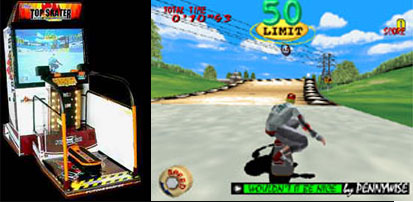

With the exception of air combat sims, most games never break, let alone slightly tilt the horizon line. Watch the video for Warhawk and then the one for Snoopy vs. the Red Baron. Do you notice that the Snoopy game allows the camera to pitch and roll with the plane? The camera crosses the horizon plane and gives the player a sense of vertigo. This is one of the reasons I'm looking forward to the Snoopy game more than Warhawk. Well, that and about a $560 price difference.

Back to the game on my list!

Top Skater doesn't just cross the horizon line, it wraps it up into a little ball and throws it right out the window. The skater will fly out of the ramp and contort themselves in various positions when performing "A" and "S" class tricks like the Alley McTwist. When the skater does this the camera will pan back and rotate with the animation. Often times leaving the player not knowing which end is up until they reenter the ramp. For those few moments we are with the skater, we get to see the world through their eyes.
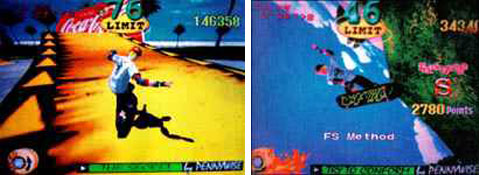
No game before or since has ever done it as well. Not SSX, not 1080 and none of the Tony Hawk games. In fact Dave Stohl with Activision and Scott Pease with Neversoft Entertainment said that Top Skater was one of the biggest influences in the creation of Tony Hawk's Pro Skater. The downhill levels in THPS could attest to that. After eight years the Hawk franchise returns to its roots with Tony Hawk's Downhill Jam. The game will be released almost 10 years after Top Skater and a full 20 years after 720.

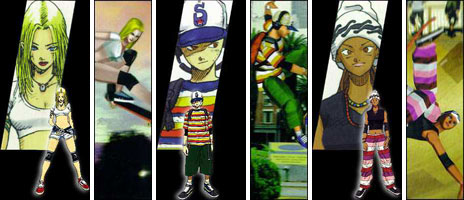
But this isn't where my praise of Top Skater ends. I just said that the camera was the biggest highlight for me. It isn't the only reason Top Skater was a memorable game and earns a place on this list. Top Skater also features some unique characters, each with their own personality and trick library.
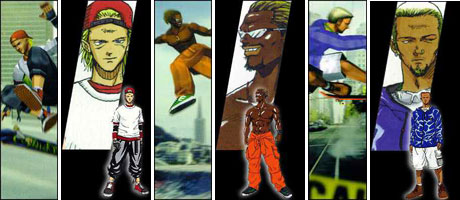
These characters not only represented the archetypical skaters, they also had names like Keith, Jake and Ash. The skaters were even sponsored by shoe companies like Vans, eS and etnies. The soundtrack was provided entirely by Pennywise, the Orange County punk band with tremendous street credit. These little details helped round out the world that the game was set in. The character models were detailed for their time and did resemble skaters from the mid to late 90's. Hitmaker made great use of the then new Model-2 Arcade board when designing the levels as well.

Both the normal and expert skate parks had their own look and feel. The levels resembled a big-time race in an exotic local that could have taken place, if 100 foot ramp jumps were normal for skaters. True to the design in other Sega games like Daytona 2, the levels in Top Skater made you wish that places like this really existed. Stadium length tracks where skaters could grind and wallride with reckless abandon while moving in and out of snake runs and jumping distances that would make Danny Way jealous.
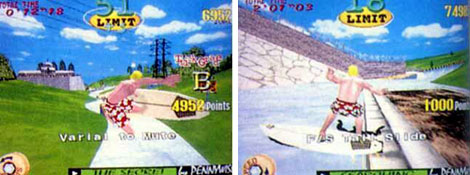
As if the game wasn't already a fun experience Hitmaker hid a number of things in Top Skater. One of these things were hidden characters, Alex the surfer and P-Nut the bodyboarder. Wait, bodyboarder and surfer? That's right! These characters floated above the air, could paddle to gain speed and even featured their own special tricks.

Top Skater also had a level hidden within the Expert course. This level was filled with ramps and bowls and known better as the Freestyle course.

The characters could skate regular (lead with the left foot) or goofy (lead with the right) based on their statistics, players could put in a code to change their stance and thus performance in the game.

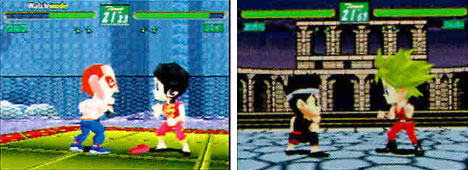
Top Skater even had a code that allowed skaters to appear "super-deformed," that is have large heads, hands and feet and look like giant kids. This style of character later appeared in another Sega game called Virtua Fighter Kids. The "Kid Code" even worked on Alex and P-Nut.
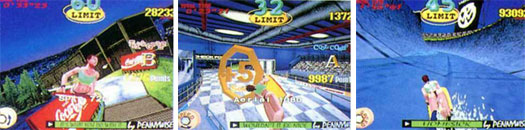
Every detail that went into Top Skater forever changed the face of action sports games. The game was just about as balanced and innovative as any game on my list. The control, animation, sound, music, level and character design were way ahead of their time. Many of the hidden features went on to be copied in future games not only by Sega, but by the rest of the industry.

Three years before Tony Hawk's Pro Skater featured a couple of downhill levels with rails to grind, giant halfpipes to air out of and ramps to jump, four years before kid mode appeared in Tony Hawk's Pro Skater 2 and five years before Kelly Slater the surfer appeared in Tony Hawk's Pro Skater 3 there was Top Skater.

Top Skater began a legacy that not only carried over to every other Sega action sports game but also the rest of the industry. For every flying skateboard that you see from now on, for every Tony Hawk clone that has come out we can pay homage to the creator. Top Skater has earned its place on my list. It will remain as one of my favorite games of all-time.
I’d like to hear your personal top-10, top-20, top fighting games, top sports games, or top games in any genre. Let me know in the comments section please. As always if you would like to sponsor me please visit my Patreon page and consider donating each month, even as little as $1 would help make better blogs and even podcasts!
follow the Street Writer on Patreon!

Friday, April 29, 2022

Designing a sequel to 720°, Bonus Entry!

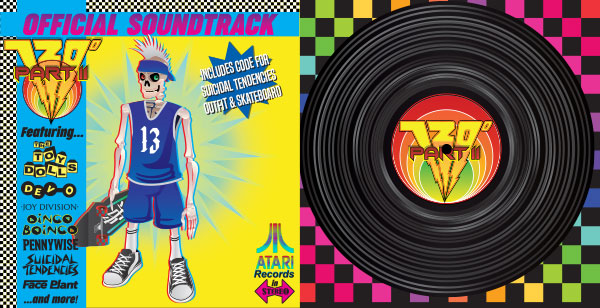
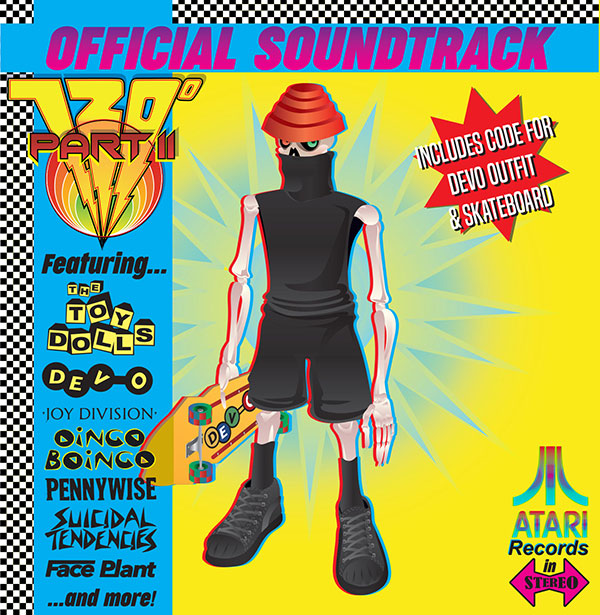
I did have one other idea for the 720° sequel that didn’t fit in with the other blog entries. I was focused on the graphics, controls, and changes to both Skate City, and the competitions that I forgot to mention the soundtrack to the game. I would feature remixes of the classic songs by Earl Vickers, and Hal Cannon. I think that they are both still alive, I’d see if I could get them out of retirements for a few new pieces. Also we have the great cover of the OST by Metronome the City, I’d be sure to incorporate that as well. The game is an homage to the ‘80s skate culture, and classic arcade gaming. I’d try to put together a greatest hits of New Wave, and punk bands that shaped the generation. Groups like Oingo Boingo, Stiff Little Fingers, and The Toy Dolls covered a broad spectrum of US, and British influences. Then there were the faster thrash, and punk songs from Suicidal Tendencies, and Pennywise who helped shape the biggest arcade, and console skate hits. Although Pennywise, and a few other acts were born in the ‘90s, they were still an important part of the scene, and should be included.

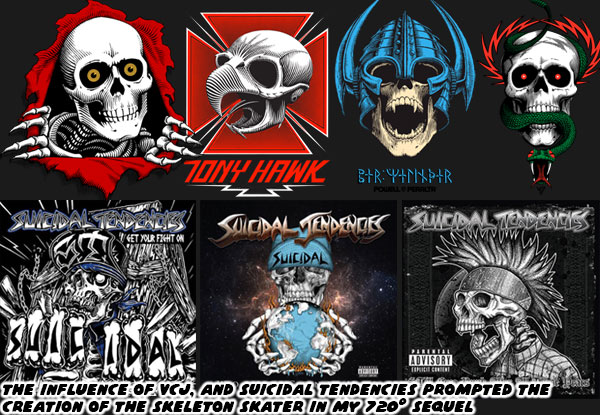
In addition to digital format downloads, I would offer a limited edition run on vinyl. The original soundtrack was the very first one to be released on Flexi-Disk. It is highly desired by skate collectors, and arcade fans alike. When Metronome the City released their version they also offered it in a digital, and vinyl format. Putting the 720° sequel soundtrack on a physical record would be a nod to the legacy. Not only that, I would have secret outfits, and skateboards available for those that purchased the soundtrack. Perhaps something inspired by the “Cyco Punk” outfits of Suicidal Tendencies. Which are based in part on Southern California Latino Gang culture. Then there’s the even more iconic outfits worn by DEVO, including the “Energy Dome” helmets worn by the band. I'd certainly enjoy rocking out to the game while my character sported this look.

Do you remember any video game soundtrack ever offering unique in-game items? I’m sure this would be a welcome surprise for fans of the game, and help build enough support to get another game off the ground, if not inspire a team of developers to revisit Skate or Die. What do you think about that? Would you get a limited-edition soundtrack if it offered unique items for the game? Or do you just like listening to rad music? Let me know in the comments section, and I hope I have inspired you to check out skate games from any era. If you would like to sponsor me please visit my Patreon page and consider donating each month, even as little as $1 would help make better blogs and even podcasts!

follow the Street Writer on Patreon!

Wednesday, April 27, 2022

Designing a sequel to 720°, final part.

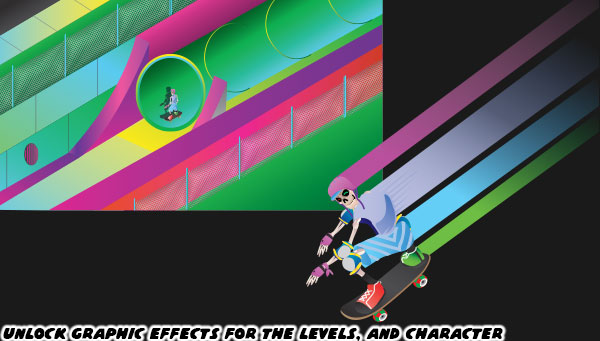
We have spent the past few days looking at the elements that would go into my version of a sequel to the arcade classic 720°. We covered the changes to the graphics, how it would appear like an isometric sprite-based game, but would actually be a 3D engine. With the updates in technology it would be able to zoom in, and out of the action. Also how the physics would be based on being able to pump transitions, allowing the character to build speed on ramp, and park courses. We looked at being able to spin, and flip along all three axis on vert tricks. We discussed how downhill skating would allow the player to tuck to gain speed, and slide around corners. We looked at the new skeleton skating main character, and how they can be customized. Players would be able to unlock skateboards, shoes, and protective gear which not only change the aesthetic of the character, but can boost their stats in competition. Some of the other things that players can unlock include visual effects to the stages, and character. One of which for example turns the level textures into bright neon colors, even bolder than the already wild graphics. Another would leave colorful speed lines behind the player, which would twist, and turn with their actions.

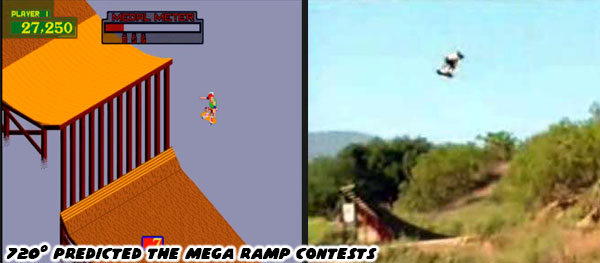
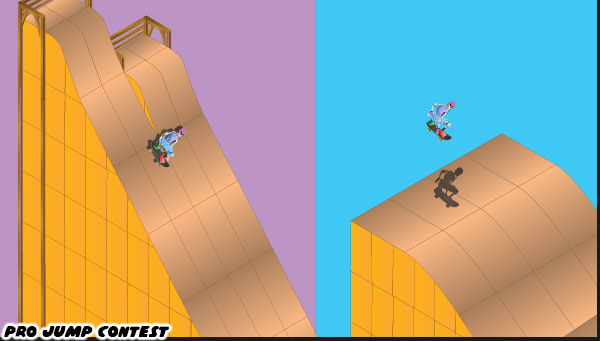
We also looked at how Skate City, and the competition portions would have evolved. We talked about how competition ramp, park, street, and downhill courses would be randomly generated so that the player would never play the same way twice. The final competition that players would be able to unlock is the Jump contest. In the original game this was a series of jumps onto targets. There were never any contest like this in 1986 when the game was originally released. With that said it would predict the rise in an entirely new form of ramp contest, specifically the Mega Ramp that was pioneered by Danny Way. Danny’s part in the King of Skate contest in 2002, and his video part in the DC Video in 2003 helped bring the gigantic ramp into public consciousness. He worked with the X-Games to get it into an official competition in 2004. It has been a featured event ever since, bringing the world a number of firsts for skateboarding.

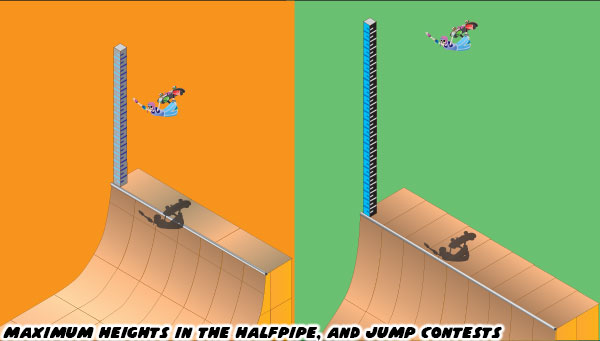
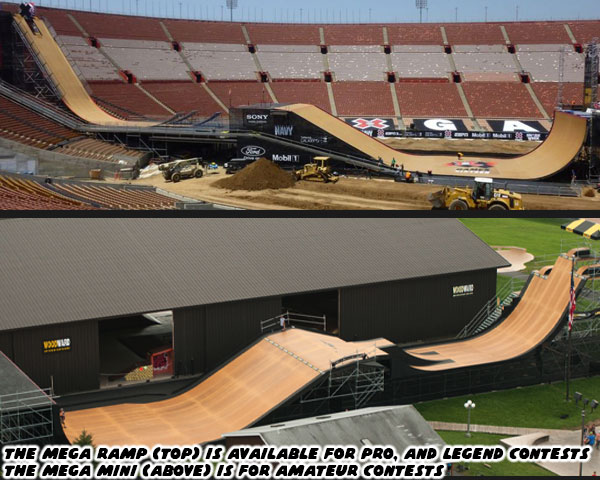
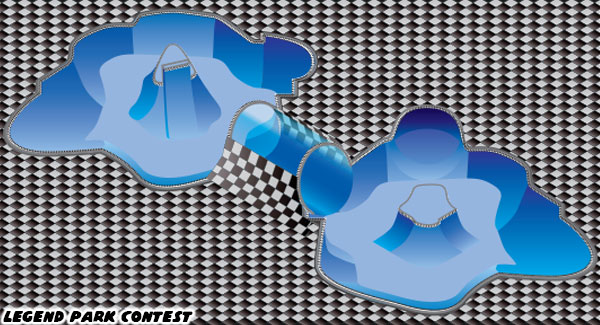
The jump contest in the 720° sequel would be replaced with a Mega Ramp. Which is actually two unique challenges. First players have to get across a gap that goes anywhere from 40-70 feet. Players have enough speed, and hang time to perform off-axis 720° spins. Or a front, or back flip, while rotating up to 540° as well. Then they have to deal with an 18+ foot halfpipe which can launch them over 25 feet in the air. With that amount of speed, and height it is actually possible to spin 1260°, or even corkscrew a double inversion which would otherwise be impossible on a regular halfpipe. I want players to realize that all of the practice they’d gotten in vert competitions actually comes in handy when trying to spin, and flip on the monster ramp. I also want players to be in awe of how colossal airs are in the jump park, when compared to a standard halfpipe.

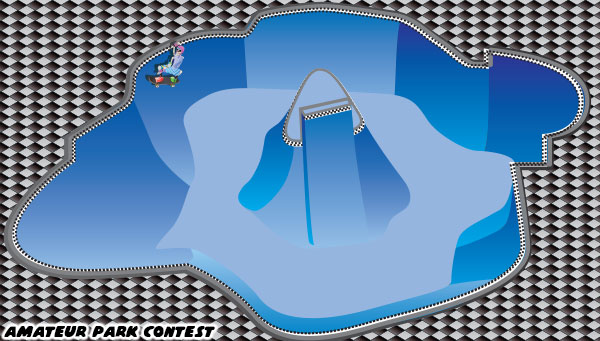
The actual mega ramp requires an advanced level of skill in order to ride successfully. This is why it would be the last type of contest a player would unlock. It requires the ability to go fast, handle split-second reactions, not to mention spin, flip, and land tricks. Players would have to have gotten a lot of experience going through Skate City, as well as entering other competitions to ensure they were completely comfortable with the controls. Also so that the stats of the character would no longer be Novice. An amateur skater would not have the speed, or rotation required to clear the gap, or land a big air out of the halfpipe. This is why Ams would compete on a scaled-down ramp called the Mini-Mega Ramp. It doesn’t have a gap, but rather platform in the middle. 

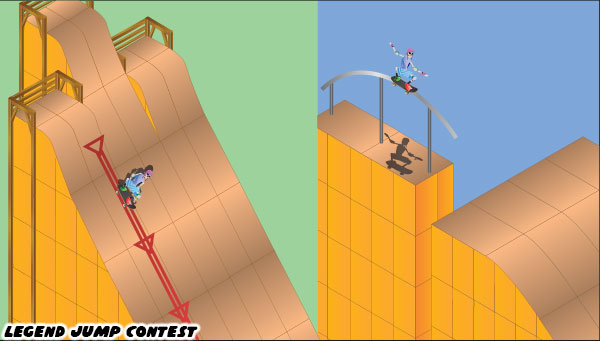
Competing on the smaller Mega-Mini would help the player learn how to control their speed, pump, and land tricks. The Am version of the ramp wouldn't change too much, aside from the location, and color of the ramp. The bigger differences would happen between Pro, and Legend contests. Those would become as random as other events. The first thing that would be random would be the placement of the quarter pipes at the bottom of the roll in. Some are positioned closer to the gap which would allow players to land standard tricks easier.

To win the competitions a player would have to either try a more difficult flip on the short gap, or more rotations on the long gap. A pro contest ramp might feature two closer quarter pipes, and one longer one, or vice-versa. The thing that would be added to Legend ramps would be a rail in the middle, or off to the sides of the gap. Players would know where the rail was by an arrow painted on the roll in. This would be like the diamond painted on the ramp in the original jump contests. So a legend jump contest would have a short quarter pipe gap, a long gap, and a rail. The placement of the rail, and quarter pipes would be random at each legend jump contest. Players are allowed up to seven tries on a jump ramp. To try and win a medal a player might use a short gap run to get on the scoreboard, and then chase a big launch, or rail combo which is required for the gold medal.

So that would be the last type of contest that you would be able to enter in my sequel. With that audiences would be able to cruise the massive Skate City, and get invited to random events all over the world. I’d like to know if this is a skateboarding game you would be interested in playing. Are there things that you would like to see? Or questions you have on the game play elements? I’d certainly like to hear about it. Also I need help coming up with a good name for it. Maybe this game should be called 900° in honor of Tony Hawk?

Then again Guy Khuri did land a 1080° on a halfpipe, and Mitchie Brusco did a 1260° on the mega ramp! They deserve some consideration too! Well, in any case it needs a good name. Tell me your thoughts on the entire project. Would you like to play it? Do you think I have a future in making games? Thank you for walking down this what-if road with me. Would you like to see me do another one of these armchair write ups on another game? If so which one would you like to see me tackle? If you would like to sponsor me please visit my Patreon page and consider donating each month, even as little as $1 would help make better blogs and even podcasts!

follow the Street Writer on Patreon!

Monday, April 25, 2022

Designing a sequel to 720°, part 4...

We have spent the last couple of blogs looking at what I would introduce, or change for a sequel to 720°. I’ve said the graphics, and game engine would get an overhaul. The core gameplay would remain the same, but with some new elements thrown in. The slalom contest would be retired, and in its place we would have street, and park contests. The ramp contest would return, and also be expanded to include random layouts, and locations in order to keep the experience fresh. One of the remaining contests would also be back. The downhill competition in the original 720° didn’t look, or play like any real downhill competition. It was far more fantastic, with super long wooden ramps to speed down. There were corners to clip, and places to jump that acted like shortcuts.

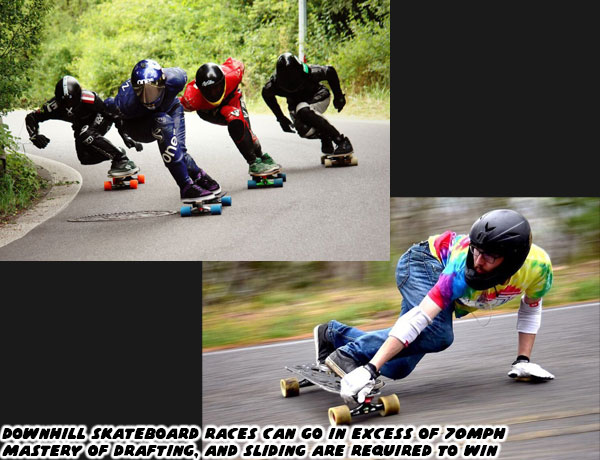
Actual downhill skateboard races are a thing of beauty. The technique, and strategy employed in downhill are unique to the sport. They require a different set of skills, just as park, street, and ramp contests require their own. Even the skateboards, and gear are unique for the races. The fastest tournaments require leather outfits, for aerodynamic, and safety reasons. As well as full face helmets. The decks are longer, and wider on average than most skateboards, with a concave that helps lock the feet in place. They also have wider trucks, and bigger wheels which help with both speed, stability, and stopping power. Skaters can control their speed through corners by sliding on their wheels, and hands. They wear gloves with plastic “pucks” on their palms to keep from being injured. Trying to recreate this would make for a fantastic skateboarding game, and something that I would absolutely love to direct, but it wouldn’t work for a 720° sequel.

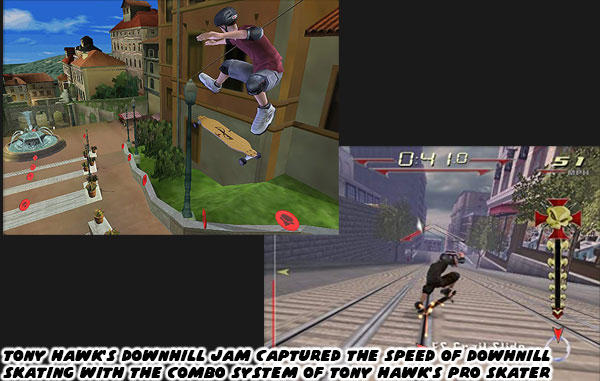
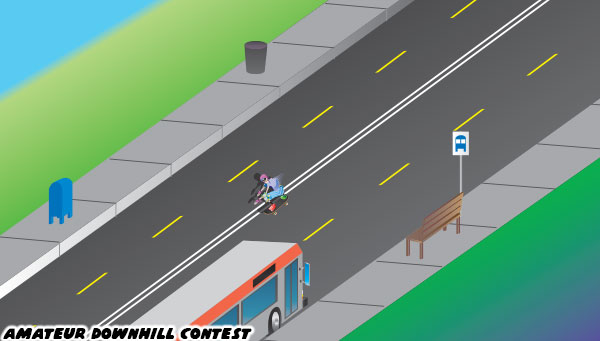
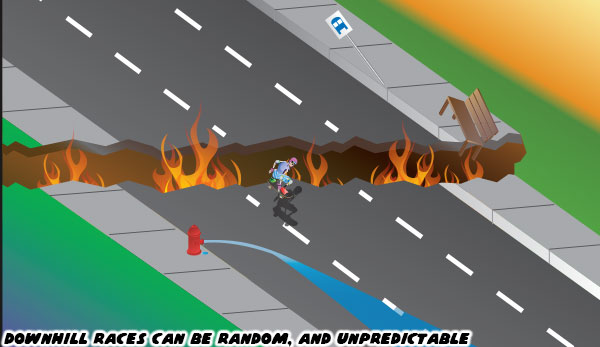
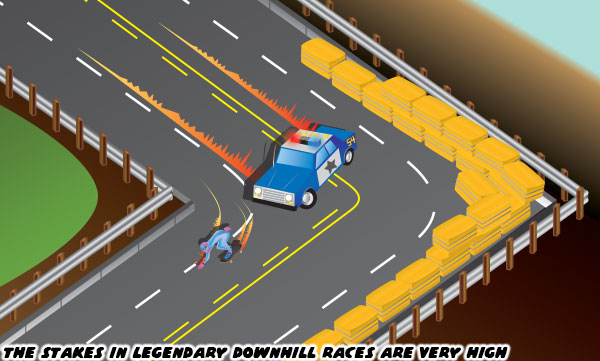
By the same token there aren’t too many games to look at for inspiration. Tony Hawk’s Downhill Jam by Toys for Bob was extremely fun. It featured skateboards that were accurate to the sport, and details like sliding, and even getting “speed wobbles” if you went too fast. The majority of the game play was focused on performing back-to-back tricks, grinds, aerials, and chasing combos, similar to the THPS series. In this regard it also wouldn’t be a good fit for a 720° sequel. So we have to figure out how to make it live up to the arcade spirit of the original. The stakes might seem mild in the Am downhill races, but as the player progresses through the game they would discover that the downhill portions are just as random, and exciting as any other event.

I would start the early downhill contests on the streets. It would still be an isometric POV. I would have the player race in a group of other skaters, but they would sort of fade so that the camera would focus on the main character. The illusion is that you are still racing against others, when really the races are a war of attrition. There are many obstacles on the way down that can take out contestants. Pressing the kick/pump button actually put the character in a tuck, helping them reach top speed. When the button isn’t being held down then skaters stands up, and slows down. If the player holds down the grab button on turns then they drop some speed, and slide through corners. If a player tries to take a turn at top speed without grabbing, then they slide wide, and crash out of bounds. There are several unique things about the downhill courses. Just like other contests they are randomly generated. A player never races down the same downhill course twice. 

Some races take place in cities, you might end up avoiding traffic in both directions. You can ollie up a curb, and try to avoid rival skaters, and cars. But then you run the risk of crashing into a pedestrian, mailbox, or kid delivering newspapers. You might find yourself racing through a residential street, cutting through alleys, jumping over trash cans. Then there are courses that wind through mountains, where you might have to avoid a rock slide, a construction crew on the side of the road, making it a single-lane funnel into traffic. Falling off the side of some courses might end up with the player dropping into a chasm, or discovering a secret. By the time a player earns a legend ranking they have the gear, and ability to skate as fast as possible. This means the ability to slide through multiple curves in one motion, get back to top speed quickly, and chase down opponents. To help raise the stakes a cop car might appear to go after contestants. It might end up crashing into traffic, or smashing through a barrier, only to appear later on down the road. All of these things should bring back the hijinks of classic Atari games, as well as the exploration in Skate or Die. Downhill races should feel like the best parts of endless runner games, but with an actual finish line.

All of the contests I have talked about so far in this blog series are available for Am, Pro, and Legend events. The last contest for my 720° sequel is the final unlocked for Amateurs, and gets much harder for Pros, and Legends. The reason why will be explained in the next, entry of my series. I hope to see you back for that. Let me know what you think of my game idea so far. Would you play it? If you would like to sponsor me please visit my Patreon page and consider donating each month, even as little as $1 would help make better blogs and even podcasts!

follow the Street Writer on Patreon!

Friday, April 22, 2022

Designing a sequel to 720°, part 3...

In the previous blogs I talked up how Skate City would be expanded, and feature objectives, and secrets. Also I talked a little bit about how the character can be visually customized, and how they would earn experience through the game. The character becomes better at performing tricks the more they go through the city, as well as compete. I said previously that the slalom contest would be replaced with street, and park contests. The other contests from 720° would return, but modified as well. At first glimpse fans of the original would think that the ramp contest was exactly the same as the first 720°. At least as an Amateur the first time you are invited to compete in ramp it is the original design.

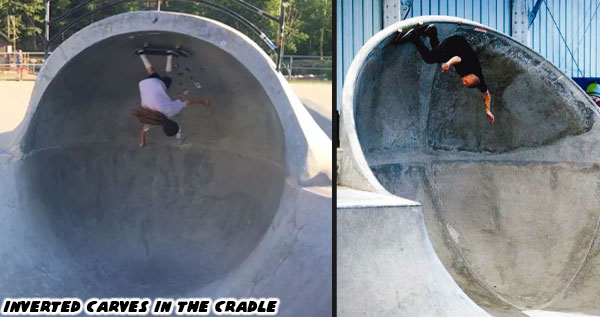
The vert engine underneath the game should be completely redone. Players can now pump the transitions in order to build speed. On vert skaters are going too fast to push with their back foot, so what they do is either drop, or raise their body weight on transitions in order to build speed. It’s similar to kicking your legs out, and bringing them back in while riding a swing. Pumping was a feature of the ramp, and high air contest in Skate or Die. Not many people realize that there was an animation in the original 720° that had the character pump the transitions as well. Being able to pump is essential not only for big airs, but also to defy gravity in skateparks. Very good skaters can exploit the lines in a park, and use them to go fast enough to get inverted in full pipes, and cradles. Being able to do these things consistently would translate to higher scores in competition.

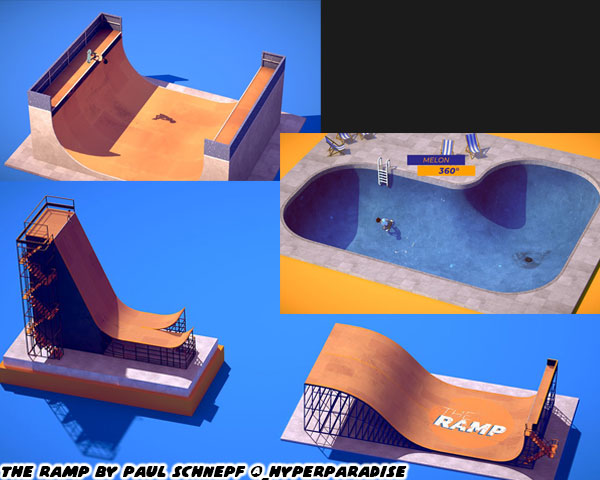
The best modern skate game to feature the pumping mechanic is the indy hit The Ramp by Paul Schnepf (@_hyperparadise). The Ramp is in an isometric view, just like 720°, and is very close to how I imagine my sequel would appear. It is an exceptional game, but I would still adjust the control, animation, and mechanics if it were to be the engine behind the 720° sequel. In The Ramp it is very easy to go off the side of the transition, especially the faster you go. The same is true for 720°. I would have the game engine “guide” players from flying off the ramp by nudging them to go straight up, and down if your character is right on the edge of the ramp. Yes the player can still shoot off the ramp if they want, but most would appreciate the nudge in the right direction so they don't lose a high score run.

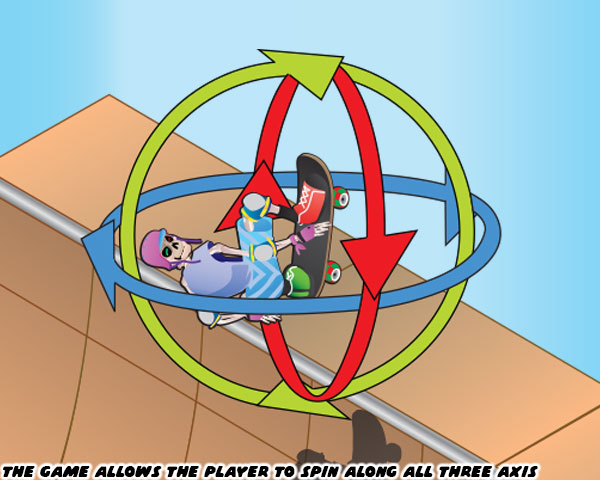
The other thing that I would add to the control scheme is the ability to rotate along all three axis (X, Y, Z). This was something that I had been pushing for Neversoft to do for years in the THPS series. The vast majority of skate games allow your character to rotate along one plane, this is the traditional frontside, or backside spin. Some games might have a special trick that a character can perform like a front flip, or a backflip. While the character is doing in this animation they cannot rotate on any other plane. A few skate games came close to allowing the full freedom of flipping, or rotating on more than one axis. Tony Hawk’s Downhill Jam, developed by Toys for Bob in 2006, allowed you to double tap a direction, and have the character flip along that axis. The animations were way over-the-top, which worked well in the context of the game. But 720° was closer to real vert tricks. Animations that looked too absurd would break the consistency of the engine.

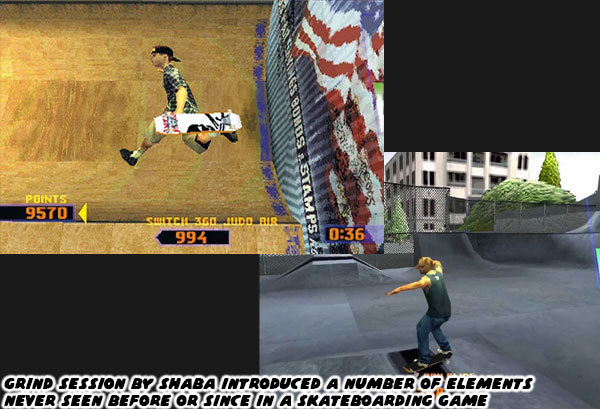
The one game that got closest to performing these advanced tricks the way I imagine it was Grind Session by Shaba games. It debuted in March of 2000. After the original THPS, and before THPS2 was released. The game was very well done, it improved in many ways over the Neversoft hit. It introduced manuals, nose manuals, and no complies to the flatland trick library. It also allowed players to flip their board into a lip trick, which no game since has managed to accomplish. In the animation department players could string vert tricks back-to-back with seamless animation. In most skate games, including THPS 1+2, if you perform a grab trick, then another, the game engine competes the animation cycle for one trick before moving to the next one. In Grind Session the animation on the body position, hands, and feet would flow from trick to trick in one fluid motion. None of the animations would reset to the default position in between.

It was staggering how much Shaba was able to make certain skateboarding tricks work in a game format before Neversoft. I stopped calling it Grind Session, and started calling it THPS 1.5. I wasn’t the only one that saw value in what they did. The studio was bought up by Activision, and they helped port THPS3 to the Playstation, Tony Hawk’s Underground 2: Remix to the PSP, and Tony Hawk’s Project 8 to the PS2, and Xbox. Grind Session’s biggest contribution to skating engines was what they did with rotations. Some characters could perform a front flip, or back flip. The characters switched hands depending on if they were doing a front flip (Weddle grab), or back flip (Indy grab). So that they were accurate to the actual trick. While doing the flip you could actually rotate frontside or backside as well. This made the game that much more realistic, while not losing the ease of play.

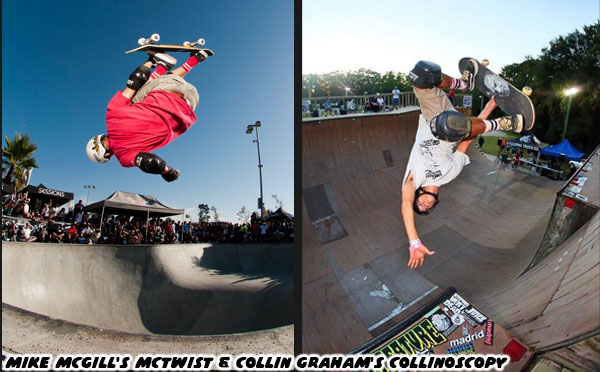
You may not think that inverted spins, and flips are really possible on skateboards, but they have existed since the late ‘70s. At first they were used on lip tricks. Moves like the Elguerial, Unit, Miller Flip, and Phillips 66 were inverts that required the skater to spin, flip, and push off the coping at the same time. Then there were the aerial inversions. Skaters at that time were having difficulty figuring out how to spin 540° without losing the board. Mike McGill saw Fred Blood, a roller skater, flip into his spins, and that’s how he got the idea for the McTwist, or an inverted 540°. If you broke down the trick into its basic elements it was a backside, front flip, Weddle grab 540°. Whereas a frontside, back flip, Indy grab 540° was known as a Rodeo Flip. Skaters have performed all manner of off-axis flips, and spins for decades. It should be possible to do them in the 720° sequel. They should not be easy to perform. Rotating the front flip, or back flip is slower than a frontside, or backside spin. So a Novice, or Am wouldn’t be able to land those tricks with any consistency. When a character has the stats of a Pro then they finally have the ability land them cleanly. When a character has the stats of a Legend then they can spin, and flip with almost any grab combination, and land them with more frequency.
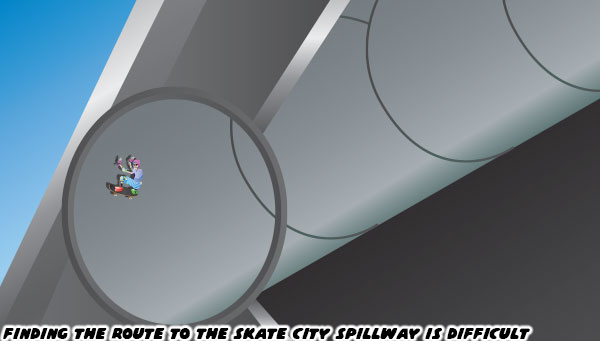
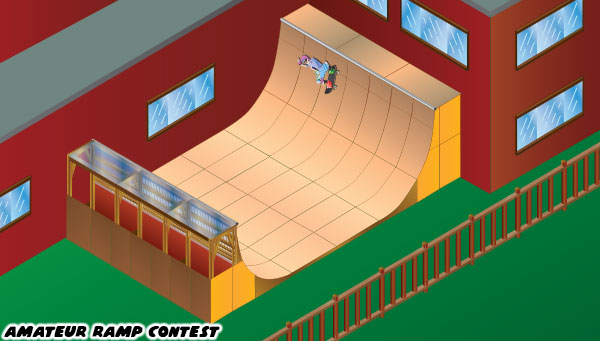
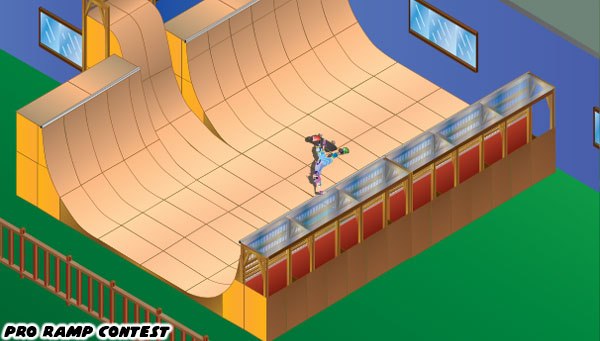
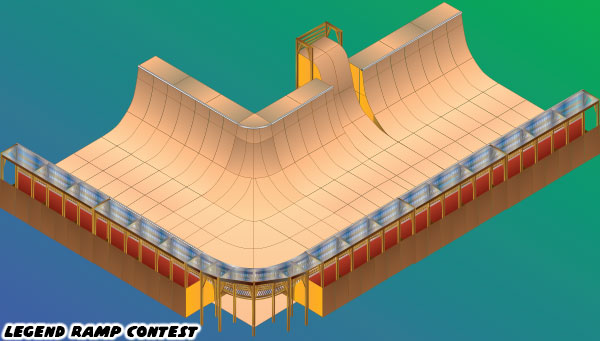
Ramp competitions are not necessarily all the same in my sequel. I mentioned that the size, and obstacles featured in street, and park contests depended on whether you were an Am, Pro, or Legend. Amateurs had the smallest courses, Pros had more space, and Legends had the biggest, and most complex courses. The same rules applied to ramp contests as well. The original 720° ramp was very simple, in my version I said it was designated for Ams. The Pro ramp has more transitions, perhaps a channel, or spine. Legend ramps are massive, they may have a hip, corner, or extension. Winning these contests require you to make full use of the ramp, while performing aerials, grinds, spin, and flip tricks.

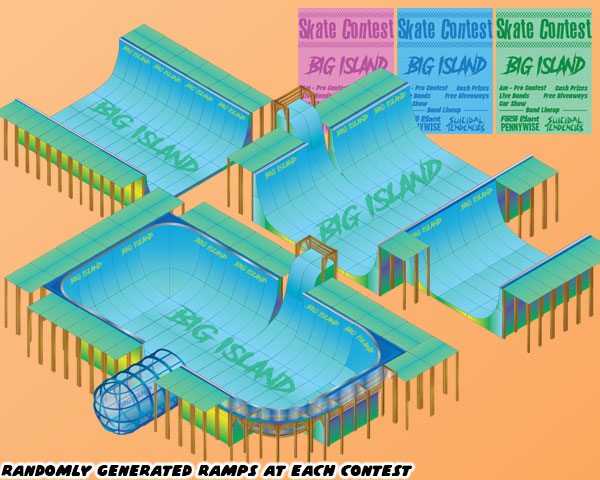
The biggest highlight of the 720° sequel is that contests are completely randomized. I don’t mean that you end up in an Am, Pro, or Legend contest randomly, but instead that the layout, transitions, rails, and roll-ins are randomly placed. You will never end up skating the same ramp twice. This applies to park, street, or other contests. Contests also take place in different towns, so the layout, and colors of the obstacles are unique compared to those featured in Skate City. Imagine a fictional contest taking place in the South Pacific called Big Island. The player gets a hint to the location from a colorful flyer while the stage loads, then they see the park. The ramps have colors, and stickers unique to it. Each time they go back to it the ramp is completely different, yet familiar at the same time. Every contest in the game observes the same rules. Imagine how you would feel if your favorite game changed a little bit each time you played it. The game, like the art of skateboarding, should never become stale.
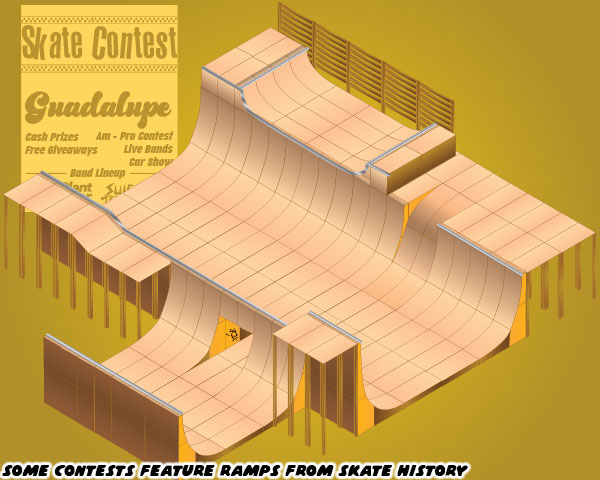
Every now, and then a ramp from skate history might pop up. For example, once, a long time ago there was a ramp in the town of Guadalupe, located between two junkyards. It was created by a legendary skater Won Ton “Animal” Chin. Long-time skate fans would recognize it from the Powell-Peralta video the Search for Animal Chin. New fans would just know that there are no random ramps that are as unique. There are a few of these ramps from the past that might have only been used for a contest, or two before being torn down by vandals, or even angry city councils. I’m on the fence as to whether or not you could save, and revisit those ramps whenever you want. Also I probably wouldn’t put in a build-a-park editor, as the game should still feel like an arcade experience.

Having the contest stages constantly evolve is possibly the most important thing the game would introduce to the genre. It goes far beyond waiting for DLC content, as the game creates its own new challenges. We certainly have the technology, and talent to make it happen. What I would do with the remaining 720° contests might be more exciting to audiences. I will talk about those in the next blog. I hope to see you back for those. Also, what do you think of my sequel idea so far? Would you play this game? If you would like to sponsor me please visit my Patreon page and consider donating each month, even as little as $1 would help make better blogs and even podcasts!

follow the Street Writer on Patreon!

Wednesday, April 20, 2022

Designing a sequel to 720°, part 2...

In the previous blog I had touched lightly on the design, and layout of the new Skate City. I said that parts of the city were fenced off, and would be revealed as the character progressed through the game. There would also be parts of the city that remain fenced off, and its up to the player to figure out how to get past the fence. There would be a rail, ledge, or ramp that would be needed to hop the fence. Some of these things would randomly appear once an objective was met. Then there would be places that had no obvious way to get into, but seemed skateable. This is where exploration comes into play.
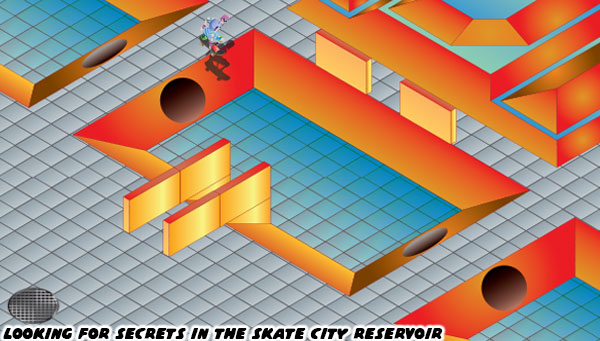
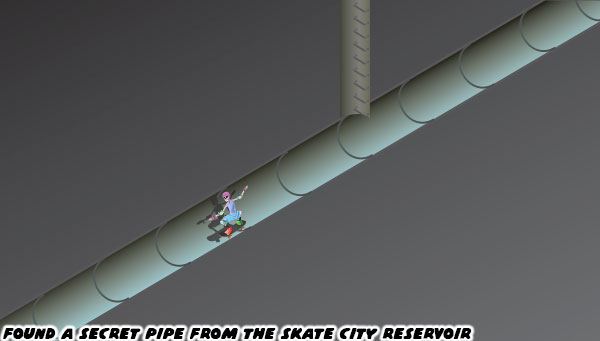
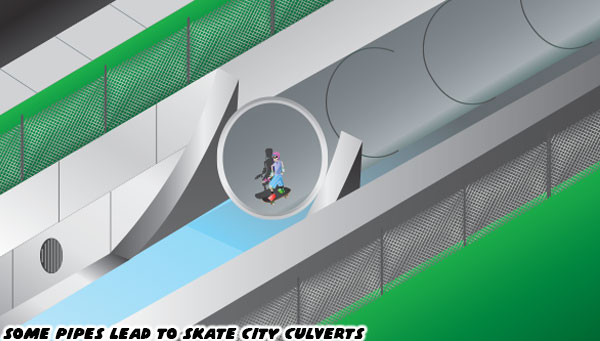
I mentioned that I wouldn’t have tips available by default. I encourage audiences to use their powers of observation to figure out the secrets of Skate City. For example, skaters would notice that there are manhole covers scattered all over the map. At first they simply appear as a street detail, but if a player goes and explores the Skate City reservoir, and water treatment plant then they’d discover there were small tunnels connecting the different banks. On the “blind” side of the camera there would be a manhole that seems to line up with a tunnel opening that is blocked by a wall. If a player goes between the walls they would discover that it is actually a tunnel that leads to another place in the city.

As the player goes down the pipe they would actually see they skate under access tunnels. If a player stops, and jumps while going under the tunnel then their character will pop up in one of the manholes in the city. The player can only come up a manhole, they cannot go back down once at street level. In this way the player learns that they have to seek out the secret entrances scattered throughout the map. Some might be hidden behind a restaurant, or school. Some might even be hidden behind a dumpster. There will always be a manhole nearby to let the players know that a pipe might be in the area. If a player follows a pipe all the way to the end then they might pop up in a Skate City culvert.

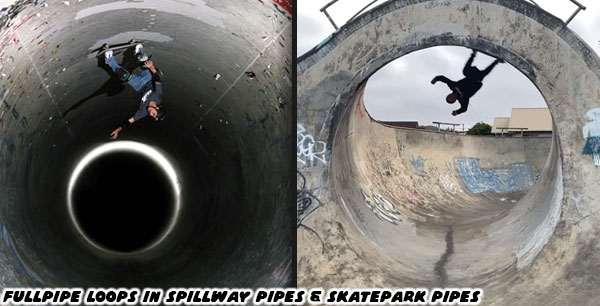
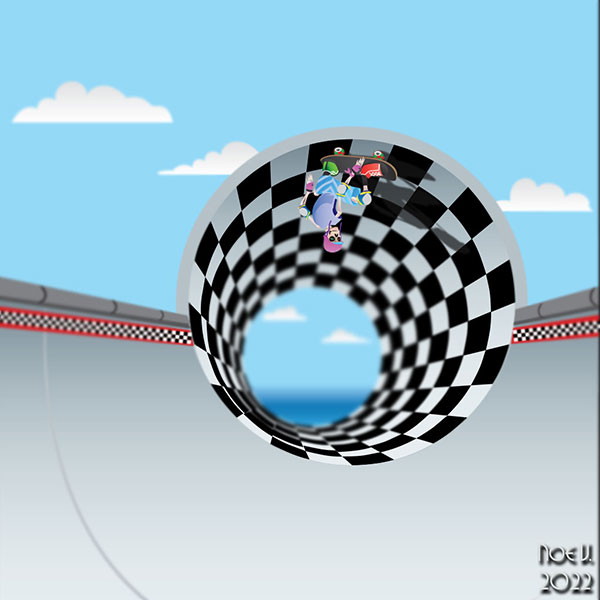
This is where I want players to realize that they can actually “pump” the walls of a pipe in order to gain tremendous speed. This might be the only way to launch up, and out of the culvert. Or if a player backtracks, they would realize that they can actually carve a loop within the pipe. Once the player learns the ability to carve then the next contests they are invited to are park, rather than street contests. If a player becomes really good at carving a full pipe loop then those elements might be included on the next level.

Some of the last places in Skate City that you would be able to unlock/access would be epic in scope. While it would be possible to loop smaller pipes, the monstrous Skate City spillway is impossible to loop, although that shouldn’t discourage you from trying, and learning what sorts of tricks are possible inside of it. This is a great place to earn the experience to make vert, and park tricks easier.

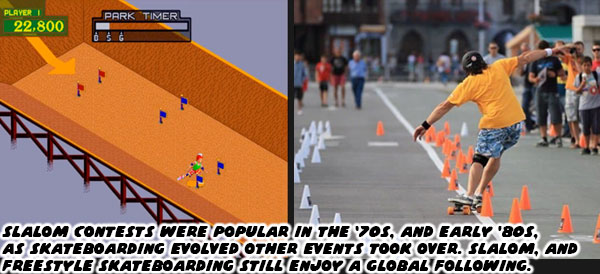
The contests in my 720° would be changed a bit from the original. I didn’t want to steer too far from the format of the early contests, but some of them had little relevance to modern skateboarding. For example I would lose the slalom contest. Believe it or not this is still a format of skating practiced by people the world over. The version of slalom in the original 720° bore little resemblance to the actual sport. So it made little sense to keep it in the game. It wasn’t the only skate contest format that fell in popularity. The same thing could be said of freestyle skating, where people perform difficult flatland routines while trying not to fall. It peaked in the ‘80s, and then went underground. There is still a following behind the format, and even world champion contest, but it wouldn’t necessarily be appreciated in a game of this type.

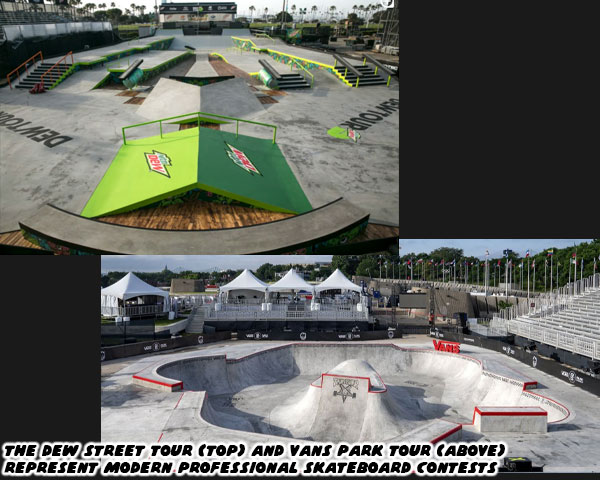
The two most popular formats of skate contests today are Street, and Park. Street contests are based around stairs, rails, and ledges. Contestants focus on grind, and flip tricks under a time limit. The courses in street contests are laid out with obstacles that are roughly the same height as real world handrails, or benches. They reflect the same things that would be seen in daily life. The other format, Park, more closely reflects the layout you might find in a dedicated skatepark. There are transitions, hips, and wedges that can be used to generate tremendous speed, and perform vert-like tricks. They don’t often have the same sort of technical flip tricks that would be seen in street contests. By the same measure street contests are rarely as fast, and explosive as park ones.

I would replace the slalom contests in the new 720° with street, and park contests. When a player is invited to compete they find our what format it is so they can better prepare. This is when players begin to learn that the size of the course depends on their status, or their skill as a player. The first street, and park contests would take up roughly “one screen” in size. They would be able to easily see the obstacles, and figure out a way to score points within the time limit. As a player advances from Am, to Pro, to Legend then the size, and difficulty of the terrain would change as well.

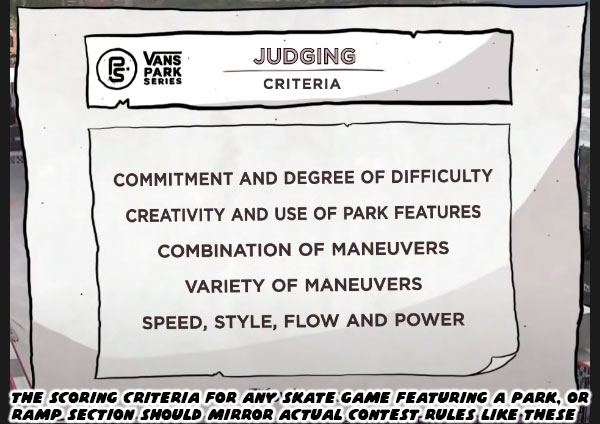
The course for a Legend park contest might be two or three screens in size. It might have a specific feature, such as a full pipe, or cradle that needed to be carved in order to guarantee a victory. The criteria for a skate contest in the game would actually reflect the same thing that judges are looking for in the real world. Actual park, and ramp contests are judged on a number of things. A skater that is capable of putting down clean flips tricks, or grab tricks gets a partial score. But if that’s all they do then they wouldn’t stand a chance of winning. Skaters that have sloppy flip tricks, or sketchy landings might actually do better because they made sure to attempt those tricks going forward, and “fakie” or reverse. They would also earn points for using the entire park. Incorporating grind tricks, carving the cradle, or pipe, as well as spinning frontside, and backside over the entire park would be the best way to win.

The diversity of tricks, and not solely whether or not a few tricks were pulled cleanly would be heavily favored in the 720° sequel. Believe it or not this was actually the case in the original ramp contests. As I played through the original I noticed that the score for pulling tricks depended on several factors. If I did an aerial, not even necessarily while spinning I earned a few points. But if I carved across the ramp while in the air I was rewarded more points. The further across I went, the more points I earned. The same thing applied the higher I went on an aerial. If I managed to carve across the ramp, while also blasting an air then again my score went higher. Spinning was a score multiplier. You earned more points for each 180 you went, and more points if you went higher, or further across the ramp. It was not uncommon to land 1000 point tricks for performing all three variables in the air.

I would take the same approach in 720° sequel contests. Players would be rewarded for the depth of their trick library, how high, and far they went as well. Using grinds, ledge tricks, spinning frontside, and backside would all influence the final score. In the THPS series, and most other skate games you could win a contest by performing the same tricks over, and over. Neversoft did reduce the value of the tricks the more times they were performed during a combo, however that did not mean players would be penalized by the virtual judges.

Replacing slalom the slalom contest with park, and street contests was only the beginning of the changes I’d introduce for my sequel. In the next blog entry I’m going to talk about the changes to the iconic ramp contests. I hope to see you back for that. Do you enjoy my sequel ideas so far? I’d like to hear your thoughts on it so far. If you would like to sponsor me please visit my Patreon page and consider donating each month, even as little as $1 would help make better blogs and even podcasts!

follow the Street Writer on Patreon!