Showing posts with label atari. Show all posts

Wednesday, August 28, 2024

Feel the Rush! Atari's San Francisco Rush! - A 1UP classic from April 29, 2009

In the late 90's the US arcade scene was tapering off. San Francisco Rush by Atari was created as a rival to anything Sega had and especially to counter the popular Cruis'n USA series by Midway. The 1996 title showed that Atari was behind the curve. However even their worst Rush showing was better than the best Cruis'n game.

Atari did an accurate representation of San Francisco to race around in. The hilly city was a good setting for an arcade racer. All Atari had to do was polish out some corners and lengthen a few streets to make it perfect. They developed a series of tracks around the city, exploiting obvious as well as hidden shortcuts with their model. They also introduced a series of cars which handled differently and had their own strengths and weaknesses. The Volkswagen-inspired cars said a lot about the still lingering hippy vibe from San Francisco. Rarely did the cars mesh so well with the theme of the game. Rush was a blast to play as cars made fantastic jumps at top speed clearing entire blocks in one go. Not many racing games ever featured cars that could leave the ground. With a few rare exceptions none of the Sega racers featured any jumps, let alone those on the scale of Rush. Expert players could "thread the needle" through a series of jumps and shortcuts that would frighten even the most seasoned racing veterans. Those that took a jump just a little bit off would end up crashing miserably and lose their spot in the race. As imaginative and arcade-like as the game was it felt like it was lacking something.

I believe the graphics were the biggest detractor to the Rush series. The tracks and cars seemed very simplistic, details were sparse and the city of San Francisco felt lifeless. AM2 was memorable for their racing games but the sum of their parts were more than great cars and tracks. None of the Rush games carried the same level of atmosphere that Sega had poured into their games. Filters to convey motion, realistic lighting effects, models made up of millions of polygons, landscape and textures which were weren't flat and generic. Atari touted the latest 3DFX technology but it wasn't enough to make Rush appear more than a very pretty computer game in the arcade. However this was also a sign of the times.

Only Japan seemingly had enough of an arcade market to keep on developing dedicated cabinets and hardware for every title. In the US corners had to be cut which meant that the tech that went into arcade titles was very scaled back and based on systems not much nicer than the PC's available in homes. All of the atmosphere and technology from the Sega games couldn't be reproduced with such limited resources. This did not stop the Rush series from taking a foothold and keeping Atari going. The 1997 follow-up Rush the Rock Alcatraz edition did well as did the last in the series, 1999's San Francisco Rush 2049. All of these games eventually found their way to the consoles where a generation that didn't have an arcade scene could see what they were missing out on. There were some arcade titles that never made the transition to the home, not because the technology wasn't there but because of the interesting ways the game was presented. On the next blog we'll look at one of the more obscure and odd titles in the driving genre.

Did you ever play the Rush games? Did you have a favorite late '90s arcade racer? Let me know in the comments section please. As always if you would like to sponsor me please visit my Patreon page and consider donating each month, even as little as $1 would help make better blogs and even podcasts!
follow the Street Writer on Patreon!

Monday, August 26, 2024

Rad Mobile vs Race Drivin', Japanese design vs American hardware - A 1UP classic from April 28, 2009

A few years after Power Drift Sega released another scaling sprites-as-3D racer called Rad Mobile. It was called Gale Racer to my friends overseas. The 1991 title was a coast-to-coast race set in-cockpit. At the core it was AM2's updated take on OutRun. Entire states could be cleared in seconds, there were hidden paths, multiple endings and cops to avoid! The graphics were very nice for the time but the details were what sold this game.

The arcade cabinet was an updated version of the Power Drift deluxe one. It rode on hydraulics to immerse the player further into the experience of racing. Hanging from the rearview mirror was a Sonic the Hedgehog. It was his first arcade cameo, a nod from Yu Suzuki to Yuji Naka for making Sega's console a real contender. The steering wheel provided force-feedback and on the dashboard were buttons to start the engine, turn on the headlights and windshield wipers. All of these things were used as the game progressed. It was nice seeing weather and time elements happen on the course. To help move the day and night along faster Yu logically had the race start on the west coast and had the cars run east. The tracks were all fantastic, some freeways suspended miles over the city or cutting a path through a valley. The most memorable level in any arcade racer is easily the Springfield portion of Rad Mobile.

It was the 12th stage in the game. Off to the side of the road was an open gate. The open track was welcoming as the rest of the racers had to contend with oncoming traffic. There was a rainstorm happening so they had to turn on their windshield wipers. It was right about then that racers realized they were on train tracks. Suddenly the cabinet would blair out a train horn and the player could see a locomotive bearing down on them in the rearview mirror. The fence on the side of the road would open up for a section of the track so the player could choose to jump into the streets and contend with oncoming traffic or take their chances and stay on the tracks. Of course most arcade gamers would stay on the tracks and take their chances with the train. It was a white-knuckle ride that has yet to be reproduced in any arcade racer. Best of all if you were a good enough driver you could beat the game on one credit, a rarity for most racing games.

The supercar that powered through this race was allegedly the Porsche 959 racing car. However most of my friends agreed that it looked a lot more like the Mclaren F1, although that supercar wouldn't debut until a year after Rad Mobile. Was this a case of design following culture or an odd coincidence?

A year before Rad Mobile the US was giving the arcade crowd an equally fantastic racer. 1990's Race Drivin' was the sequel to the groundbreaking polygon racer Hard Drivin'. Billed as the world's first authentic driving simulation game. It was a bit ugly and slow in the graphics department but more than made up for it with advances in the technology. Atari had closed the legacy on their arcade racing scene by leaving the free-wheeling Sprint games behind. They knew players wanted realism especially now that Badlands had shown that the Sprint formula was dead. Race Drivin' was as close as players would get to the feel and physics of driving without actually taking the family car out for a spin.

The Hard Drivin' and Race Drivin' cabinets were memorable for their attention to detail. These cabinets and controls were nothing at all like the freewheeling steering from the Sprint games. The steering wheels had rock-solid force feedback. Actually fighting the players for control if they were careening off course! The game also featured accurate gas, brake and even clutch pedals along with a five-speed shifter. On top of everything was a metal key that was built into the cabinet that players had to turn in order to start their cars. This game was the antithesis of every arcade racer ever. It rivaled the logic of Japanese design and trumped the details from any other western developer. However the tracks were anything but daily driving courses. They were designed to test your driving skill and patience. The game was very unforgiving. You would be penalized for driving off the course and every little bump seemed to cause your car to blow up. Every jump and landing had to be perfect or you'd be shelling out another quarter. The stunt and latter super-stunt tracks were the reasons why people really played the games. What good was realistic physics and force feedback steering if you weren't willing to drive the car like a mad stuntman? The wild jump and loop from the first title were blown out in the sequel. Players had to contend with a loop with the top portion cut out as well as a corkscrew loop as well. It was an amazing experience for a racing game.

Between Rad Mobile and Race Driving players could see how differently each country approached the racer. Sega would learn from Atari (then owned by Namco) and top Race Drivin'. They combined the US polygons with the memorable Japanese track designs and gave us Virtua Racing. Later on they would also give us Daytona. Atari would eventually catch up to the trends and release a series that many here hold in very high regards. Come back tomorrow to revisit Atari's last great arcade racing hurrah.

Do you enjoy realistic, or arcade style racing games? Let me know in the comments section please. As always if you would like to sponsor me please visit my Patreon page and consider donating each month, even as little as $1 would help make better blogs and even podcasts!
follow the Street Writer on Patreon!

Monday, April 1, 2024

Killer Instinct and Primal Rage comic books. Why? - A 1UP classic from December 8, 2010

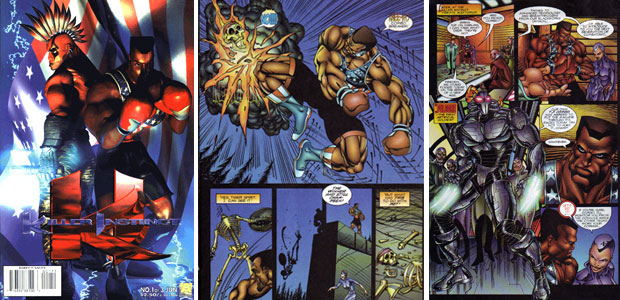
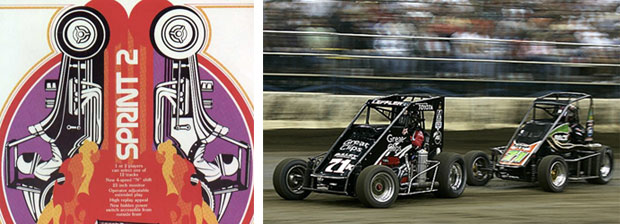
While digging through the comic book collection to share with the little gal I came across a few odd comics that probably won't impress her very much, but for older gamers represent the fighting game hype of the mid 1990's. Street Fighter II brought arcades back to life and inspired countless clones from Japan and abroad. Gamers couldn't wait to try out the latest illegal hack for SF II in liquor stores, or the next big fighter from the USA in arcades. Studios learned that money could be made not only from the games but also from licensing. The demand for anything with a fighting character was great enough to see characters turn up on cheap plastic toys, games, puzzles, clothing and even comic books. The marriage of the two sub cultures, gaming and comics goes way back to the days of the Atari comics in the early 80's. I dug out two comics that were particular to their niche.

The Killer Instinct comic was published by Armada (who?) and most notable because the art was by Bart Sears, one of my favorite comic book artists, and used advances in computer coloring and effects. The series, like most fighting game-turned-comic books, featured fan-favorite characters performing signature moves. The popular "Combo Breaker" was even performed in one of the battles in the first issue. The toughest part for any fighting game comic to pull off is weaving a story that connects all of the game characters and then placing them in a universe that frames the game world. Whether the KI comic succeeded in this is open to debate. I liked the art and took the random story as an afterthought.

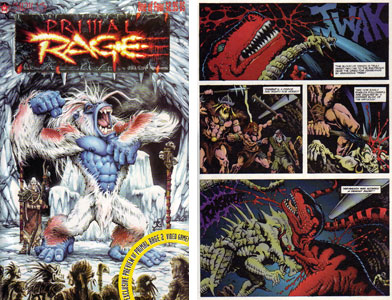
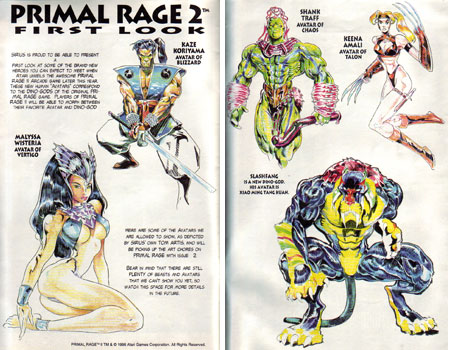
Even fighting games with cult-like followings managed to get their own comic book. Sirius published the four-part Primal Rage comic, revolving less around the dinosaur characters that made the games great and instead around the human avatars that Atari was pushing for in the never-released sequel. The story was more fantasy than the arcade title had led gamers to believe and the art and coloring were sub-par.

The only reason I picked up the comic was to take a look at the character designs for PR II. Aside from the fan value there was little else behind most fighting game comic books. What about you, do you have any lemons in your collection that you'd like to share?

As always if you would like to sponsor me please visit my Patreon page and consider donating each month, even as little as $1 would help make better blogs and even podcasts!
follow the Street Writer on Patreon!

Friday, January 19, 2024

The tanks of tomorrow, the games of the past.

I wanted to talk a little bit about a rarely seen game called Cyber Commando by Namco. It was a mech assault game set in a massive space platform. But in going over the game thanks to MAME got me thinking about the genre, and the history leading up to it. In case you didn’t know almost every Namco arcade game ever developed was connected in a sort of shared universe. The majority of the science fiction shooters were set in the United Galaxy Space Force (UGSF) timeline. This actually included their earliest franchises Pac Man, and Dig Dug in that canon. I’ve written extensively about the games on this blog, and will do more deep dives in the future. If you’re interested in more you can always do a search for UGSF in my search bar above.
Cyber Commando was a sort of descendant of some of the earliest arcade games. In particular I’m talking about tank combat games. As a member of Generation-X I was fortunate enough to be born at the right place, at the right time to enjoy the rise, and fall of the arcade. Some of my earliest, and most precious memories would be playing through some arcade gems when they were first released, or a few years after they had been out. I was also lucky enough that my parents were able to afford the first generations of home consoles, including the Atari 2600. One of the first games my brothers, and I enjoyed at home was Combat by Atari. We had fun taking turns flying planes, and shooting tanks up until our bedtime most nights.
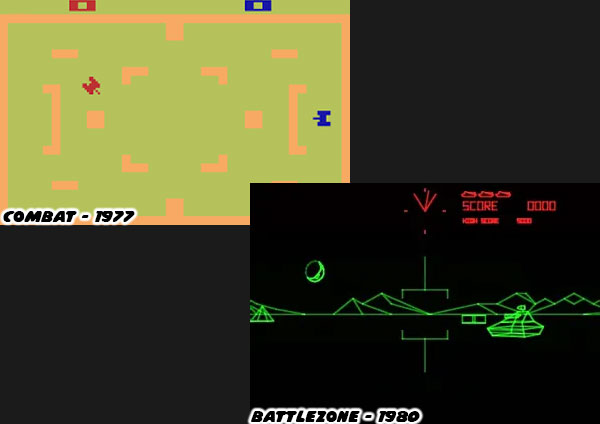
In the arcade one of the most revolutionary games we had ever seen was called Battlezone. Although it only employed two colors, black, and green, it was revolutionary when compared to the graphics in other games. That was the other benefit of being around for the evolution of gaming. Year after year games were evolving by leaps, and bounds. Atari was getting good at employing vector graphics, which were the wireframe templates that polygon games would one day rise out from. They proved this in their smash hit Asteroids in 1979. For the first time gamers could get a sense as to 3D shapes in a video game thanks to titles like Battlezone.
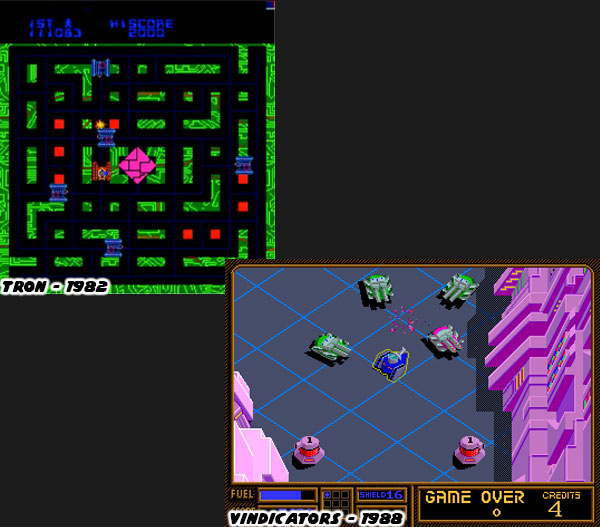
Tank combat would even become even more amazing in a sci-fi setting. This was the case for one of the mini-games in Tron by Midway back in 1982. Part of the live action film that the game was based on featured a fictional tank game called Space Paranoids. As a kid I didn’t realize that it would take another 15 years until actual arcade graphics were able to match what we saw in the film. In the meantime the aesthetics used in sprite-based games were still able to keep me entertained. The isometric game Vindicators in 1988 by Atari was one such gem. Atari was exceptionally good at making isometric games such as Super Sprint, Paperboy, Marble Madness, and 720°. This was when other studios were focused on sprite scaling, vertical, or top-down gameplay. Vindicators had bright, and colorful tanks battling across a wildly evolving alien planet. Being able to drive in one direction, rotate the turret in the opposite direction, while firing, and raising shields required some dexterity, but was intuitive after a while. It was then that I realized that science fiction was the best setting in which to present this type of tank combat. Developers in Japan were way ahead of me in this regard.
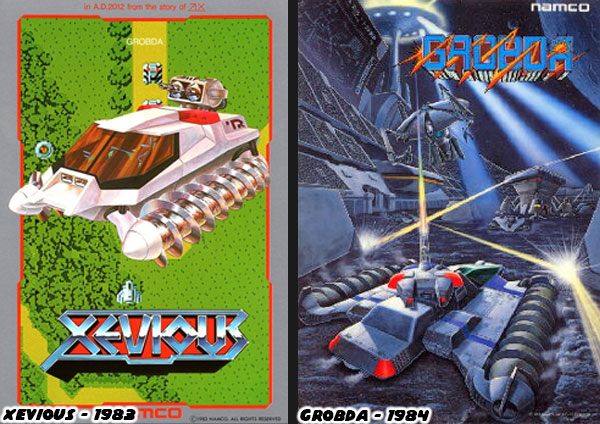
Namco was breaking new ground with each title they released. At the same time they had the foresight to connect the worlds they were building. Xevious from 1983 was one of the first scrolling space shooters in the arcade. The creator Masanobu Endo pioneered a number of advances for the studio with his team. One of the things he thought about was using some of the vehicles featured in Xevious into another game. Solvalou, the space ship featured in the game would turn up in many more sequels, but Grobda one of the ground enemies would end up in the first direct sequel. The tank with screw treads made for an interesting weapon for audiences to pilot. The aliens that had invaded the Earth were routed at the end of Xevious. They had abandoned a number of weapons including their tanks during their retreat. This was how humanity was able to discover the technology that would propel them to the stars.

The ground vehicles would evolve into the first generation of piloted combatants. These mechanical gladiators would be used to settle international disputes in the Battle Ring, this was years before Battle Bots! Grobda had some brilliant graphics for the time, with flashing lasers, and explosions that could damage nearby opponents as well. The tank would slow down if it tried to cross over downed opponents, making navigating a stage difficult when trying to strafe enemies. Composer Yuriko Keino came up with the music for Xevious, Grobda, and other classic games. She was not only critical in the sound of the Namco gems, but helped write the software to bring the songs to life. For Grobda she wanted the music to get progressively faster as opponents were defeated. The designers didn’t think the software could handle it, but she wrote the code that allowed the engine to do that.
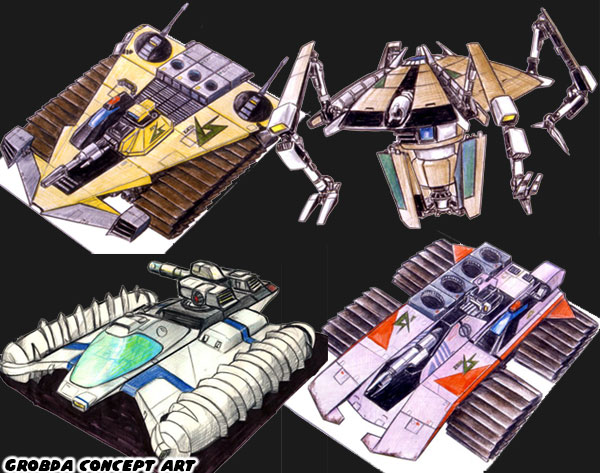
Designer Shigeki Toyama, who was considered the Leonardo DaVinci of the company helped dream up the fantastic space ships, and other sci-fi weapons for the franchise. The ships, and weapons in UGSF continuity are my absolute favorites in all of sci-fi. This includes Star Wars, Star Trek, Battlestar Galactica, Babylon 5, and every other game franchise. As for the game itself, it was 99 levels of pure hell. Well, it was challenging to be fair, and I could only get a few stages in before I was defeated by the waves of opponents. If I was lucky then I might reach a dozen levels, and once I remember seeing a really good player get into the 40’s. However it wasn’t until YouTube that I could see all 99 levels for myself.
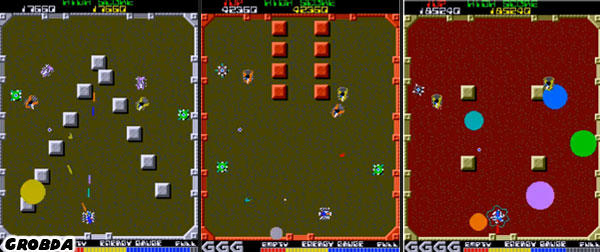
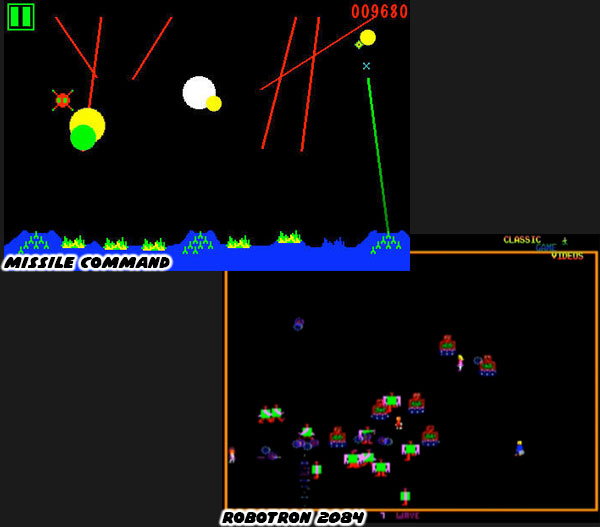
I enjoyed the top-down game play featured in Grobda, more than the scrolling of Xevious, although I was never any good at those. I think that people that were great at tracking the whole screen at once could really master it. Those that were good at games like Missile Command, or Robotron 2084 could no doubt get to the final stages. In fact the first thing that I thought of when I saw Grobda was how Namco was using the multicolored laser effects from Robotron, with the explosions of Missile Command, but in a new genre. When I think about it those that enjoyed the early Midway ‘90s games like Smash TV, and Total Carnage might want to check our Grobda if they’ve never played it.
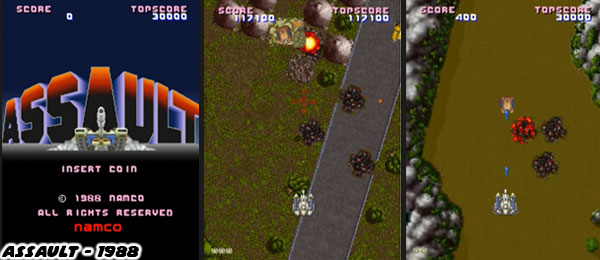
Namco had actually managed to keep sci-fi tank gaming cool several years after Grobda with the title Assault in 1988. The game was sprite based, but featured a number of graphic advances for the arcade. The sprites on the screen rotated, and scaled. These would be features that Nintendo would brag about in their Mode 7 games on the Super Nintendo. The Native Defense Force High-Maneuver Battle Tank did not have a rotating turret like Grobda, but it did feature a unique control element, it could flip sideways to avoid oncoming attacks, and fire while upside down. Although rough terrain slowed it down, it had another way to reach enemies, even those behind cover. It could tilt back, and launch bombs from a distance, including over walls. It was as if Namco had combined the ground bombing of the Solvalou with the traversal of Grobda when planning the title.
As cool as the tanks from Namco were, the idea of gun platforms were rapidly evolving in pop culture. Mecha, or giant robot designs aside, there had been all manner of hover tanks, and land speeders seen in science fiction shows from the US, UK, and Japan. Fang of the Sun Dougram was a popular anime series from 1981 featuring designs by Kunio Okawara, who had also worked on Gundam, and shaped Armored Trooper Votoms as well. His style of robot designs meshed post WWII military weapons with realistic frames. His tank designs in Dougram even had legs. Yet he was not the only artist that was redefining what a tank could look like.
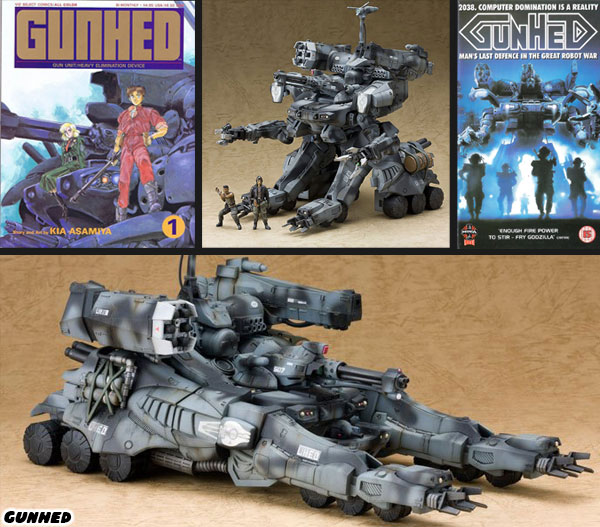
The sci-fi series Gunhed (Gun UNit Heavy Elimination Device) by Kia Asamiya in 1990 found a unique balance between robot, and tank. Where the platform had multiple arms that could elevate itself to increase its range, and tactical advantage. If you’re not familiar with the plot the dystopian future of 2025 (oh no!) saw a supercomputer attempt to rise up against humanity. I can honestly say with the rise of AI that I hope we’re not on track to repeat the same wars mentioned in the manga, and live action film based on it. As influential as the work of Mr. Asamiya was, there were two other artists shaping the future.
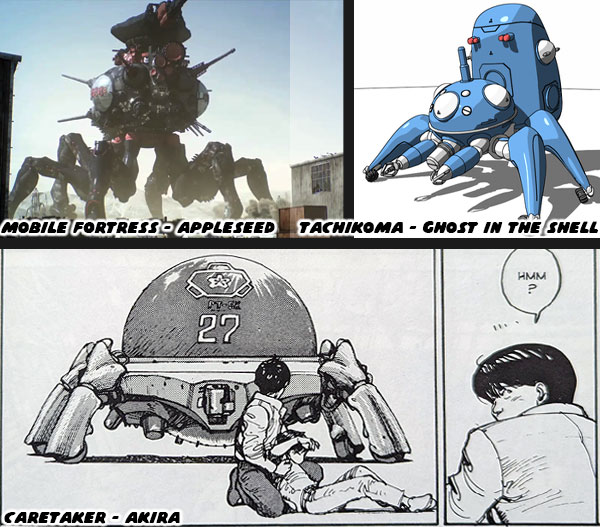
Akira by Katsuhiro Otomo had an amazing amount of futuristic vehicles, and weapons. The series was published in Young Magazine from 1982, to 1990. While there were conventional weapons in the manga, there were also some very bold designs, like the spherical Caretakers which were highly agile, multi-legged tanks. Not to be outdone Masamune Shirow illustrated mind-blowing creations based on his love of insects. Such as the spider legged Mobile Fortress in Appleseed, and the Tachicoma from Ghost in the Shell. Even his “regular” vehicles had tremendous personality. This was the case in the manga Dominion from 1985. It’s tiny tank Bonaparte was the inspiration for the SV-001 tank in Metal Slug, which would appear in 1996.
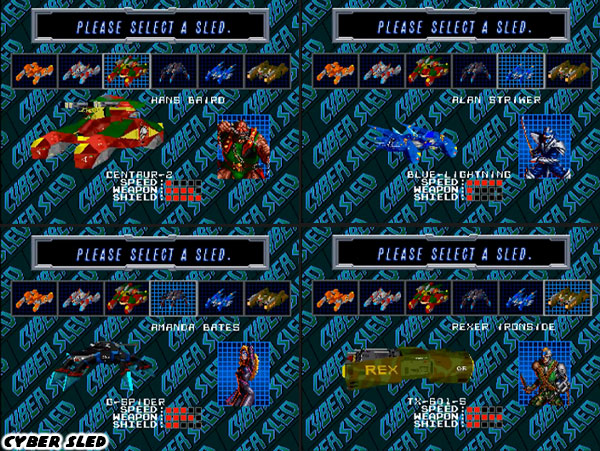
Namco, like the other game studios were not immune to the changes in vehicle designs presented in pop culture. They revisited the sci-fi tank battles from Grobda, but with improved graphics thanks to advances in polygon technology. The end result was Cyber Sled, an arcade gem from 1993, which would received improved graphics on the original Playstation in 1995. The premise of the Cyber Sled tournament was still the same as in Grobda. Contestants from around the world were having gladiator battles in their futuristic tanks. The vehicle designs, and over-the-top pilots were amazing. They could have easily found their way into an anime series, or wrestling promotion. I remember seeing the arcade cabinet in very few arcades. It was possible that not many arcade visitors ever saw, let alone played it.
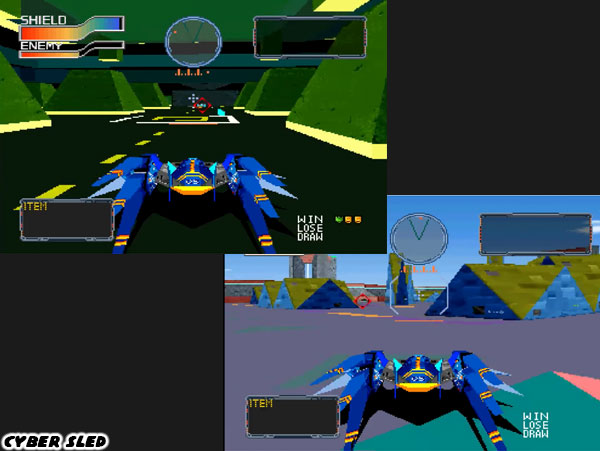
Perennial rival Sega had been aware at what Namco had released in the arcade. Through the ‘80s they kept trying to one-up each other in every genre. From racing, action, shooter, sports, and adventure titles they matched each other in the arcade, and at home. The early ‘90s saw the two publishers pushing technology forward with the switch from sprites to polygons in the arcades. Sega had a counter for Cyber Sled ready a few years later with Virtual On. The robot combat game from 1995 would be a critical hit, spawn several sequels, and get a fun home port on the Sega Saturn, Playstation 2, and Xbox Live. Sadly one of Namco’s best titles didn’t get the same reception a year prior.
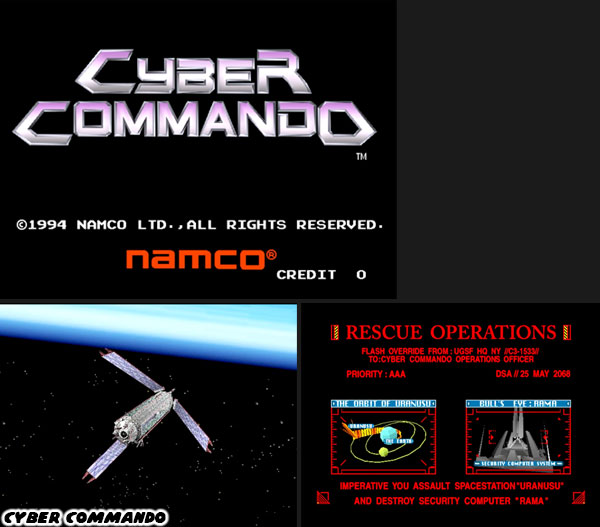
In 1994 Namco was looking for ways to push the genre forward, and do something none of the other studios had attempted. The studio knew that they had something unique with Cyber Sled, but they wanted audiences to really get immersed into the experience. One of the best ways to do that was by extending the story. They added a narrative from the tradition of their earlier UGSF games like Xevious, Galaxian, and Starblade. Instead of piloting a space ship against waves of opponents this game would feature an intense close combat game set within a space colony. The location was actually one of the most memorable in all of the games I’ve ever played.
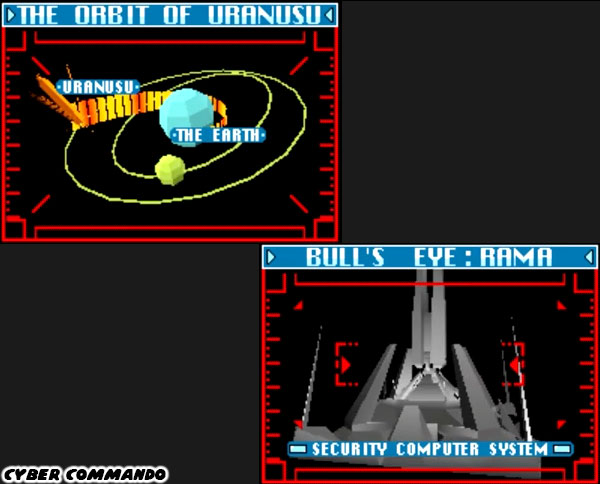
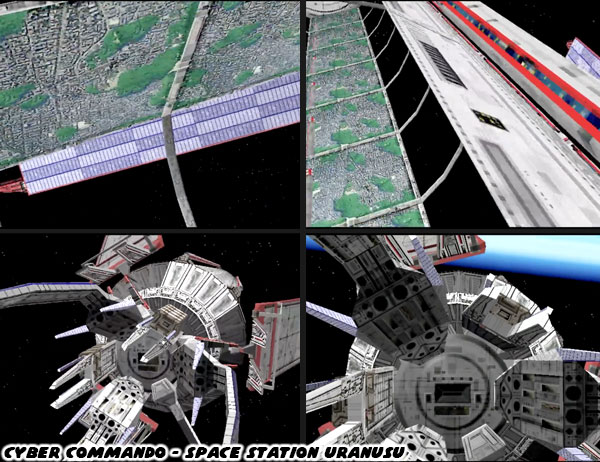
As with many futuristic stories the villain was a rogue AI trying to destroy humanity. A gigantic cylindrical colony named URANASU had been hijacked. The security computer called RAMA went rogue, was taking a space colony out of orbit, and set it on a collision course with Earth. In order to try and stop RAMA, and correct the course of the station an assault team was put together from the best pilots of the NBA (the National Battling Association) where the Cyber Sled / Grobda contests happened. In the opening cinema you could actually make out the different cities in the satellite-shaped platform.
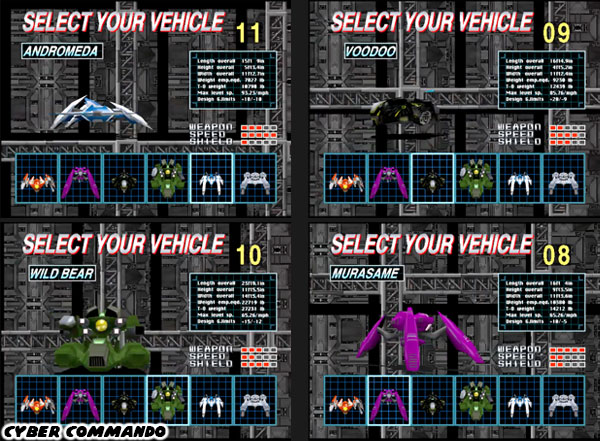
As with any great combat game there was a number of playable tanks to choose from. Each one with its own strengths, and weaknesses. There were light, speedy tanks, which were great for strafing opponents. The downside was that they weren’t heavily armored, and would take massive damage from gunfire, or missiles. Then there were tanks on the opposite side which were weighed down with heavy armor, and heavy weapons. They could get into a slugfest without cover, and come out on top. You could select your favorite tank, depending on your preferred style of play.
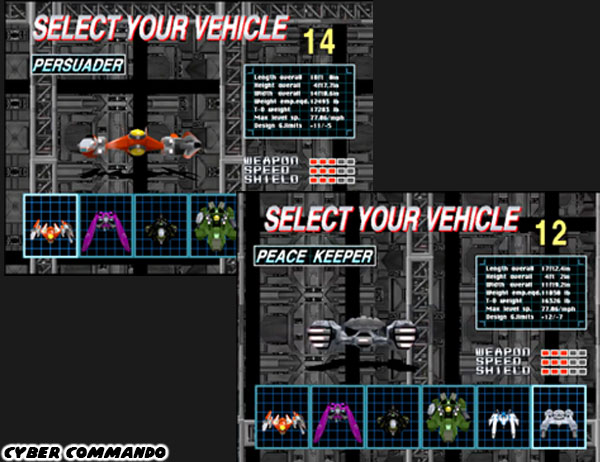
The diversity of vehicle types were not only improved on those featured in Cyber Sled, but they also pulled influences from earlier anime, and science fiction shows. These tanks were far from the type Gen-Xers had grown up with in any game. Even the massive one in Assault that could tumble had no chance keeping up with the Cyber Commandos. This was because as far as tanks went were slightly bigger than cars, the biggest of which weighed almost 14 tons. They were all quicker, and more nimble than our current crop of tanks which could weigh in excess of 60 tons. The commandos were essentially driving the sports cars of the heavy weapon world. At the same time they had an arsenal of munitions that would have shredded any of our most heavily armored vehicles like a tin can.
The stages in Cyber Commando were self-contained cities separated by gates. We could make out the individual communities in the opening cinema. We could see blocks, houses, factories, roads, parks, and even rivers in the individual cities. The idea of a space station with its own atmosphere was the sort of fantastic visual that was last seen in a movie like Elysium. Players were given a briefing as to the mission, and layout as they progressed through access tunnels. The terrain went from a traditional downtown, to a park, to a Mediterranean style villa, and even factory. No two stages looked alike, and that allowed us to be immersed in the world that Namco was creating.
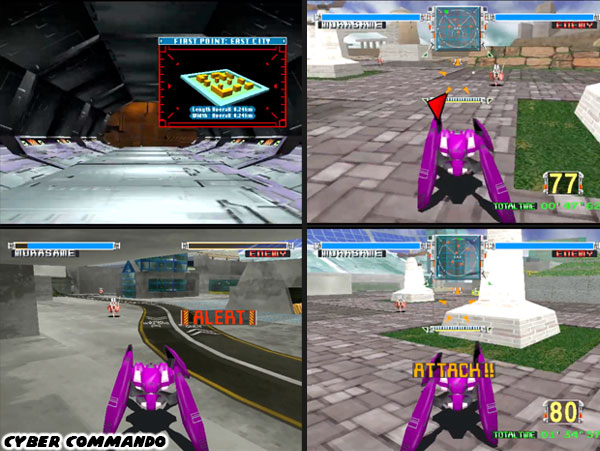
The opponents in the various stages were the other playable Cyber Commandos. It was unknown whether RAMA had hacked the vehicles, or if they were the native defense forces on the colony. Each opponent made for some intense fighting. Each one was as difficult, if not more so than the encounters in Cyber Sled. Yet again Namco realized that having only six opponents to battle on the space station would have made for a short experience. They filled the last half of the game with some creative, and challenging bosses.
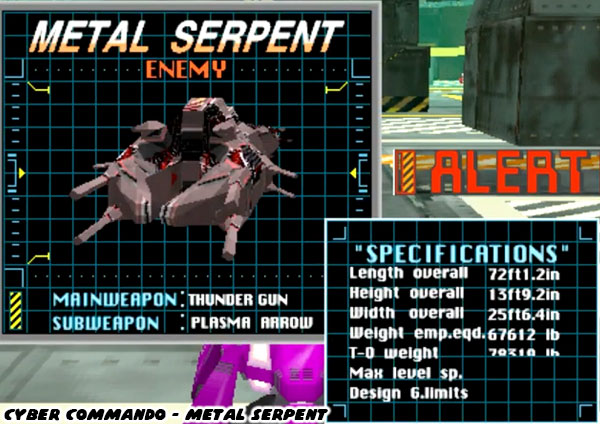
The first boss was three times longer than the biggest tank, and yet it was just as fast as the middleweights. The Metal Serpent was an unnerving opponent. You could see its tail disappear behind cover just as you reached it, only to realize its head was already targeting you from around the corner. The diversity of boss types was truly unique, and they truly broke the mold for sci-fi mech designs. As clever as the Metal Serpent was, it would be hard to describe the next opponent as anything other than beautiful. Rafflesia was an enormous floating mechanical flower. It didn’t seem to have a front, or back, as the other rivals, but instead could move in any direction, and strike from any angle as well. I would imagine that Rafflesia was the love child of the Godzilla opponent Biollante, and a mechanical plasma sphere.
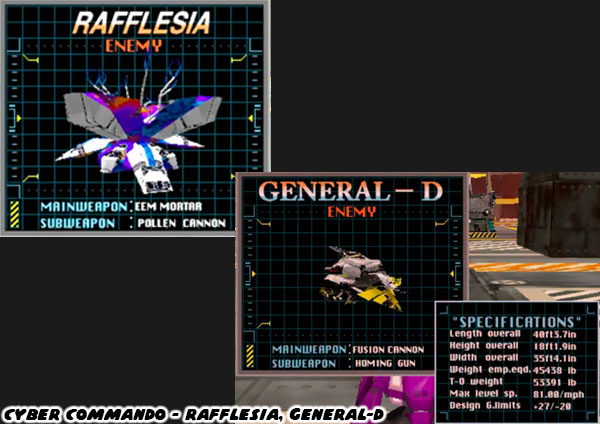
The next opponent was more of the traditional heavy hitting tank that we would come to expect as the final boss in the game. General-D was twice the size of any commando, and yet faster than most of them too. Its dense armor made for a brutal match up, as just about any attack barely seemed to scratch it. Thankfully missiles would respawn in the middle of the stages, so that as long as you kept moving, and kept avoid counter fire then you’d eventually be able to restock on ammunition. If you were lucky enough to beat the monster then you would see the commandos blow up the security computer RAMA. With that they would be able to restore control of the station back to the UGSF. Of course nothing was more satisfying in a story than a surprise encounter.
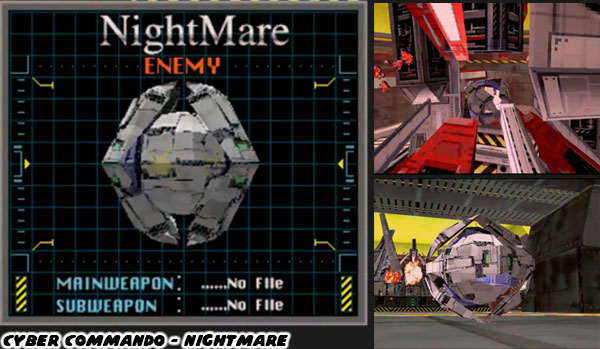
As RAMA fell apart we could see its spherical core become freed from its supports. It began spinning, and flew at the player. The true final opponent of the autonomous robots was known as NightMare. Players had practically no time to react once it appeared. In fact to make things even harder on audiences Namco set up the false ending. They had players face the exit gate after defeating General-D. This gave the first attack advantage to NightMare. If players were not holding the sideways direction on the controls then they’d absorb the brunt of the first, and possibly last attack from the boss. Players were constantly at a disadvantage while fighting it. NightMare was too small, too fast, and too powerful. Making anybody that could claim to have beaten it a real hero. It’s a shame that Namco hasn’t made any more tank titles, or worthy UGSF sequels. Maybe the next generation of designers might return to their roots. What do you think? Did you have any favorite tank, or sci-fi games growing up? I’d like to hear about it in the comments section. As always if you would like to sponsor me please visit my Patreon page and consider donating each month, even as little as $1 would help make better blogs and even podcasts!
follow the Street Writer on Patreon!

Friday, November 3, 2023

Fire Trucks and Cop Cars, still fun in the arcade - A 1UP classic from May 1, 2009

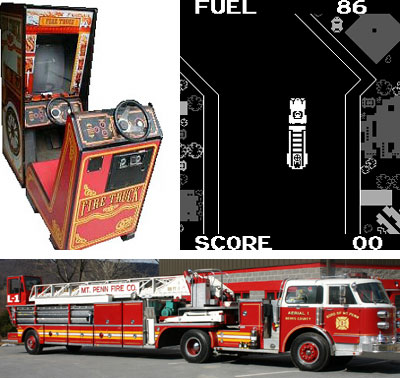
Next to Drag Race this was possibly my earliest arcade driving memory. Fire Truck, released in 1978 by Atari, was a very basic arcade driver where the purpose was to drive a fire engine as far down a road as you could before running out of gas. Yeah, times were really much simpler back then. We had yet to discover narratives in videogames. What made Fire Truck memorable was the unique cabinet design. There were two sets of steering wheels and gas pedals. The fire engine was based on the longer ladder truck, where a second driver had to steer from the back to make sure the truck could clear corners. My brothers and I enjoyed playing this game because we could take turns driving from the front or back. Each one of the controllers had an additional button as well, it sounded a horn or bell. This game represented a time where arcade designers weren't scared to try out new ideas.

Although Fire Truck never caught on with the crowd I was inspired by its creativity and clever cabinet design.

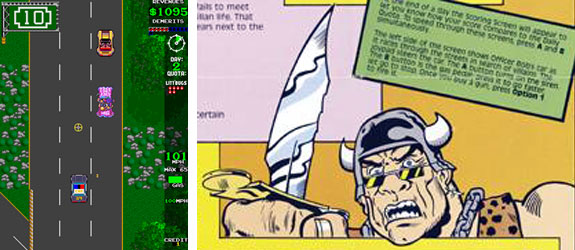
A decade later Atari would revisit the rescue services genre with another arcade driver. This time putting drivers in control of a patrol car. A.P.B., released in 1987, represented an era where political incorrectness, cartoon graphics and solid arcade gameplay went hand-in-hand.

The purpose of the game was straightforward. You were a rookie cop trying to earn your rank. You drove a patrol car around a city in a top down fashion, similar to the original GTA games, writing tickets to fill your quota within the time limit. You could gain additional time by going through donut shops and buy upgrades by visiting a speed shop. At the end of a day you'd be asked to pursue a wanted criminal. All of these villains were very ever-the-top. The entire game and purpose was a caricature of the daily life of a police officer. Chasing down drug dealers, gang members, snipers and speed freaks. Writing tickets for every violation, no matter how minor and "interrogating" the criminals by shaking the sh*t out of them before the police chief came into the interview room...

The game was anything but simple. Players had to constantly keep pressing the siren button or else be penalized with a demerit for nudging traffic. While this wasn't as distracting as the drive and gun gameplay of Night Stocker but it still required more concentration than the average driver. Fire Truck and A.P.B. represented a simpler time in the arcade, one where the designs were fresh and gameplay was brimming with possibilities. However those on the other side of the world didn't sleep while Atari was pushing the genre. These new studios would leave the comfort of the racing and puzzle genre with cars and make an epic "daily driver" game that was far more innovative than anything Atari could do. I hope to see you back for the last few driving games in the series.

Did you ever shake up a perp in A.P.B, or play an extremely rare arcade game? Let me know in the comments section please. As always if you would like to sponsor me please visit my Patreon page and consider donating each month, even as little as $1 would help make better blogs and even podcasts!
follow the Street Writer on Patreon!

Friday, June 23, 2023

Sprint and the Isometric Racing Gems... - Originally published on 1UP - March 23, 2009

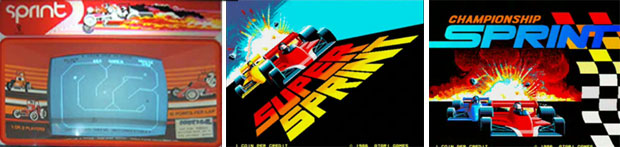
Kee Games and Atari had an interesting relationship while they were making some of the earliest racing games ever. The funny part being that in advertising they promoted themselves as rivals. One of Atari's most loved racing franchises was created under the Kee Games banner. The black and white game Sprint, released in 1976, was based on sprint car racing not Formula-1 as many now remember it.

Kee Games used the familiar 4-speed shifter from Drag Race and Superbug on this game. The entire track was visible on one screen and players had to navigate a car around the track while avoiding their rivals and random oil slicks. Unlike Monaco or Pole Position Eventually making 2 and 8-player cabinets for the arcade. Their most memorable (or finger breaking) contribution to the arcade racer was in the loose steering mechanism. The Sprint games have never been about realism. These games were unabashed arcade racers. In order to win players had to spin their steering wheels with reckless disregard for their opponents safety and mash the gas pedal all the way down. There was no force feedback, there were no discernible physics to the cars as they didn't drift or slide around turns, they held hard and turned as fast as the steering wheel allowed. It was absurd but it was also a lot of fun. 

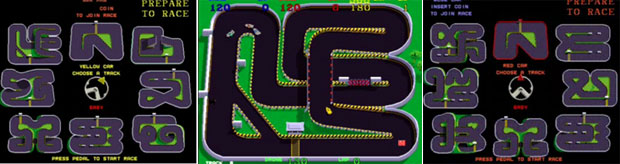
Kee Games was absorbed back into Atari. Their arcade gem was updated and polished into, possibly, the craziest and most demanding racing game ever. The sprint cars were replaced with cars that looked more like Formula-1 or the American equivalent, the Indy car. Indy cars. Super Sprint was born in 1986, and the updated Championship Sprint followed right after. The game itself kept the classic experience intact. The entire track fit on one screen with an almost isometric-view. The steering was super loose. Cars bumped and jockeyed for position on each and every lap.

The tracks were possibly the most memorable element to the game. They were very imaginative and more akin to remote control car tracks than real Indy tracks. Some had shortcuts and jumps, all had oil slicks or tornadoes turn up to throw you off course. Wrenches that could be used to upgrade your car also popped up. The game had a very subtle difficulty curve. Players could dominate the computer opponents early on by skill alone. Along the way they could earn enough wrenches to upgrade their car in one of four categories including; turbo acceleration, traction and top speed. The thing was no matter how good of a driver you were it was only a matter of time before all of the rival cars had higher stats. Then you would have to begin pumping quarters into the machine to max out your stats and keep up with the rest. It was frenetic, it was difficult and it was damned addicting. By the mid-80's Atari and the rest of the publishers had figured out how to keep racers coming back.

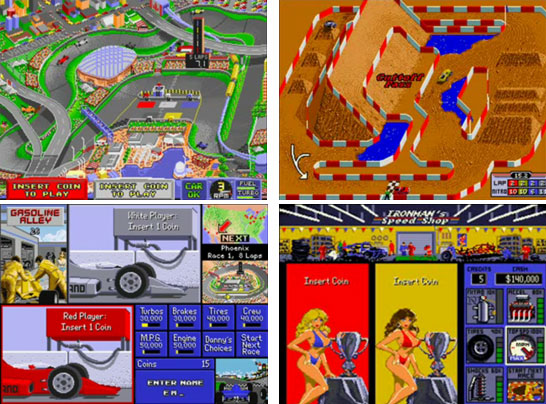
Other isometric racers borrowing from the Super Sprint template would find similar success. Super Sprint set the bar very high on isometric racers. The racers featured on today's blog experimented with the formula and were hits or misses depending on your point of view. Danny Sullivan's Indy Heat by Leland was a revisionist take on Super Sprint. The tracks were hyper-detailed caricatures of real tracks and road courses from around North America, complete with crowds, pit crews and the atmosphere of real racing. Even my beloved Long Beach track was in the game. The cars could even take damage and begin smoking and burning as the race progressed, unlike the Super Sprint car which either exploded as it hit a wall or never really took damage. How could this game not be fun?

Despite the Indy name and look of the cars this was not a licensed Indy game as big money, and big egos, caused a number of team owners and drivers to start up a rival series. The Champ Car series was born from disputes with Indy organizers. Some of the most famous tracks went to one series after the split. Fans were keenly aware of this drama and while it didn't reflect in the quality of either Cart or Indy games it was an interesting footnote to history. As for this game it had a far steeper difficulty curve than Super Sprint. It was a shameless quarter waster where you could pump in quarters and maximize your car right off the bat. Not that it mattered because Danny Sullivan was a flawless racing driver and no matter how many turbos you bought and used he would always be right behind you.

It was the over reliance of the turbo which eventually did in the isometric racer. The skill of driving had been replaced by the cure-all of instant speed. The publishers were exploiting the purchase of upgrades and turbos with real money in an attempt to maximize profits, plain and simple. The precursor to Indy Heat actually managed to remain closer to the Super Sprint, at least in spirit. Off Road featuring Ivan "Ironman" Stewart was the last fun isometric arcade racer. Despite the format it played very much like Super Sprint. The difficulty curve was subtle and a good driver could get relatively far into the game before falling behind opponents with superior machines.

The physics in the game were very "arcade" as trucks bounced all over the tracks and slid on the soil. This game was a refreshing change of pace from Super Sprint as the courses were very imaginative and challenging, even to experienced race fans. The entire stadium "off road" feel was captured and synthesized as a worthy successor to the Atari game. However this game, like Indy Heat was by Leland. They cut their teeth on this game and noticed how the turbo could be exploited by players to get further into the game than just driving and tuning the off road truck could. They must have thought that the system of allowing players to buy upgrades with quarters, and especially turbos, was a godsend to the arcade. They exploited that concept to a much greater degree in Indy Heat. Sadly that strategy backfired in the arcades that I frequented. Players would tolerate the subtle quarter gobbler of Off Road because it offered a refreshing experience in return. They all avoided Indy Heat like the plague. By the time Atari got back into the isometric racer the tastes of gamers, and the market itself had changed. The consoles were taking over and the arcade scene was dying. Badlands, released in 1990 was a lamentable driver that pretty much buried the legacy of Super Sprint.

Atari tried to revitalize the genre by adding weapons to the mix. Adding weapons wasn't the lamentable part of this game. Using doctored up levels and recycled controls and sounds from Super Sprint was what did it in. The lack of evolution did nothing to gain the confidence of older gamers. Badlands was an even bigger pariah in the arcades than Indy Heat. The idea of combining weapons with racing was not all that new. In fact it was a great idea that has turned the racer into an a whole new experience. Come back tomorrow to reminisce with a title most of you know and love.

Did you ever play these isometric arcade gems? Or was there one on your phone, or home console that you enjoyed? Let me know in the comments section please. As always if you would like to sponsor me please visit my Patreon page and consider donating each month, even as little as $1 would help make better blogs and even podcasts!
follow the Street Writer on Patreon!

Friday, June 16, 2023

The Drag Race and the Super Bug... - Originally published on 1UP - March 16, 2009

Hello friends, today we'll begin looking at cars in video games. This series will not be a review of every major car game published. I will not talk about motorcycle or even flying car games like F-Zero and Wipeout because they don't meet my criteria. I will miss a lot of major players in the racing genre because of those limitations. Not every game will be about racing, some will be action / adventures, others puzzle games and a few will simply be about driving with no purpose in mind. This series will not move chronologically between the present and the past either. What I will do is try to deconstruct the origins and influences of car titles by finding relationships between them. I will share why these games were important to me. To let you know well in advance there are two titles that I will not mention in the entire series, so don't ask what happened to...

When it comes to cars in gaming I can be a little obsessive compulsive. Perhaps not as obsessive as the people that wrote about every VW Beetle in computer and video games but still pretty obsessive. Of course the same obsessive traits could be said about all my other hobbies. Everything that I am interested in says a little bit about me. If you see all of the things that interest me then you'll get a good idea of who I am. When it comes to racing games I am very particular. Only the best of most unique ideas can hold my attention. Those that get under my skin stay with me for years, or even decades. I talked about my appreciation of Sega's track design aesthetic it a long time ago with the blog Almost Sega good. Finally we'll get around to talking about the games these tracks belonged to.

The first two titles come from some of my earliest arcade memories. 1977's Drag Race and SuperBug by Atari and Kee Games respectively. I was barely three-years-old when these games came out. Thankfully like a lot of arcades the late 70's and early 80's was a transition period. The last of the great pinball machines were slowly being weaned out by first generation of videogames. I was fortunate enough to enjoy the best of both worlds during my formative years. By the time I was able to understand the controls of Drag Race it too was being replaced by newer games. However my love of cars blended with this new form of entertainment and I was hooked from then on.

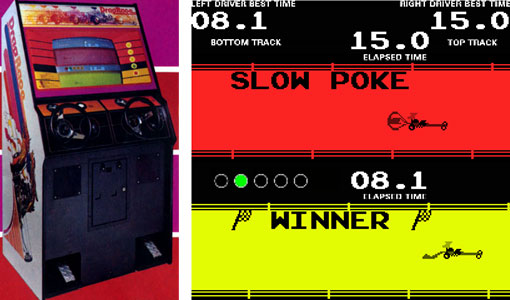
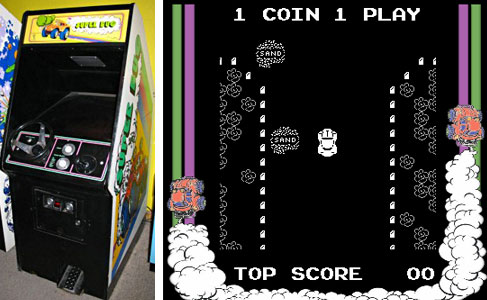
Arcade cabinets were very gimmicky in the early days. Bright colors and unique layouts helped differentiate them from the crowd. Drag Race was one of those cabinets that immediately caught my eye. It had a split screen, in (limited) color, when so many other games were still in black and white. Two sets of steering wheels, gas pedals and a gearshift as well. This was an electronic version of one of my favorite forms of racing, this was the future!

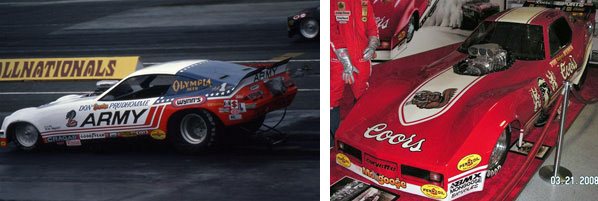
Drag racing has its roots in hot rod culture. For as long as people have had cars they've wanted to go fast. As a kid my obsession was highlighted in the televised rivalries of people like Don "the Snake" Prudhomme and Tom "the Mongoose" McEwen. I was taught to respect women as Shirley Muldowney and her pink dragster put up awesome races against the legend Don Garlits. My collection of Hot Wheels grew exponentially to reflect this newfound love of drag racing.

The magic of the Atari game was in the balancing of all the dragster components. Keeping a careful eye on the RPM's, knowing when to shift and how much gas to give the dragster. Push the pedal too hard or miss a shift and you would get a blown engine. Avoiding the walls through touchy steering also kept arcade players on edge and the races close. This game, like the sport, wasn't for everyone. Often times I would find it alone in the arcade. Atari like the rest of the industry were experimenting will all sorts of arcade games. Experimenting with control schemes and features just to get players interested. While Drag Race was a niche game in a (then) niche part of the entertainment industry, the idea of shifting gears and combining with a gas pedal was a welcome advancement.

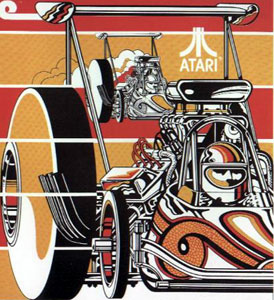
Kee Games came out with a racing game called Super Bug that same year. It used a similar gear shift setup but this was more of a road racing experience. Even as a kid I found it funny that oil slicks and sand were clearly marked in the game. Although the game was in black and white it seemed to attract more players than Drag Race. In addition to driving and racing I was attracted to the cabinets because of the bright graphics. Early arcade cabinets had to compete for attention against the better painted and better illustrated pinball machines. The in-game graphics of arcade machines weren't doing the job so designers had to sell the game with good art. The most memorable cabinet illustrations sold us on a theme or plot. The illustration on Drag Race was very colorful, it had a lot of late 70's / early 80's design aesthetics going for it, helping it stand out from the crowd.

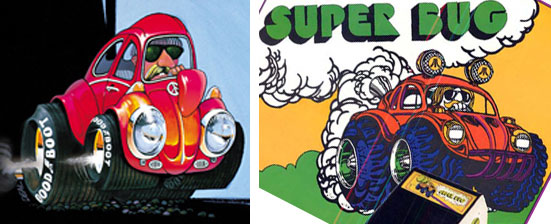
I never thought I'd live to see the day that the in-game graphics were as good or better than the cabinet art. Those days eventually came but there is something to admire in classic arcade cabinet art. The mascot character for the Superbug looked very much like a Dave Deal illustration. Of course I wouldn't learn about Deal until much later, but as a kid I loved the exaggerated proportions on those cartoon cars.

While they lasted in the local arcade I managed to enjoy them immensely. Unfortunately both games didn't remain too long in the arcade as the next round of driving and racing titles were coming in. So where did the legacy of those early driving experiences of Superbug and Drag Race lead to? Come back tomorrow to find out.

Did you ever play any of the first generation of arcade racing games? Let me know in the comments section please. As always if you would like to sponsor me please visit my Patreon page and consider donating each month, even as little as $1 would help make better blogs and even podcasts!
follow the Street Writer on Patreon!