Showing posts with label 1UP. Show all posts

Wednesday, October 7, 2026

Oswald gets an exclusive trading card set thanks to D23

Hello friends, I hope that you have been doing well. I’ve been on an Oswald kick all year long, especially as we are rolling into his 100th birthday. One of the things that I had been searching for was any footage or news on the television show that was announced for Disney+. I talked about the cancelled cartoon a couple of times on the blog, and the long development cycle for the live action show. The first public reveal for the new series happened during the D23 Disney Community event in Anaheim this past August 14-16, 2026. Director Jon Favreau said he was doing the reveal early because the next D23 event would have passed after the TV show had already come out. I watched the panel as it was streamed online.

To celebrate the reveal Mr. Favreau announced that all of the attendees in the arena would receive a free pack of trading cards. These had special AR features that you could activate with your phone. They showed Oswald interacting with several of the iconic locations within Disneyland. When I saw this I lost my mind. My family hadn’t attended a D23 event in more than a decade. Tickets were prohibitively expensive, just as going to Disneyland had become. My family was pretty much priced out of going anywhere near Anaheim. We used to cover the convention for the press, but it had been a long time since we could apply for that. With that said I needed to track down the cards for my collection. I jumped online to see if anyone was selling them on eBay. 

Unfortunately they were, and they were asking insane prices for the free cards. Packs quickly jumped from $40 for a set of 4 cards to $50 for a single card. Eventually they started asking $300 or more for a single pack. There were thousands of people that attended the show, with possibly 20,000 packs or more given away that night. The fact that a handful of them turned into scalpers wasn’t a surprise. Flippers had ruined just about every collector community in recent years, especially the trading card community. Original Paradigms did a YouTube video talking about how sneaker resellers went broke with their absurd levels of greed. With the Oswald cards in mind he did a separate video on how scalpers and resellers had ruined everything.

Mind you that I was a prolific collector of many things. Toys, comics, and magazines included. I had a large collection not because I was rich, but because I was diligent. I had a tight budget (often less than $50 a month), and stuck to it. It sometimes took me months to save up enough for a single purchase. I would keep an eye on rare items on eBay, and international shops. Sometimes I would wait years, if not decades until I could justify a purchase. For example I waited 36 years to buy a toy that I had always wanted.

Even when I had the money I needed to justify it to myself. There was no way that I could defend  hundreds of dollars for essentially free cards. As much as I loved Oswald, and as great the cards would be in my collection I simply couldn’t afford the ridiculous markup. I knew that I had friends, and contacts in the Disney community that I could reach out to. So I asked on social media if anybody had a lead on the cards. I was willing to pay a reasonable price for some cards. Right away a friend that had attended the convention reached out. I had known Erin from the days of the 1UP community. This was about 20 years ago. She moved on to work at many big companies over the years. She was always super-cool, and we remained friends online. She was happy to give me the cards, adding that the pack was in better hands with me. A couple day later it arrived. I was so happy with the gift that I drew a thank you illustration for her.

I don’t think I’ll ever open this pack as it meant too much to me. Perhaps in a year or so I might be able to get all the cards online for cheap. If Disneyland ever sells the cards in the future then I’ll be glad they destroyed the resale market. I was grateful to Erin, and wanted to share this story on the blog. I was blessed that a lot of my friends actually reached out to their contacts as well in a hunt for the cards. I hoped that there were people in your life that were as generous. I’d like to know if a friend ever did something very kind for you, how did you thank them? Tell me about it in the comments section. If you enjoy this blog there are several ways you can support me. You can sponsor me directly on Patreon. Or like and subscribe to my videos on YouTube. You can even subscribe to the Pink Monorail Podcast featuring my wife, and myself. 


Monday, January 26, 2026

The Future is in Good Hands, the Brian Stupski Interview... A 1UP Classic from Apr 10, 2009

Brian Stupski is an impeccable artist. He is the last interview featured in my car series but far from being the least important. He is the designer behind Problem Child Kustoms (clever name!) a studio that has amassed a solid showing over the years. I first noticed his renderings in Rod and Custom. I didn't remember the name but I remembered the cars. Over time I would see the familiar style in different magazines, like all the great artists, a fingerprint that was unique in the world of auto art. I finally committed the name to memory and tracked down his website and blog. Thanks Google!

Brian has an eye for shapes and designs that perfectly compliment each of the project cars he's asked to render. As with all the great designers he lets enough of the original design cues through while adding subtle layers of changes to the car. Making the ride instantly recognizable but different in a way, more brutal and stylish. Studying his art makes me want to be a better illustrator. Brian is also one of the youngest designers I had the pleasure of speaking with for this series. Like the rest from my generation he still finds the time to play video games even though he's supposed to be focused on his career. He likes his sports, especially hockey and loved his cars. If Brian represents the future of custom design then all I can add is that the future is in good hands.

Noe V. Brian, thank you for the interview. We'll begin with the question I'm asking all my special guests. When did you first get bit by the car bug?

Brian Stupski: I was born into a "car crazy" family, so I suppose that I really never stood a chance of NOT being bit! My father was a mechanic, and my mother really enjoyed cars, to the point of being extremely involved in their car club, and even running the annual show a few times. I was even brought home from the hospital in a muscle car, a '66 Charger.

Noe: What were your favorite cars growing up, any favorites that the parents or family drove?

Brian: A '55 Chevy (my parents were big Tri-Five fans). I had a big thing for Chevelles, '68-'72 and first generation Camaros.

Noe: Did you have any heroes from racing or car culture?

Brian: My hero from racing is Tom (the Mongoose) McEwen. My other heroes would be Ed Roth, Charlie Smith, Thom Taylor, Steve Stanford and Gene Winfield.

Noe: What is your daily driver and what would be your dream ride? Brian:

My daily driver is a Buick Regal GS... My dream ride would be a '69 COPO Chevelle.


Noe: The Big 3 US auto makers are not doing very well right now. How do you feel about their situation?

Brian: In some ways, I can't but feel they brought this upon themselves by giving unions too much power. On the flip side, with people buying foreign-made products and the government backing foreign companies I feel they've been given an unfair shake.

Noe: Some argue that the car companies were hopelessly out of touch with the public, the designs of legacy cars bland and uninspired. If you could redesign a model or bring back a classic which would you choose and why?

Brian: I would bring back Oldsmobile. In doing so, I would concentrate on the premise of that make, which originally was technology and performance. Considering today's emphasis on technology and leaps in engineering performance, I think that it would enormously successful in the present.

Noe: How would the closing or the failure of the Big 3 effect future generations of designers and artists?

Brian: Beyond crashing what remains of our economy, it would require American designers to adopt the aesthetics and techniques currently utilized by foreign carmakers. Obviously, it would change the face of American car design which has always been a unique art form.

Noe: We can't focus on the negative only. Is this a chance for the auto makers to unleash new technology, legacy designs and green fuel to regain their status?

Brian: Most definitely, but you have to wonder how committed they would be to this change when it was brought about my force. I sincerely hope this is the turning of a new leaf and that the new designs in technology will create cars that can hopefully inspire future generations of hot rodders and car designers.

Noe: Let's (pardon the pun) switch gears and talk about your design background. How did you discover your talent for art?

Brian: I always drew as a kid. As soon as I could hold a pencil that's all I would do and it was almost always exclusively cars.


Noe: How did your family or teachers help encourage your talent?

Brian: My family was always very encouraging by giving me drawing supplies and asking me to draw. My art teachers encouraged me by exposing me to artists and designers with whom I shared a similar style. However, math and science teachers were not so receptive. I often heard that, "You'll never make a living drawing cars".

Noe: I've had the good fortune of interviewing legends and personal favorites Thom Taylor, Tom Daniel and George Trosley for this series. Growing up did you have any inspirations from the world of car design?

Brian: Guys like Tom Daniel, Larry Wood, Dave "Big" Deal, Dave Bell and Steve Austin were huge influences. I more or less knew I wanted to design custom cars the first time I saw a Harry Bradley drawing. Add to this my infatuation with CARtoons Magazine and Mort Drucker's incredible character art in MAD Magazine and my future was inevitable.

Noe: Which school(s) did you go to? How important was a formal education to your art and career?

Brian: I studied fine art at a small private college prior to moving on to Buffalo State college. My education and training in drawing, painting and print making gave me an understanding of classical techniques. I think that formal art training is tremendously important, especially with the availability of digital means. I had attended the Art Institute of Phoenix and studied animation and motion graphics prior to completing my formal education at Collins College, where I learned Adobe Photoshop and Illustrator. While I utilize digital techniques in most of my works, I feel that my fine art training adds an extra dimension to my work.

Noe: How did you get work creating renderings for the car magazines? Did you have a portfolio that you shopped around or did you make friends at conventions?

Brian: I started out creating art for local shop projects, as well as my employers. Eventually, I would send samples of my work to editors of magazines hoping for exposure. My first break came at the hands of Damon Lee, who at the time was the editor of Custom Rodder Magazine. From there, I was fortunate to build a reputation for quality work and built a portfolio based on referrals from prior clients.

Noe: Explain to us the relationship between a designer, builder, fabricator and client.

Brian: First and foremost, there needs to be open and honest communication at all phases of the project. It's very important to have all members of the team get along, both personally and professionally. The key is to be able to read your client's desires and tastes and be able to translate this into a design that not only coveys this vision, but can also be accomplished by your builder and fabricators.

Noe: Your work compliments traditional hot rod designs while also giving a nod to modern racers. We see the familiar big engine blower on some designs but incorporated on a car that's closer to the ground with larger wheels, big brakes and a profile more familiar to a street racer than a 1/4 mile monster. How do you bring the classic and modern worlds together?

Brian: I've always been a fan of artwork that features high contrast or some form of juxtaposed elements. Throughout my fine art training, I was often inspired by the Surrealists and Futurists (Dali, Braque et al,) and try to incorporate combinations of objects or situations that at first glance may seem unnatural but when viewed together make perfect visual sense. It's fun to blur the lines of traditional and modern and in doing so, forget any rules and just create a cool car. I think that if you carefully toe the line, you find ways to stretch the envelope, and can, more or less, drag in a traditional style to a big, modern wheel and so-on. The trick is to balance the two themes, and have respect for each.


Noe: Your company has been building a name for a few years. What are the things you look for when redesigning a classic car? What do you hope to accomplish? Is a television show or Hollywood wedding in your future?

Brian: When redesigning a car, especially a popular classic, I try to compliment the original design but still make a unique statement. Every change needs to serve a purpose. The fun is in making changes that may not be immediately recognizable. I especially enjoy it when a design inspires a double-take or when the changes flow well enough that they go unnoticed. I would love to pursue my other dream of writing comedy for film and television...but my wife may frown on me having a Hollywood wedding! I'm a fairly private person, but might really enjoy a stab at hosting a TV show about cars, design, and the lifestyle in general.

Noe: Who were some of your favorite clients or which were your favorite projects?

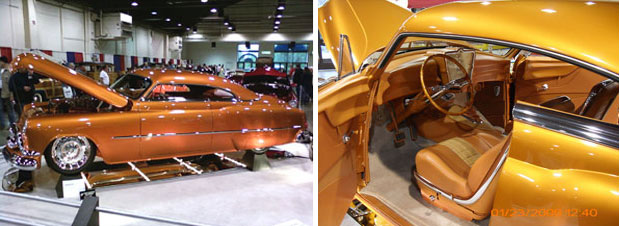
Brian: When the check clears, I love everyone equally. While I've been fortunate to work with some of the biggest names in the industry (Rad Rides By Troy, Recovery Room, ProRides, Chrome Shop Mafia) it's often the low-buck or personal projects of private clients that can prove both challenging and incredibly rewarding. I just finished an 1952 Buick project that will debut at the 2009 Grand National Roadster Show, which blurred the line between private builder and well-known shop, and was as close to "dream clients" as I've ever been. That will always remain a highlight of my career, as the team of owners, builder and myself as designer meshed throughout the process.
 

Noe: The mind-scrambling A-Tona is my favorite of your designs, which of your cars would you most like to see made into reality?

Brian: Thanks! Either the A-Tona because it's such an over-the-top cartoony hot rod or the Mahi-Mah-Tee, my personal take on the 1960's era show rod. While I'm commonly known for my more subtle designs, both of these vehicles represent my wilder side, and have a definite "in-your-face" nastiness and fun quality... They're really a metaphor for what this whole industry is about.

Noe: If you could pick a designer to work with, past or present, who would it be and why?

Brian: Larry Erickson or Harley Earl. Both are legendary...imagine working with both in one room. Between Harley's iconic designs in the '50's that defined GM to Larry's modern day reinterpretation of design at both GM and Ford. It would be design without bounds... of course, having coffee with legendary French coach builders like Figoni et Falashi wouldn't make for a bad morning, either!

Noe: Being a good artist does not a professional designer make. How important is it to know your history and cars before making a career out of design?

Brian: Tremendously important. If you don't know your history, how do you know where you're going? If you don't understand the logic behind the original design, improving upon it is almost impossible. Like anything, the more information you have the better decision you can make. Anyone can change something for the sake of changing it but someone in-tune with the raw materials before them can create a true work of art. My professional background is in the auto industry, and centered around parts and service... That hands-on training and experience has proven invaluable when designing a project, and affords me insight that someone trained in only drawing cars doesn't have. I can supply part numbers, references, and even estimate build times for components or modifications... It's proven to be a great added value for my clients.

Noe: How important is a solid foundation in art for developing the right techniques?

Brian: Knowing the traditional tools, how to use them and being trained in classical techniques gives you a better opportunity to express your vision. Once you master these, the world is wide open to break the rules and develop your own style. I've found that my education in painting and life drawing have had a profound influence on the way I apply my skills to the digital tools (using them more like traditional paintbrushes and pencils, versus pixels and vector shapes). Understanding the basics gives you a solid foundation to grow on, and really leaves a wide open path to find a unique style.

Noe: What advice would you give budding artists that are thinking about a career in professional design?

Brian: Study Dentistry instead - much more lucrative... Seriously, though, have fun with it, and accept that it won't always be fun, but know when to recognize when opportunities arise that ALLOW for that fun, and make the most of them.

Noe: What about learning the basics?

Brian: Devour all you can. Take life drawing classes, painting, any fine art classes. There's no substitute for formal training and practice... Draw every chance you get... Simply relying on the technology to draw for you is a waste of potential, and to become truly good at anything requires dedication and hard work.

Noe: What about building a portfolio?

Brian: Be as diverse as possible. Include works from all media. The broader your appeal, the more creative work you will attract, and the more influences and inspiration you can bring to the table with every piece you create.

Noe: How about schools?

Brian: Look for a school with a balanced program, of both traditional techniques as well as classes in modern technologies. Seek instructors who have varied interests and backgrounds so that you may incorporate their experiences into your own work, and above all when in school make it your number one priority.

Noe: Last but not least, what about originality?

Brian: Goes without saying, having an original style or technique will give you a distinct advantage. Simply copying someone else's style will subject you to a career filled with statements like, "Oh your work looks just like So and So's". Be prepared to improve your style and push it to evolve as others will very often copy your style.

Noe: I have to tie this interview in with videogames or my friends and readers might have a fit. Do you play videogames? What consoles?

Brian: PS2, Wii and my all-time favorite 3DO (does anyone else still love this thing?). I have a fascination for the more "old school" fighting games like Street Fighter, Way of the Warrior (reason alone to buy an old 3D0!), and sports games like Madden Football, and the NHL-sries from EA Sports... man, I love me some Hockey!


Noe: Do you have any favorite games, systems or gaming stories from growing up?

Brian: I love Super Mario Brothers and being a big hockey fan I really enjoy the EA Sports NHL franchise. Growing up we'd play the Atari 2600 almost non-stop, and bike rides to the local arcade strengthened my wrists for countless hours of drawing cars.

Noe: Would you like to design cars for a videogame some day?

Brian: Most definitely. I think the world is ready for a REAL hot rod inspired game, and I think it would be a blast to be a part of a project like that!

Noe: Are there any titles you look forward to playing, or any projects you would like to be involved in?

Brian: I would love to be involved in a "Top Gear" based game. Or more realistically, the Need for Speed series... As far as new games, I'm looking forward to playing Resident Evil 5, Mass Effect 2, Street Fighter IV, and God of War III.

Noe: A few of the artists I've interviewed had hobbies outside of gaming, they built models, R/C cars and racing carts. Are there any hobbies that you've never outgrown?

Brian: Model car building has always been a focus in my life, painting, building custom surf boards and model railroading. As well as playing with my thee boys and two dogs. Also, making obscene gestures at people in traffic is a fun diversion... To some, it's a simple gesture, to me, it can be art. Am I allowed to say that?

Noe: You are one of the youngest artists I am interviewing for this series. Your legacy in the car community is still being built. At the same time you represent the future of the culture. What lessons have you learned from the legends?

Brian: Having really good hair seems to be a common trait amongst the greats. I mean, man... Foose has inhuman hair, and Thom's is hair you immediately picture when you think of hot rod design... Seriously, developing a unique style and consistently presenting the work with a reverence to history is extremely important. Add to this, an ability to promote yourself and have your work sell itself, especially in today's web-centric society is a key to success and offers opportunity that our predecessors did not have... the key is to market your talents properly, and not under-sell... If you price your work too low at the start, you'll only make that hill harder to climb later.

Noe: Where do you see the future of hot rod and custom culture headed?

Brian: With the economy so shaky and people getting back-to-basics I see a return to the more traditional do-it-yourself style of hotrodding with an emphasis on superior quality. The popularity of hot rod-themed television shows, and the accessibility to top named builders will help to inspire this new level of quality.

Noe: What are the short term and long term goals for your studio?

Brian: Short term - to feed my family and keep a roof over our heads while creating top-notch work for our clients. For the future I'd like to expand the studio to encompass lifestyle-related products as well as a full line of hot rod and custom parts and accessories, perhaps one day expanding to many locations via franchise opportunities.


Noe: Do you want to give any shout outs or props to your co-workers or sponsors?

Brian: I've been fortunate to become friends with some of my heroes, one of these being Charlie Smith who has become not only a good friend but a mentor. I'm fortunate to have support of clients who not only share my vision but inspire me to push harder. It's incredible to work with skilled builders like Zane Cullen and Tim Strange who can take an idea from paper to reality and absolutely nail the design. I've been very fortunate to make friends who design hot rods for a living, such as my good friend Jimmy Smith. Also, the talented Dwayne Vance who recently bestowed the honor upon me or including me in a book which features many of my heroes... Working with manufacturers like Billet Specialties (hey, Scott!) has opened countless doors, and the always helpful Tim Bernsau and Kevin Lee at Rod and Custom Magazine have been tremendously influential in helping to get my work into the public eye.

Noe: That just about does it for questions, any words of wisdom for the people visiting on 1UP?

Brian: In the modern day, and considering our future economy, networking and partnering with those in your industry is a necessity for survival, now more than ever. Gone are the days of cut-throat competition. If you're fortunate to do something you love for a living show it by creating the highest quality work you're capable of and use your networking and partnering connections to push your work even further. I believe that those who choose to go it alone, or pick fights in the new economy will be left behind, and that partnering with other professionals to compliment your own skill set and work will pay off in huge ways. Above all, have fun with it.


Do you have any artists or designers that you admire? Tell me about it in the comments section. As always if you enjoyed this blog, and would like to sponsor me please visit my Patreon page and consider donating each month, even as little as $1 would help make better blogs and even podcasts!

follow the Street Writer on Patreon!

Monday, November 3, 2025

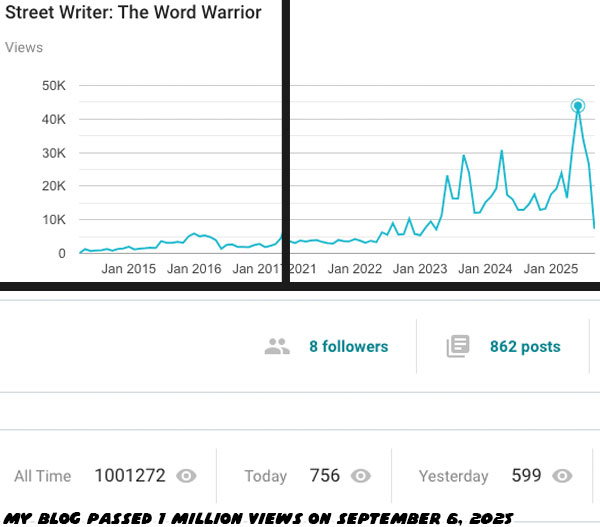
Celebrating a million views on the blog!

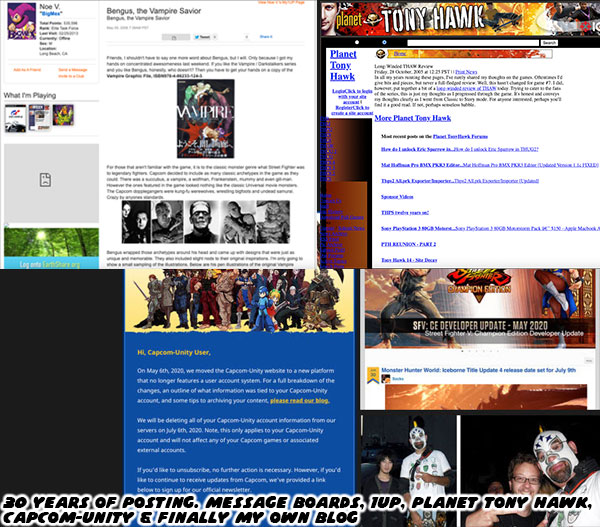
Hello friends, I hope that you are all doing well. Work, and life have been busy, however I am trying to make some time to blog, and share my interests with you. Did you know that I celebrated a milestone this summer? I had been sharing my love of games online for decades now. In the mid ‘90s I would post to game message boards. Specifically whenever I saw some cool news in Weekly Famitsu magazine I would post something on the Gouki’s Page of Whatever message boards (ask your grandparents). Remember that through the ‘90s that magazines were still the fastest way to get game news. Since I was able to get to the Japanese bookstores in downtown LA on weekends it meant I was always ahead of the US curve.

I didn’t get online until the late ‘90s and that was only through college. My family didn’t get home internet until the early 2000’s. While at school I would post everywhere I could. On game message boards and this lead to me writing for Planet Tony Hawk.com, and then I started blogging on 1UP in 2005. I tried to write every weekday, and hit 1000 blogs in about four years. Not long after that I got a million views on the site. I am still friends with many of the 1UP community members. We keep track of each other on Facebook, and Instagram some 20 years later! When Capcom launched their own community site Capcom-Unity I took a lot of my old posts from 1UP and added them there as well. Near the end of the 2000’s I learned that 1UP was going to be closing down. I figured that Capcom would also do the same. That’s when I started copying over posts to this site on April 29, 2014.

It has been more than 10 years, and more than 800 blogs on the Street Writer Blog. I am happy to announce that I hit over 1,00,000 views! I know that the really big gaming sites get those numbers every day before noon. I don’t think that I really hit a million unique views as bots are constantly scouring my pages for stuff to steal. I’ll still take the increase in views over the decade as a sign that people are interested in my run-on sentences. Did you have a favorite blog, or series that I wrote? Tell me about it in the comments section. As always if you enjoyed this blog, and would like to sponsor me please visit my Patreon page and consider donating each month, even as little as $1 would help make better blogs and even podcasts!
follow the Street Writer on Patreon!

Saturday, January 4, 2025

Capoeira Fighter 3, the interview - A 1UP classic from January 4, 2008

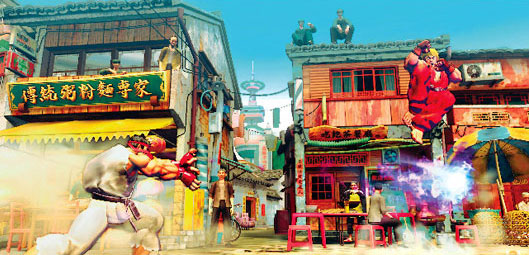
The fighting game genre isn't as popular as it was in the early 90's, but given the attention that Street Fighter IV has garnered in the past few months it is safe to say that the fans haven't gone anywhere. Director of SF IV, Yoshinori Ono, believes that the game is like a sleeping giant, ready to be roused from a long slumber with a kick to the ribs. I believe the genre is asleep as well but more than just to be awoken it is ready for a renaissance.

Developers from every corner of the world are going to take notes on SF IV and begin developing fighting titles of their own. I'm certain there are fans of Killer Instinct ready to pounce on Rare when they see a potential for success. Those old enough to remember Primal Rage will petition to get some closure on the sequel. But those that focus too much on the past will fail to see the future of the genre. The world has grown quite a lot since the 90's. There is a whole new generation ready to test out the fighting genre.

The only guarantee that we have is in Capcom capturing the pure aspect of the fighter without 3D gimmicks. Until SF IV comes out we have to find titles cut from the same cloth. I don't mean a fighter by SNK, Namco, Taito, Sammy or DIMPS, but something more local. The game featured today has a lot of the classic Street Fighter vibe, it's creator inspired by Capcom's greatest, Street Fighter Alpha.

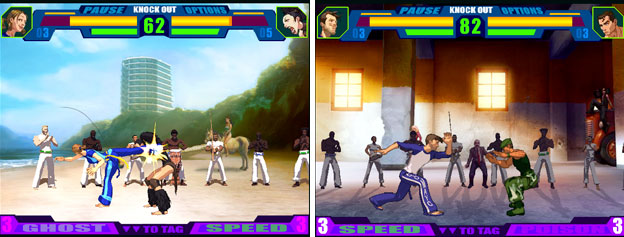
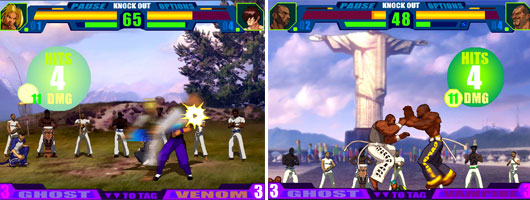
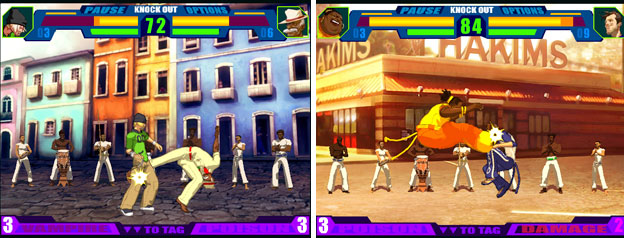
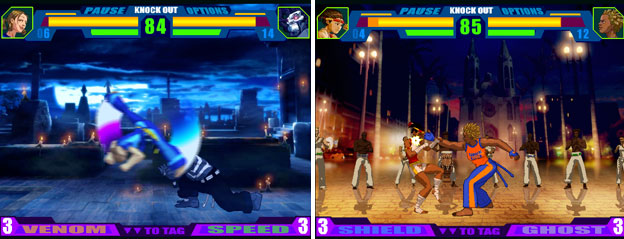
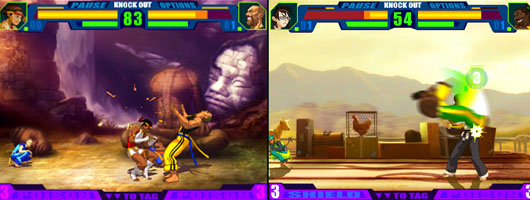
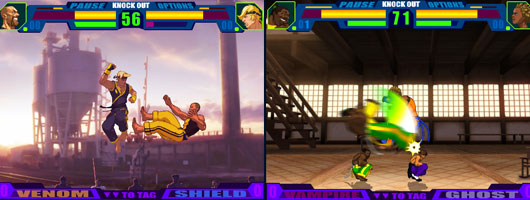
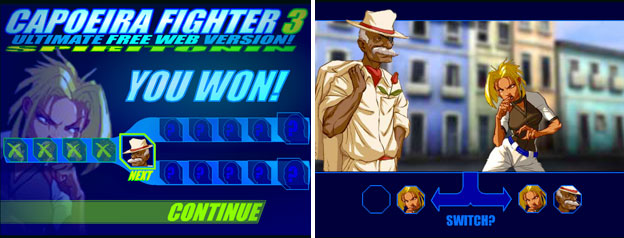
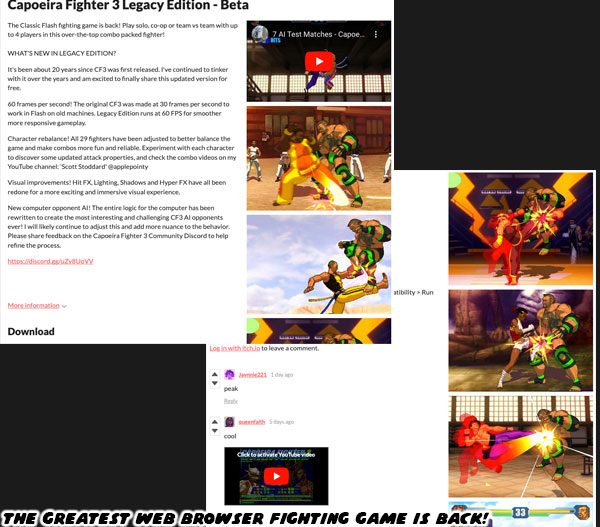
It has been two years and three months since I last did an interview with Scott C. Stoddard. His name should be important to you and everyone here on 1UP, especially those that consider themselves fighting game fans. Scott created a fighting game by himself. Okay, to be fair, his friends Adam Ford (most of the backgrounds and character selection art), Ethan Halvorsen (new music), and Trent and Melissa Halvorsen (arcade dialogue and ending art) helped at the end. Regardless I don't know of anyone else that can claim to have made a good, let alone great, fighting game all by themselves. I'm talking about character designs, backgrounds, models, animation, music, balance... the works. In this age of multi-million dollar development budgets, Hollywood writers and endorsement deals, it is humbling that one man is keeping the genre alive. The name of the game (in case you haven't guessed) is Capoeira Fighter 3. Go on and check out the demo but be sure to come back here.

Capoeira is a beautiful martial art. It looks amazing in videogames like Tekken and Street Fighter III and doubly amazing on film. A former practitioner of the art, Scott currently works at a game studio but has been filling his free time by plugging away on Capoeira Fighter for near a decade. As a dedicated family man his time is precious, it takes years for his titles to come out. Unlike Capcom, Scott has never stopped working on his series. This most recent release is by far the best and deserves some love on 1UP.

BigMex: Scott, it's great talking with you again. So tell us are you still with the team at Avalanche? I understand the company is part of Disney Interactive now. How is this working out for you?

Scott Stoddard: Disney is a great employer. I did have to animate Hannah's singing lips for the Hannah Montana Wii game, but I'm lead animator on a cool IP project right now. Plus I get into Disneyland free!

BM: The team at Avalanche (and you) now keep a blog. On the Avalanche Software blog the artists all contribute to monthly themes. Are you going to become more involved with those now that Capoeira Fighter 3 has gone "gold?"

SS: I plan to. I've had a lot of fun with my posts in the past, just been a matter of priorities lately trying to get CF3 out the door. All this coding is turning my brain lefty. I definately need to do more good ol' drawing and painting.

BM: Before we get to the actual CF3 questions is there an upcoming game you are working on with Avalanche that you'd like to mention?

SS: Sorry can't mention anything here, but I can say that it is more exciting to work on than Hannah Montana.

BM: Now let's talk about the genre. The fighting game scene has been pretty quiet these past few years. Everything changed in October when Street Fighter IV was announced. What was your reaction to the announcement?

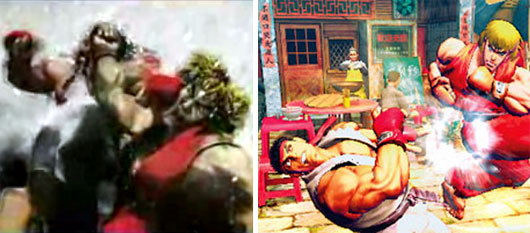
SS: Loved the trailer. Watched it a few dozen times. The motion and ink effect was fun. The impacts and cloth had a great feel to them. Only hitch was the faces and hair. They look really, I mean REALLY bad compared to what I know Capcom is capable of. They've had so many cool stylized versions over the years, but SFIV looks like they hired a middle schooler to design the faces. Very sad to see them going away from the anime look.

BM: Back when I first interviewed you two years ago, you mentioned that Capcom needs to do a cel-shaded 3D fighter with all the characters from past titles. Your words now seem prophetic as details of SF IV have been released. Were these steps logical for the franchise?

SS: As long as the gameplay stays true to the old 2D version, 3D has some very attractive advantages.

BM: What are the advantages of working in 3D over a sprite-based system?

SS: Iteration, iteration, iteration. It is so much easier to fix and change things on a 3D character, or tweak 3D animation. Let's say you want to make Ryu's head smaller (or you want to make it ridiculously small like they apparently have for SFIV). In a 3D system, you just open the model, scale down the head, re-export and your done, maybe 5-10 min tops. If you want to shrink the head on a 2D character, you're pixel pushing every sprite, probably days, if not weeks of work.
The main thing 2D still has going for it is control. You know exactly what that sprite is going to look like because it is only ever going to be seen from one angle. In a 3D game, an animation might look great from one angle, and terrible from another.

BM: Is there a particular character that you can't wait to try out?

SS: Mostly I'm just curious to see the gameplay in motion. The screen grabs didn't wow me, but you've really got to see it in motion to judge it fairly. Some of the screens looked like the faces were going to be a lot more animated, which looks promising. I guess I would go for Ryu because it would be easiest to get a feel for the new gameplay using a familiar character, unless of course they include Elena... got a soft spot for capoeiras.

BM: What do you think about the Saving / Revenge system that EGM / 1UP has reported on?

SS: Hmm... I'll have to try it out. Sounded kinda muddy in the article I read, but might work better in actual gameplay. The idea of keeping the match interesting to the very end is definitely a good goal.

BM: Now that we have established your love of the Street Fighter franchise let's talk a little about your title. It's been two years and change since we last spoke, can you guess how many hours you've spent bringing Capoeira Fighter 3 from beta to final copy? Or specific time spent balancing moves and tweaking the engine?

SS: 1,000's easily. Adam Ford who worked on the backgrounds, and had a strong SF background played CF3 with me on our lunch break almost everyday. I also played nights, and my brother John put in quite a few hours with me. Overall I am very satisfied with the final product. There are still a lot of things that other games do better, but I have to honestly say, when I get together with friends that used to play SF, we would rather play Capoeira Fighter now.

BM: How has the reaction been for your title during development and final release?

SS: We've got some diehard fans out there. We're starting to get more fan vids on youtube. That's fun to see what people are doing with the game. I've also invited the shoryuken.com forums to test it out, they have responded pretty positively, and made some very useful suggestions that I implemented. Things are still pretty quiet as the final build is only available on my site right now where it's had a few thousand hits. Shockwave is really where most of the fans play it. I expect things to be more exciting when Shockwave releases the download version in Jan-Feb '08. Usually get over a million hits a month there.

BM: You mentioned previously that once CF3 was finished you hoped that a publisher might bring it to the home consoles. Any luck with that?

SS: I've talked to a few companies about getting it ported to XBLA and there have been plenty of fans asking for a console version. Turns out it's really tough and expensive to develop for consoles, so to answer your question, we're looking into it, and we want to do it. It's just a matter of finding the right company that is willing to port our game instead of working on their own IP.

BM: There are new and expanded modes in your game, ways to cancel out of combos and supers, a story mode, tag team, solo and versus options. Can you highlight the control scheme and these new modes for us?

SS: Yeah, CF3 is um... full featured to put it nicely (bloated is how I was feeling trying to bug test all the little things I've put in over the years), but the final product is very satisfying and much deeper than most fighting games.

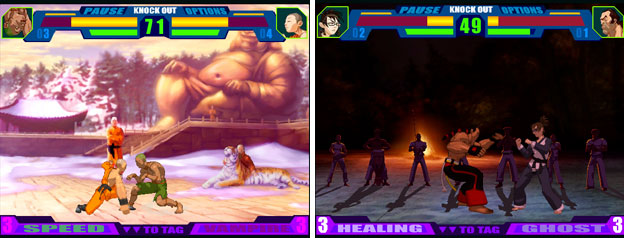
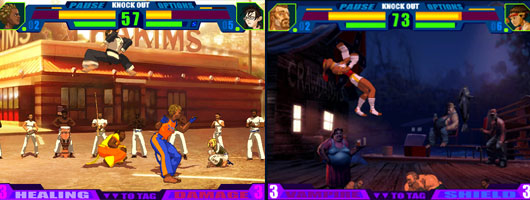
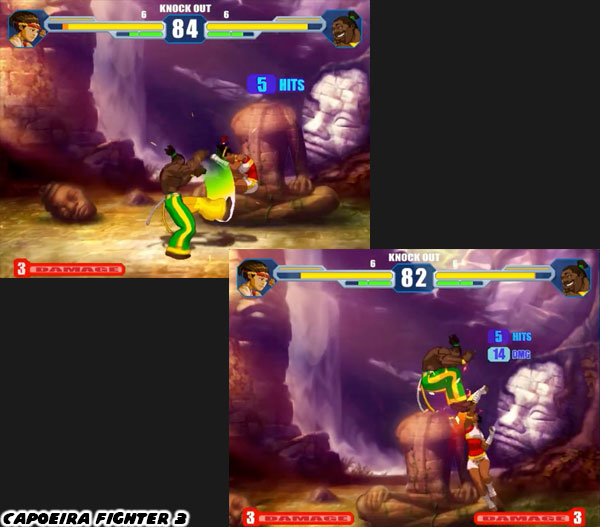
As far as the fighting system goes, there are quite a few little polishing tweaks in the final build. CF3 is very combo heavy. Special moves can be linked with regular moves, but cannot be repeated in a combo unless a hyper move is used to cancel the move usage. To balance out the crazy long combos, you can special dodge to escape between moves or to air recover. So you see a lot of situations where one guy gets an uppercut into a jump kick, then he escapes and returns a punishing downward blow sending the attacker back into the ground. The back and forth in the air is lots of fun, and tends to generate gameplay that is more focused on the flow of combos and escapes than any one move by itself.

We also added color coated swooshes to indicate overhead hits so you can tell how you need to dodge.

There are the usual arcade and versus modes, plus a few other practice and minigame modes.
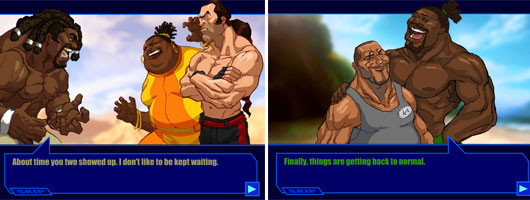
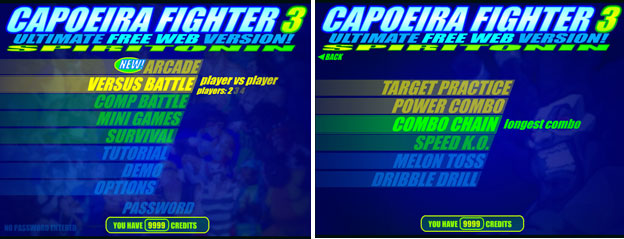
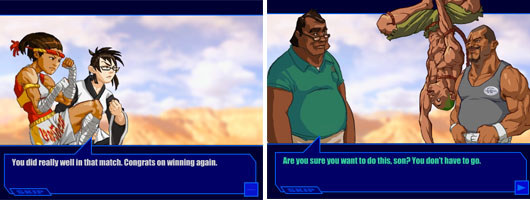
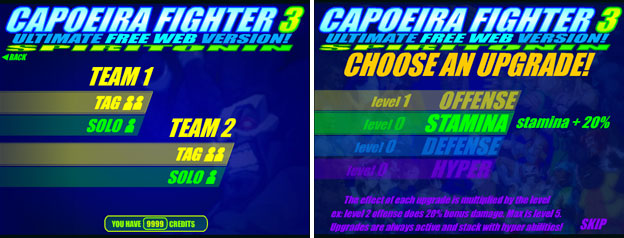
Capoeira Fighter 3's arcade mode is unique in the fighting genre, because of the branching story. You choose one fighter to start, and depending on that character's story, you may or may not start with a partner. The cool thing is that the partner's story is actually part of yours. Half way through you'll have the option to switch partners, or in some cases to go solo, so there are two endings for every character. Trent Halvorsen and his wife Melissa did all the writing and ending art, and they did a great job weaving all 29 character's stories together. It is also possible to play co-op if your fighter has a partner. I've had a lot of fun playing through co-op with my 4 year old son. He can already do most of the super moves.

The other unique thing to Capoeira Fighter is the match types. My brother an I grew up on SNES Street Fighter II. We started to get bored after a while, so we set up our own mini games, seeing who could get the other guy against the wall first, or who get past the guy to his back wall first. So when I made Capoeira Fighter, I wanted to put more of that stuff in the game to mix it up and keep the game fresh longer.

We ended up with 6 match types, all of which I enjoy (Adam hates the money game). Knock Out is the regular beat-up-the-other guy match. Then there is Ring-King, where you can damage your opponent by keeping them out of the center of the arena. Ring of Fire has a fire pit where you can score extra damage knocking the other guy into it. Money Game plays like capture the flag, and finally Ring Out is a quick match where the first guy to be hit out of the arena wins. You can also set it to switch randomly every round which keeps you on your toes.

Minigame Mode allows you to record scores for each fighter in things like the most damaging combo, the longest combo, busting targets etc... It's a great place to master combos.

BM: The roster of fighters has really expanded. In addition to the fantastic library of capoeira fighters you now feature a lineup of fighters from all over the world. I spy an homage to Street Fighter II as well as at least one character inspired from a popular movie. Can you introduce us to the new faces and some of the new fighting styles presented?

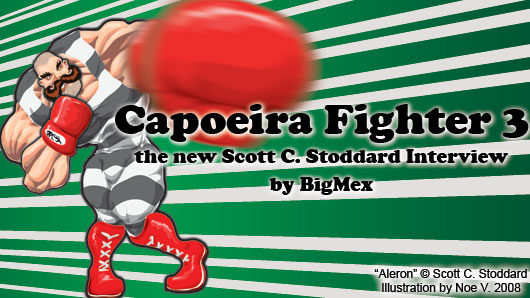
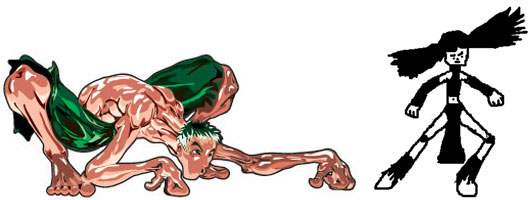
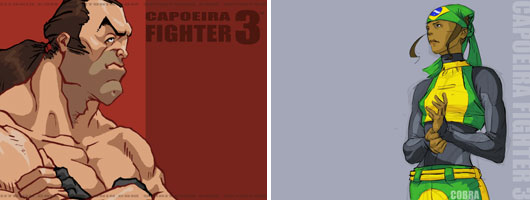
SS: Yeah we felt like the game needed some other styles to balance it out. We ended up building almost half of the 29 character roster with non-capoeira martial artists. Among my favorites are Jimmy Zappa who plays like a classic fireballer, except that we replaced the fireball with a lunging sweep kick. Panda is bubbly asian school girl that happens to be very good at tae kwon do. There's Aleron, the English boxing champ with small man syndrome and his nemesis, Angus, the Irish street fighting soccer player in a kilt. We also have Helicopter the German break dancer, and your monkey kung fu fighter Macaco (AKA Avery).

BM: You have some unique faces in the lineup, Arubim and Saryn aren't human, these are cameos from another game you created, right?

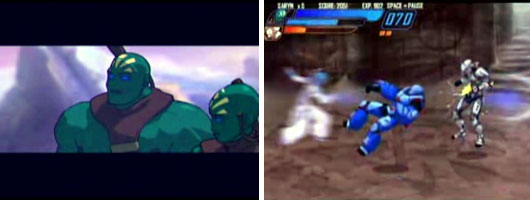
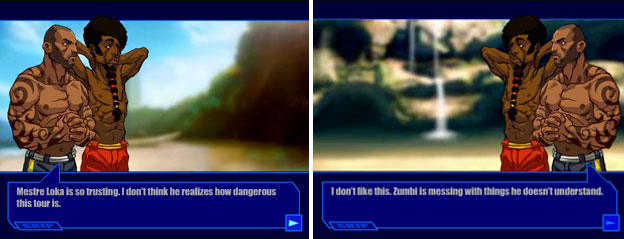
SS: Yes, Saryn and Arubim are from Guardians of Altarris, Spiritonin's take on a Final Fight style game. We needed two more characters to fill in the blank spots on the selection grid and we thought it would be a fun and completely non-logical mix. They are definitely some of my favorite characters to play.

BM: The CF3 design a character contest brought in some interesting designs, I was lucky enough to be one of those selected as was Pantera by a younger artist. Did you have fun coming up with moves for these characters?


SS: Yes! They both turned out to be very fun and different from the other characters in the game. They each have very distinct personalities that come across in their vocals and attacks.

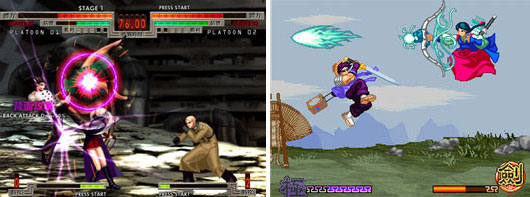
BM: The fighting game genre is a hard sell for publishers. If your game is not a license, MMO or a GTA-clone then you really can't pitch it. This is where the life long gamer takes things into their own hands. You are a member of a small group keeping the genre alive. The new, unique, fighting games are not made by the big studios these days. Tekken and Virtua Fighter are becoming carbon copies of the other. 2D fighters (not made by SNK) are few and far between. Subtle Style from Japan was made by a small team and distributed on PC before it caught the attention of the industry. Now an arcade version is being released to great reviews. In Korea a one or two person team is making Chosun Musa, a fighter based on mythical Korean warriors. Here in the states you've been plugging away single-handed at Capoeira Fighter for years. How does it feel knowing that you are one of the small global developers keeping the genre alive and unique?

SS: As someone who got into video games because of games like Street Fighter II, it's sad to see the genre displaced in today's market. I made Capoeira Fighter so I could have my own engine to try out new gameplay concepts and see if I couldn't offer something worthwhile to the genre. The PC is a very small market for fighting games, but Capoeira Fighter has proved popular and profitable so far. My hope is that the fighting community give it a serious look. I don't think they'll be dissapointed.

BM: Do you think people in the industry should devote more time to building these small games in a variety of genres rather than focusing only on their work project?

SS: I think a lot of guys do that already. Maybe not on the scale that we have attempted here, but you see lots of games on the web that are developed on the side. It's definitely good for me and has helped me understand the industry better.

BM: Do you think that the industry could invest or support these developers by offering release time, stipends or distribution?

SS: It would be nice if console development was more friendly to small developers. From the research I've done, it's pretty daunting to get a game on a console, time, resource and expense wise. Even with something like CF3 that would be a simple port, it is still more than my small team could handle for a console.

BM: Do you foresee a time where digital distribution will replace traditional publishers and give you a chance to gain a wider audience and / or monetary compensation?

SS: I don't see publishers going anywhere, they will adapt. I still rely heavily on publishers for the majority of my profit because they handle all the marketing and ad sales etc...

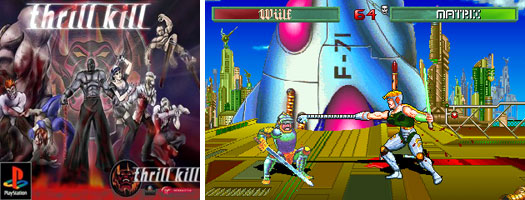
BM: Any fears that Street Fighter IV will cause the other publishers to have a knee-jerk reaction and begin creating bad fighting titles rather than investing in yours? For reference think of the horrid fighters that flooded the market in the 90's after the success of Street Fighter II. We had to wade through Fighters History, Shaq-Fu, Blood Storm, Time Killers, Thrill Kill, Rise of the Robots, Pit Fighter, War Gods, etc...

SS: Yeah I remember buying all those games looking for another SFII experience and being sorely disappointed every time. It will be interesting to see. I don't think anyone is going to do anything serious until they see SFIV do really well. Grade A console games cost so much to make now. If Capcom's strategy to return to the SFII roots proves successful, and the fighting genre regains popularity, we will definitely see more fighting games. It's all about the money.

BM: Do you hope that SF IV sparks interest in your fighter as well?

SS: I hope anything sparks interest in my fighter. It will be interesting to see if any of the bigger developers use any of my ideas like the match types and abilities attached to hyper combos...

BM: You said that your back would have healed while you were working on this title. Is it well enough for you to return to practicing capoeira with your friends?

SS: Been thinking about that seriously. I do need to get back in shape, but my family also needs me back. I think I'll be taking it easy for a few months.

BM: You are a dedicated family man but does your wife ever have to pull you away from the computer and say enough is enough, especially now that CF 3 is out? Or are you just thinking of things for CF 4? SS: My wife is very supportive, and she keeps me balanced. Plus she did the voices for several of the girls! She is very excited to have a full time husband & dad back, and I am excited to be done. I imagine a CF4 is inevitable, but there will probably be a few more iterations of 3 with some characters added and a few more features that we wanted to get into it. I hope the game does well. Thanks for the interview!

So there you have it, the first interview of the new year. If you are a fighting game fan then you should support the dream and buy a copy. Even if you aren't big into fighting games then you should at least give the online version a spin at Spiritonin or at Shockwave.com. Scott deserves some exposure for his hard work so do me a favor and please, please, please tell a friend. Tell the editors at EGM and 1UP to shine some light on the small developers. Street Fighter IV is still a long ways off, so how about putting some hype behind a homegrown fighter for a change? Have a great weekend and let me know what you are up to!

---EDIT 2025---
Did you ever play this classic game when it came out? Did you know about the free download of the newly polished 60FPS version? Download the Legacy Edition of Capoeira Fighter 3. I’d like to read about which long gone fighting games would come back in the comments section. As always if you enjoyed this blog, and would like to sponsor me please visit my Patreon page and consider donating each month, even as little as $1 would help make better blogs and even podcasts!
follow the Street Writer on Patreon!

Tuesday, December 31, 2024

The Return of Capoeira Fighter 3: Ultimate World Tournament!

If you didn’t believe in Santa Claus then you might want to start believing now! The fighting game community got a special present before the end of the year. Shout out to Luis Lopez for giving me the heads up! The best web-based fighting game ever made (and one of my favorite fighting games of all time) was now available for free download! Windows users only. The criminally underrated Capoeira Fighter 3: Ultimate World Tournament was a Shockwave-based game released by Spiritonin Media in the 2007. I must have played thousands of matches over the years whenever I had a break. Adobe ended support for the Shockwave plugin on 2019, and it was only a matter of time before CF3, and countless other games would be made obsolete. None of the defunct titles made me sadder than losing CF3.

Series creator Scott Stoddard had actually been plugging away at the title in his free time. Adding some polish to it, and trying to make it even better. I did a deep dive on Capoeira Fighter 3 on the blog. For the record Mr. Stoddard had also created a noir fighting game called Death Vegas shortly after CF3 had been released. I managed to dig up an old interview that I conducted with Scott during the 1UP days. I will post it this weekend. Make sure you Download the Legacy Edition of Capoeira Fighter 3, join the Discord (https://discord.gg/PTpuvqkyhF), and give Scott some feedback. It would be nice to see this game get some momentum, and even get featured at EVO.

So this is the last bit of good news that I want to leave you with. A huge thank you for Scott Stoddard for revisiting this gem, and giving it out to the community! May every project you work on bring you much joy, and success! I want to thank all of the visitors that stopped by in 2024. Thank you to those that left a comment, or shared my link on social media. This was the most prolific year that I have ever had on this blog A total of 169 posts in a year... nice! I would not have done it without the support of my friends, and family. I may not be as prolific in 2025, but I will try to find neat things to share with you. I hope 2024 went well for you, and I look forward to playing lots more Capoeira Fighter 3 in 2025. Did you ever play this game when it was available? Is this the first time you’ve heard of it? I’d like to hear about it in the comments section. As always if you like my blog, and would like to sponsor me please visit my Patreon page and consider donating each month, even as little as $1 would help make better blogs and even podcasts!
follow the Street Writer on Patreon!

Monday, September 2, 2024

A crazy good time! Sega’s Crazy Taxi - A 1UP classic from May 4, 2009

The final games featured for this series aren't the most popular driving games ever. They don't represent the pinnacle of graphical achievement either. However they are three driving games that represented the arcade experience very well. They created easy to play yet difficult to master experience. Best of all they were able to immerse the player into the experience very quickly. Allowing you to get a slice of a world, very similar to ours only slightly cooler and more fantastic. We'll begin with the most famous of the lot.

Sega's Crazy Taxi, released in 1999 was the freshest thing in the driving genre. The format had become cluttered, every driver looked and played the same for a while. Sega made a driving adventure unlike anything they had tried before. Most publishers would want to capitalize on their racing experience and just release another title in that format. Thankfully Hitmaker (AM3) didn't go down that road and instead placed gamers in a world where driving as recklessly as possible was greatly rewarded.

Players were placed in the role of a cabbie, trying to earn as much money as possible within a set time limit. Time bonuses could be earned by how quickly a person reached their destination and also for how many stunts the driver pulled off. Doing power slides and huge jumps were the best money boosters. Avoiding collisions and using shortcuts were the best for gaining time. The best players learned to balance everything while careening into oncoming traffic and looking for a destination. The game was a blast to play. I can remember putting plenty of quarters in the machine during a time when great arcade games were few and far between. It made a perfect transition on the Dreamcast console, along with plenty of mini games to keep me going.
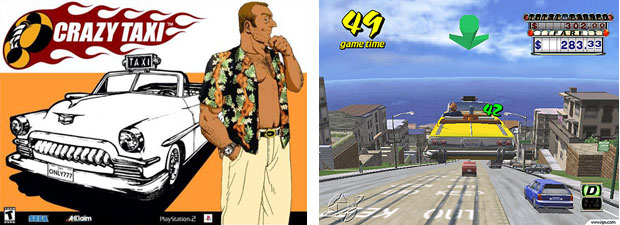
The people at Sega poured every arcade nuance they had learned over the years into Crazy Taxi. The cabbies and their taxis all had personality, like grown up versions of characters from Top Skater or Jet Set Radio. They accepted a day job yet never lost their own personal flair. The cars were sleek low riders or bulky pre-war iron. The cities they raced in were as imaginative as the towns featured in Daytona and Super GT. Only now we could take the time to enjoy peeling around the streets, cutting through parks and alleys in a wide-open world rather than be forced to only catch a glimpse of the city from the rear view mirror. All of the drifting hijinks from the earlier Sega racers returned here, all of the responsive steering and indestructible transmissions were in full effect.

The music helped frame the experience, again, not unlike what Pennywise had done for Top Skater, So. Cal. punk favorites the Offspring provided all of the songs in the original Crazy Taxi. All I Want becoming the de facto anthem.

Latter Crazy Taxi games went through the motions but didn't recreate the charm of the original title. For what it was worth Crazy Taxi might be considered Sega's best driving series if not for all those other damn fine games Yu Suzuki had put out.

Did you ever play any game in the Crazy Taxi series? Did you have a favorite cabbie? Let me know in the comments section please. As always if you would like to sponsor me please visit my Patreon page and consider donating each month, even as little as $1 would help make better blogs and even podcasts!
follow the Street Writer on Patreon!