Showing posts with label artists. Show all posts

Monday, January 26, 2026

The Future is in Good Hands, the Brian Stupski Interview... A 1UP Classic from Apr 10, 2009

Brian Stupski is an impeccable artist. He is the last interview featured in my car series but far from being the least important. He is the designer behind Problem Child Kustoms (clever name!) a studio that has amassed a solid showing over the years. I first noticed his renderings in Rod and Custom. I didn't remember the name but I remembered the cars. Over time I would see the familiar style in different magazines, like all the great artists, a fingerprint that was unique in the world of auto art. I finally committed the name to memory and tracked down his website and blog. Thanks Google!

Brian has an eye for shapes and designs that perfectly compliment each of the project cars he's asked to render. As with all the great designers he lets enough of the original design cues through while adding subtle layers of changes to the car. Making the ride instantly recognizable but different in a way, more brutal and stylish. Studying his art makes me want to be a better illustrator. Brian is also one of the youngest designers I had the pleasure of speaking with for this series. Like the rest from my generation he still finds the time to play video games even though he's supposed to be focused on his career. He likes his sports, especially hockey and loved his cars. If Brian represents the future of custom design then all I can add is that the future is in good hands.

Noe V. Brian, thank you for the interview. We'll begin with the question I'm asking all my special guests. When did you first get bit by the car bug?

Brian Stupski: I was born into a "car crazy" family, so I suppose that I really never stood a chance of NOT being bit! My father was a mechanic, and my mother really enjoyed cars, to the point of being extremely involved in their car club, and even running the annual show a few times. I was even brought home from the hospital in a muscle car, a '66 Charger.

Noe: What were your favorite cars growing up, any favorites that the parents or family drove?

Brian: A '55 Chevy (my parents were big Tri-Five fans). I had a big thing for Chevelles, '68-'72 and first generation Camaros.

Noe: Did you have any heroes from racing or car culture?

Brian: My hero from racing is Tom (the Mongoose) McEwen. My other heroes would be Ed Roth, Charlie Smith, Thom Taylor, Steve Stanford and Gene Winfield.

Noe: What is your daily driver and what would be your dream ride? Brian:

My daily driver is a Buick Regal GS... My dream ride would be a '69 COPO Chevelle.


Noe: The Big 3 US auto makers are not doing very well right now. How do you feel about their situation?

Brian: In some ways, I can't but feel they brought this upon themselves by giving unions too much power. On the flip side, with people buying foreign-made products and the government backing foreign companies I feel they've been given an unfair shake.

Noe: Some argue that the car companies were hopelessly out of touch with the public, the designs of legacy cars bland and uninspired. If you could redesign a model or bring back a classic which would you choose and why?

Brian: I would bring back Oldsmobile. In doing so, I would concentrate on the premise of that make, which originally was technology and performance. Considering today's emphasis on technology and leaps in engineering performance, I think that it would enormously successful in the present.

Noe: How would the closing or the failure of the Big 3 effect future generations of designers and artists?

Brian: Beyond crashing what remains of our economy, it would require American designers to adopt the aesthetics and techniques currently utilized by foreign carmakers. Obviously, it would change the face of American car design which has always been a unique art form.

Noe: We can't focus on the negative only. Is this a chance for the auto makers to unleash new technology, legacy designs and green fuel to regain their status?

Brian: Most definitely, but you have to wonder how committed they would be to this change when it was brought about my force. I sincerely hope this is the turning of a new leaf and that the new designs in technology will create cars that can hopefully inspire future generations of hot rodders and car designers.

Noe: Let's (pardon the pun) switch gears and talk about your design background. How did you discover your talent for art?

Brian: I always drew as a kid. As soon as I could hold a pencil that's all I would do and it was almost always exclusively cars.


Noe: How did your family or teachers help encourage your talent?

Brian: My family was always very encouraging by giving me drawing supplies and asking me to draw. My art teachers encouraged me by exposing me to artists and designers with whom I shared a similar style. However, math and science teachers were not so receptive. I often heard that, "You'll never make a living drawing cars".

Noe: I've had the good fortune of interviewing legends and personal favorites Thom Taylor, Tom Daniel and George Trosley for this series. Growing up did you have any inspirations from the world of car design?

Brian: Guys like Tom Daniel, Larry Wood, Dave "Big" Deal, Dave Bell and Steve Austin were huge influences. I more or less knew I wanted to design custom cars the first time I saw a Harry Bradley drawing. Add to this my infatuation with CARtoons Magazine and Mort Drucker's incredible character art in MAD Magazine and my future was inevitable.

Noe: Which school(s) did you go to? How important was a formal education to your art and career?

Brian: I studied fine art at a small private college prior to moving on to Buffalo State college. My education and training in drawing, painting and print making gave me an understanding of classical techniques. I think that formal art training is tremendously important, especially with the availability of digital means. I had attended the Art Institute of Phoenix and studied animation and motion graphics prior to completing my formal education at Collins College, where I learned Adobe Photoshop and Illustrator. While I utilize digital techniques in most of my works, I feel that my fine art training adds an extra dimension to my work.

Noe: How did you get work creating renderings for the car magazines? Did you have a portfolio that you shopped around or did you make friends at conventions?

Brian: I started out creating art for local shop projects, as well as my employers. Eventually, I would send samples of my work to editors of magazines hoping for exposure. My first break came at the hands of Damon Lee, who at the time was the editor of Custom Rodder Magazine. From there, I was fortunate to build a reputation for quality work and built a portfolio based on referrals from prior clients.

Noe: Explain to us the relationship between a designer, builder, fabricator and client.

Brian: First and foremost, there needs to be open and honest communication at all phases of the project. It's very important to have all members of the team get along, both personally and professionally. The key is to be able to read your client's desires and tastes and be able to translate this into a design that not only coveys this vision, but can also be accomplished by your builder and fabricators.

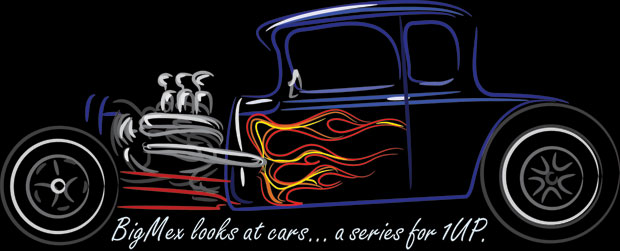
Noe: Your work compliments traditional hot rod designs while also giving a nod to modern racers. We see the familiar big engine blower on some designs but incorporated on a car that's closer to the ground with larger wheels, big brakes and a profile more familiar to a street racer than a 1/4 mile monster. How do you bring the classic and modern worlds together?

Brian: I've always been a fan of artwork that features high contrast or some form of juxtaposed elements. Throughout my fine art training, I was often inspired by the Surrealists and Futurists (Dali, Braque et al,) and try to incorporate combinations of objects or situations that at first glance may seem unnatural but when viewed together make perfect visual sense. It's fun to blur the lines of traditional and modern and in doing so, forget any rules and just create a cool car. I think that if you carefully toe the line, you find ways to stretch the envelope, and can, more or less, drag in a traditional style to a big, modern wheel and so-on. The trick is to balance the two themes, and have respect for each.


Noe: Your company has been building a name for a few years. What are the things you look for when redesigning a classic car? What do you hope to accomplish? Is a television show or Hollywood wedding in your future?

Brian: When redesigning a car, especially a popular classic, I try to compliment the original design but still make a unique statement. Every change needs to serve a purpose. The fun is in making changes that may not be immediately recognizable. I especially enjoy it when a design inspires a double-take or when the changes flow well enough that they go unnoticed. I would love to pursue my other dream of writing comedy for film and television...but my wife may frown on me having a Hollywood wedding! I'm a fairly private person, but might really enjoy a stab at hosting a TV show about cars, design, and the lifestyle in general.

Noe: Who were some of your favorite clients or which were your favorite projects?

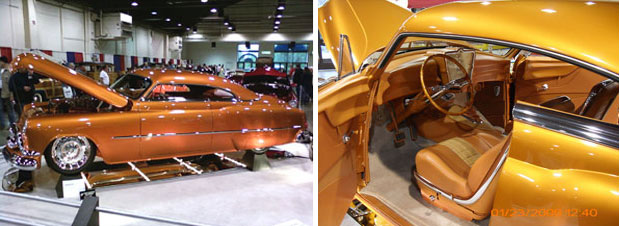
Brian: When the check clears, I love everyone equally. While I've been fortunate to work with some of the biggest names in the industry (Rad Rides By Troy, Recovery Room, ProRides, Chrome Shop Mafia) it's often the low-buck or personal projects of private clients that can prove both challenging and incredibly rewarding. I just finished an 1952 Buick project that will debut at the 2009 Grand National Roadster Show, which blurred the line between private builder and well-known shop, and was as close to "dream clients" as I've ever been. That will always remain a highlight of my career, as the team of owners, builder and myself as designer meshed throughout the process.
 

Noe: The mind-scrambling A-Tona is my favorite of your designs, which of your cars would you most like to see made into reality?

Brian: Thanks! Either the A-Tona because it's such an over-the-top cartoony hot rod or the Mahi-Mah-Tee, my personal take on the 1960's era show rod. While I'm commonly known for my more subtle designs, both of these vehicles represent my wilder side, and have a definite "in-your-face" nastiness and fun quality... They're really a metaphor for what this whole industry is about.

Noe: If you could pick a designer to work with, past or present, who would it be and why?

Brian: Larry Erickson or Harley Earl. Both are legendary...imagine working with both in one room. Between Harley's iconic designs in the '50's that defined GM to Larry's modern day reinterpretation of design at both GM and Ford. It would be design without bounds... of course, having coffee with legendary French coach builders like Figoni et Falashi wouldn't make for a bad morning, either!

Noe: Being a good artist does not a professional designer make. How important is it to know your history and cars before making a career out of design?

Brian: Tremendously important. If you don't know your history, how do you know where you're going? If you don't understand the logic behind the original design, improving upon it is almost impossible. Like anything, the more information you have the better decision you can make. Anyone can change something for the sake of changing it but someone in-tune with the raw materials before them can create a true work of art. My professional background is in the auto industry, and centered around parts and service... That hands-on training and experience has proven invaluable when designing a project, and affords me insight that someone trained in only drawing cars doesn't have. I can supply part numbers, references, and even estimate build times for components or modifications... It's proven to be a great added value for my clients.

Noe: How important is a solid foundation in art for developing the right techniques?

Brian: Knowing the traditional tools, how to use them and being trained in classical techniques gives you a better opportunity to express your vision. Once you master these, the world is wide open to break the rules and develop your own style. I've found that my education in painting and life drawing have had a profound influence on the way I apply my skills to the digital tools (using them more like traditional paintbrushes and pencils, versus pixels and vector shapes). Understanding the basics gives you a solid foundation to grow on, and really leaves a wide open path to find a unique style.

Noe: What advice would you give budding artists that are thinking about a career in professional design?

Brian: Study Dentistry instead - much more lucrative... Seriously, though, have fun with it, and accept that it won't always be fun, but know when to recognize when opportunities arise that ALLOW for that fun, and make the most of them.

Noe: What about learning the basics?

Brian: Devour all you can. Take life drawing classes, painting, any fine art classes. There's no substitute for formal training and practice... Draw every chance you get... Simply relying on the technology to draw for you is a waste of potential, and to become truly good at anything requires dedication and hard work.

Noe: What about building a portfolio?

Brian: Be as diverse as possible. Include works from all media. The broader your appeal, the more creative work you will attract, and the more influences and inspiration you can bring to the table with every piece you create.

Noe: How about schools?

Brian: Look for a school with a balanced program, of both traditional techniques as well as classes in modern technologies. Seek instructors who have varied interests and backgrounds so that you may incorporate their experiences into your own work, and above all when in school make it your number one priority.

Noe: Last but not least, what about originality?

Brian: Goes without saying, having an original style or technique will give you a distinct advantage. Simply copying someone else's style will subject you to a career filled with statements like, "Oh your work looks just like So and So's". Be prepared to improve your style and push it to evolve as others will very often copy your style.

Noe: I have to tie this interview in with videogames or my friends and readers might have a fit. Do you play videogames? What consoles?

Brian: PS2, Wii and my all-time favorite 3DO (does anyone else still love this thing?). I have a fascination for the more "old school" fighting games like Street Fighter, Way of the Warrior (reason alone to buy an old 3D0!), and sports games like Madden Football, and the NHL-sries from EA Sports... man, I love me some Hockey!


Noe: Do you have any favorite games, systems or gaming stories from growing up?

Brian: I love Super Mario Brothers and being a big hockey fan I really enjoy the EA Sports NHL franchise. Growing up we'd play the Atari 2600 almost non-stop, and bike rides to the local arcade strengthened my wrists for countless hours of drawing cars.

Noe: Would you like to design cars for a videogame some day?

Brian: Most definitely. I think the world is ready for a REAL hot rod inspired game, and I think it would be a blast to be a part of a project like that!

Noe: Are there any titles you look forward to playing, or any projects you would like to be involved in?

Brian: I would love to be involved in a "Top Gear" based game. Or more realistically, the Need for Speed series... As far as new games, I'm looking forward to playing Resident Evil 5, Mass Effect 2, Street Fighter IV, and God of War III.

Noe: A few of the artists I've interviewed had hobbies outside of gaming, they built models, R/C cars and racing carts. Are there any hobbies that you've never outgrown?

Brian: Model car building has always been a focus in my life, painting, building custom surf boards and model railroading. As well as playing with my thee boys and two dogs. Also, making obscene gestures at people in traffic is a fun diversion... To some, it's a simple gesture, to me, it can be art. Am I allowed to say that?

Noe: You are one of the youngest artists I am interviewing for this series. Your legacy in the car community is still being built. At the same time you represent the future of the culture. What lessons have you learned from the legends?

Brian: Having really good hair seems to be a common trait amongst the greats. I mean, man... Foose has inhuman hair, and Thom's is hair you immediately picture when you think of hot rod design... Seriously, developing a unique style and consistently presenting the work with a reverence to history is extremely important. Add to this, an ability to promote yourself and have your work sell itself, especially in today's web-centric society is a key to success and offers opportunity that our predecessors did not have... the key is to market your talents properly, and not under-sell... If you price your work too low at the start, you'll only make that hill harder to climb later.

Noe: Where do you see the future of hot rod and custom culture headed?

Brian: With the economy so shaky and people getting back-to-basics I see a return to the more traditional do-it-yourself style of hotrodding with an emphasis on superior quality. The popularity of hot rod-themed television shows, and the accessibility to top named builders will help to inspire this new level of quality.

Noe: What are the short term and long term goals for your studio?

Brian: Short term - to feed my family and keep a roof over our heads while creating top-notch work for our clients. For the future I'd like to expand the studio to encompass lifestyle-related products as well as a full line of hot rod and custom parts and accessories, perhaps one day expanding to many locations via franchise opportunities.


Noe: Do you want to give any shout outs or props to your co-workers or sponsors?

Brian: I've been fortunate to become friends with some of my heroes, one of these being Charlie Smith who has become not only a good friend but a mentor. I'm fortunate to have support of clients who not only share my vision but inspire me to push harder. It's incredible to work with skilled builders like Zane Cullen and Tim Strange who can take an idea from paper to reality and absolutely nail the design. I've been very fortunate to make friends who design hot rods for a living, such as my good friend Jimmy Smith. Also, the talented Dwayne Vance who recently bestowed the honor upon me or including me in a book which features many of my heroes... Working with manufacturers like Billet Specialties (hey, Scott!) has opened countless doors, and the always helpful Tim Bernsau and Kevin Lee at Rod and Custom Magazine have been tremendously influential in helping to get my work into the public eye.

Noe: That just about does it for questions, any words of wisdom for the people visiting on 1UP?

Brian: In the modern day, and considering our future economy, networking and partnering with those in your industry is a necessity for survival, now more than ever. Gone are the days of cut-throat competition. If you're fortunate to do something you love for a living show it by creating the highest quality work you're capable of and use your networking and partnering connections to push your work even further. I believe that those who choose to go it alone, or pick fights in the new economy will be left behind, and that partnering with other professionals to compliment your own skill set and work will pay off in huge ways. Above all, have fun with it.
Do you have any artists or designers that you admire? Tell me about it in the comments section. As always if you enjoyed this blog, and would like to sponsor me please visit my Patreon page and consider donating each month, even as little as $1 would help make better blogs and even podcasts!

follow the Street Writer on Patreon!

Monday, October 28, 2024

Generations of Hulk creators, final part...

I hope my rambling series on the Hulk has kept you entertained these past couple of weeks. I had fun researching, putting it together, and sharing my thoughts on the best way to present the character. I hope it helps budding writers, and artists think about the approach they take when working on their own stories. I also wished it helped non-Hulk fans understand the appeal of the Jade Giant. He was certainly much more complex than has been presented in the recent Marvel live action films, and television shows. Today I’d like to talk about my favorite artists to work with the character. Let’s pretend that only one living artist allowed to draw the character until they retired. Who would I choose, and in what order?

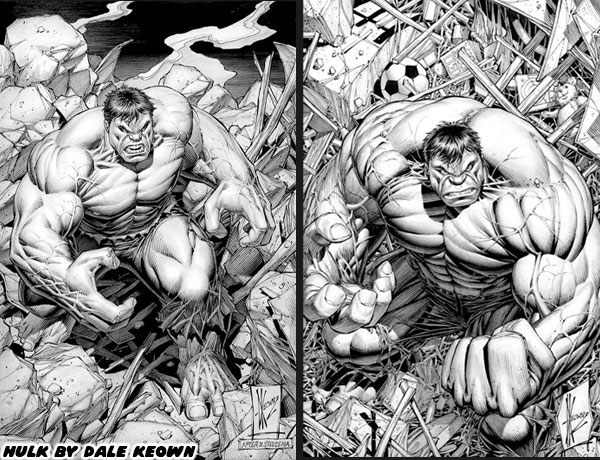
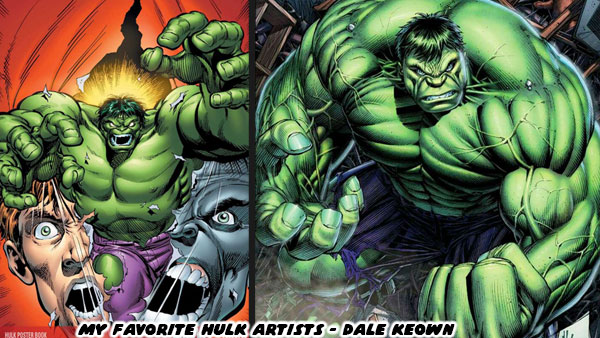
In the number one spot is Dale Keown. In my opinion he is, and remains the best Hulk artist ever. He’s illustrated countless iconic moments thanks to the writing of Peter David. His sense of scale, proportion, and strength is so great it should be studied by all comic artists. Especially those trying to make memorable strong characters. His style simply works whether the story involves the classic “Savage” Hulk, the street savvy Joe Fixit, the genius Professor Hulk, or the tyrannical Maestro. He is adept at drawing epic battles, horror stories, alien monsters, heroic team-ups, and dramatic arcs equally well. He is additionally good at drawing normal-sized heroes, and villains. This allows him to frame them alongside the Hulk so we get a sense of scale. To me Dale Keown is the standard that every modern Hulk artist is measured against. It is a well deserved honor.

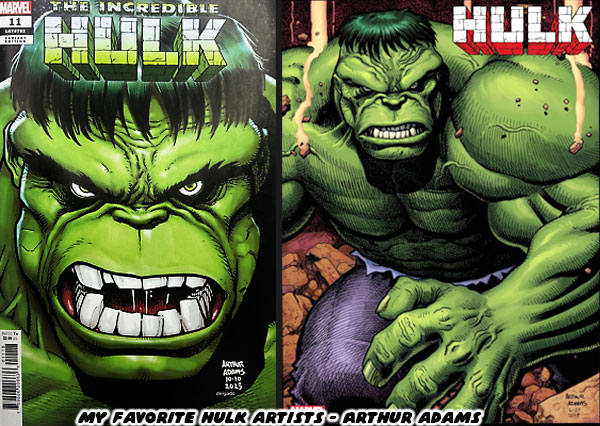
My second choice to draw the Hulk forever, and ever is Arthur Adams. Just about all the same praise I heap on Dale Keown applies to Mr. Adams as well. The major difference between the two is that Art knows monsters better than any other living artist. From the largest kaiju to the smallest imp, from pulp monsters that appeared only once in an obscure book, to the world famous Universal Horror monsters. Mr. Adams has drawn all of them at least once in his career. Drawing monsters is absolutely in his DNA. He has been rendering highly detailed pieces for 40 years, and shows no sign of slowing. The Hulk is one of the greatest monsters he’s ever brought to life, but to say that his greatness is limited to the Hulk would be a disservice to his talents. He is a fantastic pin-up artist, and can arguably be called the best X-Men artist, the best Fantastic Four artist, and the best Avengers artist to ever live. Saying he should only draw the Hulk from this point on would rob the world of a true genius.

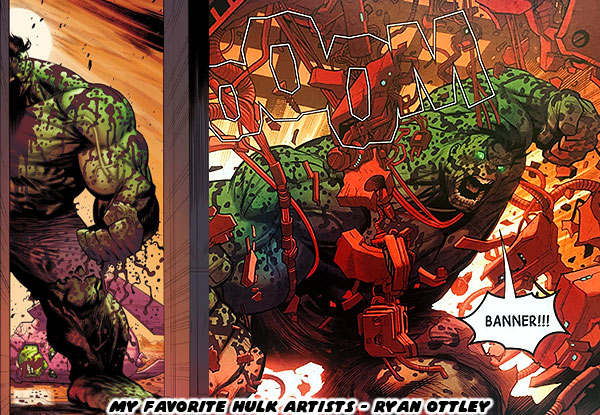
My third choice for who should draw the Hulk in perpetuity is relatively new. In fact he did not exist in my rankings until a few weeks ago. The same thing applies to my number five choice. Ryan Ottley is one of those people that was born to draw powerful characters. If the Hulk is the strongest there is, then he deserves an illustrator that knows how to present it. Mr. Ottley’s work on the Starship Hulk arc written by Donny Cates was absolute madness, but in a good way. He is known for drawing gratuitous violence in the Invincible series, and was able to bring that gore into the Hulk but did so sparingly. He has a surprisingly unique take on creature, and monster designs that is unlike his peers. These twisted creations work in the context of the series, especially when the Hulk has to tear through swaths of powerful opponents. Mr. Ottley also knows his supporting characters, and does a great job illustrating the Hulk’s allies, and rivals. I just wish he had gotten more than 14 issues to show off his talent. I would kill to see his take on the Leader, the Abomination, or the Maestro.

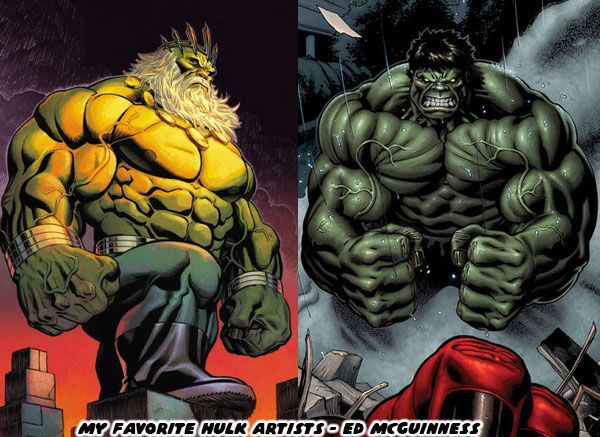
The fourth person on my list was previously my number three. I have already sung the praises of Ed McGuinness, and will continue doing so until my dying day. He is one of those people that you want to create a second Hulk book, just so he can have more to draw. I mean if there can be a Spectacular Spider-Man, Amazing Spider-Man, Web of Spider-Man, and Ultimate Spider-Man comics all out at the same time then why can’t we have two or more Hulk books going? McGuinness draws the Hulk so well that it hurts thinking I will never be half as good as he is at drawing the character. His rendering of the Hulk uses every synonym of power that you can think of. He has force, might, energy, and intensity. The only limitation for McGuinness is that he is too good at drawing muscular characters. Even the “normal” heroes are swollen. It makes the Hulk have a diminished impact when he shares a panel with characters that have the same physique but are a few feet shorter. But that’s a minor issue for someone that I’ve said was born to draw the character.

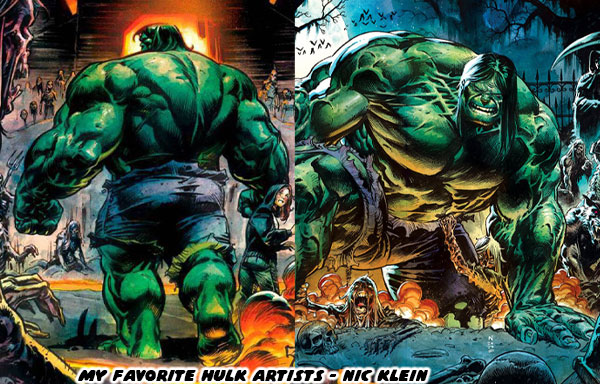
The fifth person that I think could carry the Hulk for all time would be Nic Klein. I said previously his style was equal parts Bernie Wrightson, and Mike Deodato Jr. His take on the Hulk oozed strength. The monsters, and demons he draws tap into some primordial fears of humanity. He presents the stuff of nightmares in vivid detail. It’s scary how good he is at bringing the ugly to life. If the Hulk book is only about horror then there is no one else on the list better qualified to draw it. I wanted to see how he would draw other Marvel characters working with, or against the Hulk. I wanted to see if he could render technology, weapons, or battle sequences with the Hulk. But based solely on the few issues he’s released in 2024 I can tell that he is up to the task. The sky is the limit for Mr. Klein, and I look forward to following it.

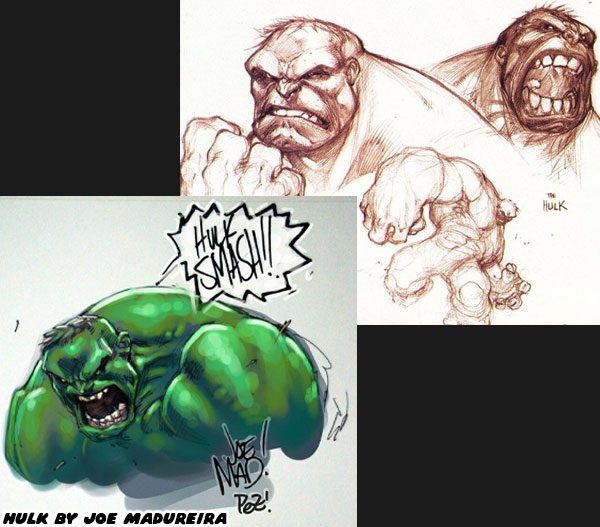
I want you to think of Joe Madureira as my honorable mention. He is an artist that would have been a top-five in my book, possibly a top-three to carry the Hulk forever. That is of course if only he got a chance. The Hulk is an absolute unit when he draws him. Proportionally landing somewhere in between McGuinness, Ottley, and Klein. The thing is with the exception of some concept sketches, and the occasional cover, he hasn’t really had a chance to show fans what he could do with the character.

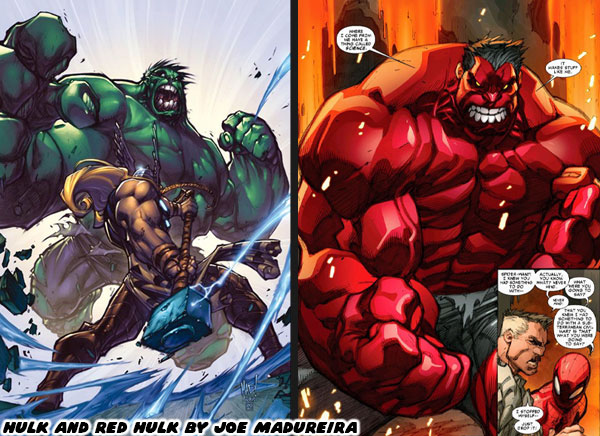
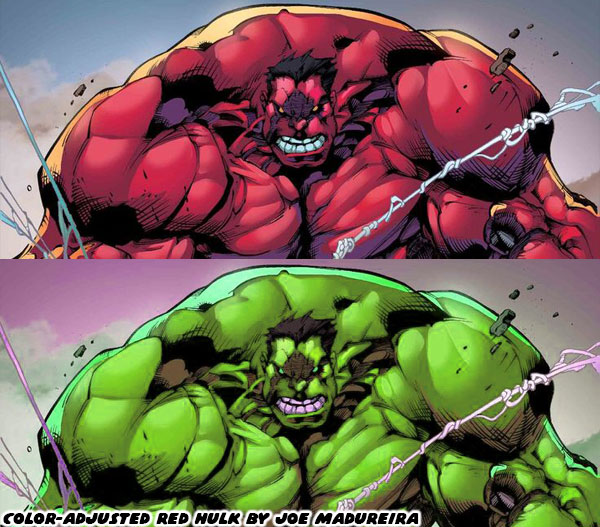
Joe Mad’s style of art oozes personality. He comes from a generation of artists that’s much more animated than any other illustrator that made their mark in the ‘90s. Similar to Humberto Ramos, artists in that era were pulling influences from manga, and video games into their comic work. That is to say it looked vastly different than anything else on the shelves. The fact that he drew massive bruisers so well that I was furious that he never seemed to land a run on the Hulk. Worse yet, when he finally got a chance to draw a power character for Marvel it ended up being the Red Hulk.

As a comics fan it felt like I was living in the worst possible timeline. The best artists to never draw the Hulk were finally given a chance by the powers that be. Only to find out that they would be drawing the red clone character instead. If I was upset that Ed McGuinness’ talents were wasted on a 10+ issue run featuring mainly the Red Hulk, I was twice as angry when Joe drew the Red Hulk for a Spider-Man team up. Just to see what it would have looked like I changed the hue on the Red Hulk in Photoshop. It helped me imagine that I was in a better timeline. The constant disappointments with Marvel writers, and editors was one of the reasons why I walked away from comic books for more than a decade.

I pray that someone at Marvel might let Joe Mad, or Ryan Ottley get a chance to draw a proper Hulk arc in the future. It would certainly give me a reason to start collecting again. There were many other artists that could draw a fantastic Hulk. I might talk about them someday. For now I’d like to hear your thoughts. Did you have a favorite artist that drew your favorite characters? Was there an artist that you could imagine would be a great fit for a book if they ever got a chance? I’d like to read about it in the comments section. As always if you would like to sponsor me please visit my Patreon page and consider donating each month, even as little as $1 would help make better blogs and even podcasts!
follow the Street Writer on Patreon!

Wednesday, April 17, 2024

Disney, the Italian Legacy, part 1 - A 1UP classic from July 10, 2011

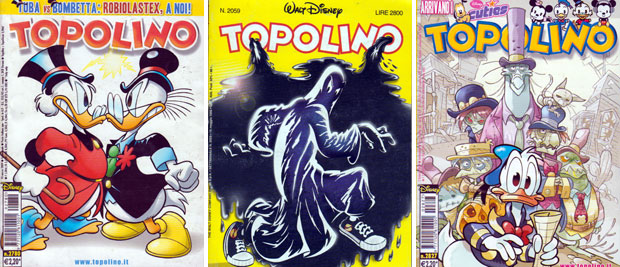
In keeping with the recent Disney themes this next series is going to take a look at the ways in which Europe approaches and develops the classic characters in popular media. To narrow down the scope of the series it would be focusing mostly on how Italy handled the Disney universe through Topolino magazine. Topolino was the name of Mickey Mouse in Italy. I had talked about the toys that came with the books in a previous blog. How Italy handles the Disney name and how they have been pushing to keep it relevant for several generations could teach many things to the parent company in the US.

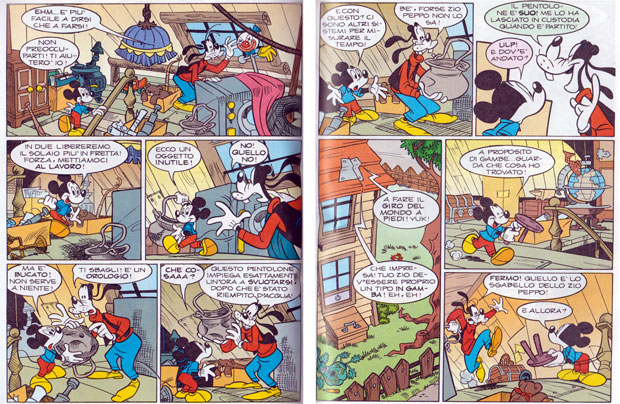
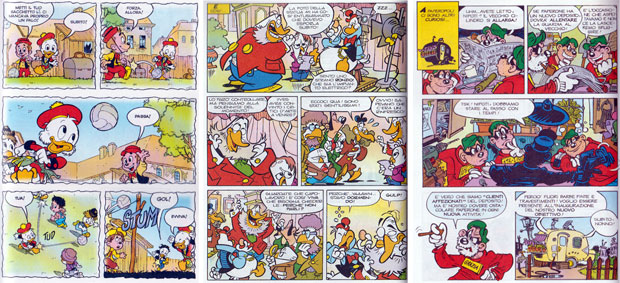
The Italian word for comic book was fumetti, it literally translated to puff of smoke. This was in regards to how the word bubbles in comic books looked like clouds. Topolino was one of the rare western comics to be published in Italy’s pre WWII era. It had been in publication since 1932. Like most other Disney comic licenses the earliest issues were reprints and collections from the west. As demand for everything Mickey Mouse rose so too did the demand for more comics. Within a short amount of time local artists were emulating the Disney style and developing home grown stories to fill in the issues of Topolino.

The artists and writers working on Topolino managed to incorporate the characters from the various Disney animated shorts just as well as characters that appeared in western comics originally. Through the issues they helped entertain and educate audiences on the library of Disney characters and how they interacted and related with each other. The same thing could not be said of many western Disney fans, especially those that were familiar with the cartoons and parks only.

Unless Disney fans in the USA were exposed to the classic comics and rare cartoon appearance then they might not know that the adventurous Moby Duck and the hapless Fethry Duck were part of canon. Or that Fethry was related to Donald Duck even! Their adventures and appearances did not end abruptly in fumetti as they did in the US in the 1970’s. To audiences in Italy the two ducks were every bit as involved in the universe as any of the more famous Disney mascots.

Topolino helped keep these minor characters relevant and developed their identity and appeal among readers. They did so by incorporating them in stories with the more recognizable characters but also by letting them to grow in their own adventures. The types of stories and adventures that the characters were featured in fumetti were becoming as memorable as those featured in the USA comics.

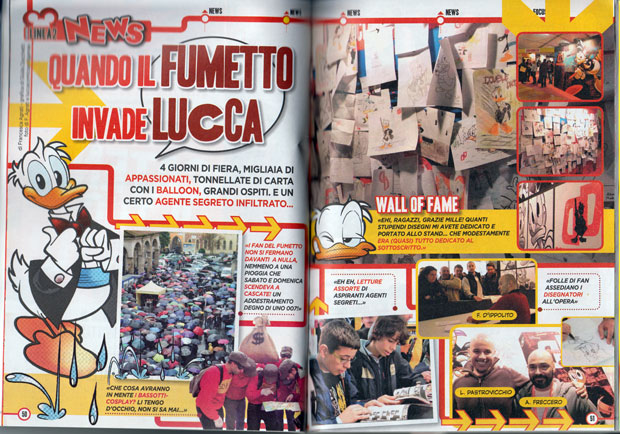
After more than half a century in publication the audience for Topolino had grown exponentially. It was diverse and not solely limited to children. Many Topolino fans were third and fourth generation readers and collectors. The publishers managed to appeal to every age by offering different things to their audience, from short gag comics to longer serials. Although labeled a fumetti Topolino was not considered a comic book as much as a magazine because of how much content was packed into the publication.

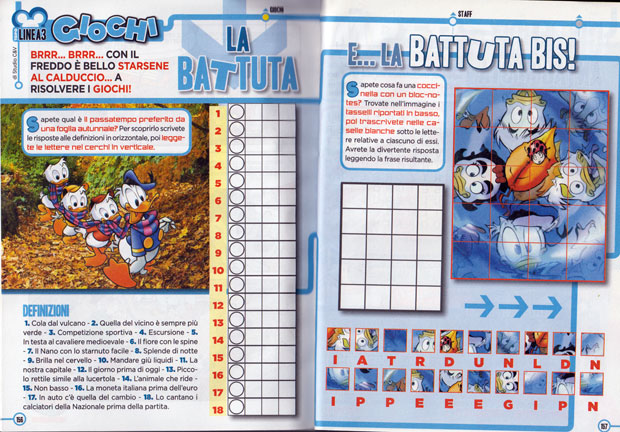
Each issue of Topolino was not only filled with comic stories but also interviews and articles on movies, music and events. There were news stories and interviews with popular celebrities. The issues also featured previews and reviews of toys, videogames and electronic gadgets. Puzzles and games were included to entertain younger readers.

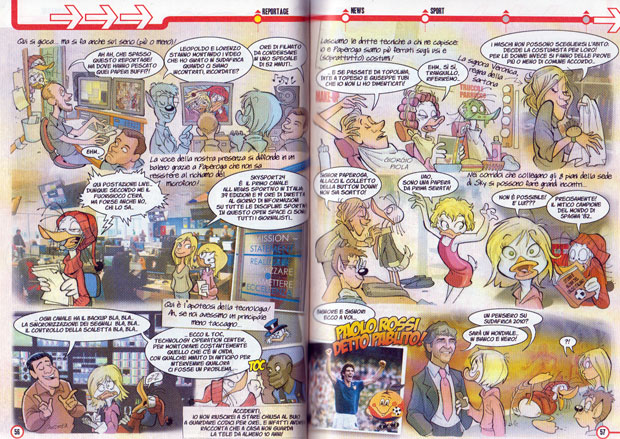
The extra content did not end with some puzzles. To help educate younger readers there was often a look at popular careers. For example a few characters from the comic would visit an actual television station and try to find out how the news was put together. Artists would incorporate photographs and create caricatures of real world people to interact with the cartoon icons. They would help explain their careers to audiences. These brief entries in the book gave many artists a chance to showcase their talents in ways that traditional comic formats did not always allow.

The biggest lesson that the fumetti could teach US comic publishers was in how the creators were granted artistic license. They could explore the Disney universe and present it in a diversity of formats. This liberty to explore and expand on the canon was rarely seen in the USA. Part of the reason was because in the USA comic books, and especially Disney comics, were meant to appeal to children. US comics had to be geared, developed and marketed to children. This limited the scope of stories and characters that could be created. Fumetti were open to all-ages and could be enjoyed by just about any reader. Similarly in Japan there were manga titles written for adults just as there are for teens and children. Countries like Italy, Brazil and Japan did not have a stigma attached to the medium. They also did not use the business model attached to the Disney comics that the US did.

Characters that had only made a few appearances in US comics had taken starring roles in fumetti. Entirely new characters and canon were explored without Disney fans and purists calling for a boycott to the changes.

For example if a writer for Topolino wanted to feature a young Scrooge McDuck in a flashback story about calcio (Italian for soccer) then they could do just that. He would be running around in a kilt playing against kids in shorts in a neighborhood yard. In the US it would be hard for fans of the Carl Barks canon to accept the visual changes to the character, or to see him cavorting with neighborhood children instead of being dressed shabbily and working towards his first dime.

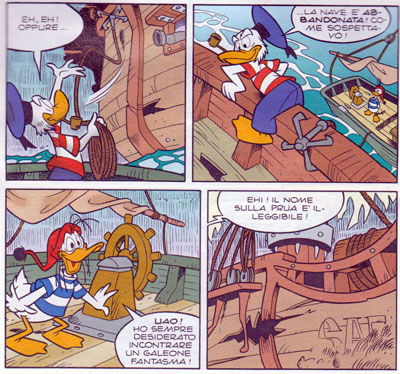
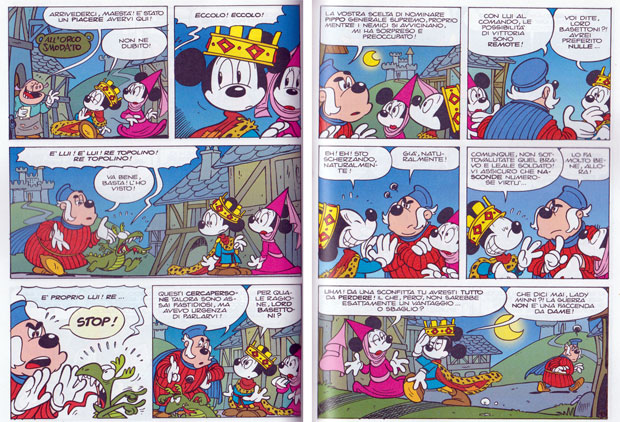
Each artist working in fumetti was free to explore a style of presentation and cartooning. Some artists had a distinct 2-dimensional style while others featured more convincing 3D forms and shapes. Some were great at the classic style of character art, making figures that looked exactly like those featured in USA comics from the 40’s and 50’s. Others had a more impressionistic stance, with flat and stylized versions if the icons that were definitely not based on the US model sheets.

If Italy were to be ranked globally in the art of comic cartooning based on Topolino and its fumetti offshoots then they would arguably at the top with the US well behind them. The sole publisher of the Disney comic book license in the USA was Kaboom studios, the offshoot of Boom Studios. They had assumed sole ownership of the license from Gladstone and Gemstone publishing. Often times Kaboom and Boom were reprinting older Disney material from the US and Europe and only developing new material from recent Pixar films. The books from Kaboom were marketed mostly to kids but also to the older fans of the Disney Afternoon television series. Some of their best artists like James Silvani and Amy Mebberson were sometimes overlooked by the community simply because of the titles they were working on.

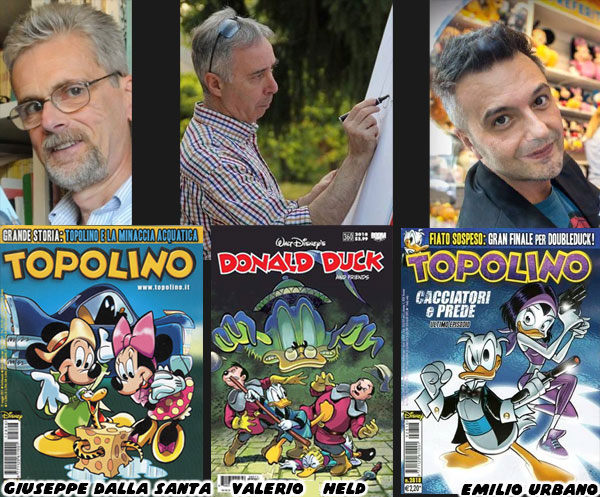
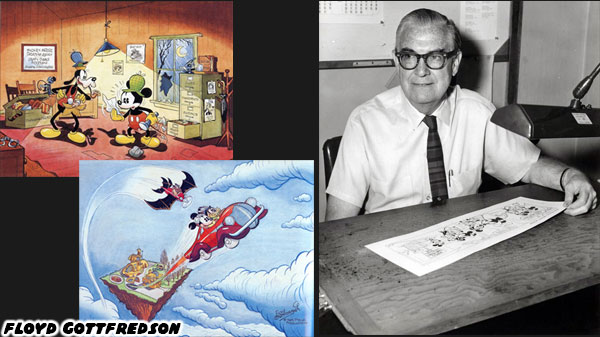
In Italy standout artists like Giuseppe Dalla Santa, Valerio Held, Emilio Urbano and Francesco Guerrini had their own distinct style of cartooning, grounded in the lessons from the US masters. They would develop a stronger following without being labeled as children’s artists. Hints of the Disney animators and cartoonists like Floyd Gottfredson, Ward Kimball and Milt Kahl were present in the styles of the fumetti artists. These artists and subsequent generations developed under a program known as the Disney Academy, founded in Milan in 1993. Aspiring artists were trained in the art of cartooning by senior illustrators and animators. They had a chance to work not only on comics and animation, but also on product design, packaging and advertising as well.

The lessons from the masters of US animation and comic arts were taught at the Academy, their techniques and insights had been dissected, challenged and expanded upon within the pages of Topolino and its sister publications. There was not anything remotely similar in the US comic industry. Western comic book creators were recognized and celebrated in the community for their own contribution to the comic arts but rarely were the Topolino artists acknowledged for their contribution to cartooning. If an artist from the USA were interested in seeing how the cartooning had evolved then they would be better served by going through Topolino than watching the flat Flash-based animation appearing on western television.

Of all the Italian artists, the one who has had the biggest influence on the Italian cartoon style and the one who was most emulated was Giorgio Cavazzano. He was and is very much considered a living legend among cartoonists, to be admired alongside such greats as Carl Barks and Don Rosa. Giorgio got his start in comics at the age of 14 by inking the pages of the original Italian legend Romano Scarpa. He was still in high demand as a cartoonist, only now his work also hung in museums. Many of the current Topolino artists and product designers still borrowed a lot from Mr. Cavazzano's style.

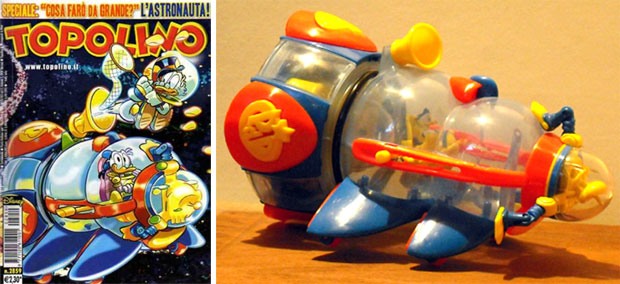
Subscribers of Topolino were treated to collectables and toys in many of the issues. Smaller collectables like puzzles, cards, stamps and coins would come packaged with the fumetti and larger toys would be distributed over several issues. The larger toys would have to be assembled by the readers, which for most young fans was a treat in and of itself.

Many of the larger toys had some sort of battery activated feature. The space ship pictured above for example had working lights and sound effects. It could be separated into three components, a satellite rover, a ship and a command module.

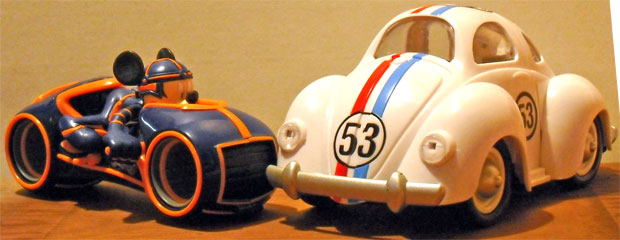
These items or “gadgets” as they were known in Italy did not have to be part of a story. Many were just be based on any part of Disney history. The printed gadgets featured images from the Disney legacy, others were actual figures and models. Some were even crossover designs from multiple Disney sources such as Tron Mickey on a wind up light cycle or Donald Duck in Herbie the Love Bug.

Disney followers in Italy had probably a greater breadth of knowledge of animated characters, comic book creations and classic films because of how often they were referenced in fumetti and via the gadgets.

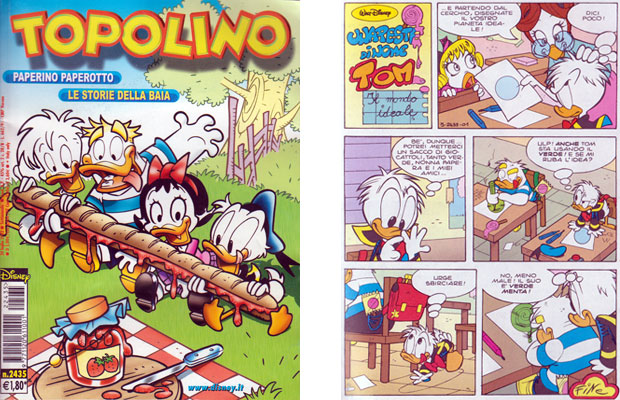
Italy helped introduce diverse timelines into Disney canon as well. Donald Duck may be seen as secondary to Mickey Mouse in the USA but in Italy he is every bit as important if not more so in the fumetti. Paperino, as Donald was known in Italy had several incarnations. One of the versions of the character, Paperino Paperotto followed the adventures of the young duck and his friends. Very little had ever been written or drawn in the USA on Donald’s childhood. Paperotto had a distinct visual style and even purpose in Disney canon. The character and his adventures were far more than a generic "Disney Babies” series. His hi-jinx stories were very sincere and the artists and writers worked hard to respect Disney continuity and as such they were accepted by fans.

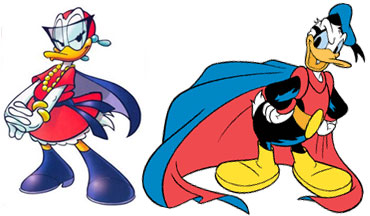
While these whimsical stories were meant for younger audiences they were balanced out by the more adventurous stories of Paperinik, the superhero alter ego of the adult Donald Duck.

Italian fans got tired of seeing Donald treated as a perpetual loser in the translated stories from the US. When the chance arose to create an original story they gave Paperino an alias that was far more heroic and adventurous than even Mickey Mouse. Paperinik was not unlike Batman in that the character relied on his guile and an array of gadgets to defeat a rogues gallery. Paperinik, the Duck Avenger in English-speaking countries and Papernika, the super alter ego of Daisy, had many colorful adventures over the years. The duo and other super-hero retellings of the icons had now been part of Disney comic canon for over 40 years.

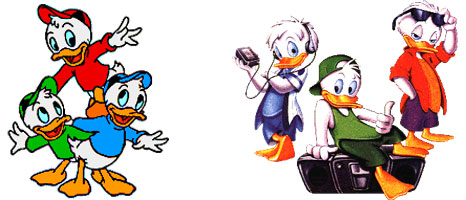
Both Paperino Paperotto and Paperinik demonstrated that the Italians were capable of taking classic characters into bold new directions and make them popular with the community. They also showed that the community would not be offended if changes to an iconic character were made, so long as the spirit of the original character were not compromised. Paperotto and Paperinik never crossed the line to make them anything other than Donald in a new form, the personality and temperament of Donald Duck still shown through the artistic facelift. The idea of remaking the Disney icons would be met by a collective groan from US cartoon fans.

It usually meant that a producer with absolutely no artistic background was trying to remake the icons to fit a marketing trend. Characters would be dressed in street wear, try to speak hip and interact as if they were on a sitcom instead of looking or acting like their namesake characters. Worse the adventures or even shorter sincere stories featured in the classic cartoons or comics would be missed entirely. Take for example the Quack Pack cartoon as a “hip” version of DuckTales series. Thankfully the Italian creators did not seem to suffer from the same sense of creative amnesia. The next blog will explore the differences in canon enjoyed by the Italians in the pages of Topolino. Please return for that.

As always if you would like to sponsor me please visit my Patreon page and consider donating each month, even as little as $1 would help make better blogs and even podcasts!
follow the Street Writer on Patreon!