Showing posts with label fumetti. Show all posts

Monday, May 6, 2024

Disney, the Italian Legacy, part 6 - A 1UP classic from July 19, 2011

When Epic Mickey was under development Disney in the USA used it as a vehicle to reach out to the community. They wanted to remind younger audiences why Mickey Mouse was an icon. The studio wanted to show them why the mouse had international appeal, even decades after his introduction. The concepts of selflessness, friendship and loyalty that made Mickey famous had to be made clear. In order to reach the younger generations the studio had to tap into their primary forms of entertainment, videogaming was the obvious one, yet comic books were also a contemporary form of entertainment that the studio could use as well.

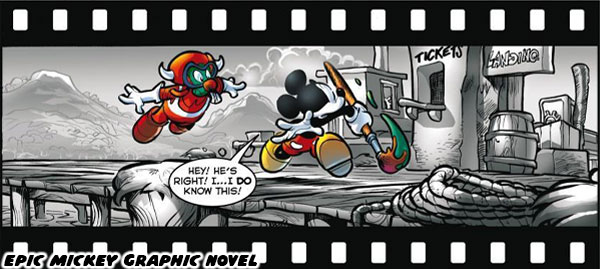
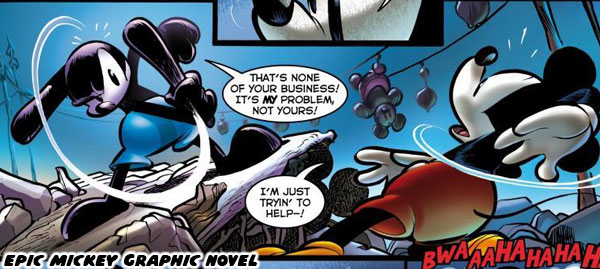
While Warren Spector penned the outline for the Epic Mickey game, fellow Disney fan, comic book veteran and Eisner Award Winner Peter David was hired to write the story in comic book form. These were set to be a series of adventures that took place before the videogame, titled “Tales from the Wasteland.” In the US the comics were distributed digitally using the Disney DigiComics service, available via the iTunes store. Those with an iPhone, iPod or iPad could download the comics for free. The actual collected stories would not appear in graphic novel format until almost year later.

The decision to distribute comics digitally did not make a lot of sense to comic or videogame fans. Perhaps the studio did not want to have the stories get lumped together with the children’s comics in stores. By going all digital they ensured that part of the target audience would have direct access to the story without having to hunt for issues.

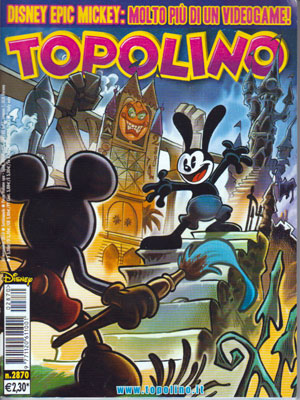
At the same time the stories were made available digitally they were published physically overseas in the pages of Topolino.

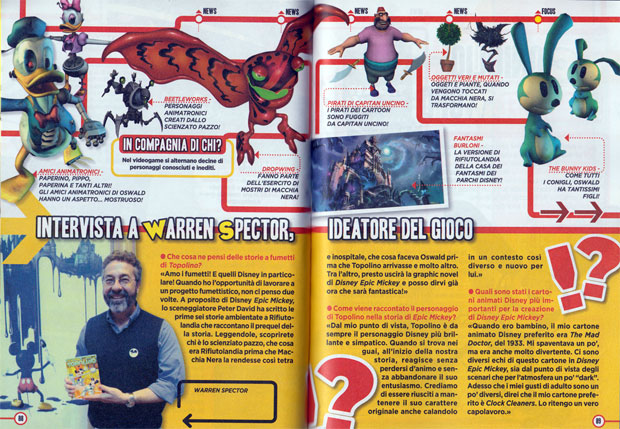
In keeping with Topolino magazine tradition there was a multi-page blowout about the game, plot and interviews with Warren Spector. Epic Mickey concept art, characters and history were featured before audiences got a chance to read the first in a series of adventures.

In order for Disney to accomplish their goal of reaching audiences via the comic book medium the best option was to go to Italy. Very few comic book artists working in the USA were trained in the Disney style or had any experience drawing Disney Comics. Italy was the one place where Disney comics were being published regularly and developed with a strong attention to detail.

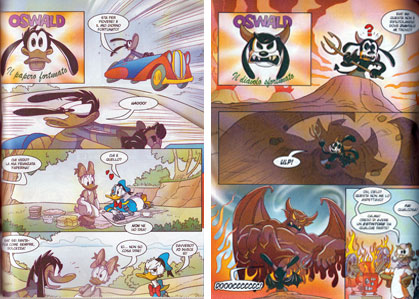
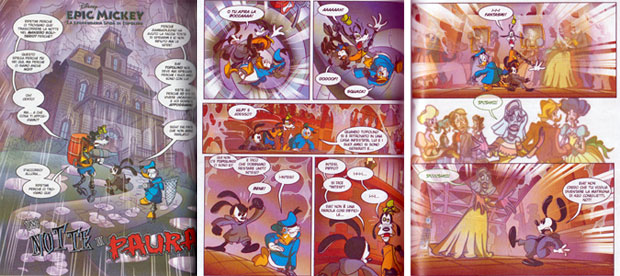
Peter David got most of the attention in the US media outlets yet the art staff was just as accomplished. Fabio Celoni and Paolo Mottura were veterans from the pages of Topolino. They trained with the Disney Academy and had experience drawing just about every character in the universe at one point or another through their careers Their styles were not quite classic but more of a modern cartoon style instead. They helped bring Epic Mickey to life for fans on both sides of the Atlantic. The stories laid out by Mr. David were fun and took many chances to call out the classic attractions that would be highlighted in Epic Mickey. He was able to incorporate the most memorable elements that visitors saw at each attraction. For example the ballroom scene and bride from the Haunted Mansion were incorporated into the story. 

The lovelorn bride chased Oswald and the mechanized Donald and Goofy around the inside of the mansion as well as through the graveyard on floating “Doom Buggies.” Fabio and Paolo did a great job making cartoon versions out of the classic Marc Davis designs. Although they were ghosts none were too macabre as to scare off younger readers. Mr. David also wrote in Oswald trying to fill in the shoes of other classic characters. Instead of Donald Duck they tried out Oswald the Lucky Duck. Instead of Chernabog, the large demon at the end of Fantasia, Oswald tried his best at being menacing. Neither roles really worked for the rabbit. The classic squash and stretch reactions rendered by the art team did work in his favor though.

The collaboration of US writing and Italian art worked in favor of the Tales from the Wasteland. In a few months those that did not get a chance to read the digital downloads will be able to buy the collected graphic novel. This will include concept art from Junction Point and additional notes from Warren Spector and Peter David. The collection will be published by Disney Press instead of Boom Studios.

Not to be outdone Boom Studios, or rather Kaboom Studios had started publishing an all new series written by Warren Spector and penciled by other Italian greats. The next blog will take a look at the new DuckTales comic book adventures. I hope to see you back for that. As always if you would like to sponsor me please visit my Patreon page and consider donating each month, even as little as $1 would help make better blogs and even podcasts!
follow the Street Writer on Patreon!

Monday, April 22, 2024

Disney, the Italian Legacy, part 2 - A 1UP classic from July 11, 2011

The Italians were noteworthy not solely for creating new interpretations of classic characters like Paperinik and Paperotto, but also for diverging from USA Disney canon. For example, in the USA the character of John D. Rockerduck was introduced once by Carl Barks into the Uncle Scrooge adventure the Boat Busters to help push along a plot. Rockerduck was a fellow business tycoon and he challenged McDuck to a race to find out who sold the better gasoline. Donald Duck won the race on behalf of Scrooge but was unfortunately using Rockerduck’s gasoline. In the USA the character would not be seen again save for a cameo in a “Life and Times” story by Don Rosa. Most Disney fans in the USA would recognize that Flintheart Glomgold was the older character, meant to be business rival and mortal enemy of Scrooge McDuck. Yet even Scrooge McDuck was also once meant as a one-shot character in the Bark’s universe. It was not until the character was revisited and fleshed out that he became a comic icon. In Italy and in other European stories John Rockerduck would be brought back and fleshed out as well.

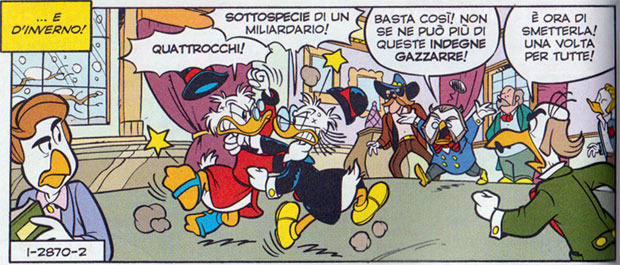
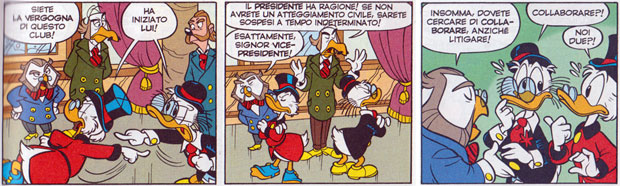
Rockerduck instead of Glomgold would take a starring role against Scrooge. The design and appearance of the character was in fact meant to balance out Scrooge more than Glomgold. Visually Rockerduck’s suit, hat, tie, glasses and sideburns were more contemporary than Scrooge’s. Rockerduck was a brash younger tycoon that did not seem to value his wealth in the same way as McDuck. His fortune was handed down by his father Howard Rockerduck, a self-made business man that helped mentor a young Scrooge decades earlier. John Rockerduck had a different approach to his business empire than Scrooge did. He believed that it took spending money in order to make money, whereas Scrooge was a notorious hoarder and penny pincher. In the comics the ducks rarely got along and were constantly getting into fights while trying to prove who was the superior businessman.

To settle things in fumetti both ducks often had a wager, this part of canon was preserved from the original Barks story. The bet was rarely over money but instead prestige in the clubs for which both ducks were members of. The loser for most of the contests had to eat their own hat. Rockerduck was often presented chewing on the brim of his bowler hat, if not for the contest bet then because he was completely fed up with Scrooge.

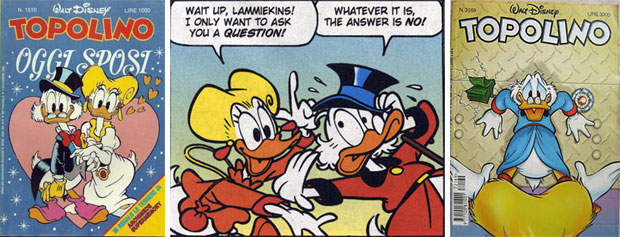
As if one powerful tycoon rival was not enough for the pages of Topolino, a second was added shortly after Rockerduck. The Italian Marco Rota added Brigitta MacBridge to canon in 1960. Similarly to Rockerduck and Scrooge she was originally introduced to help push along a single story. She turned out to be a memorable character and would return again and again to drive Scrooge mad.

In canon she was an old acquaintance of Scrooge and was absolutely crazy about him. She was also good friends with Daisy Duck and would often cross paths with Donald and his uncle. She was convinced that the two were meant to be together. As a self made business tycoon she was clearly not in it for Scrooge’s money either.

Brigitta would often hatch a plot to try to get Scrooge to confess his feelings for her, or worse, to trick him into getting married. This character seemed to balance out the Rockerduck dynamic. Both were constantly trying to undo Scrooge for their own gain. Both had enormous fortunes so that they could keep up with Scrooge no matter where he went or what business he got into. Brigitta’s appearances were thankfully more comedic than dramatic though.

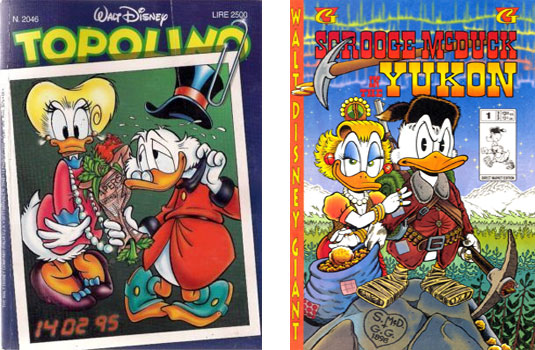
Yet many western audiences were not fans of the Brigitta character, or even aware of her. Scrooge had a female rival years before Brigitta, someone that was not falling over Scrooge at every instance but instead his equal, not in a monetary sense but in personality. Italians would have to ignore one of Carl Bark’s greatest creations, Goldie O’Gilt aka Glittering Goldie, in order for Brigitta to be his main female lead.

Goldie was a rival for Scrooge during his formative years in the Yukon. Over several seasons of hardship the two would grow to respect each other and more important to develop feelings for the other. Unfortunately both were too proud and stubborn to ever admit to those feelings. Scrooge left the Yukon behind and seemingly his heart as well. In flashbacks Scrooge would think fondly of his time spent up north. Goldie would always consider Scrooge the one that got away. This interesting dynamic left audiences wanting for closure to a relationship half a century in the making.

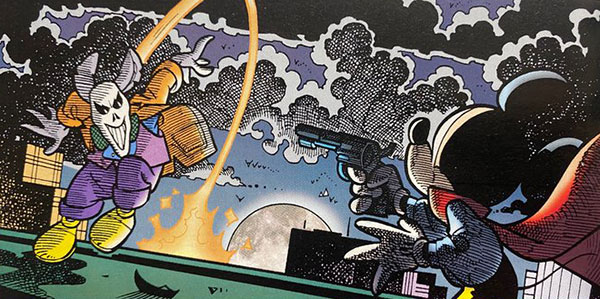
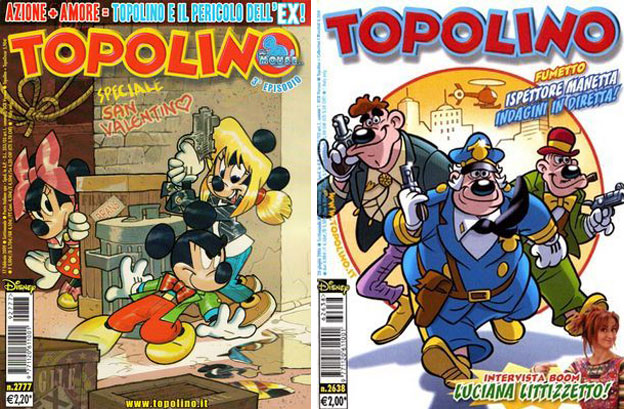
Adding superhero alter egos to established characters and creating new relationships within the canon were some of the major contributions by the Italians. One of the more controversial elements featured in the pages of Topolino, the inclusion of firearms in some of the stories, would have been a hard sell to American audiences, especially licensors and Disney stock holders. Many in the US would have never imagined seeing an icon like Mickey Mouse handling a weapon, let alone be threatened by one in a comic or cartoon.

Yet guns had appeared for decades in Disney comics in the US and even animation. For example when Glittering Goldie wasn’t flirting with Scrooge she was shooting him with a shotgun. This happened in both the cartoon and comic books.

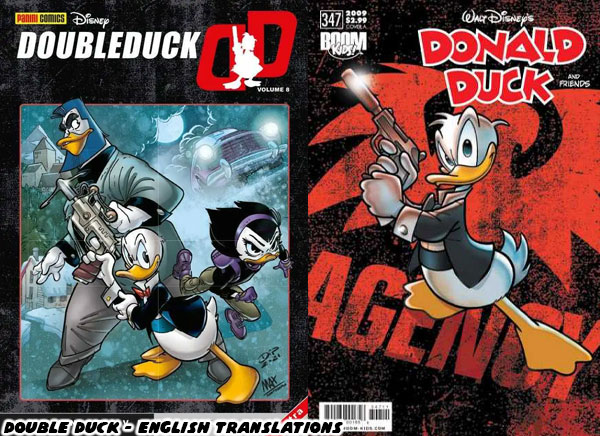
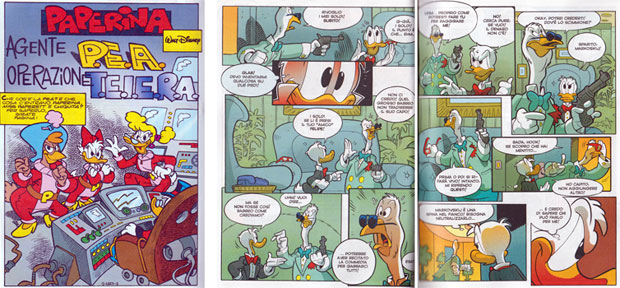
This revelation was not to say that weapons were commonplace in fumetti or other European Disney comics. If and when they showed up they fit the form of the story and certain mature themes. Paperino for example had an alter ego as a spy. In addition to being Paperinik Donald also had the responsibility as a spy for his country, known to fans as Double Duck. In the Double Duck (DD) stories sometimes a villain showed up carrying a weapon, sometimes DD had to also carry one along with his tuxedo ala James Bond. Very rarely did these comics have shoot outs and never were any of the characters depicted as getting shot or injured during the battles. The violence of the weapon was implied rather than shown. A gun served as a tool to intimidate not as an excuse by artists to draw graphic violence.

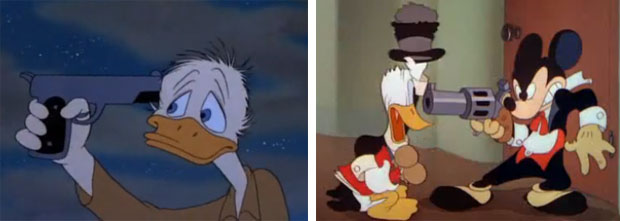
Boom Studios actually published the DD stories in the US and did not censor out the guns as most had expected them to. Many in the west could not imagine an icon being threatened with a firearm but the precedence was set in the earliest Disney short films. Donald was once threatened with a gun by Mickey Mouse in the 1942 film the Symphony Hour. Not to mention the time Donald Duck tried to commit suicide by handgun in the 1943 film the Old Army Game or that Daisy Duck tried to do the same in 1947’s Donald’s Dilemma.

Disney Studios once used firearms in their animated projects and comics only now they seemed to shy away from any form or actual or implied violence. Topolino also used firearms but they certainly never put them flush to the temples of the icons as if they were in any real danger.

If Topolino and fumetti in general were geared only towards children then the writers and artists would certainly never have presented any weapons in the stories. At the same time they would never have produced as many memorable stories and adventures because of their audience. They would not have advanced the art of cartooning or showed how Disney comics could be written for every age.

These were a few examples of the creative risks that the Italians took in the pages of Topolino. These were things that would not have been allowed if the comic were limited to a specific audience.

There was a major difference between how Disney was perceived and marketed in the USA versus Italy, or for that matter the rest of the world. Topolino was family entertainment. The comics and anthologies could be enjoyed by both kids and adults. Best of all the fumetti brought the characters to life. The Disney cartoon icons as well as original characters were featured in ongoing stories. These were certainly not reprints for aged collectors but living, breathing volumes. Not every Disney comic published in Europe was approached in the same way.

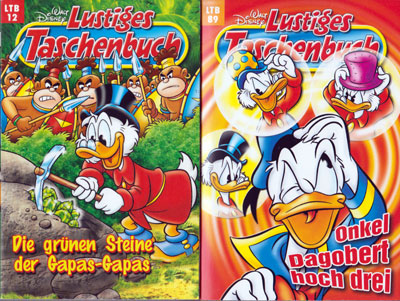
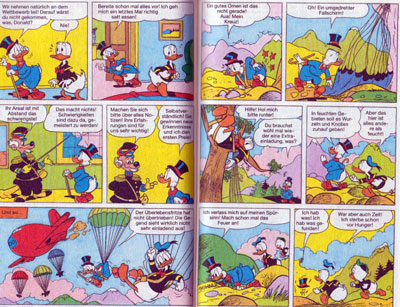
In Germany for example the anthologies featuring the Disney characters could be picked up in local bookstores. These simple 4-color books featured reprints or stories, most meant for kids with very little done in production value. Colors bled into each other and no sort of cleanup was done to enhance the original art. These issues were stale and formulaic when compared to the work featured in the fumetti.

Other European countries did not settle for reprints. They were as passionate about the Disney comics and cartoons as anywhere else in the world. For example Donald Duck cartoons were viewed on Christmas Eve in Sweden as a tradition. Additionally fellow game writer Audun Sorlie mentioned how most stores in Scandinavia did not have a few Disney comics but instead had entire racks filled with the books.

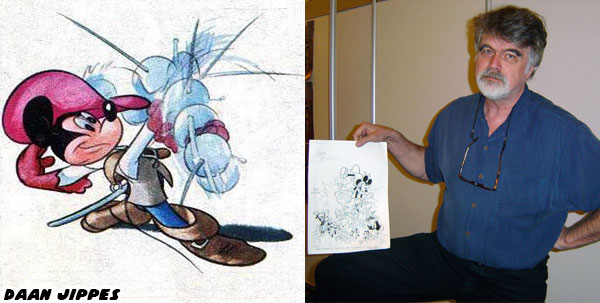
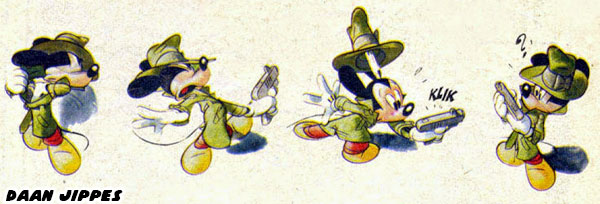
These countries would develop new stories and art for the Disney books. However unlike the Italians the writers and artists from Northern European countries tried very little to deviate from the art and storytelling elements established in early comics. They would go so far as to look for artists that could draw in the same style as the classic Disney cartoonists. Of these artists none was better than Amsterdam's own Daan Jippes. Daan was an exceptional artist that could emulate the styles of the American masters, including Floyd Gottfredson and Carl Barks.

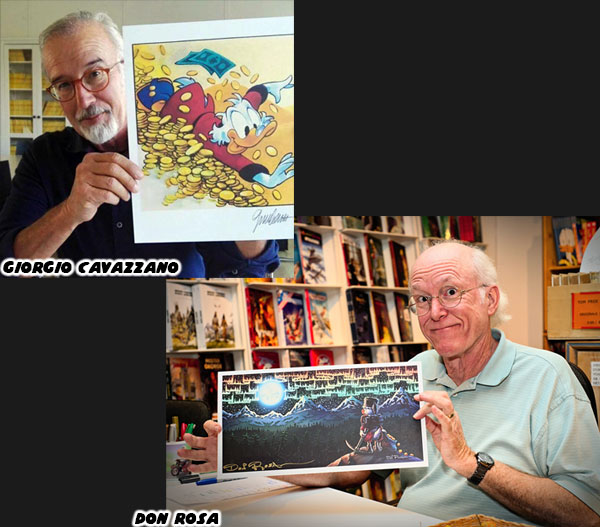
He was so good at emulating the Barks style that he was contracted to redraw stories written but not illustrated by Barks from the 1970's into new collections for the 1990's. Daan Jippes was considered a master of modern comics alongside the US's Don Rosa and Italy's Giorgio Cavazzano. The preference by the Scandinavians for classic characters and little deviation from the Barks canon meant that many of their comics progressed very little, as if they were stuck in a time loop. The Italians had a different perspective, while they respected the work of the early artists they pushed forward into new territory.

Even if the parent company in the USA had not released any new comics or animation featuring the Disney characters in decades they were all still fresh in the pages of the fumetti. Disney in Italy managed to keep the mascots relevant by allowing them to grow within the pages of Topolino. They were willing to introduce new characters and re-imagine classic characters equally. They enticed new collectors by offering toy sets with subscriptions and held onto long-time fans by maintaining a high level of quality in art and storytelling. In the USA most cartoon comics were labeled and marketed towards children specifically. The US publishers did not go out of their way to appeal to diverse audiences or interests. Nor did they offer any toys or figures featuring rare mascots. As such the Disney comic market in the US was nowhere near as big as it was in Europe.

As any business analyst could tell you the best and most successful forms of Disney entertainment were family oriented rather than obsessively kid-friendly. This distinction between entertainment for children and entertainment for families was too often missed by studios, not solely Disney. Mistaking comics and even videogames as a medium for children instead of for families did nothing to help promote the titles. Producing little content in print and toy form for fans and followers above the age of 10 also hurt the brand in the USA. This lack of connection with audiences and the lack of any new content featuring the icons was stifling. The Italian contribution to making the Disney name relevant was not limited to comics either. The next blog will explore how publishers were able to help keep the mascots fresh with collectibles. As always if you would like to sponsor me please visit my Patreon page and consider donating each month, even as little as $1 would help make better blogs and even podcasts!
follow the Street Writer on Patreon!

Wednesday, April 17, 2024

Disney, the Italian Legacy, part 1 - A 1UP classic from July 10, 2011

In keeping with the recent Disney themes this next series is going to take a look at the ways in which Europe approaches and develops the classic characters in popular media. To narrow down the scope of the series it would be focusing mostly on how Italy handled the Disney universe through Topolino magazine. Topolino was the name of Mickey Mouse in Italy. I had talked about the toys that came with the books in a previous blog. How Italy handles the Disney name and how they have been pushing to keep it relevant for several generations could teach many things to the parent company in the US.

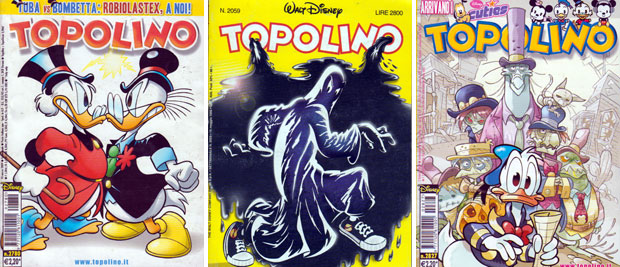
The Italian word for comic book was fumetti, it literally translated to puff of smoke. This was in regards to how the word bubbles in comic books looked like clouds. Topolino was one of the rare western comics to be published in Italy’s pre WWII era. It had been in publication since 1932. Like most other Disney comic licenses the earliest issues were reprints and collections from the west. As demand for everything Mickey Mouse rose so too did the demand for more comics. Within a short amount of time local artists were emulating the Disney style and developing home grown stories to fill in the issues of Topolino.
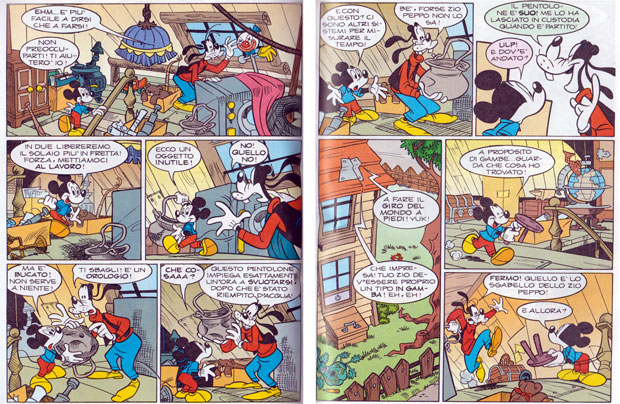
The artists and writers working on Topolino managed to incorporate the characters from the various Disney animated shorts just as well as characters that appeared in western comics originally. Through the issues they helped entertain and educate audiences on the library of Disney characters and how they interacted and related with each other. The same thing could not be said of many western Disney fans, especially those that were familiar with the cartoons and parks only.

Unless Disney fans in the USA were exposed to the classic comics and rare cartoon appearance then they might not know that the adventurous Moby Duck and the hapless Fethry Duck were part of canon. Or that Fethry was related to Donald Duck even! Their adventures and appearances did not end abruptly in fumetti as they did in the US in the 1970’s. To audiences in Italy the two ducks were every bit as involved in the universe as any of the more famous Disney mascots.
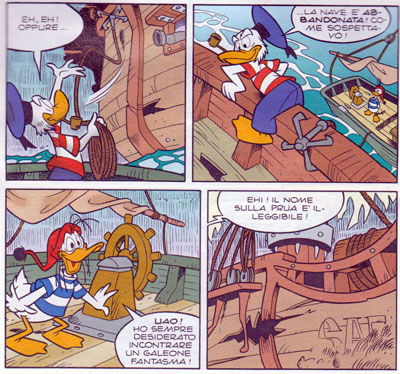
Topolino helped keep these minor characters relevant and developed their identity and appeal among readers. They did so by incorporating them in stories with the more recognizable characters but also by letting them to grow in their own adventures. The types of stories and adventures that the characters were featured in fumetti were becoming as memorable as those featured in the USA comics.

After more than half a century in publication the audience for Topolino had grown exponentially. It was diverse and not solely limited to children. Many Topolino fans were third and fourth generation readers and collectors. The publishers managed to appeal to every age by offering different things to their audience, from short gag comics to longer serials. Although labeled a fumetti Topolino was not considered a comic book as much as a magazine because of how much content was packed into the publication.
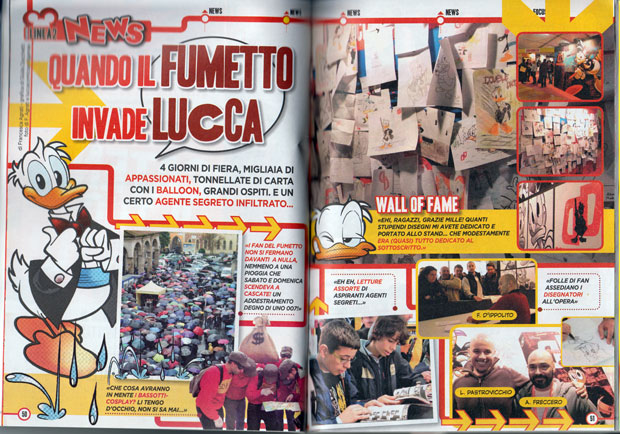
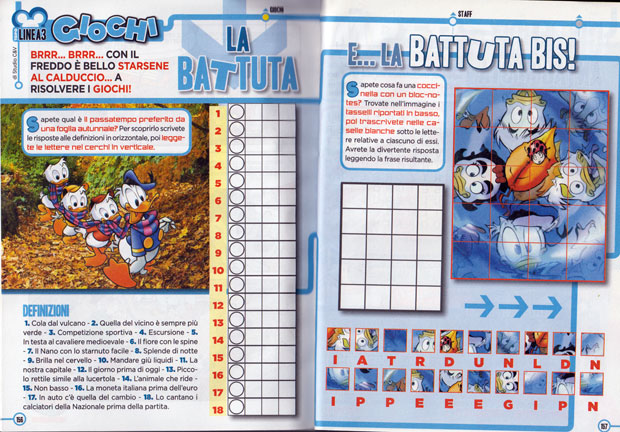
Each issue of Topolino was not only filled with comic stories but also interviews and articles on movies, music and events. There were news stories and interviews with popular celebrities. The issues also featured previews and reviews of toys, videogames and electronic gadgets. Puzzles and games were included to entertain younger readers.
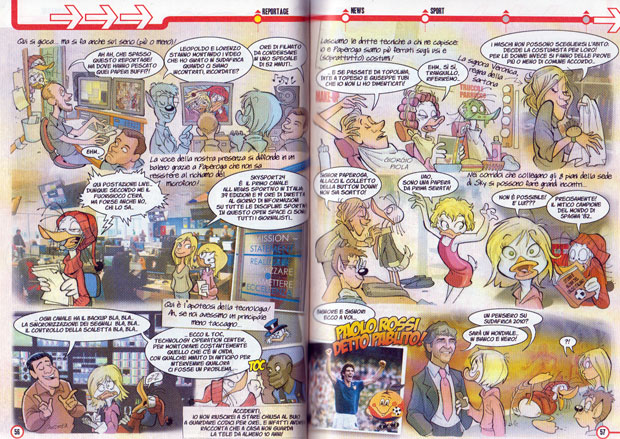
The extra content did not end with some puzzles. To help educate younger readers there was often a look at popular careers. For example a few characters from the comic would visit an actual television station and try to find out how the news was put together. Artists would incorporate photographs and create caricatures of real world people to interact with the cartoon icons. They would help explain their careers to audiences. These brief entries in the book gave many artists a chance to showcase their talents in ways that traditional comic formats did not always allow.
The biggest lesson that the fumetti could teach US comic publishers was in how the creators were granted artistic license. They could explore the Disney universe and present it in a diversity of formats. This liberty to explore and expand on the canon was rarely seen in the USA. Part of the reason was because in the USA comic books, and especially Disney comics, were meant to appeal to children. US comics had to be geared, developed and marketed to children. This limited the scope of stories and characters that could be created. Fumetti were open to all-ages and could be enjoyed by just about any reader. Similarly in Japan there were manga titles written for adults just as there are for teens and children. Countries like Italy, Brazil and Japan did not have a stigma attached to the medium. They also did not use the business model attached to the Disney comics that the US did.
Characters that had only made a few appearances in US comics had taken starring roles in fumetti. Entirely new characters and canon were explored without Disney fans and purists calling for a boycott to the changes.

For example if a writer for Topolino wanted to feature a young Scrooge McDuck in a flashback story about calcio (Italian for soccer) then they could do just that. He would be running around in a kilt playing against kids in shorts in a neighborhood yard. In the US it would be hard for fans of the Carl Barks canon to accept the visual changes to the character, or to see him cavorting with neighborhood children instead of being dressed shabbily and working towards his first dime.
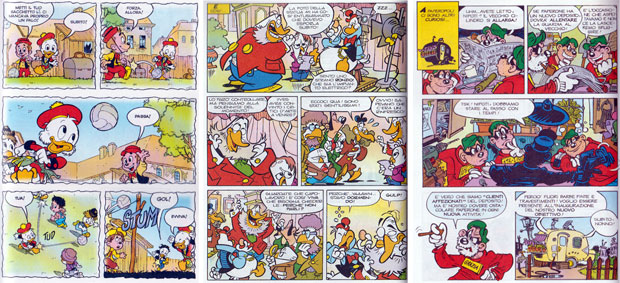
Each artist working in fumetti was free to explore a style of presentation and cartooning. Some artists had a distinct 2-dimensional style while others featured more convincing 3D forms and shapes. Some were great at the classic style of character art, making figures that looked exactly like those featured in USA comics from the 40’s and 50’s. Others had a more impressionistic stance, with flat and stylized versions if the icons that were definitely not based on the US model sheets.
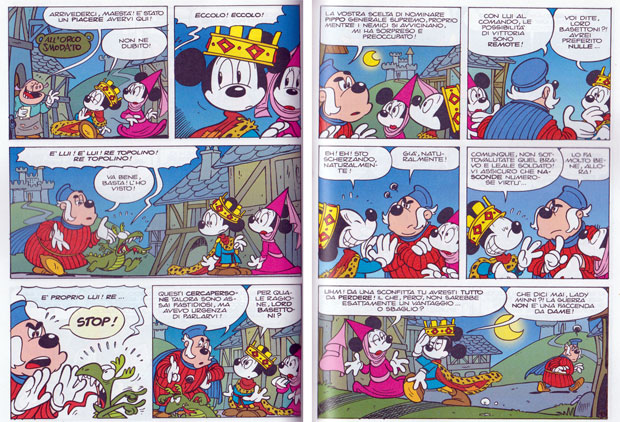
If Italy were to be ranked globally in the art of comic cartooning based on Topolino and its fumetti offshoots then they would arguably at the top with the US well behind them. The sole publisher of the Disney comic book license in the USA was Kaboom studios, the offshoot of Boom Studios. They had assumed sole ownership of the license from Gladstone and Gemstone publishing. Often times Kaboom and Boom were reprinting older Disney material from the US and Europe and only developing new material from recent Pixar films. The books from Kaboom were marketed mostly to kids but also to the older fans of the Disney Afternoon television series. Some of their best artists like James Silvani and Amy Mebberson were sometimes overlooked by the community simply because of the titles they were working on.
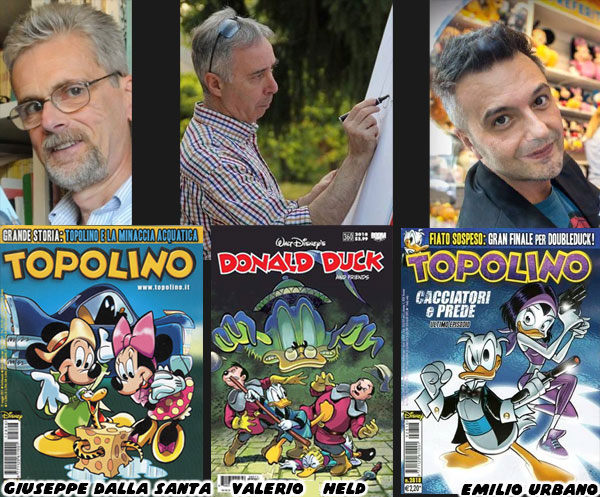
In Italy standout artists like Giuseppe Dalla Santa, Valerio Held, Emilio Urbano and Francesco Guerrini had their own distinct style of cartooning, grounded in the lessons from the US masters. They would develop a stronger following without being labeled as children’s artists. Hints of the Disney animators and cartoonists like Floyd Gottfredson, Ward Kimball and Milt Kahl were present in the styles of the fumetti artists. These artists and subsequent generations developed under a program known as the Disney Academy, founded in Milan in 1993. Aspiring artists were trained in the art of cartooning by senior illustrators and animators. They had a chance to work not only on comics and animation, but also on product design, packaging and advertising as well.
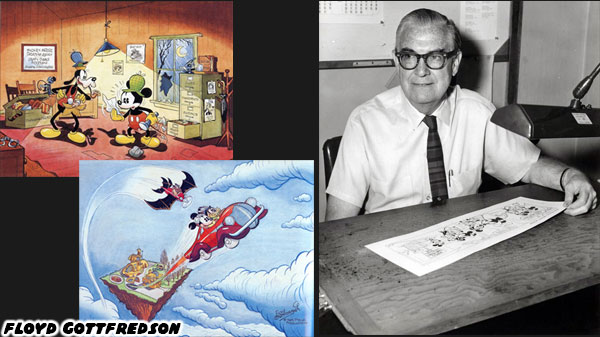
The lessons from the masters of US animation and comic arts were taught at the Academy, their techniques and insights had been dissected, challenged and expanded upon within the pages of Topolino and its sister publications. There was not anything remotely similar in the US comic industry. Western comic book creators were recognized and celebrated in the community for their own contribution to the comic arts but rarely were the Topolino artists acknowledged for their contribution to cartooning. If an artist from the USA were interested in seeing how the cartooning had evolved then they would be better served by going through Topolino than watching the flat Flash-based animation appearing on western television.

Of all the Italian artists, the one who has had the biggest influence on the Italian cartoon style and the one who was most emulated was Giorgio Cavazzano. He was and is very much considered a living legend among cartoonists, to be admired alongside such greats as Carl Barks and Don Rosa. Giorgio got his start in comics at the age of 14 by inking the pages of the original Italian legend Romano Scarpa. He was still in high demand as a cartoonist, only now his work also hung in museums. Many of the current Topolino artists and product designers still borrowed a lot from Mr. Cavazzano's style.
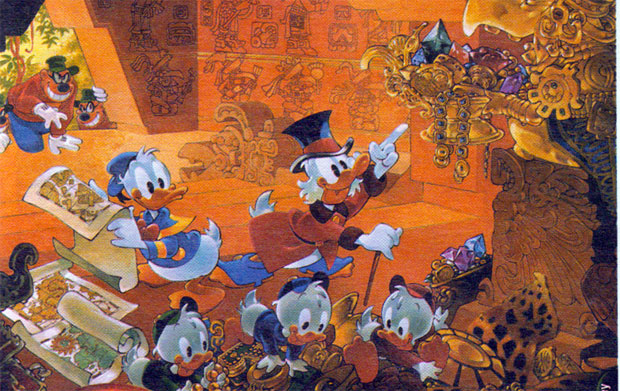
Subscribers of Topolino were treated to collectables and toys in many of the issues. Smaller collectables like puzzles, cards, stamps and coins would come packaged with the fumetti and larger toys would be distributed over several issues. The larger toys would have to be assembled by the readers, which for most young fans was a treat in and of itself.
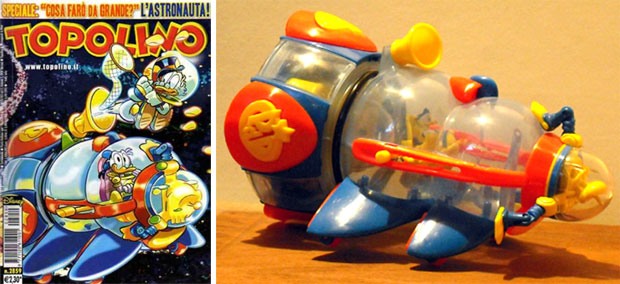
Many of the larger toys had some sort of battery activated feature. The space ship pictured above for example had working lights and sound effects. It could be separated into three components, a satellite rover, a ship and a command module.

These items or “gadgets” as they were known in Italy did not have to be part of a story. Many were just be based on any part of Disney history. The printed gadgets featured images from the Disney legacy, others were actual figures and models. Some were even crossover designs from multiple Disney sources such as Tron Mickey on a wind up light cycle or Donald Duck in Herbie the Love Bug.
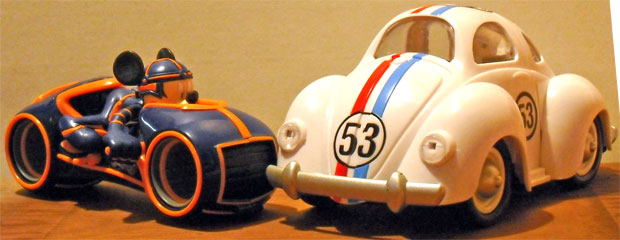
Disney followers in Italy had probably a greater breadth of knowledge of animated characters, comic book creations and classic films because of how often they were referenced in fumetti and via the gadgets.

Italy helped introduce diverse timelines into Disney canon as well. Donald Duck may be seen as secondary to Mickey Mouse in the USA but in Italy he is every bit as important if not more so in the fumetti. Paperino, as Donald was known in Italy had several incarnations. One of the versions of the character, Paperino Paperotto followed the adventures of the young duck and his friends. Very little had ever been written or drawn in the USA on Donald’s childhood. Paperotto had a distinct visual style and even purpose in Disney canon. The character and his adventures were far more than a generic "Disney Babies” series. His hi-jinx stories were very sincere and the artists and writers worked hard to respect Disney continuity and as such they were accepted by fans.
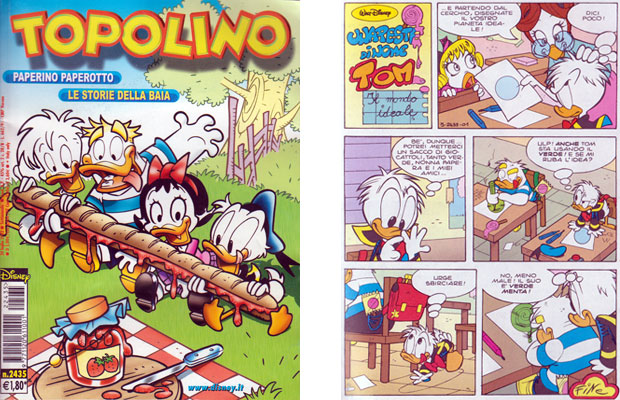
While these whimsical stories were meant for younger audiences they were balanced out by the more adventurous stories of Paperinik, the superhero alter ego of the adult Donald Duck.

Italian fans got tired of seeing Donald treated as a perpetual loser in the translated stories from the US. When the chance arose to create an original story they gave Paperino an alias that was far more heroic and adventurous than even Mickey Mouse. Paperinik was not unlike Batman in that the character relied on his guile and an array of gadgets to defeat a rogues gallery. Paperinik, the Duck Avenger in English-speaking countries and Papernika, the super alter ego of Daisy, had many colorful adventures over the years. The duo and other super-hero retellings of the icons had now been part of Disney comic canon for over 40 years.
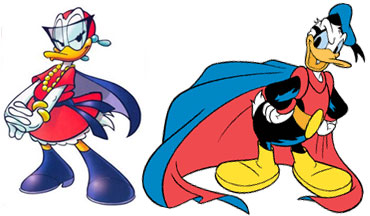
Both Paperino Paperotto and Paperinik demonstrated that the Italians were capable of taking classic characters into bold new directions and make them popular with the community. They also showed that the community would not be offended if changes to an iconic character were made, so long as the spirit of the original character were not compromised. Paperotto and Paperinik never crossed the line to make them anything other than Donald in a new form, the personality and temperament of Donald Duck still shown through the artistic facelift. The idea of remaking the Disney icons would be met by a collective groan from US cartoon fans.
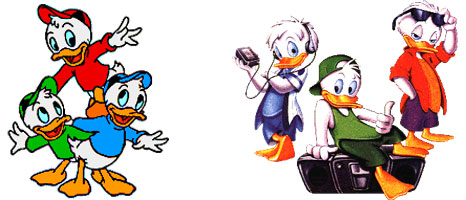
It usually meant that a producer with absolutely no artistic background was trying to remake the icons to fit a marketing trend. Characters would be dressed in street wear, try to speak hip and interact as if they were on a sitcom instead of looking or acting like their namesake characters. Worse the adventures or even shorter sincere stories featured in the classic cartoons or comics would be missed entirely. Take for example the Quack Pack cartoon as a “hip” version of DuckTales series. Thankfully the Italian creators did not seem to suffer from the same sense of creative amnesia. The next blog will explore the differences in canon enjoyed by the Italians in the pages of Topolino. Please return for that.

As always if you would like to sponsor me please visit my Patreon page and consider donating each month, even as little as $1 would help make better blogs and even podcasts!
follow the Street Writer on Patreon!

Friday, December 22, 2023

Where Mickey Mouse and friends are still alive and well - A 1UP classic from October 26, 2012

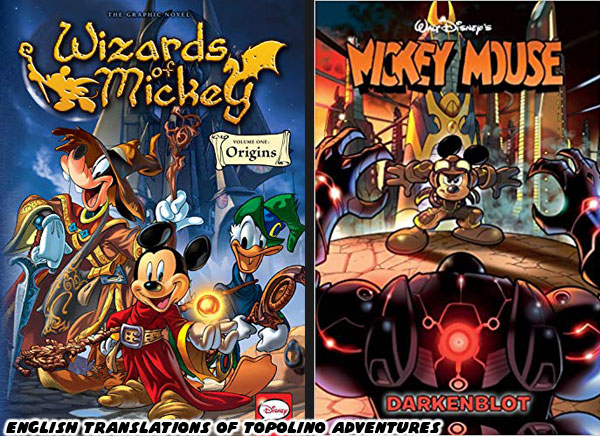
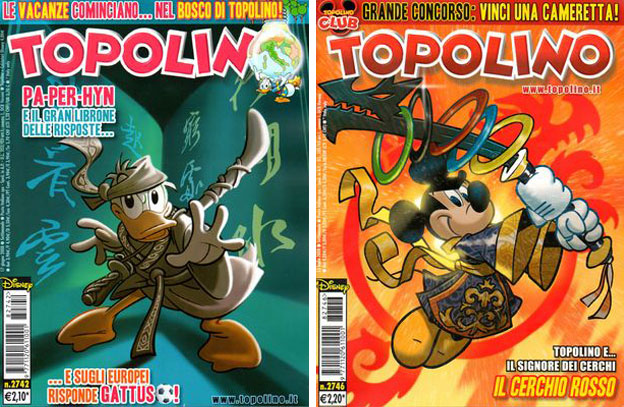
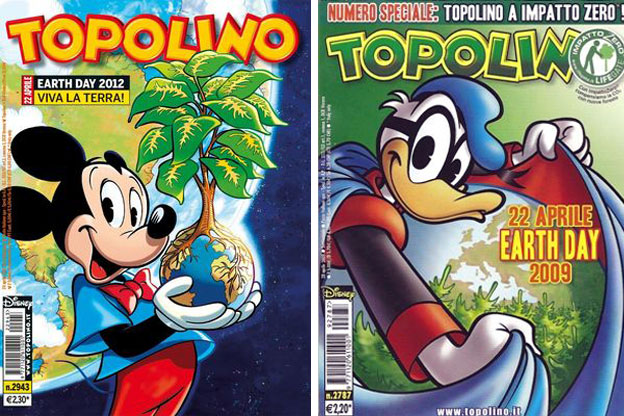
What is it about Topolio that makes the Disney characters accessible and relevant to audiences? A major part of it is having a monthly series dedicated to all of the characters written and drawn by some of the best creators in Europe. The publisher actually has a series of books dedicated to specific characters, trade paperbacks and even special hardcover editions for collectors. Like Marvel and DC in the US there are Topolino comics written for a very diverse audience. Unlike the comic book publishers in the USA the Topolino readers never feel left out because they missed a major event or story arc like Civil War or the New 52. The Disney characters are all familiar and although they might be set in the far future or fantasy setting audiences accept the story and situations at face value. They might be wizards in one story and then martial arts masters a month later, audiences never ask how or why this happened they simply enjoy the story.

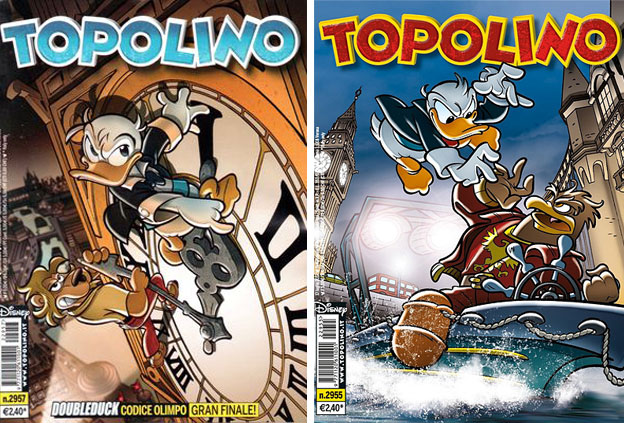
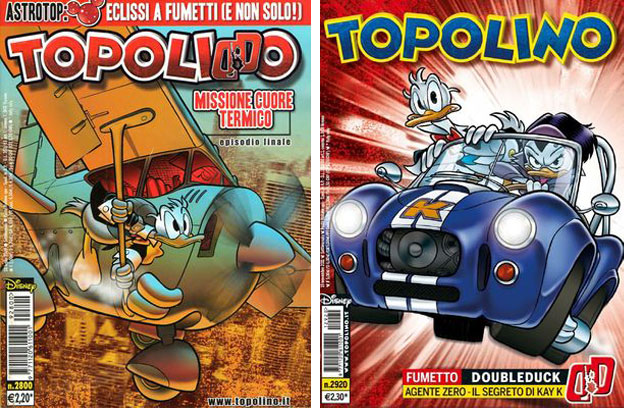
Comic books in the US are rooted in nonstop action, with sometimes violent or even frightening encounters for the heroes. Some of the Topolino stories keep pace with the Western traditions and place the Disney characters in peril month after month without creating a backlash from the community. Nowhere is this seen more than in the adventures of Double Duck. Casting Donald Duck as a super spy enables the character to be given a cadre of gadgets, and in rare cases a gun as well. He is sometimes joined by femme fatale Kay K while going on adventures that would make James Bond jealous.

By making a familiar Disney character an action star it instantly makes Donald more appealing and accessible to adolescent audiences. Every genre explored in the pages of Topolino shows readers that the Disney characters can fill any role and be written for any age. Classic stories like Romeo and Juliet, Dr. Faustus and the Three Musketeers have all worked when cast with Disney mascots. The stories and characters do not have to be "dumbed down" for children, and in fact younger readers may be offended if they do not see their favorite characters act like real heroes in the face of adversity.

It might sound obvious that Disney in the US should follow the Italians if they want to make the mascots more relevant to audiences. The US would actually have a hard time localizing Topolino or even following the template. Topolino has been in publication for almost 80 years. In that time it has never dumbed down the writing or reduced the roles for and of the characters. If anything Topolino has actually done more for the personalities of the Disney mascots than the parent company has in the past 25 years. Unfortunately some people they could never, ever, accept a universe where the mascots handled firearms. The old comic books published in the US and even some of the old cartoons used to feature the characters as cops, robbers, soldiers and western heroes. They were allowed to have shoot outs so long as nobody got hurt or no blood was ever shown. This was how a cartoon like GI Joe got on the air during the 80's.

Public perception of how the characters can be used may be the biggest obstacle in making them relevant in the US. Purists would never imagine an acceptable story in which Mickey or his friends handled a gun. In fact purists would never imagine seeing the character have much of a personality at all. Mickey and his friends should never have too strong of a range of emotions. They should be constantly smiling and ever happy to many in the USA. Topolino has never dumbed down the characters or turned them into simplistic babysitters. Over the decades the comics have tackled a diversity of subjects and have never steered clear of even controversial ideas.

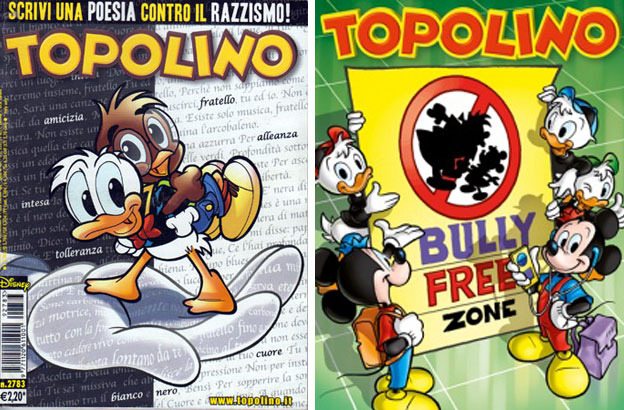
For example over the past decade some extremist fans of European football / soccer leagues had been the focus of sports media. Some clubs tolerated racist chants and iconography at matches. In a way to address this the comics talked about how friendships could be formed despite the differences of color. The books not only spoke out against racism they also let families know that they should speak up against discrimination. By aligning themselves with a progressive stance Disney was instilling very important values to their younger readers and earning the respect of older fans. Currently Topolino is running an anti-bully campaign. The stories teach ways to identify bullies and how to deal with them and what happens to people that are victims of bullying. The issues are able to communicate these ideas to young readers because the universe has many young characters they can identify with. Grade school characters Huey, Dewey, Louie and the slightly older Morty and Ferdie are very rarely seen in the US but are commonplace in Italy.

The comics in Italy go through a range of topics while managing to entertain as well. In one month they may have Donald Duck jumping out of an exploding helicopter and in the next he might be planting a tree in his backyard and teaching his nephews about conservation. Those that can get past the shock of seeing guns in the hands of cartoon icons would see that the books are not only well illustrated but also well written. Audiences identify with the mascot characters because they are written with distinct personalities. They are allowed to explore different genres and entertain readers at every level. Most important the comics are released month after month without exception. Movies and television shows may come and go but there was never a point where the Italians were without the Disney characters in print. Disney in the US could learn the importance of diligence from their overseas counterparts. As always if you would like to sponsor me please visit my Patreon page and consider donating each month, even as little as $1 would help make better blogs and even podcasts!

follow the Street Writer on Patreon!