Showing posts with label rockerduck. Show all posts

Monday, May 13, 2024

Disney, the Italian Legacy, final part - A 1UP classic from July 20, 2011

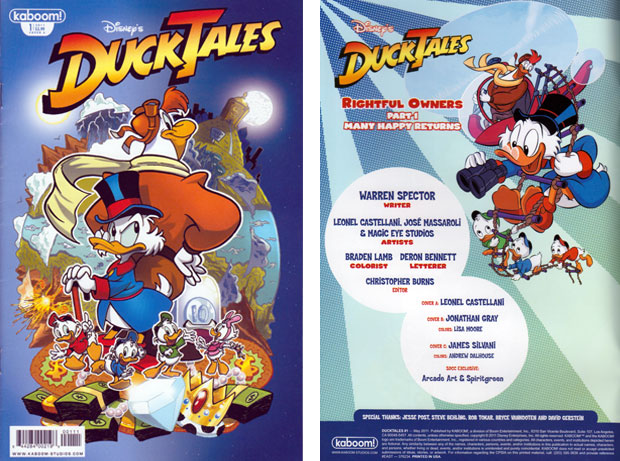
Warren Spector was passionate and knowledgable about the Disney universe, this message was obvious in Epic Mickey and his DuckTales story thus far. As a die-hard Disney fan he was familiar with the work on most of the television shows and especially the comic books. He knew the various incarnations of characters in comics produced domestically as well as overseas. Through Kaboom Studios Mr. Spector was able to find a good middle ground between the comic canon laid out by Carl Barks, the animated canon of DuckTales and the Eurpean take on the universe as well.

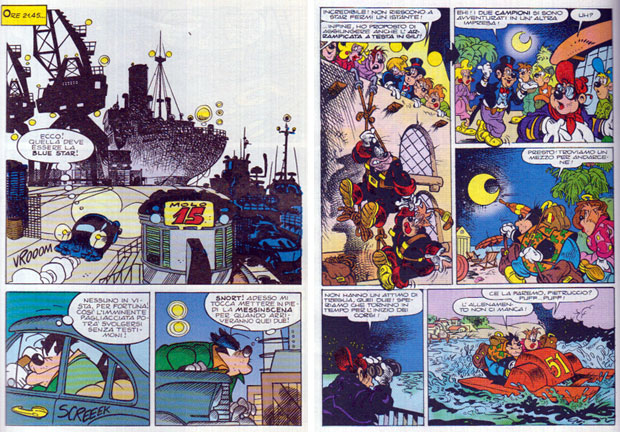
The first issue of Warren's DuckTales had a strong visual impact. This was because of the differences in coloring between American and Italian comics. In Italy the artists that worked on Topolino magazine were also the inkers and colorists. The magazine itself was full color but the turnaround time was very short. Each issue of Topolino averaged 180 pages which meant that artists had to have pages pencilled and inked at a rapid pace, leaving little time for artistic touches.
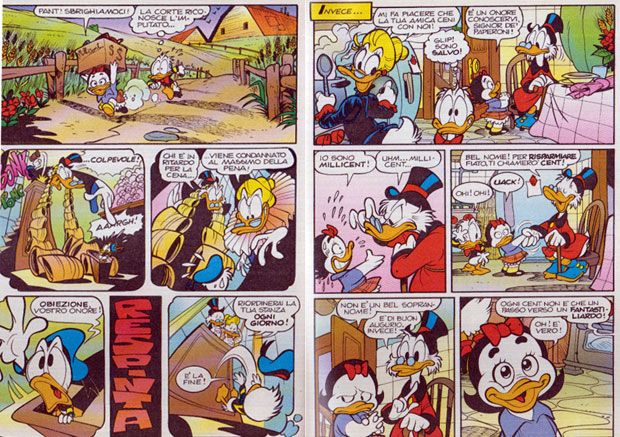
In the US most comic books averaged 24-36 pages and the inking and coloring duties were often delegated to specialists. This meant that the art on many US comics had a stronger visual impact than those featured in Topolino. The colors used in the various Topolino stories were solid and flat, there were almost no shadows, midtones or highlights on any character. The colors themselves were very bright but rarely did they have any gradation. The massive volume of pages turned out could explain why the art was minimalistic.

Some of the better artists in Topolino used rendering techniques in ink to create gradations for the panels while still using flat colors underneath. Unfortunately these artists and stylistic panels were few and far between. The best coloring jobs usually ended up on the covers or on promotional material.
Kaboom Studios went with western coloring team Magic Eye Studios for the pages of DuckTales. This same team helped color several of the other Disney comics published by Kaboom including Darkwing Duck. Many of the panels in Darkwing Duck for example took advantage of digital coloring effects. Characters could be colored, given highlights, shadows and mid-tones and then on top of that have lighting, transparencies and even blurs and weather effects added to the art. These were coloring effects that would have been impossible with the traditional techniques used in Topolino. Advances in digital coloring, effects, higher quality paper and digital presses allowed the art featured on the pages of Darkwing Duck and DuckTales to match the vivid style of the animated shows they were based on. At the same time these techniques were also more time consuming than those used overseas.
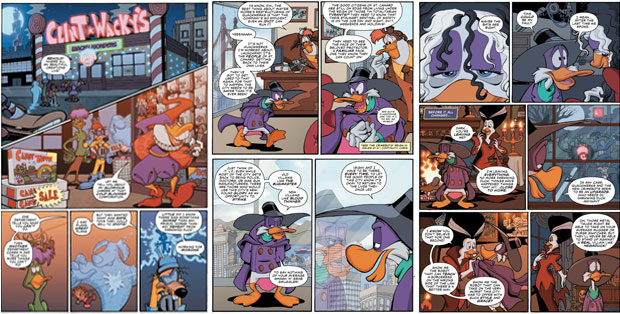
These advances weren’t cheap either, the cost on average for a comic book had shot up to $3. The trade off of quantity versus quality pages of art and story was worth it for US consumers. They had grown to expect a high level of visual impact in the graphics department, especially since digital coloring and magazine-quality paper had been a standard for over a decade.

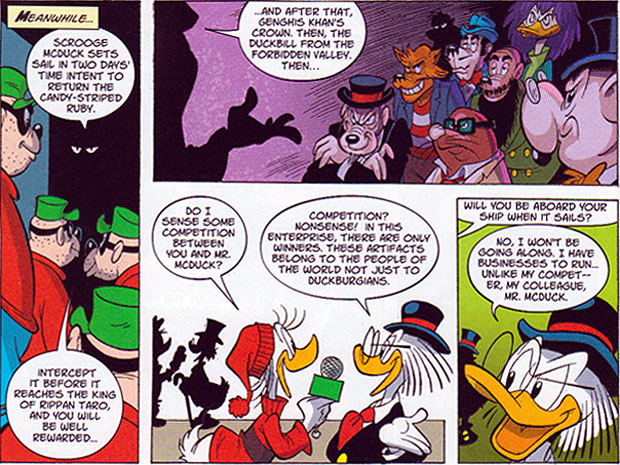
The Spector version of the DuckTales universe became much more interesting because of the choice for rival. Mr. Spector’s comic worked in regards to the Italian approach of villain choices Rockerduck was the tycoon with little respect for Scrooge’s hard-earned fortune. The fact that he was a younger and more impulsive mogul gave him a bigger chance for doing something brash to Scrooge.
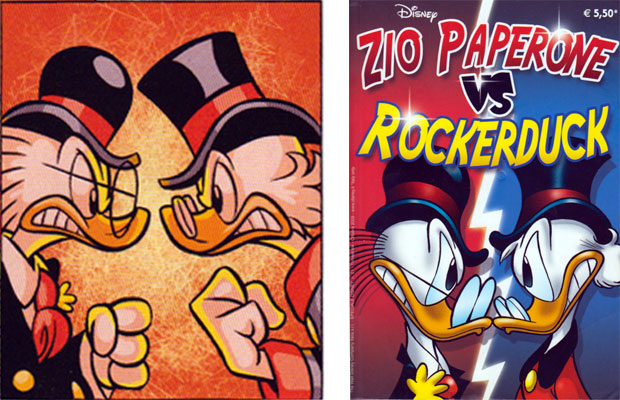
Warren slipped Rockerduck right into the start of story and kept pushing forward with the plot masterfully. He knew that readers unfamiliar with the character would pick up instantly if he was supported with great dialogue and shown doing something devious or underhanded later on.

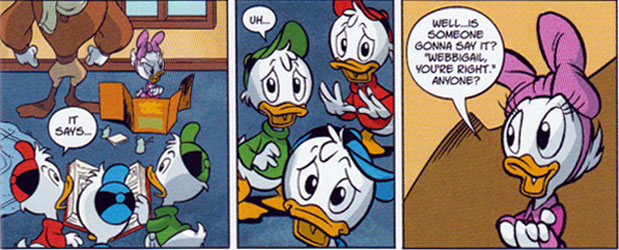
At the same time Warren did not completely ignore the established US canon for DuckTales. That was why he went with Webby as the character that could get the ball rolling on a new adventure. Her innocent voice would have sold the idea of returning treasure to the rightful owners. This plot could then easily unfold into a more grand adventure.
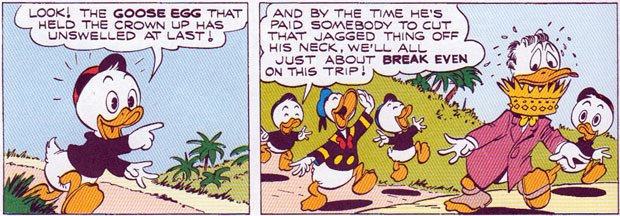
The story by issue #2, included a return to the island of Ripan Taro and a cameo from a giant jellyfish featured the classic Carl Barks story of The Status Seekers. Mr. Spector had filled the adventure with many nods to the classic comic adventures. The entire series thus far seemed to be rooted in a lot of nostalgia and material that had been covered in previous adventures. In the museum on the first issue of DuckTales the characters pass many treasures that had been gathered over the decades of the classic Barks stories. Scrooge even mentioned how some treasures were added to his collection from the adventures of other characters. Like how the crown that got stuck around Gladstone Gander’s neck in the Secret of Hondorica was now featured in the museum.
These nods to the canon established by Barks were great for fans of the comics but possibly lost to those that were only familiar with the cartoon series. Worse, the series thus far seemed to be a retread, if not several layers of retread material.

Don Rosa tied up my entire Italian Legacy theme. He was an Italian-Irish-Scottish-American whose full name was Keno Don Hugo Rosa and was named after his Italian grandfather Gioachino Don Rosa. Mr. Rosa was without a doubt the undisputed master of modern duck storytelling. He picked up all of the qualities that made the Carl Barks adventures memorable and then expanded upon them. He was able to connect the dots between actual historical events and phases through Scrooge's lifetime, all while managing to fold those adventures right into Barks continuity. Not unlike the research required to pull off historical Forrest Gump or Dan Brown sleight-of-hand. The problem for the Spector DuckTales comic was how similar it was to material created by Don Rosa. The whole idea of Scrooge having a museum display his treasures had been covered in the the story the Son of the Sun. Those first pages also managed to cram a lot of treasures from canon into the background. In that story Flintheart Glomgold, not Rockerduck, played the major villain.
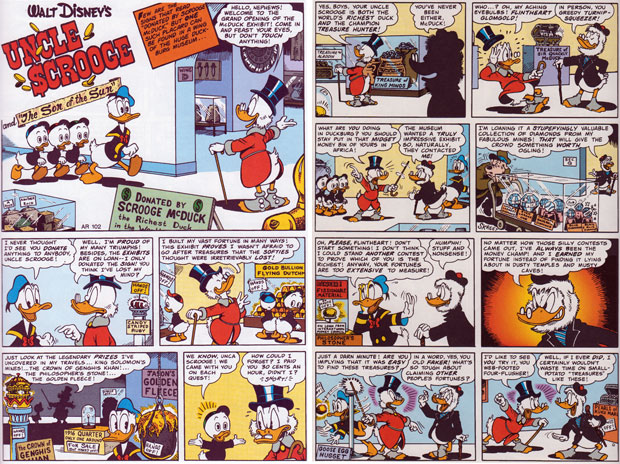
Flintheart challenged Scrooge to a treasure hunt instead of tricking him into returning the treasures. The winner of the bet would be the one who found the single greatest piece of Incan treasure. This allowed Rosa to revisit the Andes and craft a story that was in the classic vein but completely new to audiences. The story took place geographically in the same part of the world of an earlier story yet there was no overlap of specific locations or even supporting characters. The same could not be said of Spector's DuckTales story. It was the Status Seekers in reverse as it took the Candy Striped Ruby past a giant jellyfish to the island of Ripan Taro to be returned to King Fulla Cola. To be fair Don Rosa also revisited Barks locations and canon and in one story had even written the adventure path backward from the original story as well. 

In the story Return to Xanadu Scrooge, Donald and the nephews went on a new treasure hunt. The ducks used historical data and even the poem by Samuel Taylor Coleridge to track down a location for the final resting place of Kubla Khan. Scrooge knew the legends of the fabled location must have been true because he had the crown of Kubla's grandfather Genghis Khan. He had retrieved it from a Yeti hidden in the nearby Himalayan mountains. Most avid fans of the Barks universe knew that the ducks had never been to Xanadu in any prior story yet were eager to find out what Don Rosa was crafting.
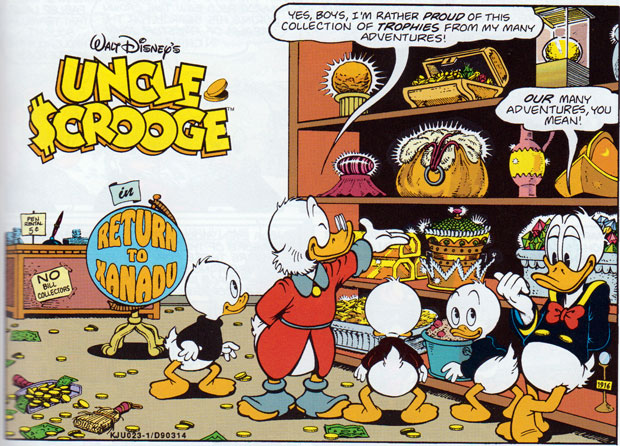
Rosa took the ducks across some very interesting and exotic locals and the entire journey supported the clues and historical data through winding mountain passes and hidden underground tunnels skirted by a river which went on for miles. Eventually the ducks came across an enormous underground reservoir and a bridge that had been destroyed leading up another tunnel. The poem suggested they were indeed following the right path because in order to reach Xanadu they had to go backwards through the locations described.

"It flung up momently the sacred river.

Five miles meandering with a mazy motion

Through wood and dale the sacred river ran,

Then reached the caverns measureless to man,

And sank in tumult to a lifeless ocean"

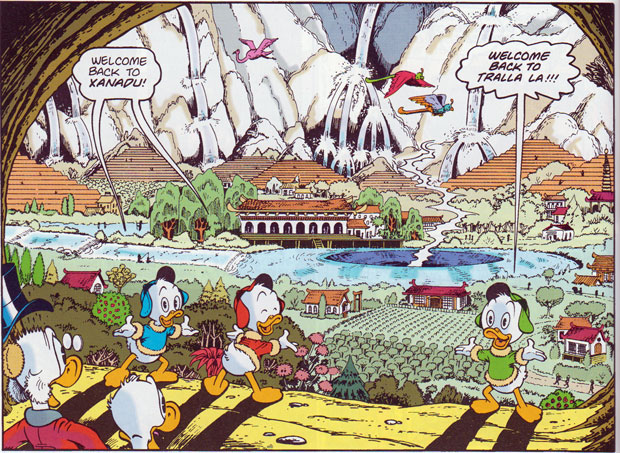
The ducks found a way across the river by damming the lifeless ocean and walking up another tunnel. What they discovered was breathtaking for both new and old fans. The hidden valley of Xanadu turned out to be the same one visited decades earlier called Tralla La in the Carl Barks Story Time To Dream. This serene place was in and of itself was a take on the hidden valley of Shangri-La. Don Rosa sublimely gave that valley a back door under the guise of a completely new treasure hunt. Where the story went from there was pure genius. I would be hard pressed to find a fan of the universe that saw this revisit of a classic location coming.
The DuckTales adventures by Mr Spector did not seem to have the same hidden path or "back door" to a greater adventure. In the two issues presented thus far everything was plainly laid out and foreshadowed with scenes featuring a saboteur. The art was fantastic, the nods to comic book and cartoon canon were great but the story did not seem to have enough substance. There was too much reliance on fanservice and nostalgia and not enough story construction. By comparison the pilot series of the DuckTales cartoon, the search for the Treasure of the Golden Suns was a fantastic and completely original adventure. Written by Jymn Magon, Bruce Talkington and Mark Zaslove the series captured the spirit of the Barks and even Rosa adventures without overlapping into any previous stories.

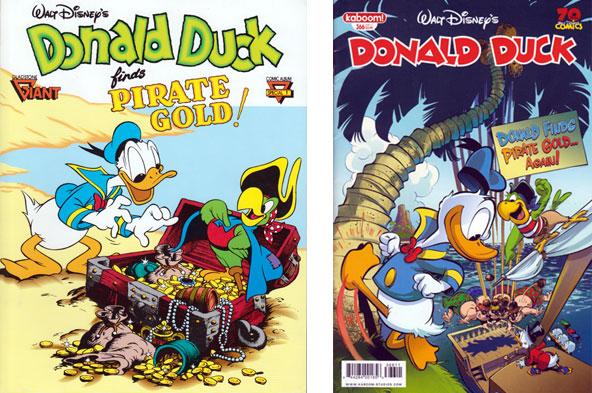
The lack of substance and reliance on established canon for the new DuckTales comics was indicative of some traps that other Disney comics were falling into. The stories were becoming too safe, too childlike rather than family oriented. Even the very first Carl Barks comic Donald Duck finds Pirate Gold! had recently been revisited by Kaboom studios in the story Donald Duck finds Pirate Gold… Again!
The DuckTales comics had just started and I was undoubtedly being too heavy handed with my criticism in this blog. However in order to make the series work with new and returning fans Mr. Spector has to take the rest of the series into some figurative and literal unexplored waters. For those stories I cannot wait. If you were a fan of the television series and want to rekindle those memories then you owe it to yourself to pick up this new series. They would be big hits for Disney fans, especially those that play games and read comics as a family. I hope you enjoyed this series. If you have any comments of questions please let me know.

As always if you would like to sponsor me please visit my Patreon page and consider donating each month, even as little as $1 would help make better blogs and even podcasts!
follow the Street Writer on Patreon!

Wednesday, May 8, 2024

Disney, the Italian Legacy, part 7 - A 1UP classic from July 19, 2011

Kaboom studios was working with Warren Spector on a new DuckTales comic. They wanted the title to rekindle the themes and characters from the animated show as well as call up the great adventures featured in the comics. Italians Leonel Castellani, Jose Massaroli working with Magic Eye Studios handled the art duties. Other Kaboom Studio artists like James Silvani were tapped to do alternate covers.

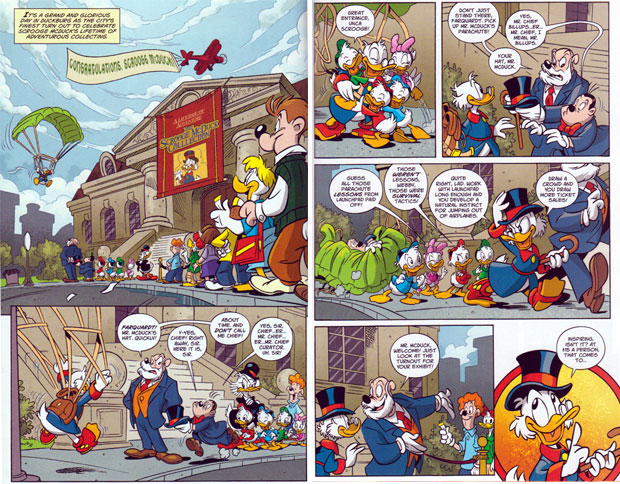
The story "Many Happy Returns" started off with a bang. Scrooge McDuck jumped out of a plane piloted by Launchpad McQuack. Scrooge then parachuted into the opening of a museum exhibit featuring the treasures from his collection. The nephews Huey, Dewey and Louie as well as Webby Vanderquack were waiting for him. They jumped on Scrooge and lavished him with affection The heart of the animated series was very much based on the relationship between the kids and Scrooge. Mr. Spector, a self proclaimed fan of the series brought this up right away.

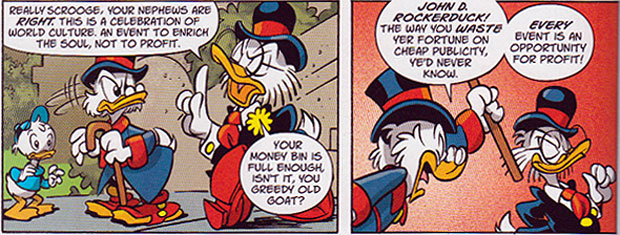
At the the museum the ducks were met by Curator / Chief Billups and his assistant Farquardt. John D. Rockerduck, one of Scrooge's oldest enemies was also waiting. This was where Mr. Spector's story differed from DuckTales continuity. Flintheart Glomgold played the villain in most of the DuckTales episodes, whereas Rockerduck never even appeared on the show. Mr. Spector began building the rivalry between the two tycoons for readers. The core of each personality would be played up in the dialogue so that even if a reader had never heard of Rockerduck they would understand that he was a major player in Duckburg.

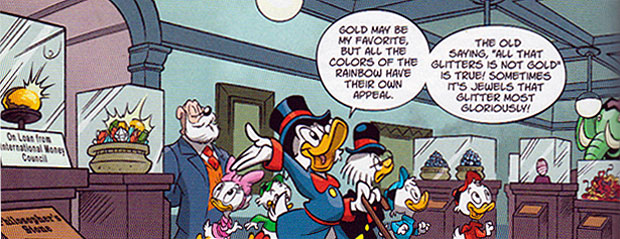
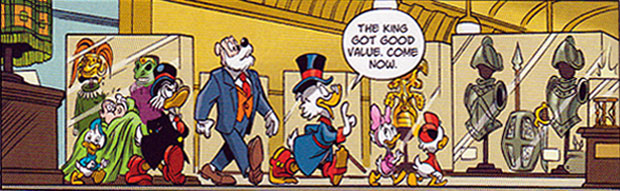
The group went through the museum where the kids questioned Scrooge on his collection and where Rockerduck challenged the purpose of showing it off. The panels illustrated within the museum were filled with tremendous detail. The various treasures the ducks had chased in previous stories were almost all present, if not mentioned in dialogue. Such as the The Fabulous Philosopher’s Stone, the Crown of the Mayas and a golden coat made from the mythological material featured in the Golden Fleecing story. From the earliest Bark's stories to the most recent Don Rosa adventures, if it was in canon then chances are it was on display in the background for all the fans to enjoy.

Webby questioned Scrooge if some of his treasures were gotten through unfavorable dealing. In one adventure Scrooge had traded King Fulla Cola on the island Ripan Taro some candy for a Candy-Striped Ruby On that island money was useless so Scrooge could not buy the Ruby outright. The sign of status for the island natives was in having a large belly, so Scrooge was able to able to barter the empty calories found in candy to King Fulla Cola. Scrooge defended his actions to and kept the group moving through the museum. Eventually they came across some rare creatures that Scrooge had also managed to bring back on his adventures, including the cantankerous unicorn from the Trail of the Unicorn story and a dinosaur from a latter story. All heck broke loose until Launchpad was able to separate the stampeding beasts.

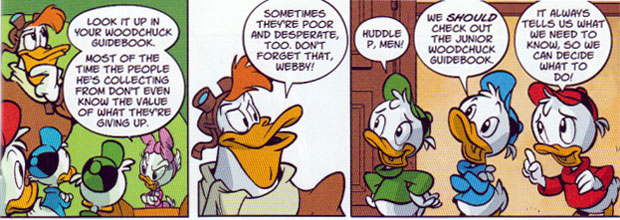
At a reception party afterwards in the McDuck mansion the young ducks and Launchpad were seen playing the pencil and paper RPG Ducks and Danger. As the game master Webby was trying to convince the adventurers to return the treasure they had been collecting. She challenged the triplets by offering the idea that ill-begotten treasure was nothing more than stealing. The right thing in her mind was to return what had been taken. If that moral worked in the game then it should have worked in real life. Again Mr. Spector demonstrated an understanding on the subtle relationships in the DuckTales universe. Webby often acted as a moral compass for the characters and especially Scrooge. In many episodes her diminutive voice acted as a conscience for Scrooge, not unlike Jiminy Cricket did for Pinocchio.

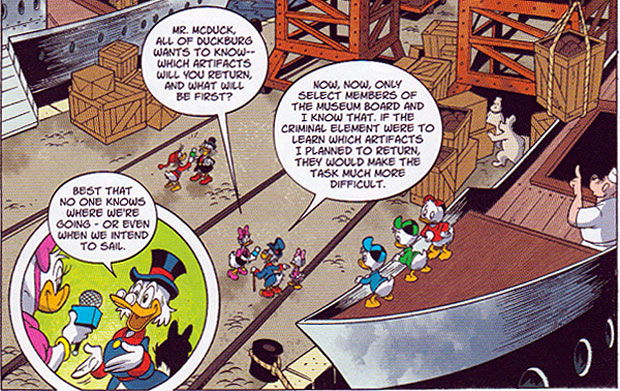
Webby argued that the right thing to do was convince Uncle Scrooge to return the treasure to their rightful owners It was a noble idea, yet there was a mysterious person wearing a bowler hat and standing out in the hallway eavesdropping on the conversion. When the kids approached Scrooge about returning the treasure he said it was a preposterous idea. That was until he learned that Rockerduck was conducting a press interview stating that he was returning the treasures he had collected back to their rightful owners. He publicly challenged Scrooge to do the same.

It was obvious to most readers that Rockerduck was baiting Scrooge for a big showdown. Scrooge accepted the challenge and even offered to return two artifacts for every one of Rockerduck's. Scrooge saw this as an opportunity to prove that he was a better philanthropist on top of being a better businessman and would prove that to the media.

The first part of the adventure ended on the docks where Scrooge was beginning his first journey with Webby at his side. Daisy Duck and Fethry Duck made cameos as news reporters while on the other side of town a mysterious figure had gathered members of the underworld, including not only villains from Duckberg but also from the nearby St. Cannard better known as the home of Darkwing Duck! These criminals were told the locations and order for the treasures to be returned. Each of the named treasures harkened back to a classic adventure and possibly gave readers a hint as to how long the series was expected to run.

Fans of the DuckTales animated series should consider looking into these comics. They contained the same spirit of adventure and fantastic premises which earned the show a strong following. Fans of the classic Disney comics might not be as interested in the books because they seem to be retreading a lot of material. The next blog will explore the good and bad things going for the Warren Spector comic. I hope to see you back for that.

As always if you would like to sponsor me please visit my Patreon page and consider donating each month, even as little as $1 would help make better blogs and even podcasts!
follow the Street Writer on Patreon!

Monday, April 22, 2024

Disney, the Italian Legacy, part 2 - A 1UP classic from July 11, 2011

The Italians were noteworthy not solely for creating new interpretations of classic characters like Paperinik and Paperotto, but also for diverging from USA Disney canon. For example, in the USA the character of John D. Rockerduck was introduced once by Carl Barks into the Uncle Scrooge adventure the Boat Busters to help push along a plot. Rockerduck was a fellow business tycoon and he challenged McDuck to a race to find out who sold the better gasoline. Donald Duck won the race on behalf of Scrooge but was unfortunately using Rockerduck’s gasoline. In the USA the character would not be seen again save for a cameo in a “Life and Times” story by Don Rosa. Most Disney fans in the USA would recognize that Flintheart Glomgold was the older character, meant to be business rival and mortal enemy of Scrooge McDuck. Yet even Scrooge McDuck was also once meant as a one-shot character in the Bark’s universe. It was not until the character was revisited and fleshed out that he became a comic icon. In Italy and in other European stories John Rockerduck would be brought back and fleshed out as well.

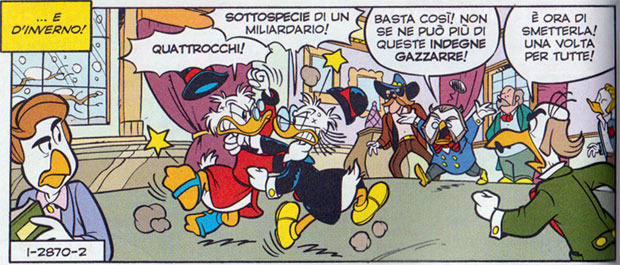
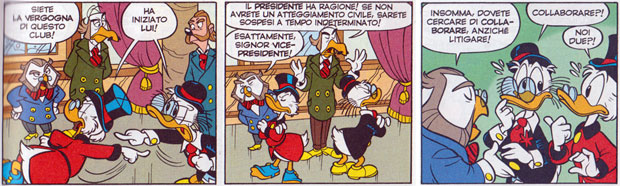
Rockerduck instead of Glomgold would take a starring role against Scrooge. The design and appearance of the character was in fact meant to balance out Scrooge more than Glomgold. Visually Rockerduck’s suit, hat, tie, glasses and sideburns were more contemporary than Scrooge’s. Rockerduck was a brash younger tycoon that did not seem to value his wealth in the same way as McDuck. His fortune was handed down by his father Howard Rockerduck, a self-made business man that helped mentor a young Scrooge decades earlier. John Rockerduck had a different approach to his business empire than Scrooge did. He believed that it took spending money in order to make money, whereas Scrooge was a notorious hoarder and penny pincher. In the comics the ducks rarely got along and were constantly getting into fights while trying to prove who was the superior businessman.

To settle things in fumetti both ducks often had a wager, this part of canon was preserved from the original Barks story. The bet was rarely over money but instead prestige in the clubs for which both ducks were members of. The loser for most of the contests had to eat their own hat. Rockerduck was often presented chewing on the brim of his bowler hat, if not for the contest bet then because he was completely fed up with Scrooge.

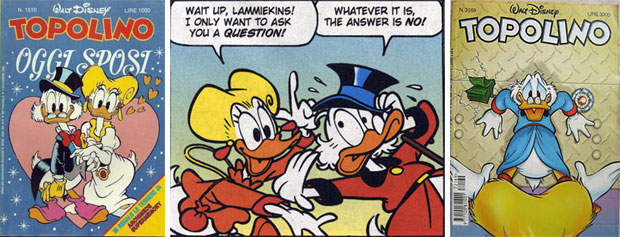
As if one powerful tycoon rival was not enough for the pages of Topolino, a second was added shortly after Rockerduck. The Italian Marco Rota added Brigitta MacBridge to canon in 1960. Similarly to Rockerduck and Scrooge she was originally introduced to help push along a single story. She turned out to be a memorable character and would return again and again to drive Scrooge mad.

In canon she was an old acquaintance of Scrooge and was absolutely crazy about him. She was also good friends with Daisy Duck and would often cross paths with Donald and his uncle. She was convinced that the two were meant to be together. As a self made business tycoon she was clearly not in it for Scrooge’s money either.

Brigitta would often hatch a plot to try to get Scrooge to confess his feelings for her, or worse, to trick him into getting married. This character seemed to balance out the Rockerduck dynamic. Both were constantly trying to undo Scrooge for their own gain. Both had enormous fortunes so that they could keep up with Scrooge no matter where he went or what business he got into. Brigitta’s appearances were thankfully more comedic than dramatic though.

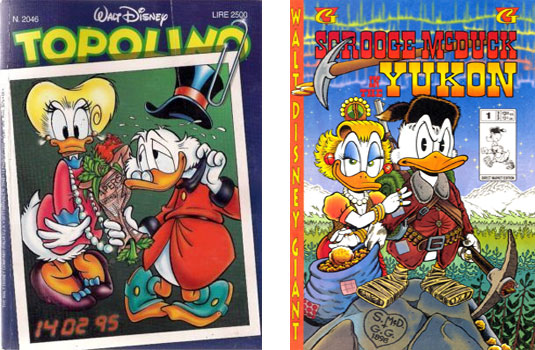
Yet many western audiences were not fans of the Brigitta character, or even aware of her. Scrooge had a female rival years before Brigitta, someone that was not falling over Scrooge at every instance but instead his equal, not in a monetary sense but in personality. Italians would have to ignore one of Carl Bark’s greatest creations, Goldie O’Gilt aka Glittering Goldie, in order for Brigitta to be his main female lead.

Goldie was a rival for Scrooge during his formative years in the Yukon. Over several seasons of hardship the two would grow to respect each other and more important to develop feelings for the other. Unfortunately both were too proud and stubborn to ever admit to those feelings. Scrooge left the Yukon behind and seemingly his heart as well. In flashbacks Scrooge would think fondly of his time spent up north. Goldie would always consider Scrooge the one that got away. This interesting dynamic left audiences wanting for closure to a relationship half a century in the making.

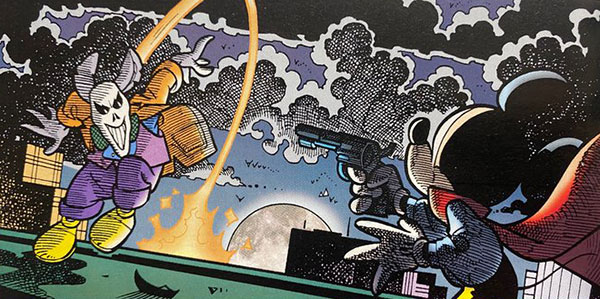
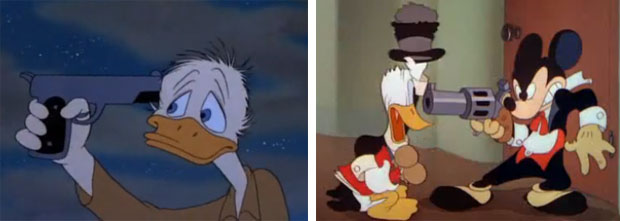
Adding superhero alter egos to established characters and creating new relationships within the canon were some of the major contributions by the Italians. One of the more controversial elements featured in the pages of Topolino, the inclusion of firearms in some of the stories, would have been a hard sell to American audiences, especially licensors and Disney stock holders. Many in the US would have never imagined seeing an icon like Mickey Mouse handling a weapon, let alone be threatened by one in a comic or cartoon.

Yet guns had appeared for decades in Disney comics in the US and even animation. For example when Glittering Goldie wasn’t flirting with Scrooge she was shooting him with a shotgun. This happened in both the cartoon and comic books.

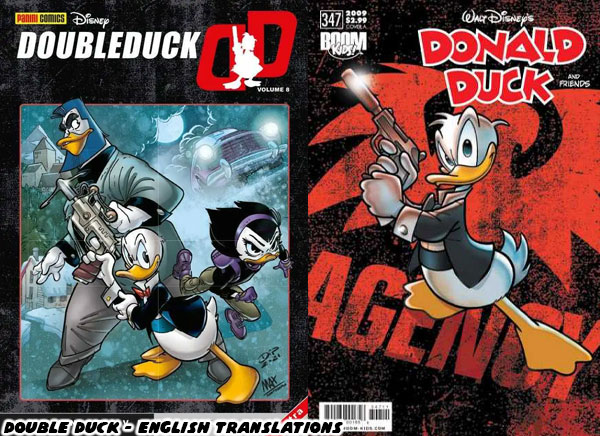
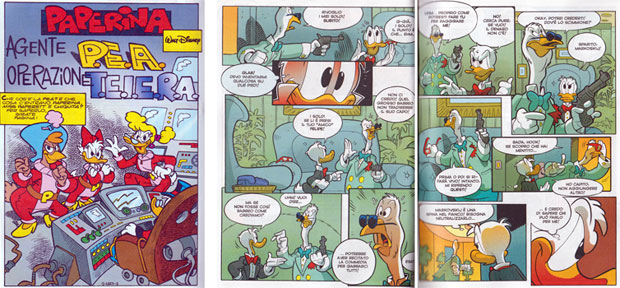
This revelation was not to say that weapons were commonplace in fumetti or other European Disney comics. If and when they showed up they fit the form of the story and certain mature themes. Paperino for example had an alter ego as a spy. In addition to being Paperinik Donald also had the responsibility as a spy for his country, known to fans as Double Duck. In the Double Duck (DD) stories sometimes a villain showed up carrying a weapon, sometimes DD had to also carry one along with his tuxedo ala James Bond. Very rarely did these comics have shoot outs and never were any of the characters depicted as getting shot or injured during the battles. The violence of the weapon was implied rather than shown. A gun served as a tool to intimidate not as an excuse by artists to draw graphic violence.

Boom Studios actually published the DD stories in the US and did not censor out the guns as most had expected them to. Many in the west could not imagine an icon being threatened with a firearm but the precedence was set in the earliest Disney short films. Donald was once threatened with a gun by Mickey Mouse in the 1942 film the Symphony Hour. Not to mention the time Donald Duck tried to commit suicide by handgun in the 1943 film the Old Army Game or that Daisy Duck tried to do the same in 1947’s Donald’s Dilemma.

Disney Studios once used firearms in their animated projects and comics only now they seemed to shy away from any form or actual or implied violence. Topolino also used firearms but they certainly never put them flush to the temples of the icons as if they were in any real danger.

If Topolino and fumetti in general were geared only towards children then the writers and artists would certainly never have presented any weapons in the stories. At the same time they would never have produced as many memorable stories and adventures because of their audience. They would not have advanced the art of cartooning or showed how Disney comics could be written for every age.

These were a few examples of the creative risks that the Italians took in the pages of Topolino. These were things that would not have been allowed if the comic were limited to a specific audience.

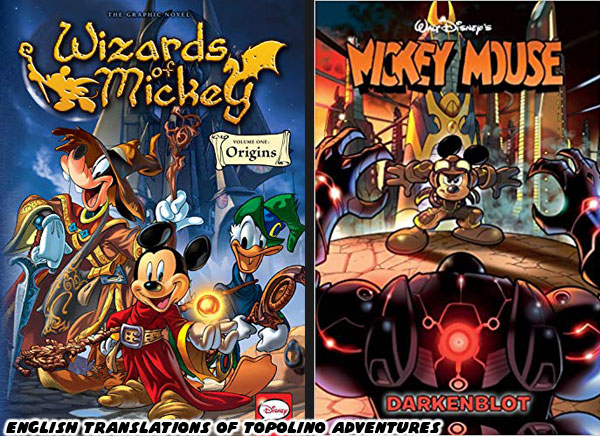
There was a major difference between how Disney was perceived and marketed in the USA versus Italy, or for that matter the rest of the world. Topolino was family entertainment. The comics and anthologies could be enjoyed by both kids and adults. Best of all the fumetti brought the characters to life. The Disney cartoon icons as well as original characters were featured in ongoing stories. These were certainly not reprints for aged collectors but living, breathing volumes. Not every Disney comic published in Europe was approached in the same way.

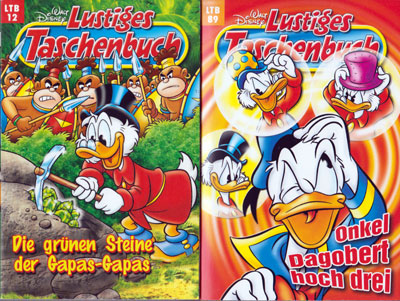
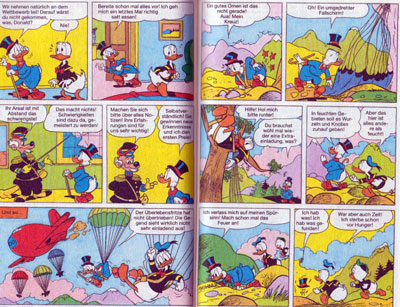
In Germany for example the anthologies featuring the Disney characters could be picked up in local bookstores. These simple 4-color books featured reprints or stories, most meant for kids with very little done in production value. Colors bled into each other and no sort of cleanup was done to enhance the original art. These issues were stale and formulaic when compared to the work featured in the fumetti.

Other European countries did not settle for reprints. They were as passionate about the Disney comics and cartoons as anywhere else in the world. For example Donald Duck cartoons were viewed on Christmas Eve in Sweden as a tradition. Additionally fellow game writer Audun Sorlie mentioned how most stores in Scandinavia did not have a few Disney comics but instead had entire racks filled with the books.

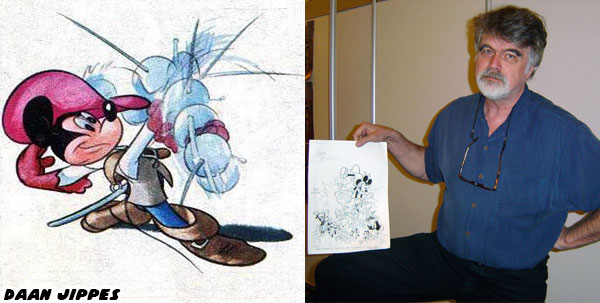
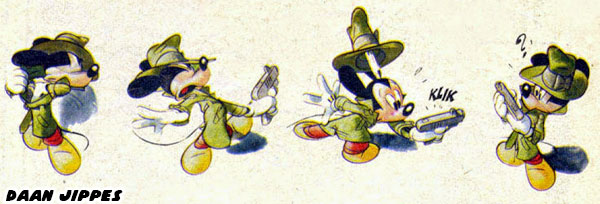
These countries would develop new stories and art for the Disney books. However unlike the Italians the writers and artists from Northern European countries tried very little to deviate from the art and storytelling elements established in early comics. They would go so far as to look for artists that could draw in the same style as the classic Disney cartoonists. Of these artists none was better than Amsterdam's own Daan Jippes. Daan was an exceptional artist that could emulate the styles of the American masters, including Floyd Gottfredson and Carl Barks.

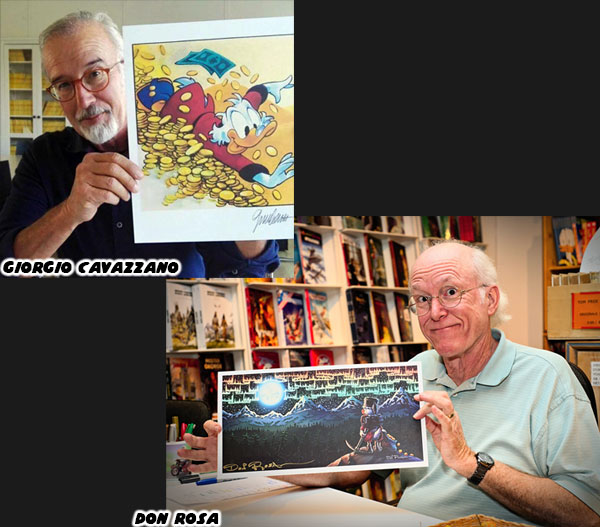
He was so good at emulating the Barks style that he was contracted to redraw stories written but not illustrated by Barks from the 1970's into new collections for the 1990's. Daan Jippes was considered a master of modern comics alongside the US's Don Rosa and Italy's Giorgio Cavazzano. The preference by the Scandinavians for classic characters and little deviation from the Barks canon meant that many of their comics progressed very little, as if they were stuck in a time loop. The Italians had a different perspective, while they respected the work of the early artists they pushed forward into new territory.

Even if the parent company in the USA had not released any new comics or animation featuring the Disney characters in decades they were all still fresh in the pages of the fumetti. Disney in Italy managed to keep the mascots relevant by allowing them to grow within the pages of Topolino. They were willing to introduce new characters and re-imagine classic characters equally. They enticed new collectors by offering toy sets with subscriptions and held onto long-time fans by maintaining a high level of quality in art and storytelling. In the USA most cartoon comics were labeled and marketed towards children specifically. The US publishers did not go out of their way to appeal to diverse audiences or interests. Nor did they offer any toys or figures featuring rare mascots. As such the Disney comic market in the US was nowhere near as big as it was in Europe.

As any business analyst could tell you the best and most successful forms of Disney entertainment were family oriented rather than obsessively kid-friendly. This distinction between entertainment for children and entertainment for families was too often missed by studios, not solely Disney. Mistaking comics and even videogames as a medium for children instead of for families did nothing to help promote the titles. Producing little content in print and toy form for fans and followers above the age of 10 also hurt the brand in the USA. This lack of connection with audiences and the lack of any new content featuring the icons was stifling. The Italian contribution to making the Disney name relevant was not limited to comics either. The next blog will explore how publishers were able to help keep the mascots fresh with collectibles. As always if you would like to sponsor me please visit my Patreon page and consider donating each month, even as little as $1 would help make better blogs and even podcasts!
follow the Street Writer on Patreon!