Showing posts with label italian comics. Show all posts

Monday, May 6, 2024

Disney, the Italian Legacy, part 6 - A 1UP classic from July 19, 2011

When Epic Mickey was under development Disney in the USA used it as a vehicle to reach out to the community. They wanted to remind younger audiences why Mickey Mouse was an icon. The studio wanted to show them why the mouse had international appeal, even decades after his introduction. The concepts of selflessness, friendship and loyalty that made Mickey famous had to be made clear. In order to reach the younger generations the studio had to tap into their primary forms of entertainment, videogaming was the obvious one, yet comic books were also a contemporary form of entertainment that the studio could use as well.
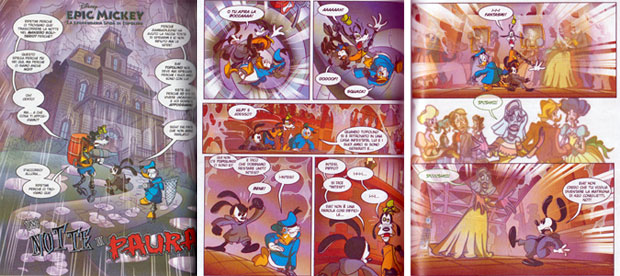
While Warren Spector penned the outline for the Epic Mickey game, fellow Disney fan, comic book veteran and Eisner Award Winner Peter David was hired to write the story in comic book form. These were set to be a series of adventures that took place before the videogame, titled “Tales from the Wasteland.” In the US the comics were distributed digitally using the Disney DigiComics service, available via the iTunes store. Those with an iPhone, iPod or iPad could download the comics for free. The actual collected stories would not appear in graphic novel format until almost year later.

The decision to distribute comics digitally did not make a lot of sense to comic or videogame fans. Perhaps the studio did not want to have the stories get lumped together with the children’s comics in stores. By going all digital they ensured that part of the target audience would have direct access to the story without having to hunt for issues.
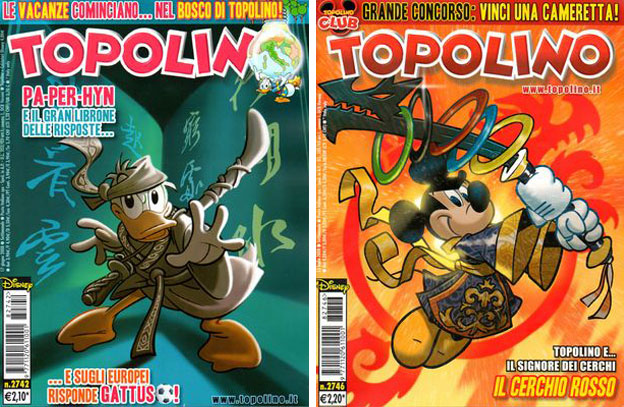
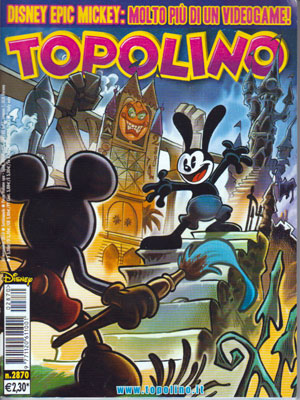
At the same time the stories were made available digitally they were published physically overseas in the pages of Topolino.

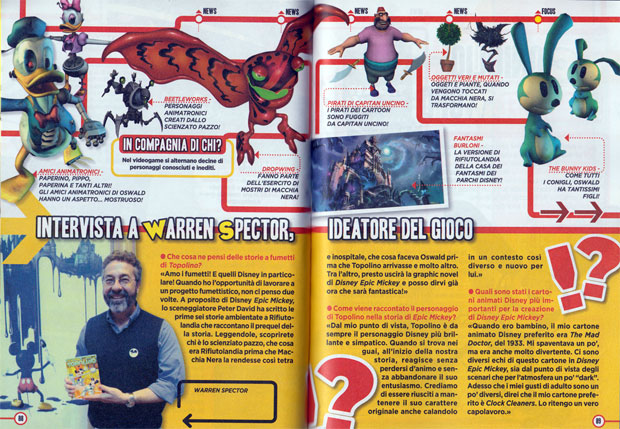
In keeping with Topolino magazine tradition there was a multi-page blowout about the game, plot and interviews with Warren Spector. Epic Mickey concept art, characters and history were featured before audiences got a chance to read the first in a series of adventures.
In order for Disney to accomplish their goal of reaching audiences via the comic book medium the best option was to go to Italy. Very few comic book artists working in the USA were trained in the Disney style or had any experience drawing Disney Comics. Italy was the one place where Disney comics were being published regularly and developed with a strong attention to detail.

Peter David got most of the attention in the US media outlets yet the art staff was just as accomplished. Fabio Celoni and Paolo Mottura were veterans from the pages of Topolino. They trained with the Disney Academy and had experience drawing just about every character in the universe at one point or another through their careers Their styles were not quite classic but more of a modern cartoon style instead. They helped bring Epic Mickey to life for fans on both sides of the Atlantic. The stories laid out by Mr. David were fun and took many chances to call out the classic attractions that would be highlighted in Epic Mickey. He was able to incorporate the most memorable elements that visitors saw at each attraction. For example the ballroom scene and bride from the Haunted Mansion were incorporated into the story. 
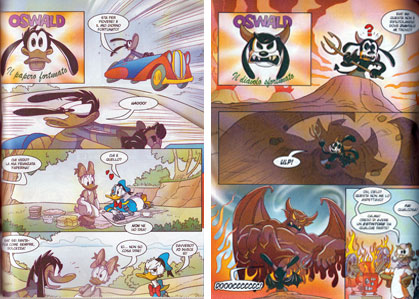
The lovelorn bride chased Oswald and the mechanized Donald and Goofy around the inside of the mansion as well as through the graveyard on floating “Doom Buggies.” Fabio and Paolo did a great job making cartoon versions out of the classic Marc Davis designs. Although they were ghosts none were too macabre as to scare off younger readers. Mr. David also wrote in Oswald trying to fill in the shoes of other classic characters. Instead of Donald Duck they tried out Oswald the Lucky Duck. Instead of Chernabog, the large demon at the end of Fantasia, Oswald tried his best at being menacing. Neither roles really worked for the rabbit. The classic squash and stretch reactions rendered by the art team did work in his favor though.
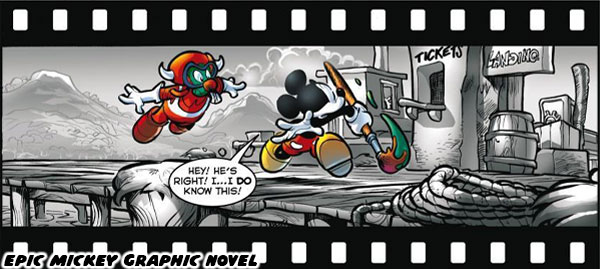
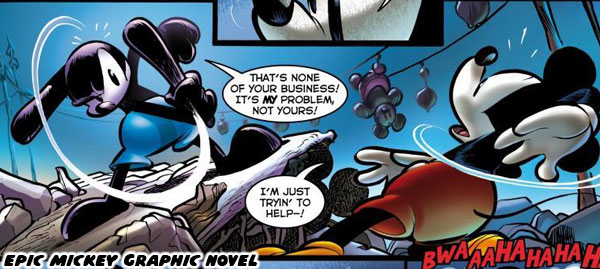
The collaboration of US writing and Italian art worked in favor of the Tales from the Wasteland. In a few months those that did not get a chance to read the digital downloads will be able to buy the collected graphic novel. This will include concept art from Junction Point and additional notes from Warren Spector and Peter David. The collection will be published by Disney Press instead of Boom Studios.

Not to be outdone Boom Studios, or rather Kaboom Studios had started publishing an all new series written by Warren Spector and penciled by other Italian greats. The next blog will take a look at the new DuckTales comic book adventures. I hope to see you back for that. As always if you would like to sponsor me please visit my Patreon page and consider donating each month, even as little as $1 would help make better blogs and even podcasts!
follow the Street Writer on Patreon!

Friday, December 22, 2023

Where Mickey Mouse and friends are still alive and well - A 1UP classic from October 26, 2012

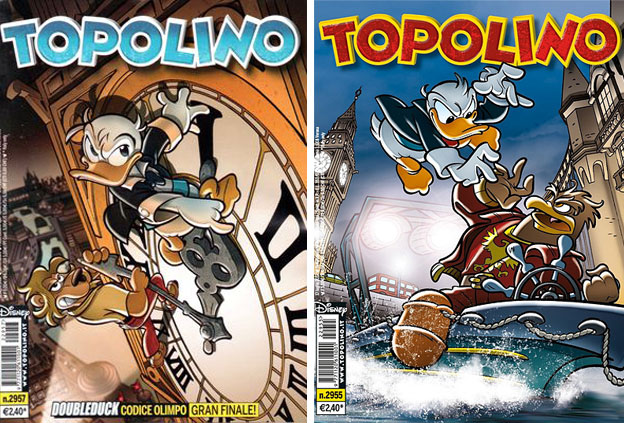
What is it about Topolio that makes the Disney characters accessible and relevant to audiences? A major part of it is having a monthly series dedicated to all of the characters written and drawn by some of the best creators in Europe. The publisher actually has a series of books dedicated to specific characters, trade paperbacks and even special hardcover editions for collectors. Like Marvel and DC in the US there are Topolino comics written for a very diverse audience. Unlike the comic book publishers in the USA the Topolino readers never feel left out because they missed a major event or story arc like Civil War or the New 52. The Disney characters are all familiar and although they might be set in the far future or fantasy setting audiences accept the story and situations at face value. They might be wizards in one story and then martial arts masters a month later, audiences never ask how or why this happened they simply enjoy the story.

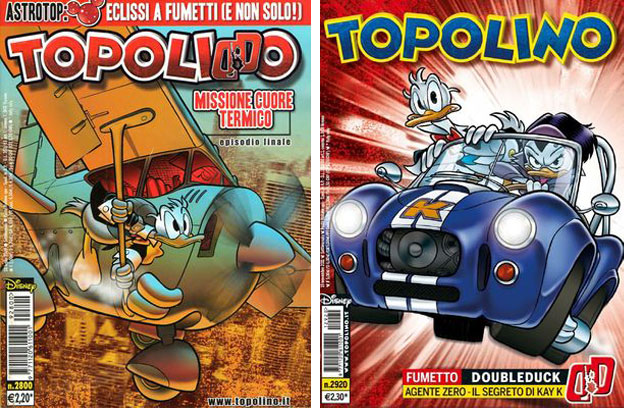
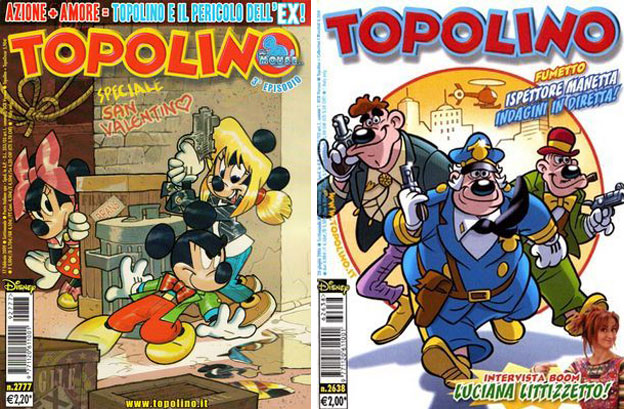
Comic books in the US are rooted in nonstop action, with sometimes violent or even frightening encounters for the heroes. Some of the Topolino stories keep pace with the Western traditions and place the Disney characters in peril month after month without creating a backlash from the community. Nowhere is this seen more than in the adventures of Double Duck. Casting Donald Duck as a super spy enables the character to be given a cadre of gadgets, and in rare cases a gun as well. He is sometimes joined by femme fatale Kay K while going on adventures that would make James Bond jealous.

By making a familiar Disney character an action star it instantly makes Donald more appealing and accessible to adolescent audiences. Every genre explored in the pages of Topolino shows readers that the Disney characters can fill any role and be written for any age. Classic stories like Romeo and Juliet, Dr. Faustus and the Three Musketeers have all worked when cast with Disney mascots. The stories and characters do not have to be "dumbed down" for children, and in fact younger readers may be offended if they do not see their favorite characters act like real heroes in the face of adversity.

It might sound obvious that Disney in the US should follow the Italians if they want to make the mascots more relevant to audiences. The US would actually have a hard time localizing Topolino or even following the template. Topolino has been in publication for almost 80 years. In that time it has never dumbed down the writing or reduced the roles for and of the characters. If anything Topolino has actually done more for the personalities of the Disney mascots than the parent company has in the past 25 years. Unfortunately some people they could never, ever, accept a universe where the mascots handled firearms. The old comic books published in the US and even some of the old cartoons used to feature the characters as cops, robbers, soldiers and western heroes. They were allowed to have shoot outs so long as nobody got hurt or no blood was ever shown. This was how a cartoon like GI Joe got on the air during the 80's.

Public perception of how the characters can be used may be the biggest obstacle in making them relevant in the US. Purists would never imagine an acceptable story in which Mickey or his friends handled a gun. In fact purists would never imagine seeing the character have much of a personality at all. Mickey and his friends should never have too strong of a range of emotions. They should be constantly smiling and ever happy to many in the USA. Topolino has never dumbed down the characters or turned them into simplistic babysitters. Over the decades the comics have tackled a diversity of subjects and have never steered clear of even controversial ideas.

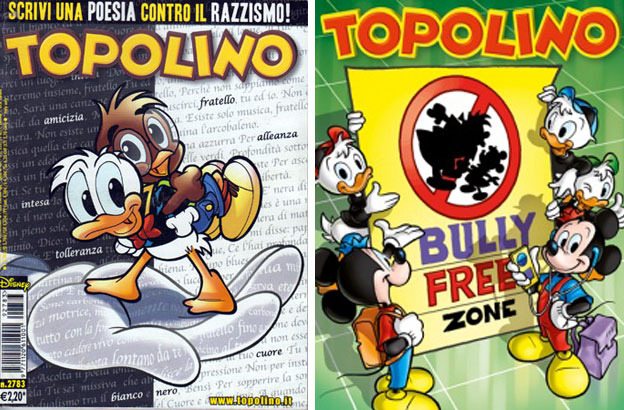
For example over the past decade some extremist fans of European football / soccer leagues had been the focus of sports media. Some clubs tolerated racist chants and iconography at matches. In a way to address this the comics talked about how friendships could be formed despite the differences of color. The books not only spoke out against racism they also let families know that they should speak up against discrimination. By aligning themselves with a progressive stance Disney was instilling very important values to their younger readers and earning the respect of older fans. Currently Topolino is running an anti-bully campaign. The stories teach ways to identify bullies and how to deal with them and what happens to people that are victims of bullying. The issues are able to communicate these ideas to young readers because the universe has many young characters they can identify with. Grade school characters Huey, Dewey, Louie and the slightly older Morty and Ferdie are very rarely seen in the US but are commonplace in Italy.

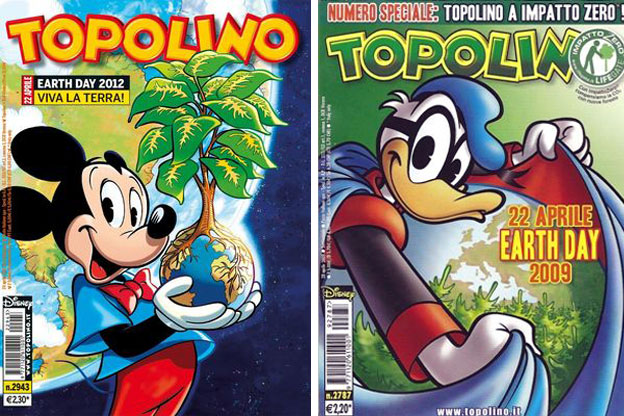
The comics in Italy go through a range of topics while managing to entertain as well. In one month they may have Donald Duck jumping out of an exploding helicopter and in the next he might be planting a tree in his backyard and teaching his nephews about conservation. Those that can get past the shock of seeing guns in the hands of cartoon icons would see that the books are not only well illustrated but also well written. Audiences identify with the mascot characters because they are written with distinct personalities. They are allowed to explore different genres and entertain readers at every level. Most important the comics are released month after month without exception. Movies and television shows may come and go but there was never a point where the Italians were without the Disney characters in print. Disney in the US could learn the importance of diligence from their overseas counterparts. As always if you would like to sponsor me please visit my Patreon page and consider donating each month, even as little as $1 would help make better blogs and even podcasts!

follow the Street Writer on Patreon!