Hello friends, today we'll begin looking at cars in video games. This series will not be a review of every major car game published. I will not talk about motorcycle or even flying car games like F-Zero and Wipeout because they don't meet my criteria. I will miss a lot of major players in the racing genre because of those limitations. Not every game will be about racing, some will be action / adventures, others puzzle games and a few will simply be about driving with no purpose in mind. This series will not move chronologically between the present and the past either. What I will do is try to deconstruct the origins and influences of car titles by finding relationships between them. I will share why these games were important to me. To let you know well in advance there are two titles that I will not mention in the entire series, so don't ask what happened to...
When it comes to cars in gaming I can be a little obsessive compulsive. Perhaps not as obsessive as the people that wrote about every VW Beetle in computer and video games but still pretty obsessive. Of course the same obsessive traits could be said about all my other hobbies. Everything that I am interested in says a little bit about me. If you see all of the things that interest me then you'll get a good idea of who I am. When it comes to racing games I am very particular. Only the best of most unique ideas can hold my attention. Those that get under my skin stay with me for years, or even decades. I talked about my appreciation of Sega's track design aesthetic it a long time ago with the blog Almost Sega good. Finally we'll get around to talking about the games these tracks belonged to.
The first two titles come from some of my earliest arcade memories. 1977's Drag Race and SuperBug by Atari and Kee Games respectively. I was barely three-years-old when these games came out. Thankfully like a lot of arcades the late 70's and early 80's was a transition period. The last of the great pinball machines were slowly being weaned out by first generation of videogames. I was fortunate enough to enjoy the best of both worlds during my formative years. By the time I was able to understand the controls of Drag Race it too was being replaced by newer games. However my love of cars blended with this new form of entertainment and I was hooked from then on.
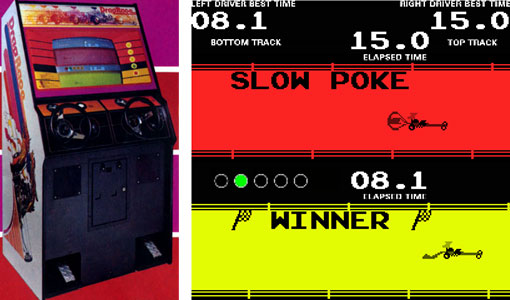
Arcade cabinets were very gimmicky in the early days. Bright colors and unique layouts helped differentiate them from the crowd. Drag Race was one of those cabinets that immediately caught my eye. It had a split screen, in (limited) color, when so many other games were still in black and white. Two sets of steering wheels, gas pedals and a gearshift as well. This was an electronic version of one of my favorite forms of racing, this was the future!
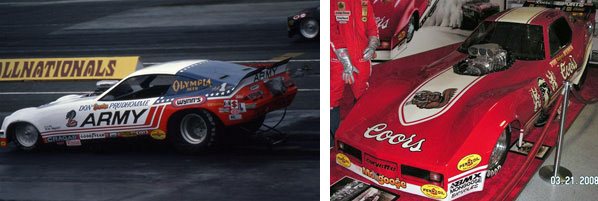
Drag racing has its roots in hot rod culture. For as long as people have had cars they've wanted to go fast. As a kid my obsession was highlighted in the televised rivalries of people like Don "the Snake" Prudhomme and Tom "the Mongoose" McEwen. I was taught to respect women as Shirley Muldowney and her pink dragster put up awesome races against the legend Don Garlits. My collection of Hot Wheels grew exponentially to reflect this newfound love of drag racing.
The magic of the Atari game was in the balancing of all the dragster components. Keeping a careful eye on the RPM's, knowing when to shift and how much gas to give the dragster. Push the pedal too hard or miss a shift and you would get a blown engine. Avoiding the walls through touchy steering also kept arcade players on edge and the races close. This game, like the sport, wasn't for everyone. Often times I would find it alone in the arcade. Atari like the rest of the industry were experimenting will all sorts of arcade games. Experimenting with control schemes and features just to get players interested. While Drag Race was a niche game in a (then) niche part of the entertainment industry, the idea of shifting gears and combining with a gas pedal was a welcome advancement.
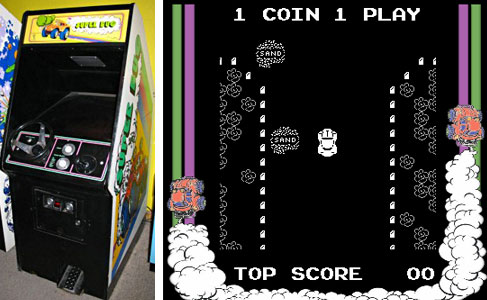
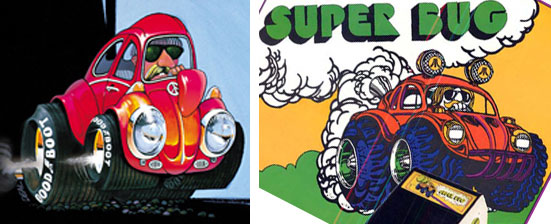
Kee Games came out with a racing game called Super Bug that same year. It used a similar gear shift setup but this was more of a road racing experience. Even as a kid I found it funny that oil slicks and sand were clearly marked in the game. Although the game was in black and white it seemed to attract more players than Drag Race. In addition to driving and racing I was attracted to the cabinets because of the bright graphics. Early arcade cabinets had to compete for attention against the better painted and better illustrated pinball machines. The in-game graphics of arcade machines weren't doing the job so designers had to sell the game with good art. The most memorable cabinet illustrations sold us on a theme or plot. The illustration on Drag Race was very colorful, it had a lot of late 70's / early 80's design aesthetics going for it, helping it stand out from the crowd.
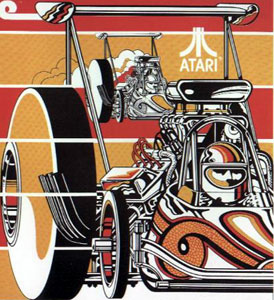
I never thought I'd live to see the day that the in-game graphics were as good or better than the cabinet art. Those days eventually came but there is something to admire in classic arcade cabinet art. The mascot character for the Superbug looked very much like a Dave Deal illustration. Of course I wouldn't learn about Deal until much later, but as a kid I loved the exaggerated proportions on those cartoon cars.
While they lasted in the local arcade I managed to enjoy them immensely. Unfortunately both games didn't remain too long in the arcade as the next round of driving and racing titles were coming in. So where did the legacy of those early driving experiences of Superbug and Drag Race lead to? Come back tomorrow to find out.