Since its earliest days the hot rod was changing and influencing the cartoon world. There was a lot to say about the culture, the cars and the participants. Two of the funniest and heartwarming animated shorts released in 1952, more than 50 years before the Pixar movie Cars, was the Tex Avery-directed One Cab's Family and the Clyde Geronimi-directed Susie the Little Blue Coupe.
The Tex Avery animated short was closer to the heart of hot rod culture so I'll focus on that film for now. On top of the comedic value there was a very earnest message abut coming to terms with the next generation. This generation scared parents with their obsession for speed. They were afraid that their kid's natural tendencies to experiment and push their limits would cause somebody to get killed on the road. Of course the harder parents fought against something the more the next generation embraced it. Rather than continue demonizing the culture the best parents could hope for was that they had done enough to raise their kid right and earn a bit of trust along the way.
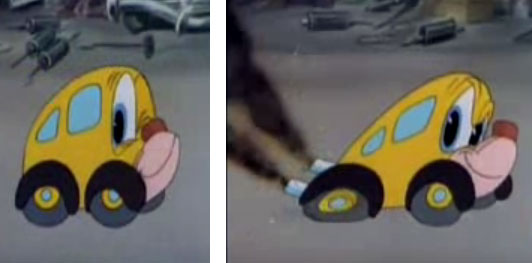
Tex Avery understood that hot rod culture would not lead to the decline of western civilization. He and many other cartoonists used it as a way to share a story that cut across the generations. Like the longest-lived cartoonists he did so to entertain as much as to educate the masses. In the print world there was one cartoonists whose span of work extended even longer than Avery or Ed Roth. His name was Pete Millar and in the car comic world he set the standard.
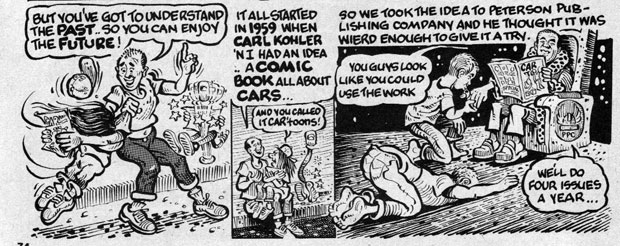
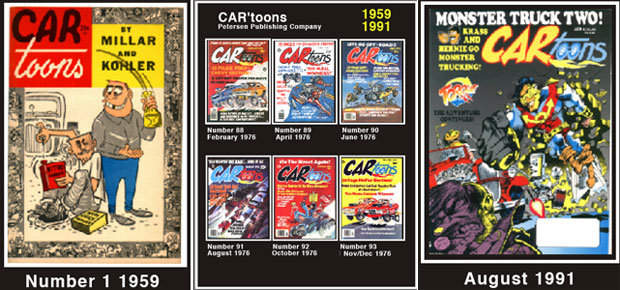
Pete Millar and Carl Kholer began an automobile humor magazine in '59. Their book was called (what else?) CARtoons, it was very much a MAD magazine for the hot rod culture. It stayed relevant to the American driving scene, changes in trends and culture for 40 years until the final issue in 1991.
Millar was a prolific contributor to CARtoons, as both an artist and writer. He was an amazing storyteller that was capable of writing fictional adventures as well as sharp commentaries on the politics that were quickly brewing behind drag racing. Sadly Millar left CARtoons a few years into production to start up a rival car humor magazine called Drag cartoons. CARtoons succeeded despite some questionable changes in management. The Petersen Publishing empire had become a bit too corporate for some contributors. What was once a place to celebrate the culture and spirit of hot rodding had become a very strict business environment. Creative ideas had to be filtered through management for a while.
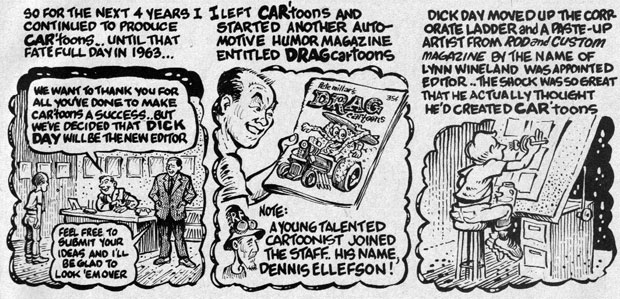
Thankfully those in charge loosened the grip on CARtoons and began trusting the senior writers and artists to run things again. Many fans saw this as a renaissance for the magazine. Over the next few decades some amazing talent was published in the pages of the magazine. It was a chance to get some starving artists a steady gig and give them some exposure in the competitive world of cartooning.
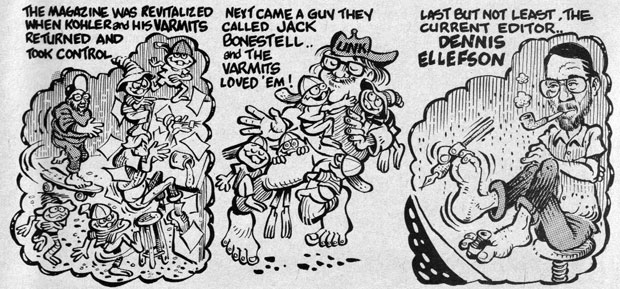
I will always hold Pete Millar in high regards for staying true to the artform. He enjoyed more creative freedom on his magazine but had a hard time competing against Petersen. The Drag cartoons magazine would find problems with printing and distributing and would come out infrequently due to a lean budget. The magazine also suffered by narrowing down the genre. Fans of cars in general could always find something worth reading in CARtoons, but only hardcore fans of drag racing would be able to understand the satire that was Drag cartoons magazine. The quality of the content was never in question.
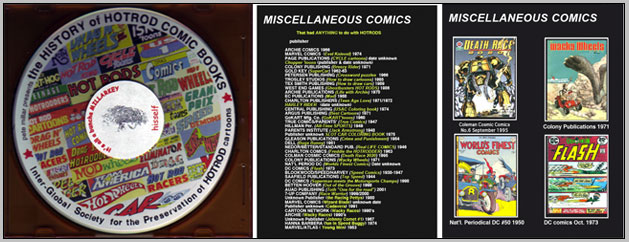
Millar was credited in Hot Rod magazine's History of Cars in Cartoons for starting the revolution. He had an encyclopedic knowledge of the dealings within the industry and personalities that shone in public. No bit of drag racing drama escaped his eye as he covered the culture for over 40 years. He remained passionate about illustrating all his life and put together the most comprehensive list of car comics and magazines ever. A CD database of his work was published just before his passing in 2003 and is a must get for comic fans searching for rare issues. All of his work is available via his website Laffyerasphault. The site is maintained by the Millar family and is worth visiting for those that are interested in the art of cars.
I will also say that while it lasted CARtoons magazine was one of the best written and illustrated magazines that I had ever had the pleasure of reading. The writers and artists that contributed to the magazine were at many stages in their development. Some were amateurs at best, appearing in only one or two issues. The regular faces were very dedicated to their craft. Writer / artist / editors Tom Marnick and Dennis Ellefson stayed with the magazine for decades. You could always could on them to find something new or funny to work on. Sometimes it was a short story and other times it was a series of longer arcs.
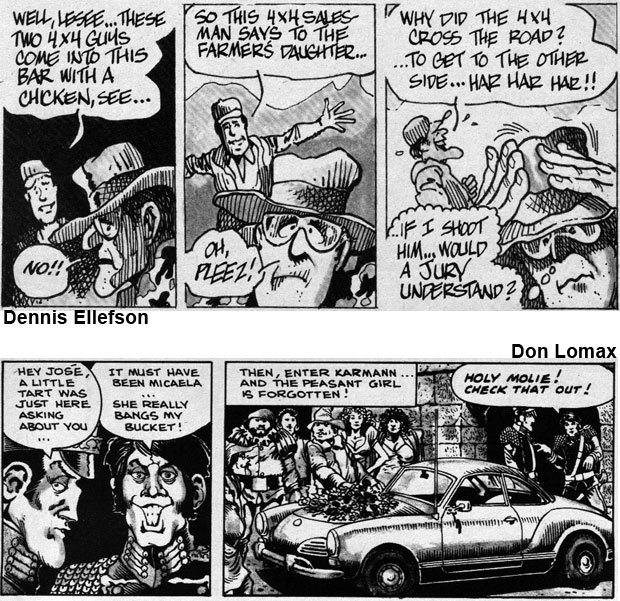
The artists that passed through CARtoons are almost all forgotten by history. They are artists who were, and many remain, loyal to their craft. It was hard to make an all automotive humor magazine published quarterly that remained fresh and new. Magazines like MAD are welcome to cover any topic as long as they make it funny, the people on CARtoons had to somehow tie their work into the automotive world. Sometimes the panels were based all on comedy, other times they were social commentaries, short stories, fantasies or even science fiction tales.
Keeping things moving was a task that required nonstop work and nonstop imagination. Writer / artists like Don Lomax would crank out surreal tales, in the fashion of the old Crypt Keeper comics, then he would turn around and adapt an opera like George Bizet's Carmen into a tale about a man obsessed with a car. Other artists like Randy Richards, John Larter and Jim Lawson honed their trademark cartooning style on the pages of the magazine.
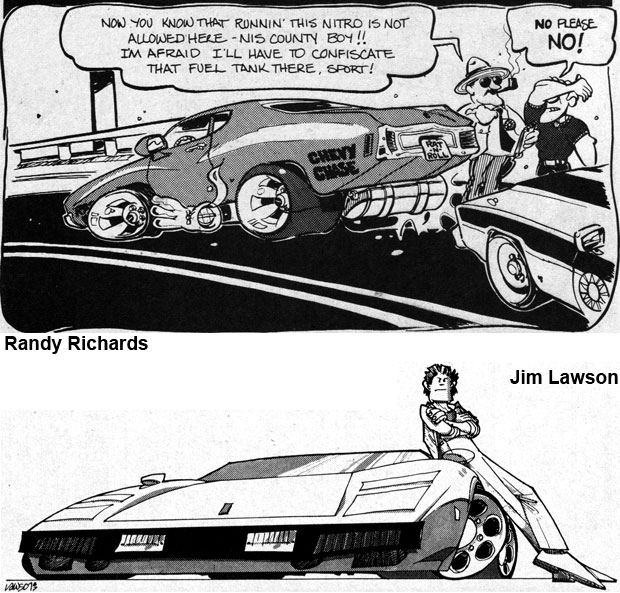
The other contributors all put their signature style on the magazine as well. They helped shape my appreciation of cartooning and taught me the subtleties of character art as much as car art. Tomorrow I will mention some notable names and their contribution to CARtoons. I hope to see you back.