Showing posts with label cartoons. Show all posts

Wednesday, June 21, 2023

Max RPM, the end of drag racing - Originally published on 1UP - March 17, 2009

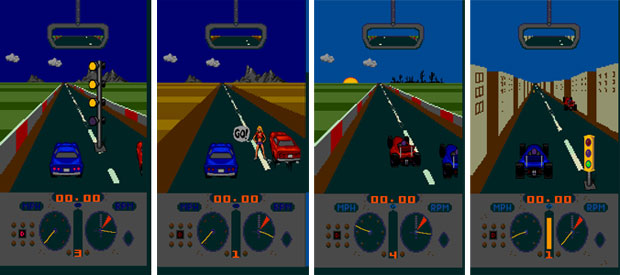
1986 was a good year for gaming, the arcade scene was still hot and the 8-bit consoles were just getting started. That year saw Max RPM by Bally / Midway as the last great arcade drag racing game. It's lineage can be traced back to the early days as it was the last notable racing game to use the traditional four speed stick shift like Superbug and Drag Race. Max RPM actually borrowed a little bit from both games and made something more unique. We can start with the graphics and presentation.
Notice the slobbering bug-eyed man on the logo. Does he remind you of the classic Ed "Newt" Newton Rat Fink art? Max RPM could be interpreted as a complete vision of those early arcade drag racing experiments. The industry would be able to improve the graphics from sprite-based cars and tracks to polygons, but to some like me, the charm was in the artistic interpretation of the cars and tracks themselves. 
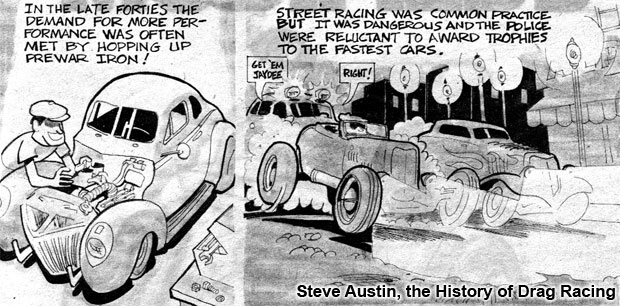
The purpose of the game was broken over a series of races and venues all over the country. Some were traditional drag races set on a quarter-mile track, others were drags in the city or even the outskirts of town. Players had to watch their RPM's to gain the maximum speed while shifting. Unlike Drag Race there was no chance of blowing an engine. Players could collect bottles of nitrous oxide "nitro" scattered on the road to gain a speed advantage and also draft behind their opponent to gain additional speed.
City courses were littered with garbage cans, road pylons and other debris that could slow your car down. Unlike Superbug designers no longer had to label the obstacles, these rough patches were in color and could be avoided with some expert steering. The perspective was behind the car and was on a split screen with two sets of controls on one cabinet like the original Drag Race. 
The game was brutally hard as few players could manage to leave the car class and reach the dragster levels on one quarter. By 86 Bally / Midway had maximized their strategy for exploiting players. Games like Max RPM and Rampage seemed to have no end. The days would advance, levels would get harder and days would turn to nights, still there was no ending. Just a high score on the attract screen, virtual bragging rights. Damn them but it worked.
By the mid 80's real drag racing had changed from the sport I had grown up watching. The funny cars were all becoming homogenized, streamlined. Where we once used to see differences in the body shapes that mimicked the cars they were based on, we were beginning to see a universal wedge design. Worse yet, television stopped running most contests so I couldn't keep up with the advances in the dragsters either. Street racing was slowly picking up because the drag racing scene had been scaled back since the 70's. The reason was for safety concerns... or so we were told.
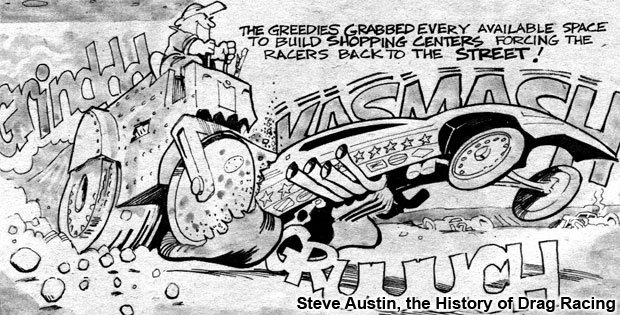
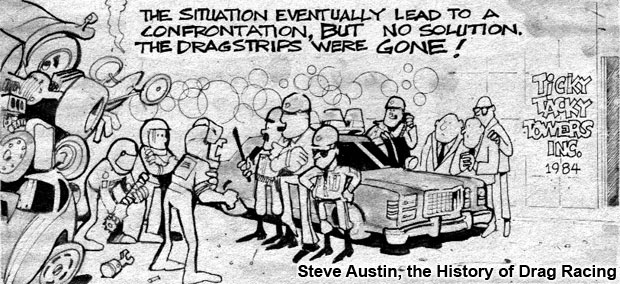
The energy that I talked about from the Irwindale Dragstrip used to be much closer. In Terminal Island, between Long Beach and San Pedro there used to be an amazing drag strip where people could race legally. It was shut down in 1984 and despite the best efforts from organizers and public demand it doesn't look like it will ever reopen. It seems that politics and greed will keep that land empty until the right business arrangement can be made. That is truly shameful.
Even if the drag strip were open when I was immersed in the arcade scene, I was still too young to participate. My parents might have driven me to watch the races but it wouldn't have been enough for me. The best I could do was get very much into the arcade versions and use my imagination. I was hooked on Max RPM for a long while. Fighting to get a good draft on my opponent or trying to shake him off if he was doing the drafting. Trying to memorize tracks and shifts, any detail that might have given me an advantage.
The graphics on drag racing games have improved since that time but the spirit is what is lacking. The creative spark that was hot rodding and became drag racing is hard to replicate. It is harder still to keep that spirit fresh and interesting to people that aren't die-hard racing fans. Sega created one of the early arcade experiences that approached racing with a fresh and unique perspective, completely different than the drag race experience. Their game eventually became a big-time, albeit short-lived series. Please come back to find out what game I'm referring to.
Did you ever see, or even play this arcade gem? I'd like to hear about it. Let me know in the comments section please. As always if you would like to sponsor me please visit my Patreon page and consider donating each month, even as little as $1 would help make better blogs and even podcasts!
follow the Street Writer on Patreon!

Wednesday, May 31, 2023

My favorite CARtoonists... - Originally published on 1UP - March 12, 2009

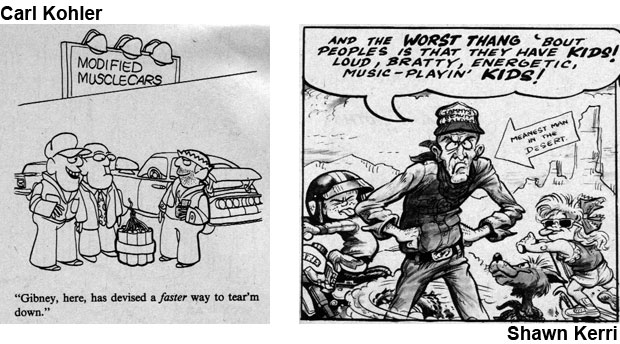
The artists featured today are people that should be studied by any artist that is a fan of the car and cartooning. When I was younger I poured through the pages of CARtoons absorbing as much detail as I could and picking up new things every time. Artists like Carl Kohler, Pat Rea and Bob Hardin all had their own distinct style. Even legends like Alex Toth contributed to the magazine. They were capable of presenting an engrossing story or made a single frame gag work equally well. 

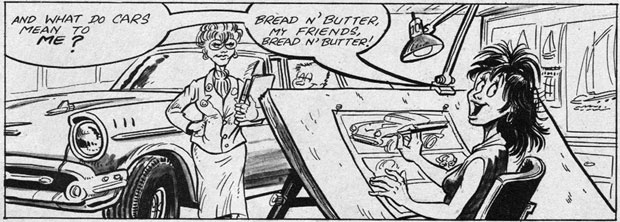
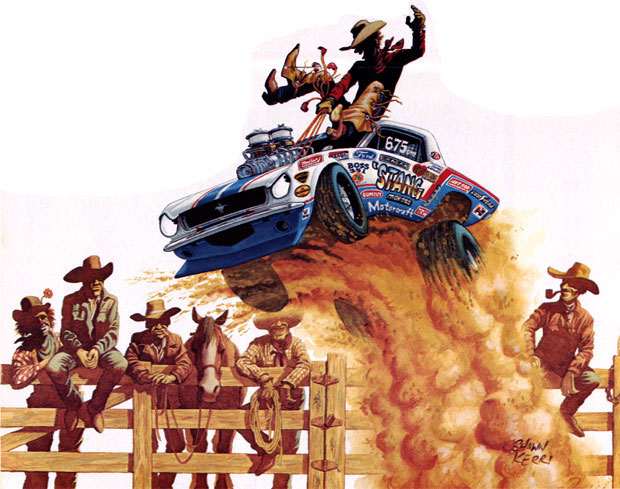
There were a handful that I would consider my absolute favorites. Each of these artists brought something unique to the magazine and in my book had as much style as the comic book greats. Dave Deal would contribute on and off to the book, but there was actually an artist whose passing I lamented before Dave's passing. Shawn Kerri was an artist that had a rock solid cartoon style. One of her biggest influences was the iconic Tex Avery. Shawn's black pen work was a very fluid and animated. She could also switch up into a very respectable painting style depending on what she wanted to say. She was plugged right into the teen psyche as she knew more about the readers than their own parents. This became more and more obvious in each issue of CARtoons that she worked on. I'm sure that I wasn't the only boy growing up in the 80's with a crush on Kerri.

It was presumed that she died in the early '90s since she disappeared from her community. She left an amazing legacy in comic and even punk rock art. It turned out that she had suffered a severe brain injury that left her with mental problems, and had lost the ability to draw. This did not come to light for decades. A fan named Scott Shaw figured it out and created a nonprofit foundation to share her work. I, like all of her fans are left to wonder how many hilarious or uncompromising pieces she would have created if she were still able to.

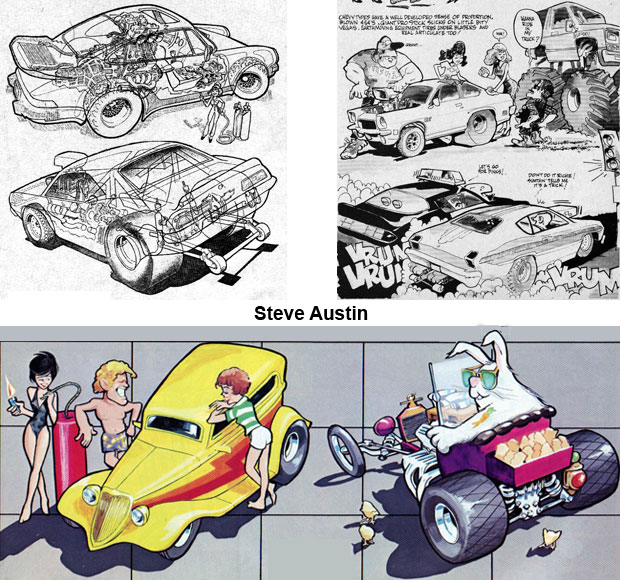
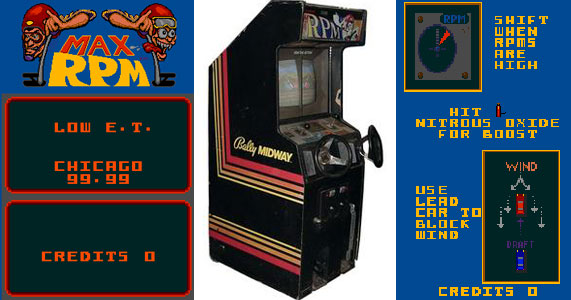
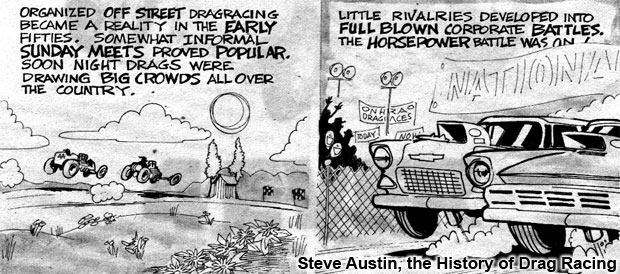
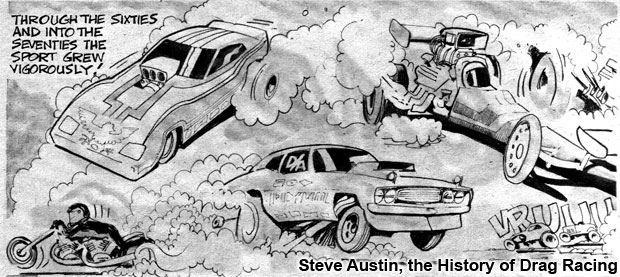
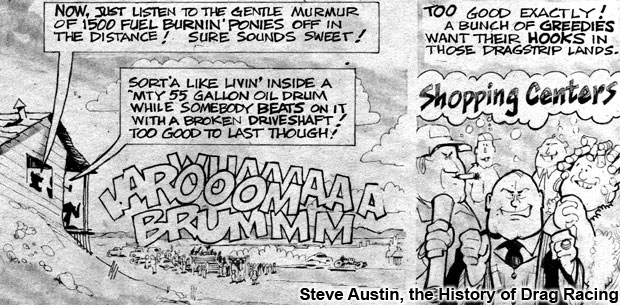
CARtoons was also the home of a fantastic artist named Steve Austin. Unfortunately for you he shares a name with a wrestler and the Six Million-Dollar Man, which makes finding more of his work online or current whereabouts impossible. Austin had the traits of a cartoonist and illustrator. He also had an intimate knowledge of the cars, the drivers and their personalities. If Shawn Kerri knew what teens in the late 70's and 80's were like then Austin understood the mind of the original hot rod pioneers. He was comparable to Dave Deal with his style and background. These observations were always presented in a lighthearted fashion and never snarky.

His cutaways of classic cars made me realize that the best artists don't always see the world in two dimensions. When trying to draw an object the artist should know the inner workings or at the very least imagine how much space and depth is inside the object. Even today I owe the majority of my cutaway art inspiration to Austin. The majority of his work was in black and white but when he painted in color his work had no equal. I've still yet to find a cartoonists that can color with as soft a touch while keeping his signature proportions intact.


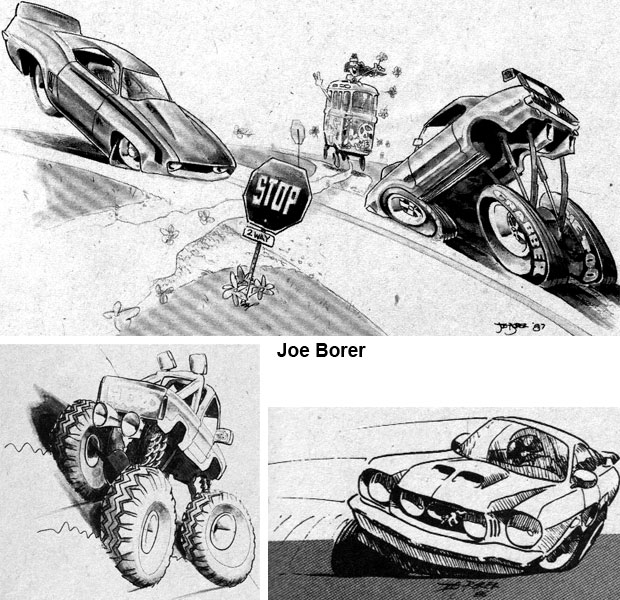
The final contributor that I would like to mention was the one filled with tremendous potential. Joe Borer began contributing to CARtoons in the mid 80's and would appear from time to time until the final issue published in 91. Every time his work appeared it was even better than the last. He was becoming exponentially better at cartooning the automobile from month to month. I was very drawn to his style near the end more than any other artist that contributed to the magazine. I dare say that he was on his way to approaching Dave Deal greatness. If Joe had a weakness he was not as good at cartooning people as Dave was. Borer's cars were amazing nonetheless. He began tinkering with weight and motion through his illustrations. Tires were glued to the pavement while you could swear there was realistic body roll pulling his cars off the page. Sadly the magazine closed its doors and Borer was once again a freelance artist. The last things with his name on them were Tonka books from Scholastic. Those books were published a few years ago, I only wish I knew what had become of Joe and his amazing talent.

Such was the thing with a good deal of artists that appeared in CARtoons. Thankfully there is somebody from the CARtoons family keeping the flame burning, but what of the rest? The contributors might not be known outside of the magazine but they should be remembered for their dedication. The volume of work featured in the pages of CARtoons, Hot Rod cartoons, CYCLEtoons and Drag cartoons over the decades amounts to more than a footnote in comic book history. These were the annals of the comic art community as much as they were of the hot rod community. The work of the writers and artists every bit as relevant as the people writing for traditional automobile magazines.

They all followed the trends with a close eye, monster trucks, mini trucks, muscle cars, sport cars, racers, ATV's... on and on. It's a damn shame that more people, especially those into comics and cars aren't more familiar with them. The contributors might never been called up to receive an Eisner however we should never forget them and the work that they've done. Tomorrow I have the pleasure of interviewing one of the legends from the magazine.

Did you ever try drawing cars? Who were some of your favorite cartoonists? Let me know in the comments section please. As always if you would like to sponsor me please visit my Patreon page and consider donating each month, even as little as $1 would help make better blogs and even podcasts!
follow the Street Writer on Patreon!

Monday, May 29, 2023

The Hot Rod Influence on Cartooning - Originally published on 1UP - March 11, 2009

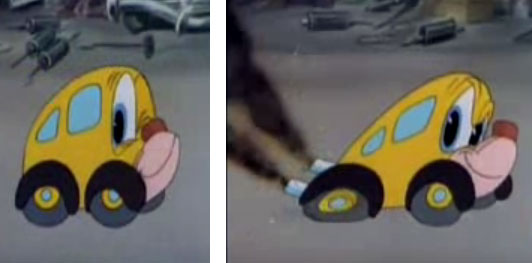
Since its earliest days the hot rod was changing and influencing the cartoon world. There was a lot to say about the culture, the cars and the participants. Two of the funniest and heartwarming animated shorts released in 1952, more than 50 years before the Pixar movie Cars, was the Tex Avery-directed One Cab's Family and the Clyde Geronimi-directed Susie the Little Blue Coupe.

The Tex Avery animated short was closer to the heart of hot rod culture so I'll focus on that film for now. On top of the comedic value there was a very earnest message abut coming to terms with the next generation. This generation scared parents with their obsession for speed. They were afraid that their kid's natural tendencies to experiment and push their limits would cause somebody to get killed on the road. Of course the harder parents fought against something the more the next generation embraced it. Rather than continue demonizing the culture the best parents could hope for was that they had done enough to raise their kid right and earn a bit of trust along the way.

Tex Avery understood that hot rod culture would not lead to the decline of western civilization. He and many other cartoonists used it as a way to share a story that cut across the generations. Like the longest-lived cartoonists he did so to entertain as much as to educate the masses. In the print world there was one cartoonists whose span of work extended even longer than Avery or Ed Roth. His name was Pete Millar and in the car comic world he set the standard.

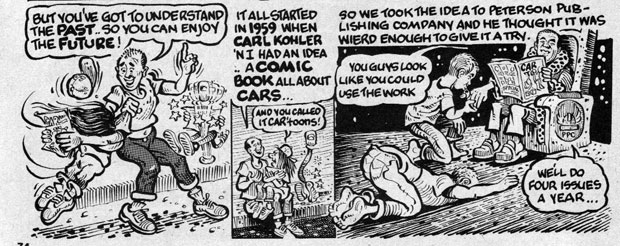
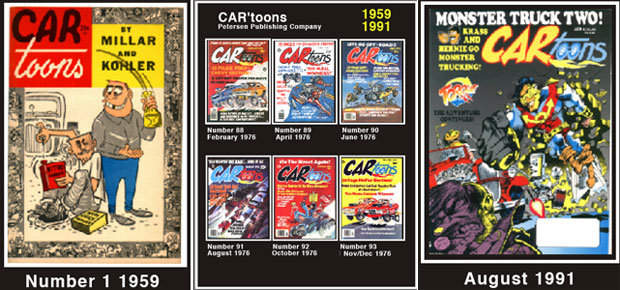
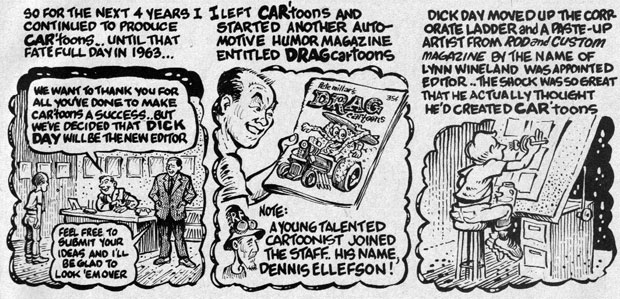
Pete Millar and Carl Kholer began an automobile humor magazine in '59. Their book was called (what else?) CARtoons, it was very much a MAD magazine for the hot rod culture. It stayed relevant to the American driving scene, changes in trends and culture for 40 years until the final issue in 1991.

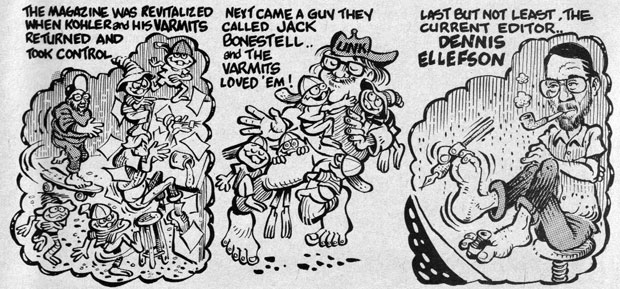
Millar was a prolific contributor to CARtoons, as both an artist and writer. He was an amazing storyteller that was capable of writing fictional adventures as well as sharp commentaries on the politics that were quickly brewing behind drag racing. Sadly Millar left CARtoons a few years into production to start up a rival car humor magazine called Drag cartoons. CARtoons succeeded despite some questionable changes in management. The Petersen Publishing empire had become a bit too corporate for some contributors. What was once a place to celebrate the culture and spirit of hot rodding had become a very strict business environment. Creative ideas had to be filtered through management for a while.

Thankfully those in charge loosened the grip on CARtoons and began trusting the senior writers and artists to run things again. Many fans saw this as a renaissance for the magazine. Over the next few decades some amazing talent was published in the pages of the magazine. It was a chance to get some starving artists a steady gig and give them some exposure in the competitive world of cartooning.

I will always hold Pete Millar in high regards for staying true to the artform. He enjoyed more creative freedom on his magazine but had a hard time competing against Petersen. The Drag cartoons magazine would find problems with printing and distributing and would come out infrequently due to a lean budget. The magazine also suffered by narrowing down the genre. Fans of cars in general could always find something worth reading in CARtoons, but only hardcore fans of drag racing would be able to understand the satire that was Drag cartoons magazine. The quality of the content was never in question.

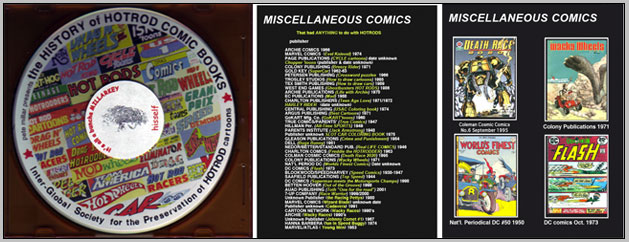
Millar was credited in Hot Rod magazine's History of Cars in Cartoons for starting the revolution. He had an encyclopedic knowledge of the dealings within the industry and personalities that shone in public. No bit of drag racing drama escaped his eye as he covered the culture for over 40 years. He remained passionate about illustrating all his life and put together the most comprehensive list of car comics and magazines ever. A CD database of his work was published just before his passing in 2003 and is a must get for comic fans searching for rare issues. All of his work is available via his website Laffyerasphault. The site is maintained by the Millar family and is worth visiting for those that are interested in the art of cars.

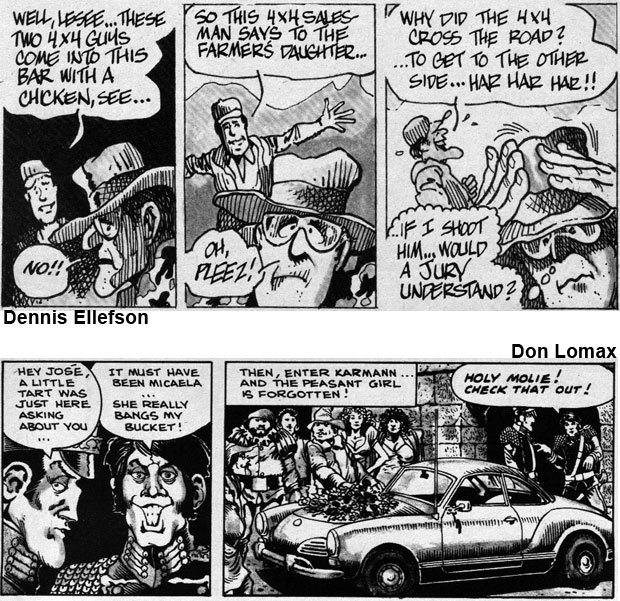
I will also say that while it lasted CARtoons magazine was one of the best written and illustrated magazines that I had ever had the pleasure of reading. The writers and artists that contributed to the magazine were at many stages in their development. Some were amateurs at best, appearing in only one or two issues. The regular faces were very dedicated to their craft. Writer / artist / editors Tom Marnick and Dennis Ellefson stayed with the magazine for decades. You could always could on them to find something new or funny to work on. Sometimes it was a short story and other times it was a series of longer arcs.

The artists that passed through CARtoons are almost all forgotten by history. They are artists who were, and many remain, loyal to their craft. It was hard to make an all automotive humor magazine published quarterly that remained fresh and new. Magazines like MAD are welcome to cover any topic as long as they make it funny, the people on CARtoons had to somehow tie their work into the automotive world. Sometimes the panels were based all on comedy, other times they were social commentaries, short stories, fantasies or even science fiction tales.

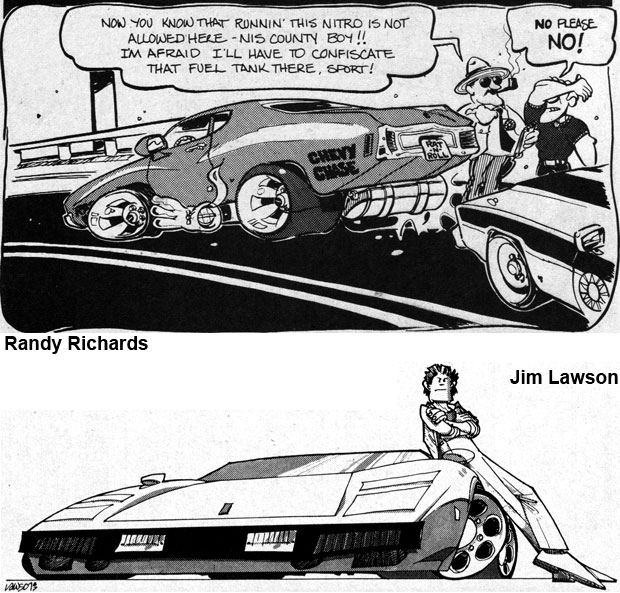
Keeping things moving was a task that required nonstop work and nonstop imagination. Writer / artists like Don Lomax would crank out surreal tales, in the fashion of the old Crypt Keeper comics, then he would turn around and adapt an opera like George Bizet's Carmen into a tale about a man obsessed with a car. Other artists like Randy Richards, John Larter and Jim Lawson honed their trademark cartooning style on the pages of the magazine.

The other contributors all put their signature style on the magazine as well. They helped shape my appreciation of cartooning and taught me the subtleties of character art as much as car art. Tomorrow I will mention some notable names and their contribution to CARtoons. I hope to see you back.

Did you ever read Cartoons magazine? Do you have a favorite car-based cartoon? Let me know in the comments section please. As always if you would like to sponsor me please visit my Patreon page and consider donating each month, even as little as $1 would help make better blogs and even podcasts!
follow the Street Writer on Patreon!

Thursday, June 5, 2014

The Car Tangent, part 11...

A lifetime ago I wrote about the influential artist and hot rod pioneer "Big Daddy" Ed Roth. In case you were not familiar with the man he was the one that created Rat Fink and a plethora of bug-eyed, sharp toothed, drooling monsters riding on top of various hot rods. He would airbrush these grotesque figures on tee shirts and sell them at car shows. Teenagers bought them up and car clubs commissioned him to create mascots and paint jackets for them. All of this helped pay for his creative outlets. Roth was one of the first designers to create mock-up car bodies by hand and sculpt them out of fiberglass. The hot rod scene was still growing in Southern California when Roth took it into radical new directions. He demonstrated to fans that they did not always have to start with a rusted-out car and then strip it down before bolting on a powerful engine. They could create their own bodies and make them as wild as his cartoons were if they wanted to.

Roth ran with a circle of artists that shared a similar aesthetic. They were also capable of drawing monsters but more important, were able to caricature every car they came across. Ed "Newt" Newton and Dave "Big" Deal were in a class all their own. The artists became synonymous with cartoon cars. The small tires in the front, large tires in the back and smoke blowing out of the rear became a hot rod trademark. Few artists could do it better than Roth, Newt or Deal. These monsters and cars were released on collectable sticker packs, think of them as the forefathers of the Garbage Pail Kids phenomenon. The thing that all the artists had in common were that they knew their cars and motorcycles. When they were not building and fabricating them they were known to race them as well in So Cal and even through Baja Mexico. This was "on the job" training that few cartoonists could have claimed.


No matter how exaggerated the shapes were people could clearly make out the type of cars that were being featured. The artists were masters of observation. They knew the position of the lights, bumpers, badges and lines of hundreds of vehicles. Good cartoonists learned the techniques of making a caricature out of a person but not every cartoonist could caricature a vehicle. The godfathers of hot rod art made it look deceptively easy but I would challenge an artist reading this to try and make aesthetically pleasing caricatures out of the next car they see.

Roth, Newt and Deal managed to build a career on their art. While they did not necessarily work for the Big Three, they still shaped American car culture. They captured the zeitgeist of the hot rod movement and visualized it. As the men became more and more influential within the community they began changing the perception of hot rod culture to the rest of the US. Model manufacturers like Revell turned the hot rods of Roth and Newt as well as the illustrations of Deal into model kits. For the first time kids got a chance to see actual 3D representations of the cars and monsters that they read about in the magazines. These models, toys and stickers forever warped the minds of young car buffs. As they got older they returned the favor. In the case of Pixar the boss guy John Lasseter and his brain trust were the kids that would have grown up with Rat Fink and his friends. They knew that they had to reach out to the master while developing the art and design of the Cars film.


Every car in the film oozed personality. Each character had its own temperament which seemed genuine based on the model of car that they were. The rusty Harvester tow truck talked with a country twang, the big city Porsche in a very no-nonsense intonation and the Fiat with a heavy Italian accent. The ways that each character was made to emote was superb cartooning. The animators used bumpers, fenders and tires in place of lips, shoulders and hands. The expressions were easy to read because the shapes of the cars were broken down and explained to the artists by Deal. Dave was working on pre-production for Cars 2 when he passed away in 2008. His fingerprints remained all over both films and the various Mater's Tall Tales Car-Toons. The Pixar artists and animators were exceptional in their craft, and many of them were passionate about automobiles but the Cars universe would have not been the same without the contributions of Dave Deal. On the other side of the Pacific there was a different sort of "car toon." Japan was not without its own skilled automobile artists. However they did not have a hot rod movement in the same way that the US did. They did have their own car culture and various youth sub-cultures that managed to interpret their love of the automobile in any number of ways. One of the best incorporated caricatures of cars in their work but remained relatively unknown for decades. The next blog will look at this person and their gift to the world. If you would like to sponsor me please visit my Patreon page and consider donating each month, even as little as $1 would help make better blogs and even podcasts!
follow the Street Writer on Patreon!