Showing posts with label bally midway. Show all posts

Friday, July 28, 2023

Smashing cars is fun! Demolition Derby meets Burnout! - Originally published on 1UP - April 20, 2009

Demolition Derby released in 1984 by Bally Midway was probably the most overlooked arcade game that I played. It was liked only slightly more than Stocker in the arcades. The game was in an overhead format and, like Hot Rod, played on a tabletop cabinet with multiple controllers. Demolition derby is an American institution. While this nation prides itself on creating hot rod culture, muscle cars and a great racing legacy, we are also known to go into fits of excess and nonsense. Demolition derby was the latter. The point of the game, just like the actual sport, was to smash into your opponents car and disable them. It's the car equivalent of the gladiator, the last one running was the winner.

The cars weren't ever new, most were fixed-up from a junkyard just a day or two before the derby. They were big, ugly, boxy American cars with poor steering and solid motors. Their appearance being part of their charm. The derbies themselves were slow and methodical. Like watching two grizzled boxing veterans fighting on the last round. Neither was pretty and neither had anything left to give. The best they could do was trade hits until one went down. The cars line in the derby against each other, as many as a dozen at a time, like enormous football players. The drivers usually went in reverse so as not to damage the engine and steering.
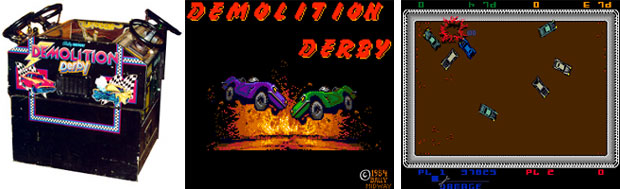
All of this carnage and brutality was recreated in the Bally Midway game. Players would last longer if they went in reverse and aimed for their opponents front. Wrenches could be picked up along the way to give cars more life. Good opponents, or the enemy AI on latter levels, could make the game grind on for a while. The winner was the last car moving. I kind of miss the reckless experience of crashing into cars in that format. Thankfully there was a modern series that combined the elements of Demolition Derby with the high speed hijinks of Chase H.Q.
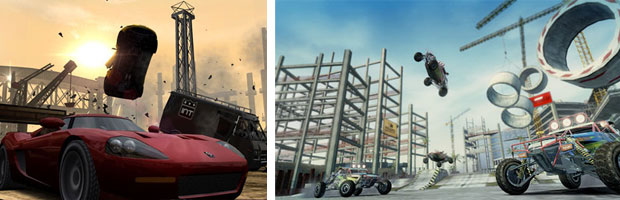
Criterion Games smash-hit (no pun intended) driving game Burnout made its debut in 2002. After a few sequels, the addition of downloadable content and a global fan base it is safe to say that the series is going to be around for a long while. Burnout was one of those titles that made me glad my brother got an Xbox 360. The slow and ugly cars from Demolition Derby were nowhere to be found here. The Burnout cars were high speed racers very much based on legendary vehicles, sporty hot rods, muscle cars, race cars and trucks from real life. All of them were changed just enough so that no major auto maker, or movie studio, had to be compensated.

Burnout succeeded because it tapped into several themes of the racing genre often overlooked by publishers. It was an arcade racing experience at the core, not a traditional console racer. The sense of speed was very dramatic, the flowing track layouts helped bring that experience home. Cars flew all over the levels and took turns and jumps without losing much, if any, momentum. Players were never bogged down with a sim experience. There were no gear ratios, transmission or tire selections to worry about. The player simply had to point the car in a direction and then hammer on the gas. Any secrets, shortcuts or unlocks they found along the way to first place were a bonus.
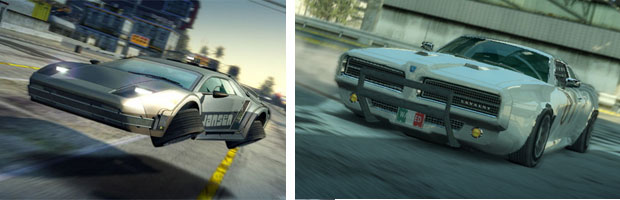
The game could be very forgiving to those that never grew up on arcade racers. It was written for the generation that grew up on the gamepad rather than the steering wheel. The purpose of the main races was not only to come in first but to also damage the opposition as much as possible. You could run rivals into oncoming traffic, push them off bridges or slam into them demolition derby style. The experience of racing was similar to Chase H.Q., only without the badge. Everyone in the race deserved to be taken down. I have yet to come across a player that didn't revel in the experience that Burnout offered. When you added the different modes and online ability of the recent versions then you can see how gamers, and not solely racing fans, would want this title in their collection.
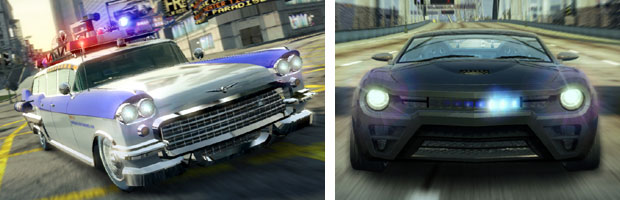
As much fun as Burnout was there still is only one driver that I enjoyed far more than it. A game whose content offered even more action, violence and impossible stunts than Burnout, Demolition Derby, Chase H.Q. and Mad Gear combined. I hope to see you back for that, oh, make sure you buckle your seat belts.
Did you enjoy smashing cars in your favorite video games? Let me know in the comments section please. As always if you would like to sponsor me please visit my Patreon page and consider donating each month, even as little as $1 would help make better blogs and even podcasts!
follow the Street Writer on Patreon!

Wednesday, July 26, 2023

City Connection, Bump 'n' Jump, and Mad Gear, adventure racers get good! - Originally published on 1UP - April 16, 2009

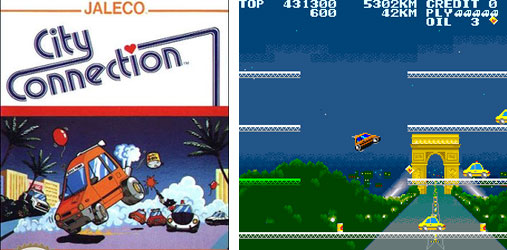
In 1985 Jaleco released the puzzle racer City Connection. It was a familiar maze type game in which you were supposed to color all of the pavement in one color before proceeding to the next stage. Along the way you were supposed to avoid the cops and try not running over a cat... To help get you out of a jam you could throw oil cans at the cops to cause them to spin out. Simple and to the point.

What caught my attention was the presentation of this title. Unlike Rally X this was not an overhead game but a side-scroller. The graphics were very bright and detailed. The backgrounds and music would change on every stage, taking the car all around the world. The freeways that player painted were multi-tiered. The car had the ability to jump up and down these different tiers. It was the jumping element that I found awesome. The car could jump on command for no other reason than "just because". It's compact, stylized body, looked very much like a Choro Q made these animations really stand out.

However the car in City Connection couldn't touch any obstacle without losing a life. It was far too fragile for my tastes. But I was intrigued with the leaping ability and how it could be used in a racing game. The one that had gotten the formula right had debuted a few years prior.

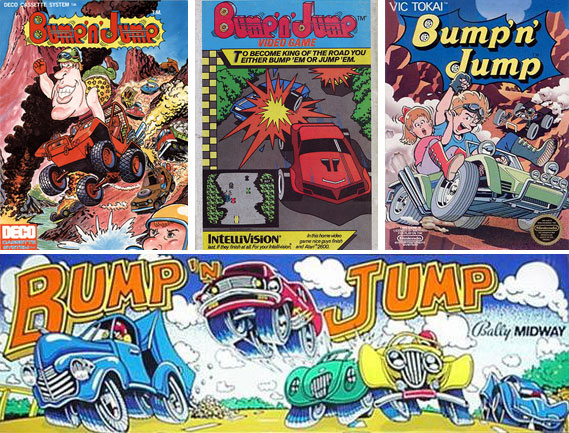
Bump 'n Jump (BnJ), Burnin' Rubber to my pals overseas was made by Data East in 1982 but released by Bally Midway here. It was an overhead racer, comparable to Monaco GP. However the rival cars in this game were far more stylized and aggressive. The player would have to fight for position and get a bonus for running an opponent into a wall. The cars were really odd looking, blocky and ugly and the only time you saw any detail was when the player car jumped. It was the jumping itself that really sold the experience. Players could move left and right mid-flight and land squarely on an opponent. Smashing them in the process and gaining a speed boost. Just like City Connection this feature never had to be explained, the car jumped as part of the game mechanic and it was fantastic.

Players had to mind the courses as the walls of the tracks would zig and zag, pinching groups of rivals together and blocking the path. The car couldn't jump at any time either. It had to be going above a certain speed or else the jump button wouldn't register. Some tracks constricted, went to dead ends or had drop offs into the ocean. Players had to become masters of timing. They had to read the course, their opponents and know when to jump and where to stick their landings. Sometimes the landing was on a narrow piece of road in the middle of the ocean, from which the player had to leap off of right away.

The play, design and music were all memorable but what I always admired most about this game were the impressions it gave different artists and publishers. No two studios interpreted the game exactly the same. How did the car really look, who was the driver, what were the rivals? What was the plot of the game, if it even had one? Did any of this even matter? Or was it a sign of the early arcade experience, games existed for the sake of games and players made up the connections as they went along.

Bump 'n Jump appeared on several consoles over the years, many often much better-looking than the arcade original. The NES version was actually very impressive as it added a plot and purpose to the racer and opponents. The elements introduced in Bump 'n Jump would continue on through rival titles. 

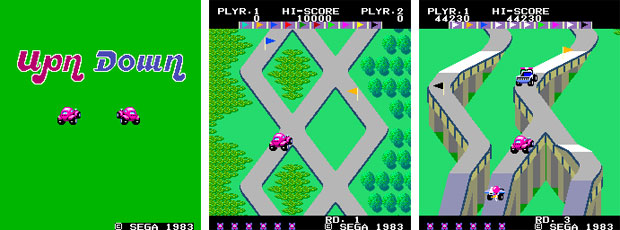
A year after Bump 'n Jump Sega released an isometric racing puzzle game called Up'n Down. This game featured a VW Beetle riding on a single lane road collecting colored flags. Other cars and trucks would be running along or against you trying to block your path or crash into you. The track continuously scrolled on a loop pattern until all of the colored flags had been picked up. The game was actually tricky for a puzzle racer. It was the first isometric game that I remember giving the cars a sense of mass. The beetle would lose momentum as climbing a steep or long gradient. Conversely downhill sections would provide a speed boost. The car could even go in reverse to collect a flag that lay around the corner. There weren't many games at the time where going in reverse was an option. The jump featured in the game allowed you to not only clear opponents but also sections of tracks. All the while you had to be mindful of rivals coming from ahead and behind as well as sections of track with gradients as opponents would sometimes also lose momentum and come rolling backwards into your path.

Sadly Up 'n Down didn't break enough ground to keep me interested. The wide open tracks of Bump 'n Jump and use of jumping were much more fluid by comparison. There was one game in the arcades that updated the idea of Bump 'n Jump, or ripped it off depending on your point of view.

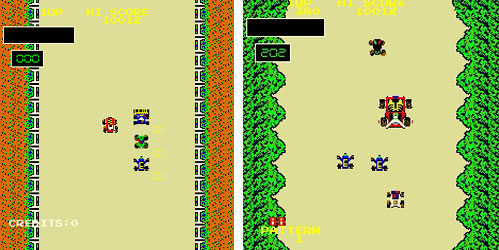
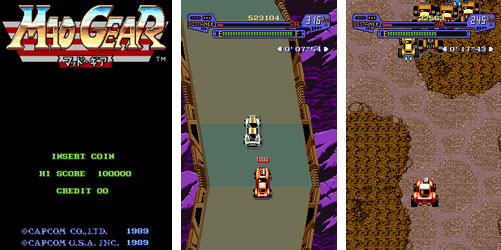
In 1989 Capcom released Mad Gear. It was an atmospheric future racer in a familiar overhead setting as BnJ. It also featured similar mechanics involved with jumping, needing speed in order to jump and landing on opponents for a score booster. The game had lots of interesting details as tracks and accompanying music changed themes in each stage. Most of these tracks were floating a mile or so above the ground, how or why these roads were built never really mattered. They just looked cool as they ran underneath dinosaur bones or between Mayan ruins. These tracks predated the Sega racers by years. Here's a bit of trivia for you, the gang in the Final Fight series was named after this racer.

Opponents ranged from crazy bikers that would jump onto your car to massive segmented trailers which behaved like land trains. From time to time a helicopter would even fly overhead dropping bombs onto the track, and unlike Spy Hunter your car had nothing but a jump in its arsenal. Keeping an eye on the tracks and opponents was part of the challenge, as was finding fuel. The player was given a choice between three cars, each with their own strengths and weaknesses, the diesel truck did better on fuel but ran slower, the F-1 racer clipped along quickly but ate gas just as fast. The main car, the Mad Gear, was the balanced ride. Players that managed to complete the game on one quarter, and that was possible if the dip switches were set to normal, were rewarded with a free game and could choose to race in a different car. This second play through gave a definite ending where the car would thank you for the experience. I thought it was a nice detail that helped frame the universe the game was set in. The car was the partner in the race rather than a human navigator. An arcade version of KITT, complete with turbo boost jumping action.

I could understand that many arcade gamers couldn't get behind racing games where the car did fantastic things. However there was something about using the car as a weapon that intrigued them. Unlike games where the car was loaded with weapons and behaved like a FPS character, the car could still move and feel like a car but become the ultimate blunt force weapon. Come back next time to see the best drivers that kept that in mind.

Have you heard of these adventure racers? Were there other odd racing games you enjoyed? Let me know in the comments section please. As always if you would like to sponsor me please visit my Patreon page and consider donating each month, even as little as $1 would help make better blogs and even podcasts!
follow the Street Writer on Patreon!

Wednesday, June 21, 2023

Max RPM, the end of drag racing - Originally published on 1UP - March 17, 2009

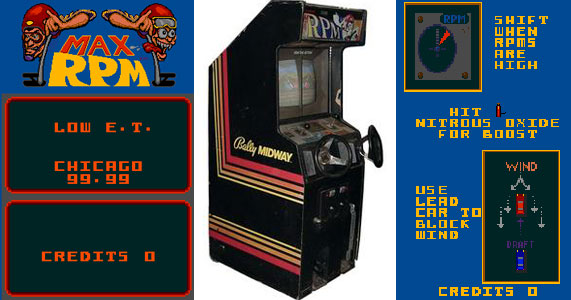
1986 was a good year for gaming, the arcade scene was still hot and the 8-bit consoles were just getting started. That year saw Max RPM by Bally / Midway as the last great arcade drag racing game. It's lineage can be traced back to the early days as it was the last notable racing game to use the traditional four speed stick shift like Superbug and Drag Race. Max RPM actually borrowed a little bit from both games and made something more unique. We can start with the graphics and presentation.

Notice the slobbering bug-eyed man on the logo. Does he remind you of the classic Ed "Newt" Newton Rat Fink art? Max RPM could be interpreted as a complete vision of those early arcade drag racing experiments. The industry would be able to improve the graphics from sprite-based cars and tracks to polygons, but to some like me, the charm was in the artistic interpretation of the cars and tracks themselves. 

The purpose of the game was broken over a series of races and venues all over the country. Some were traditional drag races set on a quarter-mile track, others were drags in the city or even the outskirts of town. Players had to watch their RPM's to gain the maximum speed while shifting. Unlike Drag Race there was no chance of blowing an engine. Players could collect bottles of nitrous oxide "nitro" scattered on the road to gain a speed advantage and also draft behind their opponent to gain additional speed.

City courses were littered with garbage cans, road pylons and other debris that could slow your car down. Unlike Superbug designers no longer had to label the obstacles, these rough patches were in color and could be avoided with some expert steering. The perspective was behind the car and was on a split screen with two sets of controls on one cabinet like the original Drag Race. 

The game was brutally hard as few players could manage to leave the car class and reach the dragster levels on one quarter. By 86 Bally / Midway had maximized their strategy for exploiting players. Games like Max RPM and Rampage seemed to have no end. The days would advance, levels would get harder and days would turn to nights, still there was no ending. Just a high score on the attract screen, virtual bragging rights. Damn them but it worked.

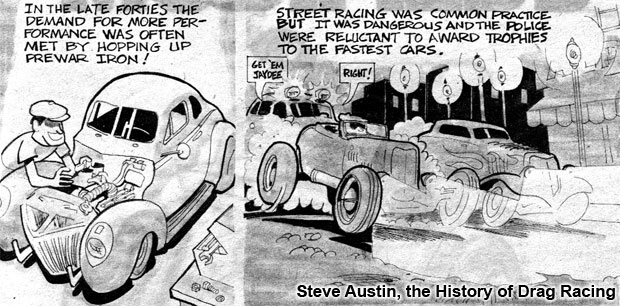
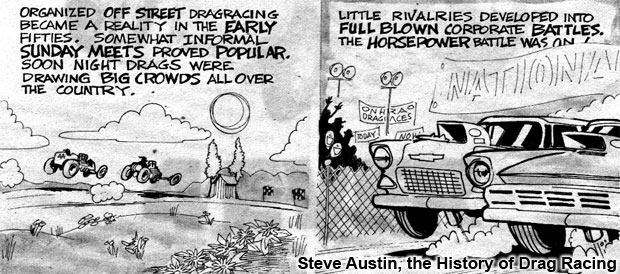
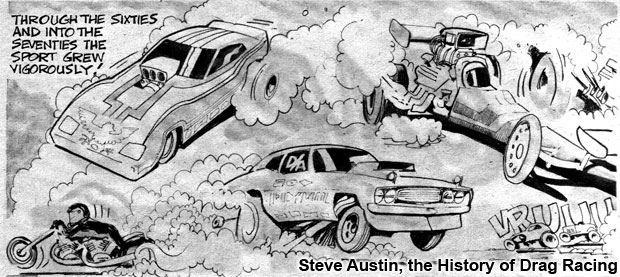
By the mid 80's real drag racing had changed from the sport I had grown up watching. The funny cars were all becoming homogenized, streamlined. Where we once used to see differences in the body shapes that mimicked the cars they were based on, we were beginning to see a universal wedge design. Worse yet, television stopped running most contests so I couldn't keep up with the advances in the dragsters either. Street racing was slowly picking up because the drag racing scene had been scaled back since the 70's. The reason was for safety concerns... or so we were told.

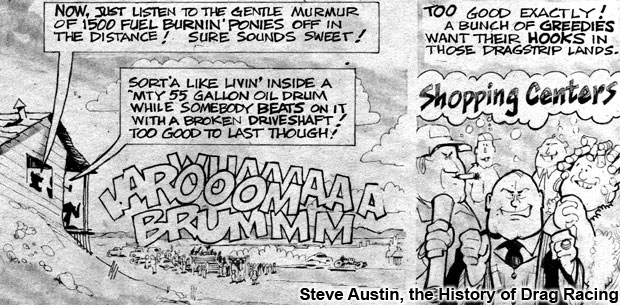
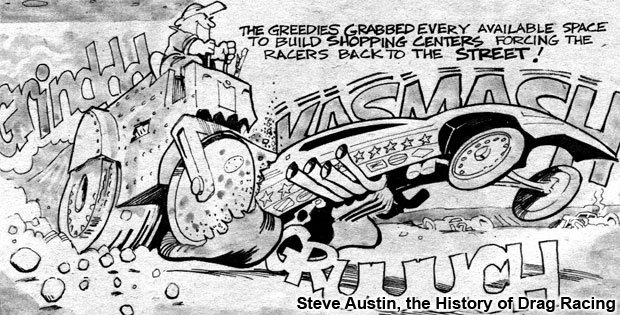
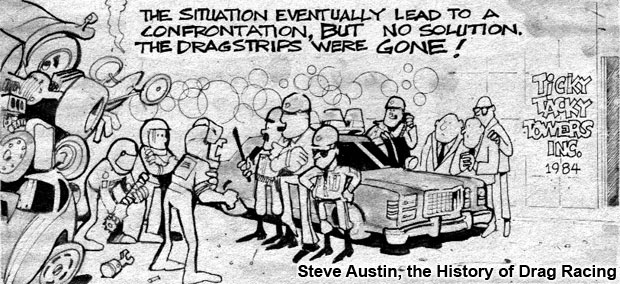
The energy that I talked about from the Irwindale Dragstrip used to be much closer. In Terminal Island, between Long Beach and San Pedro there used to be an amazing drag strip where people could race legally. It was shut down in 1984 and despite the best efforts from organizers and public demand it doesn't look like it will ever reopen. It seems that politics and greed will keep that land empty until the right business arrangement can be made. That is truly shameful.

Even if the drag strip were open when I was immersed in the arcade scene, I was still too young to participate. My parents might have driven me to watch the races but it wouldn't have been enough for me. The best I could do was get very much into the arcade versions and use my imagination. I was hooked on Max RPM for a long while. Fighting to get a good draft on my opponent or trying to shake him off if he was doing the drafting. Trying to memorize tracks and shifts, any detail that might have given me an advantage.

The graphics on drag racing games have improved since that time but the spirit is what is lacking. The creative spark that was hot rodding and became drag racing is hard to replicate. It is harder still to keep that spirit fresh and interesting to people that aren't die-hard racing fans. Sega created one of the early arcade experiences that approached racing with a fresh and unique perspective, completely different than the drag race experience. Their game eventually became a big-time, albeit short-lived series. Please come back to find out what game I'm referring to.

Did you ever see, or even play this arcade gem? I'd like to hear about it. Let me know in the comments section please. As always if you would like to sponsor me please visit my Patreon page and consider donating each month, even as little as $1 would help make better blogs and even podcasts!
follow the Street Writer on Patreon!

Wednesday, June 7, 2023

Power Drive & Bigfoot, the almost great monster truck games - Originally published on 1UP - March 15, 2009

NOTE: I have the original images for this blog, but I could not find the HTML files. So I'm rewriting it from memory. I hope you understand.

I am and have always been a HUGE fan of monster trucks. On this blog I've written extensively about my obsession with them, as well as a general history of the culture. You can read the posts below:  


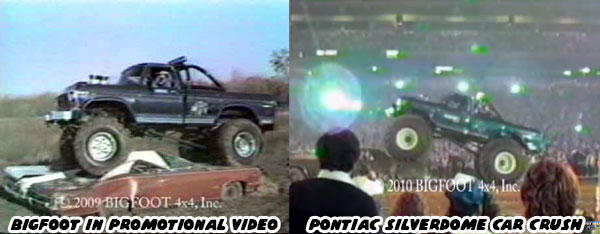
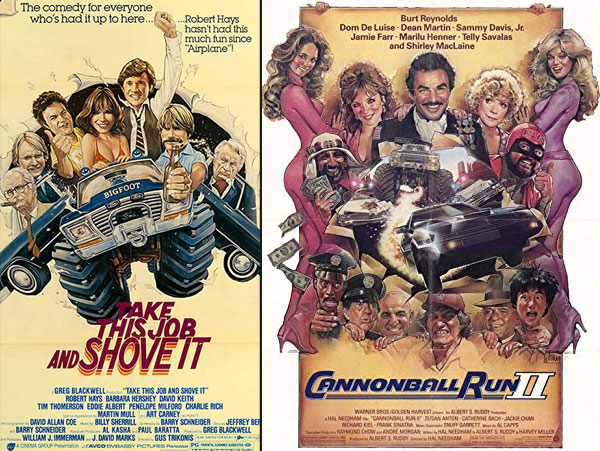
Naturally as a little kid I was drawn to every video game featuring those gigantic trucks, which back in the day were few and far between. To give you a sense as to how little there was for me to enjoy think of it this way. The very first monster truck I ever saw was Bigfoot the King of the Monster Trucks. It was featured in the 1981 film Take this Job, and Shove it. As many young boys could tell you the love was instant. I had never seen a truck as big, and as bad. Unless you were like me, and scouring the 4x4 magazines every month then you wouldn't see it in action again until the television show That's Incredible in 1983, and the movie Cannonball Run II in 1984. 

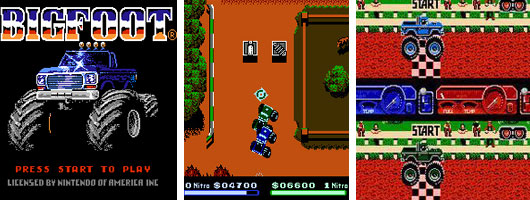
Bigfoot created a new type of off road culture, and when racing against contemporaries like King Kong, and USA-1 had also created an entirely new form of motorsports. It started in the midwest in the late '70s, but would reach global popularity in less than a decade. Yet despite all this Bigfoot wouldn't appear in a video game until much later. I don't think you grasp how painful the wait was for me. I was in elementary school when I first saw Bigfoot, but wouldn't get to play a game featuring the truck until I started high school. When you are young this literally feels like a lifetime has passed. The Bigfoot game was developed by Acclaim Entertainment, and released on the Nintendo Entertainment System in July 1990. By then it seemed to be too little too late. Worse yet it was built on outdated technology. To put it in perspective the Sega Genesis 16-bit console came out in 1988, and the Super Nintendo would debut in November 1990. Games that were coming out for the 8-bit NES were less, and less notable. 

Bigfoot on the NES turned out to be a popular, but ultimately a crappy game. I'm sure if it had come out four years sooner my opinion on it would have been different. The game was split between overhead, and side-scrolling racing. Careful timing of using boosts and weapons helped ensure a victory. I couldn't afford a copy as a kid. Thankfully I could rent it for a buck from the local video store. I got a chance to play it during a sleepover at my friend's house. He knew I was a huge fan of the truck, and made sure that it was one of the games we had rented for the weekend. I managed to destroy all of the levels with a little practice. Visually the game was nice, but limited. After playing for most of the evening I quickly grew bored of it, and looked for other challenges. I was glad I didn't buy it on day one. I might pick it up for much less today just to have it in my collection. 

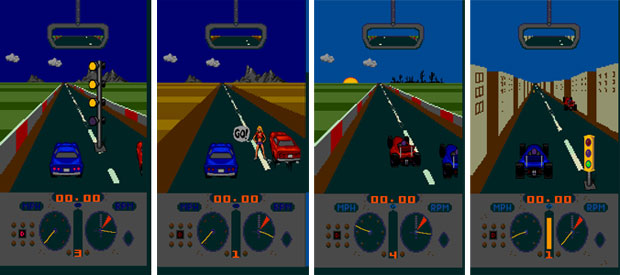
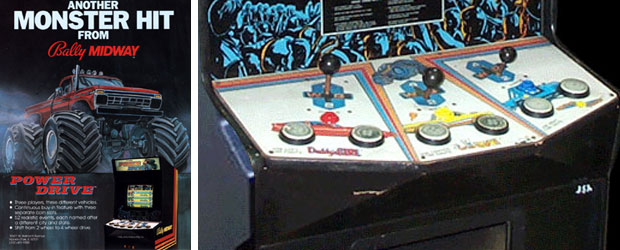
It would take a long time for a decent monster truck game to appear. The first one of any merit was Power Drive by Bally Midway. It was a mildly successful arcade game from 1987. There was actually one at my local bowling alley arcade. After playing it a few times I was disappointed in the execution of it. It showed how little developers knew about monster trucks, or how they could work in video game form. You could tell something was wrong with it by just looking at the cabinet. There was a gear shifter, and two buttons, but no steering wheel, or gas pedal to control the action. It wasn't like the technology to steer video game cars didn't exist. Atari had introduced that into arcades in 1974 with the game Gran Trak 10. 

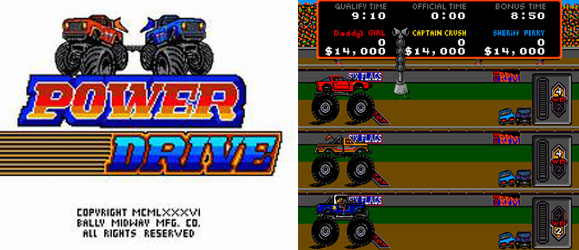
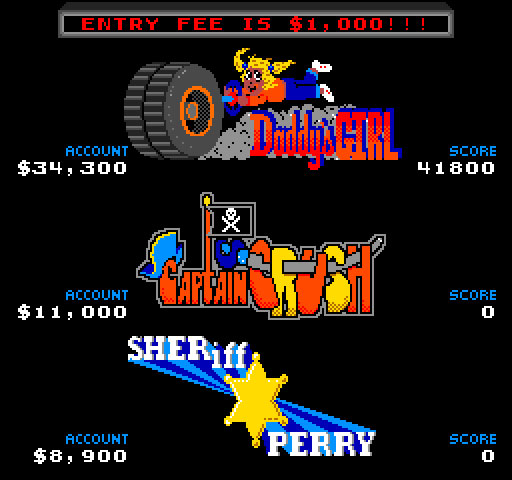
As with other Bally-Midway 84-86 arcade titles, Power Drive was designed to separate you from your quarters as fast as possible. You earned credits by winning competitions, but also had to spend credits paying entry fees, and fixing up your truck. So no matter how good you were you would eventually run out of money, and had to put in another quarter to continue. This game was just about pushing the buttons as fast as you could, and executing timed boosts. Sort of like Konami's classic Track and Field. Only this time you were crushing cars, instead of jumping over hurdles. Power Drive featured the staples of early monster truck competitions, these included car crushing, sled pulling, wheelies, and long-distance jumps. It was fun but you would wear out against the ruthless computer within a couple of rounds. 

The thing I enjoyed the best were the graphics, and three playable monsters. There was a red corvette nicknamed Daddy's Girl, a yellow truck named Captain Crush, and a blue Jeep named Sheriff Perry. The computer controlled truck was called Black Lightning. They reflected the imagination that went into early monster trucks. They were all unique. In the early days there was no template to work from. The builders of the first generation of monster trucks were experimenting with different frames, engines, tires, and building techniques. No two looked alike, and I was grateful for their creativity. After the disappointment of Bigfoot I had just about given up hope that there would ever be a good monster truck video game. That literally changed one year later when an amazing game appeared out of nowhere. I'm going to talk about it in the next blog.

Were you ever let down by a video game you were waiting on? Let me know in the comments section please. As always if you would like to sponsor me please visit my Patreon page and consider donating each month, even as little as $1 would help make better blogs and even podcasts!
follow the Street Writer on Patreon!