Showing posts with label nintendo. Show all posts

Wednesday, June 28, 2023

The little big world of RC Pro AM - Originally published on 1UP - March 24, 2009

RC Pro Am is the definitive combat racing game for those that grew up with the NES as their first console. Just ask my friend Jai about his experiences and memories of the game. For those that are unfamiliar with the Rare gem from 1988, it was an isometric racing game with weapons thrown into the mix. Unlike the Sprint series where players could see the entire track RC Pro Am would scroll across the track depending on the players position. This made guessing twists, turns and obstacles very hard. It was crucial for players to learn the course or at the very least keep an eye on the map to find their position. Of course while trying to race players also had to keep an eye on opponents and fight them off with an assortment of missiles.

The game was frenetic. The racing element was hard by itself, when combined with weapons then it became insane. Like many of the classic games it was the challenge that also made it memorable. If it were difficult because of the controls then it would have been forgotten. But the control was dialed in, the graphics were as good as any other NES racer if not better and the balance amazing. Rare had truly crafted a title that was head and shoulders above many combat racers of the day. RC Pro Am predated Atari's Badlands by two years and to many, if not all, it was a superior experience. I know my friends on 1UP have much love for this game. The isometric racer has rarely been done better since. Although the racing and combat genres have all gone 3D since every now and then we see some really fun isometric racers.

The spiritual successor to RC Pro Am was created by David Jaffe and the good folks at Eat Sleep Play (former Incog Inc. and SingleTrac employees). Calling All Cars was an isometric car combat game that owed a lot to Rare's influence. They ditched the track in favor of an open world environment where players tried to return escaped prisoners back to jail. Players could use weapons on each other in an attempt to steal the ragdoll-like prisoners. It was very fast-paced with point leaders changing pace from moment to moment. The cel-shaded graphics were a nice touch, helping keep the theme light and arcade-like. If you're on PSN then you owe it to yourself to check this game out. Just talking about it makes me want to go over the cousin's house for some more matches.

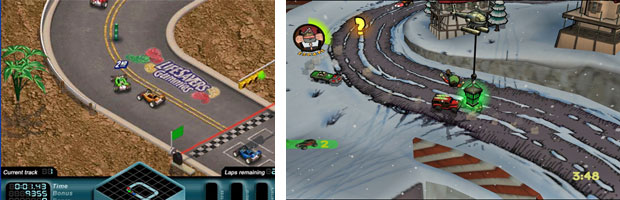
The spirit of RC Pro Am continues even in the Flash game market. RC Rally is a simple racing game, no weapons in the title, but the look of this isometric racer owes a lot to Pro Am. I tool around with the game from time to time at work and wish that perhaps some day Rare might think about resurrecting the game. Of course once weapons were added to cars things would never be the same. The light hearted feel of Pro Am would give way through the grim 90's. David Jaffe and his crew defined the genre years before Calling All Cars with a dark series that was a macabre comedy. You might have heard of it, it was called Twisted Metal.

Did you ever play a classic NES, PC, or arcade car combat game? I'd like to hear about it. Let me know in the comments section please. As always if you would like to sponsor me please visit my Patreon page and consider donating each month, even as little as $1 would help make better blogs and even podcasts!
follow the Street Writer on Patreon!

Wednesday, June 7, 2023

Power Drive & Bigfoot, the almost great monster truck games - Originally published on 1UP - March 15, 2009

NOTE: I have the original images for this blog, but I could not find the HTML files. So I'm rewriting it from memory. I hope you understand.

I am and have always been a HUGE fan of monster trucks. On this blog I've written extensively about my obsession with them, as well as a general history of the culture. You can read the posts below:  


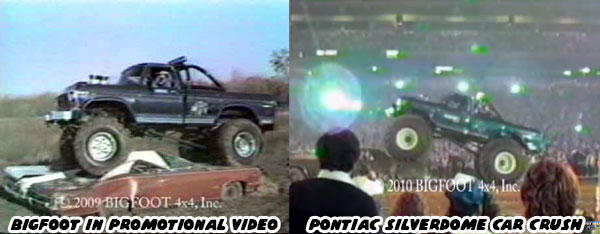
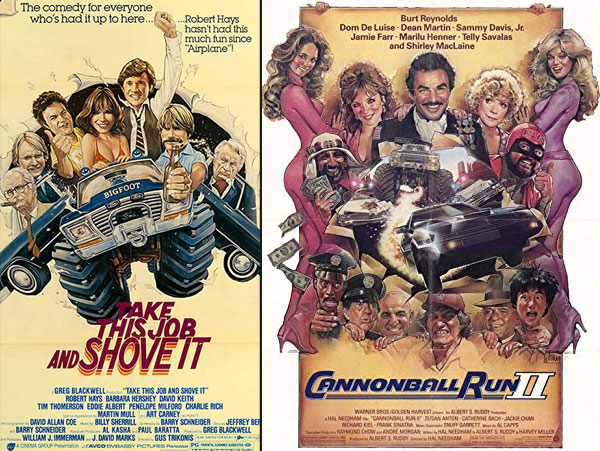
Naturally as a little kid I was drawn to every video game featuring those gigantic trucks, which back in the day were few and far between. To give you a sense as to how little there was for me to enjoy think of it this way. The very first monster truck I ever saw was Bigfoot the King of the Monster Trucks. It was featured in the 1981 film Take this Job, and Shove it. As many young boys could tell you the love was instant. I had never seen a truck as big, and as bad. Unless you were like me, and scouring the 4x4 magazines every month then you wouldn't see it in action again until the television show That's Incredible in 1983, and the movie Cannonball Run II in 1984. 

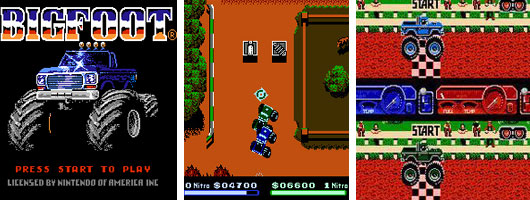
Bigfoot created a new type of off road culture, and when racing against contemporaries like King Kong, and USA-1 had also created an entirely new form of motorsports. It started in the midwest in the late '70s, but would reach global popularity in less than a decade. Yet despite all this Bigfoot wouldn't appear in a video game until much later. I don't think you grasp how painful the wait was for me. I was in elementary school when I first saw Bigfoot, but wouldn't get to play a game featuring the truck until I started high school. When you are young this literally feels like a lifetime has passed. The Bigfoot game was developed by Acclaim Entertainment, and released on the Nintendo Entertainment System in July 1990. By then it seemed to be too little too late. Worse yet it was built on outdated technology. To put it in perspective the Sega Genesis 16-bit console came out in 1988, and the Super Nintendo would debut in November 1990. Games that were coming out for the 8-bit NES were less, and less notable. 

Bigfoot on the NES turned out to be a popular, but ultimately a crappy game. I'm sure if it had come out four years sooner my opinion on it would have been different. The game was split between overhead, and side-scrolling racing. Careful timing of using boosts and weapons helped ensure a victory. I couldn't afford a copy as a kid. Thankfully I could rent it for a buck from the local video store. I got a chance to play it during a sleepover at my friend's house. He knew I was a huge fan of the truck, and made sure that it was one of the games we had rented for the weekend. I managed to destroy all of the levels with a little practice. Visually the game was nice, but limited. After playing for most of the evening I quickly grew bored of it, and looked for other challenges. I was glad I didn't buy it on day one. I might pick it up for much less today just to have it in my collection. 

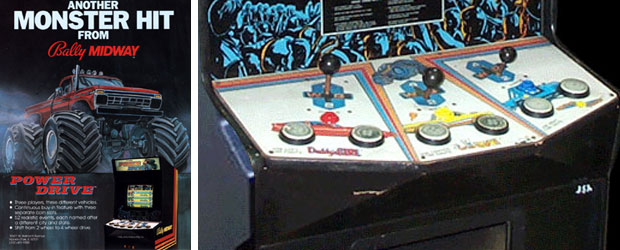
It would take a long time for a decent monster truck game to appear. The first one of any merit was Power Drive by Bally Midway. It was a mildly successful arcade game from 1987. There was actually one at my local bowling alley arcade. After playing it a few times I was disappointed in the execution of it. It showed how little developers knew about monster trucks, or how they could work in video game form. You could tell something was wrong with it by just looking at the cabinet. There was a gear shifter, and two buttons, but no steering wheel, or gas pedal to control the action. It wasn't like the technology to steer video game cars didn't exist. Atari had introduced that into arcades in 1974 with the game Gran Trak 10. 

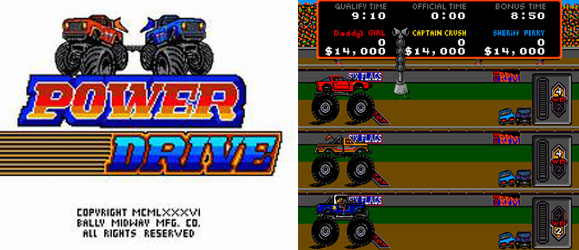
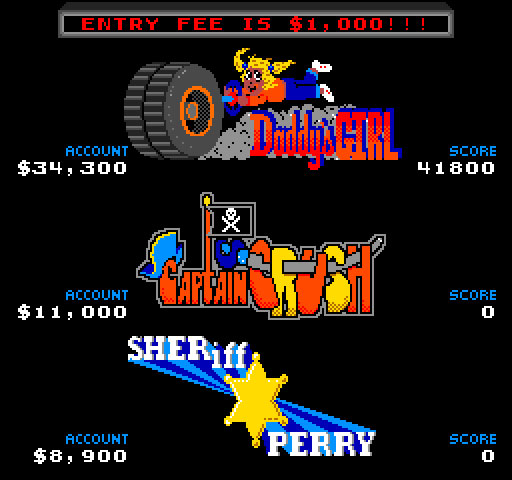
As with other Bally-Midway 84-86 arcade titles, Power Drive was designed to separate you from your quarters as fast as possible. You earned credits by winning competitions, but also had to spend credits paying entry fees, and fixing up your truck. So no matter how good you were you would eventually run out of money, and had to put in another quarter to continue. This game was just about pushing the buttons as fast as you could, and executing timed boosts. Sort of like Konami's classic Track and Field. Only this time you were crushing cars, instead of jumping over hurdles. Power Drive featured the staples of early monster truck competitions, these included car crushing, sled pulling, wheelies, and long-distance jumps. It was fun but you would wear out against the ruthless computer within a couple of rounds. 

The thing I enjoyed the best were the graphics, and three playable monsters. There was a red corvette nicknamed Daddy's Girl, a yellow truck named Captain Crush, and a blue Jeep named Sheriff Perry. The computer controlled truck was called Black Lightning. They reflected the imagination that went into early monster trucks. They were all unique. In the early days there was no template to work from. The builders of the first generation of monster trucks were experimenting with different frames, engines, tires, and building techniques. No two looked alike, and I was grateful for their creativity. After the disappointment of Bigfoot I had just about given up hope that there would ever be a good monster truck video game. That literally changed one year later when an amazing game appeared out of nowhere. I'm going to talk about it in the next blog.

Were you ever let down by a video game you were waiting on? Let me know in the comments section please. As always if you would like to sponsor me please visit my Patreon page and consider donating each month, even as little as $1 would help make better blogs and even podcasts!
follow the Street Writer on Patreon!

Monday, October 19, 2020

Rad surf designs, or trying to emulate my cartoon heroes...

Earlier this year I talked about emulating my artistic heroes when I draw certain subjects. For example I said when I draw skateboarders I try and capture the skeleton imagery of Vernon Courtlandt Johnson (VCJ), the illustrator behind the Powell Peralta “Bones Brigade” art. When I draw basketball players I try and capture the energy and lanky proportions of the painter Kadir Nelson. Like many artists out there I have a ton of influences, and that is just the tip of the iceberg. When I draw cars I have many influences from the pages of CARtoons magazine. Steve Austin (not the wrestler) is an amazing cartoonist. It’s one thing to render a realistic car, but to make a caricature of it takes much more work. You have to capture the lines, and stance of each car. You have to make them easy to identify to the audience. 


Mr. Austin can do this with any vehicle, make, and model. His lines are clean, and the ability to draw each car from every angle is astounding. Steve, is an artist that follows closely in the steps of Ed “Big Daddy” Roth (RIP), Ed “Newt” Newton, and Dave “Big” Deal (RIP). These were artists who were able to create a career turning cars into works of art. In my honest opinion there are very few people that can create art at this level. Joe Borer is another such person. What separates his work from the previously aforementioned legends is that his cars are always in the middle of the action. They have weight, they have movement. The tires are glued to the road, at the same time the rubber is separating from the wheels. Even when his cars are standing still they look like they’re ready to peel off the page. 
 

Mr. Borer approaches his vehicle art in the same way an animator does characters. They have to be fluid, dynamic, and filled with personality. Joe is able to “stretch and squash” his cars with the ease of the best Disney cartoonists. For anyone not used to cartooning trying to make a car look flexible is very difficult. After a lifetime of drawing it’s something that I cannot do easily. That was the thing about the artists that I grew up studying. They made everything look so amazing. One of the most underrated artists in my book was Shawn Kerri. She was an impeccable cartoonist, but also an accomplished painter. She could render realistic scenes, as easily as she could caricature people. Sadly she died young, but not before producing some of the best CARtoons issues ever. 
 

In the action sports world there was only one other artist that I could compare to Ms. Kerri. His name is Damien Fulton. He is the artist behind the comic strip Radical Rick, as it appeared in the pages of BMX Plus magazine. Damien had very expressive cartoons, but whose BMX bikes, and races were rendered with a bit of realism. When he painted his characters, sometimes for the cover of the magazine, they were beautiful works of art. I would try my best to emulate Damien’s attention to detail when drawing BMX bikes. His poses, his understanding of the culture was super deep. Studying his panels made me a better artist. It helped me understand the history, and movements behind BMX. The same lessons went for every cartoonist I followed. 


Not all of the artists I enjoyed studying were as prolific as those in the pages of CARtoons magazine, or BMX Plus. Some of the art was seen sparingly, like VCJ’s designs for Powelll Peralta. Only when a new skateboard was released, perhaps a few a year, would I see a new rendering by VCJ. I poured over the designs in the skateboard magazines, as I couldn’t afford to actually buy the decks. Other art that inspired me was seen on soft goods, like tee shirts, hats, and the occasional sticker. Pop fashion for the early, and mid ‘80s was a mix of action sports culture. Surf, skate, and BMX all had a hand in influencing the look, and feel of the generation. Colors were bright, and some of the hottest labels had created their own mascots. Surf line Maui and Sons had a shark man mascot. Other brands like Airwalk, Rip Curl, Billabong, and Gotcha worked hard to create their own branding as well. 


Mascots on ‘80s clothing became very en vogue. It turned out that Disney, and Warner Bros. did not have a monopoly on the market. Arguably the king of the era was an artist named Steve Nazar. A company called Town & Country Surf Designs, out of Pearl City Hawaii was looking for an artist. In the early ’80s Steve showed them his original cartoon characters, many with a heavy surf vibe, and the rest as they say was history. Steve’s original characters, including Joe Cool, Thrilla Gorilla, the Kool Kats, and the tiki-headed Wave Warriors were instant hits. 
 

Nazar’s designs, went on the brightest shirts imaginable. These mascots were often seen in many humorous situations. Their shirts, stickers, and other goods were sold, and seen, seemingly everywhere in the decade. I don’t remember a time when I didn’t see the art in magazines, at school, the playground, or even at church through the ‘80s. This repetition of imagery in multiple shops made sure that the brand was becoming recognizable in every market. It was a win-win for the small company out of Hawaii, and the artist just trying to pay some bills. The characters were not only popular with the surf crowd, but with just about every demographic. Anybody could wear the shirts, and everybody knew who Thrilla Gorilla was. 


The mascots were so well known that LJN created a game for the Nintendo Entertainment System (NES). Think about that for a moment. The majority of early console games were either ports of an existing arcade game, or they were based on a sport. Licensed games came from comic book, or movie franchises. This title was based on the art from tee shirts. The game was well received by most audiences. It let players compete in both skateboard and surf competitions. The control took a little used to, but before long most were able to breeze through the courses, and perform some radical tricks. The game demonstrated that a solid idea, with great visual storytelling, could be enough to get a video game made. Although Steve Nazar didn’t program, or animate the game, his characters were as well received as the biggest mascots of the era, including the Mario Bros. and Mickey Mouse. T&C would end up getting a sequel, called Thrilla’s Surfari. This game was more of a platform adventure, where Thrilla had to fight angry natives, and giant weird monsters in order to save his girlfriend Barbi Bikini. He still surfed, and skated, just not in competition. 
 

Just as the characters had hit the big time the partnership between Mr. Nazar, and T&C would end less than amicably. The parent company in Hawaii decided to take their art in a different direction. Since they did not own the rights to the characters they went with other, more generic, surf looks. The characters were sadly without a home for 30 years. Many would ask T&C why they didn’t have a line of retro shirts, but they never wanted to revisit the era that really helped put them on the map. A few years ago Nazar decided to bring back all of his designs, and launch a small company called Thrilla Krew. He reprinted just about all of the classic characters on soft goods, and stickers. He was very careful to remove the trademark T&C yin-yang symbol from his new products. 
 

Which actually takes me to some designs that I have been working on over the end of the summer. Since the pandemic started I have been very busy, at work, and at home. My job has me working out of the house, and at the same time I have been taking care of a few family issues. I have had zero time, to write, record, or post any new blogs. As you can tell. I’d hit a creative road block, as the pandemic, and political climate were draining. I looked back at the artists, and movements that inspired me. I remembered Steve Austin, Joe Borer, and Shawn Kerri. I longed to see new art from Damien. But more than that I was missing the mascot characters from T&C Surf Designs. I was wondering what would it be like if they had a new video game. How would their levels work out? What new challenges could I come up with. 
 

As I was planning out a sequel to the game I began sketching out ideas for monsters attacking the characters out of the surf. That in turn inspired me to create tee shirt designs that were in the style of Mr. Nazar, and those early designs that I fell in love with. After several weeks of illustrating little bits at a time I finally completed these drawings. I may still do more in his style, featuring his characters, but for now I’m happy to bring you these cartoons. 
 

I want budding game designers, artists, and creatives to remember the power of storytelling. When people can see great art, including cartoon characters, and imagine a narrative then you're doing something right. If you're struggling with a piece, or are having some writers block just look at what your influences did. See how they made things work. Take it apart, and try to emulate it. You'll then have a better insight on how visual storytelling works.


Whether you’ve never heard of these characters, or whether they are like old friends I’d like to get your feedback. Is there an old video game that you wish had a remake? Would would you like to see if you were the producer. Or how about this if I were to design tees like these would you be interested in buying them? Would you like to see me take another crack at cartoon art? Are there long lost characters that you’d like to see get a come back? I’m interested in hearing from you! 


I do plan on recording more episodes, as the holiday season rolls up. I may have some time open up, which will allow me more creative breathing room. It would be much welcome, as this summer has been a pressure cooker. For now please enjoy these illustrations, and let me know what you think. 


If you would like to sponsor me please visit my Patreon page and consider donating each month, even as little as $1 would help make better blogs and even podcasts!
follow the Street Writer on Patreon!

Wednesday, February 21, 2018

The Giant Monster Series, part 8...


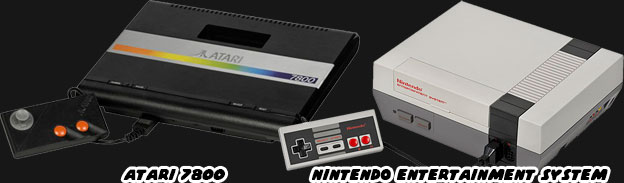
In 1986 the game console was trying to make a comeback in North America. The Nintendo Entertainment System had barely been out for a year. The boom and bust of the Atari 2600, released in 1977, had burned many retailers. The console was expensive as were the games. Many of the games were fun but very rudimentary. The subsequent release of the Atari 5200 in 1982 and Atari 7800 in 1986 were met with mixed reviews. Retailers felt that the technology for arcade quality at home experiences were still a long ways off. They would be right but not for long. What the retailers failed to understand was that the developers were learning to work with the limitations of the hardware, not despite them.


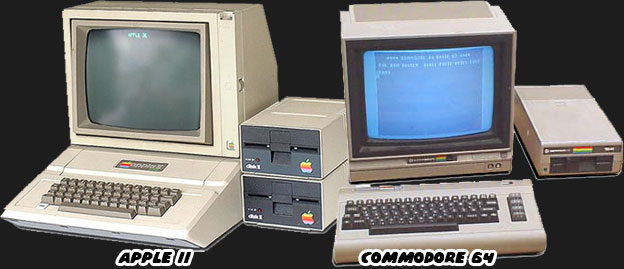
Nintendo would release hit after hit for their NES. Metroid, Super Mario Bros, Kid Ikarus, Mike Tyson's Punch-Out and the Legend of Zelda rightfully earned dedicated followings. The first generation of 8-bit gaming was well underway. The PC as game system was beginning to gain momentum as well. The Apple II, Commodore 64 and its family-friendly Amiga were finding their way into many homes and earning many followers. The PC was capable of putting more colors on screen than game consoles, have sprites that were larger and offered more frames of animation as well. While the home PC did not match up to the arcade hardware it was still much closer to it than the consoles. As such gamers expected more immersive experiences on PCs than home consoles. Things like saving games and customizing controls were featured on the PC well before cartridges were being equipped with internal batteries.


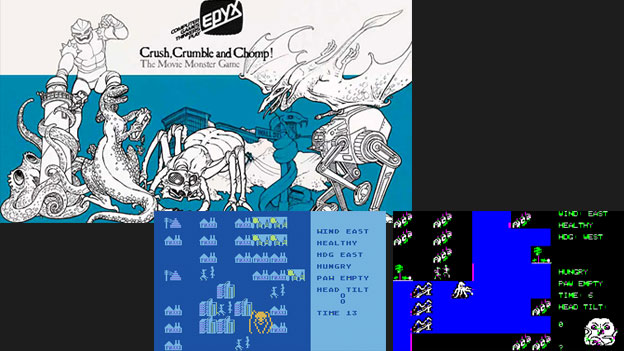
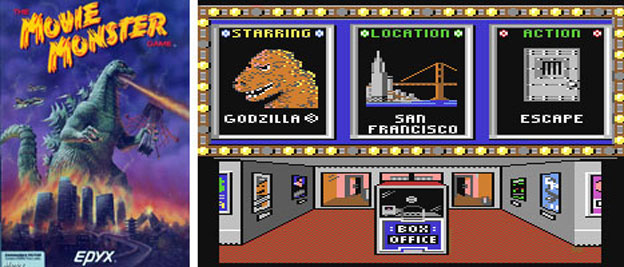
The giant monster found its niche on the PC that year. The Epyx Movie Monster Game came out in 1986. It was remembered for licensing the biggest monster star of all. Godzilla appeared on the box art as well as was a playable character. Epyx had first tried out the giant monster genre in 1981 with the game Crush, Crumble and Chomp, the Movie Monster Game. The earlier title featured knock-offs of famous movie monsters with names like Goshilla, the Glob and Mantra. Like many early PC games it required a certain level of imagination to enjoy. The second Movie Monster game was much more advanced but still used a number of generic monsters to fill out the ranks. There was a Stay Puft Marshmallow Man knock-off called Mister Meringue, Sphectra the wannabe Mothra, the Glog, a giant robot named Mechatron and a giant spider named Tarantus.


The developers let the genre help dictate the tone of the game. It was a bit of inspired design actually and helped bring players right into the world Epyx had created. The title screen for the game was the front of a classic movie palace. Players selected the type of adventure they were going to have by changing the movie posters above the ticket booth. They first chose which monster would be the star of the feature, then which city they would be visiting and last what the of adventure they would be on. Several major cities from around the world were playable; Tokyo, San Francisco, London, Moscow, Paris and New York. Players could choose to search for an item, usually a monster offspring, escape from the city and pursuing army, go berserk and be scored on how much damage they caused, or destroy a landmark. The next screen completely immersed audiences and was one of my earliest PC gaming memories.


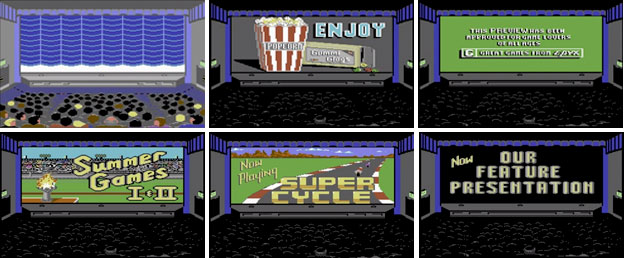
Gamers were placed inside the theater to watch the monster film they had created. The curtain went up and the lights dimmed. There was an advertisement for snacks followed by a preview of other upcoming games by Epyx. Even though I was looking at single screen previews I was completely caught up in the experience. I felt like I was in the movie theater as well. After the trailers the feature presentation screen appeared. A title card announced the origin story of the creature, where it was headed and what it was after. I knew then that no console game could ever hope to match the experience offered by the PC. On top of the movie theater loading screens there were simply too many possible combinations of missions for a single cartridge to hold.


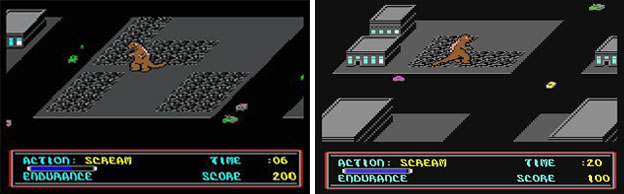
The game dropped players right in the middle of the action. There were a few things to keep track of at the bottom of the screen. A clock kept track of how long the player had been in the city or how many minutes they had to escape. The player had an endurance bar, one attack and the ability to scream or roar. Players could move in four directions, walk over traffic and topple buildings. On missions where players had to search for something or knock over a landmark a second bad would appear to let players know how close they were to the objective. If a player ran out of energy or if they completed the objective then the game would end. The city levels were very large, the ability to walk in any direction opened up the world for exploration. The characters each had their own unique animations and attacks.

No console game even remotely offered what Movie Monster did. It was easy to get caught up in the gameplay when the technology seemed years ahead of anything Atari, Nintendo or Sega had at home. The best part was the sheer number of possible monster / city / objective combinations offered to players. They could go back to the game again and again and never play the exact same experience twice.


When the level ended the screen went dark and the final score was tallied up. Players then found themselves back in the movie theater. The screen would sum up the devastation and whether or not the monster was successful, the credits would then roll. After the credits the lights would come back up in the theater and the curtain would drop again. I enjoyed that there was a virtual theater on the PC just waiting for the next monster movie to queue up. Most other games put players right into the action without letting them get settled into the world that the developers had created. This little bit of immersion went a long way. It demonstrated everything that was right about PC gaming. As much fun as Movie Monster was it was another giant monster game released in 1986 that became the star. We shall look at this game in the next blog.


Monday, February 19, 2018

The Giant Monster Series, part 7...


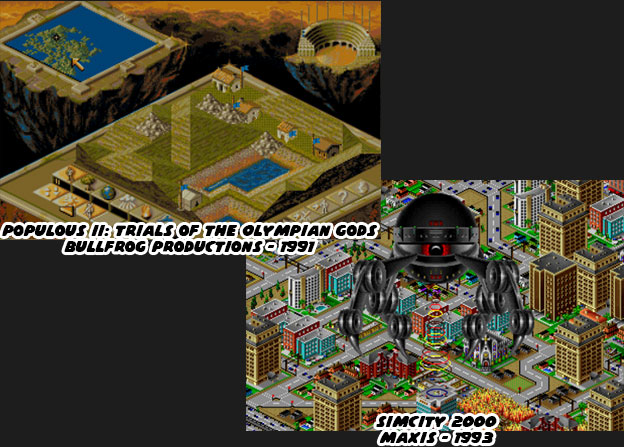
The giant monster games mentioned thus far had a common theme. They were all about fighting against the creatures or simply trying to survive against them. The draw for gamers was the fear and excitement that they felt battling them. There was a different type of emotional draw that could only be had by playing as the giant monster. In order to do this the game developers had to create new ways to experience the game. Giant monsters were not human and did not have the same limitations as them. The creatures could be as benevolent or malevolent as the designers allowed. In some genres the giant monster was considered a god simulation. Spore, Sim City and the classic Populous were examples of the god simulation or life simulation games.


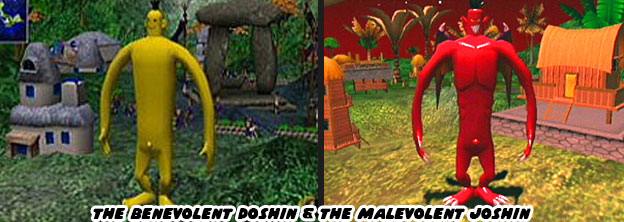
Players assumed the role of an invisible creator and could build life and architecture from the microscopic to the a global scale. To make things interesting players could trigger catastrophic events, or learn how to deal with them. Floods, alien invasions, giant lizard attacks and earthquakes were among the more unique game play elements. The invisible forces could build or destroy an entire civilization and because they could they would sometimes be worshiped by the in game characters. Such was the case for Doshin the Giant, a 1999 classic Nintendo Gamecube. Doshin was different from all the other simulation games because the character and his actions were not invisible. Players assumed the role of Doshin and tried to help the natives on the island of Barudo. The banana-colored Doshin could help shape the land for villagers, aid in the recovery from natural disasters and make their lives a little easier. As such he was asked to help unite the four tribes through his powers. The more he did for the islanders the larger and more powerful he became. Players could also turn on the villagers and become a destructive giant, Doshin would turn red and grow bat wings. He was known then as Joshin. In other simulation games players could become more powerful, only they never saw an on screen persona that represented themselves.


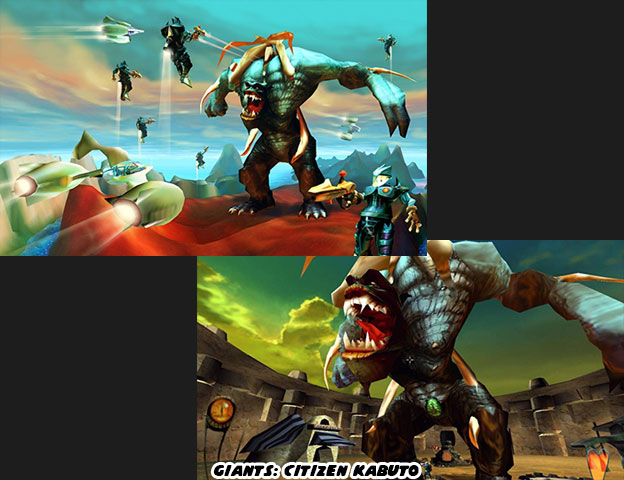
In 2001 Planet Moon Studios released a title whose plot was comparable to Doshin but whose gameplay was completely different. Giants: Citizen Kabuto was set on an island as well except this piece of land was traveling through space. On it three different races were battling for supremacy. Two of the races, the Meccaryns and Sea Reapers fought with weapons and magic respectively. Players could play as either of those races in a third-person perspective. The third race consisted of a single creature, a giant name Kabuto. Having control over Kabuto was a powerful contrast to the other races. The game played similar to other third person shooters except for Kabuto. The character towered over entire units and plowed though their ranks with ease. Kabuto did not have any weapons but instead relied on wrestling moves to damage opponents and their bases. The sense of power generated by Kabuto was great. When he ran he knocked over trees with ease. The other races could get flattened like insects every time he swung his massive arms. The game play was a stark contrast to Doshin, whose slow pace and friendly atmosphere felt more childlike and innocent. Apparently there was a difference between the video game gods.


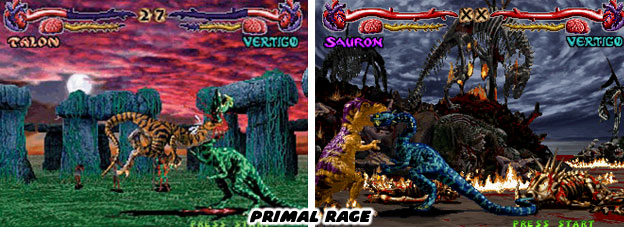
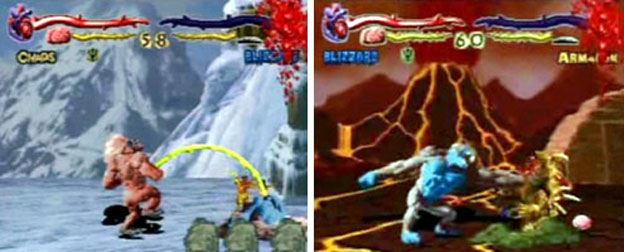
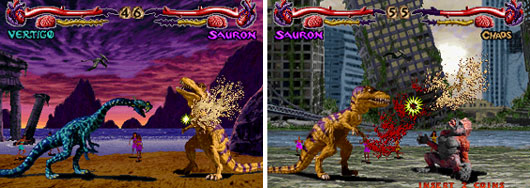
A third type of giant monster god was heating up the charts in 1994. Atari used the popularity of the fighting game as the basis for Primal Rage. The game was set in a dystopian future where giant creatures were battling for control of the planet. Each of the Primal Rage characters was worshipped as a god; the god of life, the god of virtue, the god of decay, the god insanity, etc. The monsters created for the game took a page from the oldest of the giant monster heroes. Every character featured in the game was created from a clay, rubber and fur armature just like the 1933 King Kong model. The animators used similar stop-motion techniques to create the frames for the game. Instead of posting those frames to film they were digitized to video and sprites were created for the programmers to use. Model backgrounds were composited over digital paintings to create the levels. Actors in caveman costumes were also recorded to create the people worshipping the monsters on each level. These tiny humans would follow their god from level to level, growing in number as the player progressed. The monsters could snatch a human from the background and eat them for a health bonus.


The Primal Rage monsters blew the doors off the fighting genre. Up until then fighting games featured human-sized characters with traditional or fictional martial arts moves. The Primal Rage avatars could have easily snacked on the fighters from other games. When they battled they shook the ground and created natural disasters. The developers experimented with command inputs. Like Mortal Kombat (1992) and Killer Instinct (1994), the studios were trying to create controls that differed from the six button and joystick commands that Capcom had popularized in the Street Fighter series. For Primal Rage special attacks were activated when the player released the buttons rather than when they pressed them, making for a unique learning curve. The game was also the first title that I had ever seen that allowed infinite combos, a precursor to the combos that made the Capcom VS series so popular. The fights of the Primal Rage avatars were brutal and offered players a chance to kill an opponent at the end of a match. The fatalities in Primal Rage were every bit as brutal if not more so than those in Mortal Kombat. Monsters could literally punch the brains out of opponent skulls and eat the flesh off their bones. Arcade goers winced at some of the more gross acts players could perform. Some would argue that Atari crossed the line when they introduced a character that farted, vomited and even urinated on his opponents.


Allowing gamers to play as gods had gone to the head of developers. After all, up until that point most genres tried to create the action for human-scaled characters. Racing, shooting, role-playing titles all tried to create worlds that were believable for human protagonists. All of a sudden the developers found themselves creating worlds for monsters that were the top of the food chain. No natural creature or man made weapon could have stood up to the biggest of the Primal Rage characters. They could be as gross or violent as they wanted to because there was no one that could have stopped them.


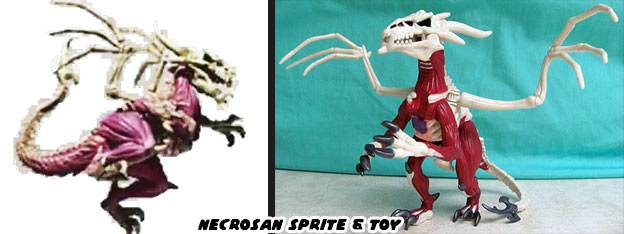
Well, the only thing that could have stopped them would have been a bigger and badder monster. Necrosan was the god of death. It was a dragon-like creature that was mostly bones but with portions of muscle and even intestine still attached to the skeleton. Players would have to defeat the creature had they wanted to claim the "Urth." Sadly the final battle was never realized. The arcade game had been published without an actual final boss. In fact it was released with unbalanced gameplay, known bugs and glitches. Patches were released over the months to arcade owners to help fix the controls and balance the fighters. Developers were hoping to introduce an actual final boss via an upgrade. Unfortunately development of that final boss and his official inclusion in a sequel was cancelled. It was proving to be too costly for Atari to continue supporting the series. The only known images of Necrosan were from concept art, sprites for the unpublished Primal Rage II, a comic book and a toy released before Atari pulled the plug. Those gods seemed to have limitations after all.


The giant monster offered unique game play opportunities for existing genres. They could enhance the sim, RPG, FPS or fighting game more than any weapon or magical attack could. Developers were finding it hard to create a niche for the giant monsters themselves. What many developers missed were lessons from their own history. Two studios showed what format worked best for the giant monster back in 1986. They created a template that would work again and again. The studios that paid attention to the model would achieve a certain level of success. The next blog will talk about the year that changed everything.


Saturday, May 21, 2016

Painted faces, where have I seen that sumo before?

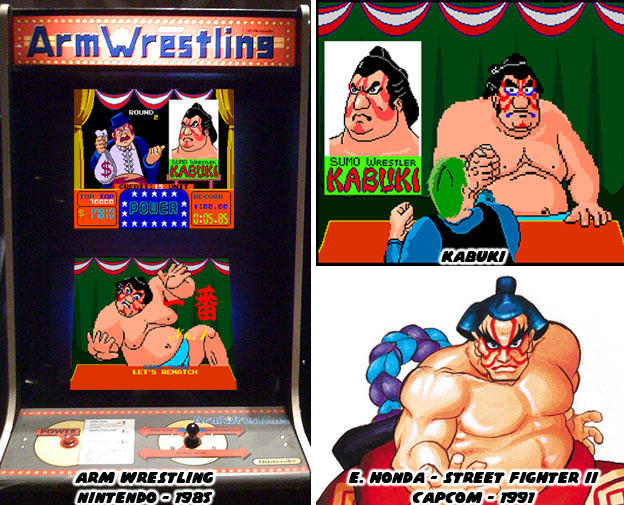
If you are a long-time arcade fan then chances are you are familiar with a rare Nintendo game called Arm Wrestling. It was a sort of spiritual successor to Punch-Out!!. The game came out in 1985 and it featured a cavalcade of silly arm wrestlers, including Frankenstein's monster, a burly Texan and pro boxer Bald Bull in a mask. One of the standout rivals was a sumo wrestler named Kabuki. What made this character unique was his face paint. Apparently this character had a flair for the dramatic. I'm not sure if the idea of mixing kabuki theater face paint with a sumo wrestler was solely Nintendo's idea or if the designers had mixed elements from various pop culture sources. I'm leaning towards the latter. The thing was that the seeds were planted for over-the-top characters to be featured in fighting games.


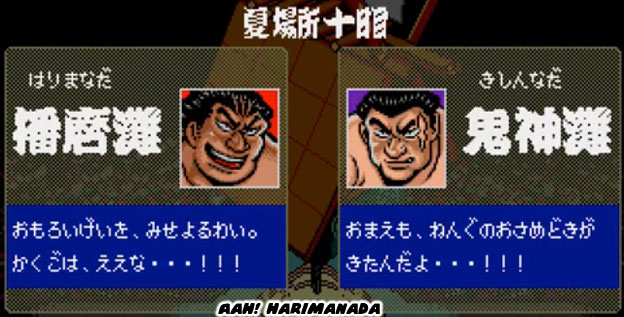
I credit Nintendo with developing a series of international archetypes in the original Punch-Out!! The various boxers from around the world had unique personality traits to go along with their memorable appearances. These caricatures would be emulated by Capcom and various studios when designing the first crop of fighting game all-stars. In 1991 E. Honda would take a page directly from Kabuki. Few remembered the Nintendo character came first and that was okay. Capcom was helping spread fight culture through their characters. The same year that Street Fighter II came out a manga called Aah! Harimanada debuted. The series was by Kei Sadayasu and would eventually be adapted into an anime series and fighting game as well. The series featured the brash Isao Harimanada, a sumo wrestler who was arrogant and insulting to opponents. He was a very dramatic character that would wear masks and headgear to the tournaments, including samurai helmets. The character would boast that that he would beat the 69-consecutive win streak of Sadaji Futabayama or retire trying. The series was kind of boring. It was a definite "Mary Sue" sports hero from Mr. Sadayasu. Isao could be rude and self absorbed and was somehow supposed to be appealing to young readers. As far as fictional sports figures go there was nothing that stood out for the hero. Audiences could guess that he would indeed reach 70 consecutive victories over the series. There was no real chance that he would lose any match. The only thing that changed were which techniques he used in order to beat his opponents. For that matter the rivals were far more interesting than the main character. One of the former champs that gave Isao a run for his money was named Kishin-Nada. The character had a nasty scar on the side of his head.


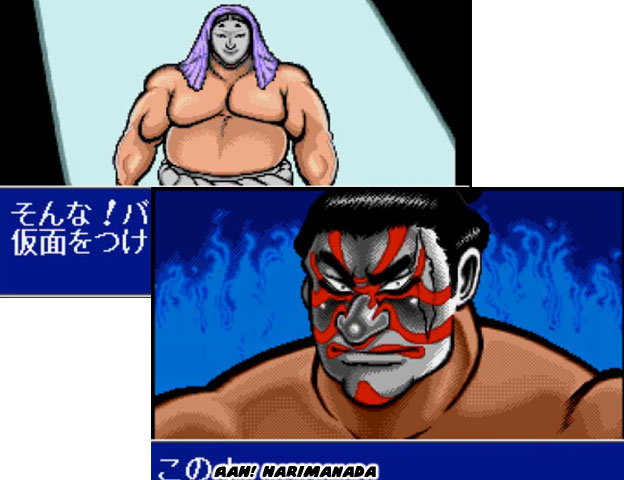
Kishin lost the match and felt humiliated by Isao, as did many of his opponents. They were all working hard to get a rematch but none took it more personal than Kishin. At the end of Isao's streak a mysterious figure appeared. This sumo was a former champ and he wore a creepy wakaonna, or girl mask from the Noh plays. It was as if Isao would have to wrestle someone with the same flare for the dramatic. When the wrestler removed the mask audiences gasped at his painted face. It was sacrilege that a sumo wrestler would actually wear kabuki face paint into the ring. This figure was trying to create a personae that was every bit as dramatic as Isao. Of course eagle-eyed readers saw that despite the face paint there was a noticeable scar on the side of this new character's face. This fighter called himself Kishin-Ryu, the dragon or ultimate version of Kishin-Nada. I'd like to think that this was Mr. Sadayasu's nod to E. Honda.


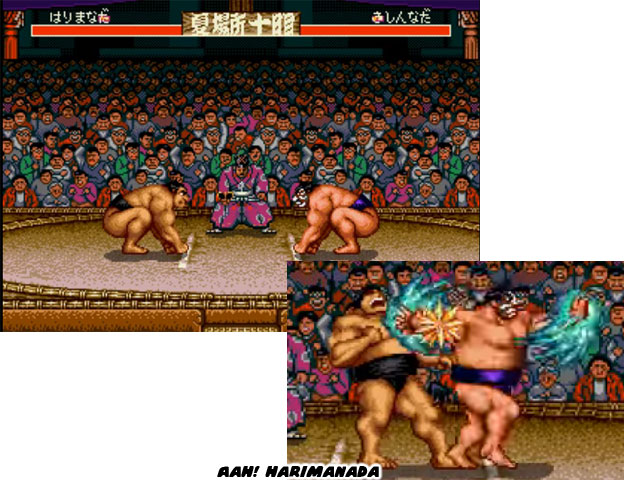
There was a Mega Drive (Sega Genesis) version of Aah! Harimanada that came out in 1993. The game by Megasoft was sorely lacking in the control department. Audiences could play through a campaign mode and every battle in the manga was presented in the same order within the game. After a few matches the game felt tedious. It would be a grind to try and beat 70 opponents in a row. What was cool however was how each sumo had their own strength and weaknesses. These things manifested as special attacks and super strikes. Imagine a version of Street Fighter but solely made up of sumo wrestlers. Super thrusts, headbutts, throws and slaps were some of the many techniques players could learn. A dozen characters each had their own super attacks that could be figured out and mastered in a two-player mode. I often wonder how Street Fighter would have been if characters had entirely new move sets applied to them in each sequel. What would have happened to E. Honda if he had new moves added to his library in Turbo, Hyper and Super versions of the game.


I hope you think about this rare series and the flamboyant sumo wrestler that appeared in other games the next time you play Street Fighter. Truth of course was much more interesting than fiction. Isao Harimanada was nowhere near as interesting as the real Futabayama. The record-setting sumo wrestler was blind in one eye but he never revealed this to anyone until after he retired. His opponents could have of course used this information against him. He was certainly much more humble about his abilities than Isao. Maybe a fighting game might base a character after a real legend. Stranger things have happened! As always if you enjoyed this blog and would like to sponsor me please visit my Patreon page and consider donating each month, even as little as $1 would help make better blogs and even podcasts!

 follow the Street Writer on Patreon!

Wednesday, October 21, 2015

How fight culture became fighting game history, final part

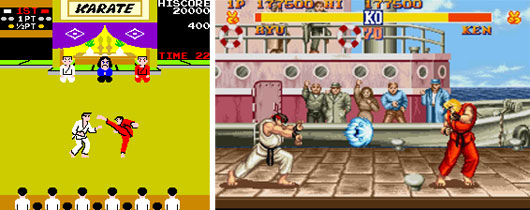
The seeds for the fighting game genre were planted in 1984. That year saw the introduction of three important arcade games which would profoundly change the industry. Irem released Kung-Fu Master, which predated Double Dragon and could actually be considered the forefather of the brawler. It had stage after stage of different villains approaching from the left and right and had a boss waiting at the end of each stage. Technos developed Karate Champ which was the original two-player fighting game featuring a red and white karateka. This was years before Ken and Ryu had appeared in the first Street Fighter. The only thing that the previously mentioned games lacked was diversity, in terms of different ethnicities. Although to be fair there was a dark-skinned giant, possibly of Indian or even Arabian descent in Kung-Fu Master. Minority characters were not playable characters however. The first prominent black character in a fighting game was Mr. Sandman.


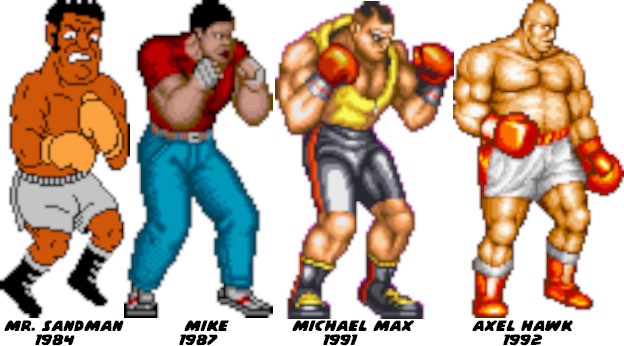
The original WVBA (World Video Boxing Association) Champion from the Nintendo game Punch Out!! Boxing would be pinned on many black characters from the earliest point in Japanese games. Some of the characters developed during the late '80s and early '90s were done as an homage to Mike Tyson. He was going through opponents at a feverish pace when he turned professional. Near the end of his reign other black athletes began to replace him. Axel Hawk was written as the mentor of Michael Max (another Tyson clone) from the Fatal Fury series. Axel was a nod to George Forman who made a comeback at the age of 46 and recaptured the heavyweight championship of the world 21 years after he had originally won it.

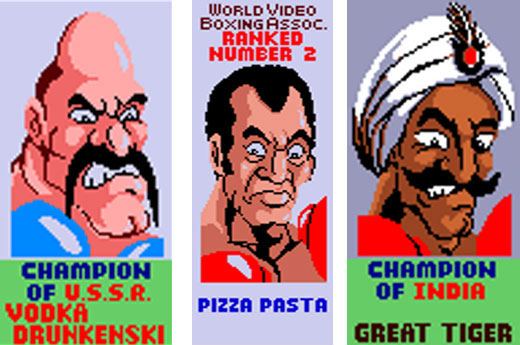
The game was also released in 1984 but had a reputation for its ethnically stereotypical characters including the Cuban Piston Hurricane and Italian Pizza Pasta. These were meant to be taken as a joke by the Japanese developers. Many game fans did not find too much offense in those characters however that changed with the introduction of the Vodka Drunkenski in Punch Out 2. The Russian was renamed when the game was translated to the home consoles. His bottle of vodka had been replaced by a soda bottle. Mr. Sandman was different though. He did not have any gimmick or racially biased name. There had been professional black fighters that also went by aliases like "Sugar," "Hitman" and "Dynamite," so the Sandman seemed to be a good fit. The character was deadpan serious, as one would expect a World Champion to be. He required perfect timing to beat and most arcade gamers never did. The character still managed to intimidate opponents 25 years later when a new Punch-Out!! was released for the Nintendo Wii.
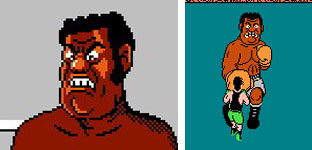

Shigeru Miyamaoto, creator of the Mario Bros, the Legend of Zelda, Metroid and a slew of other franchises had actually designed the cast and started a tradition in for developers. He demonstrated through Mr. Sandman that a character designed with respect rather than trope would reflect back to gamers. In the very first blog of this series I mentioned that the developers that respected their subject matter often did better with audiences. Even if a fighting game pitted skeletons against cyborgs or revolved around dinosaurs the players could pick up whether or not the developer was simply trying to cash in on a trend or if they had really invested their efforts into the game and the universe they created. Kung-Fu master and Karate Champ were ported to multiple consoles yet neither received a proper sequel. By comparison the Punch-Out!! series was a hit in the arcade, on the 8-bit NES with an added plot, on the 16-bit Super Nintendo with new villains and years later on the Wii. The extra time, energy, diversity and attention to detail that Miyamoto and his team had put into their game clearly came across to audiences every time.

The Japanese did not think that creating caricatures of ethnic stereotypes or names would have caused a big fuss. Through the '80s not many people took notice. However when the Politically Correct / Ethnic Sensitivity movements took off in popularity the Westerners expected those in the business world to follow the trends. In Japan that was not the case. Again there was cultural relativism to consider. Of the two nations only the US had a major civil rights movement.
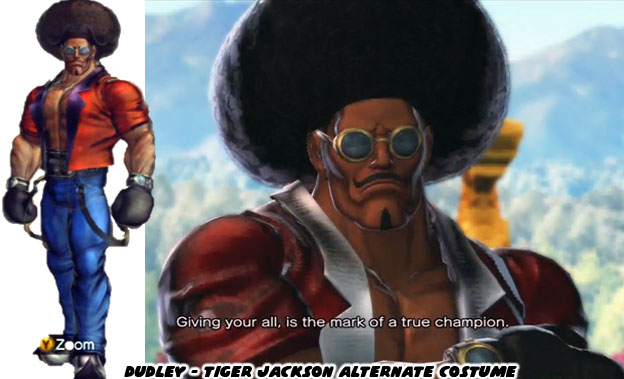

Capcom had created a great legacy of black boxers through the Street Fighter series, one of which played up the strengths and abilities of the sweet science rather than perpetuate stereotypical tropes. The bar that had been raised by the Street Fighter III team when they created Dudley was unfortunately lowered by the Street Fighter IV. More than a decade between games didn't make the Capcom artists any wiser. Dudley would receive an alternate costume of an afro and sunglasses modeled after the look of Tiger Jackson in Street Fighter X Tekken. He certainly didn't look very much like a world champ any more.

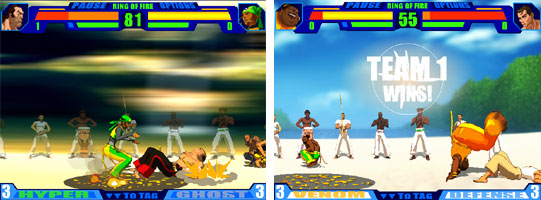
Developers in Japan and the US were stuck in a rut. Aside from professional boxers there wasn't much in terms of styles that they felt comfortable assigning black athletes. Basketball and breakdancing had become the new fad and by the mid-90s it was becoming tired to audiences. Thankfully Capcom and Namco wizened up and pointed to new fighting styles. Capoeira came into focus in 1997 thanks to Eddy Gordo and Elena. Even Sean was allowed to learn the assassin's fist that had been previously reserved for Ken and Ryu. Minority fighters suddenly no longer seemed locked into one role. A few years later Spiritonin expanded on that concept and began flipping conventions in their Capoeira Fighter series. Blacks, Whites, Latinos, men and women from different nations were all presented as exceptional capoeiristas. When those characters went on a wold tour they faced many new styles. These fighters from different nations also broke convention.
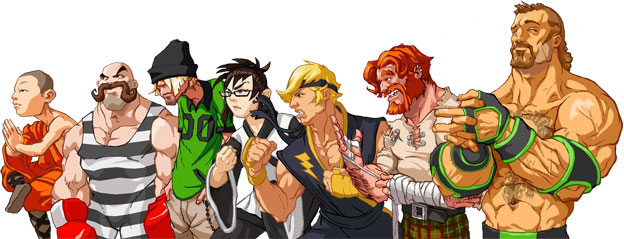

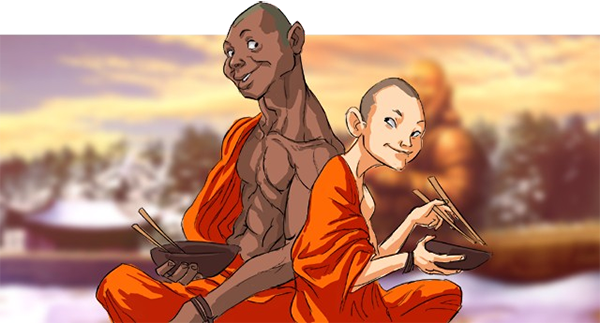
The boxing champion was a short British person with a Napoleon Complex. There was also a young Shaolin Monk, a German breakdancer, a female Tae KwonDo practitioner, a karateka based on the villain from the film the Karate Kid, a Scottish barroom fighter and a large Southern grappler. Rarely had any fighting game featured such diversity with regards to ethnicity, age and technique. Spiritonin had put the same level of detail on all the new fighters that they had with the capoeiristas. The moves each had, the special attacks, costumes, voices, names and even stages were built with forethought. The studio made sure to incorporate actual or appropriate details from each nation or culture to place on their cast. The name of the Shaolin Monk Kuan Yin Shen was based on a Buddhist deity. The young man spoke in wise passages during cut scenes, beguiling his age. Other characters had their own personalities on display while fighting or in their own cinemas.

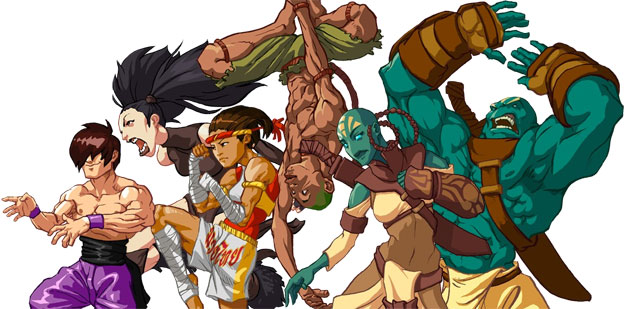
The capoeiristas were joined by some other traditional and non-traditional faces. A Bruce Lee clone which all fighting games needed to have, a wild jungle girl, a female Muay Thai master (the first one ever featured in a fighting game!), a monkey kung-fu master (that I designed) and a couple of alien beings from the Guardians of Altarris (a different Spiritonin game) made a cameo appearance as well.

Spiritonin knew that a colorful cast was important but not as important as good control, great animations and a balanced fighting engine. They delivered on all those things while at the same time deconstructing the ideas of minority characters in fighting games. Women and blacks could not only make good supporting characters but they could also be important leading ones as well. The game had no set main characters although Meste Loka and Mestre Rochedo had been in the series the longest followed by their students. In order to make sure the game went beyond all expectations Spiritonin also wrote a new chapter in the book on villains. Zumbi Azul was so well done that I would rank him among the best villains ever created for a fighter. Zumbi was already an impressive bad guy but his dark alter-ego raised the bar. In all honesty I would rank Zumbi Azul in the top-5 bosses of all-time. He would even be in my personal top-3, second only to Gouki and ahead of Silber.
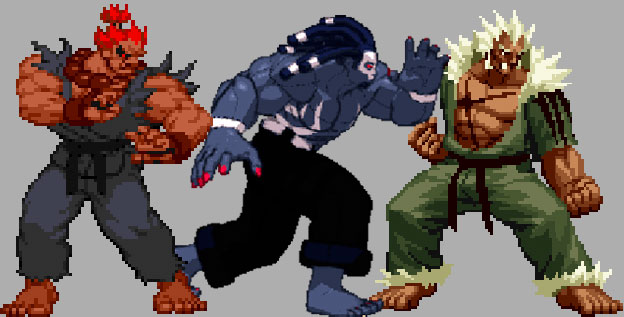

Spiritonin was able to insert powerful minorities and females into the genre as if they had always been there. They did not play the race card because they did not have to. They simply decided that it was finally time to bring fighting games into the 21st century. The biggest publishers in Japan and the US were taking too long to catch up with society. Spiritonin learned from Miyamoto and the other industry leaders. They treated their audience with respect. They placed men and women of color into a game without any pandering or gimmicks. The cast was balanced from a gameplay perspective but almost as important the members of both sexes had equal weight on the plot and outcome of the game. When Spiritonin wanted locations that meant something to Western players then they used actual landmarks. Even the fictional locations were still inspired by reality. The plantation mansions, the secluded beaches, the rain-forests and the colorful hotels featured in CF3 could be found sprinkled throughout South America. When Spiritonin wanted to create a convincing villain they used elements from ancient Afro-Caribbean and African-American spiritual customs that modern players could still identify. They did not put a costumed European in a corner and have him wave his hand to call down a meteor strike. In short the studio delivered something that audiences were not expecting.
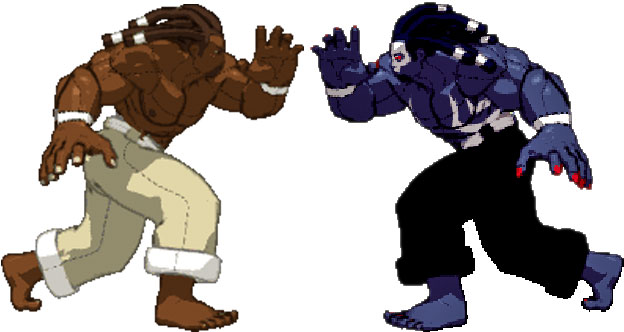

An important chapter in the history of the fighting genre was written but for the web browsers instead of the arcade or home consoles. Capoeira Fighter 3 was a great game but did not get wide exposure. Because of this many "hardcore" and even casual players missed out. The biggest loser would be the entire industry. The big publishers on both sides of the Pacific would not learn how a fighting game should treat members of every ethnic group and culture. Nor would they learn that they could present attractive females that were also strong and athletic instead of just big boobs in skimpy costumes. Without a popular and successful template to work from most developers would rely on trope to design the next fighter. A generation that grew up seeing minorities and women portrayed in one way would never expect to see them in any other light. It was important that the developers get these impressions right the first time or else they would perpetuate stereotypes. It was simply not enough to live up to player expectations, the studios had to exceed them and redefine what the expectations should be. A great game and a terrible game could equally color their perception of gamers. The industry should always remember that the color of their audience should always be respected more than the color of their money.
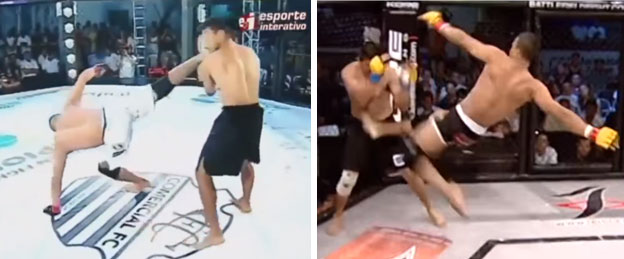

Capoeira found its way into the world of mixed martial arts in the latter half of the 20th century. Almost a century ago the Japanese Count Kouma had demonstrated that jujitsu could be used to defeat the best capoeira striker. Suddenly the Brazilians felt inclined to begin studying this new form from the East. Yet as Kazushi Sakuraba demonstrated time and time again not even the Gracie jujitsu system was perfect. Many mixed martial arts fighters, not solely the Brazilians, took another look at the Dance of War and began adapting the sweeping kicks and unpredictable strikes into their technique. Now modern fighters are well rounded in the various fighting forms and are able to put on demonstrations that are as exciting to watch as any fighting videogame. Marcus Aurelio for example has an incredible sense of balance and makes capoeira look easy to do in a professional match as he takes out opponents with dizzying speed. While he may never achieve the legend of Mas Oyama we can see that the lessons of knowing multiple forms does indeed make one a better fighter.

I hope that you enjoyed this survey on the various fighting arts and how they migrated around the world. From the roots of grappling and kung fu that Indian monks took with them to China. To the merchants that crossed the Sea of Japan and introduced a continent to the Empty Hand techniques. there were the indigenous tribes in Indonesia and the isles in the South Pacific that kept their form alive as Dutch, Spanish and French imperialists sought to destroy them. When the fluid striking of the African arts crossed the Atlantic it mirrored the journey of millions of slaves. It would become wrapped up in ancient animism beliefs of the Old World and the crown of thorns from the New World. Its legacy would become the mix of Japanese blood in the form of judo and ju-jitsu. It would bear the illegitimate offspring of English catch-as-catch-can and US wrestling. These children would grow up on a steady diet of fighting. Their children and great grandchildren would continue to fight and shape the arts.
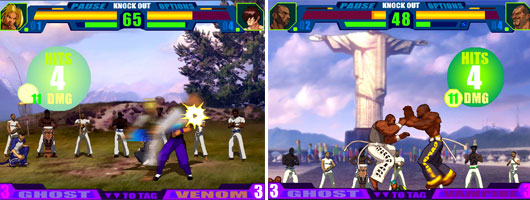
When fighting games became popular almost 30 years ago the developers celebrated the colorful world that gave birth to the genre. Little by little they turned their backs on the real men and women that shaped history and began inventing fighters and forms. By doing so the games suffered just a little bit and the popularity of the titles declined. I still think that the best days of the genre were still ahead of us. If the new generation of designers learned where fight culture came from and worked as hard trying to evolve as much as the current crop of real world fighters then I think they could capture the spirit once more. Thank you for following this series, thank you for the questions and comments throughout and I wish you all the best. As always if you enjoyed this blog and would like to sponsor me please visit my Patreon page and consider donating each month, even as little as $1 would help make better blogs and even podcasts!