Showing posts with label movies. Show all posts

Monday, April 7, 2025

Making a Sonic Team fan, part 1...

Hello friends, and visitors! I hope the year is going well for you. I’ve been hard at work at my actual job. I’ve also been trying to make time for art. I’ve been stuck thinking about what to write about on the blog. Then it came to me. I could write a little bit about one of my favorite game series, and share some art at the same time! The thing about the games I want to talk about is that it also launched one of my favorite film franchises.

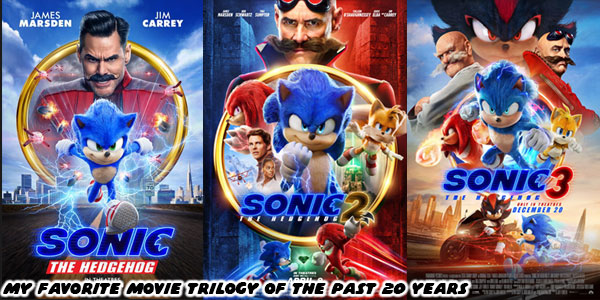
The Sonic the Hedgehog movies by Paramount have been great fun. I’m not going to lie however, I had zero faith in them when the trailer for the first movie dropped in 2019. Like many people the reaction to Ugly Sonic was harsh. Thankfully the studio listened to the outcry, pushed the release date back, and made drastic changes to the design of Sonic. It was one of the rare cases where the most vocal fans helped make sure that Hollywood would be kinder to the source material. By taking on writers, and animators familiar with the character the producers managed to create box office hits back-to-back-to-back. Each film in the trilogy had taken elements from the actual games by Sega, and managed to capture the emotional beats of all the main players. I really appreciated the attention to detail in each film. I know a purist might wish that the movies were entirely animated, and not set on Earth, but will all things considered the studios did very well making the characters accessible to the public.

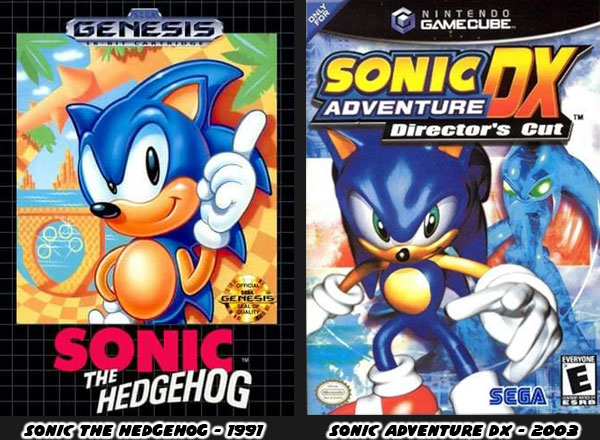
The other thing that I loved about the films was that I was able to bond with my kid over them. We were both big fans of the Sonic series. We must have owned just about every release across every platform, including many LCD games. My love for the character, and the franchise came with the debut of the very first game on the Sega Genesis way back in 1991. My kid’s first game was Sonic Adventure DX on the Nintendo GameCube in 2003. It seemed surreal that I had been a fan for 35 years, and my kid for more than 20. Being able to share a common love of a character had really brought us closer together. It made me appreciate that of all the movies we’d seen as a family, it was a video game movie that meant the most to us. It also made me think about how much I really enjoyed the games by the developers at Sonic Team working at Sega.

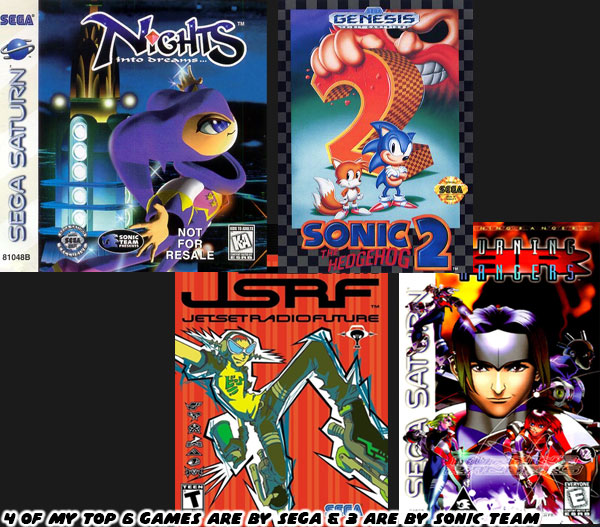
Like many of you I’ve had the conversation of favorite games with my family, and friends over the years. My brothers, and I grew up with the major consoles, going all the way back to the Atari 2600 circa 1980. We loved every console, and cherished every game we played. Long ago I had a thought experiment. If I were stuck on a deserted island, and could only bring one video game with me to play forever then which one would it be? Was it possible to rank them in order? I leaned to a very specific company, and very specific team. I published my list in 2006 on the old 1UP site. Sega was responsible for six of my top 20 favorite games of all-time. Of those games three of them were produced by Sonic Team. When I revised that list in 2023 the number of games from Sega went up to eight out of 20.

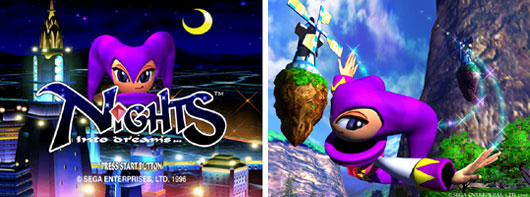
I ranked many Sega games high on the list my favorite game of all time was NiGHTS into dreams… which was from Sonic Team. I took my gaming seriously. I bought the original Xbox back in 2002 for the second title on my list Jet Set Radio Future. The Jet Set Radio series was by the Smilebit, and Hitmaker teams at Sega. The original Sonic the Hedgehog was revolutionary, and the even better Sonic the Hedgehog 2 ended up as #3 on my list. The third Sonic Team game that I ranked was Burning Rangers in the sixth spot.

NiGHTS, Sonic, and the Burning Rangers were all radically different ideas that were each executed perfectly. The thing about the Sonic Team was that they were fantastic at creating experiences in different genres. It seemed that there was nothing that the senior members couldn’t do. The initial team was formed in 1990 from members of Sega's Consumer Development division aka the console people. This was opposed to people like Yu Suzuki and the AM groups working on arcade games. Sonic Team included programmer Yuji Naka, artist Naoto Ohshima, and level designer Hirokazu Yasuhara.

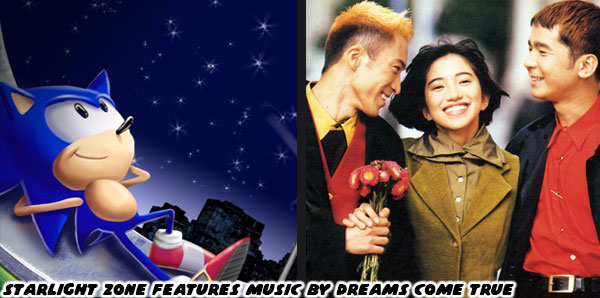
Music for the first two Sonic games came from composer Masato “Masa” Nakamura from the Japanese pop group Dreams Come True. Aside from the game play it was the music that really appealed to me in the early games. In fact after I beat the very first title I made it my mission to try and track down more music from his band. Thankfully the Los Angeles Metro Blue Line had also opened in 1990. It gave people from Long Beach a chance to travel to downtown LA for just over a dollar. When we were in high school my brothers, and friends would go at least once a month as a group to check out the sights. We discovered Little Tokyo, and made many repeat visits. We would rent Dragon Ball tapes just as they were released in Japan, collected toys, CD’s, and import games. All of the things that current generations take for granted used to be a series of adventures for us. One of the great things of the old Yaohan Plaza shopping complex in Downtown LA were the arcades. The building was multiple stories. There was an arcade featuring the latest games from Japan, and even a bowling alley with its own arcade as well. Sadly the majority of the shops closed down, and it was sold to a Korean conglomerate about a decade after we started visiting it.

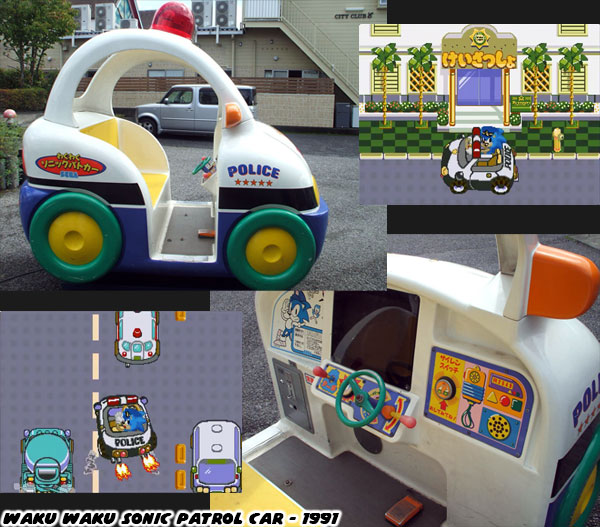
It was the “Arcade Japan” where I saw, and got a chance to play one of the rarest Sonic the Hedgehog games ever made. Waku Waku Sonic Patrol Car was a kiddie ride released in 1991, the same year that the console game debuted. I managed to cram my 6’ 7”, 320 lbs frame into the cabinet so I could play it. My brothers couldn’t believe that I managed to squeeze myself into the cabinet, but at the same time they knew how passionate I was about the series. While going into the various bookstores in Little Tokyo I finally found the music from Dreams Come True. I would buy at least one CD each trip, and ended up collecting every album, and almost every single from the group as well. It was also where I picked up a number of Capcom, and Sega games CDs which I still have in my collection.


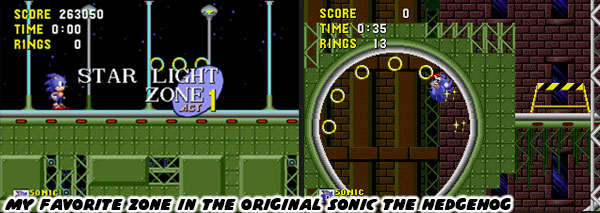
Each Zone in the Sonic titles had their own unique song. They were all catchy tunes. Little did I know that the best melodies would be featured in an album. The Star Light Zone song to me was the best. It framed the chill vibe of the stage, the groundbreaking parallax-scrolling stars in the background, and its unique fight against Dr. Eggman. I had just graduated high school, and was attending college when I finally heard the song it was based on. I remember I was walking to the bus stop, listening to my portable CD player when the familiar melody popped up. I lost my mind hearing the song with lyrics! 薬指の決心 = Kusuriyubi no kesshin = Determination of the ring finger from the album Million Kisses was the melody that Masa had composed for Sonic Team months before it appeared on the album.

I would also find out that the song Sweet, Sweet, Sweet aka Sweet Dreams from the album The Swinging Star was the inspiration for the ending song from Sonic the Hedgehog 2. For decades after I held the space-inspired stage from the original game, and the song in the highest of regards. While I enjoyed Sonic Adventure, and many other 2D and 3D games in the series, I felt that none of the releases ever captured the wonder of the Star Light Zone. That was at least until 2010 when Sonic Colors was released. The game took place on different planets all over the cosmos, but there was one section in particular that recaptured the magic for me.

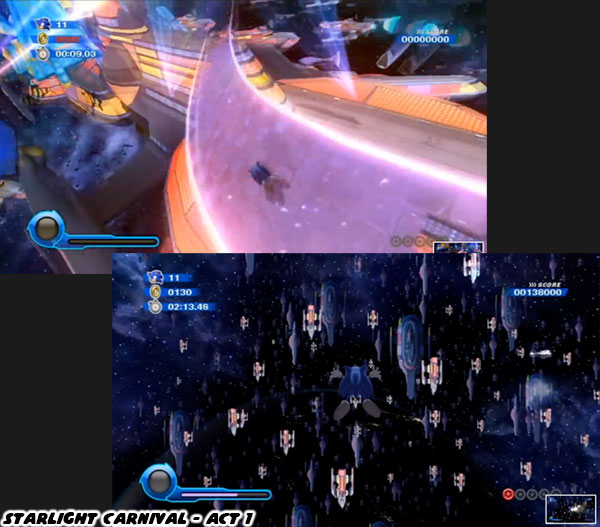
The Starlight Carnival, specifically Act 1 was arguably the greatest Sonic zone set in space. It was a parade, and fireworks show set in deep space. It was made up of hundreds of gigantic spaceships covered in lights, lasers, and glowing floats. It was like a cosmic version of the Disneyland’s Main Street Electrical Parade or Walt Disney World’s SpectroMagic for the people on the East Coast. Except that this parade went on for miles, and featured ships the size of skyscrapers. It was a spectacle as Sonic ran on a track made of energy, with countless ships as far as the eye could see, and even hundreds more popping in out of hyperspace. As a space nerd I was absolutely living for it.


The game play, and music featured in the Sonic Team games made me a lifelong fan. It wasn’t the only thing that kept me coming back. As an artist I couldn’t get enough of the world building that the studio was doing. It greatly influenced my work. I’m going to talk about that in the next blog. Did you have a favorite Sonic Team game? Did you like the movies, or music associated with the Sonic franchise? I’d like to hear about it in the comments section. As always if you enjoyed this blog, and would like to sponsor me please visit my Patreon page and consider donating each month, even as little as $1 would help make better blogs and even podcasts!
follow the Street Writer on Patreon!

Monday, October 14, 2024

Generations of Hulk creators, part 1...

The cleaning, and organizing at home for my mental health continues. I had recently set up a new sideboard cabinet and was finally able to bring in my Hulk toys, and comics out of the garage, and into the apartment. I’m only missing a few pieces, but they will eventually turn up as I clean up. Going over the toys, and various books made me think a little bit more about my favorite Marvel character. I was going to write a short thing about my favorite artists to ever draw the Incredible Hulk. Then I started thinking about his greatest story arcs. As well as short runs, and even one-shot issues. There were so many brilliant creators working on the title over the past 60+ years. It would be a disservice to just highlight a few.
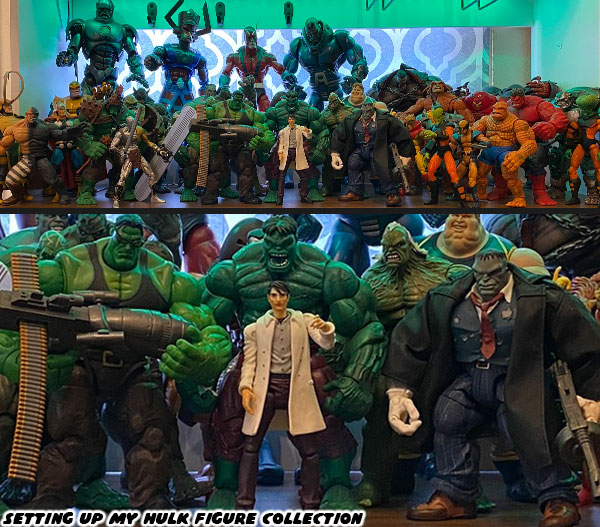
I started thinking about how to talk about the writers, artists, and character of the Hulk himself. How could I explain my fascination with him? I had actually covered a lot of that in my previous series. Talking about the greatest Hulk villains in the blogs last week was a good way to set up this conversation. Who was the Incredible Hulk? What made for a great Hulk artist, or writer? I wanted to highlight my observations for writers, or artists trying to figure out your own story. I’m a self-taught illustrator, but also spent years learning about writing. I had great teachers help me learn how to create short stories, novels, and screenplays. I learned how to craft heroes, and villains by some award-winning authors. I learned how to develop a memorable plot, and find the right voice to tell that story.
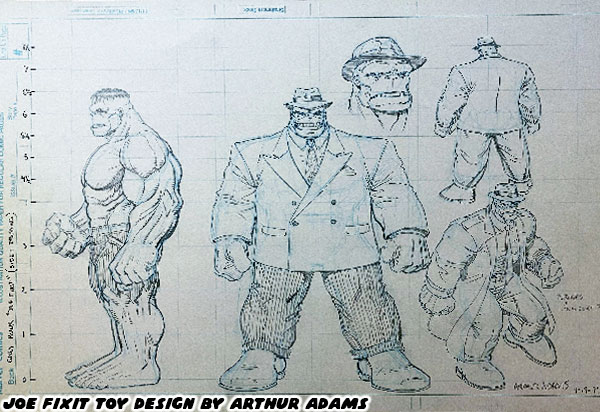
The failures, and successes of a good story were brought up in the previous blogs. I wanted young creators to think about the story they were trying to tell. Try to find a plot that fits their character. Try to find a voice that fits the character. If you were thinking about writing, or drawing a comic on an established character then I would advise you to develop a narrative that fits the character. It’s a bad idea to change an established character to fit a narrative. You wouldn’t for example try to shoehorn Frank Castle aka “the Punisher” into a lighthearted story meant for Squirrel Girl. Although the two were part of the same universe they were used for different reasons. They served different purposes, told different stories, and catered to different audiences.
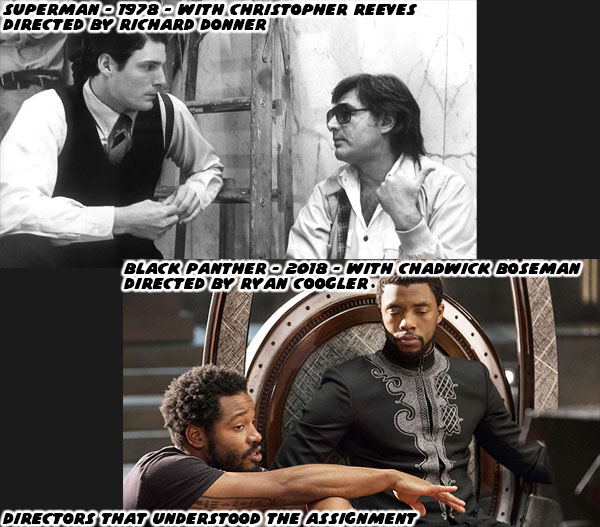
Movies often succeed when the right actor, the right screenplay, and the right director all came together. When approaching an established comic book character think of yourself as the director. How would you put together the elements that best served the character, and story? There had been hundreds of comic book movies in the past century, but only a handful could be thought of as truly exceptional. These projects managed to get all the ingredients just right, and sometimes in spite of interference from producers, and studios. Richard Donner understood the myth of Superman, and his secret identity of Clark Kent. When it came to live action film he set a standard almost 50 years ago. Many fans of the DC stories would say that his version of Superman hasn’t been topped yet. Something similar could be said of Ryan Coogler, and his ability to bring the Black Panther to light. Both directors understood the characters backwards, and forwards. They weren’t’t afraid to present them as flawed, or vulnerable. They also knew the best context in which to place their heroes. To compound matters some of the characters worked best when set in a historical period. In order to present them correctly then a director would have to do some world building. They would have to convincingly recreate the era.
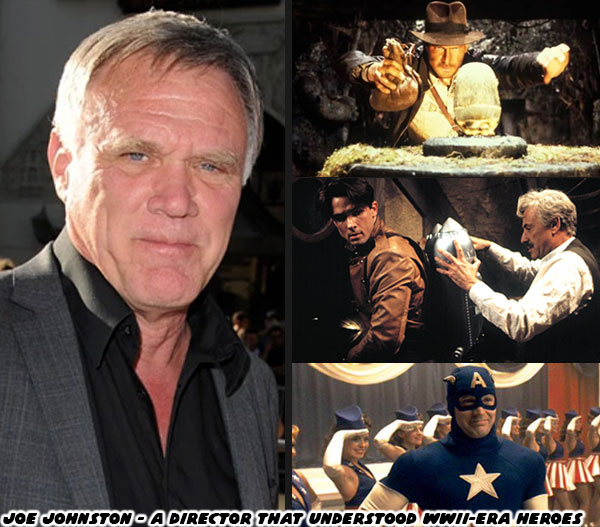
Another example of a director that understood the characters could be seen with the movie Captain America: The First Avenger. Producer Kevin Feige, and Marvel Studios selected Joe Johnston to direct. The movie was set in the WWII era. It required an understanding of US culture during that period. The types of heroes, and villains that inspired the world. Mr. Johnston worked with George Lucas on various films, and learned the ropes from his team. He was intimately familiar with the period that would be covered in the Marvel feature. He worked on Indiana Jones, the Rocketeer, and October Sky which were all set in the same era as the Captain America movie. It was virtually impossible for Mr. Johnston to mess up the direction. He just needed a story, and actors that he could work with. Thankfully that came through as well. Certainly any director could have done a period piece, but would it have been as well done? I highly doubt it. There had been many comic book films that missed the tone of the original comics. They were miscast, had the wrong writer, or director, and weren’t as memorable as the films I mentioned above. This had often been a problem for the Incredible Hulk. There had been few people able to adapt the character to live action. Part of the reason why was because they had a poor understanding of the character himself.
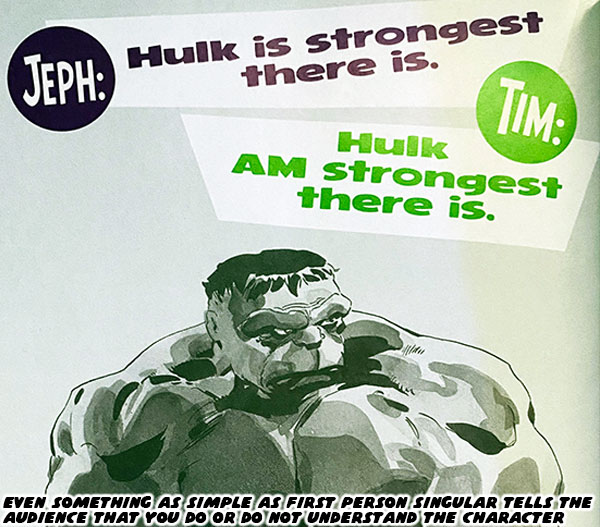
The way the Hulk speaks, the way he acts. His rage even comes from somewhere. Writers that did their homework could pick up on these details. Even casual fans knew that the Hulk had a limited vocabulary. It wasn’t that he was dumb, but rather had the temperament, and speech of a child because that was when Banner suffered his greatest trauma. The Hulk spoke in the third person, saying things like “Hulk tired, Hulk hungry, Hulk sleep now.” He also had certain catchphrases like “Hulk smash!” Or “Hulk is the strongest there is!” These were things that even non-fans could recall about the character. Perhaps they heard it from a cartoon, or saw it on TV. Surprisingly there were professional comic creators that didn’t know the most basic details of the character. The artist Tim Sale worked with Jeph Loeb on an origin story titled Hulk: Gray. It was a retro-inspired story with a limited color palette.This was because the Hulk was originally colored gray before his color was changed to green. The duo worked on other origin books including Spider-Man: Blue, and Daredevil: Yellow. Mr. Sale attributed an incorrect quote to the Hulk. In it he used the word “am” instead of “is.” This could be considered as a minor detail, unfortunately that form of speech belonged to another character, from a different company.
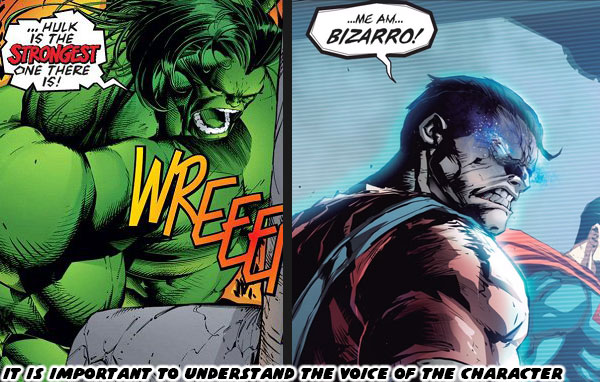
The evil mirror version of Superman was called Bizarro. In some origin stories he was a defective clone of Superman, in other stories he came from a cube planet where everything was absurd, and surreal. Bizarro had an unusual speaking pattern. He was known for saying things like “Bizarro am number one!” and “Me am Bizarro!” He tended to think, and speak in opposites. For example if he hated a character he would say “Bizarro loves you.” It was something that even the most casual fan could remember about the character. It was sad to think that an artist working on a Hulk book didn’t know the differences between Bizarro, Marvel, and DC. The thing about presenting a comic book character was that you had to know how to write to their strengths. This meant being able to write, and draw stories that maximized the hero, and their alter-ego.
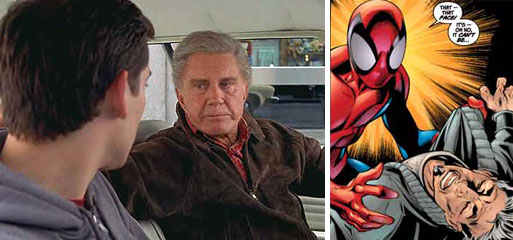
A creator for example would have to know how to build a story for Superman, and Clark Kent. Or Peter Parker, and Spider-Man. Poor writers focused solely on one or the other, and rarely found a balance that the character needed to remain unique. The Hulk was possibly the most difficult character to create for. The Hulk was often regarded as a monster, rather than a hero. Dr. Bruce Banner was also treated as a fugitive. The genius of Reed “Mr. Fantastic” Richards was celebrated, but the genius of Banner was feared. Tony “Iron Man” Stark was presented as confident, whereas Banner was seen as arrogant. These distinctions made for a very complex character that could also instantly hook the audience. As for the Hulk himself there were so many possibilities with his power set that many types of stories could be written about him.
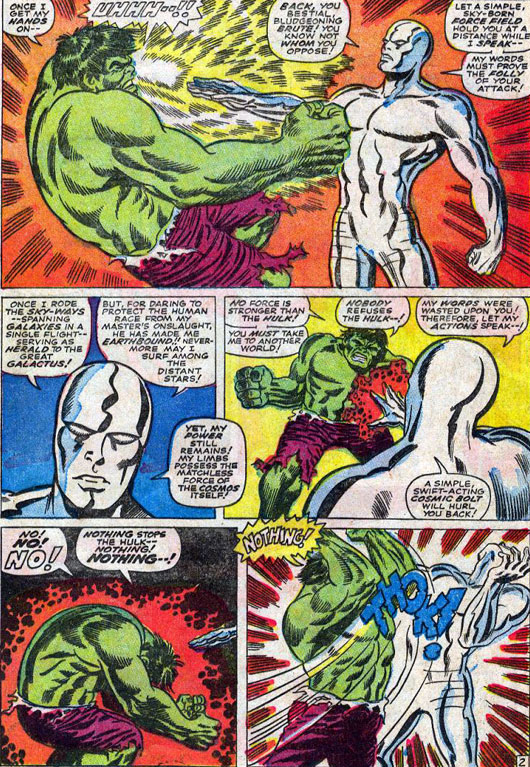
The Hulk was known for being absurdly strong, and durable. The angrier he got, the stronger he got. He had no known upper limit to his strength, being able to go toe-to-toe with even cosmic beings like the Silver Surfer. The Hulk could never grow tired, and healed from injuries faster than Wolverine. He also had some unique powers such as being able to see ghosts, resist some forms of magic, and breathe underwater. If sufficiently enraged he didn’t need to breathe at all, including in outer space. Crafting a story that employed the genius of Banner, and gave the awesome powers of the Hulk was a challenge for even veteran creators. Yet it was not impossible. In fact I thought about it for a while, and discovered that there were a few formats that fit the character. Let’s start with the dramatic interpretation, It was the one that most Gen-Xers were familiar with. The Incredible Hulk television series debuted in the late ‘70s, more than a decade after the comics had started. Most of Generation-X were still kids when the show was on the air. To say it left an impression on us would be a severe understatement. 
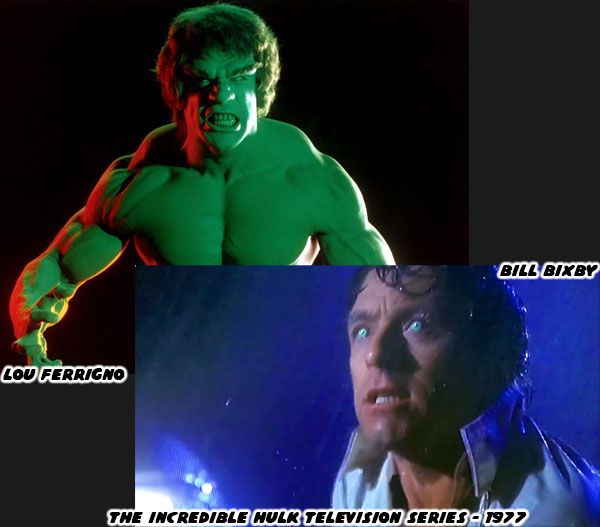
The show was actually well written, and well acted. Bill Bixby played Dr. Banner, and bodybuilder Lou Ferrigno played the Hulk. Bixby had actually turned down the role initially because he didn’t want to be associated with a project that was too silly, cartoonish, or campy, like the Batman series from earlier. After reading the script he was sold on the part. He helped keep the tone of the series grounded in realism. Every action that he took had weight, and purpose. Bixby did an exceptional role as a fugitive, wandering the countryside in an effort to clear his name. He did everything in his power to remain calm even in the most stressful situations. He genuinely feared for the safety of the public if he lost control, when he couldn’t’t control his rage his eyes would change color, and we knew the Hulk would appear next. The show coined the phrase that several generations would associate with the character “Don’t make me angry (Mr. McGee), you wouldn’t like me when I’m angry.” The Hulk was treated as a curse. The show actually made audiences pity the life of Dr. Banner. He was trapped in a living nightmare that he couldn’t outrun. There was no pause because the authorities, and an investigative reporter named Jack McGee were hunting him in every episode. The tragedy of the character landed with the mainstream more than just about any other interpretation. 
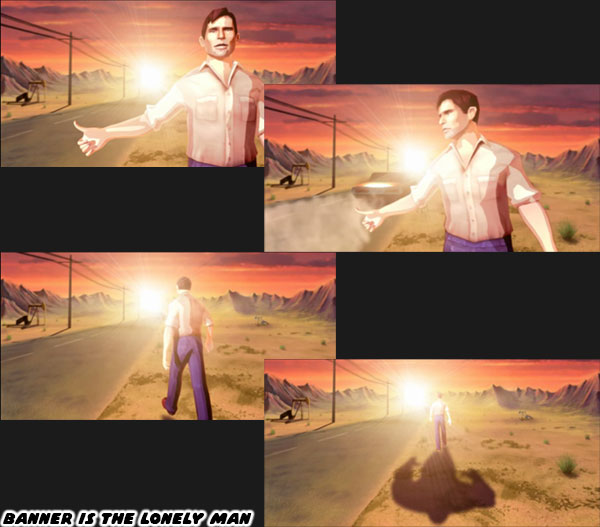
Banner had no home, no friends to fall back on, and hitchhiked his way across the US in an effort to avoid capture. At the end of each episode we often saw him wandering an empty road while the melancholy song The Lonely Man, composed by Joseph Harnell played. This tragic lifestyle had been revisited in other media, including the Hulk game by Radical Entertainment. The television series created a template that worked exceptionally well for Banner, and his relationship to the Hulk. Writers working on the Hulk stories could learn that a Banner-centric arc could be written as a psychological horror. There were many other types of stories that could be created as well, but we will look at those in the next blog. Were you a fan of the Hulk in popular media? Did you have any favorite comic book movies, or characters? I’d like to read about them in the comments section. As always if you would like to sponsor me please visit my Patreon page and consider donating each month, even as little as $1 would help make better blogs and even podcasts!
follow the Street Writer on Patreon!

Wednesday, February 21, 2018

The Giant Monster Series, part 8...


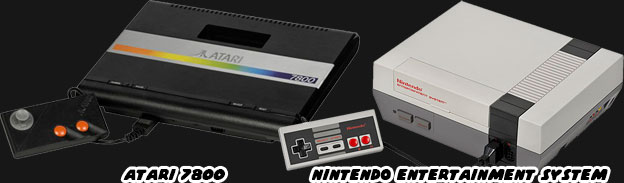
In 1986 the game console was trying to make a comeback in North America. The Nintendo Entertainment System had barely been out for a year. The boom and bust of the Atari 2600, released in 1977, had burned many retailers. The console was expensive as were the games. Many of the games were fun but very rudimentary. The subsequent release of the Atari 5200 in 1982 and Atari 7800 in 1986 were met with mixed reviews. Retailers felt that the technology for arcade quality at home experiences were still a long ways off. They would be right but not for long. What the retailers failed to understand was that the developers were learning to work with the limitations of the hardware, not despite them.


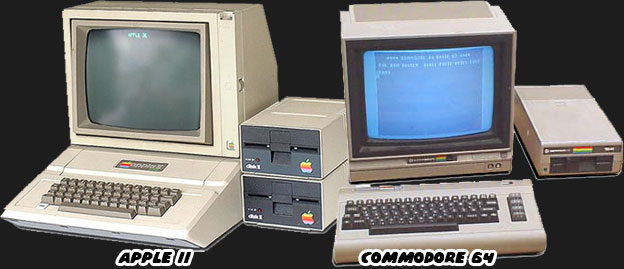
Nintendo would release hit after hit for their NES. Metroid, Super Mario Bros, Kid Ikarus, Mike Tyson's Punch-Out and the Legend of Zelda rightfully earned dedicated followings. The first generation of 8-bit gaming was well underway. The PC as game system was beginning to gain momentum as well. The Apple II, Commodore 64 and its family-friendly Amiga were finding their way into many homes and earning many followers. The PC was capable of putting more colors on screen than game consoles, have sprites that were larger and offered more frames of animation as well. While the home PC did not match up to the arcade hardware it was still much closer to it than the consoles. As such gamers expected more immersive experiences on PCs than home consoles. Things like saving games and customizing controls were featured on the PC well before cartridges were being equipped with internal batteries.


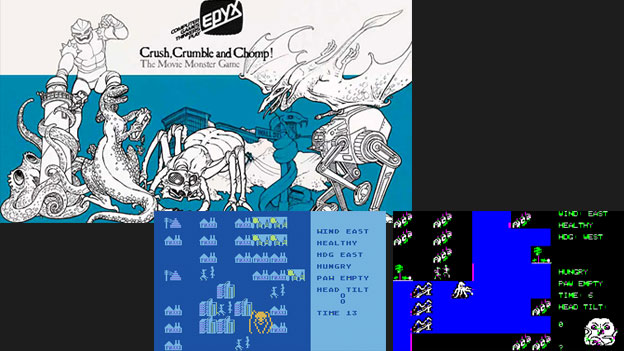
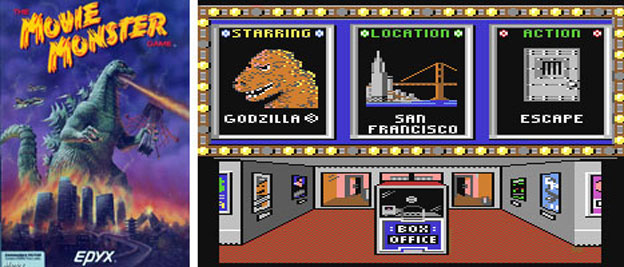
The giant monster found its niche on the PC that year. The Epyx Movie Monster Game came out in 1986. It was remembered for licensing the biggest monster star of all. Godzilla appeared on the box art as well as was a playable character. Epyx had first tried out the giant monster genre in 1981 with the game Crush, Crumble and Chomp, the Movie Monster Game. The earlier title featured knock-offs of famous movie monsters with names like Goshilla, the Glob and Mantra. Like many early PC games it required a certain level of imagination to enjoy. The second Movie Monster game was much more advanced but still used a number of generic monsters to fill out the ranks. There was a Stay Puft Marshmallow Man knock-off called Mister Meringue, Sphectra the wannabe Mothra, the Glog, a giant robot named Mechatron and a giant spider named Tarantus.


The developers let the genre help dictate the tone of the game. It was a bit of inspired design actually and helped bring players right into the world Epyx had created. The title screen for the game was the front of a classic movie palace. Players selected the type of adventure they were going to have by changing the movie posters above the ticket booth. They first chose which monster would be the star of the feature, then which city they would be visiting and last what the of adventure they would be on. Several major cities from around the world were playable; Tokyo, San Francisco, London, Moscow, Paris and New York. Players could choose to search for an item, usually a monster offspring, escape from the city and pursuing army, go berserk and be scored on how much damage they caused, or destroy a landmark. The next screen completely immersed audiences and was one of my earliest PC gaming memories.


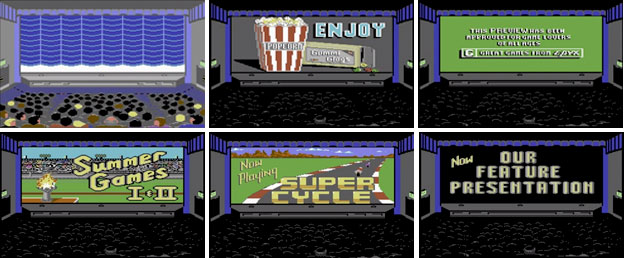
Gamers were placed inside the theater to watch the monster film they had created. The curtain went up and the lights dimmed. There was an advertisement for snacks followed by a preview of other upcoming games by Epyx. Even though I was looking at single screen previews I was completely caught up in the experience. I felt like I was in the movie theater as well. After the trailers the feature presentation screen appeared. A title card announced the origin story of the creature, where it was headed and what it was after. I knew then that no console game could ever hope to match the experience offered by the PC. On top of the movie theater loading screens there were simply too many possible combinations of missions for a single cartridge to hold.


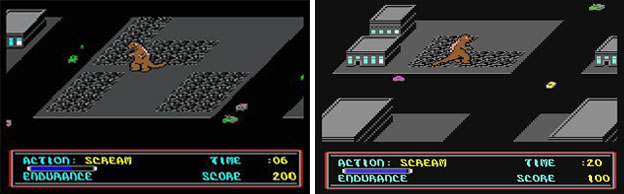
The game dropped players right in the middle of the action. There were a few things to keep track of at the bottom of the screen. A clock kept track of how long the player had been in the city or how many minutes they had to escape. The player had an endurance bar, one attack and the ability to scream or roar. Players could move in four directions, walk over traffic and topple buildings. On missions where players had to search for something or knock over a landmark a second bad would appear to let players know how close they were to the objective. If a player ran out of energy or if they completed the objective then the game would end. The city levels were very large, the ability to walk in any direction opened up the world for exploration. The characters each had their own unique animations and attacks.

No console game even remotely offered what Movie Monster did. It was easy to get caught up in the gameplay when the technology seemed years ahead of anything Atari, Nintendo or Sega had at home. The best part was the sheer number of possible monster / city / objective combinations offered to players. They could go back to the game again and again and never play the exact same experience twice.


When the level ended the screen went dark and the final score was tallied up. Players then found themselves back in the movie theater. The screen would sum up the devastation and whether or not the monster was successful, the credits would then roll. After the credits the lights would come back up in the theater and the curtain would drop again. I enjoyed that there was a virtual theater on the PC just waiting for the next monster movie to queue up. Most other games put players right into the action without letting them get settled into the world that the developers had created. This little bit of immersion went a long way. It demonstrated everything that was right about PC gaming. As much fun as Movie Monster was it was another giant monster game released in 1986 that became the star. We shall look at this game in the next blog.