Showing posts with label indiana jones. Show all posts

Monday, October 14, 2024

Generations of Hulk creators, part 1...

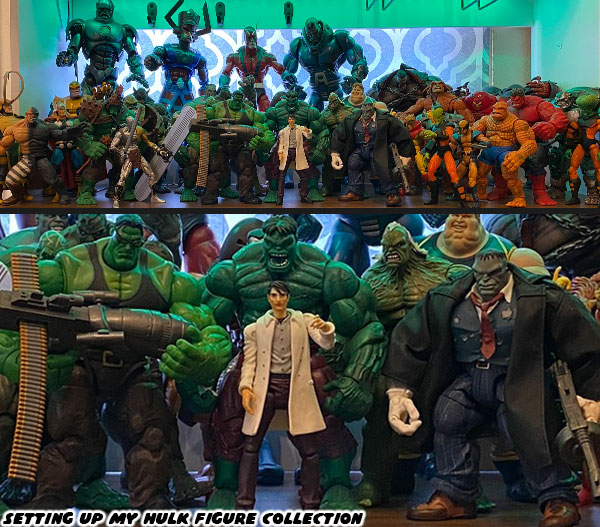
The cleaning, and organizing at home for my mental health continues. I had recently set up a new sideboard cabinet and was finally able to bring in my Hulk toys, and comics out of the garage, and into the apartment. I’m only missing a few pieces, but they will eventually turn up as I clean up. Going over the toys, and various books made me think a little bit more about my favorite Marvel character. I was going to write a short thing about my favorite artists to ever draw the Incredible Hulk. Then I started thinking about his greatest story arcs. As well as short runs, and even one-shot issues. There were so many brilliant creators working on the title over the past 60+ years. It would be a disservice to just highlight a few.

I started thinking about how to talk about the writers, artists, and character of the Hulk himself. How could I explain my fascination with him? I had actually covered a lot of that in my previous series. Talking about the greatest Hulk villains in the blogs last week was a good way to set up this conversation. Who was the Incredible Hulk? What made for a great Hulk artist, or writer? I wanted to highlight my observations for writers, or artists trying to figure out your own story. I’m a self-taught illustrator, but also spent years learning about writing. I had great teachers help me learn how to create short stories, novels, and screenplays. I learned how to craft heroes, and villains by some award-winning authors. I learned how to develop a memorable plot, and find the right voice to tell that story.

The failures, and successes of a good story were brought up in the previous blogs. I wanted young creators to think about the story they were trying to tell. Try to find a plot that fits their character. Try to find a voice that fits the character. If you were thinking about writing, or drawing a comic on an established character then I would advise you to develop a narrative that fits the character. It’s a bad idea to change an established character to fit a narrative. You wouldn’t for example try to shoehorn Frank Castle aka “the Punisher” into a lighthearted story meant for Squirrel Girl. Although the two were part of the same universe they were used for different reasons. They served different purposes, told different stories, and catered to different audiences.

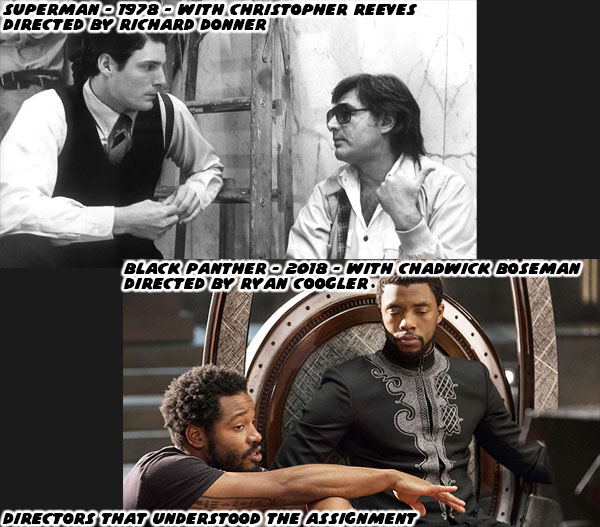
Movies often succeed when the right actor, the right screenplay, and the right director all came together. When approaching an established comic book character think of yourself as the director. How would you put together the elements that best served the character, and story? There had been hundreds of comic book movies in the past century, but only a handful could be thought of as truly exceptional. These projects managed to get all the ingredients just right, and sometimes in spite of interference from producers, and studios. Richard Donner understood the myth of Superman, and his secret identity of Clark Kent. When it came to live action film he set a standard almost 50 years ago. Many fans of the DC stories would say that his version of Superman hasn’t been topped yet. Something similar could be said of Ryan Coogler, and his ability to bring the Black Panther to light. Both directors understood the characters backwards, and forwards. They weren’t’t afraid to present them as flawed, or vulnerable. They also knew the best context in which to place their heroes. To compound matters some of the characters worked best when set in a historical period. In order to present them correctly then a director would have to do some world building. They would have to convincingly recreate the era.

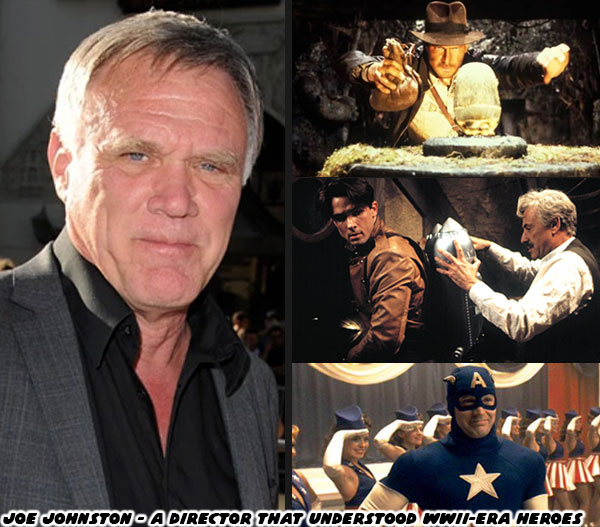
Another example of a director that understood the characters could be seen with the movie Captain America: The First Avenger. Producer Kevin Feige, and Marvel Studios selected Joe Johnston to direct. The movie was set in the WWII era. It required an understanding of US culture during that period. The types of heroes, and villains that inspired the world. Mr. Johnston worked with George Lucas on various films, and learned the ropes from his team. He was intimately familiar with the period that would be covered in the Marvel feature. He worked on Indiana Jones, the Rocketeer, and October Sky which were all set in the same era as the Captain America movie. It was virtually impossible for Mr. Johnston to mess up the direction. He just needed a story, and actors that he could work with. Thankfully that came through as well. Certainly any director could have done a period piece, but would it have been as well done? I highly doubt it. There had been many comic book films that missed the tone of the original comics. They were miscast, had the wrong writer, or director, and weren’t as memorable as the films I mentioned above. This had often been a problem for the Incredible Hulk. There had been few people able to adapt the character to live action. Part of the reason why was because they had a poor understanding of the character himself.

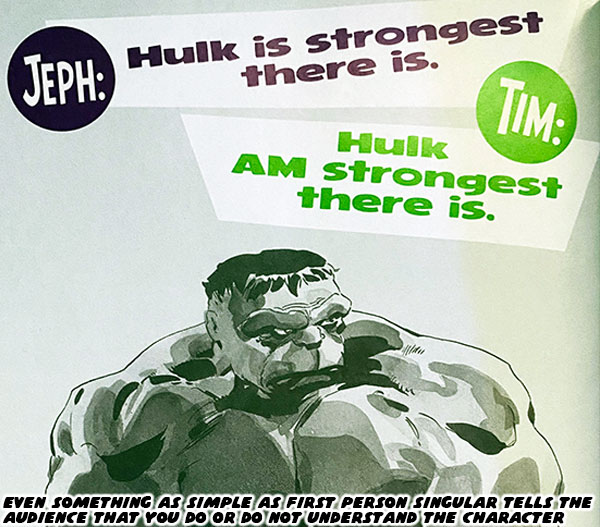
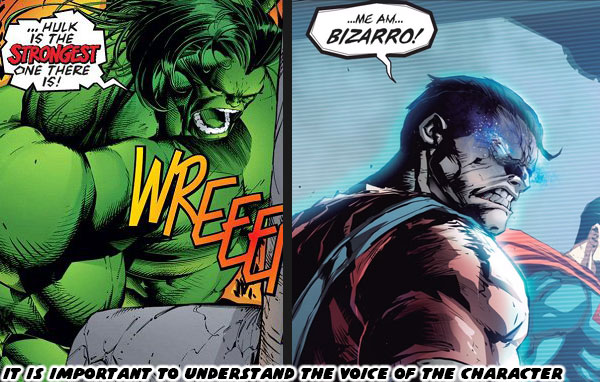
The way the Hulk speaks, the way he acts. His rage even comes from somewhere. Writers that did their homework could pick up on these details. Even casual fans knew that the Hulk had a limited vocabulary. It wasn’t that he was dumb, but rather had the temperament, and speech of a child because that was when Banner suffered his greatest trauma. The Hulk spoke in the third person, saying things like “Hulk tired, Hulk hungry, Hulk sleep now.” He also had certain catchphrases like “Hulk smash!” Or “Hulk is the strongest there is!” These were things that even non-fans could recall about the character. Perhaps they heard it from a cartoon, or saw it on TV. Surprisingly there were professional comic creators that didn’t know the most basic details of the character. The artist Tim Sale worked with Jeph Loeb on an origin story titled Hulk: Gray. It was a retro-inspired story with a limited color palette.This was because the Hulk was originally colored gray before his color was changed to green. The duo worked on other origin books including Spider-Man: Blue, and Daredevil: Yellow. Mr. Sale attributed an incorrect quote to the Hulk. In it he used the word “am” instead of “is.” This could be considered as a minor detail, unfortunately that form of speech belonged to another character, from a different company.

The evil mirror version of Superman was called Bizarro. In some origin stories he was a defective clone of Superman, in other stories he came from a cube planet where everything was absurd, and surreal. Bizarro had an unusual speaking pattern. He was known for saying things like “Bizarro am number one!” and “Me am Bizarro!” He tended to think, and speak in opposites. For example if he hated a character he would say “Bizarro loves you.” It was something that even the most casual fan could remember about the character. It was sad to think that an artist working on a Hulk book didn’t know the differences between Bizarro, Marvel, and DC. The thing about presenting a comic book character was that you had to know how to write to their strengths. This meant being able to write, and draw stories that maximized the hero, and their alter-ego.

A creator for example would have to know how to build a story for Superman, and Clark Kent. Or Peter Parker, and Spider-Man. Poor writers focused solely on one or the other, and rarely found a balance that the character needed to remain unique. The Hulk was possibly the most difficult character to create for. The Hulk was often regarded as a monster, rather than a hero. Dr. Bruce Banner was also treated as a fugitive. The genius of Reed “Mr. Fantastic” Richards was celebrated, but the genius of Banner was feared. Tony “Iron Man” Stark was presented as confident, whereas Banner was seen as arrogant. These distinctions made for a very complex character that could also instantly hook the audience. As for the Hulk himself there were so many possibilities with his power set that many types of stories could be written about him.

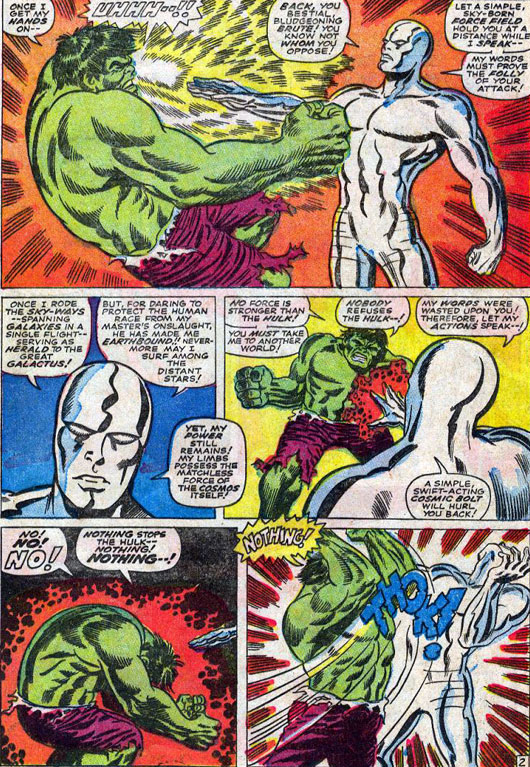
The Hulk was known for being absurdly strong, and durable. The angrier he got, the stronger he got. He had no known upper limit to his strength, being able to go toe-to-toe with even cosmic beings like the Silver Surfer. The Hulk could never grow tired, and healed from injuries faster than Wolverine. He also had some unique powers such as being able to see ghosts, resist some forms of magic, and breathe underwater. If sufficiently enraged he didn’t need to breathe at all, including in outer space. Crafting a story that employed the genius of Banner, and gave the awesome powers of the Hulk was a challenge for even veteran creators. Yet it was not impossible. In fact I thought about it for a while, and discovered that there were a few formats that fit the character. Let’s start with the dramatic interpretation, It was the one that most Gen-Xers were familiar with. The Incredible Hulk television series debuted in the late ‘70s, more than a decade after the comics had started. Most of Generation-X were still kids when the show was on the air. To say it left an impression on us would be a severe understatement. 

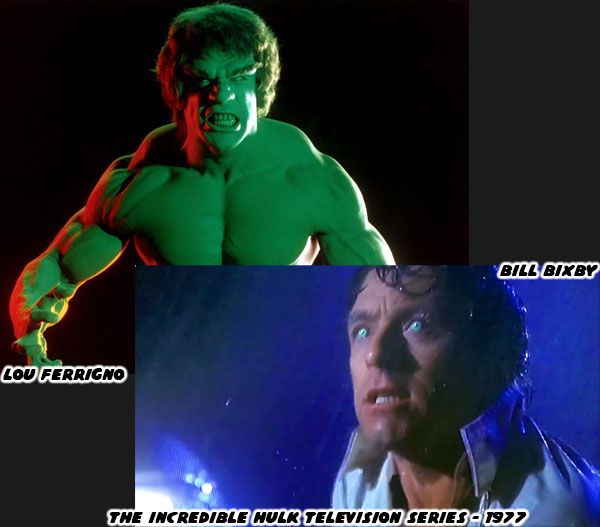
The show was actually well written, and well acted. Bill Bixby played Dr. Banner, and bodybuilder Lou Ferrigno played the Hulk. Bixby had actually turned down the role initially because he didn’t want to be associated with a project that was too silly, cartoonish, or campy, like the Batman series from earlier. After reading the script he was sold on the part. He helped keep the tone of the series grounded in realism. Every action that he took had weight, and purpose. Bixby did an exceptional role as a fugitive, wandering the countryside in an effort to clear his name. He did everything in his power to remain calm even in the most stressful situations. He genuinely feared for the safety of the public if he lost control, when he couldn’t’t control his rage his eyes would change color, and we knew the Hulk would appear next. The show coined the phrase that several generations would associate with the character “Don’t make me angry (Mr. McGee), you wouldn’t like me when I’m angry.” The Hulk was treated as a curse. The show actually made audiences pity the life of Dr. Banner. He was trapped in a living nightmare that he couldn’t outrun. There was no pause because the authorities, and an investigative reporter named Jack McGee were hunting him in every episode. The tragedy of the character landed with the mainstream more than just about any other interpretation. 

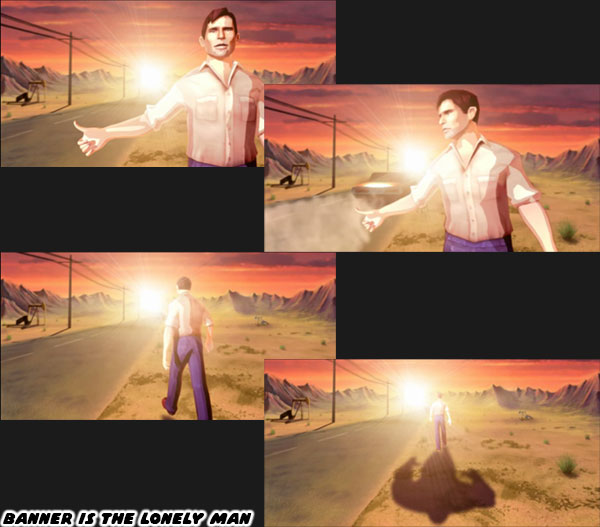
Banner had no home, no friends to fall back on, and hitchhiked his way across the US in an effort to avoid capture. At the end of each episode we often saw him wandering an empty road while the melancholy song The Lonely Man, composed by Joseph Harnell played. This tragic lifestyle had been revisited in other media, including the Hulk game by Radical Entertainment. The television series created a template that worked exceptionally well for Banner, and his relationship to the Hulk. Writers working on the Hulk stories could learn that a Banner-centric arc could be written as a psychological horror. There were many other types of stories that could be created as well, but we will look at those in the next blog. Were you a fan of the Hulk in popular media? Did you have any favorite comic book movies, or characters? I’d like to read about them in the comments section. As always if you would like to sponsor me please visit my Patreon page and consider donating each month, even as little as $1 would help make better blogs and even podcasts!
follow the Street Writer on Patreon!

Wednesday, May 10, 2023

The rail shooter revolution, part 1 - Originally published on 1UP - October 9, 2011

Reminiscing about Star Blade the other day made me think about other games in the genre, not solely the space shooters, but the arcade games that made an impact and were truly memorable experiences. When I was going through my notes on Star Blade I thought about what element the best arcade shooters had in common. Then I thought about what console games provided an equally memorable experience. What did these games have in common? What did they offer that was unique among them? Which were the groundbreaking titles and which were the trendsetters? How did the arcade innovate when home consoles were catching up in the graphics department?
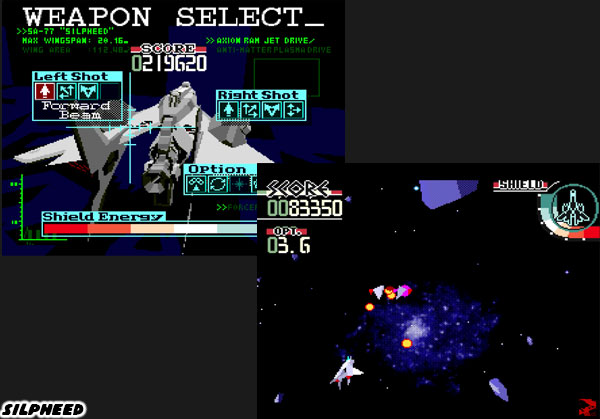
We should begin with the other titles in the space shooter department that, like Star Blade, were cutting edge experiences. One of the earliest polygon shooters was Silpheed for the PC released in 1986 this Sega title as revolutionary graphics for what was traditionally called a "Shoot-em Up" or SHMUP for short. These types of games were some of the oldest types of arcade games and included the classic titles Galaga, Space Invaders and Gradius. The original Silpheed was unlike these titles because it exploited the processing power of home PC's to deliver vector graphics and polygons into the home. None of the aforementioned classic SHMUPS were even built using that technology.

Games became more robust and visually stimulating as arcade technology found its way home in the guise of processors used in PC's and consoles. Silpheed would actually enjoy a revival of sorts exploiting the processing power of 16-bit engines and the amazing storage capacity of CD's. Silpheed for the Sega CD and add-on to the Genesis, was released in 1993. The game was a SHMUP that rivaled the best of the early polygon titles in the arcade. The graphics were cutting edge and lauded for the diversity of locations and difficulty factor. The game was so well made that it could have been considered a contemporary title to Star Blade.
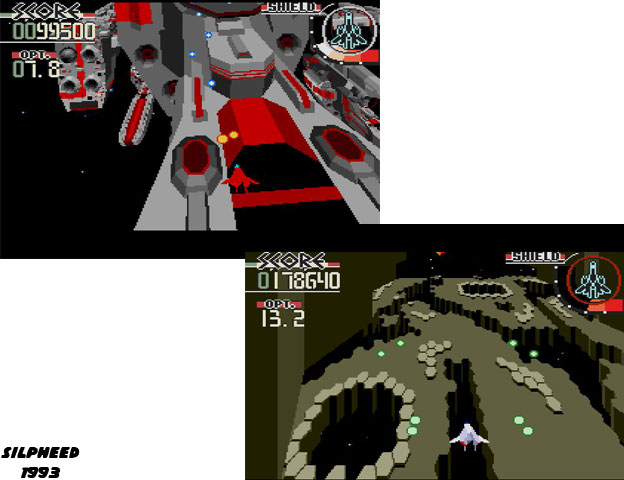
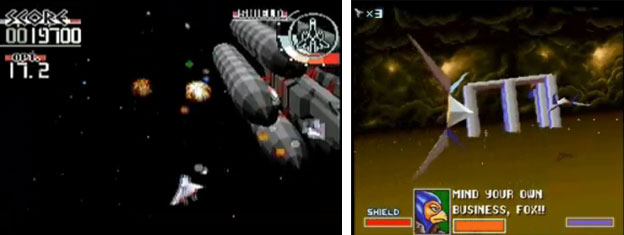
In fact 1993 was a dramatic change in the perception of home consoles bringing arcade-quality graphics home. Silpheed was popular when released but it did not achieve the level of success that another space shooter received that same year. The Super Nintendo had an exclusive polygon-based shooter titled Star Fox that completely caught gamers off guard. Instead of playing through a side-scrolling SHMUP as they were used to, gamers were actually flying through 3D space in 3D ships. The blocky graphics were overlooked as the tight control scheme, fun character designs and massive boss battles were unlike anything else available at home.

One of the interesting things about Star Fox was that it combined the polygons with sprites on the graphics engine. Nintendo did not rely exclusively on polygons to create the game. Sprites, or raster art made up images for the game characters as well as some of the background graphics as well. The use of sprites allowed the game to have certain color and effects, like an atmosphere on an alien world or cannonballs heading right towards the player. Silpheed featured similar techniques for backgrounds. These visuals could not have been achieved by relying exclusively on polygon technology.
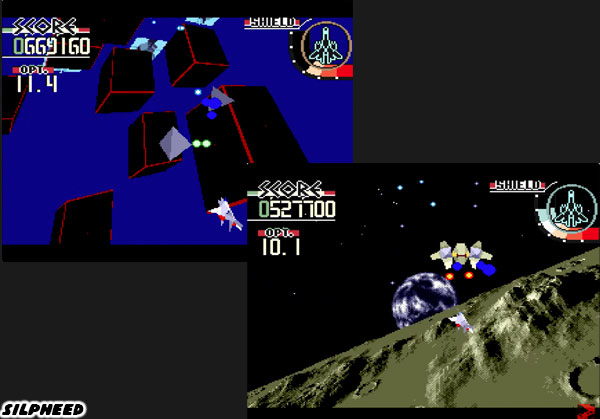
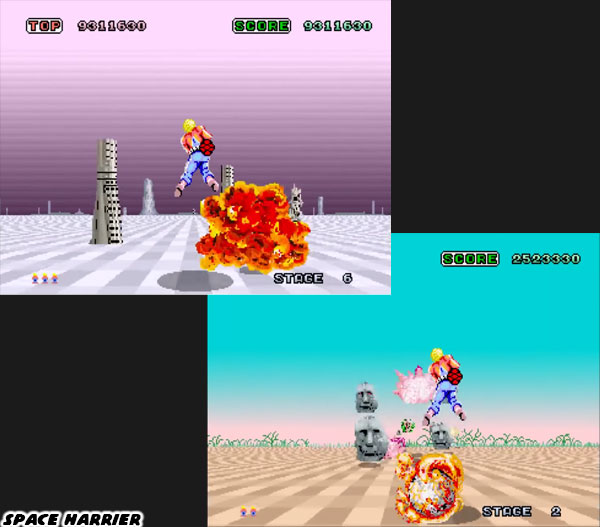
Aside of the obvious aesthetic draw that a sprite or raster art had over early polygon games, these consoles simply did not have the processing power to render polygons for every detail. Sprites accepted more colors than polygons at the time and they could even be scalable. In oder to achieve the illusion of movement and depth sprites were layered in an overlapping method and then rotated or scaled by the game engine. This technique was used to create pseudo-3D effects in both arcade and console titles.

One of the earliest and most recognized uses of sprites that overlapped and scaled to create 3D object was the arcade hit Space Harrier. Released by Sega in 1985 it was revolutionary for the illusion that the main character was flying forward through the world in three-dimensions. The sprites had a limited color palette and looked very blocky as they passed underneath the main character. As processors got more powerful and storage got more robust the sprite layering technique had improved as well. One of Sega's latter titles, Thunderblade (released in 1987) featured the illusion of depth and movement through top-down and behind-the-back camera perspectives.

The polygons remained blocky but scaled slightly better than in previous titles. Through the mid 1980's and into the early 1990's this technique was employed to create the illusion of 3D objects on 2D engines.

The thing that all of the aforementioned games shared in common was the gameplay. All of the titles, whether they were set in space, on the ground or in the air, or whether they were in first-person, top-down or third person perspective used a similar game technique. The games advanced on a pre-determined path. They gave players the illusion of freedom, allowing them to move almost any direction across the screen. By allowing gamers the slightest bit of freedom the developers could create the illusion that they were actually traveling to exotic locations. Gamers could enjoy the virtual landscapes that they were taken through without having to actually pilot themselves there.
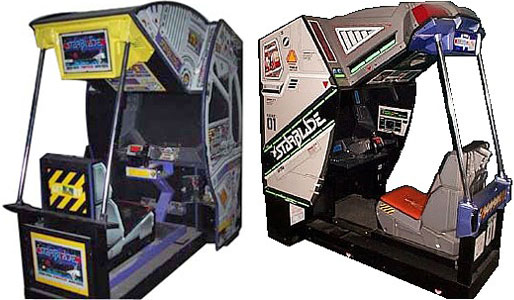
The term "Rail Shooter" was created to describe these types of games. Star Blade was an example of a rail shooter set in space. The player acted as the gunner while an unseen pilot whisked them throughout the galaxy. The rail shooter became a standard in the arcade. Sega seemed to be among the best developer for these types of games with Namco punctuating some exceptional experiences as well. As graphics technology improved on consoles new things would have to be tried out to keep audiences coming back to the arcades. The rail shooter found an audience in the mid 1990's and hit a creative peak in the late 1990's. After a slow start in the early 2K's it recently found some renewed interest at the end of the decade thanks to emerging technologies.

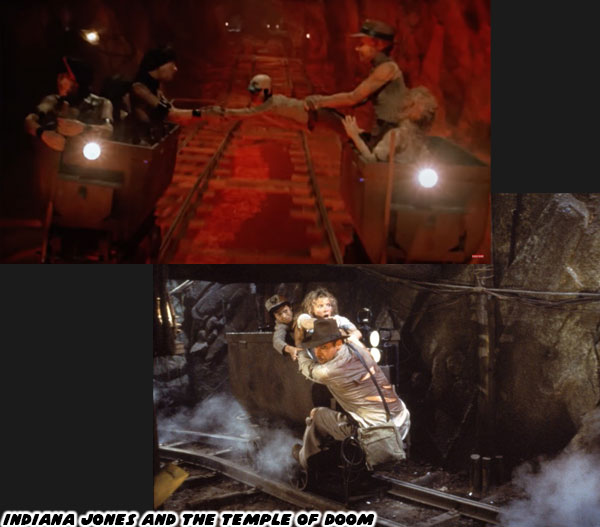
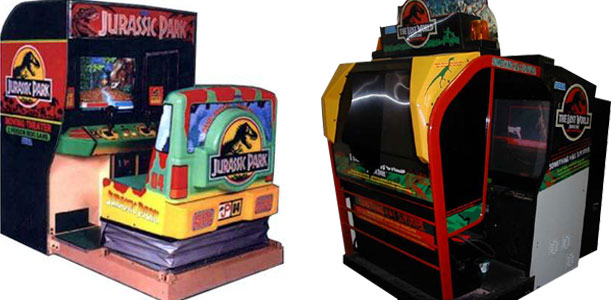
Creatively speaking the rail shooter found its niche in the arcade by exploiting elements that would be next-to-impossible to recreate at home. In 1991 Sega released a game called Rail Chase. This was a sit-down game cast players in the role of an adventurer and his female partner riding inside of a runaway mine cart. It was unabashedly a rip off of the famous chase scene from Indiana Jones and the Temple of Doom. The duo were being chased by thugs in turbans along a long and twisting course. Players could defend themselves and even throw switches and change paths by shooting a machine gun at targets. The game used scaling sprites to create the illusion of 3D. To add an extra layer of excitement the seats on the cabinet were set on top of hydraulics that dipped and bumped in time with the scenes on the screen. The last noteworthy Sega rail shooting game that was sprite-based and used the moving seats was Jurassic Park, released in 1994.

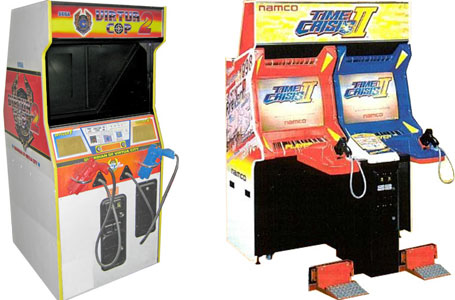
Just a short year later Sega and Namco would be working almost exclusively on polygon titles. Sega's first foray into a polygon light gun game was Virtua Cop, released in 1994 and Namco's was Time Crisis, released in 1995. Both games used the shooter on rails formula, only that a handheld light gun was used to target enemies rather than a space ship. Light gun games have an equally long and storied history in the arcade but I will not be spending too much time talking about that genre here. I would like to emphasize however the idea that the light gun arcade shooter helped shape the dramatic scope and scale covered in the rail shooter.

In 1995 Sega created Rail Chase 2. This time the scalable pixels were completely replaced by polygons. The hydraulic seats returned, pitching gamers side to side and tilting them in all sorts of directions as the mine cart found itself perpetually rolling through obstacles. The levels were lavishly themed environments created with plenty of imagination.

The term rail shooter could never seem more appropriate than with the Rail Chase series. Sega did not limit the genre by keeping the entire game on railroad tracks. The mine cart often found itself being thrown down chutes, bouncing through caves, floating down rivers and even sliding over frozen lakes. It had become the perfect, if improbable, vehicle. Sega had a luxury that could never be afforded any theme park. They had created an interactive experience with motion through a series of scenarios, boss battles and locations that did not require the construction of multi-million dollar attractions. They could even broaden the experience by creating alternate paths that players could take just by shooting a switch. This increased the replay value among gamers and gave arcade owners a reason to celebrate. What the genre had needed previously was an engine capable of rendering 3D visuals to go along with the moving seats. The new polygon powerhouses did just that.
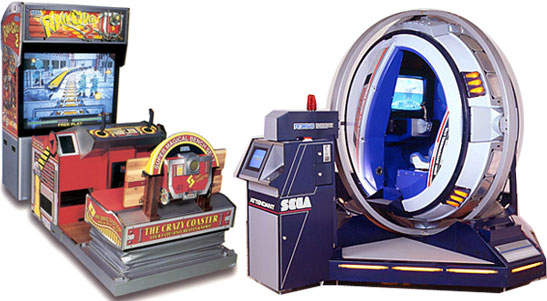
Sega continued to push the limits of arcade cabinet design along with the advances in graphics technologies. Force feedback had made game control more interactive. Started with racing games and then applied to flight sims, force feedback controls helped create a new dimension of immersion for players as well. Past a certain point the games were becoming less arcade experiences and more amusement park ones. Seats that moved and rumbled were the start for Sega, with the culmination of movement technology appearing in the R-360. The cabinet allowed a full 360 degrees of movement and could even rotate the player on multiple axis, completely flipping them upside down if they wanted to. Due to size and cost restrictions very few players actually got a chance to see, let alone try the flight sims G-LOC and After Burner on this cabinet. Sega was not deterred from turning their games into more interactive experiences through experimentation. They could achieve a memorable experience with creative level design and by exploring rich themes on every subsequent title.
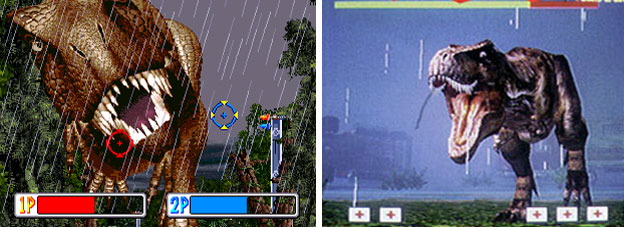
The last generation of sprite-based rail shooters allowed for some very detailed graphics. Near the end of sprite-based development the engines could support large sprites with hundreds of colors on the figures. When they scaled in size the pixelation was negligible. A few years after the first Jurassic Park game, and following on the footsteps of Rail Chase 2, Sega revisited the franchise with the Lost World. The sprite-based dinosaurs and island were replaced with polygon models. The new dinosaurs were more detailed that even the last generation and the experience was far more intense to players. To increase the reaction among players Sega had created a deluxe cabinet that shrouded the players inside a canopy, making them feel more isolated on the island. Add in seats that vibrated and a loud surround sound system and the experience was as memorable as any motion arcade title that Sega had worked on. This game from 1997 was so well produced it could still be found in arcades, movie theaters and restaurants more than a decade later.
Rolling back the clock a few years we would see that the development of rail shooters from Sega extended to home consoles. We shall explore these titles and connect them back to the arcade in the next blog. If you had a favorite rail shooter, or remember any of the titles mentioned above then I'd like to know about it. Let me know in the comments section please. As always if you would like to sponsor me please visit my Patreon page and consider donating each month, even as little as $1 would help make better blogs and even podcasts!

follow the Street Writer on Patreon!