A blog about my interests, mainly the history of fighting games. I also talk about animation, comic books, car culture, and art. Co-host of the Pink Monorail Podcast. Contributor to MiceChat, and Jim Hill Media. Former blogger on the old 1UP community site, and Capcom-Unity as well.
Heya friends what are you up to these days? Just a lot of rain over here and work. Hopefully one ends and the other doesn't... I have been enjoying the off time with my gals. Trying to stay warm and toasty in this El Niño season. While my lawn enjoys this weather, what So Cal really needs is snow. The more snow we get in the mountains the better off our water table will be. Rain is mostly runoff in the city, right to the ocean with nothing left to keep our water prices down. I hope to see lots of fresh powder in the hills once the skies clear up.
As for gaming news there is a rumbling in the arcade scene. There is a motion-ride / arcade game called Trans-Force. It is a 5D ride / game. How many dimensions is that exactly? Well, it's a motion ride with 3D glasses and the ability to shoot on a rail, ala the arcade games I mentioned last week; Pirate Storm and the Ocean Hunter. The concept looks interesting as it seats multiple gamers in the cabinet.
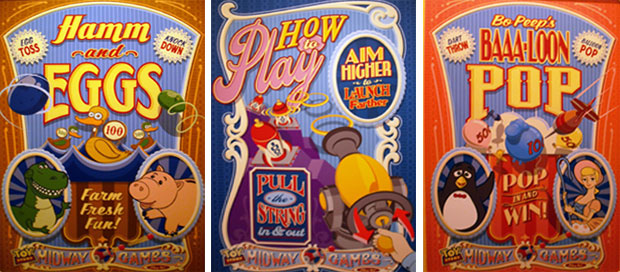
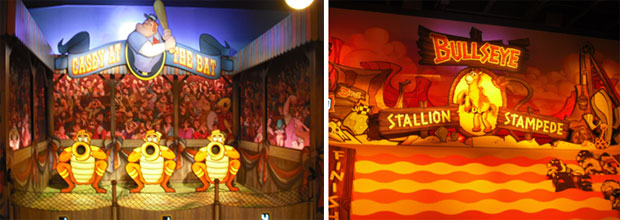
The idea of 3D glasses with motion gaming is not new. Over at Disney's California Adventure, the park next to Disneyland, is a ride / game called Toy Story Mania. It features the characters from the Pixar film in an ever-changing series of carnival-style games. The player uses a cannon mounted onto their cabin to shoot at the various games.
It's tremendous fun spinning around the room, shooting at the various targets and comparing scores with your friends.
The Trans-Force game is a logical evolution to the arcade shooter on rails while Toy Story Mania is a modern homage to the classic midway (carnival) games. Which is something to say because not far from the Toy Story Mania attraction are old-fashioned carnival games that Disney made just for Paradise Pier.
Gaming extends beyond the controller. There are more tactile sensations with the arcade experience. Things like Guitar Hero, DJ Hero and Tony Hawk RIDE are all based on the arcade model. Some gamers may not like it while other swear by the experience. I'm one of those that swears by it. However I wonder how gaming in 3D, or with motion, will change the arcade industry. Maybe these games might find their way to Xbox Live or Playstation Home sometime down the road. That would be very awesome. What do you think?
As always if you would like to sponsor me please visit my Patreon page and consider donating each month, even as little as $1 would help make better blogs and even podcasts!
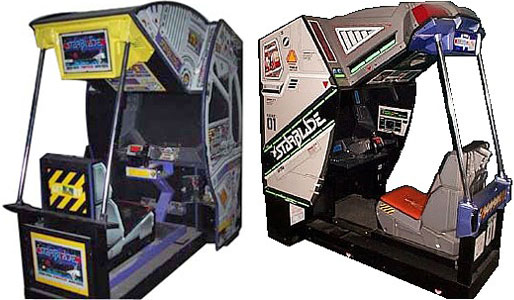
Reminiscing about Star Blade the other day made me think about other games in the genre, not solely the space shooters, but the arcade games that made an impact and were truly memorable experiences. When I was going through my notes on Star Blade I thought about what element the best arcade shooters had in common. Then I thought about what console games provided an equally memorable experience. What did these games have in common? What did they offer that was unique among them? Which were the groundbreaking titles and which were the trendsetters? How did the arcade innovate when home consoles were catching up in the graphics department?
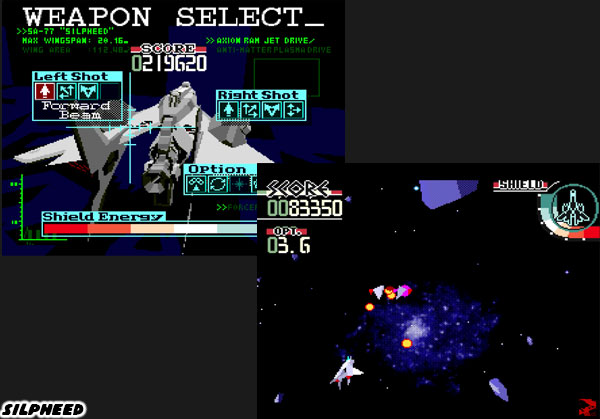
We should begin with the other titles in the space shooter department that, like Star Blade, were cutting edge experiences. One of the earliest polygon shooters was Silpheed for the PC released in 1986 this Sega title as revolutionary graphics for what was traditionally called a "Shoot-em Up" or SHMUP for short. These types of games were some of the oldest types of arcade games and included the classic titles Galaga, Space Invaders and Gradius. The original Silpheed was unlike these titles because it exploited the processing power of home PC's to deliver vector graphics and polygons into the home. None of the aforementioned classic SHMUPS were even built using that technology.
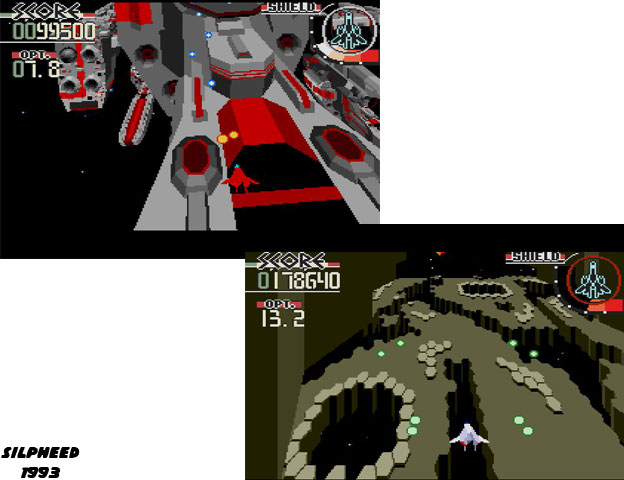
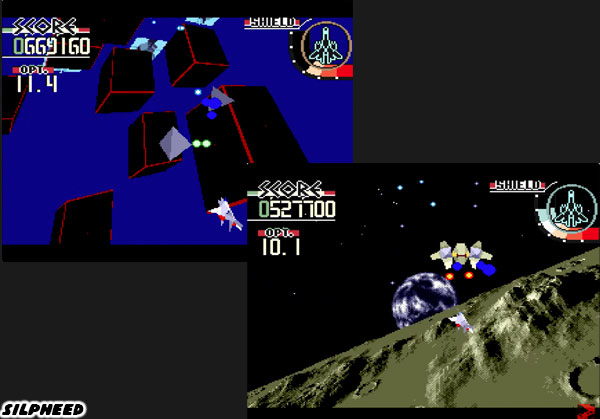
Games became more robust and visually stimulating as arcade technology found its way home in the guise of processors used in PC's and consoles. Silpheed would actually enjoy a revival of sorts exploiting the processing power of 16-bit engines and the amazing storage capacity of CD's. Silpheed for the Sega CD and add-on to the Genesis, was released in 1993. The game was a SHMUP that rivaled the best of the early polygon titles in the arcade. The graphics were cutting edge and lauded for the diversity of locations and difficulty factor. The game was so well made that it could have been considered a contemporary title to Star Blade.
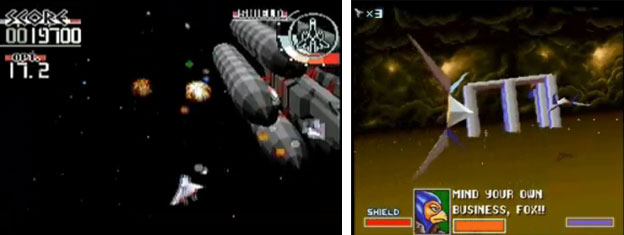
In fact 1993 was a dramatic change in the perception of home consoles bringing arcade-quality graphics home. Silpheed was popular when released but it did not achieve the level of success that another space shooter received that same year. The Super Nintendo had an exclusive polygon-based shooter titled Star Fox that completely caught gamers off guard. Instead of playing through a side-scrolling SHMUP as they were used to, gamers were actually flying through 3D space in 3D ships. The blocky graphics were overlooked as the tight control scheme, fun character designs and massive boss battles were unlike anything else available at home.
One of the interesting things about Star Fox was that it combined the polygons with sprites on the graphics engine. Nintendo did not rely exclusively on polygons to create the game. Sprites, or raster art made up images for the game characters as well as some of the background graphics as well. The use of sprites allowed the game to have certain color and effects, like an atmosphere on an alien world or cannonballs heading right towards the player. Silpheed featured similar techniques for backgrounds. These visuals could not have been achieved by relying exclusively on polygon technology.
Aside of the obvious aesthetic draw that a sprite or raster art had over early polygon games, these consoles simply did not have the processing power to render polygons for every detail. Sprites accepted more colors than polygons at the time and they could even be scalable. In oder to achieve the illusion of movement and depth sprites were layered in an overlapping method and then rotated or scaled by the game engine. This technique was used to create pseudo-3D effects in both arcade and console titles.
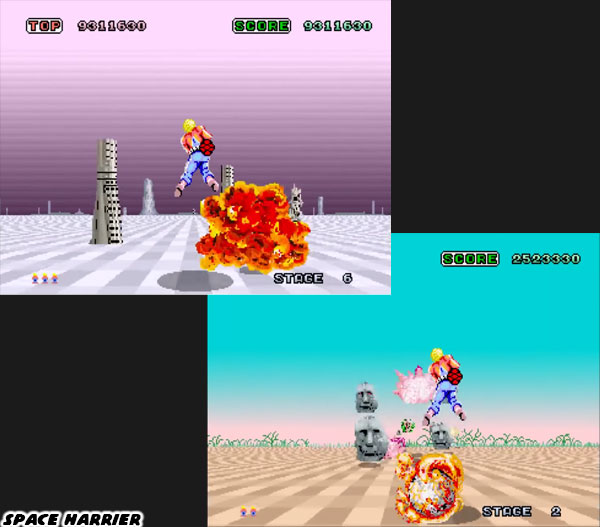
One of the earliest and most recognized uses of sprites that overlapped and scaled to create 3D object was the arcade hit Space Harrier. Released by Sega in 1985 it was revolutionary for the illusion that the main character was flying forward through the world in three-dimensions. The sprites had a limited color palette and looked very blocky as they passed underneath the main character. As processors got more powerful and storage got more robust the sprite layering technique had improved as well. One of Sega's latter titles, Thunderblade (released in 1987) featured the illusion of depth and movement through top-down and behind-the-back camera perspectives.
The polygons remained blocky but scaled slightly better than in previous titles. Through the mid 1980's and into the early 1990's this technique was employed to create the illusion of 3D objects on 2D engines.
The thing that all of the aforementioned games shared in common was the gameplay. All of the titles, whether they were set in space, on the ground or in the air, or whether they were in first-person, top-down or third person perspective used a similar game technique. The games advanced on a pre-determined path. They gave players the illusion of freedom, allowing them to move almost any direction across the screen. By allowing gamers the slightest bit of freedom the developers could create the illusion that they were actually traveling to exotic locations. Gamers could enjoy the virtual landscapes that they were taken through without having to actually pilot themselves there.
The term "Rail Shooter" was created to describe these types of games. Star Blade was an example of a rail shooter set in space. The player acted as the gunner while an unseen pilot whisked them throughout the galaxy. The rail shooter became a standard in the arcade. Sega seemed to be among the best developer for these types of games with Namco punctuating some exceptional experiences as well. As graphics technology improved on consoles new things would have to be tried out to keep audiences coming back to the arcades. The rail shooter found an audience in the mid 1990's and hit a creative peak in the late 1990's. After a slow start in the early 2K's it recently found some renewed interest at the end of the decade thanks to emerging technologies.
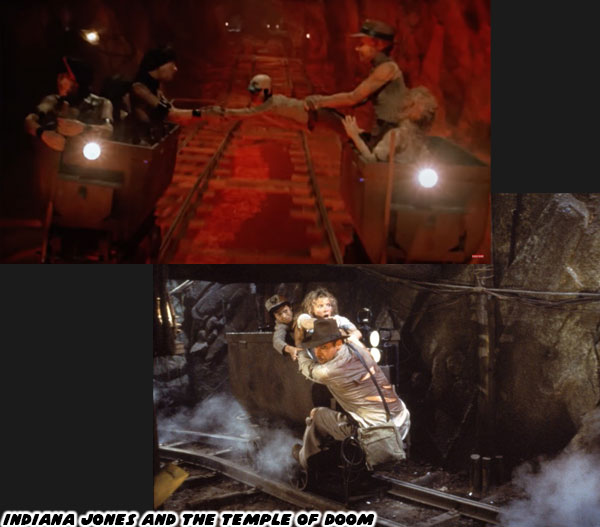
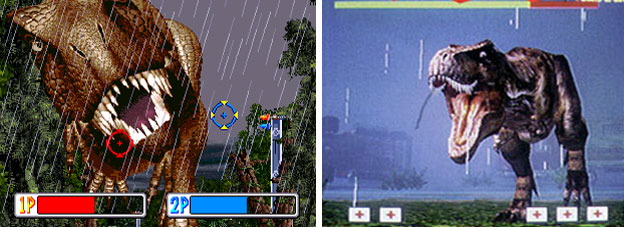
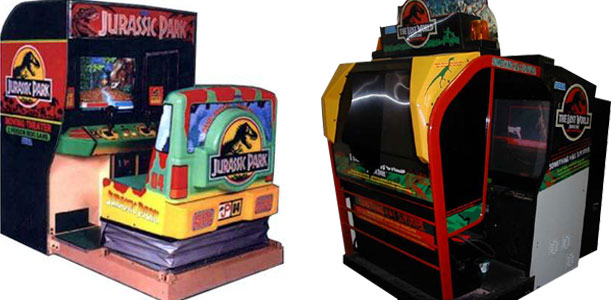
Creatively speaking the rail shooter found its niche in the arcade by exploiting elements that would be next-to-impossible to recreate at home. In 1991 Sega released a game called Rail Chase. This was a sit-down game cast players in the role of an adventurer and his female partner riding inside of a runaway mine cart. It was unabashedly a rip off of the famous chase scene from Indiana Jones and the Temple of Doom. The duo were being chased by thugs in turbans along a long and twisting course. Players could defend themselves and even throw switches and change paths by shooting a machine gun at targets. The game used scaling sprites to create the illusion of 3D. To add an extra layer of excitement the seats on the cabinet were set on top of hydraulics that dipped and bumped in time with the scenes on the screen. The last noteworthy Sega rail shooting game that was sprite-based and used the moving seats was Jurassic Park, released in 1994.
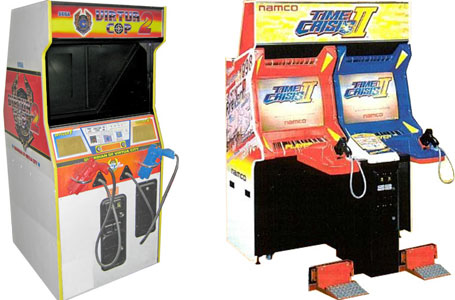
Just a short year later Sega and Namco would be working almost exclusively on polygon titles. Sega's first foray into a polygon light gun game was Virtua Cop, released in 1994 and Namco's was Time Crisis, released in 1995. Both games used the shooter on rails formula, only that a handheld light gun was used to target enemies rather than a space ship. Light gun games have an equally long and storied history in the arcade but I will not be spending too much time talking about that genre here. I would like to emphasize however the idea that the light gun arcade shooter helped shape the dramatic scope and scale covered in the rail shooter.
In 1995 Sega created Rail Chase 2. This time the scalable pixels were completely replaced by polygons. The hydraulic seats returned, pitching gamers side to side and tilting them in all sorts of directions as the mine cart found itself perpetually rolling through obstacles. The levels were lavishly themed environments created with plenty of imagination.
The term rail shooter could never seem more appropriate than with the Rail Chase series. Sega did not limit the genre by keeping the entire game on railroad tracks. The mine cart often found itself being thrown down chutes, bouncing through caves, floating down rivers and even sliding over frozen lakes. It had become the perfect, if improbable, vehicle. Sega had a luxury that could never be afforded any theme park. They had created an interactive experience with motion through a series of scenarios, boss battles and locations that did not require the construction of multi-million dollar attractions. They could even broaden the experience by creating alternate paths that players could take just by shooting a switch. This increased the replay value among gamers and gave arcade owners a reason to celebrate. What the genre had needed previously was an engine capable of rendering 3D visuals to go along with the moving seats. The new polygon powerhouses did just that.
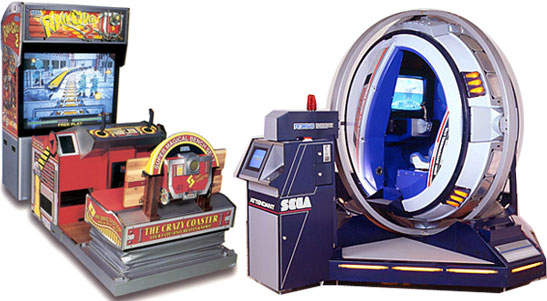
Sega continued to push the limits of arcade cabinet design along with the advances in graphics technologies. Force feedback had made game control more interactive. Started with racing games and then applied to flight sims, force feedback controls helped create a new dimension of immersion for players as well. Past a certain point the games were becoming less arcade experiences and more amusement park ones. Seats that moved and rumbled were the start for Sega, with the culmination of movement technology appearing in the R-360. The cabinet allowed a full 360 degrees of movement and could even rotate the player on multiple axis, completely flipping them upside down if they wanted to. Due to size and cost restrictions very few players actually got a chance to see, let alone try the flight sims G-LOC and After Burner on this cabinet. Sega was not deterred from turning their games into more interactive experiences through experimentation. They could achieve a memorable experience with creative level design and by exploring rich themes on every subsequent title.
The last generation of sprite-based rail shooters allowed for some very detailed graphics. Near the end of sprite-based development the engines could support large sprites with hundreds of colors on the figures. When they scaled in size the pixelation was negligible. A few years after the first Jurassic Park game, and following on the footsteps of Rail Chase 2, Sega revisited the franchise with the Lost World. The sprite-based dinosaurs and island were replaced with polygon models. The new dinosaurs were more detailed that even the last generation and the experience was far more intense to players. To increase the reaction among players Sega had created a deluxe cabinet that shrouded the players inside a canopy, making them feel more isolated on the island. Add in seats that vibrated and a loud surround sound system and the experience was as memorable as any motion arcade title that Sega had worked on. This game from 1997 was so well produced it could still be found in arcades, movie theaters and restaurants more than a decade later.
Rolling back the clock a few years we would see that the development of rail shooters from Sega extended to home consoles. We shall explore these titles and connect them back to the arcade in the next blog. If you had a favorite rail shooter, or remember any of the titles mentioned above then I'd like to know about it. Let me know in the comments section please. As always if you would like to sponsor me please visit my Patreon page and consider donating each month, even as little as $1 would help make better blogs and even podcasts!
I want to do a quick review on the new iOS game Freeblade by Pixeltoys. The game was one of the featured titles on the iTunes Store and an Editor's Choice when it debuted in late 2015. The reviews so far have been very positive, earning a 4 1/2 star average on the iTunes Store from thousands of players. Why isn't it a perfect 5-star game? The answer is simple, the game entices you to receive bonuses if you sit through a 30 second commercial for other games. Which is nothing to complain about given that this is a free to download and free to play title. From a design, control and execution perspective the game itself deserves 5 stars but I would argue it is being penalized by the pay-to-play market. Those that buy the in-game features get to extend their play and enjoy the title in more ways. Microtransactions are the bane of many game players but they are the necessary evil of the mobile market. Let's face it, if the game was priced at $24.99 on the iTunes Store with everything unlocked from then nobody would buy it because there are thousands of free games available. It's a strange dilemma for developers to be in. After playing it however I'd say that at $49.99 the game would be a bargain. Why is that? Freeblade looks as good and plays as good (if not better!) than some of the best AAA titles you would find on the portable consoles. Sony and Nintendo, I'm looking right at you! The cheap and mindless games about birds and candy may be more popular with audiences, and may make more money for the developers, however the era of the heavyweight mobile games has officially arrived.
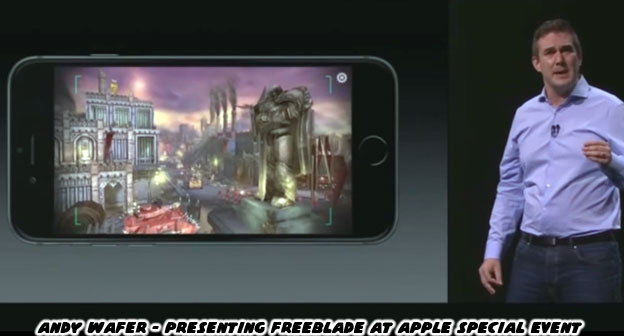
I wasn't sold when it was first announced. I love the universe that Games Workshop had created but most of their video games left much to be desired. But then something happened this fall. At an Apple Special Event the details on the new iPhone 6 and new iPad were announced. In order to highlight the leap in performance that it had over the previous models Apple had a few developers demonstrate some of the features using their software. One of the last presenters was Andy Wafer the CEO and Co-Founder of Pixel Toys. He used Freeblade to demonstrate the new graphics processor on the iPhone. It was almost twice as fast as the previous generation and capable of presenting graphics with greater fidelity and with far more effects than any previous mobile device. Not only that the new touch scheme meant that the control was much tighter and allowed for advances in the way the game controlled and played. The presentation almost won me over but there was some doubt in my mind. Would I really have to get a new phone in order to enjoy the game? After all the 5th generation of devices, including my iPod Touch, had some memorable games and were capable of displaying some amazing graphics as well. Have you seen Ridge Racer Slipstream for example?
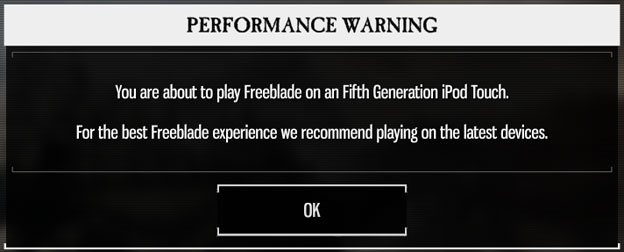
I downloaded the game on the iPod and right away I was warned that for best performance I needed to upgrade my hardware. I pressed OK and was presented with the opening story for the game but before it would ever load the first level the game would crash. I tried getting to run a few times. Tried resetting the iPod and uninstalling and reinstalling the game but it didn't work. So I had my coworker download the game on his iPhone 6 so I could test it out. Only then could I see why Freeblade required new hardware. The leap between gameplay and visuals on the handheld was like the leap from the Playstation 2 to the Playstation 4 consoles. Yes the PS2 had some incredible award-winning games, but the hardware was dated and incapable of presenting the next generation of visuals. As I was going through Freeblade I had an epiphany. Mobile games would only get better from here. If the console manufacturers didn't watch out they would become the second option for premium gaming experiences.
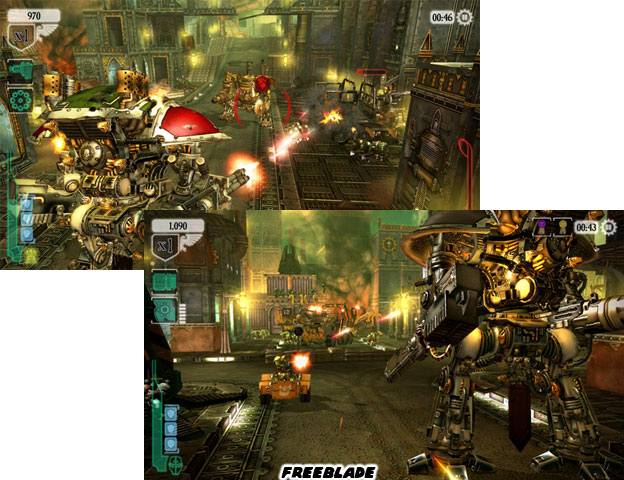
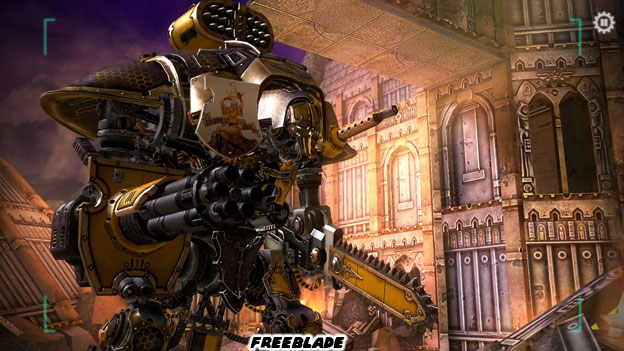
So what made Freeblade so great? If you are not familiar with Warhammer 40,000, the universe created by Games Workshop, it didn't really matter. The setup was relatively simple. It was the far future and you were on a distant planet. You were piloting a fully armed and fully armored 50-foot tall robot, known as an Imperial Knight against alien invaders. By touching the screen you got to shoot at just about anything that moved using your primary or secondary weapons. Freeblade took full advantage of the new touch features of the iOS devices. These devices recognized and responded to finger pressure instead of just finger contact. The devices and game also supported multi-finger gestures. Freeblade advanced the robot automatically during the fighting, all you had to do was aim and shoot. Essentially you were playing a mobile version of the classic arcade rail-shooter.
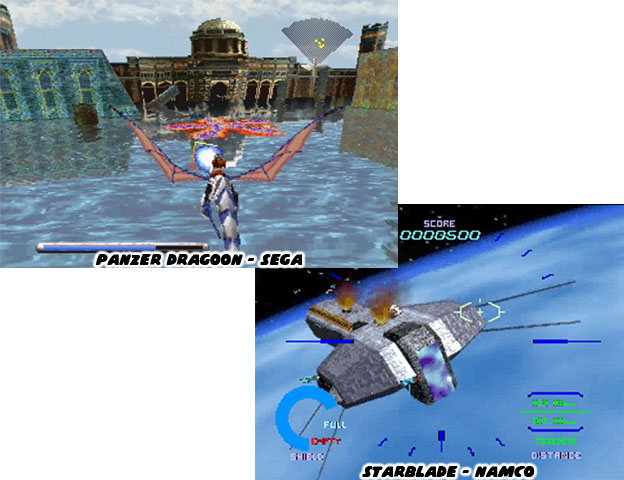
Pixel Toys developed a great game that brought back memories of some classic experiences. I wondered if the long-time arcade publishers were paying attention. Freeblade was doing to mobile devices what Panzer Dragoon had done for home consoles or Starblade had done for the arcade. Both games had cult-like followings. Sega and Namco, the respective publishers of those games hadn't really done much with the rail shooter in years. I could only imagine how great it would be if Sega developed a new Panzer Dragoon or if Namco released a new Starblade using the same mechanics of Freeblade. Yet I cannot think of a rail shooter that ever featured gigantic robot combat! In this way Freeblade stands apart from the other titles.
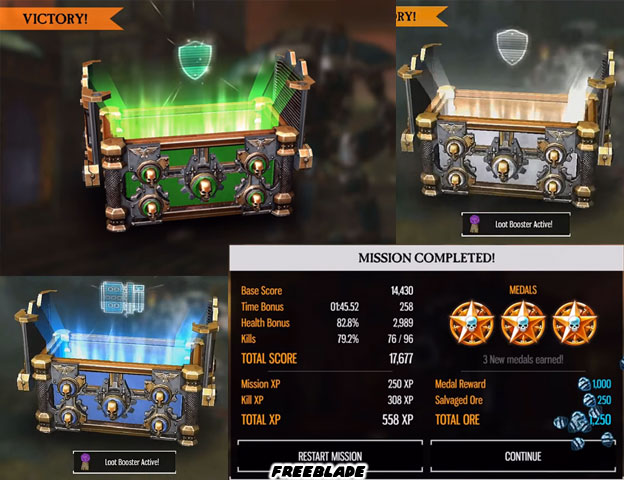
All of the hooks that mobile games depended on to keep players engaged were in Freeblade. Players could unlock secrets and upgrades as they went from battle to battle. They were rewarded for their accuracy, secrets found and point totals. They could apply some of these rewards by upgrading weapons, adding new weapons, and strengthening their armor. The player was encouraged to continue fighting through the level system. They gained experience based on how well they performed in each mission and what secrets they unlocked. Players could not only customize their weapons, they could even swap out colors to customize their robot. There were daily challenges which could make "grinding" or trying to level up your robot much more rewarding. Players did not have to spend real money in order to gain these rewards or upgrades. They simply had to be patient between sessions.
The visuals on the game were amazing. Among the best portable graphics you would ever see. The touch controls were responsive and become intuitive fairly quickly. The learning curve was relatively short, which allowed you to focus on the game itself. You had the ability to track and shoot you opponents using a gigantic machine gun, but beware of overheating! You could also fire a cannon blast or launch a barrage of missile to punch a hole through stubborn armor, roadblocks or other giant robots. Opponents emerged from every street corner and alley, in some cases they dropped in from space, rode by on motorcycles or flew overhead in jets. Sometimes the opponents were equally massive machines. When up close to other giant robots the game entered a quick-time event or melee mode. Ranged weapons were disabled and it was up to the player to use the Imperial Knight's enormous chainsaw(!) to chop an opponent down. The game was not all about offense however. The Imperial Knight was equipped with an energy shield and players could actually deflect incoming heavy fire if they responded quickly enough to the on screen cues. If the game was only graphics without the gameplay then fans would have voiced their disapproval right away. But Pixel Toys managed to make a game that looked great and played fantastic. The game only continued to grow and gain a new following on game forums and review sites. This could only be good news for the future of Pixel Toys. They had created a real winner and deserved some kudos. They were hopefully working on new content for this game as well. If you have a new iPhone or iPad and are looking for a great game then I couldn't recommend a better title. Download Freeblade now and tell me what you think. As always if you enjoyed this blog and would like to sponsor me please visit my Patreon page and consider donating each month, even as little as $1 would help make better blogs and even podcasts!