Showing posts with label games workshop. Show all posts

Friday, May 29, 2026

Warhammer drawings from my sketchbook

Hello friends, I hope that you are doing well. Today I’m posting again to help snap me out of my art block. I am sharing some art from the past. Like last time I would be looking at some fantasy, and sci-fi art. You could find all of these and more on my Warhammer & Warhammer 40,000 Gallery.

These were done when I was on an ink series while on my lunch break at work. There was something that I missed about working in an office, and that was having a break room with a drawing table. It allowed me the space to really explore my creativity. Here’s a dwarf and war pony. Also a Female Dwarf Warrior - I think there aren’t more female dwarf miniatures because the sculptors don’t want to create some glorious hair. This piece was dedicated to all the shorties fighting their fights.

I had an idea for a video game featuring this Skaven Warrior. I wanted to see Cyanide Studios, the creators of Styx: Master of Shadows to create a new stealth combat game featuring a Skaven hunting down vampires in the Warhammer Fantasy universe. I would replace one of his eyes (under the patch) with a warp stone shrapnel so that he could see in the dark, and detect magic. Would you play a game like that?

Nurgle had some of the best art, and miniatures in the Warhammer universe. I had to come up with my idea of a Nurgle Champion. This was part of my ink sketch series, starting in October (Inktober) 2016 and going on almost every weekday until March 2017. This was a very creative period where I drew mostly things that interested me. Lots of skateboarding, cars, games and people.

Noise Marine Terminator - I've got lots of ideas for Noise Marines. In the perfect world where time, and money were no object I would have an entire until made of of Noise Marines that I converted to have fantastic weapons, and armor. For example I want to see an organ-playing Noise Marine that wears the pipes on the back of his Terminator armor. I'm sure somebody could convert the organ on the Sister's of Battle Exorcist tank to get the needed parts.

Here was another example of a custom Noise Marine that I would love to do. The Noise Marine Dreadnought - How about a Dreadnought that looks like a walking mausoleum-meets-boom box? Complete with iron fencing.

The Titan Sketch was the largest Warhammer 40K illustration I ever made. I would sometimes write massive letters on 18x24-inch sketch paper. On one side I would write a letter to a friend, or family member, then on the back I would do a drawing. I wrote to Games Workshop one day, and did of the Imperator along with the internal workings. The letter went to game creator, and editor at White Dwarf Magazine Jervis Johnson. He replied to me, and said he appreciated the letter. He also added that creative director, and legendary artist John Blanche enjoyed the titan sketch. John Blanche was like if Alan Moore was a painter rather than a writer. As far as compliments went I couldn't ask for a greater endorsement. Did you have a favorite drawing, or idea that should be turned into a model? Tell me about it in the comments section. As always if you enjoyed this blog, and would like to sponsor me please visit my Patreon page and consider donating each month, even as little as $1 would help make better blogs and even podcasts!
follow the Street Writer on Patreon!

Friday, May 22, 2026

Illustrating the Warhammer 40,000 Primarchs

Hello friends, you might, or might not know that I was an illustrator. Like many artists I had been drawing since I could first hold a crayon. In the past few years I drew mostly using Adobe Illustrator on my computer. I hadn’t done much drawing in my sketchbook, but I was hoping to turn that around in 2026. It’s a slow going so far. I was very critical of my pencil, or ink drawings because if they didn’t come out exactly as I imagined them then I would be disappointed. This pressure that I placed on myself was something that I had been dealing with all of my life. It was something I had to work through, and was only getting worse with age. I had to make time to draw because it was good for my mental health. Also because in times of darkness creating was the greatest source of light. Over the weeks I would like to share some of the pieces I created when I was a little bit more active. It might inspire me to pick up the sketchbook. Today I would like to feature what was arguably my most active month in creating illustrations. This batch went back almost 20 years. You could find all of these and more on my Warhammer & Warhammer 40,000 Gallery.

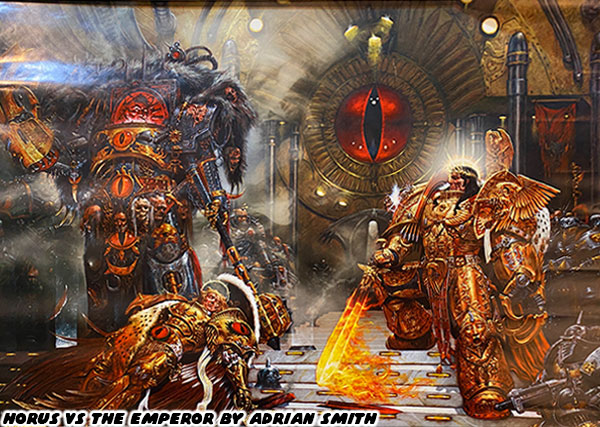
Games Day was a traveling convention put together by Games Workshop. For a few years they held it in the LA County Fairplex. I would go with my brothers on those days. When I heard that Games Day was coming to Los Angeles I decided to enter an illustration into the art contest. Naturally I thought of doing an illustration of the Emperor from Warhammer 40,000. But he had to be unique so I sketched out what I thought he must have looked like when he was young and full of wonder. All of the art in books features a stern man that looks very down. Not at all like the look I gave this guy. It took me about three days to get this look right. Then I figured since I have time I might as well do Horus. After finishing Horus I wondered if I could do a version of every primarch pre-heresy. I'm not a prolific artist so doing 20 illustrations in one month seemed impossible. But here they were, ready for Games Day LA 2007. It also took me a while to get the armor right for Horus. What was funny was that I printed full page color versions of everything to take with me to the convention, however the Games Workshop organizers didn’t want to display them because they were digital, and because they didn’t think I had created them.

Lion El'Jonson - This was one of the last Primarch illustrations I did. I was so sick and tired of drawing by then that I really didn't care. Still I had to make sure that the first Primarch had the proper respect he deserved so his armor came off very priestly. In a previous version I even gave his armor a white collar. Unknown Primarch I - There were 20 Primarchs in canon but two of them were deleted from Imperial records. I wonder what they would have looked like, or how they would be remembered. The shroud design I actually wanted to use on a Lamenters Captain... I might still do that.

Fulgrim - Fulgrim had actually been painted a few times so I tried not to deviate too far from the character but still put my spin on him. What do you think? Peturabo - This primarch was described as the master of siege warfare. I really wish there had been a fight between him and Ferrus Manus, who was the master of fortification. It would settle who was the toughest of all the primarchs.

Jaghatai Khan - I didn't want the armor to look too samurai since it is supposed to be more Mongolian than anything. I did some research and came up with this look. Leman Russ - This guy was possibly the most popular primarch. At least he's the easiest to remember since there is a tank named after him. Like all the other primarchs I illustrated I wanted to show him young and before the heresy. The hair took a while to draw, take a close look at that.

Rogal Dorn - While I'm not a big fan of the Imperial Fists I do like the loyalty they have shown in Warhammer legend and that they were the founders of the Black Templars. Konrad Curze the Night Haunter - Again, look at this guy... how did the Emperor not know he was going to side with Chaos?

Sanguinius - I made him look young by adding freckles and the warm smile. I want people to feel sorry for this guy because he knows not what the future holds for him. Ferrus Manus - This primarch killed a monster made of living metal by drowning it in lava with his bare hands. If that doesn't make him a complete bad-ass then I don't know what does.

Unknown Primarch II - I went for memorial statue here. Missing a head and ravaged by time... what could this primarch have become? Angron - Fans think Horus was the first to turn against the Emperor. Take a look at Angron and you'll know that he was actually the first to turn to chaos. Heck with a legion called the "World Eaters" why should it come as a surprise?

Roboute Guilliman - I wanted to go Julius Caesar with Roboute but it just didn't come out that way. Oh well... Mortarion - The guy had an obsession with death plus his health was not always that great. How can the Emperor not know he would turn to Nurgle?

Magnus the Red - Magnus and his legion the Thousand Sons are easily the best-looking squad pre and post-heresy in 40k. My brother really likes the way this one came out. I kept the cyclops look even though more recently Games Workshop says he was missing an eye, not a real cyclops. Lorgar - Thanks to a eagle-eyed reader. He corrected my mistake. It's Word Bearer legion, not World Bearer... I feel like such a dope but the new version it up.

Vulkan - Not many gamers know that some of the Space Marines are colored. One of the strongest was Vulkan. He's the Primarch of the Salamanders from 40k. Corax - Here's the Primarch of the Raven Guard. According to Games Workshop text (and inside jokes) Corax is supposed to be somber and melancholy like Edgar Allen Poe. Instead I illustrated a Native-inspired Corax rather than a pasty white guy to take with me to Games Day. Alpharius - Here's the Primarch of the Alpha Legion. The last of the Primarch illustrations I'm doing for Games Day 2007. A bit of a surfer vibe? Did you have a favorite primarch, or a favorite unit of Warhammer 40,000? If you create art do you ever find yourself fighting with yourself on how to start? Tell me about it in the comments section. As always if you enjoyed this blog, and would like to sponsor me please visit my Patreon page and consider donating each month, even as little as $1 would help make better blogs and even podcasts!
follow the Street Writer on Patreon!

Monday, April 20, 2026

Bookmark This Page; the Games Workshop series

I love games of all types, even the tabletop games that existed before video games were created. If you want to learn the history of one of the most influential companies ever then Bookmark This Page.

Building a gaming legacy, the Games Workshop series, part 1...

Building a gaming legacy, the Games Workshop series, part 2…

Building a gaming legacy, the Games Workshop series, part 3…

Building a gaming legacy, the Games Workshop series, part 4…

Building a gaming legacy, the Games Workshop series, part 5…

Building a gaming legacy, the Games Workshop series, part 6…

Building a gaming legacy, the Games Workshop series, part 7…

Building a gaming legacy, the Games Workshop series, part 8…

Building a gaming legacy, the Games Workshop series, part 9…

Building a gaming legacy, the Games Workshop series, part 10…

Building a gaming legacy, the Games Workshop series, part 11...

Building a gaming legacy, the Games Workshop series, final part

The passing of a legend, remembering Wayne England.

Why limited-edition tabletop game items are so cool. A 1UP classic...

Bungie drops something very familiar - A 1UP classic from November 29, 2012 


Freeblade, the elements of great game design...

Did you ever play any tabletop games? Let me know about it in the comments section. As always if you enjoyed this blog, and would like to sponsor me please visit my Patreon page and consider donating each month, even as little as $1 would help make better blogs and even podcasts!

follow the Street Writer on Patreon!

Wednesday, February 18, 2026

Building a gaming legacy, the Games Workshop series, final part

EDIT 2025: As I was going back through my blog history I discovered that I never wrapped up a series that I started on Games Workshop back in 2016. Sorry for the delay. This post was actually featured on "The Grind 1UP's RPG Blog" in 2012. The links to the rest of the series are at the bottom of this entry. 

One of the greatest contributions that Games Workshop gave the tabletop gaming community were the stand alone games. Some of the best self-contained board games, like Talisman, Hero Quest and Space Hulk were originally created to be an alternate to the larger tabletop systems. Many of the most memorable games were revised and rereleased over the decades. Many of the games however disappeared and would only be supported in a limited capacity through GW's Specialist Games range. The loss of many great games through the 90's was lamented by the long-time GW supporters. The bottom line seemed to be more important to the company than supporting the players.

Tabletop gaming shifted through the 90's with collectable card gaming (CCG) system like Magic: the Gathering and Pokémon the CCG began taking the focus away from miniatures and dice games. Independent studios that decided to stick with miniature gaming had to provide radically fresh designs in order to appeal to gamers. Studios like Rackham from France and Privateer Press from the USA flourished when they introduced their systems to players. It took Games Workshop the better part of a decade to realize that the card based systems were not a threat to their miniature based systems. If anything they could help compliment the Warhammer universe greatly.

The inked a deal with Fantasy Flight Games to develop a series of CCG based on their IP. These games were easy to get into and play and were easily portable, unlike the miniature systems. Like other CCG games there were expansion packs featuring wonderful character illustrations and new scenarios and rules that could help diversify the experience. More important, by going to CCG systems GW and Fantasy Flight were able to resurrect fan favorite games in a new format. Blood Bowl Team Manager took the popular fantasy football system and brought it to a new generation of gamers. Independent game stores reported issues keeping the game in stock. Players were still very much interested in the game even if GW were not really updating the system for miniature players.

The Blood Bowl CCG had everything that two players needed to enjoy the game. It was very reminiscent of the self-contained boxed sets that GW used to produce.

In the past few years GW had been listening to the long time supporters and began releasing limited-edition sets that were in the spirit of their classic experiences. However instead of reprinting old rules and models for nostalgic players they went about completely recreating the boxed set. Space Hulk for example was a stand-alone game that introduced Terminator Marines to the Warhammer 40,000 universe. It featured the Terminators against hordes of aliens known as Genestealers. I had mentioned a few years ago on this blog The Return of Space Hulk and why it was important to the community.
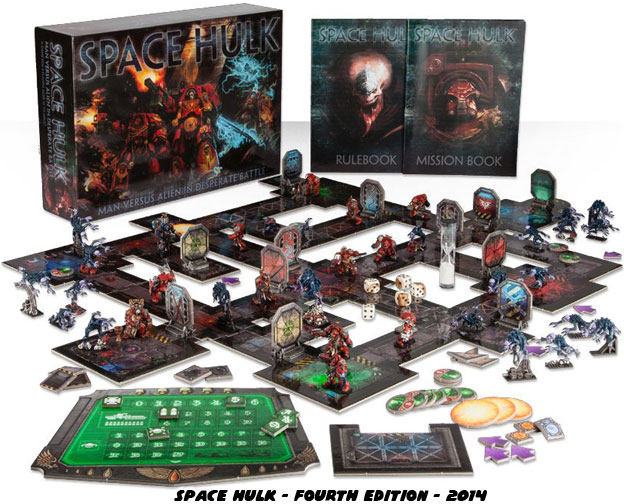
The new game featured embossed interconnectable card stock tiles with bright laser printed graphics. These tiles worked together with plastic scenery and doors that made the game feel very well put together. The production value was years ahead of the original Space Hulk. The sculpts of the Terminators and Genestealers were not rehashes of existing models either. They were very well made and insanely detailed, bridging the modern aesthetic with the classic proportions of Citadel sculpts. These miniatures that would never get reproduced in any other system or be available in a catalog. This distinction earned the collector a rare find.

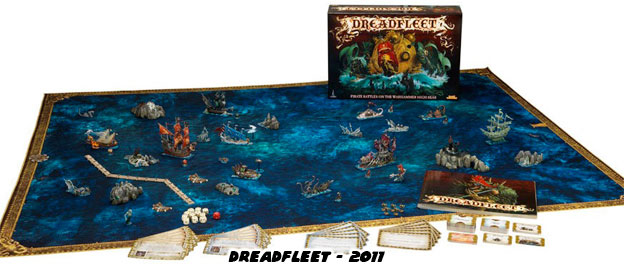
The Third Edition of Space Hulk won awards from the gaming community and was produced in relatively small numbers, driving many collectors crazy. While it was a welcome release for the community GW was still missing something. The company had earned many followers by producing original boxed games that stood alone. New tabletop players had never known the stand alone experiences aside from the CCG. Those gamers had little knowledge of the experiences that GW used to develop. Long-time players were starved for something new and not another iteration of an existing system. Veteran game designer Phil Kelly heard the call and developed a new game called DreadFleet.
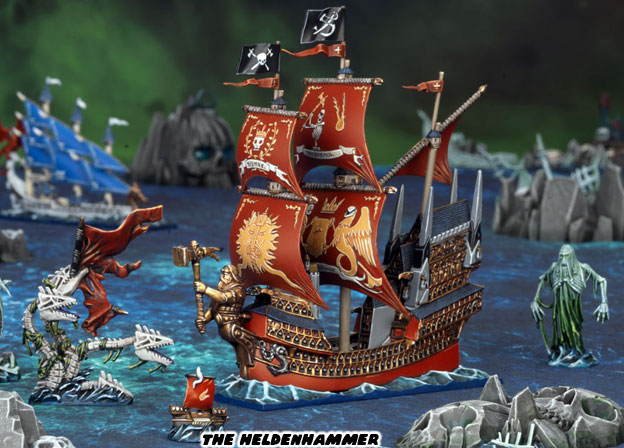
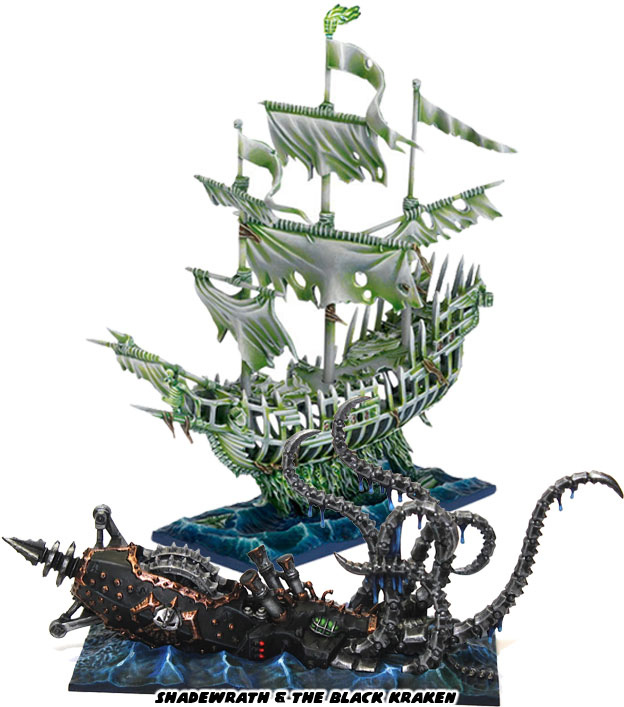
The story behind the game was conceived and written by Phil himself. It revolved around a cursed fleet lead by the vampire Count Noctilus. They made up a great gallery of classic warships, including a Tomb King death barge and a mechanized Chaos Dwarf Black Kraken. The Dreadfleet had been terrorizing the Warhammer high seas for years. A pirate captain named Jaego Roth set about to avenge the death of his family by recruiting or blackmailing some powerful privateers and friends. The game picked up at the climax of the book and allows players to experience different scenarios and choose sides. Easily this was the best new game produced by the studio in over a decade.

Dreadfleet was instantly appealing to new and veteran gamers because it did many things well. The miniatures were a powerful hook but the opportunity to experience a slice of the Warhammer world in a stand alone game was something unique. The game was a self-contained title that included highly detailed plastic models, that still required paint, markers, scenery and a color printed canvas map that represented a raging sea. That approach had not been seen in a long while, not since the original Blood Bowl boxed set had turned the fantasy universe on its head. Seasoned gamers were reminded of another old system that GW had developed and then abandoned. Man-O-War was the first boxed naval combat game set in the fantasy universe. It included rules for all of the major races, miniatures, markers and scenery to get a game going right out of the box. The game did fairly well and even saw an expansion set, the Sea of Blood, and additional miniatures released for the system. What Dreadfleet was not was the second coming of Man-O-War. It was a stand alone game with no plans for expansions or sequels. This both delighted and saddened players.
Veterans knew that if the release did not do well then GW would not support it and rules, errata and miniatures would be released sporadically through the Specialist Games store. The best way to preserve the legacy of the game was by making sure that the single experience was the best possible naval combat system the studio could produce. If players supported it then there was a chance that GW might consider making more stand alone games as well as they had done in the late 80's and early 90's. When the studio had their focus on the board game there wasn't another company that could touch them. Seasoned players were hoping that the company would return to that mentality and consider releasing other stand alone experiences. They would still be expected to support their core Warhammer Fantasy and 40,000 universes, as they had done decades ago, while making new experiences.
The stand alone game was also a gateway to the tabletop gaming hobby. It was a way to appeal to new players with a minimum level of investment required. Painting and assembling the Dreadfleet could help introduce the player to the hobby aspect while the easy-to-read markers and straightforward rule system got them into the gaming aspect. The appeal to many tabletop system was that there was something tangible to play with. Whether it was a CCG system or a miniatures based system, gamers had something to collect and personalize. Players did not need a television or console to enjoy these experiences. Best of all the stand alone format could compliment an existing universe or IP. A well design game with easy to follow rules could make a comic book, movie, cartoon or even videogame into a great board game. These games would not necessarily be a substitute for the series but instead a continuation of them. Bungie and Microsoft discovered this when Halo was licensed out for the Clix system of gaming. More recently Epic Games discovered this when they licensed Gears of War as a board game.

Studios like Games Workshop and Fantasy Flight Games were bridging the gap from casual gaming to hobby gaming by making great stand alone systems. This approach was actually nothing new to the industry. Decades ago the earliest videogame to board game titles were nothing more than copies of screen mechanics to paper boards. This was done to cash in on the craze of videogaming rather than to satiate the gaming desires of the public.

Games Workshop found success over the past couple of years by returning to the card and board game systems that made young players get interested in the hobby so many years ago. The further the studio shifted the focus from original ideas with great play elements to more established systems the more isolated they became. A similar thing could be said of Nintendo, which used to make card games, toys and stand-alone handheld electronic games. They all had their own unique play elements that turned young gamers into fans. Both GW and Nintendo had spent the better part of the 90's pandering to fans without catering to the play elements that helped create new followers. Only in the start of the new millennium did the studios begin going back to basics. But that would be a topic best saved for some other blog...

I hope my short look at Games Workshop has gotten you interested in tabletop gaming. Those that are interested should consider investing in some paints and brushes and getting the Dreadfleet game. Good things can come to those who play.

Building a gaming legacy, the Games Workshop series, part 1...
As always if you enjoyed this blog, and would like to sponsor me please visit my Patreon page and consider donating each month, even as little as $1 would help make better blogs and even podcasts!
follow the Street Writer on Patreon!

Friday, November 8, 2024

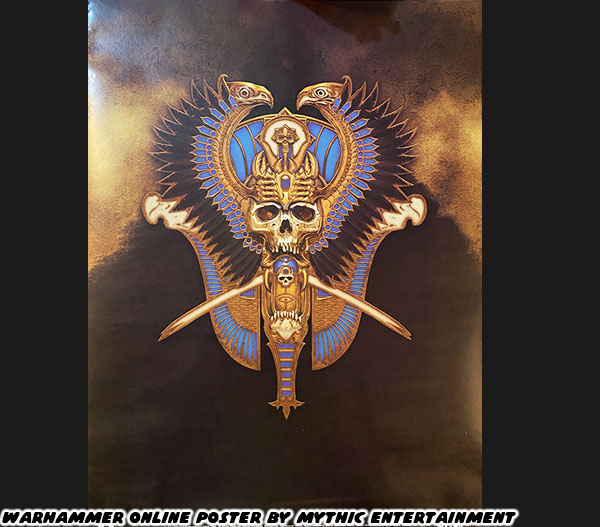
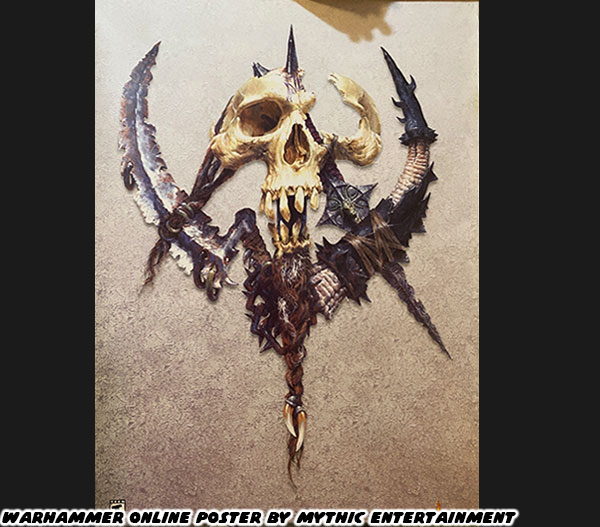
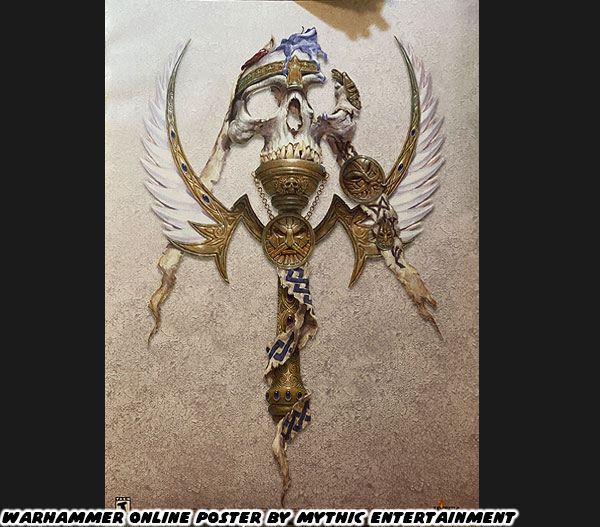
Freeze frame, my poster collection, part 5…

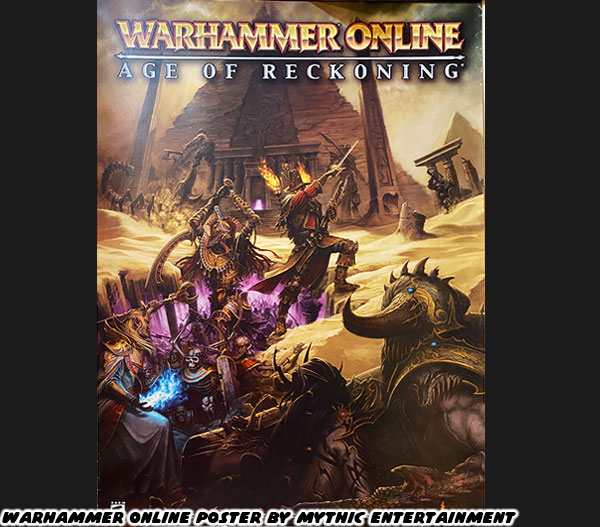
I have written about Games Workshop a lot on this blog. This includes the game systems for Warhammer Fantasy Battle, and the science fiction series Warhammer 40,000. I have a collection of White Dwarf magazines going back to the mid 1980’s. I know that I have a few posters within some of the issues that I didn’t include in my gallery. That’s okay, I might go through them for another blog.

Most of the posters from the company that I have were freebies from either a store opening, or from the E3. As I said previously, I really miss that show more than any other event I used to attend.

I’m not a big fan of MMOs but I do appreciate the work that goes into them, especially since they rely heavily on the canon of the Warhammer universe.

Are there any fantasy, or sci fi games that you like to play? Do you have any favorites from Games Workshop? I’d like to read about it in the comments section. As always if you would like to sponsor me please visit my Patreon page and consider donating each month, even as little as $1 would help make better blogs and even podcasts!
follow the Street Writer on Patreon!

Monday, March 29, 2021

Why limited-edition tabletop game items are so cool. A 1UP classic...

Tabletop gamers are a unique lot. They enjoy the gaming experience for many of the same reasons that the video game crowd does. There are games that can take players back in time, to fantastic worlds or even to far off planets. There are games that allow players to take on the role of a pro athlete, dictator, robot, cartoon character, police officer or even monster. The best titles are the immersive experiences, the ones that allow players to lose themselves even if just for a moment. Exceptional games can keep a player hooked for hours on end. Many gamers can attest to losing track of time during a session. The most die-hard gamer can attest to losing track of decades. This is because very often a great game has a backstory to hook the player, whether stated or not. The player is often dropped in the middle of a crisis that only they can solve. As the game progresses the elements of the story and the world are revealed to them. The more players become engaged with the experience the more they play and the more that they learn about the game and the game world. The cycle of gaming and discovering continues with every successive play through. Above everything else however there is the camaraderie, the community and the mutual appreciation of the games that players enjoy.

Both the tabletop and video game players can also enjoy the collecting aspect but one goes to the extreme end to support the community. Tabletop gamers enjoy the tangible aspect of the hobby. Each game and each system is supported by books, dice, miniatures and templates. To be fair some video games do have merchandise and collectables as well. Toys, clothing, books and yes, even miniatures and tabletop systems as well. The ones who do it best and who will always do it best are the tabletop gaming manufacturers. The physical objects they produce have a special connection with collectors. Yes an MMO player can spend just as much time as a tabletop gamer leveling, customizing and even painting a character. Once the power goes out however only one type of player has a physical reminder of their game. Those that have been playing miniature based games for 10, 15 or even 20 years have enough physical reminders to fill a garage or two. These players have to collect, assemble and paint their armies one soldier at a time. Video game players get to command a single person or entire unit, some armed with amazing weapons, at their disposal. Dozens if not hundreds of people created those game characters for their entertainment. Tabletop game players have to collect, assemble and paint their own terrain as well. Video game players get to explore vivid worlds created by teams of developers. All of the hours spent playing are not meaningless for tabletop gamers, especially once the power goes out. As gamers on both sides get older their tastes change as well. They tend to demand some more sophistication in the games they play and more immersion. As gamers get older they become working professionals and have more disposable income. This means that they demand a more diverse selection of models and higher quality and hereby higher priced collectables.

Last summer I had talked about the limited edition items from Games Workshop. The creator of the popular Warhammer Fantasy Battle system had released some special markers, rulers and templates for players to collect. Since the world of Warhammer was set in a fantasy world, complete with dragons, ogres and magic, the accessories had to reflect the same spirit. Dice had ancient symbols and skulls carved into them. The rulers and compasses were shaped with macabre icons as well and gilded with the details of medieval artists. These new markers would help distinguish the "hardcore" players from the crowd that used traditional rulers and dice. Collectors knew it would only be a matter of time before the science fiction game Warhammer 40,000 would also get the same treatment.

The company tended to focus the support on each system for full year intervals. Even years were often reserved for new fantasy releases and odd years usually went to 40K campaigns. The end of 2012 and start of 2013 saw several new items added for collectors. The templates for Warhammer 40K had every bit the attention to detail that the fantasy ones had. The markers were silver with gothic iconography made popular in the grim futuristic universe. They were made to look as if they had cool blue electrical sparks flowing between them. This was a good contrast to the gold reserved for the fantasy system.

Citadel, the hobby manufacturer for Games Workshop, also released new dice and objective markers, the Munitorum templates that were consistent with the universe as well. The dice had intricate, circuit-board-like lines carved into them. These new items were placed inside of a metal tin stamped and colored to look like a laser gun power pack. It's a perfect collectable for fans of the Imperial Guard and Space Marines. The objective markers were floating servo-skulls. The skulls were prevalent in the 40K universe, specifically for the human colonies. The servo skulls were made from the heads of devout followers of the Empire and fitted with robotic attachments and anti-gravity disks. They provided all sorts of uses for the empire, from recording audio and video to surveying sites too dangerous for living creatures. Some servo skulls had medical equipment and even weapons attached to them. They often accompanied Space Marines into battle and were most often found with Tech Priests (engineers) and officers. They were as ubiquitous and indispensable as the Droids in Star Wars mythos. It made great sense to turn them into objective markers for a game. Citadel saw an additional use for them though.

A second Servo Skull was released with a built in measuring tape. The front teeth of the skull could be pulled out to show off the bright red laser-like tape. Most tabletop gamers keep a folding ruler or tape measure handy but none have ever looked so cool! It is a good contrast to the traditional ruler created for the fantasy gamers.

There was actually something that Games Workshop had created a few years ago that was among the best accessories for tabletop gaming yet invented. In tabletop games there is a long standing rule called Line of Sight (LOS). When players have a firearm with a specific range then they check to see if all or only part of an opponent's character is exposed. Even partially covered characters can be shot at, however the person attacking suffers a penalty when rolling the dice. Sometimes a player on defense hides a character behind a sandbag or wall and assumes they have enough cover to be completely out of the LOS. Many a game has become heated, even between two good friends, because one player claims that they have a shot and the other does not concur. This ends up bringing a game to a grinding halt and often ends up with one party feeling like they are being cheated. What Games Workshop did was create an LOS laser. It had a curved tail that could be placed over a miniature and show exactly where the character could realistically fire. The laser would actually mark a crosshair on the target and not simply a red dot. It was one of the greatest tools a player could take with them especially to a tournament.

I wonder if any bad sport ever shot an opponent in the eye with the laser. As with all of the new accessories released, the laser LOS was a limited-edition item. Once GW and Citadel had sold out of the item that was it. More unique collectables would be released over the years to keep fans buying. If you would like to sponsor me please visit my Patreon page and consider donating each month, even as little as $1 would help make better blogs and even podcasts!

follow the Street Writer on Patreon!

Wednesday, March 9, 2016

Building a gaming legacy, the Games Workshop series, part 11...

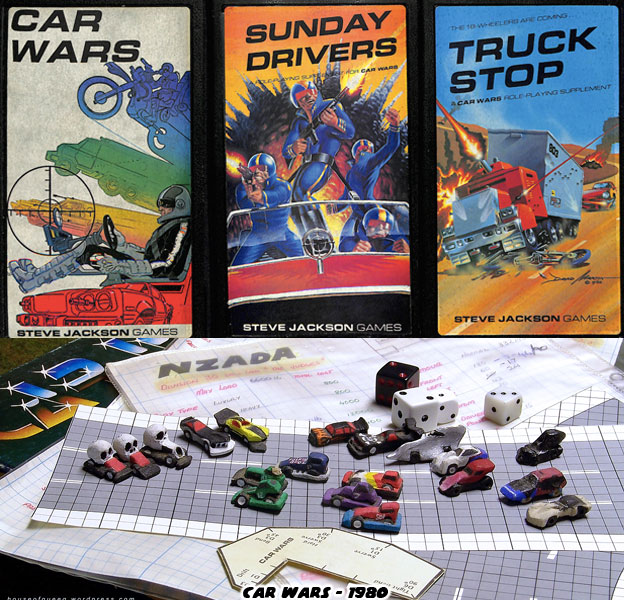
A few blogs back I mentioned that Adeptus Titanicus, the system created by Games Workshop to introduce Titan warfare to the public was a response to the wildly popular Battletech system by FASA. It wasn't the first time nor would it be the last time that Games Workshop had to cater to the trends in tabletop gaming. Another system that Games Workshop studied was among the oldest car combat systems around. In 1980 Steve Jackson Games released a system called Car Wars. It was set in a dystopian future where vehicular combat was the norm. People specialized in combat, offered their services as patrol officers, mercenaries, transports and assassins. Car combat had become so popular that it was even organized at the professional level and turned into a sport. Steve Jackson was a well regarded developer of many gaming systems. He and his team would create games on a variety of topics. They would develop clean and simple rules and release the games in hobby stores.


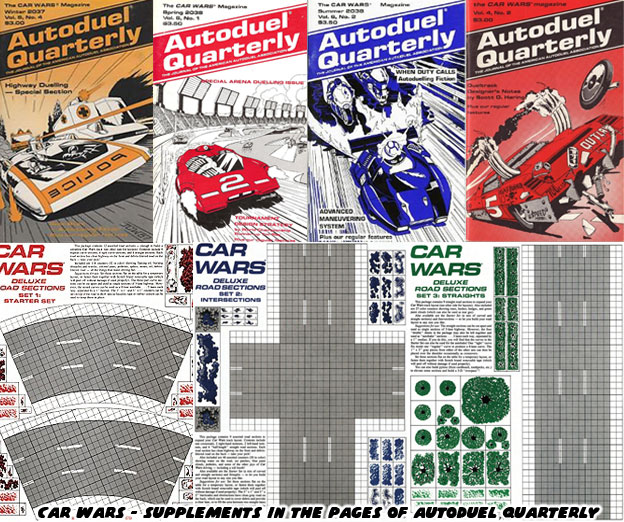
The genius of the Steve Jackson Games was in the designs themselves. Steve was a master of clean design and trusted his audience to fill in the details with their imagination. The majority of his games and components could be printed on paper or cardstock. This kept the prices low and allowed him to sell bundles of games and expansions in small plastic sleeves, no bigger than a deck of playing cards. The audience only needed some dice and a pencil to handle the combat and management system of the games. Car Wars and the reviewed version known as Autoduel would be no different from his other systems. Players could use small tokens to represent their cars or even model some Micro Machines for the job and keep them in the case. Each expansion that Steve developed helped flesh out the world of Car Wars. There were scenarios that could be explored, including the ever popular escort missions. New vehicle types would be added, new weapon rules would be created and there was a solid sense of balance between the heavily armored trucks and the small motorcycles. Best of all Steve would continue to support the system in the pages of Autoduel Quarterly. The small magazine introduced more scenarios, weapon types and vehicles. On the back page there were templates for roads, hazards and obstacles. These could be photocopied and cut out to keep the game fresh. The Steve Jackson Games were among the first to permit some of the content to be copied and distributed. We take it for granted these days thanks to public licenses and internet distribution but this was a revolutionary concept back in the '80s. Since every company was struggling to make a profit it didn't make sense to give away some of your best ideas. That was what made Steve Jackson such a respectable developer and helped spread his games through the community.


I enjoyed Car Wars for the world that Jackson had created. It was not as bleak as the world of Mad Max or The Road Warrior, the 1979 film and its 1981 successor. The George Miller films were the basis for just about all modern car combat franchises. Instead Car Wars had a sense of futurism. Cars were computer piloted, had engines that ran on diesel, gas, rocket fuel, batteries or hybrid technology. GPS navigation, camera systems and self-healing tires were standard. His team predicted everything that DARPA, Tesla, Google and the other auto manufacturers would dream up 30 years later. The art that was featured in the pages of Autoduel Quarterly were heavily influenced on manga designs. The vehicles were not quite mecha and not quite hot rod cartoon but something in between. There was no doubt that Car Wars set a standard that would be copied by the video game industry.


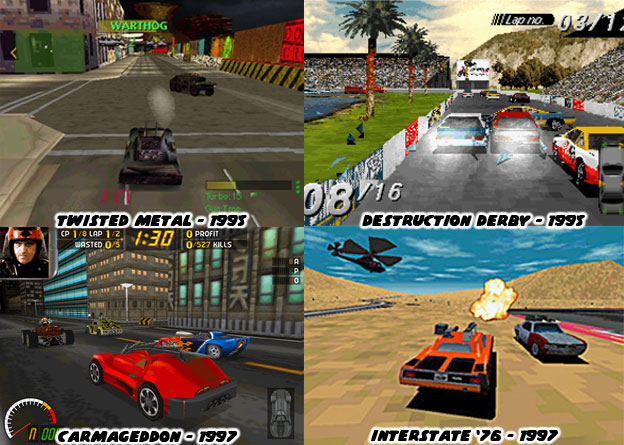
In 1985 Origin Systems released an Autoduel PC game. It was a top-down perspective game that predicted the format that would be used by the original Grand Theft Auto. However it was the vehicle combat games that followed in the '90s that owed a bit more to Steve Jackson than Mad Max. In 1995 the Playstation debuted and solid 3D games on the home consoles were a possibility. SingleTrac released Twisted Metal, it set a new standard for violence and depravity. It had a dark sense of humor too that appealed to the Gen X gamers. That same year Reflections Interactive (which would develop the Driver series) released Destruction Derby. It had impressive vehicle physics and models for the time. A few years later Activision released Interstate '76 and Stainless Games released Carmageddon. Whether the world was retro or futuristic, there was something for every fan of the genre. Cars, guns, crashes and violence was an industry all to itself. The themes explored in each of the titles had been featured in Car Wars many years prior.


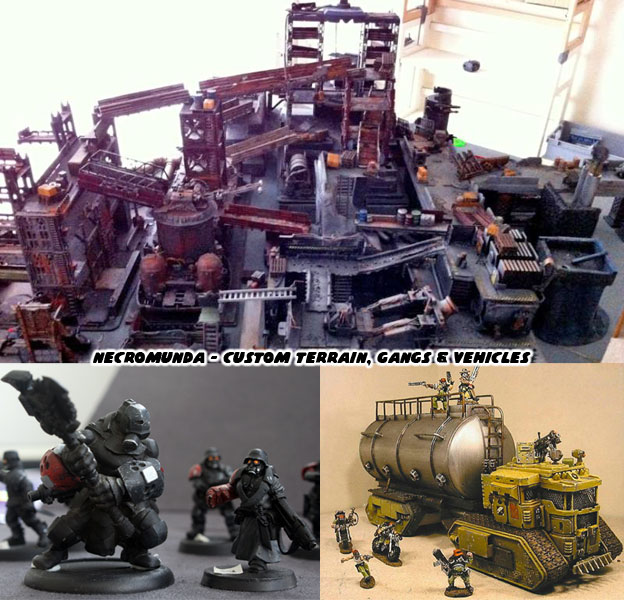
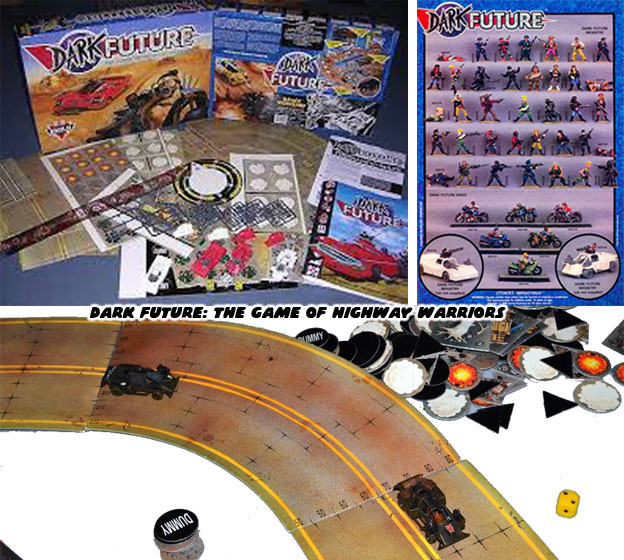
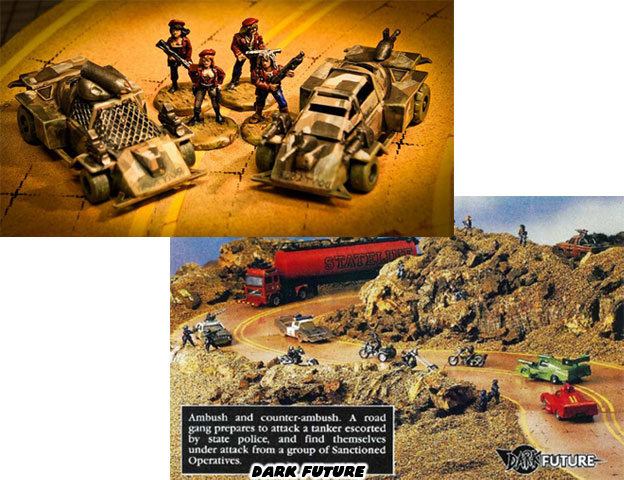
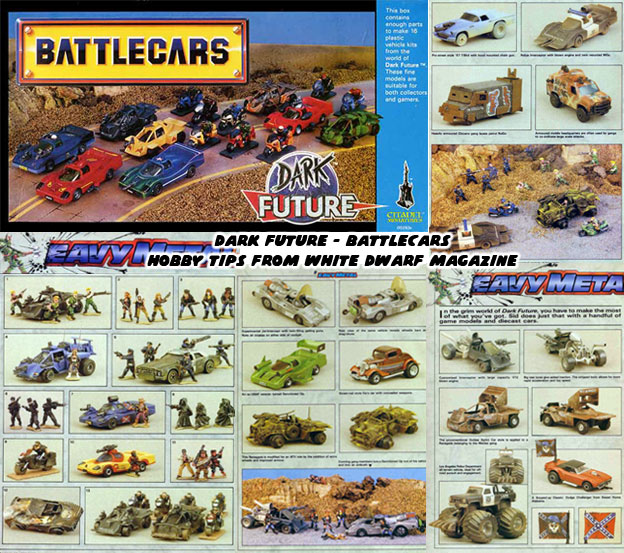
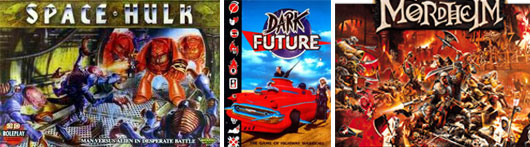
Games Workshop had been following the trends and thought that they could create a superior vehicle combat game. In 1988 they came out with Dark Future: The game of highway warriors. Like the other self-contained games from GW they made sure to include rules, templates and hobby pieces that would help create an unlimited amount of scenarios. It was one of the rare entries from the publisher that was not connected to the Warhammer Fantasy or Warhammer 40,000 timelines. Games Workshop had been paying attention to the elements that made Car Wars work and scaled up the experience. The vehicles and roads in Dark Future were larger than Car Wars, about 1/64 scale or roughly Hot Wheels-sized. The game included rules for certain vehicle types and weapons but where it really set itself apart from any other game was the emphasis on gangs and gang warfare. These were the sorts of collaborative experiences that Games Workshop would revisit in Necromunda.


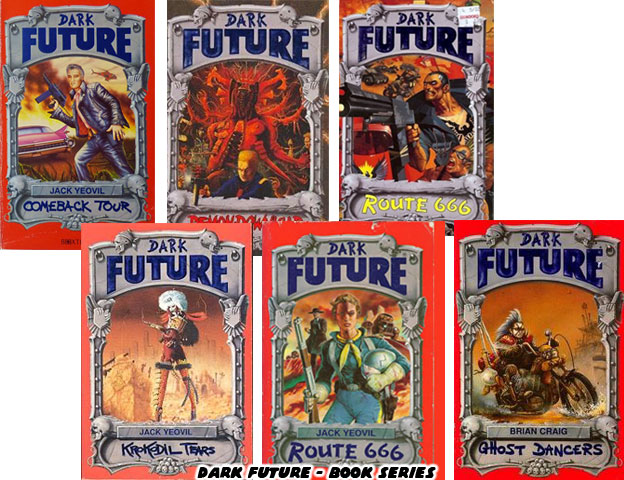
The developer went all in with the system and began supporting it in unique ways. Novels on the Warhammer Fantasy and 40K universes were sporadically released however Dark Future had an entire library of books published shortly after its release. It was as if Games Workshop were trying to catch up to the adventures printed in the pages of Autoduel Quarterly. Fans of the various systems had always wanted to see more stories, comics and graphic novels featuring their favorite characters. Games Workshop did honor the various IP in their magazines and even comic book runs but for some reason Dark Future got a very hard push when it was released. I was certainly surprised with the coverage, hobby tips and articles on all things Dark Future in the pages of White Dwarf magazine.


Players were encouraged to develop their own gangs and vehicles for use with the system. In White Dwarf we could see various Hot Wheels and Matchbox toy cars being used as the basis for some amazing conversions. There were police officers, armored corporate goons and rebel alliances featured throughout the various articles. The pages of White Dwarf dedicated to the hobby elements were known as 'eavy Metal. This was of course because miniatures had been cast in lead for years and years. Thankfully when Games Workshop started to go after a more mainstream audience the studio began to focus on plastics. For the more dedicated hobbyists the studio switched to pewter and resin miniatures. The cars in Dark Future were mostly plastic with a few motorcycles being published in plastic.


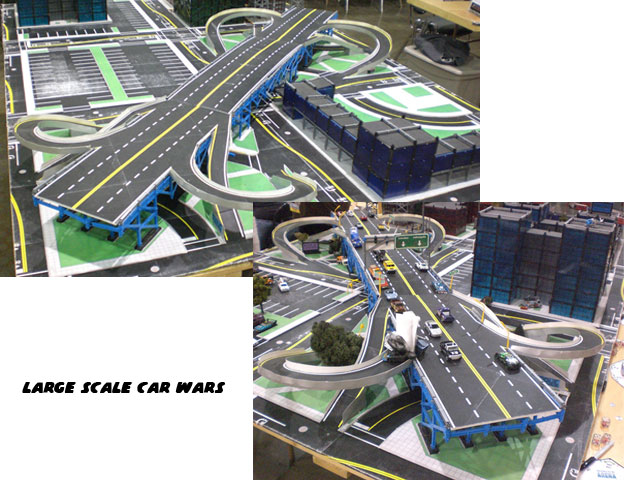
Dark Future did get a sizable following and the system stayed in circulation for a few years. However the popularity of Car Wars remained. At independent game conventions you could still find hobbyists organizing Car Wars tournaments. The best part about the system was how scalable it was. Just because the original system was designed to fit in your pocket it didn't mean that it couldn't work in a larger scale. Hobbyists would build elaborate models for their games and invite new as well as veteran players to see why the system was still fun after 30 years.


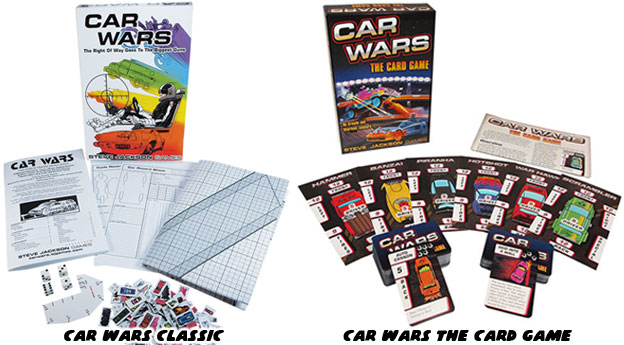
Dark Future was eventually scrapped, along with the other great GW systems like Man 'O War, Battlefleet Gothic and Necromunda. Yet Car Wars remains in publication. You can even find it in the board game section of your local Target!. Steve Jackson Games still offers the original version, now known as Car Wars Classic and a newer version designed for the CCG audience known as Car Wars the Card Game.


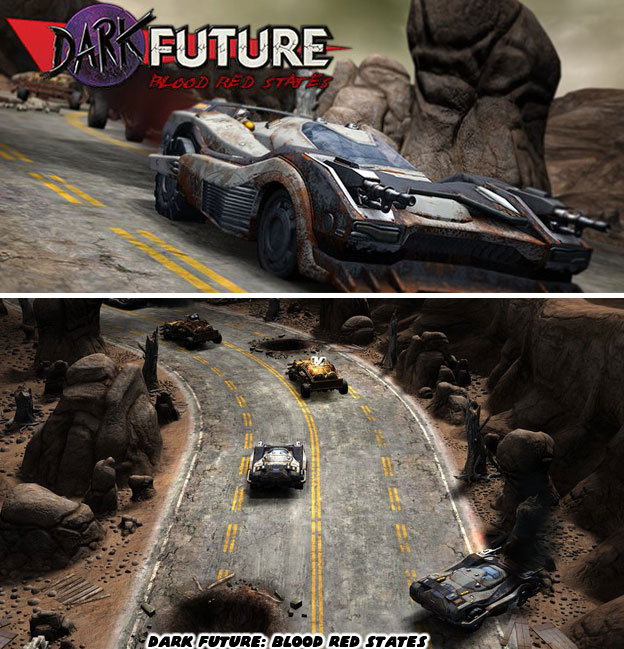
Just like the other games I have been mentioning over these past few weeks, it turned out that Games Workshop was breathing new life into classic systems. It was announced that Dark Future would receive a video game as well. Dark Future: Blood Red States was announced at the end of 2015. It was being developed by Auroch Digital and the details on the game remained hazy. Hopefully there would be enough of the classic system in the new game so that players could see why it was so popular in the late '80s.


There was a system that Games Workshop developed in the '80s that stayed red hot for more than a decade. Of all the self-contained experiences there was one game which was possibly the most popular and filled with the most potential for a video game adaptation. It was none of the games that I have mentioned so far but it was connected to a part of the established universe of Games Workshop. We'll take a look at this game and the legacy it created on the next blog. Until then I hope you are interested in checking out some classic systems or mobile versions of these great games. As always if you enjoyed this blog and would like to sponsor me please visit my Patreon page and consider donating each month, even as little as $1 would help make better blogs and even podcasts!
 follow the Street Writer on Patreon!