Showing posts with label space hulk. Show all posts

Wednesday, February 18, 2026

Building a gaming legacy, the Games Workshop series, final part

EDIT 2025: As I was going back through my blog history I discovered that I never wrapped up a series that I started on Games Workshop back in 2016. Sorry for the delay. This post was actually featured on "The Grind 1UP's RPG Blog" in 2012. The links to the rest of the series are at the bottom of this entry. 

One of the greatest contributions that Games Workshop gave the tabletop gaming community were the stand alone games. Some of the best self-contained board games, like Talisman, Hero Quest and Space Hulk were originally created to be an alternate to the larger tabletop systems. Many of the most memorable games were revised and rereleased over the decades. Many of the games however disappeared and would only be supported in a limited capacity through GW's Specialist Games range. The loss of many great games through the 90's was lamented by the long-time GW supporters. The bottom line seemed to be more important to the company than supporting the players.

Tabletop gaming shifted through the 90's with collectable card gaming (CCG) system like Magic: the Gathering and Pokémon the CCG began taking the focus away from miniatures and dice games. Independent studios that decided to stick with miniature gaming had to provide radically fresh designs in order to appeal to gamers. Studios like Rackham from France and Privateer Press from the USA flourished when they introduced their systems to players. It took Games Workshop the better part of a decade to realize that the card based systems were not a threat to their miniature based systems. If anything they could help compliment the Warhammer universe greatly.

The inked a deal with Fantasy Flight Games to develop a series of CCG based on their IP. These games were easy to get into and play and were easily portable, unlike the miniature systems. Like other CCG games there were expansion packs featuring wonderful character illustrations and new scenarios and rules that could help diversify the experience. More important, by going to CCG systems GW and Fantasy Flight were able to resurrect fan favorite games in a new format. Blood Bowl Team Manager took the popular fantasy football system and brought it to a new generation of gamers. Independent game stores reported issues keeping the game in stock. Players were still very much interested in the game even if GW were not really updating the system for miniature players.

The Blood Bowl CCG had everything that two players needed to enjoy the game. It was very reminiscent of the self-contained boxed sets that GW used to produce.

In the past few years GW had been listening to the long time supporters and began releasing limited-edition sets that were in the spirit of their classic experiences. However instead of reprinting old rules and models for nostalgic players they went about completely recreating the boxed set. Space Hulk for example was a stand-alone game that introduced Terminator Marines to the Warhammer 40,000 universe. It featured the Terminators against hordes of aliens known as Genestealers. I had mentioned a few years ago on this blog The Return of Space Hulk and why it was important to the community.
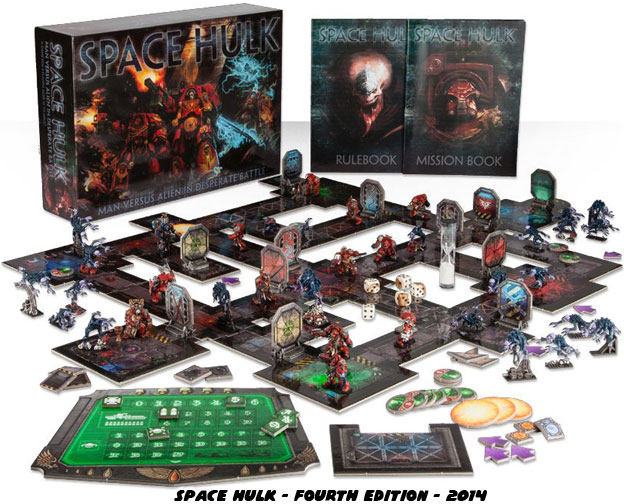
The new game featured embossed interconnectable card stock tiles with bright laser printed graphics. These tiles worked together with plastic scenery and doors that made the game feel very well put together. The production value was years ahead of the original Space Hulk. The sculpts of the Terminators and Genestealers were not rehashes of existing models either. They were very well made and insanely detailed, bridging the modern aesthetic with the classic proportions of Citadel sculpts. These miniatures that would never get reproduced in any other system or be available in a catalog. This distinction earned the collector a rare find.

The Third Edition of Space Hulk won awards from the gaming community and was produced in relatively small numbers, driving many collectors crazy. While it was a welcome release for the community GW was still missing something. The company had earned many followers by producing original boxed games that stood alone. New tabletop players had never known the stand alone experiences aside from the CCG. Those gamers had little knowledge of the experiences that GW used to develop. Long-time players were starved for something new and not another iteration of an existing system. Veteran game designer Phil Kelly heard the call and developed a new game called DreadFleet.
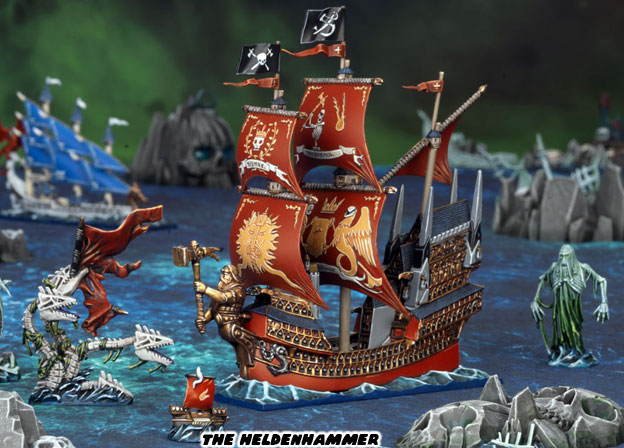
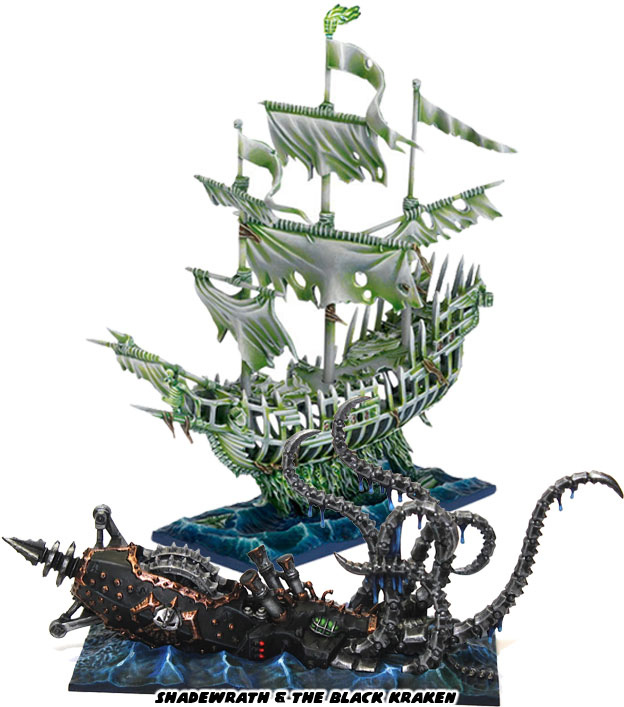
The story behind the game was conceived and written by Phil himself. It revolved around a cursed fleet lead by the vampire Count Noctilus. They made up a great gallery of classic warships, including a Tomb King death barge and a mechanized Chaos Dwarf Black Kraken. The Dreadfleet had been terrorizing the Warhammer high seas for years. A pirate captain named Jaego Roth set about to avenge the death of his family by recruiting or blackmailing some powerful privateers and friends. The game picked up at the climax of the book and allows players to experience different scenarios and choose sides. Easily this was the best new game produced by the studio in over a decade.

Dreadfleet was instantly appealing to new and veteran gamers because it did many things well. The miniatures were a powerful hook but the opportunity to experience a slice of the Warhammer world in a stand alone game was something unique. The game was a self-contained title that included highly detailed plastic models, that still required paint, markers, scenery and a color printed canvas map that represented a raging sea. That approach had not been seen in a long while, not since the original Blood Bowl boxed set had turned the fantasy universe on its head. Seasoned gamers were reminded of another old system that GW had developed and then abandoned. Man-O-War was the first boxed naval combat game set in the fantasy universe. It included rules for all of the major races, miniatures, markers and scenery to get a game going right out of the box. The game did fairly well and even saw an expansion set, the Sea of Blood, and additional miniatures released for the system. What Dreadfleet was not was the second coming of Man-O-War. It was a stand alone game with no plans for expansions or sequels. This both delighted and saddened players.
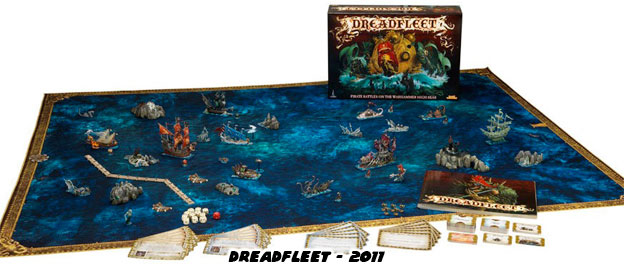
Veterans knew that if the release did not do well then GW would not support it and rules, errata and miniatures would be released sporadically through the Specialist Games store. The best way to preserve the legacy of the game was by making sure that the single experience was the best possible naval combat system the studio could produce. If players supported it then there was a chance that GW might consider making more stand alone games as well as they had done in the late 80's and early 90's. When the studio had their focus on the board game there wasn't another company that could touch them. Seasoned players were hoping that the company would return to that mentality and consider releasing other stand alone experiences. They would still be expected to support their core Warhammer Fantasy and 40,000 universes, as they had done decades ago, while making new experiences.
The stand alone game was also a gateway to the tabletop gaming hobby. It was a way to appeal to new players with a minimum level of investment required. Painting and assembling the Dreadfleet could help introduce the player to the hobby aspect while the easy-to-read markers and straightforward rule system got them into the gaming aspect. The appeal to many tabletop system was that there was something tangible to play with. Whether it was a CCG system or a miniatures based system, gamers had something to collect and personalize. Players did not need a television or console to enjoy these experiences. Best of all the stand alone format could compliment an existing universe or IP. A well design game with easy to follow rules could make a comic book, movie, cartoon or even videogame into a great board game. These games would not necessarily be a substitute for the series but instead a continuation of them. Bungie and Microsoft discovered this when Halo was licensed out for the Clix system of gaming. More recently Epic Games discovered this when they licensed Gears of War as a board game.

Studios like Games Workshop and Fantasy Flight Games were bridging the gap from casual gaming to hobby gaming by making great stand alone systems. This approach was actually nothing new to the industry. Decades ago the earliest videogame to board game titles were nothing more than copies of screen mechanics to paper boards. This was done to cash in on the craze of videogaming rather than to satiate the gaming desires of the public.

Games Workshop found success over the past couple of years by returning to the card and board game systems that made young players get interested in the hobby so many years ago. The further the studio shifted the focus from original ideas with great play elements to more established systems the more isolated they became. A similar thing could be said of Nintendo, which used to make card games, toys and stand-alone handheld electronic games. They all had their own unique play elements that turned young gamers into fans. Both GW and Nintendo had spent the better part of the 90's pandering to fans without catering to the play elements that helped create new followers. Only in the start of the new millennium did the studios begin going back to basics. But that would be a topic best saved for some other blog...

I hope my short look at Games Workshop has gotten you interested in tabletop gaming. Those that are interested should consider investing in some paints and brushes and getting the Dreadfleet game. Good things can come to those who play.

Building a gaming legacy, the Games Workshop series, part 1...
As always if you enjoyed this blog, and would like to sponsor me please visit my Patreon page and consider donating each month, even as little as $1 would help make better blogs and even podcasts!
follow the Street Writer on Patreon!

Monday, February 22, 2016

Building a gaming legacy, the Games Workshop series, part 8...

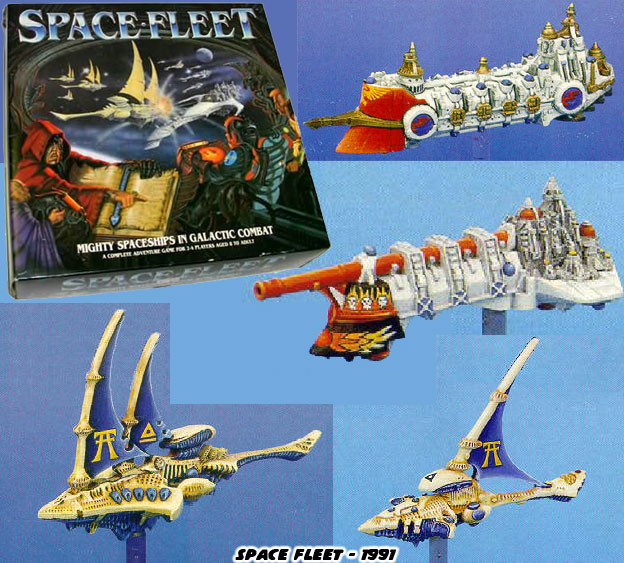
The Warhammer 40,000 universe was one of the most detailed, well written and presented science fiction systems ever published. Fans of combat, aliens and even demons fighting in some corner of the galaxy had decades of resources they could call upon. Hobbyists had small armies that they could take to a store or friends house for a skirmish every weekend. Those that had more time and money could even build enormous Titans and do battle on a bigger table. From the tight quarters combat of Space Hulk all the way to the Epic rules for Titans there was a system for every type of player. Yet Games Workshop was always looking for new ways to branch out their systems. One of the most important games that they developed was Space Fleet. Released in 1991 the game had learned from Space Hulk, HeroQuest and Space Crusade when it came to containing a self-contained experience.


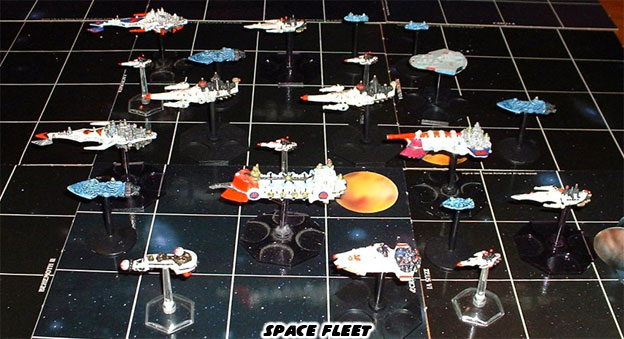
Gamers were invited to pick a side in a space battle featuring the Eldar and Imperial Navy. The ships featured within were wild designs, They looked like floating cities as much as they did battleships. This was for a reason. In 40K every battle for dominance in space required war machines that were impossible to imagine. The ships featured in Space Fleet were massive. The biggest of which could actually transport several of the biggest Titans created by the Forge Worlds. I'm sure many of you were wondering how the Empire managed to move the Titans from planet to planet. Well, it was the job of the Imperial Navy to do that. Players were doing battles with ships large enough to house several of our modern aircraft carriers. It was a wonderful genre and one of the few that Games Workshop helped flesh out.


Space Fleet contained pre-printed tiles of outer space and grids that could be arranged in any pattern so that the player would never run out of "space" while playing. Like the other boxed sets it was easy for audiences to get into this game and even share it with their friends. There is a great blog on the history of Space Fleet that I recommend you check out. Despite the uniqueness of the title it never really took off. Games Workshop did begin including scenarios for their 40K systems featuring the space ships they had revealed in Space Fleet. At the end of the decade the studio decided to give the genre another go. This time audiences were paying attention.


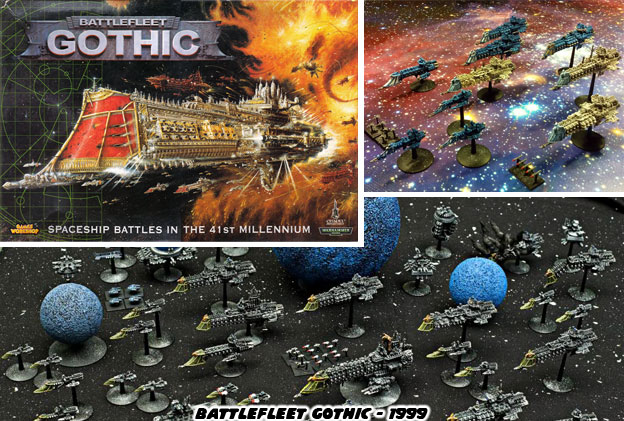
Battlefleet Gothic was released in 1999. With it came a greatly expanded universe and set of rules that complimented the small attack fighters as well as super destroyers from the Imperial Navy. Along with it came rules for Chaos fleets as well as those from some aliens as well. Ships could be armed with an assortment of weapons, their effectiveness depended on the opponents armor, range, obstacles and a number of other factors. There was a lot of strategy involved with the game just as there was with the more open systems from GW. Fans of 40K, and especially the Epic rules were all over the system. Hobbyists found themselves creating planets and asteroid belts to use on homemade outer space placemats. The models that Citadel released were insanely good. The ship designs from GW were completely unlike anything out there. Nothing in Star Wars or Star Trek could compare to the Gothic-inspired space cruisers. These ships were ornamented with statues and reliefs, they looked like floating cathedrals. They belied their awesome planet-destroying firepower and ability to transverse the warp.


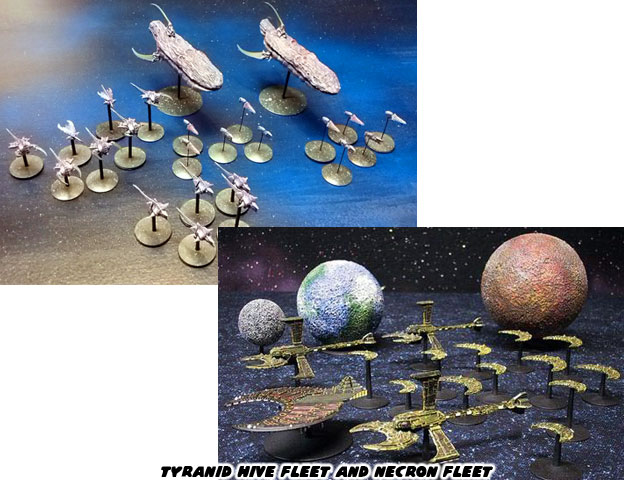
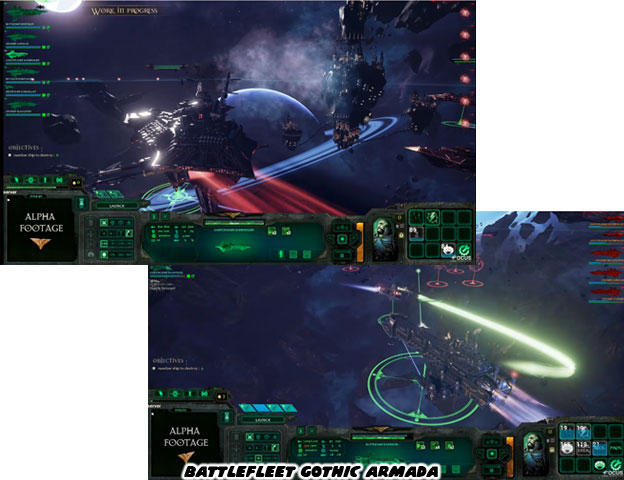
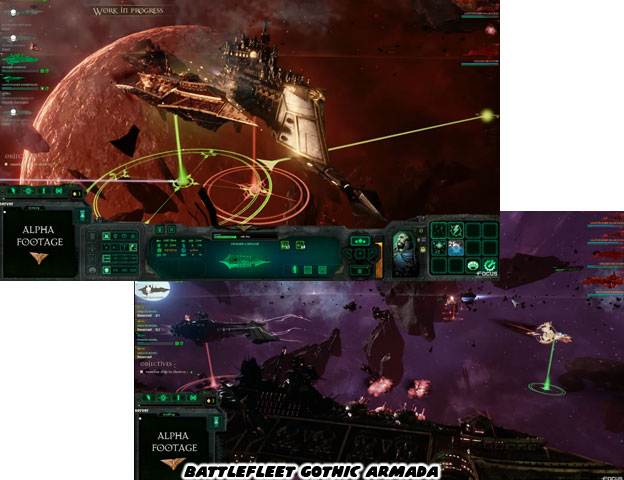
Games Workshop would release expansions to Battlefleet Gothic over the next few years. The studio would add rules for the new aliens introduced into 40K canon from the late '80s through the '90s. The robotic Necrons with their Egyptian-inspired monoliths and the living space fleet of the Tyranids. Orks would have battle barges and even access to the occasional Space Hulk. The Dark Eldar, Eldar and Empire would engage in battles far more massive than any other science fiction system ever filmed or presented. Near the end of the series publishing there were even ships for the Tau, the last new race introduced to 40K canon. The ships and outer space battles spoken of for years in the 40K novels and game scenarios were much easier to visualize thanks to an actual game system. The ships would turn up as backdrops in various animated films and even video games but for years they never had a video game to call their own. That was of course until Games Workshop announced Battlefleet Gothic Armada at the end of 2015. Published by Focus Home Interactive and developed by Tindalos Interactive, it looked to capture everything that made the tabletop game so memorable.


The game would start off small, Imperial Navy versus Chaos, Orks and Eldar. It would hopefully get expansions if it proved to be successful. There was no reason to doubt the future success of the game as it seemed to be capturing all of the details from the tabletop system. It was something to see the ships flying around in three-dimensional space in the pre-alpha footage. It was how I always imagined it must have looked like live. Outer space combat had a more naval feel in 40K than in any other system. Ships could set traps, sort of like mines in space. As well as they could cloak in gas clouds and surprise opponents like a submarine. There were countermeasures and technology that allowed the battleship to find the hidden opponents, the space equivalent of sonar. Battlefleet Gothic Armada went so far as to capture the "rewards" that Chaos would bestow upon their champions. Ships would twist and change shape thanks to the ruinous powers of the warp, which Chaos had sway in. The ships from the legions that turned traitor against the emperor no longer looked like those from the Imperial Navy. They were instead brutal reminders of a particular Chaos God. Perhaps covered in gigantic skull effigies in honor of Khorne or spewing poison throughout the cosmos in favor of Nurgle. It would be interesting to see how these blessings would help the Chaos fleet in battle.


I have no doubt that this will be a great gateway to the Warhammer 40,000 universe. A few years prior to Battlefleet Gothic but after Space Fleet there was another system from Games Workshop that captured the was of ship combat. Only this was set in the ancient world rather than outer space. In the next blog we will look at this game. As always if you enjoyed this blog and would like to sponsor me please visit my Patreon page and consider donating each month, even as little as $1 would help make better blogs and even podcasts!

 follow the Street Writer on Patreon!

Friday, February 19, 2016

Building a gaming legacy, the Games Workshop series, part 7...

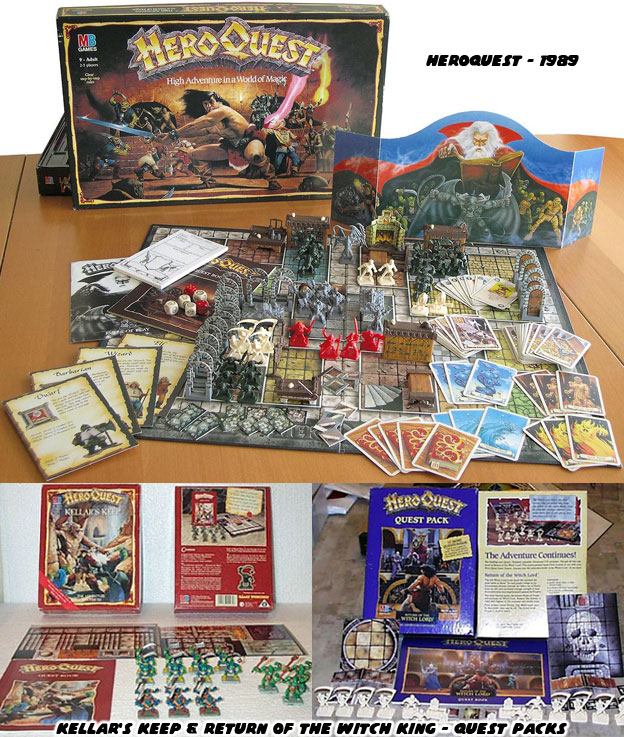
Game Workshop was looking for a way to expand the tabletop gaming niche that they had carved out for themselves. Like all companies they were looking for mainstream success. They wanted the games they produced to reach the widest audience possible. Of course in order to do that they had to change to fit the market. Board games were popular around the world and especially in North America. They had been perennial hot toys for decades. A few board games, like Monopoly, Twister, Battleship and Connect 4, were consistent best-sellers and most houses in the USA could claim to have at least one of the titles in their collection. Games Workshop wanted to create the Monopoly equivalent of the Fantasy and Science Fiction genre. In order to do this they needed to find a partner that had the distribution channels and means of production that would elevate the British company to a global player. Gaming publisher Milton Bradley would help GW reach that next level. What they released in 1989 was called HeroQuest. It was considered one of the great tabletop role playing systems ever. The game managed to capture all of the elements that made Warhammer great but with the ease of access of Space Hulk.

They started by simplifying the rules of Warhammer Fantasy Battle. By creating maps and tiles like they did with Space Hulk, they were able to help audiences learn about the nuances of dice-based gaming. Combat, magic, attacks, weapons, ranges defenses were easier to figure out on the one-inch tiles. Not to mention that players that didn't have the hobby tools; paints, brushes would be able to be immersed in the world that Games Workshop was presenting because the plastic miniatures they were provided were highly detailed. By using pre-printed tiles they were able to allow gamers to create infinite maps as well. Milton Bradley was able to help Games Workshop in a number of ways. They could get the system published quickly, in multiple languages and distributed around the world. Milton Bradley was able to keep publishing prices down because they had experience in producing large volumes of toys and games. When these toy manufacturers were combined with the highly-detailed sculpts coming from Citadel it was a match made in heaven.


HeroQuest was a sensation. Audiences that were curious on fantasy gaming but didn't know where to begin could find HeroQuest in any toy store. It was right next to the other popular MB games Axis & Allies and Battleship. Some avoided Dungeons & Dragons because it had a certain social "nerd" stigma and required a healthy imagination and lots of free time. These were things that some people just couldn't commit to. There was an even larger portion of gamers that had never heard of the Warhammer Fantasy Battle system. They might be put off by learning that they had to paint and assemble their own models as well as had to buy all of the rules and codexes for each army. It could cost a few hundred dollars just to get up and running. Then there was the problem of finding another gamer in the community that also played Fantasy Battle. Games Workshop re-branded their tabletop miniatures system "3D Roleplay Hobby Games" so that audiences could tell it was much more than a simple board game. All of the rules and pieces were contained in the box. It didn't hurt that it was half the price of any similar game that Games Workshop had ever produced.

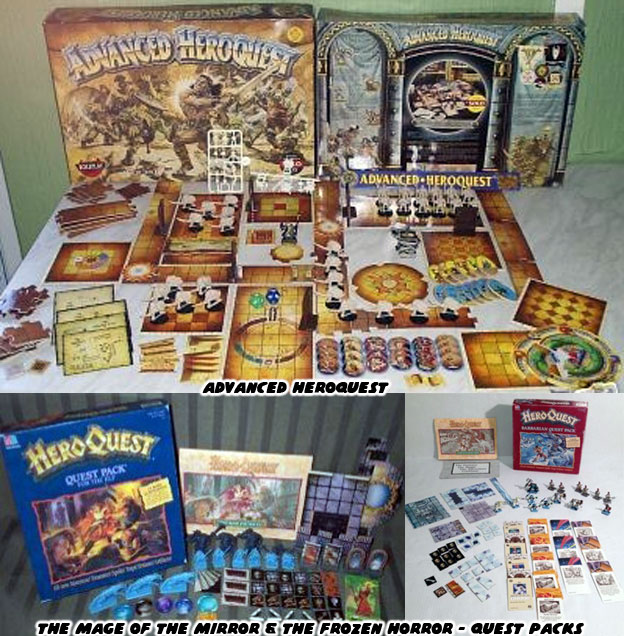
HeroQuest won several awards and gained a critical response from editors and gamers on the nascent web BBS. Word of mouth helped it sell copies in the pre-internet age. Games Workshop followed up the system with several expansions, each one more unique than the last. They added new magic, new characters, models to the system. It would have surprised inexperienced publishers how quickly Games Workshop was able to develop new scenarios and expansions that maintained a high level of quality. Those that were fans of the company knew the secret to their success was in adapting the Warhammer Fantasy universe little by little into HeroQuest. The villains of Chaos, the brave Elves and stubborn Dwarfs in the Warhammer style all made it into HeroQuest. Games Workshop had years worth of material that could become expansions for HeroQuest and actually did. Audiences that wanted to become more immersed in the world could even pick up Advanced HeroQuest.


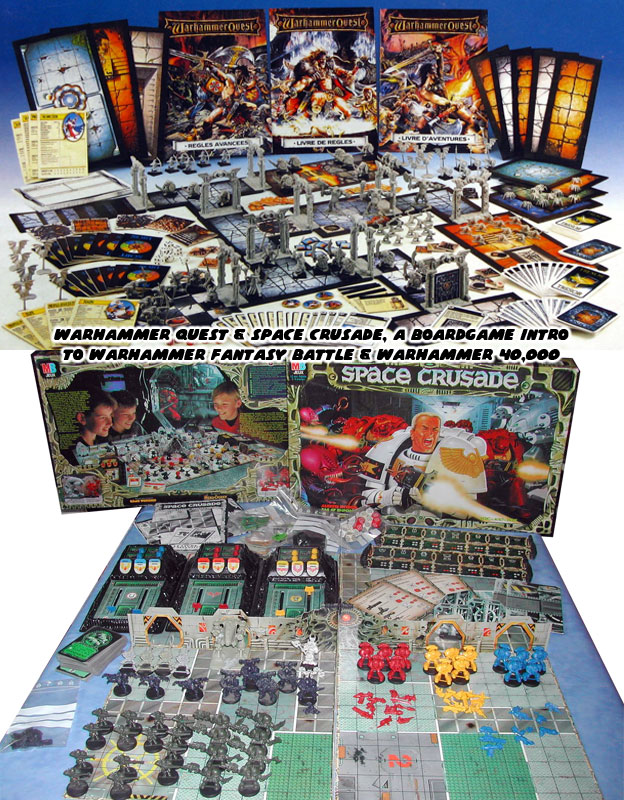
After seeing the success of HeroQuest Games Workshop wanted desperately to capture that success for Warhammer 40,000. Space Hulk was an exceptional game but it could only be found in some hobby stores. The studio needed to make something that Milton Bradley could help publish and distribute. They came up with Space Crusade, it was a primer to the Space Marines, Genestealers, Eldar and forces of Chaos. It was a fairly good introduction to science fiction tabletop gaming. Audiences could engage in firefights with all sorts of science fiction weaponry rather than the magic and sword battles in HeroQuest. What was interesting was that the robots used by Chaos in Space Crusade would eventually become the skeleton-like Necron robots in future revisions of 40K. Games Workshop had succeeded in getting on the shelves of the big retailers. Those in the US and around the world that had never heard of Games Workshop were suddenly very interested in these tabletop games. It had a ripple effect that helped sell tabletop games from other publishers. The quality of the Milton Bradley titles ended up being a bridge to the more serious systems. They were a great introduction to the world of Warhammer Fantasy and Warhammer 40,000.


In 1995 the partnership with Milton Bradley ended. Games Workshop released Warhammer Quest as the spiritual successor to HeroQuest. The love of the system never completely died. To many it was the first real tabletop RPG they had ever played. The same thing could be said of Space Hulk. Sadly Space Crusade didn't capture the imagination of the public as well as Space Hulk did. The market for tabletop games would rise and fall over the next two decades. Part of the reason was due to the success of home consoles and the decline of the arcade game. The best tabletop systems kept coming back, they evolved with the trends. In the previous blog I highlighted how Space Hulk returned as a collectable card game. As mobile games exploded in popularity Space Hulk managed to return in the new format.


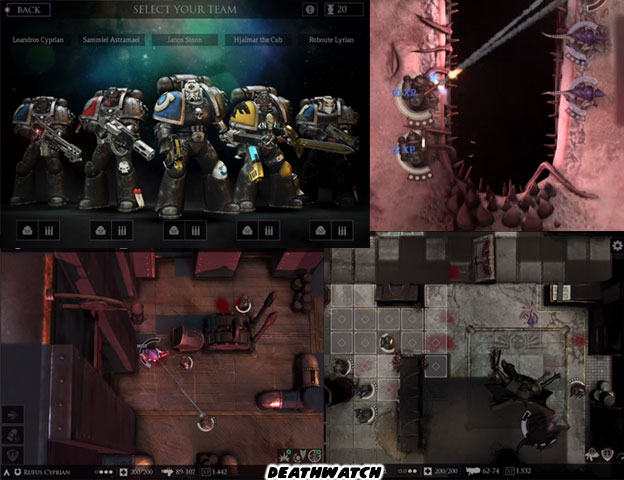
Warhammer 40,000: Deathwatch Tyranid Invasion was developed by Rodeo Games. It could be considered a spiritual successor to Space Hulk. In the game the audience could lead a squad of Space Marines against the Tyranids. The players would visit strange and exotic worlds and take part in skirmishes opposite the alien hordes. Troop movement was controlled with a traditional grid. It showed the ranges that each player could advance, where they could take aim and find spots to defend as well. Audiences on the go could control their troops with ease on a touch screen. Best of all, unlike the home systems a mobile device allowed audiences to pause in the middle of an encounter and resume the fight later on. There were many things to unlock, including weapons, relics and new Space Marine Chapters. This added tremendous replay value to the title.


Rodeo Games even adapted Warhammer Quest for mobile devices and the PC via Steam. In order to keep the hobby alive Games Workshop needed to find new publishing partners. Instead of going after Milton Bradley the studio was recruiting some of the top video game and mobile developers. THQ, Relic, Pixel Toys and Rodeo Games were some of the studios helping get more eyes on the Warhammer universe and they were doing a fantastic job. If my friends and the visitors reading the blog are curious about tabletop gaming but don't know where to begin then I would actually start with some of the mobile games. There are many mobile titles to choose from but some of the best I haven't even gotten to yet. We'll start talking about them on the next blog. As always if you enjoyed this blog and would like to sponsor me please visit my Patreon page and consider donating each month, even as little as $1 would help make better blogs and even podcasts!

 follow the Street Writer on Patreon!

Saturday, February 13, 2016

Building a gaming legacy, the Games Workshop series, part 6...

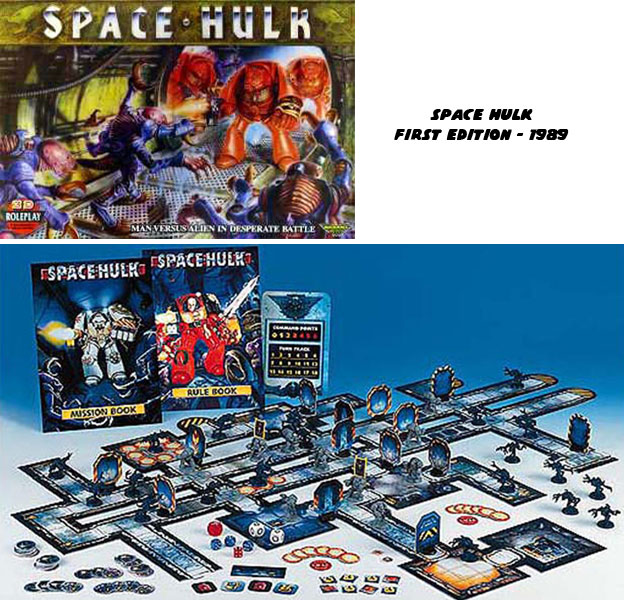
Once upon a time Games Workshop used to support original, stand-alone games. These titles often expanded the canon of the established Warhammer Fantasy and Warhammer 40,000 systems. In the previous blog I mentioned that the company created Adeptus Titanicus out of necessity when Battletech had become all the rage in the tabletop gaming community. In doing so they made the 40K universe much more interesting with the use of robotic Titans and allowed gamers to experience the awesome power of walking battleships. This system ended up being expanded and created the 6mm scale and Epic Space Marine rules which allowed players to deploy entire legions in battle. One of the more popular and even longer-lived systems actually debuted just a year after Adeptus Tianicus. In 1989 GW released Space Hulk. A boxed game set aboard an abandoned space ship in the 40K universe.


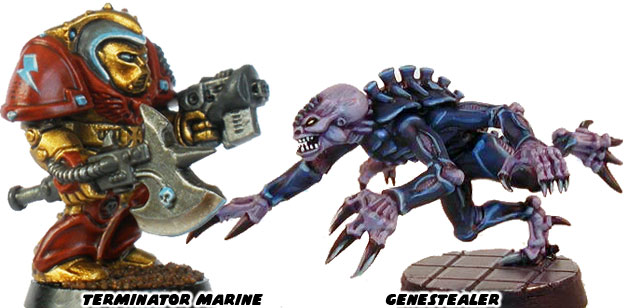
The game was unique for several reasons, but the most important were the introductions of the Terminator Armor Space Marines and the alien enemies known as Genestealers. An entirely new chapter of 40K lore was written in Space Hulk. It was explained that the First Company of each Space Marine chapter consisted of the most experienced and capable warriors from each unit. They were the ones tasked with the most dangerous missions and as such had access to the most powerful weapons and armor. The Terminator Armor was created for the most inhospitable environments. It was bigger and stronger than the standard Power Armor and treated with the reverence of a holy relic. These suits of armor were worn in battle but had gained a reputation for being used while being deployed in a Space Hulk. So what is a Space Hulk? In the 40K universe spaceships are able to cross the galaxy by using the Warp. It is like crossing through a wormhole or tear in space that unites systems that are countless light years apart. The ships have to have powerful reactors in order to escape the gravity well created by the Warp, as well as not to be torn apart by the forces within the Warp which bend time and space as well.


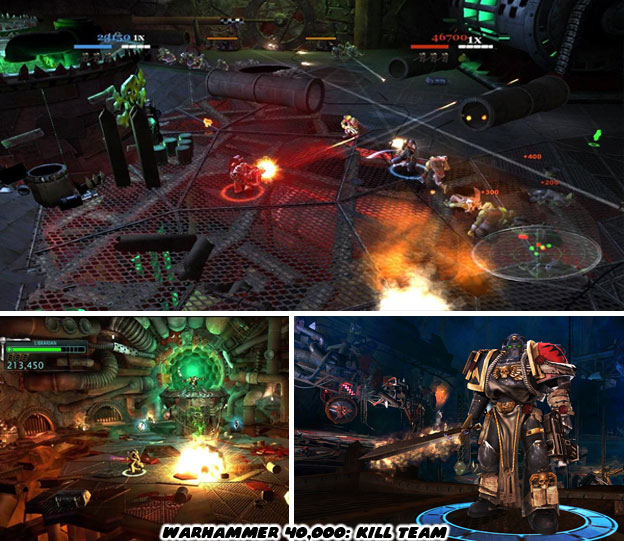
Anyhow, some ships are damaged in the process or have engines that break down and cause the ships to be stuck in the Warp. They will pop in and out of the universe from time to time before being pulled back into the Warp. Some of these ships have weapons and resources that are attractive to scavengers. Aliens and humans alike will risk everything to board one of these vessels. After thousands of years of being adrift in the Warp some of the ships are fused together and get stuck in asteroids and other debris that makes its way into the Warp. These enormous floating piles of debris are often bigger than cities and may even reach the size of a state or nation. They are dubbed Space Hulks and are an ominous sign when they appear near inhabited planets. The reason they are bad news is because within the Space Hulk there are often diseases or even alien species that may easily wipe out an inhabited planet. Those foolish enough to try to salvage the Space Hulks, explore the wreckage of the ships or asteroids they are tied to don't always make it back to port with their bounty. Orks sometimes take over a Space Hulk, put engines on it and raid outposts. This was the plot of the THQ multi-player video game Warhammer 40,000 Kill Team.


Just like the video game there is something far more sinister than Orks lying in the bowels of the oldest and most traveled Space Hulks. The Space Hulks can be lost for countless generations in the Warp. They may turn up in yet uncharted parts of the galaxy and when that happens an alien race may board them and then hibernate, waiting for a foolish explorer to wake them from their slumber. This is the case with the Genestealers. They are an alien shock troop that is the first wave of a species that would later be known as the Tyranid. The Genestealer was modeled after the H.R. Geiger Alien. They are huge, covered in a carapace stronger than steel, quite strong and can even survive in the vacuum of space. Traditional Space Marine armor and weapons are not powerful enough to handle wave after wave of the Genestealers. This is why the Terminators are called in whenever a Space Hulk appears near an Empire-controlled portion of the cosmos.


The Terminators have a set of missions that they can complete in the original boxed game. Sometimes they have to recover a relic from a Space Marine chapter, sometimes they have to find a piece of crucial data from a system computer. Often they have to ensure that there are no Genestealers on board and try to poison the life support systems if they are still functioning so that they can eradicate the threat before the ship slips back into the Warp. The game allows players to explore tight corridors and engage in firefights with scores of Genestealers. Anyone that has seen the film Aliens can remember how intense it is to fight wave after wave of alien with limited resources and in tight quarters. Space Hulk ramps up this concept tenfold and makes surviving each map all the more intense. Speaking of the maps, the original game also came with printed cardboard tiles and doors that could be assembled in any number of layouts. This ensured that the game would constantly keep evolving and offer a different experience each time a player started a campaign. The other thing these printed pieces did was help immerse the player into the game. Those with limited hobby experience didn't have to build or paint any terrain. Each piece was highly detailed, the tiles were painted by Games Workshop artists after all. The boards made it easy to imagine that the Terminators were battling for survival in the maze-like Space Hulk.


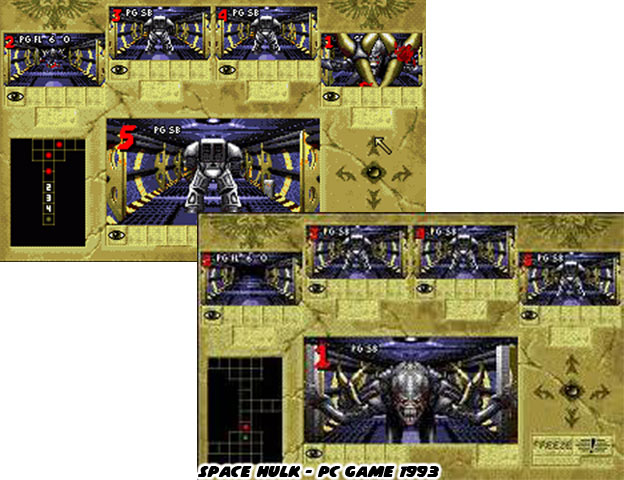
Space Hulk did such a great job at capturing even non traditional tabletop audiences that it was turned into a PC game by Electronic Arts in 1993. The PC game did a fantastic job of recreating the isolation and horror of each mission. Genestealers would lurk at every turn and you would find yourself saying a prayer to the machine spirit that your heavy bolter wouldn't jam during an intense firefight. In the science fiction genre it was a refreshing change of pace, it worked because of the liberally sprinkled horror elements as well. It was unlike anything the US and Japanese studios were producing. Best of all the PC game was getting people interested in the universe of 40K. Space Hulk, the tabletop and PC versions would receive expansions.


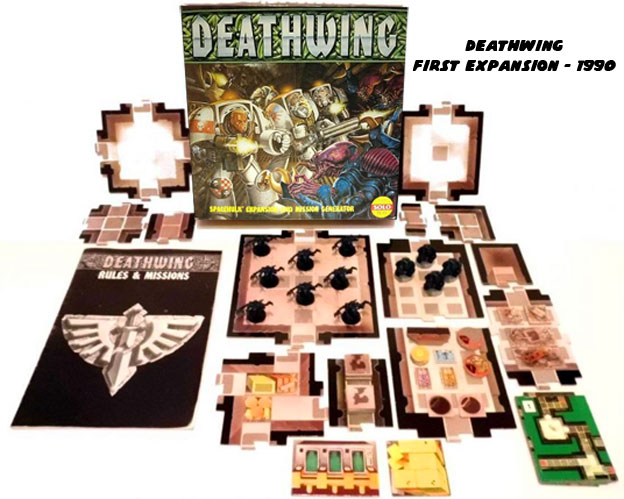
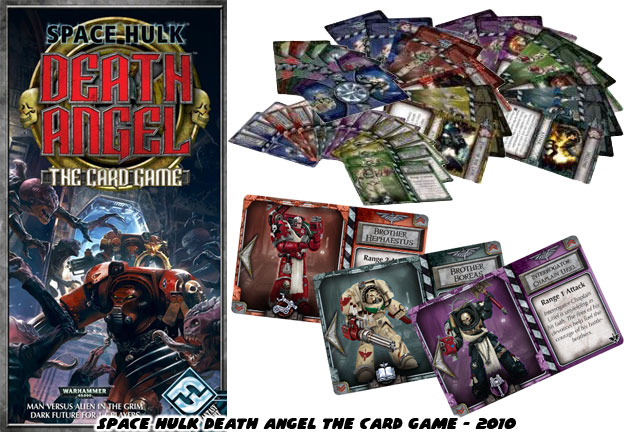
The Deathwing expansion came out in 1990. It would begin to flesh out the Tyranids as well as the other alien species that called the Space Hulk home. The games also helped shed some light on the Dark Angels and Blood Angel Space Marine Chapters. Two of the oldest and most tragic chapters from the earliest days of the Empire. The popularity and longevity of the game was apparent when Fantasy Flight Games released a CCG (collectible card game) based on Space Hulk. The new game called Death Angel came out almost 20 years after the original tabletop game. It instantly brought audiences up to speed on the elements that made the original game so memorable. Players had missions, could arm themselves with rare items or even hunt down opponents as Genestealers. The card game and the expansions that followed could be found in most book stores and even toy stores. This was one of the few Games Workshop systems that found a bit of mainstream success. The popularity of which would bring a few generations into the larger system of Warhammer 40,000.


Because of Space Hulk all new models and rules would be created for the Tyranids. Not only that the entire alien race would be fleshed out. Genestealers would only be one type of troop. There were small, spore-like Tyranids that acted like land mines, releasing toxins and poison quills to those that approached them. There were larger Tyranids, like the Carnifex that were the size of tanks and could peel them apart like a tin can with their massive claws. There were even Tyrnaid large enough to fight against Titans! Tyranids were becoming the alpha-predator in the 40K universe. They would eat and harvest the DNA of every species they came across. This caused the troop types to mutate and gain the best traits of a particular species. Some became bulky and strong thanks to Ork DNA. Some became powerful psychics because they had absorbed Eldar DNA. Because of this new threat the Space Marines would get a boost in new weapons and armor as well.


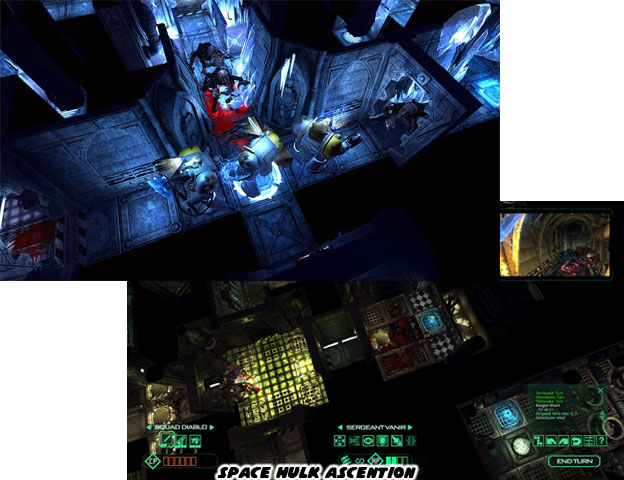
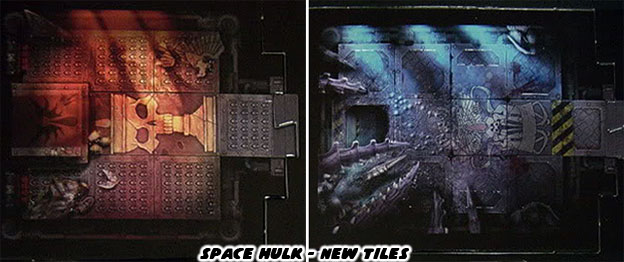
The love of the Space Hulk never died off. In 2013 the PC game was remade, called Space Hulk Ascension. It helped spark renewed interest in the universe. That same year Games Workshop would publish a third-generation of the game with all new rules, models and tiles. Games Workshop made sure to use the latest advances in publishing and released a superior product. The old illustrated cardstock tiles were replaced with thicker, higher quality embossed tiles that featured digital renderings. The printing on the tiles gave them the illusion of depth, light and even texture. One of the problems with the old cardstock tiles was that they were flat-edged, this did allow each tile to perfect align to the next but they often slid around on a table. The new tiles had jigsaw edges so that they could all interlock. The majority of the miniatures that Citadel created for the Games Workshop systems were metal, originally lead but then later on they went to pewter. The plastic miniatures that Citadel developed in the late '80s and early '90s were well done but lacked the same level of detail of metal miniatures. Citadel went with plastics for the self-contained systems, they were cheaper to produce and less prone to bending as a metal figure. The plastic models were used in boxed sets like Blood Bowl, Heroquest and Space Hulk.


The original Space Hulk featured printed cardstock tiles that allowed gamers to create their own mazes, scatter objectives and never have the same experience twice. The combination of plastic miniatures and printed cardstock tiles worked very well for the genre. Audiences didn't have to invest time or money in building elaborate sets to play in, although some of the more hardcore gamers did just that. In fact a few companies popped up featuring easy-to-assemble terrain, much of which was pre-painted or pre-printed so it complimented the Space Hulk rules. What Games Workshop did was create a bridge between the tabletop roleplay system of Warhammer 40K with more traditional board games. By limiting the movement to corridors and small open rooms the studio streamlined the rules on movement, ranged and melee attacks and line of site so that audiences could pick up the gameplay much faster than 40K. In the fantasy world GW did the same thing with Warhammer Quest, which took the characters and rules of Warhammer Fantasy Battle and made it an easy to pick up system with mazes that audiences could randomly build.


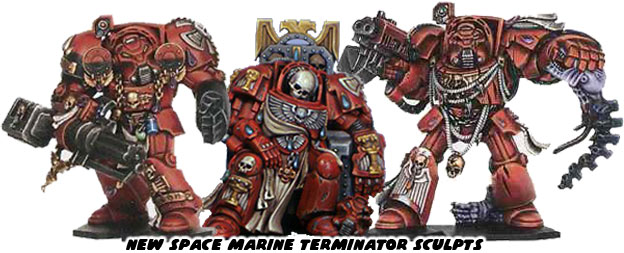
Space Hulk and the other boxed games from the studio, which I will highlight on future blogs, were gateway systems for the hobby and in some cases could even be found in large-scale toy stores. The plastics manufacturing process had improved greatly over the decades. When Space Hulk was relaunched the miniatures created for the game were amazing. The characters had individual dynamic poses, both the Terminators and Genestealers and an unparalleled level of detail. Even the relics being searched for got a makeover thanks to the Citadel modeling department.


The third and fourth editions of Space Hulk won several awards and the accolades of gamers and editors the world over. It gave Games Workshop the confidence to pursue other self-contained boxed sets, which was something they hadn't done in years. Before I go too far into the science fiction worlds that Games Workshop created I want to go back and explore the fantasy systems that helped put them on the map. You see if Space Hulk was a great introduction to tabletop role playing systems for sci-fi there was something even more successful for fantasy. The next blog will look at this system. As always if you enjoyed this blog and would like to sponsor me please visit my Patreon page and consider donating each month, even as little as $1 would help make better blogs and even podcasts!

 follow the Street Writer on Patreon!

Tuesday, February 9, 2016

The passing of a legend, remembering Wayne England.

It is with a heavy heart that I have to stop the Games Workshop series with some bad news. One of the artists that greatly influenced the look and design of the Warhammer Fantasy and Warhammer 40,000 universes and beyond has passed away. Wayne England was one of my artistic heroes. I spent many a day emulating his aesthetic and his fantastic sense of shape and color with my own projects. Wayne went on to produce art for many other game companies, not the least of which was Magic the Gathering. He is survived by his wife Victoria and his children. I offer them my deepest sympathies and pray that they can find some comfort in the gift that Wayne shared with the world. I actually wrote about him eight years ago on 1UP and would like to share it with you now...

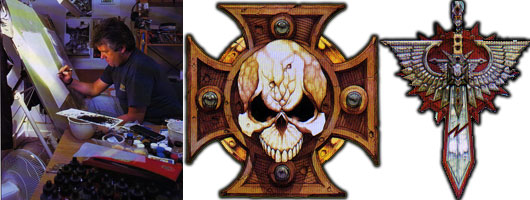
This man has not only influenced my art but also the art and design of countless games and systems in and out of GW. He has a long list of accomplishments as a freelance artist, but his stamp on GW is undeniable.


Most people know him mostly as the guy that designed the iconic badges for the various races in the Warhammer and Warhammer 40,000 universes. In fact it was hist first gig at the studio for which he thought he was being slighted. Art director  [EDIT: think of John as the Games Workshop equivalent of Alan Moore. He looked over England's portfolio and said that he'd be good to draw badges. Wayne misheard him and thought he said that all he was good for was drawing badgers. Wayne is a very proud artist and felt put-off by the insult until he learned that. Wayne was to design the heraldry for all of the races. Each badge that England created was an instant hit. The look of the races would be defined by these icons, some simple and some complex but all equally great. England's badges would become symbolic with GW for almost 20 years.


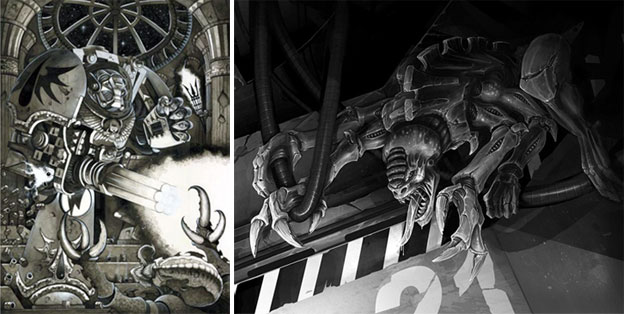
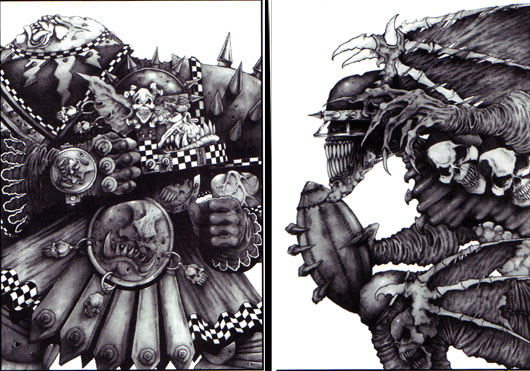
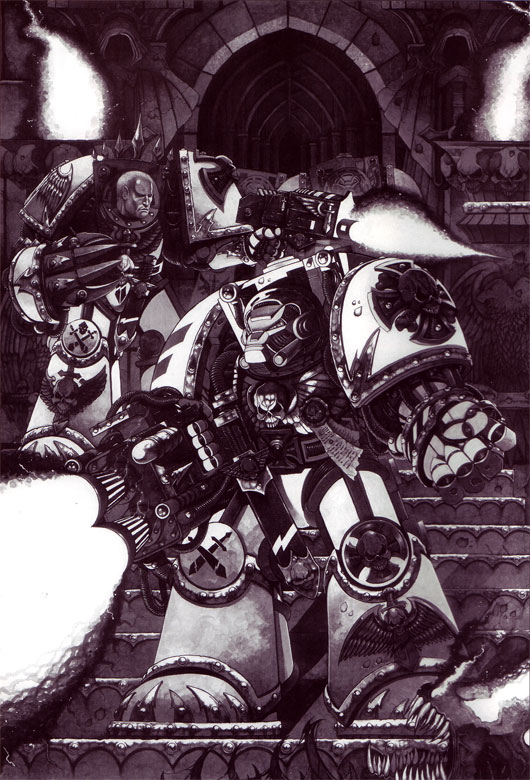
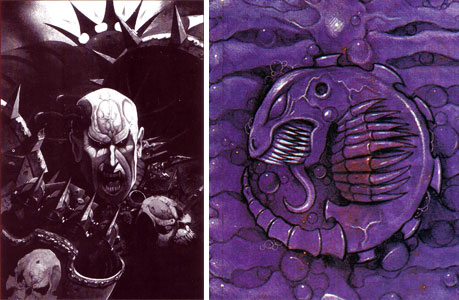
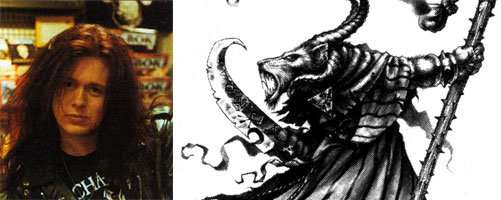
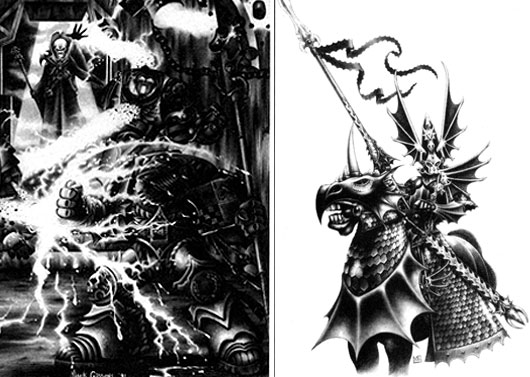
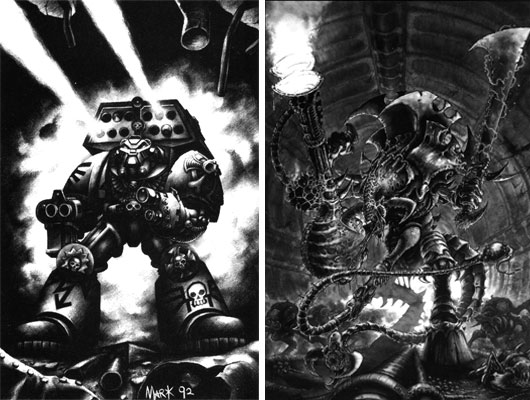
In that time Wayne painted some of the most amazing work that has ever been featured in White Dwarf and the various game books published by GW. Titles like Blood Bowl and Space Hulk would never have been as memorable without England's contribution. Featured here are mostly his black and white work, which by themselves stand head and shoulders above any other artist that has worked in two colors. Look at the amazing amount of detail for his characters, the illusions of texture and metal he is able to achieve with a solid pigment.


Wayne is a very outspoken artist that was the most influential in the bullpen. His techniques would be carefully studied by the younger artists working at GW. His advice was equally picked up by the new generation of artists entering GW in the late 80's. As Wayne was pushed by Blanche to work better and faster so too did he set up a friendly rivalry with all the other artists. The others at GW had their own styles and while some may have had better use of color or composition very few could keep up with Wayne when he was firing on all cylinders. When he wanted to he could inspire fear through his grimacing characters or embolden gamers with iconic heroes.


A few years into Wayne's tenure a new artist was finally allowed into the studio. Mark Gibbons had applied a few times at GW but had been turned down by Blanche time and again. Eventually his portfolio featured a very broad sample of styles and creativity that could no longer be ignored. Gibbons was taken under the wing of England and Blanche, then two titans of British fantasy art.


Mark became the heir-apparent to England, as his art was great and color but in black and white was simply amazing. His monochromatic work had its own appeal. His technique differed slightly from Wayne's, but the influence was there. Wayne used a sponge to create some of the amazing textured effects in his paintings, Gibbons never quite reached that level of detail but being taught new tools helped his technique.


Gibbons would grow into his spot on the art team and fill in pieces for White Dwarf and the game books as well. During his tenure he worked on Space Hulk and Warhammer 40k pices mostly. His fantasy work should never be under-appreciated. He gave life to the Skaven, twisted rat-men from the old world of Warhammer, his foul chaos beasts looked grizzly and unkempt, his Dark Elves regal and murderous. His science fiction work of course found no equal. The bold black and white pieces by England and Gibbons would burn themselves into my memory and forever change the way I approach my art.


Gibbons' tenure at GW wouldn't last forever. After a decade Mark moved on and eventually became a freelance artist. Like England's freelance work for Wizards of the Coast now too can Gibbons' work can be appreciated by a broader audience. As always if you enjoyed this blog and would like to sponsor me please visit my Patreon page and consider donating each month, even as little as $1 would help make better blogs and even podcasts!

 follow the Street Writer on Patreon!