Showing posts with label warhammer. Show all posts

Friday, May 29, 2026

Warhammer drawings from my sketchbook

Hello friends, I hope that you are doing well. Today I’m posting again to help snap me out of my art block. I am sharing some art from the past. Like last time I would be looking at some fantasy, and sci-fi art. You could find all of these and more on my Warhammer & Warhammer 40,000 Gallery.

These were done when I was on an ink series while on my lunch break at work. There was something that I missed about working in an office, and that was having a break room with a drawing table. It allowed me the space to really explore my creativity. Here’s a dwarf and war pony. Also a Female Dwarf Warrior - I think there aren’t more female dwarf miniatures because the sculptors don’t want to create some glorious hair. This piece was dedicated to all the shorties fighting their fights.

I had an idea for a video game featuring this Skaven Warrior. I wanted to see Cyanide Studios, the creators of Styx: Master of Shadows to create a new stealth combat game featuring a Skaven hunting down vampires in the Warhammer Fantasy universe. I would replace one of his eyes (under the patch) with a warp stone shrapnel so that he could see in the dark, and detect magic. Would you play a game like that?

Nurgle had some of the best art, and miniatures in the Warhammer universe. I had to come up with my idea of a Nurgle Champion. This was part of my ink sketch series, starting in October (Inktober) 2016 and going on almost every weekday until March 2017. This was a very creative period where I drew mostly things that interested me. Lots of skateboarding, cars, games and people.

Noise Marine Terminator - I've got lots of ideas for Noise Marines. In the perfect world where time, and money were no object I would have an entire until made of of Noise Marines that I converted to have fantastic weapons, and armor. For example I want to see an organ-playing Noise Marine that wears the pipes on the back of his Terminator armor. I'm sure somebody could convert the organ on the Sister's of Battle Exorcist tank to get the needed parts.

Here was another example of a custom Noise Marine that I would love to do. The Noise Marine Dreadnought - How about a Dreadnought that looks like a walking mausoleum-meets-boom box? Complete with iron fencing.

The Titan Sketch was the largest Warhammer 40K illustration I ever made. I would sometimes write massive letters on 18x24-inch sketch paper. On one side I would write a letter to a friend, or family member, then on the back I would do a drawing. I wrote to Games Workshop one day, and did of the Imperator along with the internal workings. The letter went to game creator, and editor at White Dwarf Magazine Jervis Johnson. He replied to me, and said he appreciated the letter. He also added that creative director, and legendary artist John Blanche enjoyed the titan sketch. John Blanche was like if Alan Moore was a painter rather than a writer. As far as compliments went I couldn't ask for a greater endorsement. Did you have a favorite drawing, or idea that should be turned into a model? Tell me about it in the comments section. As always if you enjoyed this blog, and would like to sponsor me please visit my Patreon page and consider donating each month, even as little as $1 would help make better blogs and even podcasts!
follow the Street Writer on Patreon!

Monday, April 20, 2026

Bookmark This Page; the Games Workshop series

I love games of all types, even the tabletop games that existed before video games were created. If you want to learn the history of one of the most influential companies ever then Bookmark This Page.

Building a gaming legacy, the Games Workshop series, part 1...

Building a gaming legacy, the Games Workshop series, part 2…

Building a gaming legacy, the Games Workshop series, part 3…

Building a gaming legacy, the Games Workshop series, part 4…

Building a gaming legacy, the Games Workshop series, part 5…

Building a gaming legacy, the Games Workshop series, part 6…

Building a gaming legacy, the Games Workshop series, part 7…

Building a gaming legacy, the Games Workshop series, part 8…

Building a gaming legacy, the Games Workshop series, part 9…

Building a gaming legacy, the Games Workshop series, part 10…

Building a gaming legacy, the Games Workshop series, part 11...

Building a gaming legacy, the Games Workshop series, final part

The passing of a legend, remembering Wayne England.

Why limited-edition tabletop game items are so cool. A 1UP classic...

Bungie drops something very familiar - A 1UP classic from November 29, 2012 


Freeblade, the elements of great game design...

Did you ever play any tabletop games? Let me know about it in the comments section. As always if you enjoyed this blog, and would like to sponsor me please visit my Patreon page and consider donating each month, even as little as $1 would help make better blogs and even podcasts!

follow the Street Writer on Patreon!

Wednesday, February 18, 2026

Building a gaming legacy, the Games Workshop series, final part

EDIT 2025: As I was going back through my blog history I discovered that I never wrapped up a series that I started on Games Workshop back in 2016. Sorry for the delay. This post was actually featured on "The Grind 1UP's RPG Blog" in 2012. The links to the rest of the series are at the bottom of this entry. 

One of the greatest contributions that Games Workshop gave the tabletop gaming community were the stand alone games. Some of the best self-contained board games, like Talisman, Hero Quest and Space Hulk were originally created to be an alternate to the larger tabletop systems. Many of the most memorable games were revised and rereleased over the decades. Many of the games however disappeared and would only be supported in a limited capacity through GW's Specialist Games range. The loss of many great games through the 90's was lamented by the long-time GW supporters. The bottom line seemed to be more important to the company than supporting the players.

Tabletop gaming shifted through the 90's with collectable card gaming (CCG) system like Magic: the Gathering and Pokémon the CCG began taking the focus away from miniatures and dice games. Independent studios that decided to stick with miniature gaming had to provide radically fresh designs in order to appeal to gamers. Studios like Rackham from France and Privateer Press from the USA flourished when they introduced their systems to players. It took Games Workshop the better part of a decade to realize that the card based systems were not a threat to their miniature based systems. If anything they could help compliment the Warhammer universe greatly.

The inked a deal with Fantasy Flight Games to develop a series of CCG based on their IP. These games were easy to get into and play and were easily portable, unlike the miniature systems. Like other CCG games there were expansion packs featuring wonderful character illustrations and new scenarios and rules that could help diversify the experience. More important, by going to CCG systems GW and Fantasy Flight were able to resurrect fan favorite games in a new format. Blood Bowl Team Manager took the popular fantasy football system and brought it to a new generation of gamers. Independent game stores reported issues keeping the game in stock. Players were still very much interested in the game even if GW were not really updating the system for miniature players.

The Blood Bowl CCG had everything that two players needed to enjoy the game. It was very reminiscent of the self-contained boxed sets that GW used to produce.

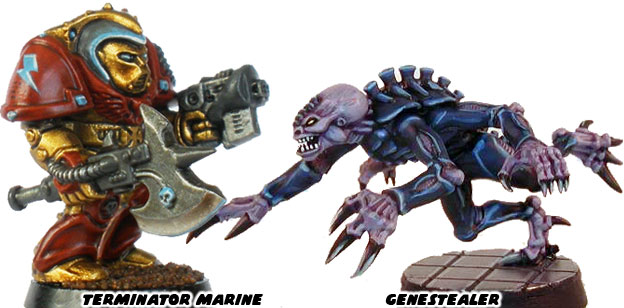
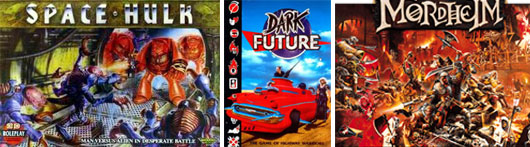
In the past few years GW had been listening to the long time supporters and began releasing limited-edition sets that were in the spirit of their classic experiences. However instead of reprinting old rules and models for nostalgic players they went about completely recreating the boxed set. Space Hulk for example was a stand-alone game that introduced Terminator Marines to the Warhammer 40,000 universe. It featured the Terminators against hordes of aliens known as Genestealers. I had mentioned a few years ago on this blog The Return of Space Hulk and why it was important to the community.
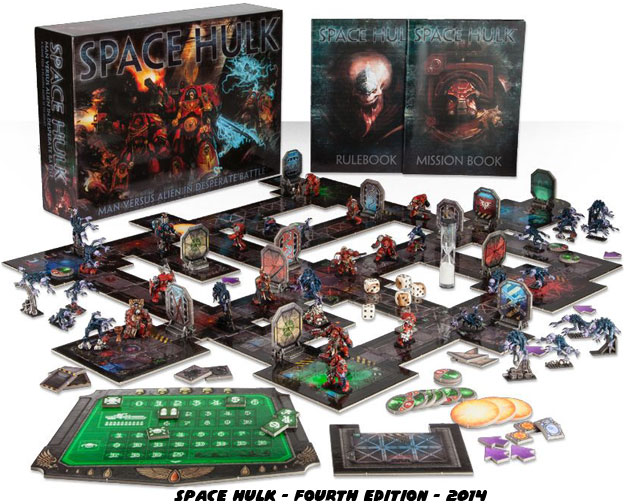
The new game featured embossed interconnectable card stock tiles with bright laser printed graphics. These tiles worked together with plastic scenery and doors that made the game feel very well put together. The production value was years ahead of the original Space Hulk. The sculpts of the Terminators and Genestealers were not rehashes of existing models either. They were very well made and insanely detailed, bridging the modern aesthetic with the classic proportions of Citadel sculpts. These miniatures that would never get reproduced in any other system or be available in a catalog. This distinction earned the collector a rare find.

The Third Edition of Space Hulk won awards from the gaming community and was produced in relatively small numbers, driving many collectors crazy. While it was a welcome release for the community GW was still missing something. The company had earned many followers by producing original boxed games that stood alone. New tabletop players had never known the stand alone experiences aside from the CCG. Those gamers had little knowledge of the experiences that GW used to develop. Long-time players were starved for something new and not another iteration of an existing system. Veteran game designer Phil Kelly heard the call and developed a new game called DreadFleet.
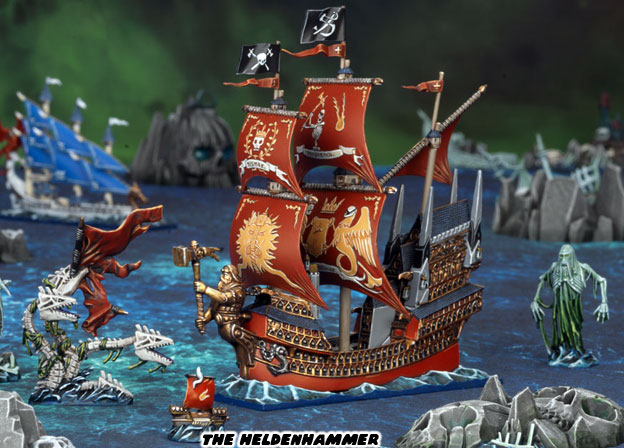
The story behind the game was conceived and written by Phil himself. It revolved around a cursed fleet lead by the vampire Count Noctilus. They made up a great gallery of classic warships, including a Tomb King death barge and a mechanized Chaos Dwarf Black Kraken. The Dreadfleet had been terrorizing the Warhammer high seas for years. A pirate captain named Jaego Roth set about to avenge the death of his family by recruiting or blackmailing some powerful privateers and friends. The game picked up at the climax of the book and allows players to experience different scenarios and choose sides. Easily this was the best new game produced by the studio in over a decade.

Dreadfleet was instantly appealing to new and veteran gamers because it did many things well. The miniatures were a powerful hook but the opportunity to experience a slice of the Warhammer world in a stand alone game was something unique. The game was a self-contained title that included highly detailed plastic models, that still required paint, markers, scenery and a color printed canvas map that represented a raging sea. That approach had not been seen in a long while, not since the original Blood Bowl boxed set had turned the fantasy universe on its head. Seasoned gamers were reminded of another old system that GW had developed and then abandoned. Man-O-War was the first boxed naval combat game set in the fantasy universe. It included rules for all of the major races, miniatures, markers and scenery to get a game going right out of the box. The game did fairly well and even saw an expansion set, the Sea of Blood, and additional miniatures released for the system. What Dreadfleet was not was the second coming of Man-O-War. It was a stand alone game with no plans for expansions or sequels. This both delighted and saddened players.
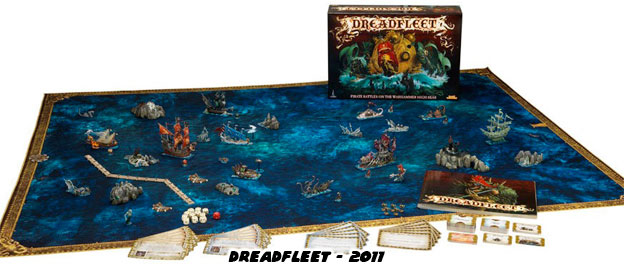
Veterans knew that if the release did not do well then GW would not support it and rules, errata and miniatures would be released sporadically through the Specialist Games store. The best way to preserve the legacy of the game was by making sure that the single experience was the best possible naval combat system the studio could produce. If players supported it then there was a chance that GW might consider making more stand alone games as well as they had done in the late 80's and early 90's. When the studio had their focus on the board game there wasn't another company that could touch them. Seasoned players were hoping that the company would return to that mentality and consider releasing other stand alone experiences. They would still be expected to support their core Warhammer Fantasy and 40,000 universes, as they had done decades ago, while making new experiences.
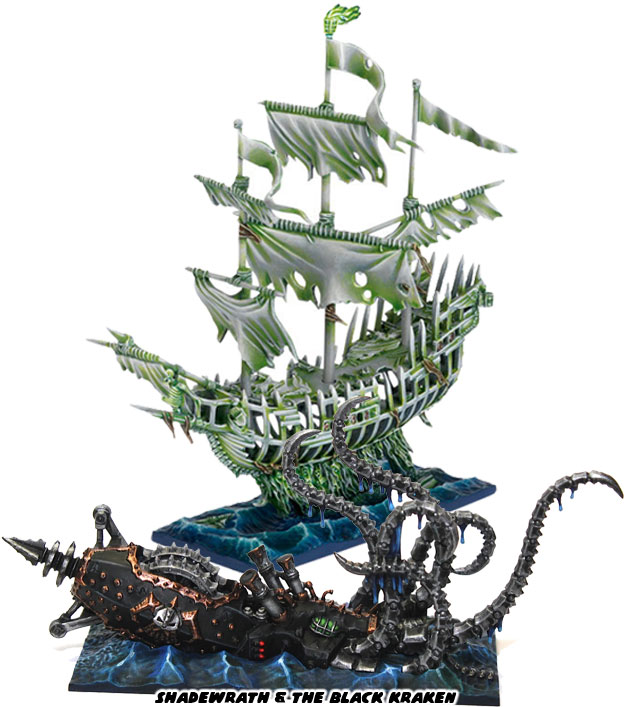
The stand alone game was also a gateway to the tabletop gaming hobby. It was a way to appeal to new players with a minimum level of investment required. Painting and assembling the Dreadfleet could help introduce the player to the hobby aspect while the easy-to-read markers and straightforward rule system got them into the gaming aspect. The appeal to many tabletop system was that there was something tangible to play with. Whether it was a CCG system or a miniatures based system, gamers had something to collect and personalize. Players did not need a television or console to enjoy these experiences. Best of all the stand alone format could compliment an existing universe or IP. A well design game with easy to follow rules could make a comic book, movie, cartoon or even videogame into a great board game. These games would not necessarily be a substitute for the series but instead a continuation of them. Bungie and Microsoft discovered this when Halo was licensed out for the Clix system of gaming. More recently Epic Games discovered this when they licensed Gears of War as a board game.

Studios like Games Workshop and Fantasy Flight Games were bridging the gap from casual gaming to hobby gaming by making great stand alone systems. This approach was actually nothing new to the industry. Decades ago the earliest videogame to board game titles were nothing more than copies of screen mechanics to paper boards. This was done to cash in on the craze of videogaming rather than to satiate the gaming desires of the public.

Games Workshop found success over the past couple of years by returning to the card and board game systems that made young players get interested in the hobby so many years ago. The further the studio shifted the focus from original ideas with great play elements to more established systems the more isolated they became. A similar thing could be said of Nintendo, which used to make card games, toys and stand-alone handheld electronic games. They all had their own unique play elements that turned young gamers into fans. Both GW and Nintendo had spent the better part of the 90's pandering to fans without catering to the play elements that helped create new followers. Only in the start of the new millennium did the studios begin going back to basics. But that would be a topic best saved for some other blog...

I hope my short look at Games Workshop has gotten you interested in tabletop gaming. Those that are interested should consider investing in some paints and brushes and getting the Dreadfleet game. Good things can come to those who play.

Building a gaming legacy, the Games Workshop series, part 1...
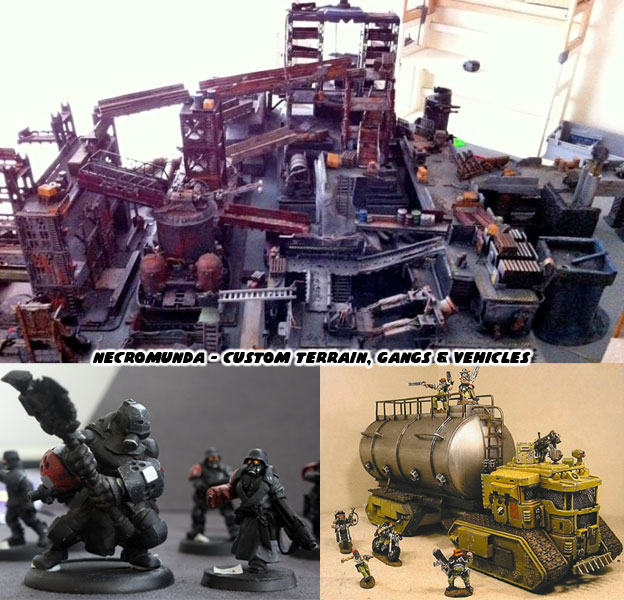
As always if you enjoyed this blog, and would like to sponsor me please visit my Patreon page and consider donating each month, even as little as $1 would help make better blogs and even podcasts!
follow the Street Writer on Patreon!

Monday, March 29, 2021

Why limited-edition tabletop game items are so cool. A 1UP classic...

Tabletop gamers are a unique lot. They enjoy the gaming experience for many of the same reasons that the video game crowd does. There are games that can take players back in time, to fantastic worlds or even to far off planets. There are games that allow players to take on the role of a pro athlete, dictator, robot, cartoon character, police officer or even monster. The best titles are the immersive experiences, the ones that allow players to lose themselves even if just for a moment. Exceptional games can keep a player hooked for hours on end. Many gamers can attest to losing track of time during a session. The most die-hard gamer can attest to losing track of decades. This is because very often a great game has a backstory to hook the player, whether stated or not. The player is often dropped in the middle of a crisis that only they can solve. As the game progresses the elements of the story and the world are revealed to them. The more players become engaged with the experience the more they play and the more that they learn about the game and the game world. The cycle of gaming and discovering continues with every successive play through. Above everything else however there is the camaraderie, the community and the mutual appreciation of the games that players enjoy.

Both the tabletop and video game players can also enjoy the collecting aspect but one goes to the extreme end to support the community. Tabletop gamers enjoy the tangible aspect of the hobby. Each game and each system is supported by books, dice, miniatures and templates. To be fair some video games do have merchandise and collectables as well. Toys, clothing, books and yes, even miniatures and tabletop systems as well. The ones who do it best and who will always do it best are the tabletop gaming manufacturers. The physical objects they produce have a special connection with collectors. Yes an MMO player can spend just as much time as a tabletop gamer leveling, customizing and even painting a character. Once the power goes out however only one type of player has a physical reminder of their game. Those that have been playing miniature based games for 10, 15 or even 20 years have enough physical reminders to fill a garage or two. These players have to collect, assemble and paint their armies one soldier at a time. Video game players get to command a single person or entire unit, some armed with amazing weapons, at their disposal. Dozens if not hundreds of people created those game characters for their entertainment. Tabletop game players have to collect, assemble and paint their own terrain as well. Video game players get to explore vivid worlds created by teams of developers. All of the hours spent playing are not meaningless for tabletop gamers, especially once the power goes out. As gamers on both sides get older their tastes change as well. They tend to demand some more sophistication in the games they play and more immersion. As gamers get older they become working professionals and have more disposable income. This means that they demand a more diverse selection of models and higher quality and hereby higher priced collectables.

Last summer I had talked about the limited edition items from Games Workshop. The creator of the popular Warhammer Fantasy Battle system had released some special markers, rulers and templates for players to collect. Since the world of Warhammer was set in a fantasy world, complete with dragons, ogres and magic, the accessories had to reflect the same spirit. Dice had ancient symbols and skulls carved into them. The rulers and compasses were shaped with macabre icons as well and gilded with the details of medieval artists. These new markers would help distinguish the "hardcore" players from the crowd that used traditional rulers and dice. Collectors knew it would only be a matter of time before the science fiction game Warhammer 40,000 would also get the same treatment.

The company tended to focus the support on each system for full year intervals. Even years were often reserved for new fantasy releases and odd years usually went to 40K campaigns. The end of 2012 and start of 2013 saw several new items added for collectors. The templates for Warhammer 40K had every bit the attention to detail that the fantasy ones had. The markers were silver with gothic iconography made popular in the grim futuristic universe. They were made to look as if they had cool blue electrical sparks flowing between them. This was a good contrast to the gold reserved for the fantasy system.

Citadel, the hobby manufacturer for Games Workshop, also released new dice and objective markers, the Munitorum templates that were consistent with the universe as well. The dice had intricate, circuit-board-like lines carved into them. These new items were placed inside of a metal tin stamped and colored to look like a laser gun power pack. It's a perfect collectable for fans of the Imperial Guard and Space Marines. The objective markers were floating servo-skulls. The skulls were prevalent in the 40K universe, specifically for the human colonies. The servo skulls were made from the heads of devout followers of the Empire and fitted with robotic attachments and anti-gravity disks. They provided all sorts of uses for the empire, from recording audio and video to surveying sites too dangerous for living creatures. Some servo skulls had medical equipment and even weapons attached to them. They often accompanied Space Marines into battle and were most often found with Tech Priests (engineers) and officers. They were as ubiquitous and indispensable as the Droids in Star Wars mythos. It made great sense to turn them into objective markers for a game. Citadel saw an additional use for them though.

A second Servo Skull was released with a built in measuring tape. The front teeth of the skull could be pulled out to show off the bright red laser-like tape. Most tabletop gamers keep a folding ruler or tape measure handy but none have ever looked so cool! It is a good contrast to the traditional ruler created for the fantasy gamers.

There was actually something that Games Workshop had created a few years ago that was among the best accessories for tabletop gaming yet invented. In tabletop games there is a long standing rule called Line of Sight (LOS). When players have a firearm with a specific range then they check to see if all or only part of an opponent's character is exposed. Even partially covered characters can be shot at, however the person attacking suffers a penalty when rolling the dice. Sometimes a player on defense hides a character behind a sandbag or wall and assumes they have enough cover to be completely out of the LOS. Many a game has become heated, even between two good friends, because one player claims that they have a shot and the other does not concur. This ends up bringing a game to a grinding halt and often ends up with one party feeling like they are being cheated. What Games Workshop did was create an LOS laser. It had a curved tail that could be placed over a miniature and show exactly where the character could realistically fire. The laser would actually mark a crosshair on the target and not simply a red dot. It was one of the greatest tools a player could take with them especially to a tournament.

I wonder if any bad sport ever shot an opponent in the eye with the laser. As with all of the new accessories released, the laser LOS was a limited-edition item. Once GW and Citadel had sold out of the item that was it. More unique collectables would be released over the years to keep fans buying. If you would like to sponsor me please visit my Patreon page and consider donating each month, even as little as $1 would help make better blogs and even podcasts!

follow the Street Writer on Patreon!

Friday, April 28, 2017

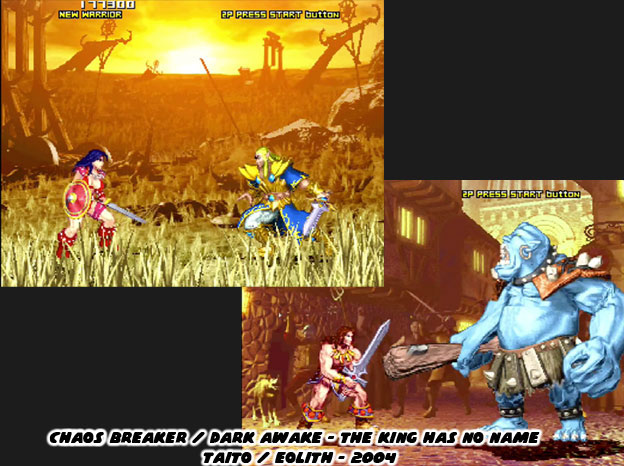
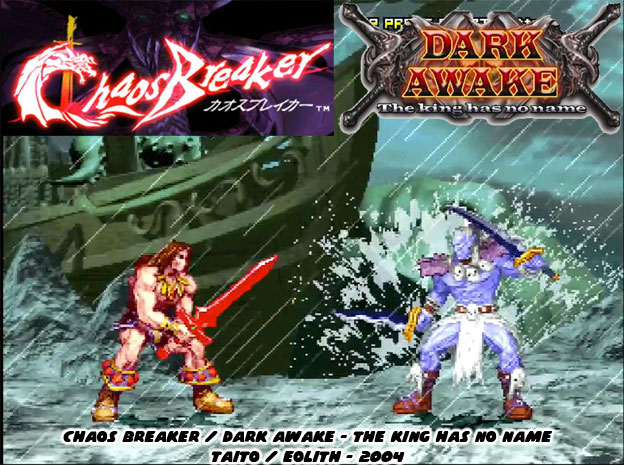
Chaos Breaker - Dark Awake, the great fantasy fighting games part 6...

The market for fighting games was very thin at the start of the millennium. Arcades, the last true domain for the community, were just about nonexistent in the USA and had been scaled back elsewhere around the world. The console was king and big-budget, open world AAA titles were leading the industry. A handful of studios, including SNK, ARC System Works and DIMPS were still catering to the fighting community. Capcom was focused in the early '00s on Mega Man, Devil May Cry and a few other properties, not so much on Street Fighter. With the focus on other genres the developers really had to try different things in order to attract audiences. The ones working on fighting games had to work even harder to be noticed. They did this by experimenting with new technology, including a bigger focus on net play, through new forms of storytelling, advances in game play and control as well. One of the most interesting fighting games in a decade came out in 2004. Chaos Breaker / Dark Awake: The king has no name - was published by Taito.


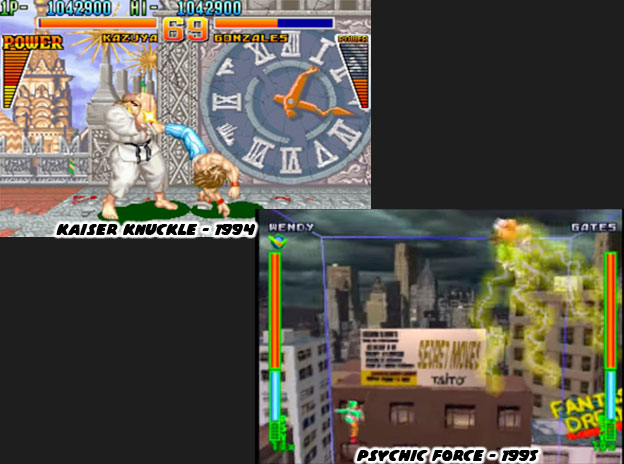
Taito was no stranger to the fighting genre. In fact the studio could be considered The Godfather of the brawler. It released Renegade in 1986 and Double Dragon in 1987, both of which had a profound influence on the industry, and especially Capcom. The studio had created a traditional sprite-based fighting game called Kaiser Knuckle in 1994. Yet their most revolutionary work came one year later with the released of Psychic Force. This new game featured a 3D engine and characters that could fly in all directions. and different formats and engines. A few years had passed since they had made a serious entry into the fighting game arena. What no one expected was a fantasy title with is much depth as Chaos Breaker.


The game was actually developed by a South Korean studio called Eolith. The studio had experience with one of the biggest franchises of all time. They developed the King of Fighters 2001 and 2002 after SNK went bankrupt. The 3-vs-3 battle system of KOF was carried over into Chaos Breaker. As SNK restructured they needed help keeping their IP afloat. This was when they began talking in earnest with not only South Korean developers but also Chinese publishers. Chaos Breaker was the last game by Eolith before they were acquired by NetBrain. The game itself was the first fighting game to take advantage of the Taito Type-X board. A lot of different arcade titles were developed for that board including properties like Mobile Suit Gundam, Half-Life 2, and Pokémon. None of the games was remotely close to Chaos Breaker.


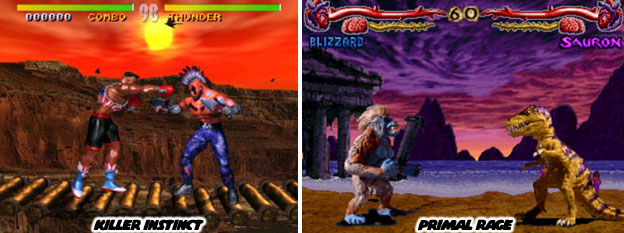
Part of the reason that Chaos Breaker stood out was because of its graphics. The visuals were similar to the graphics used in early ‘90s fighting games, including Killer Instinct, Primal Rage and even Mortal Combat. The reason for this was because Eolith used similar techniques I creating the sprites. In the early ‘90s there weren’t many 3D games, and especially not fighting games. The quality of 3D graphics that we have with titles like Street Fighter V and Tekken 7 was simply impossible to pull off almost 30 years prior. Studios did whatever they could to try to top the hand-drawn graphics featured in the most popular games. Midway experimented with video capture to create sprites out of human actors in Mortal Kombat in 1992. Atari used stop motion animation to create sprites out of clay and plastic dinosaurs that they molded for the 1994 hit Primal Rage. One of the most revolutionary games was Killer Instinct, also released in 1994. Developed by Rare the studio used high-end Silicon Graphics workstations to create highly polished 3D models and levels. In the early ‘90s there wasn’t any arcade hardware powerful enough to render 3D visuals, complete with textures and lighting effects in real time. So what they did was create sprites out of their models. The two-dimensional graphics did not require as much storage as their 3D counterparts and the engines of the day could animate them fairly quickly. The end result for these games were the illusion of 3D figures and stages. This technology was mostly used by Western studios, so that they really stood apart from the graphics that the Japanese were creating. Almost 10 years later to the day Eolith used the same techniques and rendered characters and levels using 3D hardware but then converted those graphics into sprites. Chaos Breaker had the look of a more polished version of a classic fighting game, yet there was much more to it than that.


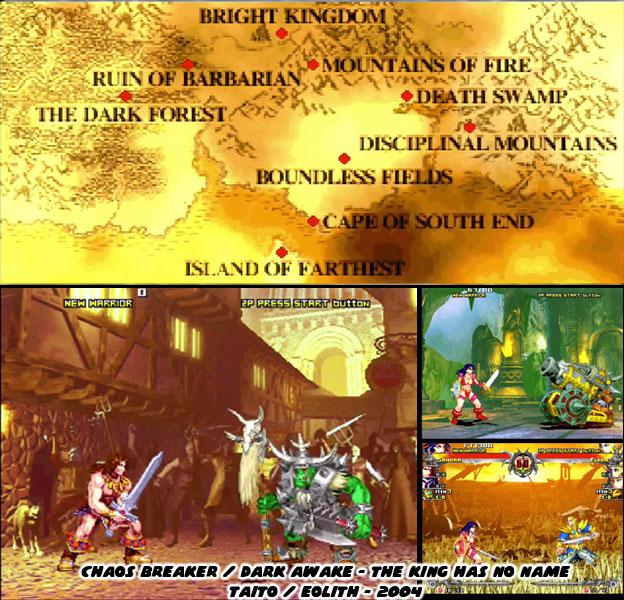
Eolith made sure to create levels that told a story. Each stage reflected the world that these fantasy warriors were trying to save or destroy. They had as much forethought as the highly detailed stages created by Sega in Golden Axe: The Duel and Capcom’s Warzard. Eolith had learned as much as they could about fantasy settings, not only in video games but also in popular culture. They made sure to apply these things in every stage of the game. If you have ever seen or played Chaos Breaker then you have probably noticed level settings, weapons, armor and character designs borrowed from animé shows like Berzerk and Record of Loduss War. Of course the publisher had not slept on the highly influential World of WarCraft, after all they were a South Korean studio. It was impossible to get into any sort of fantasy game development without drawing immediate comparisons to WoW. Eolith did not disappoint the fighting game community. They expected the major fantasy races in Chaos Breaker and they were all there. Sorcerers, barbarians, rangers, goblins, orc, elves, dark elves, necromancers and even vampires.


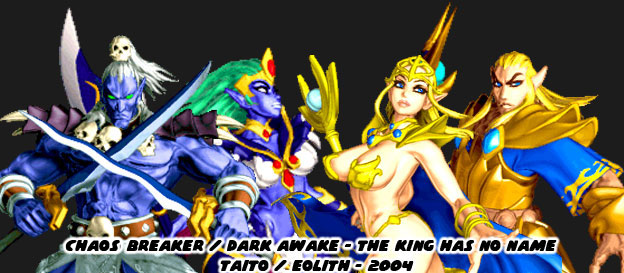
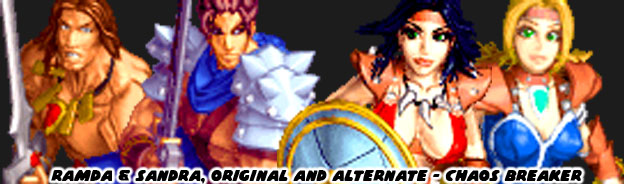
The character designs had a decidedly anime influence to them but they were not based on any one particular series. Instead they reflected the fantasy tropes that audiences were used to. Busty women that wore revealing armor, and muscular men with big swords. Villains were grotesque and clad in spiky dark costumes while heroes were handsome and wore bright colors. Eolith did more than use pallet swaps when designing alternate colors, or while porting the game to consoles. They actually created different models of the heroes and villains in different costumes to make them look truly unique. Ramda for example was a long-haired barbarian but his alternate costume gave him a haircut and had him in warrior armor.


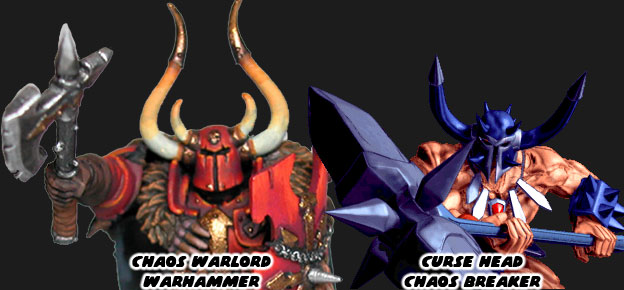
When it came to the design behind this game the most influential studio was not Japanese nor were they American. I’ve said it before and I’ll say it again and again the British studio Games Workshop was the design house most copied by video game developers. This was the company that Eolith was modeling most of their character classes after. To be completely honest Games Workshop did not invent all of the fantasy characters. They had existed much earlier in fairy tales, Arthurian legends and the works of Robert E. Howard, H.P. Lovecraft, J.R.R. Tolkien and C.S. Lewis. Games Workshop standardized the designs of many fantasy characters and made them popular. When audiences think of goblins and orcs they imagine certain green-skinned characters in crude armor. When they think of dwarfs they think of hefty armor and ingenious artillery. When audiences think of chaos warriors, they think of horned helmets and oversized weapons. Many of these looks were popularized in Warhammer Fantasy Battle from Games Workshop over 30 years ago.


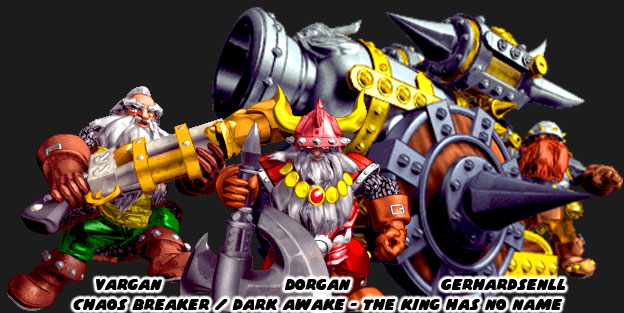
Eolith did not outright rip-off any specific character from the Games Workshop (GW) library, nor did Blizzard for that matter, but they took enough elements to make the designs more than coincidence. The roots of the Chaos Breaker designs were even more obvious as they less subtly mixed-and-matched details from different Games Workshop characters. For example the Night Goblins in Warhammer were known for riding giant spiders. But there were many types of creatures that the goblins rode, from including spiders, wolves and even toothed fungi known as squigs. Not all goblins fought with swords, some instead knew crude magics and spells and were known as goblin shaman. The developers at Eolith took pieces of the various types of GW goblins when creating their own variant. Similar things could be said of just about the entire cast. the industrious and stubborn dwarfs had been a staple of GW for decades. Eolith had a few versions of the dwarfs that actually covered several different classes. Vargan fought with a ranged weapon, a multi-shot blunderbuss. Dorgan fought with a melee weapon, a large axe. And Gerhassen II fought with artillery, a cannon.


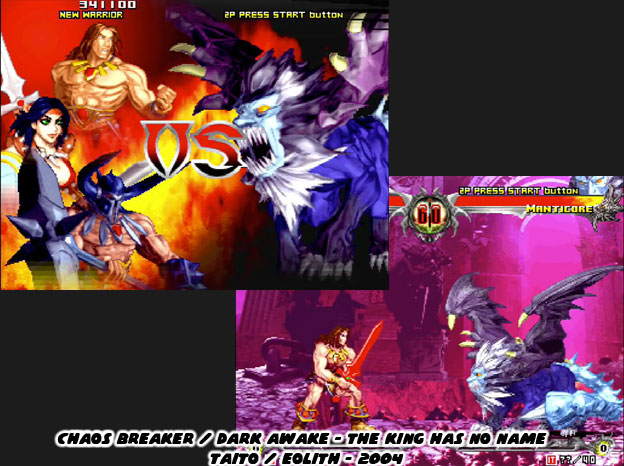
The ways in which Eolith used the characters was inspired design. Most fans of the format know they can expect a small, fast character, usually a woman. A large, slow character, usually some sort of musclebound giant. Then the hero of the game, often a guy, with equal parts speed and strength. There was a troll in Chaos Breaker that filled in the role of the giant. Yet he was not the only oversized character. For the good guys it was Gerhassen II. While his cannon took up nearly a quarter of the screen he could actually move it quickly and use it as an extension of himself. Not many studios had the imagination to turn a dwarf into the token “big” character. Just about everyone in the cast had this sort of planning behind them. The game also featured some unique boss designs. I don’t recall seeing a Manticore, part-lion/scorpion/bat that had looked as awe-inspiring as the sub-boss in Chaos Breaker.


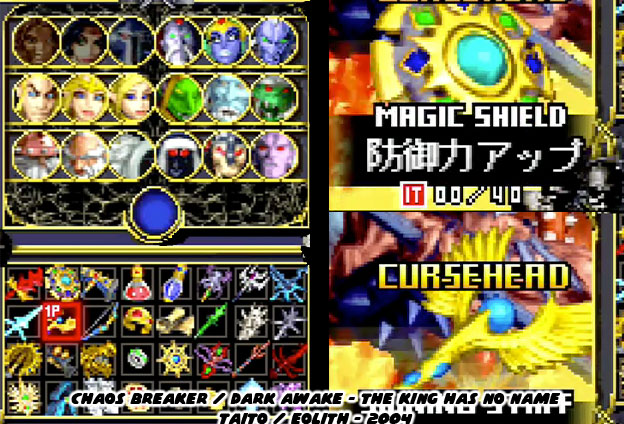
With it’s 3-vs-3 mechanics, weapons-based game play and unique characters there was still much more that Chaos Breaker had to offer. Eolith, just like every other developer that I have featured in this series, wanted audiences to fall in love with the world they had created. They hoped there was interest enough that they might turn it into a franchise. In order to do this they had to do things that few other fighting games had ever done. This title allowed players to unlock weapons, armor and other upgrades for their characters. These items acted just like their RPG counterparts. They would boost offense or defense, especially against certain types of classes and attacks. Warzard had something similar, and while leveling up did increase the health of a character or even grant them new abilities, it did not allow players to freely trade out weapons in between stages. Capcom did manage to capture a more RPG-centric experience with their Dungeons & Dragons arcade games, easily some of the best brawlers ever made, but for fantasy fighting games few could match the game play of Chaos Breaker.


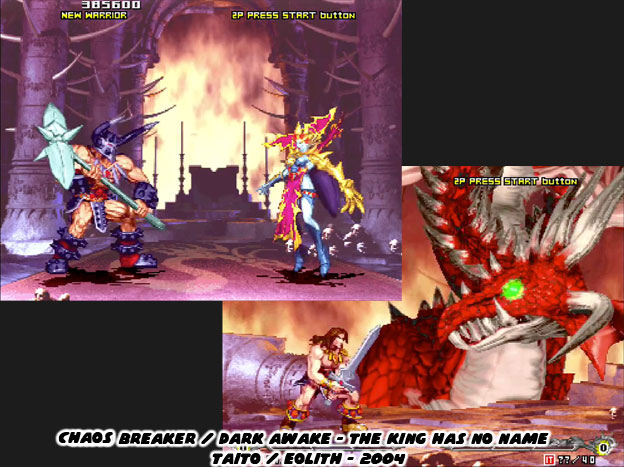
The differences between character classes and customizable weapons came in handy during the final two encounters in the game. The sub-boss aside from the Manticore was a Witch Queen named Thiele. She could cast spells from afar and do physical attacks with her giant golden claw. Her appearance was somewhere in between a Vampire Countess and Dark Elf Sorceress. She floated above the ground, similar to Valdoll from Warzard, and had an equally ominous presence. Her design was simply fantastic and something that even Games Workshop would have been proud of. She was well done but the final boss of the game, the King with no name, was possibly the largest sprite ever created for a fighting game. The dragon was several screens high and had more animated pieces than the giant characters in the Capcom vs games or in any SNK game. It made for a memorable but not impossible villain.


The game succeeded on many fronts, not the least of which was originality. Fantasy fighting games, especially well made ones were few and far between. The other thing that Chaos Breaker had going for it was the net-play ability. It was one of the first entries into net arcade fighting games from Taito. The things they learned in this game could be applied in other genres, from space shooters to robot sims. Audiences might not realize that many of the things we take for granted in console fighters today were pioneered in the arcade. Some of the things featured in Chaos Breaker were never duplicated in other fighting games. Although it never got a sequel it was published on PSN in 2010.


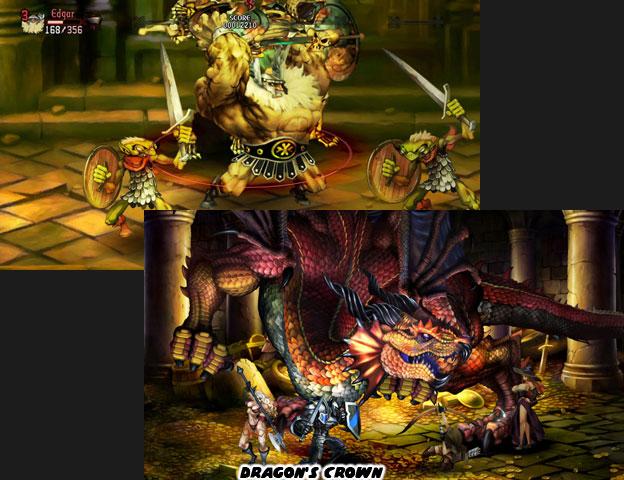
I would recommend audiences check it out if they are interested in broadening their fighting game experience. Eolith managed to capture the epic locations that had been a staple of many great RPGs and turned them into the backdrops for a memorable fighting game. Budding artists might learn a thing or two about character design by seeing how the South Korean developers had distilled the British designs and turned them into fighting archetypes. Those interested in another fantasy action game with western influences might want to check out Dragon’s Crown, developed by Vanillaware and published by Atlus in 2013. There was one more fantasy fighting game worth mentioning that was released after Chaos Breaker and Dragon’s Crown. We’ll look at this title in the next entry. I hope to see you back for that. As always if you enjoyed this blog and would like to sponsor me please visit my Patreon page and consider donating each month, even as little as $1 would help make better blogs and even podcasts!
 follow the Street Writer on Patreon!

Tuesday, February 9, 2016

The passing of a legend, remembering Wayne England.

It is with a heavy heart that I have to stop the Games Workshop series with some bad news. One of the artists that greatly influenced the look and design of the Warhammer Fantasy and Warhammer 40,000 universes and beyond has passed away. Wayne England was one of my artistic heroes. I spent many a day emulating his aesthetic and his fantastic sense of shape and color with my own projects. Wayne went on to produce art for many other game companies, not the least of which was Magic the Gathering. He is survived by his wife Victoria and his children. I offer them my deepest sympathies and pray that they can find some comfort in the gift that Wayne shared with the world. I actually wrote about him eight years ago on 1UP and would like to share it with you now...

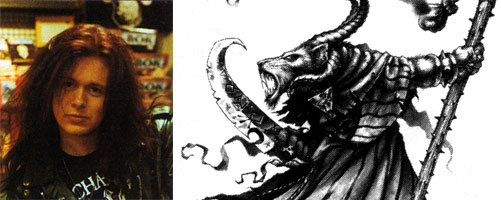
This man has not only influenced my art but also the art and design of countless games and systems in and out of GW. He has a long list of accomplishments as a freelance artist, but his stamp on GW is undeniable.


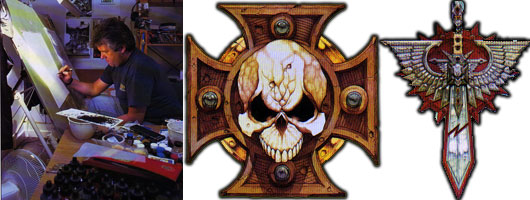
Most people know him mostly as the guy that designed the iconic badges for the various races in the Warhammer and Warhammer 40,000 universes. In fact it was hist first gig at the studio for which he thought he was being slighted. Art director  [EDIT: think of John as the Games Workshop equivalent of Alan Moore. He looked over England's portfolio and said that he'd be good to draw badges. Wayne misheard him and thought he said that all he was good for was drawing badgers. Wayne is a very proud artist and felt put-off by the insult until he learned that. Wayne was to design the heraldry for all of the races. Each badge that England created was an instant hit. The look of the races would be defined by these icons, some simple and some complex but all equally great. England's badges would become symbolic with GW for almost 20 years.


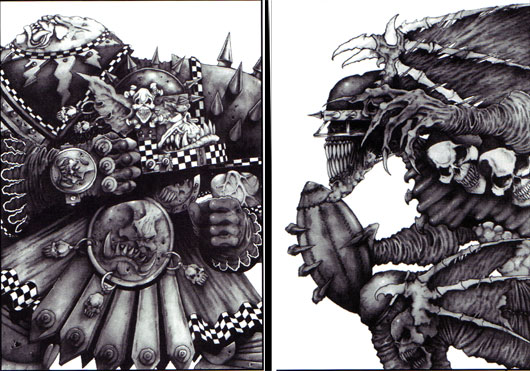
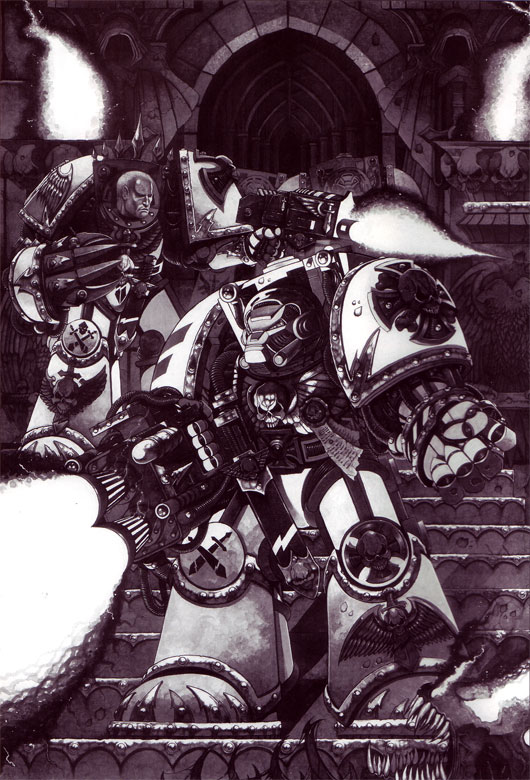
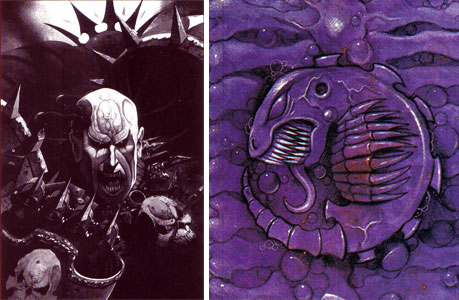
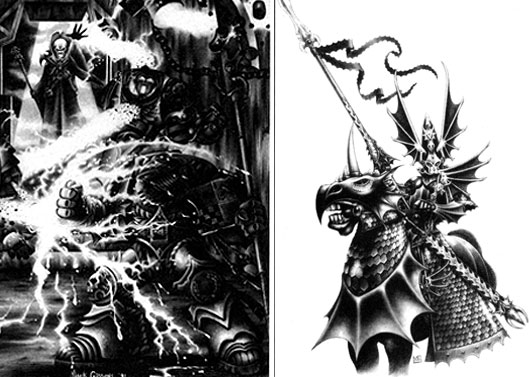
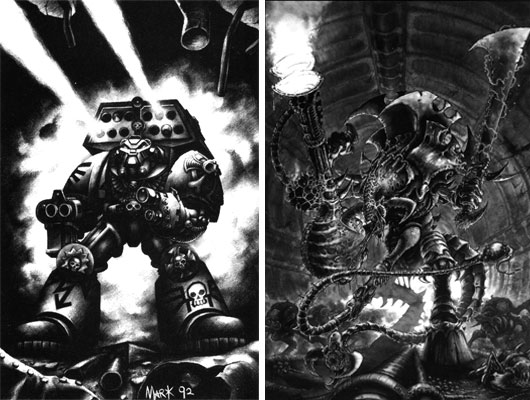
In that time Wayne painted some of the most amazing work that has ever been featured in White Dwarf and the various game books published by GW. Titles like Blood Bowl and Space Hulk would never have been as memorable without England's contribution. Featured here are mostly his black and white work, which by themselves stand head and shoulders above any other artist that has worked in two colors. Look at the amazing amount of detail for his characters, the illusions of texture and metal he is able to achieve with a solid pigment.


Wayne is a very outspoken artist that was the most influential in the bullpen. His techniques would be carefully studied by the younger artists working at GW. His advice was equally picked up by the new generation of artists entering GW in the late 80's. As Wayne was pushed by Blanche to work better and faster so too did he set up a friendly rivalry with all the other artists. The others at GW had their own styles and while some may have had better use of color or composition very few could keep up with Wayne when he was firing on all cylinders. When he wanted to he could inspire fear through his grimacing characters or embolden gamers with iconic heroes.


A few years into Wayne's tenure a new artist was finally allowed into the studio. Mark Gibbons had applied a few times at GW but had been turned down by Blanche time and again. Eventually his portfolio featured a very broad sample of styles and creativity that could no longer be ignored. Gibbons was taken under the wing of England and Blanche, then two titans of British fantasy art.


Mark became the heir-apparent to England, as his art was great and color but in black and white was simply amazing. His monochromatic work had its own appeal. His technique differed slightly from Wayne's, but the influence was there. Wayne used a sponge to create some of the amazing textured effects in his paintings, Gibbons never quite reached that level of detail but being taught new tools helped his technique.


Gibbons would grow into his spot on the art team and fill in pieces for White Dwarf and the game books as well. During his tenure he worked on Space Hulk and Warhammer 40k pices mostly. His fantasy work should never be under-appreciated. He gave life to the Skaven, twisted rat-men from the old world of Warhammer, his foul chaos beasts looked grizzly and unkempt, his Dark Elves regal and murderous. His science fiction work of course found no equal. The bold black and white pieces by England and Gibbons would burn themselves into my memory and forever change the way I approach my art.


Gibbons' tenure at GW wouldn't last forever. After a decade Mark moved on and eventually became a freelance artist. Like England's freelance work for Wizards of the Coast now too can Gibbons' work can be appreciated by a broader audience. As always if you enjoyed this blog and would like to sponsor me please visit my Patreon page and consider donating each month, even as little as $1 would help make better blogs and even podcasts!
 follow the Street Writer on Patreon!

Friday, November 6, 2015

Why you should celebrate Games Workshop during BlizzCon...

I had a really long post ready for this year's BlizzCon but instead I just sum up my frustrations with Blizzard by posting something that long-time gamers remember about the company. There was another game system that existed more than a decade before Blizzard's two biggest hits. These games were the inspiration for Blizzards success yet they rarely get coverage in the gaming media.

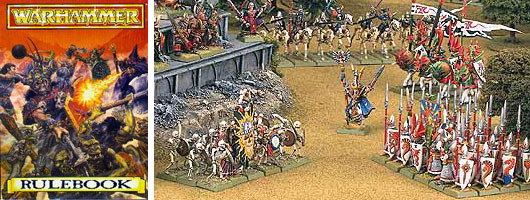
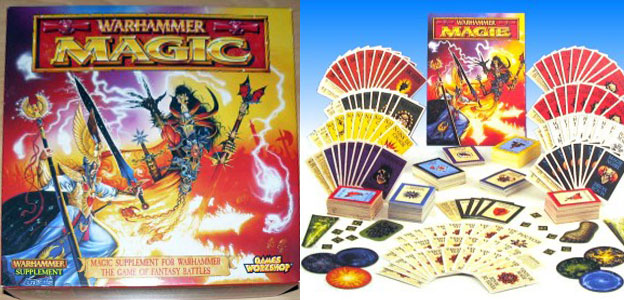
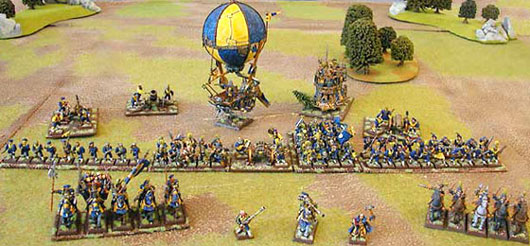
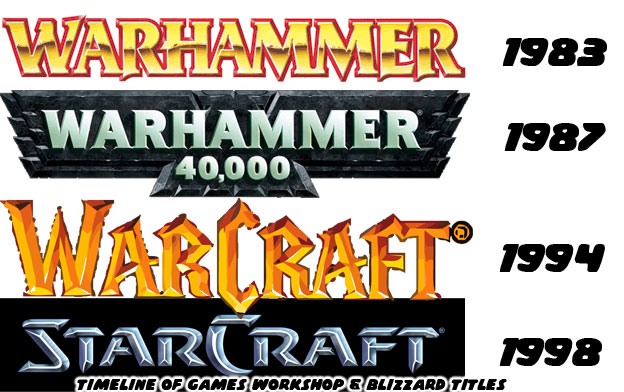
Warhammer Fantasy Battle, or Warhammer for short was first published by Games Workshop in 1983. It was a tabletop gaming system by set in a world that was similar to the Dark Ages. There were knights and kings, damsels and dragons. Games Workshop developed the rules for playing as and against the various classes. Citadel was their miniature studio and they created the figures for gamers to collect, assemble, paint and customize.

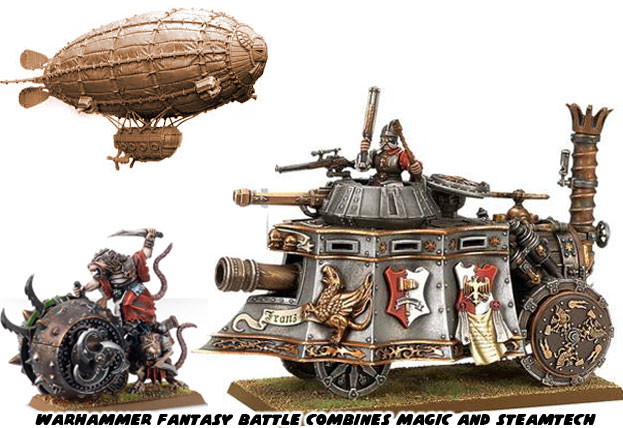
The universe of Warhmmer was not simply a fantasy version of medieval England. Magic existed but so did some steam machinations and lighter-than-air craft. It was as if the Jules Verne inventions were placed centuries earlier. There were sailing ships as well as some steam-powered ships. There were even submarines and machines that drilled through the Earth!

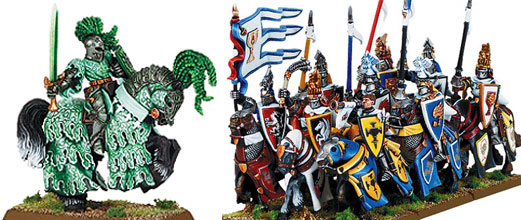
There were towers that gathered the sorcery "winds" and fortresses that floated on currents of magic. This mix of magic and technology was unique to the genre. It made the characters that lived within the world much more unique than those of our own ancient world. There were two large human kingdoms in Warhammer, those of Bretonnia and the Empire. The Bretonnians were similar to Medieval England. This was a kingdom of magic, dragons and knights. It had a heavy emphasis on the Arthurian legends.

The Empire was an amalgamation of Germanic and French provinces in their universe. The Emperor of the ancient world, at this era was known as Karl Franz, he held Ghal Maraz (dwarf for skull splitter) the actual "warhammer" that the game was named after. Some of the heroes in the universe rode horses, others rode lions, bears, unicorns and gryphons. Those that think WarCraft invented fantastic "mounts" were sorely misinformed.

Humanity formed alliances with the dwarf and elf kingdoms during the early wars of survival. These were the precursors to the heroic "Alliance" in World of WarCraft and of course all of the evil races went into the "Horde."

In the Warhammer universe the evil forces usually fell under the banner of Chaos but there were also evil races that had nothing to do with Chaos as well.

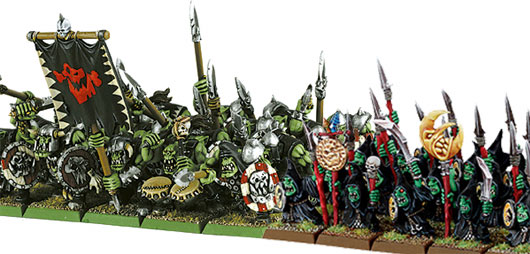
Orcs and goblins also inhabited the world of WH. The designs of these "greenskins" was possibly the single thing most copied over the next 30 years. I know that Games Workshop did not invent the orc, hobgoblin, goblin or troll. Those came from various legends from around the world. The descriptions of these monsters was fairly well known. The creatures were brutish, with leathery green skin and sharp teeth. Some lived in swamps and marshes, some could spit poison and even control the creatures of the night.

What Games Workshop did do was popularize the designs. In essence most orcs and orc variants that you see in video games were based on Games Workshop designs. The scale and proportions of the heads and bodies varied depending on which studio produced the art.

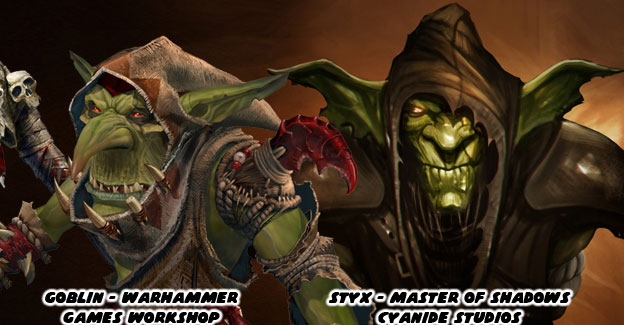
Take for example the stealth game Styx Master of Shadows. The game by Cyanide Studios did a great job of combining the stealth gameplay and exploration of Assassins Creed to the fantasy design of Games Workshop. It was no coincidence either, Cyanide Studios developed the Blood Bowl PC games which were based on the Games Workshop's fantasy football game.

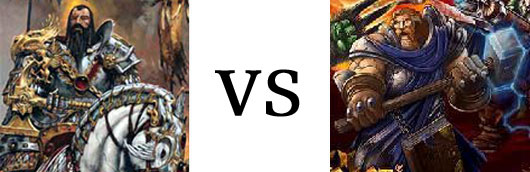
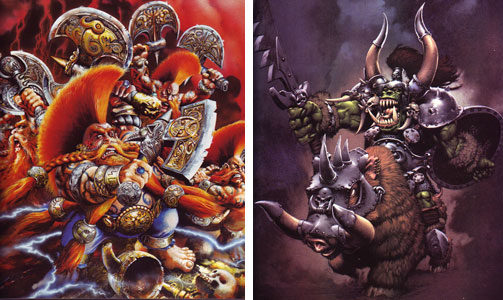
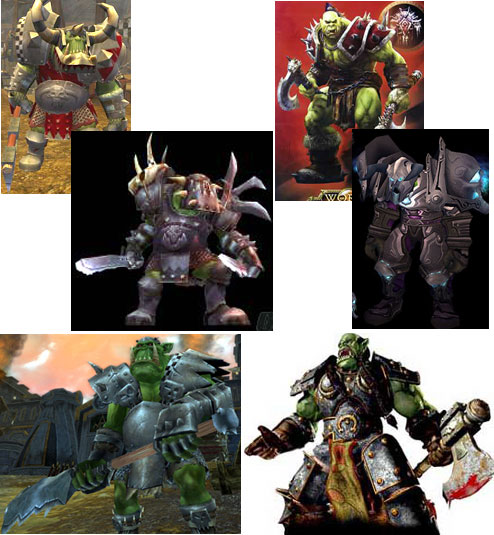
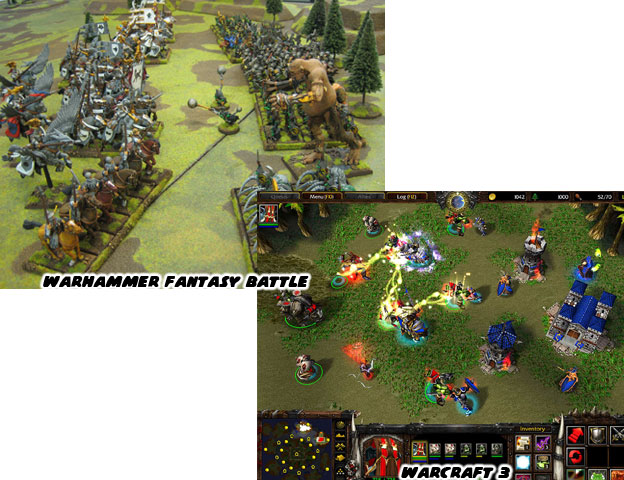
Aesthetically the creatures in WarCraft were very reminiscent of those from Warhammer. If anything they were made slightly simpler. Side by side here was art from Games Workshop and Blizzard, you tell me if there were any similarities.

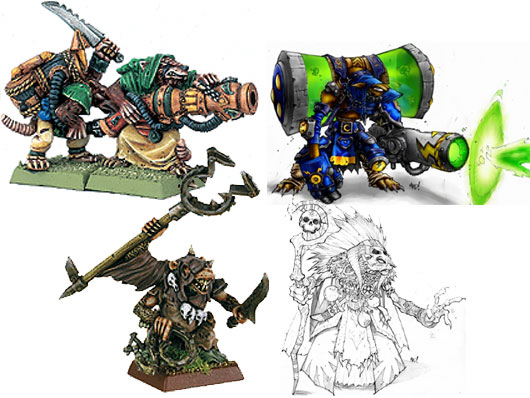
Aside from the classic fantasy characters there are also creatures unique to the Warhammer world. One of the evil races occupying the world are mutated, highly-intelligent rats known as Skaven. The Skaven could be considered the mechanical equivalent of the industrious dwarfs. They did not use fossil fuels or steam for their machines. Their diabolical inventions ran on green radioactive "warpstone." This poisonous stone caused almost as much damage to the Skaven as the creatures they attacked.

Surprisingly enough Blizzard did not poach the Skaven designs, somebody else did. Rat-like characters named "Whiskers" armed with poison green weaponry had popped up in designs by comic book artist Joe Maduera for a video game called Dungeon Runner. Below are the Skaven miniatures compared to the Whiskers concept art. Coincidence?

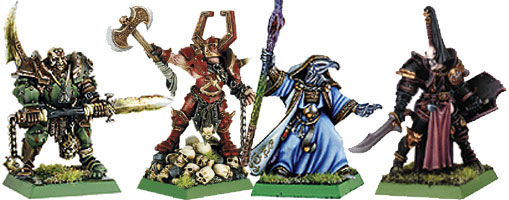
The other great contribution that Games Workshop had to fantasy design was with the development of the chaos warriors. These misshapen men, women and creatures were representatives of the chaos gods. They were similar to the Four Horsemen of the Apocalypse from biblical verse. There were chaos gods that identified with war or pestilence, they reward faithful subjects by turning them into demons and giving them magical powers. The miniatures for these chaos warriors were among the best ever sculpted. Accordingly, when Games Workshop was firing on all cylinders they were also the best painted in the world.

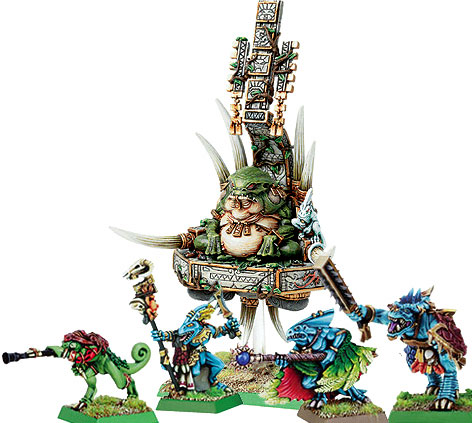
Among the oldest tribes in the WH world were the Slann, later renamed the Seraphon. These reptile creatures lived in a part of the world similar to pre-Columbian America. True to form this meant that the architecture and weaponry employed by the Slann was reminiscent of Aztec and Mayan culture. The Slann were known for their very powerful mages, among the most powerful magic creatures in all of Warhammer.

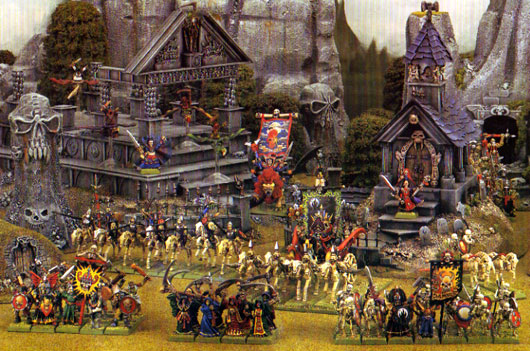
WarCraft didn't poach the Slann or Skaven but instead looked at other animals, like bulls or Tauren, on which to create a race on. The Chaos soldiers were often corrupt humans but almost every race in Warhammer had an evil opposite. There were Dark Elves (called Night Elves in WarCraft), and Chaos Dwarfs that fought against their noble kin. There were are also armies of the undead, led by the Vampire Counts.

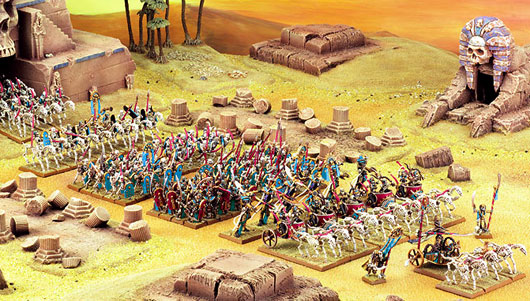
What was interesting to notice is the evolution of the armies in Warhammer. The system did not stay the same over the years and evolved quickly. In order to keep players interested the system had to keep expanding and introducing new races and quests. The same things that World of WarCraft would do in order to keep subscribers engaged. For example early skeleton armies were controlled by Necromancers and Vampire counts. While the classic skeletons were still around, new dedicated skeleton armies were controlled by ancient Pharaohs or Tomb Kings from the south had been introduced to the world.

Through the '80s Warhammer was great fun and limited only by your imagination. For those that were into a more traditional role-playing experience, Games Workshop also offered a fantasy roleplay system set in the Warhammer universe. If, however your imagination was running on empty then the hobby tips provided in White Dwarf magazine (also published by Games Workshop) could inspire you.

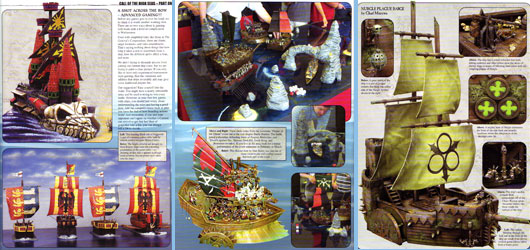
One of the best features that Games Workshop built into the game were adding ship combat to the universe. This was years before naval combat had existed in any MMO, and especially before WarCraft. The articles in White Dwarf included how to make your own ship, custom ship ideas as well as sample campaigns.

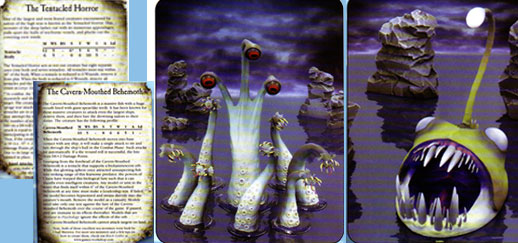
To top it off White Dwarf even published rules for using sea monsters with the ship game and how to model these monsters yourself.

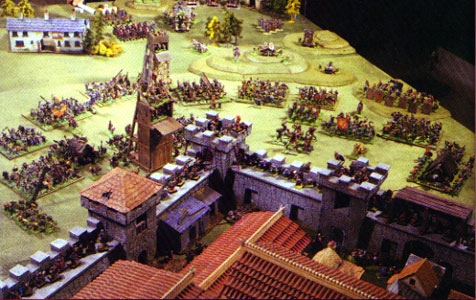
Now take a step back and look at the big picture. How long had this gaming system been around? What was it like to see the various races fighting for power? Each race with its own strengths and weaknesses. Its own special units, magic, heroes and tactics. Imagine these armies clashing in a tabletop war. Hundreds of brightly painted characters smashing each other in glorious combat. Imagine what it must have been like to witness these games 25 years ago as a budding game programmer, designer or artist. Squint your eyes if you have to. Is this starting to look like the original Warcraft RTS game?

Games Workshop developed rules for controlling units, what bonuses they received when equipped with the right weapons or controlled with the right leaders. In the video game these things became known as "buffs." Games Workshop figured out effective ranges for each type of fighter and squad and more important, figured out how to keep the armies balanced out. A solid strategy and a few good dice roles could help ensure victory.

What Blizzard did was adapt those rules, those ranges, unit types, bonuses and random dice roles and turned them into a PC game engine. This made things a lot easier for people that did not want to measure out the strikes of their units using a ruler, for those that did not want to read all of the rules of engagement or figure out if line-of-sight was in effect when battling. Instead fighting a battle was done with the press of a few buttons and the virtual armies moved themselves on the battlefield.

There was no doubt that Warhammer was influential on the development of WarCraft. Sadly none in the game press bothered to call out Blizzard for these similarities. But more shocking was how a few years later Blizzard released StarCraft. This was a science fiction RTS game that swapped out knights for space marines and introduced aliens instead of fantasy creatures.

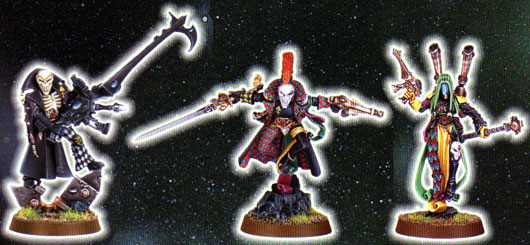
Games Workshop released Warhammer 40,000 in 1987. It was set in the far future and featured Space Marines battling all sorts of alien lifeforms across the galaxy. The original monsters in the game were simply space versions of fantasy characters. The Elves became Eldar, yes, there were Dark Eldar as well. The Orcs became Orks and still used crude weapons and machines in battle.

StarCraft debuted in 1998, more than a decade after Warhammer 40,000 or 40K for short. Blizzard pretty much poached the concept that worked for WarCraft and set it in the future. What was shameless was how much one of the "new" alien races looked like a Games Workshop one.

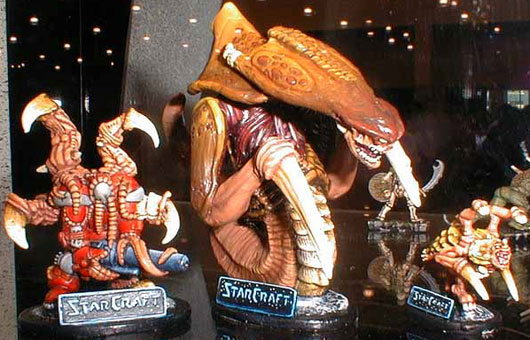
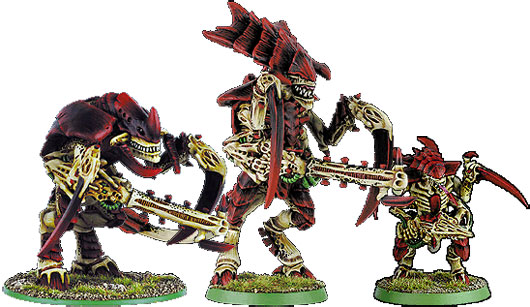
The Genestealers, which to be fair were poached from the Alien movie, were released in 1989. They were the new 40K aliens featured in the game Space Hulk. The Genestealers would become the shock troops for an alien race called the Tyranid. These clawed creatures appeared in 1990 in the Advanced Space Crusade adventure. The Tyranid were without a doubt the basis for the Zerg aliens.

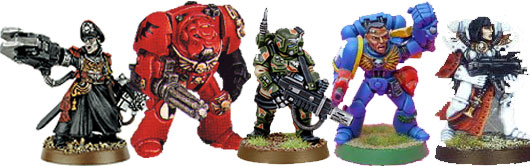
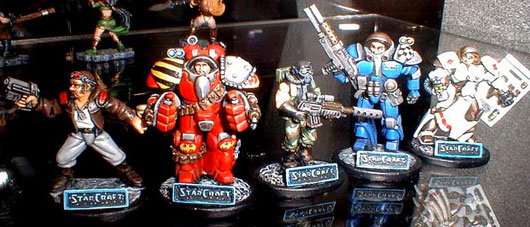
In shameless style Blizzard had the audacity to announce their own miniatures for a tabletop gaming system. Of course every miniature they unveiled looked eerily similar to one released by Games Workshop years earlier.

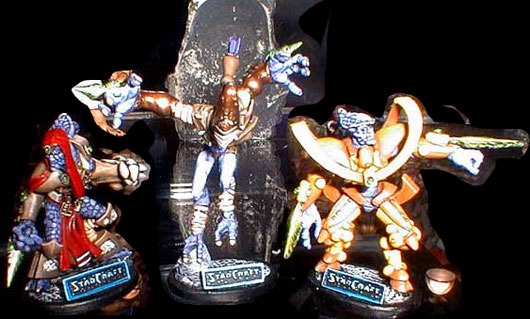
Above were some 40K minis including Imperial Guard, Space Marines, Space Marines in Terminator armor and Sisters of Battle. Blizzard had the nerve to do the same thing for the alien species in StarCraft as well.

Maybe when I put the Tyranids after the Zergs you might notice the similarities.

There were other aliens in StarCraft though. The blue-skinned Protoss for example.

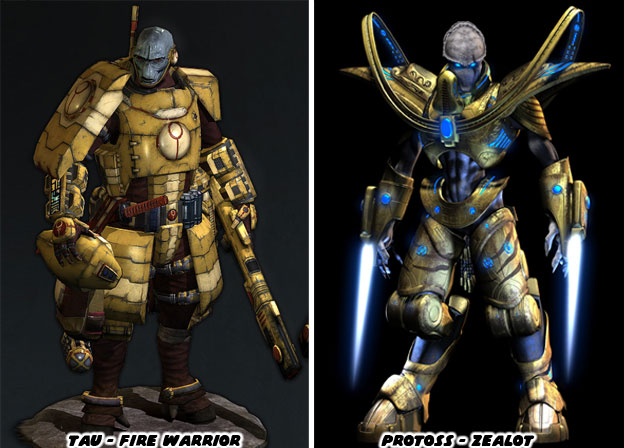
To be fair though Blizzard did have the Protoss in their games four years before Games Workshop introduced the Tau and Kroot warriors. The Necrons however (robotic skeletons controlled by alien Pharaohs) were as old as StarCraft.

The inspiration for the Tau was based on feudal Japan, with the weapons and vehicles based on mecha. The code that the aliens lived by was somewhat imperialistic but could also be highly religious. It was as if great technology was still governed by ancient scriptures. Similar things could be seen in the Protoss aliens.

Too bad Games Workshop had nothing but crappy video game licenses up until now or else the world of video gaming would be very different. Not that it matters, the damage was done and Blizzard made billions of dollars off the ideas of another company.

Now that Blizzard was a huge publisher they could hire all sorts of artists, programmers and designers and no longer have to poach the ideas of another studio. Especially not a French tabletop gaming company named Rackham that went toe-to-toe with Games Workshop in the early 2000's, right?

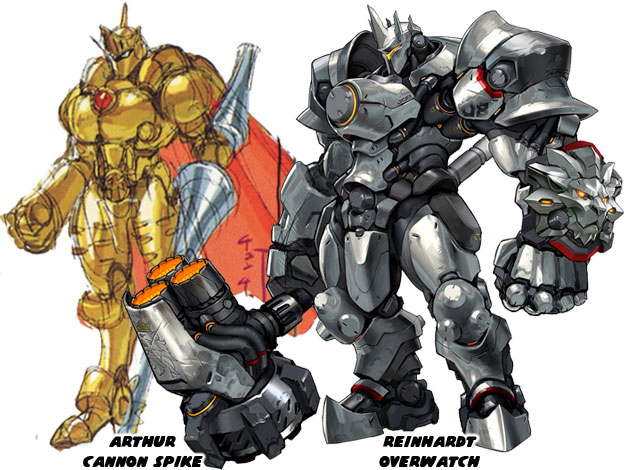
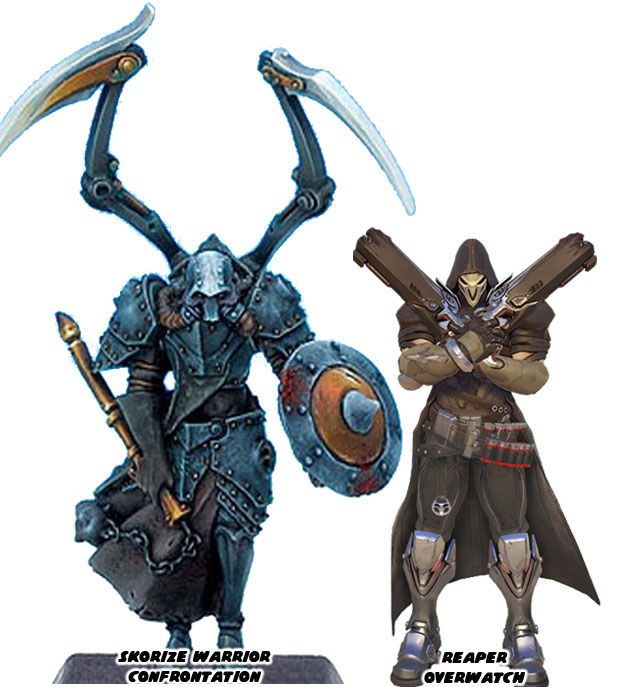
I mean maybe it's a coincidence that the new shooter Overwatch has different alien archetypes mixed with Western and Eastern heroic designs. It was just coincidence that the Reaper and robotic Reinhardt were reminiscent of designs from outside studios.

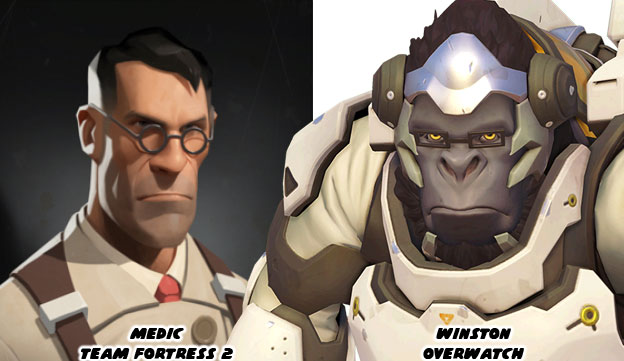
Arthur from Cannon Spike, how many Capcom fans had even played that game from 2000? Many gamers could guess that Overwatch was Blizzard's answer to the smash hit game Team Fortress 2. There were various classes of shooter, each with their own strengths and weaknesses.

To mix things up Blizzard introduced robots, aliens and cyborgs into Overwatch. In this way they could never be accused of poaching the classes from Team Fortress. Where else could you play as a genius with an unorthodox weapon? That character certainly doesn't exist in Team Fortress 2...

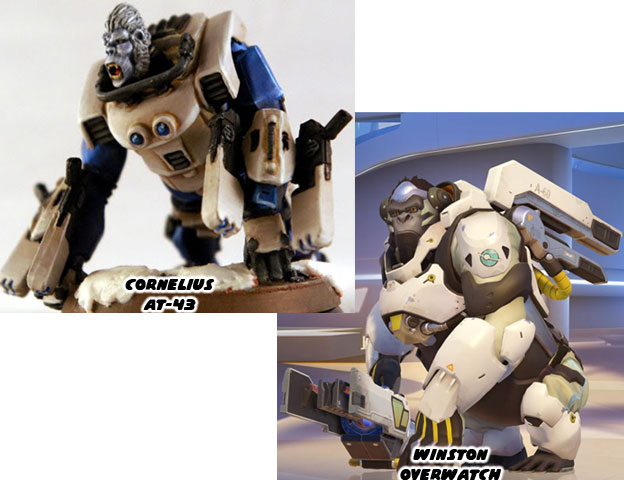
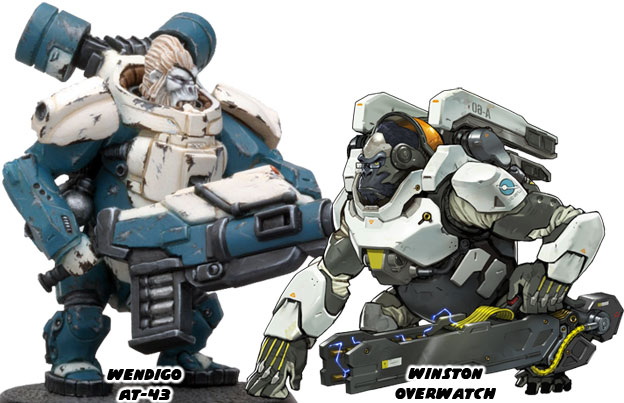
Of course an ape in power armor looks great in any setting but I would have been more impressed if the design for Winston did not poach the designs of the Karman alien characters from AT-43. It was a Rackham Studios game from 2007.

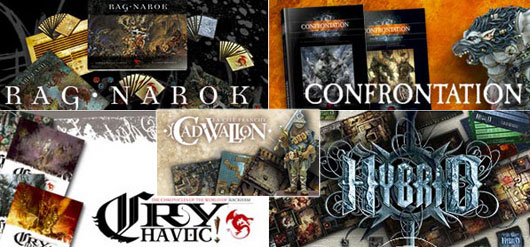
Rackham released the game AT-43 as a rival to Warhammer 40,000. A few years prior they had released Confrontation as their rival to Warhammer Fantasy Battle. AT-43 was a well designed system and not without its own subtle humor. The Karman were highly intelligent ape-like creatures with art deco-styled vehicles. As ferocious as they were they were also meant to be a jab at the Space Marines. They were big, brutish and carried all the heavy weapons into battle. In 40K the Space Marines were sometime big and brutish, they were genetically modified humans, much taller and stronger than ordinary people.

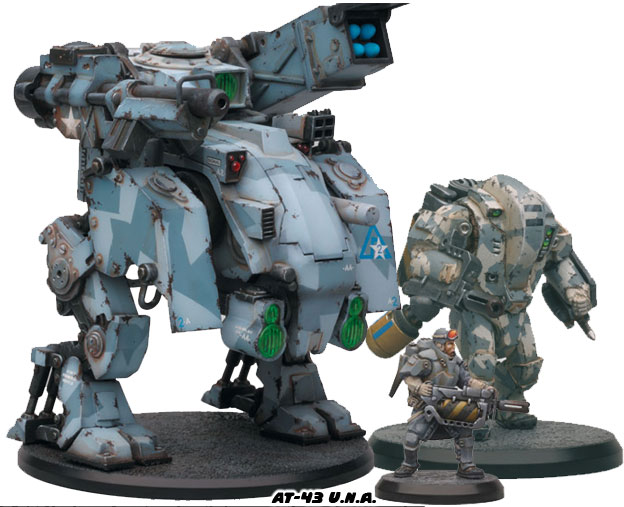
The humans in AT-43, those of the U.N.A. were meant to be compared to the Imperial Guard soldiers from 40K. Humans in both systems were the ones that had access to the tanks and artillery while the Space Marines did most of the fighting up close with their bolt guns.

The Karman were fantastic aliens and the miniatures released on them were some of the most memorable ever created. If you did not follow the tabletop gaming scene then you might not have known. I'm sure Blizzard thought that they could get away with poaching some more characters for their new game. They had done it in the past and would probably keep on doing it. It's not like any game journalist would ever call them on it, right? I’d like to hear about it on the comments section. As always if you would like to sponsor me please visit my Patreon page and consider donating each month, even as little as $1 would help make better blogs and even podcasts!
follow the Street Writer on Patreon!