Tabletop gaming shifted through the 90's with collectable card gaming (CCG) system like Magic: the Gathering and Pokémon the CCG began taking the focus away from miniatures and dice games. Independent studios that decided to stick with miniature gaming had to provide radically fresh designs in order to appeal to gamers. Studios like Rackham from France and Privateer Press from the USA flourished when they introduced their systems to players. It took Games Workshop the better part of a decade to realize that the card based systems were not a threat to their miniature based systems. If anything they could help compliment the Warhammer universe greatly.

The inked a deal with Fantasy Flight Games to develop a series of CCG based on their IP. These games were easy to get into and play and were easily portable, unlike the miniature systems. Like other CCG games there were expansion packs featuring wonderful character illustrations and new scenarios and rules that could help diversify the experience. More important, by going to CCG systems GW and Fantasy Flight were able to resurrect fan favorite games in a new format. Blood Bowl Team Manager took the popular fantasy football system and brought it to a new generation of gamers. Independent game stores reported issues keeping the game in stock. Players were still very much interested in the game even if GW were not really updating the system for miniature players.

The Blood Bowl CCG had everything that two players needed to enjoy the game. It was very reminiscent of the self-contained boxed sets that GW used to produce.
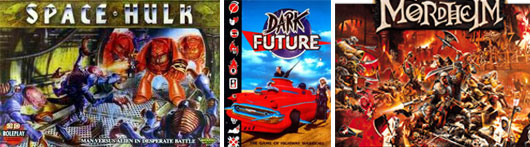
In the past few years GW had been listening to the long time supporters and began releasing limited-edition sets that were in the spirit of their classic experiences. However instead of reprinting old rules and models for nostalgic players they went about completely recreating the boxed set. Space Hulk for example was a stand-alone game that introduced Terminator Marines to the Warhammer 40,000 universe. It featured the Terminators against hordes of aliens known as Genestealers. I had mentioned a few years ago on this blog The Return of Space Hulk and why it was important to the community.
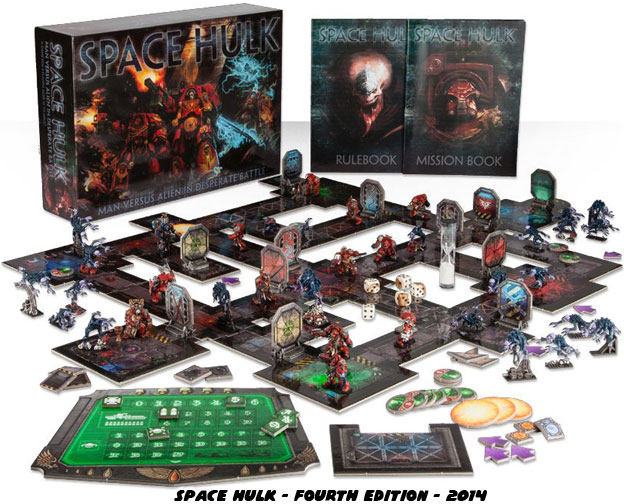
The new game featured embossed interconnectable card stock tiles with bright laser printed graphics. These tiles worked together with plastic scenery and doors that made the game feel very well put together. The production value was years ahead of the original Space Hulk. The sculpts of the Terminators and Genestealers were not rehashes of existing models either. They were very well made and insanely detailed, bridging the modern aesthetic with the classic proportions of Citadel sculpts. These miniatures that would never get reproduced in any other system or be available in a catalog. This distinction earned the collector a rare find.
The Third Edition of Space Hulk won awards from the gaming community and was produced in relatively small numbers, driving many collectors crazy. While it was a welcome release for the community GW was still missing something. The company had earned many followers by producing original boxed games that stood alone. New tabletop players had never known the stand alone experiences aside from the CCG. Those gamers had little knowledge of the experiences that GW used to develop. Long-time players were starved for something new and not another iteration of an existing system. Veteran game designer Phil Kelly heard the call and developed a new game called DreadFleet.
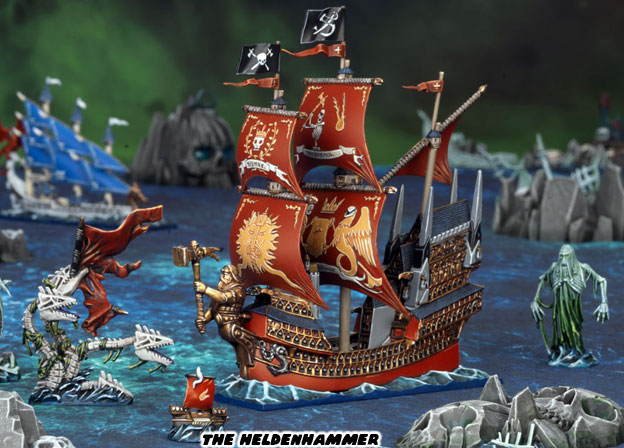
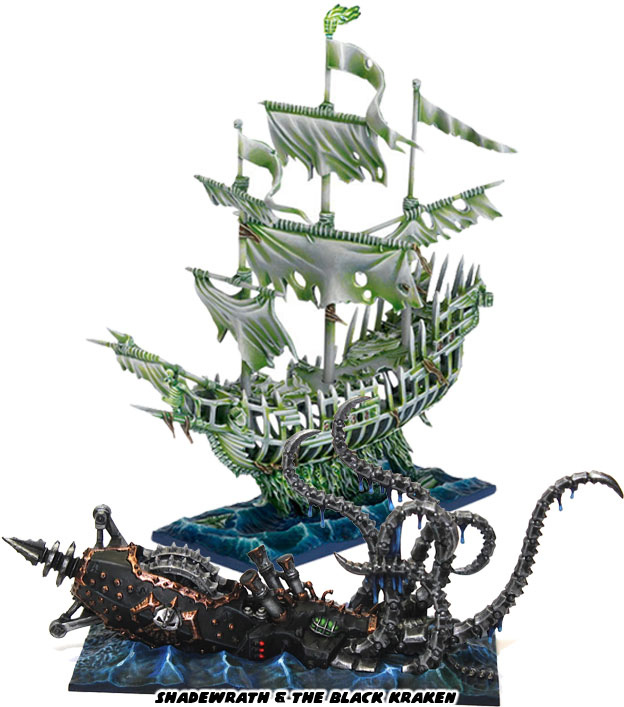
The story behind the game was conceived and written by Phil himself. It revolved around a cursed fleet lead by the vampire Count Noctilus. They made up a great gallery of classic warships, including a Tomb King death barge and a mechanized Chaos Dwarf Black Kraken. The Dreadfleet had been terrorizing the Warhammer high seas for years. A pirate captain named Jaego Roth set about to avenge the death of his family by recruiting or blackmailing some powerful privateers and friends. The game picked up at the climax of the book and allows players to experience different scenarios and choose sides. Easily this was the best new game produced by the studio in over a decade.
Dreadfleet was instantly appealing to new and veteran gamers because it did many things well. The miniatures were a powerful hook but the opportunity to experience a slice of the Warhammer world in a stand alone game was something unique. The game was a self-contained title that included highly detailed plastic models, that still required paint, markers, scenery and a color printed canvas map that represented a raging sea. That approach had not been seen in a long while, not since the original Blood Bowl boxed set had turned the fantasy universe on its head. Seasoned gamers were reminded of another old system that GW had developed and then abandoned. Man-O-War was the first boxed naval combat game set in the fantasy universe. It included rules for all of the major races, miniatures, markers and scenery to get a game going right out of the box. The game did fairly well and even saw an expansion set, the Sea of Blood, and additional miniatures released for the system. What Dreadfleet was not was the second coming of Man-O-War. It was a stand alone game with no plans for expansions or sequels. This both delighted and saddened players.
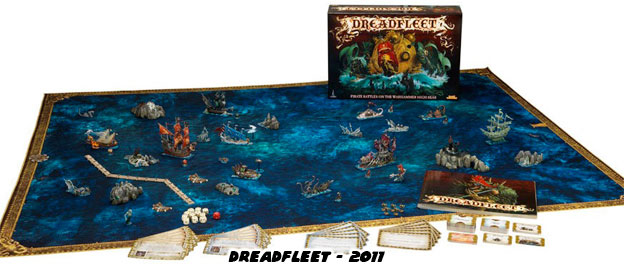
Veterans knew that if the release did not do well then GW would not support it and rules, errata and miniatures would be released sporadically through the Specialist Games store. The best way to preserve the legacy of the game was by making sure that the single experience was the best possible naval combat system the studio could produce. If players supported it then there was a chance that GW might consider making more stand alone games as well as they had done in the late 80's and early 90's. When the studio had their focus on the board game there wasn't another company that could touch them. Seasoned players were hoping that the company would return to that mentality and consider releasing other stand alone experiences. They would still be expected to support their core Warhammer Fantasy and 40,000 universes, as they had done decades ago, while making new experiences.
The stand alone game was also a gateway to the tabletop gaming hobby. It was a way to appeal to new players with a minimum level of investment required. Painting and assembling the Dreadfleet could help introduce the player to the hobby aspect while the easy-to-read markers and straightforward rule system got them into the gaming aspect. The appeal to many tabletop system was that there was something tangible to play with. Whether it was a CCG system or a miniatures based system, gamers had something to collect and personalize. Players did not need a television or console to enjoy these experiences. Best of all the stand alone format could compliment an existing universe or IP. A well design game with easy to follow rules could make a comic book, movie, cartoon or even videogame into a great board game. These games would not necessarily be a substitute for the series but instead a continuation of them. Bungie and Microsoft discovered this when Halo was licensed out for the Clix system of gaming. More recently Epic Games discovered this when they licensed Gears of War as a board game.

Studios like Games Workshop and Fantasy Flight Games were bridging the gap from casual gaming to hobby gaming by making great stand alone systems. This approach was actually nothing new to the industry. Decades ago the earliest videogame to board game titles were nothing more than copies of screen mechanics to paper boards. This was done to cash in on the craze of videogaming rather than to satiate the gaming desires of the public.
Games Workshop found success over the past couple of years by returning to the card and board game systems that made young players get interested in the hobby so many years ago. The further the studio shifted the focus from original ideas with great play elements to more established systems the more isolated they became. A similar thing could be said of Nintendo, which used to make card games, toys and stand-alone handheld electronic games. They all had their own unique play elements that turned young gamers into fans. Both GW and Nintendo had spent the better part of the 90's pandering to fans without catering to the play elements that helped create new followers. Only in the start of the new millennium did the studios begin going back to basics. But that would be a topic best saved for some other blog...

I hope my short look at Games Workshop has gotten you interested in tabletop gaming. Those that are interested should consider investing in some paints and brushes and getting the Dreadfleet game. Good things can come to those who play.
Building a gaming legacy, the Games Workshop series, part 1...