Giant monster tabletop systems have been around for years but they never quite got the following of the classic board games. I had talked about many of the systems on my older 1UP blog. One of the best games based on the genre was Monsters Menace America. It included a large map of the continental USA, featuring cities for players to take over as well as an assortment of plastic miniatures that represented the creatures in the game and military forces as well. Players could literally carve a path of destruction across the states and fight both the other monsters as well as the military in the process.
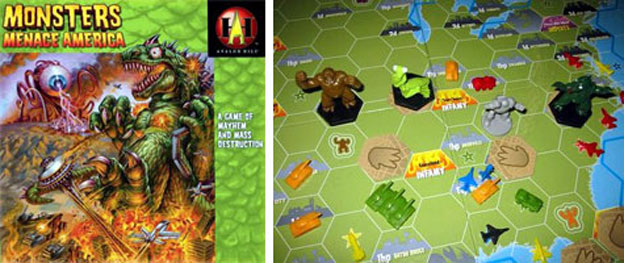
The title was published in 2005 by Avalon Hill and was actually a remake of an earlier game called Monsters Ravage America. Wizards of the Coast, creators of the wildly successful Magic: the Gathering series of collectible card games (CCG) bought up Avalon Hill and acquired the rights to all the systems they had developed. Hasbro acquired Wizards in 1998 and is the parent company that owns the various systems. Monsters Menace America was a decent introduction to the genre for kids over 12. The miniatures were pretty nice and the illustrations on the power up and attack cards were great. Even those too young to know anything about the classic B-films would appreciate the mix of humor and horror in the game. There were actually a couple of new board games introduced later that tried to put their own spin on the genre. The first was through the use of a big name star.
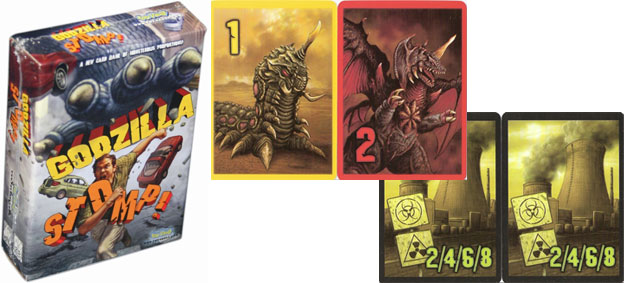
Godzilla was the featured monster in two separate titles by Toy Vault Inc. Godzilla Stomp was a CCG from 2011 that featured several Toho monsters. The game could be played by two to five players. In it participants chose from one of five monsters; Godzilla, Mechagodzilla, Battra, Destroyah and Mothera. They all took turns trying to take down as many buildings as possible as they were revealed. The more buildings that players destroyed the more points that could be won. Whoever had caused the most destruction had won the game. The other title by the studio was a bit more ambitious.
Kaiju World Wars was a tabletop system featuring a city game board, building models and four Toho monsters; Godzilla, Gigan, Rodan and King Ghidorah. It was also released in 2011 but targeted more towards die-hard Godzilla fans. The game was not far removed from the CCG, it had similar play mechanics and ability cards even. The miniatures combat system changed things considerably. Players set buildings and encounters on top of a highly detailed game board. The illustration printed on the board showed the damage left behind by multiple battles. There were impact craters, burn marks, rubble and gashes carved into the Earth by creatures that weighed several thousand tons. It helped create a sense that the game was taking place in the final moments of an all out monster war. I enjoyed studying the details when I first saw the game and could imagine that a younger fan would be completely absorbed by the atmosphere created by Toy Vault.
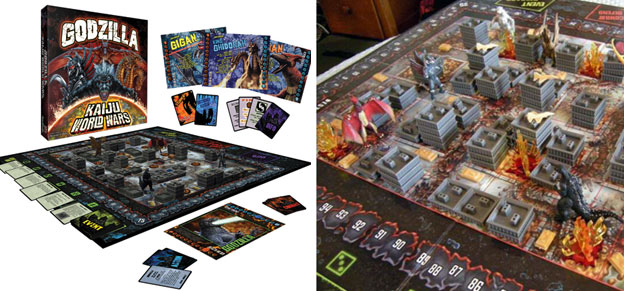
It turned out that Pipeworks wasn't the only studio having difficulty working with the license. The Godzilla name was popular but making a memorable game out of the character seemed impossible. Players knew what they wanted to see in the character and his opponents. Anything short of an amazing firefight between the monsters and military while causing massive collateral damage would be considered a failure. Toy Vault actually got close to a really good system that allowed for military strikes, monster combat and buildings that could be pulverized. The game suffered in its loose rules and small lineup of monsters. Even Monsters Menace America had six playable creatures to Kaiju's four. The goal from the company was to release expansion sets featuring new monsters, scenarios and military weapons. After more than a year since the debut it did not seem likely that the system would ever see any expansions. Game designer Richard H. Berg tried to answer any rule and scenario questions on gaming forums. BoardGameGeek member Scott Nixon consolidated the core rulebook, info cards and Mr. Berg's corrections into a streamlined rulebook for fans. Sadly most players wouldn't expect that they would have to search for some sort of unified rulebook online after picking up the game.
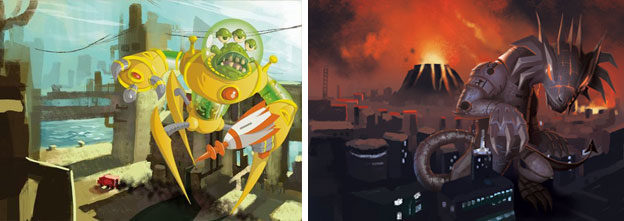
A second daikaiju themed game was also released in 2011. King of Tokyo was designed by gaming veteran Dr. Richard Garfield, he was best known for designing Magic: the Gathering, Star Wars and Battletech CCGs. Mr. Garfield came up with his own spin on the giant monster mythos, instead of focusing on big boards or detailed miniatures he wanted to focus on the combat and monster elements. He introduced gamers to six unique monsters, they were cardboard standees illustrated in a stylized cartoon format by Benjamin Raynal. The monsters were trying to claim Tokyo for themselves but in order to do that they had to defeat their opponents or simply survive an onslaught. Monsters could battle, destroy and even unlock unique mutations.
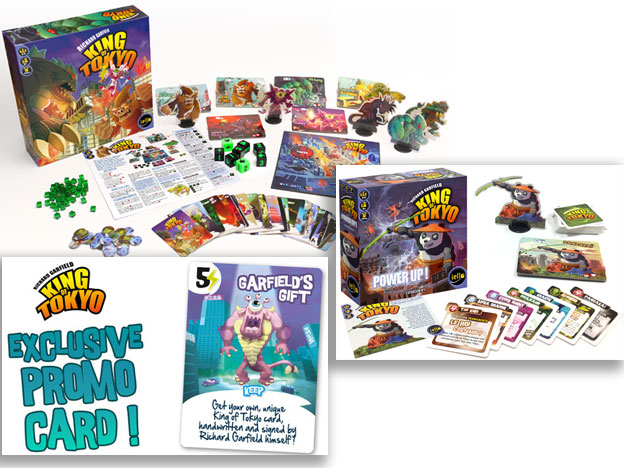
Up until the King of Tokyo the idea of a giant monster mutating and evolving new abilities was reserved for tabletop RPG systems like Monster Island or Giant Monster Rampage. Think of those systems as Dungeons & Dragons for the giant monster genre. Dr. Garfield introduced play elements into his series by allowing any of the monsters to gain new powers and even change shape right in the middle of the game through a couple of card turns. His time spent mastering the nuances of the CCG translated well into the tabletop genre. His game was actually published by the French company Iello Games. In 2012 they released an expansion called King of Tokyo Power Up featuring new cards and a new monster named Pandakai. The character was pulled from gaming zeitgeist thanks to the successful Kung-Fu Panda film series and World of Warcraft expansion Mists of Pandaria. In 2013 the system got a Halloween! expansion. In 2014 it got a stand-alone game called The King of New York. In 2016 they got the King of New York: Power Up expansion as well.
It was interesting how Dr. Garfield managed to breathe new life into the giant monster genre by presenting the basic elements from the films into an easy to enjoy system. He was so successful in his design that King of Tokyo became one of the highest rated board games according to the editors and visitors of Board Game Geek, the definitive tabletop editorial site. King of Tokyo was an exceptional game but there was only one system that could be considered as the ultimate giant monster tabletop game for hobbyists. We shall explore this game in the next blog.