Showing posts with label hasbro. Show all posts

Friday, April 3, 2026

Losing a monster collection, and getting it back

If you were a regular visitor to this blog then you probably knew that I collected various things. These included foreign, and domestic comic books, comic book toys (especially Hulk figures), Japanese video game magazines, sneaker books, vinyl basketball figures, Wonder Eggs ephemera, and of course Oswald the Lucky Rabbit merchandise. One of the things that I used to collect were monster truck magazines. In fact I used to have a massive library of 4x4 magazines, skateboard magazines, and US video game magazines.

Unfortunately almost 20 years ago Southern California experienced a series of freak rainstorms that lasted for weeks on end. Some of my collection was in my bedroom, but a good portion was also stored in my parent’s garage. I didn’t realize at the time that there was a leak in the garage roof, directly over where I kept most of my magazines. It not only dripped directly onto my magazines, but it also pooled on the garage floor, where most of my books were sorted in cardboard boxes. By the time I learned what had happened I had lost decades of issues, including the first hundred or so copies of Electronic Gaming Monthly, Game Pro, and Gamefan.
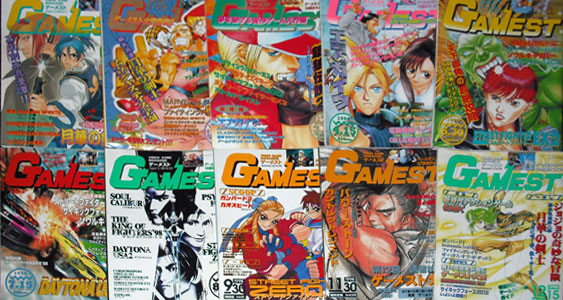
By a miracle the rarer Japanese issues that I owned managed to stay dry. After the storms passed my family rented a dumpster. My brothers, and I helped empty out the garage, throwing away piles of disintegrating paper. My mom would have the garage torn down, and rebuilt. I began sorting, and organizing the things that survived. I put them in a storage unit where they remained for years and years. I was genuinely heartbroken over what I had lost. I didn’t bother trying to build the monster magazine collection again. In fact I didn’t want to look or think about anything monster truck related for years after. I mentioned how I broke out of that cycle in 2019 when a monster truck jumped over a flying plane. Some people outgrew the things they loved as kids. Not me, from the moment I saw my first monster truck I was hooked. My friends, and family learned to live with my obsession. Remember the story about how I was more excited to play a monster truck arcade game than go on any rides at a local theme park? When I say I was a fan I meant it.

My parents always supported our interests. While they bought my brothers toys, I begged them for a subscription to Four Wheeler Magazine. They were happy that I was a voracious reader, more important they appreciated how well we took care of the things they bought. My brothers, and I were aware how hard they both worked. They gave us the advantages they didn’t have growing up. We saw them go without just to make ends meet. So we took good care of every present we got. In fact we still had some of the toys, and comics we grew up with. At the end of the year we would give some of the toys we had outgrown to cousins, nieces, and nephews in the US, and Mexico. In my case I gave up entire Hot Wheel track sets, and dozens of cars that I had held onto for years. For my little brother he gave up folders of Pokemon cards, which in hindsight could have been a downpayment to a house. The gifts also included our BMX bikes as we entered our teen years. We knew that things were sometimes tough for our extended family. We were fortunate enough to help.

Quality monster truck toys were hard to come by when I was growing up. For the longest time all we had were Hot Wheel trucks, which were good, but not real monsters. Then one day the gods smiled on us. The Super Chargers by Matchbox set the bar that wouldn’t be topped for years. They were roughly the same scale as Hot Wheels, about 1:64. They had the trademark oversized Goodyear tires, and axels with a little give so you could roll over your toy cars. They debuted in 1985-1986 and featured a who’s-who of the monster pioneers. These included Bigfoot, USA-1, Awesome Kong II, Fly-N-Hi, Mad Dog II, Rollin’ Thunder, and Taurus. Over the following years Matchbox would add more trucks, and even pulling sleds to the lineup. These other monsters were completely made up. I’m sure an accountant at Matchbox said they could save money on licensing costs by creating their own lineup. These included cars, trucks, and jeeps with names like Bog Buster, Hawk, Toad, Doc, and So High. My parents were willing to get me one of these cars each time we visited Toys R Us. Again, I was grateful for their generosity. I’m sure they were happy that we were content with Hot Wheels, and never asked about the U.S.S. Flagg for our G.I. Joes.

As the ‘80s went on more, and more monster truck toys started popping up, and even monster-adjacent trucks started appearing. For example my older brother was an avid collector of Legos. He’d been a fan since the late 1970’s. In my lifetime I only collected a few sets. Some of which were the first lifted trucks produced by the company. I remember my brother’s excitement when he found them. He pulled me to the toy aisle to show me. A little red, white, and blue truck called the 4-Wheelin’ Truck from 1987. Then in 1988 he found the black Road and Trail 4x4 which was even larger, and clearly the first monster produced by the company. Just out of curiosity I jumped on eBay to see what the trucks were going for today. The white one was around $20 including the box. I was shocked to see that the Road and Trail boxed set ran for around $260. This made me more grateful that I took good care of my toys, even if most of them were still in the garage. Looking back on the ones I collected it frustrated me was that the Bigfoot Matchbox toy was never on the shelves. I searched at every toy store for years, but I could never find the iconic blue Ford. That was the one that I always wanted. I had to settle for some of the generic monsters, and a couple of the named ones. I still respected the vehicles in my collection because they were groundbreakers.

Taurus was a popular truck. It became a legend for crushing busses. By the mid ‘80s people knew that monster trucks could easily crush cars. In order to stand out the drivers had to get more creative. Jack Wilman the builder / driver of Taurus decided to run his crimson painted monster over two school busses tucked side-by-side. It was super dangerous considering that in order to reach that height the truck first had to roll over some cars, and then crawl up to the roofs of the busses. You might know that bus roofs were not reinforced. So the almost six-ton monster truck would flatten the roofs, and create a shaky platform. Mr. Wilman would then have to get off the other end without falling off sideways. He could have easily injured himself, and wrecked his truck in the process. It was a spectacular stunt that was rarely performed by any other monster. Then there was the first monster van Rollin’ Thunder. This bright orange van was actually a local legend. The owner / builder / driver was Jim Oldaker. He was out of Redondo Beach. I would often see the van parked at a shop in Wilmington California. I never got a picture with the van because I assumed it would always be there. These two Matchbox monsters went everywhere with me. They were especially fun to play with in the playground, and beach. The big wheels rolled right over the sand whereas all my Hot Wheels would sink right in. I was super-happy with the Matchbox toys, then one Christmas I got the greatest present a kid could ask for. My very own Bigfoot from Playskool toys.

The rest of the toy industry was learning that monster trucks were not a fad. They had captured the imagination of the entire nation. They appeared in movies, and on television. There were news reports, and magazine articles on the movement. Kids were especially drawn to them. We couldn’t get enough of the awesome machines. Toy companies were scrambling to create new 4x4 products. Then they had to figure out how to market these trucks to the masses. It was an easy sell to me, however some people needed to understand what these giant trucks were all about. Playskool, or rather their parent company Hasbro learned that they could feature Bigfoot in a cartoon show. These shows were wildly successful ads for their other toy lines including Jem and the Holograms, Inhumanoids, Transformers, and G.I. Joe. In the cartoon series the fictional Yank Justice was the driver of Bigfoot. He was the star of a traveling crew called the Muscle Machines. This team had sled pulling cars, and trucks like the Orange Blossom Special, War Lord, and Black Gold. They were putting on shows all over the country when they got involved in a mystery adventure.

The series was animated by the same studios that worked on G.I. Joe, and voiced by the same cast. It was a cheesy series that managed to make sure that each character got a chance to shine. I think this was the part that studios didn’t really understand about the culture. The trucks were the draw at the sled pulling events, mud bog, and hill climbs at stadium shows, and county fairs. Each vehicle had its own personality. They all had unique bodies, suspensions, tires, and power plants. No two performed the same. More important each truck built their own fan base. It was apparent in the Knight Rider TV series that the robot car K.I.T.T. was more than the co-star of the show. The episodes that revolved around vehicle opponents like K.A.R.R., the Juggernaut, and Goliath were the most memorable ones. In a similar fashion the best parts of the Bigfoot cartoon was watching the truck go up against combine harvesters, steam rollers, and the fictional monster trucks Grave Roller, and Barbarian. I had a feeling that if the series had been more encounters like that, and less mystery adventure like a G.I. Joe then it would have been picked up for another season.

When our parents moved us out of our tiny apartment in Downtown Long Beach into a house in North Long Beach our toys, comics, and magazines came along. When I didn’t have anything to read I would walk to the local 7-11 to buy issues of Off-Road, and also 4Wheel & Off-Road magazine. This was through the mid ‘80s, and early ‘90s. You could now imagine how many issues of that era were lost. Monster trucks meant a lot to me all through my childhood, through my formative years, and into adulthood. While I gave up a lot of toys to my nieces, and nephews, I never stopped loving monster trucks That was why I was devastated when my collection was wiped out. I learned to accept the loss, and be grateful with what was preserved. Years later I got married, went through various moves. Including a period where we didn’t have a permanent residence. Eventually we were able to get some stable housing. By the grace of God I was able to bring the collection out of storage, and move it into a new garage (with a better roof). My family noticed that my mental health improved when I brought my Japanese game magazines into the house. My wife, and kid encouraged me to start collecting again. The library felt incomplete because it lacked the extensive 4x4 library that I once owned. So I decided that would become my focus.

I started rebuilding the library in earnest. It took almost 15 years by the time I wrote this blog to talk about it. I would pick up back issues on eBay. Sometimes I would get an entire lot of 10 or 20 off road issues at a time for very little. I’d toss the ones that didn’t have monster features in the recycle bin, or pull out single pages for my scrapbook wherever there was a short article. Sometimes I would go months without seeing anything worth collecting. Then there were greedy sellers asking too much for single issues. I kept to my budget, and waited them out. Every now, and then someone would sell the same rare issues for a few bucks, and that’s when I would move. By my estimation I managed to get back about 95% of the titles that I originally owned. I was missing scores of posters. Again greedy sellers were gutting poster books, and trying to sell individual posters for absurd prices. So I passed on all of those. The biggest surprise was that I managed to land books, and magazines that I never owned as a kid. I had an entire chronology of the birth of the monster truck movement in the early ‘80s, all the way to the creation of the Monster Jam tour in the ‘90s, and even the rise of the mega truck generation in the 2000’s. As an illustrator I had a resource library that I could go to for every era, and type of truck, engine, suspension, and angle that you could imagine. I was very proud of what my family helped me rebuild. As with everything I owned it was a slow, and steady process.

Speaking of rebuilding. When I couldn’t find any back issues then I would hunt for physical toys. Since our apartment was tiny I wanted something small that wouldn’t take up much space. Preferably something that would fit on my desk. It would be nice to have something that I could look at every day while I was working from home. I already had a number of items on my desk to remind me of my passions. Things like skate tools, fantasy coins, a Big the Cat figurine, a Laboon gashapon, a Neo Geo Pocket Color, and a Michael Lau figure. These were things that I could pick up, study, and play with while I was on break. The only thing missing were some vehicles. At first I thought about picking up some of the recent model quality trucks. GreenLight Collectibles launched the Kings of Crunch series in April 2020. These were first generation, and some second generation monsters in the traditional 1:64 scale. They were absurdly detailed, with realistic interiors (including cupholders!), and undercarriages. The quality of each build was well above the standard Hot Wheels toy. No disrespect to Mattel, but these were gorgeous models that you could proudly display. Although I was tempted to invest heavily in the line I decided to only get a couple of trucks. Those being Bigfoot V, and Bigfoot VII, the ones that had the 10-foot tires.

In addition to the Greenlight models there were tons of monsters in the toy aisles, however there was only one line that I really wanted to return to. I jumped on eBay, and searched for the original Super Chargers. You could already guess which was the first one that I picked up. After 40 years I finally had my own Matchbox Bigfoot! Then I worked backwards to pick up the other real world trucks. USA-1, Awesome Kong II, Fly-N-Hi, Mad Dog II, and Rollin’ Thunder. My original Taurus truck was somewhere in the garage, so I would eventually add it to the desk as well. It turned out that a lot of monster truck toys came, and went after I lost my original magazine collection. I’ll talk about picking those up in a future blog. Did you have something you loved, and lost? Were you able to get it back? Tell me in the comments section. As always if you enjoyed this blog, and would like to sponsor me please visit my Patreon page and consider donating each month, even as little as $1 would help make better blogs and even podcasts!
follow the Street Writer on Patreon!

Monday, March 19, 2018

The Giant Monster Series, part 19...


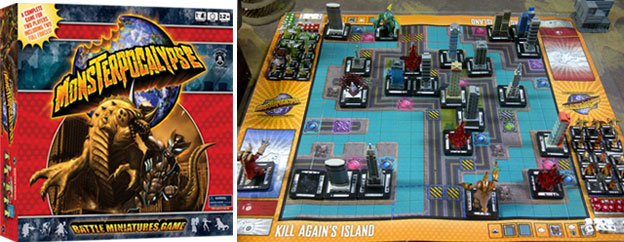
Privateer Press did the same thing for giant monsters and tabletop games in 2009 that Incog Inc. had a few years earlier for video games. Both studios started a game project as a love letter to the genre but then it evolved into a great contribution to the genre in its own right. The studios had created their own legacy, they introduced players to enormous creatures layered in personality while battling for supremacy in fun locations the world over. The only difference was that Privateer was working on a tabletop system instead of a video game. I had talked about the little American company that could back in 2007 when they were offering tabletop game players a fresh perspective. They were challenging the status quo of the big overseas studios that seemed to dominate the market.


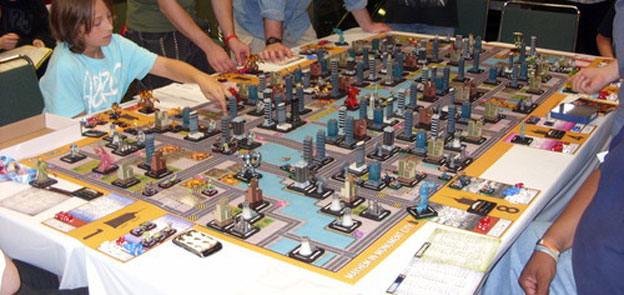
Game designers Matt Wilson and Erik Yaple wanted to create a miniatures based game system that could rekindle the memories of the classic monster films. They started off by making a list of all the things that they enjoyed about the genre. Big monsters fighting, cool military weapons, detailed buildings and plenty of destruction were at the forefront. The system they put together was lovingly called Monsterpocalypse. It had a straightforward play mechanic which allowed for plenty of back and forth action between the gamers. The best portions actually predated some of the design elements that Richard Garfield incorporated into his King of Tokyo game. The creatures in Monsterpocalypse could evolve, grow powers and abilities but they did so by controlling buildings and areas in the game instead of through randomly played cards. I had been keeping tabs on Monsterpocalypse back when they were play testing it at various gaming conventions.


In the early days Privateer took their paper templates, unfinished resin models and rough plastic buildings to local game stores in the Pacific Northwest as well as the larger conventions. At the time Privateer had earned a dedicated following through their grassroots campaign. The Warmachine and Hordes systems quickly grew and the company expanded to create their own line of paints and even magazine to support the community. Players were eager to see what new projects they were working on, especially since the company had a reputation for being fairly open and transparent. As Monsterpocalypse evolved the maps went from graph paper to colored pencil illustrations and eventually laser printed pages. The studio was running on a very tight margin and deadline. As the miniature sculpts were being finished the company was using all the feedback they received to clarify the rules and balance the game. Like many of their systems the goal was to keep players engaged at every level of the development.


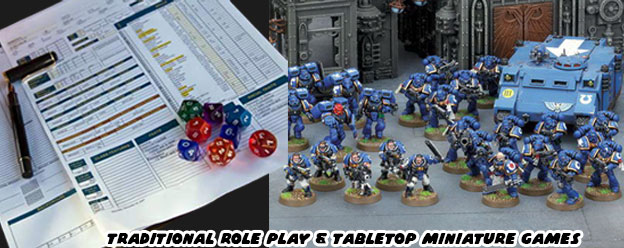
Privateer was going to release this system as their first pre-painted miniatures game, this decision raised the ire of many traditionalists. Fans of classic tabletop systems believed that all great systems required a hobby element on top of a solid play element. Role-playing audiences were supposed to keep track of character stats and unit special abilities with character sheets that they created and updated by hand with every game. Participants of tabletop systems were supposed to assemble and paint their own miniatures and models, anything less than that was considered a product for the toy store. To further set things apart Privateer would also be using counters and ability markers on the miniatures themselves.


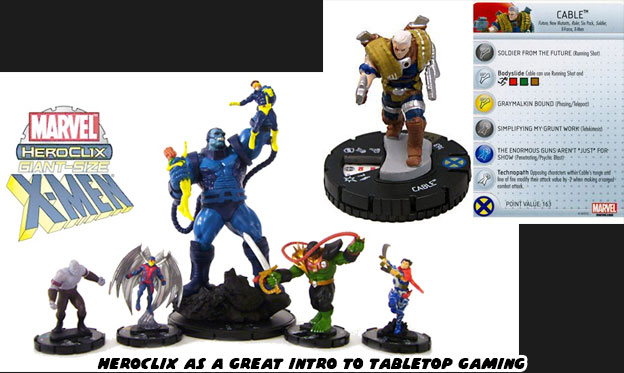
This approach to tabletop gaming was made popular by Wizkids Heroclix series, which licensed characters from Marvel, DC and other properties into an easy-to-play tabletop system. The Clix games were a great way to introduce younger gamers to the genre. The built in counters on the bases of the figures were cleverly designed to keep tabs of important things for the characters. Strength, stamina, movement, powers and agility could be found right on or under the models. As players battled they could wind down the stats on the miniatures until an opponent was defeated. No more keeping track of stats on a separate sheet! Hobbyists were worried that Privateer might "dumb down" all of their systems and switch to pre-painted plastic models. Privateer assuaged their fears by reminding them that Monsterpocalypse was a unique stand alone game and that the other systems would not be affected by the new manufacturing techniques.

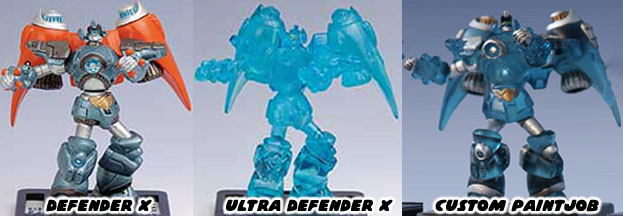
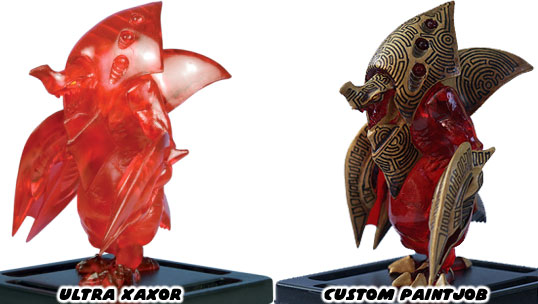
The hobby aspect itself was not affected by the use of pre-painted miniatures. Thanks to new production methods the largest and smallest figures all received great paint jobs. Those that were not experienced painters did not feel put out when starting a collection. However those with some skills and a great imagination were more than welcome to recolor and repaint entire armies. For example, the largest monsters in the game can undergo a transformation in their power level, these "Ultra" forms of the character were represented by by clear or sometimes opaque plastic models. Many in the gaming community thought that the Ultra figures were lackluster. By going with a completely transparent color all of the great details from the sculpt were lost. That was until artists began coloring portions of these Ultra forms. The custom Monsterpocalypse paintjobs by Martin Whitmore were a prime example of what could be done to make the miniatures more interesting.


The default paint job for Defender X was great out of the box. The character was inspired by classic Japanese mech designs including Mazinger-Z who was a member of the Shogun Warrior robots. The blue tint Ultra version lost a lot of the detail, especially as light passed through the surface. Mr. Whitmore picked out some details in gold and silver with a paintbrush to make his figure stand out. He did the same for several clear and pre-painted figures as well. He demonstrated to the community that even by using one or two extra colors a model could be made to stand out. His gold and black highlights to Ultra Xaxor inspired many players, especially newcomers, not to be afraid to customize their own figures.


The success of Monsterpocalypse was certainly due more to just the great miniatures that Privateer was putting out.

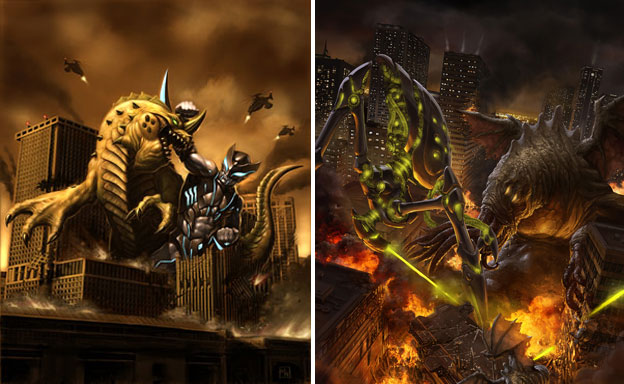
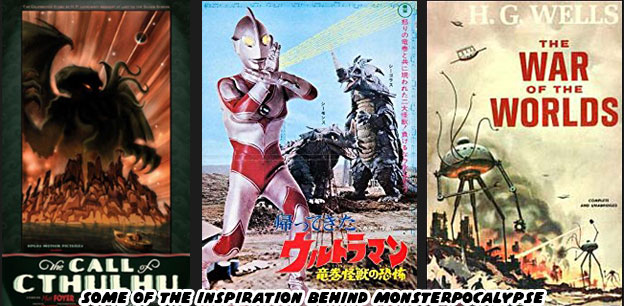
The system may have begun trying to recreate the battles from classic cinema but it grew to include influences from the science fiction and horror genres. Godzilla-like creatures could do battle with giant humanoid or Ultraman-like robots. It was daikaiju nirvana but the universe turned out to be far more expansive and violent than that! There were at least two alien species had decided to invade the Earth at the same time. One group was comprised of the classic UFO ships and War of the Worlds machinations. The other group were more like the daikaiju villains, giant sentient beings bent on total destruction. These aliens were met by another inter-dimensional being, an ancient creature that was a reminder of the monster from classic HP Lovecraft mythology. The creatures and robots were given purpose which helped shape the factions of the universe. Some monsters could partner up while others were strictly enemies. Players learned to field the armies that appealed the most to them. The first wave of factions were released over three expansion sets. The original release of Monsterpocalypse was titled Rise! The following was I Chomp NY and third was All Your Base. Readers could probably guess what the focus was on each release.


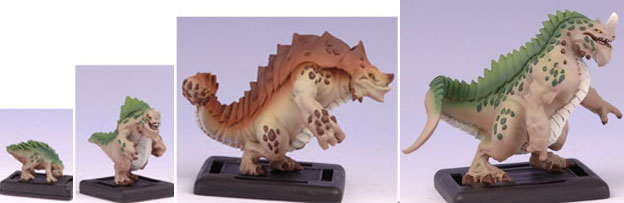
The first six factions were introduced in Block 1. These teams included GUARD, whose scientific consortium had built a giant robot that acted like a UN peacekeeper. The Lords of Cthul, the ancient creatures focused on enslaving the planet. The Martian Menace and Planet Eaters who needed no further explanation. The Shadow Sun Syndicate was a powerful organization founded by the Yakuza. They had created the ninja-like titans. Finally there were the Terrasaurs, the dinosaur-like creatures that wanted to restore nature by reclaiming civilization. Each of these factions were supported by different sized units. It was actually the smaller troops that made Monsterpocalypse unique, especially when compared to the other games I had been writing about.


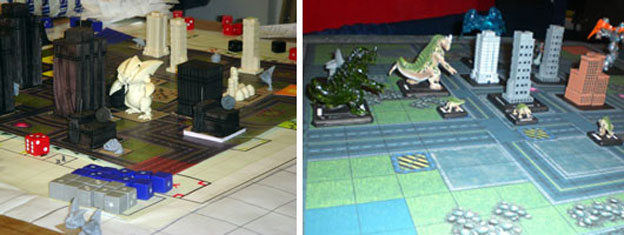
Giant monsters were supported either by organic or inorganic creatures. The smallest creature would be the size of a military transport truck while the largest would be as big as a skyscraper. The giant robots had traditional military weapons backing them up. Some were supplemented by incredible science fiction technology, think of the Maser Cannon and Super X from the Godzilla films, variations of these fantastic weapons were in the game. The diversity in scale for the creatures, robots and weapons made this universe among the most robust ever created. Imagine a videogame where characters from Rampage, War of the Monsters, Earth Defense Force and King of the Monsters were all playable. Now imagine if that system had miniatures produced for everything, including the levels and landmarks. It was the ultimate celebration of the genre in tabletop format.


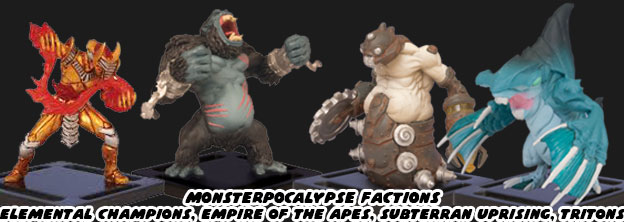
The popularity of the game took off as the studio released wave after wave of scenarios and supplemental miniatures. They continued to push the system at gaming conventions, as well as PAX and the San Diego Comic Con. The word of mouth was tremendous for the game. Privateer continued on expanding the universe to include a second set of factions. Fans of the genre were surprised with how many obvious choices comprised Block 2 and the expansions Big In Japan and Monsterpocalypse Now! These new units could help make a great game even better. There was the Empire of the Apes, consisting of gigantic intelligent apes and the Savage Swarm, made up of enormous insects. Those two were pulled from some of the oldest film influences. Then there were the giant mole creatures that made up the Subterran Uprising and the Elemental Champions which were monks that created weapons out of the elements. Think of the monks as each having the powers of Ang from Avatar: the Last Airbender. When they combined their forces they could create giants made up of fire, water, earth, air and metal. Creatures from the deep ocean were even turned into giant monsters through the Tritons.


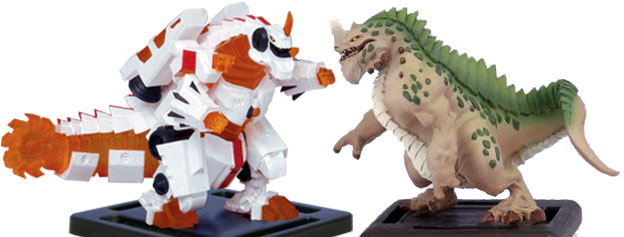
It was very clever how Privateer explained some of the new factions while appealing to the classic kaiju formula. For example, UberCorp International were comprised of multinational military contractors, they were selling defensive units modeled after the monsters and aliens themselves. Only the richest nations could afford to purchase the massive weapons of destruction. This jab at profiteering was not too subtle but appropriate considering that the other corporate faction in the game was founded by the Japanese mafia. UberCorp was a way to get "mecha" versions of the most popular creatures in the game. The miniatures that Privateer created for them were very unique, they did not simply look like silver versions of the existing characters but were instead built of translucent material and white armor. These giant machines mirrored the Planet Eaters, Lords of Cthul and Terrasaurs.


As the system expanded players learned that games did not have to be limited to 1-on-1 battles. The maps, buildings and rules could be scaled to include 2 vs 2, 4 vs 4 or even all 12 factions at once. The game play usually revolved around the monsters controlling or destroying buildings on specific maps, when these maps were laid side by side they could create gargantuan layouts encompassing several tables. The battles that gamers had during tournaments was bigger and badder than what any other system promised. Those new to tabletop gaming were blown away by what was possible on certain systems. The best part was that players did not have to build scenery or carry around delicate models in order to enjoy the game. Each map was double sided and could be folded and stacked. The miniatures were already painted, light but very sturdy. The time and cost of getting into the system was less expensive than any of the more popular games. Players could still invest their time and money and continue to build and collect the various factions. The best part was that players could set up a game anywhere there was a little bit of space available.


The little game about big monsters had quickly built a dedicated following. It was a unique convergence of giant monster fans and tabletop gaming fans that helped build a reputation in the community. Yet it seemed to disappear almost as quickly as it popped up on the convention circuit. Find out how internal decisions and outside interests killed the momentum for Monsterpocalypse in the next blog.


Friday, March 16, 2018

The Giant Monster Series, part 18...


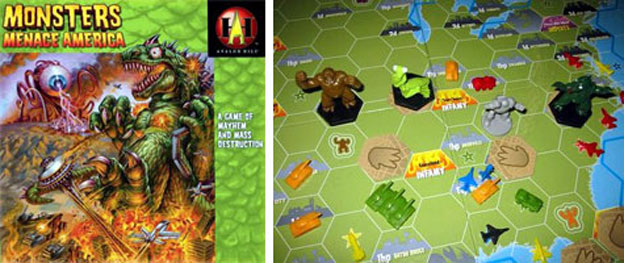
Giant monster tabletop systems have been around for years but they never quite got the following of the classic board games. I had talked about many of the systems on my older 1UP blog. One of the best games based on the genre was Monsters Menace America. It included a large map of the continental USA, featuring cities for players to take over as well as an assortment of plastic miniatures that represented the creatures in the game and military forces as well. Players could literally carve a path of destruction across the states and fight both the other monsters as well as the military in the process.


The title was published in 2005 by Avalon Hill and was actually a remake of an earlier game called Monsters Ravage America. Wizards of the Coast, creators of the wildly successful Magic: the Gathering series of collectible card games (CCG) bought up Avalon Hill and acquired the rights to all the systems they had developed. Hasbro acquired Wizards in 1998 and is the parent company that owns the various systems. Monsters Menace America was a decent introduction to the genre for kids over 12. The miniatures were pretty nice and the illustrations on the power up and attack cards were great. Even those too young to know anything about the classic B-films would appreciate the mix of humor and horror in the game. There were actually a couple of new board games introduced later that tried to put their own spin on the genre. The first was through the use of a big name star.


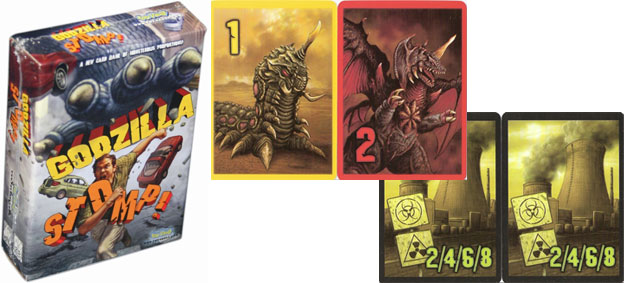
Godzilla was the featured monster in two separate titles by Toy Vault Inc. Godzilla Stomp was a CCG from 2011 that featured several Toho monsters. The game could be played by two to five players. In it participants chose from one of five monsters; Godzilla, Mechagodzilla, Battra, Destroyah and Mothera. They all took turns trying to take down as many buildings as possible as they were revealed. The more buildings that players destroyed the more points that could be won. Whoever had caused the most destruction had won the game. The other title by the studio was a bit more ambitious.

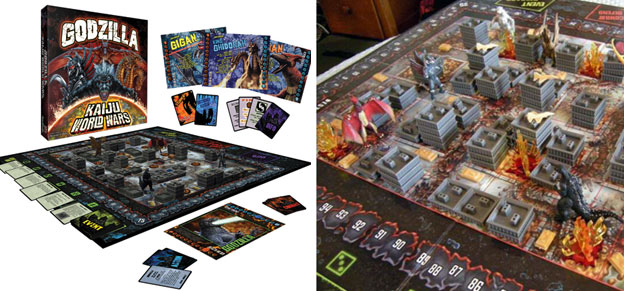
Kaiju World Wars was a tabletop system featuring a city game board, building models and four Toho monsters; Godzilla, Gigan, Rodan and King Ghidorah. It was also released in 2011 but targeted more towards die-hard Godzilla fans. The game was not far removed from the CCG, it had similar play mechanics and ability cards even. The miniatures combat system changed things considerably. Players set buildings and encounters on top of a highly detailed game board. The illustration printed on the board showed the damage left behind by multiple battles. There were impact craters, burn marks, rubble and gashes carved into the Earth by creatures that weighed several thousand tons. It helped create a sense that the game was taking place in the final moments of an all out monster war. I enjoyed studying the details when I first saw the game and could imagine that a younger fan would be completely absorbed by the atmosphere created by Toy Vault.


It turned out that Pipeworks wasn't the only studio having difficulty working with the license. The Godzilla name was popular but making a memorable game out of the character seemed impossible. Players knew what they wanted to see in the character and his opponents. Anything short of an amazing firefight between the monsters and military while causing massive collateral damage would be considered a failure. Toy Vault actually got close to a really good system that allowed for military strikes, monster combat and buildings that could be pulverized. The game suffered in its loose rules and small lineup of monsters. Even Monsters Menace America had six playable creatures to Kaiju's four. The goal from the company was to release expansion sets featuring new monsters, scenarios and military weapons. After more than a year since the debut it did not seem likely that the system would ever see any expansions. Game designer Richard H. Berg tried to answer any rule and scenario questions on gaming forums. BoardGameGeek member Scott Nixon consolidated the core rulebook, info cards and Mr. Berg's corrections into a streamlined rulebook for fans. Sadly most players wouldn't expect that they would have to search for some sort of unified rulebook online after picking up the game.

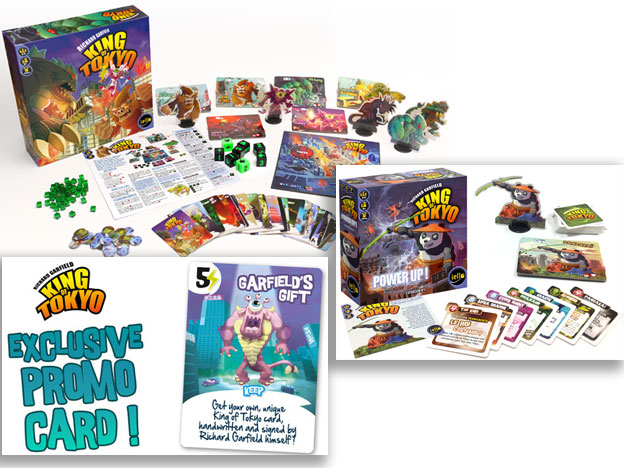
A second daikaiju themed game was also released in 2011. King of Tokyo was designed by gaming veteran Dr. Richard Garfield, he was best known for designing Magic: the Gathering, Star Wars and Battletech CCGs. Mr. Garfield came up with his own spin on the giant monster mythos, instead of focusing on big boards or detailed miniatures he wanted to focus on the combat and monster elements. He introduced gamers to six unique monsters, they were cardboard standees illustrated in a stylized cartoon format by Benjamin Raynal. The monsters were trying to claim Tokyo for themselves but in order to do that they had to defeat their opponents or simply survive an onslaught. Monsters could battle, destroy and even unlock unique mutations.


Up until the King of Tokyo the idea of a giant monster mutating and evolving new abilities was reserved for tabletop RPG systems like Monster Island or Giant Monster Rampage. Think of those systems as Dungeons & Dragons for the giant monster genre. Dr. Garfield introduced play elements into his series by allowing any of the monsters to gain new powers and even change shape right in the middle of the game through a couple of card turns. His time spent mastering the nuances of the CCG translated well into the tabletop genre. His game was actually published by the French company Iello Games. In 2012 they released an expansion called King of Tokyo Power Up featuring new cards and a new monster named Pandakai. The character was pulled from gaming zeitgeist thanks to the successful Kung-Fu Panda film series and World of Warcraft expansion Mists of Pandaria. In 2013 the system got a Halloween! expansion. In 2014 it got a stand-alone game called The King of New York. In 2016 they got the King of New York: Power Up expansion as well.


It was interesting how Dr. Garfield managed to breathe new life into the giant monster genre by presenting the basic elements from the films into an easy to enjoy system. He was so successful in his design that King of Tokyo became one of the highest rated board games according to the editors and visitors of Board Game Geek, the definitive tabletop editorial site. King of Tokyo was an exceptional game but there was only one system that could be considered as the ultimate giant monster tabletop game for hobbyists. We shall explore this game in the next blog.