Showing posts with label bigfoot. Show all posts

Friday, May 15, 2026

Taking a shark bite out of my monster collection

Previously on the blog I mentioned how I had started collecting some monster truck toys decades after I stopped. I discovered that not only did they look good sitting on my desk, but they actually photographed fairly well. My pride and joy were the Bigfoot trucks that I had. The oldest was the one from the Matchbox Super Charger series from 1986. This was the one that I could never find on the store shelves. Thankfully an inexpensive one popped up on eBay so I had to pick it up. The newer one from the Hot Wheels Monster Truck line circa 2025 looked great as well. The one with the 10-foot tires from Greenlight models was stunning. It had a highly detailed interior where you could make out the console, glove compartment, and even cup holders! These three were the clearest example of how far toys had evolved in 40 years. I could look at them every day, and never get tired of how cool they were.

I made a conscious decision to clear more room on my desk for more toys, specifically my trucks. I then got the idea of photographing them for the blog. Many 1/64 scale model car collectors had scale garages, parking lots, and even light up gas stations that they displayed their favorite cars on. I didn’t have that much space, or money. Also if I wanted to display monster trucks they might seem out of place next to a scale building. I then got an idea based on the color of my desk. The hardwood was very light in tone, almost like dirt, or sand. So I wondered if I could find a desk mat that looked like a beach, complete with crashing waves. There were a few options, but found one that I think worked best. As soon as I laid down the mat I knew that I was going to have fun with it. I stated previously that I was a fan of storytelling with monster truck designs. I specifically mentioned that the Wreckreation monster camping truck was probably my favorite of the past decade. However that truck wouldn’t make much sense in the middle of the surf. I needed to find other trucks that worked better for the pics.

I found three that were absolutely perfect. Hot Wheels made two of them, the Surf Bus, and the Great Bite shark-bodied truck. Spinmaster / Monster Jam had created the Big Kahuna. Despite my distaste for Feld Motorsports I wasn’t going to lie about how great the design behind the Big Kahuna truck was. The rusty square-body truck with surfboards in the bed definitely told a story. In fact I think it worked better than the more traditional Woodie body that the latter Big Kahuna used. It had a good color scheme, a classic monster truck shape. There wasn’t much they could have added or taken away from its look. The surf bus was self-explanatory. It was the type of bus that would have been used by surfers to visit destinations up and down the coast. The Great Bite however was definitely something else entirely.

I mentioned previously how I didn’t care for monster trucks with silly 3D bodies. This was something that the Monster Jam tour pushed in the late ‘90s when they were booming in popularity. The trucks shaped like dogs, ponies, skulls, and sharks I thought were doing a disservice to the sport. Granted there were a few 3D body trucks in the early ‘90s including Snake Bite which was designed by the Bigfoot Team. To put it in perspective maybe three out of the dozens of trucks competing professionally had non-traditional bodies. The majority of the ones with animal-type bodies appeared almost 20 years after the birth of the culture, so I felt that they weren’t carrying on the tradition. I had no idea who thought this was a great idea, but I was sure that they hadn’t followed the history of the sport. I could just imagine that a corporate boardroom put together truck bodies based on a marketing survey. They asked kids what they liked. The responses were things like ponies, dinosaurs, and monsters. So the people at Feld ran with it. It would be easy for them to market these trucks, make tee shirts, and toys out of them with little regard for the sport itself.

Of the animal bodies the shark was one of the most popular ones in the past decade. This was overlooking Monster Mutt (2003), and El Toro Loco (2001) of course. The Megalodon truck was announced in 2016, and debuted in 2017. It became a hit with audiences, and opened the floodgates for more outlandish animal bodies. The thing was that Hot Wheels had actually created the body style much earlier. Great Bite appeared as a toy way back in 2003, and its sister Shark Wreak in 2010. So once again Monster Jam was cashing in on ideas that they didn’t even come up with. With that said I didn’t care much for the body shape. It wasn’t really telling a story as much as it was just a gimmick. The designers at Hot Wheels went back to the drawing board and came up with something infinitely better.

The new Great Bite body released in 2025. It was another master class in storytelling from the people at Mattel. Instead of creating a generic shark-shaped body the designers Kevin Cao, and Kurina Alim went full Hot Wheels mode into it. For almost 60 years the toy series was known for coming up with all sorts of fun, and wild cars. In this case Alim, and Cao asked themselves what would it look like if a great white shark mutated into a monster truck? They incorporated elements of a shark, but also a shark cage, manta ray, and enormous V8 motor into the body itself. Every angle was dynamic, all of the body lines flowed into each other organically. It was flesh, and machine made into one. It was a radical look that could never be confused with the older shark bodies. It spoke to me when it came out, and I certainly knew why. When I was a kid Hot Wheels launched a line of cars shaped after animals, bugs, monsters, and robots. They called them the Speed Demons.

The Speed Demons were bolder than anything I had seen in the late ‘70s when I got my first toy cars. The line included such memorable names as Vampyra, Cargoyle, Turboa, Ratmobile, and Rodzilla. I’m sure you could imagine what inspired them. Of all the cars released there was one that I thought was the best of all. The Sharkruiser was an absolute beast in both look, and performance. It didn’t have any flashy graphics, or bright stickers to dress it up. Instead it was a flat gray body with chrome teeth, and an enormous engine. It was an apex predator hunting for other fast cars on the road. I took it to school, and my friends agreed that it was the coolest Hot Wheel they had ever seen. I kept that car in my pocket wherever I went. I always had something to play with when my family was traveling. It was one of the few cars that I didn’t give to my cousins when I got older.

The Sharkruiser certainly looked great on my desk. It made me think about getting a small playset to put on the desk as well. I remembered that Mattel released a few shark-themed tracks. For some reason sharks and cars just seemed to go together. I had no idea how many had come out until I started searching for them. There must have been nine or ten released in the past 30 years. Then there were tracks themed around snakes, spiders, dinosaurs, volcanoes, slime pits, and more. The majority of the playsets were too big to display, but there might be one that could fit onto my beach mat. If, and when I decided to get one then it would be a topic for another blog.

I’d like to know your thoughts. Did you have any classic toys that you held onto? Did you get any re-releases of a favorite figure, or car? Tell me about it in the comments section. As always if you enjoyed this blog, and would like to sponsor me please visit my Patreon page and consider donating each month, even as little as $1 would help make better blogs and even podcasts!
follow the Street Writer on Patreon!

Friday, April 24, 2026

Collecting modern monsters

In a previous blog I talked about how Hot Wheels stopped producing Monster Jam toys in 2018 to create their own line. Mattel also partnered up with the Bigfoot Team, and a few independent monster truck owner / drivers to bring an arena show to fans. Hot Wheels Monster Trucks Live was now in its eight year with no sign of slowing down. This change of toy companies allowed me to focus back on something that I had been a fan of all my life. As long as Feld Entertainment controlled Monster Jam, and the majority of monster toys then I couldn’t bring myself to collect anything. Once I had an alternative it would be easy to start again. As with everything in my collection I had to be very selective. I had a budget I couldn’t go over, and very little space in my home to display anything. This meant that I could only collect a handful of trucks that really meant something to me. I’m going to feature them today.

I’m going to start with the most obvious toy. Bigfoot was the original monster truck, and the one that I grew up with. I was a fan from day one. I was also a fan of the owner Bob Chandler, and various Bigfoot drivers for decades. The next one I added to my collection was for the missus. When Bigfoot started gaining popularity in movies, and TV Bob’s wife Marilyn asked why he should be having all the fun. So he built her a baby blue Ms. Bigfoot. It was almost identical to the original Ford F-250 that he used for Bigfoot. He even kept it on 48-inch tires which was what the original Bigfoot drove around in before Bob put it on 66-inch tires. I covered Marilyn as the first female monster truck driver, and the truck on a previous blog. It was important for me to have the Chandlers at the start of my new collection.

The next two trucks were also complimentary for a different reason. The Grave Digger was always a tough competitor. Despite the feelings I had for the Feld company, I had nothing but respect for Dennis Anderson, and his family. He built his own truck, and legacy in many early competitions. Plus the Grave Digger had a fantastic look often imitated, but never duplicated. It earned its spot at the top of the collection. Note that the version I got was a classic design. The skull, cemetery, and haunted house were similar to the "Grandma" version with the words Grave and Digger on top of each other, as opposed to side-by-side. Right next to it was the Bone Shaker. Larry Wood’s iconic Hot Wheels design was every bit as brutal as the Grave Digger. There was a reason why it was the star of Hot Wheels Monster Trucks Live. The old school hot rod-turned-monster truck was just too cool for words.

The next truck was actually a fictional rival to Bigfoot. Snake Bite debuted in 1991, it was the first monster truck to have a custom 3D character body. Underneath the snake-shaped shell was actually a rebuilt Bigfoot IV. This allowed Chandler to run two trucks in shows, and competitions. The team really committed to the rivalry. They said the truck came from Cobra Creek, Colorado (which didn’t actually exist). They also had the drivers wear snake-patterned airbrushed masks. Veteran Bigfoot drivers like Andy Brass, Dan Runte, Larry Swim, Chris Norman, and a few others played the characters Colt Cobra, Ricky Rattler, Vic Venom, Kris Kopperhead, Andy Anaconda, or Sid Sidewinder. Hot Wheels was on board the rivalry, and made some popular toys featuring both trucks. The Carolina Crusher was another formidable competition monster truck. It was built, and driven by Gary Porter for years, and years. He stepped away from racing for a while. He returned in 2014 to drive once more for the 30th anniversary of his truck. He eventually sold the rights to Paul Shafer, who later sold those rights to Pace Motorsports which became Feld Motorsports. Despite all this I still held Mr. Porter, and his truck in high regards.

The next truck in my series was created by Rosalee Ramer, and her father Kelvin Ramer. Kelvin built, and drove the Time Flys truck. Rosalee grew up learning how to fix trucks alongside her dad. There were pics of her as a little kid doing repairs. By 14 she was driving competitively. Making her the youngest professional monster truck driver ever. Her truck was called Wild Flower, and was easily one of the most unique trucks ever built. Next to it was King Krunch. It was an old-school truck that also represented generations of competitors. It was originally built by Scott Stephens from Texas way back in 1982. He toured the country for years, and his son Colt Stephens became a driver as well. Scott also built two of my favorite trucks, the jet-powered Coors Brewser, and the Coors Light Silver Bullet. Those trucks would never be made into toys, so having a King Krunch was as close as I could get.

The next two trucks embodied the spirit of the early monsters. Those trucks were literally inspired by ancient monsters, and cryptids. The first was the Cyclops. It was a 1969 Chevrolet C-10 built by brothers Fred and Gary Dykman out of Arizona. It was similar to the Grave Digger in that it was a famous mud truck that got coverage in the 4x4 magazines, and later become a monster truck. The Dykman brothers were very committed to the Cyclops gimmick. They had a giant animated eye hidden under the hood. It would pop out, and look around before starting a run. I remember seeing this live as a kid, and the audience went crazy when it happened. The Michigan Ice Monster was a 1983 Chevrolet C-10 by Brett Engleman. It was only in competition for a few years before Mr. Engleman stepped away from the sport. This was also one of the old school trucks that I saw live for the small window it toured originally. There was a smaller version of the truck called the Michigan Ice Monster Jr. It was built from a 1975 Chevrolet Blazer, and owned by Jesse Birgy.

The next two trucks represented the smaller owner / drivers that carved out their own path, and became successful. Titan was an awesome 1972 Chevy C-10 truck owned, and driven by Donald Epidendio from Lower Lake California. He drove as a member of the Straight up Racing team, and took part in the Monster X Tour. He also competed in several Monster Jam World Finals as well. There was something about the old school square body trucks that I thought could never be topped. Bigfoot, Cyclops, King Krunch, Titan, Giant, and a few more were all square bodied classics. The next monster in my collection was easily the most successful to feature a car body. The Avenger had a 1957 Chevy Bel Air body. It was owned, and driven by Jim Koehler from Columbus Michigan. He owned, and operated Team Scream Racing, and ran in the Monster Truck Throwdown Tour. He had an outspoken personality, and knew how to fire up the crowd whenever he got on the mic. He was possibly the greatest ambassador the sport had ever seen.

The next truck owner / driver Dave “Heavy D” Sparks was half of the Diesel Brothers alongside “Diesel Dave” Kiley. Sparks fell out of favor in my eyes for a number of reasons which had nothing to do with his arrest, and release either. It was more about his outspoken defense of immigrant Mexican laborers while also revealing he was a MAGA Trump supporter. Rather than waste my time on this glaring contradiction I would rather talk about the Brodozer. The Ford Super Duty truck was one of the first modern diesel trucks to compete in Monster Jam. I wrote about it years ago. The next truck belonged to an owner / driver that was a tough competitor. Joe Sylvester out of Canton Ohio played by his own rules, and had a truck that reflected that. My favorite version of Bad Habit featured a Jeep Gladiator body. There was a build with an Escalade body but I thought it was too bland. Mr. Sylvester held the records for both the fastest truck in the quarter mile, and furthest jump. 

The next truck in my collection was the Lucas Stabilizer, which was driven by Cynthia Gauthier. It was the only truck owned, and operated by Feld that I collected on purpose. I did so for two reasons; because Ms. Gauthier was an exceptional driver who had been competing for years with different trucks, and different teams. She had long since earned a truck of her own. The other reason why it was in my collection was because it was a callback to the classic Peterbilt monster trucks like Big Pete, and Super Pete. I also had a truck that was featured in the first few years of the Hot Wheels Monster Truck Tour. There was a WWII airplane-themed square body truck called the V8 Bomber. It looked hyper-American. On tour it was driven by Stevie Snellen, and built on a version of Basher with a vinyl wrap. Mattel realized in hindsight that maybe it wasn’t a good look to have a truck like this on tour that glorified war machines. This was especially true as they took the tour international. So they came up with a different theme.

I did collect one vehicle that wasn’t based on a specific truck. That was the Cremator, a hearse-bodied monster. There were other hearse monsters in the past, and I would like to talk about them one day, but this was a Hot Wheels original. The last monster truck in my collection was Wreckreation. It was an RV monster truck which was run by Tomfoolery Motorsports. The Pagliarulo family out of Florida owned and operated many trucks including the classic Michigan Ice Monster, and Excalibur, as well as the newer Jester, Kraken, and Missfire. Matt Pagliarulo was a veteran driver, and his children Michael, Nick, and Brooke were competing alongside him. The trucks they owned were cool, however they didn't appeal to me as much as this RV. Wreckreation captured the essence of everything I loved about monster trucks. It had a classic square body, a solid color, and a very strong visual theme.

The trucks that told a story were always the ones that I gravitated toward. Wreckreation could have come from the actual first generation of monsters. There were pics of early trucks such as Bigfoot, and King Kong with camper shells on the bed. Remember that Bob Chandler, and Jeff Dane would take camping trips using their actual daily driver trucks? They would hit the trails, and mud bogs as weekend warriors. Wreckreation was carrying on that tradition. It was possibly the last of the working man's monster campers. By contrast I never cared for the trucks with animal, zombie, or robot bodies. Those weren't cohesive themes. They didn't tell a story, they were just gimmicks.

Of course I needed a place to store my trucks when I wasn’t playing, I mean, when I wasn’t studying them for reference. Hot Wheels released a Bone Shaker Monster Mover in 2018, the same year that they released the Bone Shaker monster truck. It could store a dozen models. How amazing was this?! I put the most important trucks to me in the carrier, in case I ever cleared enough space in the home to display them. You’ll have to guess which ones those were.

So this wrapped up my look at the monster truck toys I currently had. Were there any toys that you collected because they meant something to you? Tell me about them in the comments section. As always if you enjoyed this blog, and would like to sponsor me please visit my Patreon page and consider donating each month, even as little as $1 would help make better blogs and even podcasts!
follow the Street Writer on Patreon!

Friday, April 10, 2026

The Monster Wars that turned the public away from Bigfoot

In a previous blog I talked about rebuilding my monster truck book, and magazine library. It was something that I had originally built up through the 1980’s, but was destroyed by a freak series of rain storms in the mid 1990’s. It left me disheartened, and unwilling to have anything to do with monster trucks for more than a decade. Thankfully street basketball, and the urban vinyl movement created new interests for me to follow entering the new milennium. I ended the entry by talking about how I rebuilt the library over the past few years. I also started collecting classic monster truck toys to display on my work desk. I went back to the Matchbox Super Charger trucks from 1985-1986. These were some of the most memorable toys to me as a kid. They set the standard in my book. If you were born in the ‘90s or early 2000’s then you always had monster trucks on television, and monster truck toys on the toy shelves. To you they had always existed, and always were a part of motorsports culture. I’m here to tell you this wasn’t always the case.

As member of Generation-X I was a kid when monster trucks first made the news. I first saw them in magazines, and couldn’t believe that there were trucks so massive that they could crush cars. It was the ultimate power trip! My brain melted when my brothers, and I saw the first televised monster truck race between Bigfoot, and USA-1 on That’s Incredible in 1983. I remember finding out about it thanks to TV Guide (ask your grandparents). I spent all week hyping my classmates up in elementary school. I told them that there was going to be a monster truck race on TV. They didn’t grasp the concept, and didn’t seem to be remotely interested in what was about to happen. From that point on I would check the listings to see if there were any other monster truck related events. Sadly there would be nothing else for a couple of years. Then in 1985 I found out that there was going to be a TV special on the weekend. It was called Battle of the Monster Trucks. It would feature a bunch of monster trucks going against each other across multiple events. To say that this was the most important televised event of my childhood would be an understatement. It would become the first entry in the most important trilogy of my childhood.

The next year we saw the Return of the Monster Trucks, and it was rounded out by the War of the Monster Trucks. The success of these specials lead to the creation of different racing leagues, and different touring shows. The majority were organized by the United States Hot Rod Association (USHRA). Sponsors realized that they could capture the public by featuring the best monsters in live competition. This early period for organized monster truck events had the same kind of energy as the birth of NASCAR some 40-years earlier. Just like NASCAR it was beer, and tobacco companies that saw the motorsport as a way to build a customer base. One of the biggest contests around was the Mud & Monsters series presented by Camel cigarettes. All of a sudden local television, and cable channels were fighting over broadcast rights. This started to put a rift in between the various trucks, teams, track operators, and owners. There was no doubt that backroom deals, and exclusive contracts to feature the biggest names were being created at this time.

It was the late ‘80s, and early ‘90s when the regular televised events started growing in popularity. I was entering my teen years, and super excited to see that monster trucks had become a part of mainstream culture. The one thing that I began to notice was how some of the contests were pushing certain trucks more than others. In particular the black, and green Chevy panel van known as Grave Digger was getting a massive push from the commentators. I pointed it out to my brothers, and after a few weeks they also noticed that the Grave Digger was getting the majority of air time over the older, and more established trucks. I said if I didn’t know better it looked like they were trying to push Bigfoot out of the spotlight. That was not to say that Bigfoot was unstoppable. USA-1 won the series champion in 1988, and Equalizer in 1989. Bigfoot didn’t capture a championship until 1990. The Grave Digger didn’t win the championship until 1999, after Bigfoot had already won it seven times. If you look at the list of monster truck racing champions from 1988-2005 you can clearly see how dominant Bigfoot was in competition. Yet that didn’t seem to be the narrative according to television.

I felt like I was watching a biased show. It was never that the Carolina Crusher, Taurus, Bear Foot, or the Equalizer had better season than the Grave Digger, but rather that the Grave Digger just had a bad run. I started to feel a little jaded with the entire format, and way that TNT Motorsports was presenting the contests. My suspicions were slowly growing into a full blown conspiracy. To me the smoking gun was when Bigfoot owner Bob Chandler went back to the drawing board. He built a better Bigfoot after narrowly losing the championship two years in a row. Team Bigfoot had once again raised the bar. Bigfoot VIII was so dominant that it was banned from competition. This lead to a lawsuit against TNT. They argued that Chandler’s “third-generation” monster truck was too far advanced for the competition. What Chandler had done was improve on the building techniques of himself, and his contemporaries. Bigfoot VIII featured a tube chassis designed on a computer. It had a lightweight body, and was closer to a Baja racing truck than an old school monster truck. This was a template that would be modified even more through Bigfoot XI aka Wildfoot in 1993. It set the standard which would be copied by the rest of the industry for more than a decade.

The Bigfoot Team was losing points during the season while they were appealing the ban in court. Rather than sit out the season Chandler decided to run an older truck, and stay in contention. Despite a number of engine issues Rich Hooser did the impossible. He ran Bigfoot IV against newer monster trucks, and won. Andy Brass also drove the truck to several victories as well. Watching the truck which was originally built in 1984 hang with newer machines made me an even bigger fan. I thought that Bigfoot was fighting the good fight, and showing the country why it was called the King of the Monster Trucks. It seemed that TNT always downplayed these scrappy victories. They would make excuses for the other trucks in the series, and never give Bigfoot the credit it deserved.

I began questioning why it was okay that other teams were allowed to make improvements to their rides during the off season, but Chandler was punished for doing the same thing. I remember how radically different Awesome Kong looked after a crash in 1988. The red Ford with the aircraft engine was easily one of the greatest builds I had ever seen. Then one day after a crash repair it returned to competition with a squished frame over a tube chassis, and a new engine. Builder / driver Jeff Dane said it was to help improve visibility, and make it in time to enter the season of competition. To me it looked like a way to shave weight off of the truck, and have just a hair of an advantage over the other trucks with heavier metal bodies. As much as I respected Mr. Dane, I was skeptical that he was allowed to compete with his radically different truck, at the same time that Bigfoot VIII had to sit out. TNT commentators always seemed to play favorites on the air. Similar things could be said of the other televised contests. It didn’t make sense to me at the time why there seemed to be a bias against the most popular truck in the world. Then I got older, and looked at the big picture.

I mentioned previously how Feld Entertainment bought out the United States Hot Rod Association, and became the De facto organizing body for monster truck competitions. They bought out entire teams, or signed them to exclusive contracts so that they could only appear on Monster Jam tours, and Monster Jam television programming. You can read the history of the different companies that came together to form Monster Jam in this Wiki article. Only as an adult did it make sense why the TV shows were pushing the Grave Digger so hard. Feld would have more control over the marketing, licensing, and merchandise rights of certain trucks. The Grave Digger team run by Dennis Anderson didn’t have the bargaining power that Chandler did. Eventually Anderson would sell the rights to Feld as well. I respected Anderson, in fact I gave him his flowers when I talked about the Grave Digger earning its reputation, and Anderson being an important contributor to the mega truck movement. I was upset watching the artificial rise of the Grave Digger while Bigfoot was getting pushed out of the spotlight. Feld standardized the builds of each truck, poaching the technology that Bigfoot was built on. They pre-packaged trucks with corporate sponsor names. If there was a cartoon, movie, or comic book that they could license then you were guaranteed to see it at the next stadium show. Scooby-Doo, Wonder Woman, Iron Man, and Spongebob Squarepants were just some of the many branded trucks.

Feld pulled off a quiet coup that the public would never know about. You could watch this well researched video to see why Bigfoot and Grave Digger won’t compete against each other again. It was something that I don’t think modern monster truck fans realized. Bob Chandler had been iced out of the sport that he helped create. Team Bigfoot was still able to perform around the world, but to smaller venues, and no dedicated television appearances. This greatly limited the earning potential of Bob Chandler. It didn’t matter that he helped form the Monster Truck Racing Association for the safety of drivers, and audiences. It didn’t matter that his quest to improve on every version of Bigfoot was copied by this contemporaries. Monster truck television shows, and stadium tours had reached a point where they could operate successfully without Bigfoot ever appearing. The important thing to me was how Feld pushed another truck to be the flag bearer for the sport. The years of publicity worked on the masses. By 2019 Motor Trend said that the Grave Digger was the OG monster truck. It was a slap in the face to Bigfoot, USA-1, King Kong, and every other truck that contributed to the culture well before Grave Digger.

Feld also changed the look, and feel of monster truck competition. The original monster truck contests were rough, and tumble affairs. They felt organic. They grew out of the actual off road community. Like a rodeo put together by locals. By comparison Monster Jam was a highly polished event. It was assembled by a corporate boardroom. Ready-made for TV, like dressage for expensive show ponies. Actual measurable events like the hill climb, mud bog, sled pull, and car crush were previously used to determine which was the best truck around. The entire racing element had taken a back seat to the freestyle competitions. That format was much more subjective. Since Feld controlled the biggest shows, and the biggest teams, then they were able to define what monster trucks were all about. Then there was a darker undercurrent about big business corrupting the sport.

Previously I had compared the way Feld operated their business to WWE. The McMahon family owned a majority of the names, and likenesses of the wrestling characters. They treated the talent as independent contractors rather than employees. So they didn’t have to provide them with medical, insurance, or retirement plans. Yes the performers were paid well, but they made a tiny fraction of what the McMahons did. The Feld family owned a number of teams, but also contracted work to smaller groups. The Feld family was worth billions, whereas the superstars like Dennis Anderson were worth a few million, and the lesser known independent teams worth less. Knowing that the owners of the WWE leaned very heavy to the right politically made me wonder about Feld as well. According to OpenSecrets.org Feld Entertainment made a majority of political contributions to the Republican Party through the years.

As a minority living in the USA it pained me to see the sport was being controlled by people that didn’t always consider me a part of this great nation. This distressed me greatly. I was a lifelong fan of the monster truck community I wanted to buy some toys, but I didn’t want to support Feld (or the WWE) in any way. I had to figure out something to collect, but what? I’ll talk about it in a future blog. Were you a fan of a sport, team, or star performer only to find out something that made you lose respect in them? Tell me in the comments section. As always if you enjoyed this blog, and would like to sponsor me please visit my Patreon page and consider donating each month, even as little as $1 would help make better blogs and even podcasts!
follow the Street Writer on Patreon!

Friday, April 3, 2026

Losing a monster collection, and getting it back

If you were a regular visitor to this blog then you probably knew that I collected various things. These included foreign, and domestic comic books, comic book toys (especially Hulk figures), Japanese video game magazines, sneaker books, vinyl basketball figures, Wonder Eggs ephemera, and of course Oswald the Lucky Rabbit merchandise. One of the things that I used to collect were monster truck magazines. In fact I used to have a massive library of 4x4 magazines, skateboard magazines, and US video game magazines.

Unfortunately almost 20 years ago Southern California experienced a series of freak rainstorms that lasted for weeks on end. Some of my collection was in my bedroom, but a good portion was also stored in my parent’s garage. I didn’t realize at the time that there was a leak in the garage roof, directly over where I kept most of my magazines. It not only dripped directly onto my magazines, but it also pooled on the garage floor, where most of my books were sorted in cardboard boxes. By the time I learned what had happened I had lost decades of issues, including the first hundred or so copies of Electronic Gaming Monthly, Game Pro, and Gamefan.
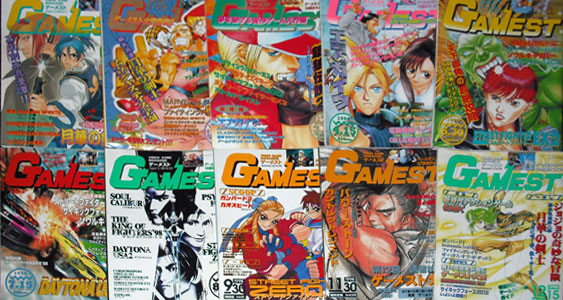
By a miracle the rarer Japanese issues that I owned managed to stay dry. After the storms passed my family rented a dumpster. My brothers, and I helped empty out the garage, throwing away piles of disintegrating paper. My mom would have the garage torn down, and rebuilt. I began sorting, and organizing the things that survived. I put them in a storage unit where they remained for years and years. I was genuinely heartbroken over what I had lost. I didn’t bother trying to build the monster magazine collection again. In fact I didn’t want to look or think about anything monster truck related for years after. I mentioned how I broke out of that cycle in 2019 when a monster truck jumped over a flying plane. Some people outgrew the things they loved as kids. Not me, from the moment I saw my first monster truck I was hooked. My friends, and family learned to live with my obsession. Remember the story about how I was more excited to play a monster truck arcade game than go on any rides at a local theme park? When I say I was a fan I meant it.

My parents always supported our interests. While they bought my brothers toys, I begged them for a subscription to Four Wheeler Magazine. They were happy that I was a voracious reader, more important they appreciated how well we took care of the things they bought. My brothers, and I were aware how hard they both worked. They gave us the advantages they didn’t have growing up. We saw them go without just to make ends meet. So we took good care of every present we got. In fact we still had some of the toys, and comics we grew up with. At the end of the year we would give some of the toys we had outgrown to cousins, nieces, and nephews in the US, and Mexico. In my case I gave up entire Hot Wheel track sets, and dozens of cars that I had held onto for years. For my little brother he gave up folders of Pokemon cards, which in hindsight could have been a downpayment to a house. The gifts also included our BMX bikes as we entered our teen years. We knew that things were sometimes tough for our extended family. We were fortunate enough to help.

Quality monster truck toys were hard to come by when I was growing up. For the longest time all we had were Hot Wheel trucks, which were good, but not real monsters. Then one day the gods smiled on us. The Super Chargers by Matchbox set the bar that wouldn’t be topped for years. They were roughly the same scale as Hot Wheels, about 1:64. They had the trademark oversized Goodyear tires, and axels with a little give so you could roll over your toy cars. They debuted in 1985-1986 and featured a who’s-who of the monster pioneers. These included Bigfoot, USA-1, Awesome Kong II, Fly-N-Hi, Mad Dog II, Rollin’ Thunder, and Taurus. Over the following years Matchbox would add more trucks, and even pulling sleds to the lineup. These other monsters were completely made up. I’m sure an accountant at Matchbox said they could save money on licensing costs by creating their own lineup. These included cars, trucks, and jeeps with names like Bog Buster, Hawk, Toad, Doc, and So High. My parents were willing to get me one of these cars each time we visited Toys R Us. Again, I was grateful for their generosity. I’m sure they were happy that we were content with Hot Wheels, and never asked about the U.S.S. Flagg for our G.I. Joes.

As the ‘80s went on more, and more monster truck toys started popping up, and even monster-adjacent trucks started appearing. For example my older brother was an avid collector of Legos. He’d been a fan since the late 1970’s. In my lifetime I only collected a few sets. Some of which were the first lifted trucks produced by the company. I remember my brother’s excitement when he found them. He pulled me to the toy aisle to show me. A little red, white, and blue truck called the 4-Wheelin’ Truck from 1987. Then in 1988 he found the black Road and Trail 4x4 which was even larger, and clearly the first monster produced by the company. Just out of curiosity I jumped on eBay to see what the trucks were going for today. The white one was around $20 including the box. I was shocked to see that the Road and Trail boxed set ran for around $260. This made me more grateful that I took good care of my toys, even if most of them were still in the garage. Looking back on the ones I collected it frustrated me was that the Bigfoot Matchbox toy was never on the shelves. I searched at every toy store for years, but I could never find the iconic blue Ford. That was the one that I always wanted. I had to settle for some of the generic monsters, and a couple of the named ones. I still respected the vehicles in my collection because they were groundbreakers.

Taurus was a popular truck. It became a legend for crushing busses. By the mid ‘80s people knew that monster trucks could easily crush cars. In order to stand out the drivers had to get more creative. Jack Wilman the builder / driver of Taurus decided to run his crimson painted monster over two school busses tucked side-by-side. It was super dangerous considering that in order to reach that height the truck first had to roll over some cars, and then crawl up to the roofs of the busses. You might know that bus roofs were not reinforced. So the almost six-ton monster truck would flatten the roofs, and create a shaky platform. Mr. Wilman would then have to get off the other end without falling off sideways. He could have easily injured himself, and wrecked his truck in the process. It was a spectacular stunt that was rarely performed by any other monster. Then there was the first monster van Rollin’ Thunder. This bright orange van was actually a local legend. The owner / builder / driver was Jim Oldaker. He was out of Redondo Beach. I would often see the van parked at a shop in Wilmington California. I never got a picture with the van because I assumed it would always be there. These two Matchbox monsters went everywhere with me. They were especially fun to play with in the playground, and beach. The big wheels rolled right over the sand whereas all my Hot Wheels would sink right in. I was super-happy with the Matchbox toys, then one Christmas I got the greatest present a kid could ask for. My very own Bigfoot from Playskool toys.

The rest of the toy industry was learning that monster trucks were not a fad. They had captured the imagination of the entire nation. They appeared in movies, and on television. There were news reports, and magazine articles on the movement. Kids were especially drawn to them. We couldn’t get enough of the awesome machines. Toy companies were scrambling to create new 4x4 products. Then they had to figure out how to market these trucks to the masses. It was an easy sell to me, however some people needed to understand what these giant trucks were all about. Playskool, or rather their parent company Hasbro learned that they could feature Bigfoot in a cartoon show. These shows were wildly successful ads for their other toy lines including Jem and the Holograms, Inhumanoids, Transformers, and G.I. Joe. In the cartoon series the fictional Yank Justice was the driver of Bigfoot. He was the star of a traveling crew called the Muscle Machines. This team had sled pulling cars, and trucks like the Orange Blossom Special, War Lord, and Black Gold. They were putting on shows all over the country when they got involved in a mystery adventure.

The series was animated by the same studios that worked on G.I. Joe, and voiced by the same cast. It was a cheesy series that managed to make sure that each character got a chance to shine. I think this was the part that studios didn’t really understand about the culture. The trucks were the draw at the sled pulling events, mud bog, and hill climbs at stadium shows, and county fairs. Each vehicle had its own personality. They all had unique bodies, suspensions, tires, and power plants. No two performed the same. More important each truck built their own fan base. It was apparent in the Knight Rider TV series that the robot car K.I.T.T. was more than the co-star of the show. The episodes that revolved around vehicle opponents like K.A.R.R., the Juggernaut, and Goliath were the most memorable ones. In a similar fashion the best parts of the Bigfoot cartoon was watching the truck go up against combine harvesters, steam rollers, and the fictional monster trucks Grave Roller, and Barbarian. I had a feeling that if the series had been more encounters like that, and less mystery adventure like a G.I. Joe then it would have been picked up for another season.

When our parents moved us out of our tiny apartment in Downtown Long Beach into a house in North Long Beach our toys, comics, and magazines came along. When I didn’t have anything to read I would walk to the local 7-11 to buy issues of Off-Road, and also 4Wheel & Off-Road magazine. This was through the mid ‘80s, and early ‘90s. You could now imagine how many issues of that era were lost. Monster trucks meant a lot to me all through my childhood, through my formative years, and into adulthood. While I gave up a lot of toys to my nieces, and nephews, I never stopped loving monster trucks That was why I was devastated when my collection was wiped out. I learned to accept the loss, and be grateful with what was preserved. Years later I got married, went through various moves. Including a period where we didn’t have a permanent residence. Eventually we were able to get some stable housing. By the grace of God I was able to bring the collection out of storage, and move it into a new garage (with a better roof). My family noticed that my mental health improved when I brought my Japanese game magazines into the house. My wife, and kid encouraged me to start collecting again. The library felt incomplete because it lacked the extensive 4x4 library that I once owned. So I decided that would become my focus.

I started rebuilding the library in earnest. It took almost 15 years by the time I wrote this blog to talk about it. I would pick up back issues on eBay. Sometimes I would get an entire lot of 10 or 20 off road issues at a time for very little. I’d toss the ones that didn’t have monster features in the recycle bin, or pull out single pages for my scrapbook wherever there was a short article. Sometimes I would go months without seeing anything worth collecting. Then there were greedy sellers asking too much for single issues. I kept to my budget, and waited them out. Every now, and then someone would sell the same rare issues for a few bucks, and that’s when I would move. By my estimation I managed to get back about 95% of the titles that I originally owned. I was missing scores of posters. Again greedy sellers were gutting poster books, and trying to sell individual posters for absurd prices. So I passed on all of those. The biggest surprise was that I managed to land books, and magazines that I never owned as a kid. I had an entire chronology of the birth of the monster truck movement in the early ‘80s, all the way to the creation of the Monster Jam tour in the ‘90s, and even the rise of the mega truck generation in the 2000’s. As an illustrator I had a resource library that I could go to for every era, and type of truck, engine, suspension, and angle that you could imagine. I was very proud of what my family helped me rebuild. As with everything I owned it was a slow, and steady process.

Speaking of rebuilding. When I couldn’t find any back issues then I would hunt for physical toys. Since our apartment was tiny I wanted something small that wouldn’t take up much space. Preferably something that would fit on my desk. It would be nice to have something that I could look at every day while I was working from home. I already had a number of items on my desk to remind me of my passions. Things like skate tools, fantasy coins, a Big the Cat figurine, a Laboon gashapon, a Neo Geo Pocket Color, and a Michael Lau figure. These were things that I could pick up, study, and play with while I was on break. The only thing missing were some vehicles. At first I thought about picking up some of the recent model quality trucks. GreenLight Collectibles launched the Kings of Crunch series in April 2020. These were first generation, and some second generation monsters in the traditional 1:64 scale. They were absurdly detailed, with realistic interiors (including cupholders!), and undercarriages. The quality of each build was well above the standard Hot Wheels toy. No disrespect to Mattel, but these were gorgeous models that you could proudly display. Although I was tempted to invest heavily in the line I decided to only get a couple of trucks. Those being Bigfoot V, and Bigfoot VII, the ones that had the 10-foot tires.

In addition to the Greenlight models there were tons of monsters in the toy aisles, however there was only one line that I really wanted to return to. I jumped on eBay, and searched for the original Super Chargers. You could already guess which was the first one that I picked up. After 40 years I finally had my own Matchbox Bigfoot! Then I worked backwards to pick up the other real world trucks. USA-1, Awesome Kong II, Fly-N-Hi, Mad Dog II, and Rollin’ Thunder. My original Taurus truck was somewhere in the garage, so I would eventually add it to the desk as well. It turned out that a lot of monster truck toys came, and went after I lost my original magazine collection. I’ll talk about picking those up in a future blog. Did you have something you loved, and lost? Were you able to get it back? Tell me in the comments section. As always if you enjoyed this blog, and would like to sponsor me please visit my Patreon page and consider donating each month, even as little as $1 would help make better blogs and even podcasts!
follow the Street Writer on Patreon!

Friday, February 6, 2026

The passing of a monster truck legend, and restoring a classic monster truck

Hello friends, today I have some melancholy news. As you may know I love cars, I love racing, and I am a super fan of monster trucks. I’ve written about the history of 4x4 culture extensively on this blog. One of my racing heroes died in September 5, 2025 in a traffic accident. Dan Runte was one of the drivers of the Bigfoot monster truck. He had a tremendous list of accomplishments, and could be ranked among the elite class of drivers. In many circles, myself included, he was considered the best monster truck driver of all time. He always seemed kind, and funny in taped interviews. People that met him said it wasn’t an act. He was a genuinely kind, and funny person based on everything I had been reading about him for decades.

Dan Runte started working with the Bigfoot team in 1989 as a crew member. He worked his way up to driver, shop foreman, and eventually Vice President of Operations. The first truck he drove was Bigfoot 2. It had appeared in television shows, and movies more than 40 years ago. It may have been the most iconic of the trucks. Mr. Runte traveled the country, and world putting on shows with the rest of team Bigfoot. The company had developed many different trucks, including the infamous “Snake Bite” monster rival. He raced, and tested just about every monster truck generation developed in their headquarters at Pacific Missouri. The last one he drove was Bigfoot 24 in honor of the 50th anniversary of the truck. Mr. Runte retired from full time competition, yet still drove the trucks for special events until the time of his death. If you want to see what a great personality he had watch this interview covering the history of the Bigfoot monster trucks.

I’m sorry for Mr. Runte, his family, and his friends. I never got a chance to meet the driver, and always wished I had. He was one of the drivers that helped shape motorsports for the better. He set an example that would be impossible to beat. I didn’t want to leave this post on a sad note. Instead I wanted to celebrate the restoration of another classic truck. A decade ago I remember seeing a photo of an old school monster truck rusting in a field. I am happy to announce not long after the photo was taken The Texas Toy was restored to its former glory. The new owner was Rocky Rohde (that’s his real name!) he purchased it from the original owner Larry Cook. Mr. Rohde was the grandson of Curtis Reese whose 4x4 shop sponsored the truck, and helped repair the transmission decades ago.

It was great knowing that the generations that grew up on monster trucks were eager to restore, and preserve the trucks that inspired them. Hat's off to the Rohde family for sharing the truck with the fans. I know if I had the money, and ability I’d be doing the same. I always dream of winning the lottery so I can restore, or build my own old school monster truck as well. Hey a guy can dream can’t he? Did you have any race drivers that you looked up to? Were there any famous vehicles you wished you had seen first hand? Let me know about it in the comments section. As always if you enjoyed this blog, and would like to sponsor me please visit my Patreon page and consider donating each month, even as little as $1 would help make better blogs and even podcasts!

follow the Street Writer on Patreon!