In a previous blog I talked about rebuilding my monster truck book, and magazine library. It was something that I had originally built up through the 1980’s, but was destroyed by a freak series of rain storms in the mid 1990’s. It left me disheartened, and unwilling to have anything to do with monster trucks for more than a decade. Thankfully street basketball, and the urban vinyl movement created new interests for me to follow entering the new milennium. I ended the entry by talking about how I rebuilt the library over the past few years. I also started collecting classic monster truck toys to display on my work desk. I went back to the Matchbox Super Charger trucks from 1985-1986. These were some of the most memorable toys to me as a kid. They set the standard in my book. If you were born in the ‘90s or early 2000’s then you always had monster trucks on television, and monster truck toys on the toy shelves. To you they had always existed, and always were a part of motorsports culture. I’m here to tell you this wasn’t always the case.

As member of Generation-X I was a kid when monster trucks first made the news. I first saw them in magazines, and couldn’t believe that there were trucks so massive that they could crush cars. It was the ultimate power trip! My brain melted when my brothers, and I saw
the first televised monster truck race between Bigfoot, and USA-1 on That’s Incredible in 1983. I remember finding out about it thanks to TV Guide (ask your grandparents). I spent all week hyping my classmates up in elementary school. I told them that there was going to be a monster truck race on TV. They didn’t grasp the concept, and didn’t seem to be remotely interested in what was about to happen. From that point on I would check the listings to see if there were any other monster truck related events. Sadly there would be nothing else for a couple of years. Then in 1985 I found out that there was going to be a TV special on the weekend. It was called
Battle of the Monster Trucks. It would feature a bunch of monster trucks going against each other across multiple events. To say that this was the most important televised event of my childhood would be an understatement. It would become the first entry in the most important trilogy of my childhood.

The next year we saw the
Return of the Monster Trucks, and it was rounded out by the
War of the Monster Trucks. The success of these specials lead to the creation of different racing leagues, and different touring shows. The majority were organized by the United States Hot Rod Association (USHRA). Sponsors realized that they could capture the public by featuring the best monsters in live competition. This early period for organized monster truck events had the same kind of energy as the birth of NASCAR some 40-years earlier. Just like NASCAR it was beer, and tobacco companies that saw the motorsport as a way to build a customer base. One of the biggest contests around was the Mud & Monsters series presented by Camel cigarettes. All of a sudden local television, and cable channels were fighting over broadcast rights. This started to put a rift in between the various trucks, teams, track operators, and owners. There was no doubt that backroom deals, and exclusive contracts to feature the biggest names were being created at this time.

It was the late ‘80s, and early ‘90s when the regular televised events started growing in popularity. I was entering my teen years, and super excited to see that monster trucks had become a part of mainstream culture. The one thing that I began to notice was how some of the contests were pushing certain trucks more than others. In particular the black, and green Chevy panel van known as Grave Digger was getting a massive push from the commentators. I pointed it out to my brothers, and after a few weeks they also noticed that the Grave Digger was getting the majority of air time over the older, and more established trucks. I said if I didn’t know better it looked like they were trying to push Bigfoot out of the spotlight. That was not to say that Bigfoot was unstoppable. USA-1 won the series champion in 1988, and Equalizer in 1989. Bigfoot didn’t capture a championship until 1990. The Grave Digger didn’t win the championship until 1999, after Bigfoot had already won it seven times.
If you look at the list of monster truck racing champions from 1988-2005 you can clearly see how dominant Bigfoot was in competition. Yet that didn’t seem to be the narrative according to television.

I felt like I was watching a biased show. It was never that the Carolina Crusher, Taurus, Bear Foot, or the Equalizer had better season than the Grave Digger, but rather that the Grave Digger just had a bad run. I started to feel a little jaded with the entire format, and way that TNT Motorsports was presenting the contests. My suspicions were slowly growing into a full blown conspiracy. To me the smoking gun was when Bigfoot owner Bob Chandler went back to the drawing board. He built a better Bigfoot after narrowly losing the championship two years in a row. Team Bigfoot had once again raised the bar.
Bigfoot VIII was so dominant that it was banned from competition. This lead to a lawsuit against TNT. They argued that Chandler’s “third-generation” monster truck was too far advanced for the competition. What Chandler had done was improve on the building techniques of himself, and his contemporaries. Bigfoot VIII featured a tube chassis designed on a computer. It had a lightweight body, and was closer to a Baja racing truck than an old school monster truck. This was a template that would be modified even more through Bigfoot XI aka Wildfoot in 1993. It set the standard which would be copied by the rest of the industry for more than a decade.

The Bigfoot Team was losing points during the season while they were appealing the ban in court. Rather than sit out the season Chandler decided to run an older truck, and stay in contention. Despite a number of engine issues
Rich Hooser did the impossible. He ran Bigfoot IV against newer monster trucks, and won. Andy Brass also drove the truck to several victories as well. Watching the truck which was originally built in 1984 hang with newer machines made me an even bigger fan. I thought that Bigfoot was fighting the good fight, and showing the country why it was called the King of the Monster Trucks. It seemed that TNT always downplayed these scrappy victories. They would make excuses for the other trucks in the series, and never give Bigfoot the credit it deserved.

I began questioning why it was okay that other teams were allowed to make improvements to their rides during the off season, but Chandler was punished for doing the same thing. I remember how radically different Awesome Kong looked after a crash in 1988. The red Ford with the aircraft engine was easily one of the greatest builds I had ever seen. Then one day after a crash repair it returned to competition with a squished frame over a tube chassis, and a new engine. Builder / driver Jeff Dane said it was to help improve visibility, and make it in time to enter the season of competition. To me it looked like a way to shave weight off of the truck, and have just a hair of an advantage over the other trucks with heavier metal bodies. As much as I respected Mr. Dane, I was skeptical that he was allowed to compete with his radically different truck, at the same time that Bigfoot VIII had to sit out. TNT commentators always seemed to play favorites on the air. Similar things could be said of the other televised contests. It didn’t make sense to me at the time why there seemed to be a bias against the most popular truck in the world. Then I got older, and looked at the big picture.

I mentioned previously how Feld Entertainment bought out the United States Hot Rod Association, and became the De facto organizing body for monster truck competitions. They bought out entire teams, or signed them to exclusive contracts so that they could only appear on Monster Jam tours, and Monster Jam television programming.
You can read the history of the different companies that came together to form Monster Jam in this Wiki article. Only as an adult did it make sense why the TV shows were pushing the Grave Digger so hard. Feld would have more control over the marketing, licensing, and merchandise rights of certain trucks. The Grave Digger team run by Dennis Anderson didn’t have the bargaining power that Chandler did. Eventually Anderson would sell the rights to Feld as well. I respected Anderson,
in fact I gave him his flowers when I talked about the Grave Digger earning its reputation, and Anderson being an important contributor to the mega truck movement. I was upset watching the artificial rise of the Grave Digger while Bigfoot was getting pushed out of the spotlight. Feld standardized the builds of each truck, poaching the technology that Bigfoot was built on. They pre-packaged trucks with corporate sponsor names. If there was a cartoon, movie, or comic book that they could license then you were guaranteed to see it at the next stadium show. Scooby-Doo, Wonder Woman, Iron Man, and Spongebob Squarepants were just some of the many branded trucks.
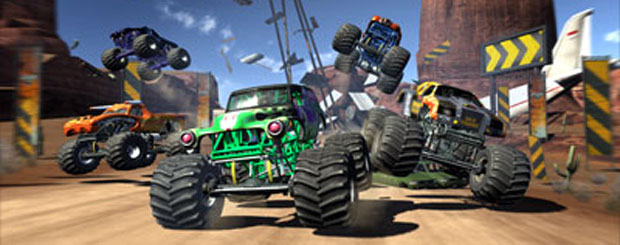
Feld pulled off a quiet coup that the public would never know about. You could watch this well researched video to see
why Bigfoot and Grave Digger won’t compete against each other again. It was something that I don’t think modern monster truck fans realized. Bob Chandler had been iced out of the sport that he helped create. Team Bigfoot was still able to perform around the world, but to smaller venues, and no dedicated television appearances. This greatly limited the earning potential of Bob Chandler. It didn’t matter that he helped form the
Monster Truck Racing Association for the safety of drivers, and audiences. It didn’t matter that his quest to improve on every version of Bigfoot was copied by this contemporaries. Monster truck television shows, and stadium tours had reached a point where they could operate successfully without Bigfoot ever appearing. The important thing to me was how Feld pushed another truck to be the flag bearer for the sport. The years of publicity worked on the masses. By 2019
Motor Trend said that the Grave Digger was the OG monster truck. It was a slap in the face to Bigfoot, USA-1, King Kong, and every other truck that contributed to the culture well before Grave Digger.

Feld also changed the look, and feel of monster truck competition. The original monster truck contests were rough, and tumble affairs. They felt organic. They grew out of the actual off road community. Like a rodeo put together by locals. By comparison Monster Jam was a highly polished event. It was assembled by a corporate boardroom. Ready-made for TV, like dressage for expensive show ponies. Actual measurable events like the hill climb, mud bog, sled pull, and car crush were previously used to determine which was the best truck around. The entire racing element had taken a back seat to the freestyle competitions. That format was much more subjective. Since Feld controlled the biggest shows, and the biggest teams, then they were able to define what monster trucks were all about. Then there was a darker undercurrent about big business corrupting the sport.

Previously
I had compared the way Feld operated their business to WWE. The McMahon family owned a majority of the names, and likenesses of the wrestling characters. They treated the talent as independent contractors rather than employees. So they didn’t have to provide them with medical, insurance, or retirement plans. Yes the performers were paid well, but they made a tiny fraction of what the McMahons did. The Feld family owned a number of teams, but also contracted work to smaller groups. The Feld family was worth billions, whereas the superstars like Dennis Anderson were worth a few million, and the lesser known independent teams worth less. Knowing that the owners of the WWE leaned very heavy to the right politically made me wonder about Feld as well.
According to OpenSecrets.org Feld Entertainment made a majority of political contributions to the Republican Party through the years.

As a minority living in the USA it pained me to see the sport was being controlled by people that didn’t always consider me a part of this great nation. This distressed me greatly. I was a lifelong fan of the monster truck community I wanted to buy some toys, but I didn’t want to support Feld (or the WWE) in any way. I had to figure out something to collect, but what? I’ll talk about it in a future blog. Were you a fan of a sport, team, or star performer only to find out something that made you lose respect in them? Tell me in the comments section. As always if you enjoyed this blog, and would like to sponsor me
please visit my Patreon page and consider donating each month, even as little as $1 would help make better blogs and even podcasts!

No comments:
Post a Comment