Showing posts with label grave digger. Show all posts

Friday, May 8, 2026

Undead hot rod culture, a match made in hell

I spent the last few weeks doing a deep dive on my obsession with monster trucks. How I became a fan, what toys I collected, a history of the organizers, and more. I had something left to say about the design behind the Bone Shaker. I said that it was essentially Mattel’s counter to the Grave Digger. I argued that the reason why the Bone Shaker was an instant hit with the community was because it called back to the roots of hot rod culture. It had a body similar to the classic Ford Model T, A-Frame, and B-Frame cars with the styling of modern rat rods, and the fantastic elements of a chrome skull, and skeleton hand headlights at the front.

Americans had been car crazy ever since the introduction of the automobile. In the early 1900’s cars were utilitarian. They were a replacement for horses, and buggies. Some of the first car builders were former carriage makers. As technology improved they made cars with better handling, better visibility for drivers, and better comfort for passengers. By the 1930’s cars started having more unique body shapes that were less carriage like. Automobile manufacturers also started offering different colors, and options. Some cars were now becoming luxury items. Roads began being paved, and expanded beyond the city. In the late 1940’s Americans were returning from a war economy to a peace economy. Factory jobs were changing. Women, and minorities were not willing to give up the advances that they had gained, and suburbs were expanding. There was some civil turmoil boiling under the surface, and it would only get stronger through the 1950’s, and especially the 1960’s.

As far as car culture went it was in the late 40’s, and ‘50s that a perfect storm was brewing. That original generation of cars were now filling up junkyards, and collecting dust in garages. There was a surplus of bodies, and a youth culture that was eager to get away from the war mentality that they had grown up with. They put that energy into rock and roll music. They put that energy into rebellion. They put that energy into remaking old cars because they couldn’t buy new ones. More than simply trying to go faster, and faster this was the foundation of hot rod culture. Hot rods were considered too fast, and too dangerous for the masses. Hot rods were counter culture. They were punk. They were rebellious. They were visual statements against the establishment. After all what could be more punk that ripping the hood, and fenders off of grandpa’s old car, chopping off the top, and exposing the motor?

Teens were constantly embracing anything that shocked adults. The fashion, the music, the language, anything that challenged the status quo was appealing to them. The bigger the shock value the more the youth were drawn to it. Years ago I talked about “Big Daddy” Ed Roth. He created the most mind-bending custom cars, trucks, and motorcycles. More important he created Rat Fink. He would become the mascot of hot rod culture. Aside from Rat Fink things like ghouls, ghosts, skeletons, monsters, and the macabre actually mixed into hot rod culture very well. This wild mashup of elements couldn’t be ignored any longer. It was becoming a part of pop culture. It could be seen in Ghost of Dragstrip Hollow, a movie from 1959.

Hot rod culture was constantly evolving, and creating different branches. Entering the 1960’s there was another movement happening within the culture. Builders were creating what would later be known as “show rods”. These were hot rods seemingly built out of anything, including a barbershop chair, telephone booth, bathtub, bed frame, and popcorn cart. The Boothill Express by Ray Fahrner was arguably the coldest example of the movement. He turned a late 1800’s funeral coach, the kind that carried the outlaw Jessie James into a hot rod. Show rods could be a little campy, but the builders that understood the culture could really make a statement. Such was the case for the “King of Kustomizers” George Barris.

Mr. Barris was known for building all sorts of outlandish hot rods, show rods, and especially cars for television. He built the Black Beauty for the Black Hornet television show. He built the Batmobile for the Adam West TV series. He built K.I.T.T. for the show Knight Rider. He built the Beverly Hillbillies truck. He built the Monkeemobile (designed by Dean Jeffries) for the Monkee’s television show. All of these cars were brilliant, but I would argue that his best work went into the Munsters show. The family car was a stretched t-bucket-meets-hearse called the Munster Koach. Not long after he gave Grandpa Munster a car by turning a coffin into the wickedly cool Drag-u-la. To be fair these last two were designed by Tom Daniel. Tom had created a number of best selling hot rod model kits, some of which were so popular that they were turned into actual show rod builds.

There was definitely an appeal to the ghoulish hot rods. By the late 1960’s hot rod culture was becoming mainstream culture. It was subtle in movies like The Great Race. The 1965 Warner Bros. classic featured several fictional rides, but none were as scene stealing as Professor Fate's Hannibal 8. I would call that ride the original Sinister Six. You could also see the hot rod appeal in the cartoons from the era. Shows like Tom Slick captured the spirit in 1967. A more popular cartoon was called Wacky Races, which was influenced by The Great Race. Animation studio Hanna-Barbara was always quick to turn a pop trend into a cartoon. They were the animation studio that turned the live action shows Happy Days, Star Trek, and Gilligan’s Island into cartoons after all. The studio saw how quickly car culture had grown in the past decade. They made a cartoon that was essentially a mash up of show rods, hot rods, and the model kits from Roth, Daniel, and Barris.

The Wacky Races featured a car made of stone driven by cavemen, a ‘30s sedan driven by mobsters, an airplane-turned-car driven by a pilot, a military tank driven by a general, and even a distillery on wheels driven by a moonshiner. Some of contestants were Big Gruesome, and Li’l Gruesome know as the Gruesome Twosome. They piloted the Creepy Coupe which was a rolling haunted house. It hosted all manner of monsters that they could call upon for help. The kinds of fantastic cars featured in Wacky Races wouldn’t necessarily have made sense in any other time, but they perfectly captured the anything goes spirit of the ‘60s.

There was a certain appeal to what I called the goth hot rod aesthetic. It was as intimidating as a custom car build could get. The hot rod had long been a canvas for artists of every kind. Some would paint pinstripes, or airbrush flames all over their rides. Some would make cartoons of monsters driving hot rods, or build models of skeletons racing dragsters. Some would hand build fiberglass bodies over a rolling chassis. Ed Roth managed to do all of the above. He was the leader of a movement that had no parallel. Certain paint schemes, or body mods told a story. They reflected the personality of the builder. These things let other people on the road know how badass their ride was. There was the extreme end of kustom kulture. One that went well beyond a massive engine or paint scheme. The most heavy metal thing a person could do was turn a hearse into a hot rod. Changing a car that was previously used to carry dead people into a street racing machine was beyond macabre. It was apparent in the Boothill Express, and every modern hearse-turned-rod ever made. This connection between hot rods, and the undead had been coloring the mainstream for generations. It would eventually influence car designs in video games.

Carmageddon was one of my favorite games of all time. It was a vehicle combat game from the mid-‘90s that didn’t use guns. Instead the cars destroyed each other in collisions. That was when they weren’t running over pedestrians. There was a number of memorable cars, trucks, tanks, and monsters that had been featured in the series. One that was highlighted in the original title, and early ads was a fan favorite called the Stiff Shifter. It was a hot rod hearse driven by the Brother’s Grimm. It had coffin in the trunk, and the owners were rumored to have a connection to the underworld. The full story of the Brother’s Grimm hunting for souls, and summoning demons was explained in the official comic which was available to people that contributed to the Kickstarter campaign. It was my little brother’s favorite ride in the game, and one that I certainly enjoyed racing with as well. It wouldn’t be the only game influenced by the wicked designs of hot rods, and show rods.

The 2009 game Brütal Legend by Double Fine was a love letter to everything rock & roll, specifically heavy metal music. It called out 50+ years of history, and culture. It presented the type of world that Ed Roth would have dreamed up; filled with avatars of metal icons like Rob Halford (Judas Priest), Ozzy Osbourne, Lemmy Kilmister (Motörhead), Glenn Danzig, Lita Ford, Metallica, KISS, and more. Director Tim Schafer was known for his sharp writing, engaging stories, and funny games. These included Maniac Mansion 2: Day of the Tentacle, Psychonauts, Grim Fandango, and Full Throttle. Each one was a refreshing change of pace from the standard genres. Brütal Legend had one of the greatest aesthetics, and world building of any action-meets-RTS game. There was nothing like it before, or after. The good guys, bad guys, magics, vehicles, and character designs pulled together several generations of heavy metal influences. The team at Double Fine somehow made it all work together, and put it in a package that was severely underrated. The iconic rides reminded me of the darkest monster trucks I had ever seen.

There had been a few hearse-bodied monster trucks in the community. Some going back almost to the birth of the sport. The oldest I think was called the Undertaker. It had a 1955 Cadillac Hearse body that was built by Tom Zachery and Robert Moore. I first saw it in an old monster truck poster magazine. Based on its construction it looked like a first generation monster truck. This meant that it was on a stiff frame with traditional shock absorbers. These were prone to breaking if pushed too hard in competition. Then there was Cardiac Arrest, which was built by Rick Rabb from a 1961 Cadillac Hearse. The construction of this one was closer to a second generation truck, which meant it had a greater range of travel on its suspension. This made it less likely to break in racing. This truck was sold to a Canadian. It was fixed up as the Soul Collector, and turned into a ride truck from the last news I was able to find on it. They all demonstrated that the goth hot rod worked whether they were slammed to the ground, or riding on monster truck tires. That was one of the reasons why the Bone Shaker looked so good as a monster truck. This dark aesthetic also reminded me of the early version of the Grave Digger.

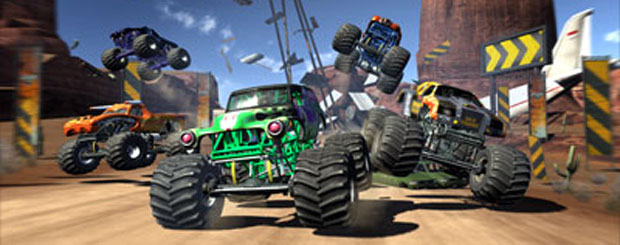
Dennis Anderson like many of the early monster builders started with a work truck. He strengthened the chassis, built a new motor, added a better suspension, and more over the years. Replacing mechanical parts like transmissions, and axles with military equipment so they could take severe abuse. The tires got taller, but still narrow so that he could conquer the mud. Then one day his truck got big enough to run in monster truck competition. The 1950 Chevrolet Panel Van that it was built from was both beautiful, and brutal. No other driver had anything that looked remotely as tough. A lot if it had to do with its paint scheme. The van was all black with green flames on the front, and an airbrushed ghostly skull cloud hovering over a cemetery. A haunted house was shrouded in the mist. The chrome grille with some patina, red headlights, and gold rims gave the truck contrasting colors. It helped frame its tough appearance. Everything about the early Grave Digger embraced the spirit of do-it-yourself. That was the backbone of hot rodding. Monster trucks were essentially hot rods for off road enthusiasts. The baddest monster trucks embraced their brutal side. They didn’t aways have to look bright, and polished like a show truck. They were allowed to be rough around the edges. To show their working man roots. The important thing was that they got the job done.

By comparison the recent builds by Feld Entertainment were more uniform, almost cookie-cutter. The trucks featured in the Monster Jam shows had steel tube chassis made by one of a handful of fabricators, often painted with a bright complimentary color. The interchangeable fiberglass bodies had colorful graphics. Not the toned down, hand painted metal bodies of the old school trucks. The new frames were covered with sponsor stickers similar to NASCAR. The Feld monsters looked like they were searching for corporate branding opportunities rather than cars to flatten. Feld made sure that their trucks offered a family-friendly look, whereas the original Grave Digger looked like it was about to beat you up, and take your lunch money. This was what I felt was missing in the modern format, and most new builds. It wouldn’t hurt to see them return to their roots, and maybe put a coffin in the bed. That’s what I think anyhow. Do you think the macabre and motorsports work together? I mean would a goth NASCAR design work? Tell me in the comments section. As always if you enjoyed this blog, and would like to sponsor me please visit my Patreon page and consider donating each month, even as little as $1 would help make better blogs and even podcasts!
follow the Street Writer on Patreon!

Friday, April 24, 2026

Collecting modern monsters

In a previous blog I talked about how Hot Wheels stopped producing Monster Jam toys in 2018 to create their own line. Mattel also partnered up with the Bigfoot Team, and a few independent monster truck owner / drivers to bring an arena show to fans. Hot Wheels Monster Trucks Live was now in its eight year with no sign of slowing down. This change of toy companies allowed me to focus back on something that I had been a fan of all my life. As long as Feld Entertainment controlled Monster Jam, and the majority of monster toys then I couldn’t bring myself to collect anything. Once I had an alternative it would be easy to start again. As with everything in my collection I had to be very selective. I had a budget I couldn’t go over, and very little space in my home to display anything. This meant that I could only collect a handful of trucks that really meant something to me. I’m going to feature them today.

I’m going to start with the most obvious toy. Bigfoot was the original monster truck, and the one that I grew up with. I was a fan from day one. I was also a fan of the owner Bob Chandler, and various Bigfoot drivers for decades. The next one I added to my collection was for the missus. When Bigfoot started gaining popularity in movies, and TV Bob’s wife Marilyn asked why he should be having all the fun. So he built her a baby blue Ms. Bigfoot. It was almost identical to the original Ford F-250 that he used for Bigfoot. He even kept it on 48-inch tires which was what the original Bigfoot drove around in before Bob put it on 66-inch tires. I covered Marilyn as the first female monster truck driver, and the truck on a previous blog. It was important for me to have the Chandlers at the start of my new collection.

The next two trucks were also complimentary for a different reason. The Grave Digger was always a tough competitor. Despite the feelings I had for the Feld company, I had nothing but respect for Dennis Anderson, and his family. He built his own truck, and legacy in many early competitions. Plus the Grave Digger had a fantastic look often imitated, but never duplicated. It earned its spot at the top of the collection. Note that the version I got was a classic design. The skull, cemetery, and haunted house were similar to the "Grandma" version with the words Grave and Digger on top of each other, as opposed to side-by-side. Right next to it was the Bone Shaker. Larry Wood’s iconic Hot Wheels design was every bit as brutal as the Grave Digger. There was a reason why it was the star of Hot Wheels Monster Trucks Live. The old school hot rod-turned-monster truck was just too cool for words.

The next truck was actually a fictional rival to Bigfoot. Snake Bite debuted in 1991, it was the first monster truck to have a custom 3D character body. Underneath the snake-shaped shell was actually a rebuilt Bigfoot IV. This allowed Chandler to run two trucks in shows, and competitions. The team really committed to the rivalry. They said the truck came from Cobra Creek, Colorado (which didn’t actually exist). They also had the drivers wear snake-patterned airbrushed masks. Veteran Bigfoot drivers like Andy Brass, Dan Runte, Larry Swim, Chris Norman, and a few others played the characters Colt Cobra, Ricky Rattler, Vic Venom, Kris Kopperhead, Andy Anaconda, or Sid Sidewinder. Hot Wheels was on board the rivalry, and made some popular toys featuring both trucks. The Carolina Crusher was another formidable competition monster truck. It was built, and driven by Gary Porter for years, and years. He stepped away from racing for a while. He returned in 2014 to drive once more for the 30th anniversary of his truck. He eventually sold the rights to Paul Shafer, who later sold those rights to Pace Motorsports which became Feld Motorsports. Despite all this I still held Mr. Porter, and his truck in high regards.

The next truck in my series was created by Rosalee Ramer, and her father Kelvin Ramer. Kelvin built, and drove the Time Flys truck. Rosalee grew up learning how to fix trucks alongside her dad. There were pics of her as a little kid doing repairs. By 14 she was driving competitively. Making her the youngest professional monster truck driver ever. Her truck was called Wild Flower, and was easily one of the most unique trucks ever built. Next to it was King Krunch. It was an old-school truck that also represented generations of competitors. It was originally built by Scott Stephens from Texas way back in 1982. He toured the country for years, and his son Colt Stephens became a driver as well. Scott also built two of my favorite trucks, the jet-powered Coors Brewser, and the Coors Light Silver Bullet. Those trucks would never be made into toys, so having a King Krunch was as close as I could get.

The next two trucks embodied the spirit of the early monsters. Those trucks were literally inspired by ancient monsters, and cryptids. The first was the Cyclops. It was a 1969 Chevrolet C-10 built by brothers Fred and Gary Dykman out of Arizona. It was similar to the Grave Digger in that it was a famous mud truck that got coverage in the 4x4 magazines, and later become a monster truck. The Dykman brothers were very committed to the Cyclops gimmick. They had a giant animated eye hidden under the hood. It would pop out, and look around before starting a run. I remember seeing this live as a kid, and the audience went crazy when it happened. The Michigan Ice Monster was a 1983 Chevrolet C-10 by Brett Engleman. It was only in competition for a few years before Mr. Engleman stepped away from the sport. This was also one of the old school trucks that I saw live for the small window it toured originally. There was a smaller version of the truck called the Michigan Ice Monster Jr. It was built from a 1975 Chevrolet Blazer, and owned by Jesse Birgy.

The next two trucks represented the smaller owner / drivers that carved out their own path, and became successful. Titan was an awesome 1972 Chevy C-10 truck owned, and driven by Donald Epidendio from Lower Lake California. He drove as a member of the Straight up Racing team, and took part in the Monster X Tour. He also competed in several Monster Jam World Finals as well. There was something about the old school square body trucks that I thought could never be topped. Bigfoot, Cyclops, King Krunch, Titan, Giant, and a few more were all square bodied classics. The next monster in my collection was easily the most successful to feature a car body. The Avenger had a 1957 Chevy Bel Air body. It was owned, and driven by Jim Koehler from Columbus Michigan. He owned, and operated Team Scream Racing, and ran in the Monster Truck Throwdown Tour. He had an outspoken personality, and knew how to fire up the crowd whenever he got on the mic. He was possibly the greatest ambassador the sport had ever seen.

The next truck owner / driver Dave “Heavy D” Sparks was half of the Diesel Brothers alongside “Diesel Dave” Kiley. Sparks fell out of favor in my eyes for a number of reasons which had nothing to do with his arrest, and release either. It was more about his outspoken defense of immigrant Mexican laborers while also revealing he was a MAGA Trump supporter. Rather than waste my time on this glaring contradiction I would rather talk about the Brodozer. The Ford Super Duty truck was one of the first modern diesel trucks to compete in Monster Jam. I wrote about it years ago. The next truck belonged to an owner / driver that was a tough competitor. Joe Sylvester out of Canton Ohio played by his own rules, and had a truck that reflected that. My favorite version of Bad Habit featured a Jeep Gladiator body. There was a build with an Escalade body but I thought it was too bland. Mr. Sylvester held the records for both the fastest truck in the quarter mile, and furthest jump. 

The next truck in my collection was the Lucas Stabilizer, which was driven by Cynthia Gauthier. It was the only truck owned, and operated by Feld that I collected on purpose. I did so for two reasons; because Ms. Gauthier was an exceptional driver who had been competing for years with different trucks, and different teams. She had long since earned a truck of her own. The other reason why it was in my collection was because it was a callback to the classic Peterbilt monster trucks like Big Pete, and Super Pete. I also had a truck that was featured in the first few years of the Hot Wheels Monster Truck Tour. There was a WWII airplane-themed square body truck called the V8 Bomber. It looked hyper-American. On tour it was driven by Stevie Snellen, and built on a version of Basher with a vinyl wrap. Mattel realized in hindsight that maybe it wasn’t a good look to have a truck like this on tour that glorified war machines. This was especially true as they took the tour international. So they came up with a different theme.

I did collect one vehicle that wasn’t based on a specific truck. That was the Cremator, a hearse-bodied monster. There were other hearse monsters in the past, and I would like to talk about them one day, but this was a Hot Wheels original. The last monster truck in my collection was Wreckreation. It was an RV monster truck which was run by Tomfoolery Motorsports. The Pagliarulo family out of Florida owned and operated many trucks including the classic Michigan Ice Monster, and Excalibur, as well as the newer Jester, Kraken, and Missfire. Matt Pagliarulo was a veteran driver, and his children Michael, Nick, and Brooke were competing alongside him. The trucks they owned were cool, however they didn't appeal to me as much as this RV. Wreckreation captured the essence of everything I loved about monster trucks. It had a classic square body, a solid color, and a very strong visual theme.

The trucks that told a story were always the ones that I gravitated toward. Wreckreation could have come from the actual first generation of monsters. There were pics of early trucks such as Bigfoot, and King Kong with camper shells on the bed. Remember that Bob Chandler, and Jeff Dane would take camping trips using their actual daily driver trucks? They would hit the trails, and mud bogs as weekend warriors. Wreckreation was carrying on that tradition. It was possibly the last of the working man's monster campers. By contrast I never cared for the trucks with animal, zombie, or robot bodies. Those weren't cohesive themes. They didn't tell a story, they were just gimmicks.

Of course I needed a place to store my trucks when I wasn’t playing, I mean, when I wasn’t studying them for reference. Hot Wheels released a Bone Shaker Monster Mover in 2018, the same year that they released the Bone Shaker monster truck. It could store a dozen models. How amazing was this?! I put the most important trucks to me in the carrier, in case I ever cleared enough space in the home to display them. You’ll have to guess which ones those were.

So this wrapped up my look at the monster truck toys I currently had. Were there any toys that you collected because they meant something to you? Tell me about them in the comments section. As always if you enjoyed this blog, and would like to sponsor me please visit my Patreon page and consider donating each month, even as little as $1 would help make better blogs and even podcasts!
follow the Street Writer on Patreon!

Friday, April 10, 2026

The Monster Wars that turned the public away from Bigfoot

In a previous blog I talked about rebuilding my monster truck book, and magazine library. It was something that I had originally built up through the 1980’s, but was destroyed by a freak series of rain storms in the mid 1990’s. It left me disheartened, and unwilling to have anything to do with monster trucks for more than a decade. Thankfully street basketball, and the urban vinyl movement created new interests for me to follow entering the new milennium. I ended the entry by talking about how I rebuilt the library over the past few years. I also started collecting classic monster truck toys to display on my work desk. I went back to the Matchbox Super Charger trucks from 1985-1986. These were some of the most memorable toys to me as a kid. They set the standard in my book. If you were born in the ‘90s or early 2000’s then you always had monster trucks on television, and monster truck toys on the toy shelves. To you they had always existed, and always were a part of motorsports culture. I’m here to tell you this wasn’t always the case.

As member of Generation-X I was a kid when monster trucks first made the news. I first saw them in magazines, and couldn’t believe that there were trucks so massive that they could crush cars. It was the ultimate power trip! My brain melted when my brothers, and I saw the first televised monster truck race between Bigfoot, and USA-1 on That’s Incredible in 1983. I remember finding out about it thanks to TV Guide (ask your grandparents). I spent all week hyping my classmates up in elementary school. I told them that there was going to be a monster truck race on TV. They didn’t grasp the concept, and didn’t seem to be remotely interested in what was about to happen. From that point on I would check the listings to see if there were any other monster truck related events. Sadly there would be nothing else for a couple of years. Then in 1985 I found out that there was going to be a TV special on the weekend. It was called Battle of the Monster Trucks. It would feature a bunch of monster trucks going against each other across multiple events. To say that this was the most important televised event of my childhood would be an understatement. It would become the first entry in the most important trilogy of my childhood.

The next year we saw the Return of the Monster Trucks, and it was rounded out by the War of the Monster Trucks. The success of these specials lead to the creation of different racing leagues, and different touring shows. The majority were organized by the United States Hot Rod Association (USHRA). Sponsors realized that they could capture the public by featuring the best monsters in live competition. This early period for organized monster truck events had the same kind of energy as the birth of NASCAR some 40-years earlier. Just like NASCAR it was beer, and tobacco companies that saw the motorsport as a way to build a customer base. One of the biggest contests around was the Mud & Monsters series presented by Camel cigarettes. All of a sudden local television, and cable channels were fighting over broadcast rights. This started to put a rift in between the various trucks, teams, track operators, and owners. There was no doubt that backroom deals, and exclusive contracts to feature the biggest names were being created at this time.

It was the late ‘80s, and early ‘90s when the regular televised events started growing in popularity. I was entering my teen years, and super excited to see that monster trucks had become a part of mainstream culture. The one thing that I began to notice was how some of the contests were pushing certain trucks more than others. In particular the black, and green Chevy panel van known as Grave Digger was getting a massive push from the commentators. I pointed it out to my brothers, and after a few weeks they also noticed that the Grave Digger was getting the majority of air time over the older, and more established trucks. I said if I didn’t know better it looked like they were trying to push Bigfoot out of the spotlight. That was not to say that Bigfoot was unstoppable. USA-1 won the series champion in 1988, and Equalizer in 1989. Bigfoot didn’t capture a championship until 1990. The Grave Digger didn’t win the championship until 1999, after Bigfoot had already won it seven times. If you look at the list of monster truck racing champions from 1988-2005 you can clearly see how dominant Bigfoot was in competition. Yet that didn’t seem to be the narrative according to television.

I felt like I was watching a biased show. It was never that the Carolina Crusher, Taurus, Bear Foot, or the Equalizer had better season than the Grave Digger, but rather that the Grave Digger just had a bad run. I started to feel a little jaded with the entire format, and way that TNT Motorsports was presenting the contests. My suspicions were slowly growing into a full blown conspiracy. To me the smoking gun was when Bigfoot owner Bob Chandler went back to the drawing board. He built a better Bigfoot after narrowly losing the championship two years in a row. Team Bigfoot had once again raised the bar. Bigfoot VIII was so dominant that it was banned from competition. This lead to a lawsuit against TNT. They argued that Chandler’s “third-generation” monster truck was too far advanced for the competition. What Chandler had done was improve on the building techniques of himself, and his contemporaries. Bigfoot VIII featured a tube chassis designed on a computer. It had a lightweight body, and was closer to a Baja racing truck than an old school monster truck. This was a template that would be modified even more through Bigfoot XI aka Wildfoot in 1993. It set the standard which would be copied by the rest of the industry for more than a decade.

The Bigfoot Team was losing points during the season while they were appealing the ban in court. Rather than sit out the season Chandler decided to run an older truck, and stay in contention. Despite a number of engine issues Rich Hooser did the impossible. He ran Bigfoot IV against newer monster trucks, and won. Andy Brass also drove the truck to several victories as well. Watching the truck which was originally built in 1984 hang with newer machines made me an even bigger fan. I thought that Bigfoot was fighting the good fight, and showing the country why it was called the King of the Monster Trucks. It seemed that TNT always downplayed these scrappy victories. They would make excuses for the other trucks in the series, and never give Bigfoot the credit it deserved.

I began questioning why it was okay that other teams were allowed to make improvements to their rides during the off season, but Chandler was punished for doing the same thing. I remember how radically different Awesome Kong looked after a crash in 1988. The red Ford with the aircraft engine was easily one of the greatest builds I had ever seen. Then one day after a crash repair it returned to competition with a squished frame over a tube chassis, and a new engine. Builder / driver Jeff Dane said it was to help improve visibility, and make it in time to enter the season of competition. To me it looked like a way to shave weight off of the truck, and have just a hair of an advantage over the other trucks with heavier metal bodies. As much as I respected Mr. Dane, I was skeptical that he was allowed to compete with his radically different truck, at the same time that Bigfoot VIII had to sit out. TNT commentators always seemed to play favorites on the air. Similar things could be said of the other televised contests. It didn’t make sense to me at the time why there seemed to be a bias against the most popular truck in the world. Then I got older, and looked at the big picture.

I mentioned previously how Feld Entertainment bought out the United States Hot Rod Association, and became the De facto organizing body for monster truck competitions. They bought out entire teams, or signed them to exclusive contracts so that they could only appear on Monster Jam tours, and Monster Jam television programming. You can read the history of the different companies that came together to form Monster Jam in this Wiki article. Only as an adult did it make sense why the TV shows were pushing the Grave Digger so hard. Feld would have more control over the marketing, licensing, and merchandise rights of certain trucks. The Grave Digger team run by Dennis Anderson didn’t have the bargaining power that Chandler did. Eventually Anderson would sell the rights to Feld as well. I respected Anderson, in fact I gave him his flowers when I talked about the Grave Digger earning its reputation, and Anderson being an important contributor to the mega truck movement. I was upset watching the artificial rise of the Grave Digger while Bigfoot was getting pushed out of the spotlight. Feld standardized the builds of each truck, poaching the technology that Bigfoot was built on. They pre-packaged trucks with corporate sponsor names. If there was a cartoon, movie, or comic book that they could license then you were guaranteed to see it at the next stadium show. Scooby-Doo, Wonder Woman, Iron Man, and Spongebob Squarepants were just some of the many branded trucks.

Feld pulled off a quiet coup that the public would never know about. You could watch this well researched video to see why Bigfoot and Grave Digger won’t compete against each other again. It was something that I don’t think modern monster truck fans realized. Bob Chandler had been iced out of the sport that he helped create. Team Bigfoot was still able to perform around the world, but to smaller venues, and no dedicated television appearances. This greatly limited the earning potential of Bob Chandler. It didn’t matter that he helped form the Monster Truck Racing Association for the safety of drivers, and audiences. It didn’t matter that his quest to improve on every version of Bigfoot was copied by this contemporaries. Monster truck television shows, and stadium tours had reached a point where they could operate successfully without Bigfoot ever appearing. The important thing to me was how Feld pushed another truck to be the flag bearer for the sport. The years of publicity worked on the masses. By 2019 Motor Trend said that the Grave Digger was the OG monster truck. It was a slap in the face to Bigfoot, USA-1, King Kong, and every other truck that contributed to the culture well before Grave Digger.

Feld also changed the look, and feel of monster truck competition. The original monster truck contests were rough, and tumble affairs. They felt organic. They grew out of the actual off road community. Like a rodeo put together by locals. By comparison Monster Jam was a highly polished event. It was assembled by a corporate boardroom. Ready-made for TV, like dressage for expensive show ponies. Actual measurable events like the hill climb, mud bog, sled pull, and car crush were previously used to determine which was the best truck around. The entire racing element had taken a back seat to the freestyle competitions. That format was much more subjective. Since Feld controlled the biggest shows, and the biggest teams, then they were able to define what monster trucks were all about. Then there was a darker undercurrent about big business corrupting the sport.

Previously I had compared the way Feld operated their business to WWE. The McMahon family owned a majority of the names, and likenesses of the wrestling characters. They treated the talent as independent contractors rather than employees. So they didn’t have to provide them with medical, insurance, or retirement plans. Yes the performers were paid well, but they made a tiny fraction of what the McMahons did. The Feld family owned a number of teams, but also contracted work to smaller groups. The Feld family was worth billions, whereas the superstars like Dennis Anderson were worth a few million, and the lesser known independent teams worth less. Knowing that the owners of the WWE leaned very heavy to the right politically made me wonder about Feld as well. According to OpenSecrets.org Feld Entertainment made a majority of political contributions to the Republican Party through the years.

As a minority living in the USA it pained me to see the sport was being controlled by people that didn’t always consider me a part of this great nation. This distressed me greatly. I was a lifelong fan of the monster truck community I wanted to buy some toys, but I didn’t want to support Feld (or the WWE) in any way. I had to figure out something to collect, but what? I’ll talk about it in a future blog. Were you a fan of a sport, team, or star performer only to find out something that made you lose respect in them? Tell me in the comments section. As always if you enjoyed this blog, and would like to sponsor me please visit my Patreon page and consider donating each month, even as little as $1 would help make better blogs and even podcasts!
follow the Street Writer on Patreon!