Showing posts with label giant monsters. Show all posts

Monday, May 11, 2026

Bookmark This Page; The Giant Monster Series

I love kaiju, I love daikaiju, I love giant monsters of all sorts. If you want to see how giant monsters made their way into gaming then Bookmark This Page.

The Giant Monster Series, part 1…

The Giant Monster Series, part 2…

The Giant Monster Series, part 3…

The Giant Monster Series, part 4…

The Giant Monster Series, part 5…

The Giant Monster Series, part 6…

The Giant Monster Series, part 7…

The Giant Monster Series, part 8…

The Giant Monster Series, part 9…

The Giant Monster Series, part 10…

The Giant Monster Series, part 11…

The Giant Monster Series, part 12…

The Giant Monster Series, part 13…

The Giant Monster Series, part 14…

The Giant Monster Series, part 15…

The Giant Monster Series, part 16…

The Giant Monster Series, part 17…

The Giant Monster Series, part 18…

The Giant Monster Series, part 19…

The Giant Monster Series, part 20…

The Giant Monster Series, Final Part

Manifesting a press kit, or how much I love War of the Monsters…

Did you have a favorite monster movie? Did you have a favorite daikaiju? Mines was Rodan. Let me know yours in the comments section. As always if you enjoyed this blog, and would like to sponsor me please visit my Patreon page and consider donating each month, even as little as $1 would help make better blogs and even podcasts!

follow the Street Writer on Patreon!

Wednesday, April 12, 2023

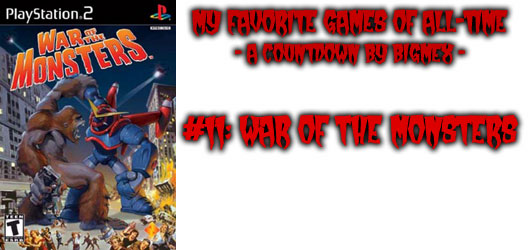
My favorite Games of All-Time #11: War of the Monsters - Originally published on 1UP - June 9, 2006

When you reach the top there's no place to go but down. I don't think this rule applies to the best game designers out there, certainly not David Jaffe. The 11th spot is held by the best game ever to come out of Incognito (Incog Inc.). Before a good chunk of the team and David went to Sony Santa Monica. I can say with absolute certainty that I enjoyed this game more than God of War. Not to say that GoW didn't deserve to be in my all-time favorite games but War of the Monsters (WotM) pulls further into the details of a great game concept, into the details of balanced fighters and classic monster movies.

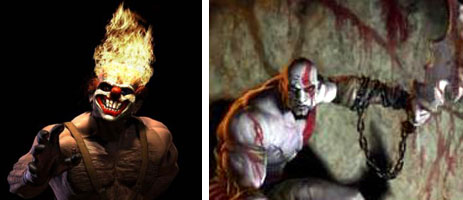
If you look at God of War as part of the Incog. legacy you can see where the game came from. The idea of one man versus the world was spawned in Warhawk. The dramatic characters, filled with tragedy and violent backgrounds were undoubtedly inspired by Sweet Tooth and the cast of Twisted Metal.

The massive levels, great particle effects and smooth animations pulled from what they learned in Downhill Domination, the mountain bike racing game. Kratos' final battle with Ares is one of the best ever designed in any videogame. The heart of GoW's fighting engine and the scale of Ares and Kratos at the final battle can be traced back to Incog Inc's 2003 sleeper-hit War of the Monsters.

War of the Monsters is the best brawler on the Playstation 2.

Think about it for a second.

I rank WotM ahead of Urban Reign and Beat Down. ahead of Iron Phoenix, the Bouncer, the craptacular Marvel Nemesis, Naruto, One Piece, Def Jam and every Mortal Kombat adventure game. You name the brawler on any other system and I would rank WotM above it. Lizard Man would not agree with the ranking over the Smash Bros. games. It wouldn't deter me from doing so.

That is because WotM is greater than the sum of its parts. It meets and exceeds my definition of a great game. The graphics are superb, the animation smooth, the fighting engine is balanced, the enemy AI is ruthless, the character design is brilliant, the plot well developed and the story is universally great. WotM is a concept that is executed better than any game before or since.

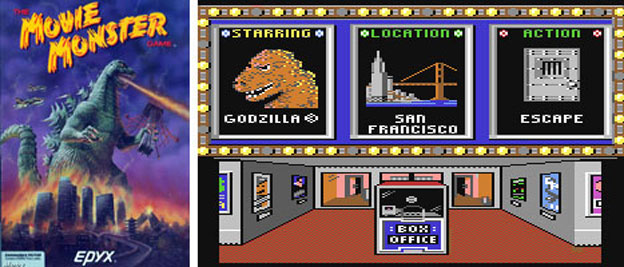
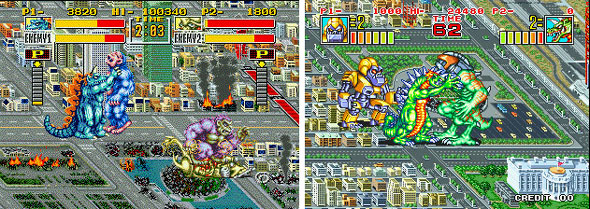
I must acknowledge a few of the monster games that came out before WotM. The classic computer game Movie Monsters by Epyx, Midway's Rampage and my previous favorite monster brawlers/wrestling games, King of the Monsters 1 and 2 by SNK.

Aside from being a great brawler, War of the Monsters has a certain charm to it. In part because the entire game, from beginning to end, plays like a series of movies. Instantly the game feels like a lost memory of a drive in theater, a rubber suit (kaiju) flick from Japan or a black and white horror movie that you saw when you were a kid. In fact all of the game menus are set on and around a drive-in theater. Check out the official webpage to get a sense of what I'm talking about.

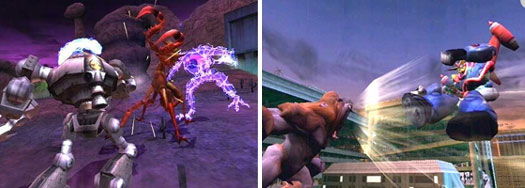
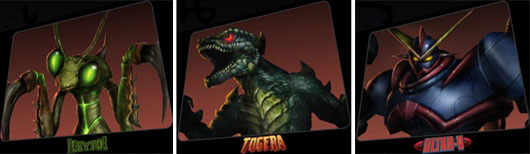
The characters in the game are an homage to many of the classic movie monsters. For example the giant praying mantis called Preytor is inspired by the giant ants from the movie "Them." The giant dinosaur based on Godzilla is called Togera. The Japanese robot called Ultra-V is inspired by Mazinger-Z/Tranzistor-Z. There are 10 characters in the game with four skins that can be unlocked for each. Some of these skins are supposed to represent a completely new monster, making the total count of playable characters at 40.

With a few visual cues, a few lines of text and plenty of imagination the story unfolds. An alien invasion terrorized the Earth. Scientists invented shield generators to destroy the ufos hovering around the major cities. However the downed ships released radioactive waste which caused mutations in animals, robots and even inanimate objects. These newborn monsters began to battle for supremacy amongst the cities.

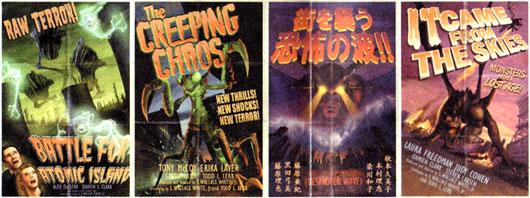
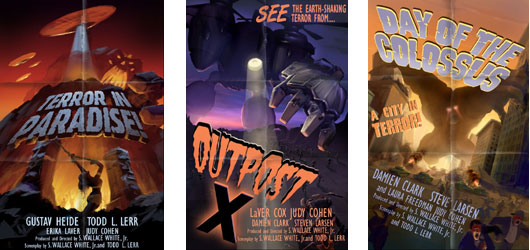
Each level is prefaced with a movie poster. Classic pulp images and shock graphics herald the golden age of monster movies from the 50's and 60's.The images and titles of the posters (and even the detail of actors' names) help keep the cinema theme running well into the game. The posters even feature fold lines as if they were pulled from a magazine. The graphics on the posters and the levels they represent as inspiring as the classic movies they were based on.

There is no dialogue in the game. The monsters communicate with a few gestures, and very short in-game cinemas keep the pace moving. Your character becomes the star in a series of monster battles. For anyone that's ever wondered what a Godzilla game would be like if it were ever done right, now is your chance. Plus I cannot emphasize that the devil is in the details.

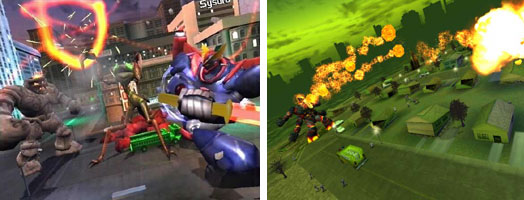
Each monster is about 100 feet tall. The sense of scale is never lost throughout the game. Each level is populated with details. A secret military base has cyclone fence and guard towers that only come up to your ankle. You can even read the warning sign on the miniature fence. Cities have unique billboards, stores have posters in the windows and office buildings have electronic signs. The nine levels in the game (plus a few bonus levels for other game modes) were designed to help give you a feeling of weight and mass. The trees in a park snap and fall as you walk over them. Tiny pedestrians flee in terror and you can actually step on them and see the blood splatters left in your wake. You can pick up cars or trucks, target opponents and let them fly. You can grab helicopters out of the air, topple skyscrapers... well you get the idea.

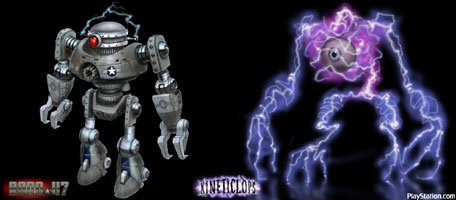
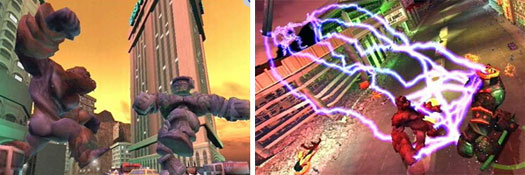
Despite the size of the characters, they still manage to move rather quickly through the environment. The game has a very rapid, almost frenzied pace. You really can't take too much time appreciating the details because there is always a monster ready to stab you in the back. Like other brawlers, each monster has their own strengths and weaknesses. There are heavy hitters, quick fighters and all-around brawlers. All of the monsters have the ability to perform devastating combo attacks and even fire off special moves. These special attacks vary. All have a close range and distance special moves. For example Kineticlops, the monster made out of electricity with one giant eye, has a special attack that allows a jolt of electricity to pass through multiple opponents. If timed right this jolt can cross an entire level and take out all of the opponents. These special moves often mean the difference between winning and losing a battle.

Using the environments is a must for victory as well. Every level in the game has a secret or two waiting to be discovered. The hilly Baytown (San Francisco) has lots of places to hide, a monster that does enough damage to the city can actually cause an earthquake to completely change the lay of the level. Atomic Island has a nuclear reactor that can be made to vent and burn opponents to death within a few seconds. The Japanese island of Tsunopolis is susceptible to tidal waves... These hidden level triggers were first introduced in Incog's Twisted Metal.

So what about the bosses in the game? WotM would not work without the use of three of the toughest and most original boss characters in any game. Goliath Prime, a massive robot and boss of the secret military base in Rosdale Canyon. Vegon, a giant three-headed plant monster from Atomic Island that can swallow the other characters in the game whole. Last but not least is Cerebulon, the leader of the alien menace and possibly the toughest boss that Incog has ever created. Each of the bosses evolves during the course of the battle. Like all great videogame battles, strategy must be employed if you want to live long enough to see the next level.

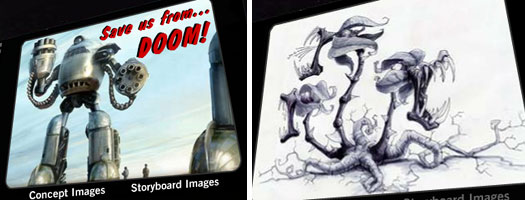
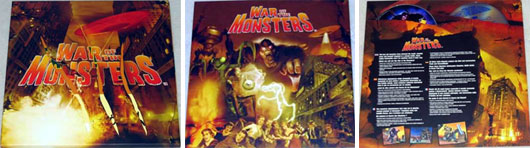
People that are into the art of videogames should track down a copy of the game. I talked a bit about this game with Ryan Braman, the artist that did the cover art of the recent Rampage Total Destruction game as well as the Tips and Tricks magazine featuring Rampage. Those fortunate enough to work in the media got their hands on a press kit styled to look like a tattered movie kit.

This kit not only included a demo of the game, but a media cd with video and images as well as a massive poster. If you are one of the lucky people that got their hands on a copy of the media kit and don't want it any more how about hooking me up?

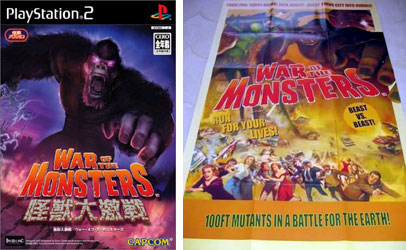
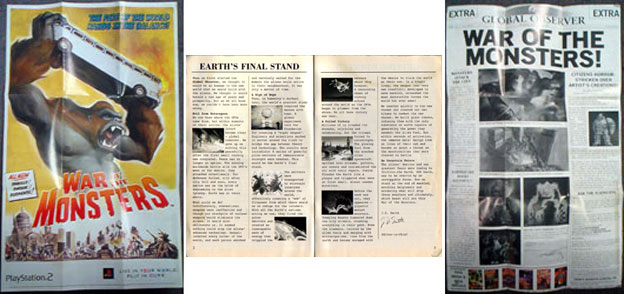
Not that consumers were short changed. The box art from Japan was just as dramatic as the one in the USA version. In fact the details from the game spilled over into the packaging as well. The instruction manual is written like the fictional newspaper used in the game, the Global Observer. In addition to the booklet there is a fold out poster with a graphic on one side and a full newspaper page on the other. I have not been as impressed with a booklet for a game since. Seriously, aside from Incog and Sony Santa Monica, who else takes the time to recreate as much detail in the manuals?

The only gripe many people have was the length of the game. Even after you unlock all of the 2-player mini games (whose load screens look an awful lot like Colecovision titles) and character skins, the entire experience wraps up too quickly. We are left with a feeling that this game could easily have been twice as long. We only caught a glimpse into the minds of Incog and David Jaffe. For what it's worth I still say the adventure was still worth it.

There were enough details in the game for people like me to obsess over and enough replay value for those that long for a great monster brawler. War of the Monsters is what the recent Rampage should have been. War of the Monsters is what every Godzilla game could have been. But rather than lament the games that could have and should have, we are left with the one game that is. This is the greatest monster brawler ever created, and one of my favorite games of all-time. Believe it!

I’d like to hear your personal top-10, top-20, top fighting games, top sports games, or top games in any genre. Let me know in the comments section please. As always if you would like to sponsor me please visit my Patreon page and consider donating each month, even as little as $1 would help make better blogs and even podcasts!
follow the Street Writer on Patreon!

Monday, March 19, 2018

The Giant Monster Series, part 19...


Privateer Press did the same thing for giant monsters and tabletop games in 2009 that Incog Inc. had a few years earlier for video games. Both studios started a game project as a love letter to the genre but then it evolved into a great contribution to the genre in its own right. The studios had created their own legacy, they introduced players to enormous creatures layered in personality while battling for supremacy in fun locations the world over. The only difference was that Privateer was working on a tabletop system instead of a video game. I had talked about the little American company that could back in 2007 when they were offering tabletop game players a fresh perspective. They were challenging the status quo of the big overseas studios that seemed to dominate the market.
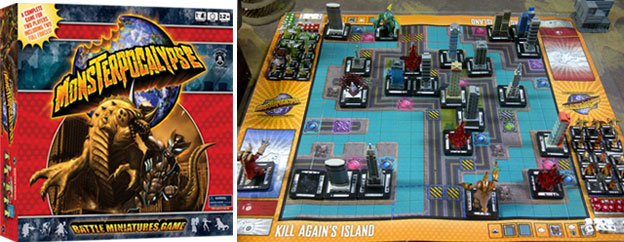

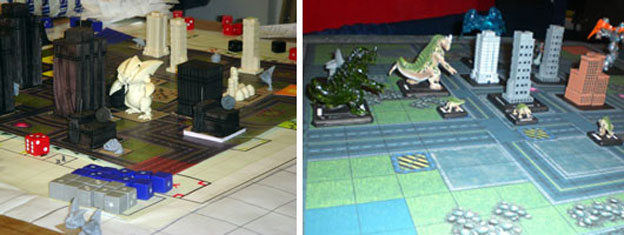
Game designers Matt Wilson and Erik Yaple wanted to create a miniatures based game system that could rekindle the memories of the classic monster films. They started off by making a list of all the things that they enjoyed about the genre. Big monsters fighting, cool military weapons, detailed buildings and plenty of destruction were at the forefront. The system they put together was lovingly called Monsterpocalypse. It had a straightforward play mechanic which allowed for plenty of back and forth action between the gamers. The best portions actually predated some of the design elements that Richard Garfield incorporated into his King of Tokyo game. The creatures in Monsterpocalypse could evolve, grow powers and abilities but they did so by controlling buildings and areas in the game instead of through randomly played cards. I had been keeping tabs on Monsterpocalypse back when they were play testing it at various gaming conventions.


In the early days Privateer took their paper templates, unfinished resin models and rough plastic buildings to local game stores in the Pacific Northwest as well as the larger conventions. At the time Privateer had earned a dedicated following through their grassroots campaign. The Warmachine and Hordes systems quickly grew and the company expanded to create their own line of paints and even magazine to support the community. Players were eager to see what new projects they were working on, especially since the company had a reputation for being fairly open and transparent. As Monsterpocalypse evolved the maps went from graph paper to colored pencil illustrations and eventually laser printed pages. The studio was running on a very tight margin and deadline. As the miniature sculpts were being finished the company was using all the feedback they received to clarify the rules and balance the game. Like many of their systems the goal was to keep players engaged at every level of the development.
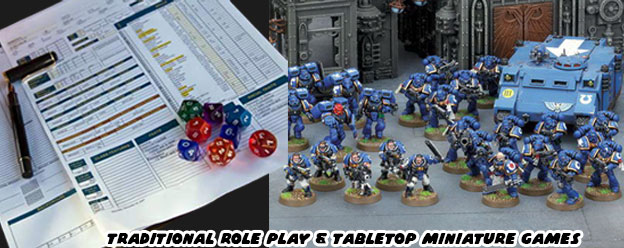

Privateer was going to release this system as their first pre-painted miniatures game, this decision raised the ire of many traditionalists. Fans of classic tabletop systems believed that all great systems required a hobby element on top of a solid play element. Role-playing audiences were supposed to keep track of character stats and unit special abilities with character sheets that they created and updated by hand with every game. Participants of tabletop systems were supposed to assemble and paint their own miniatures and models, anything less than that was considered a product for the toy store. To further set things apart Privateer would also be using counters and ability markers on the miniatures themselves.


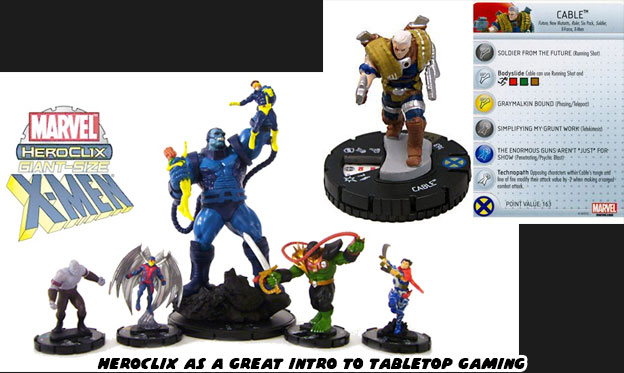
This approach to tabletop gaming was made popular by Wizkids Heroclix series, which licensed characters from Marvel, DC and other properties into an easy-to-play tabletop system. The Clix games were a great way to introduce younger gamers to the genre. The built in counters on the bases of the figures were cleverly designed to keep tabs of important things for the characters. Strength, stamina, movement, powers and agility could be found right on or under the models. As players battled they could wind down the stats on the miniatures until an opponent was defeated. No more keeping track of stats on a separate sheet! Hobbyists were worried that Privateer might "dumb down" all of their systems and switch to pre-painted plastic models. Privateer assuaged their fears by reminding them that Monsterpocalypse was a unique stand alone game and that the other systems would not be affected by the new manufacturing techniques.

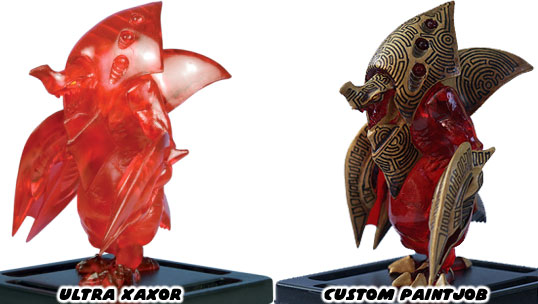
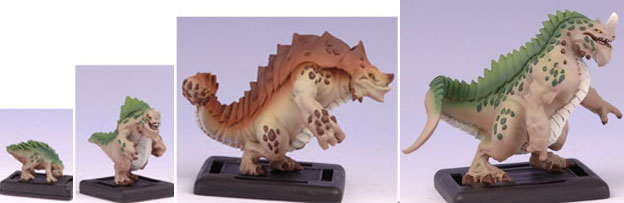
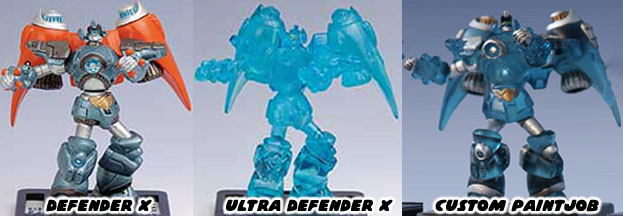
The hobby aspect itself was not affected by the use of pre-painted miniatures. Thanks to new production methods the largest and smallest figures all received great paint jobs. Those that were not experienced painters did not feel put out when starting a collection. However those with some skills and a great imagination were more than welcome to recolor and repaint entire armies. For example, the largest monsters in the game can undergo a transformation in their power level, these "Ultra" forms of the character were represented by by clear or sometimes opaque plastic models. Many in the gaming community thought that the Ultra figures were lackluster. By going with a completely transparent color all of the great details from the sculpt were lost. That was until artists began coloring portions of these Ultra forms. The custom Monsterpocalypse paintjobs by Martin Whitmore were a prime example of what could be done to make the miniatures more interesting.


The default paint job for Defender X was great out of the box. The character was inspired by classic Japanese mech designs including Mazinger-Z who was a member of the Shogun Warrior robots. The blue tint Ultra version lost a lot of the detail, especially as light passed through the surface. Mr. Whitmore picked out some details in gold and silver with a paintbrush to make his figure stand out. He did the same for several clear and pre-painted figures as well. He demonstrated to the community that even by using one or two extra colors a model could be made to stand out. His gold and black highlights to Ultra Xaxor inspired many players, especially newcomers, not to be afraid to customize their own figures.


The success of Monsterpocalypse was certainly due more to just the great miniatures that Privateer was putting out.

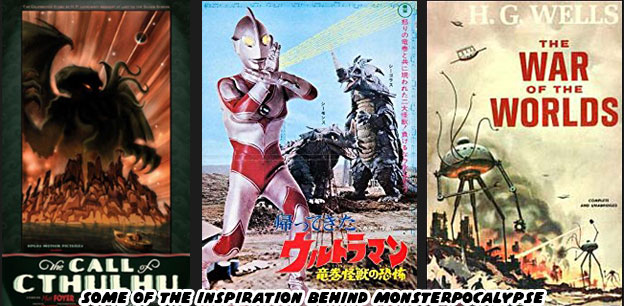
The system may have begun trying to recreate the battles from classic cinema but it grew to include influences from the science fiction and horror genres. Godzilla-like creatures could do battle with giant humanoid or Ultraman-like robots. It was daikaiju nirvana but the universe turned out to be far more expansive and violent than that! There were at least two alien species had decided to invade the Earth at the same time. One group was comprised of the classic UFO ships and War of the Worlds machinations. The other group were more like the daikaiju villains, giant sentient beings bent on total destruction. These aliens were met by another inter-dimensional being, an ancient creature that was a reminder of the monster from classic HP Lovecraft mythology. The creatures and robots were given purpose which helped shape the factions of the universe. Some monsters could partner up while others were strictly enemies. Players learned to field the armies that appealed the most to them. The first wave of factions were released over three expansion sets. The original release of Monsterpocalypse was titled Rise! The following was I Chomp NY and third was All Your Base. Readers could probably guess what the focus was on each release.


The first six factions were introduced in Block 1. These teams included GUARD, whose scientific consortium had built a giant robot that acted like a UN peacekeeper. The Lords of Cthul, the ancient creatures focused on enslaving the planet. The Martian Menace and Planet Eaters who needed no further explanation. The Shadow Sun Syndicate was a powerful organization founded by the Yakuza. They had created the ninja-like titans. Finally there were the Terrasaurs, the dinosaur-like creatures that wanted to restore nature by reclaiming civilization. Each of these factions were supported by different sized units. It was actually the smaller troops that made Monsterpocalypse unique, especially when compared to the other games I had been writing about.


Giant monsters were supported either by organic or inorganic creatures. The smallest creature would be the size of a military transport truck while the largest would be as big as a skyscraper. The giant robots had traditional military weapons backing them up. Some were supplemented by incredible science fiction technology, think of the Maser Cannon and Super X from the Godzilla films, variations of these fantastic weapons were in the game. The diversity in scale for the creatures, robots and weapons made this universe among the most robust ever created. Imagine a videogame where characters from Rampage, War of the Monsters, Earth Defense Force and King of the Monsters were all playable. Now imagine if that system had miniatures produced for everything, including the levels and landmarks. It was the ultimate celebration of the genre in tabletop format.


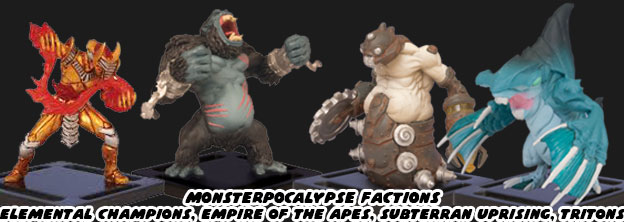
The popularity of the game took off as the studio released wave after wave of scenarios and supplemental miniatures. They continued to push the system at gaming conventions, as well as PAX and the San Diego Comic Con. The word of mouth was tremendous for the game. Privateer continued on expanding the universe to include a second set of factions. Fans of the genre were surprised with how many obvious choices comprised Block 2 and the expansions Big In Japan and Monsterpocalypse Now! These new units could help make a great game even better. There was the Empire of the Apes, consisting of gigantic intelligent apes and the Savage Swarm, made up of enormous insects. Those two were pulled from some of the oldest film influences. Then there were the giant mole creatures that made up the Subterran Uprising and the Elemental Champions which were monks that created weapons out of the elements. Think of the monks as each having the powers of Ang from Avatar: the Last Airbender. When they combined their forces they could create giants made up of fire, water, earth, air and metal. Creatures from the deep ocean were even turned into giant monsters through the Tritons.


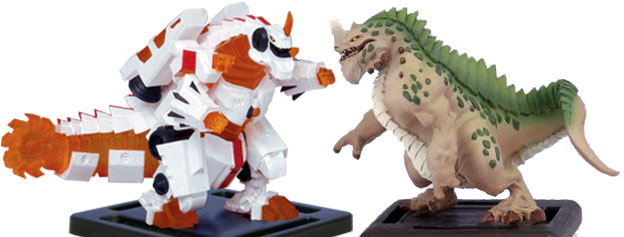
It was very clever how Privateer explained some of the new factions while appealing to the classic kaiju formula. For example, UberCorp International were comprised of multinational military contractors, they were selling defensive units modeled after the monsters and aliens themselves. Only the richest nations could afford to purchase the massive weapons of destruction. This jab at profiteering was not too subtle but appropriate considering that the other corporate faction in the game was founded by the Japanese mafia. UberCorp was a way to get "mecha" versions of the most popular creatures in the game. The miniatures that Privateer created for them were very unique, they did not simply look like silver versions of the existing characters but were instead built of translucent material and white armor. These giant machines mirrored the Planet Eaters, Lords of Cthul and Terrasaurs.

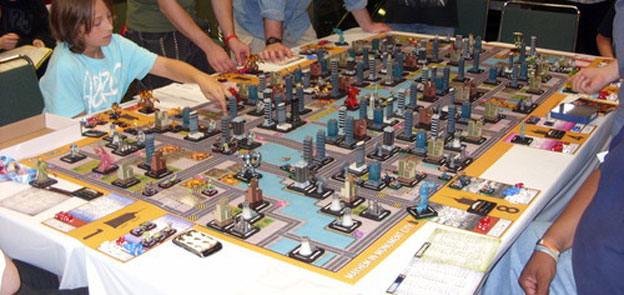
As the system expanded players learned that games did not have to be limited to 1-on-1 battles. The maps, buildings and rules could be scaled to include 2 vs 2, 4 vs 4 or even all 12 factions at once. The game play usually revolved around the monsters controlling or destroying buildings on specific maps, when these maps were laid side by side they could create gargantuan layouts encompassing several tables. The battles that gamers had during tournaments was bigger and badder than what any other system promised. Those new to tabletop gaming were blown away by what was possible on certain systems. The best part was that players did not have to build scenery or carry around delicate models in order to enjoy the game. Each map was double sided and could be folded and stacked. The miniatures were already painted, light but very sturdy. The time and cost of getting into the system was less expensive than any of the more popular games. Players could still invest their time and money and continue to build and collect the various factions. The best part was that players could set up a game anywhere there was a little bit of space available.


The little game about big monsters had quickly built a dedicated following. It was a unique convergence of giant monster fans and tabletop gaming fans that helped build a reputation in the community. Yet it seemed to disappear almost as quickly as it popped up on the convention circuit. Find out how internal decisions and outside interests killed the momentum for Monsterpocalypse in the next blog.


Friday, March 16, 2018

The Giant Monster Series, part 18...


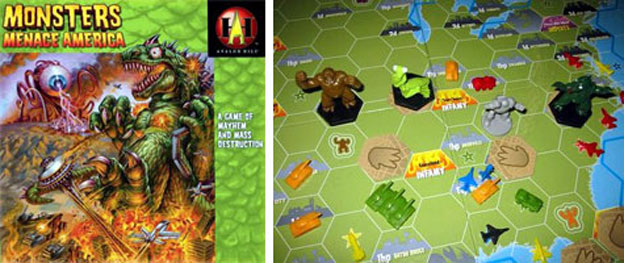
Giant monster tabletop systems have been around for years but they never quite got the following of the classic board games. I had talked about many of the systems on my older 1UP blog. One of the best games based on the genre was Monsters Menace America. It included a large map of the continental USA, featuring cities for players to take over as well as an assortment of plastic miniatures that represented the creatures in the game and military forces as well. Players could literally carve a path of destruction across the states and fight both the other monsters as well as the military in the process.


The title was published in 2005 by Avalon Hill and was actually a remake of an earlier game called Monsters Ravage America. Wizards of the Coast, creators of the wildly successful Magic: the Gathering series of collectible card games (CCG) bought up Avalon Hill and acquired the rights to all the systems they had developed. Hasbro acquired Wizards in 1998 and is the parent company that owns the various systems. Monsters Menace America was a decent introduction to the genre for kids over 12. The miniatures were pretty nice and the illustrations on the power up and attack cards were great. Even those too young to know anything about the classic B-films would appreciate the mix of humor and horror in the game. There were actually a couple of new board games introduced later that tried to put their own spin on the genre. The first was through the use of a big name star.


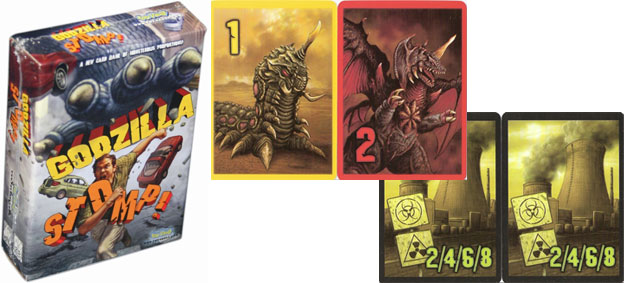
Godzilla was the featured monster in two separate titles by Toy Vault Inc. Godzilla Stomp was a CCG from 2011 that featured several Toho monsters. The game could be played by two to five players. In it participants chose from one of five monsters; Godzilla, Mechagodzilla, Battra, Destroyah and Mothera. They all took turns trying to take down as many buildings as possible as they were revealed. The more buildings that players destroyed the more points that could be won. Whoever had caused the most destruction had won the game. The other title by the studio was a bit more ambitious.

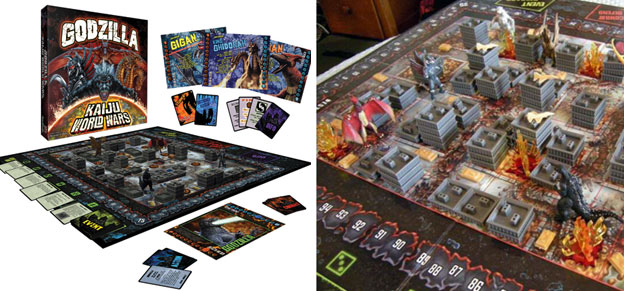
Kaiju World Wars was a tabletop system featuring a city game board, building models and four Toho monsters; Godzilla, Gigan, Rodan and King Ghidorah. It was also released in 2011 but targeted more towards die-hard Godzilla fans. The game was not far removed from the CCG, it had similar play mechanics and ability cards even. The miniatures combat system changed things considerably. Players set buildings and encounters on top of a highly detailed game board. The illustration printed on the board showed the damage left behind by multiple battles. There were impact craters, burn marks, rubble and gashes carved into the Earth by creatures that weighed several thousand tons. It helped create a sense that the game was taking place in the final moments of an all out monster war. I enjoyed studying the details when I first saw the game and could imagine that a younger fan would be completely absorbed by the atmosphere created by Toy Vault.


It turned out that Pipeworks wasn't the only studio having difficulty working with the license. The Godzilla name was popular but making a memorable game out of the character seemed impossible. Players knew what they wanted to see in the character and his opponents. Anything short of an amazing firefight between the monsters and military while causing massive collateral damage would be considered a failure. Toy Vault actually got close to a really good system that allowed for military strikes, monster combat and buildings that could be pulverized. The game suffered in its loose rules and small lineup of monsters. Even Monsters Menace America had six playable creatures to Kaiju's four. The goal from the company was to release expansion sets featuring new monsters, scenarios and military weapons. After more than a year since the debut it did not seem likely that the system would ever see any expansions. Game designer Richard H. Berg tried to answer any rule and scenario questions on gaming forums. BoardGameGeek member Scott Nixon consolidated the core rulebook, info cards and Mr. Berg's corrections into a streamlined rulebook for fans. Sadly most players wouldn't expect that they would have to search for some sort of unified rulebook online after picking up the game.

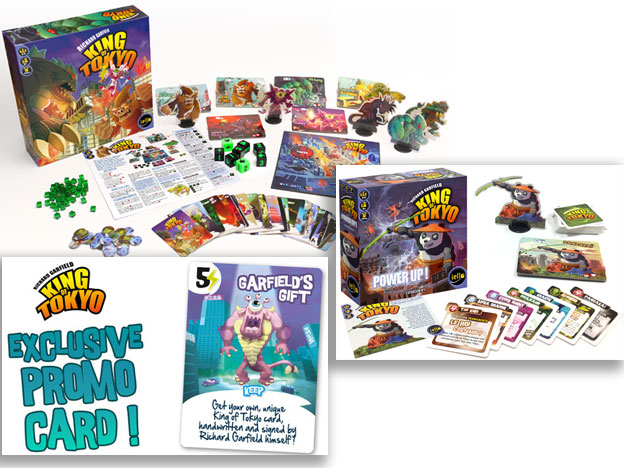
A second daikaiju themed game was also released in 2011. King of Tokyo was designed by gaming veteran Dr. Richard Garfield, he was best known for designing Magic: the Gathering, Star Wars and Battletech CCGs. Mr. Garfield came up with his own spin on the giant monster mythos, instead of focusing on big boards or detailed miniatures he wanted to focus on the combat and monster elements. He introduced gamers to six unique monsters, they were cardboard standees illustrated in a stylized cartoon format by Benjamin Raynal. The monsters were trying to claim Tokyo for themselves but in order to do that they had to defeat their opponents or simply survive an onslaught. Monsters could battle, destroy and even unlock unique mutations.


Up until the King of Tokyo the idea of a giant monster mutating and evolving new abilities was reserved for tabletop RPG systems like Monster Island or Giant Monster Rampage. Think of those systems as Dungeons & Dragons for the giant monster genre. Dr. Garfield introduced play elements into his series by allowing any of the monsters to gain new powers and even change shape right in the middle of the game through a couple of card turns. His time spent mastering the nuances of the CCG translated well into the tabletop genre. His game was actually published by the French company Iello Games. In 2012 they released an expansion called King of Tokyo Power Up featuring new cards and a new monster named Pandakai. The character was pulled from gaming zeitgeist thanks to the successful Kung-Fu Panda film series and World of Warcraft expansion Mists of Pandaria. In 2013 the system got a Halloween! expansion. In 2014 it got a stand-alone game called The King of New York. In 2016 they got the King of New York: Power Up expansion as well.


It was interesting how Dr. Garfield managed to breathe new life into the giant monster genre by presenting the basic elements from the films into an easy to enjoy system. He was so successful in his design that King of Tokyo became one of the highest rated board games according to the editors and visitors of Board Game Geek, the definitive tabletop editorial site. King of Tokyo was an exceptional game but there was only one system that could be considered as the ultimate giant monster tabletop game for hobbyists. We shall explore this game in the next blog.


Wednesday, February 21, 2018

The Giant Monster Series, part 8...


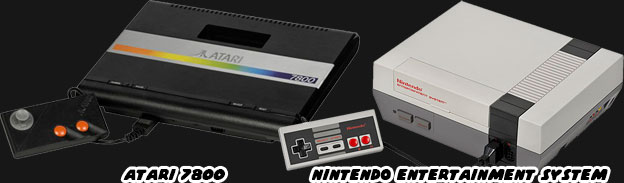
In 1986 the game console was trying to make a comeback in North America. The Nintendo Entertainment System had barely been out for a year. The boom and bust of the Atari 2600, released in 1977, had burned many retailers. The console was expensive as were the games. Many of the games were fun but very rudimentary. The subsequent release of the Atari 5200 in 1982 and Atari 7800 in 1986 were met with mixed reviews. Retailers felt that the technology for arcade quality at home experiences were still a long ways off. They would be right but not for long. What the retailers failed to understand was that the developers were learning to work with the limitations of the hardware, not despite them.


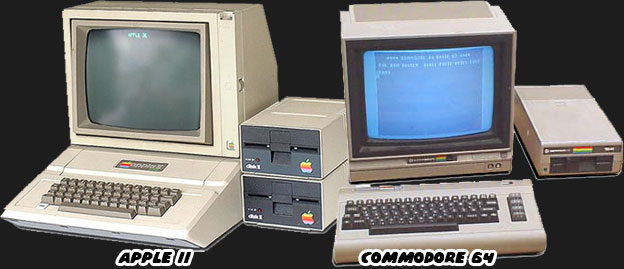
Nintendo would release hit after hit for their NES. Metroid, Super Mario Bros, Kid Ikarus, Mike Tyson's Punch-Out and the Legend of Zelda rightfully earned dedicated followings. The first generation of 8-bit gaming was well underway. The PC as game system was beginning to gain momentum as well. The Apple II, Commodore 64 and its family-friendly Amiga were finding their way into many homes and earning many followers. The PC was capable of putting more colors on screen than game consoles, have sprites that were larger and offered more frames of animation as well. While the home PC did not match up to the arcade hardware it was still much closer to it than the consoles. As such gamers expected more immersive experiences on PCs than home consoles. Things like saving games and customizing controls were featured on the PC well before cartridges were being equipped with internal batteries.


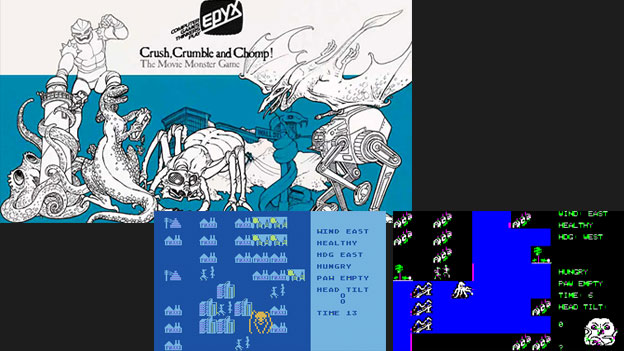
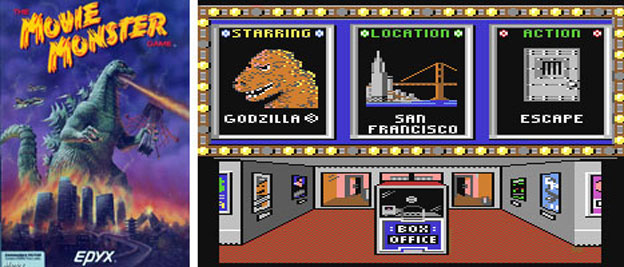
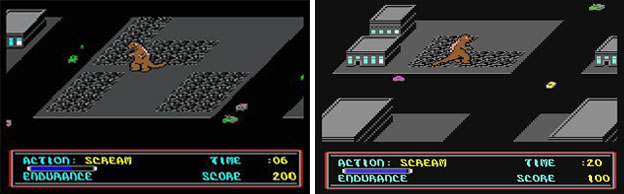
The giant monster found its niche on the PC that year. The Epyx Movie Monster Game came out in 1986. It was remembered for licensing the biggest monster star of all. Godzilla appeared on the box art as well as was a playable character. Epyx had first tried out the giant monster genre in 1981 with the game Crush, Crumble and Chomp, the Movie Monster Game. The earlier title featured knock-offs of famous movie monsters with names like Goshilla, the Glob and Mantra. Like many early PC games it required a certain level of imagination to enjoy. The second Movie Monster game was much more advanced but still used a number of generic monsters to fill out the ranks. There was a Stay Puft Marshmallow Man knock-off called Mister Meringue, Sphectra the wannabe Mothra, the Glog, a giant robot named Mechatron and a giant spider named Tarantus.


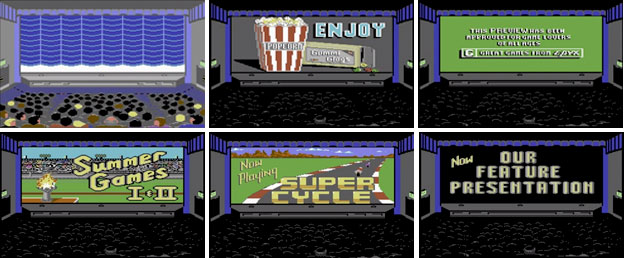
The developers let the genre help dictate the tone of the game. It was a bit of inspired design actually and helped bring players right into the world Epyx had created. The title screen for the game was the front of a classic movie palace. Players selected the type of adventure they were going to have by changing the movie posters above the ticket booth. They first chose which monster would be the star of the feature, then which city they would be visiting and last what the of adventure they would be on. Several major cities from around the world were playable; Tokyo, San Francisco, London, Moscow, Paris and New York. Players could choose to search for an item, usually a monster offspring, escape from the city and pursuing army, go berserk and be scored on how much damage they caused, or destroy a landmark. The next screen completely immersed audiences and was one of my earliest PC gaming memories.


Gamers were placed inside the theater to watch the monster film they had created. The curtain went up and the lights dimmed. There was an advertisement for snacks followed by a preview of other upcoming games by Epyx. Even though I was looking at single screen previews I was completely caught up in the experience. I felt like I was in the movie theater as well. After the trailers the feature presentation screen appeared. A title card announced the origin story of the creature, where it was headed and what it was after. I knew then that no console game could ever hope to match the experience offered by the PC. On top of the movie theater loading screens there were simply too many possible combinations of missions for a single cartridge to hold.


The game dropped players right in the middle of the action. There were a few things to keep track of at the bottom of the screen. A clock kept track of how long the player had been in the city or how many minutes they had to escape. The player had an endurance bar, one attack and the ability to scream or roar. Players could move in four directions, walk over traffic and topple buildings. On missions where players had to search for something or knock over a landmark a second bad would appear to let players know how close they were to the objective. If a player ran out of energy or if they completed the objective then the game would end. The city levels were very large, the ability to walk in any direction opened up the world for exploration. The characters each had their own unique animations and attacks.

No console game even remotely offered what Movie Monster did. It was easy to get caught up in the gameplay when the technology seemed years ahead of anything Atari, Nintendo or Sega had at home. The best part was the sheer number of possible monster / city / objective combinations offered to players. They could go back to the game again and again and never play the exact same experience twice.


When the level ended the screen went dark and the final score was tallied up. Players then found themselves back in the movie theater. The screen would sum up the devastation and whether or not the monster was successful, the credits would then roll. After the credits the lights would come back up in the theater and the curtain would drop again. I enjoyed that there was a virtual theater on the PC just waiting for the next monster movie to queue up. Most other games put players right into the action without letting them get settled into the world that the developers had created. This little bit of immersion went a long way. It demonstrated everything that was right about PC gaming. As much fun as Movie Monster was it was another giant monster game released in 1986 that became the star. We shall look at this game in the next blog.

Monday, February 5, 2018

The Giant Monster Series, part 1...


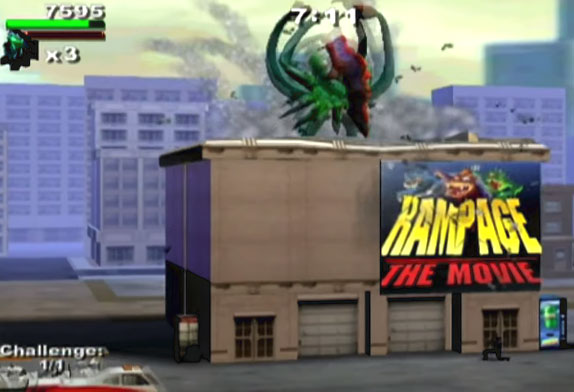
Friends, this is a repost from an old 1UP series. It took a long time coming as I had started on it a little when my computer crashed in 2009, then I went back and added some new things after my second computer crashed in 2016. I put the idea on the back burner until I was able to restore my system. As you can see it took a while for that to happen. What I'd like to do is celebrate the most influential giant monster games of the past two decades. The entire reason I went back to the archives was because of the Rampage movie featuring Dwayne "the Rock" Johnson. I have little-to-no-faith that Hollywood will make a good movie out of a fan-favorite game. In fact the series itself made fun of the idea back in 2006 with the game Rampage Total Destruction. In it the monsters could destroy the set that they were filming the movie in.There were many good titles and not-so-good titles released over that time as well as many rarely seen gems. We owe it to the creators to celebrate the best ones. The best way to do that would be to go back to the origins of the giant monster genre in pop culture and find out why it had such an enduring presence.


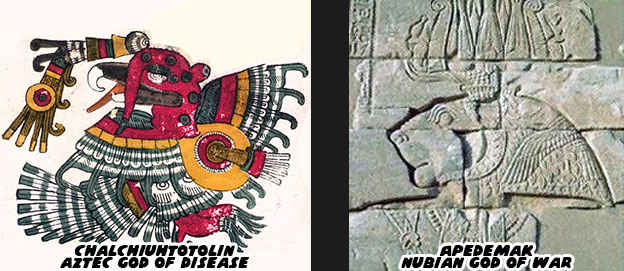
Giant monsters had been a part of the cultural landscape since the dawn of humanity. Before there were civilizations there were tribes. People were nomadic and fearful of the unknown. Their understanding of the universe was primitive by the very definition of the word. The sun, stars and moon were perpetually suspended in the sky. Perhaps there were giants holding the celestial bodies high above them? The forces that generated the winds and tides were invisible but sentient. Tragedy was always a step away thanks to these thinking but unfeeling phenomena. Origin myths were accepted as fact as they were passed down through the generations. Religion spawned around many of these myths. The gods of ancient Mediterranean, Asian and American cultures shared similar traits. Personalities reserved for people were applied to the invisible forces. Man created the monster as a way to cope with disease and disaster, whether they were self inflicted or natural.


The myth of the giant monster was created to make sense out of chaos. It you were caught in a sudden rainstorm then it was because a god was weeping. Thunder and lightning were caused by giants fighting. Many of the ancient gods appeared as enormous beasts, some with the body of a man and some made up of multiple creatures. These were the precursors to the modern horror monsters. Stories of dragons, giants, ogres and trolls could be used to control the masses. Children listening to fairy tales were not far removed from followers listening to religious leaders. The monsters in the forest were in league with creatures in the closet, waiting to drag weak-willed people to the underworld. At some point the stories evolved to include lessons on morality and temperance. Heroes learned to be defiant in the face of adversity and remain faithful insurmountable odds. Jack could slay the giant just as easily as Jonah could accept his fate in the belly of a giant fish. The giant monster became a tool for writers and storytellers. Stories featuring giant creatures could entertain but they could be used to make audiences cope with their own mortality. The mix of entertainment and morality played best on the silver screen.

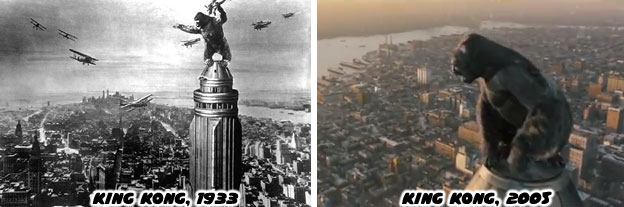
Audiences were blown away by the amazing effects featured in the original King Kong. A stop motion ape, no larger than a foot in real life, placed in front of a miniature jungle convinced audiences that lost continents existed. The sense of awe and wonder felt by audiences was palpable even decades after the film was released. The 1933 classic was re-released and remade several times over the past century. The modern retelling by Peter Jackson in 2005 cost millions to produce and used some of the most cutting-edge effects in a film. Whether they saw it in a theater, on re-release or television almost every cinema fan was very familiar with the story of the giant ape being taken from his primeval island and falling in love with a blonde explorer. Ultimately the giant ape is killed when he kidnaps the girl and climbs to the top of the Empire State Building and is shot at by airplanes.

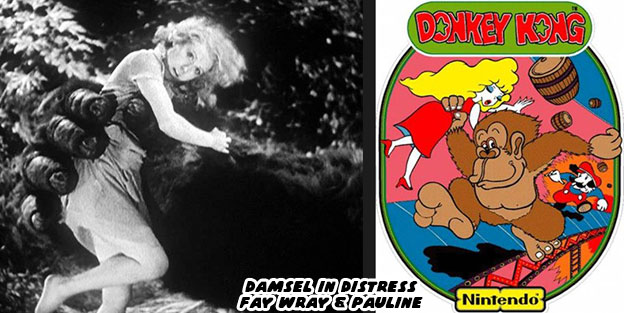
King Kong became part of the mainstream consciousness and even influenced global culture. Decades after it was released a young Japanese game designer named Shigeru Miyamoto created two of the most famous gaming mascots ever. The mustached Mario was allegedly based on his old apartment manager however the title character, a large ape named Donkey Kong, could not have been more similar to the original Kong. He too climbed to the top of a structure while holding onto a blonde damsel. Plus he was only defeated when he fell from the structure. It was all too similar a scenario for Universal Studios and they sued Nintendo over the game. Thankfully Nintendo won and games inspired by other giant monsters could be developed as well.


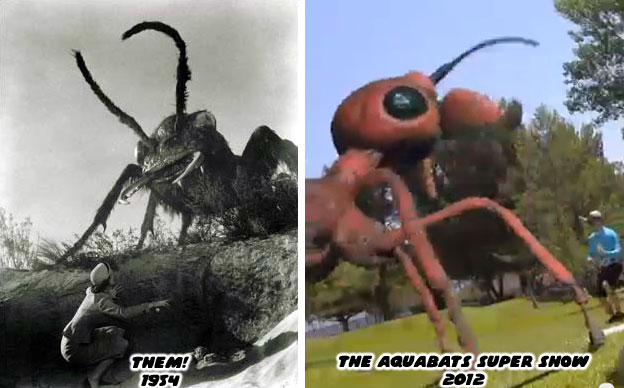
The monster movie genre peaked in the 50's and 60's. Post WWII America was in dire need of entertainment. The baby boomers were enthralled by the spectacle provided by monsters, aliens and creatures of all shapes and sizes. Studios were constantly battling to outdo each other with special effects. Camera tricks and stop motion models were used for some shots while gigantic animated props were used for close ups. These enormous creatures terrorized audiences and haunted the dreams of many a child. In essence the same visions of ancient gods were used to spellbind contemporary viewers. The earliest monsters created for film were often based on existing creatures. A lizard or insect made enormous was absolutely frightening. Of course today many of those early creatures could be considered campy but their entertainment value could never be argued. Those giant creatures eventually became woven into pop culture. The giant ants in the 1954 film Them! for example were undoubtedly the basis for the giant ants from the Man Ant episode of the Aquabats Super Show.


King Kong gave giant monsters a presence and personality. The monsters that came after built on his legacy and introduced new concepts to film. They developed trademark roars or other gimmicks to set them part from the other studio monsters. Overseas the influence of western movie monsters was not missed. The importance of the films and monsters coming out of Japan would forever change the landscape of cinema. The most important of these new movie monsters was the result of a great tragedy. We'll look at the daikaiju that started an industry in the next blog.