Showing posts with label david jaffe. Show all posts

Monday, December 30, 2024

Manifesting a press kit, or how much I love War of the Monsters…

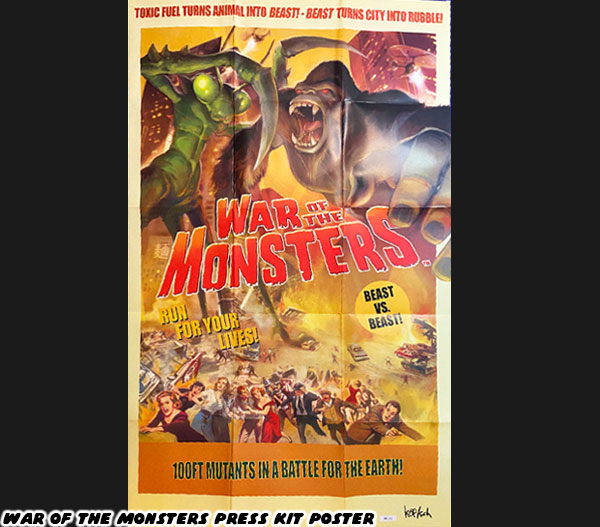
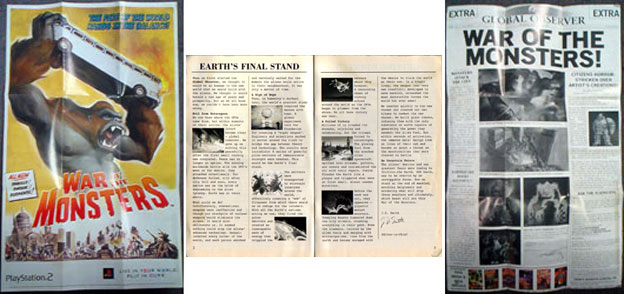
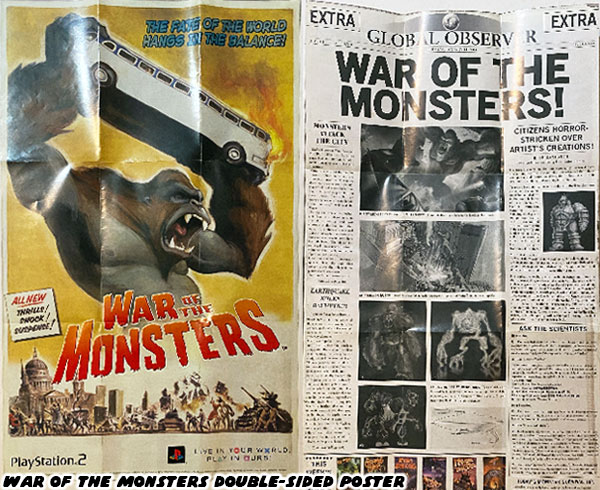
This is the second to last blog of 2024. Thank you all very much for joining me this year. In fact, thank you for inspiring me to have two highly productive years. I cannot guarantee to keep this manic pace into 2025, but I am going to try. If I need to take a break I will let you know. Today I’d like to share a sort of follow-up to my poster series. I have a massive poster that I want to share, but I think the story of how I got it is even better. The poster immediately below is not the one I'm talking about. This double-sided poster is made to look like a classic monster poster on one side, and on the other it looks like the front page of the Global Observer newspaper. This is included with the game itself. How cool is that?!

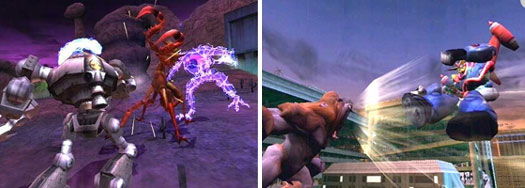
I am a big fan of the Sony Playstation 2 cult favorite War of the Monsters. In fact on this blog I mentioned that War of the Monsters is one of my favorite games of all time. The game was designed by David Jaffe, and his team at Incognito Entertainment. It was a collection of some of the best game creators ever. They worked on, or released many of the first generation Playstation hits, including Twisted Metal, and Warhawk. On the PS2 they created Twisted Metal Black, Downhill Domination, and a little gem called God of War. Can you imagine how great the world would be if publishers stopped insisting on sequels, and let developers come up with unique experience. But I digress…

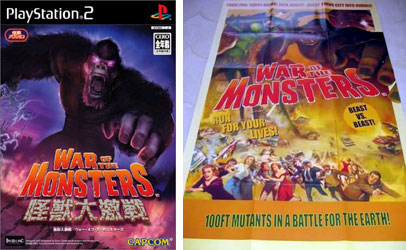
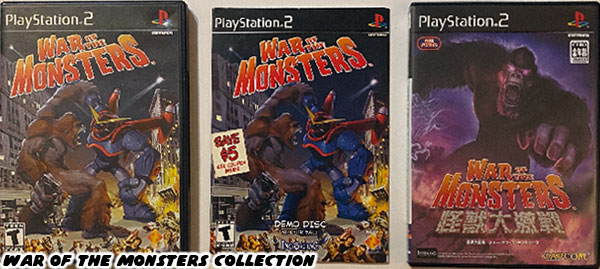
I loved the game so much that I collected a copy of the game demo, and even a copy of the Japanese release of the game. I am trying to figure out how to get my hands on a copy of the Korean version of the game. In addition to playing exceptionally well it also celebrated the golden age of the giant monster films circa the 1950's-60's. War of the Monsters captured a moment of American history much better than games with a bigger budget, or even bigger licensed names like King Kong or Godzilla. If you've never played the game here’s part 1 of my deep dive, and part 2 of my deep dive.

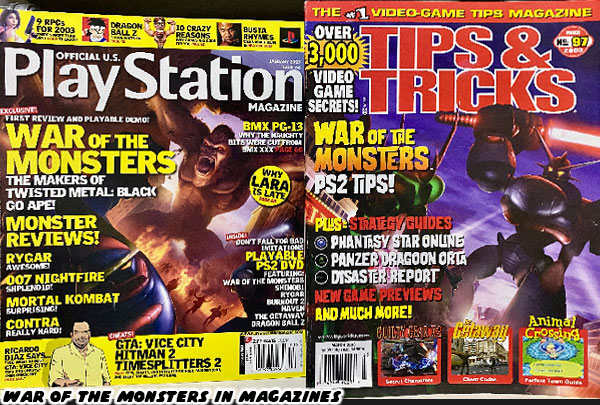
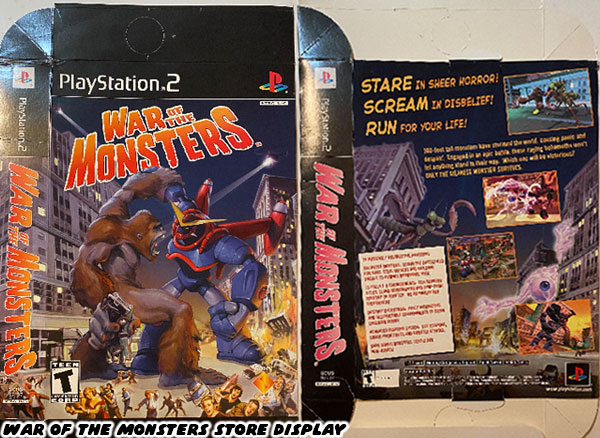
I'm such a huge fan of the game that I tracked down everything that I could get my hands on that featured it. Whenever they made the cover of a magazine I would make sure to collect it. I then started searching for items that would have been used in stores. The Playstation 2 games would sometimes have gigantic boxes acting as displays. I got a copy of the War of the Monsters one.

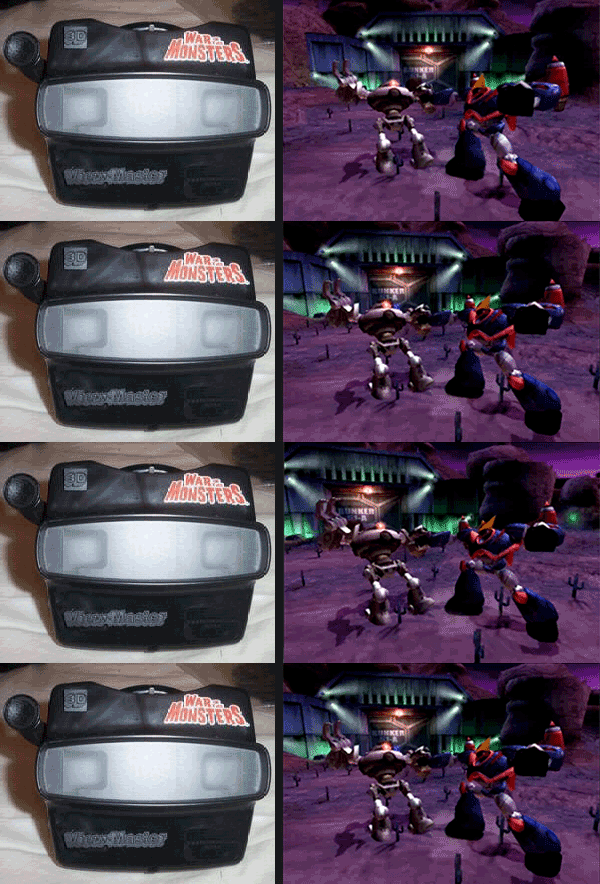
The hardest things to track down were for press releases. One of which was a ViewMaster, you know those red or black toy binoculars that show you a 3D scene? They had one made up of 3D game screens, and it was mentioned in an old 1UP article. I asked the 1UP editors if I could buy their copy, but they had already gifted it to someone else. I searched high, and low but could never get my hands on it. If you are reading this, and happen to have one in your collection you don't want any more please let me know. I can offer you a fair price, but just a reminder I'm raising a family on a teacher's salary. So money is the thing I'm always short on. Just as rare as the ViewMaster was the press kit that Sony sent out with a demo of the game, an extra disk of assets, and a massive poster.

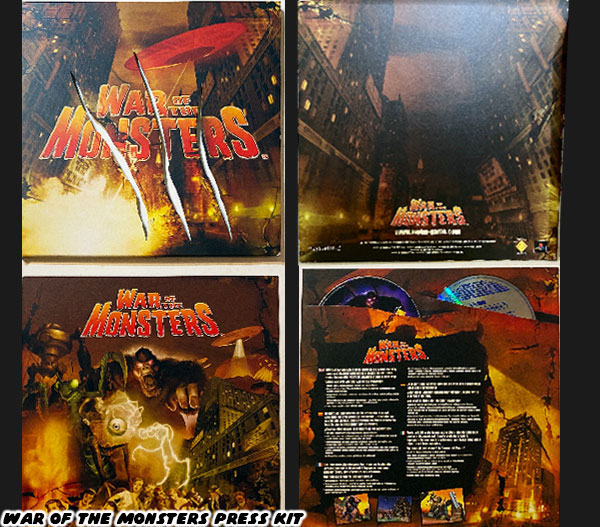
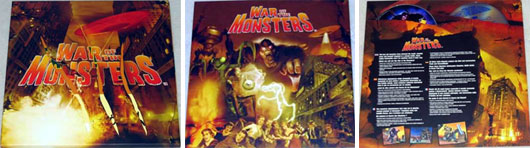
The album-sized press kit looked like a record but with three claw marks scratching through the center of it. It was a recreation of the opening cinematic. We can see some of the monsters peeking through the scratches. When you pull out the sleeve you can see all of the monsters featured in the game. On the back of the insert was information about the game and two discs. One of them had a demo of the game, and the other had screenshots, and graphics for the media to use in their articles. I was so happy to get my hands on this because I’ve always wanted high-quality reproductions of the loading poster art. Unfortunately not every loading poster was in the assets.

The poster in the press kit was HUGE. Also it featured art that was not seen in the game, or in the magazines. Some people were selling the smaller game store versions of the posters for hundreds on eBay, however the one in the press kit was a “two-sheet” in size or about 40-inches by 60-inches. It’s maybe the second or third biggest poster in my collection. My largest poster is an AND 1 ad featuring the work of Kadir Nelson. That poster is six-feet by four-feet. I believe the War of the Monsters press kit landed in my hands thanks to the power of manifestation.

One summer I was walking around the Disneyland Hotel with my kid. The missus was covering some press event, so we were just killing time. We were talking about games we wish we had in our collection. I mentioned that I have most of the rare games I want, but I wished I could find a copy of the WOTM press kit. My kid wished that there was a Psychonauts sequel (this was before the game was announced). Without missing a beat we turned the corner and walking right towards us was Tim Schafer, the founder or Double Fine. I said “hey it’s Tim Schafer!” He was surprised that I recognized him. We said hello, I got a picture of my kid talking to him, I wish I could find it so I could share it here. My wife did however snap a picture the second time we ran across him. 

Tim was very nice, we said our goodbyes and he went on his way. A few days later the press kit that I was talking about to my kid turned up on eBay for a ridiculously low price. About a month later the Kickstarter campaign started for a new Psychonauts game. Ever since that day we believed in the power of manifestation. Speaking of which, I hope to win the Powerball Lottery in 2025. Anyhow, I hope you had a great 2024. I look forward to sharing stories with you in the new year. Take care, and tell me what you are up to for New Years! As always if you like my blog, and would like to sponsor me please visit my Patreon page and consider donating each month, even as little as $1 would help make better blogs and even podcasts!
follow the Street Writer on Patreon!

Wednesday, April 12, 2023

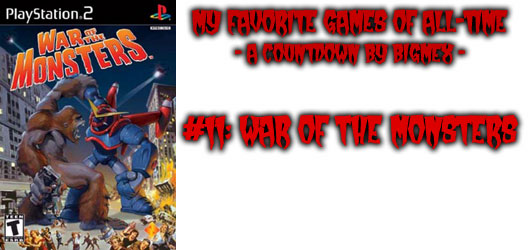
My favorite Games of All-Time #11: War of the Monsters - Originally published on 1UP - June 9, 2006

When you reach the top there's no place to go but down. I don't think this rule applies to the best game designers out there, certainly not David Jaffe. The 11th spot is held by the best game ever to come out of Incognito (Incog Inc.). Before a good chunk of the team and David went to Sony Santa Monica. I can say with absolute certainty that I enjoyed this game more than God of War. Not to say that GoW didn't deserve to be in my all-time favorite games but War of the Monsters (WotM) pulls further into the details of a great game concept, into the details of balanced fighters and classic monster movies.

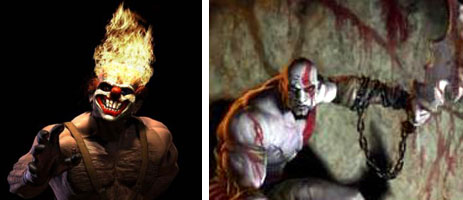
If you look at God of War as part of the Incog. legacy you can see where the game came from. The idea of one man versus the world was spawned in Warhawk. The dramatic characters, filled with tragedy and violent backgrounds were undoubtedly inspired by Sweet Tooth and the cast of Twisted Metal.

The massive levels, great particle effects and smooth animations pulled from what they learned in Downhill Domination, the mountain bike racing game. Kratos' final battle with Ares is one of the best ever designed in any videogame. The heart of GoW's fighting engine and the scale of Ares and Kratos at the final battle can be traced back to Incog Inc's 2003 sleeper-hit War of the Monsters.

War of the Monsters is the best brawler on the Playstation 2.

Think about it for a second.

I rank WotM ahead of Urban Reign and Beat Down. ahead of Iron Phoenix, the Bouncer, the craptacular Marvel Nemesis, Naruto, One Piece, Def Jam and every Mortal Kombat adventure game. You name the brawler on any other system and I would rank WotM above it. Lizard Man would not agree with the ranking over the Smash Bros. games. It wouldn't deter me from doing so.

That is because WotM is greater than the sum of its parts. It meets and exceeds my definition of a great game. The graphics are superb, the animation smooth, the fighting engine is balanced, the enemy AI is ruthless, the character design is brilliant, the plot well developed and the story is universally great. WotM is a concept that is executed better than any game before or since.

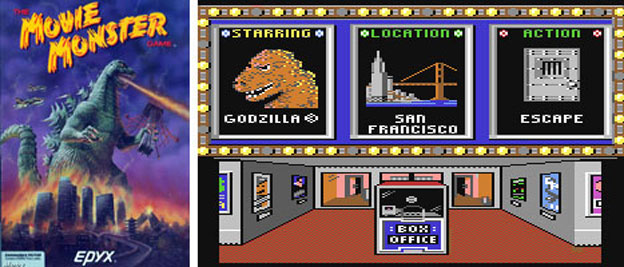
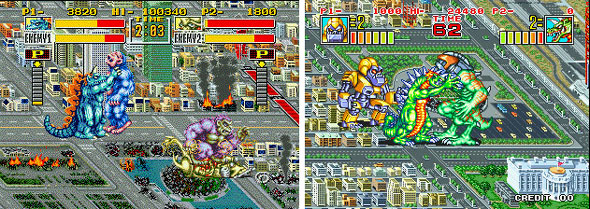
I must acknowledge a few of the monster games that came out before WotM. The classic computer game Movie Monsters by Epyx, Midway's Rampage and my previous favorite monster brawlers/wrestling games, King of the Monsters 1 and 2 by SNK.

Aside from being a great brawler, War of the Monsters has a certain charm to it. In part because the entire game, from beginning to end, plays like a series of movies. Instantly the game feels like a lost memory of a drive in theater, a rubber suit (kaiju) flick from Japan or a black and white horror movie that you saw when you were a kid. In fact all of the game menus are set on and around a drive-in theater. Check out the official webpage to get a sense of what I'm talking about.

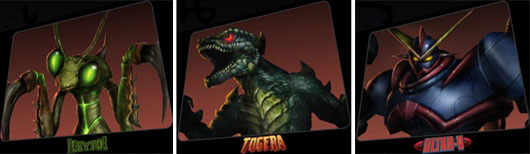
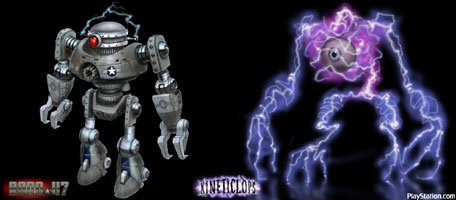
The characters in the game are an homage to many of the classic movie monsters. For example the giant praying mantis called Preytor is inspired by the giant ants from the movie "Them." The giant dinosaur based on Godzilla is called Togera. The Japanese robot called Ultra-V is inspired by Mazinger-Z/Tranzistor-Z. There are 10 characters in the game with four skins that can be unlocked for each. Some of these skins are supposed to represent a completely new monster, making the total count of playable characters at 40.

With a few visual cues, a few lines of text and plenty of imagination the story unfolds. An alien invasion terrorized the Earth. Scientists invented shield generators to destroy the ufos hovering around the major cities. However the downed ships released radioactive waste which caused mutations in animals, robots and even inanimate objects. These newborn monsters began to battle for supremacy amongst the cities.

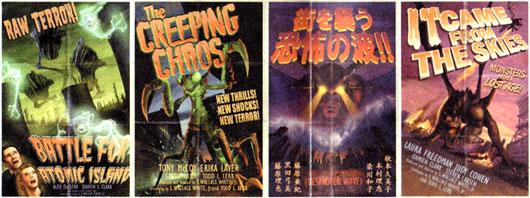
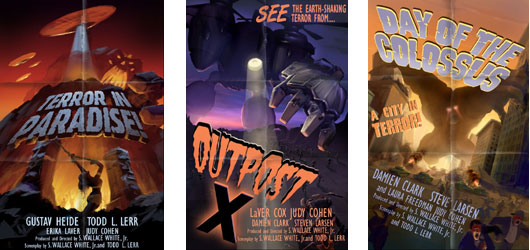
Each level is prefaced with a movie poster. Classic pulp images and shock graphics herald the golden age of monster movies from the 50's and 60's.The images and titles of the posters (and even the detail of actors' names) help keep the cinema theme running well into the game. The posters even feature fold lines as if they were pulled from a magazine. The graphics on the posters and the levels they represent as inspiring as the classic movies they were based on.

There is no dialogue in the game. The monsters communicate with a few gestures, and very short in-game cinemas keep the pace moving. Your character becomes the star in a series of monster battles. For anyone that's ever wondered what a Godzilla game would be like if it were ever done right, now is your chance. Plus I cannot emphasize that the devil is in the details.

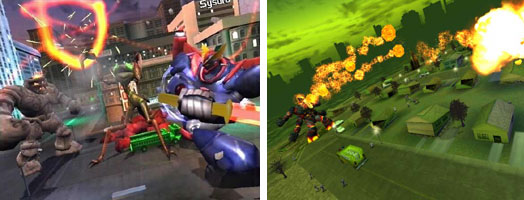
Each monster is about 100 feet tall. The sense of scale is never lost throughout the game. Each level is populated with details. A secret military base has cyclone fence and guard towers that only come up to your ankle. You can even read the warning sign on the miniature fence. Cities have unique billboards, stores have posters in the windows and office buildings have electronic signs. The nine levels in the game (plus a few bonus levels for other game modes) were designed to help give you a feeling of weight and mass. The trees in a park snap and fall as you walk over them. Tiny pedestrians flee in terror and you can actually step on them and see the blood splatters left in your wake. You can pick up cars or trucks, target opponents and let them fly. You can grab helicopters out of the air, topple skyscrapers... well you get the idea.

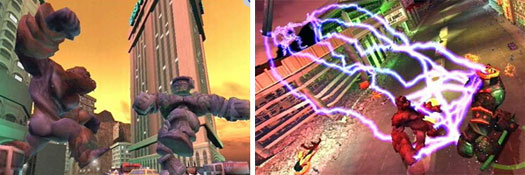
Despite the size of the characters, they still manage to move rather quickly through the environment. The game has a very rapid, almost frenzied pace. You really can't take too much time appreciating the details because there is always a monster ready to stab you in the back. Like other brawlers, each monster has their own strengths and weaknesses. There are heavy hitters, quick fighters and all-around brawlers. All of the monsters have the ability to perform devastating combo attacks and even fire off special moves. These special attacks vary. All have a close range and distance special moves. For example Kineticlops, the monster made out of electricity with one giant eye, has a special attack that allows a jolt of electricity to pass through multiple opponents. If timed right this jolt can cross an entire level and take out all of the opponents. These special moves often mean the difference between winning and losing a battle.

Using the environments is a must for victory as well. Every level in the game has a secret or two waiting to be discovered. The hilly Baytown (San Francisco) has lots of places to hide, a monster that does enough damage to the city can actually cause an earthquake to completely change the lay of the level. Atomic Island has a nuclear reactor that can be made to vent and burn opponents to death within a few seconds. The Japanese island of Tsunopolis is susceptible to tidal waves... These hidden level triggers were first introduced in Incog's Twisted Metal.

So what about the bosses in the game? WotM would not work without the use of three of the toughest and most original boss characters in any game. Goliath Prime, a massive robot and boss of the secret military base in Rosdale Canyon. Vegon, a giant three-headed plant monster from Atomic Island that can swallow the other characters in the game whole. Last but not least is Cerebulon, the leader of the alien menace and possibly the toughest boss that Incog has ever created. Each of the bosses evolves during the course of the battle. Like all great videogame battles, strategy must be employed if you want to live long enough to see the next level.

People that are into the art of videogames should track down a copy of the game. I talked a bit about this game with Ryan Braman, the artist that did the cover art of the recent Rampage Total Destruction game as well as the Tips and Tricks magazine featuring Rampage. Those fortunate enough to work in the media got their hands on a press kit styled to look like a tattered movie kit.

This kit not only included a demo of the game, but a media cd with video and images as well as a massive poster. If you are one of the lucky people that got their hands on a copy of the media kit and don't want it any more how about hooking me up?

Not that consumers were short changed. The box art from Japan was just as dramatic as the one in the USA version. In fact the details from the game spilled over into the packaging as well. The instruction manual is written like the fictional newspaper used in the game, the Global Observer. In addition to the booklet there is a fold out poster with a graphic on one side and a full newspaper page on the other. I have not been as impressed with a booklet for a game since. Seriously, aside from Incog and Sony Santa Monica, who else takes the time to recreate as much detail in the manuals?

The only gripe many people have was the length of the game. Even after you unlock all of the 2-player mini games (whose load screens look an awful lot like Colecovision titles) and character skins, the entire experience wraps up too quickly. We are left with a feeling that this game could easily have been twice as long. We only caught a glimpse into the minds of Incog and David Jaffe. For what it's worth I still say the adventure was still worth it.

There were enough details in the game for people like me to obsess over and enough replay value for those that long for a great monster brawler. War of the Monsters is what the recent Rampage should have been. War of the Monsters is what every Godzilla game could have been. But rather than lament the games that could have and should have, we are left with the one game that is. This is the greatest monster brawler ever created, and one of my favorite games of all-time. Believe it!

I’d like to hear your personal top-10, top-20, top fighting games, top sports games, or top games in any genre. Let me know in the comments section please. As always if you would like to sponsor me please visit my Patreon page and consider donating each month, even as little as $1 would help make better blogs and even podcasts!
follow the Street Writer on Patreon!

Monday, March 6, 2023

God of War, exploring the roots of Kratos' design

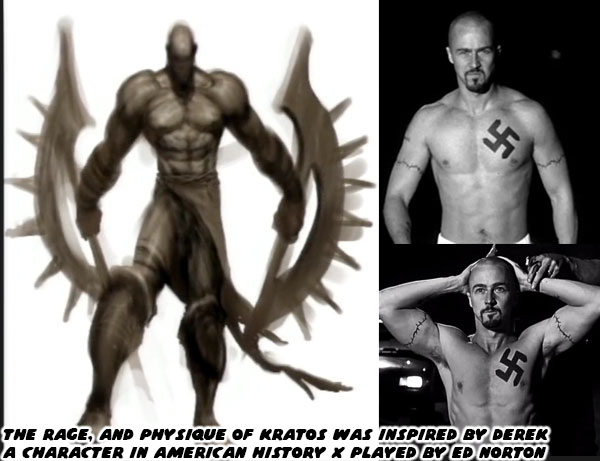
While I was working on the God of War blogs I was going back through a lot of concept art of the series. It reminded me of some early behind the scenes footage. I'd like to explore the origins of Kratos, and how the games could have gone in a completely different direction. I'd like you to use your imagination, and ask yourself what if Kratos had looked like he did in his early art. For starters let's talk about his final design. David Jaffe is credited as the father of Kratos, but he defers the look, and especially animation to Cory Barlog. David wanted the hero of his story to be a rage filled monster. He didn't necessarily have to have the physique of a swollen bodybuilder as most games, or comic book characters did at the time. Instead he wanted someone that was strong, but aggressive. The template he pointed to was the Neo Nazi character Derek Vinyard from the film American History X. Derek was played by actor Ed Norton.

The film is an ugly, but realistic portrayal of Neo Nazis in the USA. The ways in which they are recruited, and groomed by their betters to spread their agenda. Derek is by all means an unforgivable character, especially after killing two Black men, and being sent to prison. What happens next is an unraveling of the character, the roots of his hate, and rage. Ultimately he has to find a way to keep his hate from spreading to his younger brother. It's a great film, but not for everybody. But I digress. The character of Kratos is meant to have a similar tragic origin as Derek, and share the same emotive qualities. With that in mind I think Mr. Barlog nailed what Jaffe was asking for. It was a far cry from the earliest prototypes for the character.

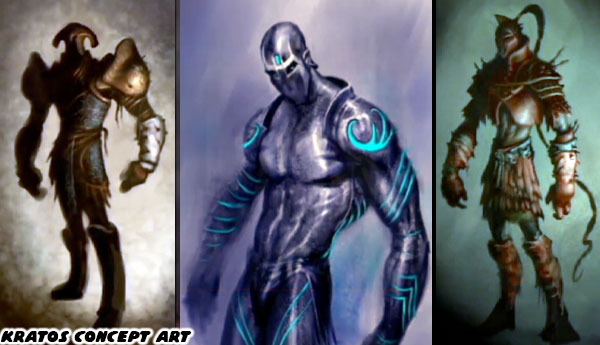
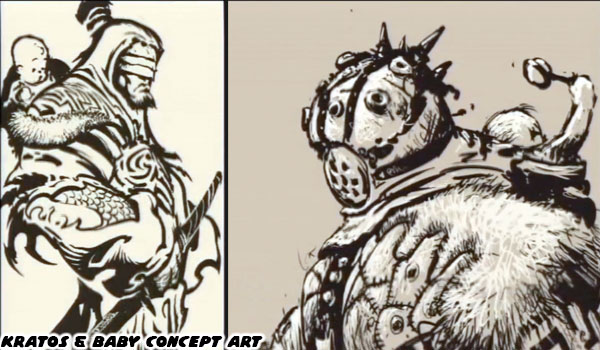
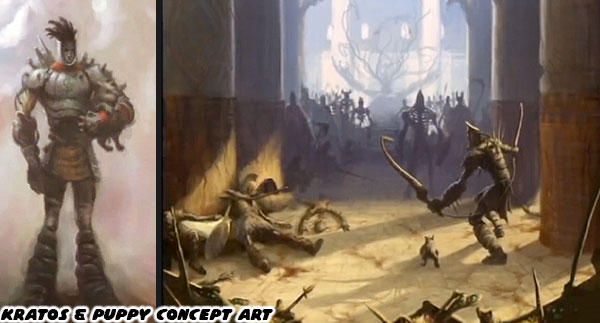
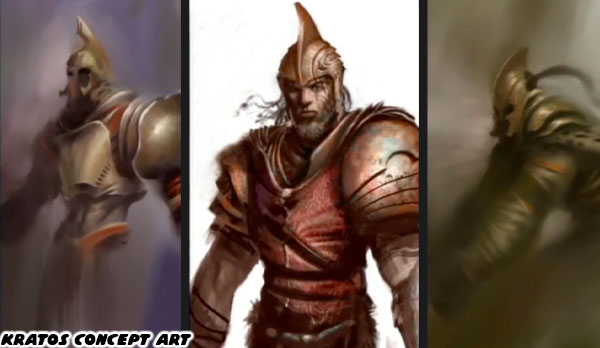
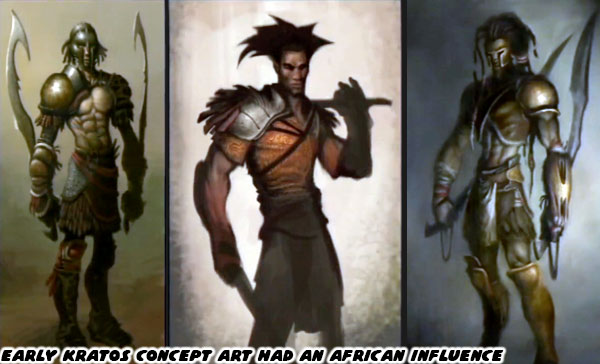
The studio knew they wanted to tell a swords, and sandals adventure. So they tasked the art team to create a legendary warrior. This fighter didn't necessarily have to be based on an actual historical figure. Their armor, and weapons didn't have to be rooted in reality. Leaning on fantasy was acceptable. Dozens, if not hundreds of drafts were submitted. In the earliest forms the character was completely armored. You couldn't really make out a face, skin color, or any other distinguishing figures. It could be the type of character that any game player could place themselves in. It was rarely done in gaming, but it had worked previously with characters like Master Chief from Halo, and Issac from Dead Space. The armored warrior was okay, but audiences needed a reason to root for them. Some of the early drafts also gave this warrior a baby to care for, or transport.

The studio considered this draft of Kratos the Lone Wolf and Cub. The idea was copied many times from the works of a manga series of the same name from 1970. The story of Ogami Itto the former executioner, and his son Daigoro is set feudal Japan during the 1700's. Written by Kazuo Koike, and illustrated by Goseki Kojima the series has been published in multiple languages, and been adapted to anime, and film. It is easily one of the greatest stories of all time, and the fact that the majority of the adventures were told without dialogue helped make it an international hit. Many of the people working on the God of War franchise would have probably been familiar with the manga, if they didn't grow up reading it. I can imagine that the early faceless warrior would have instantly have a ton of pathos if he had to raise his kid in a harsh environment. Yet that was one proposed idea to get audiences to root for the hero. The other idea that was floating around in the early days was to give our hero a puppy.

Imagine how the game would have played if our adventurer was raising a dog, or wolf cub. It's not hard to guess that the combat system, enemies, and stage designs would have to be built around what this little sidekick was capable of. There had actually been a precedent for this type of adventure. You would have to go all the way back to 1989 to see where it started. Sega had a side scrolling action game called Shinobi that they released in arcades in 1987. In it the ninja Joe Musashi has to infiltrate a crime organization armed with his sword, and throwing stars. The sequel Shadow Dancer: The Secret of Shinobi has Joe fighting alongside an attack dog named Shadow. He can send the dog to distract enemies while he then strikes them down. It made for an interesting idea, and a memorable game. I'm not sure if that mechanic would work in 3D, but it was interesting that Sony Santa Monica had considered it.

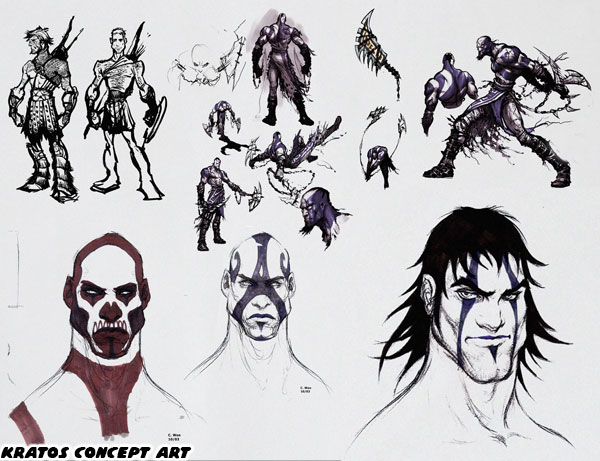
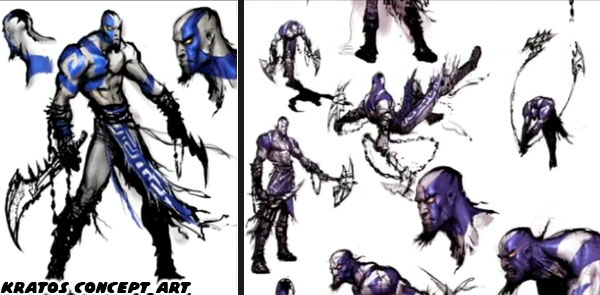
Jaffe would challenge his art team to try different things to help visualize the main character, and type of game he wanted to create. Instead of just going for realistic, or fantasy warriors he would say draw what the physical embodiment of rage would look like. What about war, or anger, or hate? What does that look like if those intangibles were a person? Lots of ideas were submitted. Characters made of fire, and spikes. Assassins covered in blades. All sorts of drawings flowed in. Little by little they discovered that they could humanize what they were going after if audiences could see the face of the protagonist. At first it was just an open face helmet that they wore. Perhaps some war paint, or a tattoo to give them personality. But if this character was going to have face markings then it made more sense to get rid of the helmet completely. Little by little the ideas for Kratos were starting to come together.

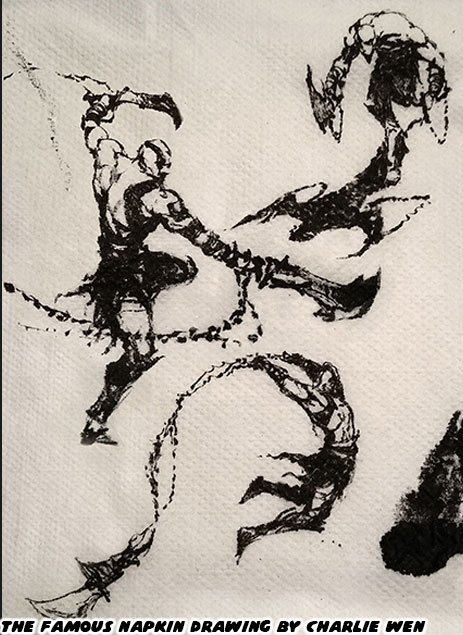
Would this character have hair? Would they be covered in scars? Were they covered in paint, or tattoos? If so were these markings tribal in nature? The team went back to the drawing board. They started stripping away the armor, and in doing so they learned it was easier to read the physicality of the character. To make him appear more animated. They saw how much they could take away from him, while still making him look like a warrior. In the end the costume was essentially from the waist down. It was the pteruges, the pleated skirts worn by Greek, and Roman soldiers, shin guards, and sandals. The rest was tattoos, and an attitude. Figuring out the weapons he would be using was a challenge in itself. Swords, throwing spikes, axes, everything was considered. As the game engine was coming together one of the senior artists, Charlie Wen, was sketching on a napkin at lunch. The form, weapons, and poses were an amalgamation of the best ideas from the studio. He brought his idea back to the studio where Jaffe pretty much confirmed that was exactly what they were looking for.

The question then came what to color the character. Jaffe noticed that some other sketches had a ghostly white character. The artists planned on going back, and painting the skin after they had colored in the armor, and weapons. Jaffe said to keep the character pale, and they would create a story as to why he was colored like that. This is how the ashes of his slaughtered family worked into the canon of the game. The team had to figure out what the markings would look like. Were they earth-tones, like mud or camouflage? In the earliest drafts the iconic tattoos were blue, and purple. Purple was a rare color to create in ancient times. It would really only be seen on royalty, or the very rich. The warrior was anything but an elite. Blue was a strong choice, but red popped even more on the screen. So Kratos came together little bits at a time, and after lots of fine tuning with many fantastic artists. It was more than just giving swords to a Neo Nazi movie character.

There were a few drafts that I especially enjoyed. These were the ones where Kratos had a distinct African origin. The character was not only Black, but his armor, and weapons were unlike anything that we had seen in traditional media. I like to go back, and think about how the franchise would have turned out if the settings were Africa. Not Egypt necessarily, although their pantheon would be a good place to end up. Do you think this character had potential? Do you think it would be fun to revisit the classic GoW gameplay, but with a different leading character? Perhaps set in the same universe, but another part of the world?

I hope you enjoyed this dive into the origins of Kratos. Is there a favorite draft of the character that you enjoyed best? Maybe it was a skin you could unlock in one of the game. Would you have enjoyed the game more or less if Kratos were dragging a baby, or puppy along with him? Let me know in the comments section please. As always if you would like to sponsor me please visit my Patreon page and consider donating each month, even as little as $1 would help make better blogs and even podcasts!
follow the Street Writer on Patreon!

Wednesday, February 1, 2023

How God of War II improved upon perfection...

In an earlier blog I mentioned the elements that I thought made for a great sequel. When movies were exceptionally made, told a riveting story, and had actors that made us believe in the world the director had created then it was possible to have an even more amazing sequel. I talked about how Aliens, Back to the Future II, The Empire Strikes Back, and Terminator 2 were awesome follow-up movies. They had raised the stakes, gave more important roles to the main characters, and even let the villains win to make a come back feel even greater. Great video games also made use of these lessons, God of War was no exception. Sony Santa Monica had raised the bar for an entire console generation. Other developers tried to copy the formula, or the play mechanics (Sonic Unleashed I’m looking at you), but it just didn’t work out. It was going to be all but impossible to top the game on the current Playstation 2 hardware. God of War came out in 2005, and most everyone believed that a sequel would be released on the Playstation 3, which would come out in 2006. Instead it was announced that God of War II would be released in 2007, and for the Playstation 2. Audiences couldn’t believe it. They thought that Sony was shooting themselves in the foot. Instead it turned out to be a very calculated risk. Since the PS2 was still a popular selling console, and it already had millions of units installed all around the world then it would make GoW II an instant best seller. Sony would be able to recoup a huge cost relatively quickly. Also the team at Sony Santa Monica was developing both GoW II, and GoW III simultaneously. The studio was learning the new hardware from scratch. The tricks that they had learned with the PS2 wouldn’t necessarily apply here. However they would be able to ensure that thematically the look, feel, and story of GoW III would be seamless between the platforms.
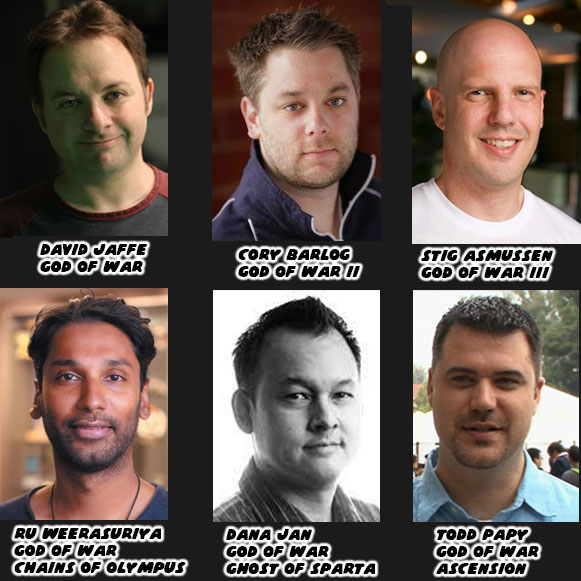
It took a lot of hard work from Sony Santa Monica, and although there had been different directors through the history of the franchise, they were able to make sure that the games felt like one connected story. Nothing felt out of place, nothing betrayed the spirit of the first, even as some events were retconned. When it came to this series I honestly felt that the first game in every chapter was perfect, and yet somehow the follow up was even better. To me that means God of War II was better than the original. I see the PSP games, and PS3 games through a similar lens. God of War III was great, but I think God of War Ascension, the second PS3 game, was even better. God of War Chains of Olympus was amazing, but God of War Ghost of Sparta was a step above perfection on the PSP. The reason why each follow up I consider better than the prior has to do with the team. In the first game the studio is breaking new ground, they are still getting a feel for the hardware, and software. They are still trying to figure out who the characters, and villains are. They go back, and forth refining the locations, villains, puzzles, and mechanics. By the time a sequel gets made the studio is filled with veterans. They know exactly where they are with the technology, characters, and game play. They are able to add new staff members that bring in more experience, and help raise the next game to even more amazing places. With God of War II we were able to hit all the notes that made the first game amazing, and then expand on everything tenfold.
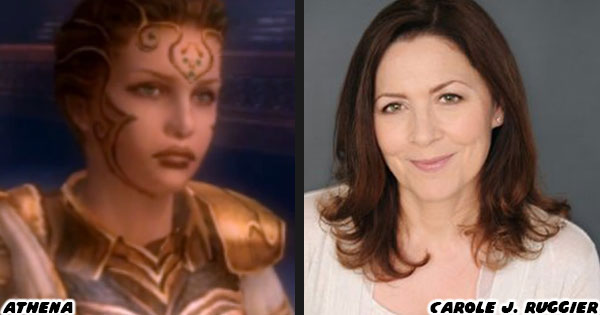
The game begins with the Spartan army laying siege to Rhodes. Conquering another city for the honor of Kratos, the new god of war. Athena appears in the flesh, she was simply a statue in the first game. Voiced by Carole J. Ruggier, the actress was fantastic throughout the series, and held her own with T.C. Carson, and Linda Hunt. She warns Kratos that the other gods will not tolerate his actions. He brushes her off, and leaps from Olympus to finish razing the city. As with all tragedies Kratos doesn’t even realize that he became the monster that Ares was at the start of the first game. Kratos even turns into a giant when he starts demolishing Rhodes. Just as Ares was a giant when he was attacking Athens. To try, and stop the mad god of war Athena strips Kratos of some of his power, and gives it to the Colossus of Rhodes. One of the fabled ancient wonders of the world. The Colossus comes to life, and begins advancing on the player. Audiences are given time to relearn the controls of the game, while the giant golden statue stalks us in the background. Even the human-sized Kratos is still too much for the army to deal with. He was as powerful at the start of this game, as when he was at the end of God of War. He even used the golden blades of Athena, instead of the Blades of Chaos, which he had earned at the conclusion of the first title. Right away we can tell that everything that made the original game memorable has been cranked up. The visuals, sound, animation, control, and effects were improved over the first. That in itself seemed impossible.
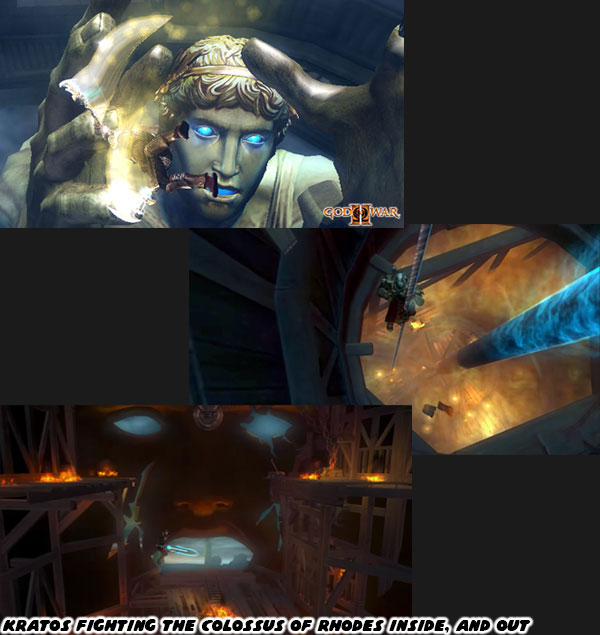
The game begins was a multi-stage encounter fighting the Colossus. Kratos is flung from one corner of the port village to the other. Zeus delivers the Blade of Olympus, the sword that he used to defeat the titans in the Great War. He tricks Kratos into using it so that his remaining power would be pulled into the weapon. We get a chance to fight the Colossus inside, and out. Battling inside a moving stage was something I’m sure the team had always wanted to do. The interior of the statue is a lattice of wood that is being engulfed in flames. Kratos not only has to defeat the waves of Rhodes defenders, but also has to take apart the superstructure while not falling into the flames. The game managed to raise the stakes over the iconic Hydra fight from the original. Where it went from here was anyones guess. I was certainly ready to go along for the ride. Kratos defeats the giant, and is boasting to the gods. But in his hubris he fails to see the hand of the Colossus falling on him. Without his godly powers to protect him he is flattened, and barely left alive. Zeus shows up, and finishes the job. Running him through with the Blade of Olympus. He says he does this to protect Olympus. Kratos is pulled into the underworld, but is saved by Gaia. The surviving titan gives Kratos some of her power, so that he may aid her, and the other titans. She hopes to gain revenge on the Olympians as much as Kratos does. Again, I had no idea where we were going from here, but I was 100% on board. I did not expect to see more mythical characters introduced, or that some loose ends would be tied up.
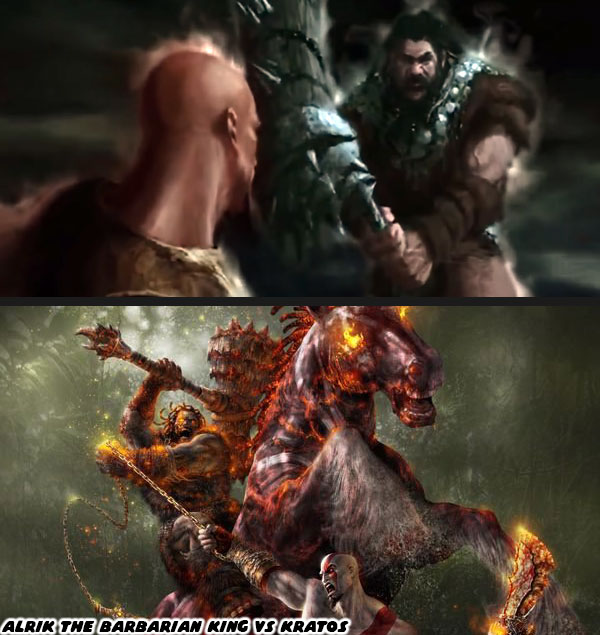
For example in the back story of the first game Kratos grows to be a legendary Spartan captain, but his men got wiped out by a barbarian horde. He offers his soul to Ares just as he is about to be killed by the Barbarian King Alrik. Kratos is gifted with the Blades of Chaos which he uses to decapitate the massive warrior. You have to wonder how mighty Alrik was to have bested the god of war in a one-on-one battle. Many fans questioned where the Barbarians came from, and who was this mysterious figure that had almost changed the course of history? Just as Kratos had fought his way out of Hades in the first game we get to see Alrik return from the underworld to get a rematch. His appearance gave me goosebumps, I recognized the fur-covered warrior right away. He was not only strong enough to break the grasp of death, he also was able to pull other souls out of the afterlife. Seeing the Ship Captain that Kratos managed to kill twice get summoned by Alrik was impressive, and at the same time comedy gold. It was not the only mythological match-up in the game. Kratos also fights Theseus, a king of Athens. He was a person that defeated the Minotaur in Crete, had captured the Marathonian Bull. He went on many adventures with Hercules, Jason, Orpheus, Euphemus, and other great legends. He was arguably the greatest hero in Greek mythology. This crossover made the mythology obsessive kid in me super excited. That was until Kratos then had to fight Perseus.
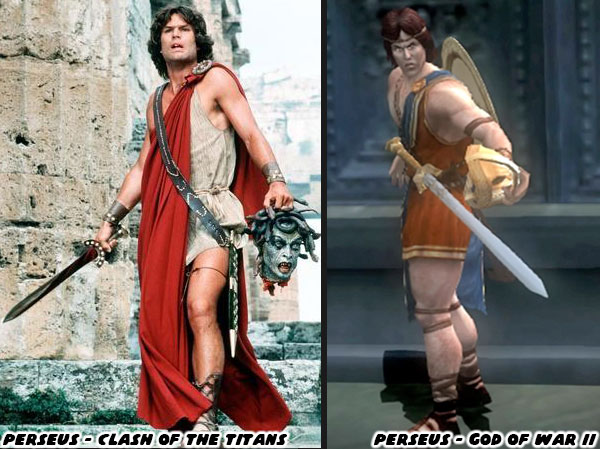
It seemed that the developers at Sony Santa Monica grew up with the same influences that I did. They must have been awed by the same films, and had kept them close to their hearts. The story of Perseus was told in the classic film Clash of the Titans. It was the movie that taught me about the titans, Medusa, and the various gods. I had talked earlier in the blog series how the stop motion work in the movie was done by Ray Harryhausen. He had worked on Jason, and the Argonauts, as well as The Golden Voyage of Sindbad. Not to mention dozens of other cult favorites. His work was as inspirational to me as any other artists living, or dead. Harryhausen brought the enormous Kraken to life, as well as the distance shots for the devil-like Calibos, and the tiny mechanical marvel Bubo who was Athena’s owl. What amazed me about GoW II was that the studio asked Harry Hamlin to reprise his role as Perseus some 25 years after he last played the part. I’m sure he was not about to turn down Sony for the project. Part of him must have been humbled knowing that an entire generation of kids never forgot the actor, or character. These kids were now writers, and directors in their own right. My brothers, and I were certainly giddy that Hamlin would be voicing one of our childhood heroes once more. I even told my mom about it, and she couldn’t believe that Generation-X never forgot the character. Of course the downside was that if he was going up against Kratos then it was not going to end well for him.
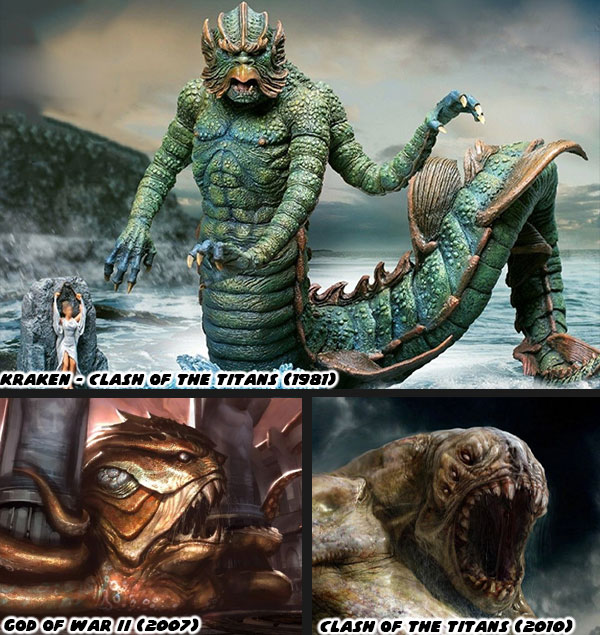
God of War was also creating an entirely new chapter in the mythology, and the way the gods were presented. In the era of the internet, cell phones, self driving cars, and other technological wonders Sony managed to take material that was thousands of years old, and make it accessible to the 21st century. The heroes of antiquity were vibrant, and moreover made cool once more. There weren’t many studios that could claim to bring history to life. Let alone influence global culture through their efforts. Proof of this was in the Hollywood remake of Clash of the Titans. The 2010 movie by Warner Bros. was undoubtedly nudged into production by the runaway success that Sony was having with God of War. The advances in special effects were light years above the work that went into the MGM classic. The monster designs in the new film were much more influenced by the types of characters featured in the Sony game, rather than the Harryhausen movies. Proof of this could be seen with the updated Kraken design. The original monster was terrifying on the big screen, at least it was to me as a kid. The Kraken featured in GoW II was much scarier, and could have easily influenced the look of the gigantic beast in the new movie.
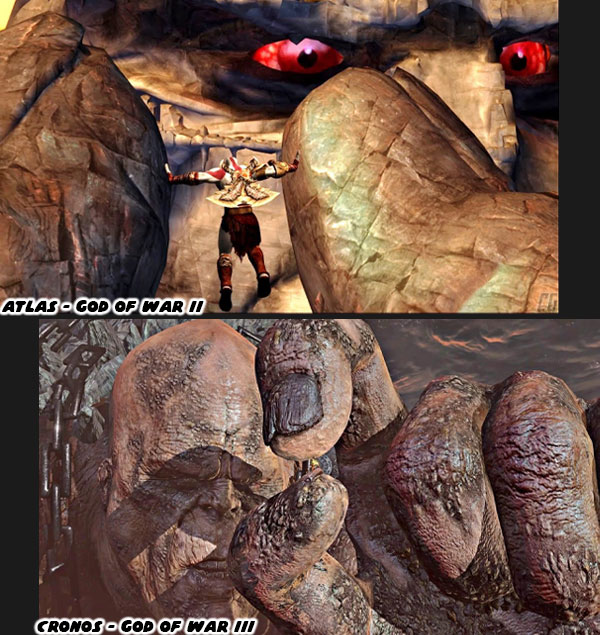
Going bigger, and better with every step of the series was something that David Jaffe helped push the team to do through SingleTrac, Incognito Entertainment, and Sony Santa Monica. The direction, casting, acting, and story were all rock solid. There was nowhere that Kratos could have gone to that I wasn’t eager to follow. There was no challenge that was impossible to beat for the Ghost of Sparta. My jaw dropped with the Cronos scene in the first game. Crossing the Desert of Lost Souls on the back of the titan leader was more amazing than anything I could have ever imagined. I had no idea that the sequel would have another scene to top it. Kratos was trying to cross the Great Chasm when he got into a fight with Icarus. As they fell through the world they ended up in a massive red abyss. I freaked out when I saw Atlas holding the world on his shoulders. Kratos landed on his brow, the head of the creature was as massive as an office building. Hollywood actor Michael Clarke Duncan voiced the four-armed titan. His deep baritone voice was perfect for the mountainous monster. Since Kratos had been stripped of his godly powers at the start of the game, he needed to be built back up again with new magics. A collection of Titans, and Primordials including Gaia, Cronos, Typhon, Prometheus, and Atlas had all leant Kratos a portion of their power through the different chapters of the game. They sought revenge against the Olympians as much as Kratos had. There was of course one final obstacle to beat. The Sisters of Fate were revealed to be the ones literally pulling the strings. In the game they lived in the Island of Creation, a place impossible for mortals to reach. In mythology the fates wove the threads of life. They knew the lives of every living being, including the heroes of old. When a person reached the end of their life they would cut the threads with magical scissors. In classic literature they looked like maidens working at a loom. Spinning threads, and overlapping encounters as they spun out destiny.
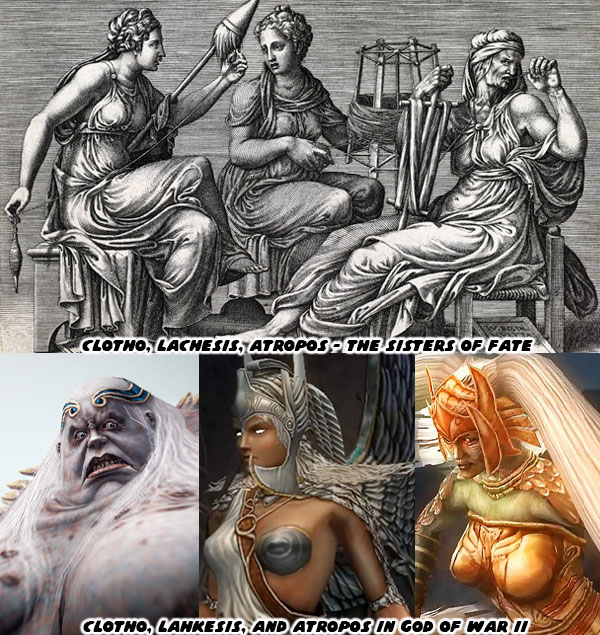
Sony Santa Monica had done a great job at interpreting the mythological characters, and made them appealing to modern audiences. The entire series had a certain aesthetic. The character designs were not quite realistic, nor were they cartoonish. They were instead something in-between. None of the characters, locations, or set designs were historically accurate. Instead studio artists incorporated elements that we would have identified as Greek, or Roman, but presented with the style of a comic book archetype. The three Sisters of Fate were made very unique, whereas their classic counterparts looked like regular women. Atropos was the oldest, she was the one that cut the threads. Her golden armor, and long scissor-like fingers a nod to her origin story. Lahkesis was the second oldest, and was responsible for determining how a person lived their life. This meant the sister looked the most human, and attractive in the game. Clotho was the youngest sister, at least in historical context. She was the one that spun the threads of fate. Instead of being a young maiden she was presented as a gigantic creature, with dozens of breasts. Like an enormous, obese silk worm. It was both a grotesque, and captivating monster design. Kratos defeats the sisters, and takes the power to rewind his thread, and return back in time to the moment where Zeus betrayed him.
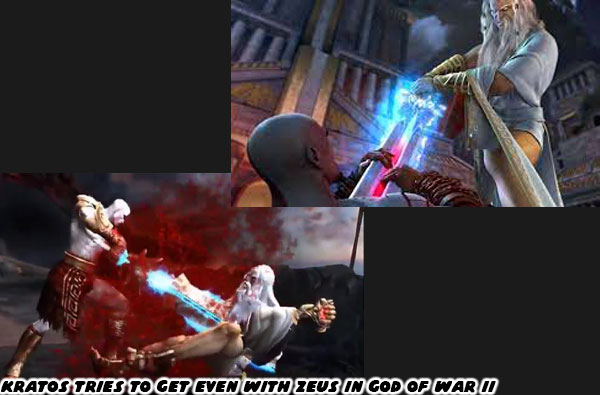
Kratos fights the king of the gods thanks to his newfound power. Zeus has a bunch of tricks at his command, and we have to fight him in multiple stages. From being a gigantic boss, to a more human-sized opponent. Well, Zeus remains tall in the game, well over seven feet in his human form. It is a well planned battle that sees the two trading blows, and neither really gaining the advantage. The game play in every boss encounter in the series is very well balanced, and the fights between Ares, and Zeus at the end of each respective game was the perfect kind of challenge. Kratos eventually gets the upper hand in the battle, he takes the Sword of Olympus, and tries to kill the father of the gods. Athena steps in and sacrifices herself. It was a moment that my brothers, and I did not anticipate. We literally gasped when the scene played out. Of course had we been paying more attention to the classic story structure we would have realized that she was the one destined to die. She had been with Kratos the longest time, had shown him mercy, and was trying to redeem him since the first game. Her death would have meant much more to audiences than Kratos simply getting his revenge.
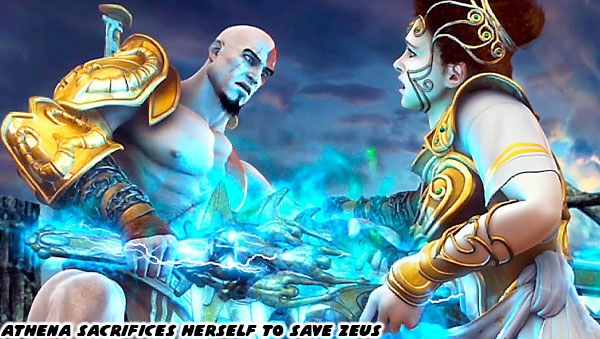
Zeus slips away, and runs back to Mount Olympus. Athena explains to Kratos that his obsession will destroy everything they have built. Kratos simply wants to kill his newly revealed father, but he doesn’t understand that Zeus is Olympus, if he dies then all of the gods die. With Athena passing, really the only god that he cares about, then he resolves that all of the gods must then indeed die. He returns back to the Sisters of Fate Loom Chamber, and goes further back in time. He uses the Blade of Olympus to pull the titans out of the great war, and bring them to his timeline. The game then ends with the titans, and Kratos climbing up Mount Olympus, a set up to the third, and assumed final chapter in the God of War series. It was a powerful ending, but one I didn’t necessarily appreciate. It was as if everything that happened in GoW II was nothing more than an ad to sell the Playstation 3, and the next game. That was how I felt about it. The previous 99.9% of the game was absolutely worth the experience. It had improved upon the original in every regard. The ending was a minor issue. Whether or not God of War III would be a worthy wrap up of the story was yet to be revealed. I was counting the days until I could get my hands on the game. If you played through GoW II what did you think? Did you think it was better than the first? Did you have a favorite encounter? Or was there something you wish had been explored in the story? Let me know in the comments section please. As always if you would like to sponsor me please visit my Patreon page and consider donating each month, even as little as $1 would help make better blogs and even podcasts!
follow the Street Writer on Patreon!

Monday, January 30, 2023

Why I thought the original God of War was close to perfection.

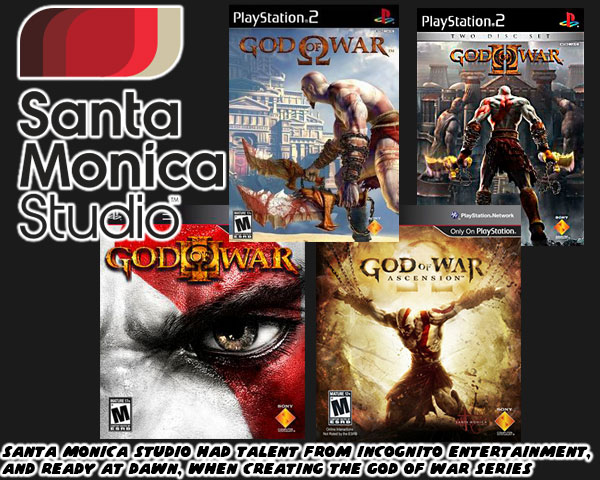
Most of you may be familiar with the string of hits developed by Sony Santa Monica, their biggest contribution to the games industry being the God of War series. The studio did not appear out of thin air. The odds of them striking gold right out the gate was not coincidence. Many of the founders were senior members of SingleTrac, and Inognito Entertainment. They had cut their teeth on the Playstation, and Playstation 2 consoles. They managed to get more out of the systems they developed for than other studios in the US, or Japan. They explored multiple genres, and demonstrated that they could create profitable original ideas. Many of those hits coming from the mind of David Jaffe. He understood the audience better than many other directors. He knew how to delver new experiences that gamers weren't expecting. The team at Santa Monica was put together to create a new type of adventure game. Something that could go toe-to-toe with Tomb Raider, Halo, Resident Evil, and other big hits from their contemporaries. This game would be set in ancient Greece, and feature a different kind of hero. Somebody with a dark, and tragic past that reflected the failings, and triumphs of classic archetypes. Jaffe, and company demonstrated a knowledge for writing serious content through the Twisted Metal series. They also knew how to tell the story through the action of the game itself.

They went through countless iterations of Kratos, the star of the series. The early drafts had a faceless character in armor. This unknown warrior could have been anybody. It would have been easy for audiences to imagine themselves in the place of the protagonist. That type of projection worked for Master Chief in Halo, and Issac in Dead Space. That type of design even worked for the homicidal clown Needles Kane in Twisted Metal. It was good in concept. However the studio wanted to tell a different kind of story. They wanted a protagonist with a face, somebody that could show expression. Somebody that audiences would be able to empathise with. He still needed to be strong, and identifiable when compared to other humans in game. He would be tall so he could be picked out of a lineup. He wouldn't wear a helmet, or chest armor either. He would be bald, and pale as well, with a sharp beard, as if he was some sort of ghost on the battlefield. He would have solid red tattoos covering most of his body, and head. These things combined was counter the look of Sparticus, Ben-Hur or what we would think a sword, and sandals hero would look like. The icing on the cake were the weapons he was supplied with. In the early stages Kratos fought with a sword, but that seemed kind of basic. The studio wanted his weapon to have the range, and functionality of a whip, but with a sharp edge as well. Putting jagged swords at the end of chains was the kind of psycho idea that worked just right, thus the Blade of Chaos were born.

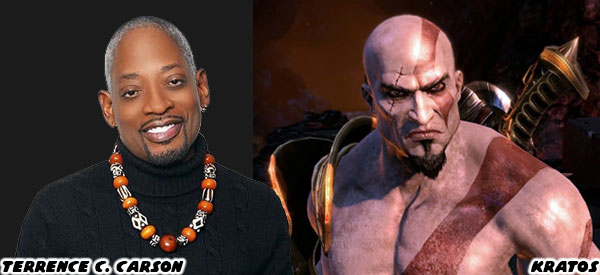
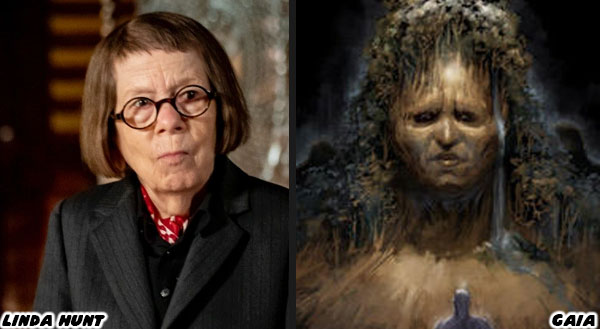
Once Kratos was fleshed out he needed a voice. Somebody that could pull off righteous anger, and fury, but then switch to curiosity, conviction, or defeat as well. The studio found T.C. Carson. My brothers, and I knew him from a TV show called Living Single. We couldn't believe the friendly character Kyle Barker, was also the intense Ghost of Sparta. I don't want to knock the performance put forward by Christopher Judge in the 2018 GoW, and Ragnarok, but to me T.C. would always be Kratos. The majority of his games would be narrated by another veteran actor. Linda Hunt had appeared in a number of films, and television shows. My brothers first saw her in the live action Popeye, but knew her best from the David Lynch movie Dune. She was very short for an actress, making her easy to spot in any role. However she spoke with a certain amount of gravity, and seriousness that could intimidate people three times her size. You simply couldn't ignore her delivery. She won an academy award for playing Billy Kwan, an Asian man with dwarfism in the film The Year of Living Dangerously. It was an amazing performance that holds up to this day. Today that type of casting could be considered problematic for a number of reasons, but I still consider it an amazing role. Her voice worked well as the narrator of God of War. It would also be revealed that the narrator was actually the titan Gaia in the sequel.

The game first came to my attention at the E3 in Los Angeles. My friends, and I managed to score some tickets to the industry-only event. The big publishers usually spend hundreds of thousands, if not millions, on their show floor booths. In a previous year Sony placed actual race cars on the walls to promote Gran Turismo. Nintendo hung a full size pod racer over their booth from the set of Star Wars: the Phantom Menace. For God of War Sony put forward an amazing display, featuring a rope bridge, and mountain pass that would appear in the game. I didn't know it then but it was cliffs leading to Pandora's Temple. I recorded some of the demo to show my cousins, but didn't really play it. I did put a pin in the game to check it out later. The buzz in the magazines following the convention was that this game was going to be something special. I didn't know anything about Sony Santa Monica, but I became more interested in the game when the magazines said the people behind Twisted Metal, and other PS hits were creating God of War. That was all I needed to hear. When I fired up the game I just thought that it was going to be a fun time. I had no idea how deeply it was going to rock my world. From a storytelling perspective it was one of the few games I could consider perfect.

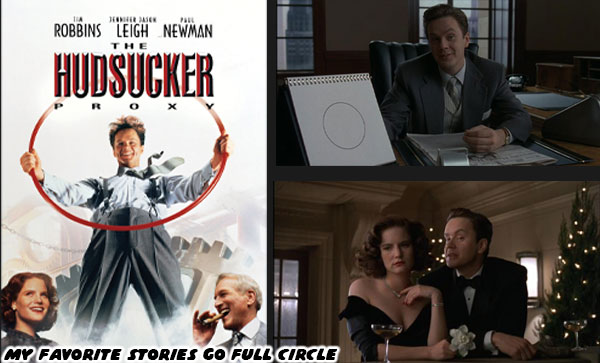
I love a story that goes full circle. The thing is that the format is deceptively hard to do. Most stories told almost entirely in a flashback just never pan out. The setup is easy, but sticking the landing is all but impossible. One of my favorites is the Hudsucker Proxy, it is the best example of when the format works. The theme of having a cycle of ups, and downs, even the use of actual circles appears multiple times throughout. The story starts just a few minutes before the New Year, the symbolic end of a cycle. The opening instantly hooks the audience because they think they are watching a desperate man about to take his own life. I don't want to give away the rest if you haven't seen it. The other thing that engrossed me was the plausible fantasy of it. Some critics said it was like watching a fairy tale come to life. It is what I think the writer/directors Joel, and Ethan Cohen are masters of. They take a story that has an element of truth, and then push it to the very edge of what was possible, and what really happened. They did this to great success with the movie Fargo as well. There was a video game that I think captured this level of magic, and storytelling as well. That was NiGHTS into dreams… by Sonic Team.

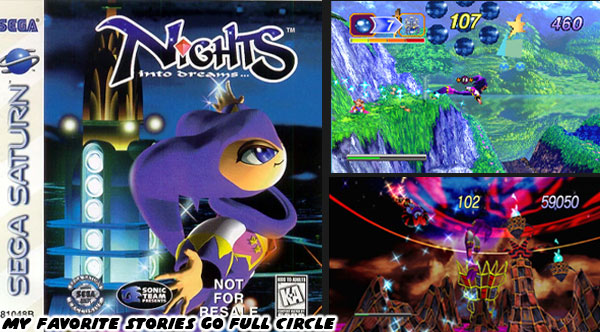
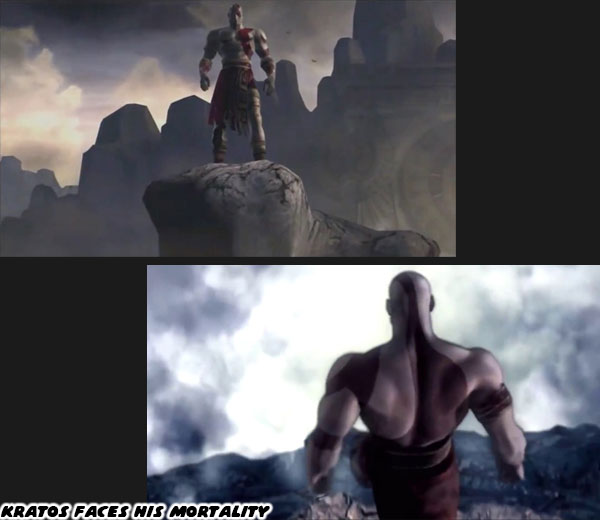
NiGHTS into dreams… was an original title for the Sega Saturn. The early 32-bit system also featured memorable 3D titles Panzer Dragoon, Sega Rally, and Clockwork Knight. NiGHTS was, and remains, my favorite game of all time. I had written a tremendous amount about it on my old 1UP blog many years ago. I also wrote about the dismal follow-up on the Nintendo Wii. I will be reposting that 1UP series of my personal top 20 in the future. But I digress. NiGHTS was a story told without words, so there was nothing for localizers to translate or adapt for the US market. The game revolves around a boy named Elliot Edwards, and a girl named Claris Sinclair. The two kids have a challenging day when the thing they enjoy doing is taken away from them by their own insecurities. That translates into bad nightmares when they go to sleep. They come across NiGHTS in the dream world, and the androgynous character helps them fight against the nightmares. It’s a lovely, but short story. The thing that amazed me, aside from the brilliant design, and game play, was that the game went full circle. It ends exactly where it begins. Leading audiences to understand that NiGHTS had always been there for the “Twin Dreamers.” Kratos on the other hand has no such help to rid him of the nightmares he suffers from. Audiences don’t know what the character is going through when God of War begins. Kratos is at the Suicide Bluffs near Athens. He says the gods of Olympus have abandoned him, then he steps off the cliffs. This is where the narrator takes over, and explains that things were not always like this. I had no idea that the game would end at the exact same place, and that to me was amazing storytelling.

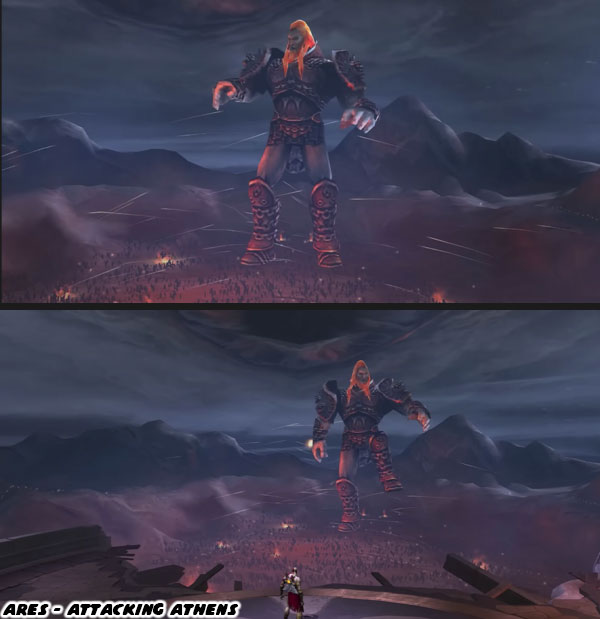
From the very first moment audiences were hooked. We wanted to find out why Kratos had lost all hope. We saw that a few weeks earlier he was in the service of the gods, Athena specifically. He had been completing missions on her behalf for a decade, but was plagued by nightmares. We didn’t learn the cause of his madness until later in the game. Athena promised that his past would be forgiven if he completed this final task. In a tragic misunderstanding he thought this meant that she would rid him of his memories. Misunderstandings like this were the case with other tragedies, such as Hercules. He accidentally killed his family, and was tasked to complete 10 labors (later expanded to 12) in order to find atonement. In God of War the gods were forbidden to fight each other directly, so Athena was sending Kratos on her behalf because he was trained by Ares, and once served him. The game shows, rather than tells us what is happening. We instantly start fighting zombie-like warriors in the middle of a storm out in the ocean. Kratos fights ship-to-ship until he faces off against a gigantic Hydra. The action, and spectacle never lets up. Visually there were very few PS2 games that could match what Sony Santa Monica delivered. Kratos soon found himself in Athens where we fought our way to the heart of the city. This was when we caught the first glimpse of Ares. He towers in the distance, as large as a mountain, stepping on the forces defending Athens. At this point I felt like giving up. The developer did such a good job at creating the villain that I felt genuine fear facing him. There was no way that I would accept that Kratos would have stood a chance against the actual god of war.

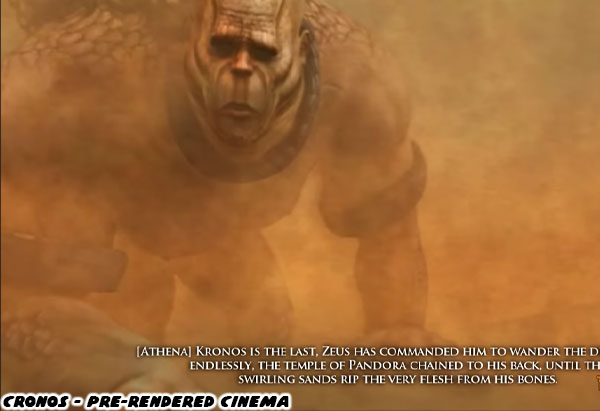
The Oracle of Athens explained to Kratos that there was one weapon that would give him a chance, Pandora’s Box. I thought that this was an interesting MacGuffin from classic Greek mythology to use. The quest to retrieve it from the Desert of Lost Souls was the next step in the journey. Had the game solely taken place there, and Kratos had returned back to Athens with the box then I would have been satisfied. As a huge mythology fan I was already elated to have battled the Hydra, then minotaurs, and even sirens in the desert. There was no way I thought the game could have gotten even better. I was so wrong. I had no idea that I would be hit with an experience that would have made an eight-year-old version of me explode from excitement. Even the older me started freaking out as the game slowly unveiled the next portion of the game. Athena appeared once more to Kratos to explain that Pandora's Box was at the other end of the desert, in a temple strapped to the back of the titan Cronos. I just about lost my mind when she said this, and then the game showed us the massive titan. My brothers had absorbed a lot of the footnotes of the mythological creatures because I wouldn't stop talking about them as a kid. When Athena mentioned Cronos we all got excited. This game was not going to be a surface level appreciation of the ancient gods, it was going to be a deep-deep dive.

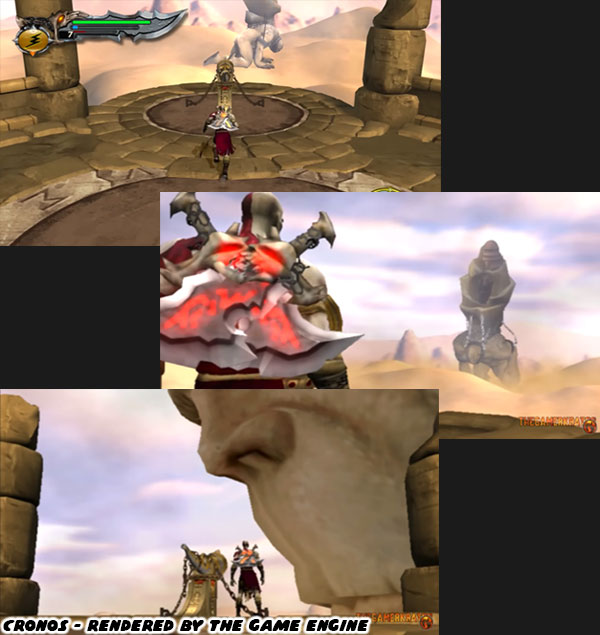
The Playstation 2 was a fantastic console, and possibly the best of that era. When God of War debuted the developers were maxing out the potential of the hardware. Only a handful of studios could say that they made use of every feature, of every tool that they had picked up while working for Sony. As great as the console was there were a few things that it wasn't powerful enough to accomplish, one of these were graphics that were indistinguishable from pre-rendered CGI graphics. The cut scenes for the games were rendered with more powerful hardware, but more or less maintained the aesthetic that they were going for. The first time we saw an interpretation of Cronos my brothers, and I were in awe. The massive creature looked tormented with his burden. An enormous mountain was chained to his back. We had to figure out a way to reach him, and the mountain. Crossing the desert was a fun part of the game, and it gave me a sense of the challenges that were ahead. Not only would I have to battle different kinds of mythical characters, I would also have to figure out puzzles, and death traps as well.

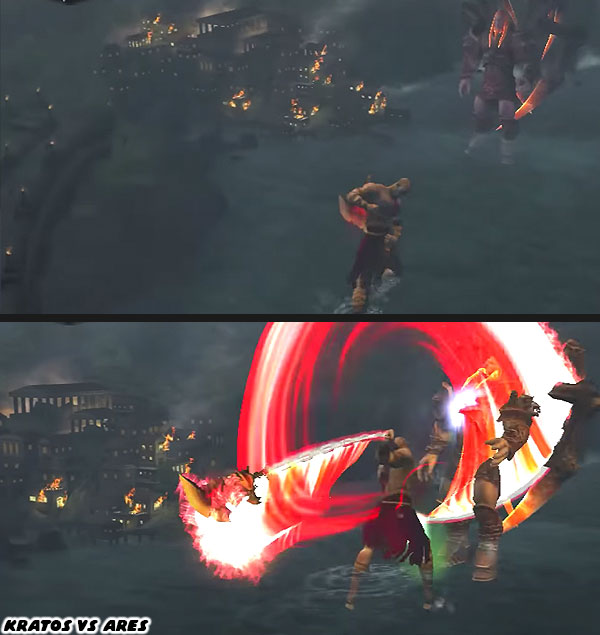
As I progressed through the game I noticed how much of the experience was pulled from the work that the team had done earlier. The tragic origin of Kratos, plot, allies, and monster designs had a strong aesthetic. They rivaled the work that went into the story, and cast of Twisted Metal. The attention to detail on the textures, landscape, level design, color, weather, and even particle effects looked like it had originated from Downhill Domination. God of War had improved in both counts. When it came to rendering giant characters with the hardware it was all a matter of perspective. When Cronos was first spotted he was off in the distance, a tiny version of him wandering the desert could be seen while fighting the sirens. When he was close then all we saw was a portion of his face. Both of which were framing devices that made audiences feel a sense of scale with the mighty titan. I knew instantly that everything the team had learned while working on War of the Monsters was being used as well. This became especially evident at the end of the game. I expected Kratos to open Pandora's Box, and have a bolt of lightning strike down Ares. But that wouldn't have been enough for Jaffe, and his team. Instead the box imbues Kratos with awesome powers, and he grows in size to rival Ares. The two giants then square off in the port of Athens. Scaling down the buildings, and even having tiny pixelated soldiers fighting on the bridge, and town were techniques pulled right from War of the Monsters.

I don't mean to skip the entire challenge that happened in the temple of Pandora strapped to the back of Cronos. I just didn't want the blog to be a recap of the entire game. Rather the details that I picked up, and really appreciated as a Greek history geek. Every moment of the temple was building towards a more amazing reveal. Studio Santa Monica knew exactly how, and when how to turn every card they had placed on the table. They had mastered the ability to pace every encounter, to raise the stakes on every challenge. They allowed gamers to power up the Blades of Chaos, and even add a secondary Blade of Artemis, to help balance out the more difficult fights. All the while they gave us more, and more of the story of the battle between the gods, and the titans. They allowed us to explore every corner of the fantasy world they had created, and this included the underworld as well. Of course in typical Greek tragedy a happy ending was not in the cards for Kratos. Although he managed to stop Ares his nightmares were not erased. Athena only promised that the gods would forgive him for killing his family. They never promised they would rid him of the memories. This lead to Kratos feeling as if the gods had abandoned him. The final scene takes us back to the start of the game where we see Kratos try to take his own life.

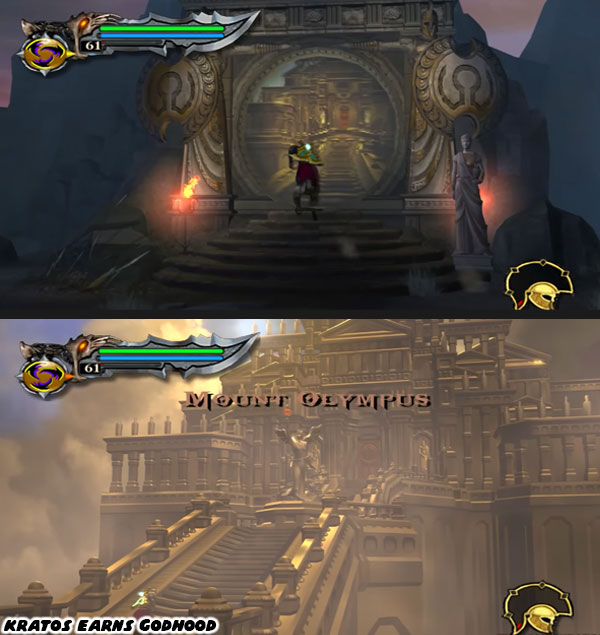
Rather than die from the fall he was instead taken up to Mount Olympus. I was not expecting the game to end there. Someone had to take the place of Ares as the new god of war. Walking up the golden staircase to the throne room gave me goosebumps. Never in a million years would I have expected it. The effects, and presentation of Mount Olympus was one of my favorite visuals of the entire series. To this day I am amazed at how the studio was able to recreate something as etherial, and otherworldly. Returning full circle to the start of the game was a brilliant way to cap the experience. As with NiGHTS into dreams... it was something almost impossible to do. It was a literal one in a million chance of sticking the landing. Also as with NiGHTS if God of War had ended with only one game then I would have been satisfied. David Jaffe, and the studio had managed to create a perfect game. There were other developers that had been around for much longer, still trying to capture that kind of lightning in a bottle. Despite all the hard work that went into God of War there were no guarantees in the industry. It could have fallen short with the audience for some imperceptible flaw. Because of this Jaffe, and company wanted to plant the seeds of a sequel, or even series.

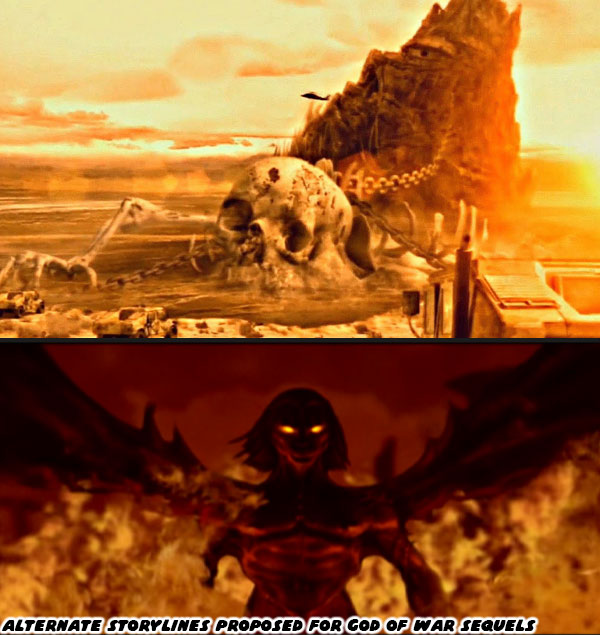
Gamers that returned to complete the Challenge of the Gods were rewarded with all sorts of secrets. Two potential paths for the franchise were revealed. One of the possible stories was set in the current era. A military expedition discovered the bones of Cronos out in the desert, with the temple still chained to his back. There were other challenges, and treasures waiting to be revealed inside. Would a soldier, a descendant of Kratos be the only person to go in, and come out alive? Would he discover his legacy? Perhaps become the next God of War? Then there was also a second story revealed. Kratos had a younger brother that was taken from him as a child. Whereas Kratos grew up to be a successful Spartan captain, his brother grew up in the underworld, and grew to resent Kratos. I had no idea if either ending would be explored in the future. As I said the market could be fickle. Despite the press, and marketing that went into the game if audiences didn’t help spread the word then it would have been a slept on after release. It would have been forgotten along with the hundreds of other games released each year. Today there are dozens of YouTube channels where gamers are rediscovering titles that perhaps came out at the wrong time, and deserve a second look. Thankfully God of War was an enormous success. There would be a sequel, and it would be even more incredible. I’ll talk about that in the next blog. For now I’d like to hear your take on God of War, or any other games you would consider to be close to perfection. Let me know in the comments section please. As always if you would like to sponsor me please visit my Patreon page and consider donating each month, even as little as $1 would help make better blogs and even podcasts!
follow the Street Writer on Patreon!