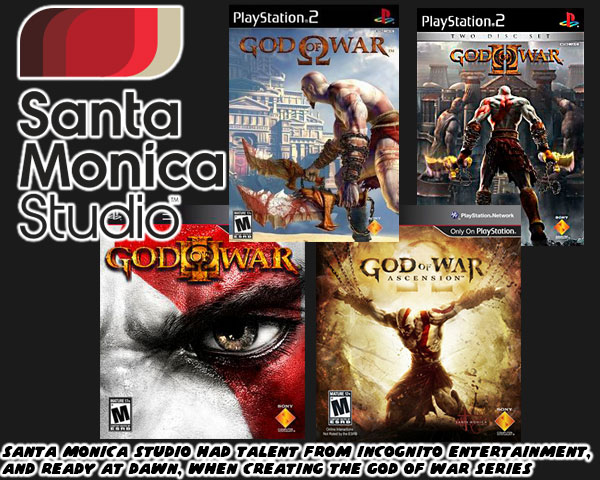
Most of you may be familiar with the string of hits developed by Sony Santa Monica, their biggest contribution to the games industry being the God of War series. The studio did not appear out of thin air. The odds of them striking gold right out the gate was not coincidence. Many of the founders were senior members of SingleTrac, and Inognito Entertainment. They had cut their teeth on the Playstation, and Playstation 2 consoles. They managed to get more out of the systems they developed for than other studios in the US, or Japan. They explored multiple genres, and demonstrated that they could create profitable original ideas. Many of those hits coming from the mind of David Jaffe. He understood the audience better than many other directors. He knew how to delver new experiences that gamers weren't expecting. The team at Santa Monica was put together to create a new type of adventure game. Something that could go toe-to-toe with Tomb Raider, Halo, Resident Evil, and other big hits from their contemporaries. This game would be set in ancient Greece, and feature a different kind of hero. Somebody with a dark, and tragic past that reflected the failings, and triumphs of classic archetypes. Jaffe, and company demonstrated a knowledge for writing serious content through the Twisted Metal series. They also knew how to tell the story through the action of the game itself.
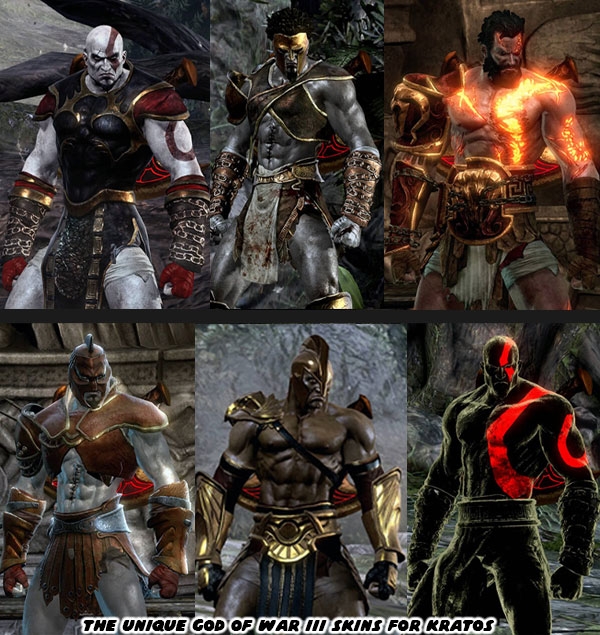
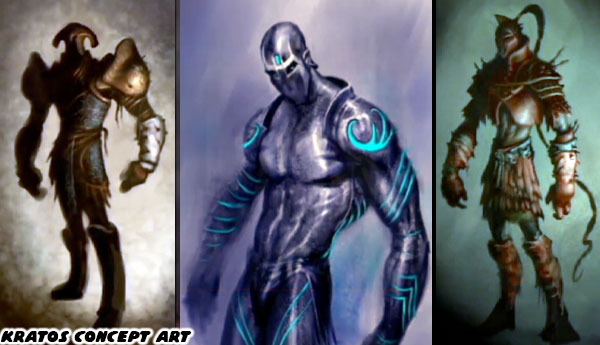
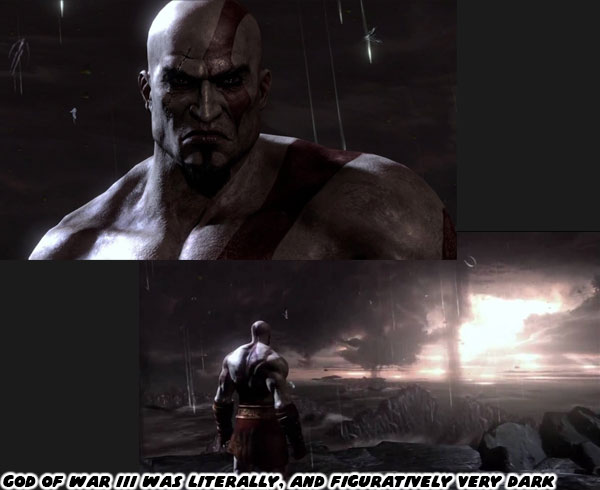
They went through countless iterations of Kratos, the star of the series. The early drafts had a faceless character in armor. This unknown warrior could have been anybody. It would have been easy for audiences to imagine themselves in the place of the protagonist. That type of projection worked for Master Chief in Halo, and Issac in Dead Space. That type of design even worked for the homicidal clown Needles Kane in Twisted Metal. It was good in concept. However the studio wanted to tell a different kind of story. They wanted a protagonist with a face, somebody that could show expression. Somebody that audiences would be able to empathise with. He still needed to be strong, and identifiable when compared to other humans in game. He would be tall so he could be picked out of a lineup. He wouldn't wear a helmet, or chest armor either. He would be bald, and pale as well, with a sharp beard, as if he was some sort of ghost on the battlefield. He would have solid red tattoos covering most of his body, and head. These things combined was counter the look of Sparticus, Ben-Hur or what we would think a sword, and sandals hero would look like. The icing on the cake were the weapons he was supplied with. In the early stages Kratos fought with a sword, but that seemed kind of basic. The studio wanted his weapon to have the range, and functionality of a whip, but with a sharp edge as well. Putting jagged swords at the end of chains was the kind of psycho idea that worked just right, thus the Blade of Chaos were born.
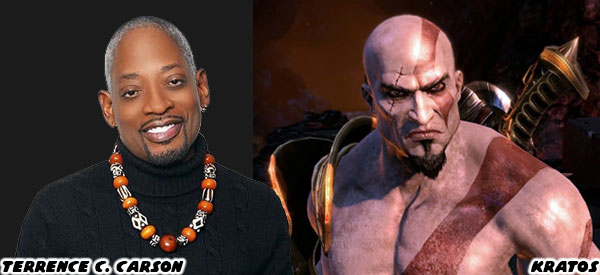
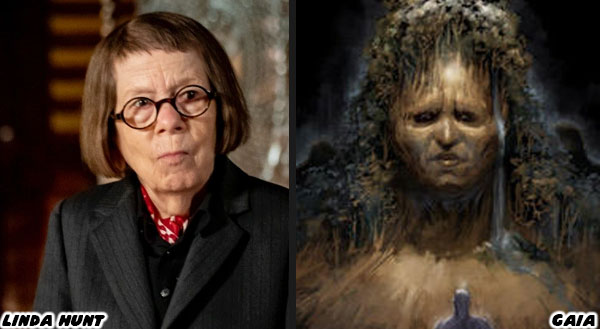
Once Kratos was fleshed out he needed a voice. Somebody that could pull off righteous anger, and fury, but then switch to curiosity, conviction, or defeat as well. The studio found T.C. Carson. My brothers, and I knew him from a TV show called Living Single. We couldn't believe the friendly character Kyle Barker, was also the intense Ghost of Sparta. I don't want to knock the performance put forward by Christopher Judge in the 2018 GoW, and Ragnarok, but to me T.C. would always be Kratos. The majority of his games would be narrated by another veteran actor. Linda Hunt had appeared in a number of films, and television shows. My brothers first saw her in the live action Popeye, but knew her best from the David Lynch movie Dune. She was very short for an actress, making her easy to spot in any role. However she spoke with a certain amount of gravity, and seriousness that could intimidate people three times her size. You simply couldn't ignore her delivery. She won an academy award for playing Billy Kwan, an Asian man with dwarfism in the film The Year of Living Dangerously. It was an amazing performance that holds up to this day. Today that type of casting could be considered problematic for a number of reasons, but I still consider it an amazing role. Her voice worked well as the narrator of God of War. It would also be revealed that the narrator was actually the titan Gaia in the sequel.
The game first came to my attention at the E3 in Los Angeles. My friends, and I managed to score some tickets to the industry-only event. The big publishers usually spend hundreds of thousands, if not millions, on their show floor booths. In a previous year Sony placed actual race cars on the walls to promote Gran Turismo. Nintendo hung a full size pod racer over their booth from the set of Star Wars: the Phantom Menace. For God of War Sony put forward an amazing display, featuring a rope bridge, and mountain pass that would appear in the game. I didn't know it then but it was cliffs leading to Pandora's Temple. I recorded some of the demo to show my cousins, but didn't really play it. I did put a pin in the game to check it out later. The buzz in the magazines following the convention was that this game was going to be something special. I didn't know anything about Sony Santa Monica, but I became more interested in the game when the magazines said the people behind Twisted Metal, and other PS hits were creating God of War. That was all I needed to hear. When I fired up the game I just thought that it was going to be a fun time. I had no idea how deeply it was going to rock my world. From a storytelling perspective it was one of the few games I could consider perfect.
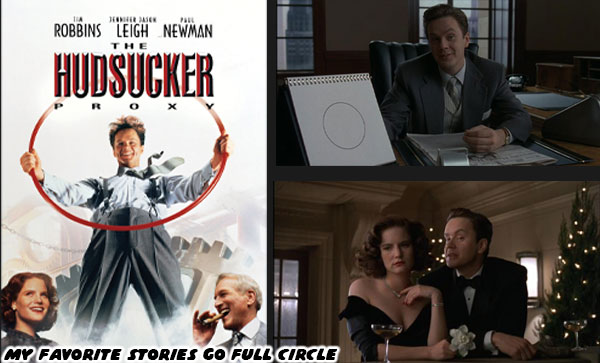
I love a story that goes full circle. The thing is that the format is deceptively hard to do. Most stories told almost entirely in a flashback just never pan out. The setup is easy, but sticking the landing is all but impossible. One of my favorites is the Hudsucker Proxy, it is the best example of when the format works. The theme of having a cycle of ups, and downs, even the use of actual circles appears multiple times throughout.
The story starts just a few minutes before the New Year, the symbolic end of a cycle. The opening instantly hooks the audience because they think they are watching a desperate man about to take his own life. I don't want to give away the rest if you haven't seen it. The other thing that engrossed me was the plausible fantasy of it. Some critics said it was like watching a fairy tale come to life. It is what I think the writer/directors Joel, and Ethan Cohen are masters of. They take a story that has an element of truth, and then push it to the very edge of what was possible, and what really happened. They did this to great success with the movie Fargo as well. There was a video game that I think captured this level of magic, and storytelling as well. That was NiGHTS into dreams… by Sonic Team.
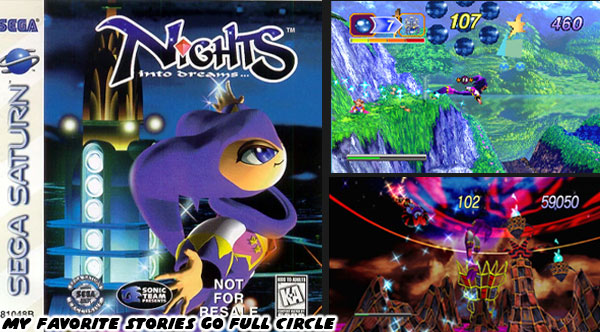
NiGHTS into dreams… was an original title for the Sega Saturn. The early 32-bit system also featured memorable 3D titles Panzer Dragoon, Sega Rally, and Clockwork Knight. NiGHTS was, and remains, my favorite game of all time. I had written a tremendous amount about it on my old 1UP blog many years ago. I also wrote about the dismal follow-up on the Nintendo Wii. I will be reposting that 1UP series of my personal top 20 in the future. But I digress. NiGHTS was a story told without words, so there was nothing for localizers to translate or adapt for the US market. The game revolves around a boy named Elliot Edwards, and a girl named Claris Sinclair. The two kids have a challenging day when the thing they enjoy doing is taken away from them by their own insecurities. That translates into bad nightmares when they go to sleep. They come across NiGHTS in the dream world, and the androgynous character helps them fight against the nightmares. It’s a lovely, but short story. The thing that amazed me, aside from the brilliant design, and game play, was that the game went full circle. It ends exactly where it begins. Leading audiences to understand that NiGHTS had always been there for the “Twin Dreamers.” Kratos on the other hand has no such help to rid him of the nightmares he suffers from. Audiences don’t know what the character is going through when God of War begins. Kratos is at the Suicide Bluffs near Athens. He says the gods of Olympus have abandoned him, then he steps off the cliffs. This is where the narrator takes over, and explains that things were not always like this. I had no idea that the game would end at the exact same place, and that to me was amazing storytelling.
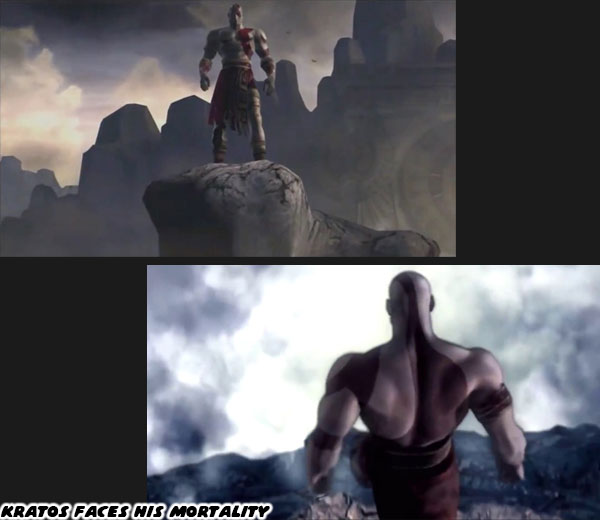
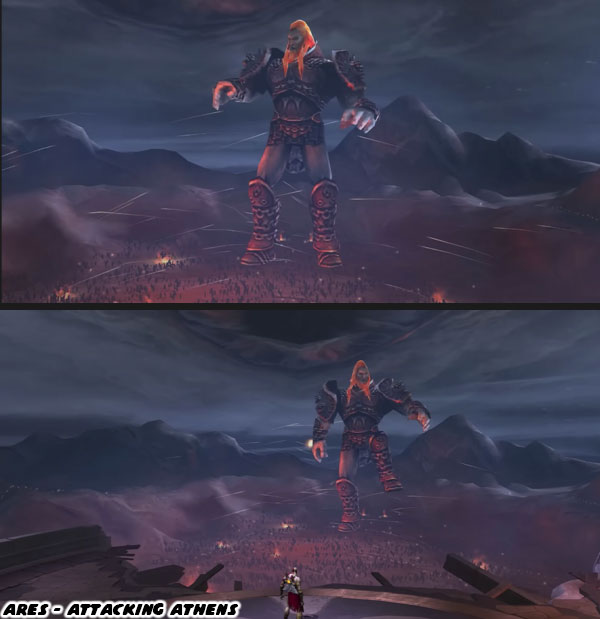
From the very first moment audiences were hooked. We wanted to find out why Kratos had lost all hope. We saw that a few weeks earlier he was in the service of the gods, Athena specifically. He had been completing missions on her behalf for a decade, but was plagued by nightmares. We didn’t learn the cause of his madness until later in the game. Athena promised that his past would be forgiven if he completed this final task. In a tragic misunderstanding he thought this meant that she would rid him of his memories. Misunderstandings like this were the case with other tragedies, such as Hercules. He accidentally killed his family, and was tasked to complete 10 labors (later expanded to 12) in order to find atonement. In God of War the gods were forbidden to fight each other directly, so Athena was sending Kratos on her behalf because he was trained by Ares, and once served him. The game shows, rather than tells us what is happening. We instantly start fighting zombie-like warriors in the middle of a storm out in the ocean. Kratos fights ship-to-ship until he faces off against a gigantic Hydra. The action, and spectacle never lets up. Visually there were very few PS2 games that could match what Sony Santa Monica delivered. Kratos soon found himself in Athens where we fought our way to the heart of the city. This was when we caught the first glimpse of Ares. He towers in the distance, as large as a mountain, stepping on the forces defending Athens. At this point I felt like giving up. The developer did such a good job at creating the villain that I felt genuine fear facing him. There was no way that I would accept that Kratos would have stood a chance against the actual god of war.
The Oracle of Athens explained to Kratos that there was one weapon that would give him a chance, Pandora’s Box. I thought that this was an interesting
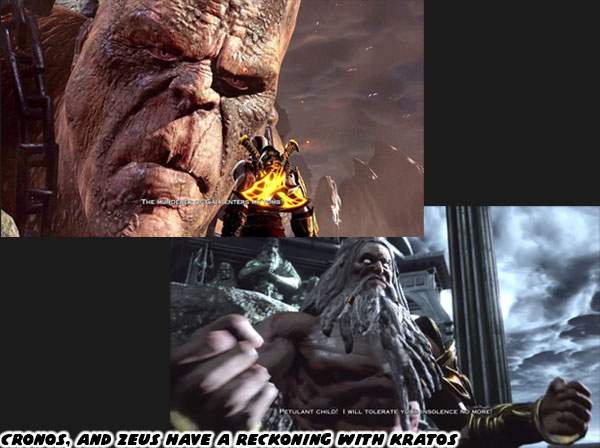
MacGuffin from classic Greek mythology to use. The quest to retrieve it from the Desert of Lost Souls was the next step in the journey. Had the game solely taken place there, and Kratos had returned back to Athens with the box then I would have been satisfied. As a huge mythology fan I was already elated to have battled the Hydra, then minotaurs, and even sirens in the desert. There was no way I thought the game could have gotten even better. I was so wrong. I had no idea that I would be hit with an experience that would have made an eight-year-old version of me explode from excitement. Even the older me started freaking out as the game slowly unveiled the next portion of the game. Athena appeared once more to Kratos to explain that Pandora's Box was at the other end of the desert, in a temple strapped to the back of the titan Cronos. I just about lost my mind when she said this, and then the game showed us the massive titan. My brothers had absorbed a lot of the footnotes of the mythological creatures because I wouldn't stop talking about them as a kid. When Athena mentioned Cronos we all got excited. This game was not going to be a surface level appreciation of the ancient gods, it was going to be a deep-deep dive.
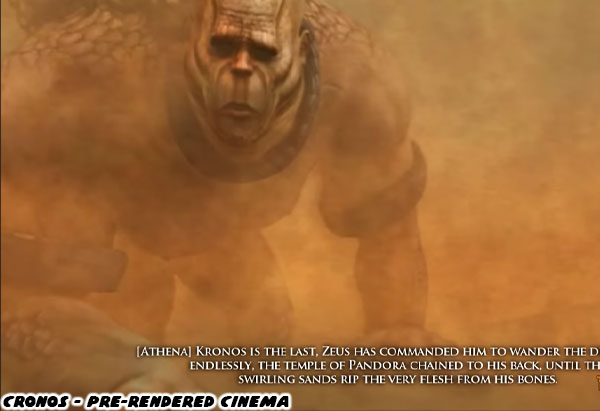
The Playstation 2 was a fantastic console, and possibly the best of that era. When God of War debuted the developers were maxing out the potential of the hardware. Only a handful of studios could say that they made use of every feature, of every tool that they had picked up while working for Sony. As great as the console was there were a few things that it wasn't powerful enough to accomplish, one of these were graphics that were indistinguishable from pre-rendered CGI graphics. The cut scenes for the games were rendered with more powerful hardware, but more or less maintained the aesthetic that they were going for. The first time we saw an interpretation of Cronos my brothers, and I were in awe. The massive creature looked tormented with his burden. An enormous mountain was chained to his back. We had to figure out a way to reach him, and the mountain. Crossing the desert was a fun part of the game, and it gave me a sense of the challenges that were ahead. Not only would I have to battle different kinds of mythical characters, I would also have to figure out puzzles, and death traps as well.
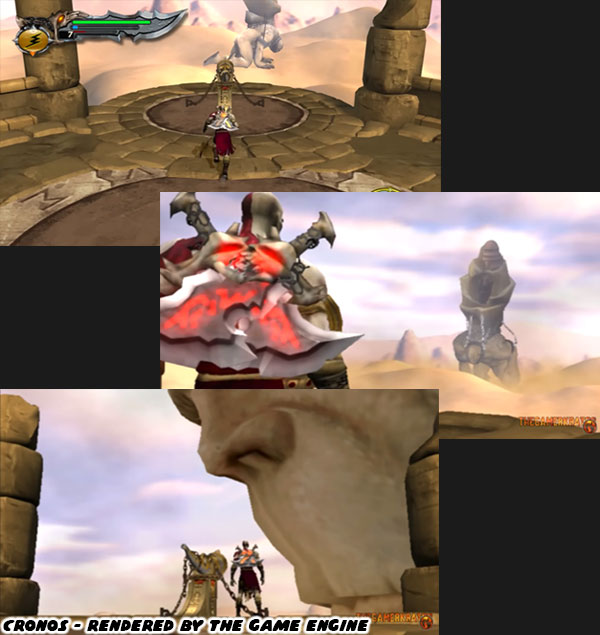
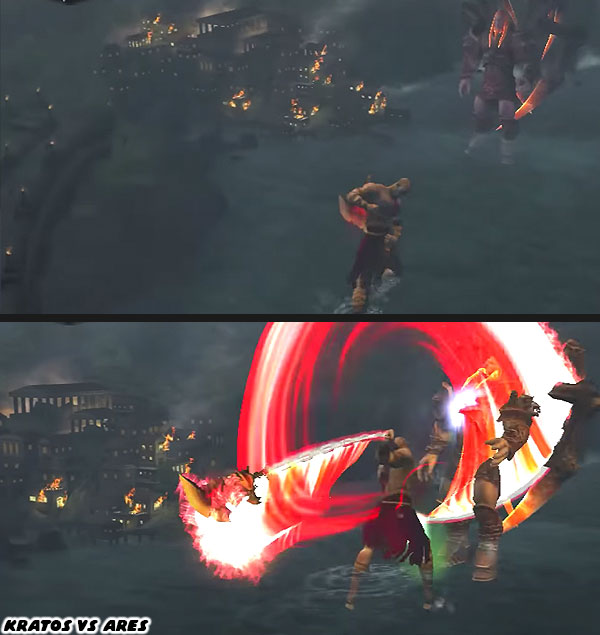
As I progressed through the game I noticed how much of the experience was pulled from the work that the team had done earlier. The tragic origin of Kratos, plot, allies, and monster designs had a strong aesthetic. They rivaled the work that went into the story, and cast of Twisted Metal. The attention to detail on the textures, landscape, level design, color, weather, and even particle effects looked like it had originated from Downhill Domination. God of War had improved in both counts. When it came to rendering giant characters with the hardware it was all a matter of perspective. When Cronos was first spotted he was off in the distance, a tiny version of him wandering the desert could be seen while fighting the sirens. When he was close then all we saw was a portion of his face. Both of which were framing devices that made audiences feel a sense of scale with the mighty titan. I knew instantly that everything the team had learned while working on War of the Monsters was being used as well. This became especially evident at the end of the game. I expected Kratos to open Pandora's Box, and have a bolt of lightning strike down Ares. But that wouldn't have been enough for Jaffe, and his team. Instead the box imbues Kratos with awesome powers, and he grows in size to rival Ares. The two giants then square off in the port of Athens. Scaling down the buildings, and even having tiny pixelated soldiers fighting on the bridge, and town were techniques pulled right from War of the Monsters.
I don't mean to skip the entire challenge that happened in the temple of Pandora strapped to the back of Cronos. I just didn't want the blog to be a recap of the entire game. Rather the details that I picked up, and really appreciated as a Greek history geek. Every moment of the temple was building towards a more amazing reveal. Studio Santa Monica knew exactly how, and when how to turn every card they had placed on the table. They had mastered the ability to pace every encounter, to raise the stakes on every challenge. They allowed gamers to power up the Blades of Chaos, and even add a secondary Blade of Artemis, to help balance out the more difficult fights. All the while they gave us more, and more of the story of the battle between the gods, and the titans. They allowed us to explore every corner of the fantasy world they had created, and this included the underworld as well. Of course in typical Greek tragedy a happy ending was not in the cards for Kratos. Although he managed to stop Ares his nightmares were not erased. Athena only promised that the gods would forgive him for killing his family. They never promised they would rid him of the memories. This lead to Kratos feeling as if the gods had abandoned him. The final scene takes us back to the start of the game where we see Kratos try to take his own life.
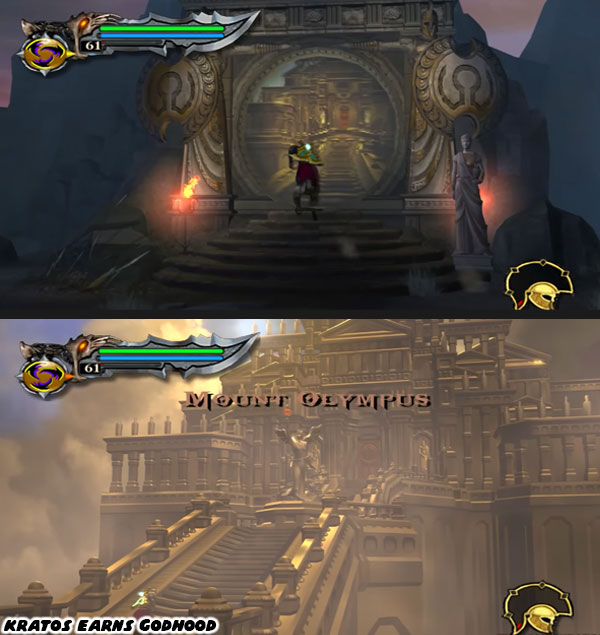
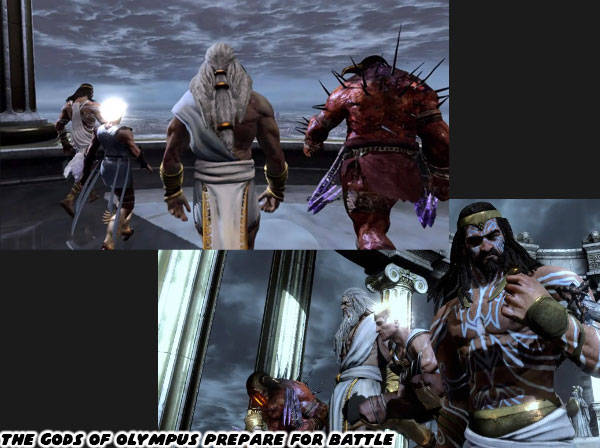
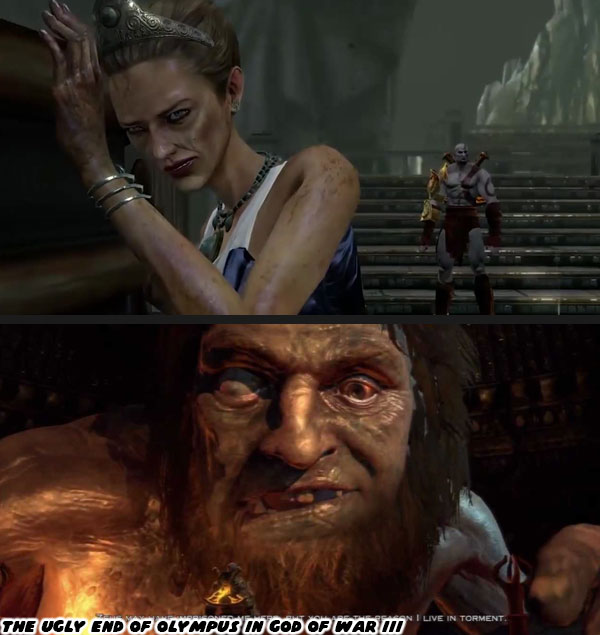
Rather than die from the fall he was instead taken up to Mount Olympus. I was not expecting the game to end there. Someone had to take the place of Ares as the new god of war. Walking up the golden staircase to the throne room gave me goosebumps. Never in a million years would I have expected it. The effects, and presentation of Mount Olympus was one of my favorite visuals of the entire series. To this day I am amazed at how the studio was able to recreate something as etherial, and otherworldly. Returning full circle to the start of the game was a brilliant way to cap the experience. As with NiGHTS into dreams... it was something almost impossible to do. It was a literal one in a million chance of sticking the landing. Also as with NiGHTS if God of War had ended with only one game then I would have been satisfied. David Jaffe, and the studio had managed to create a perfect game. There were other developers that had been around for much longer, still trying to capture that kind of lightning in a bottle. Despite all the hard work that went into God of War there were no guarantees in the industry. It could have fallen short with the audience for some imperceptible flaw. Because of this Jaffe, and company wanted to plant the seeds of a sequel, or even series.
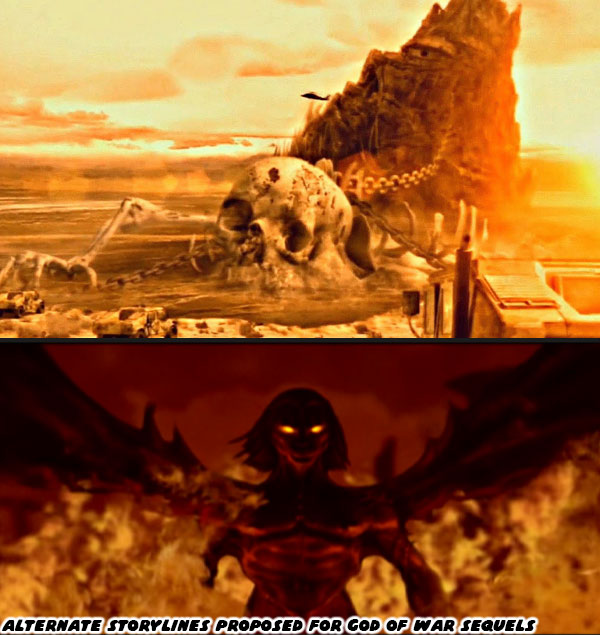
Gamers that returned to complete the Challenge of the Gods were rewarded with all sorts of secrets. Two potential paths for the franchise were revealed. One of the possible stories was set in the current era. A military expedition discovered the bones of Cronos out in the desert, with the temple still chained to his back. There were other challenges, and treasures waiting to be revealed inside. Would a soldier, a descendant of Kratos be the only person to go in, and come out alive? Would he discover his legacy? Perhaps become the next God of War? Then there was also a second story revealed. Kratos had a younger brother that was taken from him as a child. Whereas Kratos grew up to be a successful Spartan captain, his brother grew up in the underworld, and grew to resent Kratos. I had no idea if either ending would be explored in the future. As I said the market could be fickle. Despite the press, and marketing that went into the game if audiences didn’t help spread the word then it would have been a slept on after release. It would have been forgotten along with the hundreds of other games released each year. Today there are dozens of YouTube channels where gamers are rediscovering titles that perhaps came out at the wrong time, and deserve a second look. Thankfully God of War was an enormous success. There would be a sequel, and it would be even more incredible. I’ll talk about that in the next blog. For now I’d like to hear your take on God of War, or any other games you would consider to be close to perfection. Let me know in the comments section please. As always if you would like to sponsor me
please visit my Patreon page and consider donating each month, even as little as $1 would help make better blogs and even podcasts!