Showing posts with label pandora. Show all posts

Friday, February 3, 2023

God of War III, the dark, and brooding end of a story

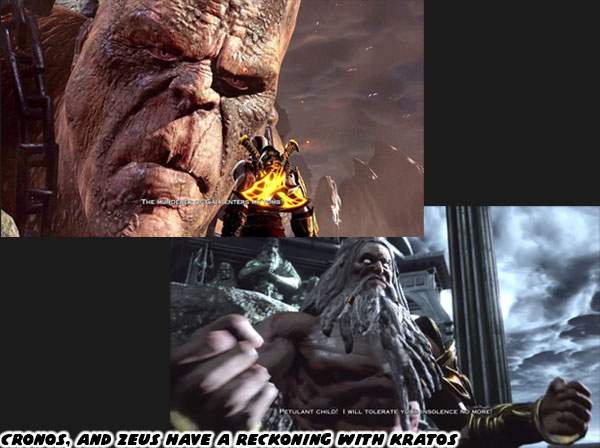
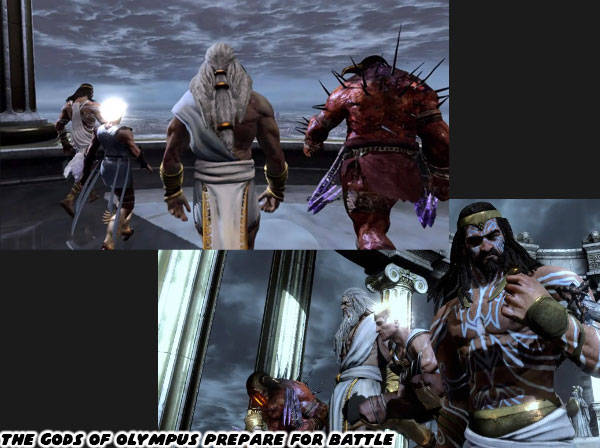
Of all the God of War games, it was the third game that I enjoyed the least. That is not to say it wasn’t a good game. Far from it. I must have played through the game at least a dozen times, always picking up new details, and appreciating the work that went into it. God of War III elevated the status of Sony Santa Monica as one of the premier game developers around the world. They managed to take everything that made the GoW series memorable, and put it on the Playstation 3, while also raising the bar in terms of visuals, control, animation, and game play. The game picks up on the heels of the final cinema that played at the end of GoW II. We see Kratos standing on the shoulder of Gaia, as she, and her fellow titans are climbing Mount Olympus. The minions, and supporters are fighting the citizens, and servants of Olympus the entire way up. Zeus looks down from the peak along with his brothers Hades, and Poseidon. His son Hermes is there, and the god of the sun Helios is there as well. Zeus rallies the gods, and says they have faced worse odds before. They leap into battle, Hades sliding down the mountain with the use of his hooks. Hermes runs down the mountain. Helios summons his blazing chariot, and flies off into the sky. Poseidon jumps directly at Epimethus, and pierces his chest, sending the stone-like titan falling into the ocean below.

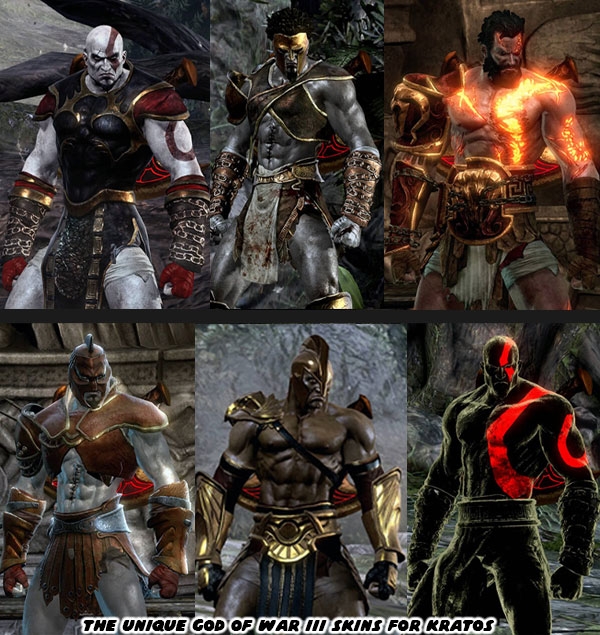
The game is visually stunning. For the first time the in-game graphics are as good, if not better, than the pre-rendered cut scenes from the first two titles. From this point forward every GoW cinematic would be rendered by the actual game engine, making every transition from story to game seamless. The levels would be massive, presented with greater fidelity than before. In many cases we would be able to see for miles, the usual “cheats” of having distant objects obscured by fog, or clouds wasn’t the case here. Also the stages could be dynamic. The battle within the Colossus of Rhodes was primitive compared to the movement of the stage while Kratos fights the defenders of Olympus while also climbing Gaia’s shoulder. Then later in the game the studio tops themselves once more by having Kratos fight Cronos as he tries to pluck the minuscule Ghost of Sparta off his craggy skin. Granted these amazing types of battles had been seen earlier in Shadow of the Colossus. They nonetheless were some of the most impressive fights in the history of gaming. In addition to going bigger, and better with everything that went into the encounters, the amount of detail had gone up exponentially for the characters. According to the developers “Kratos from God of War 2 (PS2) had 5,700 polygons for his entire body, 1,200 of those for the face and used five textures. Kratos from God of War 3 (PS3) had 64,000 polygons for his entire body, 5,700 for the face.” The move to new hardware, and storage space on the PS3 discs, plus DLC content, allowed Kratos to have different “skins,” or outfits rendered in perfect detail.

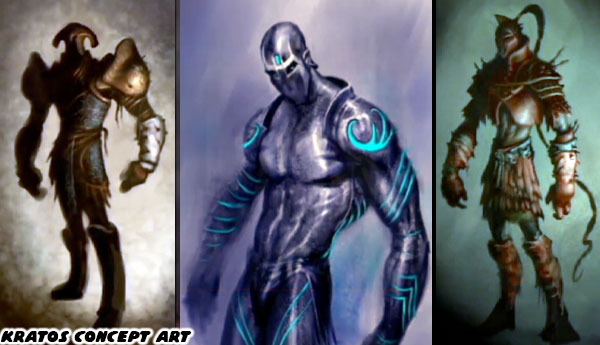
Being able to change the look of Kratos wasn’t something new. In the first game once you played through you could actually unlock new costumes for him. Some were armor that allowed him to take more damage, or deal more damage. Other outfits allowed him to gain faster experience, or have unlimited magic. Most of the looks made the Spartan look more dangerous, and some made him look silly, like a giant fish, or angry cow. Sony Santa Monica never took themselves too seriously. They had a sense of humor with the otherwise dark material. That was evident with the humor that went into the Twisted Metal series. The new costumes were actually a love letter to the franchise. Several of the skins were a nod to the earliest concept art for the character. Outfits like the Forgotten Warrior, Dominus, and Phantom of Chaos were based on the designs where Kratos was a helmeted, and almost faceless character. The warriors looked brutal, and they allowed audiences to wonder if the game would have been as successful had Kratos looked like this. One of the skins was Deimos, that of Kratos’ younger brother. Again, it allowed us to wonder if he could have carried the franchise as well.

The original game introduced the Blade of Artemis about halfway through the story. It was a powerful close range weapon that played differently than the Blades of Chaos. It could also be upgraded, and allowed audiences to enjoy a different experience. God of War II expanded on that idea, and introduced multiple weapons; the Blade of Olympus, the Spear of Destiny, and the Barbarian Hammer. Each one also played uniquely as well, and had different features that could be unlocked by powering them up. GoW III followed the trend, Kratos had an upgrade in his traditional Blades of Chaos / Blades of Athena, to the more sinister Blades of Exile. The title also added the Nemean Cestus, the Claws of Hades, and the Nemesis Whip. These weapons not only added new game play elements, they were also required to overcome certain obstacles. As welcome as the new tools were they suffered from the same limitation as every other weapon. Audiences had to defeat enemies, and destroy items in order to earn the Red Orbs required to upgrade the Blades of Chaos, and the magic items acquired. They had no idea if these other weapons were superior to the Blades of Chaos, or would be needed to beat the game. Nothing felt worse than wasting red orbs on one weapon, or magic item, when a better one was around the corner. Not to mention that the Claws of Hades, and Nemesis Whip were weapons attached to chains, with a range not unlike the Blades of Exile. Having three similar items didn’t really feel necessary. That was the least of the reasons why I enjoyed the game less than the other GoW titles.

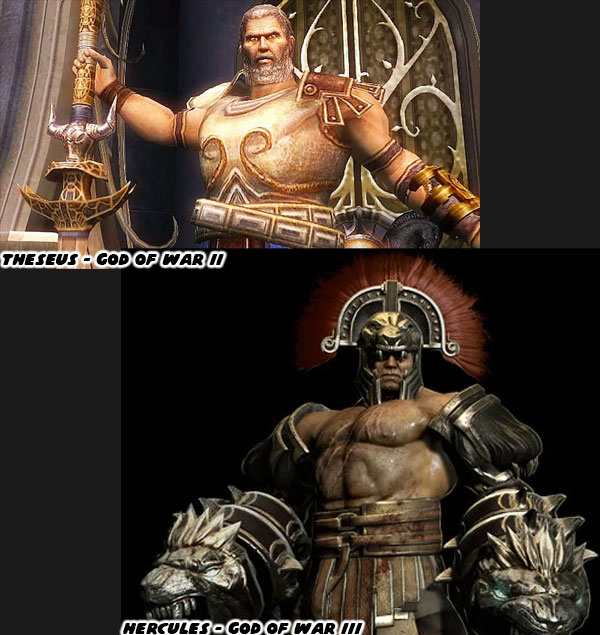
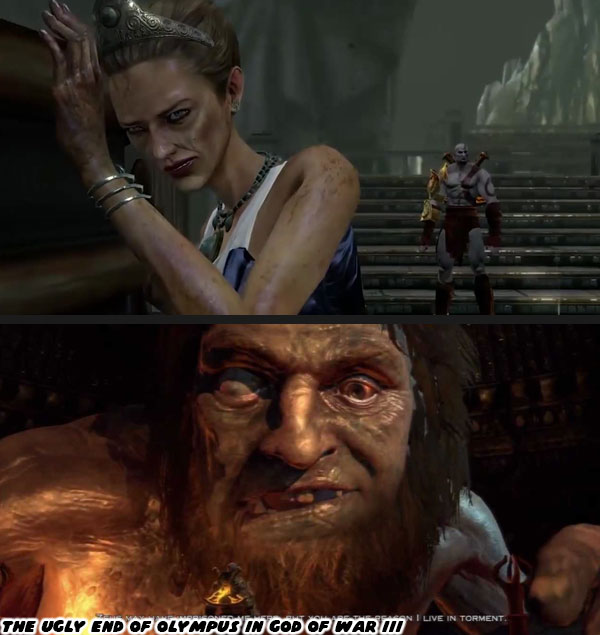
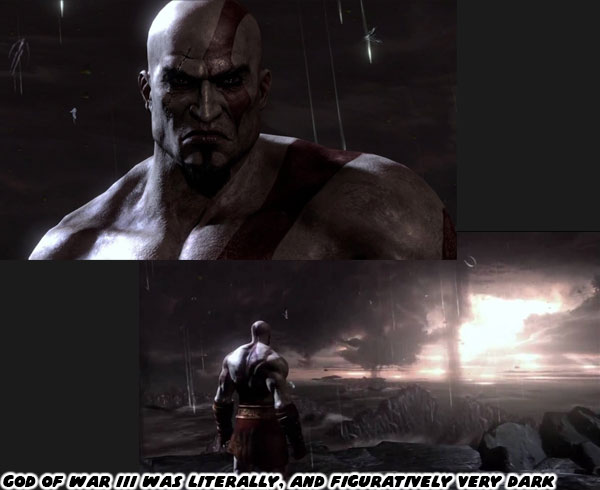
The difference between the earlier releases, and GoW III was the tone, and atmosphere of the game. The PS3 game was incredibly dark. It wasn’t the first time the team had created something bleak. For example the jump in tone from Twisted Metal on the PS, to Twisted Metal Black on the PS2 was huge. That series however always revolved around a band of psychopaths, cursed participants, demons, and apocalyptic settings. It made sense to push the envelope in the sequels. God of War was a different kind of game. It was an adventure with a lot of stylistic fantasy to it. God of War III was gritty, realistic, and just plain ugly by comparison. I don’t mean the graphics were bad. They were brilliant, but it chased a tone that was rooted in realism, rather than the more comic-type aesthetic of the previous two games. For example think of the presentation of the legendary heroes in the previous game. Characters like Theseus, and Perseus were very stylized. Their costumes, and weapons, just like their stages were bright, and colorful. They looked like action heroes in a comic book, or perhaps anime show. By comparison every costume, location, and hero in GoW III had muted colors. Their armor lacking polish, and upkeep. Their stages (and skin) were washed in a series of grays, and dull browns. These were conscious choices from the GoW III Director Stig Asmussen. Like the yellow filters used by Hollywood when they wanted to depict Mexico, or Southeast Asia.

If I were to make a cinematic comparison between how the violence had changed, it was the difference between the gun fights in John Wick, over Training Day. One film was way over the top with the encounters, and the other was scary in its realism. Blood, guts, sex and violence has always been a part of the GoW franchise. Previously these things were almost cartoonish in presentation, including the decapitations, and sex mini games. They weren’t as shocking, as they were camp. This time Sony Santa Monica wanted to render every blood vessel, tendon, and muscle tear in vivid detail. We would be treated to a first-person view as Kratos beat Poseidon to death, and even blinded him by thumbing out his eyes. Kratos would inflict that type of brutality to every god that crossed his path. All of the H’s; Helios, Hercules, Hermes, Hades, Hephaestus, Hera, and lastly Zeus were gruesomely deposed. Every encounter was uglier than the one before. God of War II was in part a love letter to Clash of the Titans. The studio went so far as to reprise Harry Hamlin as the voice of Perseus. Although he was defeated by Kratos it was a quick kill, and not overly gory. The inclusion of Hamlin felt like an earnest call back to what the actor meant to a generation. In GoW III the voice of Hercules was performed by Kevin Sorbo. The actor had played the titular role for six seasons in Hercules: The Legendary Journeys. The show ran almost a decade before GoW came out, and had built a cult following. This was especially true for the spin-off series Xena Warrior Princess. But I digress. Having Sorbo voice a larger, darker version of the character didn’t necessarily carry the same sense of admiration for the role. This was especially evident as Kratos literally punched the face off of the hero.

Kratos had obliterated most of the classic villains, and even some of the heroes from mythology throughout the years. He destroyed several cities in the process, ended the Greek pantheon, and wiped older traditions off the face of the Earth. It was an impressive feat, but the way things closed out in GoW III felt poorly executed. From a storytelling perspective the game felt like a rush to wrap everything up. Every previous GoW title had Kratos travel across the Mediterranean. We saw actual historic locations, as well as many fantasy settings. We even got to visit the afterlife during the adventures. Even if the trip went full circle it at least felt as if we had gone on an expedition. GoW III was anything but a journey. The entire game took place on Mount Olympus, and sadly not the cool golden Mount Olympus seen in the ending of the first game. This Mount Olympus felt like going room to room in a big house. Each room getting progressively darker until the lights went out. When I think of GoW III the only thing I imagine is a giant chain that connects the beginning, and end. You’re either climbing, flying up, or down through this chain when you'd rather be doing anything else. To be fair we did visit Hades, and Tartarus, but that just feels like we’re going into the basement, and sub basement of the same mountain. I felt like the graphic horsepower of the PS3 was wasted by staying in one area. Forcing everything to happen in a centralized location was something that I felt really hurt the experience.

Then there were the issues that I had with the story. Kratos was repeating the cycle of those that came before him. This was to be expected since he was a tragic character, and Sony Santa Monica was following the storytelling tradition. For perspective Cronos had freed the titans when he gutted his father Uranus. Zeus had freed his brothers when he gutted Cronos. Now Kratos was on a mission to destroy his own father as well. The moral being that Kratos didn’t just want to get revenge. He wanted to end the cycle he was born into. It was a theme that would be revisited in the 2018 version of God of War. Kratos had no family to free, and with the death of Athena not even a friend to lean on. If he died on his quest for revenge then it seemed fine with him. It wasn’t just a story of revenge however, but rather the erasure of the old religions. It was a bold narrative, but it was delivered with a heavy hand. For the first time in the series Kratos lacked pathos. In other games he showed a range of emotions. He was angry, but despondent in the first, arrogant, but also regretful in the sequel. All he had was rage in the third. It wasn’t realistic anger, but exaggerated rage to a fault. He was written almost one-dimensional in GoW III. He was too short of temper with no redeeming factors. He would fly off the handle at every insult thrown his way. We were used to his anger by now, but every line delivered lacked the range that T.C. Carson was known for. It was all moping, and seething with no substance. All of the good writing in the game went to Pandora, as played by Natalie Lander.

The young daughter of Hephaestus was locked away in the labyrinth within Mount Olympus by Zeus following the events of the first GoW. This history was explained to Kratos from several of the other gods. Kratos seemed indifferent, and dismissive of Pandora through the majority of the game. He insisted over, and over that all wanted was the death of Zeus, ignoring what Pandora was trying to explain to him. This seemed out of character for the Ghost of Sparta. Long-time fans knew that he regretted killing his wife, and daughter every day of his existence. He wouldn’t necessarily be cruel to another girl whether she was god, or not. He didn’t change his tone towards her until the very end of the game when she had to sacrifice herself. Kratos seemed too dense in understanding that Pandora offered hope to the world. When all of the ills were released by opening the box in the first game, the thing that remained was hope. That part of the story felt like a stepping stone for the grand finale which was Kratos, and Zeus beating each other to a pulp. The last cinema ending of Kratos stabbing himself after defeating Zeus, and then vanishing seemed anticlimactic. I got that Sony didn’t want to give up their cash cow, but the whole game was so dark, and ugly that I felt it betrayed the greatness of the first two titles.

Had that been the last time I played an entry to the series I would have been sorely disappointed. I did not own a PSP so I had no idea if the handheld games were any good. Thankfully they were ported to the PS3, and given some visual, and control polish. When I played those games I had a newfound love for the series. I’m going to do a deep dive into them next. Until then I’d really like to hear your take on God of War III. Did you think it was the best entry in the series? What did you like, or dislike about the game? Let me know in the comments section please. As always if you would like to sponsor me please visit my Patreon page and consider donating each month, even as little as $1 would help make better blogs and even podcasts!
follow the Street Writer on Patreon!

Monday, January 23, 2023

What was your favorite game of 2022? Explaining to my cousin why I thought Elden Ring was better than God of War Ragnarok.

We’re going to go on a journey over the next few blog entries. The idea behind it started as a conversation with my cousin. One day over the holiday break my cousin, and I were talking about the game of the year contenders for 2022. The biggest titles competing were God of War Ragnarok, and Elden Ring. My cousin loves a challenge, and was absolutely smitten with Elden Ring. He enjoyed it so much that he went back through the entire FromSoftware catalog to play, or replay the other Souls games as well. He asked which I think would be game of the year. I said while I enjoyed Ragnarok (GoWR), I thought that Elden Ring (ER) was going to take the title. He knew that I was a massive God of War fan, and was getting my niece into the series. He asked why critics were also learning towards ER. I told him that I understood where new players, and long-time fans were coming from with their praise, and criticism of GoWR, compared to ER. I said both games were beautiful, both told an amazing story, both immersed audiences into a unique world, and both helped set the bar higher for the next generation. You didn’t have to play other games in each respective series, but you would get a lot out of both if you had played prior versions as well.
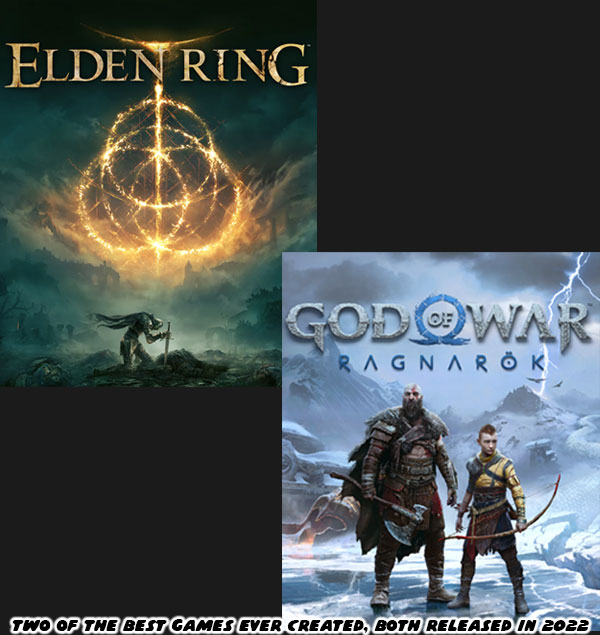
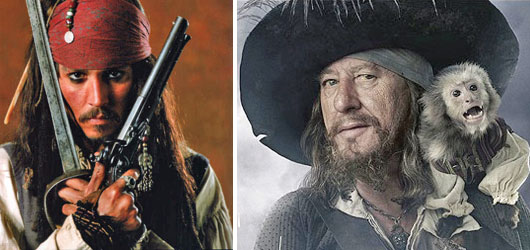
He wanted me to explain more because I always sung the praises of GoW. I told him to be honest, I don’t think GoWR topped the 2018 GoW. I said it was as good, but not better. It had many improvements on game play, control, combos, and visuals. As a whole, however, I don’t think the story, and features topped the previous game. Because of this Elden Ring was going to take the major awards. He wanted to know what it was specifically that I thought was lacking. He appreciated my love of gaming, and wanted to see if I could figure out the intangibles. He wanted to know which God of War game was my favorite, if it wasn’t Ragnarok. I said the best way I could explain it was in theme park terms. I told him to think about the best rides in Disneyland, what were his favorite attractions. I said for many theme park fans there were two at the top of the list; Pirates of the Caribbean, and The Haunted Mansion. I said to think about all of the things that you enjoyed in each attraction. The Imagineers responsible for the attractions were former animators, brilliant painters, writers, engineers, effects artists. They not only broke new ground for rides, but for storytelling as well. Each attraction would completely immerse the rider into an experience. From the time they got in the queue, all the way until they exited the ride. Every moment was in a world that Disney had created. The Imagineers accomplished this by controlling every element. The colors of each scene was painted in was chosen with the insight of a master painter. The angle of each turn was framed with the care of a director of photography. The fanciful pirate scenes were lit as if they were stage plays. Every material created, or purchased building, queue, and ride vehicles helped to convey a narrative.
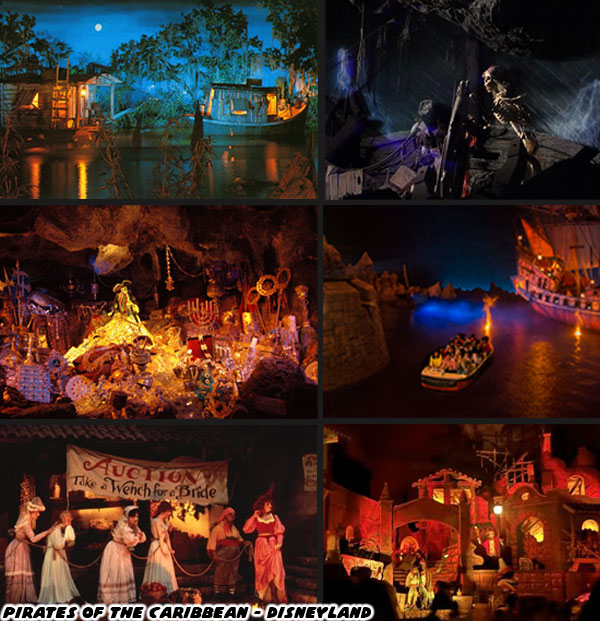
I told him to imagine your favorite part of Pirates of the Caribbean. If you were to ask any seasoned visitor what their favorite part was chances are they would give you a list of things. Maybe it was the Blue Bayou, the perpetual nighttime swamp where the attraction begins. Heck, even the musky smell of the water that hits you as soon as you enter the show building has inspired small candle companies to recreate the scent. Maybe it was the waterfall that riders went down. Maybe it was the skeleton helmsmen perpetually sailing against a storm. Maybe it was the treasure room of an unknown pirate king. Or the battle between the Wicked Wench, and a Spanish fort. Maybe it was the sacking of a village, or any other number of things that were all cutting edge for the time, and still unparalleled in many other parks. Audiences would be hard pressed to say what the best part of the ride was. It was the whole that made it a legendary dark ride.
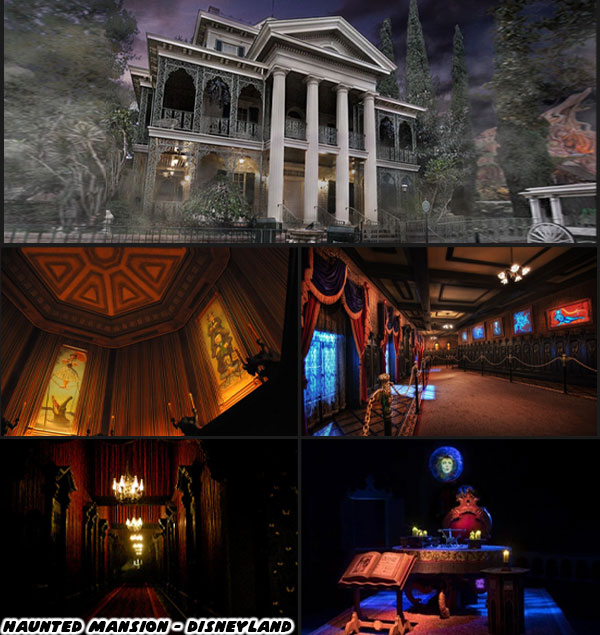
I told him to then think about what was the best part of the Haunted Mansion. An attraction that was longer in development, and allowed them to improve on the storytelling that they learned in Pirates. For the Haunted Mansion the best part could be the building itself. A plantation style mansion that was immaculate, and nothing like the dilapidated buildings that we usually consider possessed. It could be the queue that worked past a mausoleum, and graveyard. The Stretching Room, corridor leading up to the “Doom Buggies” with paintings that changed, and statues that followed the riders. Maybe it was the endless hallway, or the seance hosted by Madame Leota. Maybe it was the Hatbox Ghost, the ballroom scene, the graveyard party, or even the Hitchhiking Ghosts that were the best parts. Just as in PotC it was impossible to pick out a single best thing. It was the collective experience that was unlike anything else on Earth. It was rare to say this about any attraction. It was an experience that even 50+ years later people would never get tired of.

I explained to my cousin. It wasn’t about the speed of the attraction that made it so memorable. Neither Pirates, or Mansion was a roller coaster. In fact both attractions were deliberately slowly paced, so that the Imagineers could pull audiences in. They wanted to bring them into the world that they created, let them forget about the outside world, even for just a few minutes. But at no point did the action stop, they kept pushing audiences forward, little by little. The Imagineers wanted to tell a loose story by using a series of vignettes. They controlled the pace, and time required to absorb a scene by slowing each attraction. This let audiences look at the tiny details in each area, while never losing the overall picture. People could notice new things each time they rode, they could hear the action, feel it, and in some cases smell this world to complete the illusion. This was especially true with Mansion. The sides, and back of the Doom Buggies helped block out the ride, and directed the visitor to look at each scene, framed perfectly each, and every time. Then the buggy would swivel, turn, and reveal another scene just as amazing as the last. I told him that my favorite God of War games was just about evenly tied between God of War Ascension, and Ghost of Sparta. I said I considered them to be the Pirates, or Mansion of the franchise, even if they were less well received by fans.
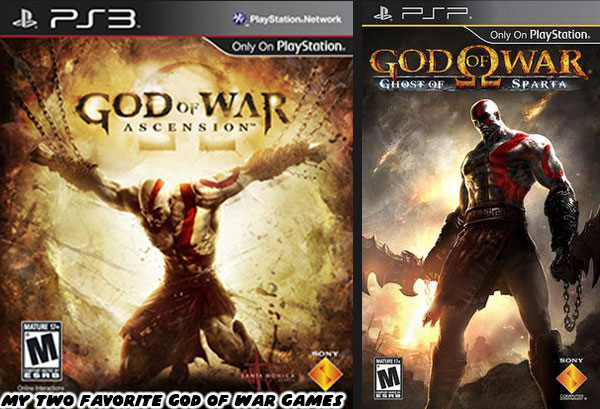
I explained that not only did I love the magic, combat, and control of the games. I also appreciated the pace, storytelling, and framing of each level as well. From the first time I played, through the next dozen play throughs, I never grew tired of the games. Even though I knew where the story was headed I loved the way that the developers paced each section of the titles. The developers were doing much more than creating an action game. They were acting as Imagineers letting audiences play in the fantastic mythical world they had created. In my opinion these games captured the essence of the series better than any other entry. I then told my cousin that the difference between the older, and newer GoW games had nothing to do with quality, or storytelling. Sony Santa Monica was creating absolute gold, and honoring the legacy of the earlier teams. I said GoW (2018), and Ragnarok were not theme park dark rides, they were instead entire lands. There was so much to see, and explore in each game that they were more like Batuu, or Pandora. The two newer lands at Disneyland, and Walt Disney World respectively. Players could not only walk, run, and fight, they could now control the camera. They could look around, and see every detail in these fantasy worlds. Whether it was a massive fortress, a soaring dragon, a poisonous swamp, a loaf of bread, or an exotic flower. There was no detail overlooked. The developers populated the realms with thousands of such things.
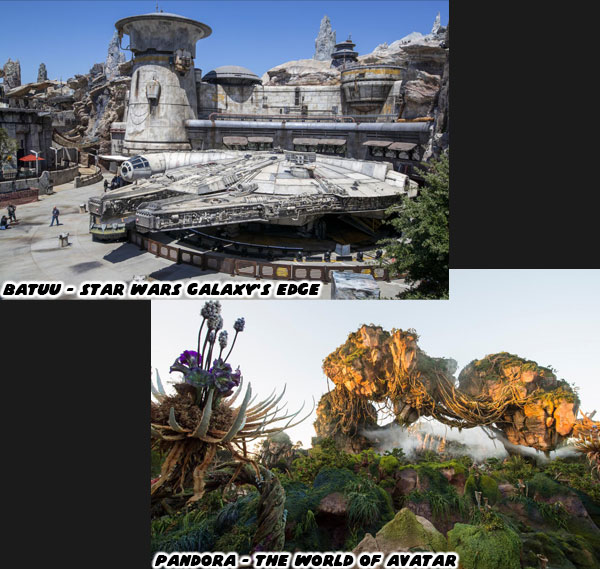
Players in the new GoW games could take their time traveling back, and forth between realms. Exploring at their own pace, absorbing the features of each realm, and appreciating everything that the developers had layered into the experience. I felt that the developers had slowed down the experience to the point that it would come to a dead stop. Which to me was a frustrating experience in a theme park, as well as game. I flat-out told my cousin that I didn’t have time for any of that. I worked all day, raised a family, and at the end of my day I want to enjoy the game, not spend 20 hours wandering back and forth across a map searching for pieces of slag. Grinding, leveling up, and exploring helped control the pace. It was much more difficult to simply rush through the two newest GoW titles because of the difficulty, and various side missions. There were encounters in the game that acted as attractions in these new lands. Enormous set pieces that helped push the plot forward, and make for memorable portions, like say knocking down a giant hammer, or fighting a dragon at the top of a mountain. I had no sense of when these major action pieces would pop up. Maybe it was just around the corner, or maybe it was 10 hours away. In previous GoW games we could just about guarantee that the next major battle was five or ten minutes away from any part of the stage. In the meantime we could enjoy the battles against waves of weird monsters, and figuring out fun puzzles.
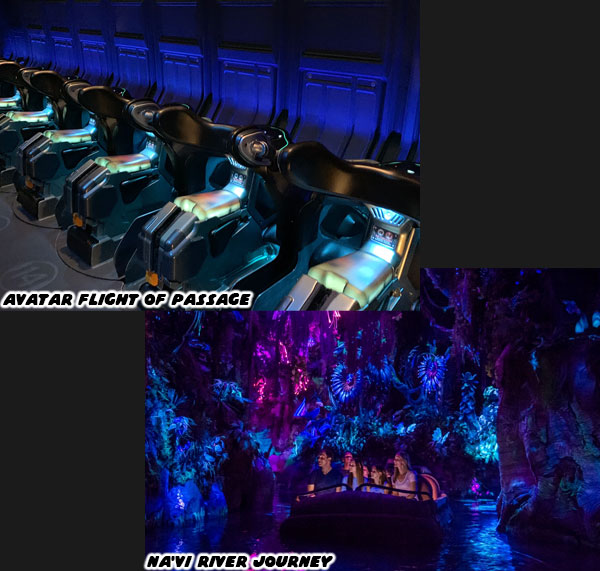
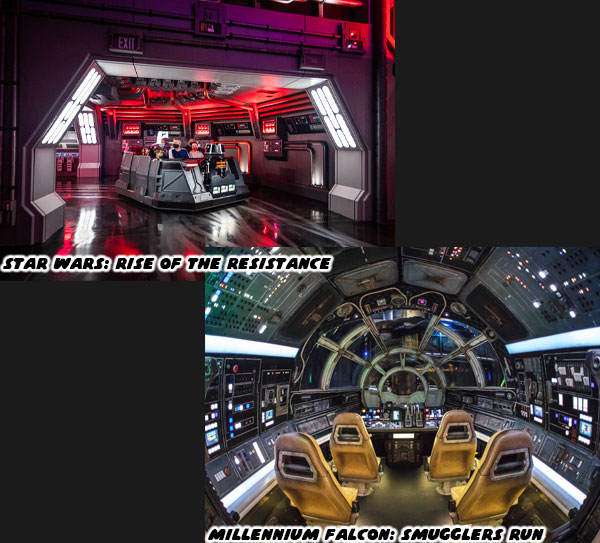
A slow, and deliberate pace were all things that modern audiences expected to see in a AAA title. Uncharted, Red Dead Redemption, the Last of Us, and Horizon were examples of games that had become longer, slower paced, and more immersive than at any other point in history. Like a Hollywood tentpole movie these games required the eyes of a talented director, a team of writers, hundreds of employees, millions of dollars in development, and years to be released. I explained to my cousin that although I appreciated that the studio had given us multiple worlds to explore, what I wanted to enjoy was the attraction. I didn’t want to wander through Batuu, or Pandora, poking around at everything all day. It was part of the reason I didn’t vibe with some of the newer Disney rides. I didn’t want to be forced to press a bunch of buttons while sitting in the Millennium Falcon, nor did I want to stare at the foliage of the plants of Pandora. Modern rides, and modern games were breathtaking works of art-meets-technology. They were built from the lessons of previous Imagineers. They did many things great, but storytelling, and action was the part of the experience that I thought suffered most in the new attractions. Rides, end even entire lands based on an existing IP felt limited. It would be hard to create a Star Wars attraction featuring a popular character that did something, said something, or acted in a way that would not be considered canon. Not to mention the ride could feel awkward if the character died in a film, or television series, yet their animatronic remained as vivid as ever. This is why I think the best Star Wars attraction like Star Tours, or games like Star Wars Jedi: Fallen Order featured an original character, and story. But I digress.
I would argue that the best attractions couldn’t, and shouldn’t be dated against a movie, comic book, or cartoon. The films of Star Wars, Avatar, the Avengers, and Tron were all cultural touchstones, but that didn’t mean they were perfect for attractions, or games. This was especially true if audiences didn’t see frequent updates to the IP. Plus what happens when the parks try to incorporate the likeness of an actor that may turn out to be problematic, or controversial? Millions of dollars gets wasted updating the attraction, and the the likeness of that problematic actor, or actress remains seen by millions of people each year. Again I digress. God of War, like many great games, created its own mythology. It took many liberties with classic Greek, and Norse fables. Characters, and settings that were familiar to audiences were sprinkled throughout the various titles. By centering the experience around a new hero named Kratos, rather than Athena, Ares or Zeus then the developers had the creative freedom to bring us along all sorts of amazing adventures. They could incorporate characters from the Odyssey, the Iliad, or the Ring Cycle. By running with an original idea the GoW series could cross into different pantheons without ever losing the audience. By this same reasoning an original attraction like Pirates of the Caribbean which opened in 1967, and The Haunted Mansion from 1969 still withstand the test of time.
For my final point I said that God of War (2018), and God of War Ragnarok was the difference between the Haunted Mansion in Disneyland, and the Haunted Mansion in Walt Disney World (1971). There were changes in the show building, the queue, and various improvements between the two, but they were still fairly similar. Elden Ring was a whole new attraction by comparison. My cousin completely understood my analogy. As he had a family as well he understood how precious his free time was. Although he enjoyed the challenges of Elden Ring, he also wished he had more time to play through other games. Experience other adventures as well without being bogged down in remembering where he was in a 40-hour adventure. I’d like to know your thoughts on the best games of 2022. Do you agree with the critics? Was there a smaller game that you think was the best of 2022? Let me know in the comments section please. As always if you would like to sponsor me please visit my Patreon page and consider donating each month, even as little as $1 would help make better blogs and even podcasts!
follow the Street Writer on Patreon!