We’re going to go on a journey over the next few blog entries. The idea behind it started as a conversation with my cousin. One day over the holiday break my cousin, and I were talking about the game of the year contenders for 2022. The biggest titles competing were God of War Ragnarok, and Elden Ring. My cousin loves a challenge, and was absolutely smitten with Elden Ring. He enjoyed it so much that he went back through the entire FromSoftware catalog to play, or replay the other Souls games as well. He asked which I think would be game of the year. I said while I enjoyed Ragnarok (GoWR), I thought that Elden Ring (ER) was going to take the title. He knew that I was a massive God of War fan, and was getting my niece into the series. He asked why critics were also learning towards ER. I told him that I understood where new players, and long-time fans were coming from with their praise, and criticism of GoWR, compared to ER. I said both games were beautiful, both told an amazing story, both immersed audiences into a unique world, and both helped set the bar higher for the next generation. You didn’t have to play other games in each respective series, but you would get a lot out of both if you had played prior versions as well.
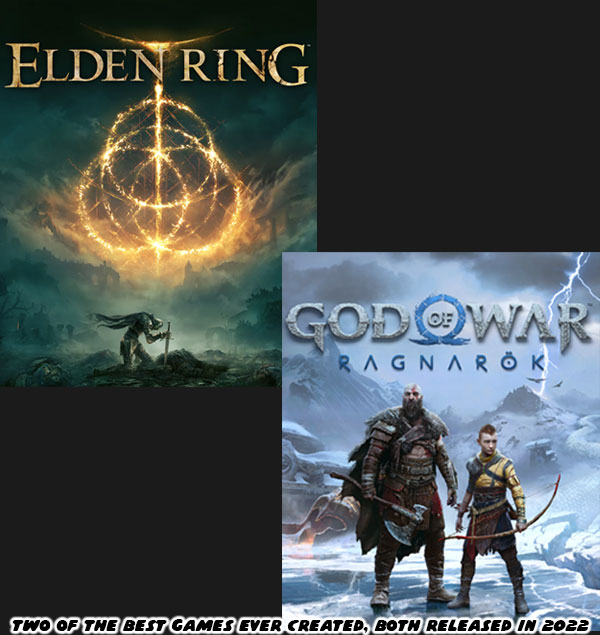
He wanted me to explain more because I always sung the praises of GoW. I told him to be honest, I don’t think GoWR topped the 2018 GoW. I said it was as good, but not better. It had many improvements on game play, control, combos, and visuals. As a whole, however, I don’t think the story, and features topped the previous game. Because of this Elden Ring was going to take the major awards. He wanted to know what it was specifically that I thought was lacking. He appreciated my love of gaming, and wanted to see if I could figure out the intangibles. He wanted to know which God of War game was my favorite, if it wasn’t Ragnarok. I said the best way I could explain it was in theme park terms. I told him to think about the best rides in Disneyland, what were his favorite attractions. I said for many theme park fans there were two at the top of the list; Pirates of the Caribbean, and The Haunted Mansion. I said to think about all of the things that you enjoyed in each attraction. The Imagineers responsible for the attractions were former animators, brilliant painters, writers, engineers, effects artists. They not only broke new ground for rides, but for storytelling as well. Each attraction would completely immerse the rider into an experience. From the time they got in the queue, all the way until they exited the ride. Every moment was in a world that Disney had created. The Imagineers accomplished this by controlling every element. The colors of each scene was painted in was chosen with the insight of a master painter. The angle of each turn was framed with the care of a director of photography. The fanciful pirate scenes were lit as if they were stage plays. Every material created, or purchased building, queue, and ride vehicles helped to convey a narrative.
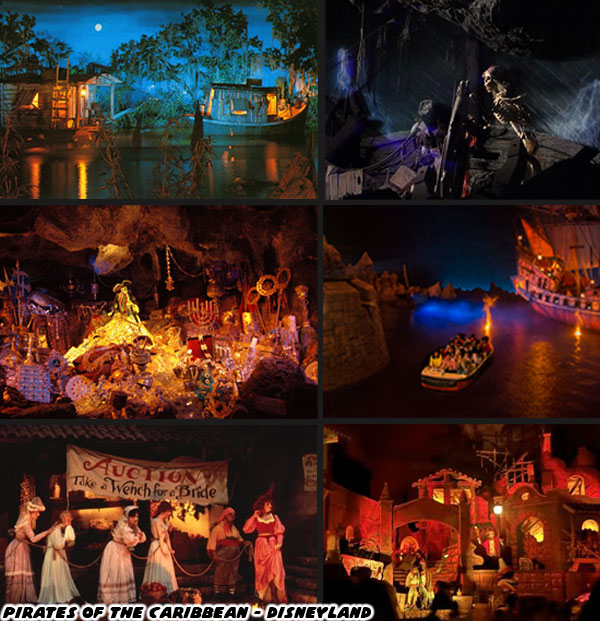
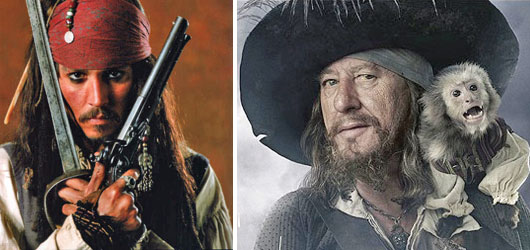
I told him to imagine your favorite part of Pirates of the Caribbean. If you were to ask any seasoned visitor what their favorite part was chances are they would give you a list of things. Maybe it was the Blue Bayou, the perpetual nighttime swamp where the attraction begins. Heck, even the musky smell of the water that hits you as soon as you enter the show building
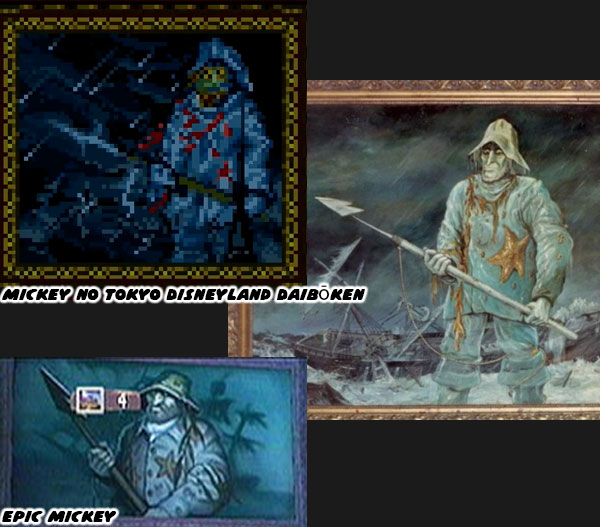
has inspired small candle companies to recreate the scent. Maybe it was the waterfall that riders went down. Maybe it was the skeleton helmsmen perpetually sailing against a storm. Maybe it was the treasure room of an unknown pirate king. Or the battle between the Wicked Wench, and a Spanish fort. Maybe it was the sacking of a village, or any other number of things that were all cutting edge for the time, and still unparalleled in many other parks. Audiences would be hard pressed to say what the best part of the ride was. It was the whole that made it a legendary dark ride.
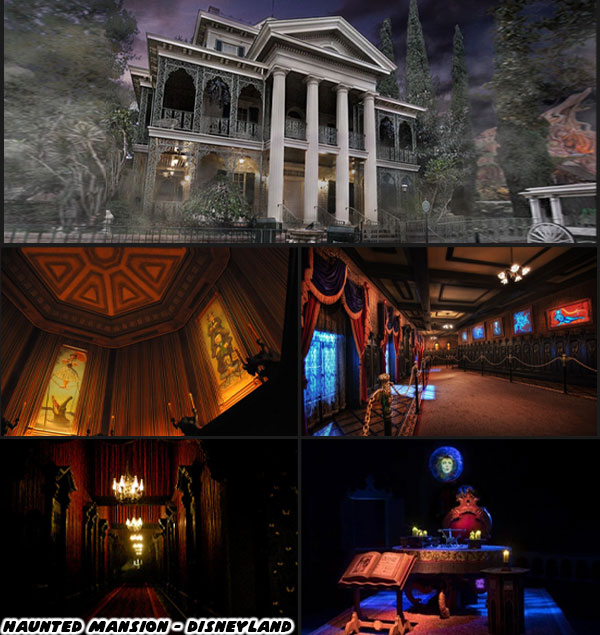
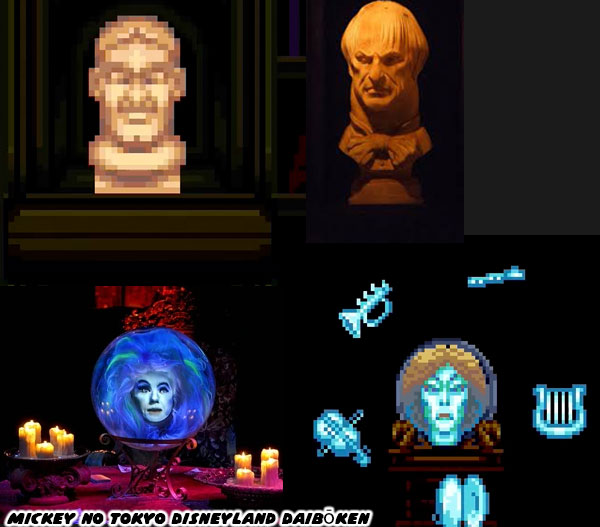
I told him to then think about what was the best part of the Haunted Mansion. An attraction that was longer in development, and allowed them to improve on the storytelling that they learned in Pirates. For the Haunted Mansion the best part could be the building itself. A plantation style mansion that was immaculate, and nothing like the dilapidated buildings that we usually consider possessed. It could be the queue that worked past a mausoleum, and graveyard. The Stretching Room, corridor leading up to the “Doom Buggies” with paintings that changed, and statues that followed the riders. Maybe it was the endless hallway, or the seance hosted by Madame Leota. Maybe it was the Hatbox Ghost, the ballroom scene, the graveyard party, or even the Hitchhiking Ghosts that were the best parts. Just as in PotC it was impossible to pick out a single best thing. It was the collective experience that was unlike anything else on Earth. It was rare to say this about any attraction. It was an experience that even 50+ years later people would never get tired of.
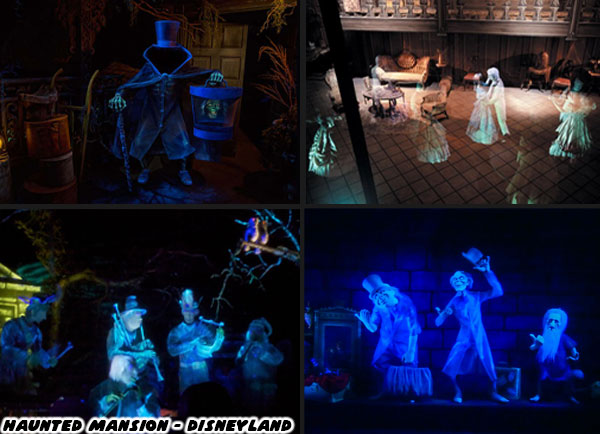
I explained to my cousin. It wasn’t about the speed of the attraction that made it so memorable. Neither Pirates, or Mansion was a roller coaster. In fact both attractions were deliberately slowly paced, so that the Imagineers could pull audiences in. They wanted to bring them into the world that they created, let them forget about the outside world, even for just a few minutes. But at no point did the action stop, they kept pushing audiences forward, little by little. The Imagineers wanted to tell a loose story by using a series of vignettes. They controlled the pace, and time required to absorb a scene by slowing each attraction. This let audiences look at the tiny details in each area, while never losing the overall picture. People could notice new things each time they rode, they could hear the action, feel it, and in some cases smell this world to complete the illusion. This was especially true with Mansion. The sides, and back of the Doom Buggies helped block out the ride, and directed the visitor to look at each scene, framed perfectly each, and every time. Then the buggy would swivel, turn, and reveal another scene just as amazing as the last. I told him that my favorite God of War games was just about evenly tied between God of War Ascension, and Ghost of Sparta. I said I considered them to be the Pirates, or Mansion of the franchise, even if they were less well received by fans.
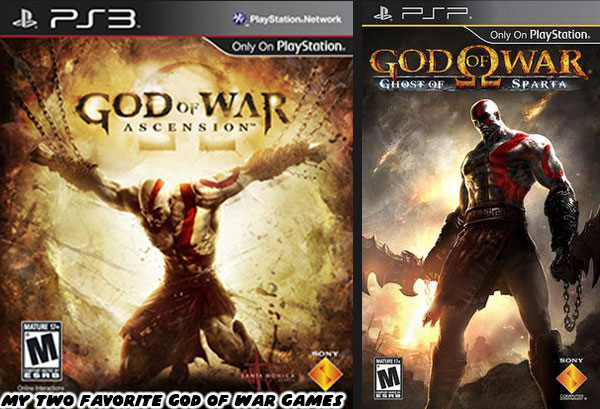
I explained that not only did I love the magic, combat, and control of the games. I also appreciated the pace, storytelling, and framing of each level as well. From the first time I played, through the next dozen play throughs, I never grew tired of the games. Even though I knew where the story was headed I loved the way that the developers paced each section of the titles. The developers were doing much more than creating an action game. They were acting as Imagineers letting audiences play in the fantastic mythical world they had created. In my opinion these games captured the essence of the series better than any other entry. I then told my cousin that the difference between the older, and newer GoW games had nothing to do with quality, or storytelling. Sony Santa Monica was creating absolute gold, and honoring the legacy of the earlier teams. I said GoW (2018), and Ragnarok were not theme park dark rides, they were instead entire lands. There was so much to see, and explore in each game that they were more like Batuu, or Pandora. The two newer lands at Disneyland, and Walt Disney World respectively. Players could not only walk, run, and fight, they could now control the camera. They could look around, and see every detail in these fantasy worlds. Whether it was a massive fortress, a soaring dragon, a poisonous swamp, a loaf of bread, or an exotic flower. There was no detail overlooked. The developers populated the realms with thousands of such things.
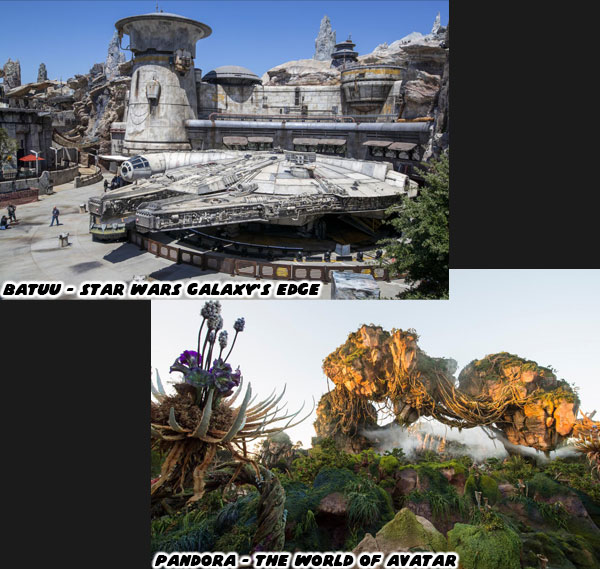
Players in the new GoW games could take their time traveling back, and forth between realms. Exploring at their own pace, absorbing the features of each realm, and appreciating everything that the developers had layered into the experience. I felt that the developers had slowed down the experience to the point that it would come to a dead stop. Which to me was a frustrating experience in a theme park, as well as game. I flat-out told my cousin that I didn’t have time for any of that. I worked all day, raised a family, and at the end of my day I want to enjoy the game, not spend 20 hours wandering back and forth across a map searching for pieces of slag. Grinding, leveling up, and exploring helped control the pace. It was much more difficult to simply rush through the two newest GoW titles because of the difficulty, and various side missions. There were encounters in the game that acted as attractions in these new lands. Enormous set pieces that helped push the plot forward, and make for memorable portions, like say knocking down a giant hammer, or fighting a dragon at the top of a mountain. I had no sense of when these major action pieces would pop up. Maybe it was just around the corner, or maybe it was 10 hours away. In previous GoW games we could just about guarantee that the next major battle was five or ten minutes away from any part of the stage. In the meantime we could enjoy the battles against waves of weird monsters, and figuring out fun puzzles.
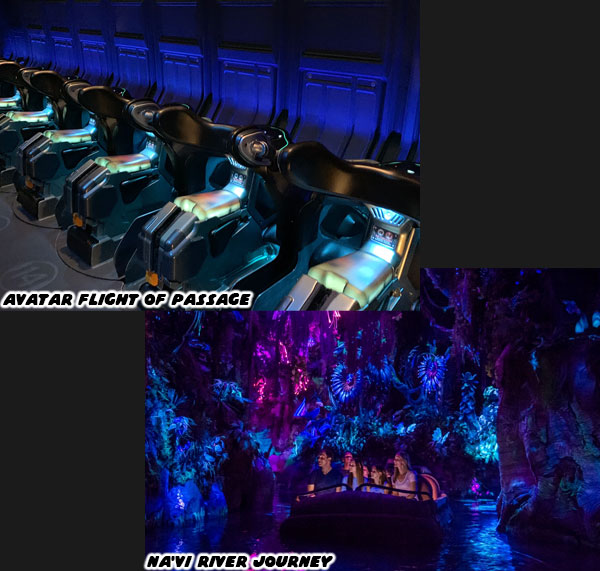
A slow, and deliberate pace were all things that modern audiences expected to see in a AAA title. Uncharted, Red Dead Redemption, the Last of Us, and Horizon were examples of games that had become longer, slower paced, and more immersive than at any other point in history. Like a Hollywood tentpole movie these games required the eyes of a talented director, a team of writers, hundreds of employees, millions of dollars in development, and years to be released. I explained to my cousin that although I appreciated that the studio had given us multiple worlds to explore, what I wanted to enjoy was the attraction. I didn’t want to wander through Batuu, or Pandora, poking around at everything all day. It was part of the reason I didn’t vibe with some of the newer Disney rides. I didn’t want to be forced to press a bunch of buttons while sitting in the Millennium Falcon, nor did I want to stare at the foliage of the plants of Pandora. Modern rides, and modern games were breathtaking works of art-meets-technology. They were built from the lessons of previous Imagineers. They did many things great, but storytelling, and action was the part of the experience that I thought suffered most in the new attractions. Rides, end even entire lands based on an existing IP felt limited. It would be hard to create a Star Wars attraction featuring a popular character that did something, said something, or acted in a way that would not be considered canon. Not to mention the ride could feel awkward if the character died in a film, or television series, yet their animatronic remained as vivid as ever. This is why I think the best Star Wars attraction like Star Tours, or games like Star Wars Jedi: Fallen Order featured an original character, and story. But I digress.
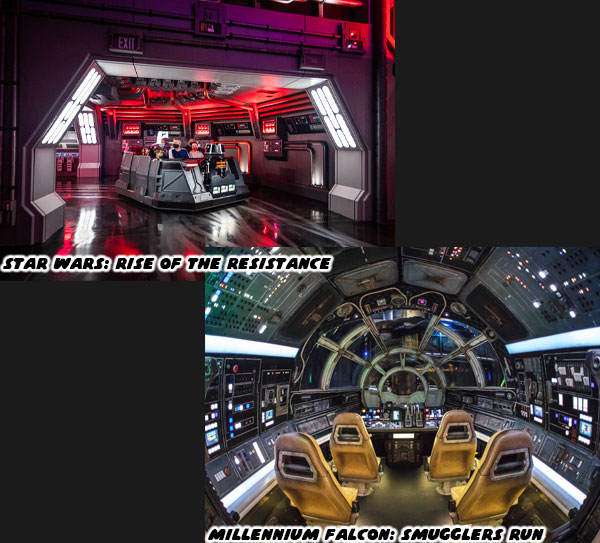
I would argue that the best attractions couldn’t, and shouldn’t be dated against a movie, comic book, or cartoon. The films of Star Wars, Avatar, the Avengers, and Tron were all cultural touchstones, but that didn’t mean they were perfect for attractions, or games. This was especially true if audiences didn’t see frequent updates to the IP. Plus what happens when the parks try to incorporate the likeness of an actor that may turn out to be problematic, or controversial? Millions of dollars gets wasted updating the attraction, and the the likeness of that problematic actor, or actress remains seen by millions of people each year. Again I digress. God of War, like many great games, created its own mythology. It took many liberties with classic Greek, and Norse fables. Characters, and settings that were familiar to audiences were sprinkled throughout the various titles. By centering the experience around a new hero named Kratos, rather than Athena, Ares or Zeus then the developers had the creative freedom to bring us along all sorts of amazing adventures. They could incorporate characters from the Odyssey, the Iliad, or the Ring Cycle. By running with an original idea the GoW series could cross into different pantheons without ever losing the audience. By this same reasoning an original attraction like Pirates of the Caribbean which opened in 1967, and The Haunted Mansion from 1969 still withstand the test of time.
For my final point I said that God of War (2018), and God of War Ragnarok was the difference between the Haunted Mansion in Disneyland, and the Haunted Mansion in Walt Disney World (1971). There were changes in the show building, the queue, and various improvements between the two, but they were still fairly similar. Elden Ring was a whole new attraction by comparison. My cousin completely understood my analogy. As he had a family as well he understood how precious his free time was. Although he enjoyed the challenges of Elden Ring, he also wished he had more time to play through other games. Experience other adventures as well without being bogged down in remembering where he was in a 40-hour adventure. I’d like to know your thoughts on the best games of 2022. Do you agree with the critics? Was there a smaller game that you think was the best of 2022? Let me know in the comments section please. As always if you would like to sponsor me
please visit my Patreon page and consider donating each month, even as little as $1 would help make better blogs and even podcasts!