Showing posts with label super famicom. Show all posts

Friday, October 31, 2025

When Disney made the best ghost stories!

It’s that time of the year where ghouls and ghosts take over our streets. Since I had been on a Disney kick I was thinking fondly about the Haunted Mansion at Disneyland. I had talked about the attraction in the past and compared it to the God of War series. Specifically how the attraction, and game had richly themed environments. With that in mind I was wondering about how it was presented in game form.

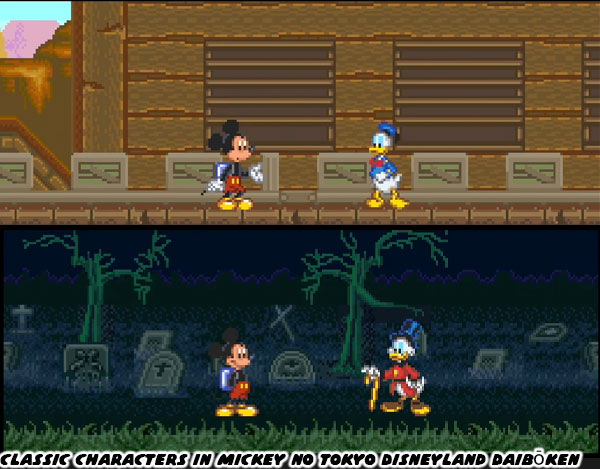
I discovered an old Disney game that had a dedicated Haunted Mansion stage. Mickey no Tokyo Disneyland Daibōken was a game published by Tomy for the Super Famicom (SFC) in 1994. The game featured Mickey and his friends at Tokyo Disneyland. Mickey was trying to get his friends together to practice for a concert. Each friend just so happened to be located in a different area of the park.

There were bad guy weasels trying to keep Mickey from his duties as he traveled around. Of course Mickey had to be able to fight against bad guys, but in a Disney game you couldn’t really be too violent. So Mickey was given two types of balloons that he could use on his adventure. The water balloon he could bounce off of, as well as throw at his enemies. Then there was a helium balloon that allowed him to float to higher platforms, of breeze over gaps. Parents wouldn’t be able to object to Mickey defending himself with balloons after all.

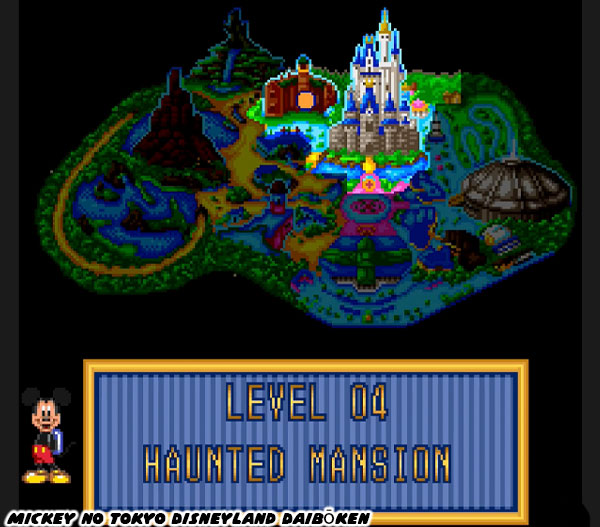
The big attraction at each land was the basis for each stage. It was neat seeing how things like Big Thunder Mountain, and the Pirates of the Caribbean were turned into platforming levels.

The fourth stage was set in the Haunted Mansion. That attraction was arguably the greatest dark ride ever created. It was layered with so much detail that it developed a cult following. Even I was not immune to its importance in theme park history. In fact I wrote about the Hatbox Ghost 10 years ago on this blog. You can read about the history of the Haunted Mansion on the Disney Family Museum page. The fact that the Japanese game was able to turn iconic scenes featured in the attraction into actual stages was mind blowing. The “stretching room” for example was amazing, it took advantage of the SFC’s fabled “Mode 7.”

The attraction did not have a definitive story, but was rather a collection of spooky vignettes. An official album tried to tie together the various scenes. However many things were added, or removed through its history. Each of these changes were embraced by the fans. Fan theories spread among the community, in the ‘80s these were discussed in fanzines, and would eventually make their way online. Even leftovers from a refurbishment got a legend all to themselves.

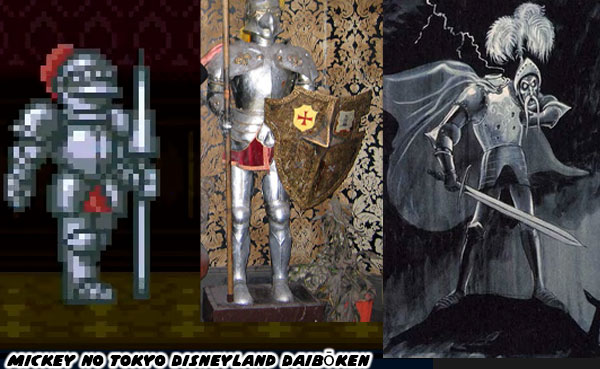
The game even featured animated suits of armor. This was a brilliant callback. In the early days of the attraction in the late 1960’s they actually had cast members wearing the armor, and pop out to scare riders. This was eventually turned into a stationary animatronic that rattled.

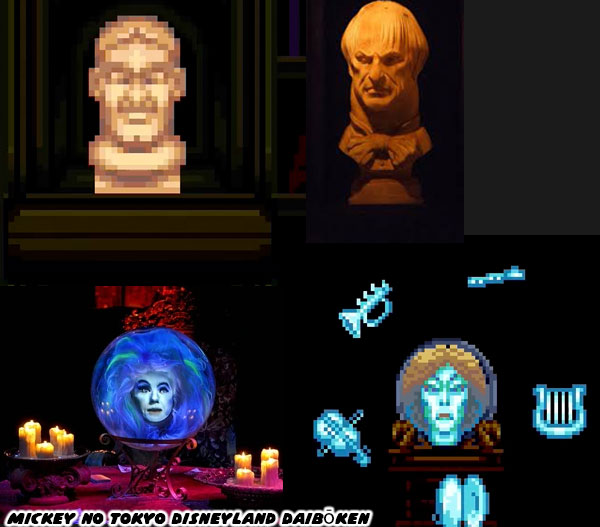
The busts that followed visitors in the foyer, and the head of Madame Leota in a floating crystal ball also appeared in the game. The developers at Tomy had certainly done their homework. The attraction was filled with 999 Happy Haunts. There was plenty to pull from, and many ghosts that people should expect to see in a game.

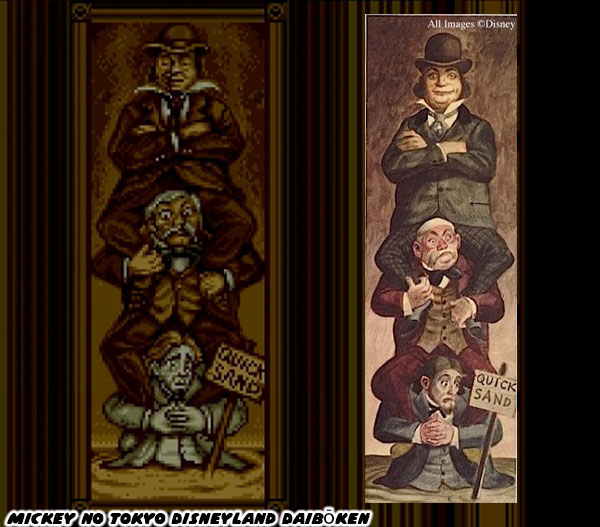
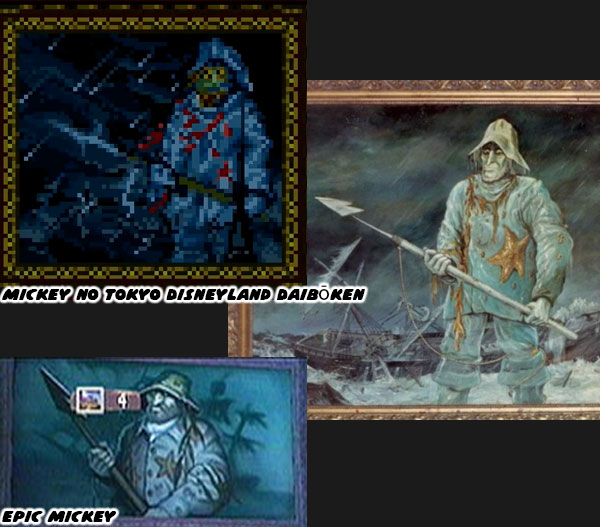
The deepest cuts in the game were the ghost portraits. Not every painting by Disney Animator / Imagineer Marc Davis was featured in the original attraction, or the follow ups in Florida or Tokyo. The ghostly fisherman was part of a pirate theme that had originally been pitched for the attraction. The mariner with the harpoon had appeared in both Mickey no Tokyo Disneyland Daibōken, as well as Epic Mickey.

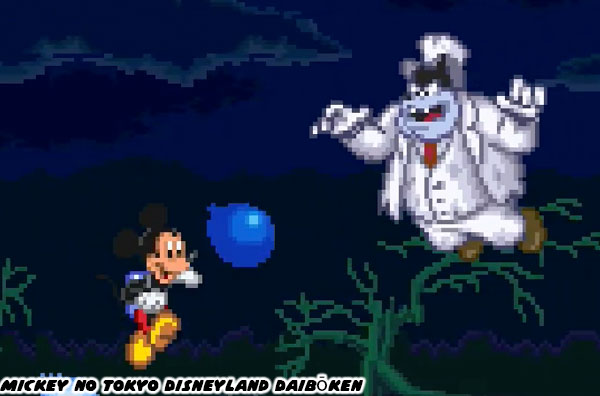
At the end of each stage there was a version of “Pegleg” Pete waiting to challenge Mickey. He wore a costume that was appropriate for the particular attraction. In Stage 4 Pete was waiting in the mansion graveyard. He was a pale blue color, and wore a pale victorian suit as many of the ghosts did in the attraction. He floated around the stage, and shot plasma balls at Mickey. As far as I know this was the first and only time this version of Pete had ever appeared in an officially licensed game.

In honor of this eerie version of Pete, and just in time for Halloween I decided to make an illustration of “Phantom Pete.” What do you think? Should Disney revisit platform gaming? Tell me about it in the comments section. As always if you enjoyed this blog, and would like to sponsor me please visit my Patreon page and consider donating each month, even as little as $1 would help make better blogs and even podcasts!
follow the Street Writer on Patreon!

Friday, February 23, 2024

A glimpse at the psychic fighting games

I had originally posted a blog on this topic on my old 1UP page, but sadly couldn’t save the HTML before the site was disabled. I did however have the images, and will try to put together the topic as best as I can remember. If you’re a regular on this blog you know that I like to talk about different types of fighting games, and bring back some little known titles. One of my favorites was based on the manga, and anime BASTARD!! Ankoku no Hakaishin (The Dark God of Destruction). My brothers, and I enjoyed playing import games in the early ‘90s. One of the benefits of living in the southland was being able to visit Little Tokyo where they had import games for a reasonable markup. We were literally watching Dragon Ball Z on VHS a month after they aired in Japan. Plus we were playing DBZ fighting game on the Super Nintendo while kids were waiting for Super Street Fighter II to come to come out on the same console.
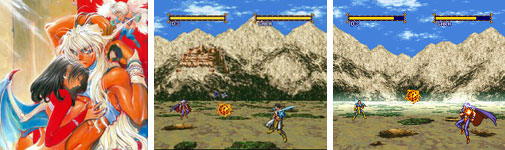
The manga was high fantasy, with lots of violence, and nudity thrown in for good measure. It predated Berserk by years, and is owed its flowers. What separated it from other violent fantasy titles was that the characters had magic, and psychic attacks, in addition to their traditional swordplay. Adapting the series to a game format was Cobra Team, and SETA Corporation. They actually did a fantastic job recreating the flying/fighting mechanics on the 16-bit console. Most games based on a property were platform titles, you would follow the main character from stage to stage fighting the various bosses, in a Castlevania-tyope quest. Sometimes a licensed game would be a fighter, but those were sloppily done. But this was different. It was actually a brilliant game with a lot of originality.
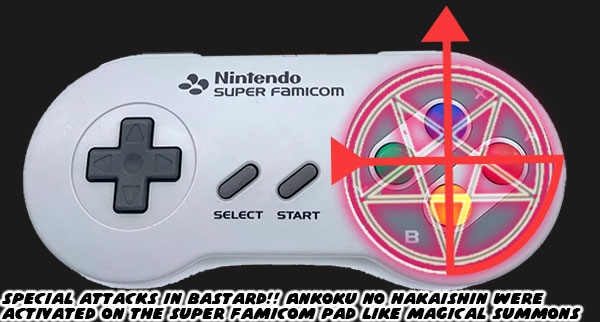
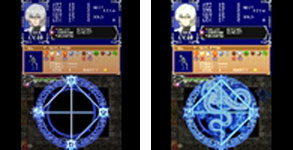
You had a sort of behind the back mechanic where you could see your opponents in the distance, flying over the various kingdoms. You could circle each other, fly at each other, and change elevation slightly. As fresh as the gameplay was, it also made a clever use of the special attacks. In order to perform a special move you would use button combinations, and these were inspired by the magical seal attacks from the manga. You know, where the main character draws a sort of spell over a pentagram? These were things that had been seen several times in manga, and anime. Most notably in Fullmetal Alchemist. I was lucky to have picked up an issue of V-Jump magazine which let me know all the magical seal combinations of the main characters. It became intuitive after a few rounds of battles with my brothers.

This mechanic of drawing special attacks would pop up in RPGs, and other titles some years later, when touchscreens had entered the mainstream. But the idea for creating spell patterns with button combinations? That was all thanks to Bastard!!. Speaking of which, the manga, and game ended up setting a sort of standard that would predate the evolution of the Dragon Ball Z fighting games. The downside was that 3D flying, and fighting mechanics were difficult to present accurately using 2D sprites.
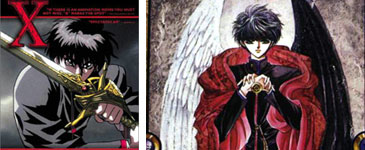
While Dragon Ball was known for its impressive fight scenes, there were other manga, and anime shows that showed combat that was equally unique. One of those was X / 1999, a series by CLAMP. The main characters looked like typical high school teenagers, however they fought using awesome psychic powers. Think about how Tatsumaki from One Punch Man, or Mob from Mob Psycho 100 fight in their respective shows. They’re able to fold buildings, and turn cities into rubble with just a glance. Mind you these archetypes were made popular in the early 1990’s. It was about that time when 3D models were replacing sprites in arcade games.
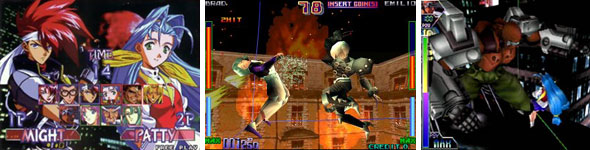
Taito took a chance on free floating 3D psychic combat in their cult hit Psychic Force. The arcade game from 1995 was a breath of fresh air. In a sea of 2D fighting games this one truly stood out. The characters had a heavy anime design to them, and players battled within psychic cubes, this contained the force of their attacks, and prevented innocent civilians from getting hurt. You could float in three dimensions, and direct close, and ranged attacks at your opponent. It was an even more polished version of the Bastard!!, and Dragon Ball flying mechanics. Its sequel Psychic Force 2012 came out in 1998, and was published on multiple consoles including the Sega Dreamcast. I urge you to track down a copy if you have a DC, or play on an emulator. It’s still a fresh game.
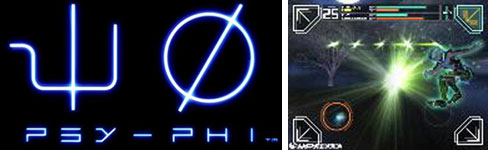
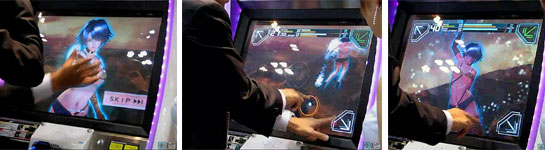
With the exception of the more recent Dragon Ball games the free-floating fighting game genre seemed to hit a dead-end at the end of the 20th century. That was until Psy-Phi was announced by Sega, and actually demoed in 2005. It was the first new fighting game designed by Yu Suzuki, the legendary mind behind many of Sega’s biggest hits, including Virtua Fighter. His goal was to completely rewrite the fighting genre, while at the same time making it more accessible to audiences. He saw the limitations of gamers using frame data, and other gameplay nuances to take the creativity out of fighting. So he designed a touch screen interface. And rather than rely on quick reactions like a martial arts game would demand, his characters had psychic powers, so there was more strategy involved in each battle.
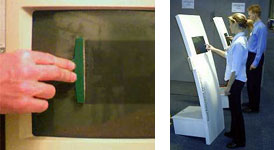
It was a good idea in theory, but for more than a decade I worked in a computer lab. I knew how reliable touch screen technology could be. Not only that, I knew how filthy monitors would get after a few hours of playing. There was no way you would have convinced me, or my brothers to put our fingerprints all over a display, and pick up some nasty germs. I had no idea how Sega was going to handle that question, or how much it would cost arcade operators to buy touch screen games. What would the maintenance have been on these screens, or whether the technology was even viable in the arcade.
The character designs in Psy-Phi were nice, but not memorable. They didn’t seem to break any new ground as far as influences went. I’m glad that Mr. Suzuki, and Sega were willing to try out new ideas, but it seemed so far out of left field I couldn’t help but wonder if the studio was simply trying to see if their technology was even viable. Shortly after this demo Sega, and a number of other studios started releasing card-based games in the arcade. Where you could play your physical cards on screen, these included sports games, as well as RPGs. In futbol / soccer games you could actually field your players, and choose what formation you wanted to use based on the card placement on the screen. This allowed you to change formations in the middle of the game, as a good manager would be able to do in real life. These mid 2000’s games seemed to last a while, but never took off outside of Japan. I think it had something to do with relying on the technology.
Psy-Phi would be hard to bring to consoles without touch displays as well, or some sort of new controller. For anybody that has a stack of unused guitars, conga drums, and dance pads in their collection could tell you that games with peripherals did not usually last very long. What do you think? Would you have liked a chance to play a touch screen fighting game? Were you a fan of psychic characters in games, or pop culture? Did you ever play any rare import games at home, or in the arcade? Tell me about it in the comments section. As always if you would like to sponsor me please visit my Patreon page and consider donating each month, even as little as $1 would help make better blogs and even podcasts!
follow the Street Writer on Patreon!

Monday, March 5, 2018

The Giant Monster Series, part 13...


Godzilla is widely considered the king of all monsters. There were giant monster movies before Godzilla (1954) and of course hundreds after. But for many reasons we keep circling back to the atomic-fire breathing lizard. Part of the reason was because there was nothing like the monster. No force on Earth could stop it and even the most powerful military weapons of man could barely slow it down. You would think that a character this popular would be the perfect subject for a game. The hard part was figuring out what type of game could developers make around the character? Would it be a real-time strategy game where you line up the military forces and try to divert Godzilla away from a city? Or would it be an exploration adventure where you took on the role of a civilian trying to survive an attack? Of course most audiences wanted to be Godzilla and feel what it was like to have that type of power.

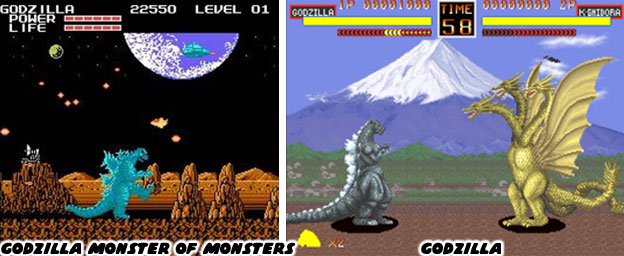
Godzilla Monster of Monsters for the Nintendo Entertainment System (NES) put gamers in charge of the title character. The title from 1988 was well received by fans. Just about every monster that had ever appeared in a Toho movie was featured in the game. Players took on the role of either Godzilla or Mothera as they fought wave after wave of aliens and other giant monsters en route to Planet X, the home of King Ghidorah. The game featured very large sprites with unique level visuals. If it had one failing it was that audiences couldn't appreciate the scale of the character as it was as big as human characters from other console games.


Godzilla console titles had limited game play. Most designers just followed the trends and put Godzilla in whatever was popular at the time. In the '80s many NES games were platformers, vs. Mario Bros, Bionic Commando, Rygar, Castlevania, etc. all had a character move left to right on screen and fight various bosses. As fighting games became more popular in the early '90s the Godzilla games evolved to follow suit. In the Super Famicom (Super Nintendo) versions of Godzilla: Battle Legends (1993), Super Godzilla (1993), and Godzilla: Monster War (1994) the game play was changed so that monster encounters played more like a modern fighting game. As fun as these games were they didn't really capture what it meant to play as the monster.

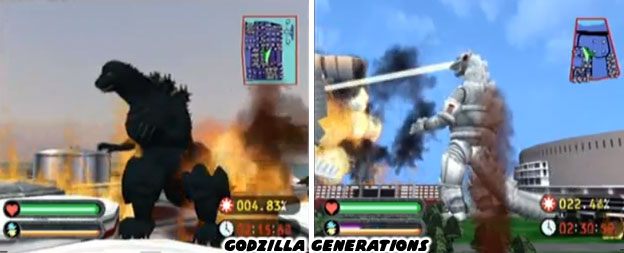
All of that changed in 1998 with the release of Godzilla Generations for the Sega Dreamcast. For the first time in a generation the awesome power of the monster was presented in 3D. The game revolved around Godzilla or one of a handful of monsters (including the abysmal USA Godzilla) destroying a city. Players could walk through skyscrapers, watch them break apart and come tumbling down. They could blow up refineries and even fight the G-Force military special units. There was little to the game play aside from destruction. It was a throw-back to the Epyx game Movie Monsters. For a little kid this was more than enough to make them happy but long-time players expected much more of an experience.


Godzilla Generations was the perfect example of why the character never became a gaming icon. It was difficult to make an enjoyable experience out of a creature that was famous for moving slowly, smashing cities and fighting other monsters. It didn't stop developers on both sides of the Pacific from trying to create a hit game with the license. We will explore these better attempts in the next blog. I hope to see you back for that.