Showing posts with label nights into dreams. Show all posts

Wednesday, September 23, 2026

Fan art for NiGHTS into dreams... 30th Anniversary

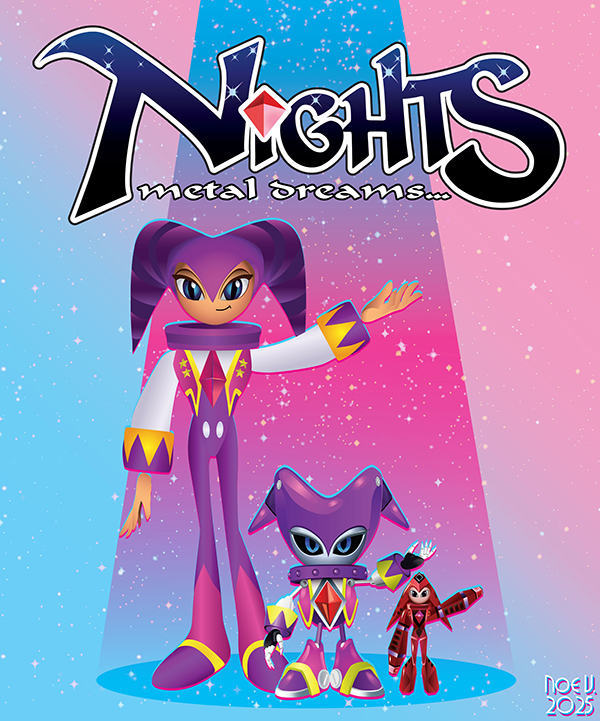
Hello friends, I hope that you are doing well. In the past few blogs I talked about working through my art block. Drawing skateboarding skeletons, led to drawing Disney characters, led to drawing Disney illustrations for news articles. The next thing that I drew was in celebration of my favorite game of all-time. NiGHTS into dreams… for the Sega Saturn was celebrating its 30th anniversary on July 5, 2026. I was so happy to grow old with the character that I had to create an illustration on the day.

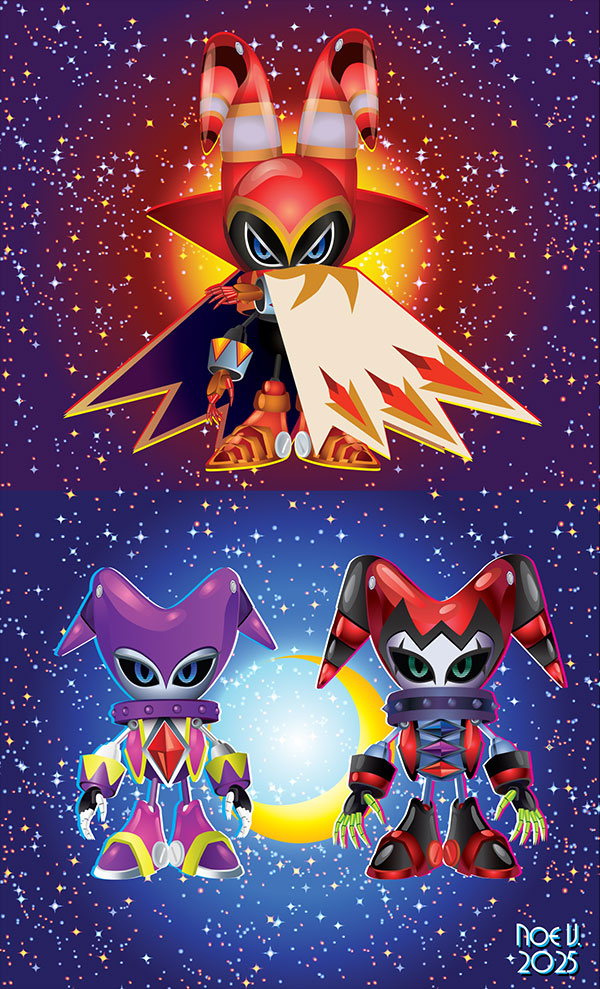
That drawing lead to a lot of new people following me on Bluesky, and even a few more reading the blog. I did an updated version of my Metal NiGHTS illustration featuring all the robot characters that I had created previously. I shared this illustration that day too. It made a lot of fans happy. It made me start thinking that I had to create the missing Nightmaren bosses in robot form; Puffy, Clawz, and Gillwing. I might eventually get around to them, and share them here.

The last thing that I shared on the anniversary was a photo. It was the first time I actually spread out the items that I had been collecting over the past three decades. I didn’t include the comics, games, plush, or my wedding ring in the photo, but you could tell that this game, and especially this character meant a lot to me. The massive NiGHTS object on the right side was actually a pillowcase. It was an early present from my wife after we got married. It is a super rare item for collectors. It hardly comes up in US or even Japanese auctions, the fact that she got one absolutely blew me away.

My art block was improving little by little. My love of skateboarding, Disney, and NiGHTS were helping me break the cycle. I’d like to know if there was anything that inspired you to create art. Tell me about it in the comments section. If you enjoy this blog there are several ways you can support me. You can sponsor me directly on Patreon. Or like and subscribe to my videos on YouTube. You can even subscribe to the Pink Monorail Podcast featuring my wife, and myself. 


Friday, March 20, 2026

A rare Sonic Team item pops up, plus showing my favorite game character some love

Heya friends, I hope that you are having a great week. I managed to find a rare Burning Rangers item on a Japanese bidding site. There wasn’t much tangible goods from Sega when the game came out. I did pick up magazines featuring interviews with Sonic Team, and some rare screenshots from early builds of the game. Yet past that I didn’t really have any sort of merch. That was why I was surprised to see a mousepad pop up. The art was fantastic, so I had to pick it up.

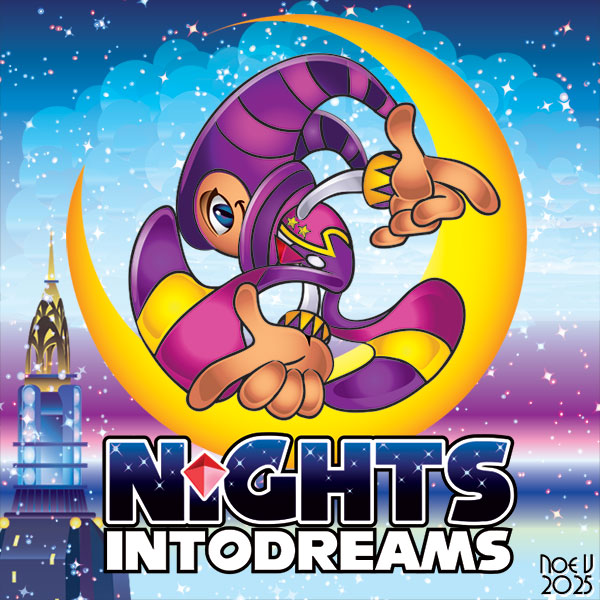
As long as I was on a Sonic Team kick I was inspired to do some art featuring my favorite game character NiGHTS.

At the end of 2025 I was also inspired to do a piece for Christmas.

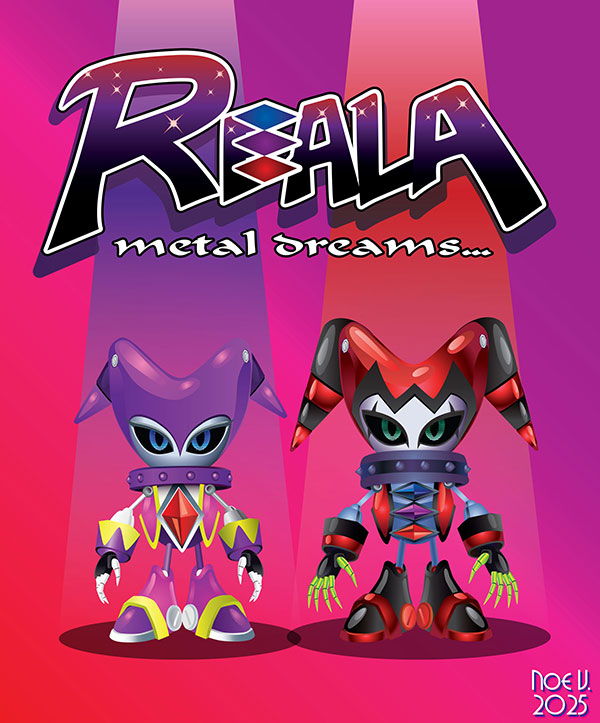
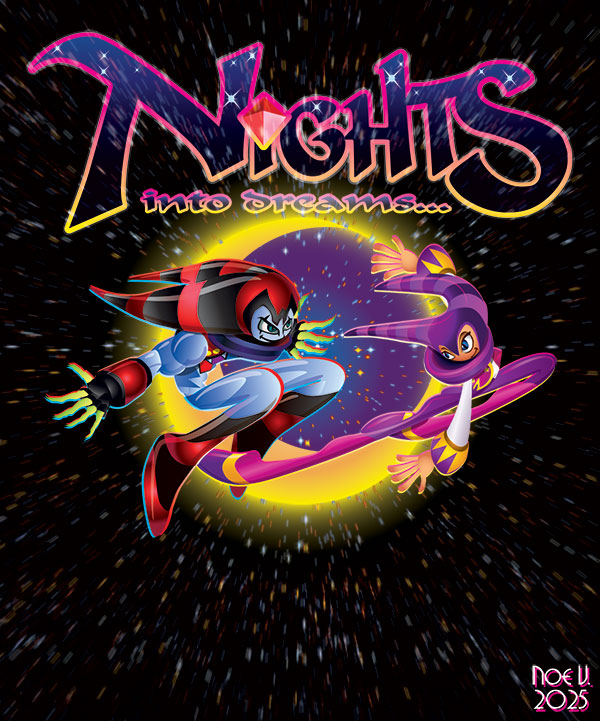
It had been a long time since I drew Reala, the rival to NiGHTS. I had to rectify it before the end of the year.

NiGHTS heard you wanted a bike for Christmas. Good luck getting it back!

Turned the best illustration I did this year into a holiday celebration. I'm wishing you, and yours the very merriest of holidays!

At the end of 2025 I was also inspired to do a piece for Christmas.

Of course 2025 was the 29th Anniversary of NiGHTS into dreams... this meant that I had to create a new illustration in 2026 to celebrate its 30th Anniversary. I'll be posting that at the end of the year. Were there any rare games, or favorite characters that you loved to draw? Let me know in the comments section. As always if you enjoyed this blog, and would like to sponsor me please visit my Patreon page and consider donating each month, even as little as $1 would help make better blogs and even podcasts!

follow the Street Writer on Patreon!

Monday, May 5, 2025

Sonic Superstars and beyond. Sega makes up for lost time, final part

In the previous blogs I talked about how much fun I had playing through Sonic Lost World on the Nintendo Wii U. The game from 2013 had stage designs, and game play which I felt were perfect for the Sonic franchise. Sadly those things weren’t revisited by Sega in the following titles. I had no sense that the ideas explored in Lost World would ever be seen again. That really bummed me out. Almost a decade later Sega announced that they were going to explore a completely new adventure for Sonic and company. One which would have hints of the Lost World stage design. I was happy with the news until I found out that Sonic Team would not develop it. Not only that but it would be exclusive to the Apple Arcade. As somebody that didn’t even have a subscription to Apple Music I was skeptical that it would be any good. I held Sonic Team in high regards, and didn’t think anybody else could do the series justice.

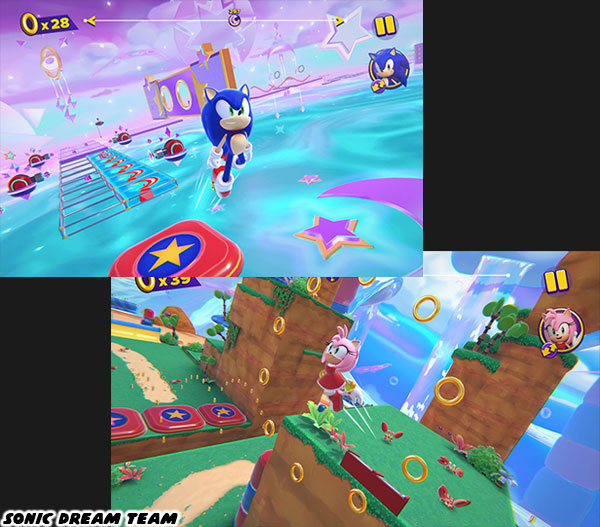
The developers at HARDlight had created a slew of mobile hits based on console Sonic titles over the past 20 years. I didn’t doubt their track record for adapting hits. I was skeptical that they could develop an original Sonic game. To say that it blew away all of my expectations was a severe understatement. Sonic Dream Team was not only a great Sonic title, it was arguably the best game ever created for the iOS / Apple Arcade. The game debuted on December 5, 2023, and had a few updates following its release that only made it deeper, and more rewarding. The inclusion of Shadow the Hedgehog had elevated it into a Top-5 Sonic game in my opinion. I was happy that many of the elements from Lost World were revisited. If this was the only thing that HARDlight did then I would have been very happy, but they improved upon everything that Sega explored previously. The goal of the HARDlight developers was to get audiences into a state of flow. The comparisons of their stage designs to a roller coaster, or skatepark were valid. We were able to enjoy a sense of speed, and freedom to explore the dream world in every dimension without the use of traditional controls. To be fair I played it on my computer with an Xbox controller.

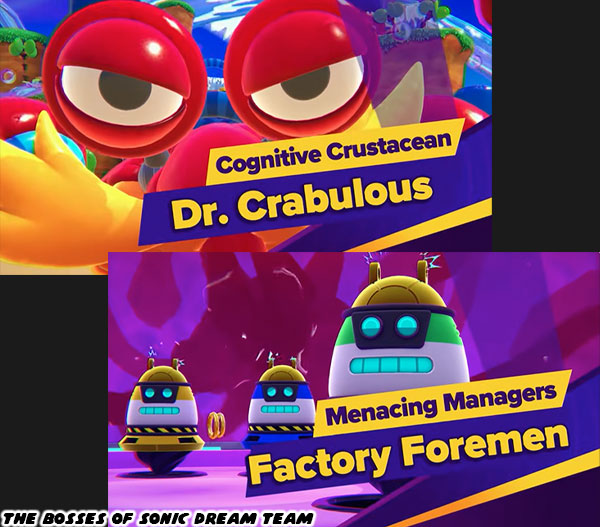
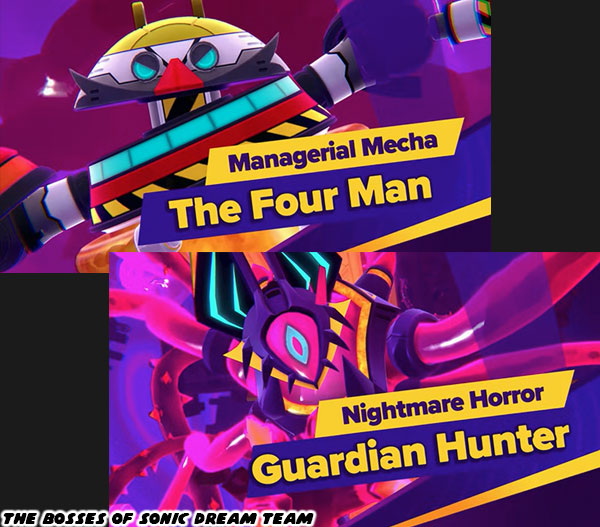
When it came to boss encounters I absolutely loved what the studio produced. Since everything was set in a dream world then HARDlight had the freedom to push the encounters that Sonic, and his friends would have. We were already familiar with the robots that Eggman created. However the game made everything more surreal, more cartoonish. The world was fluid, malleable. The bosses could be mechanical, organic, or a combination of the two. For example the very first boss was a giant inflatable crab called Dr. Crabulous. In any other Sonic game this character would have been metal, and not much different than a dozen other bosses. Since this was a dream then it made sense that Dr. Eggman was building weird challenges. You could actually find the weak points of Dr. Crabulous, and let the air out of it as it bounced around the stage. The subsequent levels, and bosses were equal parts dreamlike, and memorable. The second and third boss encounter was an evolving battle. The Factory Foremen were a trio of more traditional Eggman robots that could team up against you. When the larger fourth robot showed up it would combine like a Transformer and become The Four Man.

The enormous robot not only had a punny name, but was such a clever design that it made me want to buy a 3D printer just to recreate it. Seriously Sega, how do you not have these bosses in toy stores? But I digress… each battle helped pull us deeper into the dream world. HARDlight studio had a unique approach for their game. The stages they created were designed to allow Sonic, and his allies a chance to shine. Not only that but you could swap between characters in the middle of the stages. By comparison we could use any character in Sonic Superstars, but only one at a time. In Sonic Dream Team only certain characters could fight the bosses to let them shine. For example the Four Man encounter was meant for Cream the Rabbit, or Tails. This approach allowed every location, and every boss fight to contribute to the story. Each character was important, they all helped push the plot along. None of the new bosses was more bizarre than the Guardian Hunter. Dr. Eggman had created a dream construct capable of trapping Ariem. He let the multi-limbed monster loose in the dream world. The alien-like creature was one of the creepiest monsters that had ever appeared in the series. It would be up to Knuckles the Echidna, or Rouge the Bat to stop it.

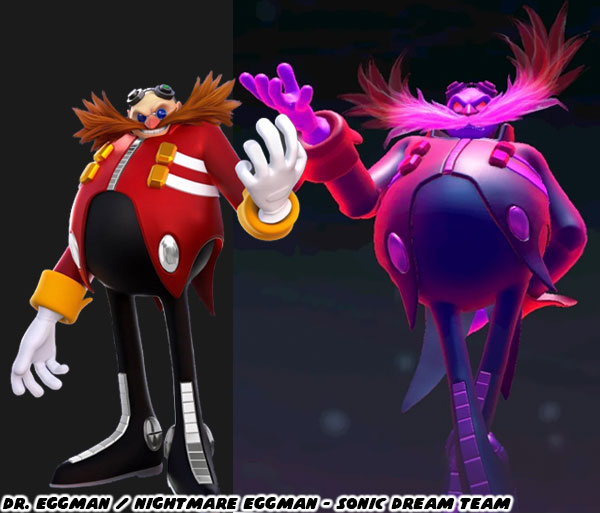
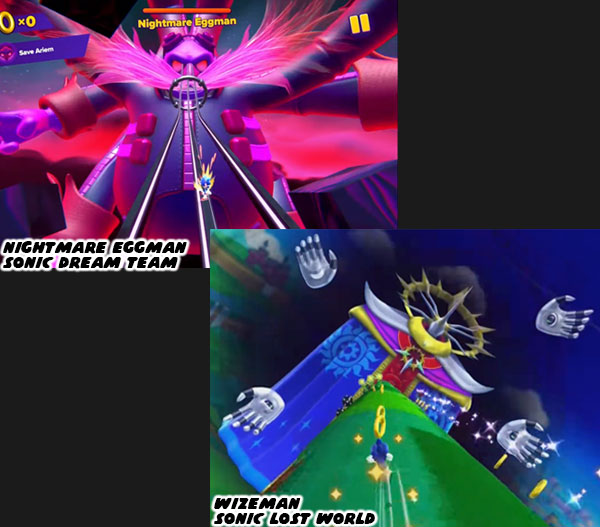
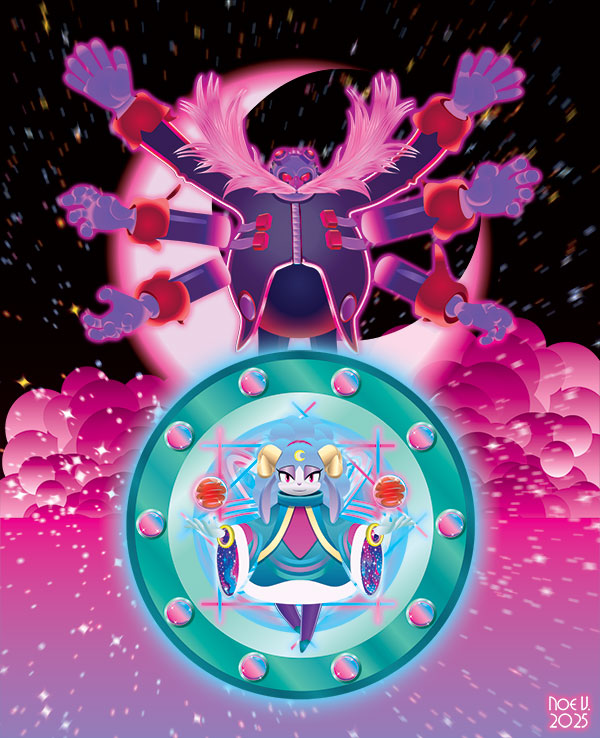
Ariem was thankfully rescued from the Guardian Hunter. Dr. Eggman did not give up even when all of his bosses were defeated. He refused to abandon his pursuit of the Reverie. The diabolical doctor had spent so much time in the dream world that he had learned how to shape it through something called the Dream Core. In a last ditch effort to beat the heroes he mutated into the final boss. Unlike other Sonic games where Eggman chased Sonic in a giant robot, this time around he became the giant. This new persona was called Nightmare Eggman. At this point Sonic Dream Team felt exactly how the Sonic universe would crossover with NiGHTS into dreams… The cameos of the Nightmaren bosses in Sonic Lost World were fantastic, but I’m referring to how the dream world would work in the Sonic universe. Ariem could be seen as the surrogate for NiGHTS. Nightmare Eggman mirrored Wizeman, the final boss in the classic Saturn game. The all-powerful monster could shape reality. The only way he could be defeated was a head-on battle where the heroes faced their own fears.

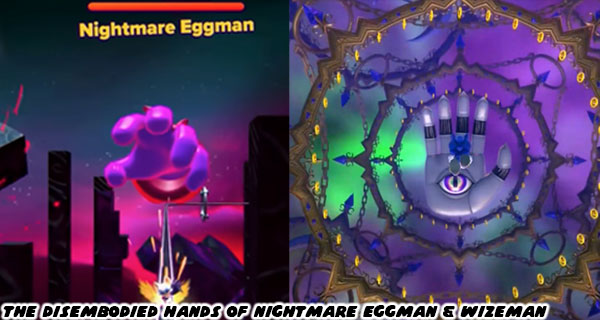
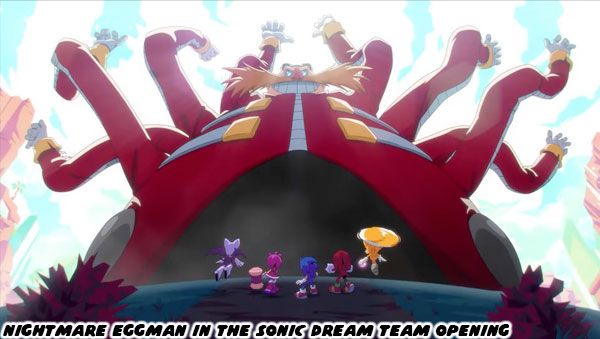
Nightmare Eggman was enormous, and omnipresent in the last stage. His head alone could fill the entire horizon. He grew additional arms while attacking the team. This was similar to his appearance in opening animation. Players had to use every trick that they learned from previous stages in order to navigate through the continually shifting final stage. The mountainous villain had the same imposing presence, and disembodied hands of Wizeman from NiGHTS into dreams… and even the successor NiGHTS journey of dreams. His colossal gloved hands appeared out of thin air, trying to strike down our heroes. As I was going through the battle I kept commenting to my family how much it felt like a crossover with NiGHTS. I was so impressed with everything that went into it that I said I 100% supported the studio if they were to develop a new NiGHTS game.

The entire final boss battle was a collaborative event. The game kept jumping between the main characters as they raced against the clock. They were united in an effort to get Ariem to the Dream Core so that she could expel Dr. Eggman from the dream world, and allow our heroes to return to their own universe. In this way Sonic, Tails, Amy, Knuckles, Rouge, and Cream could each share in the climax of the story. I was amazed with how everything was handled. The last time I saw an all out battle of heroes against a single villain was during the end of God of War Ragnarok. The Playstation 5 hit from 2022 was a cinematic experience. Sega managed to capture the same all-or-nothing energy but in a mobile game. I had waited a lifetime to see that many Sonic cast members get equal billing. I was not let down. The thing that never let me down above all else was the challenge. I was happy to revisit each stage and try to get an S-Rank after beating the game. It never suffered from technical issues. It never suffered from balance issues even when using different characters. It was difficult in some places but never left me feeling cheated. Unlike Sonic Superstars this title rewarded me for playing efficiently. 

The nightmare level design, and skyscraper-sized bad guy became one of the most memorable challenges in series history. I loved everything that went into the game. All of the previous stages, all of the previous boss encounters were wonderfully done. It was the final battle that elevated my opinion of HARDlight studio. I could tell that the studio members had grown up on a steady diet of all things Sonic. They proved it countless times through all of their releases. I sincerely hoped that Sega would give the studio even more creative freedom in subsequent games. In the last few years there had been no news if Sonic Dream Team would get ported to consoles. It was a shame that Sega seemed to ignore the popularity of the title. Perhaps it had something to do with being exclusive to Apple Arcade. Maybe Sega were prohibited from releasing it on a different platform. HARDlight seemed to be the heir apparent to Sonic Team. The love, and understanding that they had of every Sonic Team game was on full display. They had proven their worth on the mobile titles they developed over 20 years.

If there was a western team that Sega could trust the blue blur to then it should be HARDlight. As much as I enjoyed Sonic Superstars I felt that the spikes in difficulty broke the otherwise classic gameplay. Sonic Dream Team was sort of the opposite. They made the modern 3D experience even more accessible, while still honoring the established game play elements. The developers knew how to take a classic idea, and bring it to a new generation of players. With most of the original members of Sonic Team now retired, or working at different studios then perhaps it was time for a new Sonic developer to take over. Similar to how Sega chose the person that would reboot the Virtua Fighter franchise. Yu Suzuki was the father of the Virtua Fighter series (along with Shenmue, After Burner, OutRun and a dozen other gems). Mr. Suzuki mentored Toshihiro Nagoshi. The creator of the Yakuza games learned the ropes by following almost everything that Mr. Suzuki produced. When Mr. Suzuki stepped down it was obvious that Mr. Nagoshi should be the perfect new leader. I would argue that HARDlight had earned similar consideration for the next Sonic console project.

The best I could do was steer the visitors of my blog to Sonic Dream Team. The more that people played the game, and shared info on it the more Sega might consider porting it. I would do my part to keep it relevant. I would create fan art of Ariem, and Nightmare Eggman to share on social media. I would write about my favorite Sonic games when I had the opportunity. It was the least I could do. Did you play this game? What did you think about it? Do you think the people at HARDlight would come up with a great console Sonic title, or perhaps a reboot of NiGHTS into dreams…? Tell me about it in the comments section. As always if you enjoyed this blog, and would like to sponsor me please visit my Patreon page and consider donating each month, even as little as $1 would help make better blogs and even podcasts!
follow the Street Writer on Patreon!

Friday, May 2, 2025

Sonic Superstars and beyond. Sega makes up for lost time, part 7...

In the previous blog I talked about how the 2013 game Sonic Lost World was the Sonic Team’s counter to Super Mario Galaxy series. There were a lot of fun ideas in the game, and unique elements that I thought should be revisited. Things like playing through floating satellite stages in all three dimensions, as well as crossing over the enemies, and game play from NiGHTS into dreams… These things were executed wonderfully. Unfortunately the game came out just before the Sonic Boom animated series, and games for the Nintendo 3DS, and Nintendo Wii U. Those introduced different play mechanics into the series. The subsequent games like Sonic Forces, Sonic Frontiers, and Sonic Mania further mixed up the formula, while trying to honor the Sonic Team legacy. The idea that we would ever circle back to the things that worked in Lost World seemed impossible.
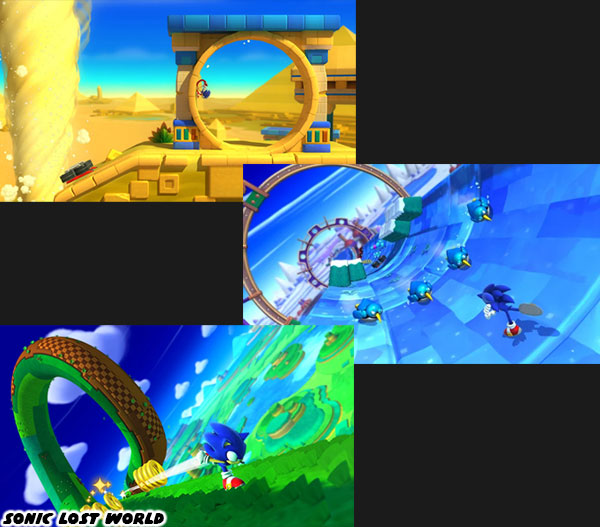
The entire time that Sega was experimenting with the Sonic mechanics on the consoles they were also publishing a series of mobile games as well. The most prolific of their developers were HARDlight studios from England. They wrote the book on mobile Sonic gaming. Starting with Sonic Jump in 2005, then a slew of other hits over the next 20 years. You might have heard of, if not played one of the following; Sonic Jump Fever, Sonic Dash, Sonic Dash 2: Sonic Boom, Sonic Forces, Sonic Racing, Sonic Dash+, and Sonic Prime Dash. They also created mobile versions of other Sega classics including Crazy Taxi: City Rush, and ChuChu Rocket! Universe. It would be an understatement to say that the studio was familiar with Sonic. Multiple generations of developers outside of Japan had grown up on the franchise. They not only played the games, but they watched the animated shows, and followed along with the comic books as well. Each of the HARDlight games reflected the same things that made the Sonic Team titles work. The mobile games well received by critics, and audiences. This was no accident. They understood the characters on an individual level. They understood how the stages, or zones evolved through the years. They understood the dynamics of the heroes, and villains. Many times they seemed to know what to do with Sonic better than Sega themselves.
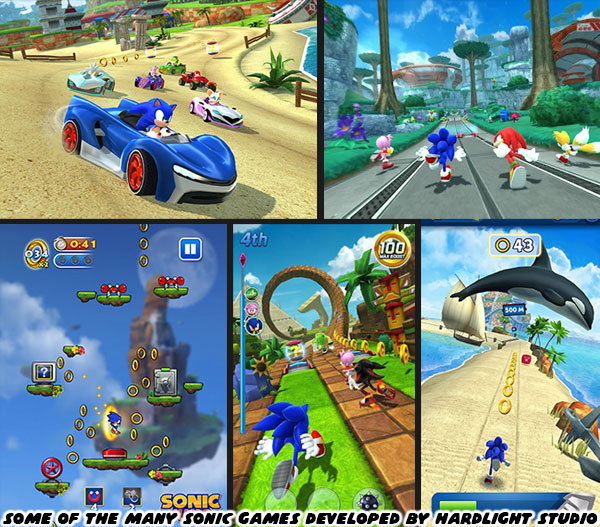
After 20 years there was no doubt that HARDlight were great at developing Sonic adaptations. The question was whether or not Sega would allow them to develop their own original Sonic title. That was answered at the end of 2023 when Sega published Sonic Dream Team for Apple Arcade. It would be one of the best games not developed by Sonic Team, DIMPS, or Headcannon. The bar for a franchise game was already high, if HARDlight flubbed it then they might not ever get another chance. I knew that their previous efforts were good, but wasn’t sure how a game designed mainly for mobile devices would work out. The plot itself was something new to the franchise. This time Sonic and his closest allies; Tails, Amy Rose, Knuckles, Rouge, and Cream would be going through a dream world. As a massive fan of NiGHTS into dreams… this announcement got my attention.
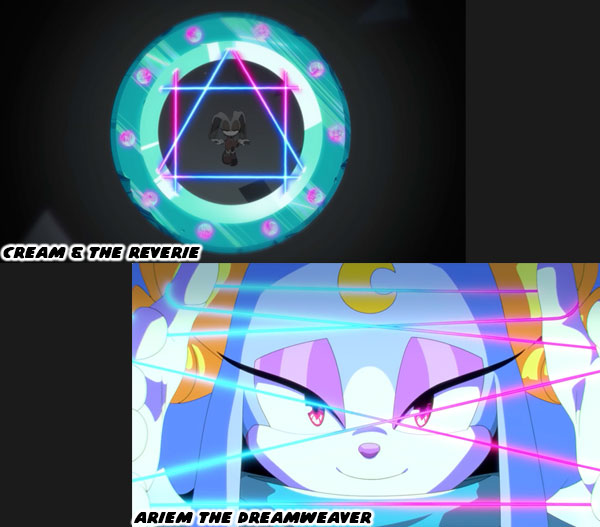
The game would introduce a new ally to the series, a magical sheep-like character named Ariem, as in R.E.M. Sleep. She was called the Dreamweaver, the Guardian of the Reverie. The Reverie was central to the plot. It was a magical portal that allowed dreams to become reality. This portal would open once every 1000 years, but could only be accessed by a pure soul. Dr. Eggman kidnapped Cream the Rabbit, easily the most innocent soul in the cosmos. He created a device that could allow him to slip into the dreams of his victims. He intended on locking Cream out of her own mind so that he could command the Reverie. Dr. Eggman had always wanted to take over the world, if not the entire universe. He was a prolific inventor, and had come close to ruling over everything on many occasions. The idea that he could now instantly bring his twisted ambitions to life was terrifying. Thankfully when the game began his creations were still stuck in the dream world.
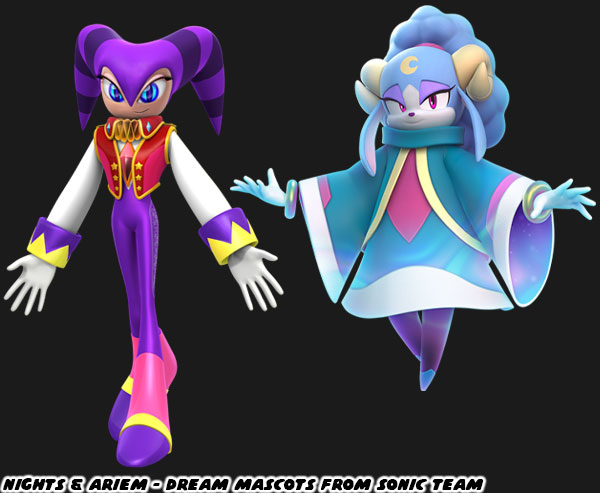
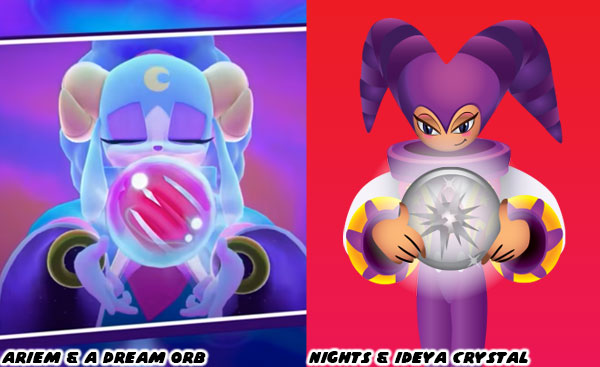
Once Dr. Eggman entered the dream world thanks to Cream he locked her away, and then went after Ariem. Sonic and his friends went searching for tiny rabbit. When they found her Dr. Eggman’s machines made them all fall asleep, and enter the dream world as well. This was explained in the animated introduction. Ariem was able to reach Sonic in his mind. She explained what was happening, and that she needed his help to break them all out. Ariem could weave the dream worlds together using “Dream Orbs.” The missions in the game required you to get the orbs back to her. With them she could reunite Sonic with his friends, and ultimately banish Eggman from the Reverie. Looking at the character I couldn’t help but draw parallels between her, her powers, and NiGHTS. The plot in the older Sonic Team title was very similar. NiGHTS was trapped by the master of the dream world, a character called Wizeman. The only way that NiGHTS could escape his prison was by collecting Idea crystals from the human dreamers Elliot Edwards or Claris Sinclair.
The stage designs were very much focused on continuous movement. Many of the stages was the type of multi-branching path design that was a speed runner's playground. They were filled with springs to connect elevated satellites, rails to grind on, and even halfpipes that Sonic could leap out from. It turned out that it was no accident. HARDlight had created a bunch of memorable running stages in their earlier mobile games. They knew how to balance the challenge of an endless runner, with the rewards of modern Sonic game play. If you’ve ever played through their Dash games, and fell into the rhythm of the stages then you knew that it felt like you could run forever. It was the feeling of entering a “flow state” that Sonic Dream Team perfected. This was one of the goals from HARDlight studio creative director Dan Rossati. In an interview with Eurogamer he said “The vision was to make a game that allowed players to get into an exhilarating flow state. Early on, I was waving my hands around, emulating rollercoasters and halfpipes, while enthusiastically trying to communicate what I meant by flow," he said. "On top of that, we knew that we'd be catering to both touchscreen and controller, so the controls had to be as accessible as possible while allowing the player maximum control at high speeds."
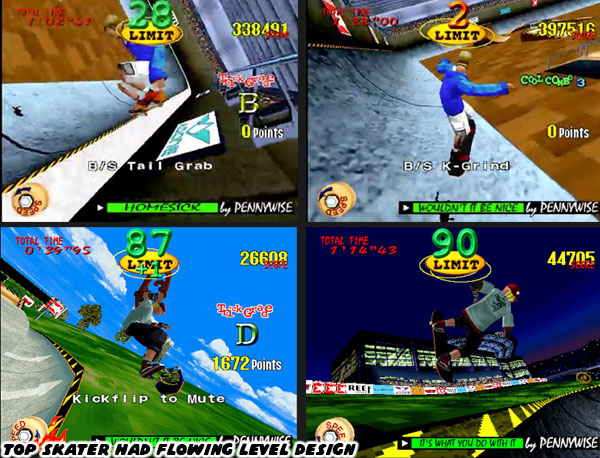
He continued: "To achieve this, we considered skate parks and bobsled runs with rounded corners so you can easily transition from floor to wall, keeping your flow. We also added in the boost, which, if you find a good line through the levels, you should be able to chain them to get some amazingly fast run-throughs.” As I went through the game I picked up on the skatepark elements that Mr. Rossati had described. The stage designs reminded not only of the best elements of Sonic Lost World, but also of a much older Sega arcade game called Top Skater. The further I went the more I saw that even Jet Set Radio Future had a hand in shaping the freedom of movement that Dream Team presented. HARDlight absolutely nailed what made up the best Sega stages. They formed environments that helped direct players to a goal, while allowing them the sensation of continuous movement.
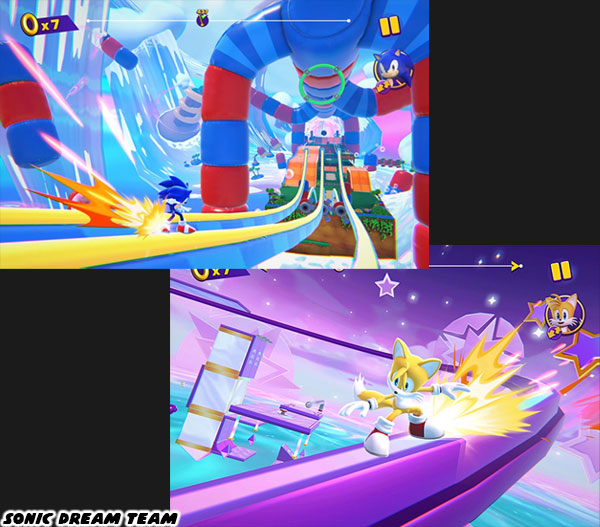
When the game began we found ourselves in the Scrambled Shores a dream world that was a mix of bouncy houses, and the beach. This was easily the types of things that a kid like Cream the Rabbit would dream about. As the stages progressed through the Dream Factory, Nightmare Maze, and Ego City we got to see more, and more of Dr. Eggman's corrupting influence into the universe. It was precisely the world building that I loved about the classic Sonic Team games. The more I played, the deeper I wanted to explore the world that HARDlight had created. The boss encounters themselves left me much more impressed than what I had experienced in Sonic Superstars. I want to talk about them on the next blog. Until then I’d like to know if you’ve ever played a mobile game that blew away any expectations. Tell me about it in the comments section. As always if you enjoyed this blog, and would like to sponsor me please visit my Patreon page and consider donating each month, even as little as $1 would help make better blogs and even podcasts!
follow the Street Writer on Patreon!

Wednesday, April 30, 2025

Sonic Superstars and beyond. Sega makes up for lost time, part 6...

Sonic Team forever changed my life. I had been playing video games since the late ‘70s through the ‘80s but didn’t become aware of specific developers until the ‘90s. Sonic Team made me take notice that a studio could create greatness. They made me more aware of all the elements that went into video game development. They changed the way I played through games. They changed the way I listened to games. They changed the way I approached art, and design in my personal work. The studio was a creative nexus for me. The thing that made video games (especially the Sonic Team ones) more influential to me than say a comic book, movie, or song, was the interactive element. Video games required a level of engagement, they were not a passive form of entertainment.

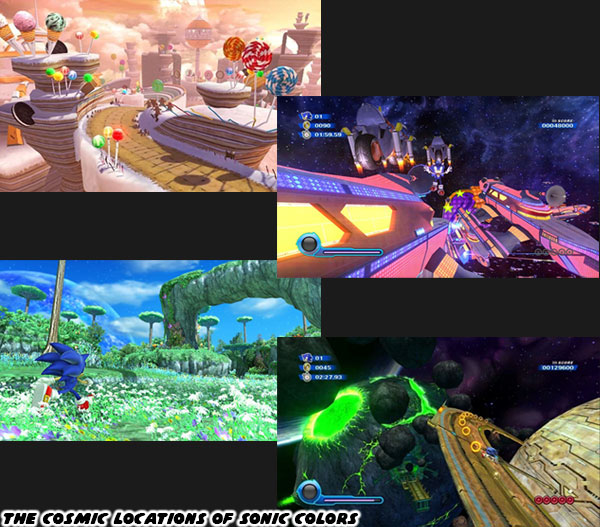
Books required a large chunk of imagination to bring to life. A well written story could appeal to all of our senses, and allow us to inhabit the world that the author had created. Comics, games, and movies made it a little bit easier for people that didn’t have vivid imaginations. The other forms of entertainment had a certain visual tone presented to us. The creators still wanted us to live in the worlds they dreamed up. Gaming took it a step further because we got to interact with these locations. In the early days Sonic Team jumped across the map, and pulled us Zone to Zone. Each place had a different look, and feel. We could see how Dr. Eggman had corrupted the natural world, and turned fertile landscapes into industrial wastelands as the game unfolded. In 1991 I could tell that Sonic inhabited a place with more color, and personality than the Mario titles I had enjoyed through the ‘80s. I was hooked from that point on. Almost 20 years later when the studio created Sonic Colors we were now traveling across the cosmos. I was giddy with the possibilities. The studio didn’t just build us a playground, they built us entire planets to play in. We were able to speed through expansive 3D worlds rather than a short 2D stages. The new environments gave me the same sense of awe as the original Sonic Zones.

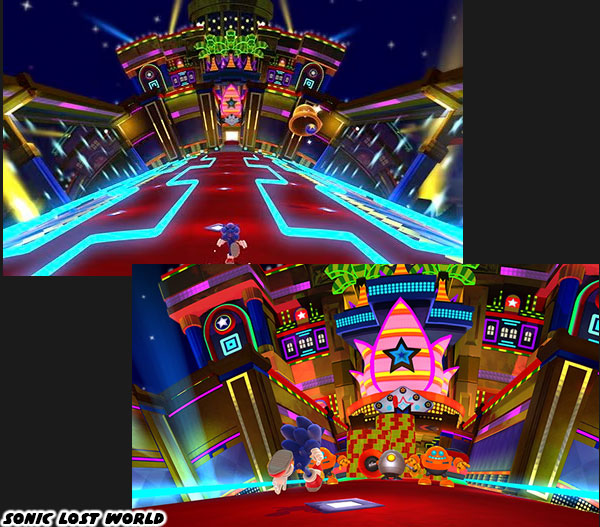
This was not to say that Nintendo, and the other AAA mascot developers were sitting still. Nintendo went head-to-head with Sega on many fronts. The rivalry between Mario, and Sonic was genuine for most Gen-Xers. The leap from Super Mario 64 (1996) to Super Mario Galaxy (2007) was as profound as Sonic moving from 2D to 3D with Sonic Adventure in 1998. Sonic Team, and DIMPS took elements from Galaxy when they created Sonic Lost World in 2013 for the Nintendo Wii U. The game had a foot in the tone of Sonic Colors, and the gravity-defying platforming of Super Mario Galaxy. Fans were split on the game. Reviewers were arguing that this was poaching game play elements from a rival studio. Some thought that Sonic was adding new ideas, making it unique in its own right. I believed that there was a little bit of both things happening. Mario creator Shigeru Miyamoto was said to have been greatly impressed by NiGHTS into dreams… which was released a month after Super Mario 64 in 1996. I always saw Super Mario Galaxy as his way of poaching NiGHTS game play ideas for his own series. To me Sega was returning the favor.

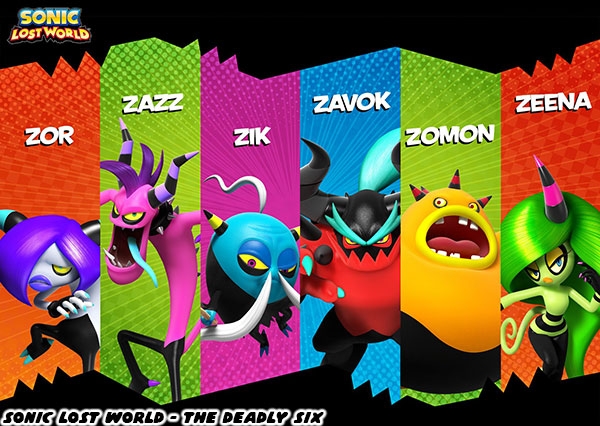
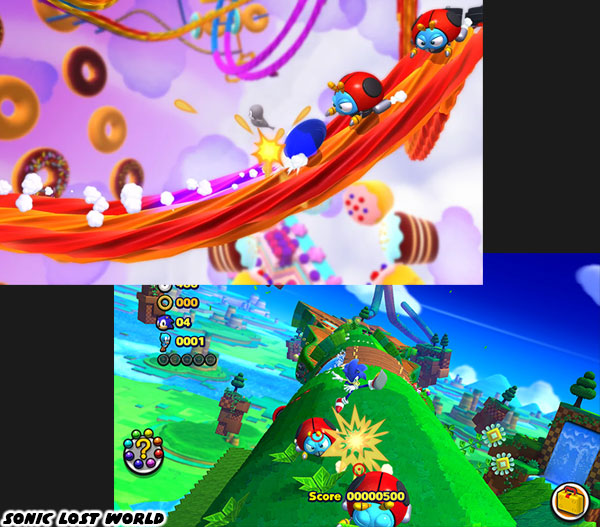
Visiting a diverse set of planetoids wasn’t the only bold thing that set Lost World apart from the other 3D Sonic titles. The studio introduced new villains to set it apart from other sequels. Sonic would be facing a new alien menace called the Deadly Six rather than the traditional Dr. Eggman, and his robotic hordes. These colorful aliens were oozing with personality. Sonic chased them all over the planet, through all sorts of unique environments. They each had different types of attacks that required their own strategy to defeat. There was an ancient martial arts master named Zik, the gloomy goth Zor, the vain Zeena, the punk Zazz, the massive glutton Zomon, and the leader of the group the devilish Zavok.

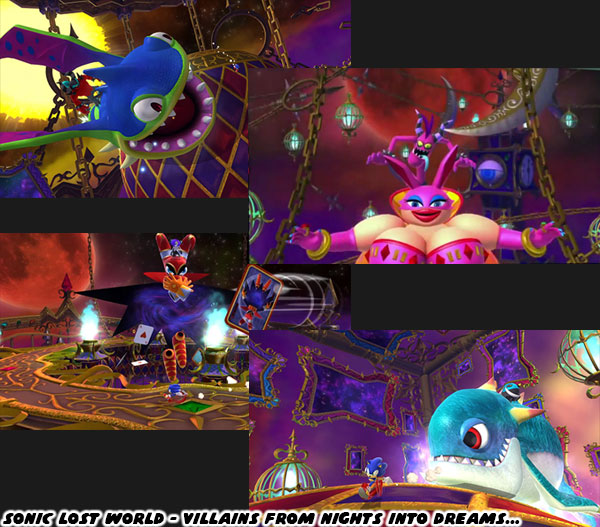
Previously I mentioned that the Sonic cast was built on the classic mascot cartoon template. The Deadly Six reflected a more modern 3D cartoon aesthetic but somehow they still complimented the older characters. The villains not only worked in the game but would be kept alive in the Sonic comics by IDW. There was something special about the game, and level design that I thought worked better than Super Mario Galaxy. Most of it had to do with Sonic’s established speed, and game play. Yet it also seemed to be missing something to elevate it past the earlier sequels. The seeds for something truly special were revealed when a new DLC area was released for the game. Sonic Team would crossover their two greatest hits in the magical Nightmare Zone. The Deadly Six would be accompanied by the villains from NiGHTS into dreams… NiGHTS would help Sonic break out of Wizeman’s cursed dreams.

I had always wondered what if the games crossed over, how would the mechanics work? After all NiGHTS was an on-rails free flying 2.5D game. The classic Sonic the Hedgehog mechanic might work with that type of game play. The only problem was that modern audiences has been conditioned to play Sonic in 3D ever since Sonic Adventure. This type of open game play did not really fit the NiGHTS mechanic. Sonic Team was able to find a balance by having Sonic battle the Nightmaren bosses in the format that audiences were used to. At the same time they honored the uniqueness of the villains, and how they balanced the Deadly Six as well. The magic of flying would be recreated as Sonic dashed through rings on floating platforms between the fights. There was something special about the Nightmare Zone that I wish that Sonic Team did more with. Sadly the idea seemed abandoned almost immediately after.

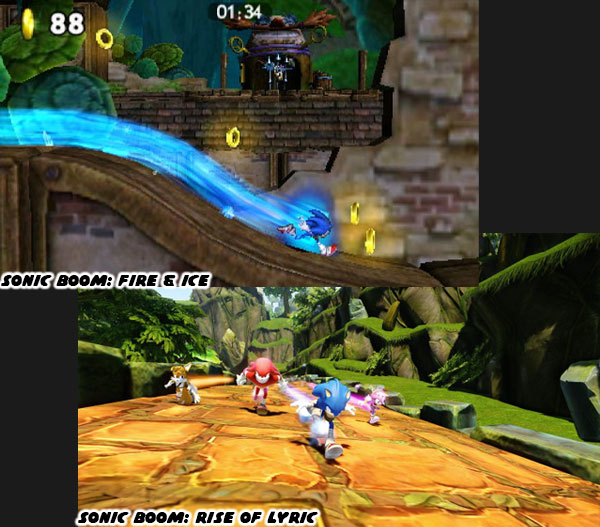
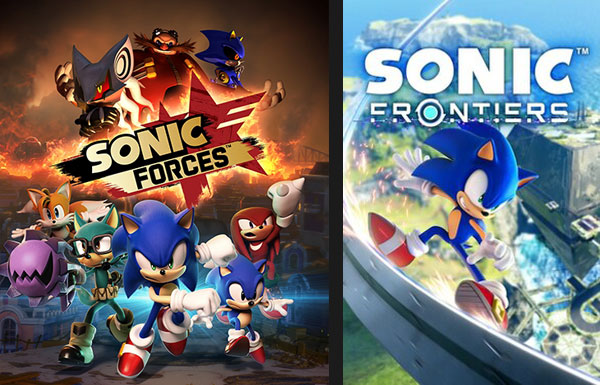
Just one year after Lost World came out Sega released the Sonic Boom animated series on Cartoon Network. It was a sort of retelling of the Sonic mythos. It featured slightly redesigned characters, and existed in its own continuity. Sega released a 2.5D game based on the series for the Nintendo 3DS called Sonic Boom: Fire & Ice, and a traditional platformer for the Wii U called Sonic Boom: Rise of Lyric. The cartoon series, and the games were well done. They were fresh takes on the characters. They had their own unique game play that mixed up the format. Other 3D titles followed that also played with the formula, Sonic Forces in 2017, Sonic Mania in 2017, Sonic Frontiers in 2022, and Sonic Superstars in 2023.

Sega was bouncing back, and forth between 2.5D, and 3D titles. It felt like Sonic Team was on the cusp of something really special, but they were missing something. It turned out that a new studio saw what that element was. They were able to put together a new challenge that hit all the right beats. I’ll talk about this game in the next blog. Did you play any of the 2.5D or 3D Sonic games after Sonic Generations? What did you think about them? Tell me about it in the comments section. As always if you enjoyed this blog, and would like to sponsor me please visit my Patreon page and consider donating each month, even as little as $1 would help make better blogs and even podcasts!
follow the Street Writer on Patreon!

Friday, April 25, 2025

Sonic Superstars and beyond. Sega makes up for lost time, part 4...

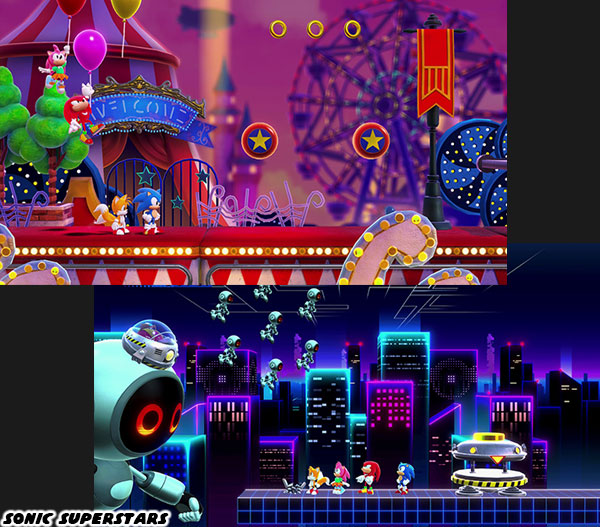
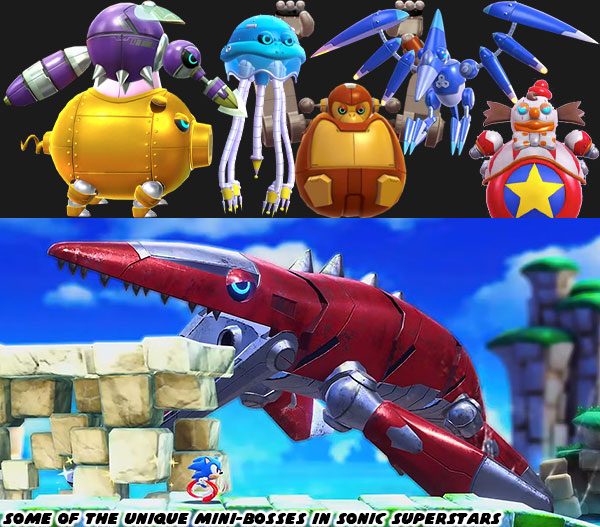
In the previous entry I talked about how there were two versions of Sonic, and two distinct types of game play for each. The “modern” version which allowed 3D exploration, and race sequences along a track, and the “classic” version that was strictly on a 2D plane. I was a huge fan of the classic versions. Sega was able to explain this, and use turn it into a memorable game called Sonic Generations. The game Sonic Superstars focused entirely on the classic style of game play. Visually it improved on the formula in just about every way. However technical issues, especially frame rate drops made portions of the game almost unplayable to me. The other thing that threw me for a loop was the difficulty of the game. There were a number of times that I felt frustrated with the balance of the mini boss, and boss battles. I checked online, and saw that a number of people also had difficulties with certain encounters. It made me feel better knowing that I wasn’t alone in my assessment.

Classic Sonic boss battles were usually not too difficult. It was about figuring out Dr. Eggman’s method of attack, and timing the strikes correctly. Perhaps you might die a few times in the process, but it wouldn’t take long to figure it out. Sonic Superstars had some encounters that seemed much more difficult than the previous 2D titles. Part of the reason for this was because of the technical issues I described. I would sometimes be in the middle of a battle, or just about to start a battle when frame rate issues made me mistime a jump, and lose rings in the process. Another reason was because the battle had to be balanced for every playable character, and not allow any one to get an unfair advantage. The most important reason for the spike in difficulty were the Chaos Emeralds. Some of the emeralds were great offensive weapons. They might allow you to get an extra strike in, others allowed you to navigate the stages easier. The boss battles had to be challenging whether or not you used the emeralds. With all of these things in mind you could imagine that the boss battles felt much more difficult than any of the classic encounters with Eggman.

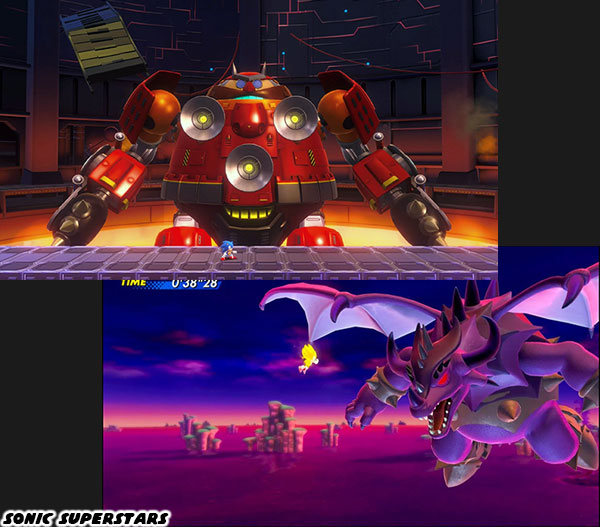
I enjoyed the art, and design of the game. I especially loved some of the boss encounters themselves. The entire final stage in the main story, and Trip’s story with the time reversing mechanic absolutely blew my mind. That sequence was among the best ideas ever executed in the entire Sonic franchise. With that said the last fights in the game were frustrating. I died again, and again in trying to learn the patterns, and different evolutions of the fight. It disillusioned me to no end. I’d manage to survive the first wave, only to be undone by the next stage of the battle. It made me question my skills as a gamer. I had managed to beat every modern God of War challenge, and didn’t remember being as disgruntled with Valkyrie or Berserker encounters. Those were notoriously tough but the last fights in Sonic Superstars just made me angry. Thankfully I wasn’t alone in my feelings as other people voiced the same issues online.

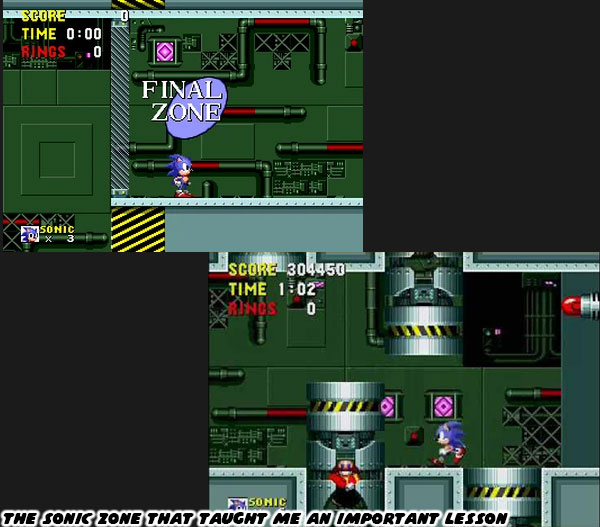
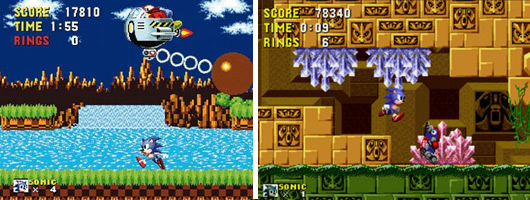
I eventually managed to beat the robot encounters at the end of the main, and Trip’s story. Then I discovered that there was a dragon boss for the actual final battle. This one left me royally upset. It was a challenge that seemed to get harder the better I played. I couldn’t believe that I had managed to beat every other Sonic challenge over the past 30 years, only to be stumped by a dragon. After hours of attempts I finally had a breakthrough moment. I remembered the lesson taught to me by the very first game, and some insight from my big brother. I was very good at getting through the stages very quickly in the original Sonic the Hedgehog. I even became good at collecting all of the Chaos Emeralds. Yet the first time I reached the Final Zone I died over, and over again, using multiple continues in the process. To me it didn’t seem fair that I had no rings, and Dr. Eggman had a random pattern. I would mistime my jumps, or get squashed under a piston. It seemed impossible at the time. That was until my brother asked an important question. “How much time do you have to beat him?” I said about 10 minutes. He replied “Then slow down.” I had become so focused on getting through the game as quickly as possible that it never occurred to me that Sonic was allowed to be played more slowly and methodically.

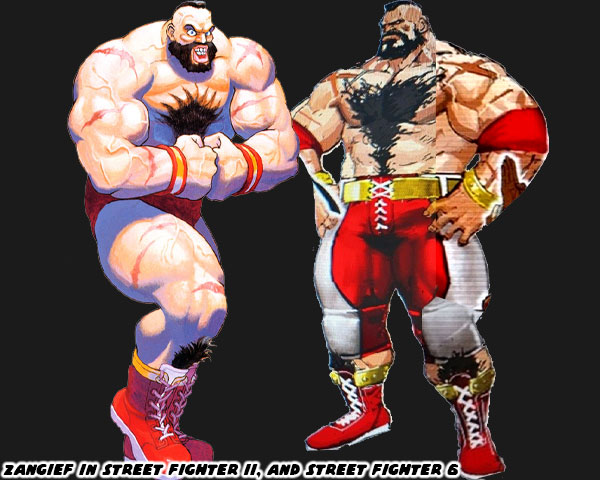
Sure enough on the next play through I timed my jumps more carefully, avoided the pistons, and beat Eggman. My brother was a genius. He saw the flaw in my play, and helped me get better. So in Sonic Superstars I needed to slow down as well. I focused on gathering rings so that I could retain my Super Sonic form much longer. I helped me get through the different stages of the dragon encounter, and wasn’t as frustrating as I had made it out to be. It also gave me tremendous insight on the type of game player that I was. I had been playing video games for almost half a century, but I never gave much consideration to the kind of player I was. My family, and friends considered me a good game player. I even won my locals, and made it into the semis on the Blockbuster game tournaments in the ‘90s. What I didn’t realize was that my biggest strength was in being an efficient player. I looked for weaknesses in a game and exploited those. The more efficiently I could go through the game the more I used that tactic. For example I’m pretty good at Street Fighter, my main is Zangief, and the other heavy hitters. I chose the character because I could do tremendous damage with a couple of spinning piledrivers. I didn’t need to learn a bunch of fancy multi-hit combos. The same amount of damage that any other character could do to me in seven hits I could do to them in two hits.

This straightforward approach allowed me to get through the computer-controlled opponents with relative ease. The downside was that I never liked playing against human opponents because they were unpredictable, and not easy to be efficient against. What I was doing wrong in Sonic Superstars boss battles, especially the final dragon fight was being too efficient. The better I got at hitting the dragon the faster I went through rings. The faster I ran out of rings the quicker Sonic would run out of power. The evolving battle was not designed for my style of play, and that absolutely frustrated me. In order to beat the final battle I had to delay myself, and skip openings. That was counter to how most every other fight would go. That was when I realized that the other boss battles were designed to be won in a very specific way. The developers were not allowing any type of creative thinking, or aggressive strategy. This was a design choice that I think disappointed a lot of fans. It was counter to all of the previous lessons that Sonic Team had taught me about the series.

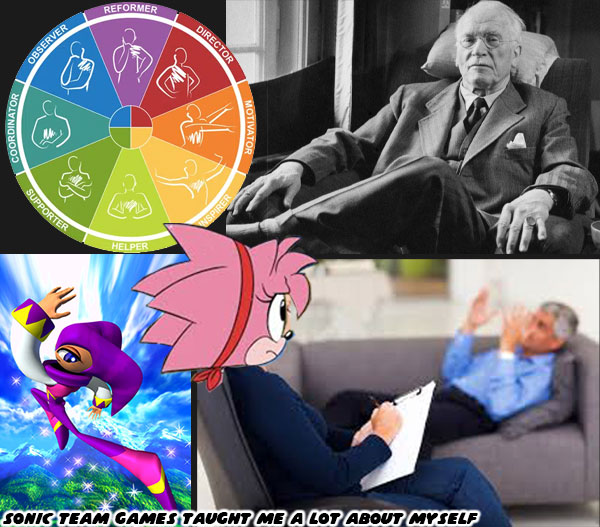
Over the past 30+ years Sonic Team not only made some of my favorite games, but they also taught me a lot about myself. Many of my favorite games they created actually came out when I was starting college, and learning how to learn. When I ran a computer lab I would give out personality tests to the counseling students. Those tests got better through time, and were based on the 16 Meyers & Briggs Personality Types. The test showed me how I learn, and what my strengths were. I just didn’t realize that the learning type also applied to video games. Looking back from what I learned during Sonic Superstars made me realize that gaming was a part of my core personality. The passion for gaming made me want to find out why NiGHTS into dreams… affected me so. It made me want to look up the works of Carl Jung. The Japanese developers were able to reach me on multiple levels, and I wasn’t even aware of it for years, and years. If you were curious you can take a test and find out what your personality type was as well.

Setting aside the technical issues the biggest problem with Sonic Superstars were the boss encounters. The spike in difficulty seemed to be contrary to the design of the classic titles. Yes some of the early fights could be challenging, however I do not remember them being absolutely frustrating. The threats that Sonic faced were global in scale, if not intergalactic, however at no point did audiences feel overwhelmed. How Sonic Team originally dressed the bosses was just as important as how they created memorable heroes. I want to talk about creating a family-friendly world in the next blog entry. Right now I’d like to hear from you. Did you play Sonic Superstars? Did you find any technical glitches or difficulty with some of the bosses? Tell me about it in the comments section. As always if you enjoyed this blog, and would like to sponsor me please visit my Patreon page and consider donating each month, even as little as $1 would help make better blogs and even podcasts!
follow the Street Writer on Patreon!

Wednesday, April 16, 2025

Making a Sonic Team fan, final part...

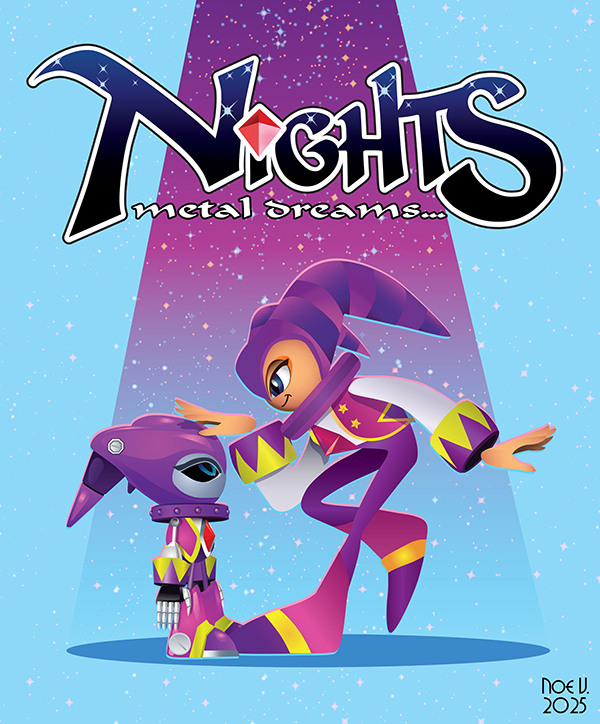
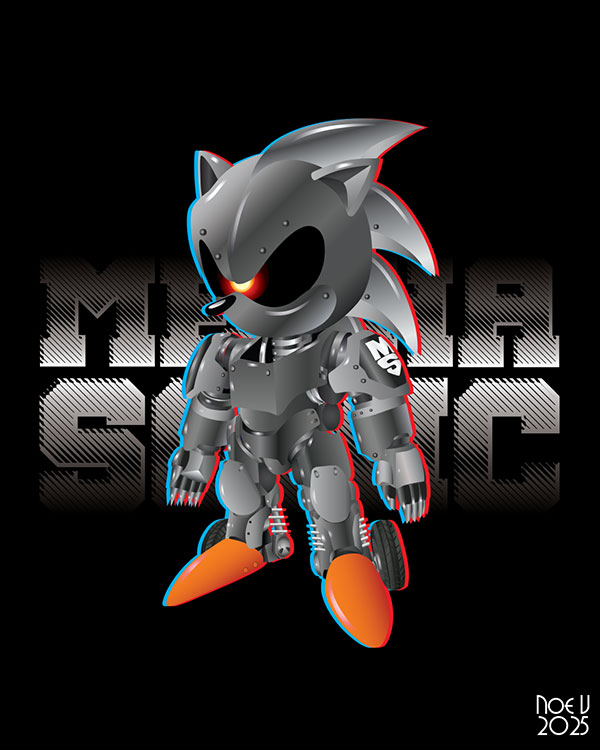
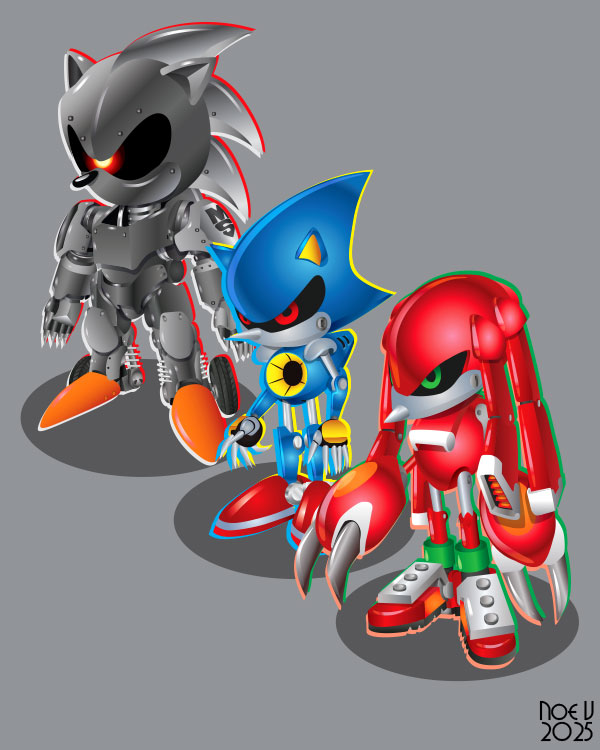
In the previous blog I featured fan art of a Sonic Team character that never was. Selph was a cancelled boss character for the original NiGHTS into dreams… I speculated what the character looked like, and even that the studio turned the character into Chaos for the Sonic Adventure series. It wasn’t the only time I speculated on their characters. Not long ago my kid asked if I had seen Metal NiGHTS. I had never heard of this iteration of my favorite mascot. It turned out that Metal NiGHTS was hidden in Sonic Superstars, along with Metal Tails, Metal Amy, and more. This inspired me to create fan art on what a meeting of the characters would look like.

That illustration launched a creative rush, and I had to capitalize on it. It had been a long time since I've drawn back-to-back pieces in illustrator. I remembered that there was a smaller Mecha NiGHTS that was a hidden asset in the original game. So I absolutely had to put together a family portrait.

Then as long as I was drawing metal versions I figured there should be a Metal Reala as well. There was not a version in Sonic Superstars, but that didn't stop me from drawing it up. Some people call these little guys chibi-versions but technically they are classic Sonic proportions, rather than modern Sonic. Reala was just a hair bigger than NiGHTS in the original game, so even his metal version was a little bigger as well.

As long as I was creating versions of the robots that never existed I thought about the third “brother” from the series. I absolutely had to create an illustration for Metal Jackle. This character was much bigger than NiGHTS in the original game. He was actually about four times the size of the other hooded nightmarens.

I didn’t want to break the scale of the robots I had already drawn, so I simply made Jackle just a hair larger than Reala. I had so much fun creating these illustrations it made me wish that I knew how to create 3D models. I would love to get a 3D printed version of my little robots made. Don’t you think they look cute?

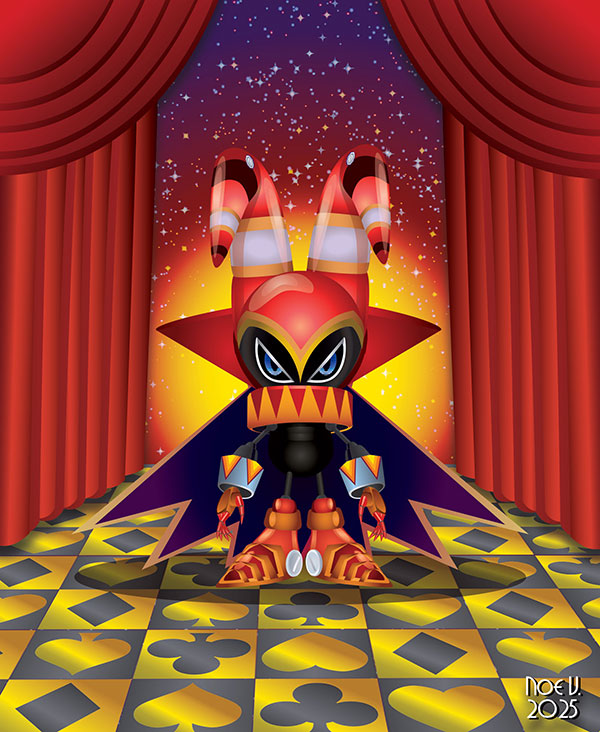
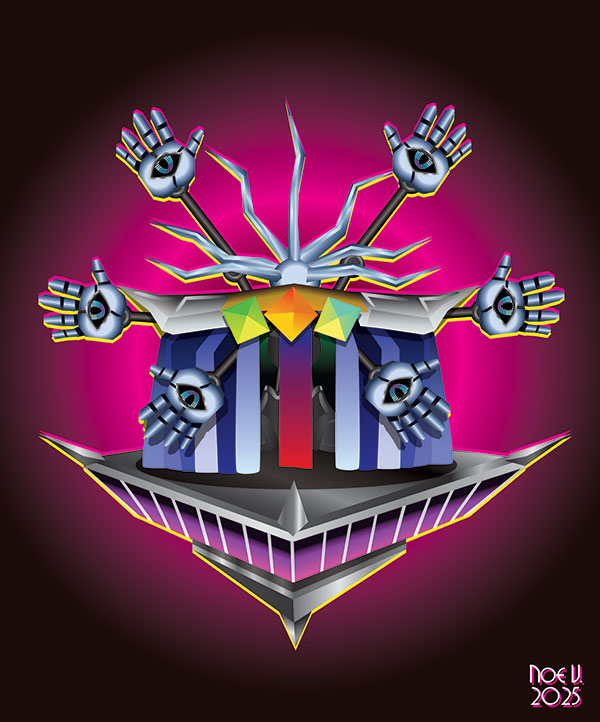
The only other sort of humanoid figure in NiGHTS into dreams... was the final boss named Wizeman. Yet this character didn't really have a body or head. He was more like a floating cloak on a platform. I didn't think it would be possible to make a Metal version of him, until one day I decided to give it a go. I won't be making Metal versions of the other characters because their proportions are already very much in line with the format. The more I look at these illustrations the more I wonder if it would be possible to remake NiGHTS into a game featuring robots that dream of breaking away from the control of Dr. Eggman. What do you think?

I was on an absolute drawing tear so I thought about what other Sonic Team character I would like to bring back. I remembered that Mecha Sonic from Sonic 2 had some great concept art. I thought it would look even better in color. I think this illustration came out great.

I figured as long as I made an illustration of the Mecha Sonic concept art I might as well render the other metal variations. Did you have a favorite metal doppelganger? I really need to get a copy of Sonic Superstars so I can see the various builds.

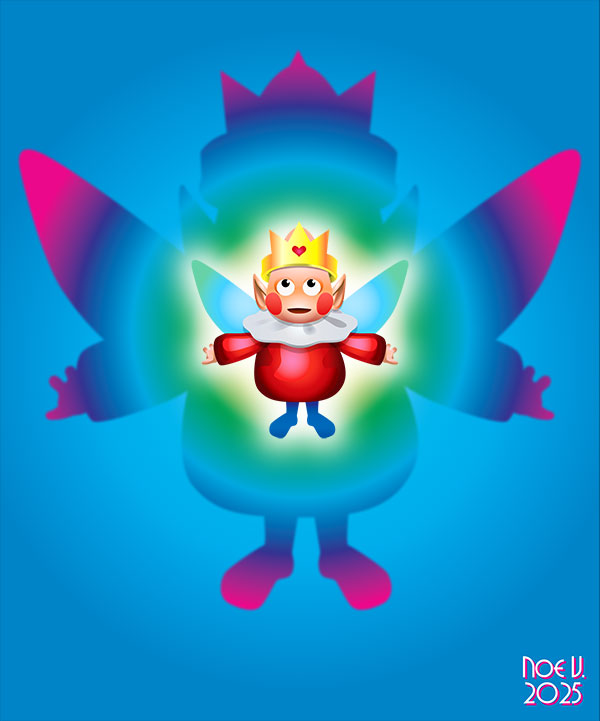
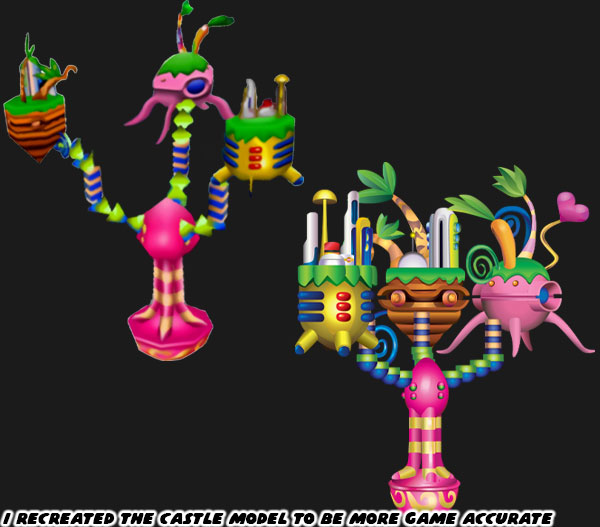
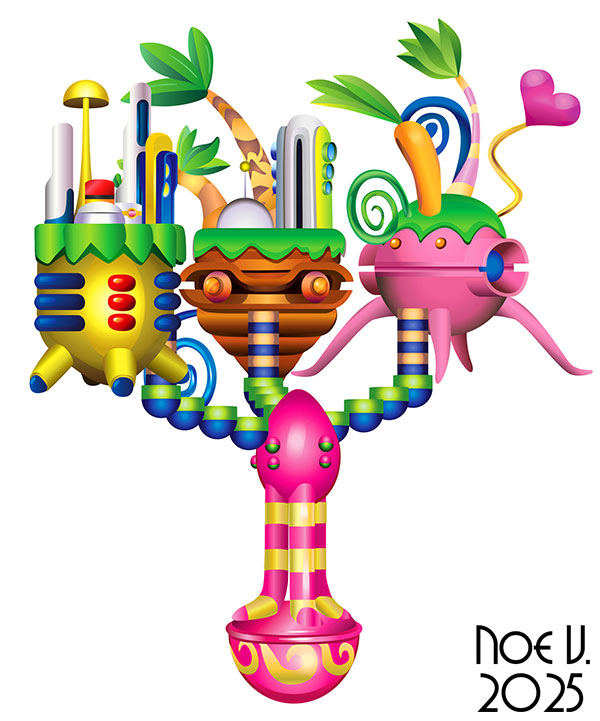
There was an illustration that I had been dreading for a long time. It was not the Super Pian aka the King of the Nightopians. I absolutely loved that little guy! I had mentioned him previously on the blog. He was a rare character that you could unlock in the original NiGHTS into dreams… The king would fly around the level and choose a spot to built a floating castle. It would be added to the game, and saved via the internal memory. The castle was randomly placed on the level, and would never appear in the same place twice, no matter how many times you erased, and resrtated your data! He was an incredibly cute character that I finally got around to drawing.

Rendering the king didn’t make me nervous but the castle he created did. It was all but impossible to get a clean picture of the castle from the game for my own personal notes. The original Nightopian Castle was rarely captured on screen because it was not guaranteed to ever show up in the game. Normally it wouldn’t be hard to find a YouTube clip to work from however the Sega Saturn was a 32-bit system from 30 years ago. Any existing video was low resolution. If you didn’t have a video capture card, or an emulator, and knew how to earn the Super Pian then even today it would be hard screenshot to get. The closest thing I could find was a fuzzy shot from the NiGHTS Wiki page but this model was pulled from the PS2 remake, which was not 100% console accurate. The Chinese developers did a really great job recreating the game engine, but not all the assets were accurate to their sprite counterparts.

Whenever there was a game asset that I couldn’t track down then I would challenge myself to draw a reproduction as accurately as I could. So I used every screenshot, and grainy video clip that I could find of the castle to work from. It took me a few days to finalize the design, and it’s essentially a high resolution, vector version of the sprites. There was no doubt that the Nightopian Castle was one of my most challenging drawings of the past decade. Maybe I should put it on a poster or tee shirt for the die-hard fans.

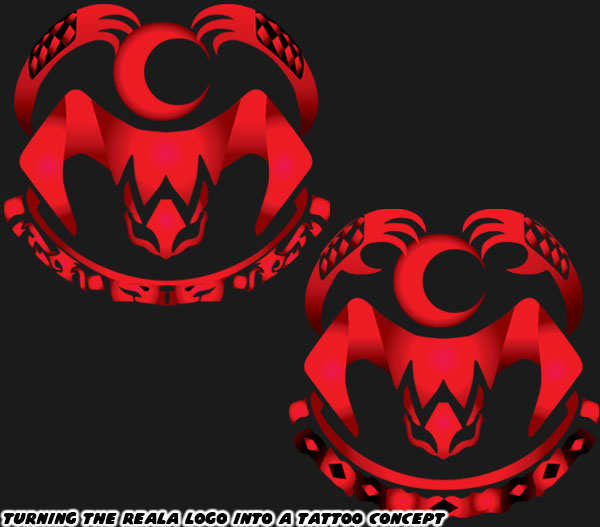
There was another game asset in NiGHTS that I always wanted to recreate. The villain Reala had a stylish logo on the ceiling of his boss battle stage. About 30 years ago my little brother said it would make a great design for a tattoo. I agreed, and finally decided it was time for me to recreate it. It was hard to find a clean screenshot, or the asset uploaded. So again I went by any scans that I could find. Making out the pattern at the bottom of the logo was the hardest part, so I mocked up a couple of different designs. I even changed the hands above the moon a little. Now I’m not saying that I am getting a tattoo with it, but I am certainly thinking about it.

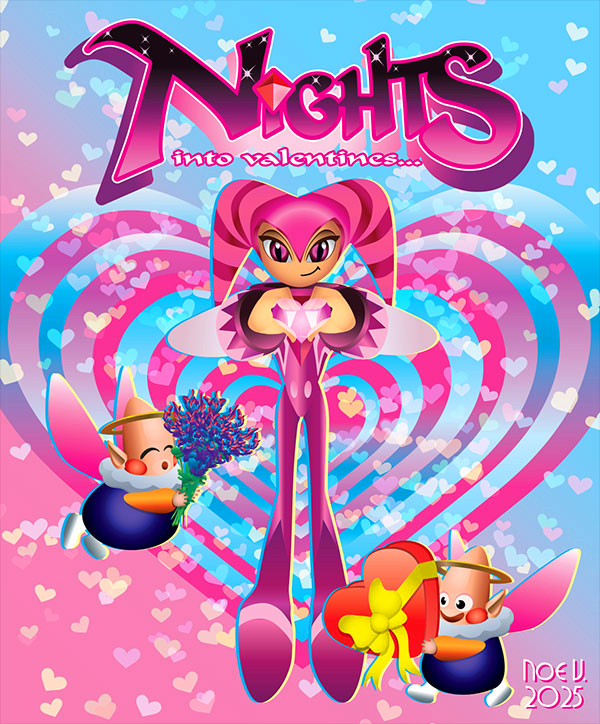
When Valentine’s Day was approaching I decided to see what a pink version of NiGHTS would look like. I even added some Nightopians to round out the pic. I might do other holiday versions in the future. We already have a Christmas version, but I wonder how an autumnal NiGHTS would look like. Orange like the leaves in fall, or black like a Halloween monster? That's food for thought...

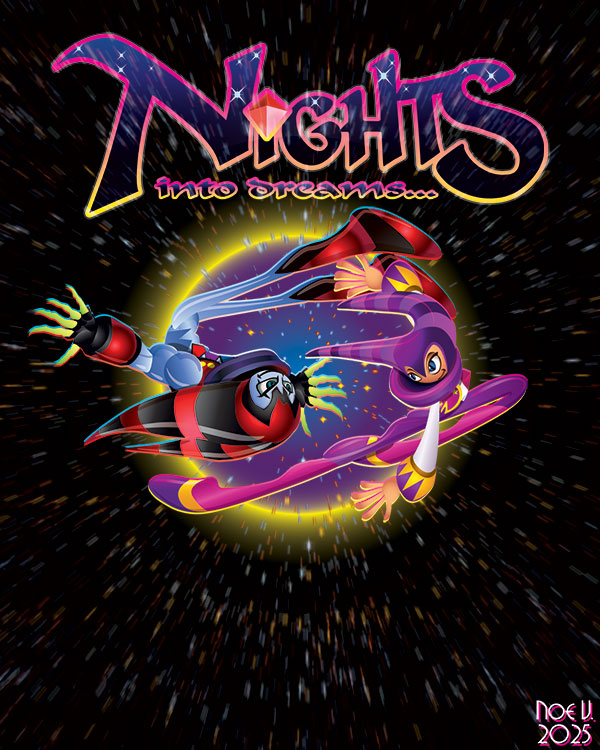
After a few weeks of drawing I decided to get out of my comfort zone, and do an illustration of NiGHTS, and Reala as cartoonish, and dynamic as I possibly could. I think the end result really showed how far I had come in the past few years.

The best part about working mainly in Adobe Illustrator is that I can always circle back to a piece and make changes to it. I think the second go round between NiGHTS and Reala works much better. What do you think? All in all it was fun creating new illustrations these past few weeks. I had Sonic Team to thank for that. They kept me motivated when work, and politics had been weighing on my mind. The library of Sega games had inspired me most of my life. It was time to express that love in art form.

To round out my Sonic Team fan art I combined the classic Sonic pose from the cover of Sonic Adventure on the Dreamcast but replaced our hero. It was one of the more popular illustrations I ever uploaded to social media.

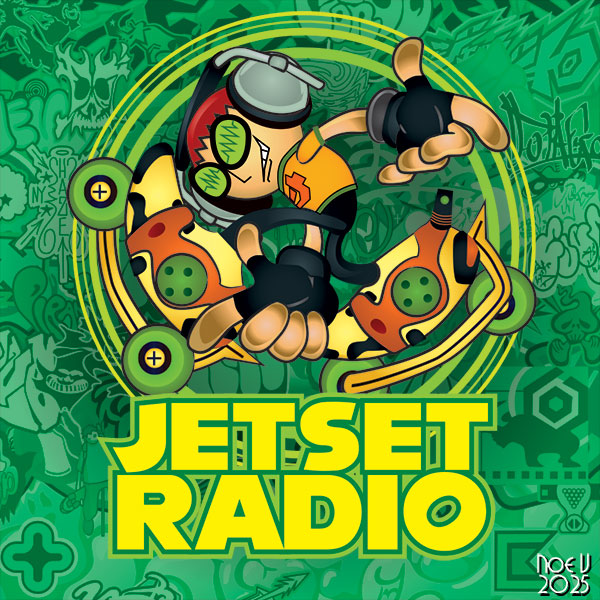
I know Jet Set Radio is not a Sonic Team game, but it is a Sega title, and one of my favorites of all-time. This will probably be the last time I draw the Sonic Adventure pose, but don't hold me to it.

I hope you enjoyed this look back at how the studio built a fan. I’d like to know if you were a fan of Sonic Team, and if you had a favorite game, or character as well. Tell me about it in the comments section. As always if you enjoyed this blog, and would like to sponsor me please visit my Patreon page and consider donating each month, even as little as $1 would help make better blogs and even podcasts!
follow the Street Writer on Patreon!