Showing posts with label rivals. Show all posts

Friday, March 20, 2026

A rare Sonic Team item pops up, plus showing my favorite game character some love

Heya friends, I hope that you are having a great week. I managed to find a rare Burning Rangers item on a Japanese bidding site. There wasn’t much tangible goods from Sega when the game came out. I did pick up magazines featuring interviews with Sonic Team, and some rare screenshots from early builds of the game. Yet past that I didn’t really have any sort of merch. That was why I was surprised to see a mousepad pop up. The art was fantastic, so I had to pick it up.

As long as I was on a Sonic Team kick I was inspired to do some art featuring my favorite game character NiGHTS.

At the end of 2025 I was also inspired to do a piece for Christmas.

It had been a long time since I drew Reala, the rival to NiGHTS. I had to rectify it before the end of the year.

NiGHTS heard you wanted a bike for Christmas. Good luck getting it back!

Turned the best illustration I did this year into a holiday celebration. I'm wishing you, and yours the very merriest of holidays!

At the end of 2025 I was also inspired to do a piece for Christmas.

Of course 2025 was the 29th Anniversary of NiGHTS into dreams... this meant that I had to create a new illustration in 2026 to celebrate its 30th Anniversary. I'll be posting that at the end of the year. Were there any rare games, or favorite characters that you loved to draw? Let me know in the comments section. As always if you enjoyed this blog, and would like to sponsor me please visit my Patreon page and consider donating each month, even as little as $1 would help make better blogs and even podcasts!

follow the Street Writer on Patreon!

Monday, October 7, 2024

A symmetry of villainy, part 3…

When I started this series I mentioned that the Incredible Hulk’s greatest villain was returning. It caused me to start talking about my theory on rival design. For people new to character design I advised if they were stuck on creating villain then they should try making an evil mirror version of the hero. For example the Abomination was the evil counterpart to the Hulk, and Bizarro was the same for Superman. These types of enemies worked well all throughout pop culture. I also mentioned that the most interesting rivals had asymmetrical designs. They did not have a similar group of skills or abilities as the protagonist. Even opponents that were physically inferior could be considered the most dangerous of rivals. Lex Luthor was a regular human compared to the Kryptonian Superman, yet for over 80 years he was considered the greatest opponent.
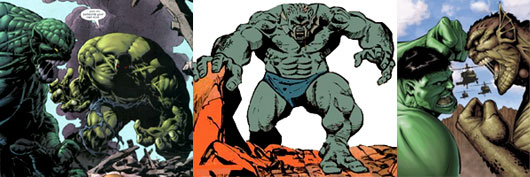
For the Hulk I mentioned that General Thaddeus "Thunderbolt" Ross was similar to Lex Luthor. Introduced in the first issue of the Hulk way back in 1962 he was a military leader that managed to be very problematic for the most powerful monster in the Marvel U. Then I talked about how not every author understood the characters that they were assigned, and ended up changing them to fit their own narrative. Jeph Loeb was a writer that gave Ross powers, and turned him into the Red Hulk in 2008, forever changing their dynamic in Marvel continuity. He then went on to give his daughter a gag comic where she added a Blue Hulk as well. I thought it was a bad idea then, and still think so to this day. If I were to give all the flowers to a writer that went in blind, and managed to continue building the legend of the Hulk then I would go with Peter David. Mr. David had written all sort of stories, and characters over the years. When he was hired at Marvel his dream was to write the Spider-Man books. He said he would have been happy with any book he was given, as long as it wasn’t the Hulk.
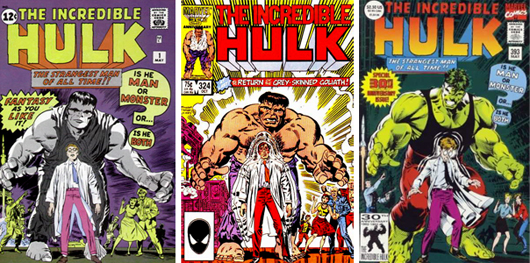
He thought that character had no dimension, and nothing interesting about him. Yet that was exactly the book he was told to write for in the late 1980’s. He didn’t complain or change the character to fit his preconceived notions. Instead he rolled up his sleeves, and studied every previous story in order to figure out the dynamics of he hero, his allies, and opponents. Once he understood the appeal Mr. David created several fantastic arcs for the character. He revisited old rivalries, introduced new friends, and conjured up amazing villains as well. He worked with a penciler named Todd McFarlane, and helped develop the Gray Hulk, or Mr. Fixit persona. McFarlane presented a version of the Hulk that was as wide, as he was tall, a literal walking tank. A few years later he would find popularity on the Amazing Spider-Man. Then he left as a co-founder of Image comics, and created Spawn. Little did we know that an even better Hulk artist would turn up not long after.
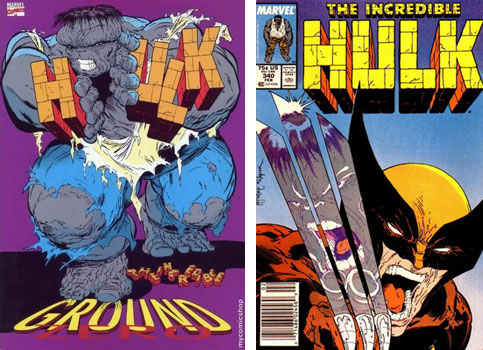
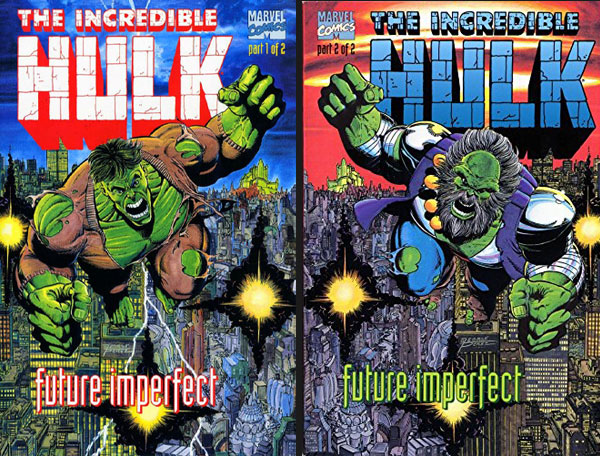
David worked with the brilliant Australian penciler Dale Keown (creator of the Pitt), and the duo helped make the Gray, and Green Hulk appealing to new fans. At the same time they never insulted the continuity for older readers. One of Mr. David’s greatest contributions was introducing the Maestro. The stories with the Abomination, the Juggernaut, and other heavy-hitters were amazing, but he wanted the Hulk to have a rival that was his superior in every way. An older, wiser, and stronger version of the Hulk from the distant future was what he came up with. After all, the only monster that actually stood a chance against the Hulk was… himself. The first appearance of this character was in the 1992 series called Future Imperfect (which was pencilled by George Perez). It was such a hit that the Maestro became an important part of canon, appearing in comics, but also animation, and video games for over 30 years.
The Maestro was a brilliant design, however I would not consider him to be the Hulk’s greatest rival. Nor would I think of Thunderbolt Ross (in any form) as his greatest opponent. I would reserve that honor to the Leader. The Leader, also known as Samuel Sterns, first appeared in Tales to Astonish #62, way back in December 1964. He was a simple-minded janitor that was exposed to gamma rays during a work accident. He opened a drum of toxic waste because he thought it might have something that he could steal. Instead of dying from radiation poisoning he mutated. He turned into a genius rivaling the most brilliant minds in the Marvel Universe. His skin turned green similar to the Hulk, and other gamma-powered characters. His skull also grew to grotesque proportions. He developed awesome mental powers, including telekinesis, and mind control, on top of his inventing proficiency.
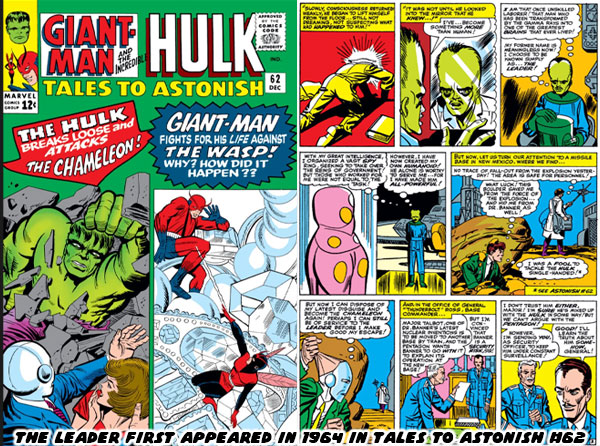
Most Hulk fans, myself included believe that the Leader was actually a chance to reboot the Hulk’s original mutated opponent. In the first issue of the Incredible Hulk from May 1962 there was a Russian spy that was transformed when he tried to recreate the conditions that changed Banner. Instead of growing massively powerful the scientist turned into a twisted version of his former self, with an enormous skull. The first Gargoyle, Yuri Topolov, was created by Stan Lee and Jack Kirby. A few years later the Leader was created by Stan Lee, and Steve Ditko. This formula of mutating spies for the Hulk to battle even applied to the Abomination, previously known as Emil Blonsky. The different looks, and powers of each character was explained as a psycho-physical manifestation of gamma mutation. Their subconscious self actually determined how they would appear to the world. Emil was an abusive husband, and a cruel manipulator. Of all the enemies he was the one that was truly a monster on the inside, and out. That was why he looked like a nightmarish beast when he transformed. The Leader was aware that people thought Sam Sterns was a dummy, but subconsciously he wanted to make everyone feel dumb. Thus he gained a massive brain. Yuri was already intelligent, but thought himself superior to his western rivals. His conceited nature was as ugly as the Gargoyle.
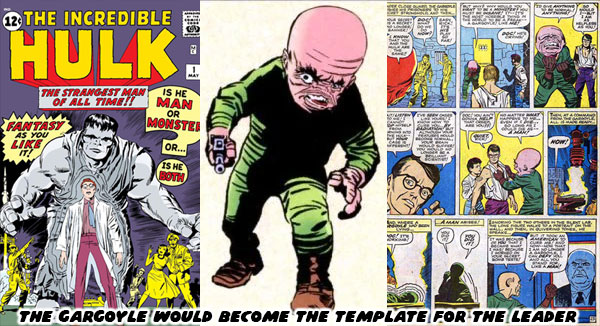
The Gargoyle would be used less, and less as the years went on. His most notable contribution to pop culture happened decades after his debut. In the Incredible Hulk animated series from 1996 he was voiced by Mark Hamill. Hamill was famous for playing Luke Skywalker in the Star Wars films, but for an entire generation his voice work was even better known. Hamill gained a massive following in cartoon circles when he started voicing the Joker for the Batman Animated Series in 1992. In the cartoons the Gargoyle was a subordinate to the Leader, voiced by character actor Matt Frewer. He first gained fame by playing the digital character Max Headroom. The Hulk animated series melded classic plots from the early era of the comics, plus newer designs that had been featured during the Peter David run. It managed to present the lore of the comics fairly well, and explained how the gamma mutations worked to newer fans. It summed up the obsession that the Leader had with the Hulk. He felt superior to Banner in every regard, except for his body, which lacked the strength, and resilience of the Hulk. He felt that he needed to possess the body in order to prove he was the ultimate being.
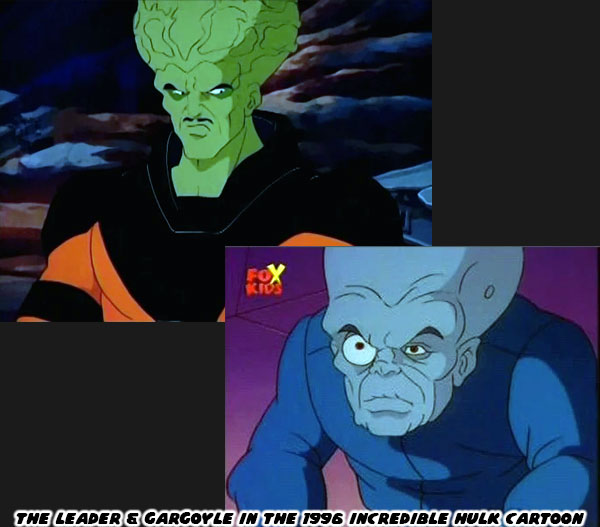
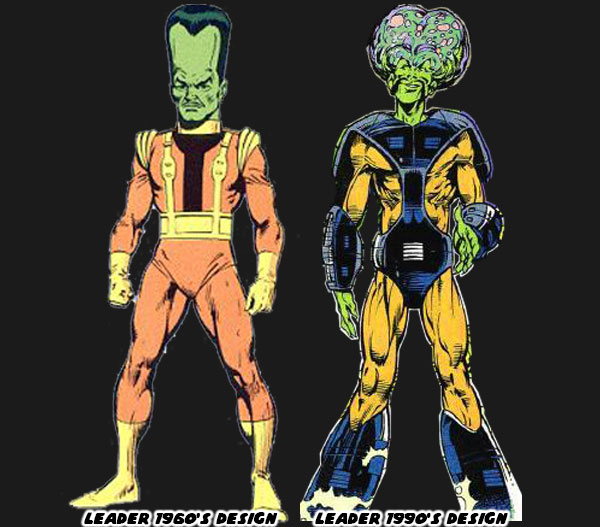
Like most comic book characters the Leader, and Gargoyle underwent some design changes over the years. Early on the Gargoyle had a large deformed head, with a relatively proportional human body. His frame became diminished, and twisted in later versions. His features made grotesque, and impish. The version featured in the animated series more or less defined his modern appearance. The Leader was traditionally seen with a long vertical head, and average build. In canon his body was covered in sores, and he wore a special uniform to allow him to function without pain. He was upset with his frail body, and expected that the perfect mind should be supported by a powerful physique. His look evolved early in the Peter David run. I believe it was Todd McFarlane (before Spider-Man, and Spawn fame) that gave him a new look. He figured that if his brain were to expand then it should have two massive hemispheres, rather than grow straight up. It made sense to me, although many fans were split on the new look. The comics even referred to him as “Jiffy Pop” head, after the popular way to make popcorn before microwavable bags.
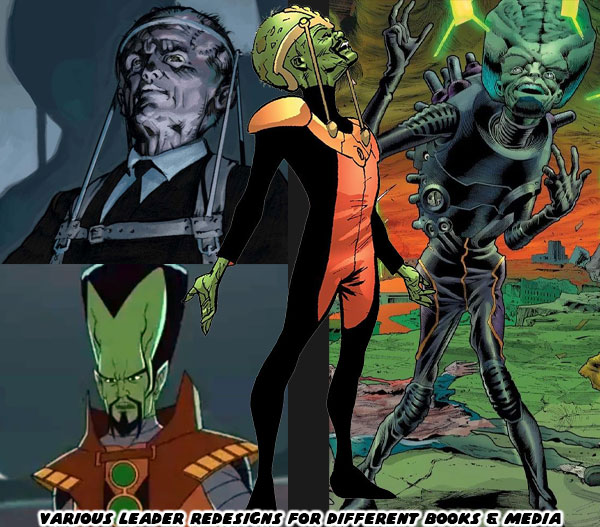
Different iterations of the Leader would appear in comics, and animation. Sometimes the designers would strike a middle ground between the classic look, and the Jiffy Pop form. The Ultimates version of the Marvel U, a sort of retelling of the classic characters in a more contemporary setting influenced the presentation of the live action movies. In that continuity the Leader was a British Special Forces officer named Peter Wisdom. He experimented on himself to save his program, and also in an attempt to become a super soldier. He did gain mind control powers, and telekinesis, but also ended up wheelchair bound. His brain was so big that his neck couldn’t support it. He required a brace in order to keep his head upright. This macabre look was incorporated into some of the latter designs of the traditional Marvel comics. The Leader had a mind literally big enough to figure out every way to take on the Hulk, and have backup plan, after backup plan that even Thunderbolt Ross couldn’t even contemplate.
Tony Stark invented power armor light years ahead of anything else on Earth. Yet his biggest rival dressed in robes, and used 10 magic rings that science could not explain. The Mandarin’s powers came from the time of mysticism, and superstition, millennia before science had cracked the atom. The Mandarin was determined to rule the world, and in order to do so he had to destroy Stark, and his precious technology. The Hulk on the other hand could beat any conventional weapon, or other form of technology by sheer force. He had fought Iron Man on numerous occasions. Each time the monster took apart Iron Man like a tin can, including the fabled “Hulkbuster” armor. The Leader made sense in the tradition of great Marvel villains. He was so unlike the Hulk in every way that he was destined to be the ultimate rival. He was able to defy the Hulk by using powers that Banner did not possess. It was his awesome mental abilities, and not brute strength that would challenge Banner, and the Hulk. 
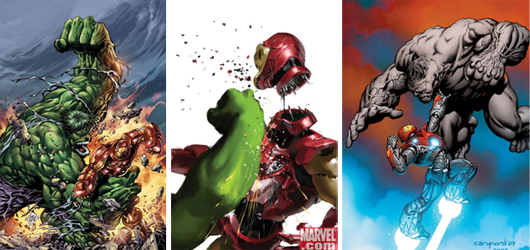
The Leader was another example of the asymmetric enemies that I previously discussed. Despite his frail appearance the Leader was actually a dangerous character. He didn’t even need to know how to throw a punch. His ability to use mind control on individual, and even groups of people was scary enough. If he was mortally wounded he seemed to have the ability to resurrect himself as well. He was a relentless villain that could hunt the Hulk with more vigor than even Thunderbolt Ross. There was a certain logic to his design that made sense in the context of the Marvel universe. I will talk about that in the next blog. Until then I want to know if you have a favorite Hulk villain, or any villain in general. Tell me about it on the comments section. As always if you would like to sponsor me please visit my Patreon page and consider donating each month, even as little as $1 would help make better blogs and even podcasts!
follow the Street Writer on Patreon!

Friday, October 4, 2024

A symmetry of villainy, part 2…

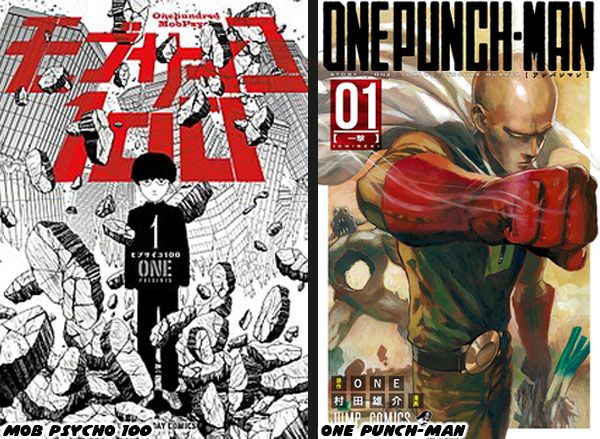
In the previous entry of this series I talked about some of my favorite comic book rivalries. I noted that some villains were evil mirror versions of the heroes, like the Abomination was to the Hulk, the Reverse Flash was to the Flash, or Bizarro was to Superman. That type of design worked well in many stories, and was a tool that young authors could use when fleshing out the antagonists for their own stories. I also mentioned that many of the greatest rivals were asymmetric in look, and ability. Such as the Joker to Batman, Doctor Doom to the Fantastic Four, or the Mandarin to Iron Man. I argued that these were the most interesting types of rivals. Creators that understood the format were able to build worlds that appealed to many readers throughout the years. Award-winning writers understood that the best characters represented something greater than themselves. For example the Hulk was a stand-in for rage, Superman stood for hope, and the Joker for chaos. When done well we could use that understanding across genres. I believed that the best storytellers could use those archetypes in entirely different languages. I have said that the best Superman arc, and best Hulk story of the past decade were featured in the works of the Japanese creator known as ONE.

One Punch-Man was every bit a spoof as it was a love letter to the super hero genre. The main character was overpowered, not unlike Superman. The heart of the story was how the supporting characters would deal with world-ending threats before Superman, err, rather Saitama could deliver one of his trademark punches. This was essentially the same dynamic of the Justice League holding off a colossal enemy until Superman could show up. You would think that having a character that could defeat any opponent with a single punch would become boring after the first issue, but ONE managed to build a lot of tension by investing us in the street-level heroes. By comparison Shigeo "Mob" Kageyama wanted nothing more than to catch the eye of a girl he was crushing on, all while dealing with latent psychic powers. The heart of the Mob Psycho 100 story was how people would try to manipulate him, or exploit his powers. It was a cautionary tale dealing with bullying, self image, loss of control, and much more. Nothing could contain Mob when he was pushed to the breaking point. Similar to how Bruce Banner did his best to avoid conflict in the pages of the Marvel comics. When the Hulk was unleashed even the strongest villains found out that he was impossible to stop,. The Hulk had his own Lex Luthor, a human antagonist rather than a super-powered villain that functioned as a great rival for over 45 years.

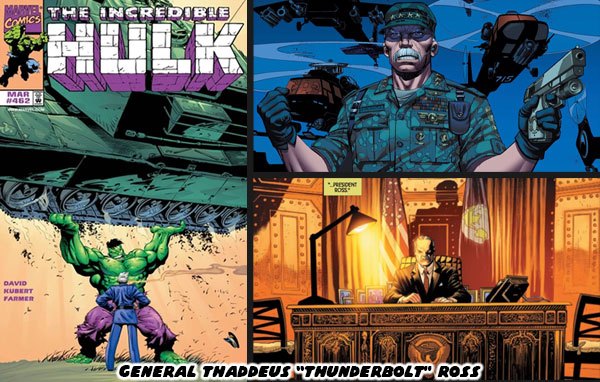
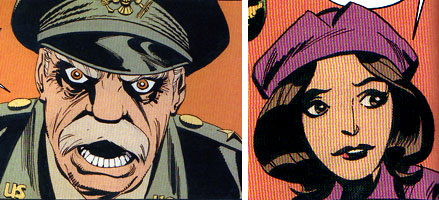
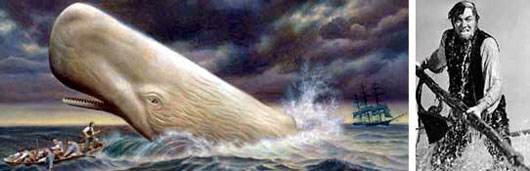
General Thaddeus “Thunderbolt” Ross hounded the Banner, and the Hulk. His crusade against the Green Goliath took him, and his battalions all over the world. He was a complex character, and doubly important because he was the father of Elizabeth “Betty” Ross, the love interest, and future wife of Dr. Bruce Banner. It had been argued that the Hulk was an allegory for war. General Ross represented the military industrial complex, the duo had a destructive relationship. He assumed that any problem could be solved if enough bombs were dropped on it. The opposite was true in the stories. It was impossible to beat the Hulk through perpetual escalation. The billions the government spent on military equipment did nothing but annoy the Jade Giant. He would only become stronger, cause more destruction, and collateral damage the further he was pursued. Thunderbolt’s single-minded obsession was comparable to Captain Ahab from the story Moby Dick. His mania would only lead to the estrangement from his daughter, a mental breakdown, and his eventual downfall. As for the Hulk, it turned out that peace, or rather leaving him alone was the best way to get him to revert to back into Banner.

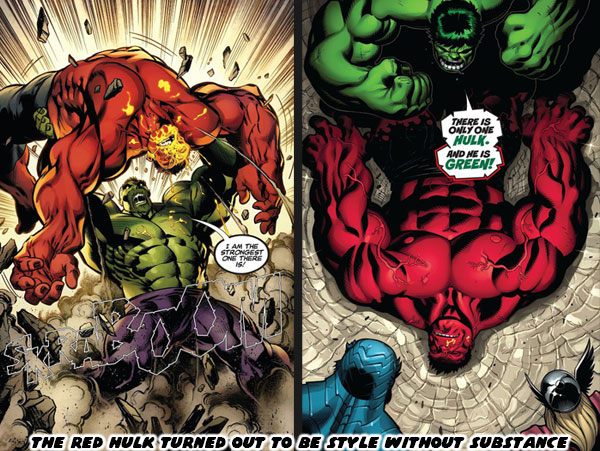
This dynamic was critically important for the development of the series. Not every villain that the Hulk faced had to be a gamma-powered monster. His toughest battles were fought with his own human family members. At least this was the dynamic explored by all the great series writers except for one person. Jeph Loeb had written for films, television, and comic books for years. In an interview he mentioned that he had a wishlist of things he had always wanted to do in a comic book, and was looking for a character to apply it to. He wanted to see the Hulk stop holding back, to cut loose on the Marvel U, and see what he was really capable of. These included fourth wall breaks ala Deadpool. Things like punching the Watcher, beating up Thor with his own hammer, stealing the Silver Surfer’s board, etc. He knew that it wouldn’t work for the character that fans were already familiar with, so his idea was to assassinate the Abomination, and replace him with an even more powerful rival called the Red Hulk. This would allow him to check off the things on his wishlist without breaking the character that audiences were familiar with. After several issues it was revealed that the Red Hulk was actually General Ross. The editors at Marvel were on board, and the character became a part of continuity in 2008. To fans like myself if demonstrated a misunderstanding of Ross, and the dynamic of the Hulk comics up until that point.

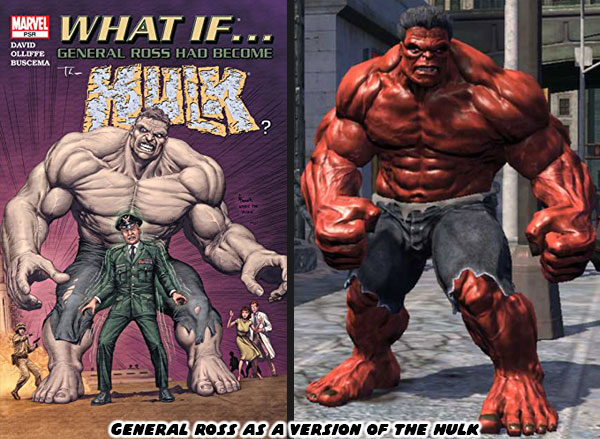
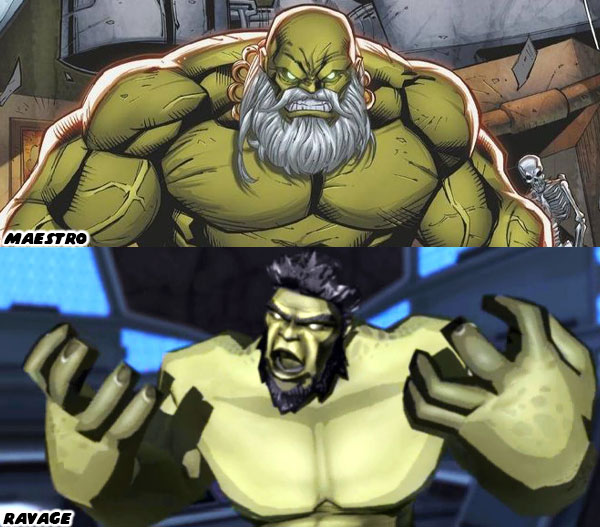
First off the idea of General Ross as the Hulk was explored in a What If? comic from 2004. In it he was gray, and not red. The important part of the story was that Ross saved Rick Jones during the gamma bomb field test, and received the gamma rays that transformed him into the Hulk instead of Banner. During his initial rampage he accidentally killed Betty. When he realized his mistake he transformed back into his human form. A distraught Banner snuck up behind him, and shot him in the head. Thus concluding the story. It made little to no sense for Loeb to add yet another strong guy into the Hulk books. There archetypes were already established through decades of adventures. In addition to the Abomination there were heavy hitters like the Absorbing Man, the Juggernaut, and the Wendigo. In fact when it came to parallel, or rather symmetrical villains there were two that had also been established previously. Professor Geoffrey Crawford was one of Banner’s university instructors. In an attempt to cure a terminal disease he ended up turning himself into Ravage. Yet unlike the Hulk he retained the intelligence of the nuclear scientist. Then there was a version of the Hulk from the far off future in which Banner’s personality had long since deteriorated, and all that was left was a tyrant known as the Maestro. Either one of these villains were overpowered compared to the rest of the Marvel universe. They could have potentially carried off Loeb’s wishlist. Yet I had a feeling that Jeph did not really understand how the powers worked in the Hulk books, how the psychology of the characters affected their mutations, or the roles of long-established foes. 

I would argue that Jeph Loeb didn't really understand the heroes or villains from the Hulk books. He instead wanted to rewrite the cast to fit his own interpretation. In doing so it would cause a domino effect that would also turn Betty Ross into a Red She-Hulk, and make the Hulk have a couple of illegitimate offspring. It was the same misunderstanding of the characters that would lead writers to break up Peter Parker, and Mary Jane, and turn Spider-Man into a long suffering hero. This ended up disappointing a large number of fans. While there were many people that liked the Red Hulk, the role of General Ross was completely missed by Loeb, and his successors. I want you to think about it for a moment. Would this type of villain evolution work for the strongest characters in any other book? What if a writer that didn't understand the dynamics of Superman decided to give Lex Luthor all sorts of powers? What if this writer then started calling his creation Alpha Superman? How would fans react to this sudden change? Once the genie was out of the bottle Luthor would never go back to being a mere mortal. It didn't make much sense in this context. It certainly wouldn't have made for a more interesting villain. In fact I think the opposite happened with General Ross.

For almost a century comic book writers had to challenge themselves to create an engaging story. A story where normal humans posed legitimate threats to the most powerful heroes in their respective universes. These writers had to build the tension, and maintain the voices that readers were used to. They had to plot out story arcs that would keep audiences hooked month after month. A well written villain could be used over, and over without feeling tired or broken. New villains were sometimes given a gimmick that flew in the face of established history. This was just so writers that didn't understand the books could have a couple of cool moments pop up. This was what I think Jeph Loeb did with the Red Hulk. General Ross represented much more than a domineering father, or dogmatic soldier. War was all he understood. The concept of peace was foreign to him. He could not bear to let Banner and Betty enjoy their life together. His obsession with control, with Banner, and the Hulk was an illness. He was willing to sacrifice his own men in his pursuit. This made him the actual monster in the stories. A person like Ross would be diagnosed with Ahab Syndrome, an actual condition where a person was consumed with revenge.

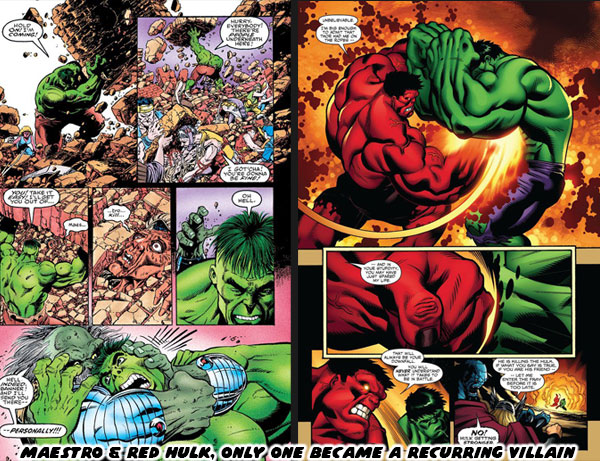
The introduction of the Red Hulk showed that Jeph Loeb completely misunderstood the dynamics of the Hulk. Mr. Loeb decided to rewrite the story of Moby Dick. In his version Captain Ahab would mysteriously get absurd powers. In fact the captain would beat up the whale at the start of the book, and then audiences would watch him go around the ocean beating up other sea monsters. The end of this story would somehow remain the same. The whale would take his revenge, and dispatch Ahab without much fanfare. Mr. Loeb ignored all the established heavy-hitters, and used the most basic type of symmetry to create the type of dumb strong guy that people assumed the Hulk was. The two Hulks would have a few fights, but they lacked the gravity of the battles against the Abomination, or Maestro. Audiences did not fear for the Hulk when this new monster popped up. In fact the Red Hulk would stop being used as a villain altogether. He would end up leading the government sponsored Thunderbolts on missions. You could imagine how absurd it would be if a symmetrical rival like the Reverse Flash, or Doomsday lead the Justice League after their debut. The Red Hulk was just another antihero added into a universe that had become saturated with cynical voices. Mr. Loeb did not create a rival that would withstand the test of time. 

In my opinion Jeph Loeb did a disservice to the character, and continuity of the Hulk. Mr. Loeb lacked the nuance, and understanding that a creator like ONE had when it came to writing for overpowered heroes. The Marvel books would never be the same because of this. There were many rivalries that still meant something in the comics. I will talk about whom I consider to be the Hulk’s greatest rival in the next entry. Until then I want to read your take. Tell me about it on the comments section. As always if you would like to sponsor me please visit my Patreon page and consider donating each month, even as little as $1 would help make better blogs and even podcasts!
follow the Street Writer on Patreon!

Monday, July 25, 2016

The Street Writer Podcast, Episode 7

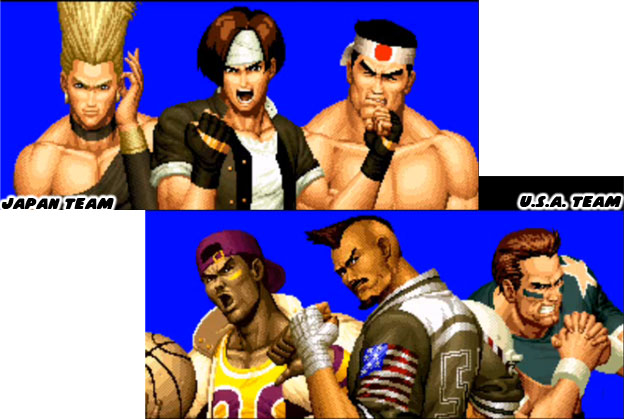
On the previous blog I had talked about the Bancho, Japanese school delinquents that knew how to fight. They were made popular in the '80s thanks to manga and anime. In the '90s they would be incorporated into fighting game design. We begin today in the early '90s. The stand alone King of Fighters franchise hadn't been born yet and SNK was a crossroads. Should they keep taking chances in the fighting game genre or branch out with other formats? The studio had found moderate success with their fighting games but they wanted to create a breakout hit, like Street Fighter II or Mortal Kombat. In order to do this they had to take some chances with the genre and introduce some new blood to the lineup. They had done some experimentation previously, the ability to jump between the foreground and background in Fatal Fury was revolutionary. The large scaling sprites in the Art of Fighting gave it a cinematic feel. Budgets were tight during the development of the King of Fighters '94 (KoF) and risking it all on a completely new cast was out of the question. It made sense to bring together the Art of Fighting (AoF) and Fatal Fury (FF) groups. Those titles had both evil and heroic fighters that audiences were already familiar with. Reaching out and including the Ikari Warriors and Psycho Soldiers would ensure some non-fighting game players would check out the title too. As the teams were being finalized the studio decided that they had to take a chance on some new faces. They did not want to place either the AoF or FF teams as the stars of the game but rather a new group which the plot would focus on. The designers bet that the new teams would become as iconic as the previous franchise characters. Well the studio was half right. Team Japan would grow a tremendous following. These fighters would become pivotal in the canon of the series while the members of Team USA would fade into obscurity.


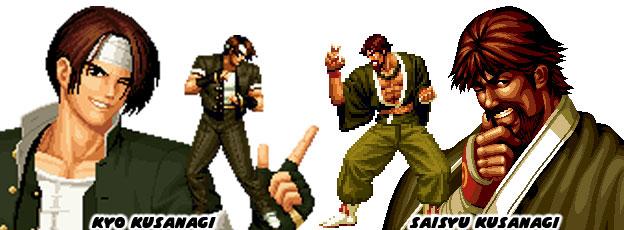
As the first generation of fighting games tapered off the developers began looking for new influences. Team Japan and Team USA were pulled mainly from pop culture rather than fight culture. The references worked in favor of Team Japan. The team captain was Kyo Kusanagi was a young and handsome high school student. His design was was very clean cut but deceptive. His uniform looked like a traditional gakuran, yet there was something unique about his design. Think about a character like Ryu, he certainly looked like a traditional karate fighter, yet most traditional fighters did not wear a gi with torn sleeves and frayed pant cuffs. Nor did they let their hair grow too long and unruly. At first glance you were supposed to know that Ryu was a karate fighter, but the details of his costume told a story. Similar details applied to Kyo's design. His hair was long and held up with a headband rather than a cap, his jacket was open allowing him a wide range of movement. His sleeves were rolled up and he wore fingerless black gloves. He was certainly a fighter more than a scholar. His teammates represented other aspects of Japanese culture. The flamboyant Benimaru Nikaido, whose crop-top, earrings and tall blonde hair were very counter-culture. The character had a unique fighting style and the ability to generate electricity and shock his opponents. Benimaru was modeled closely on Jean Pierre Polnareff from JoJo's Bizarre Adventure. The third member, Goro Diamon, was the bruiser of the team and the one with the closest traditional fighting style. He was a Judo gold-medalist yet also had the ability to perform some superhuman feats of strength. When deciding who would represent Japan in the KOF global tournament there was an MMA tournament. Kyo defeated his two partners and became team captain.


The team that represented the USA was based on basic knowledge of the US. If anything they were stereotypes of Western culture. The team captain was a street boxer named Heavy D. possibly after the rapper with the same name. His partners were a basketball player named Lucky Glauber who was not unlike Kobe Bryant, even wearing the Los Angeles Lakers gold and royal colors. He even had a distinct "swoosh" logo on his cheek, certainly without Nike's knowledge or consent. He could summon basketballs to throw at his opponents instead of fireballs. The third, Brian Battler, had a football shoulder pad and a few tackling moves. In the KoF manga by Gamest the character was introduced as a stock car driver that was seemingly indestructible. Having walked away from a burning car crash just a few moments after being introduced in the series. It was obvious that the US team didn't have the same level of forethought that SNK had used when creating Team Japan. There was no doubt that international audiences would understand that they were typical "American" characters with their focus on sports. Past that there was little that made the US figures interesting. Each character had a few neat moves but none really looked like a fighter except for Heavy D. One character couldn't really carry the team and that was part of the reason why they faded into obscurity. The members were seen after KOF '94 but weren't the stars that SNK had hoped for. That gamble had only partially paid-off.


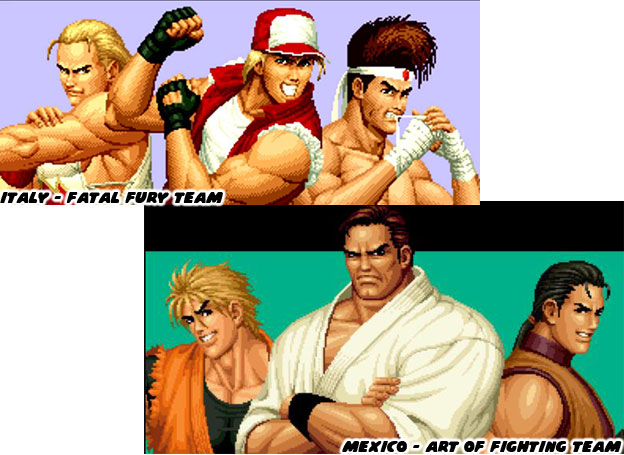
Team Japan and Team USA were planned as being the counter points to the Fatal Fury and Art of Fighting teams, so that no one country (or series) could claim to having the best fighters in the SNK universe. In canon Team Japan was written as the winners of the first three KOF titles. It was obvious from the onset that the team had some staying power. None of the new characters introduced had a bigger following than Kyo. The bancho had finally found a mainstream fighting game. Like Ryo Sakazaki and Terry Bogard before him there was a star that would help keep SNK on the map and give audiences somebody to root for, somebody to follow and most important somebody to play as. With the introduction of Kyo something was missing. He lacked a rival. In promotional material Team Japan was featured sided against Team Italy, the Fatal Fury group. Yet many players didn't see that as a balanced lineup. Terry was an older and more experienced brawler, his brother Andy had mastered the Shiranui ninjitsu art and Joe Higashi was also a muay thai striker and not a grappler. None of the men were as outlandish as Benimaru or as large as Goro. Also, despite being teams of three the team captain was usually recognized as the most interesting or most popular character. Whomever was going to rival team Japan needed to have someone as interesting as Kyo. This was going to be a problem.


Kyo wasn't just a really good fighter, he had the ability to project fire from his hands. It was the special attack that allowed him to hold his own against Ryo or Terry plus it was a very well animated effect. As the series grew it was revealed that Kyo had mastered the art of fire at the age of 15. It was a secret technique known only to the members of the Kusanagi clan. At a young age he had passed all of the trials of his family and had even surpassed his father Saisyu in fighting ability. Yet in typical fatherly (stubborn) fashion Saisyu would never admit that he was no longer the greatest warrior in his clan. Just as Takuma Sakazaki would never admit that he was ready to defer the throne to Ryo. Both men felt that they still had something they could teach the next generation. Saisyu would turn up in King of Fighters '95 as a sub-boss. He had an interesting design, his costume was closer to a fighting monk with the family crest, an eclipsed sun on the back of his robe. Kyo had the same logo on the back of his jacket. Yet Saisyu was not a great rival for Kyo. The animosity was not there. The two would never be rivals like Heihachi and Kazuya Mishima from Tekken. The studio had to dig a little deeper in order to create just the right rival. It turned out that the SNK had made a similar design error previously.


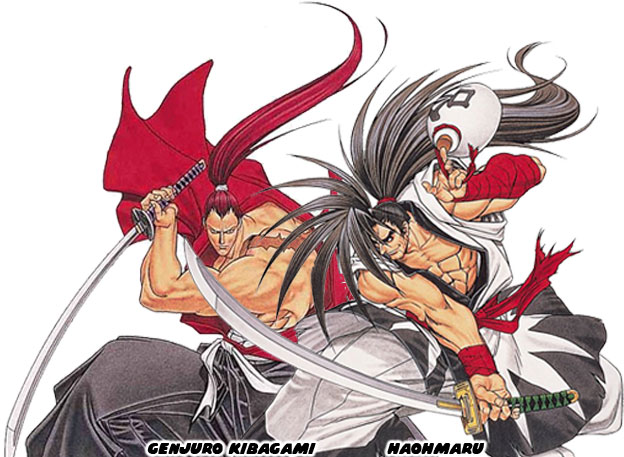
In 1993 the studio had released a smash hit called Samurai Shodown / Samurai Spirits in Japan. It was one of the first and best weaponized fighting games ever developed. It had very bold character designs, inspired by fictional and real sword fighters from the feudal era. The star of the game was the hard-drinking, wild-haired Haohmaru. A wandering swordsman very loosely based on the actual Miyamoto Musashi. While the first game had many other sword fighters none really matched the design of Haohmaru or could be considered his main rival. A year later the studio finally crafted a rival that was beat-for-beat every bit as interesting as the main character, if not more so. Genjuro Kibagami was the red-haired rival with a nasty scar running the length of his back. It was given to him by his mother after Genjuro killed her lover. In return he killed his own mother. There was a whole lot of drama in the series and I might talk about it some day, but the main beef among the cast was between Genjuro and Haohmaru. They used to be friends but that friendship turning into a rivalry. It made things difficult for the star of the game, knowing that not only did he have to deal with the main villain, usually a demon of some sort, but that there was another sword master out there looking to take his head. SNK looked at this rivalry and found the missing ingredient for the King of Fighters. It didn't really matter if Team Japan had a person to balance out Benimaru or Goro as long as there was somebody for Kyo to deal with.


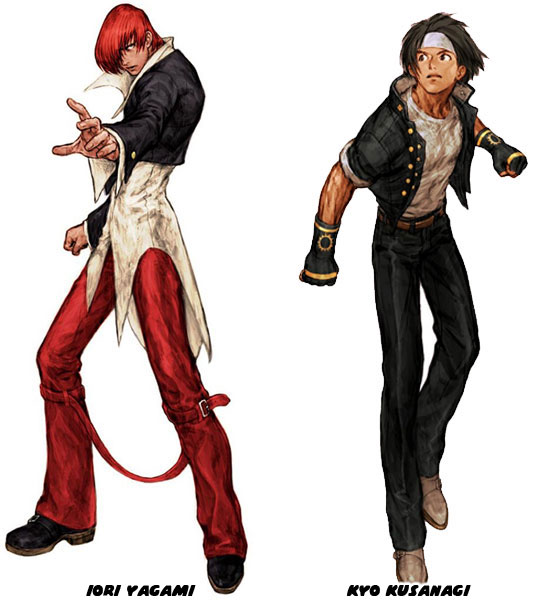
Heavy D from the USA did not seem interesting enough to merit a rivalry with Kyo. Team captains Terry and Ryo had their own rivalries and their own villains to contend with, not to mention that they were older and more seasoned fighters than Kyo. SNK decided to create an age-appropriate and culturally similar rival. This young fighter was Iori Yagami, like Kyo he was a high school student, a bancho without a gang to lead. He had his own unique spin on the school uniform, with an un-tucked long shirt, bright red pants and suspenders tying his knees together. His look was so bold that audiences instantly knew that he was the perfect rival for Kyo. Nothing had to be stated in canon in order for audiences to see that this character was going places. As the series went on it was revealed that the fire powers of Kyo, and odd blue fire of Iori were from their respective clans. The two were part of a lineage that was destined to battle the Orochi, historically this was an eight-headed, eight-tailed serpent from Shinto mythology. In KOF canon it could instead be represented as a human. The original creature was an Earth god and required a sacrifice every year. The sun goddess Amaterasu (the star of the Capcom game Okami) cast her brother Susanoo down from Heaven for tricking her. While on Earth Susanoo found out about the sacrifices and fought the Orochi. First by getting each head drunk and then cutting the monster into pieces. There was a fantastic science fiction retelling of the legend in the manga titled Orion by Masamune Shirow. But I digress...

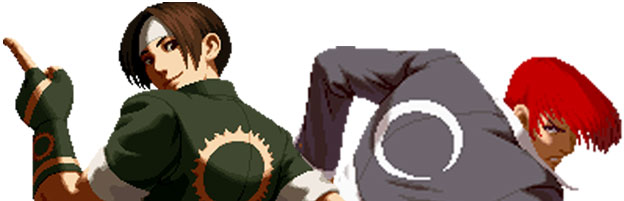
There was tremendous symbolism involved with the design of both Kyo and Iori. The fire techniques that each held were not scientific but spiritual in nature. The Kusanagi house symbol was a sun in eclipse. This unbroken ring represented both Amaterasu as the sun, but also symbolized the return of the Orochi. The eclipse was the moment that her light was no longer touching / protecting or enlightening the Earth. It was fire that would subdue the Orochi again. This layer of design was a bit more heavy-handed with Kyo's father. Saisyu had prayer beads, tabi socks and a robe that looked closer to that of a Shinto priest. The sun on the back of his costume was much more pronounced. Iori was a representative of the Yagami clan, they had built a blood feud with the Kusanagi clan going back untold generations. The Yagami had also been put in charge of keeping the Orochi at bay, and were also masters of the sacred fire techniques. At some point in the past they were seduced with promises of power. So they released the Orochi and in doing so they did gain more power than the Kusanagi. The family symbol on the back of Iori's gakuran was a crescent moon. The moon was a celestial counter to the sun, it was also mysterious to the ancient tribes on Earth. The silver globe in the sky seemed to have magical properties of its own. It illuminated the night and could even be seen during the day. The logo was more than the balance to Kyo's family crest. The sun was in heaven and the Orochi was bound to Earth. The Orochi could only break out with the help of the moon, the gateway between the Earth and the Heavens. It did this by blocking the sun during an eclipse or by following an opening at night. The crescent moon of the Yagami clan was specifically a waning moon. This was a moon that was on its way to becoming completely dark. The circle was broken, letting the darkness out, or perhaps in the case of the Yagami letting the darkness in.


The power that the Orochi promised was delivered but it came at a price. The sacred flame the Yagami created now turned blue. This supernatural power drove the Yagami members into a frenzy and shortened their lives in the process. Iori came from the same cursed blood and was a ticking time bomb. It wasn't high school pressure, nor was it runaway hormones driving him mad. The only thing that could satiate his bloodlust was the destruction of the Kusanagi lineage, at least that was what the Orochi promised. Kyo may not have believed in the myth or he may have been so confident in his powers that he actually seemed bored with his role. Kyo was young, the era he was living much different from ancient Japan. Bullet trains now criss-crossed the countryside, every phone had internet access and cars practically drove themselves. The superstition of the Orochi didn't quite fit in with his world view. It made sense that the high school student was being a little immature at the start of the KoF series. He was looking for a purpose and he found it in a girl, a classmate named Yuki. The sudden love interest was something that happened to bancho manga heroes Takagi Yoshiyuki and Taison Maeda in Osu Karate bu and Rokudenashi Blues. As Kyo grew up he also learned that his gift could be shared rather than coveted. Again, like Takagi and Taison there was a lot of growing and teaching happening in the series. Kyo and later-on his father, began teaching his classmate Shingo Yabuki their secret fighting techniques. Kyo would have an apprentice whereas his rival would have none. It seemed that the wisdom of Amaterasu did manage to get through to him.

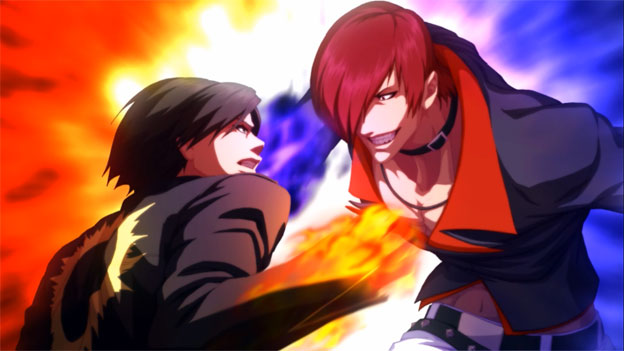
Kyo matured into his role. He discovered other beings with inexpiable powers in the King of Fighters tournament. He discovered that cults and demons were real. The tournament was a front to bring together the greatest fighters and recruit them or kill them once learning their secrets. Kyo became central to the plot of NESTS; militant extremists bent on controlling the world with their super-powered clones. They were able to extract Kyo's blood and give other fighters some new powers. Iori was in the tournament not to represent his country but to finish the Kusanagi lineage. He didn't care for his teammates, opponents or anyone else in his path. If he could destroy the previous champion. If he could do it on the international stage with the world watching then it would be his perfect outcome. Kyo had an unnamed style of fighting but it was very direct and smooth. By comparison Iori fought like a wild man. Slashing at his opponent with his long fingers, stomping on them and just shy of biting their faces off. He would even slash at his own throat and draw out his blood for the temporary power boost it provided. The raw energy coursing through his veins made him one of the most dangerous fighters in SNK canon. Some villains tried to offer Iori a "cure" by allowing him to transfer his energy to them but that would leave him powerless to stop their agenda. At least one character, Ash Crimson, was able to steal part of his abilities and use it for his own devices. Ash would become a fighter that both Kyo and Iori would unite against.


SNK wanted to create a fighting game that would become a phenomenon. One that would steal the thunder away from Capcom, Sega, Namco and Midway. They took many chances, team battles, mixing old characters and new faces, and expanding the plot to make it more cinematic. Many of the risks they took paid off. The new stars of the series would hold up to the first generation of fighting game all-stars. The bancho hero and villain were definite Japanese character tropes. It turned out that fans around the world and not just the Japanese loved the duo. Kyo and Iori ended up eclipsing the popularity of the entire USA Team. Their inclusion worked out better than another pairing of martial arts masters. It was one of the first titles that brought the concept of the fighting master into the 21st century. SNK taught the industry that a great rivalry could make or break a series. For more than 20 years the most heated rivalry in the SNK universe wasn't between an orphan and a businessman, nor was it between two sword masters that used to be friends. The greatest rivalry was between two kids right out of school. No one could have predicted it. Especially not the Generation-X players that grew up living that rivalry.

Kyo and Iori had most of the elements that I had talked about throughout this series. They were well balanced, they represented unique styles, were visually interesting and had contrasting purposes. Both were headstrong, talented and dangerous fighters. They were assembled from various pop culture cues. They celebrated a cultural archetype, the roguish delinquent that just so happened to work perfectly for the genre. SNK also knew that they should plan a unique back story so they could keep bringing these fighters back. Best of all Kyo and Iori divided the community. The best rivalries always began with fans choosing a side. Some rooted for the hero and some for the anti-hero. Most rivalries I had talked about had fans siding with the hero. Great gameplay, great animation and great control were the things that kept fans coming back. After 25 years the King of Fighters tournament was still alive. Proof that a great fighting game could withstand the test of time. The feud between Kyo and Iori could now be enjoyed by a new generation. SNK would have it no other way. I would like to thank you for following me on this journey and I have some final questions for you. Through this series which rivalry was your favorite? Do you think that Kyo and Iori were the most memorable rivals in the SNK universe? Which series handled the rivalry best of all? Which rivalry do you want me to talk about? Please let me know and take care. As always if you would like to sponsor me please visit my Patreon page and consider donating each month, even as little as $1 would help make bigger and better recordings and videos.

 follow the Street Writer on Patreon!

Monday, July 18, 2016

The Street Writer Podcast, Episode 6

 
Today we are going to look at the culture that inspired some of the most unique rivals. Japan created many of the the best fighting titles, this cannot be argued. Part of their success was due to being at the right place at the right time. The genre was relatively young in the mid '80s and every idea was fresh and unique. As soon as the developers figured out that a fighting game could be more than video boxing the world opened up. We can credit the various Japanese studios for many other "firsts." They were the first to place fighters from different martial arts schools against each other. They created a narrative for the main characters. They added a way to track health, the ability to perform special attacks and even the ability to destroy the environment on each stage. These details helped pull the audience into the experience. The character designers working on these titles were influenced by a number of sources. Many of the early fighting game heroes were based on movie characters or even popular real world fighters. Some were based on tough guy archetypes. In Japan one of the popular tropes was the young rebel, a sort of gang leader that talked with his fists.


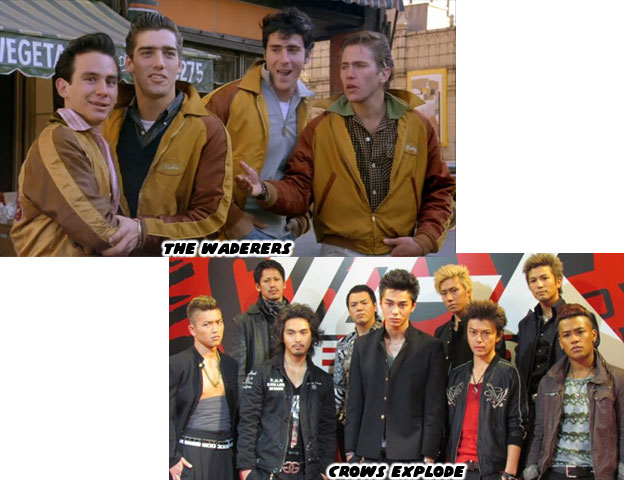
Movies about gangs, coming-of-age, fighting and violence are nothing new. The whole rebel identity is celebrated around the world, especially in pop culture. Cult movies like the Wanderers in the USA and modern films like Crows Explode in Japan capture a portion of the colorful and sometimes brutal side of life in a dysfunctional (rather than dystopian) society. The gang leader with a powerful sense of loyalty is someone to be admired. It doesn't matter if this is a novel, short story or comic book figure. There are actually many positive features with the rebels in these works of fiction. In the USA the leather clad motorcycle rebels from the '50s, the "greasers" were one such archetype. Often they were runaways, young enough to be in school they often rejected authority. They felt smothered by the establishment and wanted to be free to the run the streets. They lived hard, loved hard and fought hard. They were essentially the replacement for the open range "cowboy" from the previous century. Hollywood told their story and in the process they created icons like James Dean in film and The Fonz on TV. In Japan there was a variation of the heroic rebel as well. These figures were often modeled after high school delinquents.


In Japan there is a tremendous pressure to conform. Conform to family customs, societal expectations and especially to authority. Just because a kid is in school doesn't mean they can't get habitually in trouble. This is something that US inner-city schools know all too well. Troublemakers are sometimes perceived differently in Asian countries. In Japan people don't always associate a group of rebels with a gang, instead they lump them together as a more benign group of delinquents. In pop culture the leader of these gangs is known as a bancho. They are usually the toughest guy or the best fighter. They don't actually deviate much from from the look of typical high school kids. In fact they can often be found sporting crisp school uniforms, or gakuran. They might have a pompadour, or perhaps shaggy hair which shows a hint of nonconformity. These guys are magnets for trouble and of course the good girls girls who want nothing more than to fix a bad boy.


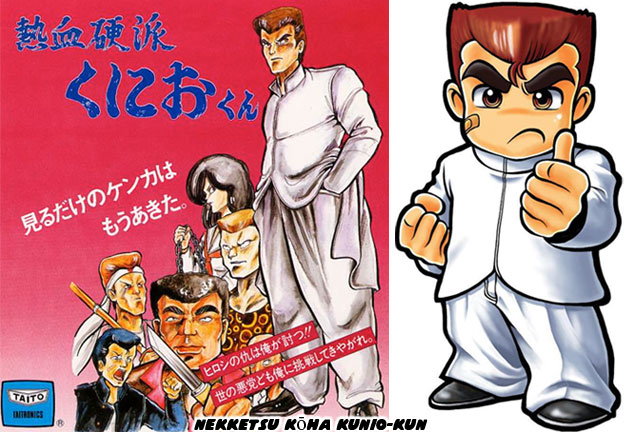
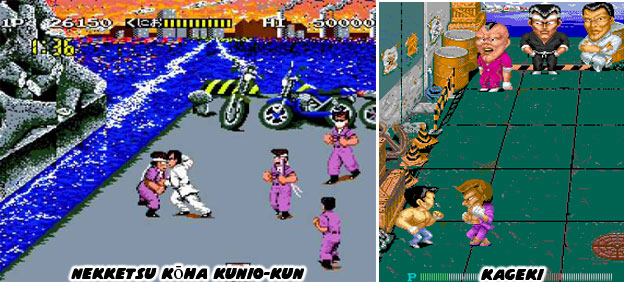
The first video game fighter to exploit this look was Kunio-kun. The game Nekketsu Kōha Kunio-kun, which translated to "Hot Blood Tough Guy Kunio." It was released by Technos in 1986. The character was named after Technos' former president Kunio Taki. It was developed by Yoshihisa Kishimoto, who many attribute the series, if not the entire genre to. This team could be considered the architects of the genre for certain, and the game could be considered the Godfather of the brawler genre. The arcade game was localized as Vigilante in the USA. The look of the hero and bad guys was changed from Japanese high school to more generic motorcycle gangs in order to make them appear more Western. People in the USA didn't really remember Renegade but they did remember the NES version based on the series.You might know it better as River City Ransom. The characters were there although they became shorter and more cartoonish in the process. Mr. Kishimoto went on to design Double Dragon for Technos. The title from 1987 became a huge hit and established the birth of a whole new genre.


Taito published a different sort of bancho fighting game in 1988. Kageki featured a heroic street boxer taking on every member of a local gang. Just about every gang and delinquent archetype from Japanese manga and cinema was represented here. The chubby low-level goon, a slacker, a chisel-jawed heavy, a weasel-like henchman, the dirty fighter, and of course the super-cool gang leader. These characters included the various motorcycle and car freaks that identified with the bosozoku or "violent speed tribes" in Japan. Remember that the seminal AKIRA, the manga first published in 1982 by Katsuhiro Otomo started with the futuristic bosozoku gang lead by Kaneda and his rival The Clowns. Being a delinquent was not only cool, it turned out that a group of them could save the world. Anyhow the various tough guys from pop culture all had to be defeated in Kageki. If a player scored a knockout their opponent would be dropped down a manhole. It was easily the coolest way of disposing a body in a video game.


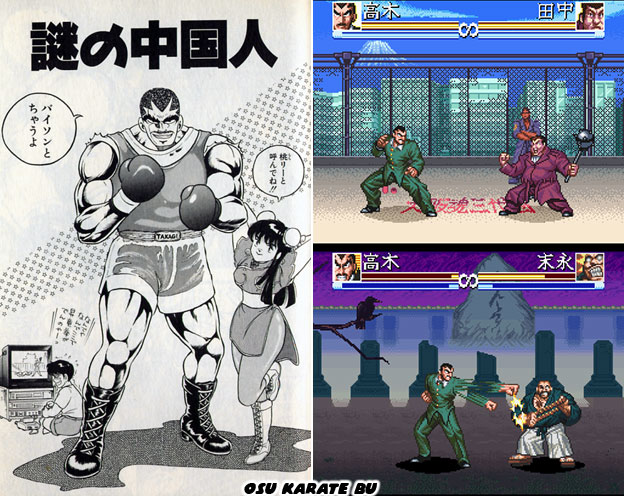
The bancho had a sort of peak in popularity in the mid to late '80s. One of the first breakout manga titles was Osu Karate Bu - "Karate Club" by Koji Takahashi. The series was first published in 1985 and ran through 1996. The story featured the mustached tough guy Takagi Yoshiyuki. He was the overseer of the various gangs that used to take part in his "club" which was really a front for organized no-holds-barred fighting tournaments. Think of it like a high school Fight Club where even mobsters and actual karate masters were allowed to compete. There was much more comedy and over-the-top fighters than the actual Fight Club movie of course. A young character named Matsushita Tadashi would become the most famous person in the series and end up being its narrator. When he started school he would get beat up all the time. He joined the karate club in the hopes that he would learn how to fight. He got even more beat up by the club members but over the years he grew stronger and learned how to fight back. The series hit a peak in 1994 when the manga was turned into a Super Famicom (Super Nintendo) fighting game by Culture Brain. During the rise of the fighting game genre Mr. Takahashi noticed that boxer M. Bison from Street Fighter II had an eery similar haircut to Takagi. He was sure to point it out when he created a parody cover in his comic.


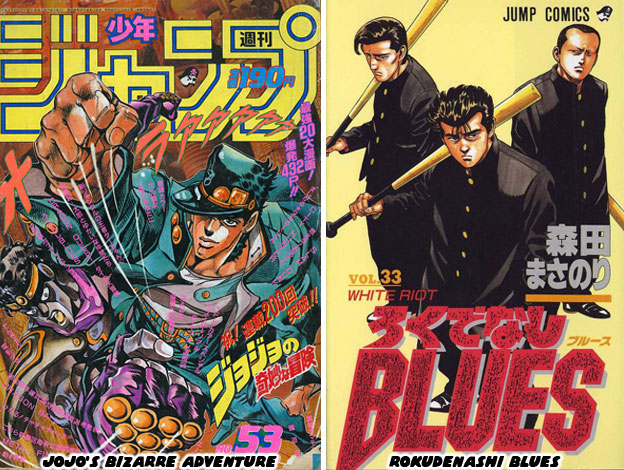
Young anti-heroes and the delinquents were made cool in AKIRA and Osu Karate Bu but those weren't the only series focused on outsider culture. Previously in manga, anime and live-action shows the heroes were straight-laced good guys. The outsider, the rebel of the group was still popular but was never meant to be a replacement for the main hero. All that changed when manga and anime began featuring more anti-heroes and more stories that weren't set on campy henshin or sentai characters like the Power Rangers. Possibly the hottest and strangest manga in the mid-'80s was JoJo's Bizarre Adventure. The series which began in 1986 revolved around Jotaro Kujo and his friends. Jotaro's uniform was a fashionable take on the gakuran, with a big gold chain punched through the collar, a decorated cap and multiple belts on designer slacks. When he and his friends battled they used supernatural abilities against all sorts of crazy-looking characters. The series by Hirohiko Araki was influenced by Western pop culture; character names included musical acts Chaka Khan, Ronnie James Dio, Cameo, ZZ Top, Mariah Carey, Iggy Pop and DEVO. And it featured characters and costumes inspired by international fashionistas. His hero and allies were far from the traditional bancho, the words that would best describe them would be colorful, flamboyant and eccentric. JoJo was on the extreme end of fantasy, yet there was another comic that was grounded in a more realistic world.


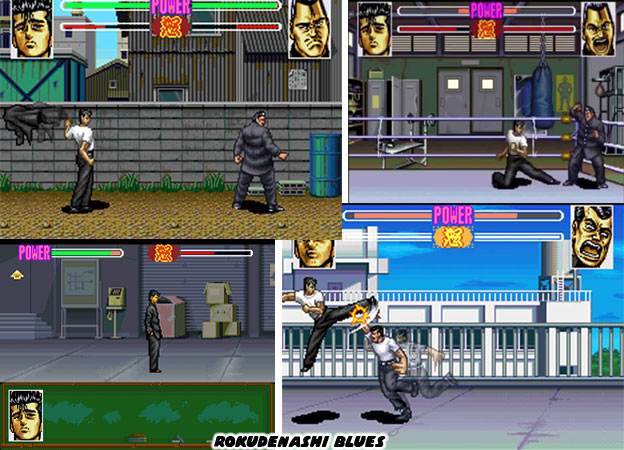
Rokudenashi Blues featured heavy hitter Taison Maeda. He was a scrappy boxer whose first name was reminiscent of Mike Tyson. Different spellings of course. Anyhow Rokudenashi Blues was as classic a bancho manga as there ever was. The series started in 1988 by Masanori Morita was a straightforward look at the life of delinquents trying to survive high school and of course the girls that loved them. There were many encounters with various gangs and other school troublemakers. The fights lasted several panels and the results of which would last for months. Unlike other manga where the heroes could be on the brink of death in one issue and then be perfectly fine the next Taison and his friends were left battered and bruised over the course of several story arcs. Jotaro and Taison were the types of heroes that school kids could identify with, making them very popular with young audiences. It only made sense that the bancho would turn up in fighting games a few years later as the audience began consuming different forms of entertainment. Osu Karate Bu found it's way to the Super Famicom in 1994 but so too did Rokudenashi Blues. Bandai developed and published the game. What made it unique was that the fights in the story mode happened the same order as the encounters did in the manga. This level of accuracy would be used in the Dragon Ball Z fighting games by Bandai as well.


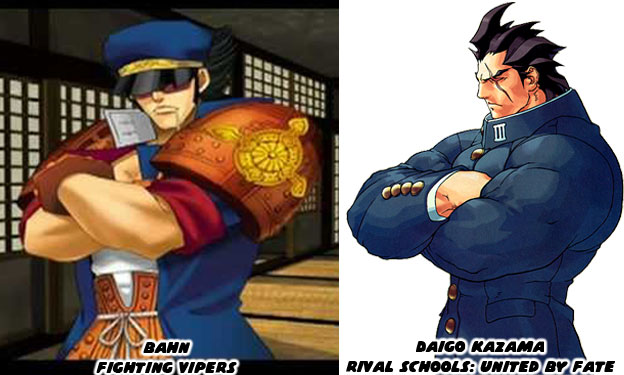
Fighting Vipers was a lesser-know Sega fighting game from 1995. It revolved around youth culture, with skateboarders, rock musicians and motorcycle thugs taking part in a tournament. The control and combo system were fairly easy to pick up and you could imagine that the game was meant to be the younger brother of Virtua Fighter, the more popular 3D fighter from the publisher. The main character in Fighting Vipers was 17-year-old Bahn. A large bruiser whose costume was modeled after Jotaro's. His costume was part gakuran and part samurai armor. He wasn't the only bancho to turn up in the genre. In 1997 Capcom released Rival Schools: United by Fate. That game was set entirely in a world where the top students, the most popular, or most delinquent from a half dozen schools also happened to be excellent fighters. I don't mean traditional fighters either, but more like young versions of the Street Fighter all-stars. A few characters wore traditional Japanese school uniforms but Daigo Kazama, the big brother of motorcycle rider Akira Kazama, was the leader of a gang and central to the plot of the game. He had been brainwashed and was going around attacking students and teachers alike. The other students had to figure out why and get to the bottom of the conspiracy. Daigo's long coat, spiky hair and nasty scar over his eye made him look like that baddest bancho there ever was.

The bancho was the hero that a new generation was following. They were the stars in the comics and cartoons and fans wanted to see them represented in fighting games. But the fighting game still had to do some evolving. The kung-fu films and comics of the late '70s and early '80s inspired the development of Street Fighter and the other first generation fighting games. The Japanese designers would try to create characters that had an international appeal, especially in the US where they could make lots of money in the arcade and home consoles. So they took influences from cult Western movies and mixed that look with the Japanese manga aesthetic. The results were characters with very strong looks. Karate fighters that wore the traditional gi, muay thai fighters in shorts, kung-fu masters in wushu clothes and literal street fighters that wore jeans and sneakers. This was what people expected to see. The bancho star wouldn't appear until later.


SNK was doing very well at telling the story through a fighting game. They had a gritty theme in the original Art of Fighting. You could almost imagine this game was based on a pulp '80s film. With its seedy villains, imaginative locations and twist ending. They also had the more animé friendly Fatal Fury, which also had a great story and over-the-top villains. By the mid-90s the studio knew that they had to come up with a radical new idea in order to compete against Capcom, Midway and the other studios that were red hot. That was when they decided to formalize the King of Fighters tournament in 1994 and create a game that united the various fighters. For fans of the first generation of fighters there would be both a team Fatal Fury and a team Art of Fighting. Each represented a nation, in this case Italy and Mexico respectively. SNK was not happy with the idea of Terry or Ryo being the solitary star of the game. They did not want fans to think the studio was telling them who were the better fighters, or who they should root for, they would let fans decide. To help make things interesting SNK went way back in their catalog of characters and brought back a few arcade pioneers.


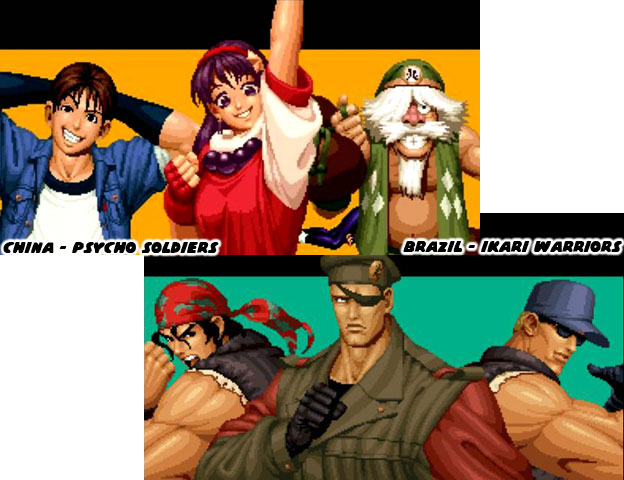
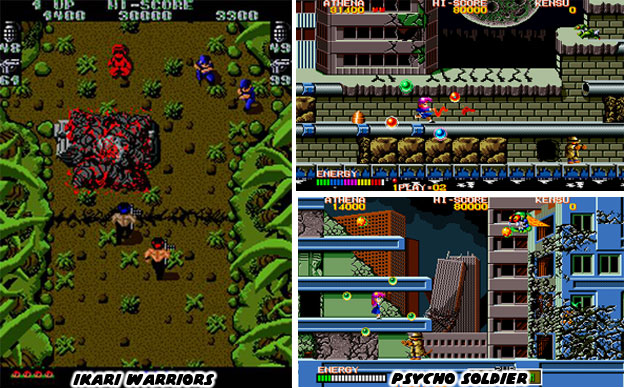
China was represented by a trio of Kung-Fu masters, the leader was a pink-haired Athena Asamiya. Her psychic powers lead to the state-sponsored team being known as the Psycho Soldiers. From Brazil there was a trio of mercenaries, two of the figures looked very familiar to arcade veterans yet the one with the eyepatch was new. It turned out that the guy with the blue baseball cap was Clark Still and the one with the red bandanna was Ralf Jones. The two were better known as the Ikari Warriors, an arcade title that shared the same name. It was one of the pioneering run-and-gun shooters in the arcade. The Ikari Warriors were a mix of Sylvester Stallone's Rambo and Arnold Schwarzenegger's Commando, they could topple any dictator with their nonstop barrage of weapons and combat skills. In the early game the characters wore a red headband or blue headband so players could tell them apart. The game was revolutionary because it featured an octagonal joystick that could be rotated to aim in different directions while running. Prior to that characters might have been able to shoot left, right or diagonally but the joystick had to be pointed in that direction as well. Gamers could suddenly strafe opponents while moving between cover. Seeing the mercs return as fighters was a welcome surprise. Perhaps they were the best brawlers in the KOF universe instead?


It turned out that the Chinese Athena and Sie Kensou had appeared previously as well. They were in a game called Psycho Soldier which didn't see much popularity in the US. It was a side-scrolling action title but instead of flying a spaceship as was the case with most side-scrollers this game had Athena and Sie using their psychic powers through the real world and underworld. The game was actually connected to a previous title called Athena. It was based on the Greek goddess and had players building her armor and fighting to reclaim Olympus. That game was an action platformer in the vein of Capcom's Black Tiger or Ghosts n' Goblins. The modern Athena was descended from the goddess. Both Ikari Warriors and Psycho Soldier were released in 1986 and both represented SNK's older and more cult-favorite titles. It was great that SNK was acknowledging their legacy and putting the various characters into one continuity. Yet something was missing. It was great to see the fighting game stars and other arcade stars introduced in a tag-team battle but the groups were found lacking. The studio needed to introduce a new team, or a couple of new teams that would represent the franchise and stand up to the stars from the other titles. These characters would have to become the next generation fighting icons. Once again the studio looked at pop culture for their inspiration. They had done what they could with classic movie heroes and villains and they needed to find something more contemporary. They found that the bancho was a hero they hadn't yet considered. An amazing rivalry would grow out of this character choice. We'll explore this story in the next entry. I hope to see you then! As always if you would like to sponsor me please visit my Patreon page and consider donating each month, even as little as $1 would help make bigger and better recordings and videos.

follow the Street Writer on Patreon!

Tuesday, May 31, 2016

The Street Writer Blogcast, Episode 4

Every time I release a new Podcast I will release the text version for my hearing-impaired friends. I don't want them to miss anything that I cover. Also you are welcome to leave comments and questions for this podcast as well as future podcasts on this blog.
 

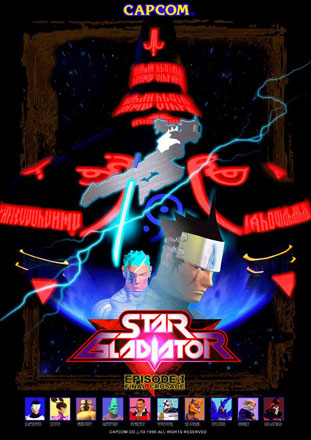
Welcome back to the Street Writer: The Word Warrior Podcast. I'm your host Noe aka BigMex. Our series on the great rivalries in fighting games continues. Today we are going to look at one of the most heated science-fiction rivalries of all time. Most fans of the Star Wars films know that the series creator and director George Lucas was heavily influenced by Japanese cinema, in particular the work of Akira Kurosawa. The pacing, story arc and even characters were influenced by different Kurosawa films. The designs for the Jedi and Sith, especially Darth Vader, were based on the robes, kimonos and samurai armor from classic Japanese culture. The question that some fans have is what would have happened if a Japanese studio had designed the heroes and villains in the Star Wars universe instead of the US or British counterparts? How would Luke Skywalker and Darth Vader have appeared? How would the weapons and technology have differed? Would there have been such a thing as "The Force." Perhaps the closest we will ever get to knowing is actually from a game developed by Capcom. Star Gladiator Episode: I Final Crusade was released in 1996. It was promoted as if it were a movie. The arcade posters for the game were designed to look like theater posters. The characters were listed like actors in a movie and the credits included the names of the actual developers at Capcom. Star Gladiator was a 3D fighter, which was still rare for Capcom at the time. It was the first entry in what was hoped to become a series. At the core of the universe was a deep-seated rivalry. A hatred between a villain that would try to conquer the universe and an orphan that stood in his way.

  ;

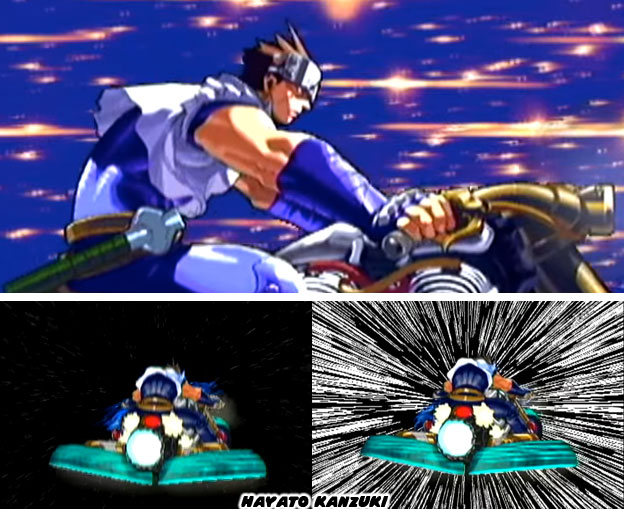
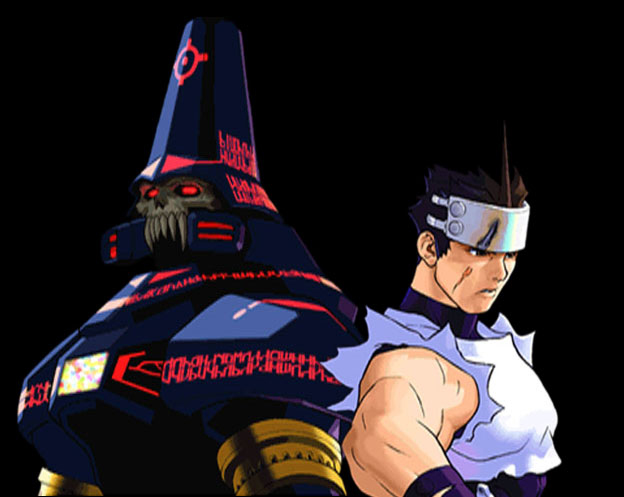
To be fair the Japanese orphan named Hayato Kanzuki (no word if he was the descendant of Karin Kanzuki) was infinitely cooler than Luke Skywalker. For starters he got around the galaxy on a space motorcycle (Lobo eat your heart out!). It wasn't just any old space bike but one that could do warp speed! His costume consisted of a dark black armor (which was actually villain armor) over which he threw a white tee shirt to signify he had changed sides. He wore a futuristic hachi game, a forehead protector worn by ancient Japanese soldiers. These could also be seen on the head guards worn by the characters in the Naruto series. Hayato's hachi game was of an unknown alloy. Without it chances are a cut he received in battle would have gone clean through his face. At the very least he was left with a cool scar and an even better story to tell his friends. He was a scoundrel with a heart of gold and some pretty great fighting moves. A sort of martial arts Han Solo. He helped take care of orphans like himself on Earth but knew he needed money. So he became a bounty hunter but that didn't pan out too well for him. He joined the Fourth Empire a secretive group that wanted to take over the planet. This was when he received his uniform and scar. When Hayato learned of their terrible plans he joined his friends at the Star Gladiator program, the elite warriors of the Federation Force.


  ;

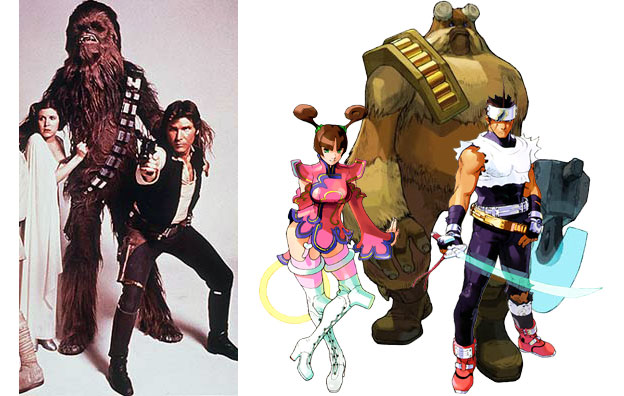
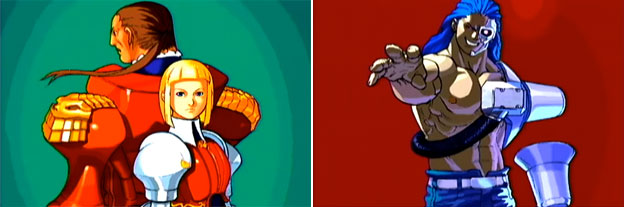
 So if Hayato was the combination Luke Skywalker and Han Solo of the universe who were his respective Chewbacca and Princess Leia? Well Capcom was going for broke and they had a large hairy alien named Gamof Gohgry from the forest planet of De Rosa. The enormous Gamof was the obvious substitute for a Wookie. The love interest was a British-Chinese gymnast named June. She had lost her father, a scientist recruited by the villain of the series, and mother during the events leading up to the Fourth Empire. June had a personal vendetta and was willing to die in her quest for revenge. She was anything but the dainty type of female character. In a nod to Star Wars continuity June actually had bun-shaped pigtails that looked like Princess Leia's hairdo from Episode IV.


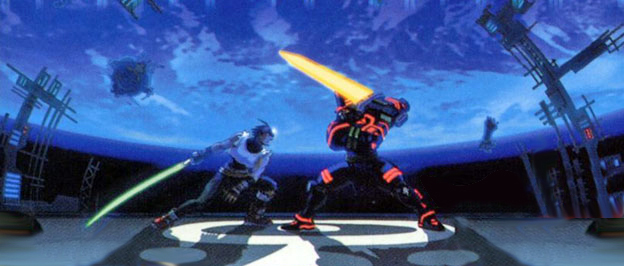
The villain, the one that had put the entire planet on notice was a brilliant scientist named Dr. Edward Bilstein. He was a Nobel-Prize winning physicist and geneticist. He had picked up on some work started by his ancestor. He was looking for a new limitless source of energy called Plasma Power. Bilstein became obsessed with his work, turning him mad in the process. He made a breakthrough and discovered that Plasma Power was based on emotion. He learned that all living creatures had an innate sixth sense and that it could be tapped into and controlled. This is what generated Plasma Power. This was Capcom's way of addressing the Force without naming it outright. By harnessing this psychic energy Bilstein could create perfect weapons. These Plasma tools deflected projectiles and never ran out of power. The difference between the plasma weapons and the traditional lightsaber was that plasma weapons could be shaped for a particular role. For example Hayato's sword was curved like a samurai katana. June had hoop and Gamof had an axe will all the properties of a lightsaber. Except that those that mastered the plasma weapons could actually touch the blades without losing fingers in the process. Humans or aliens that did not know how to control their powers would be cut to ribbons. With his weapons Bilstein wanted warriors that he could control. He began recruiting people from across the cosmos for his research. Those he couldn't coerce he simply kidnapped. This went for both the scientists he needed as well as the people that would be experimented on. Bilstein had secretly begun creating clones and even robots that could use Plasma Power. He was eventually found out and arrested for his crimes against humanity. He was sentenced to life on a remote prison satellite circling the planet Zeta. He created a cyborg body for himself and broke out, massacring everyone along the way. It was easy to see why he was feared.


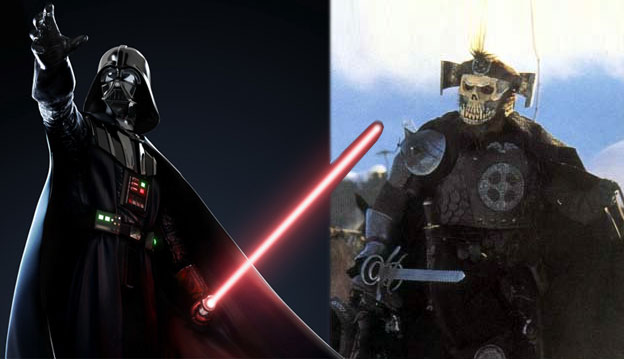
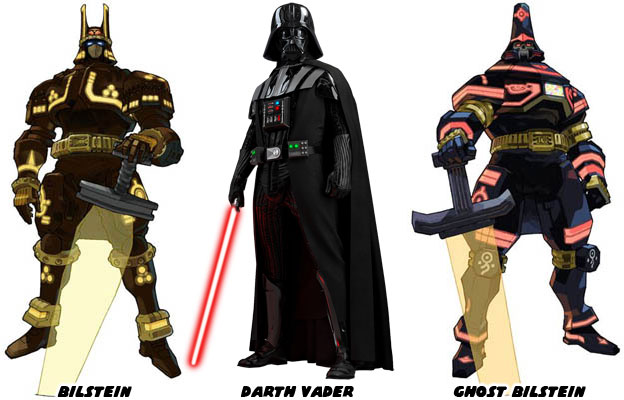
With his robotic body Bilstein was much stronger than any human. He fashioned himself a Plasma Broadsword, larger than any lightsaber. With his army of clones and robots he began terrorizing the cosmos. He dubbed his army the Fourth Empire. The reason for this was because the number four was considered unlucky in many Asian countries. In Japan the number was synonymous with death. Bilstein, like many legendary tyrants (and politicians!) worked on fear. The design of Bilstein was amazing. His armor was illuminated with codes and runes, similar to the costumes in TRON yet retained the classic armor shape of the shogun warlord. The addition of a skull-shaped face mask upped the intimidation factor. I was much more impressed with the design of this villain than any other in Star Wars canon. Yet to be fair it was poached from the design of two of George Lucas' greatest creations. Darth Vader was the obvious one, the less obvious cue was from General Kael, the villain from the 1988 film Willow. Capcom had of course worked on a Willow arcade and console game that they released in 1989. They knew the heroes and villains well. General Kael was a fearsome warrior, and like Vader he was huge. General Kael also had a great sword with angry serrated edges and armor that put fear in other men. The rumor was that the General was named after movie critic Pauline Kael, who seemed to be extra hard on every Lucas film. This was George's way at taking a jab back at her. But I digress...


The Earth was without hope. The Federation Force did not have an answer to Billstein's plasma warriors. They assembled a task force made up of any fighter that knew how to use plasma energy. It was a rag-tag group of soldiers, aliens, space pirates and even street performers. Some alien races saw Plasma Power as magic rather than science and could easily harness its abilities. Others saw it as divine right and knowing how to use it made them inherently better than other species. Hayato was crucial in the Star Gladiator lineup. He was an accomplished fighter without a weapon but was the best one-on-one chance against Bilstein. He also knew the inner workings of the Fourth Empire because he had seen it first hand. He knew about the cloning tanks, the genetic manipulation and even mind control experiments. There was actually a clone of Hayato causing havoc in various outposts on orders from Bilstein. By switching sides there was now a price on his head. Humans, aliens and bounty hunters would be after him. None of course was more dangerous than Bilstein and his soldiers.


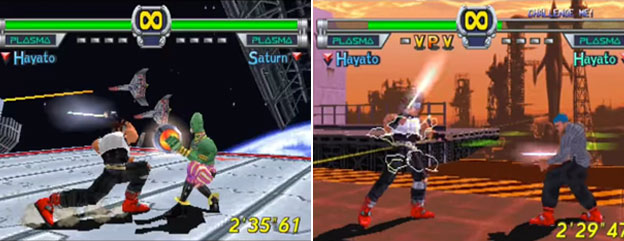
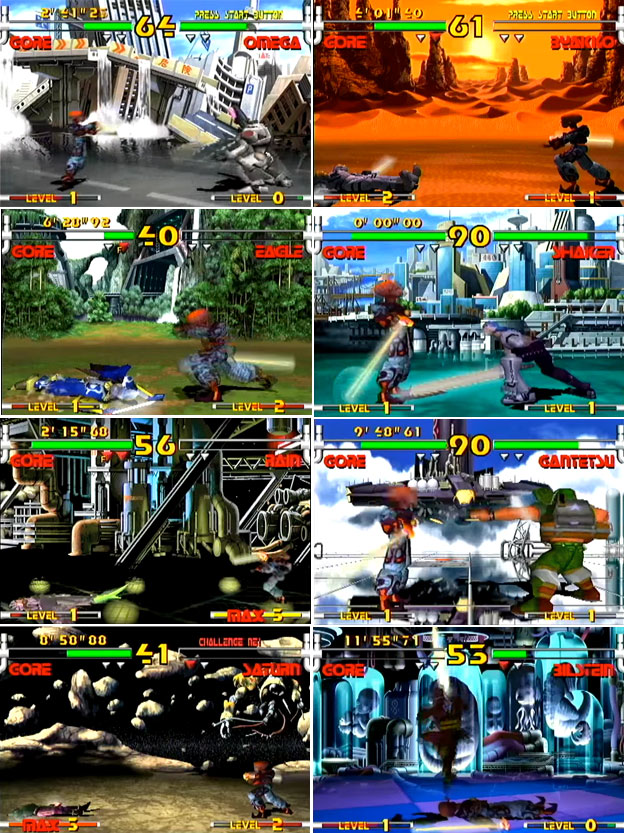
Capcom did a wonderful job of creating a world, or rather galaxy that audiences could sink their teeth into. Their development team had been used to creating some memorable 2D stages but in 3D they didn't have an extensive history. Their PSX console development came in handy when it came to modeling and texturing unique locations. Within a few years of starting 3D fighting game development they had really come a long way. As for how they built the levels themselves they took a page from what other studios had done. In the far distance there were flat backdrops that rotated around the players. This created the illusion that they were in three-dimensional space. Closer to the foreground were actual 3D sets. Some of the models were buildings, elevated roads, space ships and satellites. Some of the stages had working elevator platforms that made it look as if the player were headed into the cosmos. Other stages actually had battles happening in the distance where the Federation Force and the Fourth Empire space ships were shooting at each other. And still other stages were pitch black where only strikes from the plasma weapons illuminated the environment. It gave the game a tremendous sense of atmosphere, this was especially true when facing Bilstein. In the final stages the only things you could make out were his eyes, the runes on his armor and his sword. These were certainly cues that the Star Gladiator team picked up from Episode VI, Return of the Jedi. Specifically the battle between Luke Skywalker and Darth Vader when they dueled inside the darkened Death Star II.


Bilstein had built Hayato from up from nothing. He taught him to harness the power of plasma weapons and become a mighty warrior. He was so impressed with his development that he made a clone of Hayato known as Black Hayato. The two actually shared a psychic connection. The betrayal of his star pupil enraged the tyrant and made him all the more crazed. In the final battle of the game Hayato and his group managed to topple the Fourth Empire. Hayato himself had killed Bilstein in an epic space duel. I could only imagine that this would have been one of the greatest things to appear in film. Hayato and Bilstein doing battle aboard the Fourth Empire strike cruiser as it orbited the Earth. Hayato hoping that the force field creating an atmosphere on the ship did not fail and suck him into the void. Bilstein fuming with hatred towards the young orphan. Back and forth they went, hacking at each other with their glowing swords until Hayato struck the final blow. He returned to Earth but had no time for the heroes welcome. The first thing he did was help the orphans he had left behind.


Now if you compare the rivalry between Hayato and Bilstein to all of the other great rivalries I have been mentioning so far which one does it remind of? It is closest to the one between Terry Bogard and Geese Howard. The two characters had different styles and different purposes. Bilstein was a boss character that did more than mirror the moves given to Hayato. He had a counter for every fighter in the game, plus he could extend his sword so that it covered more than a body length ahead of him. This gave him a tactical advantage regardless of his opponent. Just as in Fatal Fury there was a tremendous amount of planning going on here. Directors Hideaki Itsuno and Eiichiro Sasaki had to map out the story. Character designs were fleshed out by lead artist AKIMAN. The team had to pick and choose the high points of their story. These things would be reflected in each stage and every playable and secret character. Their influences for these places and characters extended beyond Star Wars and included nods to Blade Runner, Buck Rogers and 2001: A Space Odyssey as well. As with Fatal Fury and even the Art of Fighting the player went from location to location and got a piece of the story with each fight. Except instead of going from borough to borough in Southtown the characters were going from planet to planet. Bilstein, like Geese, wanted it all and the final showdown aboard his ship circling Earth was not unlike the showdown atop Geese Tower overlooking the city. The scrappy orphan managed to take down one of the most powerful bosses ever. Just like Fatal Fury it turned out that killing the rival was only the beginning.


The universe was at peace for a very short moment. The various colonies had begun rebuilding when suddenly were under siege from Fourth Empire loyalists and remaining soldiers. A lot had happened in one year, there were new alliances and even human warriors rather than clones defending the Fourth Empire. The 1998 title Plasma Sword - Nightmare of Bilstein was a worthy sequel. It was one of the last 3D Capcom fighting games. Bilstein was back with a vengeance. His armor had changed somewhat in both plating and color. This time the helmet was a variation on an ancient Japanese imperial court headdress. It turned out that his rage was what kept animated him from beyond the grave. The physical portion of Bilstein that survived the first game was encased in this new armor, his psychic energy now existed elsewhere in a new form called Ghost Bilstein. Ghost Bilstein was the ultimate plasma weapon. He survived everything the Federation Force threw at him, walking through explosions and fire without so much as a scratch. He went from planet to planet with a single minded purpose, revenge against Hayato. As you can imagine the only thing more dangerous than one Darth Vader was two of them. The Star Gladiators were joined by some new allies, including former rivals. The team traveled the cosmos putting down Bilstein's warriors and breaking his hold on key planets. They gambled on the idea that if they destroyed Bilstein's physical form that his ghost would die was well.


There was a major shift in the graphics this time around. They were improved as animations, character models, and textures had greater fidelity. Capcom did not create any 3D objects in the foreground this time. No gantry, no roads, vehicles or buildings encompassing the field of view. They instead created a higher resolution 3-dimensional plane for the play field which offered better lighting and reflection effects. In the distance the 2D wraparound was based on a much higher resolution 3D image so that it appeared as if Capcom had created worlds in greater detail. Players got a chance to play through many traditional science fiction settings, including the inside of a strike cruiser, an asteroid field, a wrecked metropolis and a jungle planet outpost. Also unlike the original game there were no real edges on these maps so players could not simply score a ring out against their opponent. Each fight was a fight to the death. The main characters raided Bilstein's flagship at the end of the game. They blew up his cloning tanks and destroyed the ship it from the inside out. Everyone jumped ship right away and in dramatic fashion Hayato escaped from the burning wreckage at the last moment on his space bike. They assumed that Bilstein died in the process but could never find a body. The disappearance of Ghost Bilstein would suggest that the heroes had prevailed. I would like to think that somewhere out there the rage of Bilstein was still alive. It was putting together a new body and looking to get revenge the heroes of galaxy. Perhaps in the year 2360 he would launch another crusade. There would be a scrappy orphan, his wife June and talented daughter Ele ready to stop him. After all, great rivalries never really die at least not in video games. One of the most heated rivalries had indeed transcended death. In the next entry we will look at two more characters that had a beef that went beyond the grave. As always if you would like to sponsor me please visit my Patreon page and consider donating each month, even as little as $1 would help...

 follow the Street Writer on Patreon!