Showing posts with label villains. Show all posts

Monday, October 7, 2024

A symmetry of villainy, part 3…

When I started this series I mentioned that the Incredible Hulk’s greatest villain was returning. It caused me to start talking about my theory on rival design. For people new to character design I advised if they were stuck on creating villain then they should try making an evil mirror version of the hero. For example the Abomination was the evil counterpart to the Hulk, and Bizarro was the same for Superman. These types of enemies worked well all throughout pop culture. I also mentioned that the most interesting rivals had asymmetrical designs. They did not have a similar group of skills or abilities as the protagonist. Even opponents that were physically inferior could be considered the most dangerous of rivals. Lex Luthor was a regular human compared to the Kryptonian Superman, yet for over 80 years he was considered the greatest opponent.
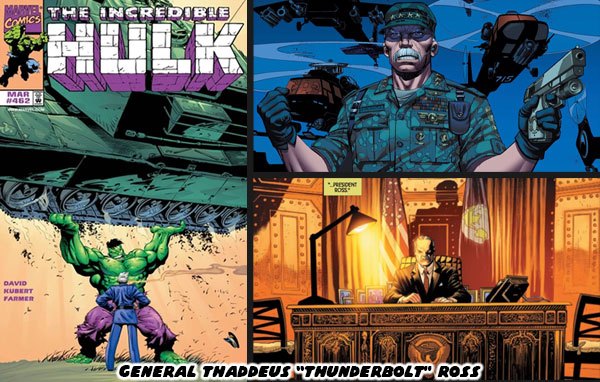
For the Hulk I mentioned that General Thaddeus "Thunderbolt" Ross was similar to Lex Luthor. Introduced in the first issue of the Hulk way back in 1962 he was a military leader that managed to be very problematic for the most powerful monster in the Marvel U. Then I talked about how not every author understood the characters that they were assigned, and ended up changing them to fit their own narrative. Jeph Loeb was a writer that gave Ross powers, and turned him into the Red Hulk in 2008, forever changing their dynamic in Marvel continuity. He then went on to give his daughter a gag comic where she added a Blue Hulk as well. I thought it was a bad idea then, and still think so to this day. If I were to give all the flowers to a writer that went in blind, and managed to continue building the legend of the Hulk then I would go with Peter David. Mr. David had written all sort of stories, and characters over the years. When he was hired at Marvel his dream was to write the Spider-Man books. He said he would have been happy with any book he was given, as long as it wasn’t the Hulk.
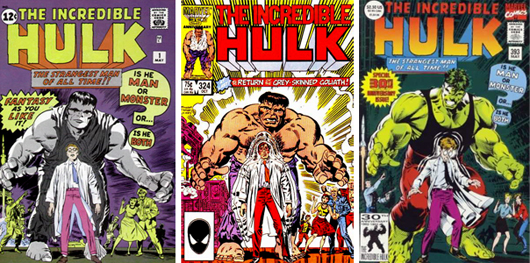
He thought that character had no dimension, and nothing interesting about him. Yet that was exactly the book he was told to write for in the late 1980’s. He didn’t complain or change the character to fit his preconceived notions. Instead he rolled up his sleeves, and studied every previous story in order to figure out the dynamics of he hero, his allies, and opponents. Once he understood the appeal Mr. David created several fantastic arcs for the character. He revisited old rivalries, introduced new friends, and conjured up amazing villains as well. He worked with a penciler named Todd McFarlane, and helped develop the Gray Hulk, or Mr. Fixit persona. McFarlane presented a version of the Hulk that was as wide, as he was tall, a literal walking tank. A few years later he would find popularity on the Amazing Spider-Man. Then he left as a co-founder of Image comics, and created Spawn. Little did we know that an even better Hulk artist would turn up not long after.
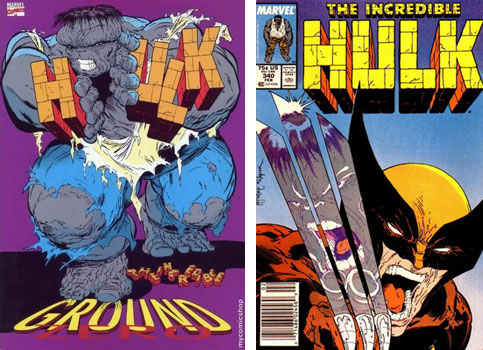
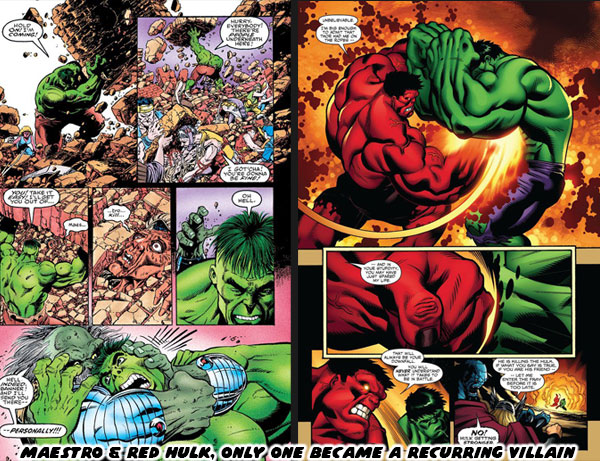
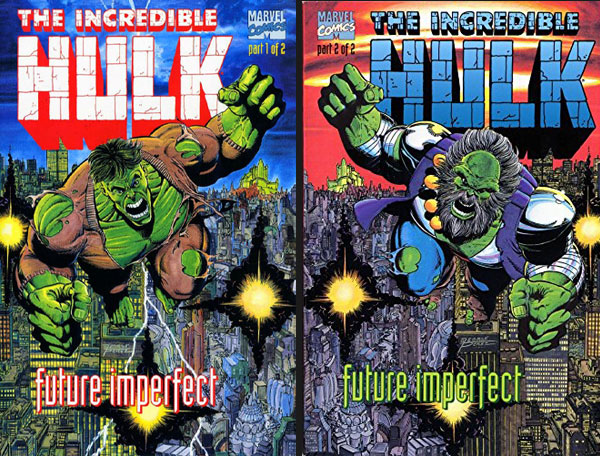
David worked with the brilliant Australian penciler Dale Keown (creator of the Pitt), and the duo helped make the Gray, and Green Hulk appealing to new fans. At the same time they never insulted the continuity for older readers. One of Mr. David’s greatest contributions was introducing the Maestro. The stories with the Abomination, the Juggernaut, and other heavy-hitters were amazing, but he wanted the Hulk to have a rival that was his superior in every way. An older, wiser, and stronger version of the Hulk from the distant future was what he came up with. After all, the only monster that actually stood a chance against the Hulk was… himself. The first appearance of this character was in the 1992 series called Future Imperfect (which was pencilled by George Perez). It was such a hit that the Maestro became an important part of canon, appearing in comics, but also animation, and video games for over 30 years.
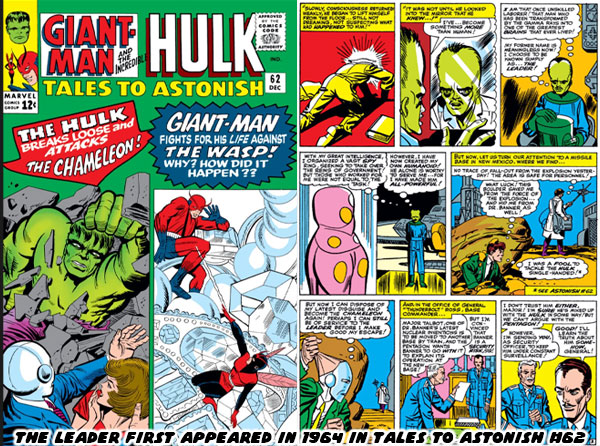
The Maestro was a brilliant design, however I would not consider him to be the Hulk’s greatest rival. Nor would I think of Thunderbolt Ross (in any form) as his greatest opponent. I would reserve that honor to the Leader. The Leader, also known as Samuel Sterns, first appeared in Tales to Astonish #62, way back in December 1964. He was a simple-minded janitor that was exposed to gamma rays during a work accident. He opened a drum of toxic waste because he thought it might have something that he could steal. Instead of dying from radiation poisoning he mutated. He turned into a genius rivaling the most brilliant minds in the Marvel Universe. His skin turned green similar to the Hulk, and other gamma-powered characters. His skull also grew to grotesque proportions. He developed awesome mental powers, including telekinesis, and mind control, on top of his inventing proficiency.
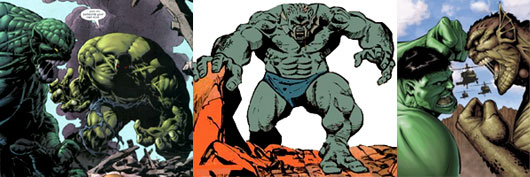
Most Hulk fans, myself included believe that the Leader was actually a chance to reboot the Hulk’s original mutated opponent. In the first issue of the Incredible Hulk from May 1962 there was a Russian spy that was transformed when he tried to recreate the conditions that changed Banner. Instead of growing massively powerful the scientist turned into a twisted version of his former self, with an enormous skull. The first Gargoyle, Yuri Topolov, was created by Stan Lee and Jack Kirby. A few years later the Leader was created by Stan Lee, and Steve Ditko. This formula of mutating spies for the Hulk to battle even applied to the Abomination, previously known as Emil Blonsky. The different looks, and powers of each character was explained as a psycho-physical manifestation of gamma mutation. Their subconscious self actually determined how they would appear to the world. Emil was an abusive husband, and a cruel manipulator. Of all the enemies he was the one that was truly a monster on the inside, and out. That was why he looked like a nightmarish beast when he transformed. The Leader was aware that people thought Sam Sterns was a dummy, but subconsciously he wanted to make everyone feel dumb. Thus he gained a massive brain. Yuri was already intelligent, but thought himself superior to his western rivals. His conceited nature was as ugly as the Gargoyle.
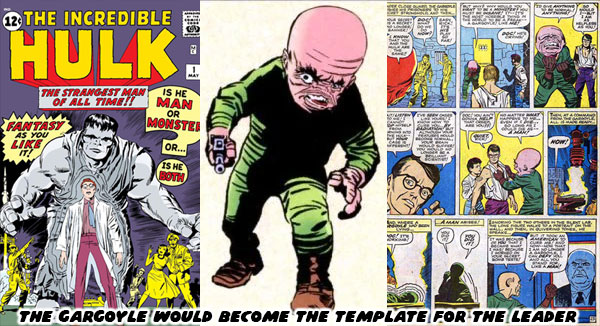
The Gargoyle would be used less, and less as the years went on. His most notable contribution to pop culture happened decades after his debut. In the Incredible Hulk animated series from 1996 he was voiced by Mark Hamill. Hamill was famous for playing Luke Skywalker in the Star Wars films, but for an entire generation his voice work was even better known. Hamill gained a massive following in cartoon circles when he started voicing the Joker for the Batman Animated Series in 1992. In the cartoons the Gargoyle was a subordinate to the Leader, voiced by character actor Matt Frewer. He first gained fame by playing the digital character Max Headroom. The Hulk animated series melded classic plots from the early era of the comics, plus newer designs that had been featured during the Peter David run. It managed to present the lore of the comics fairly well, and explained how the gamma mutations worked to newer fans. It summed up the obsession that the Leader had with the Hulk. He felt superior to Banner in every regard, except for his body, which lacked the strength, and resilience of the Hulk. He felt that he needed to possess the body in order to prove he was the ultimate being.
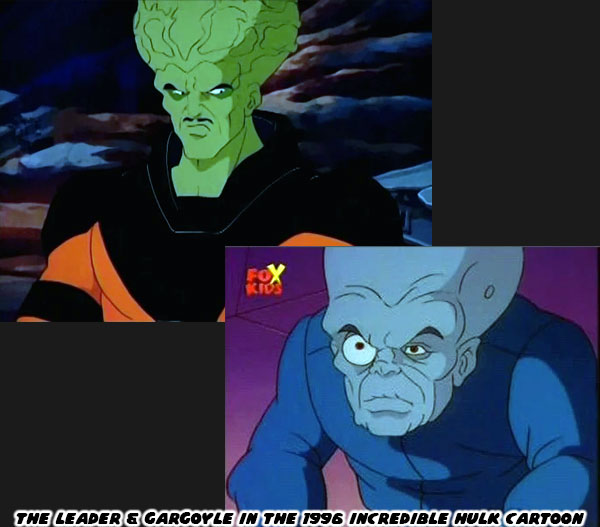
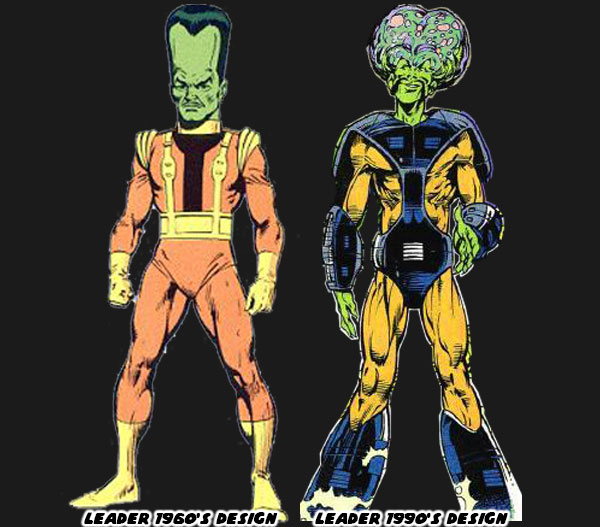
Like most comic book characters the Leader, and Gargoyle underwent some design changes over the years. Early on the Gargoyle had a large deformed head, with a relatively proportional human body. His frame became diminished, and twisted in later versions. His features made grotesque, and impish. The version featured in the animated series more or less defined his modern appearance. The Leader was traditionally seen with a long vertical head, and average build. In canon his body was covered in sores, and he wore a special uniform to allow him to function without pain. He was upset with his frail body, and expected that the perfect mind should be supported by a powerful physique. His look evolved early in the Peter David run. I believe it was Todd McFarlane (before Spider-Man, and Spawn fame) that gave him a new look. He figured that if his brain were to expand then it should have two massive hemispheres, rather than grow straight up. It made sense to me, although many fans were split on the new look. The comics even referred to him as “Jiffy Pop” head, after the popular way to make popcorn before microwavable bags.
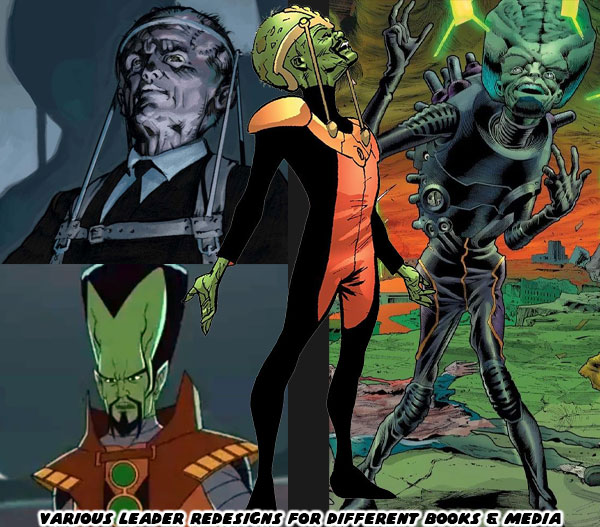
Different iterations of the Leader would appear in comics, and animation. Sometimes the designers would strike a middle ground between the classic look, and the Jiffy Pop form. The Ultimates version of the Marvel U, a sort of retelling of the classic characters in a more contemporary setting influenced the presentation of the live action movies. In that continuity the Leader was a British Special Forces officer named Peter Wisdom. He experimented on himself to save his program, and also in an attempt to become a super soldier. He did gain mind control powers, and telekinesis, but also ended up wheelchair bound. His brain was so big that his neck couldn’t support it. He required a brace in order to keep his head upright. This macabre look was incorporated into some of the latter designs of the traditional Marvel comics. The Leader had a mind literally big enough to figure out every way to take on the Hulk, and have backup plan, after backup plan that even Thunderbolt Ross couldn’t even contemplate.
Tony Stark invented power armor light years ahead of anything else on Earth. Yet his biggest rival dressed in robes, and used 10 magic rings that science could not explain. The Mandarin’s powers came from the time of mysticism, and superstition, millennia before science had cracked the atom. The Mandarin was determined to rule the world, and in order to do so he had to destroy Stark, and his precious technology. The Hulk on the other hand could beat any conventional weapon, or other form of technology by sheer force. He had fought Iron Man on numerous occasions. Each time the monster took apart Iron Man like a tin can, including the fabled “Hulkbuster” armor. The Leader made sense in the tradition of great Marvel villains. He was so unlike the Hulk in every way that he was destined to be the ultimate rival. He was able to defy the Hulk by using powers that Banner did not possess. It was his awesome mental abilities, and not brute strength that would challenge Banner, and the Hulk. 
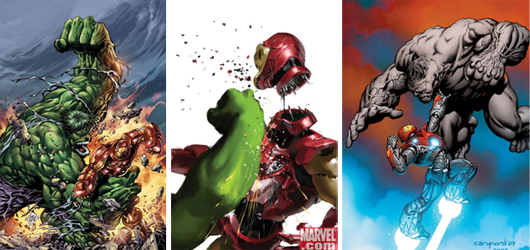
The Leader was another example of the asymmetric enemies that I previously discussed. Despite his frail appearance the Leader was actually a dangerous character. He didn’t even need to know how to throw a punch. His ability to use mind control on individual, and even groups of people was scary enough. If he was mortally wounded he seemed to have the ability to resurrect himself as well. He was a relentless villain that could hunt the Hulk with more vigor than even Thunderbolt Ross. There was a certain logic to his design that made sense in the context of the Marvel universe. I will talk about that in the next blog. Until then I want to know if you have a favorite Hulk villain, or any villain in general. Tell me about it on the comments section. As always if you would like to sponsor me please visit my Patreon page and consider donating each month, even as little as $1 would help make better blogs and even podcasts!
follow the Street Writer on Patreon!

Friday, October 4, 2024

A symmetry of villainy, part 2…

In the previous entry of this series I talked about some of my favorite comic book rivalries. I noted that some villains were evil mirror versions of the heroes, like the Abomination was to the Hulk, the Reverse Flash was to the Flash, or Bizarro was to Superman. That type of design worked well in many stories, and was a tool that young authors could use when fleshing out the antagonists for their own stories. I also mentioned that many of the greatest rivals were asymmetric in look, and ability. Such as the Joker to Batman, Doctor Doom to the Fantastic Four, or the Mandarin to Iron Man. I argued that these were the most interesting types of rivals. Creators that understood the format were able to build worlds that appealed to many readers throughout the years. Award-winning writers understood that the best characters represented something greater than themselves. For example the Hulk was a stand-in for rage, Superman stood for hope, and the Joker for chaos. When done well we could use that understanding across genres. I believed that the best storytellers could use those archetypes in entirely different languages. I have said that the best Superman arc, and best Hulk story of the past decade were featured in the works of the Japanese creator known as ONE.

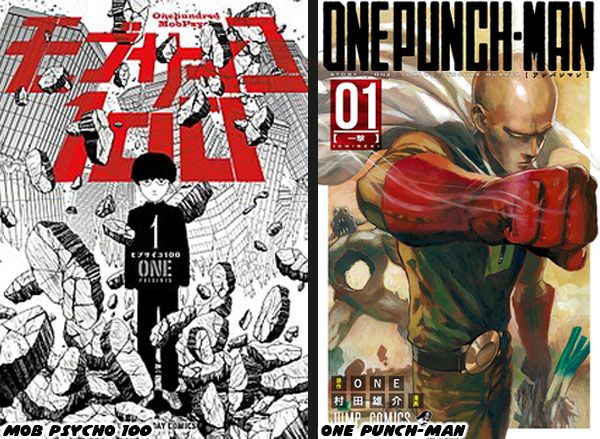
One Punch-Man was every bit a spoof as it was a love letter to the super hero genre. The main character was overpowered, not unlike Superman. The heart of the story was how the supporting characters would deal with world-ending threats before Superman, err, rather Saitama could deliver one of his trademark punches. This was essentially the same dynamic of the Justice League holding off a colossal enemy until Superman could show up. You would think that having a character that could defeat any opponent with a single punch would become boring after the first issue, but ONE managed to build a lot of tension by investing us in the street-level heroes. By comparison Shigeo "Mob" Kageyama wanted nothing more than to catch the eye of a girl he was crushing on, all while dealing with latent psychic powers. The heart of the Mob Psycho 100 story was how people would try to manipulate him, or exploit his powers. It was a cautionary tale dealing with bullying, self image, loss of control, and much more. Nothing could contain Mob when he was pushed to the breaking point. Similar to how Bruce Banner did his best to avoid conflict in the pages of the Marvel comics. When the Hulk was unleashed even the strongest villains found out that he was impossible to stop,. The Hulk had his own Lex Luthor, a human antagonist rather than a super-powered villain that functioned as a great rival for over 45 years.

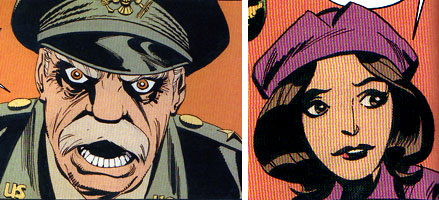
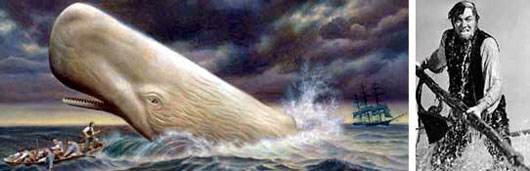
General Thaddeus “Thunderbolt” Ross hounded the Banner, and the Hulk. His crusade against the Green Goliath took him, and his battalions all over the world. He was a complex character, and doubly important because he was the father of Elizabeth “Betty” Ross, the love interest, and future wife of Dr. Bruce Banner. It had been argued that the Hulk was an allegory for war. General Ross represented the military industrial complex, the duo had a destructive relationship. He assumed that any problem could be solved if enough bombs were dropped on it. The opposite was true in the stories. It was impossible to beat the Hulk through perpetual escalation. The billions the government spent on military equipment did nothing but annoy the Jade Giant. He would only become stronger, cause more destruction, and collateral damage the further he was pursued. Thunderbolt’s single-minded obsession was comparable to Captain Ahab from the story Moby Dick. His mania would only lead to the estrangement from his daughter, a mental breakdown, and his eventual downfall. As for the Hulk, it turned out that peace, or rather leaving him alone was the best way to get him to revert to back into Banner.

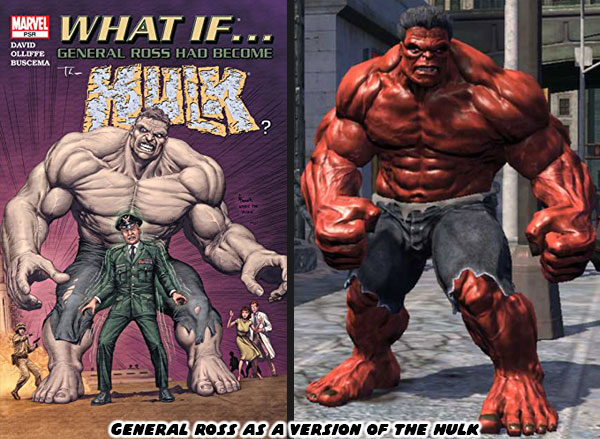
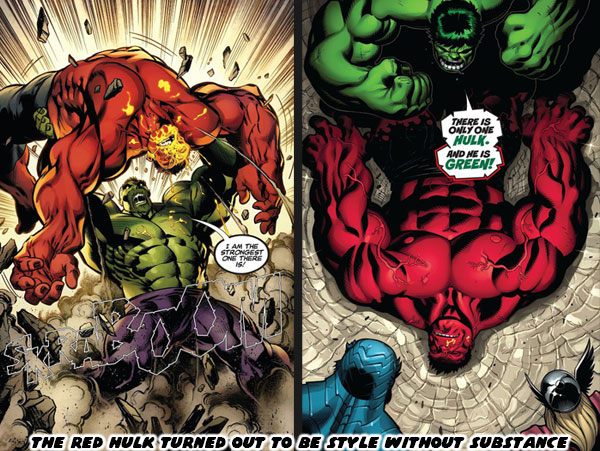
This dynamic was critically important for the development of the series. Not every villain that the Hulk faced had to be a gamma-powered monster. His toughest battles were fought with his own human family members. At least this was the dynamic explored by all the great series writers except for one person. Jeph Loeb had written for films, television, and comic books for years. In an interview he mentioned that he had a wishlist of things he had always wanted to do in a comic book, and was looking for a character to apply it to. He wanted to see the Hulk stop holding back, to cut loose on the Marvel U, and see what he was really capable of. These included fourth wall breaks ala Deadpool. Things like punching the Watcher, beating up Thor with his own hammer, stealing the Silver Surfer’s board, etc. He knew that it wouldn’t work for the character that fans were already familiar with, so his idea was to assassinate the Abomination, and replace him with an even more powerful rival called the Red Hulk. This would allow him to check off the things on his wishlist without breaking the character that audiences were familiar with. After several issues it was revealed that the Red Hulk was actually General Ross. The editors at Marvel were on board, and the character became a part of continuity in 2008. To fans like myself if demonstrated a misunderstanding of Ross, and the dynamic of the Hulk comics up until that point.

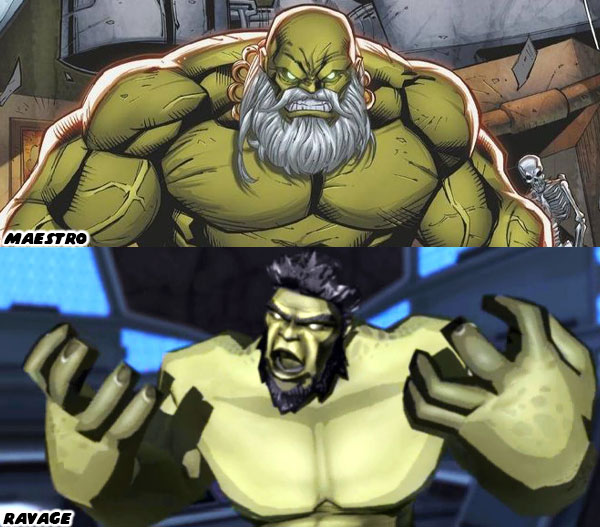
First off the idea of General Ross as the Hulk was explored in a What If? comic from 2004. In it he was gray, and not red. The important part of the story was that Ross saved Rick Jones during the gamma bomb field test, and received the gamma rays that transformed him into the Hulk instead of Banner. During his initial rampage he accidentally killed Betty. When he realized his mistake he transformed back into his human form. A distraught Banner snuck up behind him, and shot him in the head. Thus concluding the story. It made little to no sense for Loeb to add yet another strong guy into the Hulk books. There archetypes were already established through decades of adventures. In addition to the Abomination there were heavy hitters like the Absorbing Man, the Juggernaut, and the Wendigo. In fact when it came to parallel, or rather symmetrical villains there were two that had also been established previously. Professor Geoffrey Crawford was one of Banner’s university instructors. In an attempt to cure a terminal disease he ended up turning himself into Ravage. Yet unlike the Hulk he retained the intelligence of the nuclear scientist. Then there was a version of the Hulk from the far off future in which Banner’s personality had long since deteriorated, and all that was left was a tyrant known as the Maestro. Either one of these villains were overpowered compared to the rest of the Marvel universe. They could have potentially carried off Loeb’s wishlist. Yet I had a feeling that Jeph did not really understand how the powers worked in the Hulk books, how the psychology of the characters affected their mutations, or the roles of long-established foes. 

I would argue that Jeph Loeb didn't really understand the heroes or villains from the Hulk books. He instead wanted to rewrite the cast to fit his own interpretation. In doing so it would cause a domino effect that would also turn Betty Ross into a Red She-Hulk, and make the Hulk have a couple of illegitimate offspring. It was the same misunderstanding of the characters that would lead writers to break up Peter Parker, and Mary Jane, and turn Spider-Man into a long suffering hero. This ended up disappointing a large number of fans. While there were many people that liked the Red Hulk, the role of General Ross was completely missed by Loeb, and his successors. I want you to think about it for a moment. Would this type of villain evolution work for the strongest characters in any other book? What if a writer that didn't understand the dynamics of Superman decided to give Lex Luthor all sorts of powers? What if this writer then started calling his creation Alpha Superman? How would fans react to this sudden change? Once the genie was out of the bottle Luthor would never go back to being a mere mortal. It didn't make much sense in this context. It certainly wouldn't have made for a more interesting villain. In fact I think the opposite happened with General Ross.

For almost a century comic book writers had to challenge themselves to create an engaging story. A story where normal humans posed legitimate threats to the most powerful heroes in their respective universes. These writers had to build the tension, and maintain the voices that readers were used to. They had to plot out story arcs that would keep audiences hooked month after month. A well written villain could be used over, and over without feeling tired or broken. New villains were sometimes given a gimmick that flew in the face of established history. This was just so writers that didn't understand the books could have a couple of cool moments pop up. This was what I think Jeph Loeb did with the Red Hulk. General Ross represented much more than a domineering father, or dogmatic soldier. War was all he understood. The concept of peace was foreign to him. He could not bear to let Banner and Betty enjoy their life together. His obsession with control, with Banner, and the Hulk was an illness. He was willing to sacrifice his own men in his pursuit. This made him the actual monster in the stories. A person like Ross would be diagnosed with Ahab Syndrome, an actual condition where a person was consumed with revenge.

The introduction of the Red Hulk showed that Jeph Loeb completely misunderstood the dynamics of the Hulk. Mr. Loeb decided to rewrite the story of Moby Dick. In his version Captain Ahab would mysteriously get absurd powers. In fact the captain would beat up the whale at the start of the book, and then audiences would watch him go around the ocean beating up other sea monsters. The end of this story would somehow remain the same. The whale would take his revenge, and dispatch Ahab without much fanfare. Mr. Loeb ignored all the established heavy-hitters, and used the most basic type of symmetry to create the type of dumb strong guy that people assumed the Hulk was. The two Hulks would have a few fights, but they lacked the gravity of the battles against the Abomination, or Maestro. Audiences did not fear for the Hulk when this new monster popped up. In fact the Red Hulk would stop being used as a villain altogether. He would end up leading the government sponsored Thunderbolts on missions. You could imagine how absurd it would be if a symmetrical rival like the Reverse Flash, or Doomsday lead the Justice League after their debut. The Red Hulk was just another antihero added into a universe that had become saturated with cynical voices. Mr. Loeb did not create a rival that would withstand the test of time. 

In my opinion Jeph Loeb did a disservice to the character, and continuity of the Hulk. Mr. Loeb lacked the nuance, and understanding that a creator like ONE had when it came to writing for overpowered heroes. The Marvel books would never be the same because of this. There were many rivalries that still meant something in the comics. I will talk about whom I consider to be the Hulk’s greatest rival in the next entry. Until then I want to read your take. Tell me about it on the comments section. As always if you would like to sponsor me please visit my Patreon page and consider donating each month, even as little as $1 would help make better blogs and even podcasts!
follow the Street Writer on Patreon!