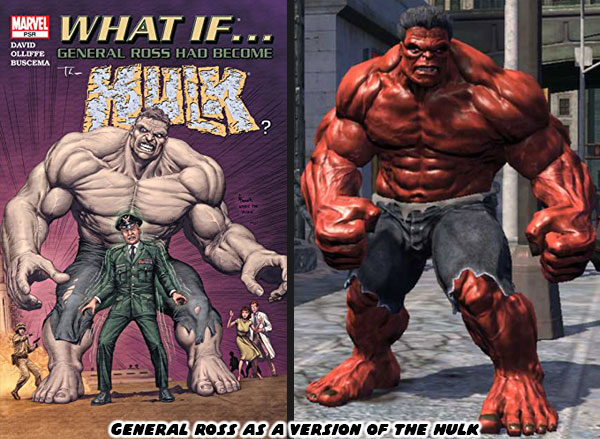
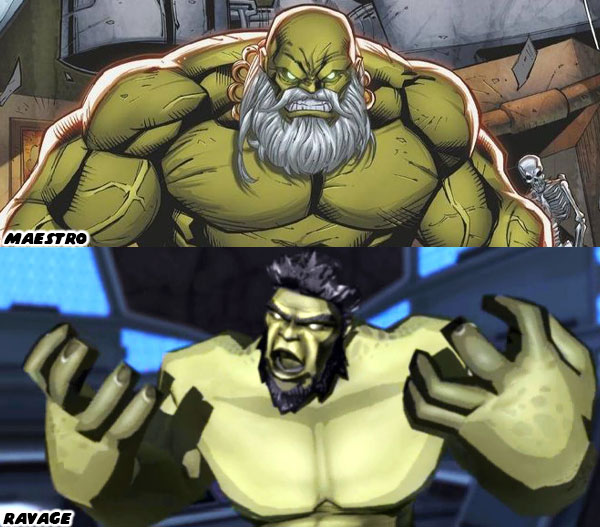
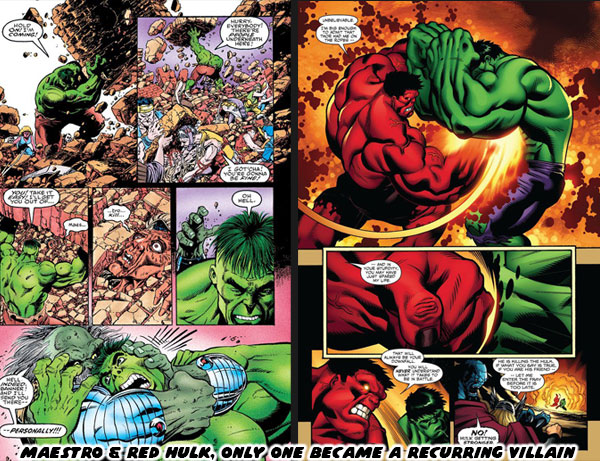
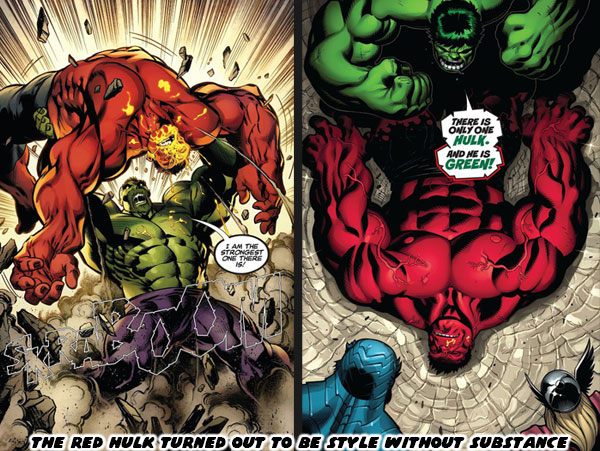
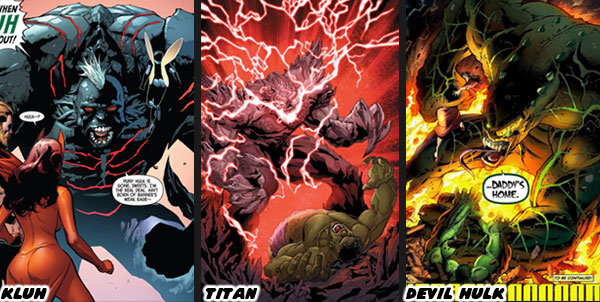
Over the past week I gave examples of building symmetric, and asymmetric villains in comics. I used the strongest characters in DC, and Marvel as an example. Superman, and the Incredible Hulk had faced a number of powerful beings over the decades. The ones that gave them the greatest challenge were sometimes absurdly powerful physical beings. In the previous blog I talked about Doomsday, and Onslaught. In other cases the heroes fought evil versions of themselves from another timeline, or another dimension. Superman faced off against Ultraman in several stories. This was essentially a Superman who lacked the morals instilled to him from Martha and Jonathan Kent. The Hulk battled the Maestro, an evil version of himself from the far future. Bruce Banner suffered from multiple personality disorder. Each one of the figures trapped in his mind could manifest as a version of the Hulk. He fought to keep his identity as the dominant one. The traditional "Savage" Hulk was the best known of his alternate personalities. There was also the street savvy Gray Hulk aka Joe Fixit. There were demons that Banner kept locked away in the furthest recesses of his fragile psyche. These included Kluh, Titan, and the Devil Hulk. Believe it or not they were each potentially more dangerous than the Maestro.
These types of villains were fantastic for a short arc, however their impact would be diminished if writers kept trying to revisit them again, and again. The best rivalries for both Superman, and the Hulk happened with foes much weaker than either of them. It took a lot of effort to create a memorable villain, let alone a recurring threat in the Marvel stories. A bad guy that could challenge the universe, somebody like Onslaught had to have the powers of multiple characters like Professor X, and Magneto combined in order to bring the Hulk to the edge of defeat. This was the kind of impact that the Leader held in Hulk continuity. He didn't challenge the Hulk with one ability, but with a barrage instead. How Marvel created this character, and what made him tick was an important lesson in rival design. When it came to which version of the Leader I thought worked best, which one explained his abilities, and threat level then I would actually point to video games.
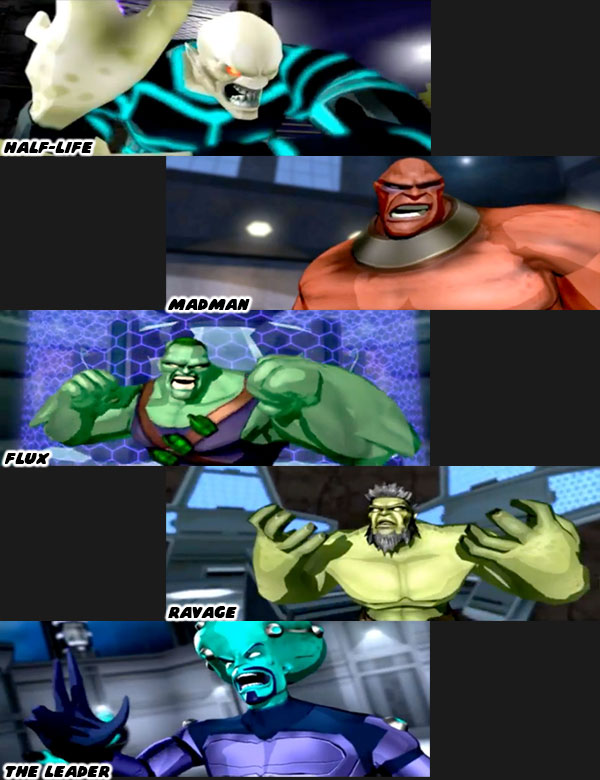
From a visual standpoint I believe the Leader looked best in video games rather than in comics. The designers at Radical Entertainment created a decent Hulk game in 2003. It was a follow-up to the Ang Lee live action film featuring Eric Bana in the role of Bruce Banner. Eric even voiced the character in the game. Despite amazing visual effects the movie was a flop. It probably explained the lukewarm reception the game received. Thankfully it took place after the film, and was set in a more comic book environment. It featured a collection of some of the Hulk’s greatest comic opponents. They were pulled from a number of different writers, stories, and arcs. The gamma-powered lineup included Half-Life (Anthony Masterson), Madman (Philip Sterns), Flux (Private Benjamin Tibbits), Ravage (Professor Geoffrey Crawford), and the Leader (Samuel Sterns). The story was an amalgamation of different plots, and locations from the movie, and comics that worked well together. The use of cel-shading, and even dramatic angles helped make it look like a graphic novel brought to life.
The Hulk game was good, but their follow up title The Incredible Hulk Ultimate Destruction was absolutely amazing. Released in 2005 it didn’t only raise the bar for Hulk games, but forever raised the standard by which all comic book games would be measured. The story, design, animation, control, and combat were unparalleled for years to follow. Its influence would be felt across the industry. In fact the locomotion of the Hulk had a direct influence on how Spider-Man would move in the award-winning games by Insomniac some 12 years later. I considered it one of my favorite games of all time,
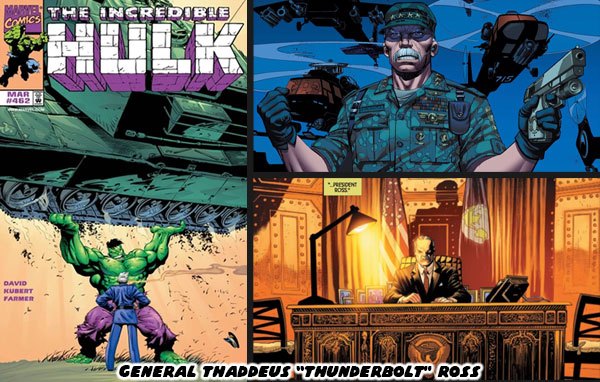
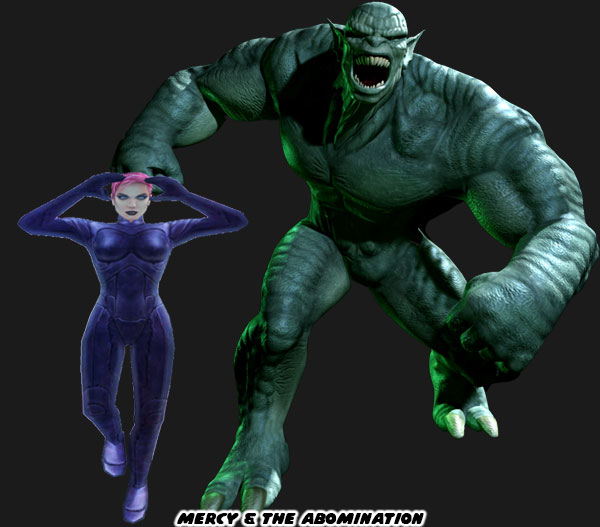
and even mentioned that on the blog. The game didn’t feature as many rivals as the previous Hulk title by Radical, but the handful they had were memorable. These included the powerful psychic Abigail “Mercy” Wright, the Hulk’s latent rage persona known as the Devil Hulk, General Ross, and The Abomination.
The earlier game was notable because it featured not only the Leader, but his brother Philip as well. Peter David, and artist Jeff Purves created an opponent that brought the Hulk to the brink of death in the Incredible Hulk issue #363. The Madman did this through subterfuge, and gamma poisoning. Philip Sterns followed in the footsteps of Banner, and became obsessed with him to the point of developing a toxic love. Once his brother mutated into the Leader he blamed Banner, and the Hulk for taking him away. Philip became a nuclear scientist. He wanted to gain powers as well so he experimented on himself repeatedly with gamma radiation. He effectively scrambled his own brain in the process. He developed multiple personalities, which determined how his powers manifested. For the Madman it resulted in having abilities different than his brother. The Madman could actually make himself appear like any other person. His ability was on par with Mystique, an X-Men villain that could shapeshift into other people. That was only part of what made him dangerous. He was still an accomplished scientist, perhaps not on par with his brother, but still smart enough to figure out a way to destroy gamma mutations. At will he could also “Hulk-out” as well. When he changed he had red clay-colored skin rather than green. He was also taller, denser, and stronger than the Hulk, but he could only maintain this form for short bursts of time.
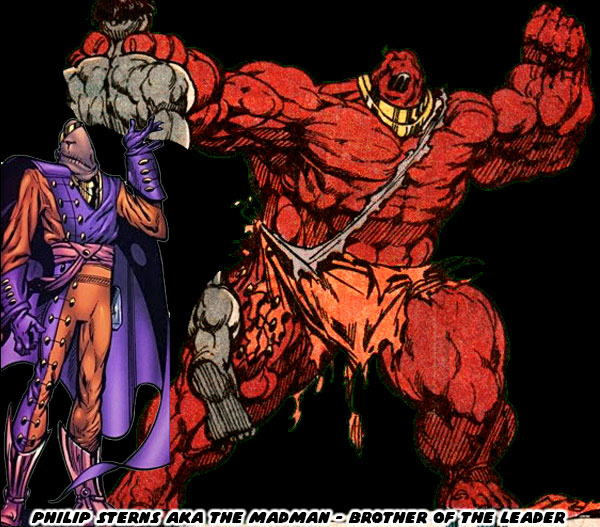
The Madman debuted in the four-part “Countdown” arc in 1989. If I were to describe his mental state he melded the personalities of an agent of chaos, with a raging beast. To put it in context I would compare him to two iconic DC villains; as if the Joker, and Bizarro had an offspring that was obsessed with Banner. The Madman had created a virus that was destroying the Hulk's gamma mutation. The gray "Joe Fixit" version of the Hulk was wasting away in each panel of the series. If he transformed back into Banner he would deteriorate even faster. It broke my heart seeing the most powerful mortal on Earth reduced to skin, and bones. I saw the race to cure Mr. Fixit as an allegory for the AIDS crisis. The epidemic was on our collective minds through the late '80s, and early '90s. In fact it wouldn't be the first time that Peter David faced the issue of HIV in the series. I thought the Countdown arc did much more to establish a legitimate threat the Hulk more than Doomsday did for Superman. The Madman was regarded as being too dangerous for his own good. He was so dangerous that the Leader even teamed up with the Hulk to track him down. He asked the Hulk to stop him because he couldn’t bring himself to hurt his own brother. The Leader was afraid that Philip’s mind had completely lost to the Madman persona. If any part of him remained it would better for the Hulk to put him out of his misery. It was brilliant storytelling, and fantastic reveal. It was pulled off much better than the introduction of the Red Hulk, that's for certain!
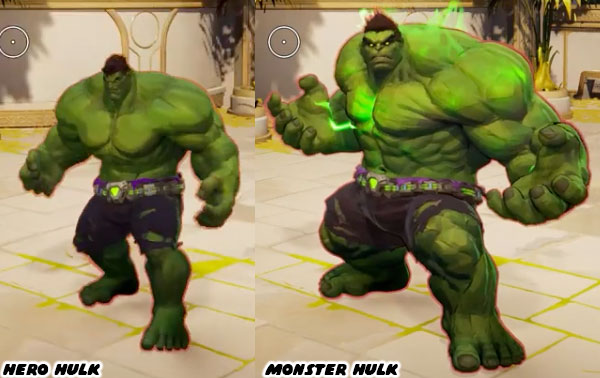
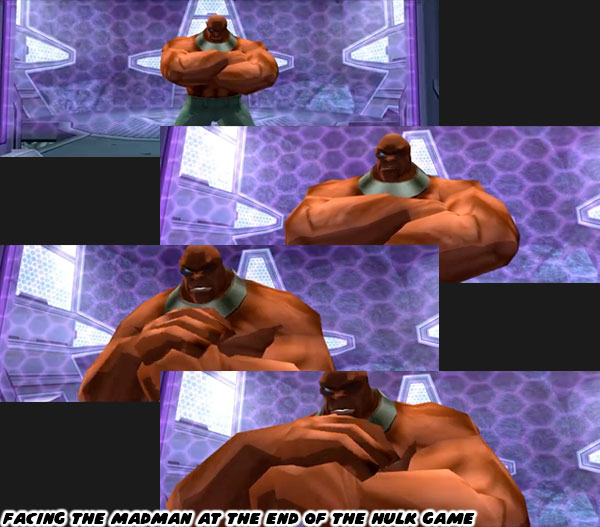
The closest that a game had come at recreating the power burst that the Madman exploited in the comics could be seen in the multiplayer game Marvel Rivals. Banner was a playable character, and when he transformed he became the "Hero Hulk." If the player managed to raise his energy levels in the middle of a skirmish then he could power up even further, and turn into the "Monster Hulk." This gave him different attacks, and a higher amount of health points. This version of the Hulk was much stronger, denser, and bigger than the regular Hulk. It was exactly how I imagined the Madman would jump from human scale to monster scale, bypassing the traditional Hulk, but again only in short bursts. By comparison the size of the Hulk, Ravage, Flux, and the Madman were more or less the same in the older Radical Ent. game. In the comics there were notable differences in their frames. They were all hyper-muscular, but some were leaner, shredded, distorted or bulky compared to the Hulk in the comics. Given his powers, and unpredictable nature I think it proved difficult to write scenarios featuring the Madman. Hence he was used very sparingly by Mr. David, and future writers. I was grateful at least that he appeared in several encounters in the Hulk game, under the orders of the Leader.
The Leader would show up in animated form, and various comic arcs over the years. He would not appear again in a prominent gaming role for more than two decades. The Marvel Contest of Champions (MCOC) was a mobile game with a massive following, and deep library of characters. It debuted in December 2014, and had generated millions in revenue for the developers at Kabam, and of course Marvel. It gave global audiences the ability to fight as, or against 275 popular, and rare characters. It was a fantastic introduction to the universe for Generation Alpha. It was also an accessible, and balanced fighting game for all audiences. I wrote about the title, and its comic book origins in a blog series. It was linked below if you haven’t read it. I enjoyed having multiple versions of the Hulk as playable characters, and even featuring the Maestro as one of the major villains. Even with the Rhino, Abomination, Juggernaut, and Onslaught to battle against it still felt like someone was missing. The Leader was finally announced for 2024, and I could barely contain my enthusiasm.
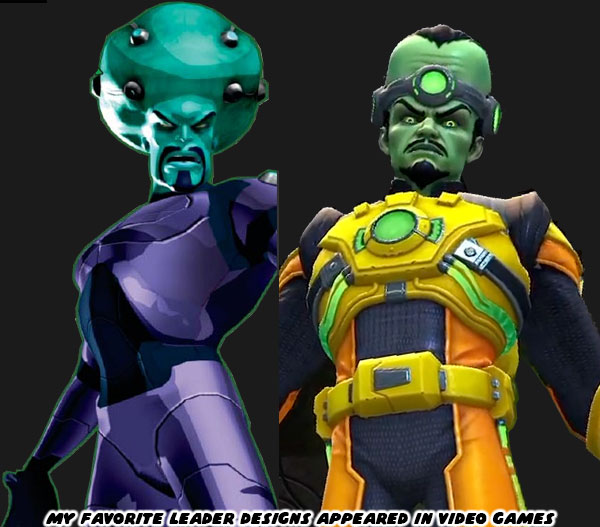
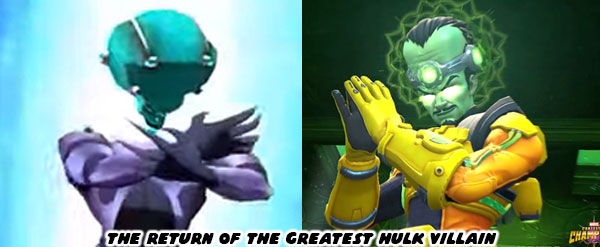
I was a huge fan of the aesthetic Kabam used with the character art. This was fortunate side effect of optimizing the game. The graphics capabilities of mobile devices determined how far the studio could push the visuals. Not every device was the latest iPhone or Android, so the studio had to make it playable on older devices as well. Many had limited memory, limited processing power, and limited 3D rendering capabilities. In order to keep the game running smoothly across multiple platforms the studio had to optimize their engine in every possible way. For example the fighters featured simpler shapes, fewer frames of animation, and limited polygon counts when compared to console, or PC characters from the same era. These figures nonetheless worked from a style standpoint. The art team at Kabam did their homework. Each champion was pulled right from the comics, films, and television shows. From largest to smallest, the library of fighters were all easy to read, and looked brilliant. I wished that there was a MCOC toy line for how great a job the studio did. Kabam gave the Leader a somewhat classic look in his reveal. The shape of his head was vertical rather than Jiffy-pop. He even sported his familiar mustache, and Van Dyke beard. The orange, and yellow colors of his uniform went back to his earliest appearance. Despite the retro touches he still worked within the Contest of Champions.
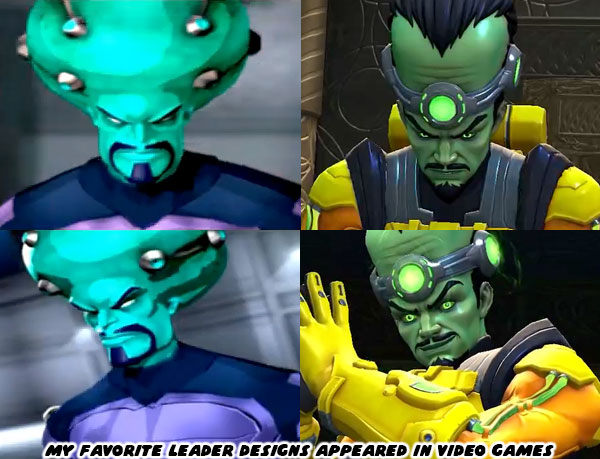
The team at Kabam updated his look by adding a psychic band on his forehead, and a number of gadgets to his costume. These touches explained his ability to float, generate a shield, deflect attacks, and project beams of energy. They were exactly the sorts of things he might use in a comic book battle. By comparison the designers at Radical Entertainment had a completely different take on the Leader much earlier. They gave him an armored metallic purple uniform, and a round head shape. He had electrical nodes on his skull, and shoulders, these allowed him to project beams of psychic energy directly from his forehead, or channel them through his hands. He was able to float, create barriers, project multiple versions of himself, and throw the Hulk with his mental powers. There had never been a version quite like this in the comics, but in game form it made absolute sense.
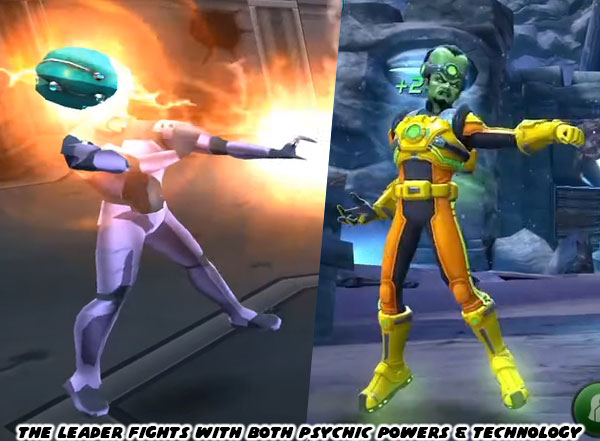
Despite these awesome psychic attacks the game was still filled with clues to his inventing prowess. The Leader had created a Gamma Orb which was a compact tool that he used to syphon Banner’s power. It was a fraction of the size of the Gamma Sphere that caused his mutation in the film. The Leader built an entire underground base called Freehold. It was populated with his mutations, and weapons. He had teleports, and even a transport system running underground. The majority of the game was essentially fighting through his defenses in an attempt to reach the mastermind. I was glad to see that the villain was getting a new chance to show off his powers in the Marvel Contest of Champions. I hoped that someone working at one of the AAA publishers was working on a pitch for a new Hulk game. Something that could build on the work of Radical Entertainment, Insomniac, and the other great comic game developers. It would hopefully make Incredible Hulk, and especially the Leader relevant again. If you want to find out more about the Contest of Champions please check the links below.
Did you have a favorite Hulk villain that I did not mention? Or another rare character you want to talk about? What were the elements that you thought made for a great villain design, or a great villain reveal? Tell me about it on the comments section. As always if you would like to sponsor me
please visit my Patreon page and consider donating each month, even as little as $1 would help make better blogs and even podcasts!