Showing posts with label red hulk. Show all posts

Monday, October 21, 2024

Generations of Hulk creators, part 4...

In the previous blog I talked about how John Byrne taught a generation of young artists how to draw powerful characters in comic books. Mr. Byrne drew both the Hulk for Marvel, and Superman for DC. Arguably the two strongest characters in comics history. He presented a version of the Hulk that wasn’t vascular, or swollen like a bodybuilder. Instead he was built like a monster. Proportionally larger, wider, and heavier than any typical human physique. It worked for the character, and was the style adopted by the heir apparent, a young Australian artist named Dale Keown. Dale would slowly add his own details to the character, making his muscles better defined, changing the shape of his head, and various proportions. In the end he created a template that would be copied by further generations of Hulk artists. Yet if I were to be fair he wasn’t necessarily the most influential of all the Hulk artists. That distinction more than likely belonged to Arthur “Art” Adams. He was highly regarded as the peak monster designer across all modern comic books. He had few peers capable of rendering unique, highly-detailed monsters. But that wasn’t the only thing he was known for.
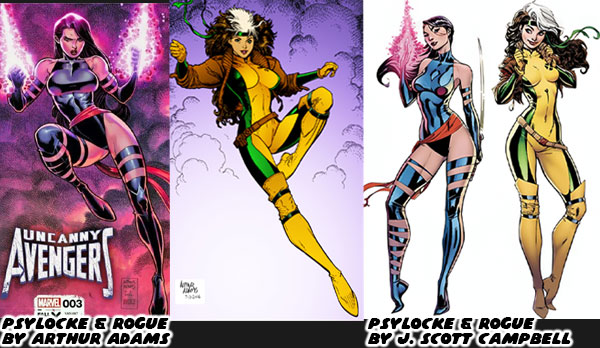
The comparison between John Byrne, and Dale Keown was not an original observation. I believe it was Wizard magazine in the early ‘90s that was doing an interview with someone in the industry. Their name sadly escaped me. The interviewer was talking about how the new crop of comic book artists were changing the industry. That idea was countered with the idea that the new generation were more refined version of the previous illustrators. The person said that John Byrne was a great Hulk artist, but if you look at Dale Keown you could tell that he was following directly in his footsteps. The difference was that Keown’s monster was more refined, and powerful. Keown was improving on the work of the master. He mentioned that wasn’t the only example he could give. He said that J. Scott Campbell, the person that created the highly popular Gen13, and Danger Girls was known for his sexy female leads. He mentioned that the shape of his women was a refined version of the girls that Art Adams drew.
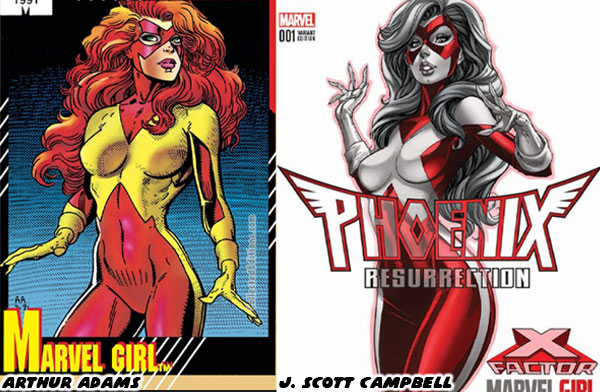
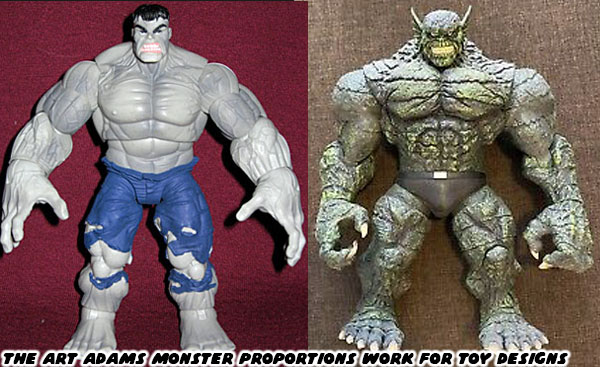
When I read the interview it blew my mind. The observations were spot on. As an artist I could tell that Keown, and Campbell were clearly influenced by the creators that came before them. The were not copying or poaching individual panels or illustrations of Byrne or Adams. They instead had their own distinct pencils, rendering techniques, proportion, and anatomy. Keown, and Campbell’s own unique style came through as if they were understudies to the greats. Campbell for example used less lines to define his figures, he gave his female characters thinner lips, and smaller feet, but the shape of the women he drew, their hips, and long legs were clearly influenced by Adams. The thing was that Adams was a great designer across the board. Not just with traditional men, and women, but also with monsters. This was something that Campbell was not known for. When Keown ended his run on the Pitt, and went into semi-retirement Adams continued to illustrate the occasional Hulk story. I was so happy whenever he did that. My brothers knew that I considered Keown the best Hulk artist ever, but Adams was a close second. Their two styles perfectly complimented the character in every way. Adams was such an accomplished draftsman that his designs were eventually used to create several action figures. This included the Hulk, and his equally massive rivals like the Abomination.
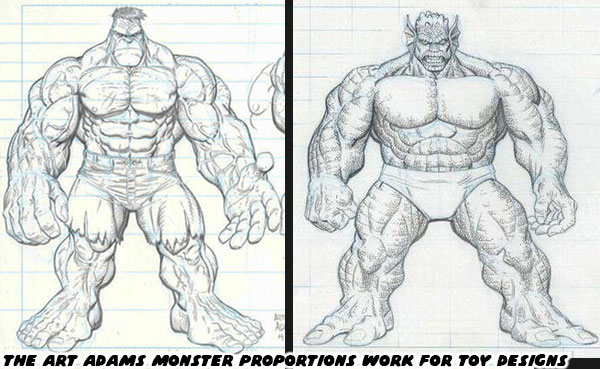
The comic book action figures that I grew up with in the ‘80s were very simplistic, and cartoonish. When Todd McFarlane started releasing his own comic book accurate Spawn action figures in the ‘90s he forced the industry to catch up. This meant that ToyBiz, Hasbro, and the other companies reached out to comic book artists to design entire toy lines. Adams worked within the scale of the particular series he was tasked to create. Whether he was designing monsters for 6-inch figures, or larger scales he made sure that they looked accurate when standing alongside the traditional figures. He would draw renders on comic book art boards, and submit them for review. He would do complete turn arounds of the characters. This was so that a sculptor working with a toy studio could recreate the design. He would include suggestions for different heads, and facial expressions as well. Depending on the project he would even create a costume, and accessories for the figures. Sometimes the sculptors would follow the designs to the letter, and other times they would change some elements, either to make sure the character could balance on its own, or to shave off some weight to make it less expensive to produce.
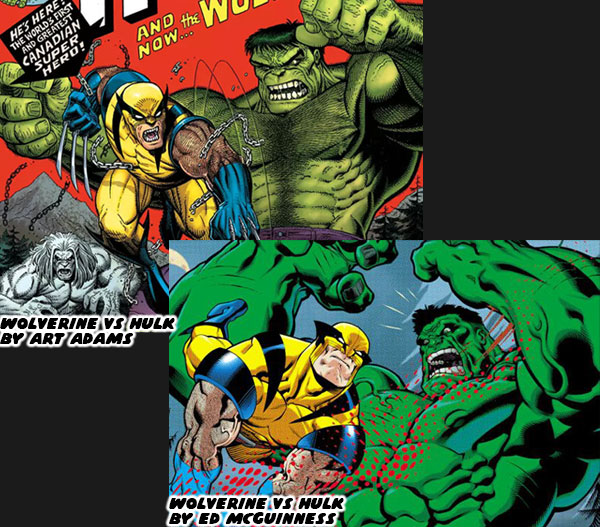
There was no doubt that Adams influenced countless generations of comic book artists with his work in comics, and now even toys. If Keown could be considered an evolved version of the Byrne style, then who could be considered an evolved version of the Adams style? Mr. Campbell already took up the mantle with his female designs, but what about the monsters? I would argue that at least two Hulk artists were heavily influenced by the icon. One of which was Ed McGuinness. Ed was so good at rendering the Hulk that I thought it was absurd he wasn’t given the keys to the Incredible Hulk in the late ‘90s after Keown had fallen into seclusion. McGuinness was anything but a copycat artist. He was evolving the format as all the greats had before him. He started by melding the classic proportions of Adams, with the unique physiology of game designers like BENGUS, and heavy inks which were distinctly his own.
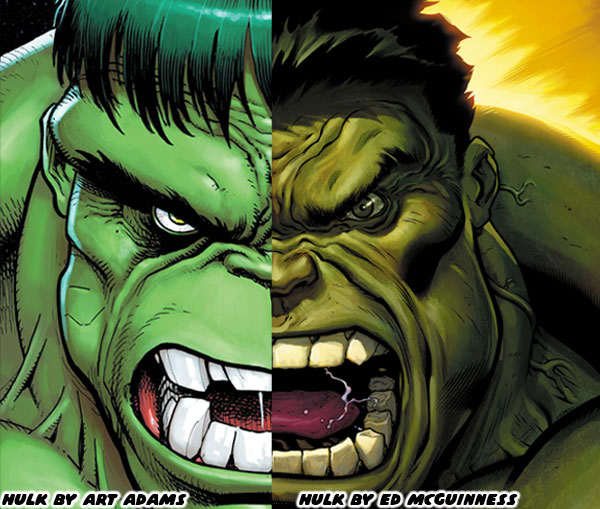
Many comic book fans, myself included would testify that McGuinness was born to draw the Incredible Hulk. He did a couple of issues in 1998 featuring the Hulk being captured by the Circus of Crime. Right away his exaggerated cartoonish style really stood out. Then different artists took over the book. McGuinness never seemed to land on the radar of the editors at Marvel when the Hulk was concerned. He gained notoriety working on the Superman/Batman Public Enemies run for DC in 2003-2004. This was turned into an animated movie in 2009. His chiseled physiques instantly stood out among all the superhero books. They even ended up being recreated in toy form. Fans that saw his hyper-muscular figures knew that would be a perfect fit for the Hulk. When he found work at Marvel he drew on Deadpool, Spider-Man, Wolverine, the X-Men, and the Avengers. It seemed that the studio was willing to use him on every comic, except the one he was destined for. The fact that he couldn’t seem to land on a Hulk book was driving me crazy. Whether intentional, or accidental he kept being overlooked as Marvel cycled through different Hulk artists over the early 2000’s.
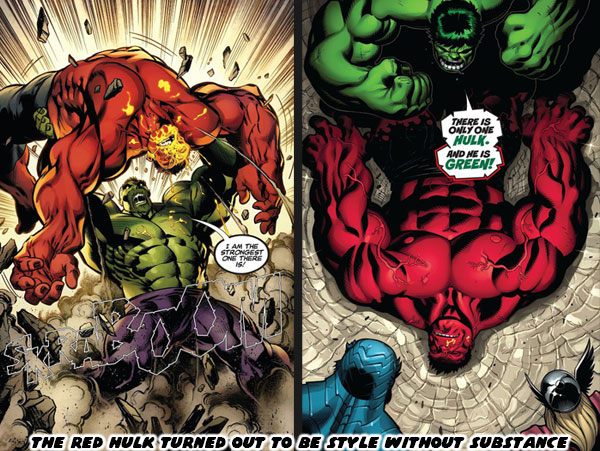
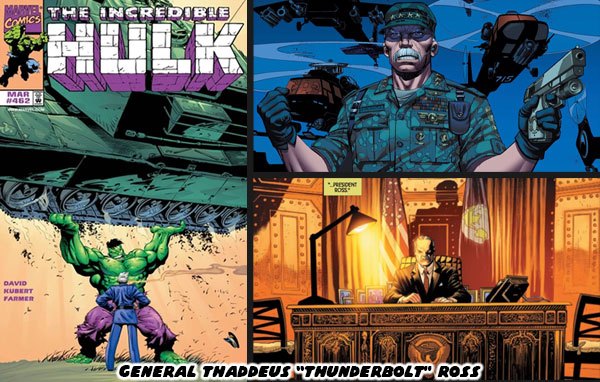
Eventually he got the call from the men at the top. It was announced that in 2008 he would finally be put on the Incredible Hulk. The comic book boards lit up online. I was overjoyed with the news. My brothers were happy for me because they knew I was a huge fan. I believed that McGuinness was the only person that could take the books to a new level. Unfortunately I lost all hope when I read where the first arc was going. Jeph Loeb was writing an entire storyline specifically for McGuinness. His plan was to create a murder mystery that would forever change the Marvel U. The “Hulk” was going to kill off the Abomination with a big gun, and turn Rick Jones in to the new Abomination with the nickname of A-Bomb. The actual murderer would be revealed as the Red Hulk. He was going to cut loose on the Hulk, and She-Hulk wipe the floor with Thor, and other cosmic level heroes. Betty Ross Banner would turn up later, and become the Red She-Hulk for… reasons. It made little sense then, and less sense on rereading the series. It was like a terrible practical joke being pulled on the artist, and fans of the series. It pained me to see the fantastic art of McGuinness get wasted on a clone character. His secret identity would later be revealed to be General Thaddeus “Thunderbolt” Ross.
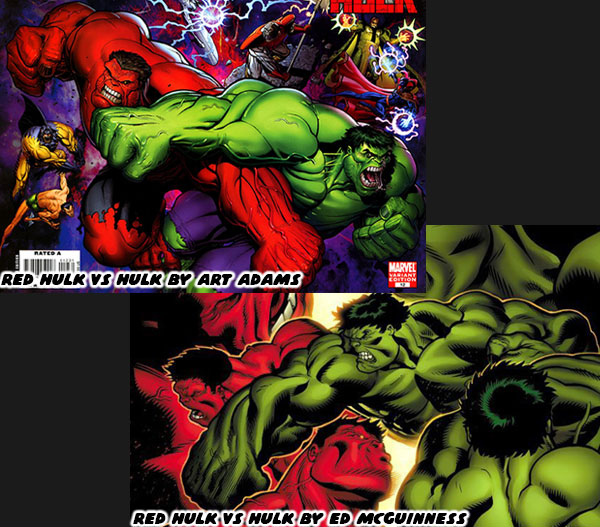
The acts that the Red Hulk performed in the books seemed completely out of place. They were on the edge of being a satire of the books. The first issues where he debuted seemed like a self insert fanfic. None of the events seemed organic. None of the events were plausible for the established heroes, and villains. Even more alarming to me was that Arthur Adams had been called in to draw some of the covers, and illustrate some Red Hulk stories as well. It was a major push by Marvel to make the character relevant. It pained me that two of the best Hulk artists of the past 30+ years drawing an imitation character instead. The Red Hulk was eventually beaten by the classic Hulk, and later on by smaller teams of characters. The Red Hulk never matched the amazing feats that he debuted with. He never again held the same sense of awe, or prominence that Loeb had intended. After a while he was no longer considered a major villain, in fact he was turned into a hero, and lead a small strike force. This sort of villain turn had never been done with any of the Hulk’s other powerful opponents. Certainly not the Abomination, Leader, Juggernaut, Ravage, or the Madman.
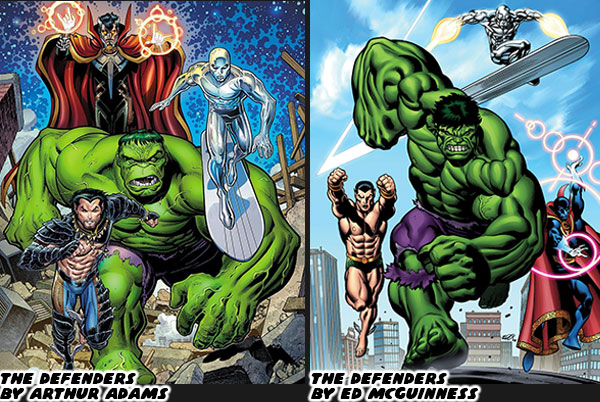
In my opinion Jeph Loeb completely misunderstood the mythos of the Hulk. He did not use any of the formats that worked best for the character. He did not use the template of misunderstood monster, reluctant hero, wandering adventurer, or even psychological horror. Instead the post World War Hulk story was a reboot of the character. It felt like Mr. Loeb had the opportunity to flex his authority, and insert a “Mary Sue” that he would feature more than the title monster. Worse yet, he would be wasting the talents of Ed McGuinness. It was the main reason why I just stopped collecting the books. I sadly ended up missing some fantastic arcs written by other authors, and illustrated by new artists. Only recently would I start to catch up. I’ll talk more about it in the next blog. For now I’d like to know if you were a fan of the Red Hulk, or if you thought the series was handled well. Or were there any other comic arcs that left you cold. I’d like to read about it in the comments section. As always if you would like to sponsor me please visit my Patreon page and consider donating each month, even as little as $1 would help make better blogs and even podcasts!
follow the Street Writer on Patreon!

Friday, October 4, 2024

A symmetry of villainy, part 2…

In the previous entry of this series I talked about some of my favorite comic book rivalries. I noted that some villains were evil mirror versions of the heroes, like the Abomination was to the Hulk, the Reverse Flash was to the Flash, or Bizarro was to Superman. That type of design worked well in many stories, and was a tool that young authors could use when fleshing out the antagonists for their own stories. I also mentioned that many of the greatest rivals were asymmetric in look, and ability. Such as the Joker to Batman, Doctor Doom to the Fantastic Four, or the Mandarin to Iron Man. I argued that these were the most interesting types of rivals. Creators that understood the format were able to build worlds that appealed to many readers throughout the years. Award-winning writers understood that the best characters represented something greater than themselves. For example the Hulk was a stand-in for rage, Superman stood for hope, and the Joker for chaos. When done well we could use that understanding across genres. I believed that the best storytellers could use those archetypes in entirely different languages. I have said that the best Superman arc, and best Hulk story of the past decade were featured in the works of the Japanese creator known as ONE.

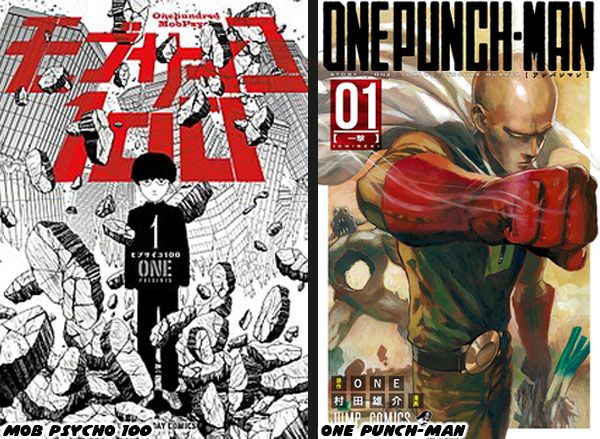
One Punch-Man was every bit a spoof as it was a love letter to the super hero genre. The main character was overpowered, not unlike Superman. The heart of the story was how the supporting characters would deal with world-ending threats before Superman, err, rather Saitama could deliver one of his trademark punches. This was essentially the same dynamic of the Justice League holding off a colossal enemy until Superman could show up. You would think that having a character that could defeat any opponent with a single punch would become boring after the first issue, but ONE managed to build a lot of tension by investing us in the street-level heroes. By comparison Shigeo "Mob" Kageyama wanted nothing more than to catch the eye of a girl he was crushing on, all while dealing with latent psychic powers. The heart of the Mob Psycho 100 story was how people would try to manipulate him, or exploit his powers. It was a cautionary tale dealing with bullying, self image, loss of control, and much more. Nothing could contain Mob when he was pushed to the breaking point. Similar to how Bruce Banner did his best to avoid conflict in the pages of the Marvel comics. When the Hulk was unleashed even the strongest villains found out that he was impossible to stop,. The Hulk had his own Lex Luthor, a human antagonist rather than a super-powered villain that functioned as a great rival for over 45 years.

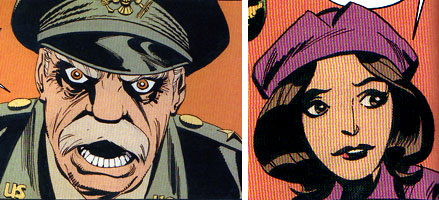
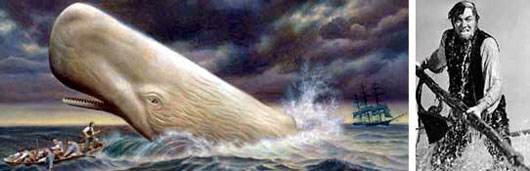
General Thaddeus “Thunderbolt” Ross hounded the Banner, and the Hulk. His crusade against the Green Goliath took him, and his battalions all over the world. He was a complex character, and doubly important because he was the father of Elizabeth “Betty” Ross, the love interest, and future wife of Dr. Bruce Banner. It had been argued that the Hulk was an allegory for war. General Ross represented the military industrial complex, the duo had a destructive relationship. He assumed that any problem could be solved if enough bombs were dropped on it. The opposite was true in the stories. It was impossible to beat the Hulk through perpetual escalation. The billions the government spent on military equipment did nothing but annoy the Jade Giant. He would only become stronger, cause more destruction, and collateral damage the further he was pursued. Thunderbolt’s single-minded obsession was comparable to Captain Ahab from the story Moby Dick. His mania would only lead to the estrangement from his daughter, a mental breakdown, and his eventual downfall. As for the Hulk, it turned out that peace, or rather leaving him alone was the best way to get him to revert to back into Banner.

This dynamic was critically important for the development of the series. Not every villain that the Hulk faced had to be a gamma-powered monster. His toughest battles were fought with his own human family members. At least this was the dynamic explored by all the great series writers except for one person. Jeph Loeb had written for films, television, and comic books for years. In an interview he mentioned that he had a wishlist of things he had always wanted to do in a comic book, and was looking for a character to apply it to. He wanted to see the Hulk stop holding back, to cut loose on the Marvel U, and see what he was really capable of. These included fourth wall breaks ala Deadpool. Things like punching the Watcher, beating up Thor with his own hammer, stealing the Silver Surfer’s board, etc. He knew that it wouldn’t work for the character that fans were already familiar with, so his idea was to assassinate the Abomination, and replace him with an even more powerful rival called the Red Hulk. This would allow him to check off the things on his wishlist without breaking the character that audiences were familiar with. After several issues it was revealed that the Red Hulk was actually General Ross. The editors at Marvel were on board, and the character became a part of continuity in 2008. To fans like myself if demonstrated a misunderstanding of Ross, and the dynamic of the Hulk comics up until that point.

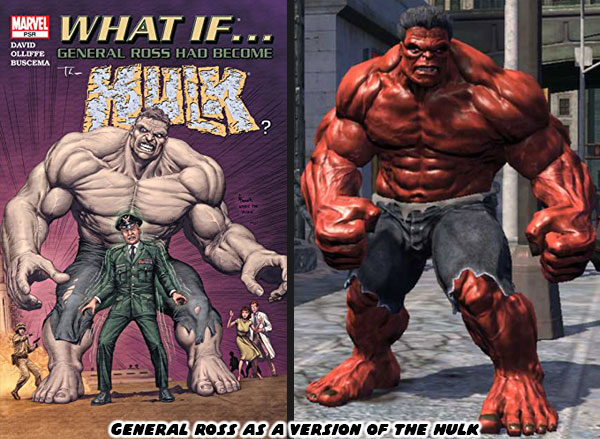
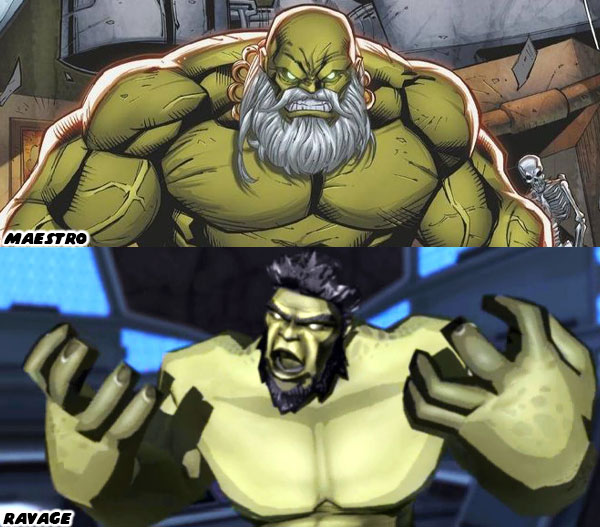
First off the idea of General Ross as the Hulk was explored in a What If? comic from 2004. In it he was gray, and not red. The important part of the story was that Ross saved Rick Jones during the gamma bomb field test, and received the gamma rays that transformed him into the Hulk instead of Banner. During his initial rampage he accidentally killed Betty. When he realized his mistake he transformed back into his human form. A distraught Banner snuck up behind him, and shot him in the head. Thus concluding the story. It made little to no sense for Loeb to add yet another strong guy into the Hulk books. There archetypes were already established through decades of adventures. In addition to the Abomination there were heavy hitters like the Absorbing Man, the Juggernaut, and the Wendigo. In fact when it came to parallel, or rather symmetrical villains there were two that had also been established previously. Professor Geoffrey Crawford was one of Banner’s university instructors. In an attempt to cure a terminal disease he ended up turning himself into Ravage. Yet unlike the Hulk he retained the intelligence of the nuclear scientist. Then there was a version of the Hulk from the far off future in which Banner’s personality had long since deteriorated, and all that was left was a tyrant known as the Maestro. Either one of these villains were overpowered compared to the rest of the Marvel universe. They could have potentially carried off Loeb’s wishlist. Yet I had a feeling that Jeph did not really understand how the powers worked in the Hulk books, how the psychology of the characters affected their mutations, or the roles of long-established foes. 

I would argue that Jeph Loeb didn't really understand the heroes or villains from the Hulk books. He instead wanted to rewrite the cast to fit his own interpretation. In doing so it would cause a domino effect that would also turn Betty Ross into a Red She-Hulk, and make the Hulk have a couple of illegitimate offspring. It was the same misunderstanding of the characters that would lead writers to break up Peter Parker, and Mary Jane, and turn Spider-Man into a long suffering hero. This ended up disappointing a large number of fans. While there were many people that liked the Red Hulk, the role of General Ross was completely missed by Loeb, and his successors. I want you to think about it for a moment. Would this type of villain evolution work for the strongest characters in any other book? What if a writer that didn't understand the dynamics of Superman decided to give Lex Luthor all sorts of powers? What if this writer then started calling his creation Alpha Superman? How would fans react to this sudden change? Once the genie was out of the bottle Luthor would never go back to being a mere mortal. It didn't make much sense in this context. It certainly wouldn't have made for a more interesting villain. In fact I think the opposite happened with General Ross.

For almost a century comic book writers had to challenge themselves to create an engaging story. A story where normal humans posed legitimate threats to the most powerful heroes in their respective universes. These writers had to build the tension, and maintain the voices that readers were used to. They had to plot out story arcs that would keep audiences hooked month after month. A well written villain could be used over, and over without feeling tired or broken. New villains were sometimes given a gimmick that flew in the face of established history. This was just so writers that didn't understand the books could have a couple of cool moments pop up. This was what I think Jeph Loeb did with the Red Hulk. General Ross represented much more than a domineering father, or dogmatic soldier. War was all he understood. The concept of peace was foreign to him. He could not bear to let Banner and Betty enjoy their life together. His obsession with control, with Banner, and the Hulk was an illness. He was willing to sacrifice his own men in his pursuit. This made him the actual monster in the stories. A person like Ross would be diagnosed with Ahab Syndrome, an actual condition where a person was consumed with revenge.

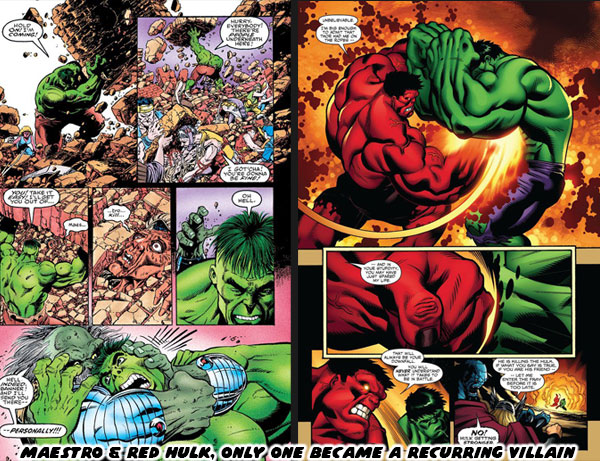
The introduction of the Red Hulk showed that Jeph Loeb completely misunderstood the dynamics of the Hulk. Mr. Loeb decided to rewrite the story of Moby Dick. In his version Captain Ahab would mysteriously get absurd powers. In fact the captain would beat up the whale at the start of the book, and then audiences would watch him go around the ocean beating up other sea monsters. The end of this story would somehow remain the same. The whale would take his revenge, and dispatch Ahab without much fanfare. Mr. Loeb ignored all the established heavy-hitters, and used the most basic type of symmetry to create the type of dumb strong guy that people assumed the Hulk was. The two Hulks would have a few fights, but they lacked the gravity of the battles against the Abomination, or Maestro. Audiences did not fear for the Hulk when this new monster popped up. In fact the Red Hulk would stop being used as a villain altogether. He would end up leading the government sponsored Thunderbolts on missions. You could imagine how absurd it would be if a symmetrical rival like the Reverse Flash, or Doomsday lead the Justice League after their debut. The Red Hulk was just another antihero added into a universe that had become saturated with cynical voices. Mr. Loeb did not create a rival that would withstand the test of time. 

In my opinion Jeph Loeb did a disservice to the character, and continuity of the Hulk. Mr. Loeb lacked the nuance, and understanding that a creator like ONE had when it came to writing for overpowered heroes. The Marvel books would never be the same because of this. There were many rivalries that still meant something in the comics. I will talk about whom I consider to be the Hulk’s greatest rival in the next entry. Until then I want to read your take. Tell me about it on the comments section. As always if you would like to sponsor me please visit my Patreon page and consider donating each month, even as little as $1 would help make better blogs and even podcasts!
follow the Street Writer on Patreon!

Sunday, May 10, 2015

Introducing Gigas, an original idea or more of the same? Let's take a look!

Fighting game fans were in for a shock when the fighters for Tekken 7 were unveiled. Familiar faces had returned along with a new young girl and handsome man which were part of the long-running Namco themes. What caught fans off guard was a massive bruiser that looked completely unlike anything featured previously in the series. The massive red humanoid, known only as Gigas, seemingly came out of nowhere and was poised to topple the most powerful fighters in the series.


Fans from the west were certain that the Japanese developers were catering to Western tastes. It seemed that many heroes and villains from Western video games, comics and movies were massive, muscle-bound monsters. It didn't take long for the comparisons between Gigas and his influences were being pointed out in online forums. An obvious similarity between Gigas and US designs could be seen with the Red Hulk, a villain from the popular Marvel Hulk comics and the mysterious Big Daddy from the BioShock series.


Yet there was several design cues that came from a different property also from the West. The Batman: Arkham series of games has featured several versions of the character known as Bane. The one featured specifically in Arkham Origins seemed the one directly responsible for the appearance of Gigas. There was the massive torso, large arms and tubes connected to the various major muscle groups on both characters. Yet there was much more to Bane than simply being a genetically-enhanced monster. When the character was introduced decades ago he was created to be the ultimate rival of the Batman. The man was a former prisoner-turned-assassin. He was subjected to various surgeries and treatments which enhanced his natural abilities. Batman was considered to be the supreme human physical specimen in DC comics. He was the perfect fighter and Bane was trained to match him in every mental and physical arena. The advantage that Bane had over Batman would be a drug called Venom which gave him a temporary increase in muscle mass, speed and dexterity. He used this to defeat Batman in unarmed combat and even break his back.


Sadly for Bane the writers and artists working at DC could not find a way to improve the character so they began changing his purpose as a worthy rival to the Bat. The character became over-reliant on Venom and in just about every subsequent appearance Batman would either cut off Bane's supply of Venom or cause him to overdose on it. Bane went from a cold, calculating villain to a musclebound stooge over a matter of years. The Joker would return to prominence as the main rival to Batman and Bane would be a supporting character in comic story arcs. The changes for the character were easy to see in animated form. When he first appeared in the Batman Animated Series he was very much rooted in his original comic book design. When he returned a few years later in the new Batman shows he would become more and more exaggerated and dark in his designs. One of his last designs made the character look more alien than human. Part of the reason for that was because the team of artists working on the character designs had previously worked on the Ben10 animated series. Ben10 if you may know was based on a kid that could change from a human into an alien host. The muscle on the new Bane were far larger than ever before, his strength increased tenfold and ability to withstand punishment increased. His skin had even been turned red. If these were not the roots of Gigas then I don't know what else to tell you.


The changes in the appearance of Bane were only part of the equation. Over the past few years many artists had been experimenting with how far they could push the designs of fan-favorite characters. The Joker had been a staple in the Batman comics for decades. His look had changed only slightly over the years but DC shook the community with a recent redesign. The character had cut off his own face and wore it as a mask to add a certain level of grotesque to his already macabre appearance. Many of the Batman villains received the same make-over. In order to give Bane a new look the artists working at DC and even at video game publisher Rocksteady had to push the envelope. As with any design the question remained; how far could the character be pushed and still retain the core elements? How would this character be identified by fans? It seemed that Bane could be made very grotesque and audiences would still recognize the character.


Yet even Bane was not an original idea. The man-becoming-a-monster was a staple of classical storytelling. It was not always a physical transformation to show a person becoming man, such as with Ahab in the story of Moby Dick. Other times a monster represented the mistakes of man, such as the creature created by Dr. Frankenstein. More than a century before Bane was created there was a character called Mr. Hyde. Robert Louis Stevenson (author of Treasure Island) wrote a novel on a scientist named Dr. Henry Jeckyll that used a chemical mixture to become a powerful monster known as Edward Hyde. The monster was more beast than man and terrorized the citizens of Victorian England. The characters of Jeckyll and Hyde would become synonymous with extreme personality changes and not necessarily physical changes.


The Hyde character would be revisited by Alan Moore in his graphic novel the League of Extraordinary Gentlemen. The story would be turned to film and Hyde would get yet another on-screen interpretation. In order to create a monster even more terrifying than Hyde the movie introduced Dante, a soldier that overdosed on the secret formula. The end result was an extremely grotesque and disproportionate man. He hardly looked human at all and could be considered one of the first 3D representations of the extreme comic book proportions that artists were placing on their figures. Yet to say that Hyde begat Bane begat Gigas in Tekken would be an insult to the Japanese designers.

Game designers in Japan as well as artists and illustrators had been creating monstrous characters for decades. They had been working on absurdly disproportionate muscled figures for as long, if not longer, than Western artists had. In fighting games there were many presidencies set by Japanese studios before Gigas had even been dreamed of. Capcom, SNK, Arc System works and various developers had been pushing the envelope on the "strong man" character trope. To help the characters stand out the artists often gave them large shoulders and thick arms while keeping their legs thin and heads small. This visual made many of the bruisers memorable.


The proportions featured on Gigas were not as extreme as they were on characters like Potemkin or Abubo but they were close. What Gigas had going in his favor was that he was one of the few Japanese characters designed in 3D with the exaggerated aesthetic. Because Bane had been presented in 3D previously most audiences simply assumed that the designers at Namco had simply poached the style. This was far from the truth. Both 2D and 3D fighting games from Japan had characters like Gigas for decades. Monsters and demons of the Gigas scale had already prepared audiences for what was to come. One of the first 3D monsters that predated Gigas was also from Japanese designers. Gandara appeared in Samurai Showdown / Samurai Spirits 64. The title from 1997 was not well received by audiences. It lacked polished control and featured crude graphics. Something that was well done however were the character designs, especially the demonic Gandara.


Gandara lacked the tubes and mad science theme of Bane, but was still bound in service. It was not technology but rather magic that kept Gandara enslaved. The tortured appearance was a bold artistic statement and made Gandara one of the most memorable fighting game designs of all time. Shifting the focus back on Gigas though we should note that Namco had actually set a precedence for massive fighters ever since the very first Tekken was released in 1994. The "strong" type fighter in the original game was a cyborg named Jack. The character looked like an army soldier, with a square blonde mohawk and a massive torso. As the series evolved so too did the designs for Jack. The skin would be replaced by metal and even hexagonal armor. Although the character developed a personality the Jack models would become disposable within the canon of the Tekken series. The character was bound in servitude to the Mishima Zaibatsu. The private military conglomerate run by Heihachi Mishima. Any version of Jack that demonstrated self consciousness would be destroyed by the company. It made Jack a likable cyborg especially as he became a pacifist. There was an earlier build of Jack that was also in the original Tekken tournament, known as P-Jack or Prototype Jack. This all-metal version of Jack wore sunglasses and was absolutely loyal to his programming. It made the character more dangerous in canon.


The robots of Tekken continuity were considered some of the strongest fighters in the series. The proportions of each version of Jack were similar to those of Gigas. But there was a missing-link of sorts. An MMA brute named Craig Marduk was introduced in Tekken 4. The seven-foot Australian was a champion fighter and an absolute genetic freak. He could out-muscle his opponents easily but was also a well-rounded technician in the ring. He was as close to being a Bane-type character minus the Venom. Marduk could go toe-to-toe with the Jack robots and just about any other character in the series. I would argue that Gigas was a mix in between Jack and Marduk. Whomever invented this fighter wanted the best of the physical abilities of Marduk but with the programmable loyalty of P-Jack. I believe Gigas is an entirely new weapon being developed by the Mishima Zaibatsu. The company has undoubtedly learned from their genetic experimentations. Many of the Tekken Tournaments are a front for the company. The plot of the games involve genetic manipulation, stolen DNA and cybernetic enhancements to soldiers and assassins. The characters Yoshimitsu, Anna and Nina Williams and Brian Fury have a mix of genetic manipulation if not all-out cybernetic enhancements. These figures were created to lead robots into battle, if not to act as a fail-safe in shutting down the machines. As impressive as Jack and P-Jack are they are far from being the biggest robot bruisers in the series. That honor would belong to NANCY-MI847J, a robot as large as a trailer truck.


Gigas could be deployed where the Robot NANCY would be a target to missile launchers. With the ability of some reasoning Gigas could also replace the faulty logic of the Jack models. It is the science-fiction that the Tekken series adheres to that I find most interesting. The teams working at Namco are intimately aware of how each game connects to a bigger storyline. They also know that the continuity of one series often marries into the canon of a different title. The Ridge Racer racing game, Tekken fighting game and Ace Combat fighter jet titles are all part of the same universe. The technology developed by one fictional conglomerate in the universe will turn up again and again and even become refined in different games. One of the more interesting features of Gigas is the helmet.


Cybernetic eyes and helmets had been featured in the design of the cyborg ninja Yoshimitsu. The multiple cameras where the eyes should be act almost like spider-eyes. They allow Yoshimitsu and in this case Gigas to have a greater view range than regular human eyes. The helmet worn by Gigas is a bit different than the ninja however. The hexagonal series of cameras are reminiscent of the COFFIN interface from the Ace Combat series. In the most advanced fighter jets in the series the pilot can see a full 360 degrees around the plane without ever having to turn their head. Cameras replace the open canopy of traditional fighter jets and feed the visuals directly to the mind of the pilot. In the case of Gigas he can see above, to the side and even almost all the way behind without having to turn his head. This makes the genetic creation impossible to sneak up on and even more dangerous in unarmed combat. Tekken is an amazing series from a design standpoint because it has humans fighting robots, but it doesn't end there. Monsters and even Angels and Devils could be seen as genetic anomalies rather than supernatural creatures thanks to the science in the series. I can't wait to see how Gigas develops and what his role will be in the greater scheme of things. What do you think about his design? If you would like to sponsor me please visit my Patreon page and consider donating each month, even as little as $1 would help make better blogs and even podcasts!
follow the Street Writer on Patreon!